

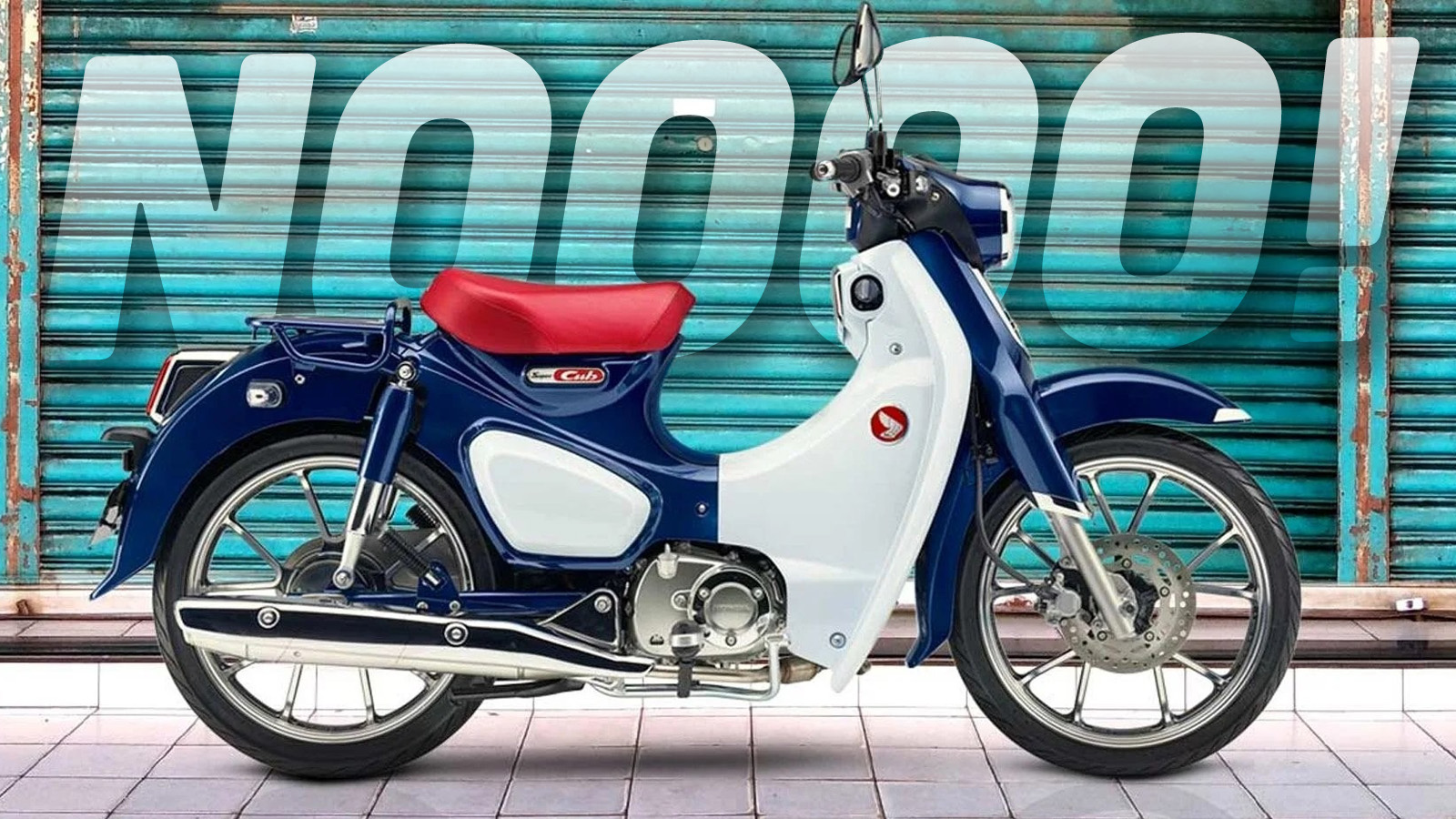
What’s the best-selling motor vehicle of all time? Volkswagen built over 21 million Type 1 Beetles, while Toyota has moved over 50 million Corollas since its original launch. Neither of them holds a candle to the Honda Super Cub. As of 2017, Honda sold more than 100 million Super Cubs, and it was the motorcycle that got much of the world on wheels. The Super Cub was also a sensation here in America, but not anymore. According to a recent report, Honda quietly discontinued the Super Cub in America in 2024, and somehow, nobody noticed until now.
This story comes to us from our friends at RideApart, and honestly, it was shocking. I sometimes write about Honda motorcycles and sometimes visit Honda’s site to make sure I’m abreast of current models and pricing. I’ve lost count of how many times I went to the Honda Powersports website and remember seeing the Super Cub there throughout most of 2025. When did it disappear?


RideApart notes that Honda scrubbed the Super Cub from its site in 2025. Using the power of the Internet Archive, I can confirm that the Super Cub remained on American Honda’s website until at least December 8, 2025, then it disappeared. The model displayed through early December 2025 was the 2024 Super Cub.

Unfortunately, no mistake has been made. Honda’s American arm has decided to stop selling the Super Cub here. It just took until now for everyone to notice. This marks the end of an incredible journey. The Honda Super Cub was more than just a motorcycle. It was a movement. This was the motorcycle that got non-riders on two wheels and helped foster an image that not every biker is a belligerent man in leathers riding a loud Harley. For decades, the Super Cub was the motorcycle for everyone from all walks of life. Now, at least for Americans, it’s a motorcycle for nobody. Let’s look into what made the Super Cub an all-time sales hit around the world.
Born From Bicycles
Like so many household names today, Honda did not get its start in motor vehicles, but in bicycles. Soichiro Honda grew up helping his dad repair bicycles. His heart wasn’t only on two wheels, as Honda has a passion for cars and planes as well. As a teenager, Honda would learn how to tune cars and build his own racecars. In 1928, Honda opened a motorcycle and car repair shop. He would also become a known name in car racing in Tokyo. That was until a fateful race in 1936 when, at the newly constructed Tamagawa Speedway in Tokyo, his racecar rolled three times at 75 mph, throwing him from the wreck. After recovering from the crash, Honda decided to hang up his repair hat and get into parts manufacturing.

Honda’s first parts were piston rings, which, according to the book, Japan’s Motorcycle Wars: An Industry History by Jeffrey Alexander, were such a highly-sought commodity in late 1930s Japan that they were worth more than their equivalent weight in solid silver. Yet, Honda’s first piston rings had failure after failure. Eventually, Honda scored a deal to supply Toyota with piston rings, but only three of the 50 rings provided to Toyota met the required spec.
Honda, who had no formal training at the time, decided to attend an engineering school, visit some factories, and study Toyota’s quality control so he could better understand the science of casting.

Immediately following the events of World War II, Soichiro Honda found inspiration in the little engines that powered wireless radios during the war. Honda figured he could use a wireless radio engine to make his wife’s life easier. He mounted an engine on her bicycle, and it allowed her to ride to town much quicker than just riding on human power alone. Given that smashing success, Honda decided to make a whole business out of it.
At first, Honda’s new motor company was small, and featured 10 men working in a small building who mated 50cc Tohatsu two-stroke wireless radio engines into bicycles. When the team used up their supply of 500 engines, Honda designed his own engine, which resembled a chimney. Honda says its earliest engines were problematic. The engines were required to be warmed up before starting them; the oil didn’t lubricate very well, and riders had to kick up to 30 times before the engines would even fire.
You Meet The Nicest People On A Honda

One of my previous stories about Honda continues from there:
Honda’s first product was the Honda A-Type, launched in 1947, a year before Honda formally founded the Honda Motor Company, but a year after Honda started engineering. The A-Type was a die-cast two-stroke engine with rotary valves that delivered power to a bicycle’s wheels through a patented belt drive. Honda built its engines on assembly lines, and parts were designed so that anyone could put them together without manually filing and shaping the parts. In reality, Honda says, most of Honda’s early parts still needed manual finessing before they could fit together, but the concept was still sound and was refined as time went on.
It was only 11 years later that Honda would change the world. Honda and managing director Takeo Fujisawa traveled to Europe, where they found out that the small motorcycle culture was way different there than it was in Japan. They went back to Japan, convinced it was time for a revolutionary new way to travel. Honda’s new motorcycle would be neither a moped nor a scooter. It would also be designed to be inherently friendly and easy to ride. Further, this new bike was to be designed from the start to be for everyone, from the suited Japanese businessman to a woman in a clean dress. Oh, and the motorcycle couldn’t be complicated, so a traditional manual transmission was out, and the motorcycle had to be seriously rugged and powerful to survive Japan’s rough roads.
In 1958, Honda launched the Super Cub. The little motorcycle did everything Honda wanted and more. It was truly a motorcycle for the masses, no matter where in the world they lived. Perhaps even more brilliant than the Super Cub itself was its marketing. The Super Cub came to America in 1959. In a time when motorcycle riders were gaining a negative “biker gang” reputation, Honda proudly marketed the Super Cub as being the motorcycle for everyone. “You Meet The Nicest People On A Honda” remains one of the greatest marketing lines of all time.
Allegedly, that European tour involved visits to Kreidler and Lambretta dealerships. Honda concluded that the Euro bikes he saw didn’t really have a future. Sadly, Honda would be proven correct in one way or another, as so many European brands do not exist anymore.

Part of what made the original Super Cub such a winning vehicle was Soichiro Honda’s formula. According to Honda, he told company engineers to “create things that can fit in the hand” and “create things that are easy to operate.”
Specifically, Honda wanted a motorcycle that someone could ride while carrying an order of soba noodles in one hand. Honda’s engineers had to build something that they hadn’t ever seen before. Until then, Honda produced 50cc two-stroke Cub engines for bicycles that made only a single horsepower. Honda demanded that these new engines be both four-stroke and make four horses.
Overcoming Challenges
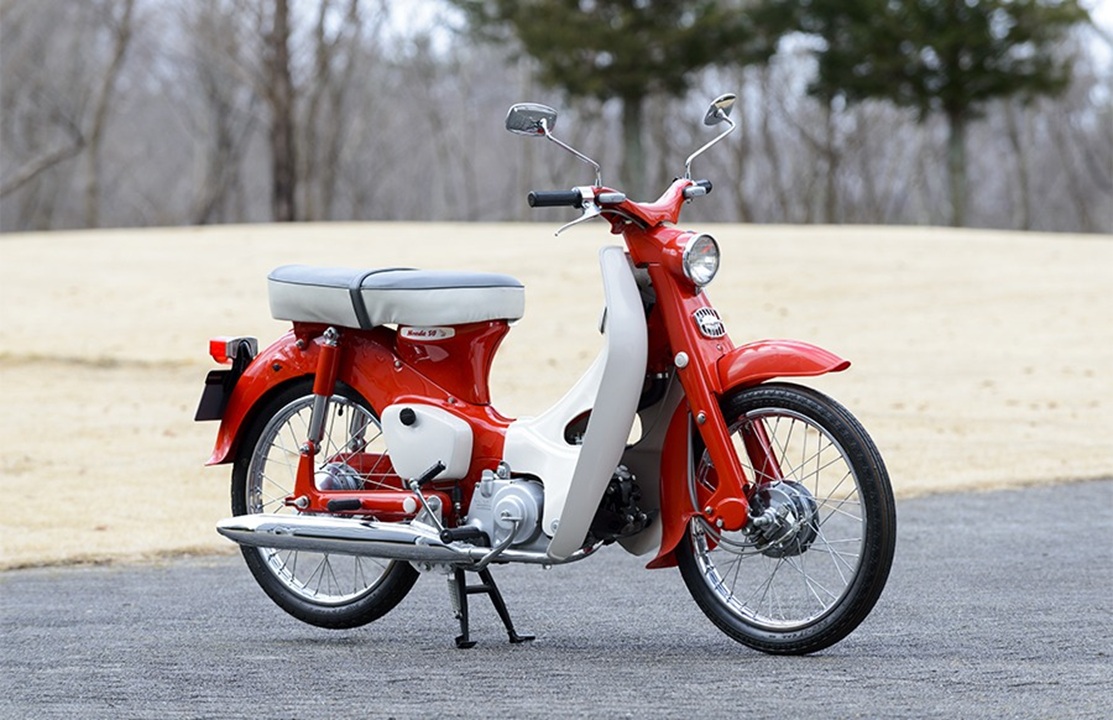
Engineers actually beat expectations, creating an OHC engine that pumped out 4.5 HP at 9,500 RPM. The motorcycle’s frame was given a step-through design so that anyone could ride it no matter what they were wearing, and the transmission was given an automatic centrifugal clutch so that the rider didn’t have to be concerned with operating the clutch themselves. Transmission designer Akira Akima explained further, from Honda:
“The development of the centrifugal clutch itself was not all that difficult. However, figuring out how to engage and disengage the clutch in synchronization with gear shift operation proved to be complicated. On top of that, because of the kick starter ratio, the clutch needed to disengage when stopped, but it also had to engage automatically when starting.”

Owing to a structure that at first glance seemingly had to meet conflicting requirements, the team found that they couldn’t come up with good ideas quickly. Even Soichiro seemed to be thinking about it constantly, and every morning he’d drop by the design room asking, “How’s it going?”
Akima — “One day as I was leaving I said, ‘If we used a screw, we could convert the rotation of the kick action to the axial direction, but I’m afraid we might run into trouble owing to co-rotation.’ After saying this, I gave it a bit more thought, ‘Since the clutch has a certain amount of drag, it might just cancel out the co-rotation,’ Just then the Old Man came running back in saying, ‘Since the clutch has resistance, I’m sure we can make it work! I told him that was just what I’d been thinking, and he retorted, ‘Sometimes we even think alike!’ and we shared a big laugh. Eventually, we applied this method to solving the problem, and I was finally freed from the pressure of his constant visits to our room every morning.”

The Super Cub presented further challenges that required creative solutions. For example, according to Honda, the Super Cub’s fork was created after an engineer watched Disney’s Bambi, and they saw Bambi running. The fork is supposed to resemble a running deer. Placing the engine in the middle of the frame reduced weight, improved balance, improved cooling, and allowed the wheels to be taller. Those wheels allowed the Super Cub to tackle rough terrain while looking friendly like a bicycle.
Then there was the bodywork, from Honda:
While the gist of the design was thus being established, another part worthy of special mention—and one of the Super Cub’s most distinctive and eye-catching features—is the use of totally new polyethylene resin in the creation of its front fender and leg shields. This new material also made the bodywork remarkably light compared to FRP (fiber-reinforced plastic). Additionally, polyethylene’s more pliable properties made it almost unbreakable, while giving the body parts a remarkably warm texture.

Kimura — “Since the plastic parts had a softer quality, I changed the colors to create a combination that exuded both softness and brightness. I called these the colors of the sea and the sky, as they’re colors that are familiar to and popular with most Japanese. Since the Super Cub was designed to be a vehicle for the masses, I wanted to use familiar colors rather than fancy shades. As an accent, we made the seat a reddish purple color. In those days, the Old Man used to wear a red shirt and drive a red sports car, which gave me a hint. Then I recalled a scene I saw in the movie ‘Summertime’ starring Katharine Hepburn, in which a piece of Italian Venetian glass glistens with a purplish deep red hue in the light. This made me think that if the seat were a slightly bluish red, then it would perfectly complement the blue of the body.”
As for the polyethylene used to make the body parts, the specialty makers of the time had never processed such large molded parts. So in order to get Honda to outsource the production of the parts to them, they agreed to the condition that Honda would provide the molds. Could this have been because not only Honda itself but also the subcontractors were eager to create an innovative new motorcycle that the world had never seen before?
As a note regarding the color changes, Honda himself was reported to be colorblind.
A Worldwide Sensation
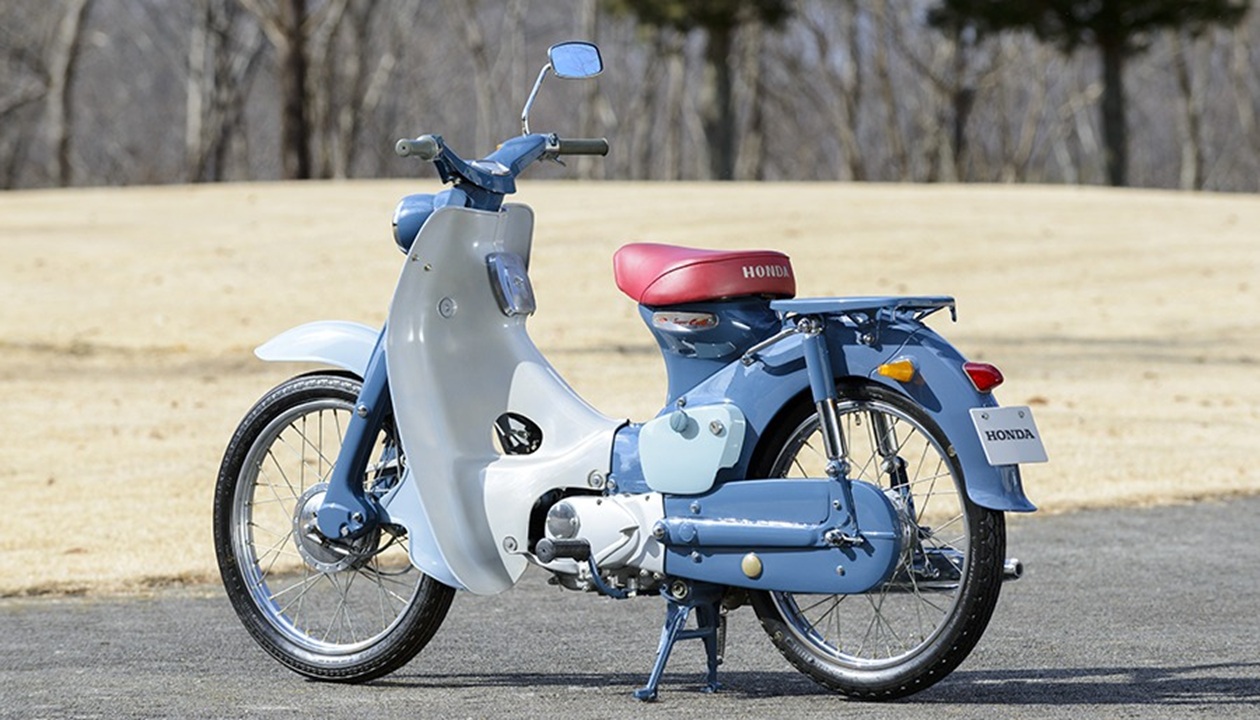
Honda’s team knew they captured lightning in a bottle when they looked at the final product. As Honda reports, managing director Takeo Fujisawa said that Honda could sell 30,000 units. Apparently, the development team thought that he meant 30,000 units a year. He’d clarify that he meant that they’d sell 30,000 units a month. That was shocking, as at the time, the cumulative total of sales of all motorcycle makers in Japan was 40,000 units a month.
Amazingly, the Super Cub is one of those examples where an ambitious production target might have been conservative. The Super Cub would dominate the sales charts. Some 564,000 units were sold by 1960, and sales hit the 5 million mark by 1966. It would go on to become not just the best-selling motorcycle in Japan, but by 2008, sales reached 60 million copies since production began in 1958. By 2017, sales surpassed the 100 million mark. The Super Cub even had an off-road variant in the form of the Trail and the hot Sports Cub.
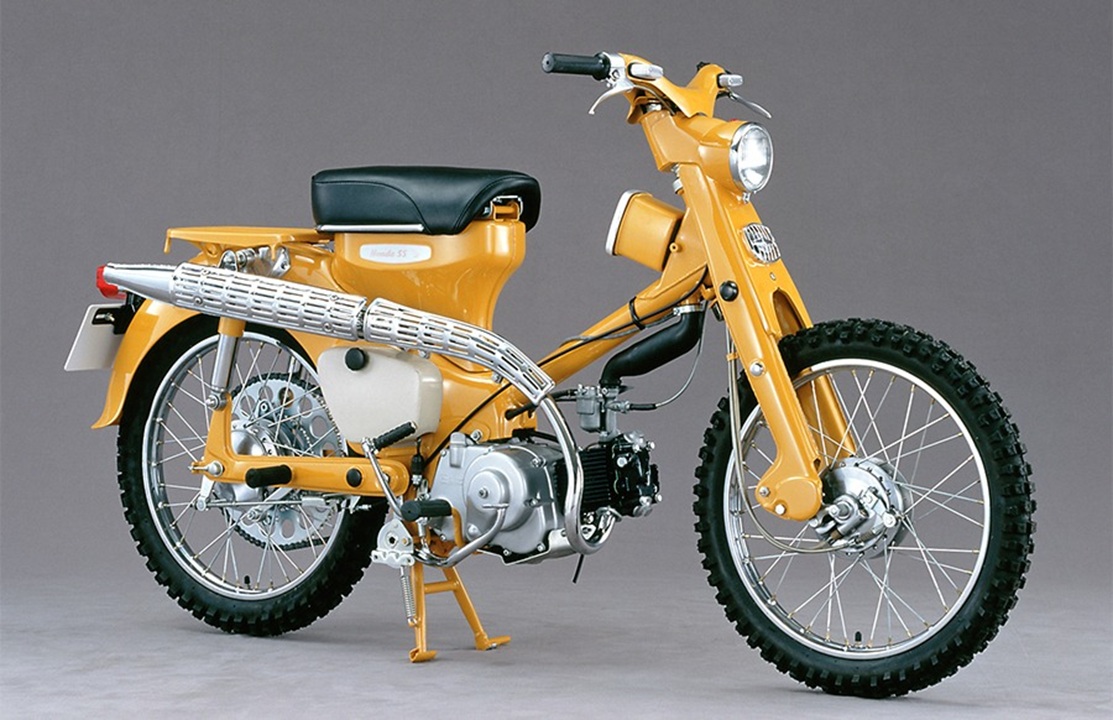
The Super Cub was popular everywhere.
In the developing world, Super Cubs helped give people mobility. Here in America, the Super Cub and Honda’s iconic marketing helped shift the image of motorcycling. The Super Cub was the perfect two-wheeler for the counter-culture movement in America. In Vietnam, the U.S. military shipped over some 20,000 Super Cubs. Locals would love them so much that Honda managed to sell 750,000 units between 1967 and 1969. Super Cubs remain in use as everything from daily drivers and delivery vehicles to taxis and trucks. Super Cubs got their own variants in Taiwan and China, too. Super Cub culture remains strong in Southeast Asia today, and lots of Honda fans out there customize their Cubs.
The Super Cub Got An Upgrade…
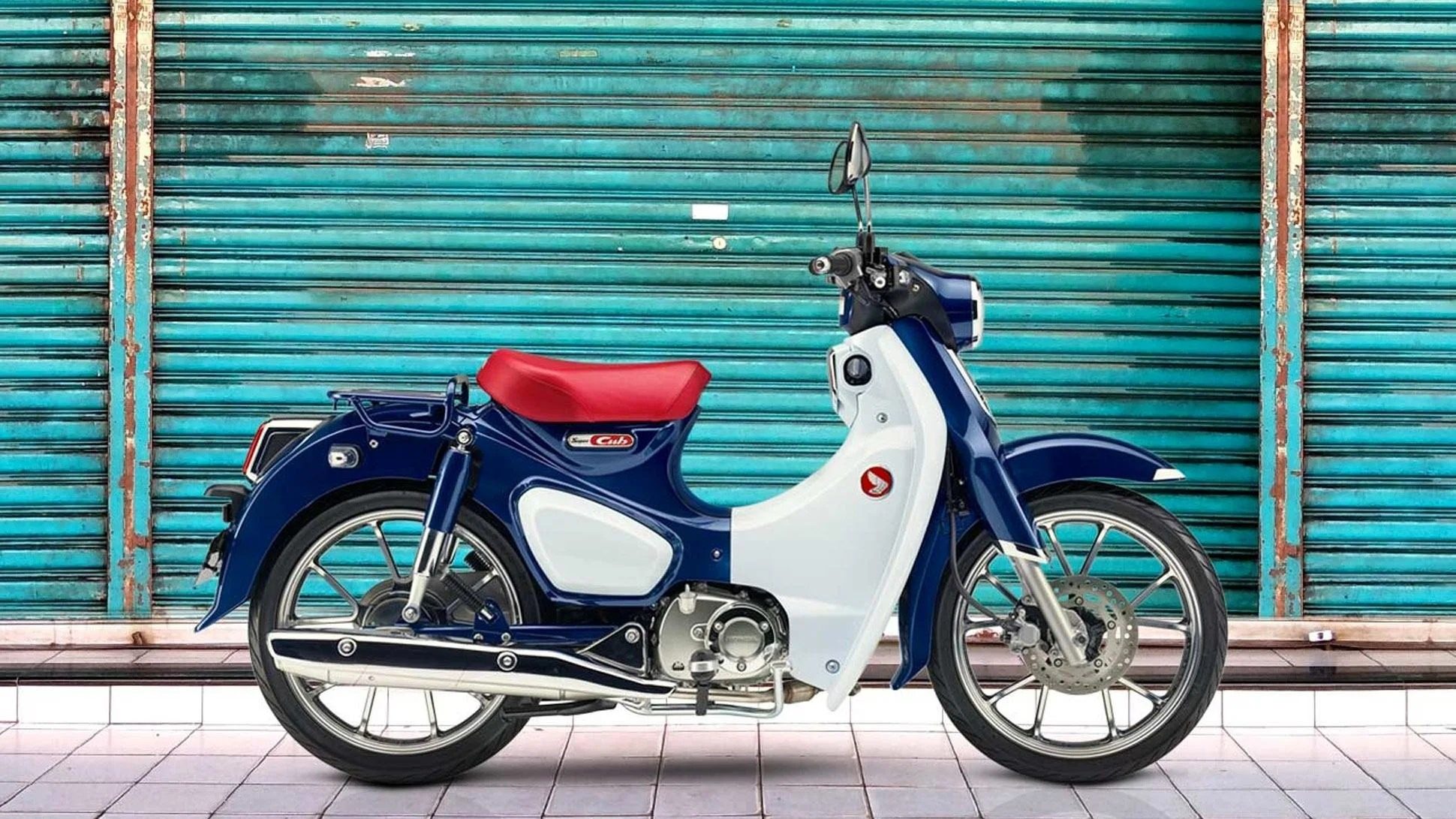
America would eventually lose the Super Cub in 1974, and its descendant, the Passport, in 1983. Then, America wouldn’t see an official Super Cub release for decades. Sure, we were able to buy the Sym Symba and other licensed copies, but none straight from Honda itself. That changed in 2018 when Honda said that the Super Cub was on its way back to America for 2019.
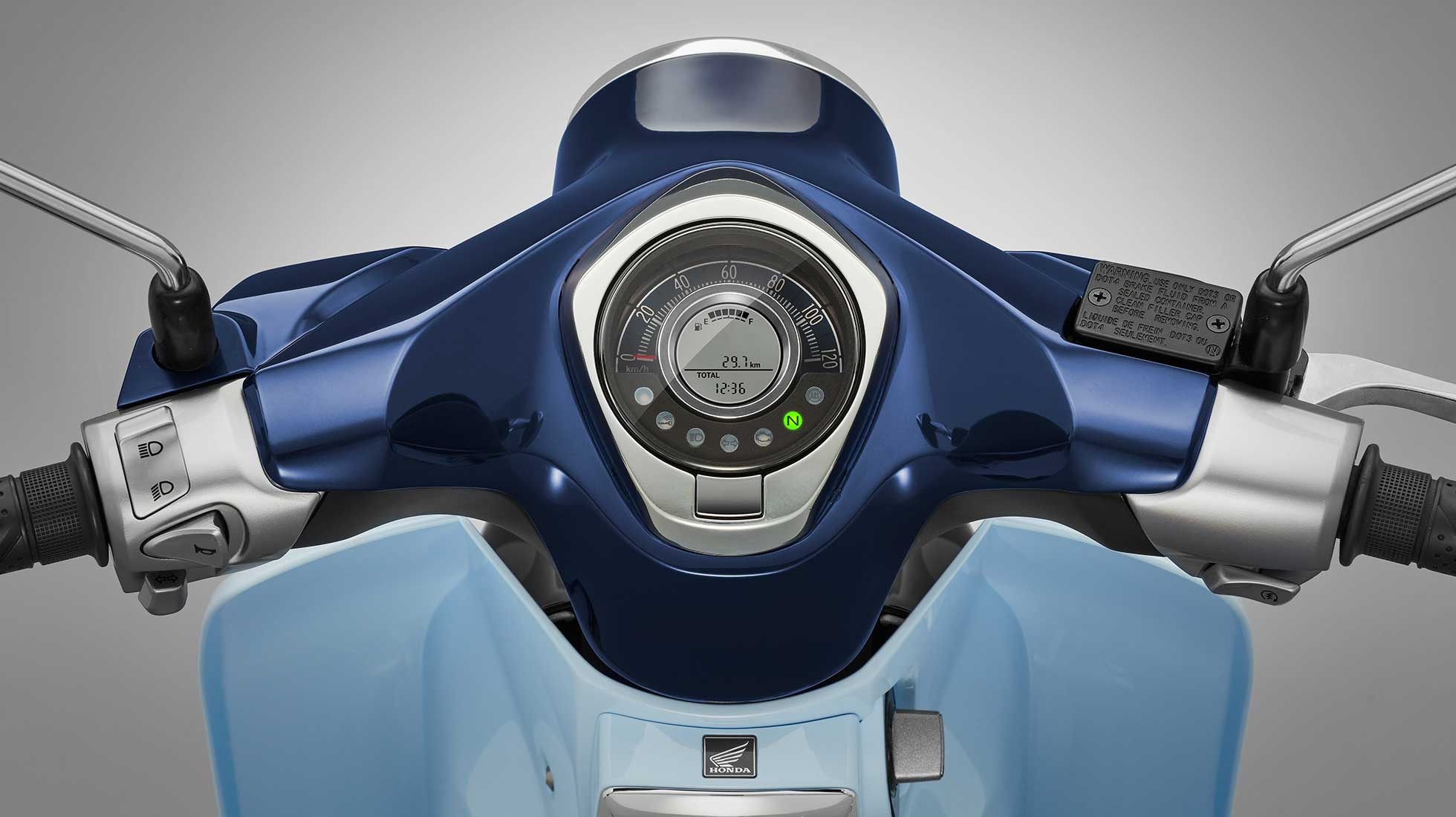
The new Super Cub C125 looked vintage, but was a thoroughly modern build. The old Super Cubs had frames of pressed steel, but the new ones are tubular steel with plastic panels on top. It has a 124cc single-cylinder fuel-injected engine with 9.6 horsepower on tap, a semi-automatic centrifugal clutch, ABS, an LCD screen, and even a 220mm front disc brake. The new Super Cub is a thoroughly modern motorcycle that only looks old.
Honda kept the Super Cub accessible, too. It had a price of $3,600 at launch, was easy to ride, had a usable top speed of around 60 mph to 65 mph, and its 1-gallon tank was good for 100 miles.
The new Super Cub got positive reviews. Some folks, myself included, feel like the Super Cub brings you back to a purer kind of motorcycling. It doesn’t have a million horsepower, isn’t trying to wheelie at every given moment, and doesn’t require a ton of skill. A Super Cub is all about the fun of motorcycling.
…Then Left America
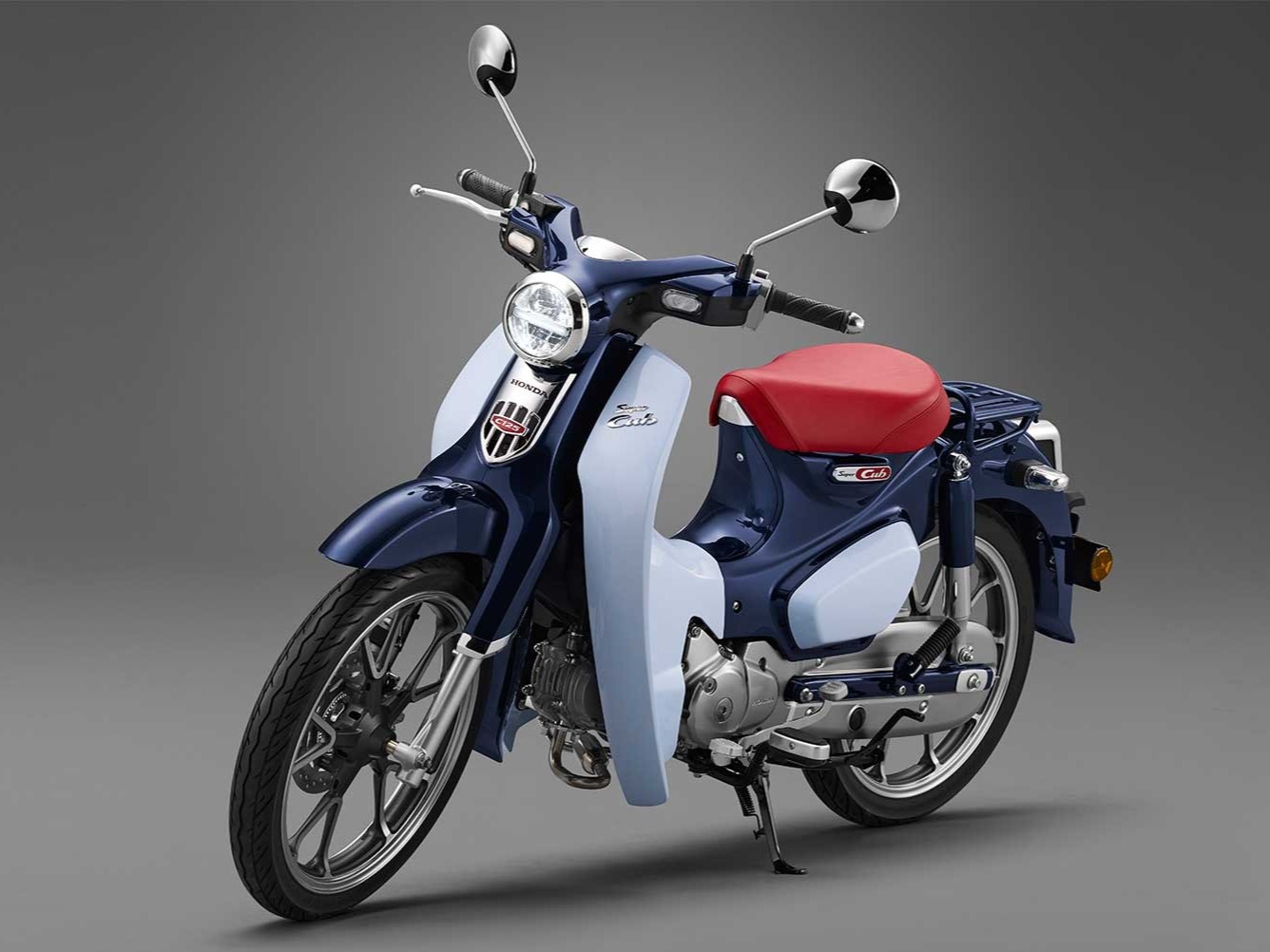
Weirdly, Honda hasn’t really released sales data after 2017. So, we know that the Super Cub surpassed 100 million in sales, but we don’t know by how much. We also do not know how many were sold in America. What we do know is that Honda silently discontinued the Super Cub in America after 2024. The Super Cub page was never updated for the 2025 model year. Then, as I noted earlier, the page was taken down entirely in December 2025.
Thankfully, the Super Cub appears to be alive and well elsewhere. Europe’s and Thailand’s models of the Super Cub just got new colors for 2026. Honda killed the Super Cub 50 in 2024, but keeps smaller Cubs around in the form of the Super Cub 110cc Lite and its variants.
It’s unclear why Honda pulled the Super Cub out of the American market. The small motorcycle is one category that has seen healthy sales in recent times, bolstered by affordable options from Royal Enfield, CFMoto, and Honda’s MiniMotos. Even Triumph got into the small-displacement game because that’s what younger riders are buying nowadays.
I don’t want to get into speculation, but Honda’s MiniMoto lineup had a lot of tiny bikes that had the same engines and fulfilled different, but similar roles. There was the Grom, the Monkey, the Dax 125, the Super Cub C125, and the Trail125. Then there was the super beginner-friendly Navi and four different scooters. Perhaps Honda learned that it’s possible for there to be too much of a good thing. Tariffs may also play a role. I reached out to Honda to see if I could get some clarity.
The good news is that it doesn’t appear that cheap motorcycles are going anywhere. CFMoto and Royal Enfield are still coming out with affordable models, and Honda still has the whole lineup listed above, minus the Super Cub.

There’s also a non-zero chance that the Super Cub is gone forever. Here’s what Janaki from RideApart reported:
However, I reached out to American Honda to ask if it was truly gone for our market. I was told that yes, MY2024 was the final year for it here. However, Honda cautions that it may not be gone for good, but “any potential return of the Super Cub would depend on ongoing product planning and market considerations.” There is no confirmation that this will change any time soon; however, we shouldn’t rule out the possibility completely.
I think the saddest part about this is that Honda officially stopped selling the Super Cub in America more than a year ago, but it never bothered to tell anyone. Then again, it took until February 2026 for this news to drop. I planned on buying a new C125 this year. Looks like I won’t be able to do that unless I find new old stock.
So, the Super Cub C125 is gone in America. It’s a depressing end, but this wasn’t even the first time Honda pulled the plug in America. No matter what happens, the Super Cub’s impact on motorcycling and the world will probably be eternal. For many, the Super Cub will always be more than just a tiny motorcycle. They offered mobility, fun, and a shining example that motorcycling didn’t have to be grumpy, loud, and mean.
Top photo: Honda



My first exposure to the Super Cub was finding a Hot Wheels of it at my local grocery store. I thought they looked neat, and figured it’d be a solid buy if I felt the urge to learn to ride. A few years later, I’m moving states(CO to SoCal), realized I couldn’t take my 240Z with me. Sold the Z, used the money to buy a 2023 Cub from the local dealer.
Wanted the ’24 that came in the blue, white, and red color scheme but the dealer said they wouldn’t get an allocation for it so I got the one they had on the floor. I took a Learn to Ride course, got my license, been riding it since.
Prior to that I had no interest or intention to ever ride a motorcycle, so Honda certainly did their job making it appealing to non-riders! The other bike I’d want to get now that I feel comfortable riding is a PC800, which was designed under the same idea of getting non-riders interested.
Sad to see them go, but they’re hard to sell where I’m at. All the younger people are getting E-Bikes, and those who aren’t near me are getting Vespas.
I’d definitely pin the blame on the market being eaten by ebikes, both the legal class 1/2/3 commuter/utility/etc ones and the illegal “trust me bro it’s a class 2” electric motorcycles. People were enamoured with the retro styling of the new Super Cub but once the novelty wears off after a few years there’s not really much you can do to re-ignite that interest in the buying market, and in the US the Super Cub isn’t enough of a bread-and-butter staple motorcycle for the brand, like the Triumph Bonneville for example, to coast forever on just the base level demand.
In my high school days I rode an ’82 C70 Passport in Southern California. Times were different then. You could putt around pretty much anywhere but the freeways on it and I took it out to the desert (Anza-Borrego) on occasion and that little thumper just belted out reliable and thrifty horsepower.
Todays highways are way different. Faster speeds and reckless, phone-wielding drivers with 1000 airbag protection so the chances are dying on one are much greater.
Oh, and they are priced in cheap, used car territory.
Its a shame as they were a pleasure to ride up to its max speed of 45 mph and with the fuel mileage it was almost free to operate.
In the Sixties it was just called the Honda 50 in the U.S. because Piper had rights to the name Super Cub. My dad gave my mom one for her birthday in 1963. A weird thing I remember is that the price tag on the Honda 50s was $201.00. I guess that $1.00 was very important. The shop owner pointed out that he didn’t have to put drip pans under any of the Japanese bikes. He said the other makers should be ashamed and he expected the Japanese to take over. Eventually it was handed down to me and I was lucky enough to have parents who encouraged my riding throughout their lives. Mom was one of the original nicest people you’ll meet on a Honda. Thanks for this story.
Thanks for that clarification. I called the bike I knew a “Cub 50” just below. But nobody called them that. And it seemed back then everyone knew what a “Honda 50” was.
This might be the motivation I need to pull the SYM Symba out of the garage and get it running again.
Me too but mine is a 68 Trail 90 in yellow
Yeah, I’d been on a Cub 50 that was already 20 years old, back in the 80s. It got the job done. I’m surprised more bikes didn’t have its semi-auto transmission, it was dead easy to ride.
And holding that gearshift down with your foot and revving it to redline was sublime if not underwhelming. Tough little bikes the C70’s were.