


Curiosity can be a dangerous thing, especially when it involves big metal objects that literally weigh tons and move at breakneck speeds. I lived in Britain for a time as a kid, and while I was keenly aware that sitting in the middle of a narrow “B” road was a bad idea, an object installed in the tarmac had piqued my curiosity so intensely that I determined the risk of examining it was acceptable.
I thought this device was a brilliant new invention, even though it was already some fifty years old at the time. Today, the concept of “cat’s eyes” road reflectors is almost a hundred years old and still saving lives on UK roads. Nonetheless, even many English people are unaware of all the tricks the original ones were ingeniously designed to perform. It’s time everyone learned about these small wonders before they disappear from roads forever.


So Where’s The Road Go?
Not all ideas resulting from alcohol are good ones; running onto a football field naked and stealing a pace car at a NASCAR event are two good examples of such bad ideas. However, one of the greatest traffic safety devices ever might very well have had an indirect connection to booze. As Halifax Today told it, in 1933, Percy Shaw was a Yorkshire road contractor and mechanical tinkerer in the years when headlights were generally crap and night travel could be quite treacherous. Percy’s stories varied over the years, but the most common one told involves a foggy evening when he was driving back from The Old Dolphin pub in Clayton Heights, which is still there and has been for 300 years.
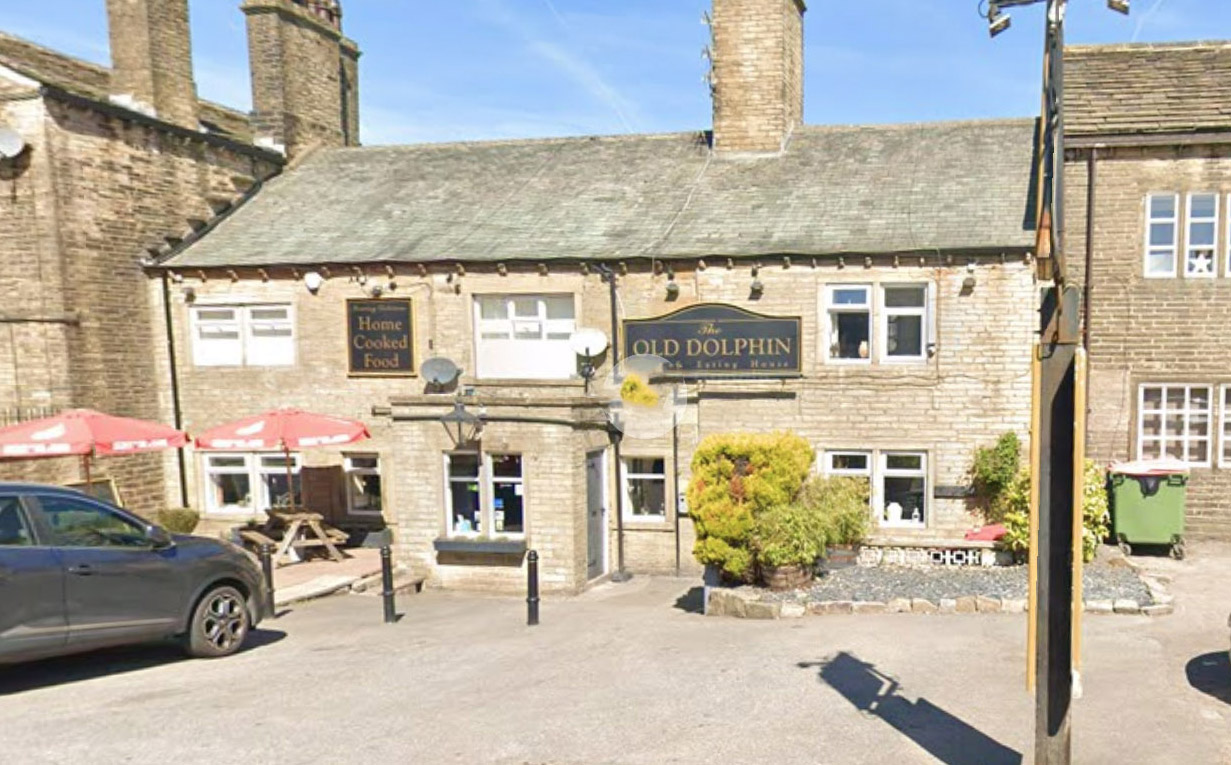
On the way home, in areas where the trams and trolleys ran, Percy could use the shiny silver tracks as a guide. But as soon as the tracks ended, he was pretty much plunged into darkness. On one tricky stretch of the road, he was saved from driving off the pavement because his headlights reflected off the eyes of a wandering cat sitting on the side of the road. This fortuitous occurrence put the idea of road reflectors into Percy’s head, modeled after the peepers on the feline creatures. Shaw later gave different accounts of how he came up with the idea, but I’m betting that the first story was true and he was encouraged not to retell the real tale that involved possibly a pint or two. Or three.
Like all nocturnal creatures, the backs of this animal’s eyes have a reflective layer behind the retina called the tapetum lucidum, which reflects incoming light and bounces it back off to make the most use of the existing light (cats can see in about one sixth of the light that humans can). The reflected light also bounces back through the retina for that distinctive glow.

Six years earlier, in 1929, a man named Richard Hollins Murray developed what’s known as a retroreflective lens. Invented for advertising signage, it’s essentially a manufactured equivalent to a nocturnal animal’s eye with a reflective coating on the concave back of a glass cylinder, so it reflects light back in roughly the direction that it was received.
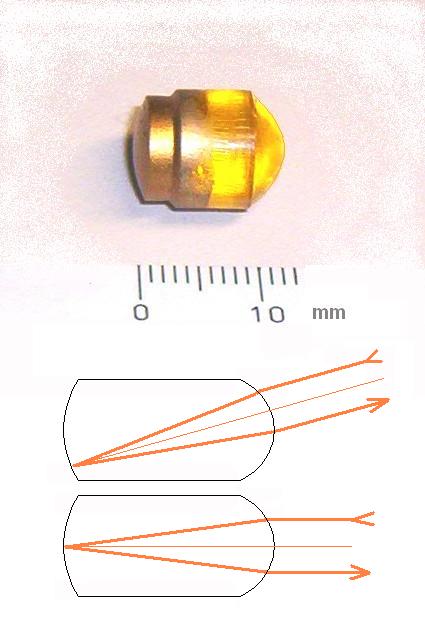
So, retroreflective lenses would be the means of achieving the cat’s-eye glow Percy was after. But how could such reflectors survive in a harsh road environment? For maximum durability, Percy began with a heavy-duty, durable cast base to be sunken into the tarmac. With a low profile and a tapering shape, the housing allowed car tires and snowplows to comfortably ride over it.

The actual glass reflectors were contained within a flexible rubber housing with two reflectors facing in each direction of traffic.

The rubber housing then sat below the level of the durable metal surroundings.

They don’t protrude much, but it’s enough to catch the headlights of cars and create a dramatic glow:

Besides the visual benefits, the tactile and audible feedback from contacting one would alert a driver to Wake The Hell Up. This is all clever enough, but there was an additional feature Percy developed to make the infrequent but inevitable times that these were trodden upon beneficial.
Signs That Blink
How do the cat’s eyes in actual cats stay as clean and clear as they do? Obviously, these finicky pets will blink with regularity to accomplish that task, but the road-mounted cannot do the same. Or can they? Percy found a way that they could. The flexible rubber housing will naturally get pressed down when driven over, and when this happens, the section containing the glass lenses drops down; the front surface of the glass pieces rubs against a stationary part of the rubber to effectively clean off the “eyes.”

It gets better. The void space in the housing under the rubber holder for the lenses would fill with water after it rained; believe me, if there’s one thing Britain has more in abundance than biting humor (sorry, humour) it’s rain. That means that when the rubber housing gets crushed down by a passing vehicle, the wiper is often working in conjunction with water to really get them eyes good and clean. Here, I’ve cued this video up to the squish-cleaning demonstration:

This is a flat-out ingenious concept; an idea that doesn’t require electricity for illumination or even maintenance from an era when the UK was known for innovation (and ultimately let down by labor relations, among other things). The concept apparently didn’t take off immediately but slowly started to spread; with the second World War and cars often having “shuttered” headlights to stay less visible to enemy bombers, these “cat’s eyes” were essential for nighttime driving when your forward lighting output was about the equivalent of a dude sitting on the hood with a candle.
Over the following decades, cat’s eyes became the rule and not the exception on all UK roads. It’s impossible to tell how many lives Percy’s invention has saved, but we do know of a few odd cases where they did the opposite.
Killer Safety Devices?
You can’t get more batsh*t crazy than the racing that took place during the infamous Mille Miglia in the fifties with cars going at triple-digit speeds through narrow roads lined with spectators instead of barriers. The last time the race was run was in 1957, and the reason for this was apparently a faulty safety device: a damaged cat’s eye. Jamming through the Italian village of Guidizzolo at around 150 miles an hour, driver Alfonso de Portago’s left front tire blew out on his gorgeous Ferrari 355 S. The car flipped violently out of control, ultimately killing de Portago, his navigator, and nine spectators, including five children.

Enzo Ferrari was charged with manslaughter, but an investigation showed that a damaged cat’s eye was the cause of the blowout. Outrage from the incident put an end to further races, a rather ironic outcome of a safety device gone wrong. Today, aging road infrastructure means that there are numerous cases of tire damage to cars from older cats’ eyes, but there’s an even bigger issue: flying cats’ eyes.
Snowplows often dislodge the devices, leaving them only loosely secured. This creates a serious problem, as vehicles can kick the cats’ eyes into the air, potentially resulting in struck windshields. Possibly the most famous case was the 1999 incident in the UK where electronic musician Kemistry was struck by a cat’s eye housing while sitting in the passenger’s seat of a car on the M3 motorway, killing her instantly.
Today, steps are being taken to solve the problems, but at the loss of some earlier innovation.
Of Course, They Got Cheapened Up
As with most manufactured things, over time cat’s eyes became more “cost effectively” made. Cat’s eyes with the original self-cleaning design and vault-like housings are disappearing. You can still see versions here in the US, like the one below on my way to work, but I don’t recall ever seeing the self-cleaning ones here in America.

Many are replaced with much simpler reflectors merely stuck to the road surface, at least in places where snowplows never run. Made from lighter and cheaper plastic, they’re far less durable but justified in some ways by being less dangerous projectiles when they finally lose their grip on the road.
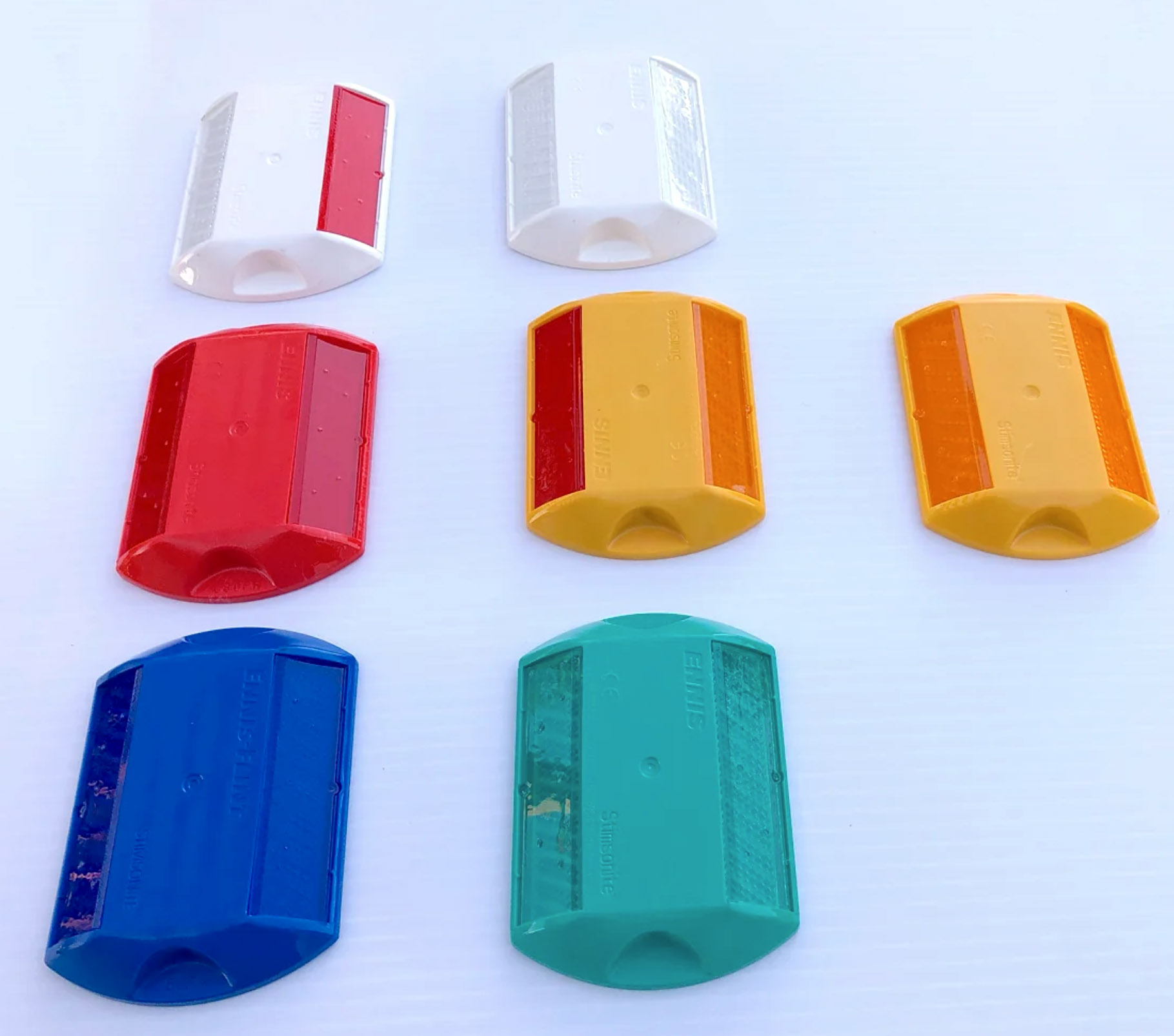
Even more municipalities are looking at LED cats’ eyes with solar cells mounted on top, though they got off to a rocky start when some of them exhibited flickering that could trigger seizures in some drivers. Also, these lights give the impression of driving on an airport runway at night and almost encourage you to cut your headlights and just cruise like you’re playing Night Driver on your Apple IIE back in 1985. Don’t do that.

Honestly, with the output of modern headlights, it seems like a bit of a waste not to just use reflectors. The simplicity and effectiveness of Percy’s product has yet to be topped.
Soon Gone, But Not Forgotten
Twenty years ago, the BBC organized a vote for the top ten British design icons. The list included such famous items as the Concorde, Morris Mini, Supermarine Spitfire, K2 telephone box, World Wide Web (I thought Al Gore invented that?) and the AEC Routemaster bus. You know what else was on the list? Percy’s cat’s eye. I was unable to find out how many of the original-style units still abound on UK roads, but I am sure it’s a dwindling figure.
Ironically, we were all under the impression that by now cars would drive themselves from satellite directions, meaning that such visual devices would be as obsolete as typewriters. That day will come, but it’s still a way off. For now, such reflective devices are still quite valuable. Any of us who drive after sunset can thank a Yorkshireman heading back from a local watering hole nearly a century ago for making our paths that much clearer.
Top graphic images: Eliot2000 via Wikimedia Commons; Amazon.com


I grew up in Florida where the reflectors are bright, abundant and mounted on top of the road surface. I took this for granted until I moved to Japan and Maryland where there either weren’t reflectors at all or inferior ones that were snow plow safe.
Ex-Road Designer here. No kidding their name for a while was: “Omni-directional retro-reflective raised pavement markers”. Cat’s Eye is betterer…
Germany and several European countries have Leitpfosten (literally translated “guiding posts”) installed on many roads outside the city zones. The retroreflective markers are long vertical rectangle on the right-hand side and two circles on left-hand side.
In some areas, the blue retroreflective markers called Wildwarnreflektor (game warning reflectors) that the animals see as danger and avoid the roads (that is unless their survival instinct to escape the predators overcomes the blue danger).
When we moved to Texas, we wondered why those weren’t used in the rural areas. The reflective lines painted on the sides gradually fade away over the time or aren’t visible during the inclement weather.
The conspicuity tape made by 3M is different from the cheaper vinyl grades and most paints.
It’s required to meet specs for at least 7 to 10 years on lorries and other trailers.
I can show you a trailer taped in 1995 that still works.
There is a more flexible version for marine use and a range of colours.
Some fluorescent.
I remember when I moved from a place with an abundance of reflectors on the road to a place without (WNY) and when it was dark and raining it was so difficult to see where the roads/lanes went.
Sometimes you don’t realise how good something is until it’s gone.
(LED ones are a needless complexity, passive safety items are better than active)
As a former WNY’er I feel that pain. But with the frequency and intensity of plowing operations in that region, I can see why they don’t bother with embedded reflectors on many roads.
Go figure, a boffin in a shed comes up with something brilliant.
Do boffins even exist anymore? I feel we are poorer without them…
Yes, and more visible than ever thanks to social media.
Boffins? That’s those ducks with colorful parrot beaks, right?
No, those are buffleheads. Boffin is an old British term for a smart person who likes to tinker and make stuff.
Actually I was making a joke of mistaking the word boffins for puffins. But what I had thought from whatever British comedians was that boffins meant university professors. But the word definitely sounds more like a tinkerer than an academic.
Had a bit of an obsession with road reflectors as a child. I had a decent collection, maybe 3 dozen or so.
Areas that had just been repaved were always a good source, crews would pop them off and chuck them aside, often forgetting to collect them.
I was happiest the day I found a blue one, much rarer because they’re only used to denote fire hydrants.
The most elusive one was the half white, half red ones used on certain freeways to get wrong way drivers to turn around. Much harder to pick up on the side of the freeway after roadworks…
Kemistry was such a great loss.
I knew she died in a car accident, I never knew the details.
An intelligent idea and an argument for ideas from drinking can improve society. One question as he was driving back from the pub in poor weather and caught the reflection of a cat’s eye sitting beside the road, how could he tell it was on the side of the road?
My guess is he was about to drive off the road, and stopped before hitting the animal he thought was in the middle of the road.
Wait, there was a list of top British anything and it didn’t include the Spitfire?
It did. If you mean the plane, not the little Triumph sports car with the questionable rear suspension. “Hark, the Herald axles swing”
The next step is to add RFID tags to each and every reflector as autonomous driving aid. With that the car can see the road regardless of snow, ice water, whatever.
As long as it’s not separated from the road. Otherwise chaos
No, just a piece of bad data that the car realizes doesn’t fit the pattern and rejects, same way a human would.
Bonus points if the car automatically alerts the mother ship to schedule a fix.
Then we can use flock RFID scanners to track every drivers movements.
I don’t think it could work that way.
RFID tags work on proximity, so it would be relatively easy to detect ones you’d just driven past/over, but tricky to read ones that are still ahead of you.
I expect the answer to that is in 100 year old tech:
https://en.wikipedia.org/wiki/Yagi%E2%80%93Uda_antenna
My gran’s friend was the cleaning lady for Percy Shaw. He earnt plenty of money from his invention, so lived how he pleased.
This boiled down to having a large house which he left unfurnished, save for a big chair in which he chainsmoked expensive cigars. And covered the floorboards in expensive ash.
I read that he had four televisions going in silence all the time, too.
dunno, lately it seems the rain is disappearing faster than the humour
I am sure they are missing constant rain
My issue at times are the white reflectors people put on their mailboxes. Some guardrails still have them too, though most are now yellow. Here in semi-rural Western PA one is constantly scanning for deer after dark and white could be eyes.
We have a section of highway nearby that has an abundance of deer and apparently an abundance of notable roadside infrastructure. I don’t know if they are fire hydrants or culverts or what. But the random reflectors 10-20ft from the road edge every half mile is super distracting when you are trying to keep an eye out for deer.
There is a stand alone gas meter in one yard that for YEARS I suspected as being a deer at night. Body with legs… Then there is the a**hole with a damn horse statue in his highway roadside yard. And the foam targets come bow season…
Well in Pennsylvania and other states hunting begins at sunrise so no problem
Better that than the high intensity flashing, blinking, revolving lights from safety lights at night that blind drivers. FYI at night your security lights don’t need to be as bright as they do in the day time.
Running lights, etc should all have a day / night differential.
This can be achieved with more surface area, or more intensity in sunlight.
Yeah, when that roadside reflector blinks at you, hit the brakes.
In rural Ontario there are often snowmobile trails alongside highways (often referred to as hick bike lanes, or going drinking in town lanes). They are like miniature highway lanes. Half as wide with reflectors and tiny little stop signs. Never plowed though, LOL. They do sometimes confuse drivers who don’t expect them.
Well with zombie deer disease becoming more and more common I expect you’ll be on the lookout for glowing red rather than white eyes.
It’s worth noting that the new plastic reflectors are colour coded, with each colour meaning a different thing on a UK Motorway
Source
They are also typically placed between every other dashed white line which leads to a driving game of can you change lane at 70mph without any of your tyres hitting one of the markers? Or with all 4 tyres hitting a marker?
In the States, blue means there’s fire hydrant at the curb.
In Canada they can also mean any potential source of water for firefighting such as a culvert or small pond. Somewhere to drop a pump in a hurry.
My brain hurt after reading the word “led” in the title and then finding out this was about the oldest type of reflectors. At least LED-powered ones were mentioned at the very end.
And the driver who was going the other way invented the pencil sharpener
Oh my god this is so stupid and hilarious! I had a good laugh 😉
I always heard them called ‘Bott’s Dots’ as a kid in PA. Not sure where that came from.
https://en.wikipedia.org/wiki/Botts%27_dots That’s the plastic reflector Bishop was talking about that replaced these and it comes from the last name of the guy that made them.
Bott’s dots are not reflective.
Correct, but that’s the common name for reflectors in the same way as Kleenex or Xerox because they came first. I’m pretty sure that I’ve heard British people refer to the reflectors as cat eyes because that’s what came first there.
Even the newer reflectors are called cats eyes, despite being a single rectangle.
One of my favorite bits if history is that beer (specifically Pale Ale) invented the modern world.
It’s a bit simplified, but in the mid-1600s beer makers were looking for a fuel to dry hops that burned without smoke to prevent flavoring the hops during drying. They eventually turned to coke, which is basically coal with all the impurities cooked out of it in an oxygen-free environment. The beer made in this way had a much lighter color (pale ale) and fewer impurities than other beer at the time and became very popular, which spurred on the coke industry in Great Britain.
After about 50 years of refinement in coke-production, some guys in the steel industry with connections to malting had the idea to try coke as a fuel for steel-making since it was becoming easier to get than charcoal thanks to its use as a fuel for beer making. Coke’s advantages led to the invention of the blast furnace, which was so much more effective and scalable while also producing much better steel that it was the catalyst that really kicked off modern steel production and the industrial revolution.
Not hops but malt. The kilning is needed to dry the malt and arrest it’s sprouting. The more precise temperature control allowed drying to be accomplished without over kilning and causing the Maillard reaction in the maltose that leads to darker malts. Darker malts are still used for other traditional beers as well as for their higher acidity, particularly in areas where the lower pH compliments the local water. That is why, for instance Dublin is known for darker porters and stouts while the less minerally water of Pilsen led to the creation of the very blonde pilsner style.
Kiln drying hops is not recommended. The heat compromises their volatile oils. Air drying at ambient temperatures works just fine.
Ah, yes, thank you for the correction. My graduate research was focused on steel production, but I’m more familiar with the end-product of beer production 🙂
“Hold my pale ale and watch this.”
-Early steelmakers
I’d rather have coke (all 3 forms I can think of) than a pale ale in my glass.
It’s ok, you can still thank guys like me who love hoppy beer for inventing the modern world.
I’m bitter enough naturally that I don’t need to consume any more.
Somewhere, a very disappointed cat is reading about how is attempt to use his evil demon eyes to scare a human off the road led to the creation of a device that has saved countless human lives.
Mine is going to be so pissed when I read this to him later.
Fun fact. If you drop one of these reflectors it always lands right side up. Spooky…
Cats always land on their feet.
Toast always lands butter side down.
How to make a perpetual motion machine: simply butter the back of some lightly toasted cats, then drop.
No animals were harmed during this thought experiment.
How can you have this story without an honorable mention to Bott’s Dots? Inferior, but super common in Lower Alabama…
But it’s really good fun!
The cast iron mounts that cat’s eyes (or indeed other retroreflectors) are attached to are explicitly snowploughable – they have ramps either side to guide the plough up and over. Such an incident is vanishingly rare, and some UK news sources suggest it’s the only time it’s ever happened in the UK.
(Source: I used to work for a company that dealt in ploughable studs)
I’m doing no additional research on plowable studs until after work when I’m on my home network.
I’ve really only seen the prismatic in-road version around here – it does snow – but out of all the animals to have inspired Britan’s version, the cat does please me. Cats are great. Very cuddly if you let them be.
That said, some of the coolest reflectors around here are the ones on guardrails that partially turn blue when it gets cold.
Interesting thing, the reflectors in my area are yellow if you’re going the correct direction, but the other side is red to indicate you’re going the wrong way!
I noticed that back when I drove tow trucks, and I had to go the wrong way on an interstate to get to a crash site. It’s really weird to see.
I found this out one day b/c a local highway has one installed backwards. Normally, I might never notice, but stuck in traffic one late afternoon with the sun just right, I was like what’s up with that red speck??
That would be useful around here.
It seems like there are three or four people a week in the news for driving the wrong way on the interstate. A young state trooper was killed in one incident a few weeks ago.
“Botts’ Dots” is what they’re known as (by dorks who know this kind of recherche minutia) here in California. Or ‘turtles’ owing to their dome shape.
https://en.wikipedia.org/wiki/Botts%27_dots
Every motorcyclist in the state curses Doctor Botts and his fershlugginer dots. They infringe on our inalienable right to chase the apex of tight left-handers at the limits of traction.
Fun Fact: You can spot Botts’ Dots in movies (like Roadhouse) that are supposed to be set in places outside California, like anywhere they have snowplows.
Botts’ Dots are the NON-reflective line separation markers taking the place of a painted stripe. Usually used in combination with a reflector in between every “stripe.”
While you are technically correct (the best kind of correct), most reflectors are referred to as Botts Dots in the same way that Kleenex, Xerox, or Google have become a generic term for something. (Coke too in many places in the south, “I’d like a Coke” waitress: “OK, what kind”, “Sprite” is not an uncommon thing to overhear)
Always called highway reflectors Bott’s Dots here in PA. I’m Gen-X.
Not sure I agree with that, I’ve lived in CA since ’88 and have long known that Botts’ Dots are just the round plastic part, not the reflector.
Then again I fully recognize I do not represent the general public in many areas.
Zowie. 25 years of living in CA and I always thought they were the reflectors (not that I bothered to read the article I linked too, either.)
I wondered how they got a dome shaped thing to reflect so well.
I’m glad my pedantry provided some benefit.
You do find them in snowy areas like Illinois sometimes even in winter, but this seems to be only during road construction and they are then often put on the finished road and last up until the first snow hits. They’re cheap enough to just plunk down whenever you’re respraying the lines, but not worth the hassle and road closures to reapply every spring.
I spent most of my life in Illinois but rarely saw reflectors imbedded in the roadway, and now I see them even less in Indiana. Have I been driving on the wrong roads, or Is just failing eyesight?
They’re rare, but they do occasionally happen. I believe I-90 west of O’hare had them for about 2 months after they finished that huge construction project 7-ish years ago. It may have been some other highway that got recently redone, but I remember driving home at night in the rain once and thinking “WTF, I can see where I’m going, what’s wrong?”
Botts dots were also blamed as a potential cause of Paul Walker’s crash, though the speeding was definitely the primary cause.
I do notice my ABS kicking in if I’m braking and drive over a dot- the tire definitely loses contact for a moment.