

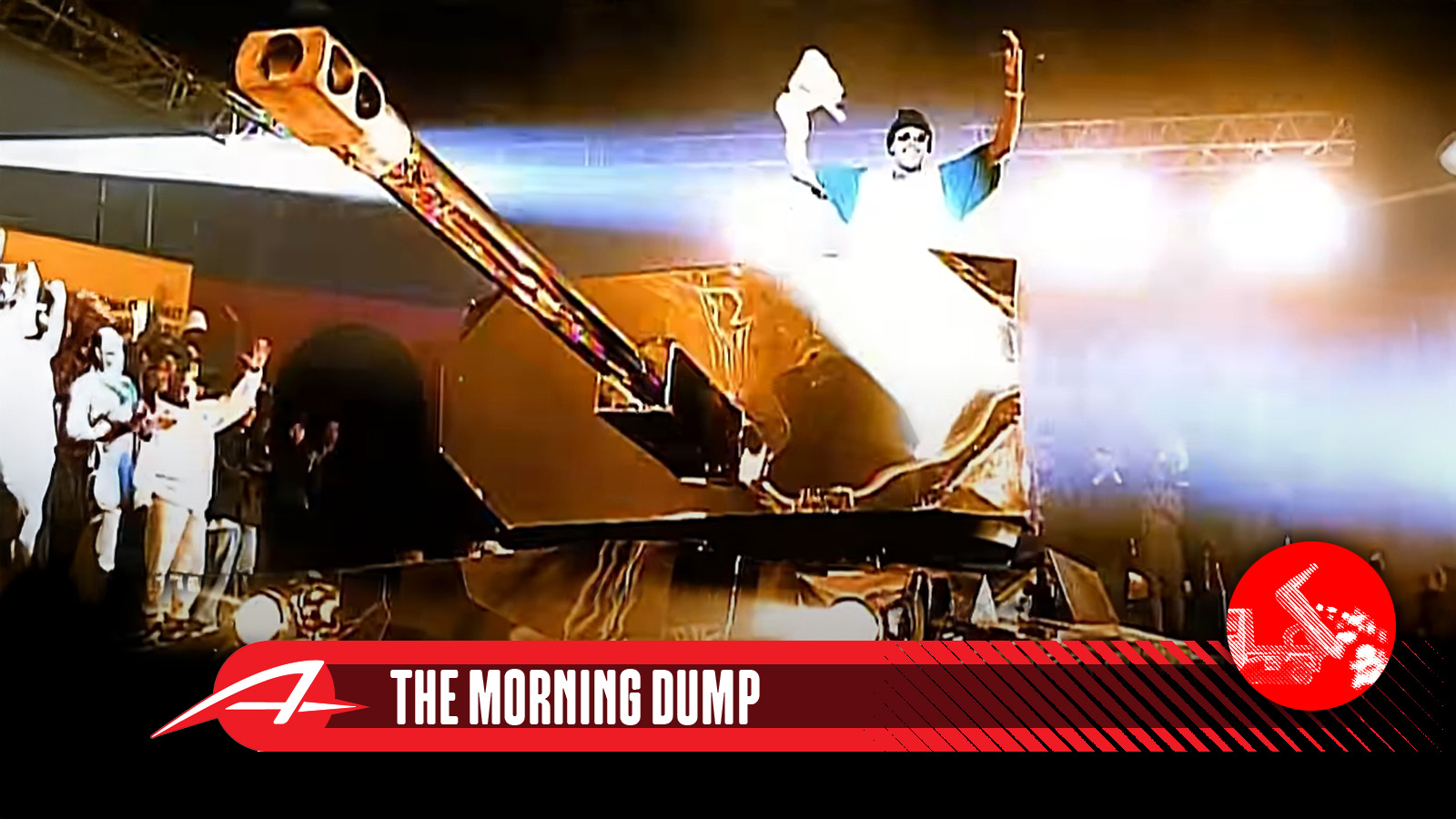
Growing up on the Gulf Coast, it wasn’t initially obvious to me that Southern rap didn’t get the respect it deserved. In retrospect, this is hilarious given that a large portion of said music is devoted to complaining about that lack of recognition. Although my bias is towards music from my hometown of Houston, there was a long period where New Orleans was the epicenter of non NY/LA hip hop.
During the late ’90s and early ’00s, Louisiana produced two incredible music machines: No Limit and Cash Money. The former was prolific, releasing a hit record seemingly every week, while the latter managed to sign blockbuster acts before anyone else noticed. The difference between the two was not so much musical as it was organizational. No Limit, as helmed by Master P, had a better plan and a better deal, which allowed the company to earn let’s-get-a-gold-plated-tank money, whereas Cash Money’s story ended with angst and infighting.


I say all of this in The Morning Dump to point out that, for all the issues Chinese automakers have, they seem to have the upper hand in the trade war. This is clear in the United Kingdom, where it sounds like Chinese automakers will be utilizing excess capacity from JLR in order to build cars. This is the UK joining Canada in warming up to China.
Eventually, of course, the tilt towards American production might make all of this trade war business worthwhile. For the moment, being a strong ally of the United States is costing our Japanese and South Korean allies a lot of money. China’s automotive surge has been bad for Tesla, as well, which reported better-than-expected numbers in Q4, but is still sitting on a German plant it currently doesn’t need, especially with its Chinese operations likely in a better position to serve Canada and other markets.
The Federal Reserve declined to cut interest rates, which is yet another reason to think that the cost of buying a car might not drop much this year if you’re having to finance.
Jaguar Could Reportedly Build Cherys In The UK
Looking merely at the roster of artists, you might assume that Cash Money was the more successful New Orleans record label. With Birdman, Lil Wayne, and Juvenile, you’ve already got a starting lineup that screams 2025 Dodgers, and that’s before signing Drake and Nicki Minaj (cringe).
That isn’t to disrespect Master P, post-Death Row Snoop Dogg, or Mystikal (I would never), but they don’t quite have the level of household names Cash Money had in its prime. No Limit, though, was the much more successful company. How? There’s a whole podcast on this if you’re interested, but the short version is that Master P played the long game.
To be successful as an artist, you need to own your music. This is why Taylor Swift made copies of her own albums, and why so many artists complain about having hits and still being indebted to the record companies. Master P didn’t have this problem. Famously, he worked out a distribution deal with Priority Records to not only own his masters (the original recordings), but also to get at least 80% of sales.
This meant that No Limit’s founder, Master P, could be earning way more per record sold than Cash Money or, frankly, almost anyone else making popular music. This was also timed to the period before streaming took over. As Master P later said:
If you can’t work that good of a deal, he advises, “At least get a piece of the piece,” he told Yahoo Finance’s Jen Rogers, in an interview for Yahoo Finance’s My Three Cents . “It has to start with owning property, owning your business.”
[…]
“I tell people, if you get in a business, you need to know everything about your business,” he explained. “You need to know what the janitor is doing. You need to know what the guy who’s cooking the burgers is doing … You need to know what the mail room is doing. You need to know everything about your business to be successful.”
At the time, the way No Limit operated seemed absolutely bonkers. The label was constantly churning out artists, and if someone was even remotely popular, they’d have that artist appear on everyone else’s record. Snoop Dogg’s first record with No Limit has Mystikal, Silkk the Shocker, Soulja Slim, Mia X, and Master P a couple of times. On Mystikal’s album, you get Snoop, Silkk again, Master P again, and on and on. If you’re only netting out, say, 10% from your music, you have to make sure anything you do is a huge hit. If you’re making 90%, you might as well produce as much music as you possibly can, and it doesn’t even need to be a huge hit to be that monetarily successful.
In many ways, China’s approach to the auto industry has been more like the No Limit approach. From the outside, the huge number of companies, the numerous failed startups, and the heavy reliance on state financing/support make it seem like a terrible way to operate. There’s no invisible hand of the market here; there’s just a heavy hand that creates overcapacity and encourages automakers to cheat to sell cars.
I’ve long been concerned that, in the absence of exports and access to other markets, Chinese automakers are in trouble. They’ve built enough capacity to easily serve the local market and have, slowly, elbowed out Japanese, American, and German automakers. But there’s not a lot of juice left to squeeze there. China’s automotive industrial policy is built on exports, and a popular United States that leads the world to resist those exports has long been a check against China.
No more. Canada has said that, hey, if you’re going to keep taking away our local production, then we’re going to start letting in Chinese-built cars. British consumers love Chinese cars, and it no longer makes sense for the UK to resist them, given that car production in the UK has plummeted to a 70-year low. That’s right, the UK now makes fewer cars than it did when it was still recovering from being bombed by the Germans.
For a Chinese company, the ideal world would be only exporting cars to the UK, given that it has neither supply nor labor shortages. For the UK, the ideal would be to have only local production. According to Auto Express, something in between might happen:
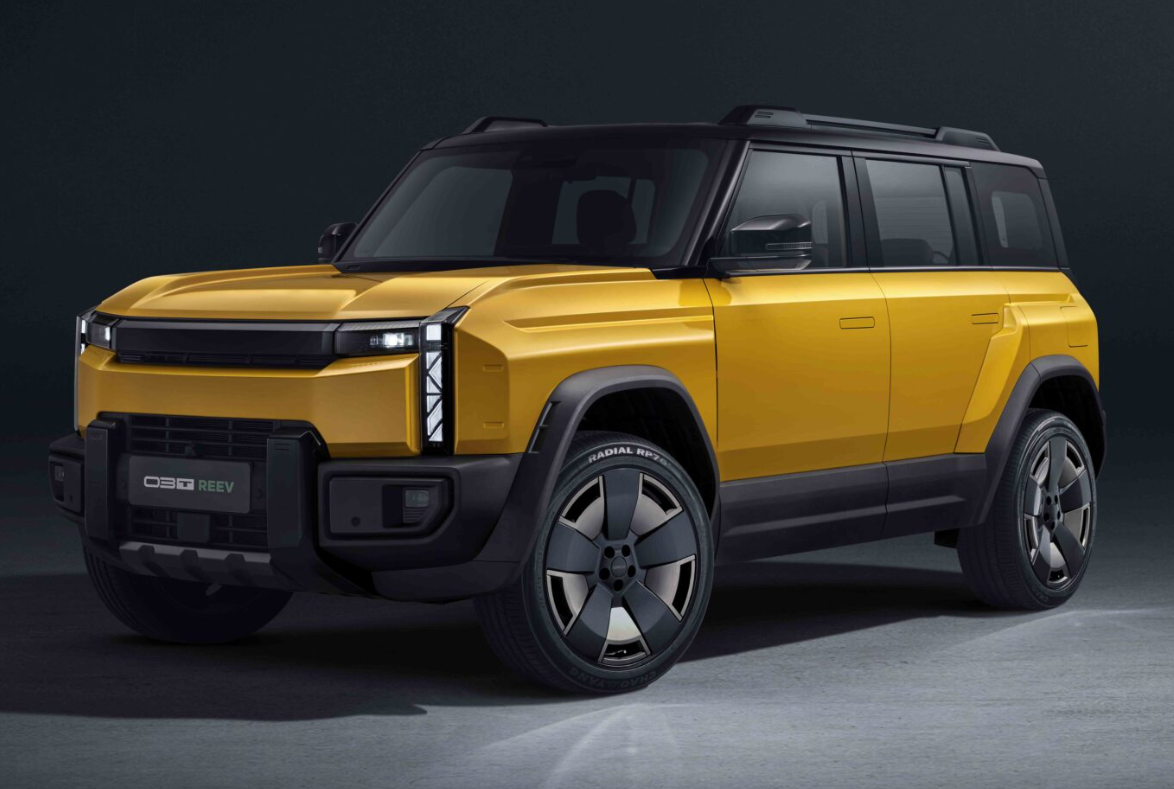
Prime Minister Keir Starmer is currently on a visit to Beijing in order to bolster trading relations between the UK and China. One of the key subjects of official discussions will be the UK and Chinese car industries, with a deal between JLR and Chery on the cards, which could see the latter building its cars on British soil.
A deal between JLR and Chery is not a new thing; the two automotive giants formed Chery Jaguar Land Rover in 2012 in order to build some JLR models on Chinese soil. Despite a decrease in sales in 2025, China remains JLR’s second-largest market outside the U.S, with models such as the forthcoming electric Freelander to be produced exclusively for Chinese buyers.
However, this latest deal could see Chery take advantage of spare capacity at JLR’s manufacturing plants; maximising productivity in this way should help protect jobs and rake in extra revenue for JLR after a disastrous year in 2025 as a result of the cyber attack, which saw production shut down for more than five weeks.
This is net good for the Chinese auto industry as those vehicles will likely still rely on much of that country’s automotive supply chain. The idea of a Chinese automaker using a JLR plant to build Chinese vehicles (probably not the Defender-like Chery above), sounds unlikely even a few years ago, but now it makes perfect sense.
Even if it doesn’t end up happening, this just goes to show that the current trade war is a boon for China, which gets to suddenly look like a more reasonable trading partner in the face of pressure from the United States. Overall, the “reindustrialization” of this country might be worth all the disruption, though it comes with costs when it’s done this confrontationally.
Hyundai And Kia Take A Huge Tariff Hit
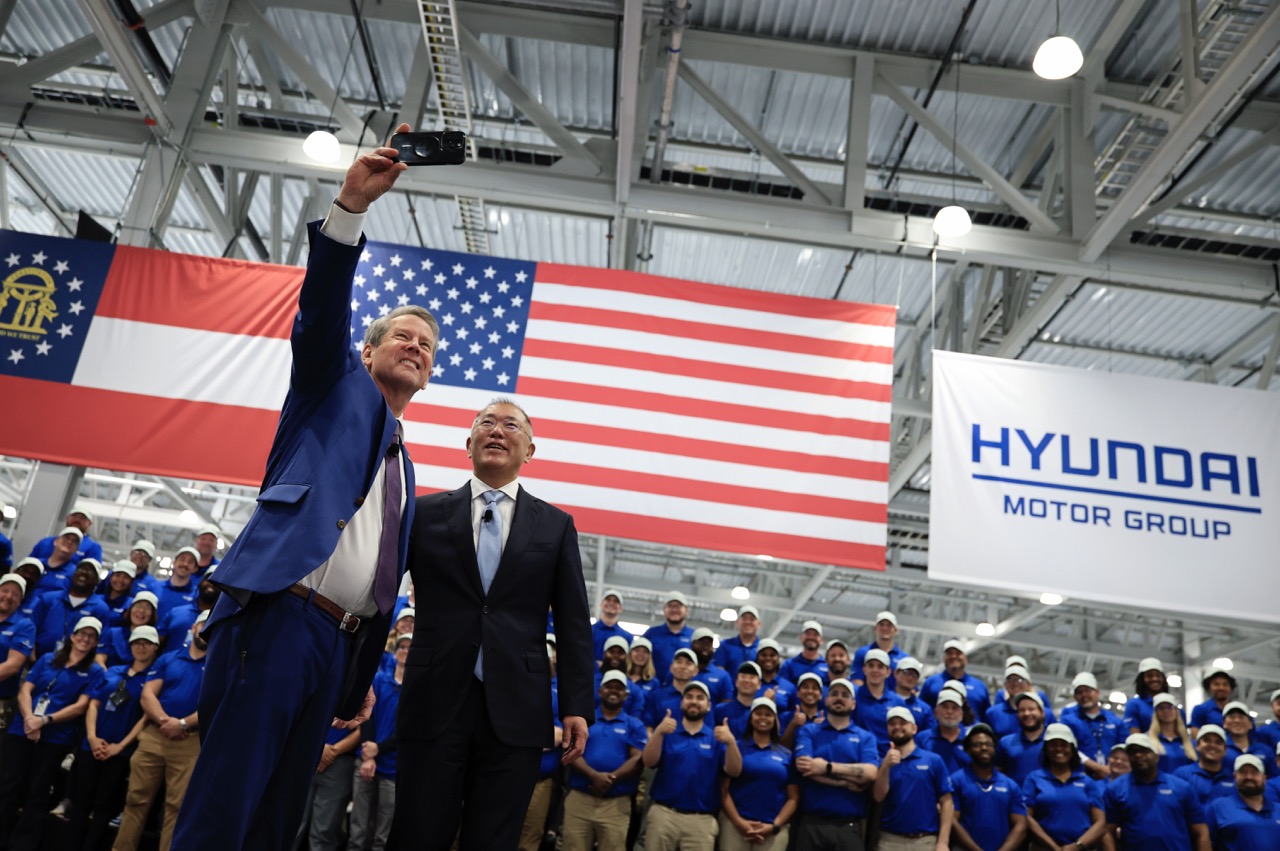
Hyundai and its Kia brand are, like Toyota, companies that build many of their most popular models in the United States. They also import a lot of cars, both because it makes economic sense and because they’re not American-owned companies.
Until they make all products in the United States, however, there’s going to be a tariff cost. A high one, as Bloomberg reports:
Operating profit was 1.7 trillion won ($1.2 billion) for the three months ended Dec. 31, down about 40% from a year earlier and the lowest since 2022. The results missed analyst estimates for 2.7 trillion won ($1.9 billion) and came despite revenue of 46.8 trillion won ($32 billion), a record for the fourth quarter.
Hyundai said tariffs cost it about 4.1 trillion won ($2.8 billion) last year, including 1.5 trillion won ($1 billon) in the fourth quarter alone. Despite the duties, wholesale deliveries in the United States topped 1 million for the first time, buoyed by strong hybrid and sport utility vehicle sales.
The company said it was able to offset about 60% of the tariff impact, though it didn’t provide details on the measures
Bigger sales with less profit is not a recipe for success, and even offsetting 60% of the impact of tariffs means that there’s now a large premium that has to be paid by someone. That someone will eventually be the consumer, although prices haven’t jumped dramatically yet.
South Korean automakers don’t have much of a choice in terms of how it approaches this trade war, as it’s not likely they’ll be able to offset their reliance on the American market with China or Europe.
What’s Tesla Going To Do With Its German Gigafactory?
I don’t want to only write about Tesla when the company does bad things, so it’s worth mentioning right away that my old friend Alex Roy set a zero-intervention Cannonball Run Record from LA-to-NY in a Model S, even with all the crazy weather. Also, the company did better than expected in Q4, even if overall revenue was down.
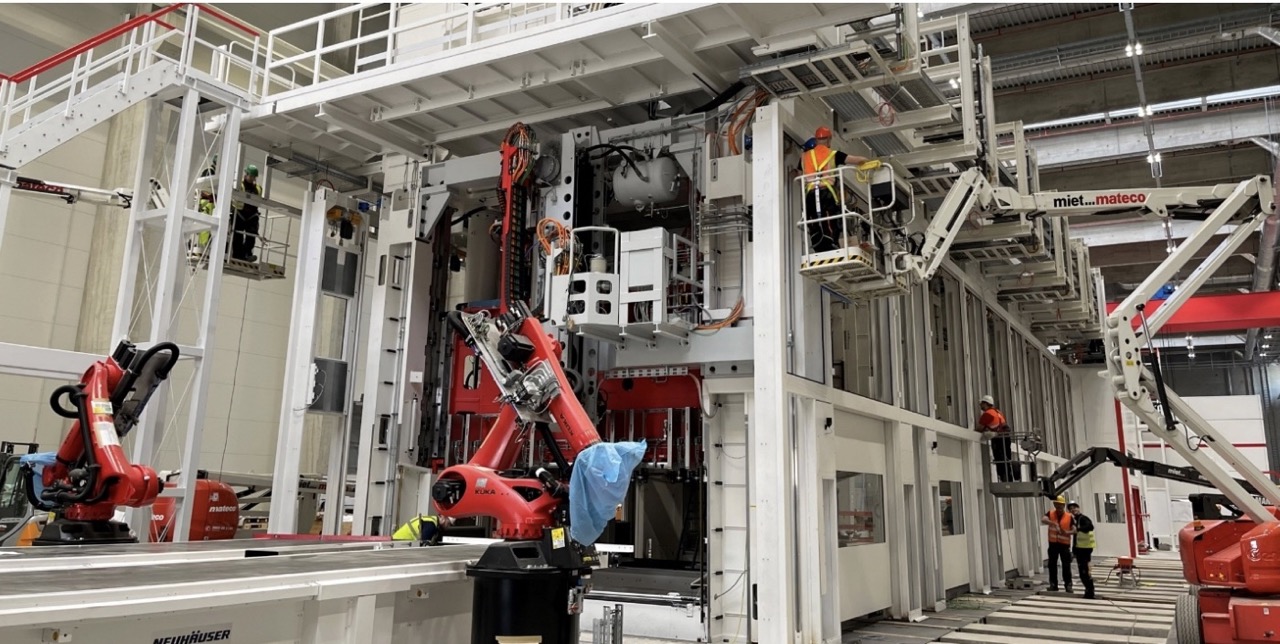
All that’s well and good, but with Tesla moving away from traditional passenger cars in order to build robots and Cybercabs, what good is Tesla’s Gigafactory in Berlin? Certainly not to build cars for Europe because, if the first month of Q1 is any guide, Europeans don’t want Teslas.
And this is where China comes in again, because it’s probably cheaper to build Model Ys for Canada in China than it is in Europe, which means Canada opening the door to more Chinese-built cars makes for one fewer market for Giga Berlin.
As Manager Magazin notes, the Germans sense this is an issue, and the answer seems to be battery production:
Until now, the battery cells have been shipped to Germany from the sister plant in Austin, Texas. In Grünheide, they are then assembled into battery packs. The first battery cells are expected to roll off the production line in Grünheide soon.
Musk had already announced the plan in 2020, promising the “world’s largest battery factory” – with a capacity of up to 250 gigawatt-hours. Now, the figure being discussed is only 8.6 gigawatt-hours. This is theoretically enough for around 130,000 electric cars, which is less than half the capacity of the Grünheide plant.
The math doesn’t math for me.
Fed Keeps Rates Steady

I’m almost at 2,000 words, which means there’s no way I’m going to do a bit about Fed Independence. Go somewhere else for that. All I care about right now is that cars are expensive, and that so long as rates stay high, car financing is unlikely to get that much cheaper.
As investors expected — and in defiance of President Donald Trump’s wishes — the Federal Open Market Committee left its federal funds rate target range unchanged at 3.5 to 3.75 percent Jan. 28 after a quarter-point cut Dec. 10. Changes to the central bank’s benchmark rate can have a ripple effect on the interest rates lenders offer auto buyers.
The Fed first began to reduce the benchmark rate in September 2024 after leaving the federal funds rate target for more than a year at the postpandemic high of 5.25 to 5.5 percent to combat inflation. The Fed slashed a full point out of the rate by the end of 2024, and it made three 0.25-point cuts in 2025.
But vehicle payments have continued to climb.
Rates aren’t going to come down until inflation comes down, but keeping things expensive forever doesn’t necessarily help lower costs.
What I’m Listening To While Writing TMD
Master P turned “Make ‘Em Say Uhh” into a company that reportedly made him a quarter of a billion dollars. Much respect.
The Big Question
Which carmakers are which record labels? Or, if you don’t know record labels, which automakers are which bands? Who is the Coldplay of automakers?
Photo: No Limit Records




QOTD:
I’m going with Bands and focus on major players in the US(e.g. not looking at all of Stellantis, just Dodge/Ram/Chrysler )
GM: The Rolling Stones. Still making bank from what they did in the 60s (trucks, big vehicles etc.).
Ford: Jose’ Feliciano. He had a mega hit that still gets a ton of airplay every year and likely keeps his family making bank year after year (Feliz Navidad). Ford has one major hit (F series trucks) and that keep the family wealthy.
Dodge/Ram/Chrysler. Lynyrd Skynyrd. Although every member has changed and all they have is firmly rooting in what the other guys did in the 60s and 70s, there isn’t a redneck alive that doesn’t love what they do.
Toyota. George Anthill. This composure was focused on making music that was purely mechanical and devoid of spirit in the 1920s. Sounds like many Toyota cars. Just like the Toyota Way has moved outside of cars to everything in life, so did Anthill’s music (which ended up being the basis for Wifi).
Honda. Styx. Lots of passion, but better known for Mr. Roboto.
VW. Rammstein. Popular as hell, fills stadiums. VERY German and much more important in Europe than America.
Telsa. Gotye. Had a major hit in the 2010s, but once people really started to learn about them, they were “somebody that they used to know.” More than a bit too desperate for attention at times.
My dad was a Matilda II driving instructor during WW2, and he told us that the commanding officer of his unit was ex-cavalry, and liked a bit of spit and polish, not to mention bling. For parades, he had a specially prepared Matilda, the paint stripped off and the steel burnished to a shine. It must have been quite a sight.
As soon as I saw the No Limit tank in the top shot I know this would be an extra special Morning Dump.
I’m always saddened by the number of cars available in Europe that never make it to the US. It would be nice to the option of buying many of these cars, MGs, Geelys, Renaults, BYDs, and so many more, but our auto industry doesn’t feel they can compete, so all these cars locked out of the US. I was told competition was good the consumer. Does the fact that any maker that threatens our auto industry with cheaper, or better products get locked out of our markets really help people just trying to find decent transportation at a fair price?
“No, we won’t let you buy a chinese car, they’re bad!
Go and buy something American, like a Lincoln or Buick!”
Currently my daily driver is a 25 year old Toyota Tacoma, with a 1973 Fiat 124 for fun. My last American built car was a 1970 Chevy Nova.
I’m all for competition, but the problem with a free market is when countries don’t play fairly and China is definitely a country we need to tread lightly around. I’m not going to get too into the discussion because people won’t listen anyways as all they want is a fantasy world that doesn’t exist. As someone who has industry experience with China, all I’m going to say is when you start living to work rather than working to live all because you thought we could compete with China and have “cheaper” cars. Don’t say you were not warned.
Great way of putting it, so true. Many do not have the context nor care to look into the reasons why. COTD
I worked with a woman who was an engineer who worked at a ship building plant in China. She told me about how the company she worked at was basically her life. They provided housing, medical care, grocery stores, everything she needed was there at the factory. She never had to leave work. It sounded a bit distopian to me. Though she was in her late 60s and still working here in the US, while her sisters back in China were retired with full pensions at 50. Now her relatives are vacationing here in the US throwing around money, while she’s scraping by with no retirement in sight. If our capitalist system is going to work, it has to work for everyone, not just the wealthy. If this declining US system wants to survive, it better start working for everyone, or it’s doomed to fail, and we don’t want it to fail. Do we?
I don’t know what car it is, but I want the Chess Records of cars. Something big, American, and urban, yet still has rural flavor.