


Brand loyalty runs very strong in NASCAR, but regardless of your allegiance, it’s almost universally understood that the greatest stock car racers ever were a couple of infamous Mopars. For over-the-top visual impact and record-shattering performance, the Dodge Charger Daytona and Plymouth Superbird are legendary machines, cars that so handily clobbered the competition that they were outlawed soon after they burst on the scene.
Little did we know that this was the beginning of the end. Even if NASCAR hadn’t clipped Chrysler’s wings, the maker’s financial woes during the seventies would have left little cash to come up with a successor. Still, that’s not going to stop us from looking at what could have been.


The King Has Left The Building
The year 1978 would not be looked back on with great fondness by Chrysler. Short on cash and surviving on loans guaranteed by the U.S. Government, NASCAR racing was likely the last thing on Mopar’s mind during this time, but things were about to get worse for them in that area as well.
Certainly, the seventies started out strong with Petty in the iconic Plymouth Superbird with the pointy nose grafted on.

We can’t forget the absurd wing in back. Even today’s kids know this racer, thanks to the Cars movie franchise. [Ed note: Doggone it, got me crying again. – Pete]

Even after that car got essentially banned out of existence, the Road Runners that The King drove afterwards were still quite capable and very special looking.
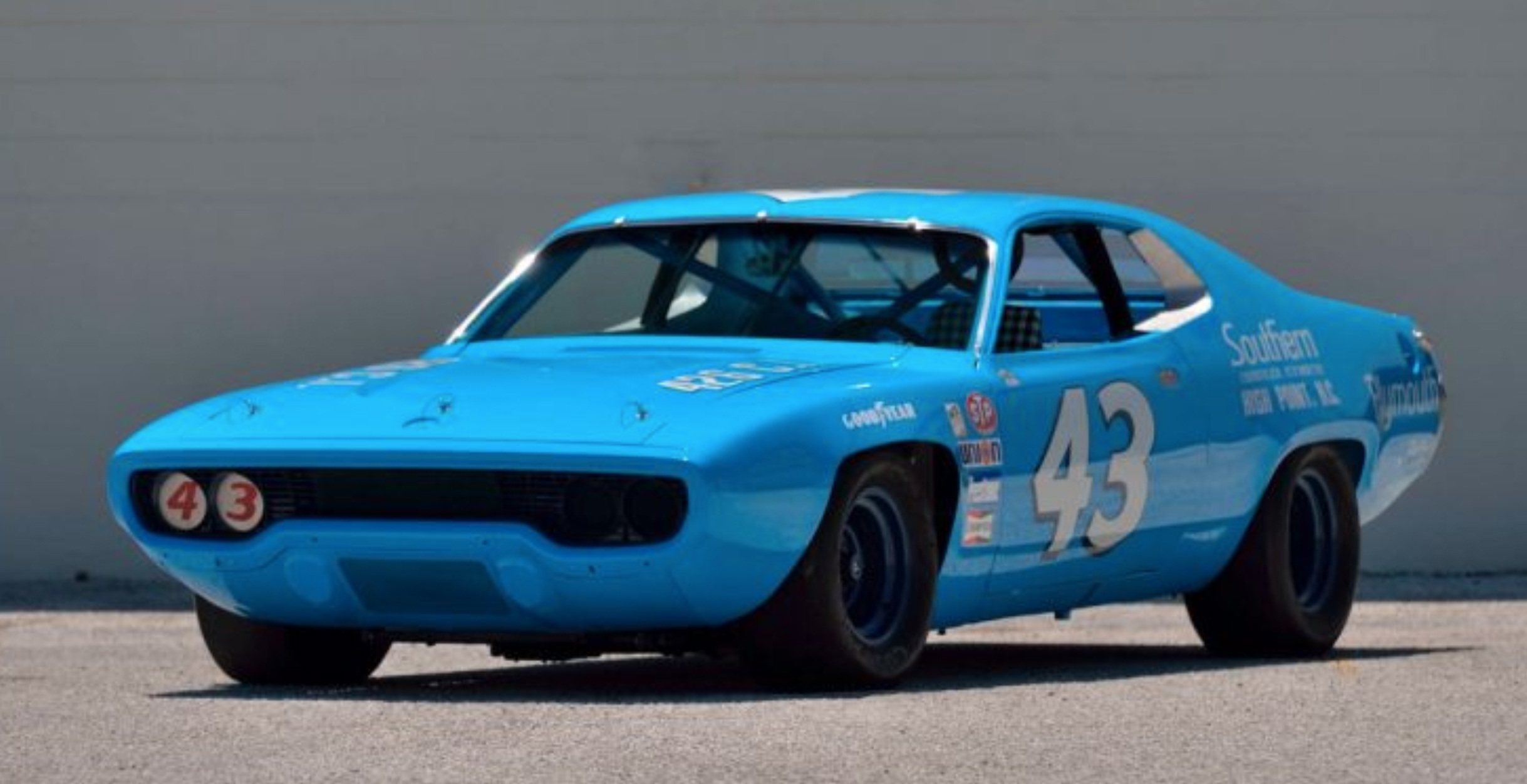
Of course, if you were a kid in the Sid and Marty Croft era, you remember the legendary stock car racer Richard Petty giving his signature toothy grin next to an orange-and-blue Dodge Charger with the number “43” emblazoned on it. These mid-seventies Mopars were not as dramatic winged legends, but the fastbacked Chargers he ran through 1977 were still slippery enough to keep The King in the winnings. Not only that, they looked fantastic.

By 1978, that particular Charger had long since been replaced by a Cordoba-clone Charger personal luxury car, and it was time for an update. Petty switched over to the Dodge’s new covered-headlight replacement for that blunt-front Charger, the Dodge Magnum coupe.
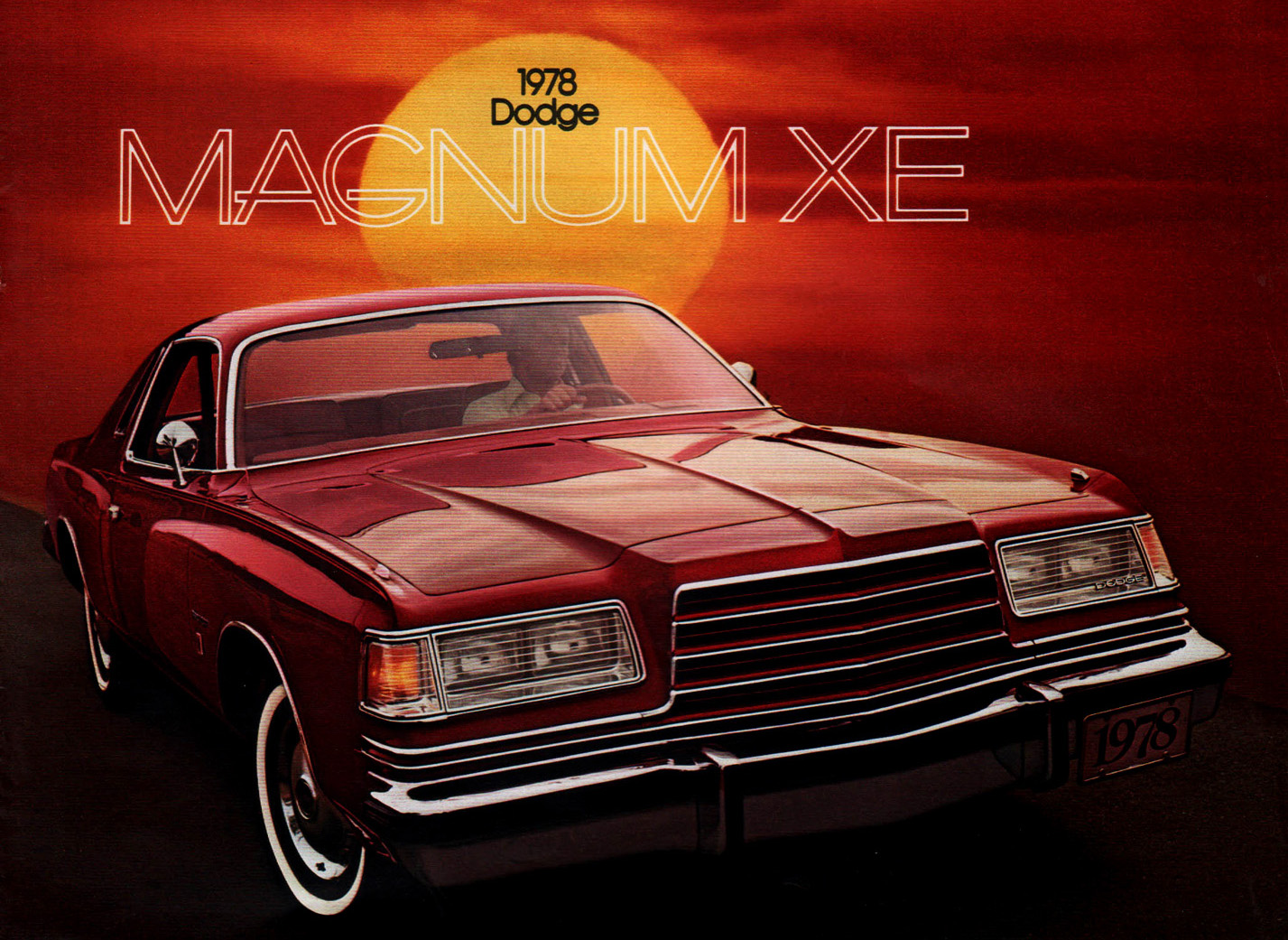
Despite the ostensibly more aerodynamic nose, Petty’s team was unable to get the handling sorted, and Richard’s race results suffered a major blow. Petty’s last win with the Chrysler was in November 1977; things got so bad that The King was forced to forsake his longtime Mopar partnership to join General Motors mid-season.

Adding insult to injury at the near-bankrupt Chrysler, Petty’s switch proved to be quite fruitful with six top ten finishes for GM in the final ten races of the 1978 season, and the new partnership would prove even more successful for Petty the following year.
Ever the marketer, then-new Chrysler president Lee Iacocca knew the importance of NASCAR to American buyers, and as part of his great “comeback” for Dodge and Plymouth, he knew stock car racing was a big piece of the puzzle. When the Magnum was replaced by the new Mirada for 1980, he saw a chance to bring The King back into the fold.

Reportedly, Lee personally called Petty and offered to give him all of the necessary engine and body parts needed to build a Mirada stocker. As luck would have it, Junior Johnson’s team (now with Darrell Waltrip) built a similar car to test as well. With the exception of the deep, drag-inducing headlamp buckets, the Mirada on paper looked like it could be winner, or at least competitive, against the current Monte Carlos and Cutlasses. Petty happily fabricated a Mirada racer to try out.
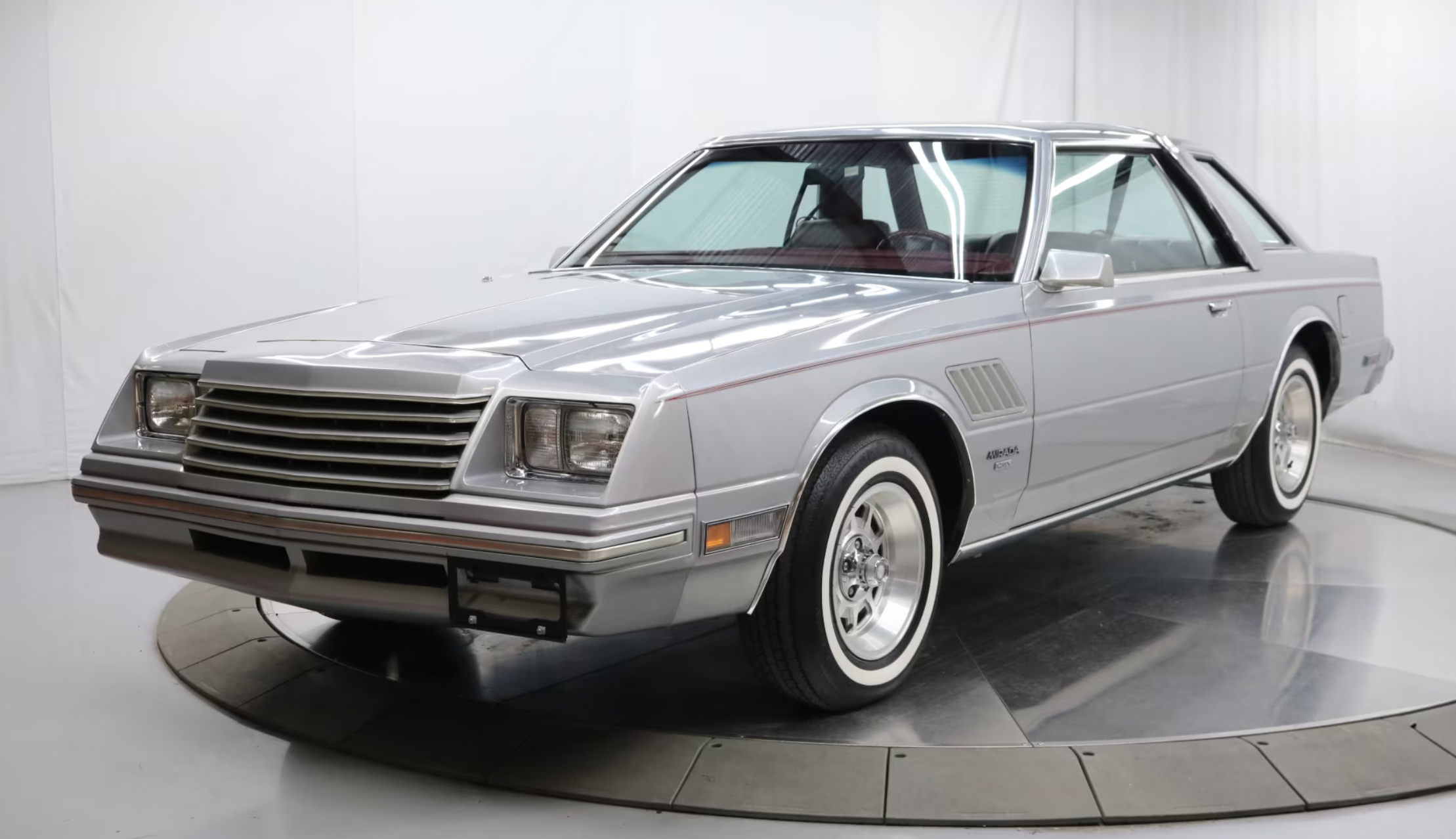
As evidence of how big stock car racing and Petty were at the time, over 15,000 people showed up on January 17, 1981 just to see Mopar and The King reunited for a test at Daytona. Initially, Petty was pleased with how the NASCAR Mirada drove and especially how it looked, but the hot laps on the superspeedway would be the acid test.
How did it do? Badly. You see, the angular Mirada turned out to be an aerodynamic brick; it couldn’t exceed 185 mph, a speed that was more than eight miles per hour off the pace set by the Ford and GM cars. Petty simply couldn’t use the car, and the vaunted Number 43 ended up instead on a Pontiac. In all, a very sad end to what could have been a triumphant return of Mopar to the big ovals a decade after the Superbird ruled.

What else could Chrysler have used to be truly competitive in 1980 NASCAR? It’s a stretch, but there’s one last product in the lineup that might have saved the day, a car that ironically had helped get Chrysler into their late seventies financial predicament.
I Bet The Ones On Fantasy Island Rusted and Broke, Too
As I’ve said before, I give companies like General Motors and Volkswagen a bit of break with the initial teething problems of the first X-cars and Golfs. These were entirely new products in every single way from the cars they’d built before. With the infamous 1976 Dodge Aspen and Plymouth Volare, however, I’m reluctant to cut Mopar the same slack.
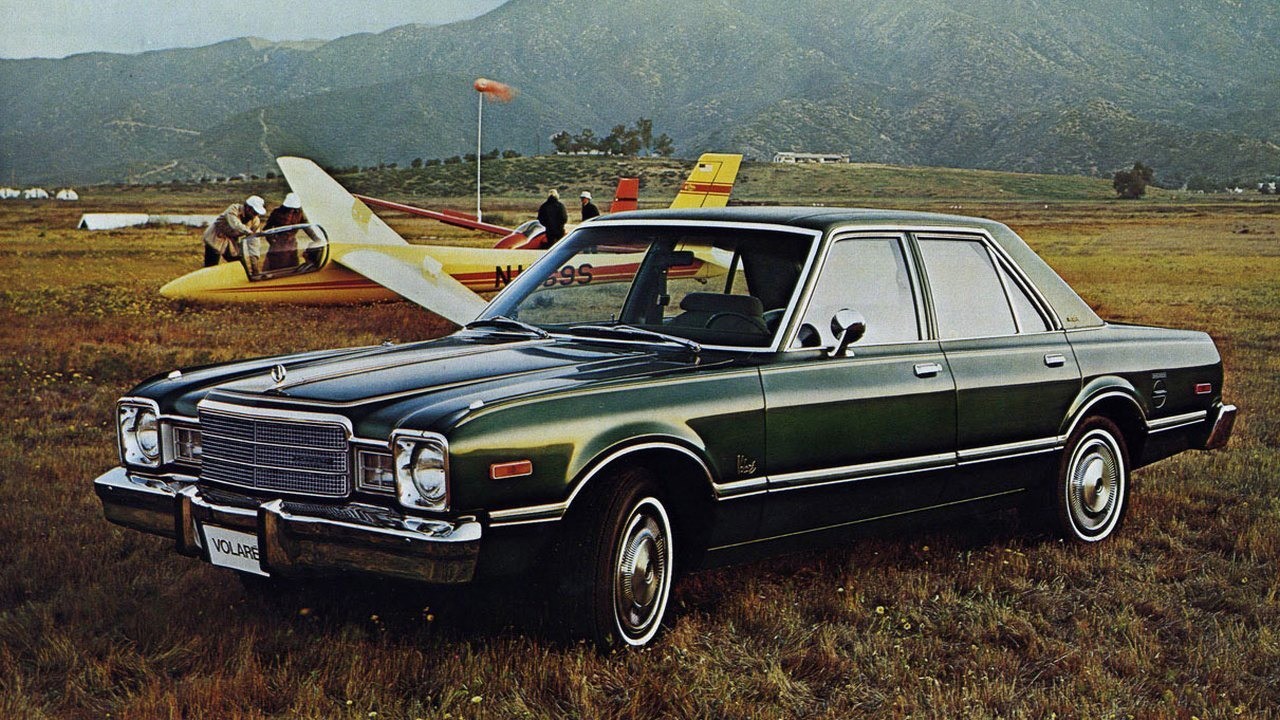
Were these all-new, rear-engined, rotary-powered, all-wheel drive vehicles? Uh, no. Other than what appeared to be a slightly different front suspension, there was very little to distinguish these cars mechanically from their famously indestructible Dodge Dart and Plymouth Valiant predecessors. Despite this similarity, Chrysler managed to release a “new” product that quickly became the most recalled car in history. These recalls were generally not “new technology” things but instead just insane oversights, including front fender tops that rusted through in just a few years, necessitating replacement at Chrysler’s expense to the tune of more than $109 million in 1979 dollars.
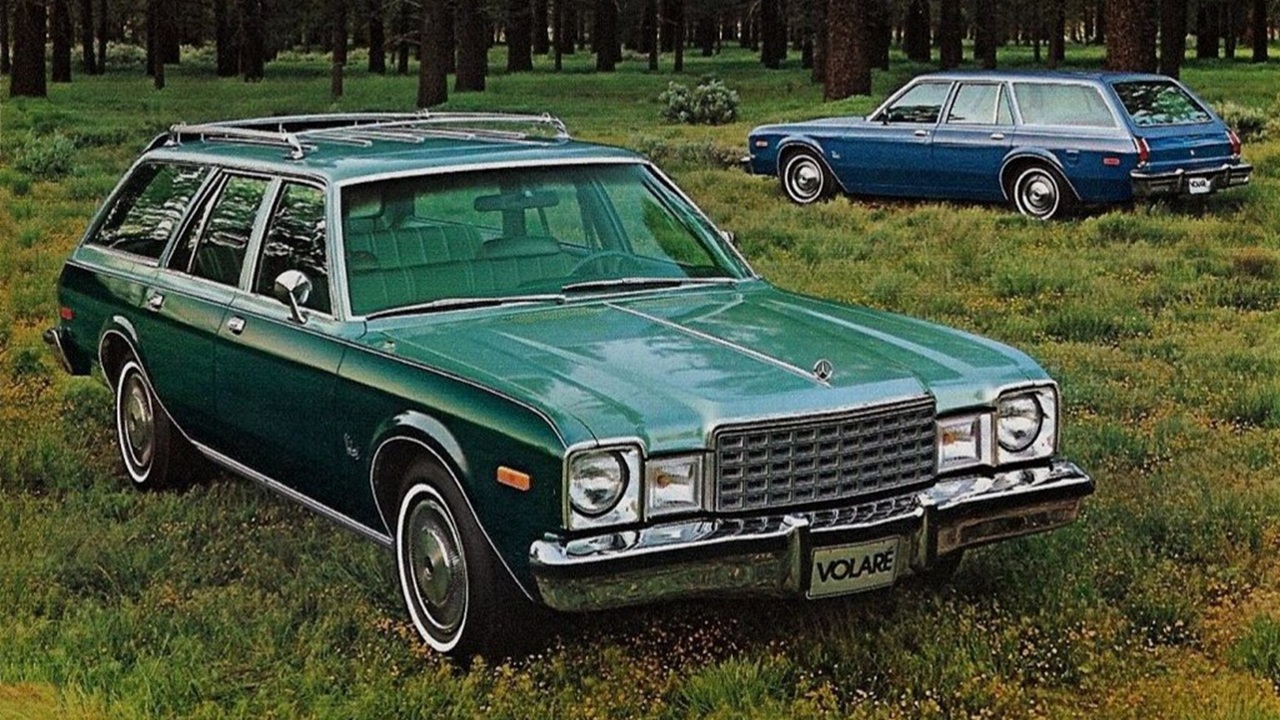
Iacocca famously hated these things with a passion, as he mentioned in his autobiography.
“The Dart and Valiant ran forever, and they should never have been dropped. Instead they were replaced by cars that often started to come apart after only a year or two. When these cars first came out, they were still in the development phase. Looking back over the past twenty years or so, I can’t think of any cars that caused more disappointment among customers than the Aspen and the Volare.”
Admittedly, when they were actually properly assembled and running right, the Aspen and Volare did seem to drive better than the Dart and Valiant forebears, which is hardly glowing praise. Also, the coupe versions didn’t look that bad. Of course, Chrysler screwed that up a bit, too, by creating absurd “sport” versions of these poor cars.
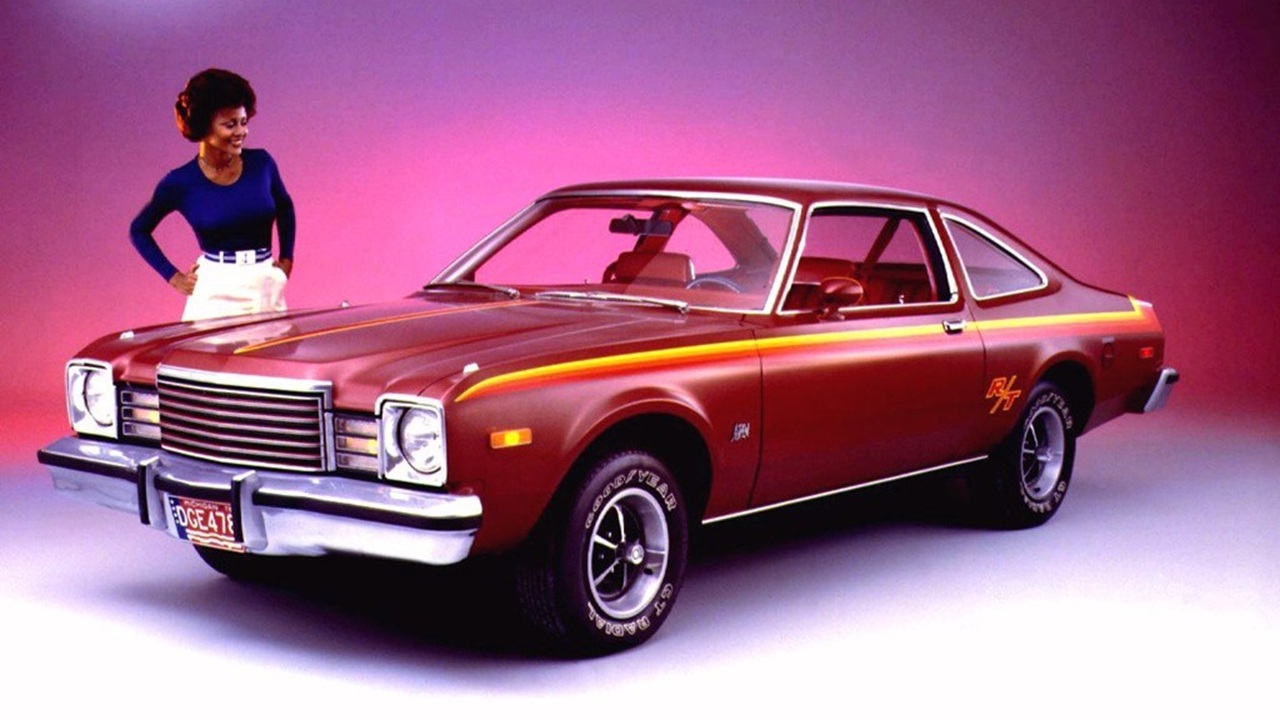
If you can ignore the fact that they had pathetic powerplants, the Road Runner package for the Volare and R/T version of the Aspen weren’t bad, though I do think the rare station wagon version of these (dubbed the “Load Runner” in the Plymouth’s case) looked better than the coupes. That would actually make a cool and practical restomod there.

Moving up to something called the “Aspen Super Coupe” got you a fender-flared thing that was a bit over the top but still not totally absurd, at least if you weren’t aware of the pathetic output under the hood.

Where things kind of went off the rails was with the version that Jason wrote about a while back called the “Street Car.” This was essentially a Volare or Aspen coupe wearing a bad Halloween costume of a NASCAR racer, including hood pins and even racing-style brackets to mimic the ones or real stockers to hold the windshield in.
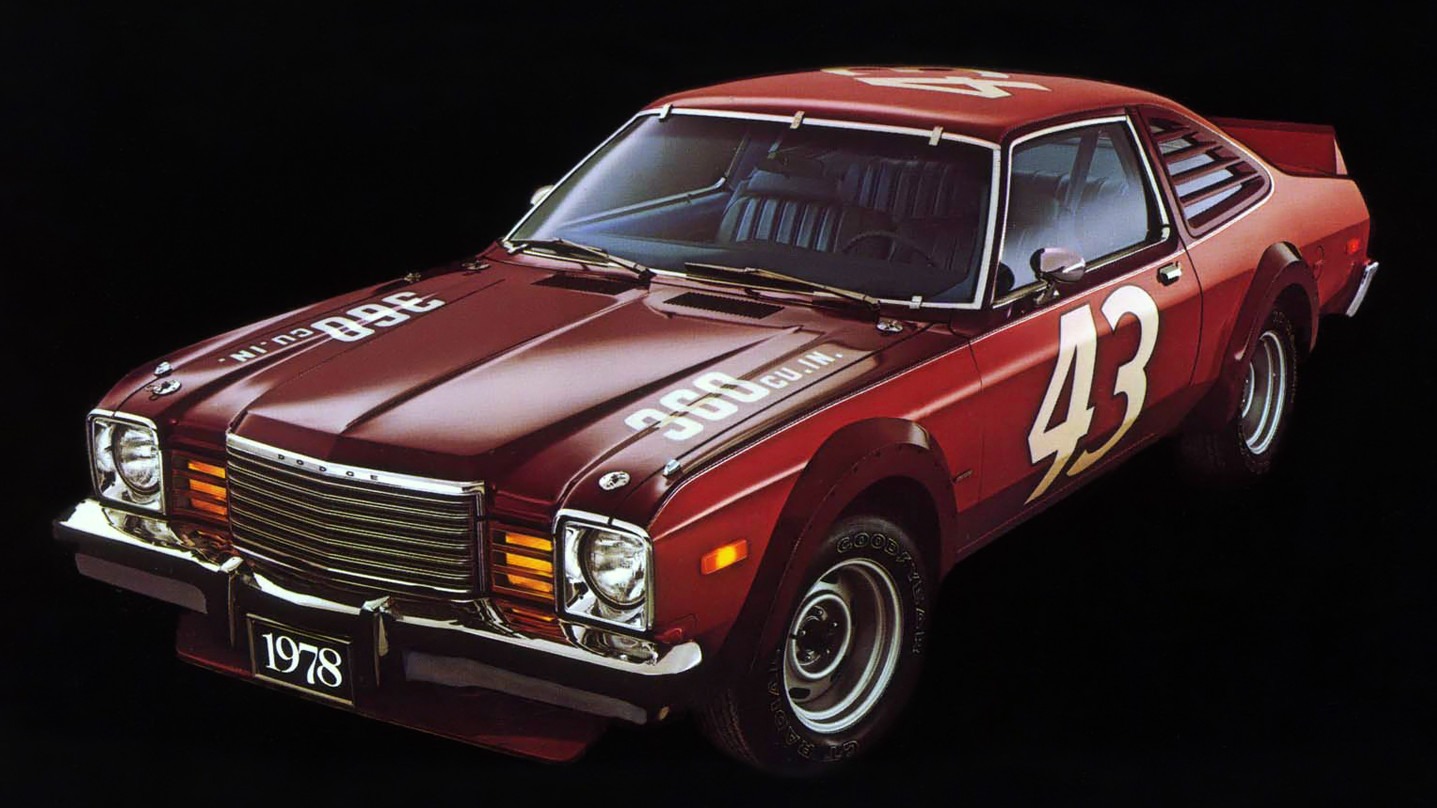
Yes, this is the same company that gave us the Bullitt Charger and Hemi ‘Cuda just a few years before. It’s kind of sad, really.
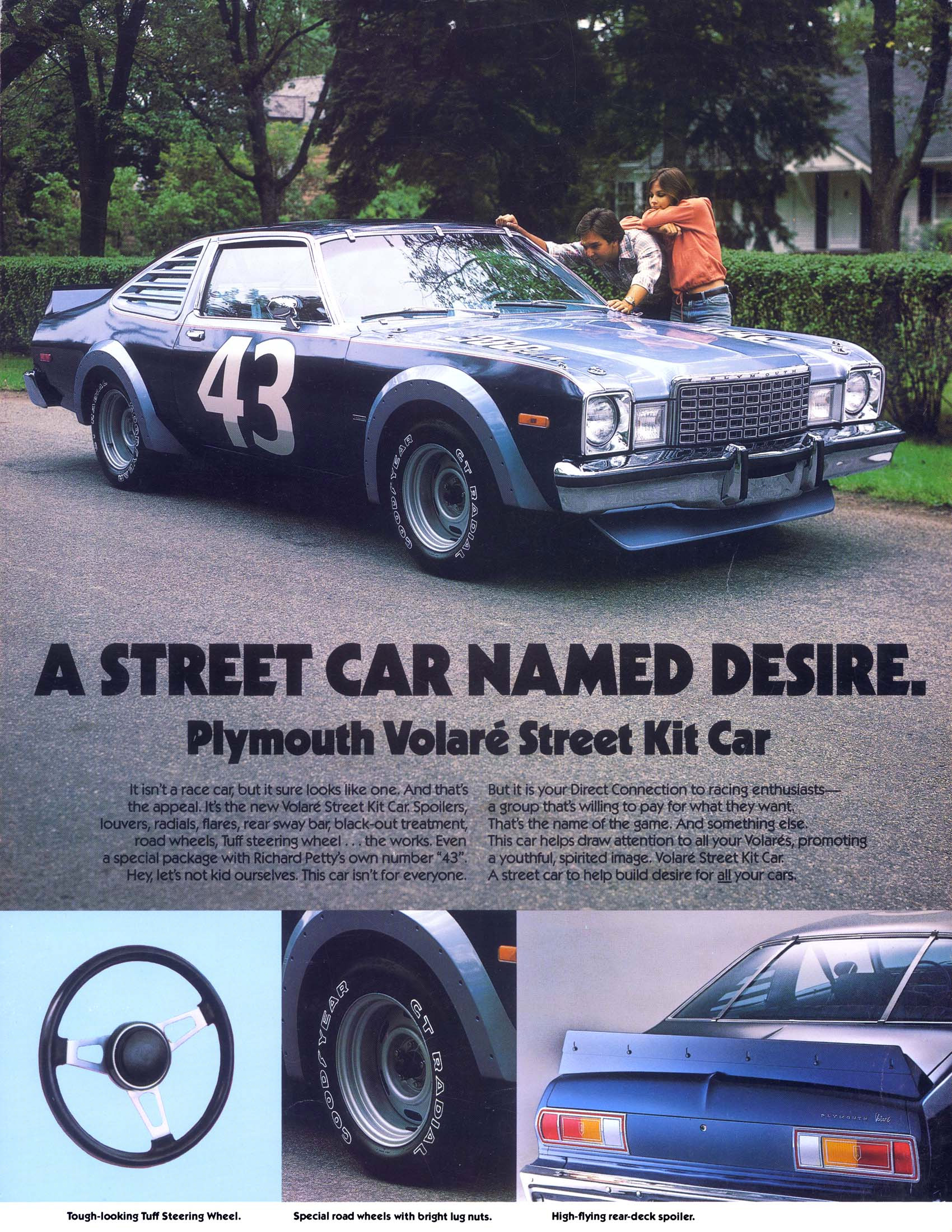
Despite these laughable “muscle machines”, the Aspen/Volare might have provided a basis for a homologation special to outrun the GM coupes on the high banks of Daytona. Still, we’ve got our work cut out for us, so let’s get started.
You Bet Your As(pen) It’s Fast
In my alternate reality, Iacocca secretly sent examples of a two-door 1978 Volare to an outside vendor in the Detroit suburbs like Cars & Concepts with orders to make the thing into a slippery sonova for Mr. Petty and develop the street version needed for homologation. That’s the first step needed for NASCAR, and it’s obviously how we have street versions of the fabulous 1970 Superbird today.

The fastbacked profile of the frequently-recalled Mopar coupes likely would have cheated the wind better than the boxy GM two-doors (which later received massive glass windows on Chevy and Pontiac versions). However, just like the original Charger Daytona and Superbird, the outside supplier would have needed to make some serious changes to the blunt front end and drooping tail. More than likely, they could have used an aerodynamics expert or even scale models in a wind tunnel to test the theories.
Now, the question needs to be asked: if the winged Mopars were “banned” after 1971, how could this thing be allowed to do anything remotely close to another “aero car in late seventies? Well, we do know that in the mid-eighties General Motors was allowed to add “glassbacks” to their Pontiac and Chevy entries to compete with the aerodynamic Ford Thunderbird, so it’s not like it never happened again.

Also, here’s another alternate reality. Remember that the winged cars were not banned; they simply got limited to a displacement of no more than 305 cubic inches, which made them uncompetitive with bigger-engined non-aero cars. During the seventies energy crisis, however, NASCAR got a lot of flak for wasting fuel, and races were even shortened by ten percent, resulting in things like the “Daytona 450” of 1974. I would say that a better solution might have been reducing the displacement of the cars and letting manufacturers go hog-wild with the streamlining. This would have leveled the playing field for Chrysler if they had made a new Volare Superbird against similar GM products. Wouldn’t that have been an odd parallel universe?
Any, back at the aftermarket house, they would start by pushing the Volare’s front bumper ahead slightly and sawing off the ends, which would be covered with flexible trim pieces to further smooth out the nose visually and aerodynamically (yet still offer the legally mandated 5 mph protection). They would then add a sloped nose cone as on the original race legend.

Retractable headlamps would flank a small grille opening with the turn signals, but the spoiler under the bumper would be the main source of engine cooling. Here’s the animation of those vacuum or electrically operated flipping headlamps. Unlike the original Superbird, the Volare Superbird II wouldn’t have nearly as much overhang added in front.

On the side, fiberglass trim pieces on the quarter windows would fill in much of the rear quarter windows for aerodynamics when the glass is removed for the speedway; they’d also add a different look that almost replicates older Mopars like the Duster or earlier Chargers (there’s a Richard Petty signature on the now-wider “C” pillar). In back, the bumpers would also get cut down and receive similar end caps to the front for aero efficiency. A “loop” spoiler for downforce with minimal drag would blend in with side trim panels that sink to create a sunken area for the stock taillights.

Inside, everything would get stripped for the race car, but for the street version of the Superbird II, we would want to at least make a few tweaks to create something befitting of the radical exterior and the likely rather steep cost of the 500 or so homologation specials. Here’s the stock interior we’ll start with:
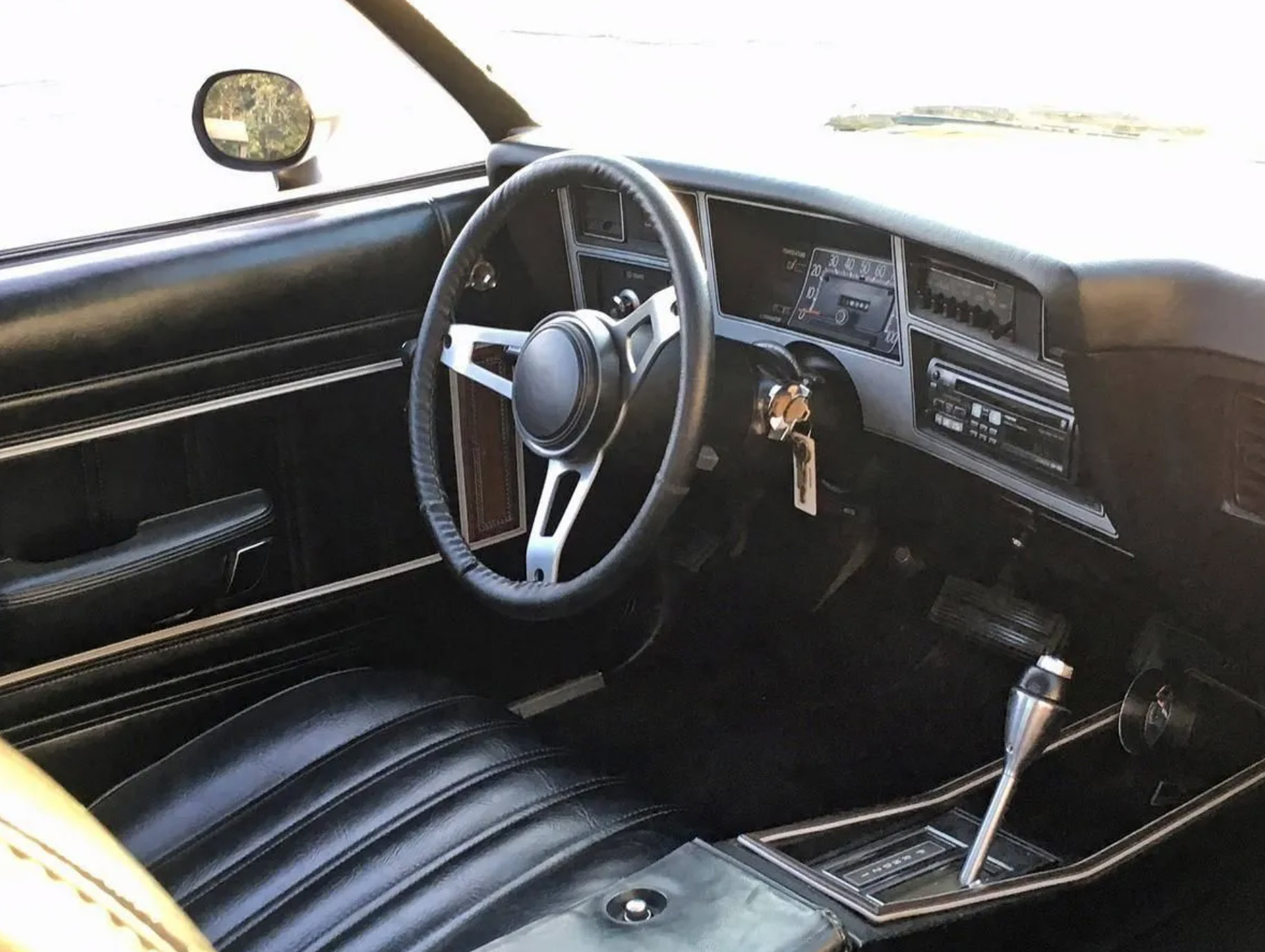
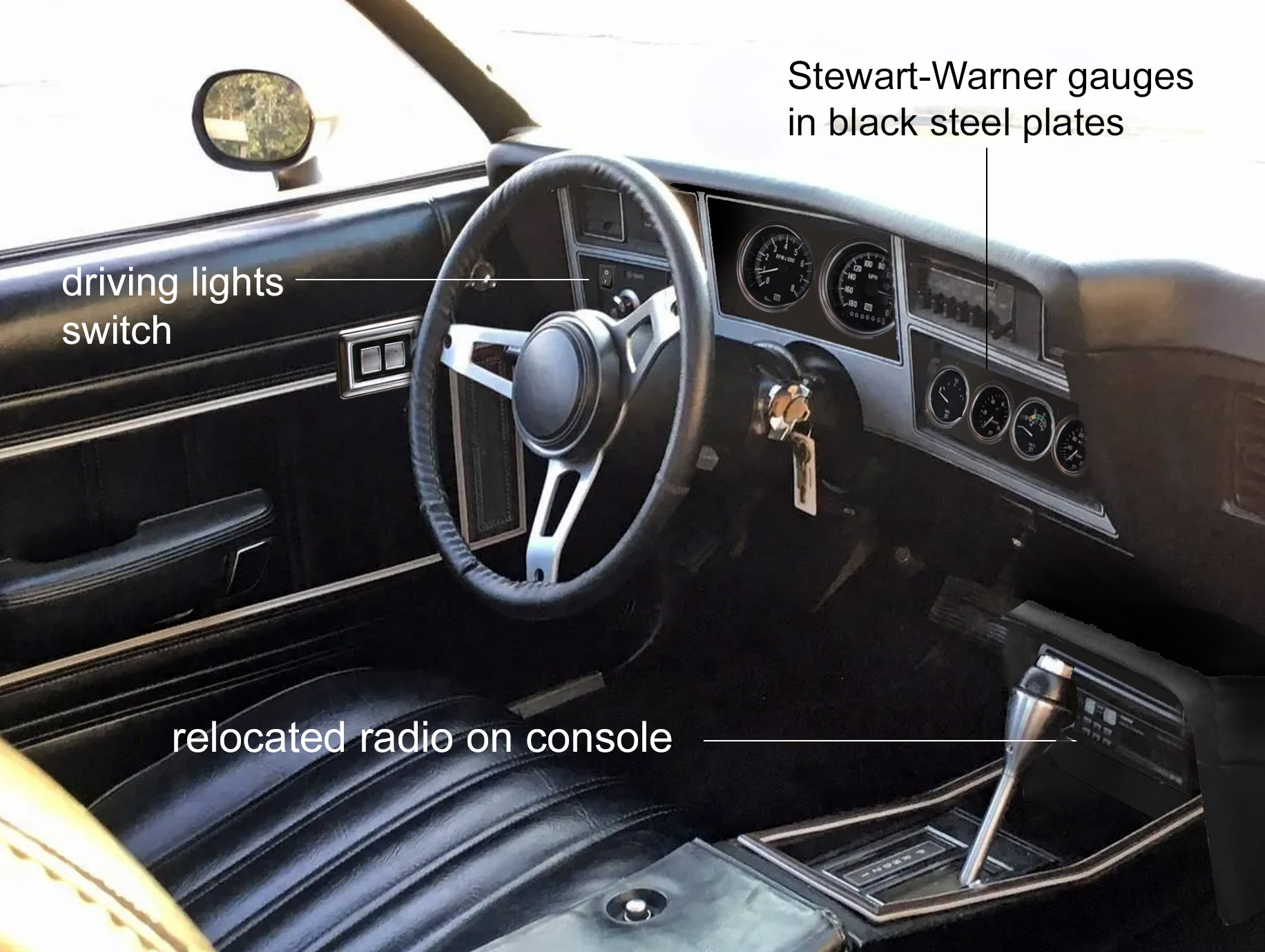
The Volare/Aspen gauges were about as enthusiast-friendly as the Ford Granada, so much of the instrument panel would get ripped out and replaced with black steel. Into these panels the fabricators would install a Stewart Warner speedometer and tach in front of the driver, then fill in the space where the radio once was with fuel, temperature, oil, and voltage gauges. The radio would have to relocate to a custom console addition ahead of the shifter. Woodgrain would give way to brushed steel. Naturally, options like air conditioning and power windows would be checked off on most of the street Superbird II’s build sheet, considering that the modifications would likely add 25 to 50 percent to the cost of the Volare. The “tuff” steering wheel is still one of the coolest things from malaise-era Mopars.
Under the hood, the Chrysler 360 would get some tweaks to the four-barrel carb and the headers exhale through dual exhaust to produce a somewhat respectable (for the time) 200-plus horsepower. A four-speed manual or Torqueflite three-speed auto would get power to the ground. Besides tightening up the suspension, they’d lower the front by a few inches and drop the rear by a little less.
I doubt that Lee Iacocca would even recognize the hated car that he sent away to be turned into a machine ready for racing. As Richard Petty said in commercials for STP Son of a Gun in the late eighties, “Man, what a difference.”
That Shallow Volare Trunk Couldn’t Hold Much Moonshine Anyway
Would Richard Petty have been swayed by the Superbird II to return to the Chrysler fold? We’ll never know, but if he worked so hard on that ill-fated Mirada, I’d think the whole Volare-with-a-beak-and-a-wing would have been just as tempting. I’d have to believe that with the fastback shape, elongated front and rear with aerodynamically friendly add-ons, it could have gotten to the speeds required on the big ovals.
The Aspen and Volare barely outlasted the seventies, with the final examples rolling off the lines in 1980; if Petty had raced one, he’d only have a few seasons before he’d be running a car no longer currently made by Chrysler. Still, who cares? Not only would it have been a huge lift for Chrysler’s image, but it also might have forced their hand into continuing to make rear-drive coupes and not just go through the motions and ditch the poor-selling Mirada (plus the Cordoba and Imperial) after 1983.
Admittedly, there might have been better investments for Chrysler to have made during these times than a Volare race car, but can you really put a price on watching The King pilot a pointy-nosed Mopar around NASCAR circuits and plopping his famous hat on the roof of a Pentastar product? Shoot, that would have been money well spent, y’all.
Top graphic images: Streetside Classics; TaurusEmerald/Wikimedia Commons



That’s a wonderfully clean design. I want one now.
I never knew that the “Load Runner” was a thing! But I want one now!
I don’t think they were mass produced. Steve Magnante did a video about it being kindofa concept car. The Volare wagon is pretty heavy even by ’70s standards and handling was floaty. I do like how they look, but it’d be a labor of love to soup up your own Lode Runner.
Thinking of Chrysler in NASCAR spawned this thought.
Talledega Nights 2
An aging Ricky Bobby is brought out of retirement by the new CEO of Chrysler (Played by John Lovitz?) to return Chrysler to glory through NASCAR once again. You see, someone noticed a loophole in the NASCAR rules that would appear to allow a minivan based stock car to be competitive for some reason and Chrysler realizes as the only brand in the market that makes only minivans they are uniquely placed to take advantage.
Front end modifications are giving me a serious Bitter SC vibe, and I’m good with that. If only…
The aerodeck Caprice coupe was also run in NASCAR for a year or two (79-80?). They all had that rear window for the first few years, so it wasn’t a special version and I’m not sure if NASCAR intent had anything to do with that rear window or what.
OK, putting the words “Superbird” and “Volare” in conjunction with each other had me very skeptical. You really made it work, though!
This is how a car can be futuristic without being over the top. Well done! I’m not being funny when I say the Mirada looks pretty sharp. The Street Car is your Dad wearing a medallion with a leisure suit.
The STP Son of a Gun reference was the chef’s kiss for this Petty / Mopar / Volare fan .
“you doan like yer core, shewt it”
The lack of coverage on the cheating that was so prevelent makes me think this article is a pleasant way of ignoring all the illegal methods used by the old guys to fight the rule of law .
Nice “what if” exercise. It almost seemed blasphemous when Petty hopped to GM and Pontiac at the time, but he did run an Oldsmobile his first two seasons in the big time, so there was precedent.
For a laugh, try and find the Candid Camera segment Allan Funt did with Petty in the early 60s where he asks Richard to explain the difference between the words “all” and “oil.” Priceless. I saw it when it originally aired on TV, so it’s been awhile, but it’s got to be on the internet somewhere.
this is amazing
Great article and I can’t believe that car actually looks pretty good!
Thanks! Yeah, I personally don’t like the Volare/Aspen so it was a challenge.
When are we going to load The Bishop into Doc Brown’s DeLorean and send him back in time, so we can/could have bought some of these things?
I mean, the man is making me desire a 1978 Plymouth Volare, for crying out loud.
I hate the fact that you made that pile look good. Great even.
These might be the best pop-up lights ever
I don’t think NASCAR would’ve approved it. They relented on aero for GM in the ’80s because Ford had the Aerobird starting in 1983 which NASCAR couldn’t object to on homologation grounds because it wasn’t a special model – all the new T-birds were like that (and they were selling significantly better than the boxy ’80-82 had).
Before that ‘Bird as a full production model that was that slick even in its’ most Brougham version, they likely wouldn’t have approved anything.
I would sadly have to agree. Of course, for 1981-82 the GM coupes got revised to be more aerodynamic so there might have been a precedent for allowing Chrysler to make some modifications, but unlikely.
So a Conquest/Starion with a V8 and a trunk?
Well, I couldn’t quite place it, but seeing it typed here now I can put words to the vibe I’m completely seeing in this. Thank you!
I’m getting 80s Dodge Daytona vibes off of that new front end, this would have put Mopar ahead of their time.
Oh yeah, good call!
Wow, another in a long list of articles that remind me of my GenX 1970s childhood.
If one still existed by now, I’d get one. In Petty Blue with STP Red graphics.
I’d want that pop-up-light front on a wagon with woodgrain paneling.
It makes me wonder, would the results for the Mirada have been any different if Chrysler came up with the Aerocoupe idea before GM?
I know! However I do wonder if that big sugarscoop nose was the problem
I thought they were pretty sharp looking cars at the time, but you’re right. That snout probably wasn’t doing them any favors in the wind tunnel.
You got more talent in one lugnut than most cars got in their whole body. But you’re stupid.
Heh. Shades of Arte Johnson randomly popping up as the “German” in “Laugh-In”: “Veddy intedestink. But stewpid.”
I should have gone Laugh-In… but it was Pixar Cars. I win the flying fickle finger of fate award again!
I like it! Those pop-up headlights are very – dare I say it? – Testarossa-esque.
actually Photoshopped them off of a Bitter SC
Had to double take on that 1978 Dodge Magnum XE photo to make sure it was not a condom ad.
Brand loyalty. What brand loyalty? They’re all glorified kit cars built by racing teams. There’s no branding there except for a sticker or two and some paint.
Like I say every time NASCAR comes up: MAKE STOCK CARS STOCK AGAIN.
We already race ‘stock’ cars that originated in a factory assembly line. They’re sports cars in various sports car series.
That doesn’t change the fact that the “SC” in “NASCAR” has been meaningless for decades now.
Once GM went to the FWD GM10/W body in ’88 all pretense was gone. Not that it wasn’t already, but one could at least pretend.
It was meaningless in the 60’s too. Guys were making their own chassis and bodies then too.
Ya. Look at Smokey’s Camero. Not a stock body panel on it.
I mean, they could at least do a better job of pretending.
I’m curious what you mean? I’d argue the NextGen cars look much closer to their street counter parts then the Gen 6 or CoT cars did.
I mean Bill Elliott’s 1985 Thunderbird, for example.
https://thenascarhistorian.wordpress.com/wp-content/uploads/2016/02/be_1-x365.jpg?w=640
Eh, I’d say the NextGen car gets pretty close. Especially when you look at the street car vs. race car comparison. I will admit the Gen 4-6 stock cars were certainly not close relatives. Especially in the Xfinity and Truck series.