

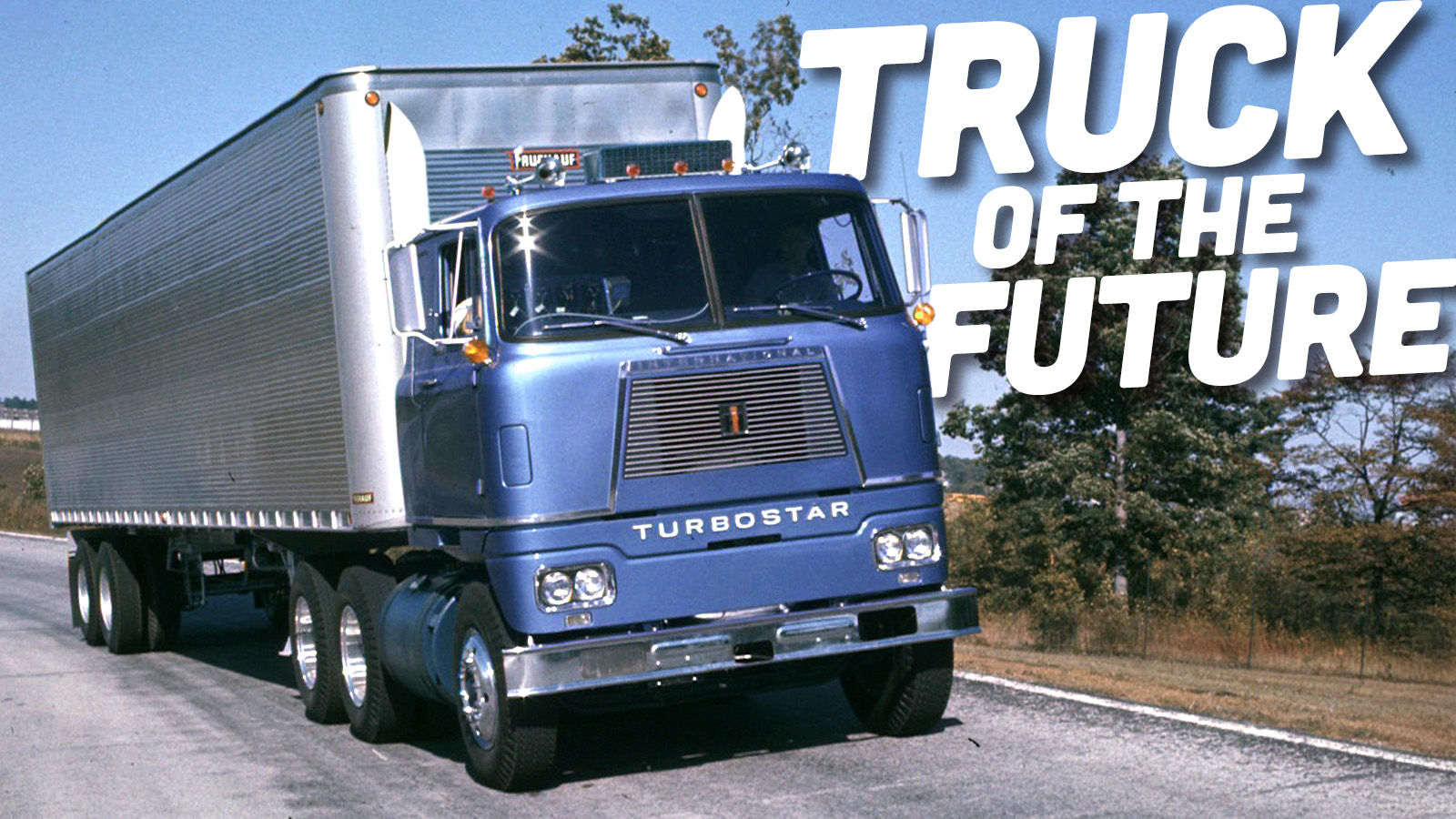
While diesel power has faded away for passenger cars in America, much of America’s commerce and logistics depend on trucks, trains, and equipment that rely on heavy diesel engines. Every once in a while, a technology comes around that attempts to unseat the diesel’s dominance, and in the 1960s, the gas turbine seemed like it could have been the future. The International Harvester Turbostar had an engine half as heavy as a diesel engine with fewer moving parts and, in theory, better fuel economy. International thought gas turbines were the future, right until it found out that the promises didn’t meet reality.
There was a time when corporations and their engineers were obsessed with finding the next great technology in engines. In the 1950s, 1960s, and 1970s, the piston engine was seen as sort of antiquated by some. If you believed some companies, piston engines were too complex, not reliable enough, not efficient enough, and not powerful enough for their size. The power demands of railroads, trucking companies, and consumers seemingly outpaced piston engine development. Heavy diesel engines in particular were more fuel efficient than gasoline engines, but had titanic sizes and weights. Diesels were also expensive to build in those days, too.


The engineers of this era had potential solutions thanks to the advancements in technology during World War II and beyond. There was the Wankel rotary engine, which had no pistons and a high power-to-weight ratio. Much of the world would eventually become infatuated with the Wankel, only to find out that piston engines were more reliable, more economical, and better for emissions.
One of the other seemingly global obsessions was the gas turbine. These engines had proven their worth in the air in World War II, but had now landed right back on the ground. It seems just as many companies, if not more, fell in love with turbines. From the 1940s to the 2000s, and technically even today, gas turbines have been found in all sorts of ships, cars, trucks, buses, tanks, locomotives, racecars, and even a motorcycle.
The promise of the gas turbine was too great for many of the world’s corporations and engineers to pass up on. The theoretical advantages of the gas turbine are somewhat similar to those of the Wankel. These engines can produce the same power as piston engines, more than twice the size and twice the weight. They have fewer moving parts than piston engines, and, at the time, it was believed that turbines would be more reliable than even heavy diesel engines. Some companies even touted simpler maintenance and the ability to run on a multitude of fuels as reasons why the turbine was going to be the technology to replace the piston engine.

The number of truck manufacturers that got into gas turbines is simply staggering. That list includes trucks by Ford, General Motors, Mack, Leyland, Magirus-Deutz, MAN, Berliet, Freightliner, Chrysler, Kenworth, and more than I’m probably forgetting. Basically, if you were a major truck manufacturer in operation between the 1950s and the 1980s, there’s a pretty good chance you experimented with turbines at least once.
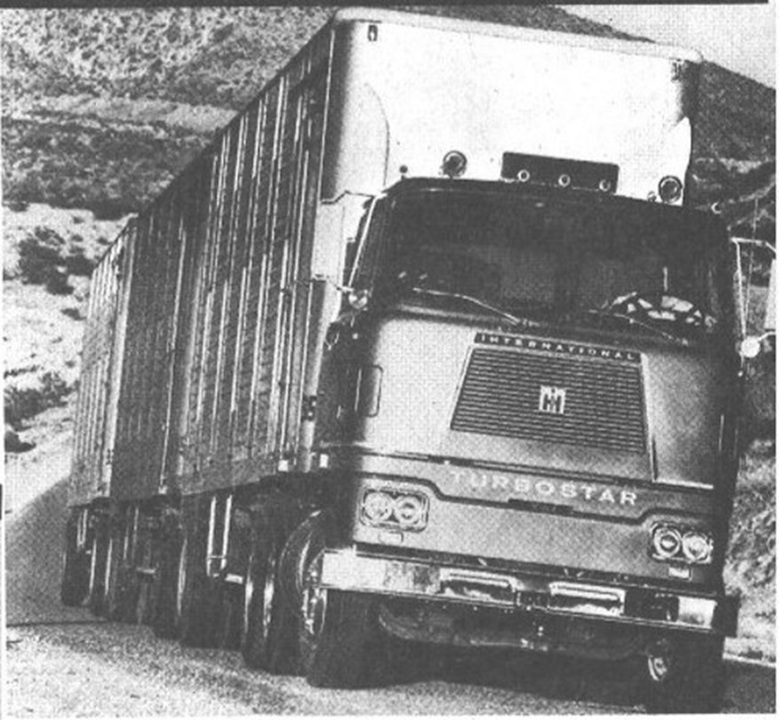
International Harvester’s turbine big rig wasn’t flashy like the ones from Ford and General Motors. Instead, it was function over form. The International Turbostar would prove itself to be a hard worker. However, like pretty much every other turbine truck, International Harvester just couldn’t beat the quirks of turbine power.
International Harvester Plays With Turbines
International Harvester’s entry into turbines was a little different from other truck manufacturers. As I wrote in my last entry in my series on historic turbine vehicles, IH avoided the hassle of developing its own gas turbine by purchasing control of the Solar Aircraft Co. in 1960. By 1963, Solar Aircraft would become a fully-fledged subsidiary of International Harvester.
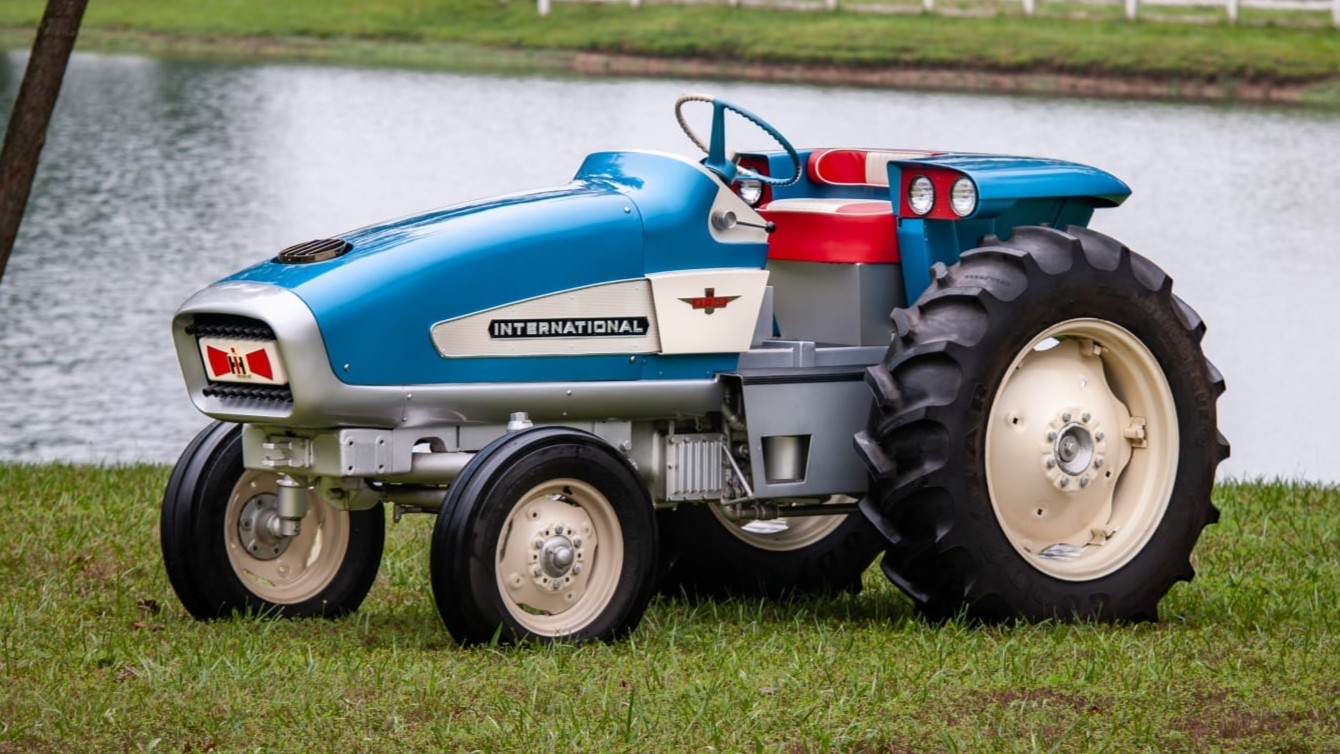
Through Solar Aircraft, IH’s first turbine went into a tractor. From my retrospective:
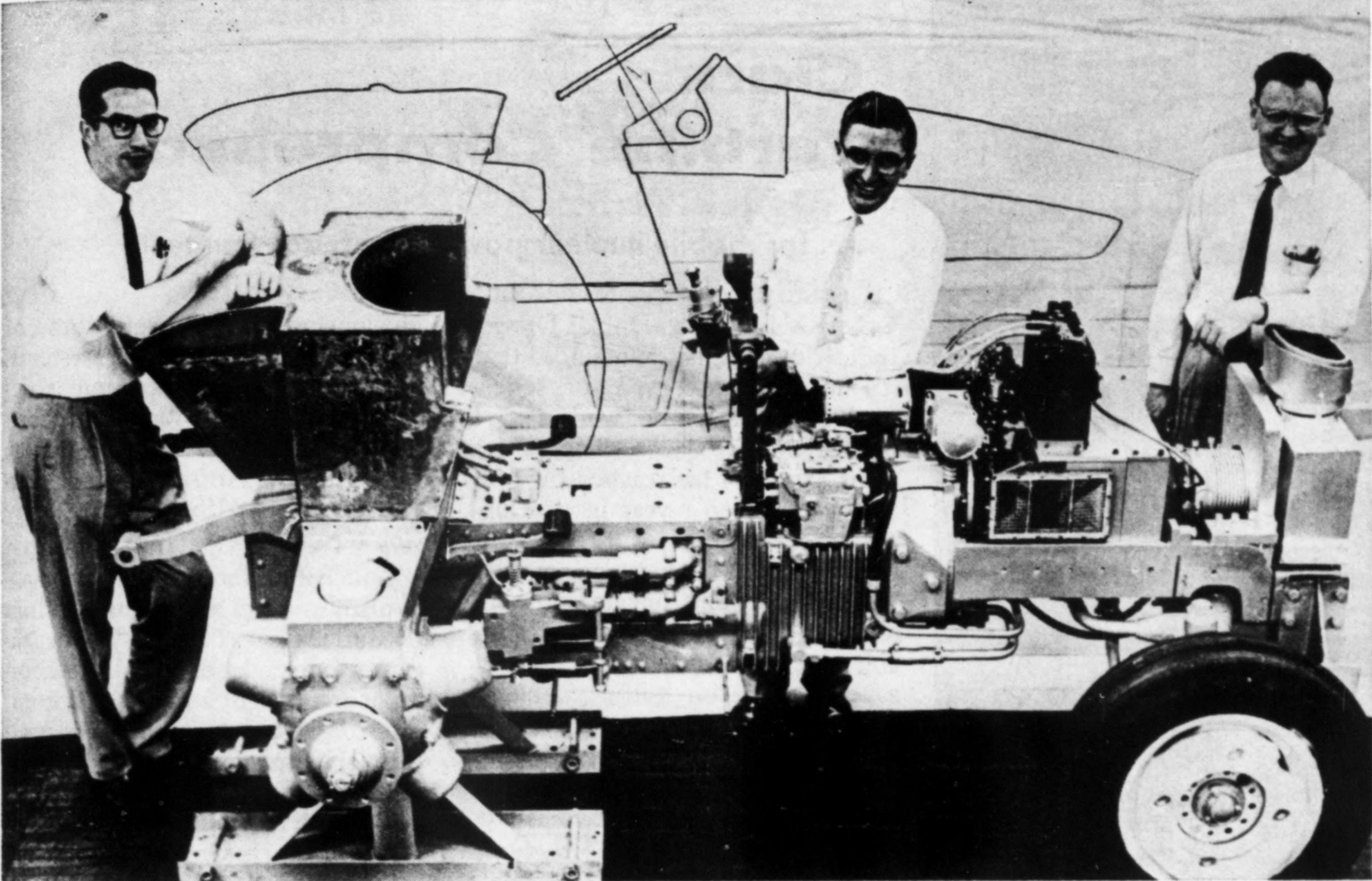
IH’s research team, which included IH Vice President of Engineering A.E.W. Johnson, Chief Research Engineer Carl H. Meile, and researchers J.R. Cromack and Ralph E. Wallace, decided to conduct an experiment of their own with a gas turbine engine. The turbine would come from within the International Harvester umbrella, as the company had a subsidiary called Solar Aircraft Co. in San Diego, California. Solar Aircraft donated a Titan T-62T turboshaft engine to the project. According to the Contract Journal in 1961, this engine, which measured 21 inches long and 13 inches in diameter, was originally designed for aircraft propulsion as well as an auxiliary power unit.
[…]
IH’s turbine, as it was found on the tractor, weighed only 90 pounds with reduction gearing installed. This engine was tiny in comparison to the 450-pound lump of metal that was the 40 HP piston engine that was originally mated with the hydrostatic transmission. The turbine was also more powerful, making a healthy 80 HP for its small size. However, since the transmission was designed for 40 HP, the turbine had to be detuned.
The power unit had some fascinating stats to go with it. The turbine’s maximum speed was 57,000 RPM, and when it spooled up to a constant speed, the output shaft spun at 6,000 RPM. This went through a 3-to-1 reduction to get it down to a constant 2,000 RPM. Reportedly, if the transmission input spun any faster than 2,000 RPM, then the hydraulic pump would overspeed and burn itself out.
The idea here was that a turbine could make tractors better by being easy to operate, more durable than a piston engine, and able to run on whatever fuel a farmer had lying around. IH also thought that a turbine was the perfect complement to its then-new hydrostatic drive system.
Something that I did not write in my previous story is that International Harvester did have at least one previous gas turbine experiment. In 1954, IH began turbine research and eventually tested the feasibility of turbine power in tractors by strapping a Boeing gas turbine to a TD-24 crawler tractor. When that turned out to be a success, IH decided to get a turbine of its own and bought Solar Aircraft, which was looking for some help after losing military contracts.
International Harvester was transparent that the turbine tractor was an experiment from the start. The tractor was half a science project and half a PR stunt, and it was brilliant at both purposes. However, ultimately, International Harvester concluded that the turbine was too loud, too complicated, too chaotic, and too ridiculously thirsty to ever go any further than a fun experiment. The HT-341 tractor was retired from the show circuit in 1962 and then was retired for good in 1967.
While International Harvester gave up on the turbine tractor, it was not yet done with gas turbines. It was thought that, maybe, the true home for a turbine was not a farm tractor, but a semi-tractor. In 1967, IH’s turbine research continued with the birth of the Turbostar, which was shown to the public on January 11, 1968.
The Turbostar
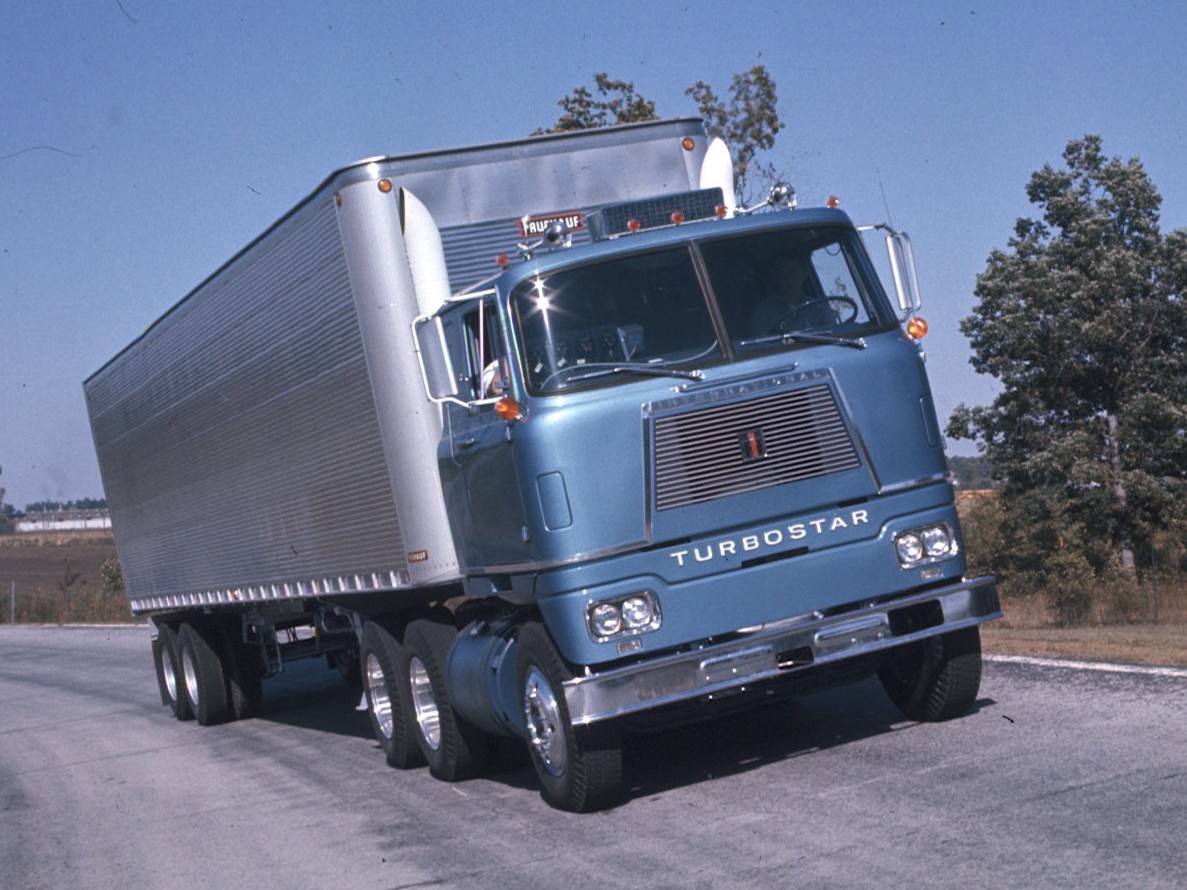
While International Harvester was a major truck manufacturer, it didn’t quite have the resources of giants like Ford or General Motors. As a result, the International Harvester Turbostar was not a flashy truck like the other concept trucks of its era. It didn’t look like it came from 50 years in the future. But what IH lacked in style, it made up for in performance.
The Turbostar started life as a CO-4000 6×4 cabover semi. IH made some changes to the cab, like reducing the grille opening size and elevating the cab higher. The rig also got stylish quad headlights and was finished in a beautiful sky blue. While it didn’t look nearly as futuristic as the works of General Motors and Ford, the Turbostar was still a classy-looking truck.
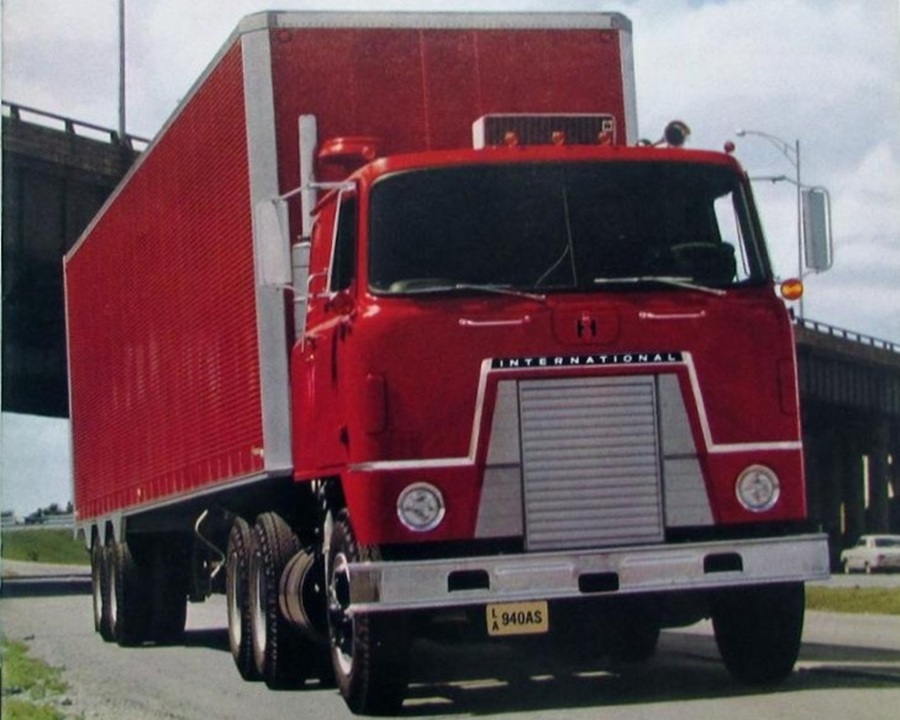
The real magic is what was contained under the cab. In a production CO-4000, which would also be known as the TranStar in 1968, buyers had options for a variety of engines. If you fancied your IH with a Cummins straight-six diesel, the CO-4000 had everything from the 195-horsepower Cummins NHE-195 to the turbocharged NTC-335, which, you guessed it, had 335 horses in its stable. If you were a Detroit Diesel kind of person, you had access to everything from the Detroit Diesel 6-71N to the 8V-71N with horsepower ratings ranging from 195 HP to 318 HP. These power numbers are all gross numbers rather than net, so these rigs lost a bit of power on the way to the wheels. Here’s what a regular CO-4000 looks like:
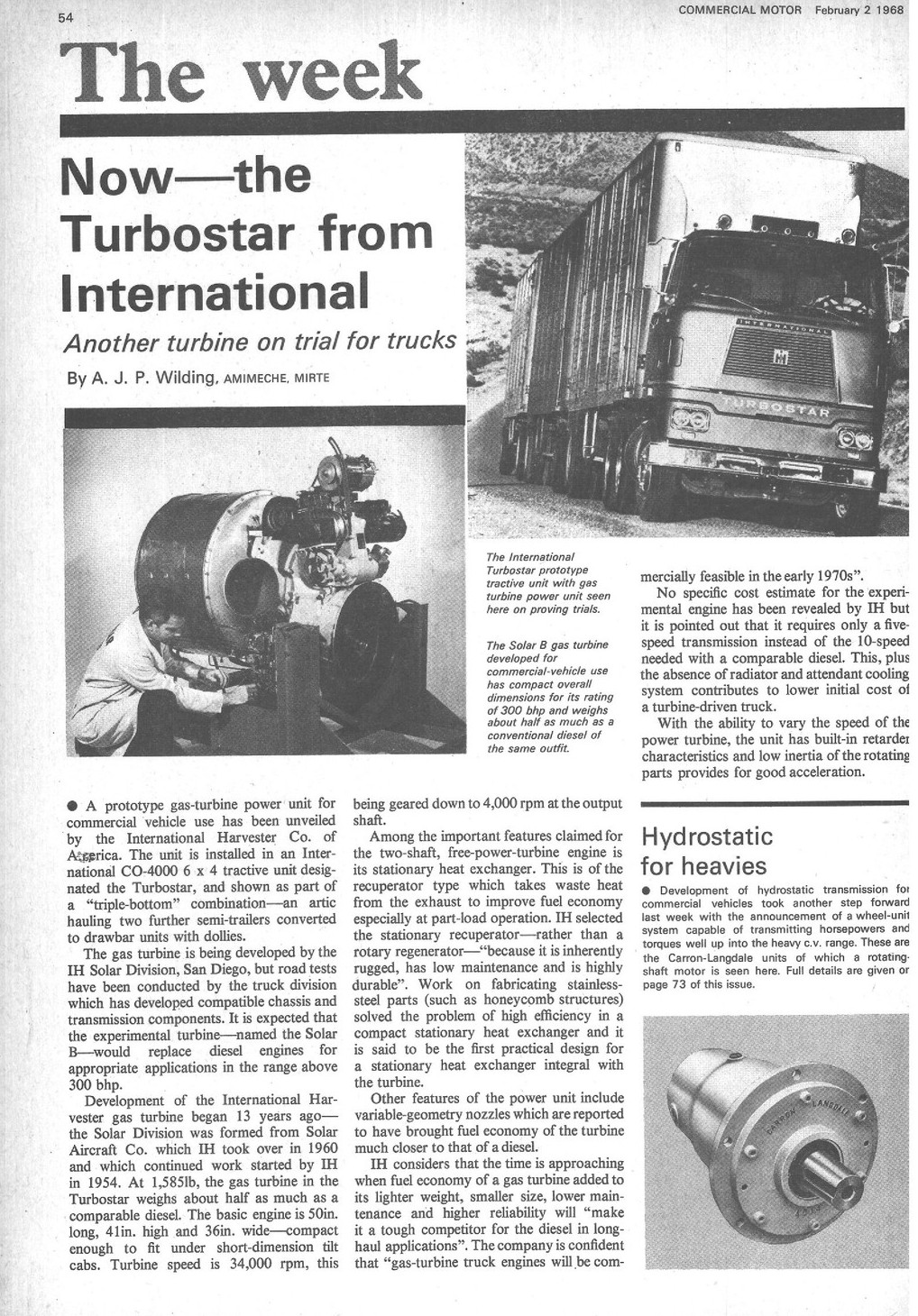
For the Turbostar, the diesel engine was tossed out, and in its place sat a Solar Aircraft B series gas turbine. This was a substantially larger and more powerful unit than the Solar Aircraft Titan T-62T turboshaft that powered the turbine tractor. It also benefited from the latest research and lessons learned from the turbine tractor project.
The Solar B engine measured 1,585 pounds, approximately half that of an equivalent diesel. At 50 inches long, 41 inches tall, and 36 inches wide, it was also able to fit under the cabs of short cabover trucks. The February 2, 1968, issue of Commercial Motor magazine continues with how IH’s engineers improved their turbine design:
Among the important features claimed for the two-shaft, free-power-turbine engine is its stationary heat exchanger. This is of the recuperator type which takes waste heat from the exhaust to improve fuel economy especially at part-load operation. IH selected the stationary recuperator rather than a rotary regenerator-“because it is inherently rugged, has low maintenance and is highly durable”. Work on fabricating stainless steel parts (such as honeycomb structures) solved the problem of high efficiency in a compact stationary heat exchanger and it is said to be the first practical design for a stationary heat exchanger integral with the turbine.
Other features of the power unit include variable-geometry nozzles, which are reported to have brought fuel economy of the turbine much closer to that of a diesel.
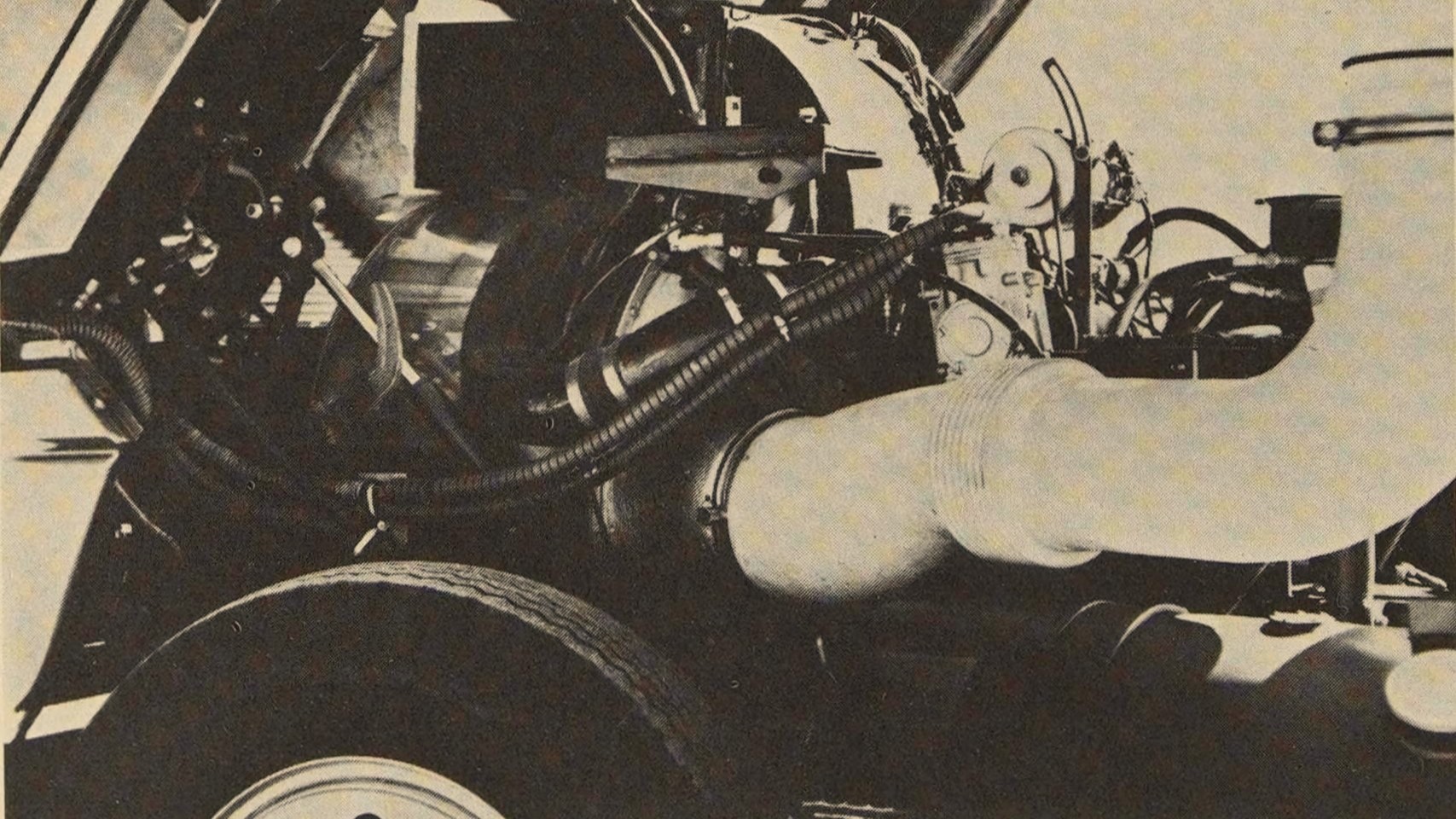
The recuperator was also said to dramatically cut down on the high noise that plagued other gas turbine projects. The changes above were important because early turbines, including IH’s turbine tractor, were horribly inefficient and loud. For example, when Boeing made a gas turbine for Kenworth, the engine was so absurdly thirsty that it averaged 1 mpg. That was so impressively bad that even gasoline engines seemed frugal in comparison. The average big rig got 5 mpg back then. Some of the few turbines that did go into production, like the Union Pacific Gas Turbine-Electric Locomotive, worked only because the gas turbines gulped down fuel that was significantly cheaper than diesel. Other manufacturers made their turbines eat coal.
The Solar B engine cranked out 300 horsepower and spun at 34,000 RPM, which was geared down to 4,000 RPM at the output shaft. Other changes under the skin were a five-speed transmission instead of the common 10-speed, and no radiator because the truck didn’t have a traditional cooling system.
IH also said that thanks to the variable speeds of the turbine, a retarder system was built right in, and that the low internal mass of the turbine meant that it didn’t take long for the engine to spool up. Due to the turbine’s design, it was also possible to stop the output shaft but keep the gas producer running. Therefore, the truck was “stall-proof.”

International Harvester was ambitious in its marketing of the Turbostar, calling it the “Truck Of The Future.” When talking to the press, IH said that gas turbine technology was advancing so well that the fuel economy, lighter weight, smaller size, lower maintenance, and higher reliability would make the turbine a strong competitor for diesel in the future. IH went as far as to tell Commercial Motor magazine that “gas turbine truck engines will be commercially feasible in the early 1970s.” The marketing also said that “From fifty feet away, all you hear is the sound of the tires on the road.”
In speaking to Nathan’s Business in November 1968, IH CEO Harry O. Bercher was confident in the future of the gas turbine, from Nathan’s Business:
I think it still may be three years before we can say we can produce them at a price competitive to a diesel engine and have enough production facilities to warrant going forward with it. We are producing more of these prototype engines, will have them in more vehicles and we will learn from that application.
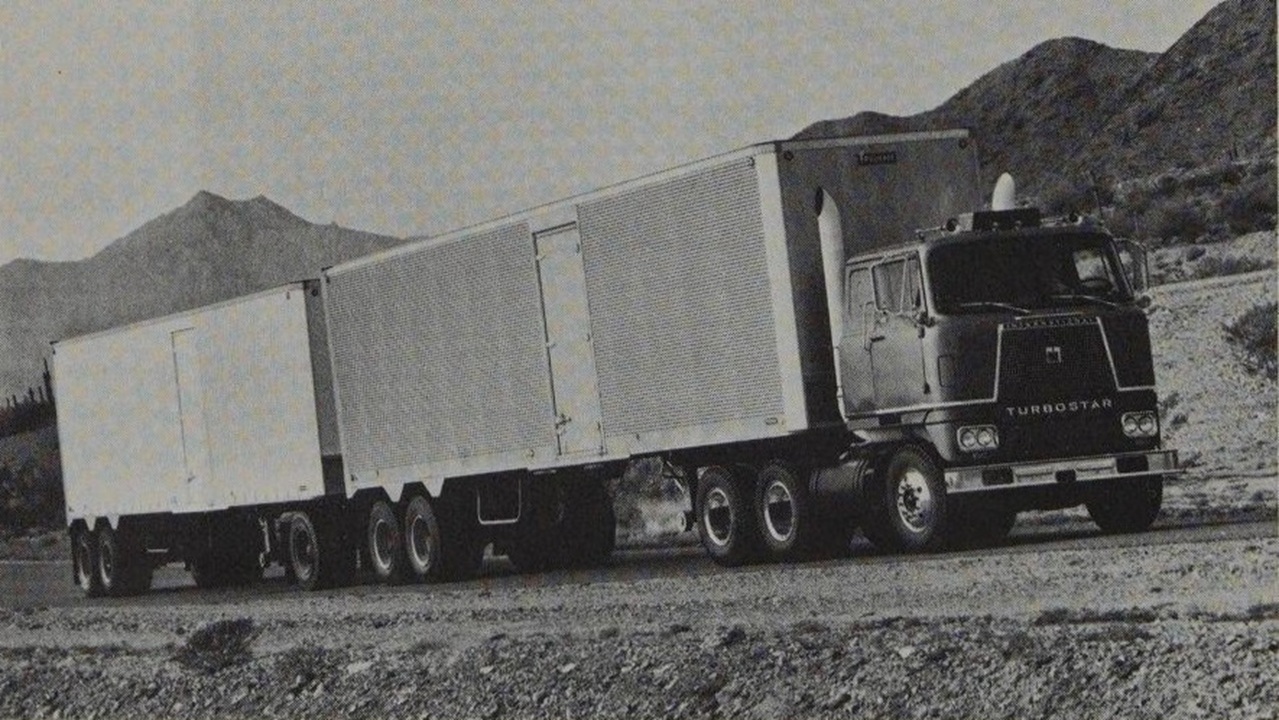
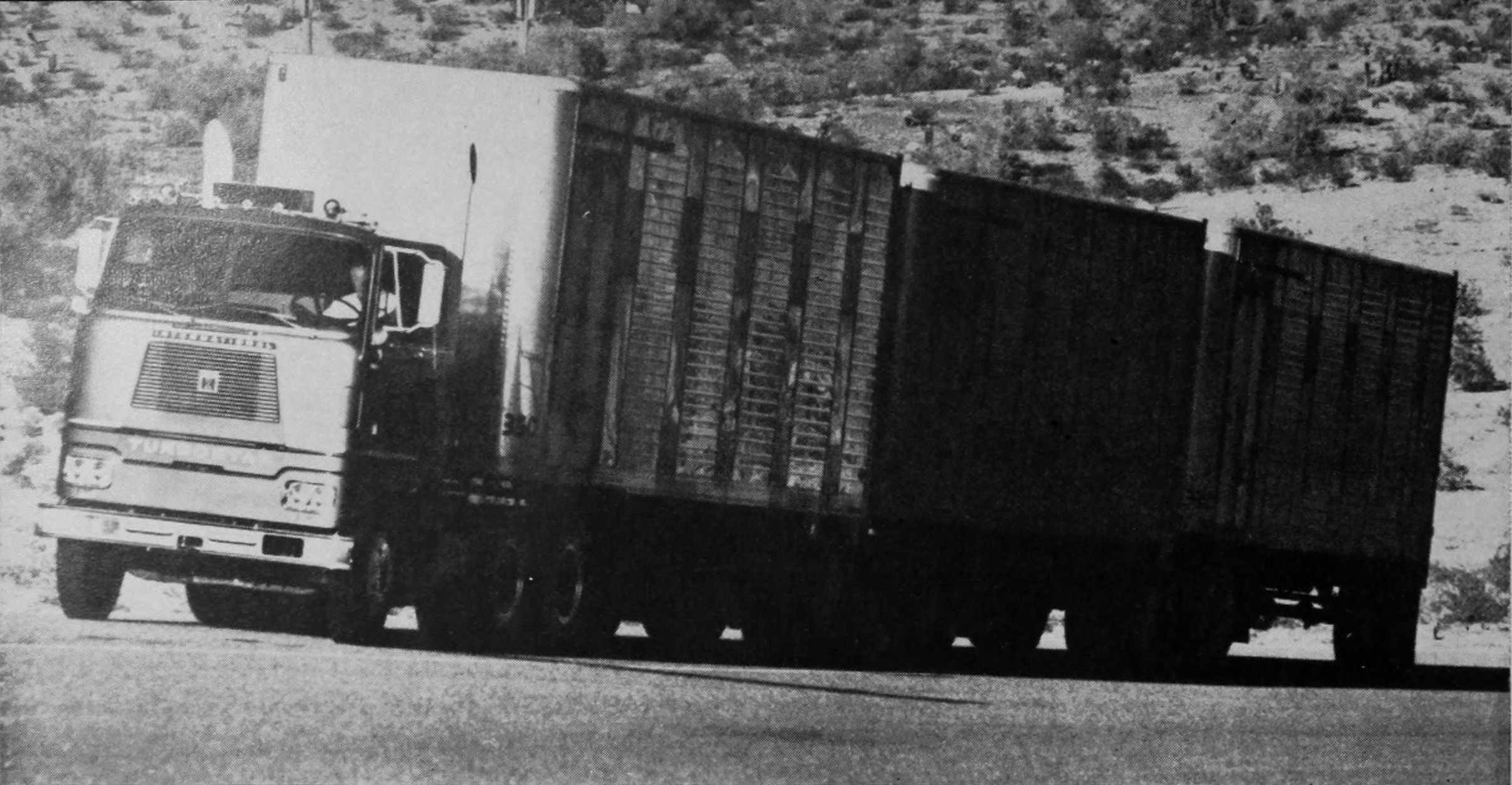
Since the truck itself wasn’t terribly flashy, International Harvester made it haul three long trailers on its massive proving grounds. Apparently, the Turbostar pulled with ease.
International Harvester Drops Its Turbine Truck
As A Corporate Tragedy: The Agony Of International Harvester Company by Barbara Marsh writes, International Harvester learned that the juice probably wasn’t worth the squeeze. By the late 1960s and early 1970s, diesel engines had become more powerful, more reliable, cheaper to make, and more efficient. Piston engines didn’t have a long delay between requesting more power and getting it, and truckers largely preferred the proven technology of the piston engine, anyway.
Reportedly, the Turbostar did prove itself to be pretty reliable, but that didn’t matter in the end. IH saw how other companies were burning hundreds of millions of dollars on turbines without getting any closer to production vehicles than IH was. So, International halted turbine truck development and let the companies with more money and more resources, Ford and GM, keep experimenting with turbines. Reportedly, Ford and GM both spend over $200 million on their turbine projects, so, in hindsight, it was wise for IH to give up earlier.
But IH didn’t throw away the whole thing. Solar’s gas turbines were popular as stationary engines, especially in oil field operations. Between 1966 and 1975, Solar’s sales reportedly increased ninefold to $254 million. In 1975 alone, Solar was responsible for a third of IH’s profits. So, it was a cash cow worth keeping around. In 1969, Solar’s parts even made it into Saturn V rockets and onto the Moon through Apollo 12 (below). Reportedly, not all executives thought that keeping Solar around made sense for IH because IH wasn’t a turbine or aviation company. However, IH kept Solar around until 1981, selling it to Caterpillar when it needed a cash infusion.
In many ways, the gas turbine is seemingly as cursed as the Wankel engine. All of the companies that worked on gas turbines for the road had varying levels of success, but most of them eventually reached the conclusion that the established engine, the piston engine, has the fewest disadvantages. Yes, turbines have fewer moving parts and can be fuel agnostic. Yes, turbines are also lightweight and powerful.
However, many of these companies found out that their gas turbines were too thirsty, too loud, too hot, too expensive, not as responsive as piston engines, or just otherwise not really ready for public consumption. Remember, Union Pacific’s gas turbine ran so hot that, if parked under a bridge, the jet blast was hot enough to melt the asphalt on the bridge. The MTT Turbine Superbike infamously has an exhaust hot enough to melt car bumpers. It’s a shame because, even today, turbines look and sound like the future.
Despite the fact that nearly all of these projects failed, I’m still so happy that they happened. I can only imagine how gratifying it must have been to build these vehicles and test them out. There are people out there who can tell stories about hauling loads up hills behind an engine that sounds like a jet. It’s also awesome when engineers get to flex their muscles like this. I hope projects like these never really go anywhere, even if they never go into production, because they’re just plain fun.
Top graphic image: International Harvester




Do not forget, there are still turbines running in almost all gas powered electricity generating plants. Massive beasts, with two tonne fans, so finely balanced they can be turned with a little finger.
Almost all are actually gas and steam generators, the turbines ultimately turn huge alternators at 200 rpm to make electricity, and their super heated exhausts make super heated steam which blasts through other smaller turbines to also turn alternators…
There were also turbine fire pumps, like the Rover 1S60. Hand-crank start. Seriously. Massive fuel appetite. It was louder than heck.
It would be fun, once, to have one on a Saturday morning when the neighbor smugly trots out their pressure washer and you trot out a turbine water pump and wake the dead.
You can’t fault folks for being excited about the potebtial for gas turbines. Steam turbines have had a long and successful industrial life. The SS Wilfred Sykes, built in 1949, is still earning her keep as a 678’ freighter on the Great Lakes. A 7700hp Westinghouse steam turbine provides the grunt.
300 horsepower at 34,000 rpm is a whopping 46.3 foot pounds of torque.
Wasn’t someone working on an output turbine that could produce high torque at stall like a torque converter?
It’s geared down 8.5 times before going into the transmission, so that torque becomes 393 ft-lbs. And then it goes into the transmission (from 1:1 to say 6:1 in 1st gear) and then to the differential (4:1). So that weak turbine torque would become something like 46.3 x 8.5 x 6 x 4 = 9445 ft-lbs, minus losses in the gearing.
Oh I know the math, it’s just kind of fun seeing Archimedes’ famous lever but very small.
Early turbine stuff is interesting. There sometimes seems to be unwritten rule that the military needs to use it before it can be a commerical success. Chryslers turbine work seems to have helped in Abrams that has been using a turbine for close to 50 years. So many stationary turbines for power generation that work very well. Or used in ships then tanks. Then you have the rc / drone turbines. It seems like on highway turbines could again be on the horizon if someone wants them to be.
The Abrams needs an axillary engine to power the tank when it isn’t moving, due to the costs of the turbine. Expect the next update to include a small diesel engine to power everything when the tank is in use but not moving…
I can’t stop looking at that topshot, in that gorgeous shade of blue, combined with the silver trailer and polished wheels, this is an extremely good-looking truck.
I love reading these types of articles, I find these engineering experiments fascinating. I love the whole “can-do” spirit of that era.
Even the toy makers got in on the hype.
https://www.proxibid.com/lotinformation/78688482/vintage-1960s-structo-pressed-steel-turbine-hydraulic-dump-truck
Canadian National Railways also developed a TurboTrain in a partnership with Pratt & Whitney (eventually United Aircraft Canada). They were relatively successful compared to other experimental projects but eventually the project was terminated due to the usual reasons. I was mid-teens at the time and lived close to the Montreal-Toronto mainline – they were impressive in action.
Turbines are most efficient when running at high RPM under high load at high altitudes.
Using turbines where they run through a conventional transmissions and are subject to variable throttle inputs is a terrible use case for turbines.
The way I see it, the best use case for a turbine in on-road use would be as a range extender in a heavy duty application… like long haul trucking or in some sort of electric locomotive application where you need a backup or auxiliary source of power for the times where the power is out and/or the train needs to go through an un-powered section of track.
But even in circumstances like that, it would probably make more sense and be way cheaper to just have a downsized gasoline or diesel engine acting as a range extender or backup power source.
The power-to-weight benefits of a turbine isn’t the huge benefit for on-road applications like it is in aviation.
It seems the main engineering challenge for all these gas turbines is that they leave way too much energy in the exhaust. In high altitude aviation applications that isn’t a problem, because you just point that high energy exhaust back and call it thrust.
It seems to me that these road-going applications need more turbine stages to harvest more of that exhaust energy. That would improve their efficiency and reduce the EGT and noise. But I’m sure that adding enough turbine stages would be impractical since they would be really big.
Not really the case–people forget that turbines tuned primarily for shaft power are common because they aren’t as flashy as jet aircraft, but things like helicopters have been using them for many decades. It’s a solved problem. The bigger issue is, as stated before, that turbines really prefer running at fixed speed under heavy load, which is lousy for direct-drive road vehicles.
I wonder how a turbine would work with a system like a Toyota eCVT.
It would seem to be ideal power could be routed to the road or the battery pack seamlessly at all while maintaining a constant RPM and even torque if so desired.
Seems like an ideal system.
The problem is that you want to run the turbine at a fixed high rpm. In a car you are constantly idling, decelerating and accelerating, and even at constant speeds (highway) you just don’t need maximum power (in a car). As a range extender it could work ; run the turbine always at optimal speed and load, charging batteries OR stop it. One of the two. And that could work from all kind of perspectives ; in the early morning you don’t want to fire up a turbine when going to work ; you’d run on pure battery power. Then once you’re at higher speeds, where road noise becomes a serious thing – that turbine can kick in to (re)charge the batteries and the electric motor directly, until you again in an environment where noise is an issue and you go full electric again often at much lower speeds. Turbine switches off. Given the much smaller sizes of the turbine and that it can drink any fuel available, I could this work in the end. Diesel, gasoline, any quality. It could work.
For heavy equipment I could see a future with electric motors for the drive, a turbine to charge (small) batteries and to feed the electric motors directly. So the engine can be turned off at idle, the components can run 100% on batteries, even short distance movement can be done fully electric (quiet which is important for tanks especially recon) and when the tank has to haul ass it can turn on the turbine. And at that moment turbine noise doesn’t matter anymore since the tracks make a ton of noise when going fast.
Well the way the Toyota eCVT works it could function that way easily, plus transferring power directly to the wheels when optimal bypassing the battery charging and discharging losses.
Spec the turbine just a bit more than the highest average load say climbing a mountain towing a heavy trailer, and turn it off when the batteries get to 90%.
Probably optimizing it so the start stop cycles are minimized would be good. I can’t imagine that heat cycles are infinite and hot starts can be extremely exciting, so there’s that to consider.
GM made a hybrid version of the EV1 that used a small turbine as a range extender decades ago, but the issues of heat and poor efficiency remained…
Yes, a lot of heat is wasted. A combined cycle turbine (Brayton)/Sterling engine would be interesting. Kind of defeats the whole simplification idea though.
Thanks for this Mercedes. I’m always happy to read about engines of all kinds, and to be honest, the weirder the better. 🙂
TIL a traditional big rig diesel weighs more than an NA Miata….
They are also the size of a Miata (half joking here but they are massive)
Articles like this are why I’m a very happy member of The Autopian. Thanks, Mercedes, for a deep dive into something different and interesting.
It would be interesting to see what a modern turbine can do, given improvements in materials, design, etc.
I would think that with modern materials science and computer-based design and testing, that if a big company were to take a stab at a modern turbine for road-based vehicles, that there might be an entry point now where the economics of the solution are solid.
Especially for use as a range extender. That would limit the need for responsiveness. Also, the typical use case for a range extender is long distance highway travel where other aspects of turbines would be beneficial. Turbines lower air pressure near the intake and increase pressure at the exhaust. Reducing pressure in front of a vehicle and increasing it at the rear extends range.
GM made a hybrid version of the EV1 that used a small turbine as a range extender decades ago, but the issues of heat and poor efficiency remained….
I do wonder if we will see them return in some form as range extenders on EVs.
If they can reduce the noise, then they would be a good option. That and find a good way to deal with the hot exhaust since this is a vehicle in close proximity to other vehicles, humans etc.
Chrysler had already solved this in the 1960s. There was no danger from the exhaust in the turbine cars they prototyped.
“While diesel power has faded away for passenger cars in America”
We still have diesel powered passenger vans though!
https://www.mbvans.com/en/sprinter/passenger-van
Trains. The answer is trains.
Not weird engine designs or alternative fuels or fancy aerodynamics. Every long haul good should be on a train.
Depending on configuration, a train is 2 to 8 times more efficient with the same fuel and load. Trucks for last mile, sure, because you can’t easily park a train in the back lot of a grocery store. But anything more than that should be on a train.
All this effort to support the wrong choice that was driven by personal profit. It’s frustrating.
Except everyone wants their stuff yesterday. Long lead times would require planning and carrying extra stock. MBAs hate that.
I don’t know about you, but for me the days of quick delivery have evaporated.
I stopped using Amazon in 2024, but at that point Prime was ~a week. FedEx is dependent on how many thousands of miles in the wrong direction it goes first, and USPS only delivers mail once every 7-10 days.
Everybody thought Toyota was genius for creating the Just-In-Time production system, but it has made the whole system very fragile with multiple single-point-failure problems. Maybe a slower pace and more robust stock would be a good thing.
We live in a decent sized city, so delivery times are timely.
Problem with JIT is that everyone tries to misapply it to everything to save on inventory costs. Except it wasn’t meant for fluctuating/unpredictable volume, which is most of the retail industry.
When FedEx first started, everything in the country was sent to Memphis, sorted and sent to it’s destination. One of my clients was sending hundreds of packages between their own offices on two floors of the World Trade Center . Apparently I was not the first person to notice, and it turned out that the point was a third party chain of custody, and hiring a messenger and a security guy to follow the messenger and hiring enough of each to randomly assign teams and the same for the person scheduling them. was more expensive than sending stuff from the 30th floor to the 80th floor overnight by way of Memphis.
I still thought it was insane though.
In the same city people walk around with millions of dollars in diamonds in their pockets on the street.
Wow, that’s the ultimate in Bureaucratic efficiency! Common sense and Risk Management don’t always align.
Good thing they didn’t use the postal service…locally, we’ve had some ‘inside job’ thieves at local processing center that were stealing and washing checks. Our company’s insurance policy payment didn’t make it to the insurance agency. It turned up in adjacent city, deposited in an ATM with a different name with a stolen debit card. Our Office Mgr drops the checks directly into the inside mailbox at small local post office and the insurance agency gets their mail handed directly to their receptionist, all of whom are totally trustworthy.
I’m walking distance to several million square feet of Amazon warehouses. I can get same day or 4am next morning delivery, but the truck drives an 80 mile loop and I’m 3 miles from the end of the loop. Really silly.
I’ve always wondered if turbines are an absolute dead end for powering cars. It’s been – what? – 40 years at least since anyone tried. I know turbine engines have been steadily improving in efficiency and reliability since then, but still no turbine applications for cars and trucks.
I’ve often wondered if something like a micro turbine, like what is in RC planes, could be used to power a generator in an EREV. It would be smaller and lighter than a gas engine and could be run at a constant rate, which is how turbines like to operate.
I recall something like using a turbine as a range extender has been experimented with.
The big issues are heat, emissions and noise.
Plus, the cost/benefit wasn’t big enough to justify the expense of developing it compared to just taking an existing gas engine design already in production, tuning it for efficiency with an Atkinson cycle and calling it a day.
The problem is that turbine efficiency drops considerably as they get smaller; an 8″ turbine will have less than half the fan area than a 12″ turbine – so while lightweight and compact, they end up being very thirsty.
That is an interesting point! I learned something today.
Those micro turbines guzzle fuel like frat boys guzzle cheap beer. They’re neat as all get out but need lots of fuel. The turbine RC planes that I’ve seen burn through their on-board fuel in five to seven minutes.
The recuperator was a crucial technology for such an application. It was a similar technology that Chrysler referred to as the regenerator that made the Chrysler Turbine Car a viable project, even though it too proved to be uneconomical even compared to concurrent vehicles on the road; each generation of the Chrysler turbine was a little less thirsty than the last, but the project came to an end before it even got close to parity with competing “compact” cars.
I consider myself something of an armchair authority on IH and am frankly surprised to hear about the turbine-powered crawler. I’m going to have to dig deeper into my books.