

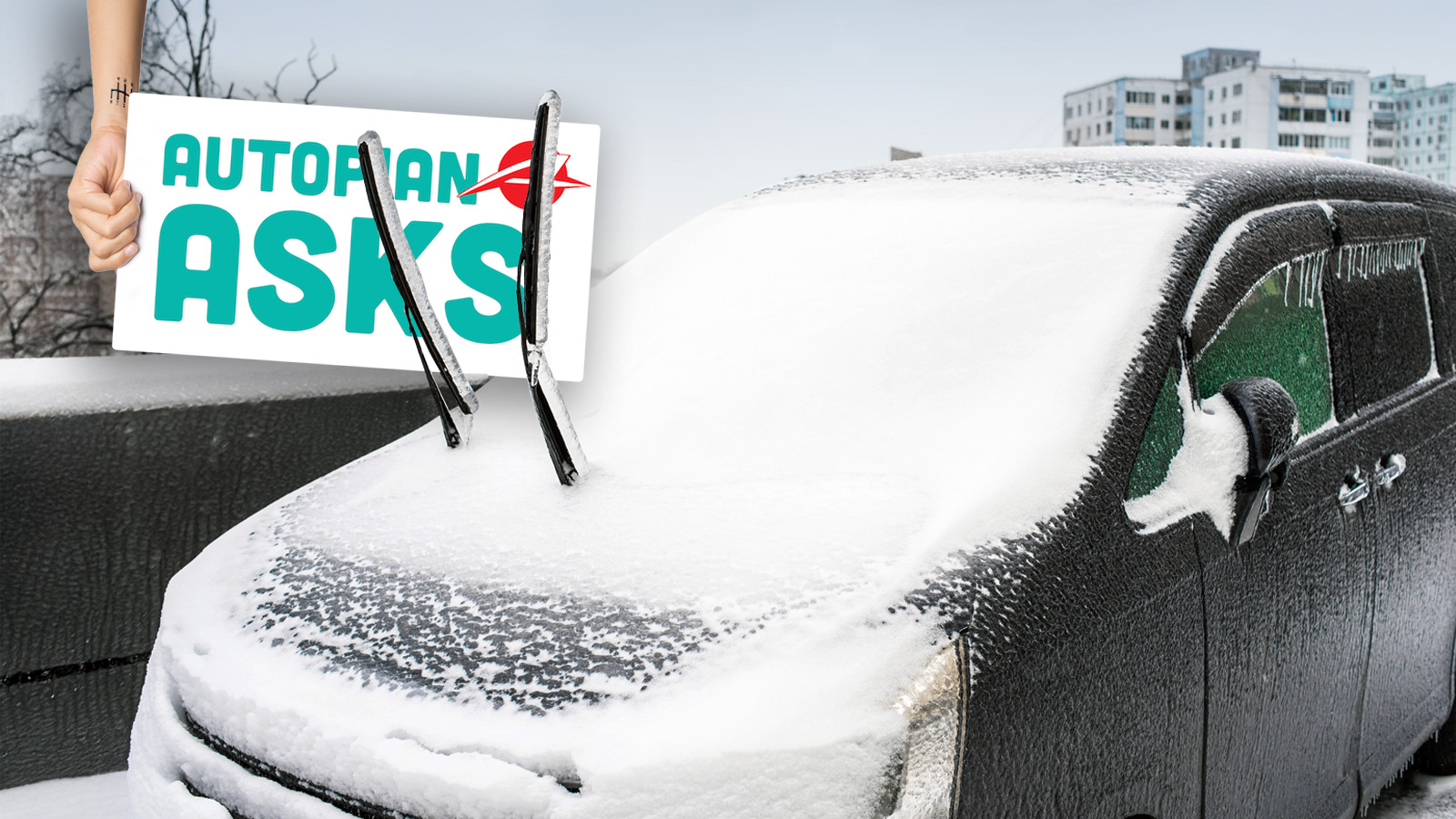
I just checked the forecast, and my little slice of Northern Illinois will be a whopping -16 degrees Fahrenheit tonight before warming up to a balmy -6 degrees by daytime on Friday. Then, it’ll dip back into -11 degrees tomorrow night. Wind chill? Glad you asked! It’s going to be -40 degrees. How do you prepare your car for this?
Deep freezes can have a profound effect on your car. Let’s start with diesel vehicles. Diesel struggles to remain a liquid under 32 degrees. Diesel vehicles are basically doomed in sub-zero temperatures without liberal use of anti-gel. But even if you can keep your diesel a liquid, it could be so cold that your starter just can’t crank your freezing diesel engine and its syrupy fuel fast enough to actually fire the engine. A block heater and maybe an engine wrap are necessary here.


In the coldest regions on the planet, like Yakutsk, Russia, the risk of an engine failing to start is so huge that some people run their engines nonstop all winter. Others take measures to insulate their engines from temperatures that can drop below -50 degrees Fahrenheit. Even gasoline cars struggle when temperatures drop below zero. Engines crank slowly, batteries struggle, and if you’re as unlucky as I am about once a year, your car is staying where you parked it because the battery and starter just can’t get the job done.

EV owners aren’t totally safe, either. Aside from losing some range, some EV models may not even charge at certain crazy low temperatures, and some chargers may not be particularly responsive, either. What I’m getting at here is winter can be a menace to a machine just like it can be to your mushy, fleshy body. Oh yes, that’s a big deal, too. You don’t want to get snowed in while driving, and if you do, you have to make sure your exhaust pipe is clear.
Anyway, I get concerned whenever there’s a deep freeze. I fear one of my cars has condensation in its gas tank, wonder if its battery will survive the freeze, and worry my sunroofs and such may not be leak-free enough to not leave huge chunks of ice waiting for me on the other side.

I often prepare for a freeze by running my vehicles to operating temperature, removing as much snow as possible, and making sure the battery is topped up. Then, I flip up the windshield wipers, make sure everything is closed up, and hope for the best. The photos in this story show how bad things have been at home lately. It’s so cold and snowy that everyone’s car is messy and icy.
I tend to buy cheap batteries, and this is when they usually let me down. If I need to drive somewhere when it’s -10 degrees or colder out, chances are that super cheap Walmart battery is not going to be ready for the job, even if I had only recently purchased it. One time, this led to a weird situation where the only vehicle in my fleet that started was a motorcycle. So, I bundled up in snowmobile gear and went for a ride.
As you can probably tell, I’m not looking forward to the next couple of days. How about you? If you live in a place where winter exists, how do you prepare for what’s about to happen?
Top graphic image: DepositPhotos.com


I keep my car garaged and well maintained year round – and it comes out as little as possible in inclement weather.
While it’s not climate controlled – at least it’s protected from the worst of the cold, ice, UV, etc.
I see folks propping up their wipers on street parked cars – and I just shake my head…
I never understood the popped-up wipers, I’ve never had an issue with them being on the glass.
OTOH, a few years back my brother-in-law thought he was being helpful putting all our wipers up before a storm, we got about 14″ of snow, with a huge drift on my car completely covering the wipers. and having to work around the upright wipers made cleaning the car off more difficult.
The moral of the story being:
Never let an In-Law touch your car.
I gotta pop them up to clear the windshield anyways. This way they’re not also frozen to the windshield, along with a little ridge of ice left on the glass.
The absolute last thing I do when cleaning the windshield is to pop the wipers up. I have a big foam snowplow thing on a long handle; I just run it right over the wipers and they don’t catch.
I don’t think I can even reach the pass side wiper on my Ram to pop it up. I never bothered on my 4Runner.
I have the same brush. After 21 years of experimenting both ways, leaving ’em erect yields the best results.
I get my best results when erect as well.
Both ways?
I do not do it either and those around here who do seem to be transplants. A quick wack with the ice scraper handle will free them no problem.
A lot of vehicles tuck the wipers down in the cowl, like my Sorento. Unless you’re confident in your aim, you’re gonna start adding dents to the hood in short order.
Having replaced the wiper linkage assembly after my spouse left them in the ‘on’ position and then remote started the car with them frozen in place, I understood why people do that.
https://photos.app.goo.gl/n2RQjP7VoUvuCNoN7. Please carefully check your block heaters, I took all the precautions that I could on the DD, I used a replaceable pigtail at the plug end to not stress things but….
Dude!
I used to have to use the block heater on my Chevy 6.5L diesel when temperatures were anywhere below freezing, but recently I upgraded the battery cables to 00 gauge welding cable. It was 10F yesterday morning and it started right up!
Excellent idea, especially on large truck engines or any engine where the starting cca is really high
Does anyone have a rec for a battery charger they love? One that works as a trickle charger too? Don’t need/want inflator function.
Based on a piece Mercedes published here a while ago, I picked up a NOCO Genius1 charger/reconditioner. I haven’t tried to bring a battery back from the dead but have been happy with its other functions.
Once it’s done charging, etc. you can leave it connected indefinitely (acc to the docs) and it will trickle charge as needed.
I got a really good one from a motorcycle dealership, They are mostly all fine.
Yeah, I did the NOCO Genius5. It gives me a reasonable charge rate, but I have a older 10A if the 5A isn’t enough. The Genius 5 is nice and compact, but handles standard, AGM, Lithium (LiFePO4), and 6Volt cells, as well as working in a trickle mode and as a desulfinator. I also haven’t tried that feature yet, but I want to run it on some of my older batteries as a preemptive measure.
I just bought one at the local AutoZone this morning. Also drove by the gas stations, Home Depot and several grocery stores and they were all scenes out of Mad Max. Gonna’ be a weekend full of Netflix and comfort food for the folks at Casa Bradshaw.
Project Farm tested that about 6 months ago. He’ll have your answers.
No-nonsense, speed review. But man, that dude’s voice!
WE’RE GONNA TEST THAT.
Seriously though, I always check Project Farm when I’m in the market for something and I don’t have a brand I trust.
Thanks, all. Picked up a NOCO Genius5 this morning.
I still have an antifreeze tester. I still use it when I change the oils prior to winter. The pre-mixed coolant makes it less of a concern, but it still is a good practice. hibernating cars put on battery tenders, and diesels get block heaters plugged in and anti-gel added.
Be sure to fill the windshield washer reservoir with a fluid that is good down to as low a temperature as possible. Rain-X, for example, makes a purple De-Icer (their name) fluid that is supposed to be good to -30F. (“good” here = not freezing)
After filling the reservoir, run both the front and rear wipers until the non-freezy stuff fills the lines all the way to the nozzles. Top off the reservoir.
Check and adjust your tire pressures during the cold snap. You can do it ahead of time, of course, but depending on how large the temperature swing is you may need to do it again.
Ive gone away from popping up the wipers since we had a nasty batch of freezing rain one time that froze my 190Es giant mono arm erect in place.
Since then my winter routine is check the tires once its consistently cold and wash the under side of the car every time they salt the road.
And if you do not have a car wash, something like this is useful:
https://www.amazon.de/dp/B0873XYHQL
I keep my car garaged, but it’s not heated, and I don’t trust the wiring enough to run a space heater in there overnight. However, if you don’t mind turning a wrench in subzero temperatures, I may have an idea. Which I stole from the answer to an old Car Talk Puzzler: remove the battery and bring it inside where it’s warm. Then, in the morning, put it back in. If said battery is particularly bad, you can take it into work, too.
I actually do this on my motorcycle, as their batteries are much more iffy than a modern automotive one.
I keep a long handled screwdriver under my seat to facilitate things, and usually hook it up to the charger once it’s inside. It’s actually sitting in my apartment right now!
if you are not putting the bikes on tenders, it should be part of the winter prep process I think as well.
Plus putting in ethanol free gas assuming you won’t be riding it much in the winter
I just always run ethanol free gas to avoid having to try to run the corn juice out.
I’ve been using StarTron for about a decade now after I had to spring for a tank cleaning. Works wonders – I keep a 2 shot vial in the underseat storage.
If only all bikes were made so the battery can be removed without removing fairings and wrestling it into/out of an impossibly small space…
I used to get SO angry at my Yamaha FJR1300 that had the battery tucked up in the front console just to the NW of the gas tank. Getting that battery out was a nightmare every damn time – I think it was 6 push-rivets, 2 allen-head bolts and a Philips to get the 3 different panels removed and out of the way, and then there was still no room to easily get all the accessory and battery tender leads corralled to hook back up properly.
I envied everyone who had batteries under the seat where you could actually get to them on the side of a road without major surgery.
I’m absolutely lucky on that score – it’s right there under the seat on my Suzuki. Literally lifts right out.
For freezing: Silicone oil on door seals, oil in doorlock (if equipped), oil cables like hood and fuel door release, run sprinkler low (summer fluid is just water and dish wash soap) and fill with the alcohol stuff.
Oh, and windchill is only relevant for bare skin, your fuel in the tank does not get colder than ambient in the wind, nor do you in your wind proof MC clothes.
Don’t put oil in doorlocks. It will attract dust and gum up the tumbler. Graphite is much better and explicitly sold in small tubes for that purpose.
So what’s the purpose of lubrication? Could you tell me more? My lock freezes up constantly in the winter. I’ve had to climb in from the trunk a couple days, I’ve had to pull up the inner unlock tab with my leatherman several times, and I’m afraid I’m going to twist the key in half one of these days. Anything to keep that from happening would be awesome!
Have you tried graphite? It’s never let me down
Is that specifically for the cold? I wouldn’t have imagined a lubricant being used to prevent freezing, but if that does work, I should definitely give it a try!
Graphite is a very fine, slippery powder. As JJ said, it’s great for door locks as it lubricates without attracting dust or debris.
Correct. No stick mess that comes with oil.
You know I don’t actually know but until you asked I always assumed it was. Maybe I just got lucky. I’ve had keyless entry for the last two cars so it’s been a while for me
Graphite and stop washing your car as often, no need to push water into the locks.
Instructions unclear, pressure washing the lock cylinders weekly.
Just wash your car at the car wash less often in the winter.
This message has been brought to you by the Rusty Car Gang.
Heh, I’ve never washed my car. And yes, it is rusty
Graphite powder IS lubrication, but it doesn’t attract grime like oil does. I use it for things like locks and other small, intricate mechanisms that see dirty outside use.
That said, dry PTFE (Teflon) spray is probably even better as PTFE is also hydrophobic, so it will resist moisture wicking into the tight-tolerance mechanism in the first place.
Now you might ask why things like bicycles and chain saws use oil for lubrication despite being used in even dirtier environments than locks, and the answer comes to down to loads and speed. Locks are small mechanisms in tight channels under very low loads and speeds (at least in the tumbler), while a chain is moving very fast under high load. In that instance, the benefits of oil in properly lubricating the mechanical touch point outweigh the grime attraction.
“attract dust and gum up”
Not in my experince. If worried use something thin in a spraycan. Only blocking I remember have been on locks were I assume graphite had been used.
Oil keeps water out or thinned in small eneough drops that freezing is not a problem. I have used it on ships, MCs, cars, houses for decades.
I know locksmiths use and recommend oil, and there is an argument graphite is a poor lubricant, as it is not slippery in all dimensions (it is flakes), but actually abrasive in some.
Eh, I have broken a key off in a tumbler that had oil in it, but there are way too many variables in this for me to say for certain oil caused it or that graphite is any kind of cure-all for every application.
I’ve always used a tiny amount of graphite in door locks, and then taken general care to avoid getting water/dirt/etc in there in the first place, and that’s worked well for me. Again, YMMV depending on environment, how often the lock is used, etc.
I live in the South. My driveway is steep (my house is below the road). I plan on parking the car at the top of the driveway on Friday since Ice is predicted.
In my state, idling cars unattended is allowed. My plan for Monday morning (assuming I have to go to work) is to walk up to the car, start it (hopefully the battery will have enough juice to do that, it’s getting a bit old) and then letting it idle with the heat and defrost on while I prepare and eat breakfast.
I grew up further north and Dad would always use this thing on the radiator with floating balls to make sure the anti-freeze with up to snuff before each winter. My wife is from northern Maine and battery warmers and block heaters were the big need up there.
One thing I didn’t think about until I met my wife is that wind chill doesn’t apply to cars. A day with a -30 wind chill might feel like a -40 day for us humans but to a car, the -10 deg temperature isn’t trying to freeze batteries and lubricants like a -30 deg actual temperature would do. She tells me that an actual temperature of -30 changes everything about what it takes to get a car started.
Windchill DOES mean your car will get down to the ambient temperature faster. Probably doesn’t matter much, except maybe for a diesel tank that might stay liquid for a few more hours if there isn’t any wind. Not the sort of thing I’d count on though…
If you parked your car overnight outside, it will be at ambient temperature int he morning. Where you have to watch for wind is if you are doing a fairly short stop.
Where my wife grew up, the parking lots at stores have plug ins. If it isn’t windy, you should be able to do a quick shopping run without plugging in, but if it is windy, you will need to plug in before you go inside.
Drive at highway speed for at least 20 minutes before the weather hits if possible. Park in garage – it’s not exactly climate-controlled but it’s definitely warmer than if parked outside which the vast majority of my neighbors do even though they have garages.
Oh, and if I’m really concerned about an older car and/or battery, I’ll back in to the garage so I have easy access to jump the battery.
NOCO jump pack in the house overnight is always a good idea as well.
“I would suggest driving at highway speed for several hours and heading south.”
Everyone in Florida with Ontario License plates right now.
Wish I could . . .
Meh, I’m good. I live in the Deep South.
If you haven’t wintered down here, it’s an experience.
The big thing is that the shelves are cleared of milk, bread and eggs as soon as a hint of weather is made. When that ends up being a false alarm, when the next hint comes, the shelves are cleared again. It’s like “how much damn French Toast can you eat?”
We do get about a yearly sleet or snow storm that leaves a couple inches. This leads to high entertainment value since I can see a busy road and a hill from my back deck and watch the combination of Southerners that don’t know how to drive in the snow and Yankees that know how to drive (on salted roads) try to go up a steep hill that has no salt or sand down. What’s really fun is the combination. Where a southerner stops at the base and tried to go up the hill at 1 mph and a Yankee takes a run at it at 40 and realizes there’s the Southerner half way up going snail speed.
As a note, my fear is ice storms. These are nasty. It will start with rain, so you can’t put salt and sand down before the event. When it switches to ice, you get a coating on the trees and powerlines that will snap them quicker than you can imagine. With icy roads, the power can be done for a long time and everyone’s houses around here use electric heat.
I have close friends in Houston and Dallas. Their occasional winter weather events are epic for the reasons you listed.
I just checked the forecast for Beaumont, TX and saw that it’s going to get down to +19*F Tuesday morning. That’s pretty far south. The coldest I ever saw when I lived there was 22*F but it stayed below freezing for three + days and the (not wind) chill did a number on a lot of pipes.
Yeah, especially pipes in the uninsulated garages. Good luck to the Lone Star state . . . and everyone else.
Nah, this year my snowbird Grandparents left the Ontario plates in the garage and took a flying machine to ‘ol Mexico.
Their garage is heated and the house has a backup generator, so I’m sure the cars will be fine in their absence.
Block heaters are the best. plug in the night before and the car starts right up even in -20 degrees.
I was doing this in the ’90s with my Integra. I guess I had a plugin before plugins were a thing 😉
I prepare my car for this by putting it in the garage.
ABC = Always be charging. Level 2 chargers work fine during cold temperatures like this. I havent had any issue so far on my journey of EV ownership. Always keep it charging even if full and the car will do its magic. Heat is almost instant and the battery is at the perfect temperature ready to be used. I remote start 30 min before departure.
I am more concern if I lose power, my generator will have a bad time starting in this cold weather.
In the vein of yesterday’s piece, love to hear from the autopians who use block heaters.
Growing up in the midwest, my hand me down Chevy Celebrity wagon (Eurosport, so that was something at least) had one and since she lived outside, it usually came in handy a few times during the year. Seemingly no other options, but Mom got that one…
I keep any cars I plan on using in the double car hole. It’s not heated, but it’s insulated which is enough to keep the edge off. For the EV, it’ll get plugged in and preheated prior to use.
Back before I had a car hole to use, it was wipers up, a little silicone on the driver’s door seal, one of those de-icer spray things for the lock, and a portable jumper if needed. But all that is only for the super cold days (-10 or worse), which were 1 or 2 a year. Thankfully I think I’m only hitting -9 this weekend, and it’s Friday and Saturday nights, for which I have no plans.
Wait, you put a car in each hole? At the same time? You DOG!
I live in Winnipeg. The climate is very similar to Fargo, ND, for those looking for a comparison point. Today the temperature is -30° C, with a biting wind. My essential winter car prep is:
-Be fortunate enough to have a home with a garage. Even an un-insulated, unheated garage like mine had my car showing an exterior temperature of -17° instead of the -30 it was outside, and it isn’t covered in snow and frost.
-Don’t buy cheap batteries. Buy the good one once, and cry once.
-A block heater is essential! While a modern car can start in cold weather like this, it will be MUCH happier with a block heater to get the temperature somewhere higher than “Sweet gibbily giblets it’s cold!”
-This is one case where the 10% ethanol blend in fuel works in my favour. I haven’t had to think about gas line anti-freeze since that (otherwise foolhardy) regulation was passed around 2006 or so.
ethanol blend on infrequently driven cars has been a nightmare with regard to fuel lines for me. but yeah, Heet is I think just methanol.
I agree, for infrequently driven cars some fuel stabilizer is pretty much necessary. For something getting fresh fuel at least once a month, though, I haven’t seen any issues yet!
I always assumed everyone in Winnipeg was there because their car wouldn’t start. Can’t imagine what other reason could exist for being there.
“Sweet gibbily giblets it’s cold!”. Hahaha that’s a keeper!
My cold weather bike commute record is -40. Seeing warm weather areas prepare for cold is awesome. FYI, we have winter diesel here – absolutely fine down to those temps.
Motorcycle or bicycle? Hat off either way (but not literally)
A LOT of people in the twin cities MN bike all year around.
Not quite the same but my mom was biking to work in central Ohio at 5am year round up until retirement. I’m not sure she ever had the *opportunity* to do it when it was -40, although I’m sure she would have…
I commuted by bike year round for 4.5 years. It was 11 miles one way. I found that usually ar some point in very late January or the beginning of Feb.
I would stop (commuting by bike) because about 2/3rds of my route was on bike/walk/run trails and the trails portions would get too much ice accumulation so that I was walking as much as riding as I was using a road bike (Giant OCR3) and it didn’t have clearance to run Hakkipalika carbon tipped studded winter tires.
Usually early March the trails would again be clear enough so I would start riding again.
1 fun fact. I dont know how common this was (or still is?), I found that my bottom bracket would “freewheel” if the outside air temp was below about – 12 degrees F, which means zero forward motion, it felt like there was zero resistance, like peddling with out a chain.
I learned much later (after I stopped commuting by bike), that apparently there is special low temp. greese that is made that can be packed in to a bottom bracket to prevent this from happening.
As someone who has changed their fair share of fuel filters cause they’ve gelled up, it is not absolutely fine at those temps.
I don’t since I live in a civilized part of the US where it never freezes – my best winter driving tip is to move to Florida (incidentally, I showed a window brush/scraper to a native Floridian recently – he had literally no idea what that particular device was used for).
Back when I lived in the Great Frozen North (i.e. the upper midwest) I likewise did nothing to prepare my car for subzero weather. Subzero weather occurred regularly during the winter where I lived so it was not out of the ordinary.
The only thing I did in winter was avoid parking overnight at the edge of a lot when a large snowstorm was expected (this was mostly a problem during college when I had to park in a very large outdoor lot). I started doing this after a snowplow nearly buried my car after plowing snow to the edge of the lot where I was parked. It took several hours to extract my car from its frozen tomb. After that I made sure to park near the center of a lot, or at least in a place where a plow was unlikely to move snow to.
Meanwhile in Phoenix… hmmmm… looks a bit nippy outside. I might need a light sweatshirt until roughly 10am.
We’ll check back in a few months on car tips for when it’s 120F all day every day
Realistically, 120 is only a couple of days a year, max. Now, for over 110, you’ve got me.
I prepare by turning up my heat, closing the curtains, just so I don’t even think about looking outside. If I keep that mindset up, it’ll be March before I know it
My FJ and Polestar are kept on a garage/barn when at home so I don’t really do anything. And while at work I don’t do anything either. I probably should throw an emergency blanket in them. I have a tool box and recovery tools in the FJ if I need them. If there is a lot of ice and the cars are outside I’ll just make sure to start them and let them run a bit to warm up and clear the ice normally I’ll be scrapping also.
It will be -19oF tomorrow morning with a -40oF windchill and I have driven my cars down to -35oF and the only thing I have had trouble with is old batteries.
Heck I use to daily drive a 25 year old jeepster commando (mid-late1990s)and I just needed a jump start at -35oF. I did swap 50 w to 20 w oil in the air filter for winter.
Keep gas in your car. Keep blankets. Do not keep soda pop in your car (Sticky Boom chance).
Buy the expensive battery,
Autostarts are wonderful.
DO NOT POUR HOT WATER ON YOUR WINDSHIELD.
Keep your window open when driving across the frozen lakes, just in case.
That last one sounds particularly ominous to us coastal types. Is that so you can get out if you crack through the ice?
Yes. and do not forget the ice picks for around your neck to pull you out of the hole. https://clamoutdoors.com/ice-picks
Jesus. I’ll go around. Here’s hoping you never need them!
I have not driven on a lake in decades. I love my wife too much to take up ice fishing.
I live near a nice, large, frozen lake, and have been tempted to try driving/drifting on it. I rode a bicycle out to the middle a few years ago, but haven’t dared risk a car yet.
Careful. NO ice is ever 100% safe and it should be at least 12 inches thick.
Yeah, that’s why I haven’t!
If I had experienced people around to check things over and walk me through it, maybe, but the risk seems too high otherwise
What in the Sam Hill? Never heard of such things, never thought of a need for driving on frozen ponds either. I’ve led a sheltered life.
Ice fishing is HUGE. Giant campers that lower flat onto the ice with holes in the bottom and everything.
There is also a tradition of ice racing on frozen lakes.
I happened to catch a YouTube video last week of a car retrieval from lake Minnetonka. An elderly woman drove her Subaru something out on the ice nc she wanted to go visit her husband that was ice fishing.
Probably unknown to her she drove over a huge Crack in the ice, around which ice can be particularly unstable and broke through. Supposedly she made it out safe.
The video of the vehicle recovery was interesting. The recovery company had an aluminum tow truck flatbed out on the ice. They cut a rectangular ‘driveway of sorts directly behind the car.
They then ligned up the towbed behind the car so the one end would drop in to the water.
A diver hooks up a toe rope and the car is pulled backwards onto the towbed with a winch.
The car is strapped down to the towbed and then the towbed along with the car attached is pinched backwards back on to the ice.
Found the video. It’s 30 min. so if interested may want to watch on 2x speed
https://youtu.be/OnhqeXMZB1k?si=gf5nElWYg_eBqiOS
Ugh, that reminds of last winter when a can fell out of an open 12 pack in the back of my truck and I didn’t realize it until after I had parked outside for a week straight. Luckily, it was confined to the slush mats so I was able to just pressure wash it off in the Spring.
I tend to go into my garage, visit them, offer them some warm cocoa, and read to them until they are comfy enough.
I haven’t done anything to my Leaf besides add air to the tires since the low temps reduced the air pressure, add more washer fluid that is sub zero rated because I ran out of washer fluid, and put on Michelin Cross Climate 2s.
Oh, and the NISMO (by Quaife) 2 Way Helical Limited Slip Differential