

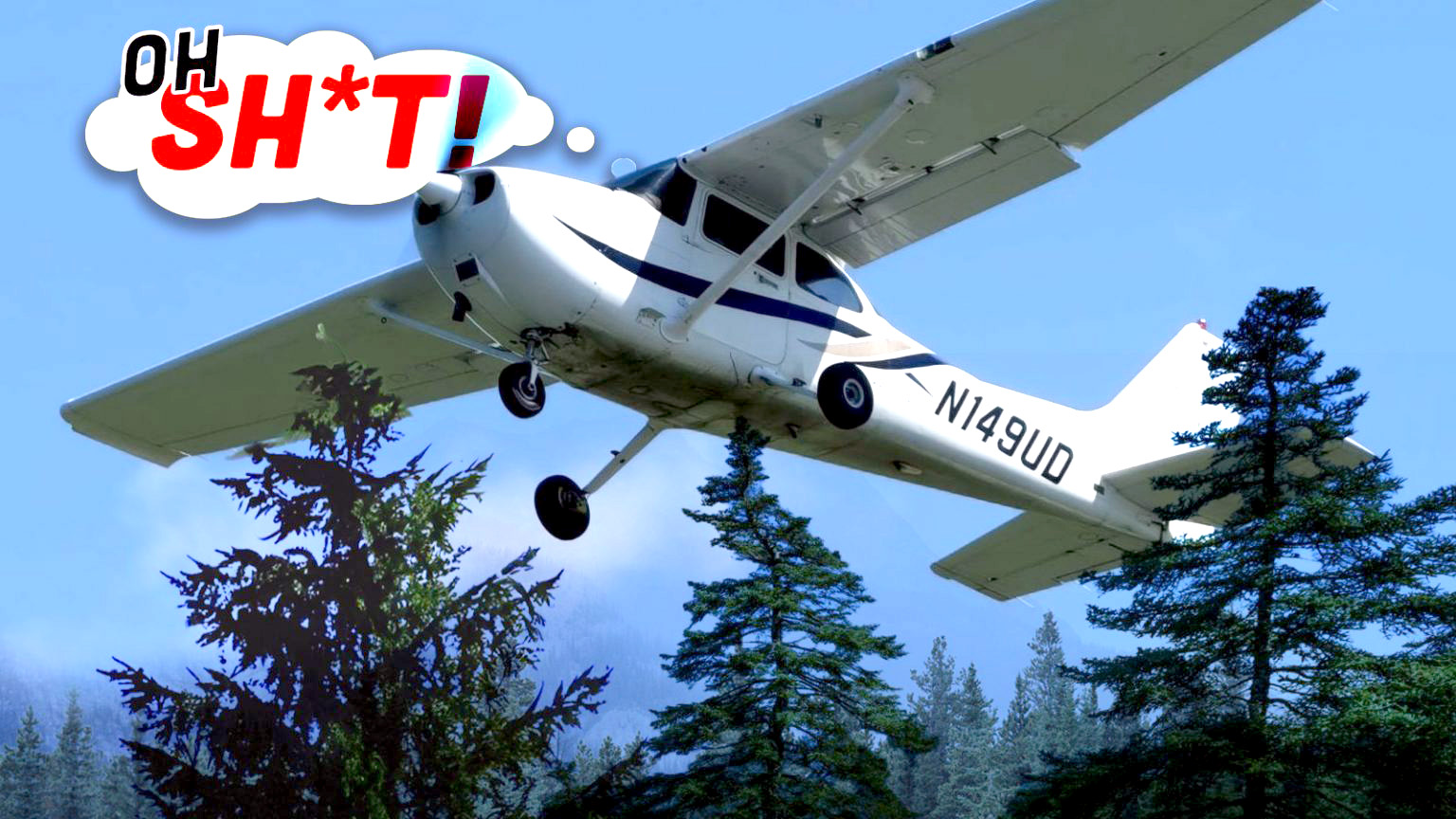
Flying a plane is a vastly different experience from that of any road vehicle. All of your limbs and most of your senses are hard at work to keep the aircraft coordinated and to keep the flight safe in three dimensions of space. Also, unlike your car, there is no pulling over when the going gets tough. Instead, your skill and your training get you back on the ground again. Yet, last weekend, I got to experience my hardest flight yet when I flew through the roughest winds I’ve ever felt in a small plane, and it taught me a great lesson about cars and life.
Back in August, I wrote about how I finally got back into the left seat of a plane to get my pilot’s license. I first tried to get my license in 2020, but both finances and life got in the way. Sadly, it would take me four years to give flight training another go. This time, I’m going all the way, and nothing can stop me.


Progress has been both fast and slow. It’s slow because, due to scheduling conflicts and the fact that my instructor got promoted to an airline, I have been flying once a week at most. It’s also fast because, as my instructor said before she went to SkyWest, I apparently fly like there wasn’t a whole four-year gap. Per her, I also took instruction like a sponge, and she generally only had to tell me something once. My new instructor seems to be equally optimistic.
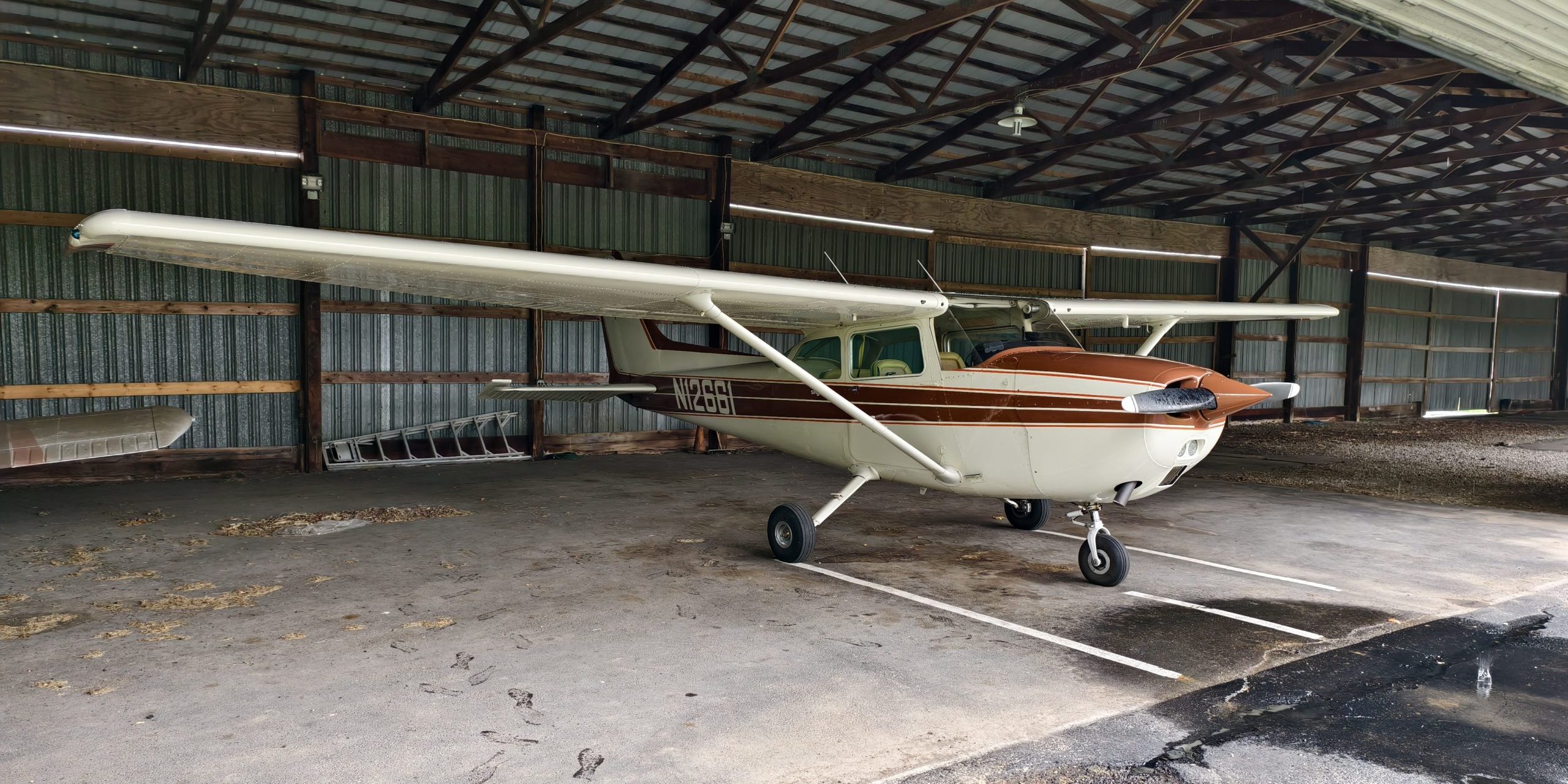
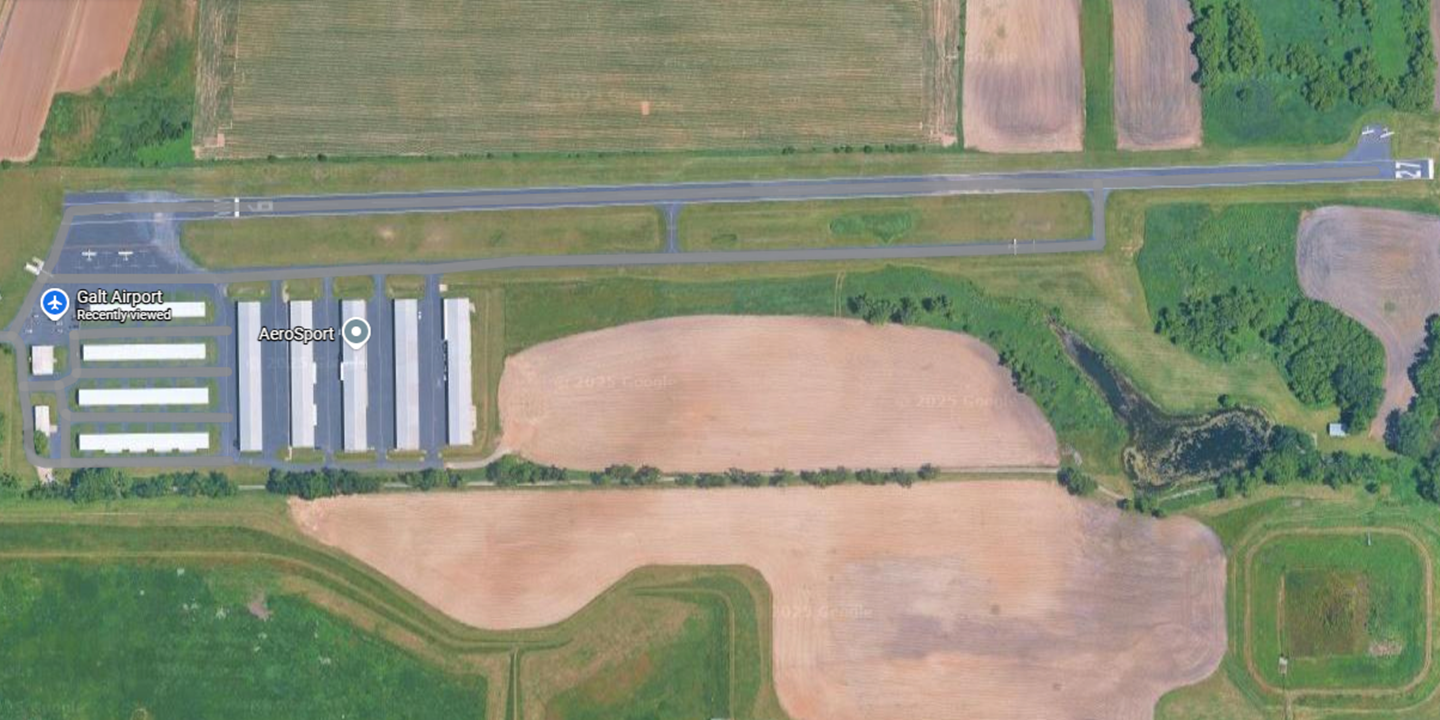
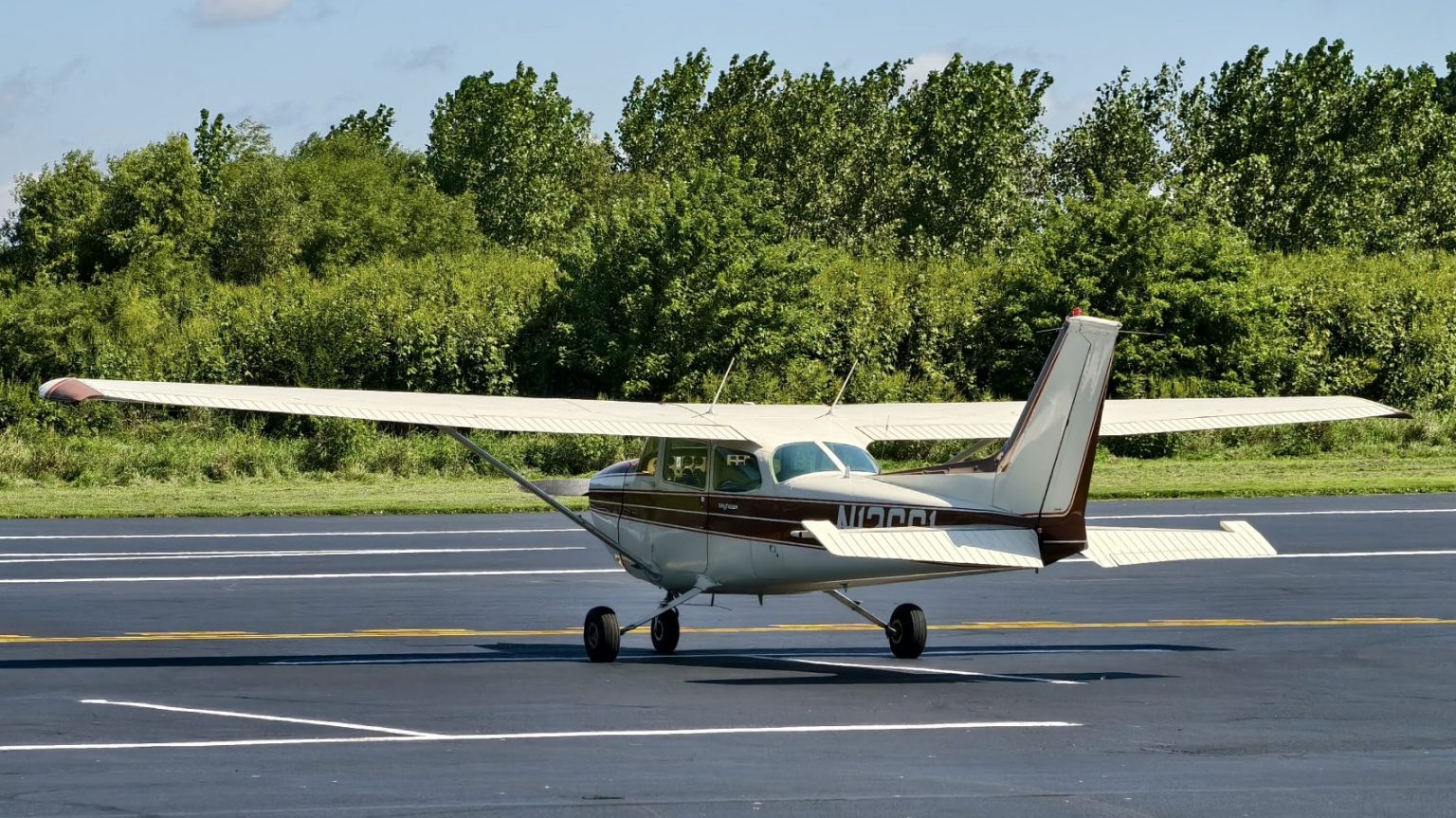
I have also fallen deeply in love with the trainer aircraft, N12661, a 1973 Cessna 172M. I feel like I’ve built a good rapport with this aircraft, not unlike how you would with your favorite car. I’m learning ol’ 661’s quirks, and I’ve gotten to be the first person to fly her on some days. I’ve even learned the correct way to jiggle the key to get the plane’s darned luggage door open. I also love my local airport, Galt (10C), and its tight-knit community.
As such, I have reached the final lesson before my first solo flight (where you’re all by yourself in the plane), and that lesson would have been successful on Saturday had it not been for that invisible force known as wind shear.
A Fun Lesson
Saturday was generally a good day to fly. There was barely a cloud in sight, and visibility was perfect. Even the temperatures were great at a very comfortable 67 degrees Fahrenheit. What wasn’t so great was the wind. The weather report called for winds at 230 degrees at 11 knots. This wasn’t anything all that spicy, and I’ve flown in winds like that before. The gusts of 16 knots also weren’t all that surprising. Most of this wind was right “down the pipe,” too, which meant it was pretty close to runway heading.
This meant that takeoffs were really fun. The airspeed indicator raced up to rotation speed in only seconds, and it’s glorious lifting off long before I normally would. That said, my flying wasn’t nearly as tight in this wind as it normally is. Here are my breadcrumbs from Foreflight:

The final lesson before my solo involves landing the aircraft in different flap configurations (the flaps are a part of the wing’s trailing edge and extend out and down, increasing lift for slow flight). That part of the lesson was not new to me, but it ensures I have my landings nailed down before my first solo. What was new was learning how to do forward slips. A slip is pretty awesome. To do it, I gave the aircraft full left aileron and full right rudder. It’s an intentionally uncoordinated flight, and it’s great for bleeding off excess altitude, which you might need to do to safely land in an emergency.
To an observer on the ground, a plane that’s in mid-slip looks like it’s drifting like a car. My favorite example of a slip in an aircraft is Air Canada Flight 143, the famous Gimli Glider. Here’s a short video set to Eurobeat:
An Invisible Force
Doing these slips felt awesome, but remember how I said that the wind wasn’t so great? Well, that’s because at about a minute from the usual touchdown point on runway 27 at Galt Airport, there was an area of wind shear. Here’s what the Federal Aviation Administration says about wind shear:
Wind shear is a change in wind speed and/or direction over a short distance. It can occur either horizontally or vertically and is most often associated with strong temperature inversions or density gradients. Wind shear can occur at high or low altitude.

You can get wind shear from different sources, like thunderstorms, temperature inversions, or from surface obstructions like buildings, mountain passes, and more.
The type of shear that perhaps concerns pilots the most is vertical shear near the ground. If you encounter wind shear near the ground, the sudden change in the wind can dramatically alter lift in a very short period of time. This is bad because the aircraft is going to be near the ground with not a lot of altitude and not a lot of airspeed to spare.

However, wind shear events aren’t unrecoverable. You can compensate for the momentary loss of lift by increasing thrust and pulling the aircraft’s nose back up. If the shear happens early enough, you can get right back onto your glideslope and land safely. This is what happened throughout much of my training on Saturday. I would hit shear, respond with throttle and pitch, and hit my mark on the runway, anyway.

The Real Challenge
However, the intensity of the shear increased during my flight. During one landing, I recovered from the shear, but messed up my landing. I accidentally slammed the Cessna’s mains (its rear wheels) on the ground hard enough and with enough speed that the aircraft bounced up and started flying again.
Now, here’s where some landings can go wrong. You might feel inclined to just try to get the aircraft on the ground again. I mean, you’re already at the runway! However, trying to land after a bounce like this could lead to something known as a porpoise landing. In your desperate attempt to get the aircraft on the ground again, you could end up impacting the nosewheel first, and the aircraft can respond by rebounding back into the air. This process can repeat with increasing amplitude, resembling how a porpoise swims, until the aircraft finally crashes.

Porpoise landings aren’t just limited to students, either. Commercial pilots have found themselves in a porpoise landing, too. Of course, the best way to prevent a porpoise landing is to identify the risk and perform a go-around before it happens. In my case, the bounce was high, and my airspeed was also high, and I believed the best plan of action was to just scrap the landing and try again. There’s no shame in flying around the airport to try a landing again. Sure enough, my next landing went off just fine.
On my second-to-last landing of the day, I encountered the shear again, but this time it was especially rough. It felt as if the wind had entirely disappeared from under the Cessna, and it briefly felt like the aircraft had fallen like a rock. When the aircraft finally stabilized, I was turned quite a bit and faced a row of trees straight ahead. I heard the faint call of the stall horn just activating. Since I was about level with the trees, there was less than 100 feet between me and terra firma.
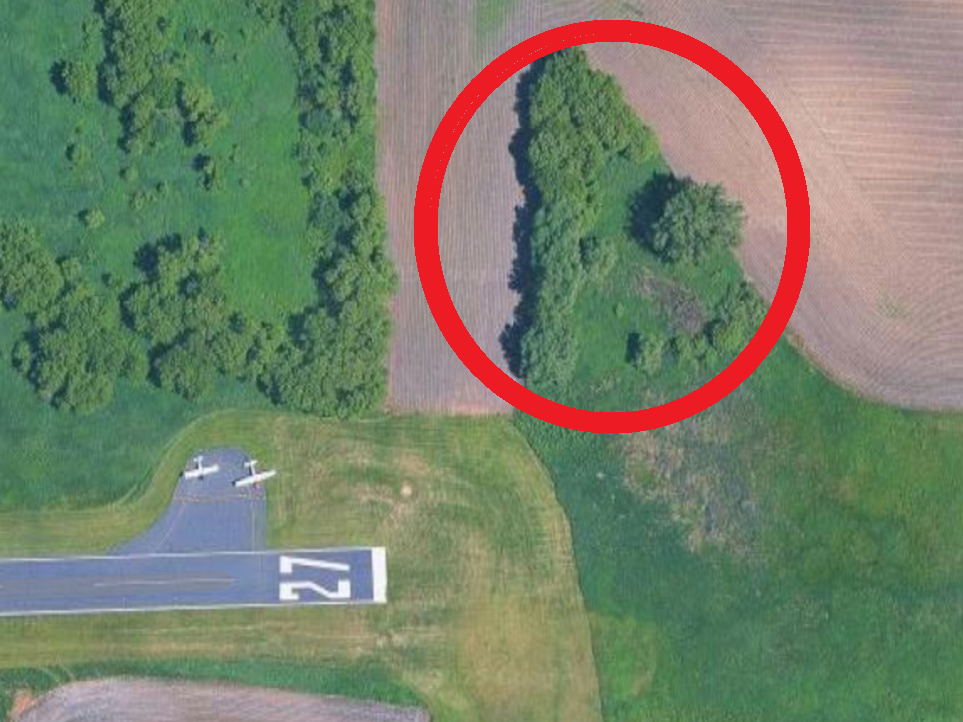
There are really only two decisions that could be made here. I could have tried to save the landing by trying to straighten out the aircraft with the little speed and altitude that I had remaining. Or, I could have punched the throttle and gotten out of there. In a split second, I chose the second option. Why? Because, as I said earlier, there’s no shame in trying again. The plane was still flying. Instead of trying to wrestle it to the ground, I chose to throttle out, gain airspeed, pitch up, and get out of there. I initiated my go-around a second before my instructor even managed to utter “go-around.”
A Life Lesson
In the debrief later on, my instructor said that I made all of the right decisions. It’s safer to do a go-around than to try to save a bad landing. It’s safer to do a go-around when wind shear no longer makes your approach stable. The plane is still flying, and you have an engine, so fly the aircraft.
Sadly, if you read enough accident reports or watch enough Mentour Pilot or Pilot Debrief, you’ll learn that, sometimes, recoverable events end up in tragedy. Some experienced aviators attribute some of these crashes to “get-there-itis,” while the FAA calls it Plan Continuation Bias. Basically, you’re so determined to reach your destination that you ignore or downplay risks. Sometimes, you get lucky. Other times, not so much.
Examples of this phenomenon include continuing a landing after a go-around should have been performed, refusing to divert from an airport that is currently incompatible with a safe landing, or intentionally flying into weather. Sometimes, pilots may make a bad call because they want to impress someone in the aircraft, don’t want to inconvenience someone in the aircraft or on the ground, or don’t want to miss whatever important event they’re flying to. Maybe you might feel, perhaps even unconsciously, that the runway is right there, so you should make it, anyway.
Thankfully, “get-there-itis” has remedies, from good and realistic pre-flight planning to ensuring that you deal with problems as they arise rather than ignoring them. In my case, I chose not to continue a dangerous landing and got out of there.
What’s awesome is that this is applicable to cars and life, too. Have you ever been in a situation where you’re about to miss an exit? A lot of people feel inclined to get to that exit and don’t think about the potential consequences of sailing their car across several lanes of traffic.

But just like with my landing, you don’t actually need to get to that exit. You can always take the next exit or loop back around and try again. Will you be late? Sure, but you’ll also be alive.
It’s the same deal when you’re feeling tired while driving or you’re driving in inclement weather. Sure, you might be an hour from home, but you’re already dozing off. It’s safer to pull over, saw some logs, and then finish the drive when you’re more refreshed. If you’re driving on a snow-covered highway with low visibility and stuck cars all over, there’s no need to speed.
Honestly, you can apply this logic to really anything in life. Don’t let your desire to get to a place or do a certain thing allow you to get so much tunnel vision that you ignore red flags.
Be Safe, Have Fun
The weird thing is that I have always sort of known this. I have looked into more airplane accident reports than I’m willing to admit. My favorite YouTubers have talked about crashes caused by unfortunate mistakes more often than I can count. I have been trained on how to avoid potentially deadly errors. Yet, it’s different learning about what to do than it is actually getting into that situation and executing it. Honestly, experiencing such a thing for yourself can change your whole outlook.
Otherwise, I hope you drive, ride, boat, or fly safely! So long as the weather and scheduling hold out, I am sure you will probably see a video and photos of me flying a plane solo for the first time before Christmas. This journey has been five years in the making, and my dream will soon come true.
If you ever find yourself in a situation where your desired outcome is no longer guaranteed, and forcing it can be dangerous, just do the safe thing. There is no shame in going around. People should understand that you had to take the safe option. Getting somewhere late is better than crashing your car, plane, or motorcycle because you were laser-focused on the destination. Don’t let “get-there-itis” win.
Top graphic image: Mercedes Streeter


Great read as always Mercedes! Good luck as always. I want to get my license when I retire. my old man doesn’t want me to try until he passes!
It is recoverable if you have the power to weight ratio to do so and the altitude buffer to give you the time to add the power necessary to compensate. Most planes lack it.
You’re flying the plane with less than full fuel and a light load, count your blessings.
Only ever had to deal with wind shear once in the form of opposite direction wind shear while crabbed for a 25kt crosswind on short final during night training in a C-150 D. Side loaded the gear a bit but the plane was fine.
I’ve yet to fly a piston powered aircraft with a high enough power to weight ratio to have enough excess power at full load for such a situation.
You’d need to get into some WWII combat birds to get that
Oh yeah, “get-there-itis”. We were driving in Canada in October facing a blizzard, and instead of turning around and go back to town we had just left, we pushed on to the next town. Driving a ’76 VW camper bus on black ice with a 45 MPH cross wind results in the front end blowing around, so no control at all. Made a 180 on the ice, was blown off road onto the center divider which was grass covered with snow. Rolled 1 1/4 times landing on the sliding door side. Water storage was on the upside and leaked, so I opened the sliding window on the sliding door to let the water flow out. Salvaged our cameras, climbed out the driver’s door and sought rescue. Short version = Towed to a Buick dealer, thawed out, put the right front tire back on the rim and drove 1000 miles home.
“get-there-itis” is definitely a problem for me in inclement weather. Specifically snow. I’m sure my hubris will get me one day, but my friends have nicknamed me the Polar Express. I’ve never failed to reach my destination in a snowstorm.
Congrats! Glad you were able to get back into flying, and best of luck on your solo! And nice save!
I’m sorry but if the winds are at 230 degrees no one should be flying. Hello that is hot enough to melt the whole damn airplane and roast any humans to a thanksgiving turkey finish. Why would you do this?
It’s OK, my instructor used to say the big spinny propeller thing at the front was to keep the pilot cool. Switch it off and watch them start sweating!
“Sometimes, pilots may make a bad call because they want to impress someone in the aircraft”
Does it work?
Short answer: Dead passengers are not impressed. Passengers in the emergency room are not impressed. Anyone whose BS meter goes off is unimpressed.
A small price to pay for likes and thumbs up from strangers online.
Okay, you made me laugh at that one!
I am reminded of the first commandment of flying:
Thou shalt maintain thy airspeed, lest the ground rise up and smite thee
Goes well with the airplane “rule of three” – the three most useless things to a pilot is air above you, runway behind you, and fuel in a truck on the ground.
Of course too much airspeed causes *very bad things* to happen as well. There’s a definite happy medium there.
Not a pilot, but I’ve been a passenger on over 2300+ flights, and the part of your story where you wrote: “I accidentally slammed the Cessna’s mains (its rear wheels) on the ground hard enough and with enough speed that the aircraft bounced up and started flying again.” reminds me of a flight I once took from ORD to EWR back in the ’90s.
I remember boarding the wide-body jet in Chicago, (Might have been a DC-10?) then we ended up taxiing out to a holding area due to severe thunderstorms forecasted in the Newark area. IIRC, we hung out on the hot tarmac for 2-1/2 or even 3 hours before were allowed to take off. The flight over was uneventful, until we needed to land. Unfortunately, more storms had moved into the area. We ended up in a holding pattern for another hour or so. Eventually, the captain’s voice came over the PA informing us of our dilemma…
Another weather disturbance had drifted south and moved into the area. The storms had continued longer than anticipated, and more bad weather was on the way. Newark’s airport was shut down due to the weather, but our alternate landing airports were also closed. He said their fuel situation would not let us continue holding indefinitely, and so we had no alternative but to land at Newark. I remember he even had us look out the window to see a patch of city lights off in the distance poking through a clearing in the clouds and told us that our safest time to land would be when that clear patch was over the airport runways.
When we came in for our landing, as we were about to land, I remember feeling like the bottom suddenly dropped out on us. We must have dropped a couple of hundred feet in a second or two… Unfortunately, we were only about 198 feet above the beginning of the runway when this happened, and WHAM!… we hit the runway and bounced back up. Then we landed on first one side of the landing gear, then the other… Then he got the nose down and braked as hard as he could. Remember, this was in a DC-10 or similar wide-body aircraft.
When we hit the first time, I remember my jaws slamming together quite roughly. I also remember the overhead luggage compartments popping open. As we bounced, bags started falling out into both of the aisles. When he braked, all the loose stuff in the aisles slid forward and banged into the front walls of the galley area. When we finally came to a stop, at the very end of the runway, the captain’s voice came over the PA again telling us to remain in our seats and that he was going to taxi us to the terminal.
When we went to move, we pivoted 180º and I could see that we had finally stopped in the overrun area and as we turned, I could see those red lights that marked the end of the runway directly below us, so it looked like we just made it… Another plane-length and we would have been past the end of the runway.
There were injured people from the landing. Some were bleeding from biting their lips, cheeks, tongues, whatever. On the taxi in, it looked like they were using snowplows to try to move some of the water off of the taxiways. When we got to a gate (the airport was pretty dark, there was a power outage due to the storm) the flight attendants told anyone who was hurt to remain in their seats, but the rest of us were to deplane in an orderly fashion. I remember them holding up luggage, coats, and even teddy bears as we were deplaning so people could claim the luggage that had popped out of the overhead compartments.
When I got to the rental car counter, the workers were amazed that we had come from a flight that landed. They were told there would be no more incoming flights for a while. They also said that unless we had a reservation, there were no cars available, as many of the outgoing people whose flights were cancelled took most of their remaining cars. Luckily, I got there early, got a car, claimed my luggage, and was able to make it to my hotel that night.
TL/DR: I’m so thankful those pilots were able to get us on the ground safely.
Sounds like solid flight-craft, but poor airmanship. If all your filed alternates are blocked by the same storm then you failed in producing a good flight plan.
Apparently, the storms were supposed to have moved out of the area by the time we arrived, and that other system wasn’t supposed to have been a factor. Also, the ground stop delay in ORD probably burned up more fuel than expected.
I guess that’s why they call circumstances like these “a perfect storm”.
Bounced landings have been a cause of several MD-11 crashes. Exactly as Mercedes described – bounce, try to save it, come down on the nose gear, porpoise, bounce again, and hit so hard the gear collapses, breaks a wing off and over she goes. The DC-10 was a little prone to them too, but the changes made to make the MD-11 made the situation MUCH worse – much higher approach speeds and less control authority. If it was on NWA, it was a DC-10, they had tons of them.
My worst was on an E-145 that slammed down so hard a bunch of the overhead bin doors came open like your flight. And I saw one parked up that had such a hard landing the fuselage buckled. Oops. I’ve heard they are a tricky bird to land too.
“If it was on NWA, it was a DC-10, they had tons of them.”
Nah, this flight was ORD-EWR, so I think it might have been a hub-to-hub flight on United.
It was also 25+ years ago. I think it was around 1998 or 1999.
Continental and United and AA had them too of course. Not sure who the big L1011 operators in the US were by then, originally Eastern and Delta loved them. My only flight on one was TWA, JFK to BOS.
Those last years before 9/11 were pretty good years to be frequent fliers, glad I started my career back then, other than NWA trying to kill me a couple times. 🙂 It’s funny in this age when a 737 or an A321 is a BIG airplane domestically that you used to be able to fly relatively short flights across the US on DC-10s, L1011s, and 747s all the time back then. The only big iron domestic flight have had in decades was PHL-BOS on a US Airways A330. One of those goofy “extra” hops they tag on so the big bird pilots can get enough takeoffs and landings in to stay qualified. Similarly, PIT to PHL on a intercontinental-configured 757 with lay-flat seats up front. But I guess ultimately that is why NWA flew so many DC-10s between MSP and DTW – it sure wasn’t because they were full! They were never, ever full.
I had a lot of domestic (US) flights, but never on a DC-10 or L-1011. And I only experienced one commercial go-around, on a 737 coming into foggy Sacramento. Apparently, visibility was hit and go below minimums. The only thing concerning looking out the window (I always book a window seat), was the number of migratory waterfowl trying to share the air space on the second approach. We didn’t hit any and the landing was uneventful.
Back when I was in college in the mid 70’s, I flew home on a PSA BAe 146. It was such a cool looking airplane. Four engines, negative dihedral, it looked like “Honey, I shrank a C5-A.” I went to UCSD, but for some reason that I can’t recall, I was flying out of John Wayne. Anyway, I was sitting up front and the door between the cockpit and the passenger compartment was open and the pilot was briefing his apparently new FO about the noise abatement procedure they were going to perform. Maximum performance takeoff. They shut the door. The captain made an announcement that it might feel like a takeoff that we might not have experienced before. Engines at full thrust with the brakes locked. Then we took off like a bat out of hell and then quickly leveled off for a few minutes to be quiet over the 70’s Karens of Orange County. It was better than Disneyland.
Oddly enough given how much flying I have done the past 30yrs, I went 20 years without a single missed approach. Then had FOUR on the same flight home to Portland, ME. Completely socked in with fog and dead still air. We tried both runways in both directions, then were circling while they decided whether to divert to Bangor (ugh) when a Continental bird came along that had better ILS gear than our Embraer did. They got in, and that MD80 made a hole in the fog so we were able to scoot around and land right behind them! It was pretty damned cool.
Since I have had a few more, usually because somebody was poky getting off the runway ahead of us. And back in the late 90s, the one NWA flight that should have gone around. Landing in a raging snowstorm (remember when airplanes weren’t allergic to snow), we landed long and didn’t get stopped before the end of the runway. But luckily DID get stopped before dipping the cockpit into the Fore River, unlike a Delta MD-80 the previous year. Got to go down the aft airstairs and trudge through the snow to the terminal. That was fun.
I’ve had a few of those rocket takeoffs. Back in the day, Portland had a main runway that the jets used, and a MUCH shorter crosswind runway that was normally only used for GA birds. But if the main runway was closed, the 737s and DC9s/MD-80s COULD sometimes use it at lighter weights. But it was get on, back taxi to the VERY end of it, lock the brakes, wind up the engines with the airplane shaking and shuddering and off you go. It was so short the jets could only land on it when it was dry though.
Years ago they lengthened the main runway quite a bit, and more recently the crosswind runway such that it’s just normal operations on and off it for the bigger birds today, though it’s rare that the wind is in the right direction and strength that they have to. Also fun was Delta used to fly 757s Portland to Atlanta – and they rarely had full loads on them. They took off like a rocket no matter what. I used to work right off the end of the runway and we would watch planes out the back door. The 757s would go over the end of the runway at literally 3X the altitude of the 727s back then. Those looked like they were letting the earth drop off underneath them.
The Boeing twin-engine jets now have such ferocious engines now. I have a friend who is now a 777 captain and she told me that on a single engine it could climb so much better than the 737s she started on with them.
Every once in a while, I see a Boeing promotional ad on TV where a Triple 7 is taking off and it looks like it’s going almost straight up.
When I flew a Cessna 150 I owned a quarter share of, out of Renton, (KRNT) co-located with a Boeing 737 factory, sometimes I’d have to wait while a newly minted one would take its first flight. They were not full of fuel and obviously had no passengers or cargo. Their rate of climb was pretty impressive. I imagine the test pilots had a blast.
Even though I live in the PNW and am surrounded by Boeing plants, I’m not anti-Airbus, Bombardier or Embraer. They all seem to make solid aircraft. But there were people (presumably Boeing employees) flying out of Seattle who had stickers on their bags that said, “If it’s not Boeing, I’m not going.”
If in Seattle, and into aviation, you really need to check out The Museum of Flight, at Boeing Field. It will take you nearly all day. Just don’t order the Reuben sandwich at the in-house cafe. It’s rubbish.
Flying round trip LAX to SYD on Quantas, the Airbus 380’s cabin was so much quieter on the way back than the 747 heading down. The 380 had a tail-mounted camera in the vertical fin and I got to see the sun rise over the Pacific in the infotainment system on the flight home.
Back in 1986 I spent four weeks flying around the then USSR on Aeroflot and some of the flight practices and the sketchiness of the aircraft concerned me. And the clear air sickness bags. That was pretty gross when an elderly lady tossed her cookies into one. Now, I’m probably older than she was. But it was something I will never unsee and something that would still disturb me to see again.
The big twins really are amazing. With both engines running they are just so wildly overpowered since they have to be able to lose one at MTOW after decision speed and keep right on trucking.
Even the biggest 737 just doesn’t have such a massive difference between empty and MTOW, so they end up not being so impressive when light – though back in the day I had some pretty sprightly takeoffs on near empty 737-200s. The 757 started it because they needed a ton of power for the hot/high/short runway performance they were optimized for.
The real eye opener for me was the difference between a Bell 206 and a 407. Shortly before I went into the software side of television stuff in 1999, Bell brought a 407 onto our TV station’s helipad and I was lucky enough to be one of the six passengers to go up on the demo flight. The station owned a 206 and the pilot of it sat up front on this flight. So, I guess he wasn’t a passenger, but a co-pilot.
Anyway, the helicopter was pretty much at MTOW, with me and a bunch of beefy colleagues on board, and I could see the instrument panel as we took off, and we were going straight up at 1,000 feet per minute, not using translational lift, and the torque wasn’t close to the red zone. That thing is a beast compared to a 206. The station now leases or outsources a 407.
25 years later, I live two blocks from a hospital with a trauma center and most of the medevac helicopters that fly in are EC-135s and 145s, but once in a while I see a 407 come in.
Very cool! I have never had the chance for a helicopter ride. I’d like to someday.
Well, if you ever go to Hawaii (Kauai), I highly recommend a helicopter tour. There are nearly half a dozen companies that do them. They all do the same circuit. And if the weather cooperates, you descend into what is left of the volcano that formed the island. I’ve done it three times. One of the pilot’s narration along the was so funny. Maybe he’s doing standup now.
They’re about an hour and about $400 pp, but totally worth it. Apparently, there are tours of other islands, oh, and the Grand Canyon. That’s a thing out of Las Vegas, but I’ve never done that one.
I took a buddy up with me for a flight around Myrtle Beach, SC but it was in a Robinson 44 (not turbine powered) and at a lower cost.
And to be clear, I was not the pilot. I have a pilot’s license, but it was just fixed wing, and I don’t have the rotorcraft endorsement. I’ve had two hours of instruction in helicopters and figured out there was no way to make getting it financially sensible. The insurance is either unobtainable or ridiculously expensive until you have like 500 hours. So, ex-military only.
Well, I’d like to see how Jeff Bezo’s fiancée pulled it off. Might be an internet hole to go down. I think they have an EC135 to land on his yacht.
The turbine choppers are the ones to go with because they just sound so cool when you pull the noise-cancelling headphones off.
My one trip to Hawaii was for work. July of 2020. Yeah, it was not a whole lot of fun… But on the bright side, <15 minutes from the airport to my hotel on Waikiki Beach. Where I was one of six guests. Food was a bit of an adventure. The ride out and back on empty AA 787s in First was nice though.
Someday, though I am rather cheap when it comes to splashing out multi-hundreds of dollars for that sort of thing.
I’ve only helicoptered around Kauai (as opposed to the other islands), but I really do think it’s worth it. The scenery is breathtaking. And when else will you be able to fly inside what was a volcano?
But don’t cheap out and go with a firm that uses R-44s. You really want to go with one that uses AS350s or EC125s. They are smooth, powerful and reliable. And like I said before (maybe not in this thread), sound so cool when you take the noise-cancelling headphones off for a minute. At least go over to the helicopter side of the Lihue airport and watch them take off and land. I could do that for a few hours instead of playing golf or something.
And that’s why training is essential. First, knowing the options. Second, knowing yourself and your machine. Third, trusting yourself to make that judgment. Fourth, acting instead of panicking once the situation happens.
I did most of my sailplane training as a teenager many years ago, and if you want to talk about paranoia, that’s a good place to start. Once you’re committed to a landing, you’re landing — like it or not! No throttle, just gravity. Pickup up speed to land and save that potential energy for last-minute maneuvers…but there is no go-around.
And that training is a big part of why Gimli and Sully both turned out so much better than they could have.
P2 pilot–yeah, surface wind patterns hit different when you *don’t* have a throttle to put to the firewall. I’m like “but did you check the soundings? Why go up?”
Been there, done that. After you’ve started doing cross-country flights, some of the old-time instructors will mess with you during the annual flight review. They’d arrange with the tow plane pilot to make the “emergency release” at increasingly low altitudes (or sometimes the instructor would just pull the release), forcing you to make the “impossible turn” 180 degrees back to the runway as low as 300 feet. Push the nose down quick, maintain flying speed, make a 45 degree bank fully coordinated 180 turn and you’ll be fine 99% of the time. Or, the other trick, the instructor will talk you through an abnormal landing pattern placing you a half-mile out from the end of the runway at 90 degrees and 1500 feet or higher. The day one pulled that in me, it was in a big (20 meter) two seater of a type I had hundreds of hours in. So when he started leading us further astray: “unable, my glider!”, again shove the nose down, open dive brakes fully (no flaps in that glider, otherwise full down too), and do a full on turning slip all the way down to landing just past the runway threshold. He was a bit shaken, he expecting I’d half to make one circle or a big S-turn, but I passed.
Keep your airspeed up, it’s the failure to do so that will ruin your day, just as Mercedes suggests. Flying gliders
I mean to also make another comment:
Mercedes, I learned quite differently. Pulling the nose up is almost always a mistake, but having an engine lets you get away with it, mostly. Increase thrust if you have, but keep the nose down until you have adequate flying speed. Failure to keep the airspeed above stall in that situation has killed several of my friends in both gliders and single engine aircraft.
I always wondered how gliders took fewer hours when you only get one shot at the landing.
I love me some gliding, though. It’s so peaceful and serene with nothing but wind noise and the wingspan of an albatross.
Training gliders have high drag air brakes (and sometimes flaps) that pop in/out of the wings for landing. You are also trained from the beginning to do straight and turning slips at approach speed for added drag. The pilot can easily vary the glide slope from say 40:1 down to below 1:1 while maintaining a constant landing approach airspeed (not ground speed) of 60 to 65 knots. If there was a possibility of wind shear or microbursts, one would prudently approach at 65 to 75 knots, which was pretty routine landing at windy high altitude mountain airports.
Single engine planes don’t have (or need) that much glide path control, at least as long as the engine works.
Neat! I was only ever a passenger. Left the Air Cadets before reaching the age for my pilots license (angsty 16 year old things). Wish I would’ve stuck it out.
What a perfect time for a really hard lesson! Thank you Mercedes for such a great blend of well-written personal narrative and higher truths.
The motorcycle mantra (and apparently airplane, too): When in doubt, throttle out.
Came down to type that but you beat me to it!
When I’m feeling rusty I have to keep saying to myself, “you can always lean more, you can always lean more, a lowside beats a highside, lean just a little more now…”
edit: “look where you wanna go” should be in there somewhere too.
Applies to RC planes too. I’ve saved a fair share by throttling out. Easy in a massively overpowered 3D ship and less easy in a ducted fan. Best to not be in that situation at all, however!
jim ford draws parallels between aviation and motorcycling in his excellent book “the art of riding smooth”.
both activities are intolerant of collisions, and so training and practice are necessary.
Great stuff Mercedes! Way to be a lifelong learner
I haven’t used the Glovebox since it was introduced, but I had to do it for this article.
Mercedes, you’re spot-on. I also have a slight fascination with aerial accidents, possibly due to a reading diet that included a far above-normal amount of Drama in Real Life from the pages of Reader’s Digest as a kid. And whenever these stories ended with a happy ending, sometimes it was luck but far more often it was because everyone involved did “the right thing.” Whether it be the non-pilot at the controls because of a medical emergency mid-flight, or the flight instructor in the control tower who walked them through the landing.
I always fly with a copy of Why Planes Crash.
Reactions from fellow travellers can be mixed.
I highly recommend Blancoliro’s you tube channel
https://www.youtube.com/@blancolirio
some very good deep dive (no pun intended) into accident investigation.
he’s very current with a lot of GA stuff.
Every pilot could learn from him.
Juan Browne is the man, one of my favorite Youtubers I’ve ever seen.
Yup, he’s got a great channel and a great way of presenting the facts without the hype in such a way even I can understand it.
Pedder (spelling?) from Mentour Pilot is also good at this.
What a good choice! I forgot to mention Juan in my little list up there. I watch all of his videos. 🙂
My worst fear of becoming a pilot (someday) is not crashing; it’s ending up on Blancoliro’s channel.
As long as you don’t die or cause the death of someone else you’ll probably avoid it.
Unless you compete at Reno or do the STOL stuff, then it’s okay.to be on his channel.
My Mom taught me to never be afraid to make a u-turn. Mercedes, I really enjoy your articles about your pilot’s license journey. We’re all rooting for you!
Unless U-turns are illegal and the police car is right there.
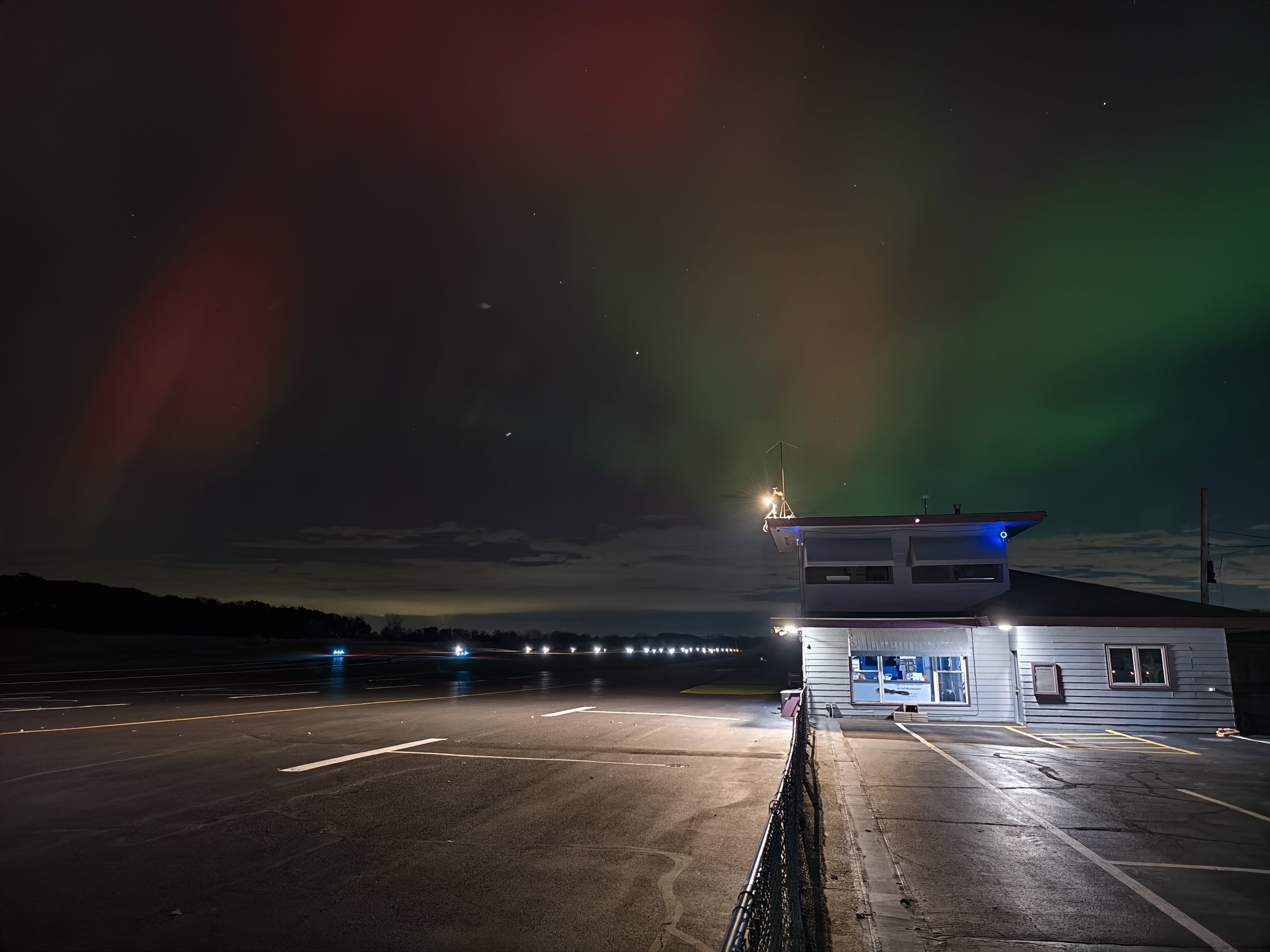
Galt Airport! I grew up spending my summers on Wonder Lake nearby. We used to stop at Galt on Saturday afternoons to look at the planes and watch a few landings. There was a nice Christen Eagle there back in the day. Good memories.
Woah! A sighting of one of the mythical “Summer People” that the kids that lived close to the lake talked about!
Hoping you have an enjoyable solo. You will notice a more noisy and better performing 172 when the other person steps out.
The aircraft will also ‘float’ more when you make your landing during your first solo, this because you won’t have the weight of the instructor in the plane. Your instructor will brief you about this before he/she sends you out on that first solo.
In my piloting experience, saving a landing never seems to save much. I just go around and try again.
I agree, never try to ‘save’ a landing. If in doubt, apply full power, pitch up, and get out of there.
My background: retired professional pilot, 10,000+ hours.
Wedge Antilles is still with us because he knew to pull out of that Death Star trench when it wasn’t safe. Great stuff to keep in mind when I’m bonsai-ing womprats in my T-16 back home.
Rebel propaganda.
I find your lack of faith disturbing.
Oh I have faith. I can’t help but suspect that when Luke told Wedge to leave – “Wedge, you’re no good to us back there” – he was using a Jedi mind trick so he could blow up the Death Star and take the glory.
Okay, now I’m imagining a rodent with hair trimmed like a Japanese decorative tree. Do they stay still when you approach with the clippers?
I’d say the “get-there-itis” certainly fully applies to truck drivers who lose their brakes coming down mountain passes, and don’t use the fricking runaway truck ramps, sometimes resulting in fatal crashes
I have unfortunate news for you about runaway truck ramps.
They are often fatal to the driver. They’re to stop the truck, not save the wheelman.
So I kind of get it why some folks decide to chance it. Doesn’t make it right.
I’m sure it happens, especially if the ramps aren’t designed/maintained too well, but I’m not sure I’ve heard of any fatalities from using the ramps around my area, but things like this are not uncommon- https://www.cbsnews.com/colorado/news/deadly-semi-truck-crash-colorado-mountain/
Watched the Gimli clip – that is the downright ballsiest move I have ever seen. Forget brass ones, this Captain’s were adamantium.
Flying low
When a voice on the radio
Says do you know
You were flying much to low
There’s danger in the air
But I don’t care
Oh no.
No one there
To hold your hand
Nobody
To change your plans
Flying solo
Your life is in your hands
–Naked Eyes
When you mentioned “drifting” I immediately thought of the Gimli Glider.
“Throttle out” works in rally too. ;^) And the number of times I’ve been behind someone swerving across 3 lanes and a median to take that exit, well it went up by one yesterday.
I learned in my 20’s to stop telling people they were missing their exit, turn, or whatever, until after they had passed it and had to turn around. One too many close calls with friends pulling off similar stupid moves because of it.
Someone here commented several moons ago that bad drivers never miss an exit. It took me a second to comprehend what they meant, and the saying has stuck with me ever since.
We were in the KC area on an interstate, needing to get on a cloverleaf to get on a different road, and a driver came flying up behind me, ducked in before I could change lanes, and proceeded to brake even with me all the way to the end of the lane. (Yes, my blinker had been on the whole time.)
Not sure if he/she was a bad driver or just an a-hole, but prudence dictated staying on the interstate and taking a detour to get back to where I was supposed to be. It made the arrival time (some four hours later) later than it should have been, but at least it avoided any potential road rage issues.
Now that was a special sort of stupid.
What’s even scarier than the typical dive-bomber lane change is when they just STOP in the middle of a multi-lane highway with 70+mph traffic because they get confused about an exit. Inevitably an elderly driver. Seen that a few too many times over the years, though oddly enough not yet here in God’s Waiting Room, FL, where you would expect it to be a near daily occurrence. Just dive-bombers here so far. Though recently I had a reverse dive-bomber – asshat entered I-75 at warp speed and dove across three lanes of traffic, and had I not firewalled the brakes, would have tried to occupy the same space as my Mercedes wagon with his clapped out Civic. Why yes, even with sticky summer tires an E350 wagon can get FULL ABS activation at 80mph. Ze Germans do good brakes, for obvious reasons. Dude was completely oblivious, never even looked my way.