

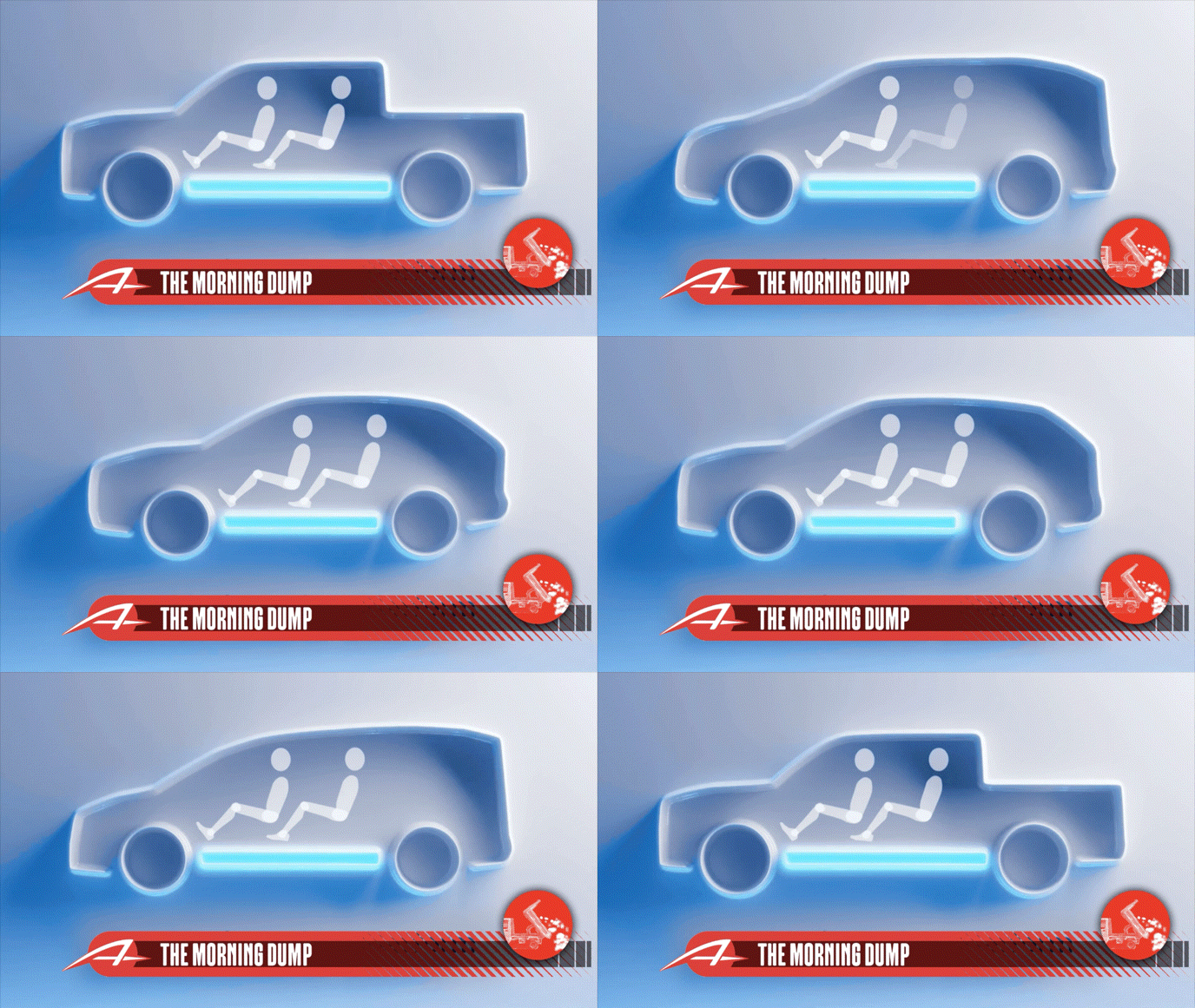
A few years back, Tesla became one of the first big-name manufacturers to adopt a new type of assembly process, which it called “gigacasting.” This assembly process, also known as megacasting or unicasting, uses large casting machines to create unibodies—the “skeleton” of the car—in a handful of large, single segments, rather than through hundreds of smaller pieces.
The system, designed to lower assembly costs, is the basis for the chassis of the Model Y, Tesla’s most popular car (and for a few years, the best-selling car on the planet). Ford, in its attempt to make a modular EV architecture that’ll include a $30,000 electric pickup, is adopting a similar approach.


For a while, people worried whether small crashes or other damage to these gigacast parts would increase repair costs, since one large component would have to be replaced instead of just a smaller piece, where the damage is contained. But the data shows repair costs are usually in line with standard unibody cars, if not cheaper.
What else is going on in the world of cars? Following the issue of a stop-sale earlier this week, Hyundai has issued a recall for over 60,000 Palisades after the power-folding rear seats killed a two-year-old girl. Plus, Rivian and Uber are teaming up to build a bunch of Robotaxis, and Rolls-Royce promises it’ll keep building V12s past the year 2030.
Let’s get into it.
Ford Expects Repair Costs To Go Down, Not Up, With Unicasting
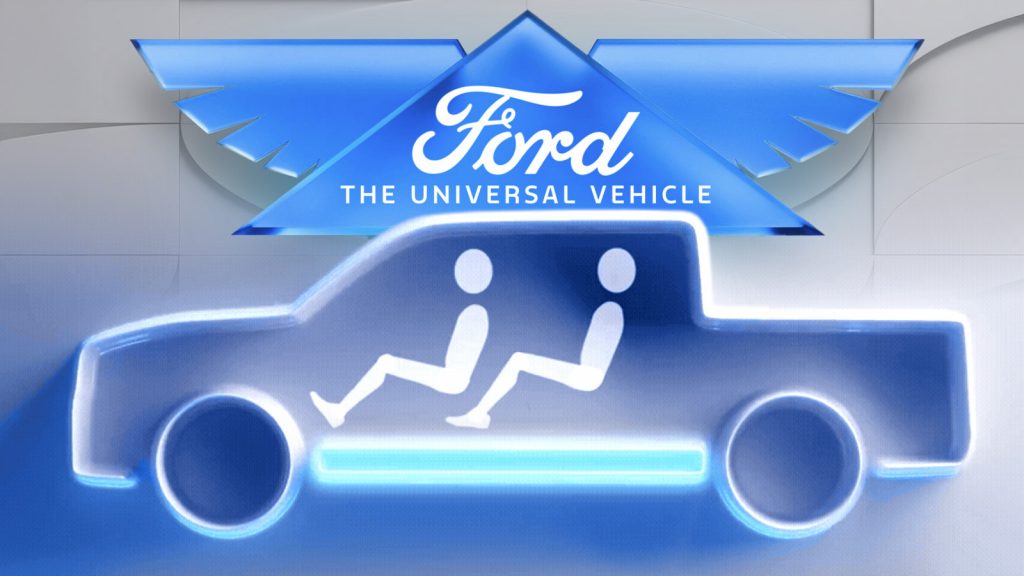
The Autopian has covered Ford’s revolutionary new EV pickup quite a bit, but here’s the short version: The company plans to build its $30,000 electric truck using three subassemblies. The two front and rear assemblies will be based on large aluminum unicastings, allowing them to travel down their own assembly lines. Eventually, they’re joined together by a third subassembly, forming the basis for the vehicle.
Back when the Model Y was new, repair shops took an “all-or-nothing” approach to repairing pieces of the gigacast unibody. According to InsideEVs, bodywork people would simply replace the entire damaged piece, which would be costly and time-consuming.
But as time has gone on, repair shops have figured out ways to repair gigacast pieces of metal or replace only portions that are damaged. Ford told Automotive News that early research indicates vehicles made with unicastings are now actually less expensive to fix, so long as they’re designed to be repaired from the start.
“What we quickly found is that actually, it’s easier to repair a vehicle that has unicastings,” Alan Clarke, Ford’s executive director of advanced electric vehicle development, told reporters. “When you make it a constraint — that it needs to be repairable at specific speeds, because we see customers actually having accidents at those speeds — it actually creates a bunch of creativity with engineers who figure out the easiest way to repair it, and it ultimately becomes an advantage.”
It’s not just Ford claiming unicasting is cheaper for repairs, either. Autonews references a study from UK-based firm Thatcham Research, which discovered that, on average, a Model Y in need of a partial gigacast replacement costs way less than a similar repair on a Model 3, which uses a traditional unibody structure with no gigacast parts. From the study:
Comparative analysis revealed that the Model Y’s mega cast construction delivered consistent cost advantages across multiple scenarios. Partial replacements cost £2,167 less than the Model 3’s traditional multi-part steel rear sub-assembly construction, while full replacements saved £519. Similar patterns emerged when comparing against other manufacturers’ vehicles, with the Model Y demonstrating lower repair costs than other models, including the Mercedes EQE, Hyundai IONIQ 5, and several internal combustion engine vehicles.
That £2,167 works out to nearly three grand in American dollars, which is not chump change. Those kinds of savings mean more money in consumers’ pockets, not just due to direct repair costs, but thanks to lower insurance costs, since insurance companies have to pay less to get the car fixed.

Those cost differences aren’t just because repair shops have figured out ways to repair or partially fix unicast parts on their own. The parts Tesla supplies for gigacast repairs make things incredibly easy for body shops:
Darren Bright, Thatcham’s principal engineer for automotive repair, told Automotive News that repair parts from Tesla have slots on the end designed to easily slide into the casting and be attached with adhesive, structural rivets and bolts.
“There’s no welding involved,” Bright said in an interview, making fixes simpler and faster.
Ford, then, is smartly copying Tesla’s homework for everyone’s benefit. From Autonews:
A Ford spokesperson, in a statement, said the upcoming electric pickup will be engineered similarly.
“We designed the vehicle to localize damage to specific areas for low and moderate speed collisions — the most common incidents on the road today,” the spokesperson said. “Although our unicastings are single structures, they are designed to be modular for repairability. We are accomplishing this with predefined cut zones to decrease variability in repairs.”
What does a “predefined cut zone” look like? Well, according to Ford, it’s basically like a stencil you’d see your kindergarten-age child playing with after school. From the factory, these unicastings will have pre-drawn lines where repair shops can slice out damaged pieces and replace them with new factory-supplied parts.
This makes things easier for body shops, not only because they don’t have to decide where to cut, but because it standardizes the repair process, meaning fewer unique replacement parts need to be ordered or fabricated from scratch. The repeatability means shops aren’t doing something totally new each time, either, further driving down the time needed to perform the repair.
If the casting is damaged, they’re designed to be partially repaired and replaced, in many cases more simply than on traditionally built vehicles.
“I think we often forget that repairing a sheet-metal vehicle is really challenging after a small speed collision,” said Ford’s Clarke.
In contrast, he said, a vehicle made with large castings “literally has a dotted line of where to cut, and you just cut it and the manufacturer offers the repair part and you glue it in place.”
It’s nice to know that if someone rear-ends me in my electric Ford truck, I won’t have to replace an entire third of the vehicle.
True To Its Word, Hyundai Recalls Palisades After Folding Seats Kill A 2-Year-Old
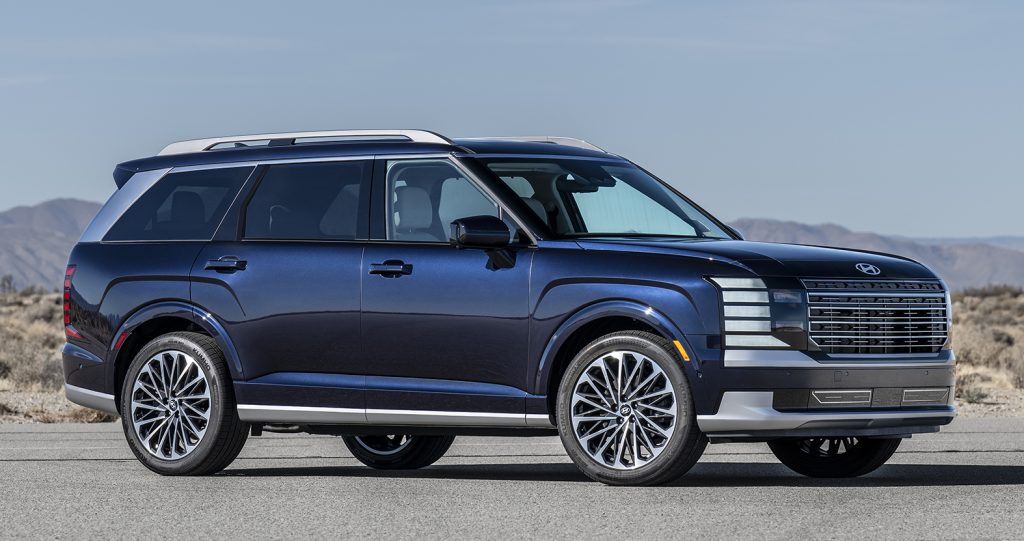
On Monday, Hyundai ordered dealers to stop selling its three-row 2026 Palisade SUVs equipped with power-folding second- and third-row seats after it learned a two-year-old girl in Ohio was killed by one of the seats earlier this month. That day, it promised it would issue a recall for the affected cars—all either Limited or Calligraphy trims—that would include a software update as an interim fix.
Today, that recall has been made official. The report reveals that, in addition to the complaints highlighted on the NHTSA’s site before the child’s death, reports were coming in about problems with the seats from as far back as August 2025. Hyundai was already investigating the potential dangers of the seat for months leading up to the March fatality. It’s not a great look.
As for a permanent fix, Hyundai says it’s “still in development.” It’s urging 61,093 owners to exercise caution when using the power-folding seat functions, and to avoid the “one-touch” function on the second-row seat back, which folds the seats forward for easy access to the third row, altogether. In the meantime, it’s going to offer up some new software, either through a dealership visit or over the air. From the recall doc:
As an interim action to mitigate the risk of injury, Hyundai plans to notify owners to bring their vehicles in for a software update or, for eligible vehicles whose owners have enrolled in Hyundai Bluelink, to complete an over-the-air software update. Additional information will be provided when available. When made available, all remedies will be offered at no cost to owners of affected vehicles, regardless of whether the affected vehicles are still covered under Hyundai’s New Vehicle Limited Warranty. Additionally, Hyundai will provide owners of affected vehicles reimbursement for out-of-pocket expenses incurred to obtain a remedy for the recall condition in accordance with the reimbursement plan submitted to NHTSA on March 2, 2026.
If I had a Palisade that fell under this recall, I think I’d probably just pull the fuse to the power seats just to be safe. So long as it doesn’t affect any other safety features, like airbags, it’d be the most effective solution (until the real fix comes out, anyway).
Your Uber Might Likely Be A Rivian By The End Of The Decade
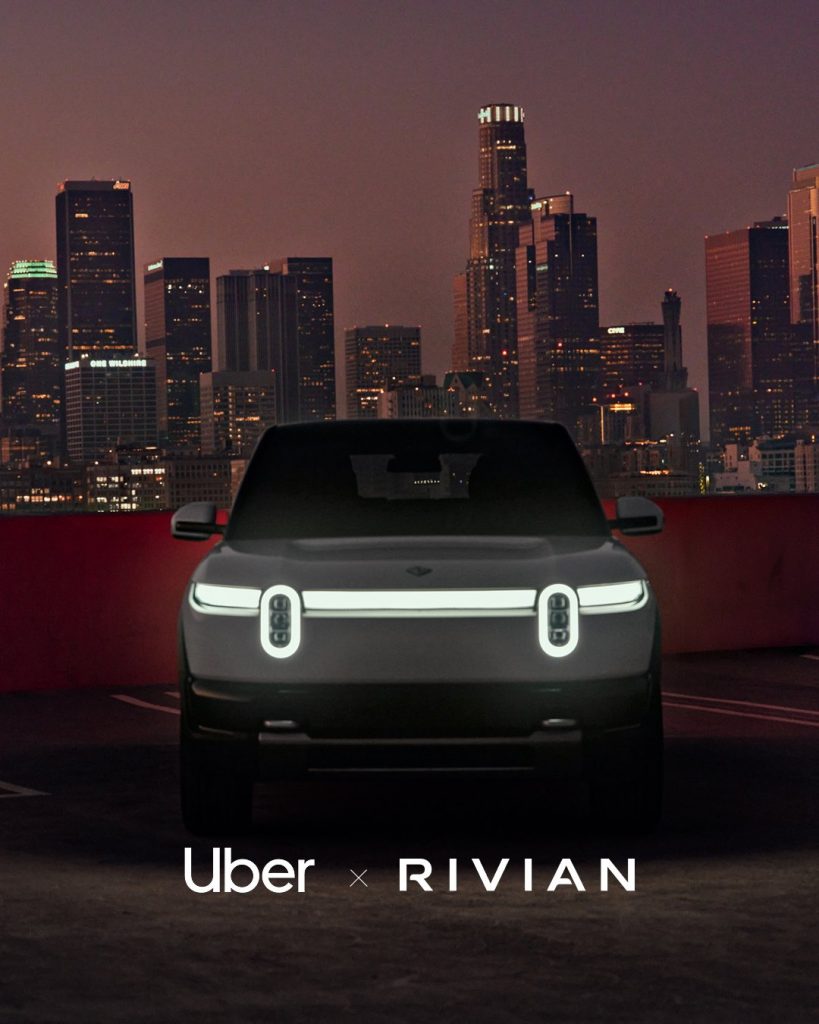
Uber announced a pretty serious $1.25 billion investment into Rivian yesterday that could see the ridesharing company and its partners purchase up to 50,000 units of its new R2 SUV for autonomous robotaxi use.
The deployment of said robotaxis will happen in two phases, according to Rivian. The first, funded by an initial $300 million investment from Uber, will see the company deploy up to 10,000 autonomous R2s starting in 2028, using Miami and San Francisco as testbeds. Should Rivian achieve “certain autonomous milestones by specific dates,” it’ll get the rest of the funding. By 2030, your closest big city will very likely have Rivian-based Uber robotaxis operating in it. From the release:
Should all milestones be achieved, the companies will have deployed thousands of unsupervised Rivian R2 robotaxis across 25 cities in the US, Canada, and Europe by the end of 2031. The companies also have the option to negotiate the purchase of up to 40,000 more autonomous Rivian R2 vehicles beginning in 2030.
What those milestones are, and when they need to be achieved, isn’t clear. Back in December, Rivian showed off its latest LIDAR-based, Level 4 autonomous driving technology at its “Autonomy & AI Day” event. Back then, Matt wondered why this tech was being introduced on the R2, rather than the more expensive R1. Now that this Uber deal is public, it makes a lot more sense. Whether Rivian can get it all to work is another story. Google’s Waymo has been operating for years now, and it’s still far from perfect. Guess we’ll see.
Rolls-Royce Says V12s Are Here To Stay
Back in 2022, when Rolls-Royce launched its first all-electric production car, the Spectre, then-CEO Torsten Muller-Otvos made a bold declaration: “By the end of 2030 we will no longer be in the business of producing vehicles with internal combustion engines,” he said.
At the time, Rolls expected 20% of sales to immediately go to the Spectre when it was released, and that 80% of the company’s sales would be electric by 2028. Things have obviously changed since then, with demand for EVs and emissions rules softening.
Chris Brownridge, Muller-Otvos’s successor, is of a different, more realistic mind. He says the company is abandoning that 2030 EV goal, and sticking with what customers know and love: 12-cylinder powerplants. From his interview with The Times:
“For every client that loves an electric vehicle there is one who does not,” said Brownridge. “Some clients do want an electric vehicle, we build what is ordered.”
He said Rolls-Royce, owned by the German group BMW and which manufactures 5,600 vehicles a year at its plant in Goodwood, West Sussex, would continue to offer cars with V12 engines.
Brownridge said of the pledge of Muller-Otvos that it was “right at the time” adding: “The legislation has changed. That prediction was based on a different set of circumstances. We recognise some clients would rather have a V12 engine. The V12 is part of our history.”
Seeing as how there are just six manufacturers left that still make V12s for production cars—Aston Martin, Ferrari, Lamborghini, Cosworth (through Gordon Murray Automotive), Mercedes-Benz, and Rolls-Royce—I’m glad Rolls isn’t dropping out any time soon. For a modern Rolls-Royce, a V12 just feels right, anyway.
What I’m Listening To While Writing TMD
Chuck Norris passed away yesterday at the age of 86, and while Walker, Texas Ranger finished airing before I entered 3rd grade in school, the show’s theme song is still somehow baked into my mind.
The Big Question
Do you think unicasting will become mainstream? Should it?
Top graphic image: Ford


Yeah, so are the insurance companies actually going to repair them or total them so they can sell the parts for more $$$?
Super glad that ford and others have figured out repairability with gigacasting. I’m really looking forward to the new EV truck that ford (ostensibly) has coming out and this was one of my major concerns.
If the gigacasting repair stuff proves valid over the long term I’ll have to eat some crow. I was sure it was Tesla finding a way to reduce manufacturing cost at the expense of repairability, but it sounds like that is not the case.
Despite the CEO being a nazi, Tesla engineers are pretty talented. I do like the big swings at trying new things like gigacasting and 48v accessories. I’ll wait till the features make it to cars that don’t make the wealthiest man in the world even wealthier.
Agreed. Apparently even the Cybertruck has some impressive engineering underneath that hideous exterior, it was just engineering in pursuit of the wrong goal.
To use a seasonally appropriate analogy, it’s like the Tesla engineers are out here draining half court shots, but their coach told them to shoot at the wrong basket.
I swear this is the only place on the internet where people admit to being wrong
I would dearly love to normalize acknowledging mistakes rather than doubling down on them.
It’s a critical step in advancing your knowledge. When I meet someone who already knows everything my evil nature is to let them become a learning experience for those who still have hope.
I too spent a good while in the “lack of repairability” camp. I’ve read a few articles discussing how it works and its really quite interesting. I haven’t seen any long term reviews, but I also have no reason to believe its worse in the long run. It wierds my brain out that its just bolts and glue, but if it works, it works.
The fact that its starting to look like it might be cheaper overall is very interesting.
I guess in some ways it does make sense. Normal cars are assembled with bolts and glue, so this repair method is arguably no worse than the alternative. As long as the original casting is engineered to accept these repairs, of course.
In my very mild defense, previous articles about gigacasting repair made it sound like something that could only be done under a pretty narrow set of circumstances, whereas this one implies to me that it’s happening more than I would have expected.
I have to call out the claim that Uber is making an $1.25 billion investment in Rivian. Yes, that headline is everywhere bit Uber didn’t cut Rivian a check for $1.25 Billion
Uber invested $300 million and ordered 10,000 vehicles. Still a big headline without the exaggeration.
I’ll have you know I invested $37 into Home Depot today when I bought a router bit and some painters tape.
Matt calls in sick to another positive Tesla mention. Had to have Mercedes cover the last one.
One day Matt, one day!
I’m really looking forward to seeing what Ford does with the new cheap EV platform, as more details come out it sounds pretty great.
I get the impression that earlier this decade there were some conversations along the lines of:
Musk: “We’re going to put most of our resources into designing a truck I sketched out when I was 6 years old”
Engineering talent: “Nope, we’re out”
Ford: “Hey, you guys interested in a “secret” project- making the flexible, cheap EV platform that Tesla should be working on to dramatically increase volume?”
Engineering talent: “Absolutely, can we start tomorrow?”
Ford: “Are you willing to relocate to the Detroit area?”
Engineering talent: “Uhhhhhhhhhbhmmmm….. (checks Zillow) YES!”
The youtuber JerryRigEverything put up a video showing the repair process on his Cybertruck, including a fun demonstration of the glue used.
Are these the guys who just like glued a hook to a super heavy something and lifted it up to test the strength?
Yes. As well as used a large front end loader? To apply +12000 tons of force downward on a Cyber truck hitch to failure point
Psh whatever, I could totally bench that… /s 😀
Yes, and yes. As someone that spent an excessive amount of money to learn industrial engineering, I am excited to see what it does for the automotive industry.
Somewhat related . . . friends took their Tesla in for repair. It’s gonna’ take a week, maybe two. The loner they got? A Cyber truck. In bright orange wrap.
If he lived here in East TN, the orange Cyber truck would barely get a glimpse…Go Vols!
Bright orange would be Clemson, and in SC it would get either extreme cheers or boos. The state bleeds orange or garnet.
Make it look even more like a dumpster than it already did.
I feel like the QC sucking mondo ass is just a forever feature with Hyundai/Kia at this point and that the cheapness is so ingrained in the corporate culture that nothing will change. Their entire business model is to undercut their competitors on price and you’re just not going to be able to do that for years and years on end without making concessions along the way.
They’re incapable of going more than a few months at a time without grabbing headlines for something awful, although their stupid seat design killing a toddler is ghastly even by their low standards. I’m genuinely not sure how you let something like that hit the market but Hyundai uh…finds a way.
It sucks! I like my Kona N and it’s now paid off so it’s not going anywhere. But the wife and I are definitely not going to buy another.
Do you think their QC is better or worse than say Ford or Stellantis? I’m curious because we have one Hyundai/Kia in the family and have only had one issue with it (known issue of window trim coming off). I know the older ones of course had issues with longevity, but I thought those were mostly gone at this point.
I’m still trying to parse “QC sucking mondo ass”.
My experience with a 2011 Hyundai was that it was perfect for 9 years. then I had a window lift mechanism break (the frame slide bits) and the motor of the main engine fan failed, so I figured it was time to move on.
I don’t think it’s usually the execution necessarily in H/K land, it’s the decisions made upstream to save a penny that trickle down into the design and metastasizes into yet another critical failure. Stellantis and Ford definitely aren’t immune to big issues like that but there seems to be different compromises they’ll be willing to take for better and for worse.
At least they recalled the thing this time and didn’t just gaslight the population into thinking there never was a problem to start with.
I used to be one of their most staunch defenders, but after the ignition switch thing, their horrendous dealer network, non-existent QC, and obvious corner-cutting, I’m pretty much done.
I defended them for years and even bought one. But this will be my only one.
Yeah I’m rarely “done” with a company, but this decision just shows such incredibly poor decisionmaking …
How in the name of fuck does a vehicle marketed to families with power folding seats that can kill children make it off the cutting room floor, let alone make it all the way to the public? It’s staggering, even by Hyundai standards.
I’m usually Mr. “Do your own research, try it out for yourself, don’t believe what your aunt on social media says about *insert foreign auto manufacturer*’s, etc.” but as soon as this dropped I sent it to my wife and was like “we’re taking this off our shopping list”.
Had a Sedona minivan and an Optima from the early ‘oughts that were stone cold reliable and pretty nice, if obviously not quite as sophisticated as what others were offering at the time.
My 2019 Niro was a nice hybrid that started using oil (qt every 3000 miles) and throwing codes around 107,000 miles. Traded it off quickly.
My daughter’s 2018 Sportage suddenly and quietly developed oil consumption issues after a mid-November dealer oil change. It was just over 100k miles. Christmas Eve it started idling funny. When I checked it, it was almost 5qts low, and cylinder 2 was scored. Kia wouldn’t cover it, but fortunately, the dealer she bought it from as a certified used car threw in a lifetime powertrain warranty. After 7 weeks of fussing, they installed a replacement used engine with 84,000 miles.
That’s two engines in two cars. Maybe they’ve fixed their engine problems, but I’m shopping elsewhere for now.
I remember Hyundai/Kia had a terrible reputation in its early years here in the States despite building actually solid cars. It seems like they now have a reputation for building good cars despite building a lot of crap. It’s very weird.
My 2022 Kona N had an issue with misfiring and going into limp mode around 15,000 miles. It was also in the middle of multiple recalls at the time and they were initially like “let’s see if the recall fixes (which included a bunch of software stuff) get rid of the problem”.
They didn’t! My car went into limp mode on the drive home and I literally turned around and limped it back to the dealership. Most of the 2022 N models were having issues with faulty knock sensors. They finally got replacing those approved under warranty but told me if that didn’t fix the issue I’d need a full engine replacement and it would take 6-12 months.
Fortunately it didn’t come to that, but at that point I was like “I’m over Hyundai”…although I had similar issues with my GTI and have to wonder if it’s just a GDI turbo 4 cylinder problem across the board. The depreciation is otherworldly as well. I plan to keep my car for another 2-3 years until a second kid necessitates something bigger, especially now that it’s paid off….but holy shit, it’s going to be worth like $7 at that point.
Don’t get me wrong, I didn’t buy it expecting performance Lexus like residuals…but dear god. It was a $37,000ish car all in and CarFax estimates that with my low miles (24,000) and spotless, preventative maintenance filled record it’s worth…wait for it….$18,000.
If that’s to be believed its lost 50% of it’s value…which is like German flagship sedan level depreciation. Like I said…my car has mostly been pretty damn good but I’m not doing this again.
The depreciation is truly wild, especially for how quickly they lose value. And knowing that these Hyundai dealers are giving people insane terms, you know there are a lot of Hyunda/Kia buyers out there who have to be upside down on their cars almost immediately.
PEOPLE PAY OVER MSRP FOR THEM TOO! There was a time when folks were paying $60,000+ for mid spec Tellurides. Hyundai and Kia dealerships were statistically some of the worst offenders of this when it was rampant a couple of years ago.
I had to talk to 4 or 5 different dealers to get an N that didn’t have a markup. With one an Elantra N was listed for MSRP online but the dealership essentially had a post it note next to the Monroney that said +$5,000 when I went to test drive it. I told the sales manager I’d be a buyer at MSRP. He literally screamed at me and was hurling insults when I walked out.
And guess what? The car sold like 30 minutes later to some clout chaser at $5,000 over MSRP. He was already taking selfies with it and posing when I left. What’s even worse is Hyundai encouraged it. When you’d look at their inventory through their own site they had the dealer markups included in the price.
I just assume that like half of the people that own them are underwater due to all the shenanigans and that Hyundai just rolls their negative equity into something new every 2-3 years. I’ve gotten calls from the dealership several times telling me they had a brand new (non N lol) Kona on the lot and they’d lowered my monthly payment by $100 but I had to come in THAT DAY!
Our local Hyundai dealer had a sales event thing where the owner was “living” on the roof of the building and wasn’t allowed to come down until they sold X number of cars or something. I still don’t understand how anyone can walk into one of those places of their own volition.
This is so enlightening, as I was under the impression that they’d turned the corner on quality and reliability, but it seems that problems remain. If I were H/K (damn, that used to mean Harman/Kardon!) I’d be disturbed by the number of ‘tried that once, never again’ opinions that have come up.
To be fair, these were 2018 & 2019 models. They had a big problem with that generation of direct injection engines. Supposedly, they’ve fixed it since then. But I believe I’ll let the current generation roll past 120k miles before I’d trust the problem is solved.
I have a hard time seeing Tesla as a positive example of a manufacturer lowering repair costs. It is great if Teslas are cheaper to repair after major accidents, but the cost of dealing with minor damage is ridiculous.
My Model 3 needs a new headlight after a minor accident. I haven’t got a quote from Tesla, but I’ve read this will cost well over $1,000 and isn’t easy to do yourself because software updates are required. Further, I only need the headlight replaced because the car appears to shut the entire headlight unit off when it senses any faults (the headlight was cracked in the wreck and condensation periodically triggers the fault; the headlight works 90% of the time and I can usually “fix” it by parking it in direct sunlight). This isn’t a problem that should require a four-figure repair.
Tesla also quoted me over $300 to repair a tire with a slow leak (a tire store fixed it for a little over $10) and charged me over $600 (and took two mobile service visits over three weeks) to replace two tires after one was puncture and couldn’t be repaired (they wouldn’t replace one tire citing safety concerns).
Used Teslas can be a good value and maintenance is essentially nonexistent, but savings can be easily negated if your car suffers minor damage.
Unfortunate reality of great modern LED Lighting are insane costs. I had to replace one of my 2015 GTI’s headlights from a parking lot collision and it was $1400 for a new headlight and needed to be coded to the vehicle. Thankfully I had the coding tool otherwise that would have been additional cost. A new OEM Headlight for my wife’s Honda Pilot is $800, and for my 2018 Type R its $650
As for tire costs, that is not just a Tesla Service department issue, but an industry problem. Prices are all over the place and really dependent on the shop and tire you’re buying. I just paid $160 to have 4 tires mounted for my Type R. Yet to get the exact same brand tire mounted on my Miata was only $100 at the same shop. They Type R wheels are more difficult to mount and balance. Similarly, my wife got a flat in her CX9, the dealership wanted $1600 to put a set of tires on that Costco did for $1190
I know repairs aren’t as cheap as they used to be. I’m still frustrated by the headlight issue, mostly because it is designed in a way that replacement with aftermarket or used parts is very difficult. I have seen used or aftermarket lights for as low as $300, but I’ve read that it is almost impossible to guarantee that any aftermarket or used headlight will work on my car. I don’t want to pay $300 to find out it isn’t a compatible part.
That’s the same problem with all automotive lightning now that headlights have modules that talk to the car’s ECU over the CANBUS network.
This is probably a very dumb question, but why does the headlight need to talk to the car’s ECU?
I presume there is a good reason, but it is really annoying if that is the barrier that turns a $300 repair in to a $1500+ repair.
I cant speak for why on the Model 3 since I don’t own one, but things like Auto High beams, swivel lights with the steering wheel etc.
Thanks – that actually makes sense.
The Model 3 has automatic headlights; my cars that were cheaper to fix didn’t have that.
MK7 GTI with a replaced headlight, Type R, Pilot, possibly from Wisconsin, or perhaps just really likes cheese. Were we separated at birth?
Very Likely, my whole family is in southern Wisconsin.
Next time I’m back home we can meet at a supper club.
Tire repair-ability is a new(to me) gotcha in my local area (suburban HV NY). With the astounding increases in tire prices in 2026 I feel that fellow Autopian folks should be aware.
In late 2025 a formerly reputable repair shop that happily sells/installs tires along with repairs suddenly gave me and others BS about simple tire hole leaks not being repairable for being in the ‘wrong’ part of the tread of the tire and all they would offer was tire replacement.
I put the screw they found in my tire during state safety inspection back in tiny hole (1/2″ length truss head screw, drove the 7 miles home, used a old-tech cold plug to stop the leak and drove back later the same week to pass the inspection no new tire at all. Worst of all was that I figured out the screw must have happened on the 7 mile drive to the 1st appointment and not before.
For a shop that is on Tire Rack’s local installers list, I was horrified until I heard some similar BS to other customer’s while waiting for my car and realized it’s the owner’s new go-to profit center to not fix any tire without saying it so many words.
It lost them thousands of my business that was needed on my BMW to have my Odyssey’s simple problem ‘up-profited’ from under $40 to over $250 so much.
It’s this type of nonsense why each of my cars has a full plug kit and compressor. Well, that and there’s no spare with my PacHy, but still…
I have two plug in Prii
1 2012 Prius Plug-in
1 2017 Prius Prime
Neither came with a spare tire.
Both now have a spare (plus a jack as well as a tire repair kit) bc I figure the most likely reason to at some point have a road breakdown is a flat tire which seems like such an unforced error on my part if I didn’t accessorize them with a spare tire.
And I did ensure the spare is load rated for each car too. Again it would have been silly not to 2x check this as well. And both are secured in the rear hatch with straps to the tie down points.
Tire shops around me are hit or miss with patching a tire depending on where the debris is and how much tread is left on the tire. I keep a plug kit in my two cars, the wife’s pilot has a full size spare.
BMW says hold my beer.
All dealerships do this. They’re not in the tire business, they don’t want to be in the tire business, and they charge you a premium to just take your car/wheels over to a tire shop to do the same thing you could have done yourself.
Nothing you have listed is a unique Tesla problem.
I am aware these are not unique to Tesla. However, prices are considerably lower for other vehicles I have owned. I have had to replace headlights on new-ish vehicles before and have always found a way to do it for a few hundred at most. I’m not sure BMW is a fair comparison – BMWs are a luxury product; the Model 3 isn’t supposed to be a luxury car.
Replacing two tires instead of one was probably reasonable; I was more annoyed at how long it took as opposed to the price.
Quoting over $300 to patch a tire is batshit crazy on anything that isn’t a supercar.
Also, I was mostly reacting to Tesla being cited as an example of cheaper repair costs. These prices might be typical, but they aren’t cheap.
I don’t have much good to say about modern MB, but on this particular subject I’m interested to see what they do. With their announcement of “rebuildable” parts, they’ve said they will be having gaskets and bolted together light assemblies. So if you crack the lens, you just buy a new lens. If you have a damaged LED unit, you can just replace that LED unit. Supposedly anyway. I would like to see more of that make a comeback.
Unicasting will go mainstream, but they’ll have to use some new lingo to get the YOUTHS to adopt it.
“We’re FrameMaxxing our chassis so we can mogg on other manufacturers and spike their cortisol levels”
Or whatever the Gen Z/Alpha kids are saying these days.
Feels like there should be a “no cap” in there somewhere
FR FR
67
on G
The description of these easier repairs makes me wonder how it might impact the values of vehicles that have been repaired. Glue and rivets seems like it might reduce the value.
Also, the fact that a Tesla Model Y and a Lucid Air Pure would cost me the same amount to insure makes me wonder about how much it actually lowers repair costs.
To be fair, any reported damage on a CarFax already reduces the cars value.
Yeah, but what I wonder is whether this means further reductions or not. Even if the repairs are cheaper, it might cost the typical car buyer more in the long run if it means every accident drops the value even more than it would on other vehicles.
Glue is a bit of an understatement to what that structural adhesive actually is. The F series trucks and Expedition/Navigator SUV’s bodies are all held together with glue and rivets. The stuff is significantly stronger than welds. I spent 4 years in a Ford aluminum body assembly, maintenance and engineering role. When that stuff is put together, the only way it’s coming undone is to cut out that joint.
They had to repair a bridge near me and they used tensioned cables and carbon fiber patches on the cracks. If epoxy can hold a bridge together it can hold a truck together!
And if you can dodge a wrench, you can dodge a ball!
I did intentionally understate the adhesive for effect, but it’s good to know that it is that strong. Thank you for the insight.
What happens if you have to repair the same area a 2nd time after a structural adhesive repair? Cut out more of the casting until you get to the next repairable section?
Typically, yes, but it really just depends on the exact spot the repair is needed. Some spots it wouldn’t be a structural issue, others it would be. There is however a standard for when the entire piece would need to be replaced. Essentially similar to any body repair on multi-part assemblies. The purpose of the gigacasting is to reduce those into one giant part.
I hear this “glue is stronger than welds all the time” but I don’t get it. Even the crappiest Chinesuim steel has a yield strength of 34kisi. The best adhesive in the world is maybe 8ksi – and that is only if you get the surface prep perfect (Don’t forget Billy Bob in the repair shop is having a fish fry in the parking lot and the oil is contaminating the bond joint – and that’s a true story – parts built on Friday’s failed due to the fish fry)
(disclaimer – I am an engineer, but not a mechanical engineer)
I don’t have a reason to disbelieve your numbers, but a true statement can be missing detail and nuance.
I think here the detail and nuance would be that even if the strength of a particular fastener material is higher than that of an adhesive, stresses are being placed on a fastener occur in a very limited area while stresses on an area slathered with adhesive will tend to be spread out. Also, those spread out forces will not be doing things like damaging the areas immediately surrounding the fasteners (i.e. stretching mount holes, getting stress cracks due to metal geometry, etc. Yes, surface prep is important – but it can be important in welding, too. With regard to longevity of repair both fasteners and adhesives could have issues depending on the environment. Corrosion around the fasteners or chemical degradation of the adhesive? I dunno, pick your poison.
In the case of what I seem to be seeing with the proposed unicasting repairs you get the best of both worlds – fasteners to ensure good alignment plus adhesive to spread the stress loads over a much greater area, just as it would have been with the original casting. I think it should be plenty good as long as the repair process is engineered correctly.
You basically hit the nail on the head with that answer.
A very thoughtful way of saying “glue it and screw it” 😉
Also to an above commenter who point adhesives are strong enough that automotive manufacturers sometimes use them on structural components within vehicles & I therefore see no reason why a comparable well engineered repair could be just as strong using basically the same techniques
It’s a good point. It’s not like Tesla hasn’t had issues with their adhesive in the past. It would be good to understand the engineered lifespan of a repair with adhesive and compare that to the expected degradation/oxidation and other factors with a welded repair.
Editing to add: Also what it does to any safety/crumple zones etc in a future crash. It sounds like it is quite strong but does it still behave in a consistent manner in which the chassis was designed? It’s a curious thing to me that adhesive can truly be that strong.
The strength of a weld is dependent on the quality of the weld. I could see repairs with adhesive and rivets ultimately being more reliable if they are more consistent and repeatable.
I watch a lot of youtube guys building cars. They’ve definitely discussed that one of the risks of buying someone else’s project is you have no idea if they are a good welder or not, and might not be able to tell until welds start breaking!
Another advantage of the section replacement strategy is if it reduces the need to straighten frames or try to re-align structural components. That kind of work can lead to lots of hidden and hard to correct problems down the road.
That’s fair. It would be interesting to see if it means that frame damage isn’t as much of a black mark on a car’s history, then.
This is modern Ford we’re talking about, don’t give up hope just yet. I’m sure they’ll find a way.
Coming soon to a headline near you: “Ford recalls 1/3 of vehicle because of defects in castings.”
They need to take a page out of Tesla and just say the defect is a feature
/sarcasm
Edit: NVM, misread this the first time.
Didn’t Lucid make the opposite statement recently on giga-casting? That it was cheaper to build and insure vehicles that were not unicast? I wonder if he was only referring to the up-front tooling costs.
Volume / scale of the vehicle in question greatly matters when discussing potential costs to produce the product in question.
Is it cheaper for Lucid at their comparatively low production volumes (10s of thousands of vehicles) to build a car the conventional (unibody) way? In all probability yes.
Vs.
A high volume manufacturer like Ford that can more easily ammoritize the additional costs involved in switching over to a new manufacturing technique amortized over hundreds to millions of a given vehicle model
Having, over the years, had vehicles in collisions – the pricetag of repairs is striking. They can easily add up, even in seemingly minor impacts.
Pop the airbags, and it’s likely a writeoff regardless of what’s underneath.
We have gone a long way from making things easy to repair – front grilles are integral to the bumpers, headlamps get easily crushed in a parkinglot ding, etc…
But what costs insurance companies serious money: personal injury.
So it speaks to cars getting safer across the board.
why did you have AI write that?
Ouch.
It does suck that I am now questioning most things I read as AI written or not adding an extra process above reading and comprehending. It also sucks that writing from real people and AI are converging on similar tropes. Rule of threes. Single thought paragraphs. Not this but that.
The biggest tell, for me, is en- and em-dashes.
This was from Spikedlemon’s comment: –
This is a regular dash from my keyboard: –
Compare:
–
–
To type an em-dash in this comment box requires extra work that most humans won’t bother with.
A thing I really hate is that I’ve had to change my own writing a bit. I used to tend toward listing three things; now I try to limit myself to two or try to break things up differently. I also use em-dashes frequently–I’ve cut back on them, though.
–
—
I wonder if your edits had something to do with how the em-dash and regular dash look different in the text box but look the same after clicking post. Funny. I would have lived in ignorance if I hadn’t come back.
Now I have even MORE distrust of dashes and all their various lengths.
That is exactly why I edited. I was surprised when it showed me two hyphens, but then gave me that dash. This comment system is mysterious.
no human uses that many commas to type a sentence.
“having, over the years, vehicles in collisions” is a completely idiotic way to say “I’ve had a couple accidents in cars I’ve owned.”
not to mention AI’s insistence on using em dashes for EVERYTHING.
I dunno…I’ll use different formations to emphasize different things, and it often means more commas than are strictly necessary. I wouldn’t make the assumption that something is AI based on that.
It just feels like the commenter threw that clause about “over the years” in the middle to emphasize that it wasn’t a string of accidents recently or something.
It’s Friday. Save all this anti-comma talk for this afternoon when Roth’s column comes out on Defector.
I – or at least I’ve been told – tend to write in an overly complicated style; I don’t know why. Oddly, though, I’ve always thought of myself as human.
RIP Chuck Norris, he had an amazing life but still seemed too short.
The Unicasting makes sense with traditional unibodies, kind of like trucks have ladder frame, bed, cab, easy peasy, front/rear/middle instead of welds and rivets everywhere.
I’m just curious how that scales with multiple models. Like Tesla only does it with the Y but not the 3 which are very similar sized and shaped, so is that a whole separate gigacaster for each model?
To do one gigacasting for multiple cars you have to use entirely the same parts. It is perfect for platform shared things that use the same underbody assembly.
The Model 3 and Model Y aren’t on the same unibody because Tesla doesn’t know how to do platform sharing or work on more than one model at a time.
Companies like Ford, Toyota, VW that has been doing shared platforms for decades.
It’s not surprising that Rolls Royce is rolling back their EV goals, like so many others have already had to do. I remember thinking when the big EV push started happening that there just isn’t enough demand for this.
They presented the EV Rollers being sublimely smooth and quiet, while having the power and presence of a Rolls.
Even with declining numbers, RR are still selling more Wraiths than Ghosts.
That ought to tell them something – but they’re doing the opposite anyway.
Really? I would think a Rolls-Royce is the perfect car to be electrified. You want it to be quiet, serene, and smooth. All traits an electric drivetrain excels at. There’s no range anxiety with a Rolls. If you have a Rolls and you’re going further than 150 miles, you take the private jet.
You’re absolutely right about that.
But what I’m referring to is how the entire auto industry was making grand plans about electrification just a few short years ago and now most of them are backing way off. I know there are a myriad of reasons for it (less demand than expected, government policy shifts, individual brands having to shelve ideas because the parent company has, etc.), but the sudden shift both towards it and back away from it has been whiplash-inducing.
I thought the same thing, but, not being rich, I mistakenly guessed the wealthy might apply pragmatism to the purchase of luxury goods. Oops.
Now that I think about it, I was mostly considering Rollers as the perfect car to be electrified by someone in a shed, which still sounds like a worthwhile thing to try with a mechanically cashed-out Silver Shadow or such.
The goal for the Spectre was 20% of sales when released. In 2024 it was 33% of sales, their best selling model in Europe and the 2nd best selling model globally. In 2025 it dropped to 18% of sales.
Sounds like a success to me.
I really never expected a company like Rolls to go 100% EV. They sell at a price that CAFE and EU CO2 fines simply don’t matter.
Oh for sure. I don’t mean to downplay the RR’s success. I’m just referring to the industry as a whole. Everyone was all about EVs and in a relatively short period of time most companies (RR included now) have backed away.
I’m not saying anyone is wrong for it (you have to do what pays the bills), but I just can’t think of a time in my life when the entire industry so quickly adopted such a radical change then just as quickly turned away from it.
That roll back is directly related to a flip flop on regulations and industrial policy.
The 70’s was as big of a change with emission regulations and CAFE. If in 1980 Reagan had killed the Clean Air Act and cancelled CAFE the US industry would have went right back to what they were doing. Reagan didn’t do that though. CAFE requirements increased 30% in the 8 years Reagan was president and EPA continued make emission standards tighter.
I thought the goal of Spectre was self evident from the initialism…. SPecial Executive for Counter-intelligence, Terrorism, Revenge, and Extortion
At the rate unicasting is catching on, soon we’ll be driving life-size diecast cars…
Nah! 3D printed. Or maybe diecast with 3D printed interiors?
Already there is a very low volume sports car that used AI modeling and 3d printing extensively
https://www.topgear.com/car-news/geneva-motor-show-2020/czinger-21c-1233bhp-3d-printed-hypercar
Darn. Chuck Norris didn’t die; he just stepped away from this timeline.
I have a unicast Y. This tech should become mainstream. After successfully bonding rocker panels onto a rusty old car a long time ago with structural adhesive in a garage, I’m totally fine with holding metal together with fancy glues. It worked fine for me.
Thanks. Since hearing the news I’ve been thinking about what the Chuck Norris description of it should be.
Unicasting might become mainstream, but it won’t become The iPhone. There will be areas it will work extremely well, and areas it won’t. I imagine that there will be applications that the process will be entirely inappropriate for…as well as, inevitably, someone screwing up the design process enough to give the whole technique a bad rap. (Olds Diesel and GM’s accounting department) It will also remain to be seen how easy it actually will be to make changes to the big dies or patterns, as well as how long said patterns last.
At least from an ownership standpoint, so far, so good.
I think the other potential positive is that by casting it as one assembly, it may be possible to make the attached components more serviceable.
Modern cars are fantastic. There’s no doubt about it. They’re more performant, luxurious and capable than they’ve ever been. But repairability is lower than it’s ever been, and ultimately that drives up insurance and ownership costs for everyone. And some operators are particularly egregious when it comes to the cost of repairing crash damage. It’s why I’m concerned about my partner wanting to get the new R2 for a daily driver.
I hope to hear more automakers making noise about–and then actually implementing–steps to make their cars easier to repair, mechanically, electronically and structurally.
I have a lot of faith in FoMoCo’s research on this one, because of their history. They began researching bonded-and-riveted aluminum construction, like that of the aerospace industry, in the early 90s. They decided to use the low-volume “X350” Jaguar XJ as a test bed, which debuted in 2003 and then the “X150” XK in 2006. The VH-platform Aston Martins also got the technology. Finally, Ford deployed it for use in the high-volume F-150 that arrived in 2014 (MY2015)…and the F-150 is such an important and ubiquitous vehicle that they’d have never been able to do it without developing the infrastructure to repair it economically. So they have a good track record in recent memory.
The depressing likelihood is that unicasting isn’t going to lower insurance rates. Insurance companies are accustomed to charging more, and I expect that they won’t want to change that if they can continue to charge high rates and make an even better profit margin.
Though because of that, I expect that insurance companies will champion this method because it’s going to help their bottom line at the expense of policyholders, as per usual.
Bingo.
Just like consumer prices don’t fall when raw materials cost decline, insurance rates won’t go down – they just won’t go up as much.
Yep, just like all these ADAS systems that help avoid accidents (blind spot monitors, ultrasonic sensors, cameras, radar, automatic emergency braking, etc.) don’t seem to help insurance rates and in fact seem to cost more.
It’s kind of like the “discount” I would get on my homeowner’s insurance by having a centrally-monitored alarm system. $20/month discount, $50/month monitoring charge.
Spending dollars to save pennies.
No, premiums likely won’t go down. Instead they will raise slower.
And yet, I haven’t heard of insurance companies lobbying Washington to abolish time change, which definitely costs them a lot of money in accidents over the following two weeks! To me, this is a no-brainer.
(No, I’m not a fan of time change.)
RIP Chuck. Really thought he was going to outlive us all…
I’m sure he gave the grim reaper a hell of a fight including one last round kick for good measure.
Death once had a near-Chuck-Norris experience.
Chuck Norris isn’t really dead. He’s just giving the Earth a rest.
Chuck Norris won’t be lowered into his grave. The earth will rise up to meet him.