

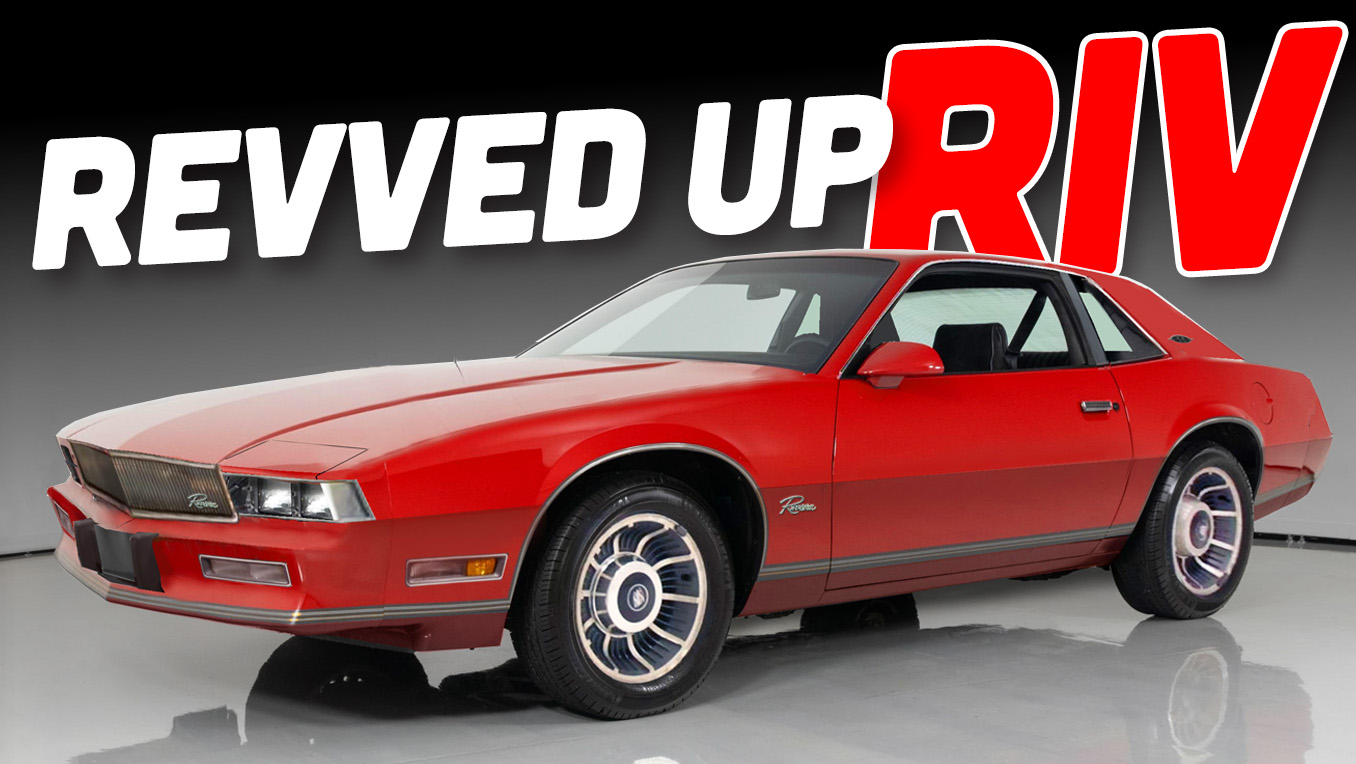
For better or worse, when I start something, I think it’s best that I finish the job. Recently, I’ve mused about how the drastically and dreadfully downsized 1986 GM E-body coupes might have been better served by continuing their nameplates as versions of The General’s more athletic F-body cars, which you know as the third-generation Chevy Camaro and Pontiac Firebird. I’ve explored an F-body Cadillac sports coupe as an Allante alternative, as well as an Oldsmobile Toronado with some Trans Am-style performance and style. What about Buick?
As a car person and contributor to this site, I should be “up on things,” but I’m not sure if I can correctly name even one or two of Buick’s latest models (Buick Alcantra? Buick Eclair?) without going to the brand website. And if I do, I’d likely forget what I saw within minutes, assuming the current lineup is just bland rebodies of existing GM platforms. Sadly, that’s been the case for Buick for a long time, and forty years ago GM spent hundreds of millions of dollars creating all-new luxury coupes that didn’t live up to the names stuck on the side of each car. Buick’s Riviera version of this 1986 E-body coupe was also a rather nondescript shrunken product that was a bit of a disgrace to the name.


Instead of investing the tremendous sum of cash that GM did into ground-up E-bodies that didn’t sell, a heavily modified and improved F-body Firebird or Camaro might have been done for far less money and given us a much more exciting product. The only thing left for us to do is create a CamaroBird-based Riviera to breathe life back into what was once one of GM’s greatest cars, and also pay tribute to not just the Riviera but also some of Buick’s other performance icons.
“She’s A Runner”
The whole idea of a “personal luxury coupe” wasn’t always a joke. When General Motors design chief Bill Mitchell was on business in London in the late fifties, he reportedly saw a crisp and angular-looking 1955 Rolls-Royce cutting through the fog in front of his hotel and was inspired by this vision to create the sporting luxury two-door Buick that he and many critics consider to be one of his masterpieces.
You can see a bit of his visual concept when looking at the new-for-1963 Riviera with its forward-jutting fender fronts and pointed grille running almost parallel to the angle of the C-pillar.

Yeah, there’s a lot of American detailing, and the spinner hubcaps are sort of silly, but considering that Buicks of just a few years before had tailfins tall enough to ride a rollercoaster, this thing was a revelation.

The brochure shot of the interior below shows round gauges, a floor console, and toggle-like controls that wouldn’t have been that out of place in a similar-era Lancia.

Individual seats up front and limited chrome (relatively speaking) kept the European theme going inside.

In the back, you got two bucket-style seats that unapologetically made this thing an occasional four-seater.

The whole forward-rake thing is very clear in the rear three-quarter view below, showing a “forward motion” concept as if the whole car put its head down and just charged ahead.
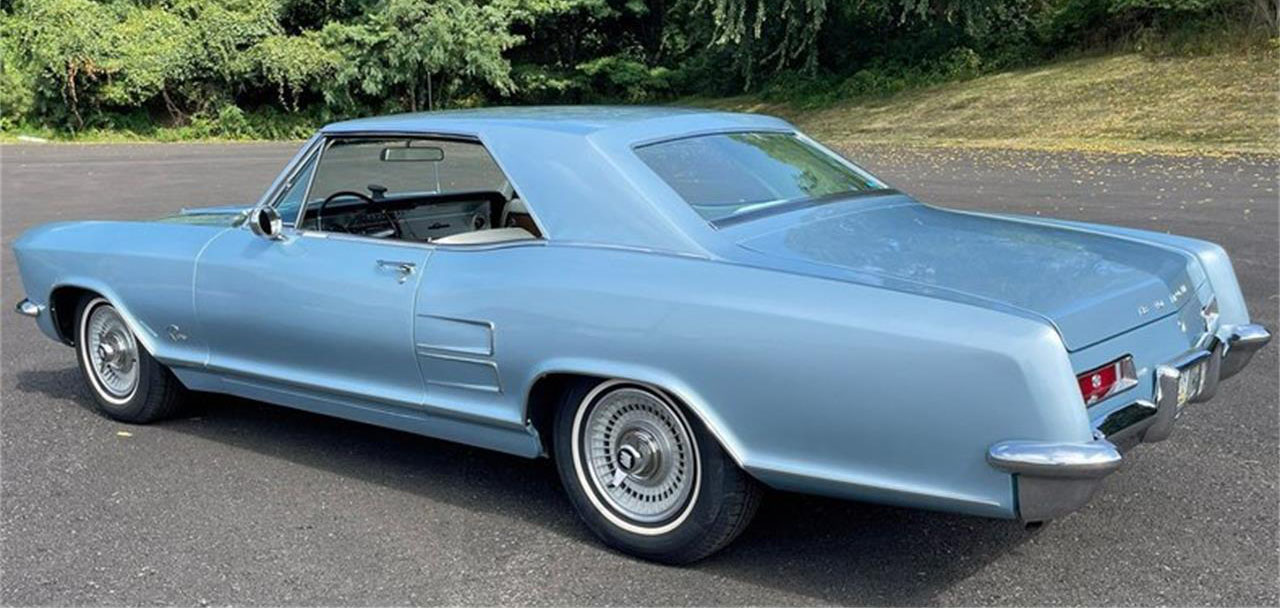
It’s a gorgeous car, and GM really played this up by presenting it at the Paris Motor Show, and why not? It outshined almost everything else the Europeans had to offer then.
Don’t forget that this era of Riviera wasn’t just a good choice; it was a logical one, captain. Click here and check out Bill Shattner’s fuelie Stingray parked next to Nimoy’s Riv.
The Riviera sold rather well, allowing Mitchell to add the complex covered headlight mechanisms on the ’65 that were supposedly nixed initially for cost reasons, but added an ultra-cool look that also protected the glass from vandals down at the Double Deuce:
During the sixties, the Riv slowly got heavier in appearance with a massive front bumper and hidden headlights, though it was admittedly still a rather cool-looking Coke bottle-shaped thing with a fastback body.

For 1971, the Riviera again shocked the world with an all-new “boattail” style that was almost like a 1963 Sting Ray pulled and stretched into a stunning love-it-or-hate-it grand touring luxury coupe.

By the mid-seventies, the controversial boattail was scraped off, leaving a rather nondescript barge.
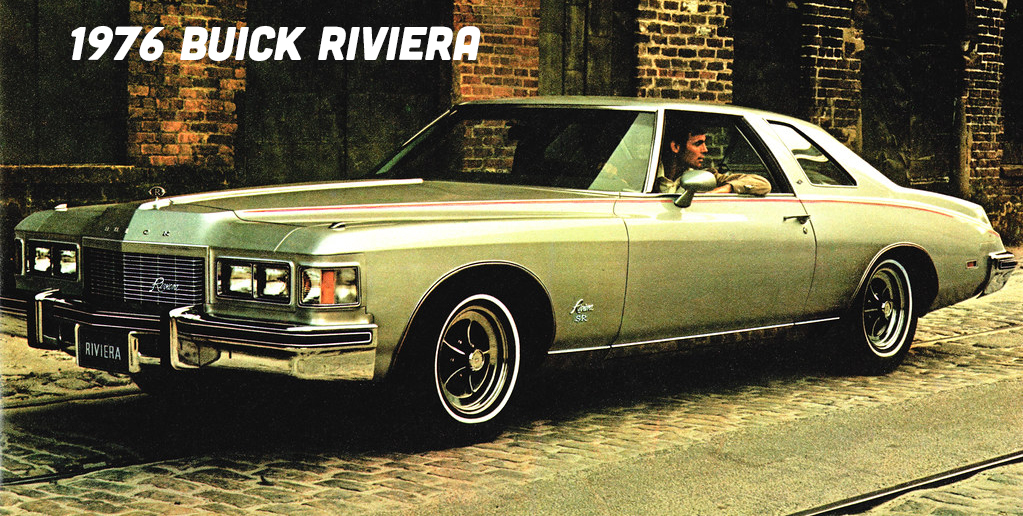
In ’77, the Riviera name was put onto a rebodied LeSabre coupe. Again, a rather uninspiring-looking car, but at least a much more manageable-sized product on that outstanding downsized B-body platform it shared with the favorite 1977 Chevy Caprice. There was no denying, though, that the Riviera name was on life support.

Thankfully, in 1979 Buick was given a version of the smaller and totally reengineered E-body platform shared with the new Olds Toronado and Cadillac Eldorado. Yes, that meant the Riviera was now a front-wheel-drive car, something that I’d think might have been controversial, but at this point, anything to properly revive the name was welcome.
Buick even offered this particular Riviera with a 3.8-liter turbocharged V6 engine. No, it didn’t produce anywhere near the level of power that it later would in the Grand National, but at this point it was clear that the Riv was getting its groove back.

Sales of this version were rather strong for a luxury coupe, with 65,305 cars sold in 1985, the last year this body style was offered. For the following year, the E-body line would benefit from a several-hundred-million-dollar revamping. Well, “benefit” might be the wrong word to use here.
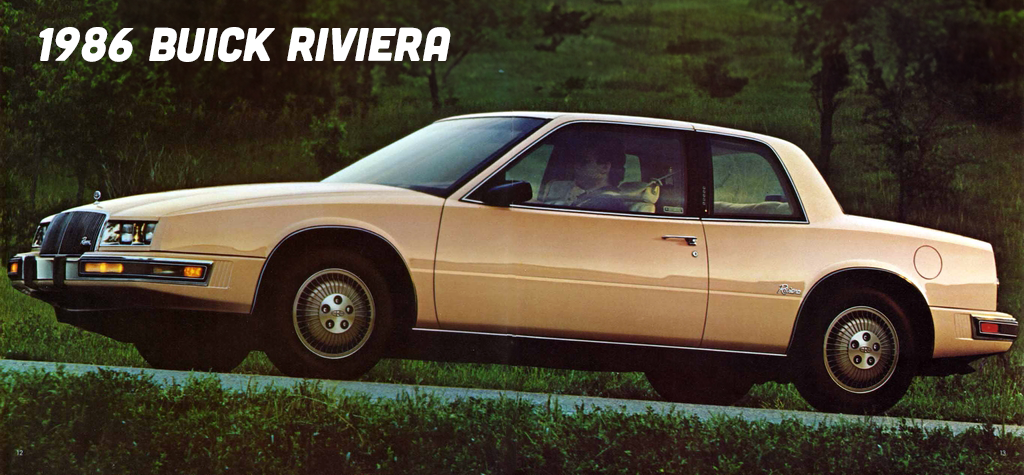
You see, GM knocked an additional 13 inches of length off of the already-downsized 1979-85 car, and that turned out to be leaving the thing in the dryer for a bit too long. The predicted $5.00 a gallon gasoline prices this new Riv was designed for didn’t come to pass, so dinky luxury coupes were not going to be attractive to most buyers of this kind of car.
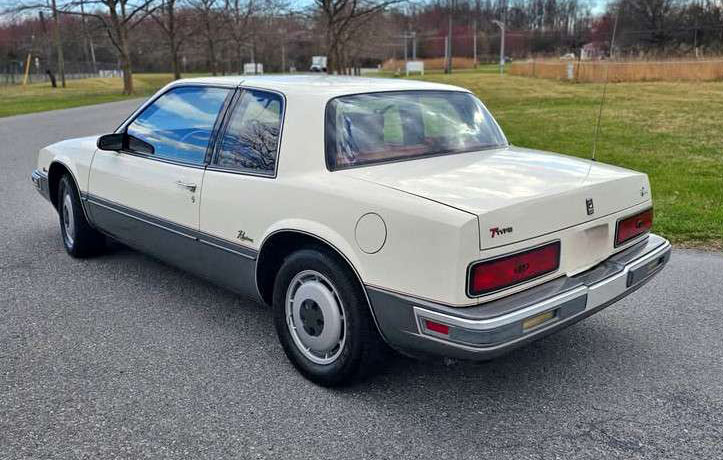
It wasn’t just the size issue, though; the styling of the tiny Riv didn’t do it any favors. Worse than that was the comparative difference between the other cars in the Buick lineup of 1986. This $20.000 two-door Riviera was barely much bigger than the far less expensive $9,000 Buick Somerset Regal coupe, and it looked a whole lot like it as well.

You got more equipment on the Riv than in lesser Buicks, but it wasn’t necessarily extra stuff that people actually wanted. It was a V6 only, and no, there was no longer a turbo option – but you did get a touch screen “TV set” in the middle of the dashboard to operate the radio, climate control, and various other functions. A large number of owners and potential buyers apparently would have preferred just having a bunch of buttons instead, like on an Olds or a Caddy (and many buyers, ahem, still do today).
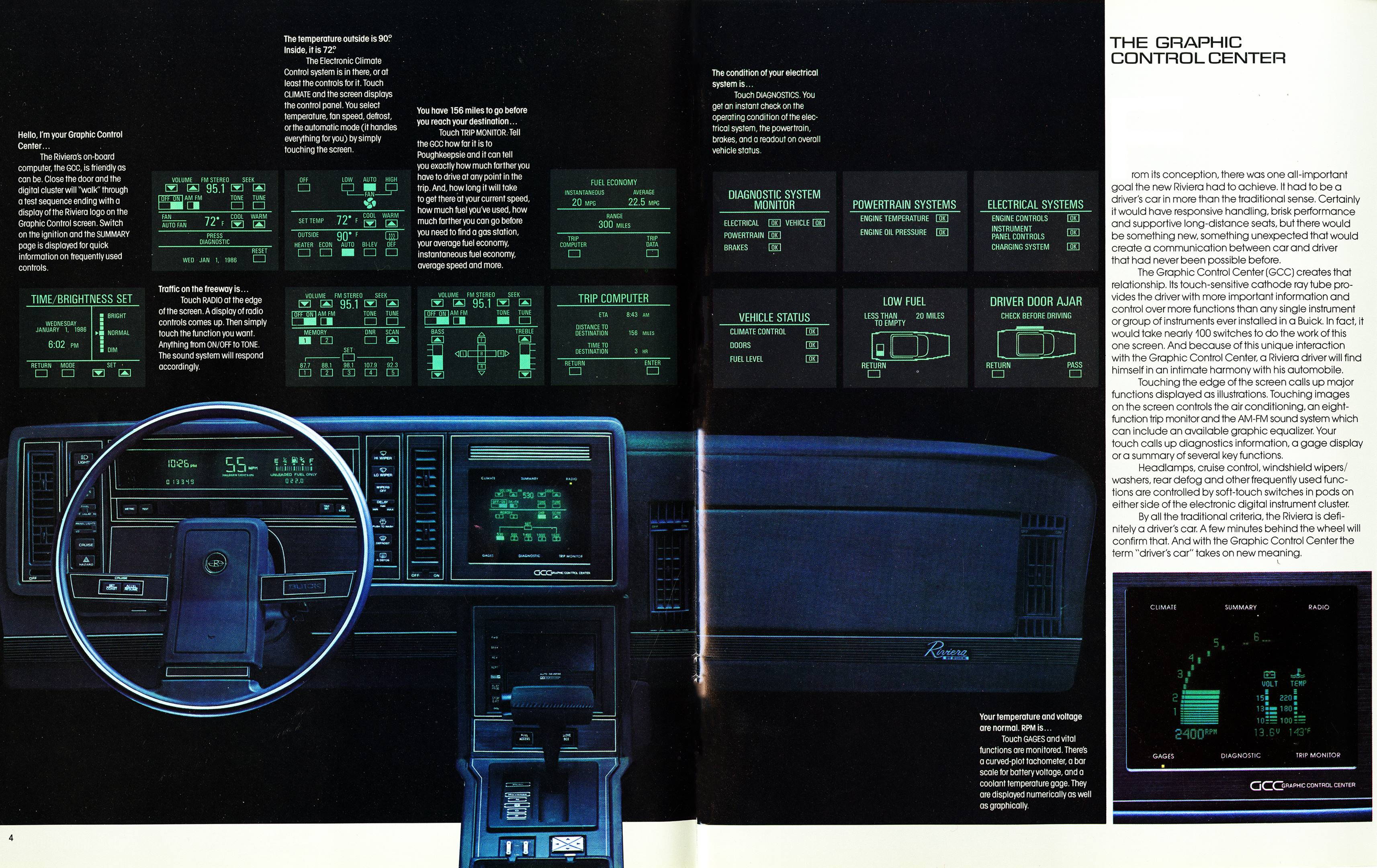
Like the other new-for-’86 E bodies, buyers stayed away in droves. Riviera sales dropped 70 percent to a mere 22,138 units, less than where the Fiero was when GM deemed it a lost cause. Buick eventually added length and overhang to the Riviera in 1988, which arguably made it look better and more substantial, but shifted it even further away from the angular elegance of the original ’63. Honestly, it turned it into even more of a full-on front-drive malaise luxobarge, which few wanted by then. Buick ditched the whole thing after a mere 4,555 were sold in 1993.

The attractive 1995 revival model made a valiant attempt to turn the tide, but at that point, the luxury coupe was a dinosaur from a past age, and it only lasted until 1999. It’s a shame that the Riviera never got one last shot at being a rear-drive powerhouse touring coupe that even paid homage to another hot sporting luxury Buick that we often forget. They could have done this without spending hundreds of millions of dollars, or at least a fraction of what they spent on the ’86 redo. Let’s finish up the F-the-E-Body series with a Rivimaro. Or is that a Fireiera?
Riviera Del Camaro
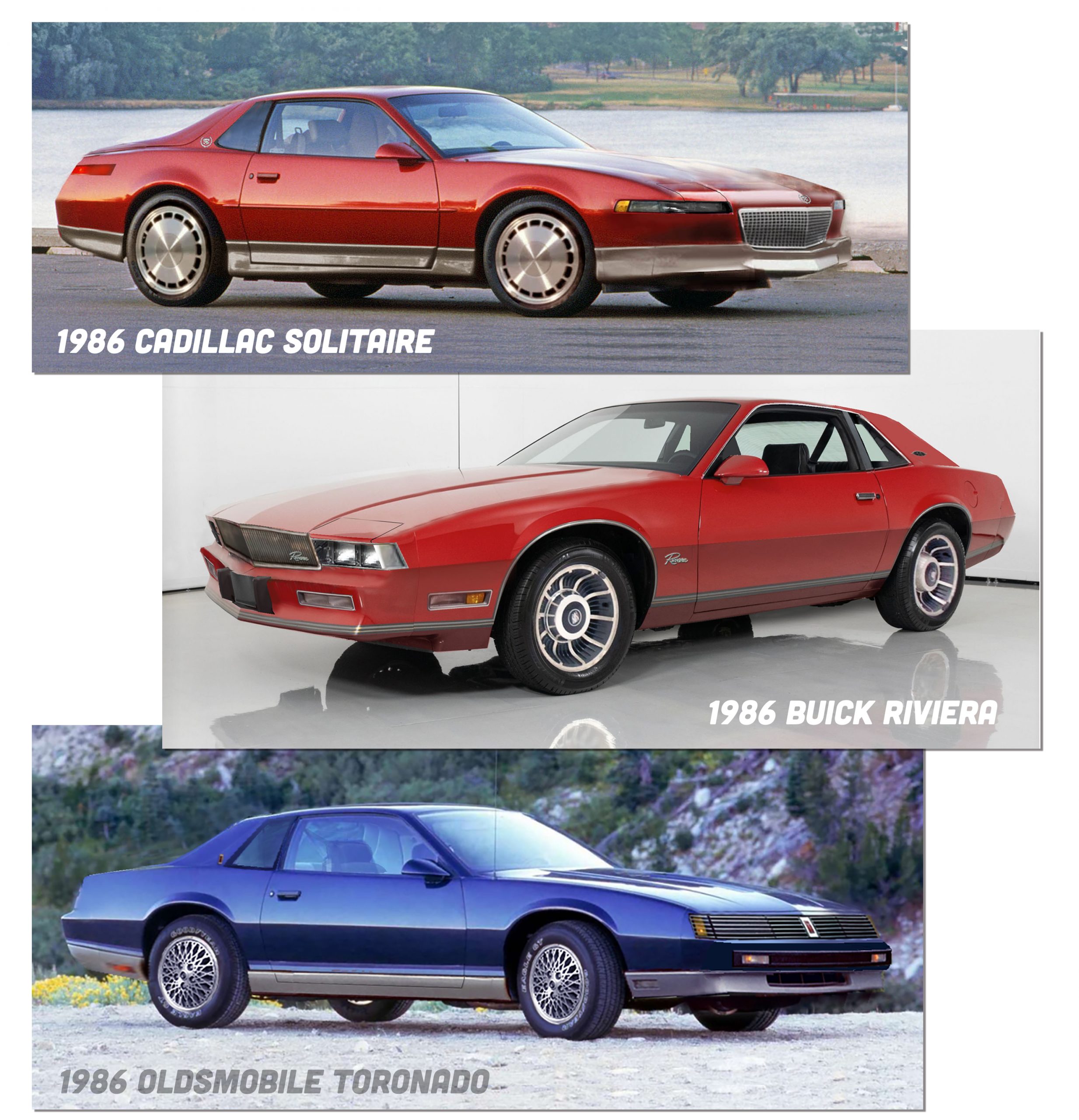
So far, I’ve shown how GM could have turned the F-body platform that was used for the Chevy Camaro and Pontiac Firebird into sporting luxury coupes for a few of their higher-end brands. The first I did was the Cadillac Solitaire; based on a late eighties concept car, this one was really more of an alternative for the ill-fated Allante than the Eldorado, but it certainly could have been either.

Recently, I did a parallel universe 1986 Oldsmobile Toronado F-body that proved controversial since, understandably, many readers felt this Olds coupe should always have been a front-drive proposition. I think they’re probably right, but I sure like the idea of a rear drive and V8 in anything.
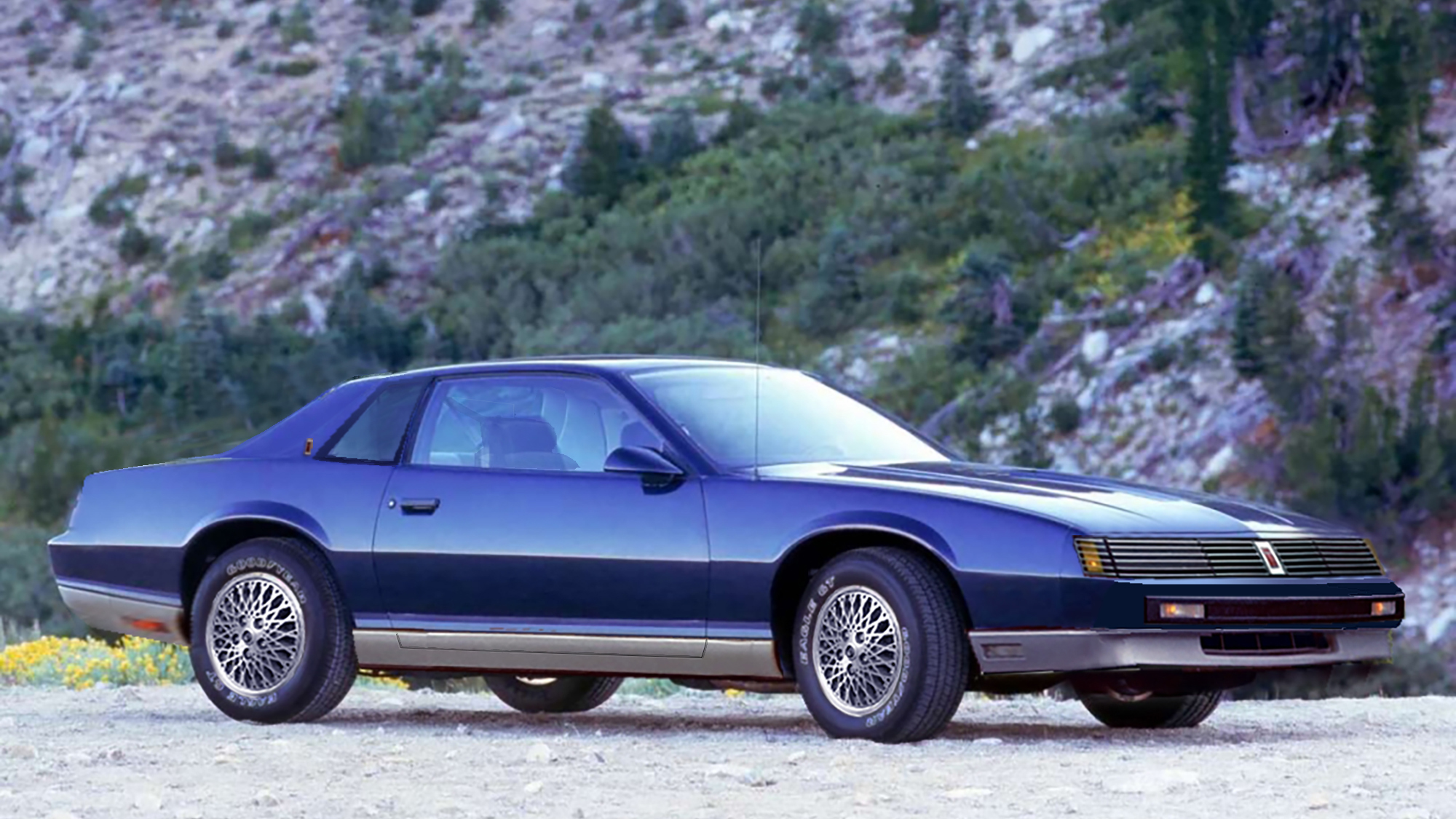
The Riviera, on the other hand, was a rear-wheel-drive car in its most iconic renditions, and to return from the 1979-85 design to a layout that spins the back tires would be welcome in my book. For the alternate history 1986 F-body Riviera, I’ll do the same things I did for the earlier Caddy and Olds. First, I’d keep the mechanical specifications similar to those two “high-end F-bodies:”
- Engine: 350 cu in (5.7 liter) TPI (tuned port injection) V8 from Firebird GTA with 250 bhp and 315 ft lbs of torque
- Transmission: 4-speed automatic
- Front Suspension: MacPherson struts with coil springs (softer springs than GTA but adjustable/active dampening)
- Rear Suspension: Independent via control arms and coil springs, adjustable/active dampening
(air suspension standard on Cadillac, optional on others) - Brakes: 4-wheel disc with anti-lock
A “touring option” could get stiffer springs and thicker-diameter sway bars. Note that I kept coil springs for the bolted-in independent rear setup; a reader mentioned how GM would likely have wanted to use a transverse leaf, but I wanted the option to switch in air springs. Performance would have been reasonable if not lightning fast; I’ve seen zero to sixty times quoted in the mid-six-second range, but studying more, we’d probably see mid- to high-sevens with the added weight and mandatory automatic.
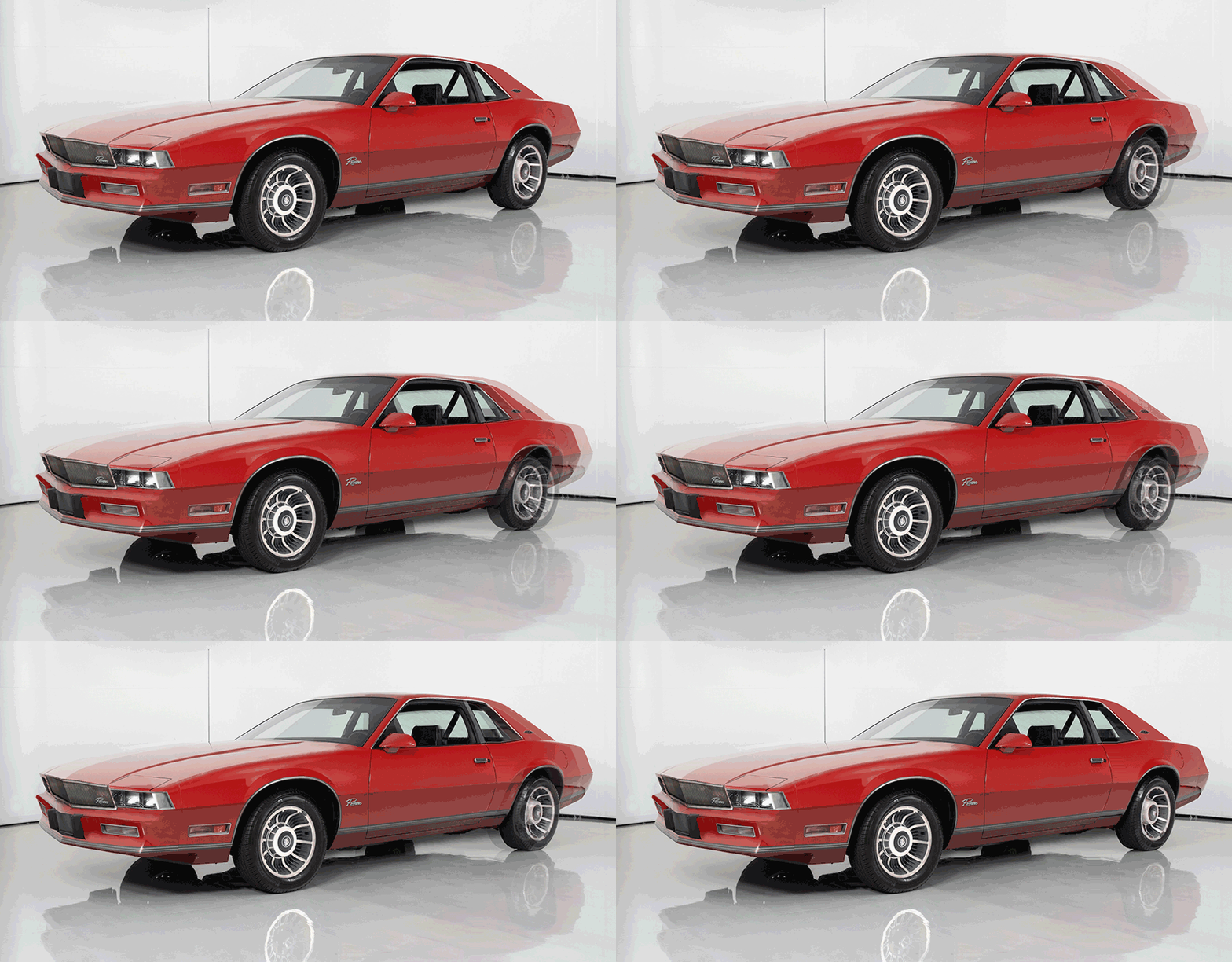
As with the body on the Solitaire and Toronado, the roof, windshield, and doors would stay pretty much the same as the Camaro or Firebird, but the front and rear clips would have been new. A revised “notchback” hatch with wider “C” pillars than the Olds would finish off the look.
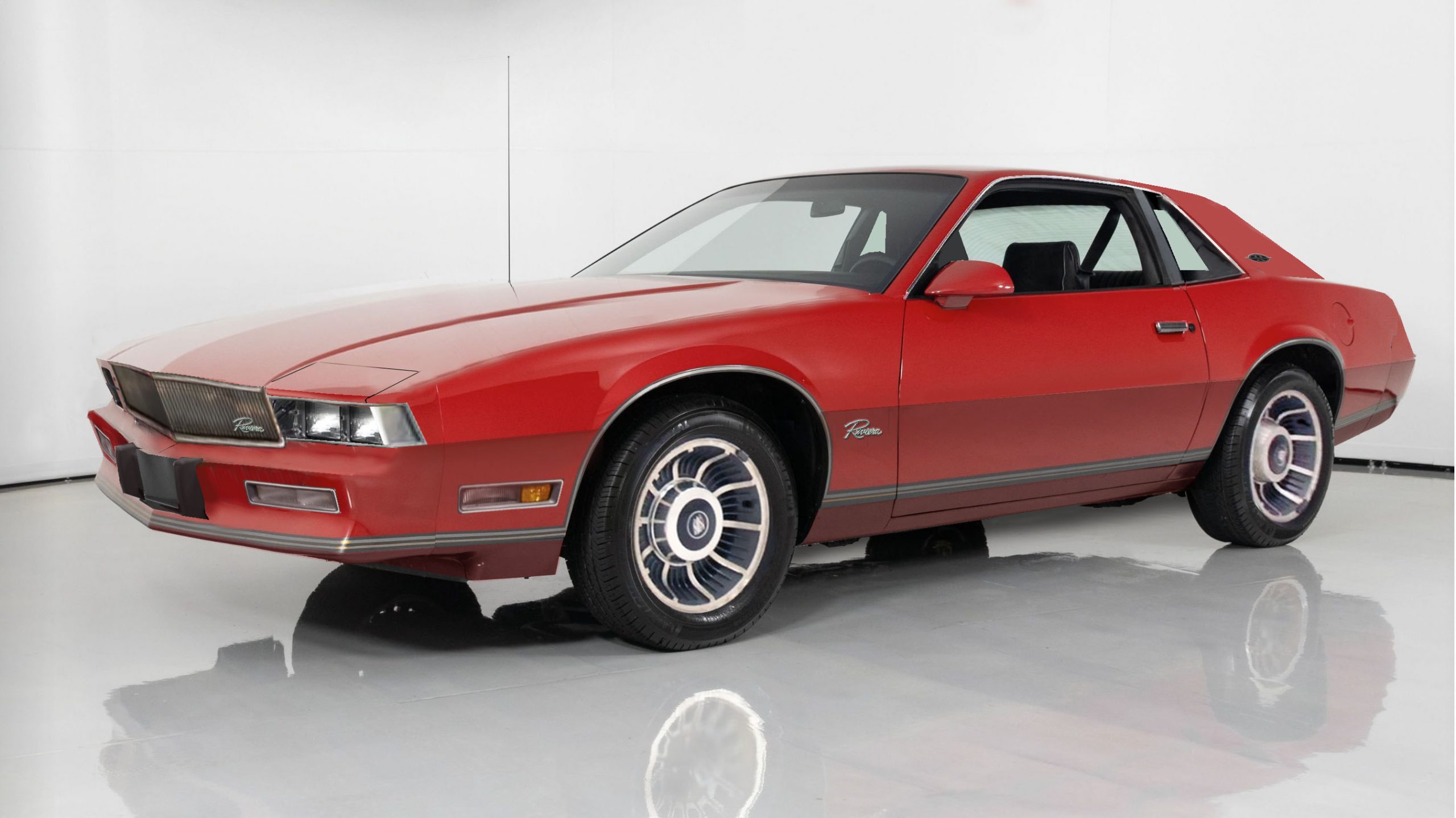
Inspired by the ’63 original, I’ve raked the nose and tail forward to match the newly formed C-pillar created by the extended sides of the hatchback and the newly added rear quarter windows. Note that the windows are largely fake, with the actual see-through glass area (or “daylight opening”) being smaller than the black finished space in order to keep enough of the original steel for structural strength.
No pop-up lights, but I’ve added Isuzu Impulse-style flip-up “eyelids” over the top section of the headlights; these might be unnecessary with later composites or those small quad lights as on the GMT400 trucks and Olds Cutlass Coupe. Here’s an animation of a Camaro Berlinetta turning into a Buick:
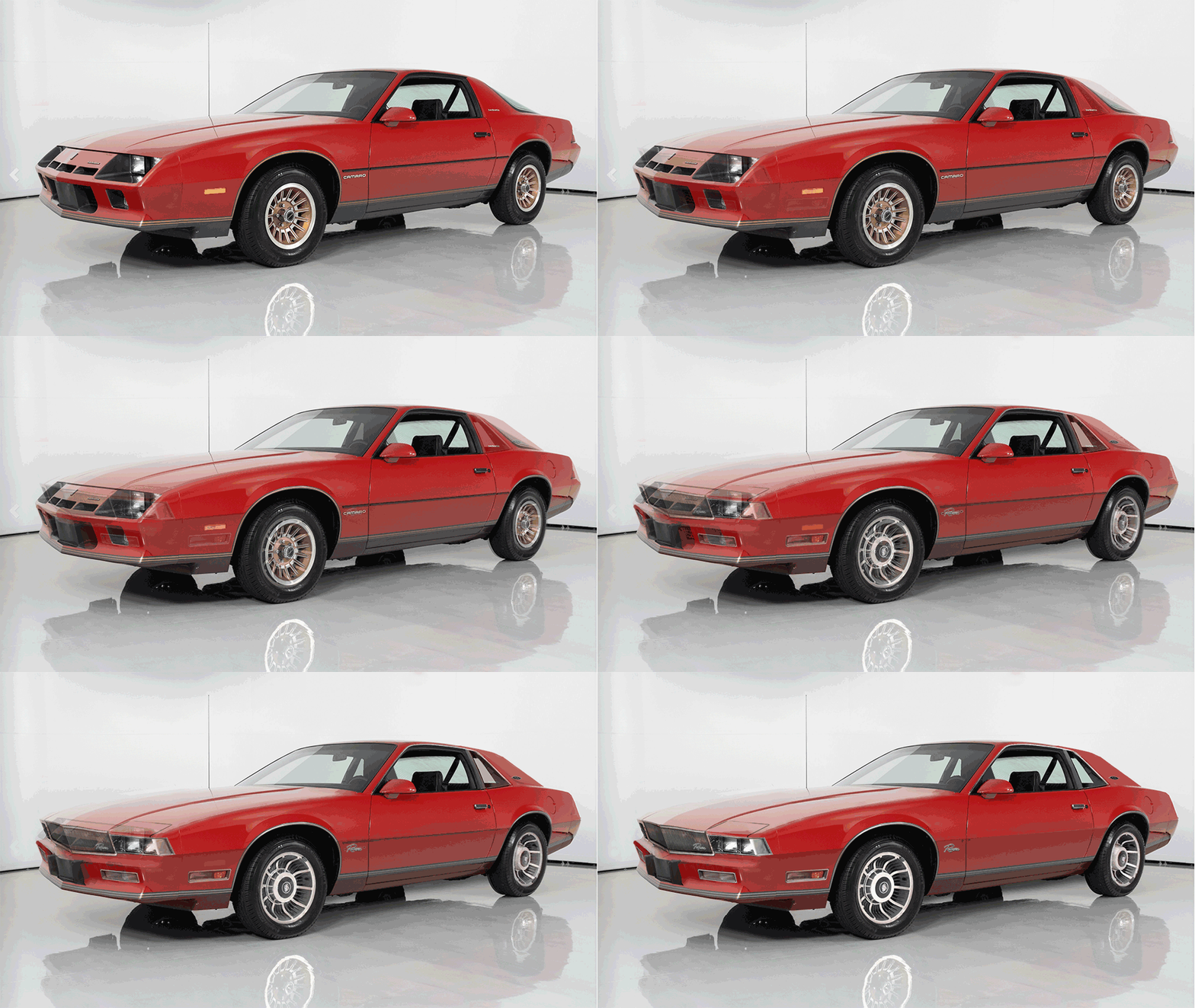
The taillights pick up on the style of the ’63 that was also used on later versions of Riviera as well. The forward rake of the back also helps to differentiate it from the Camaro and Firebird twins.

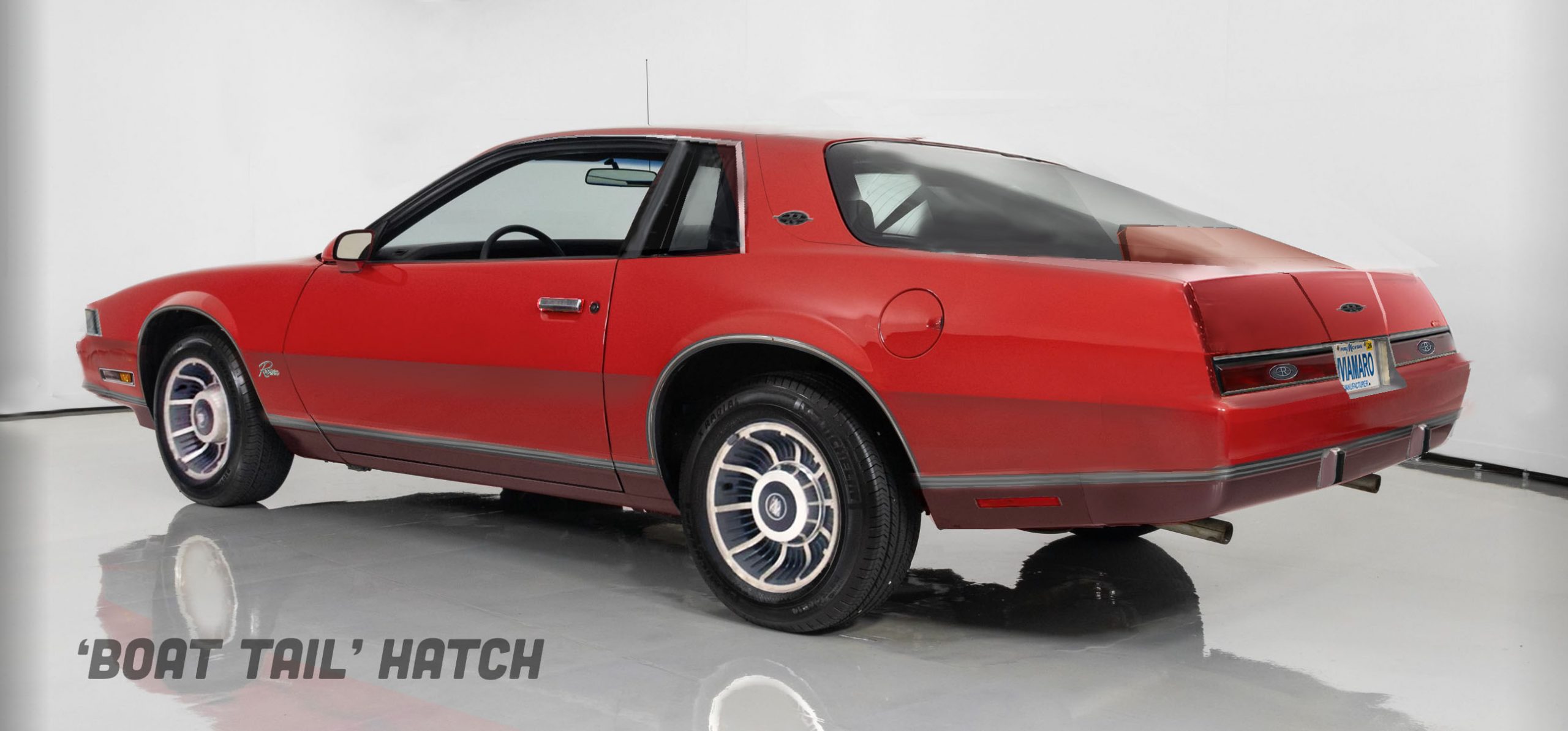
Since we’re changing up the look with a lot of bolt-on parts, why not do a tribute to the Boattail? A new inverted-bow-of-a-ship-shaped window could be paired with different quarter window trims to create a new “Boattail” edition.
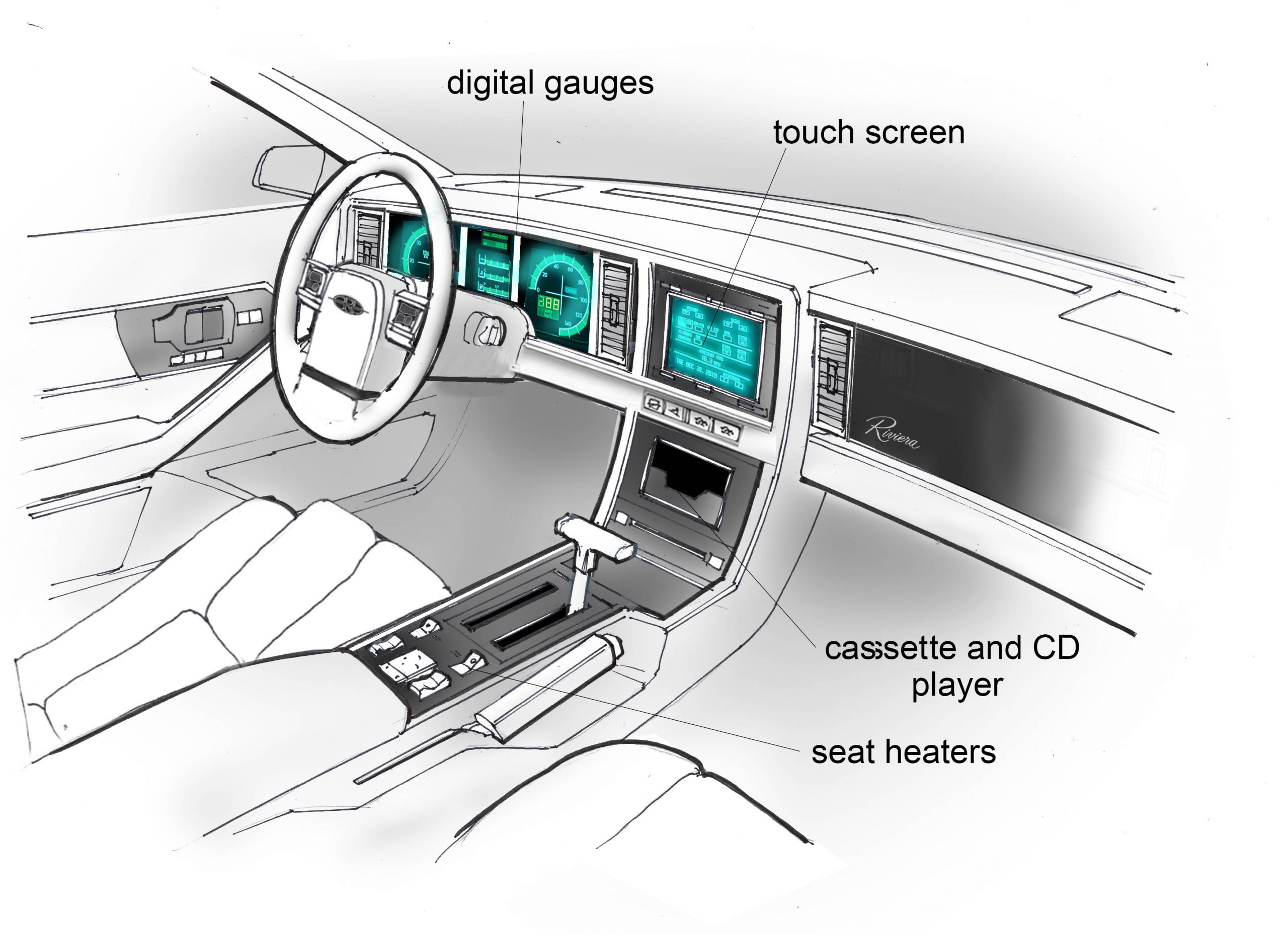
Inside, I’ve given the Riviera the option of Allante-style vacuum fluorescent gauges; standard Rivieras would get horizontal bar graphs and numeric readouts:
Still, there are two more things I’d like to address. One was rightly mentioned by commenters, and the other is just a dumb fever dream of my own to capitalize on hardware that made a Buick the baddest car in the land of the late eighties.
Gimme Some Space
First, a few readers called out something that I acknowledged in my piece on the F-body Toronado but did nothing about. It’s obvious to me and to others that the Camaro/Firebird was really just a marginal 2+2 and didn’t offer even the mediocre rear seat room of the redesigned E-bodies. I just accepted that as a change of mission for these coupes; if you wanted a real rear seat, you’d just buy a sedan. Still, as frequent commenter Urban Runabout asked, what if GM spent some extra cash to stretch and pull the F-body a bit to give it more space in back?
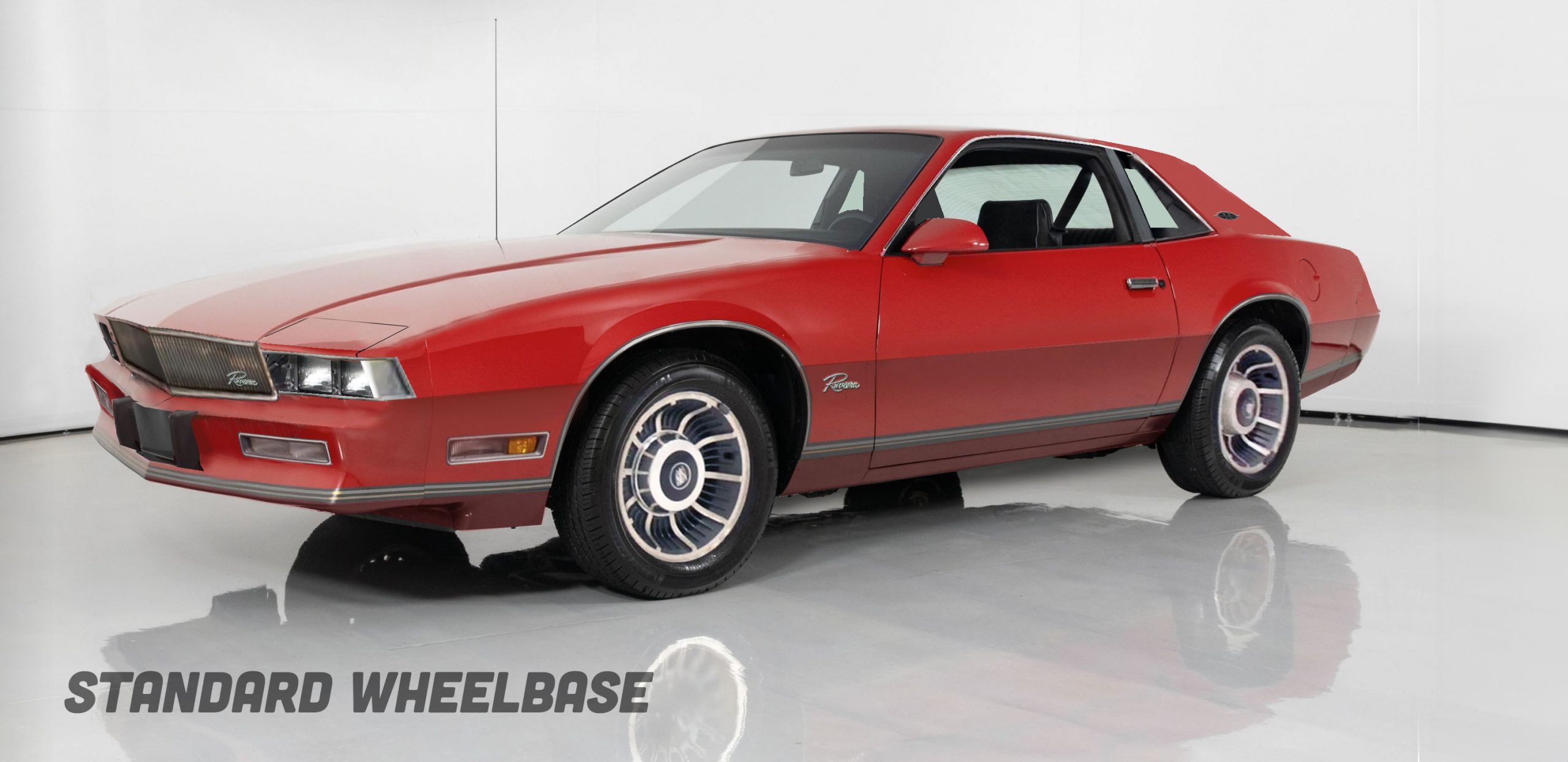
That’s a valid point. Even though it would cost more, the expenditure to add some more wheelbase and height would be minimal compared to the fortune spent on the redone E-bodies. Here’s the design with the center section of the Camaro/Firebird the same:
Now, here’s a modified one. I’ve added around four or five inches to the rear seat knee room and an inch or so to the height of the roof.

Hard to see, I know, so here’s an animation:
I don’t mind the longer look. This would hardly have turned the F-body Riv into an Electra 225 sedan, but if you wanted a “Deuce And A Quarter” (slang for Electra 225) then you should have just gotten one anyway. It’s more like offering an Infiniti G37 coupe instead of a Nissan Z; something for those that want more room, a bit more luxury, but aren’t dead yet.
Wildcat Rides Again
I remember an automotive journalist saying that the vaunted all-black 1987 Buick GNX was an engine looking for a car. Apparently, the writer didn’t think the insane turbocharged V6 was a great fit for grandma’s G-body Regal, and he was right. Such an odd mismatch is what made the Grand National and GNX such uproarious fun, but a car with a better sense of how to stop and turn would have capitalized on the force of nature under the hood a lot better.
General Motors eventually found such a car with the F-body Firebird, dropping in the motor from the by-then-dead GNX to make a fearsome sports machine in the 20th Anniversary Trans Am I’ve written about. As cool as that thing was, it’s disappointing to me that Buick itself didn’t get a monster turbocharged machine with the ability to go around corners. That’s where the Riviera Wildcat (or just Wildcat) would have come in, named after a largely forgotten performance/luxury Buick from the golden era.
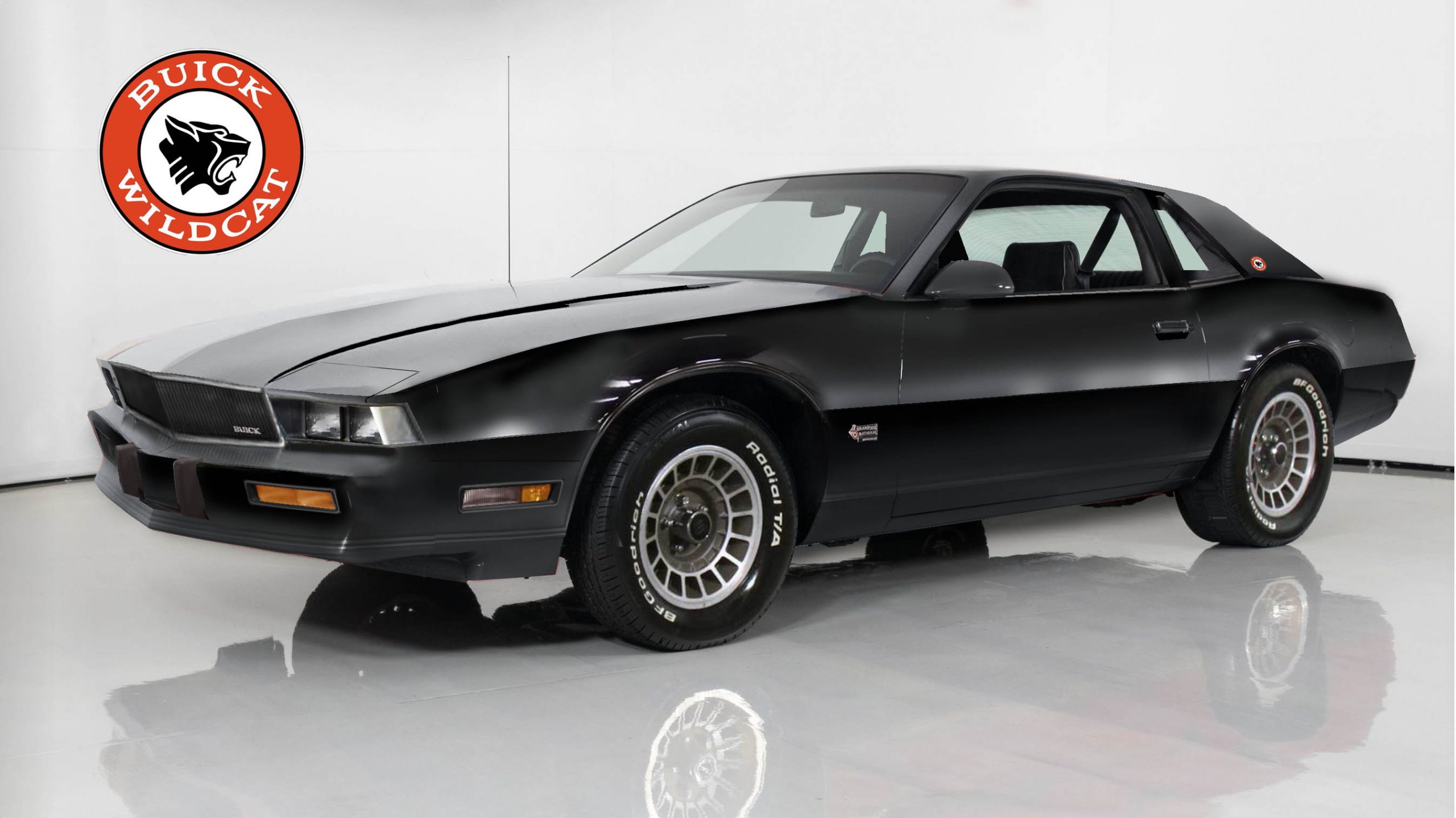
That’s right; I’d take that lovely red F-body Riviera in the images above and dump the whole thing in gloss black paint save for a few scant chrome trim pieces and aluminum wheels shod with raised white letter rubber. Like the turbocharged Anniversary Trans Am, this F-body Wildcat would have weighed less than the big G-body coupe, so with the painfully understated 276 horsepower (most sources claimed realistically well over 300), zero to sixty times could reliably be knocked off in the mid-four-second range, even with the added weight of the additional Riviera equipment and with the mandatory automatic transmission.
Don’t forget: we’d still have the independent suspension that I suggested earlier for these high-end F-bodies, which would make this Wildcat essentially a 2+2 ZR1 ‘Vette. It was a very sad day when the last Buick Grand National rolled off the line, and it would have been nice to keep the party going for just a little while longer. The Riviera Wildcat could have kicked the party into high gear.
You Could Still Drive It To Bingo, Just Much Faster
Buick hasn’t always been the brand for doctors who didn’t want the flashiness of a Cadillac. It certainly wasn’t a bunch of simulated Lexus like it is now. At one point in time, this division of General Motors had head-turning products with a flair that wowed international audiences and offered power and features that even the most elite automobiles couldn’t match.
An F-body-based Riviera probably wouldn’t have been such a car, but it would have been a far cry from the small, front-drive 1986 coupe that bore the name. With a fair turn of speed and decent road manners, it might have been one of the first Buicks in a long time to attract people under the age of forty. Unlike the latest Buick products, I’d have no trouble remembering this one. The question that remains is, which luxury F-body would have made the most (and least) sense?
Let’s Pick Your F-Body Luxury Coupe
If you’re a Michael Knight or an A.J. Simon from Simon and Simon, a third-generation Trans Am or a Z28 might be just your style. However, if you liked the performance but wanted something a bit more luxurious, sophisticated, and glitzier, you’d want something else. This E-body-alternative series could have included a car just for you.
For example, a J.R. Ewing-type would have been a Solitaire driver (he had an Allante for a few seasons of Dallas, remember?). The Toronado is more of a mysterious or even sinister low-key car, something that hitman Mike from Breaking Bad might drive a beat-up example of if his Chrysler ever died. The Buick has a little more flash but is still less stately than the Cadillac; maybe Maddie Hayes from Moonlighting could have driven one of these instead of a 635csi (though sadly, I think it would be more likely that Blanche from Golden Girls would have had title to one).
Here’s a comparison of the high-end F-bodies:
From the back, they look a bit too similar, but again we’re trying to keep as much of the original platform as possible:

Inside, you can choose different levels of technology for your instruments.

Yes, F-body-based GM luxury coupes probably wouldn’t have been the best idea, but it also might not have been the worst. Looking at the late eighties Firebird GTA with its clean appearance, upscale interior, and ample power, it seemed to me like a direction that could have been explored further with even more refined versions featuring witchcraft like independent rear suspension and electronic dampening. That would have been too much for Pontiac, but it sure could have made for some fearsome remakes of GM’s most vaunted luxury coupe nameplates.
Better than that, it would have saved some of the GM hundreds of millions of dollars that they wasted on the 1986 E-body program: money that could have been spent on some much smaller import-fighting enthusiast cars that us Autopians could have been rocking at Radwood today.
Top graphic image: Fast Lane Cars



Thanks for the mention – The added length and height make it look a heck of a lot better.
However the nose is giving heavy Cimarron vibes.
I think I’d have gone with a leaned-back nose more like the preceeding Riviera – or gone far more futuristic with no grille and flip up lights like the 1988 Reatta.
That Riviera is the one that does it for me. I love the forward-leaning grille, and that rear window. I would rock that one.
Nice work!
thank you!
I can speak with authority that these designs would have fixed the major flaws with the E and F bodies. Getting rid of the hatches on the f-body would eliminate the incessant squeaking from body flex and the hatch gasket. Anything to make the openings more rigid would have been appreciated.
My parents bought a new 86 or 87 riviera as our family car. I remember them panicking when they had to replace the touchscreen tv right outside the warranty window. My mom loved that car for some reason so we did.
It stuck around long enough that I learned to drive on it.
My Grandad had an 89 eldorado with the 4.9. Both were fine. They seemed to step off the line with similar force the riviera ran out of breath though quickly.
My Grandad hated that the eldorado didn’t have enough parcel shelf space to hold his fedora. It was the first car he’d owned that forced him to set his hat on the rear seat like a plebe.
Bravo, The Bishop!
This is such a fantastic “What If” F-Body series that is incredibly well done and thoroughly developed.
Thank you, SWG!