

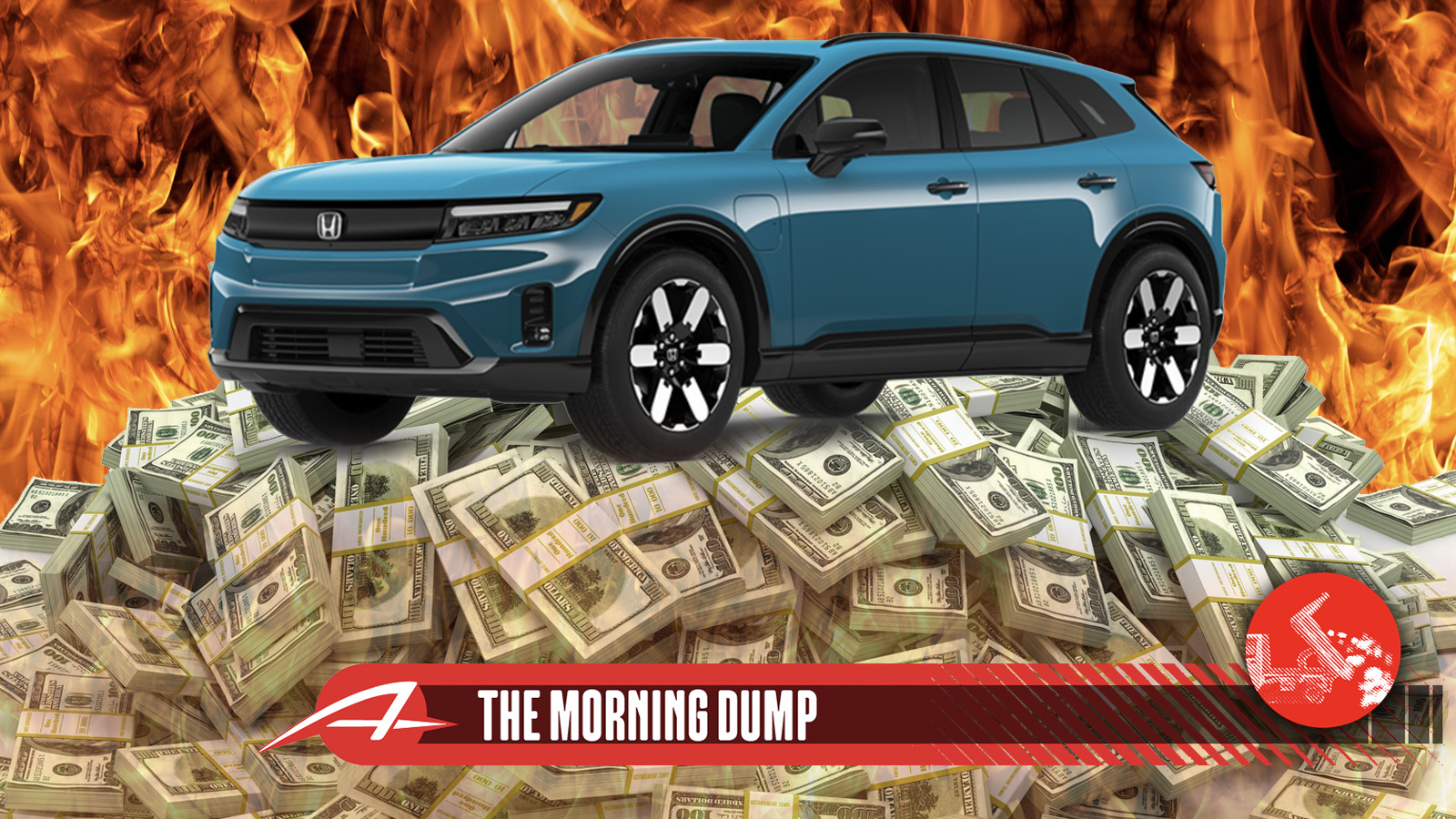
Honda is one of the most popular automakers in the United States and sells, as far as I can tell, the most popular hybrid in the form of the Honda CR-V. For a while, the Honda Prologue was also one of the best-selling non-Tesla electric cars in North America. In a way, every Prologue sold was a little dagger in Honda’s heart.
I talk a lot about affordability here at The Morning Dump, because that’s the biggest consumer concern at the moment. For automakers, it might be uncertainty. What’s going to happen? When is it going to happen?


Honda announced another loss for its automotive business last quarter, split pretty evenly between EV charges and tariff costs. Some of that tariff pain exists to encourage Japanese companies to invest more in the United States, which will certainly happen, though the pace of it may not reach the goals of the current administration.
There’s been a lot of ‘When will BYD get here?’-type questions for years, which ignore the fact that the Chinese conglomerate has had American operations for years. Those operations are now suing over tariffs as everyone is getting in line for a refund if the Supreme Court rejects them.
That’s heavy, man, that’s a lot of heavy news. Let’s end with an Australian Ford.
Honda Takes $1.7 Billion Hit On EVs, Sees 61% Drop In Profit

When Honda announced that it was taking a GM-built Ultium platform and dropping its own body on it and calling it the “Prologue,” I was intrigued. Two years ago, I even wrote a TMD titled “How Honda Could Be The Key To Electrification In The United States.”
My basic premise was that, other than Tesla, the main automakers selling halfway decent and affordable electric cars in the United States at the time were either Ford or GM, and there are a lot of people who just won’t buy American cars. Could a GM-built EV disguised as a Honda woo buyers, thus revealing a new group of buyers?
Here’s how I ended that article:
Given the current projections, it’s not likely that Honda will sell more than 50,000 of these in 2024, which puts it in the Mach-E territory. That’ll help juice the market, but it isn’t an overwhelming number. But if Honda can be a success with a perfectly fine EV I think it’ll show where the demand is. If it fails and spurs more hybrid growth, it’ll also show where the market is.
Whew, glad I had that caveat in there.
While I didn’t predict that a new administration would immediately kill the EV tax credits and remove CAFE penalties, it was always a possibility, and it’s impossible to know exactly what would have happened if the Inflation Reduction Act remained in place. That being said, I think that we’d arrive at the same destination, if not a little slower.
An interesting failure because, for a while, it was a sales success. It even outsold its cousin, the Blazer EV, for a time. In that sense, I do think my belief that there were buyers out there for a reasonably-priced Honda EV was correct. Well, at least, there were leasers, because the lease deals were excellent.
Some buyers were illogical enough to desire a Honda over a Chevy, even when they were fundamentally the same car. At the same time, some buyers were logical enough to score a sweet lease deal on a car with a Honda badge. Maybe some were illogical and logical at the same time.
A part of me thought that Honda’s move to utilize GM was a good way to get into the EV game without having to front a lot of development costs. Given what people knew at the time, it probably was. With full 20/20 hindsight, I’m not sure it was worth it.
Let’s start with the obvious thing, which is that the Prologue just wasn’t good enough to be a Honda. It was fine, but Hondas are better than fine, and it seems from forum posts and discussions with owners I know that the Prologue likely left a lot of owners underwhelmed. I don’t think it’ll be a huge reputation hit, but EV buyers tend to buy EVs again, and now Honda is in the awkward position of either not being able to sell Prologue owners another car if they like it or losing them to another brand if they hate it. Sure, there’s the Acura RSX eventually, but it’s not going to be here fast enough and probably not cheap enough.
And now, thanks to Honda’s latest financial reporting (the fiscal year Q3, but calendar year Q4), we know that the costs of electrification dragged the company’s profits down. Through three quarters, the company has lost $1.7 billion on electrification (which includes the Acura ZDX and other failed efforts). Overall, the automotive business is losing money. That’s not as large a hit compared to, say, Ford, but it’s not great.
And the costs aren’t just related to selling or leasing every one of these things at a loss. Honda cut back its orders as sales started to wane, and it sounds like there are some negotiations between the two companies as to how much Honda now owes GM, as Automotive News reports:
Honda expects additional EV charges pending the outcome of negotiations with General Motors on the winding down of their cooperation on EVs. The slow-selling Honda Prologue and Acura ZDX all-electric crossovers were jointly developed to ride on GM’s Ultium EV platform.
Honda reduced its procurement of the GM-produced vehicles and must compensate GM.
Honda has rolled out incentives to move the EVs, especially following the repeal of federal tax credits as demand plunged. Incentive spending on the Prologue climbed above $17,000 in January, according to data from Motor Intelligence. That compares with just $2,500 on the popular CR-V.
U.S. sales of the Prologue tumbled 86 percent to 2,641 in October-December.
A bunch of these are coming off lease in the next couple of years, and if you can support an EV with home charging, I bet they’ll end up being a good deal at least.
Is Japan Dragging Its Feet On US Investments?

If you’re like me, you’ve spent the last few days split between pretending to understand curling and watching the exit polls coming out of Japan. Assuming you haven’t been following both, it’s a great time to be an American, and it’s a great time to be Prime Minister Sanae Takaichi.
Takaichi called a snap election to try to bolster her support in the National Diet (the country’s legislative body) to address a host of issues. It wasn’t even close, as the PM is riding high following the successful-ish negotiation over tariffs with the United States. Part of that tariff deal involved Japan investing hundreds of billions of dollars over here, which, according to this Nikkei Asia article, isn’t happening fast enough for some people. And by some people, I mean President Trump.
His dissatisfaction stems from the delay in Japan’s plans to invest $550 billion in the U.S., a pledge made this past July in exchange for tariff reductions. Investments in three projects, including in gas power generation, are being negotiated, but no agreement has been reached.
Commerce Secretary Howard Lutnick, who led the tariff negotiations for the U.S., originally told Trump that the first project would be decided by the end of 2025. But with the total price tag expected to exceed 6 trillion yen ($38.5 billion), planning is taking time.
The target date was pushed back to the end of January, then again to the end of February. Trump is growing suspicious that Japan is intentionally dragging its feet.
The two countries are meeting next month to discuss all of this, so it’s possible that it’ll all get resolved. It’s hard to spend billions of dollars all at once. On the other hand, the Supreme Court might toss at least some of President Trump’s tariff powers, which would somewhat reduce his position.
BYD Sues Trump Administration Over Tariffs
To be fair, seemingly every company that has been impacted by tariffs has a lawsuit against the Trump Administration as a kind of placeholder in case the Supreme Court reverses any of them.
If the Supreme Court says that the President doesn’t have the power to impose tariffs on various countries, it’ll be a terrible day to cover the news. The reality is that, short of a complete invalidation of tariffs as a notion, there are many ways the White House can still put trade levies in place, and the Supreme Court is only reviewing part of the tariff-issuing power.
Still, it’ll be a hit, and the various impacted companies want to be in a position to get a refund. One of those companies is BYD, as Investor’s Business Daily reports:
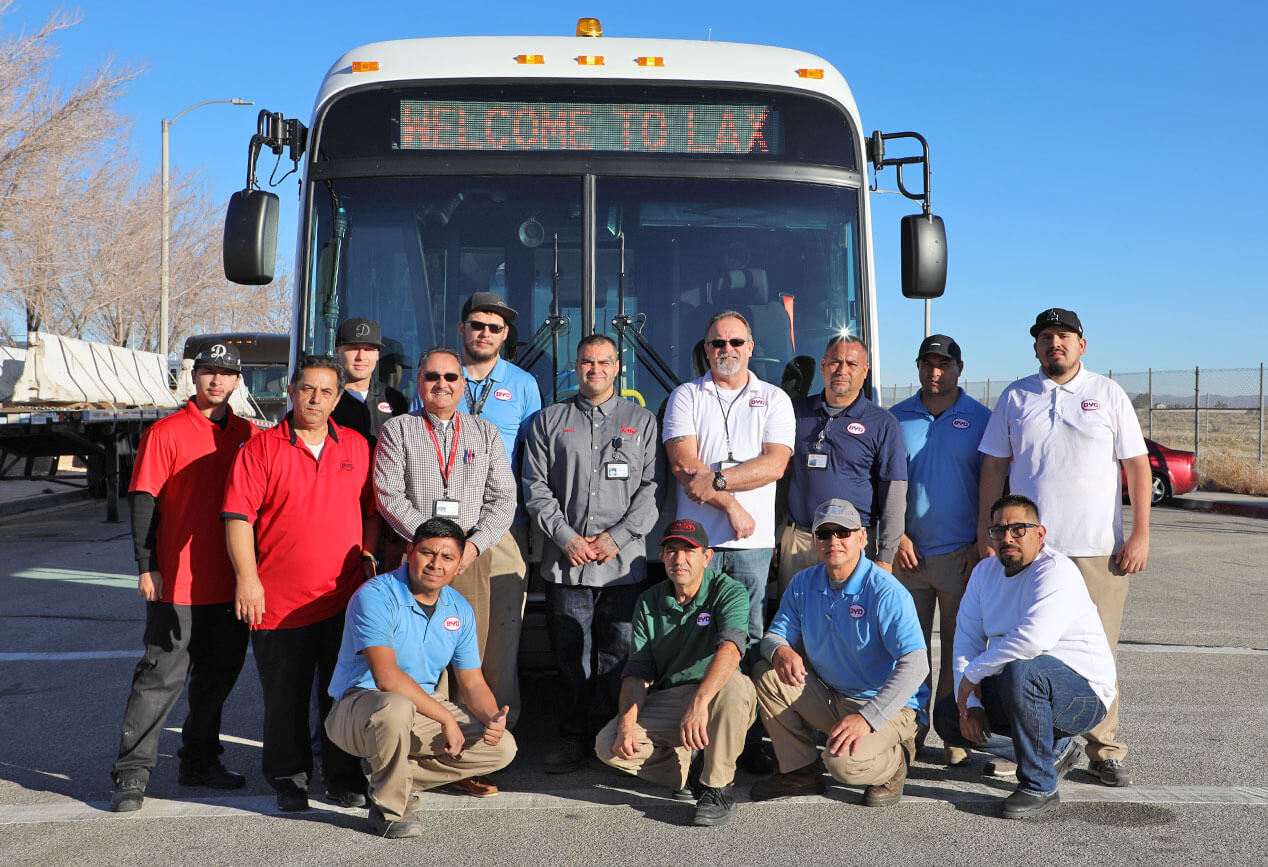
Several of BYD’s U.S.-based subsidiaries, including those that make passenger cars, buses and EV batteries, filed a suit against the federal government’s sweeping tariff policy. President Donald Trump put the tariffs into effect last April.
BYD has a bus business in the United States, which includes a manufacturing facility in Lancaster, as well as a large battery presence.
Check Out This Sick Bathurst Ford Mustang
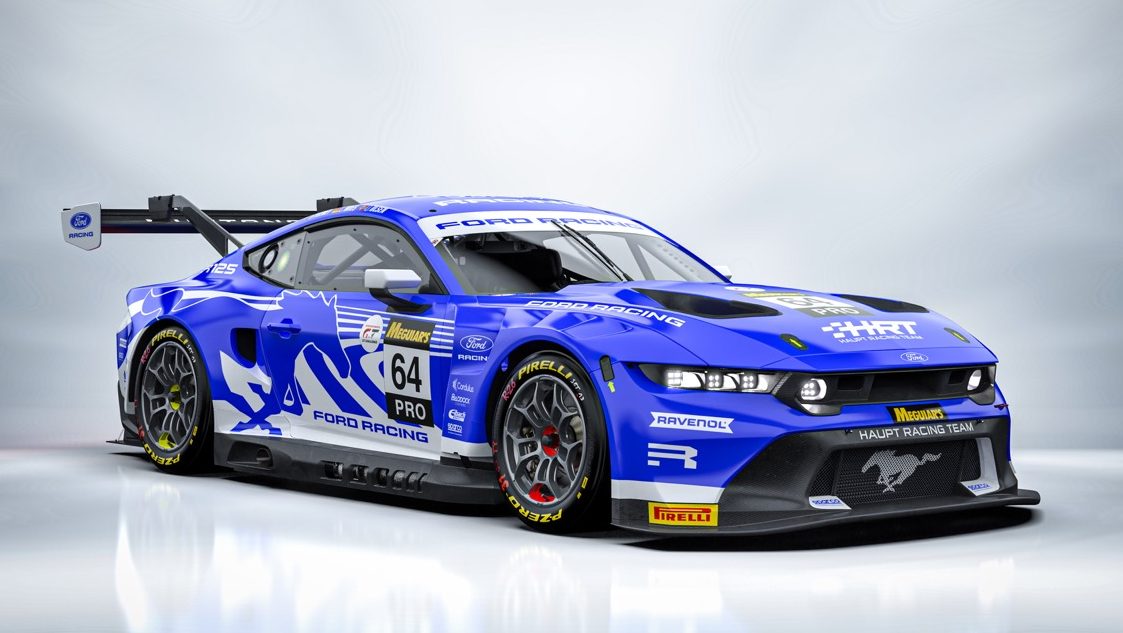
Ford is bringing the new Mustang GT3 to Mount Panorama for the Bathurst 12-Hour, and it looks dope as hell:
America’s Race Team will introduce its Ford Mustang GT3 to Mount Panorama and the Bathurst 12 Hour, February 13 – 15. The collaborative, factory-supported effort with Haupt Racing Team (HRT) is focused on a single pro-class entry for the SRO Intercontinental GT Challenge season opening round in Australia. Featured behind the wheel will be past event winners Christopher Mies and Dennis Olsen, as well as Repco Supercars Championship veteran Broc Feeney.
I was hanging out with Laurence, our resident Australian, as he helped David try to build a WWII Jeep in his backyard. While I didn’t help with the wrenching, Laurence did make me a sanga:
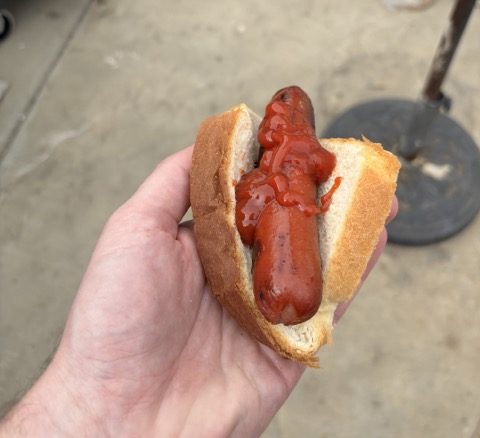
I feel like this qualifies me for the Bathurst 12-Hour.
What I’m Listening To While Writing TMD
Not everyone will accept this, but I think The B-52s might be my favorite punk band. You don’t think they’re punk? Just listen to “Strobe Light.”
The Big Question
What vehicle is most representative of the failure of mainstream automakers to build profitable EVs if not the Prologue?
Top graphic image: Honda; DepositPhotos.com


The B-52’s are post-punk. Read the definition at this link and tell me that doesn’t describe them almost to a tee.
TBQ: I’d say the Chevy Bolt is the perfect example. It was clearly an EV that hit the price target better than just about any other EV, except may the Leaf. GM has manufacturing economies of scale that should stand toe-to-toe with any auto manufacturer outside of China, yet they were able to make it profitably and canned it. Maybe GM’s resurrection of it will actually make money, or at least break even and we’ll have a decent home grown economic EV choice.
I will accept the new wave band as punk.
People that put ketchup on hot dogs should be sterilized.
Sterilization is a bit harsh, especially when you’re wrong. If it’s just mustard then that might be worth jokingly exploring some sort of punishment for poor taste.
The whole world generally puts meat and tomatoes in bread in some form. A hot dog with ketchup is the equivalent of a meatball sub, along with tacos, hamburger with ketchup (or tomato slices), doner kebab sandwiches with tomato sauce, menchi katsu and beef (ideally wagyu or kobe) katsu sandwich, bulgolgi sandwich with tomato sauce (which is essentially a more vinegar-forward ketchup; also the Korean ketchup-based BBQ sauces), spatlo, Kota, braaibroodjies with meat, kielbasa with tomato sauce, piroshkis dipped in salted tomato purée, the list goes on.
Let’s ask the experts.
</s>, btw.
Lol, I appreciate that such a thing exists. Too many rules for such a casual food, though.
The primary rule is easy enough:
Don’t use ketchup on your hot dog after the age of 18.Mustard, relish, onions, cheese and chili are acceptable.
I’ll just use a store-bought bottle of tomato sauce that’s been enhanced with various herbs and spices, maybe a touch of salt and sugar. (Though I’ve also made my own, but store-bought is sufficient for my needs).
There’s also always catsup. ????
Interesting you raise China as just today they violated their agreement with the world on leaving the island free and they sentenced a journalist to 30 years for publication of the violation of the agreement
Underneath the SROOO BUH LIGHT
“Honda Takes $1.7 Billion Hit On EVs, Sees 61% Drop In Profit”
I wonder how much of that is money set aside for warranty claims… where GM overpromised and underdelivered in terms of quality.
https://www.edmunds.com/car-news/2024-chevy-blazer-ev-long-term-faults.html
“What vehicle is most representative of the failure of mainstream automakers to build profitable EVs if not the Prologue”
Each and every ‘Compliance Car’ BEV… such as the original Fiat 500e, Ford Focus Electric and even the Nissan Leaf.
Basically almost everything that wasn’t a Tesla prior to 2020.
What they all have in common is the automakers were trying to make a BEV as cheaply as possible with as little investment as possible… instead of taking the approach of trying to make a great BEV from scratch and introducing it as a high end, high performance, premium vehicle that is priced accordingly (which would make it profitable).
As much as I hate to say positive things about Tesla, they were the ones that did it right back then. Don’t shoot for the price sensitive economy cars, you’ll never be able to compete there and have an actually good product. Instead, aim at the luxury/near luxury market where the BEV costs can be more effectively mitigated with some minor concessions and less a less price sensitive market.
I’m more of a Private Idaho guy.
I have a friend who leased a Blazer EV and it was easily the best Chevy I’ve been in in years. I don’t know if there was any cross-pollination with Honda, but it was stylish and felt well screwed together. I am tempted to pick one up off lease and just rent a car with some sort of ICE powertrain when I need longer range.
Then I’m gonna kiss your PINEAPPLE!!!!
“What vehicle is most representative of the failure of mainstream automakers to build profitable EVs if not the Prologue?”
Hmm. That’s a lot of constraints. I’m gonna fudge my answer. It’s the Tesla Model S.
Most representative? It’s the OG. The EV-1 was a neat experiment, but the Model S finally made electric cars a practical reality.
Failure? It just got axed. That company is so done with those cars they’re going to make droids instead.
Mainstream? It’s not a legacy carmaker but with a market cap about 5X that of Toyota, Tesla is here for a good time if not a long time. Their vehicles are also common as fire hydrants in my area.
Profitable? Bwahaha. Tesla’s last major earnings call was a bloodbath. Who knows how much of that was attributable to falling Model S and X sales instead of leadership issues, but killing off their upper range of production was a sharp correction.
Tesla was the most profitable EV maker in 2024. How did they fly so high but crash so hard? Numbers that start with currency symbols don’t explain the whole story. Politics do, in ways that worked on global, national, social and personal levels… this company blew it in a rich variety of ways. Musk lost a lot of popularity. Some of his actions driving that change led to the end of incentives that moved units… Tesla’s key era of profitability ran from 2020-2024, which paints a pretty clear picture. The products’ identities didn’t help: Cybertruck aside, Tesla only offered a tall or short blob (handsome blobs, I’ll admit) in size large or medium. And none of those products have been on the shelf as long as the Model S. Now it’s gone.
That’s quite a story arc for a single car. It went from founding its segment to being terminated so thoroughly that its manufacturer said it doesn’t even want to be a carmaker anymore. If any one vehicle exemplifies EV retrenchment, it’s the Model S.
Was there ever enough info published to know if the Model S/X reached unit profitablity without subsidies and credit sales? I don’t believe Tesla ever turned a profit before the 3 launched, but I can also imagine the S outlived the amortization timeline on the tooling to build it.
I wasn’t able to readily find numbers breaking out Model S or X profitability. As you point out, Tesla didn’t start making money on cars until the Model 3 had been in production for a couple years, so what you’re saying definitely tracks. It’s hard to tell from a quick skim of the data they make publicly available.
Id Buzz or possibly Polestar2. I test drove a Polestar 2 and it was really nice. Im surprised it didn’t sell well and best I can guess is because of the name brand.
Also PoleStar sounds like a synonym for a stripper
Ha! not just any stripper… the best stripper of the group! Proud to say that had never crossed my mind, but seems like a fair comment.
Huge number of factors… low brand awareness, low dealership density (compare to say, Bolt EV), high prices thanks to tariffs, not an SUV, wretched depreciation, rental companies dumped them on the market, further amplifying depreciation.
I think they’re great and I keep looking at used ones.
Great point on the dealership density. I had to drive 2 hrs into Nashville and I bet much of the country would have to drive farther than that.
I would have bought a Polestar but after driving it as a rental for a week in Las Vegas, I said no.
1) The felt carpeting on everything made it feel cheap. Same goes for Teslas
2) The egregious implementation of one pedal driving which jerked the car Every. Single. Time. I let off the pedal was infuriating. I want one pedal. I hate being jerked around – like that…
3) The touch screen interface.
4) Needs better driving assistance (lane centering, stop start cruise control, ideally hands-free driving)
I think on paper it fell kind of short of some of the other options, especially in terms of performance and range and especially at MSRP. The 2024 refresh fixed that and it did seem to start getting more traction.. just in time for tariffs to kill it off entirely in the US.
That sauce technique on the sausage in bread needs some work. It should be a long thin line along the length of the sausage to ensure you get a bit of sauce with every bite. Also I’ve never really thought of these as sangas, which is just slang for sandwich, but am willing to concede some (maybe many) parts of Australia may refer to them as such.
Hot dogs are not a sandwich, they are a taco:
https://cuberule.com/
Hot dogs and tacos are both sandwiches.
Pretty much all food is either a sandwich or soup.
Counterpoint: the ketchup (or any sandwich sauce) needs to be spread fully on the inside bread surfaces, allowing the bread to absorb and spread some of the moisture out, while keeping the sauce from being able to spill out (requires a properly-absorbent bread). The ratio is correct when the fillings can slide around a tiny bit but not so much that they’re slippery.
Maybe in a normal sandwich, but for a traditional Aussie sausage-in-bread the sausage hangs out either side of the bread by about a mouthful. To ensure that mouthful is appropriately sauced (we generally use what we call “tomato sauce” here, very similar to ketchup but slightly less sweet) the sauce is squeezed along the length of the sausage.
OK, I’ll give you the oversized meat aspect, though for that I would roll the sausage along the sauce-covered bread so that the entire surface of the meat is covered, without introducing so much sauce that it might drip or get on one’s mustache/beard if so equipped.
I like your thinking, though a sausage in bread is usually served sans plate and consumed standing up (most often at the local hardware store or electoral voting centre, in the latter case the sausage-in-bread is referred to as a “democracy sausage”), so might be a bit of a challenge sliding the sausage in and around the bread without getting sauce on your hands (and everywhere else).
Even though I live in America, I feel like every time I go to vote I get the ‘ol democracy sausage.
If it’s too greasy (and/or if I didn’t have a chance to wash my hands before eating) I’ll usually grab a paper napkin to grab the end of the sausage to manipulate it on the sauced carrier bread. The napkin will also serve as a barrier between my unclean hands and the bread, if applicable.
Otherwise I don’t mind my fingers getting some sauce on them, they’re easily licked clean.
I admire your commitment to a sufficiently sauced sausage.
B-52’s were new wave. Different from the then-mainstream but no self-destructive vibe that punk puts out.
“Strobe Light” does not change my mind.
“Queen of Las Vegas” borders on punk. Sort of.
The prologue is definitely not a Honda but it’s a fairly decent Chevy. We’ve had ours a year now and a good lease deal but there have been several issues/tsbs in the first year, related to powertrain and infotainment that I feel like should’ve been ironed out using GMs existing EV knowledge. With depreciation we definitely won’t buy it our lease out but are comfortable with it for the next couple years.
What was wrong with the power train?
I guess there’s a mis-fitting AC valve that when it fails the car goes into reduced speed mode as it can’t cool the battery well, we had that at about 3K miles.
The front CV joints make noise when it’s cold, like horrible ‘bearings are gone’ grindy noise on turns, Honda was just replacing them with the same part and it was reoccurring, but also they said it wasn’t a problem so we haven’t brought it in for that, also it’s getting warmer now so not hearing it as much.
Both those things seem like something they’d have settle from even Volt days, nevermind this is after the Bolt and the Hummer.
Then the infotainment can freeze, and there’s a fix but that might brick it, and for a time they were backordered on replacement modules, so we’re sitting that one out too. I feel like that could be because the Honda is running nearly the same hardware as the Blazer but different features like carplay android auto in the interface.
And again, less than 5K.