

My daughter is currently obsessed with the musical Hamilton, so I’ve got the songs constantly running in the background of my day. I think it’s a fun way to get people into history and I try not to be bothered by the way some convenient breaks in the timeline are used to bring Alexander Hamilton and his main antagonists together. History is just a set of lies agreed upon, anyway, right?
I do think James Madison gets a bit shortchanged, mostly because having to include both him and James Monroe is too confusing, so we get a bit of a convenient conflation (or maybe it’s Monroe who gets the short shrift). When the history of this era is written, will Nissan’s decision to sell a bunch of body-on-frame vehicles be seen as a response to the Trump Administration’s defanging of fuel economy standards, or was this just a thing that was going to happen anyway? Is the new Xterra the poster child for a new reality? In Europe, it’s a different world, and Nissan will sell a new Juke. I’m a big fan of how it looks.


Back in the United States, BMW sets itself apart from Audi by only losing a small number of sales, although Lexus is right there. Some of this is just because of the loss of the EV tax credit, although this loss doesn’t seem to be stopping used EV sales.
The New Xterra Is The First Of Many Body-On-Frame Vehicles
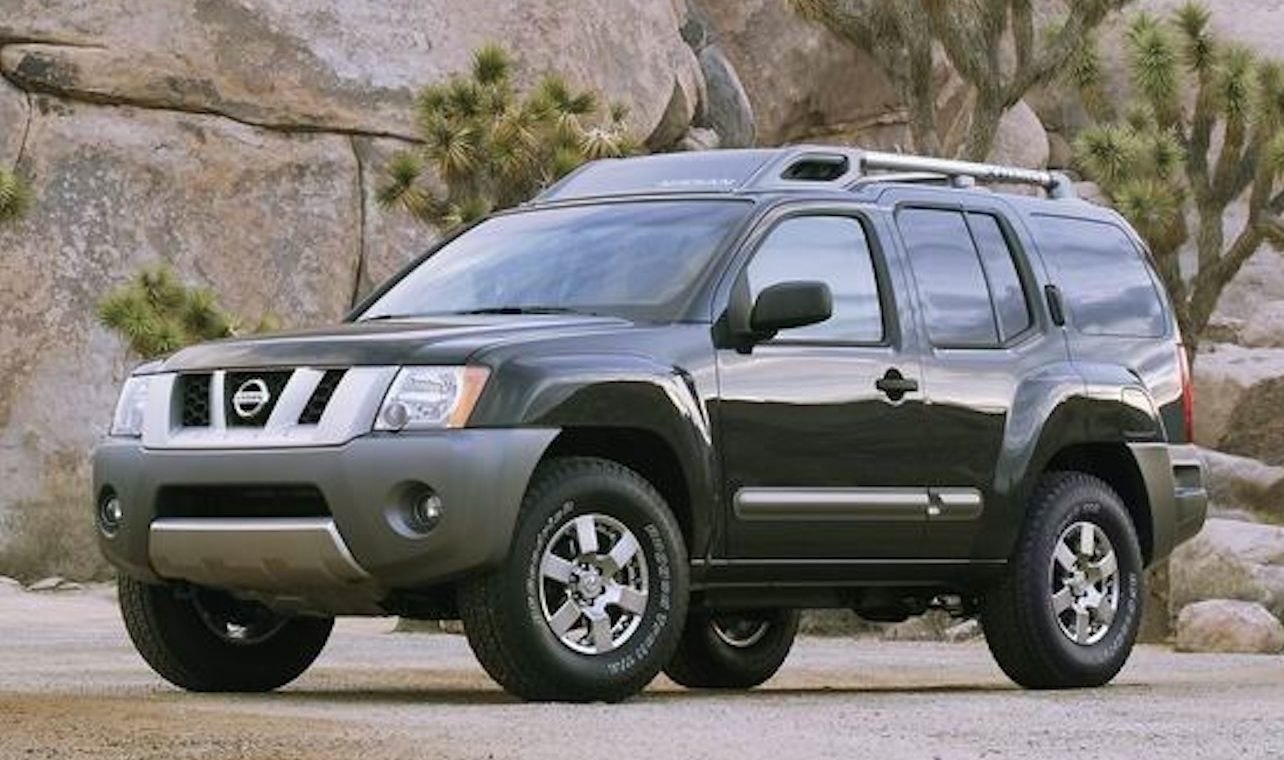
Last night’s big Nissan news, if you’re a normal person, is that the 2027 Nissan Rogue ePower is going fully hybrid. It’s an interesting system, being a series hybrid instead of parallel hybrid (or the weird Honda combo). Like pretty much every modern crossover, it’s going to be unibody. A body-on-frame vehicle in this class doesn’t make any real sense.
There was some talk of AI-defined Vehicles (AIDV) as a next-gen substitute for Software-Defined Vehicles (SDV). As an enthusiast, I’m less-enthused by that, and it’s very much a believe-it-when-I-see-it situation.
I was chatting with an old colleague of new Nissan CEO Ivan Espinosa, and what he wanted to impress upon me was that Espinosa was a legit enthusiast and it would be good for the company. Last night’s event included a little view of that with the new Skyline teased and, for America, the return of the Xterra.
Here’s what Nissan said:
The all-new rugged SUV will be produced in the United States, further strengthening Nissan’s manufacturing footprint and capability offering for North American customers. The launch is targeted for late 2028.
Nissan is exploring a family of five U.S.-built models on a new body-on-frame platform including the all-new Xterra, with potential expansion to pickups and multi-row SUVs across Nissan and INFINITI brands.
Giving customers more capability, versatility and choice across key segments, the model family will also feature V6 or new V6 Hybrid powertrains.
Five body-on-frame vehicles built in the United States? That’s a lot of BOF. Reading between the lines, here’s a rough guess for what that looks like:
- Xterra
- New Nissan pickup (probably a Frontier developed with Mitsubishi)
- Three-row SUV built on the same platform
- Infiniti two- or three-row
- Infiniti truck?!?
This follows Hyundai showing off the Boulder Concept in New York as a preview for a future series of vehicles built on its upcoming body-on-frame platform.
Is this newfound love of body-on-frame vehicles a reaction to the delaying of the EV dream and everyone’s overreaction to electric cars? Is this an overreaction itself? BOF vehicles are, historically, heavier and less efficient than comparable unibody vehicles. While modern BOF trucks ride and driver better than past versions, they’re still trucks.
My guess is that some of this is a result of the new relaxing of environmental regulations and, specifically, it has to do with the One Big Beautiful Bill getting rid of corporate average fuel economy penalties by setting the fine to $0. A new administration could quickly reverse that if it had the votes, though I’m not sure it would be the first thing on the agenda.
A big part of this is just a response to demand. American consumers like big SUVs, whether unibody or BOF. Additionally, Nissan execs have been begging for a new Xterra as a way to compete with the popular 4Runner, Wrangler, and Bronco.
One of the other things Nissan talked about was cutting the number of models and thinking more about architectures than individual cars, which is something most automakers do well but Nissan has historically been bad at implementing (because it keeps merging with different companies). As Nissan says in a different press release:
As part of the vision, Nissan is transforming its industrial model through the Nissan Product Family strategy.
This will move the company’s focus from model‑by‑model optimization to architecture‑led development built on shared platforms, powertrains, and software.
Nissan will concentrate development around three core product families that will account for more than 80 percent of global volume, increase volume per model by over 30 percent while accelerating development speed and technology rollout.
By aligning product design and industrial execution from the start, Nissan strengthens quality, improves cost discipline, and enables faster, more competitive product launches at scale.
If Nissan launches this vehicle, it needs to build a bunch of other things on the same platform, so SUVs just make sense. Does an Infiniti truck make sense? Probably not, but I want one to exist.
So, to get back to the original question, is this a reaction to the reduction of environmental standards? My sense is that it’s only in scale. Nissan is planning to offer these either with a V6 or a hybrid V6 and not the return of Nissan’s big V8. Both of these powertrains will probably be net more efficient than whatever it is they’re replacing.
CAFE is an average and the popularity of a bunch of trucks would require a lot of other offsets in the past. The EPA under Biden respected the endangerment finding that said that car emissions contribute to global warming. This EPA has tossed that (pending litigation). Some of this will probably come back under a future administration, just in a different way.
The old environmental regime didn’t stop Ford from selling Broncos, Braptors, Rangers, Ranger Raptors, et cetera. The difference is that Ford and Stellantis had to pay for those vehicles, usually in an offset payment that went to Tesla. That’s probably not easy for Nissan to do, and now it doesn’t have to worry about it.
Hyundai and Nissan were probably always going to wind up in this place, but now there’s less of a need to offset those big BOF trucks with something else, giving automakers a chance to build more variants without thinking about it too hard.
Oh, Hi! It’s A New Nissan Juke

We all liked the Nissan Juke, even if it only survived one generation in the United States. Ok, well, maybe SWG didn’t like the Juke as much as the rest of us.
There’s a new one for not-America and it seems pretty cool:
Agile, compact, and unmistakably Nissan, this first-ever EV Juke carries personality and emotion into the EV era, reimagining one of Europe’s most distinctive compact crossovers. It forms part of Nissan’s broader strategy to offer an electrified powertrain for every type of customer today.
Since its original launch in 2010, JUKE has captured the imagination of 1.5M customers across Europe, reshaping the compact crossover segment with its daring and unconventional design. The new JUKE retains that character while introducing a fully electric powertrain, supporting Nissan’s journey towards to zero-emission mobility.
EV-only, Europe-only (for now), and built in the UK.
BMW Crushes Audi, But Lexus Isn’t Far Behind
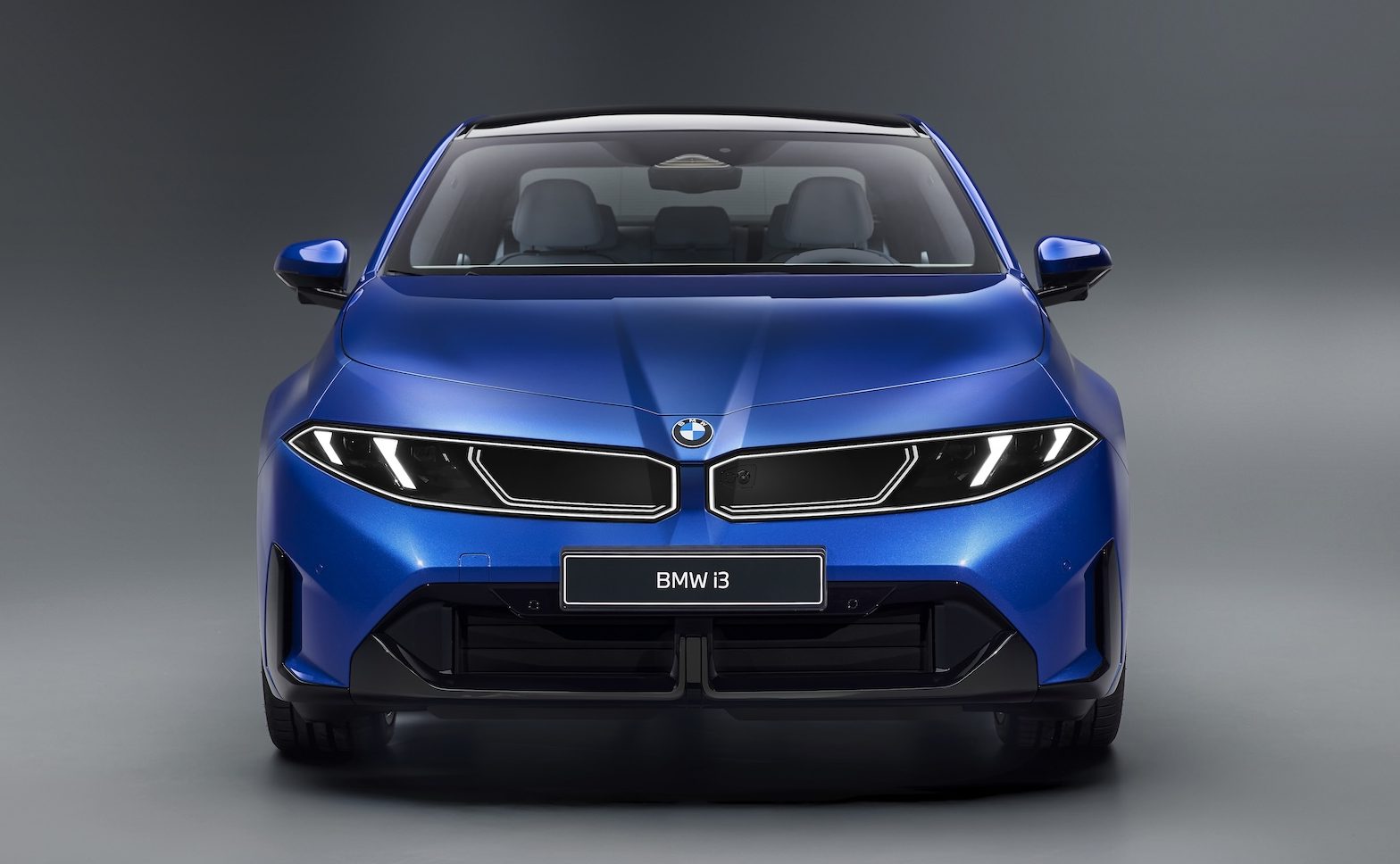
BMW is one the European luxury brand in the United States that seems to have paced its EV rollout fairly well. Sales were down a bit in Q1, though not by a huge margin. BMW saw a drop of about 3.9% quarter-over-quarter to 87,615 cars delivered.
That probably means share growth for BMW, because in the same quarter Mercedes saw its US sales drop by about 3% to 78,500 (including vans), but Audi plummeted by a wild 30%. Yikes!
Curiously, there’s another luxury automaker who also is doing relatively well. Lexus saw its sales only drop by 2.5%, meaning its 80,952 sales put it in striking distance of BMW. That’ll be fun to watch.
‘That Never Used To Happen’ Used Buyers Seem Cool With EVs
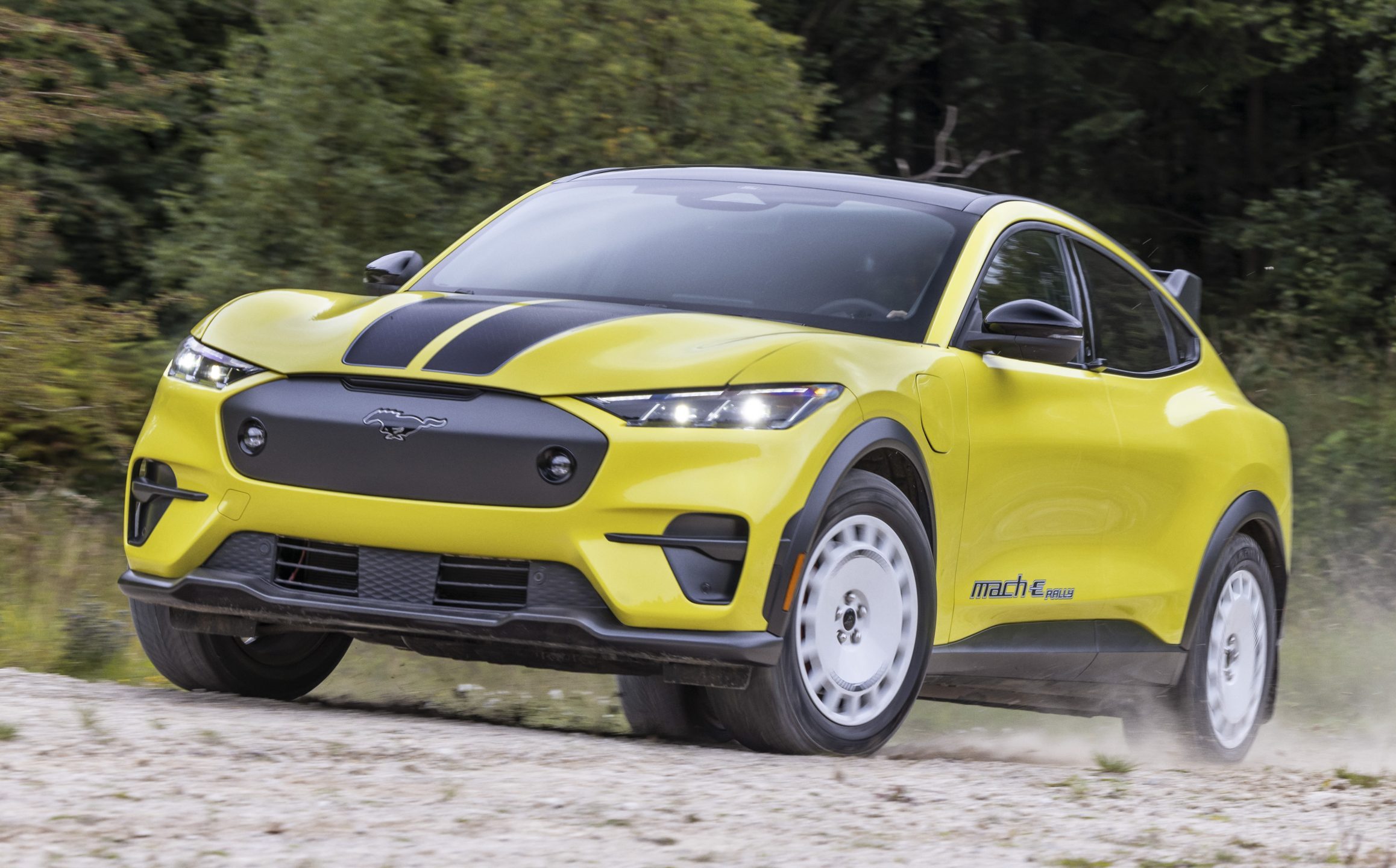
If I was in the market for an off-lease EV would I consider a Mustang Mach-E Rally? Definitely. The huge number of electric cars coming off-lease in the next 2-3 years is going to be a boon for consumers, and some of the upside is starting to appear right as gas prices climb.
There’s a good piece from my buddy Kyle Stock over at Bloomberg about this sudden rise in affordable used EVs, and I thought this quote was interesting:
“Overall, the skepticism on the EV segment is all but gone,” said Steve Renard, executive manager of Infiniti of Tacoma at Fife. “Now, it’s not that difficult to show an EV to a gas customer; that never used to happen.”
If you’ve got $20,000 for a used car and your choices are a relatively old Honda Accord or a certified Hyundai Ioniq 5 I bet it’s hard to buy the Honda.
What I’m Listening To While Writing TMD
There are too many noteworthy performances in Hamilton to isolate one, and a lot of the songs tend to bleed into one another given its libretto-ish style. The one that stands alone and that I never get mad about hearing is Jonathon Groff’s mad (er, upset) King George doing “You’ll Be Back.”
The Big Question
What should the BOF Nissans and Infinitis be?
Top photo: Nissan


I keep seeing it referenced that Americans are demanding these large SUVs but it keeps pointing to sales figures. What else are you going to buy when nothing else is available?
The funny thing when you watch BMW versus Lexus compete for the luxury crown is how different their customer bases actually are beneath the surface, and not just in demographics.
At first glance, BMW may appear to command higher MSRPs on average. But the structure of how customers acquire their vehicles tells a bit of a different story as BMW is fundamentally lease driven. More than half of BMWs are leased (likely 2/3) and BMW has very low cash penetration of around 10% of buyers.
Lexus, in contrast, is much more ownership-centered. Leasing is more like 10-20% of transactions, and cash buyers make up around 30% of buyers.
BMW excels at cycling customers through vehicles (by artificially raising the residuals above expected values so you don’t buy it at the end of your lease because it’s a bad deal) and Lexus relies on long-term ownership commitments that they don’t. Different economic ecosystems!
Either way it’s about time Nissan made a new Xterra. It’s one of the few Nissans I’ve considered for years and one of their best built, most reliable models. I still see a ton on the road and many of them look great. Bring it back and don’t forget the manual transmission!
The big elephant in the room are the tremendous growth of Chinese manufacturers and how they will affect automobile manufacturing worldwide and of course not just Nissan… EVERYONE.
History is not a set of lies we agree upon.
Its the truth that we have a hard time remembering, or don’t care to remember.
I predict an imminent future where consumers will suddenly love EV’s, demand will rise dramatically and catch VAG yet again with pants low around ankles, retooling a factory for the third time to constantly play catch up. In all fairness, Nissan looks like a good candidate to do just that. I think going all-in into anything these days is risky, so maybe you do what Scout does, slow walk it until all possible futures play out by the time you release product, so you may catch at least one cycle.
Completely off topic BUT
WHERE TF IS ADRIAN CLARK?
Seriously, he’s a lot of peoples favorite writer on this site and he’s been MIA for months now….
also, where’s ROOTWYRM!?
(mostly a joke but not really – who doesnt love a lil drama?)
Max Hardigraw and Brian Silvestroni have him locked in a pasta factory on the Isle of Mann until he lives in a Rodius and enjoys it.
My predictions for the new Nissan BoF platform are
Xterra
Frontier
Pathfinder
New CrossCabriolet, for Infiniti this time
A Mitsubishi or Honda rebadge of the Frontier.
Last thing I think I read was health something. I hope he’s well.
Nissan trucks? No mention on whether they contain the CVT Transmission? If it has a CVT they aren’t selling but no information provided on this. Or I missed it.
The Frontier and the Armada both don’t have CVTs; I’d be very surprised if they built any BoF vehicle with a CVT.
The big question is how you can go all in on a hybrid when a hybrid is a combination of 2 or more things? I mean Cronuts are a big thing, or where. But people can go all in on crosants or all in on donuts but can you go all in on cronuts?
If so explain how.
I was behind a BMW EV on the way to work today. I was thinking they’ve quietly done an amazing job with their EV offerings. They look like BMWs inside and out, nothing too weird, which likely makes it easier to introduce their customers to the platform. My boss has a 5 series and recently had one of the EVe as a loaner, nows he’s considering them.
Id much rather have an Accord than an Ioniq 5 given how often the Hyundais seem to go pop. In fact we just got a used Accord Hybrid.
How do you like the Accord Hybrid? Is it a current gen? There’s a few dealers around the country offering new Accord Hybrids for significantly off of sticker.
It’s a 10th gen, the prior one, but the hardware/platform is largely the same as the new one and we love it. Mileage is great but it’s still fun and zippy with lots of space.
I don’t know the details about the new Xterra, but what I liked about the original was that it was a more stripped down and practical version of the Pathfinder that was getting more plush every year. The Xterra was built for people who had good knees and went outside and got muddy, not for people who wanted creature comforts. It was also more affordable. I hope the new one follows that esthetic… (the Pathfinder has strayed so far; it looks like a minivan with less practical doors – despite marketing splattering mud on it in the photos)
The Nissan Juke looked like they asked four different people to design one corner each, and didn’t let them talk to each other. The new one looks like a 1992 video game’s graphics. Looking at you, Tomb Raider.
Matt, there’s a lot more going on with fuel economy and emissions legislation for US light duty vehicles than this admin setting the nonconformance penalties for CAFE to $0. That, as you say, is easily reversible for the next admin. The bigger deal, and what I suspect is catalyzing both the off-road truck product announcements and the ‘we’re going to start making cars again’ (Ford) announcements is a significant change in the CAFE regs about what vehicles can be claimed to be ‘trucks’ versus cars, effective model year 2028.
Over-simplifying things for brevity, they basically closed a bunch of loopholes that allowed manufacturers to claim basically all their CUV’s, etc. as being trucks, and added a fairly significant towing capacity requirement. (look up ‘light-duty work factor’ if you want to see the equation). If these changes were applied to the MY2026 model mix, it would change from 68% of vehicles sold being classified as trucks and 32% of vehicles sold being classified as cars to 26% truck and 74% car. Basically, if you’re going to sell a truck, it actually has to be a truck, and if your CUV is going to be classified as a car anyway, it is easier to hit the regs if you sell an actual car instead…
There’s more to it than that, of course, but that’s the big change in regs that are driving changes to the product mix, if I don’t miss my guess.
For those that don’t want to look up Light-Duty Work Factor it is a combined tow rating + payload of 5,500 or greater with a weighting of 1/3 for payload and 2/3 for tow rating.
However this isn’t as huge of a change as you are making it sound. The Light-Duty Work Factor is added as function (6) in paragraph (a) It doesn’t not apply to paragraph (b) An Automobile Capable of Off-Highway Operation. That is how most crossovers become non-passenger vehicles. The only change to (b) is removing the requirement for 18 centimeters under the axles.
The biggest thing it will do will classify minivans and some 3 row crossovers as passenger vehicles – which makes sense.
Call me an idiot but shouldn’t classification on light duty work or anything be based on maximum capacity not minimum capacity? If it is 5.500 or greater does that include 100,000 pound cargo?
This regulation only applies to light duty vehicles – 8,500 GVWR and below. Larger vehicles have their own regulations and the current administration did not set their fuel economy fines to $0.
They also got rid of ‘3rd row of seats = non-passenger automobile’, as well as changing what it takes to qualify for (b) ‘off-highway capable’ – currently they have to meet 4 out of 5 criteria of approach/breakover/departure/running clearance/axle clearance, but for 2028 onwards they get rid of the axle clearance requirement but require an ‘off-highway capable’ vehicle to meet all the other criteria. The deal breaker for almost all CUV’s is the approach angle requirement – to meet it they’d have to delete the front air dams, and take a significant hit to aerodynamics/fuel economy.
Long story short, most vehicles that qualify as ‘trucks’ for NHTSA CAFE reasons today won’t meet the new criteria. This (I predict) will drive product mix changes.
Yes, I mentioned the 3-row change.
Load factor is a new way to be a non-passenger vehicle and most CUVs that are Honda Pilot / Passport size and larger could qualify that way.
As to Off-Highway – yes approach angle is a a problem today but one that is relatively easy to fix. Automakers will go back to what we used to do and modify the front airdam to meet the angle. Look at something like a 2010 Lexus RX350.
Careful..there are a few pathways to a Light Duty Truck (LDT) post 2028MY. In short it will also be much tougher to be able to meet the 2028MY+ Off-Highway criteria, certain vehicle dimensions must be met to be called a LDT, the most difficult being 28 deg approach angle. Nearly all CUVs will fail this and the Light-Duty Work Factor and be called a Passenger Car.
Change the front air dam and / or bumper cover on a CRV and it is a non-passenger vehicle again. This isn’t that big of a deal especially considering the fines for non-compliance are $0 today and will be $0 until at least 2029. As I mentioned above that is what companies did in the past and US spec crossovers had different front ends than those in other markets.
Light-Duty Work Factor and Off-Highway are different paths to being a non-passenger vehicle. Vehicles don’t have to meet them both.
For a 2028MY+ SUV to be a LDT truck, it will need to meet the Light-duty work factor which effectively means it needs a tow rating of ~7400lbs ( a tough ask for most C or D sized CUVs) OR go the Off-highway path but now meet the revised 4 out of 4 requirements (28deg approach, 14deg breakover, 20deg departure and running clearance of at least 20cm AND have a 6000lb GVW ( a tough ask for a 2WD CUV ) OR be AWD. It’s possible for something like a AWD CRV to be a LDT, but all the Off-highway specs would need to be met. Maybe you’re right and it’s just a bumper cover change. But a lot of vehicles will miss the mark and become PC. In short, post 2028 to be called a truck, it will need to have real truck capability..at least in the eyes of the government.
In 2028 most crossovers will follow the off-highway path like they do today. Those 4 requirements aren’t that hard to meet and have been met in the past.
I forget when the regulation changed to only require 4 out of 5 criteria off-road measurements but crossovers used to have 28 degree approach angles and companies made special bumpers for the USA to meet the requirement. In changed sometime in the 2010’s because if you look at a 2010 CRV, RX350, RAV4, etc they all meet the 28 degree approach angle requirement.
The NHTSA also allows for the compression of flexible parts like air dams, air deflectors, mudflaps, etc as long as they are not damaged and spring back. Test procedure here:
https://downloads.regulations.gov/NHTSA-2024-0050-0007/attachment_2.pdf
The end result will likely be the death of the FWD crossover, even higher ride heights, and some new bumpers. Fuel economy will drop a bit but not nearly by the difference between the passenger car and non-passenger car requirements. Automakers will still have incentive to sell their hatchback and wagons with a lift.
Interesting. I was unaware of the changes that close a lot of the loopholes that drove crossovers to become so popular.
CAFE penalties will inevitably return when the pendulum swings the other direction in our country. This would have the impact of making it much more difficult for automakers to meet the standards with their current product mix.
The upside of the new Juke is when you get a ding or dent, you won’t notice because it’s already has so many creases.
I have a feeling it’s the opposite; it’s all flat planes, any distortion is going to stand out like a splotch on a mirror.
If you get a dent or ding in a Juke does that mean it doesn’t live up to it’s nameplate?
Should they have another vehicle called the Jive?
Should just be BOF Nissian, Infiniti needs to die. They would do better to bring back Datsun if they want another brand. After they right themselves. Or separate the bev into Datsun.
Nissian will always have a global pickup bring it to the us as global as possible. Make it a hybrid and cheap. Some will probably buy it if it’s good. Xterra can be a bronco competitor. I guess if they don’t have platform for a small van they could use the global truck one. BOF small van could be something special..Their last attempt of a small van was so terrible that it might be a tough sell.
I believe there are a multitude of reasons used bev is cheap. We see them as tech and that get replaced every 3 to 5 years. If you have to pay for battery replacement almost any bev is basically totaled. Once the battery warranty is out is basically worth scap value.
The other is your avg few year old used car buyer is either looking for a deal (that might not be much of a deal) or can’t afford new. Both of those probably would be scared away from bev. So that leaves people that believe in it looking for a real deal and know what that is. And maybe ride share drivers that think they can make more. But many of them got on the cheap leases.
I hope it stays like this it’s basically the righting of the used car industry undoing all the cpo damage.
Hell yeah
Unless they bring something new and different to the table, they’ll fail again. Ford, Chevy, Ram and Toyota have the mid-sized and full-sized truck market dialed in.
A compact truck, maybe unibody, with an E-REV power train for light truck duty (4K towing or less) and ~80 miles battery range would be a hit, as well as a larger mid-sized BOF truck with a similar ~80 mile battery range but with at 7K+ towing (larger motors, battery, etc) would be a good fit too. Offer lower cost RWD and AWD options.
That can’t out F-150 the Ford or out TACO the TACO.
Unless they introduce it on the next Ford recall. I mean really Ford can’t make a new vehicle that doesn’t get recalled a few times.
Ford has made several forgettable vehicles.
Which ones you ask?
I cannot recall.
I don’t think I’d be able to justify switching but I would be very interested in seeing what Nissan comes up with.
I was shopping late-00’s midsize BOF SUV’s before “settling” for a 4Runner a couple years back since I like to leave the pavement enough to want low range but not quite enough to prefer the solid rear axle.
Add in a third-row + IRS for a flat load floor, a hybrid system and a not-tiny fuel tank with a spot for a spare and I’ll be a very tempted camper. (or a smaller footprint in lieu of a third-row/IRS setup in the case of the Xterra)
Albeit, packaging concerns may render that an outright dream though and I definitely recognize I’m probably in a No Man’s Land market segment because I’m weirdly picky like that.
Just like how all my favorite smartphones back then failed…
Makes sense. The full size BOF Nissan & Infiniti SUV, along with the Frontier, are old platforms. And BOF Pathfinder & Xterra SUV are long gone, along with the Titan last year. All this while Bronco, 4runner, and Jeep are selling great.
This stuff takes time. I’m sure the decision was long in play before the EPA & current gas price changes.
Glad to see more BOF options. Hopefully on one of these the top & doors come off.