

There are lots of moves by the federal government that I, admittedly, question the logic of when they’re announced. This feeling is not limited to a single administration (ahem, Cash 4 Clunkers), although the current one seems like it’s trying an executive action speedrun. One of those actions, though, seems incredibly logical to me.
The Morning Dump is going to start with a discussion of the “light-truck” loophole that makes everything from a Lexus NX to a PT Cruiser a truck. It’s long been silly and resulted in plenty of vehicles getting approach or departure angles that make no sense. NHTSA is looking to close it, which seems good, although how automakers respond to it will be another question.


Also uncertain is how Volkswagen will approach the United States, given its product mix and production issues. The answer? Well, no answer yet. We do have an answer about whether or not this market will get the PHEV Ford Ranger, although it’s not the answer many of you would like to hear.
And, finally, what the hell is going on with Jaguar?
The Time Of The Mazda MPV Is Nigh
One of the ways automakers have long skated around fuel economy regulations is to offer a lot of ‘light trucks’ instead of passenger vehicles. Originally conceived in the late 1970s to avoid penalizing work trucks, the categorization of nearly every car for sale as a ‘light-truck’ is a total joke.
The most egregious early example of this is the PT Cruiser, as noted in this Automotive News story from 2002:
The PT Cruiser is another loophole-leaper, critics say. It is loosely based on the Dodge Neon and is equipped like a car. For instance, it has a standard car suspension and lacks four-wheel drive. But it meets NHTSA’s light-truck definition because it has removable rear seats, leaving a flat floor.
“The primary advantage is CAFE,” said Jan Zverina, a Chrysler group spokesman. “Trucks have inherently larger, more powerful engines because they have to be more capable for hauling.” Having the smaller, more fuel efficient four-cylinder PT Cruiser classified as a truck helps the company meet its CAFE requirement, he says.
But can that same flat-floor case be made for the two-door PT Cruiser convertible, which has a big convertible boot positioned above the floor? The convertible bows in early 2004. NHTSA could be in the odd position of classifying a convertible as a truck.
It’s a silly loophole big enough to drive a Subaru Outback through.
The current regulations have all sorts of ways a vehicle can be considered to fit into the ‘light-truck’ category, like meeting some of the requirements for being an off-roader, including: approach angle, breakover angle, departure angle, running ground clearance, and axle clearance. This is one reason why you have the awkward chins on so many crossovers.
As S&P Global’s Stephanie Brinley writes, the current administration is considering closing this loophole:
NHTSA is dropping axle clearance from the list, leaving the other values the same.
However, under the proposed rule, a vehicle would have to meet all four criteria to be classified as a non-passenger vehicle via off-road capability.
A proposed new Light Duty Work Factor (LDWF) pathway to light-truck classification is new. LDWF reflects a vehicle’s ability to tow and carry payload, both considered ‘work’ functions. LDWF takes the sum of payload and towing, with towing weighted more heavily than payload, to arrive at a figure.
A vehicle may be considered a light truck if it meets a LDWF greater than 5,500 pounds and has four-wheel drive or is rated more than 6,000 pounds GVWR or meets the revised off-road criteria.
This seems sensible, right? I keep waiting for the catch (other than setting CAFE penalties at $0).
Brimley determines that this might cause more soft-road crossovers to end up as passenger cars (they are), given that fully off-roadizing some unibody crossovers or giving them huge tow ratings might not be worth it.
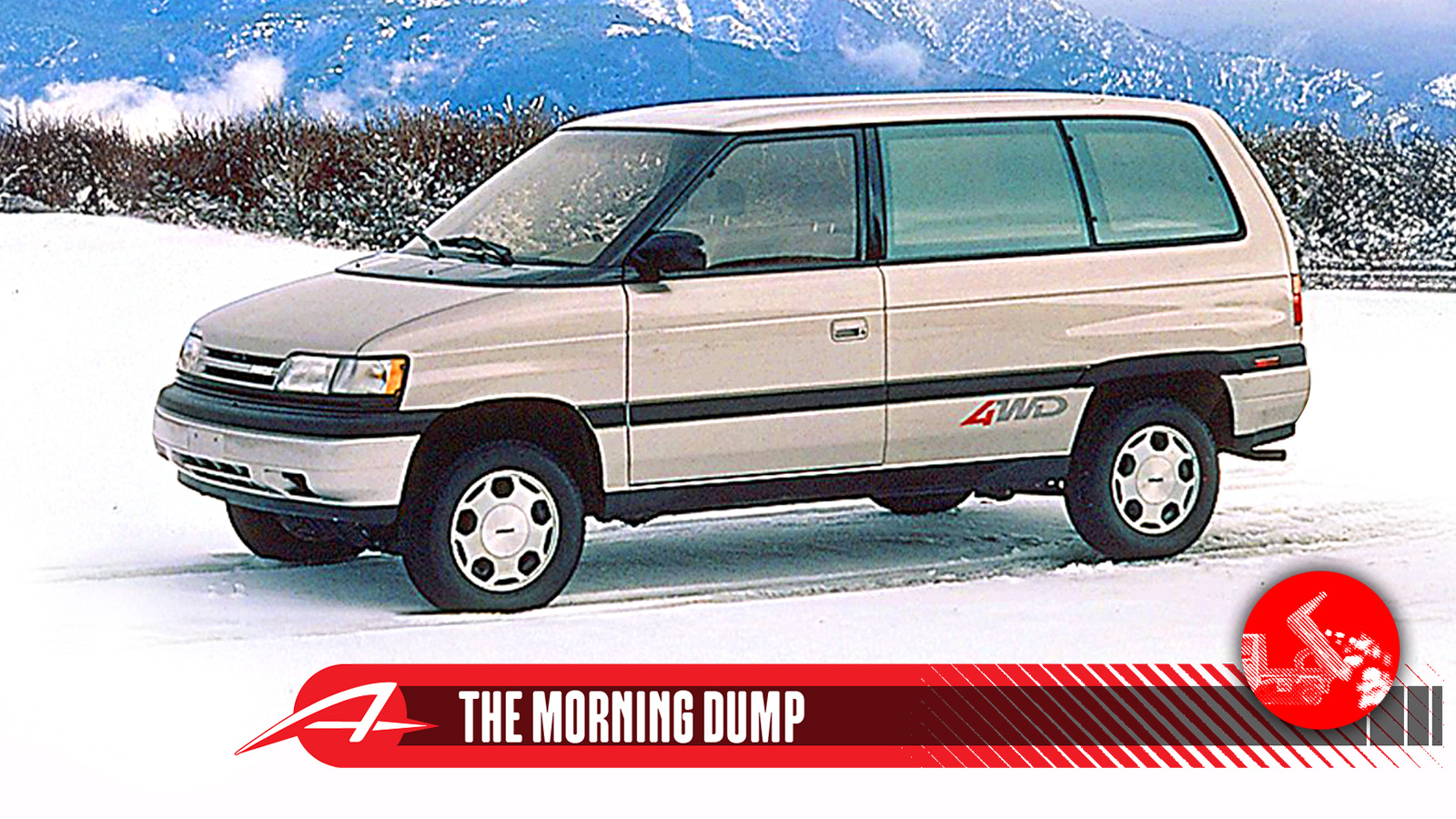
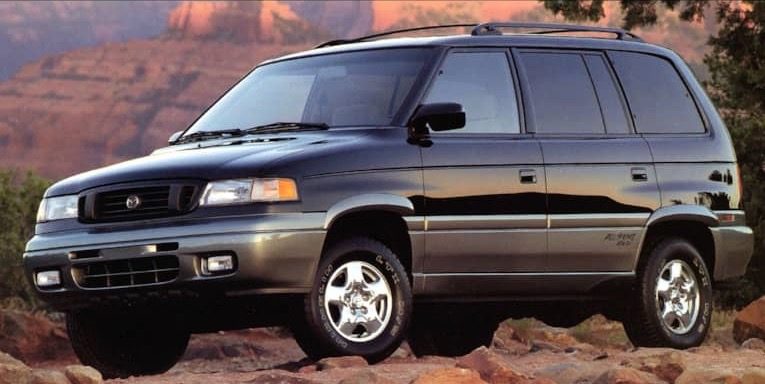
Or, maybe it will be worth it. Does anyone remember the Mazda MPV 4WD? This was a true RWD/4WD van with off-road chops, albeit no sliding door. It was a strange, tweener offering based on the Mazda 929 platform. I love these, and if this means we get more off-road vans, that’s great. Vans or crossovers that can tow 6,000 pounds would also be excellent, although the engineering necessary for this might be inefficient.
VW Sales Boss On America: Yeah, We’ll Do Something

For all my writing about Volkswagen’s issues, this is somewhat an American-centric view. The development of EVs is, slowly, working out for the brand in Europe as it outsells Tesla there and otherwise achieves something like moderate success in a tough environment.
VW sales boss Martin Sander gave a long interview to Automotive News about what’s working for the brand in places like China, Mexico, and Europe. As for the United States? It’s a little less clear:
Could you provide more details on VW’s plan to add hybrids to its U.S. lineup?
That is a very valid and important question. The hybrid market is growing, especially with the new legislation in the U.S., for the time being, heavily impacting the growth potential of electric vehicles. That is why we have hybrids in the pipeline for the U.S. That said, the vast majority of the U.S. market is made up of traditional ICE models, and we have extremely competitive products like the Taos, Tiguan and Atlas to offer.
Ok, so that’s not an answer.
ID Buzz sales in the U.S. have been lackluster. Dealers say the price is too high and the range is too low. How does VW plan to address this? Is shifting ID Buzz production to Chattanooga or Mexico being considered?
There are no plans to move production. The U.S. tariffs had an enormous impact on the model’s sales, but we have been able to significantly increase deliveries of the ID Buzz in recent months. In Europe alone, deliveries increased by 80 percent by the end of September.
That is an answer, sort of, but the answer is: There’s no real plan to fix it we can share.
Is VW considering any other moves that would add production in the U.S. to further offset the impact of tariffs?
We are in a good position because we already produce the Atlas and ID4 in the U.S. Indeed, the significantly increased U.S. tariffs pose a challenge to our business model. One potential reaction could be to further localize production in the market. As I mentioned, we are evaluating options for the Volkswagen Group brands but haven’t made a decision yet.
Volkswagen seems to be approaching North America the same way I approach my BMW: Things will be improved and addressed, eventually, at a time and place of my choosing, which is neither this time nor, likely, this place.
Who Actually Thought We Were Getting The Ranger Super Duty?
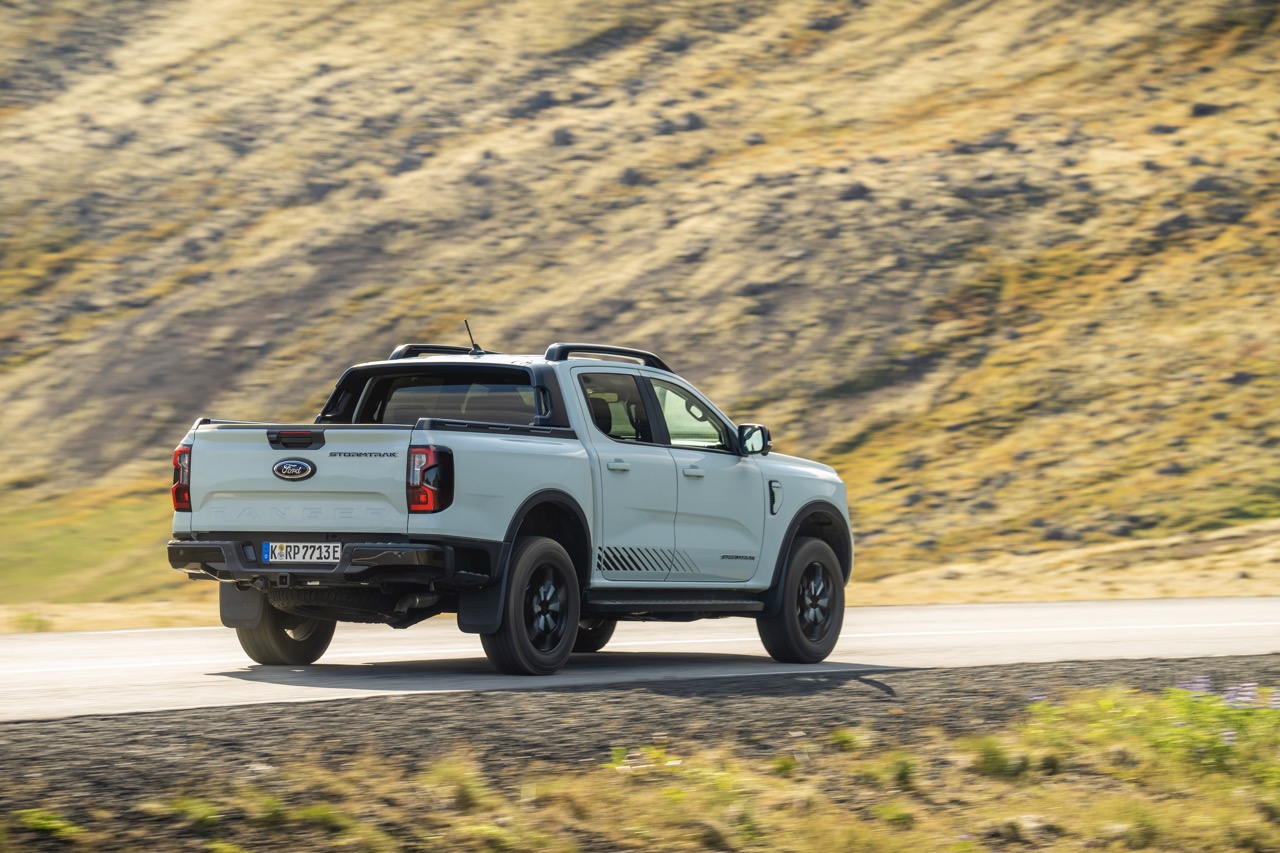
I am a person who goes out of my way to believe we’ll get vehicles in the United States that we’re clearly not going to get. I call this optimism. Other people may call it “being dumb.” Either way, not even in my wildest dreams did I think we’d get a Ranger Super Duty. Even with our lauding praise of the Vehicle, it was clear this wasn’t an option given the F-150’s existence.
The PHEV Ranger sold in Europe? I was probably a little more hopeful we’d get that, though I wasn’t holding my breath. Good thing! I’d be dead, according to Car & Driver:
Whether it’s a discontinued menu item at your favorite restaurant or a foreign market vehicle that will never make it stateside, it always hurts to want something that you can’t have. Both the Ranger plug-in hybrid and Ranger Super Duty can now officially be added to the latter list, as Ford has confirmed that neither of the new and desirable foreign-market variants of its mid-size pickup will make it to America.
Sure.
Did Gerry McGovern Not Actually Get Fired?

The big news earlier this month was that Jaguar Land Rover Chief Creative Officer Gerry McGovern was not just fired, but was also reportedly escorted out of the building. A statement sent out to the press, which Motor1 got a copy of, says he wasn’t fired at all:
Update, 12/12: After reaching out to Jaguar a second time, the company issued a statement saying that it has not fired design boss Gerry McGovern. A company spokesperson told Motor1: “It is untrue we have terminated Gerry McGovern’s employment and we do not intend to further comment on speculative stories.” The story has been updated to reflect that.
This leads to some interesting possibilities. Did he quit instead of getting fired (which, with his contract, may have been hard to do)? Did he get fired, but is refusing to accept a breakup agreement? Did he quit, but they didn’t actually want him to leave, and are now trying to convince him to stay?
There’s silence on both ends of this, which is fascinating.
In an act of stunningly brave and labor-intensive journalism, I just emailed Gerry to ask what’s up and got this response:

Thanks for the regards! I will wait for a response.
What I’m Listening To While Writing TMD
As a tribute to The Mavericks’ lead singer, Raul Malo, Austin City Limits posted this live performance of “All You Ever Do Is Bring Me Down.” RIP Raul.
The Big Question
Ok, with the light-truck loophole maybe closing, what’s the goofiest/best outcomes?
Top photo: Mazda





Nooooooooo. RIP Raul. The Mavericks were one of my favorite country bands.
I actually stopped at a dealer since I was driving by 1x per month for work and saw they had an ID Buzz on the lot (in Waterville Maine of all places ?!?). They had 2 of them. The salesperson had no idea if it could have a hitch installed. That was not great since hitches are a very useful feature for light duty bike racks, skis, garden trailers, especially when the roof of the vehicle is very tall. I didn’t even bother to climb in and sit inside. The dash was that dumb finger slider screen thing and it was totally uninspiring for an old school Dub guy. The cargo area was not useful for large dogs with the bolted in platform, and the seats were not as configurable or removable as other vans.
I can see that they ordered 2 too many. There is no Buzz with that ID except for the short circuit sound in buyers brains. They should change the name to the INeed Fizz, because it’s gone flat.
It is, of course, a silly regulation – but I daily a PT because that flat floor makes it easy to do grocery runs, hardware runs, and all the fetching of stuff I do. The back seats have been in the closet since I bought the thing – and I have had two people tell me they had no idea they came out, one of whom still had their PT.
I did love taking the seats out on ours when we had one, too. Felt comparatively spritely without them and a ton more storage. I was always disappointed with the poor mileage and that helped a bit.
I get pretty close to 30, but 90% of my driving is rural 2 lanes at 60 or so. Yes, officer, 60 I thought . . . And three pedals helps.
Yeah, we had the stick, and did a lot of city driving on hills. It didn’t like that, mileage-wise.
The real lesson is that the govt won’t let go of failed deadend ideas.
California is especially prolific in the manufacturing of dumbidity.
Now the rest of us end up with their refugees that managed to escape.
Then the refugees keep the same habits that made California a byword for failure. Someone should tell them that they are refugees, not missionaries.
“Ok, with the light-truck loophole maybe closing, what’s the goofiest/best outcomes?”
The return of the Dodge Journey… based on the Jeep Wrangler… with rear sliding minivan doors.
Or a new Ford Crown Vic… based on the 4 door F150.
So just make anything that is a “truck”
require commercial plates and a special endorsement on the drivers license if they are over a certain size.
Anything that can carry passengers should be meet the same safety and emissions standards as any other passenger vehicle.
Slightly off-topic, but I knew a photographer that had an MGB and later on a Porsche 914 with commercial plates in New York City. The advantage being that it allowed him to park on the street in what used to be the photography District.
All light duty vehicles have the same safety and emission standards today. It is only CAFE that varies based on type.
The change in regulations for emissions and safety is at medium duty (10,001 GVWR and above)
Which is another facet of auto engineering that is being abused for commercial purposes, specifically in the EV world.
it is a two way street though. if they go over 10K GVWR then they have to have drivers with special licenses yes, but also pass DOT inspections annually. in the reverse, a 10,000 lb 3/4 ton just needs a vehicle inspection in some states when license renewal occurs, but they do not have to stop at weigh stations and rarely get pulled over to check the rig for safety. it’s a racket either way.
No special drivers license is required in the USA until GVWR reaches 26,001.
There are some other restrictions for people doing actual commercial driving at lower weights but a individual can pull a 5th wheels with a 3500 dually on a regular license and never have either inspected
They don’t actually have the same safety standards, because their bumpers are regulated at “off-roader” height.
Prior to 2010 light trucks had very different safety standards. Different crash standards, airbag requirements, brake requirements, etc, etc. When that changed happened trucks and SUVs got much safer.
Yes, there are tiny detail differences like bumper heights but the bulk of the regulations are the same for all light duty vehicle and now the cut-off is at Class 3. For example a Class 3 vehicle is not required to have any airbags, stability control, AEB or rear cameras. They also have different emission regulations and CAFE regulations.
On the other hand the side impact crash standards recently raised the bumper height and weight of the impact sled to simulate a car getting hit by a truck instead of a car. A lot of cars did poorly on that new test but changes have been made to make them safer and score well on the new test.
You know, you can tow with a car, even a convertible. I don’t have any pictures of towing my house trailer with my Malibu convertible, but I found this clip on YouTube. https://youtu.be/PiOTqqMeKsQ
My 94 Buick wagon will tow three tons.
Forget the MPV, does this mean we can get a Chevy Astro again??
I almost bought a jetta hybrid but all the ones i found in my area had a SHIT ton of miles on them. Also i really wanted a hatch. I’m hoping VW offers a Golf hybrid or tiguan hybrid soon!
I haven’t done the math on this, but i’d like to see the chicken tax off the small vans that did not have enough demand to deal with the hassle. With harmonized rules, and no tax, maybe the ones they sell in other markets could be brought in, even if the numbers were not huge.
Had a light blue madza mvp growing up. We loved it, turned into a family car after my mom was through with it.
A minivan that tows heavy loads is not a difficult ask. Chrysler is 90% there with the Durango/Grand Cherokee.
The reason Chrysler hasn’t done it already is almost certainly due to the higher profit in segments other than minivans.
Problem is Minivan = not cool, poor person, SUV = successful, good career.
Style and image matter to people way more than it ever should, but also people in general are not very logical.
The new criteria will just encourage carmakers to make more full-sized SUV’s. What is a better metric, is how much a vehicle can carry, relative to its curb weight. I think if we have a payload-to-curb-weight ratio of > 70%, this will cover all real trucks from Kei trucks to full size single cab trucks, while excluding SUV’s and quad cab trucks, etc. Similarly we could have a cargo volume vs interior volume ratio. A real truck has lots of cargo volume relative to its interior volume.
Maybe Gerry McGovern is not fired, and maybe he has not resigned.
Because there is a third option.
Maybe he has been suspended, while some kind of an investigation takes place. That could explain why he was (allegedly) escorted from the building, and why neither side is saying what’s going on.
A Schrodingers Macguffin?
More station wagons?
The MPV was a workhorse. I still want one decades later.
I have doubt anything will really change they will site some vague marking speak like “consumer preference” and continue on. Full size trucks need to shrink back down to at least the 90s early 00s sizes. But even doing that people who have only ever driven small eco boxes will still move somewhere decide they need a truck because they had to haul something one time and try to drive it like the eco box. Cafe didn’t work it just made everything bigger so gutting rid of it is fine with me. Maybe there will be some normalcy. You can go to brand new neighborhoods and see trucks parked in the drive ways because they don’t fit in the standard two or three car garage they build. That says the oversized trucks aren’t permanent to me otherwise “market preference” might get builders to build garages that fit the things. Maybe with the oems experimenting with garage issues with EVs they will figure it but probably not.
CAFE absolutely did / does work. For the last 50 years fleet fuel economy has basically tracked the CAFE requirement. Nothing more / nothing less.
Since CAFE started weight is up 8%, Horsepower is up 94%. 0-60 times have dropped 46% Fuel economy more than doubled from 13.1 to 28 mpg.
Caused me to recommend older, heavier cars for reliability.
Forced me to learn how to remove malicious hardware from my cars.
All a comedy of unintended consequences
Five years ago I bought a 1998 4WD MPV in rather rough shape to be my adventuremobile while I continued the hunt for a decently-priced Land Cruiser or 4Runner. I’ve since bought a 2004 4Runner, but continue to own the MPV. Except for the fact that it is underpowered for mountain passes and doesn’t have a low range transfer case, the 4WD MPV is the real deal: steel skid plates under the engine and fuel tank, RWD but with a Torsen center differental (lockable) for 4WD in any condition. The front drive hardware was shoe-horned into what is essentially a 929 sedan platform, so replacing the starter motor was an exceedingly difficult task. When researching the first gen MPV, I saw in forums some hilarious misunderstanding of what it was not: derived from the Ford Aerostar, body on frame, front wheel drive, etc. Fun fact, in its very first years, the MPV was available with a diesel and also a manual transmission with low range.
Pretty sure these were on the Mazda Luce 929 chassis. Which came with a turbo 13b option. May not help with torque over the mountain passes but worth finding out for the sake of science.
R.I.P Raul, indeed. Such a wonderfully pure voice, and by all accounts, a good man. He will be greatly missed.
Perhaps JLR did fire McGovern, and no one ever told him about it, but through some kind of glitch in the payroll department, he still gets a paycheck.
Once they fix the glitch, he won’t be receiving a paycheck anymore, so it’ll just work itself out naturally.
He still wants his red Swingline stapler, it doesn’t jam like the Boston ones
Don’t worry, they’ll just move his desk to the basement.
You’ll find him down in storage room B. There’s some new people coming in and they need to make all the room they can get.
He misses the squirrels and stapler so much he might set fire to the building.
Is VW on a long losing streak in the US? Yes. Have they given any indication that they have a decent plan to change that? No. That said, I think it’s a little unfair to put them under the microscope because ever single freaking company that does business in the U.S., regardless of where they are based, can’t make long-term plans with taxes, tariffs, policies, etc. changing with the mood of a single person who doesn’t have even the most basic understanding of economics.