

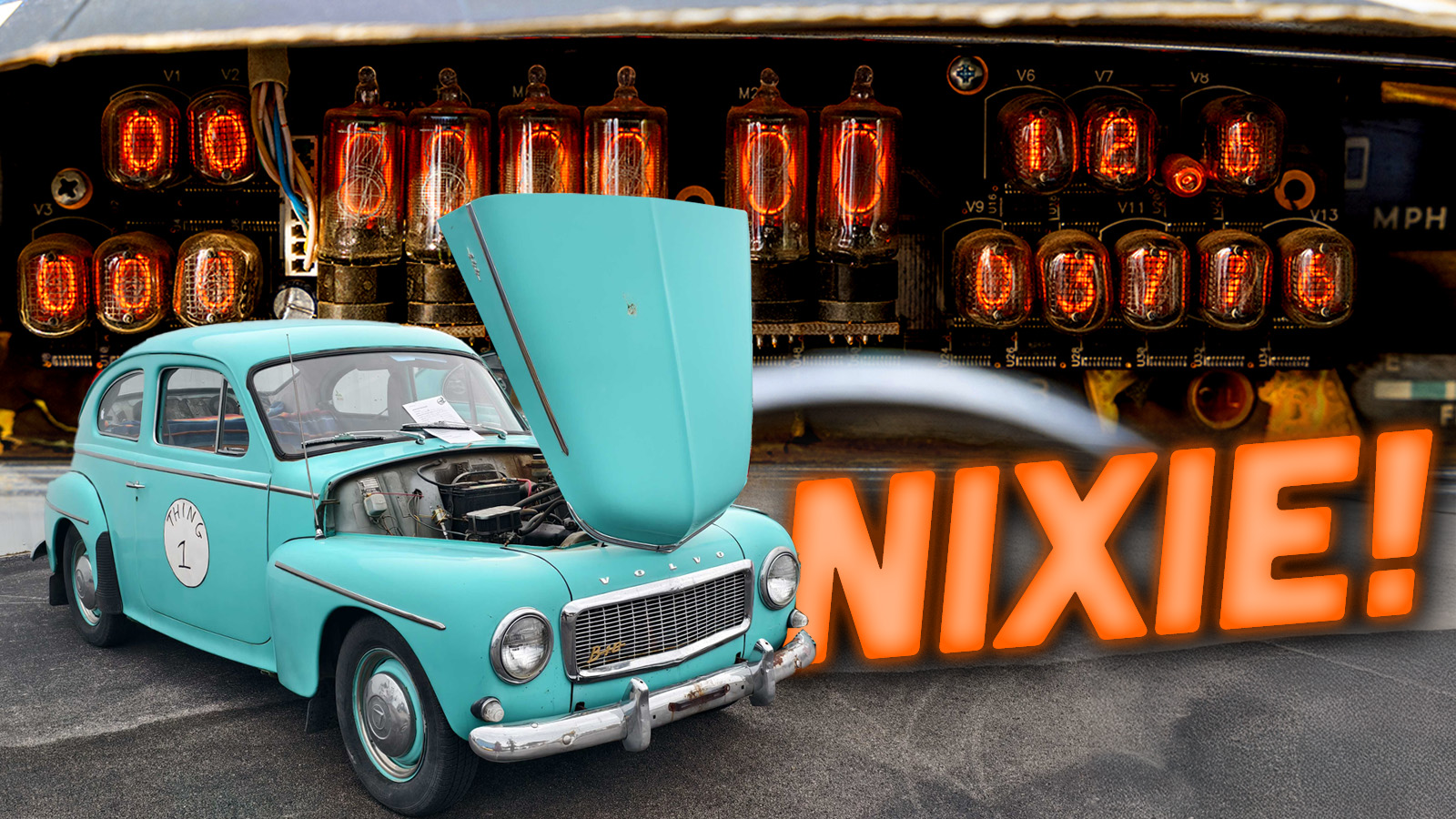
There have been countless speedometers made throughout automotive history, and some have been worthy of being put into an art museum. Recently, I saw a speedometer that I adore more than any other, part of an entire classic-car instrument cluster that displays all its information through an array of Nixie tubes. I think it’s the coolest thing ever. It’s perhaps even cooler than the other Nixie tube-based objects this man has invented, which includes the watch that I’m wearing right now.
Earlier this month, I took part in the Lone Star/No-Start Lemons Rally. It was at this rally that I met an associate of Jason Torchinsky’s named David Forbes. At first, I was drawn to David by his teal Volvo PV544, a car that he told me had been in his family for several decades.


David was joined by his identical brother, who was driving a similar PV544 that was acquired only a couple of months before the Lemons Rally and hastily painted teal. Together, the twins had a clever theme, calling themselves Thing One and Thing Two from the Dr. Seuss universe.

At first, my fascination was just with the brothers’ cars. The Lemons Rally welcomes all road-legal vehicles, and this rally had everything from a Corvette C1 with mismatched panels, a fiery carburetor, and shag covering the entire interior, to a Honda Odyssey with the front clip of a Pontiac Aztek and with every inch of its body painted to resemble a boombox. The PV544s stood out to me for their beauty and their lovely color. David even told me that his Volvo was so original that it was still rocking an original radiator more than 50 years after it was damaged in a crash. Sure enough, the radiator is still dented and cut up from its impact with the engine fan.

But it was what I found later in the rally that blew my mind the most. We came across the pair of Volvos parked behind a stricken Fiat. Griffin and I pulled over to offer any help that we could. It was during that stop that I saw that David’s speedometer had what looked like cardboard covering it. I walked over, wondering what the deal was. Then, my mind was blown. The cardboard was acting as a visor for a custom instrument cluster made entirely out of Nixie tubes!
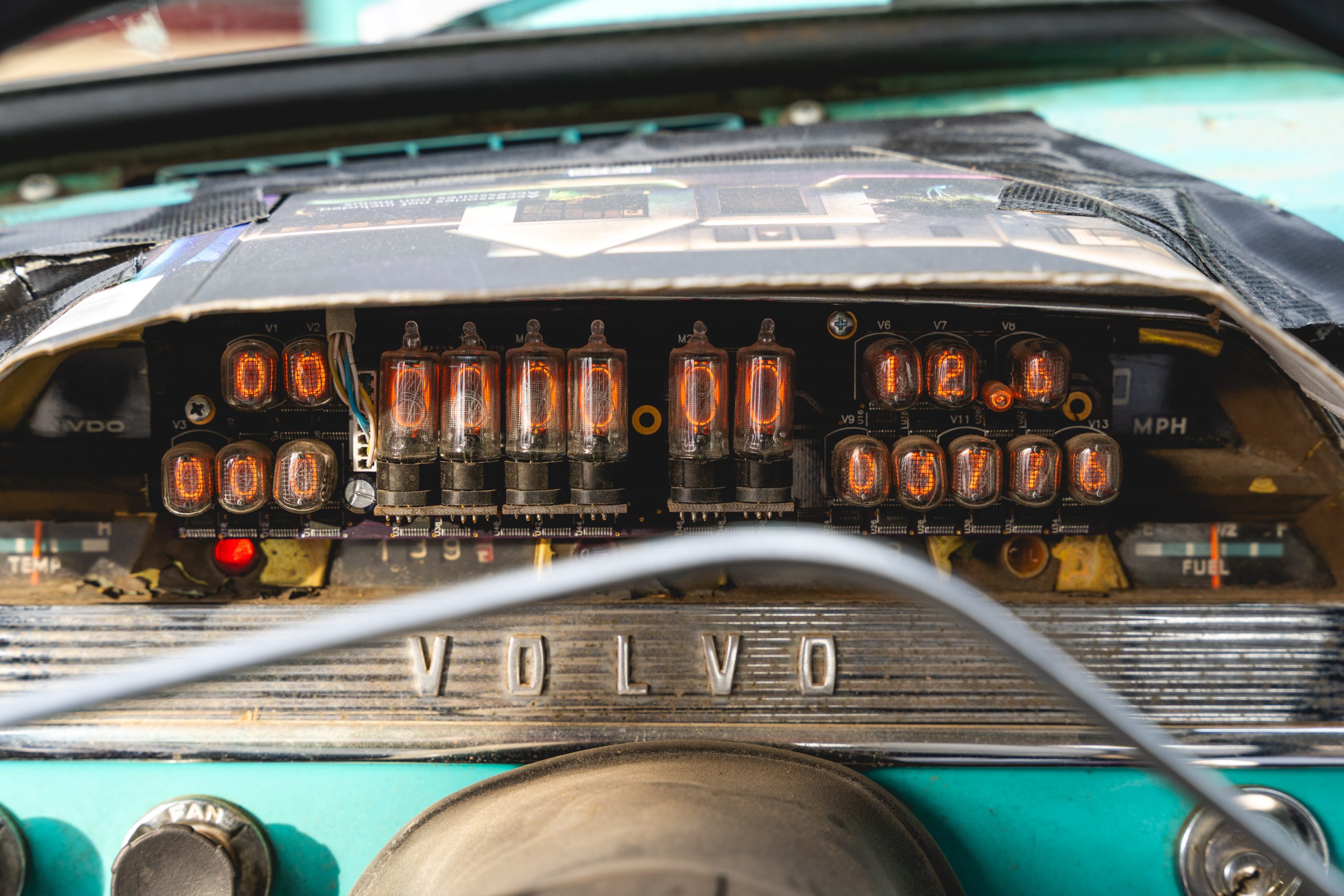
What made my brain melt even further was the completeness of the instrument cluster. It would have been amazing enough for David to have just built a Nixie speedometer, but he went all the way and made his tubes display every vital number. His Nixie instrument cluster displays engine RPM, vehicle speed, battery voltage, total mileage, coolant temperature, and oil pressure.
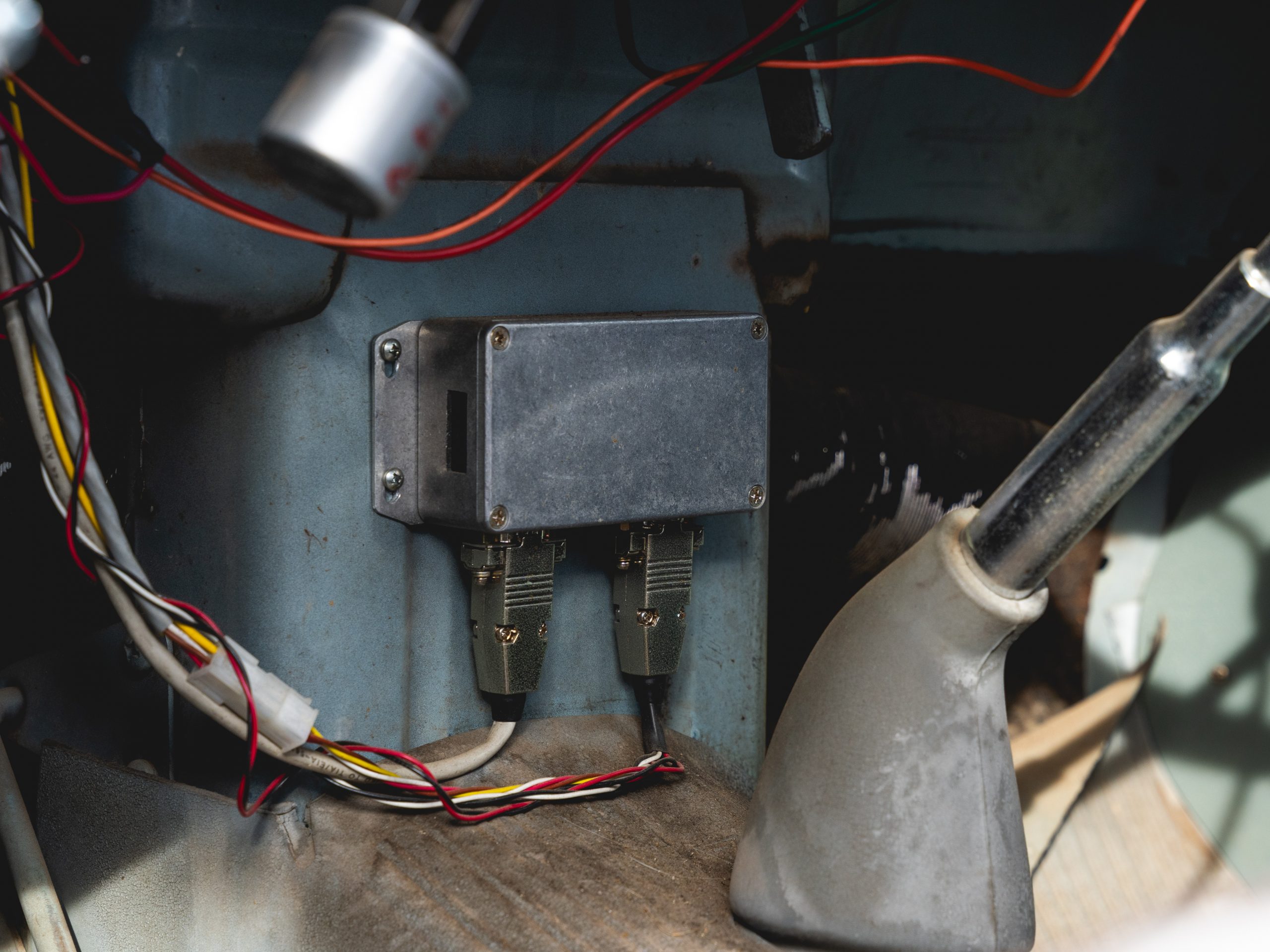
If you take a look deeper at the photos here, you’ll notice that David used different kinds of Nixies for the display, and they’re all attached to a custom circuit board. The Nixie tubes and their board interface with a computer module, which takes the mechanical inputs from the associated instruments and transmits them in a way that the tubes can display.
I couldn’t help but imagine a sort of alternate past here, one where vintage cars had Nixies for instrumentation. David told me that my fantasy isn’t far off from the reality that he created, since his car and the Nixie tubes existed in the same era.
My big question was how someone like David came up with the idea for a Nixie speedometer, and how he even knew how to make it all work.
A Beloved Old Technology
Admittedly, I’m obsessed with Nixie tubes. I have a Nixie tube watch, and for years, I’ve been dreaming of a Nixie tube speedometer that could plug into a modern car through OBD-II. Sure, it would be redundant, but it would still be fun! That’s when David showed me his wrist. He, too, had a Nixie watch. But there was a twist, as he told me that he is the inventor of the Nixie watch.
If my brain was already blown by his speedometer, it struggled to comprehend what I heard. Again, I adore and cherish my Nixie watch; I’d rather rock it than any Rolex. And here I am meeting the guy who came up with the idea!

If you’ve gotten this far and have no idea what I’m talking about when I mention Nixie tubes, I’ll explain. The invention of the Nixie tube as we know it is credited to a creation by engineer David Hagelbarger in 1955. From the Computer Museum:
Patent drawing for Prototype Nixie Tube, A T & T Bell Laboratortes. The prototype Nixie Tube and the patent material were presented to the Museum by Its Inventor, David Hagelbarger, this is a glow discharge tube for displaying numbers.
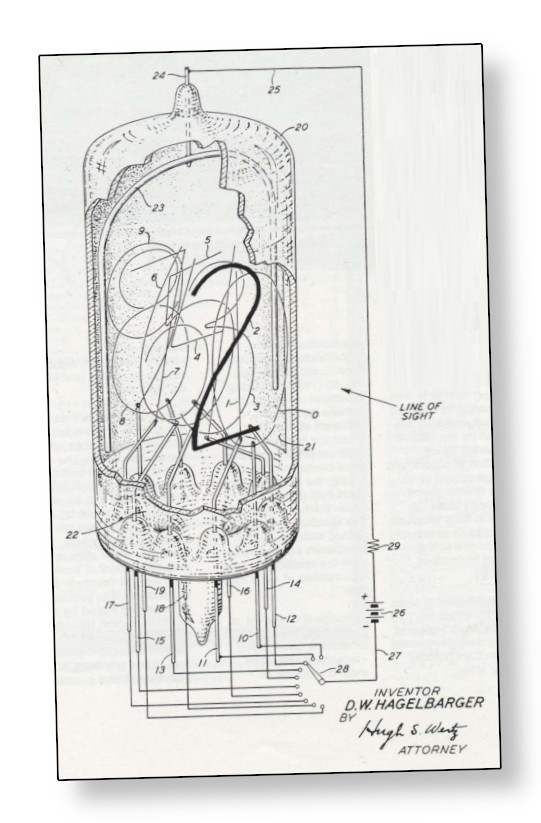
The tube contains an anode and ten cathodes shaped like the figures 0 to 9 inclusive. The tube is filled with gas and a glow discharge initiated between the anode and cathode that is to be lighted. The glow occurs as a sheath which covers the cathode. A glowing figure at the back of a group of cathodes is not obscured by the unlighted ones in front of it.
The tube was conceived as an output for a computer. It permits any one of ten well-formed figures to appear in one place. Nixie tubes were used in some early computers and calculators, Including the Anita, the first electronic calculator that is on display in the artifact Timeline on the fifth floor of the Museum.
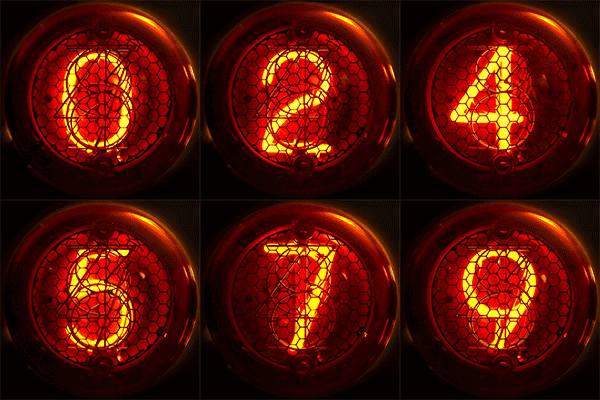
David Hagelbarger was not the first to take a swing at a display like this. Patent records show that several inventors created glowing displays. One was Hans P. Boswau, who created such a display back in 1934. However, the Nixies that much of the world knows today are derivatives of the David Hagelbarger creation.
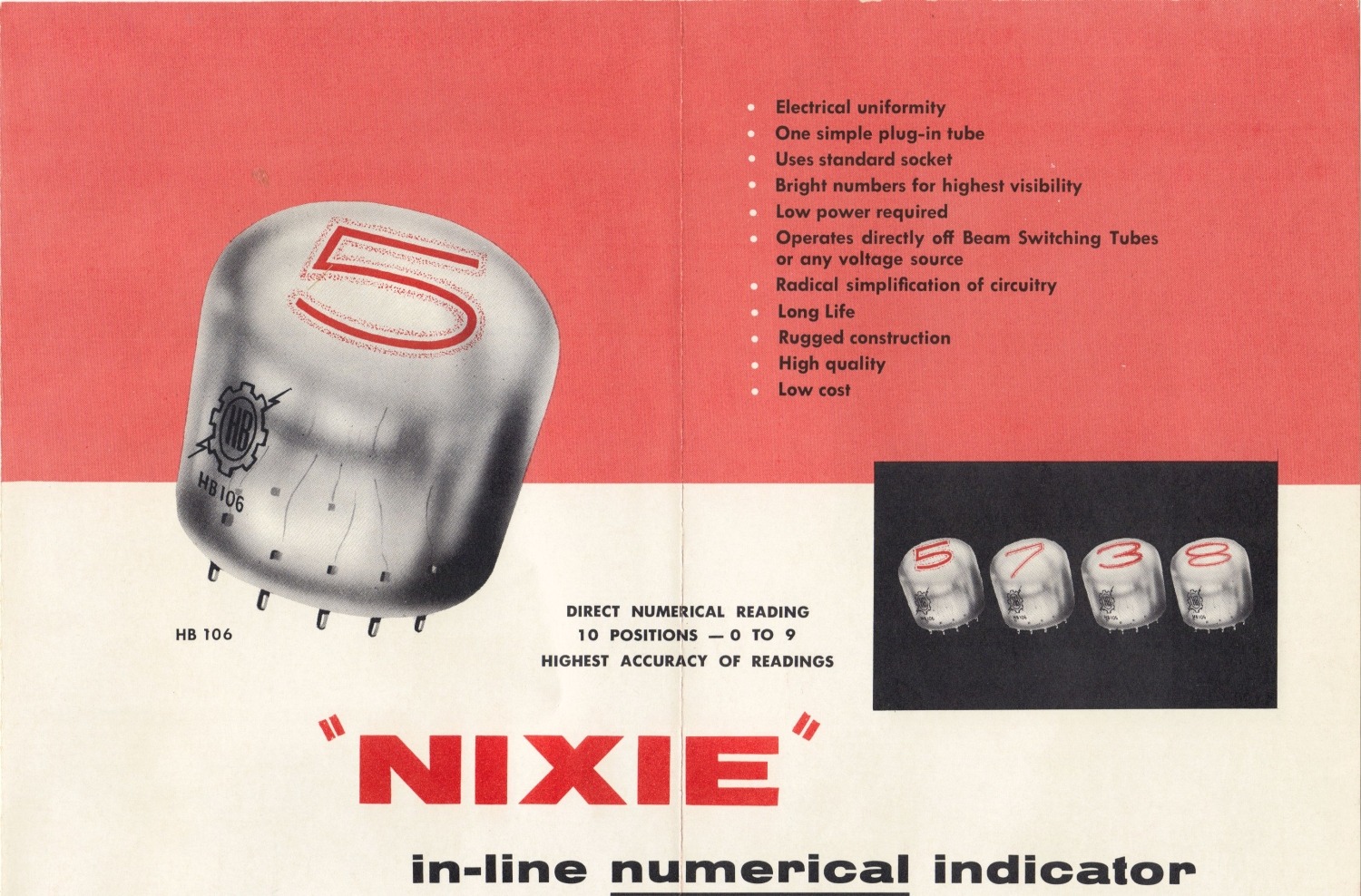
Early Nixies were made by Haydu Brothers Laboratories, a vacuum tube manufacturer that was purchased by the Burroughs Corporation. The Nixie tube was known as the “NIX I,” an abbreviation for “Numeric Indicator eXperimental No. 1.” The Burroughs Corporation would trademark its tubes under the Nixie name. Nowadays, “Nixie tube” is a generic term for any readout tube of the Nixie design, even if it wasn’t made by Burroughs. It’s sort of like how everyone calls all facial tissues Kleenex, even if they aren’t Kleenex-brand tissues.
Nixies used to be everywhere, from telephone switchboards and elevators to stock tickers and airport signs. Of course, they were in computers and calculators, too. Nixie displays enjoyed strong popularity for a couple of decades into the 1970s before technologies like the vacuum fluorescent display and the light-emitting diode replaced the Nixie.
If you came into Nixie tubes late, as I did, you might have been under the impression that Nixies were a Soviet invention and design, when they were actually popularized by American companies. This misconception could be because the former Soviet Union produced piles upon piles of Nixie-style tubes well into the 1980s at least. The Soviet Union made so many tubes that there are countless examples still sitting brand-new and unused, many decades later. If you buy a Nixie watch or Nixie clock today, chances are it’s going to have one of those old tubes. Genuine Nixie tubes aren’t made in significant numbers anymore. There are some shops that make small numbers of new ones, but they tend to go into the shops’ own devices. As Nixies become scarcer, they’re getting more expensive.

The Nixie Man
This brings us back to David Forbes. If you check the Internet today, you can find countless small shops and creators who will build you a Nixie tube watch. I have a gold Nixie watch (above) that a guy in Ukraine made me. Weirdly, I never really asked myself who invented the Nixie watch. I sort of just assumed they were probably always a thing.
This assumption was wrong. When David talked about his speedometer, he mentioned Steve Wozniak’s iconic Nixie watch. If you look at imagery from the early 2000s, Steve can be seen rocking a unique Nixie tube watch. I remember seeing these images when I was shopping for my own Nixie watch. David told me he was the one who invented and built Steve’s watch. Check this video out:
David is a self-taught electrical engineer whose dad was an astronomer who tinkered with electronics. David says his dad’s work on electronics likely rubbed off on him, and David started messing around with electronics at the early age of five. He worked on military computers and radio telescopes in his career, but, at least to me, it’s the work David does in his lab that’s the most impressive.
In a video with the Exploratorium Maker Faire in 2012, David talked about a time when his dad worked with graduate students at a university, and one student had a late 1950s-era Accutron Spaceview watch. What was unique about it was that, unlike every other watch, this one worked through a tuning fork. The watch hummed rather than ticked due to the nature of the tuning fork. This planted an idea in David’s head that watches didn’t have to be so normal. Here’s the video:
Later, David met a man involved with the FidoNet bulletin board system computer network. It was then that he discovered the Nixie clock. It was delightful, but also hilariously impractical, as the Nixies in that clock needed around 200 volts to illuminate. By David’s own admission, there are perhaps a million better and more practical ways to tell time. But the Nixies were interesting and looked awesome. This is also when David was introduced to the idea of using an oscilloscope to tell time.
David’s world changed in 2001 when his son got cancer. He stopped making computers for the military and decided to make fun clocks instead. David made awesome Nixie and oscilloscope clocks, and his son got better, too. He learned that he’d rather use his skills to build objects that made people happy, rather than objects designed to cause harm.
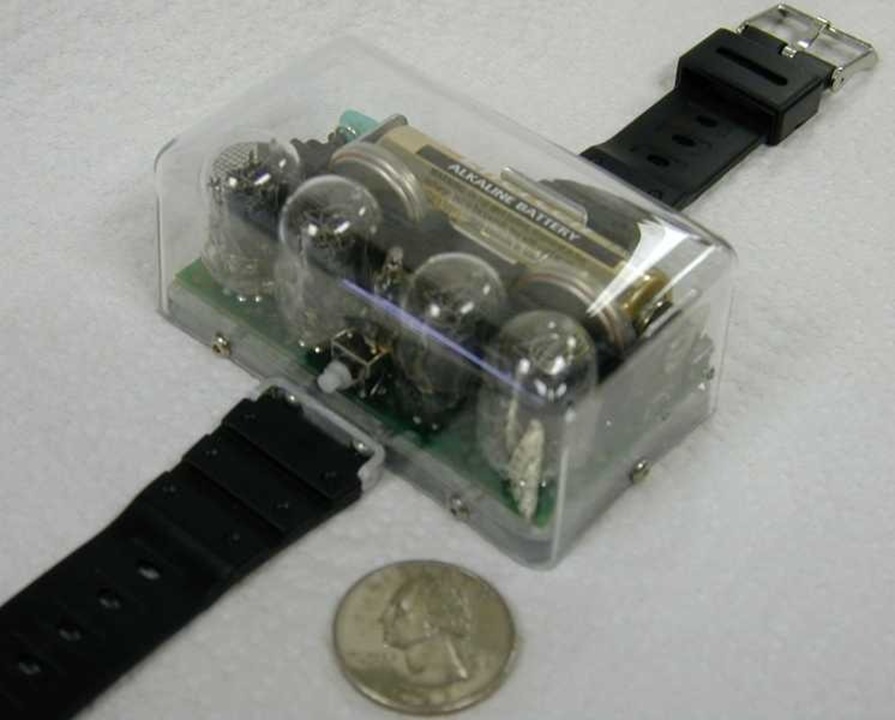
David would later meet Jeff Thomas, a man who took a Nixie clock and strapped it to his wrist. This looked awesome to David, but the watch was massive. David continues with how he turned this idea into a true wearable watch:
I got out my defunct Fluke 8100B nixie DVM and took out the B5870 tubes. (Don’t worry, I put them back in!) They seemed just right for making into a very small clock. I found that I could fit two tubes and a camera battery in a pretty small space, about 1-1/2 inches square. Four tubes would make a pocket watch sized clock. A microcontroller like the 68HC705J1A that I used for my scope clock looked like a good fit. I discussed this in email with Jeff, and he thought it was a fine idea. He provided some information about what his customers wanted to see in a nixie watch, and I referred to that list when doing my design. I seem to have gotten everything except the year-long battery lifetime accomplished, although it took me a few years to squeeze it all in there.
In March I made a prototype PC board nixie clock with four tubes, a little LT1308A switching power supply, the HC705 and a 74141 Nixie driver chip. It worked, but the CPU wouldn’t run at 32 KHz like I wanted for power savings (I found later that only one special unobtanium version of their HC705 CPU runs at 32 KHz). I ended up switching to a PIC16F872 chip, which had a good low-power 32 KHz operating mode. I also switched to TD62083 high-voltage cathode driver chips. Both these parts were available in tiny TSSOP packages suitable for a wristwatch.
I built a breadboard two-digit watch circuit using DIP parts and the power supply cannibalized from the four-digit clock prototype. I spent a fair amount of time developing the software and the power control hardware. The power supply ended up being current-regulated rather than voltage regulated, which saves power since no anode voltage-dropping resistors are needed. Some software tricks were used to get the multiplexed display to be flicker-free with a measly 8192 instructions per second.
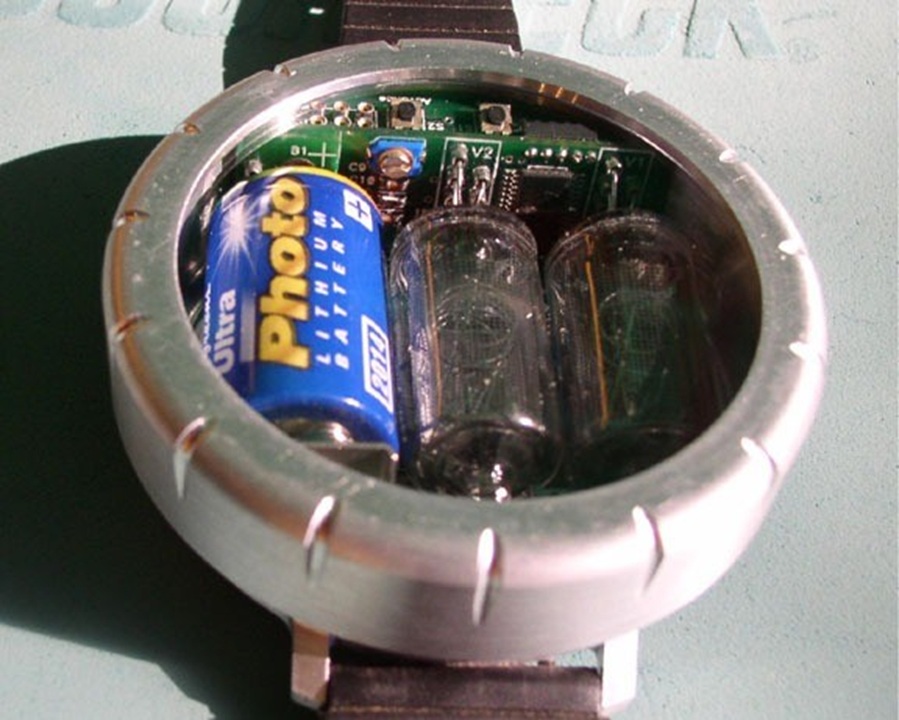
When David’s Nixie watch displays time, it gives you hours and minutes separately. Since Nixies aren’t exactly efficient, the display isn’t on all of the time. Instead, David used a tilt sensor to trigger the Nixies briefly when you twist your wrist.
Eventually, Steve Wozniak found one of David’s watches in a computer museum, fell in love, and then bought one. Steve basically became David’s celebrity salesman.
David still makes Nixie watches today, and the Nixie watch has become such a trend that creators all over the world have taken David’s idea and made their own interpretations. The watch I own is pretty much a clone of David’s idea, right down to the twist to display function.
Nixie All The Things
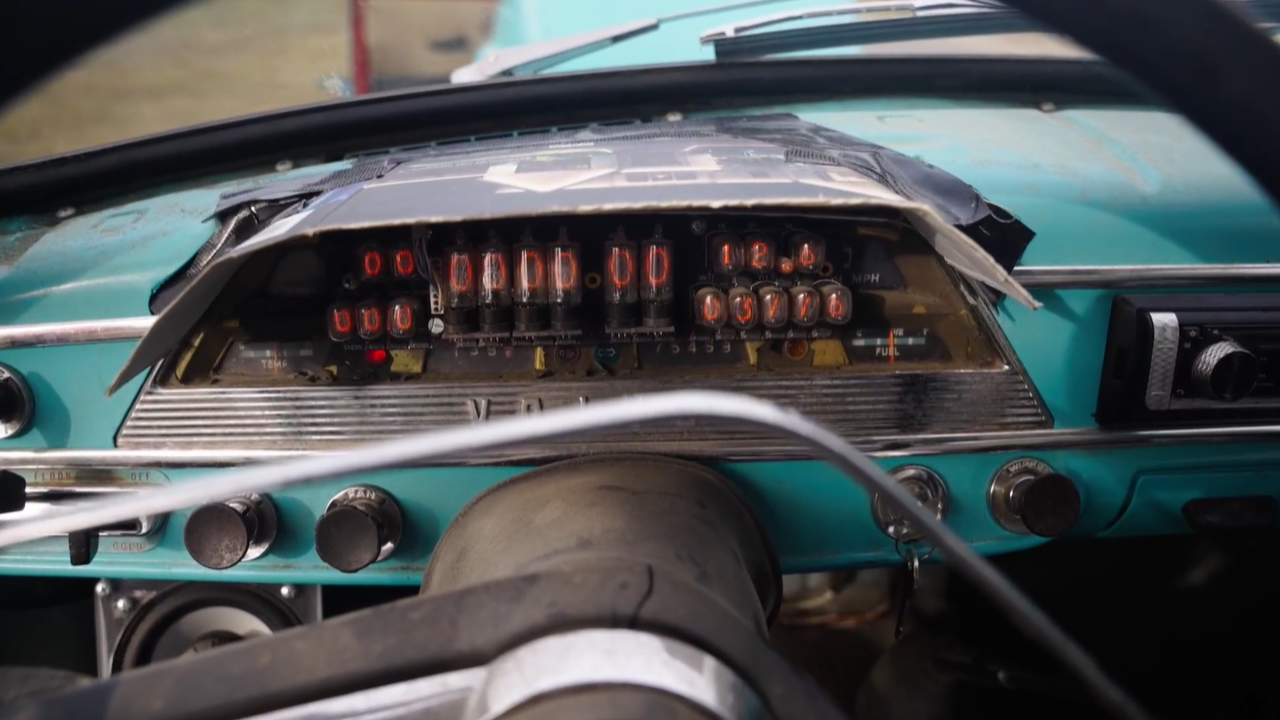
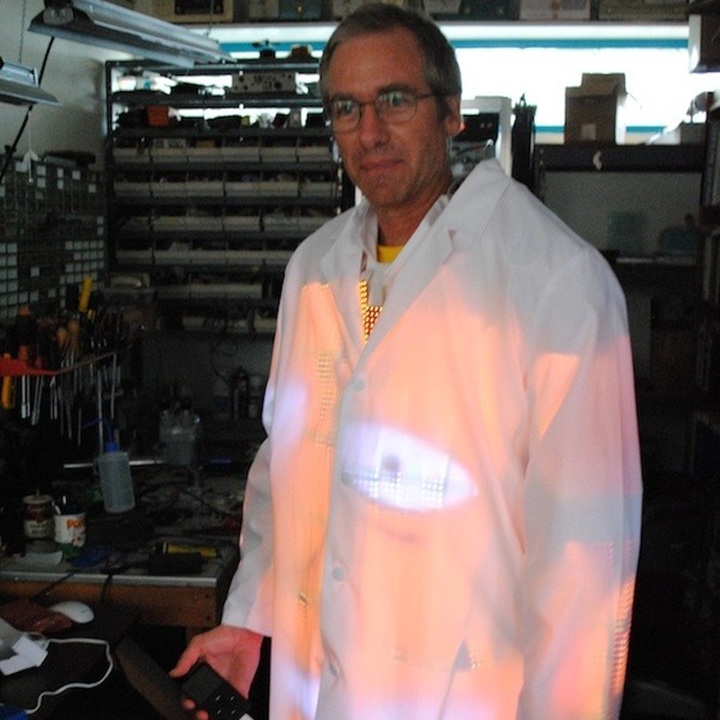
David made other fun gadgets, too, including a coat that’s a giant video display and the Nixie tube speedometer. David loves his old Volvo, and he has seemingly put Nixies in everything, so a Nixie instrument cluster was only a natural progression.
The speedometer is really just more of that David magic from decades of programming computers and building Nixie devices. The tubes are attached to a custom board, which communicates with an ECU-like computer, which gets its inputs from the Volvo’s accessories. The computer interprets the inputs and dispatches them to the Nixies.
Crucially, David told me, his Nixie instrument cluster requires around 200 volts to run, just like those old Nixie clocks. That voltage is achieved through the use of a converter.

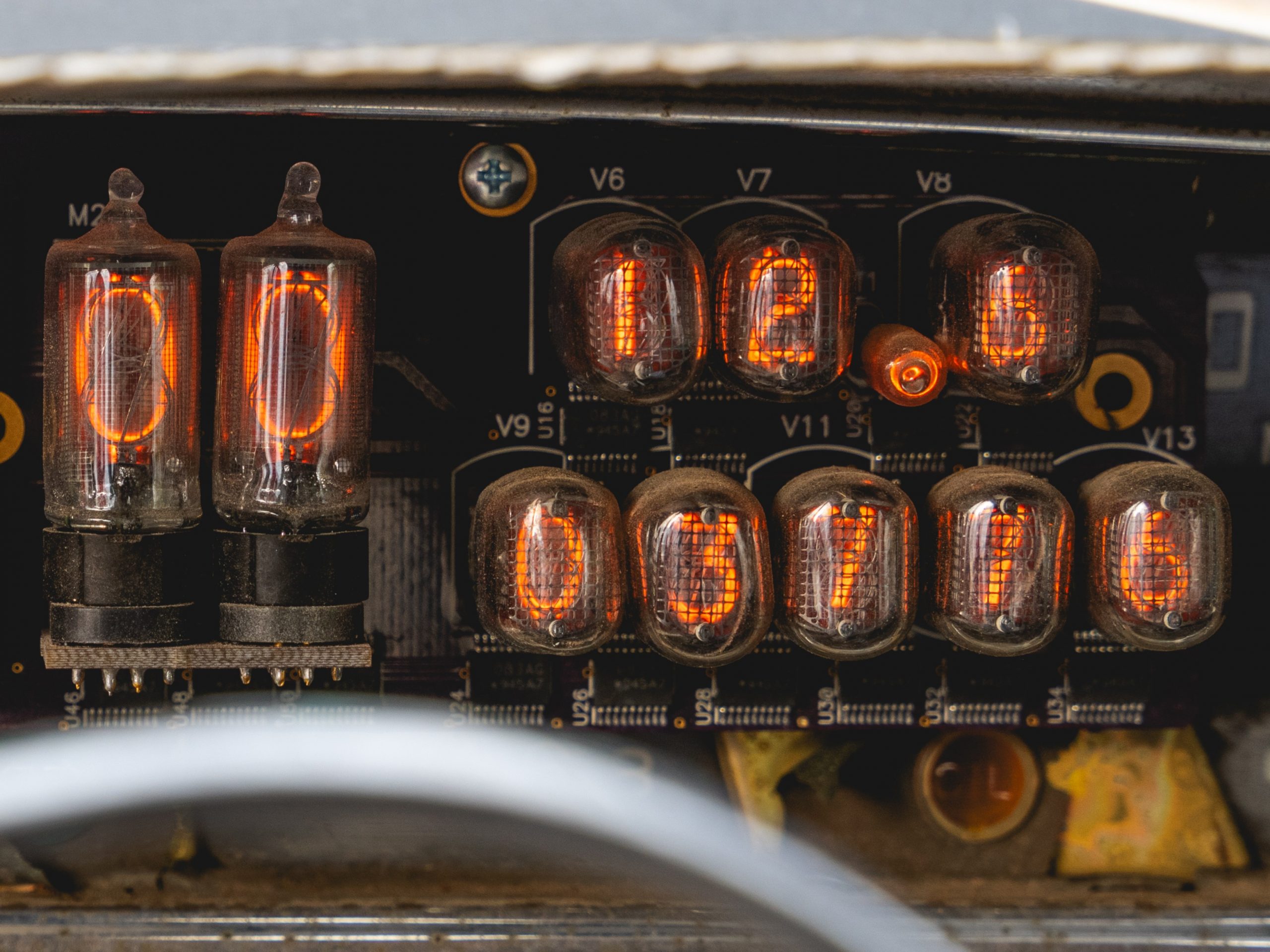
Here’s another close-up for your viewing pleasure:
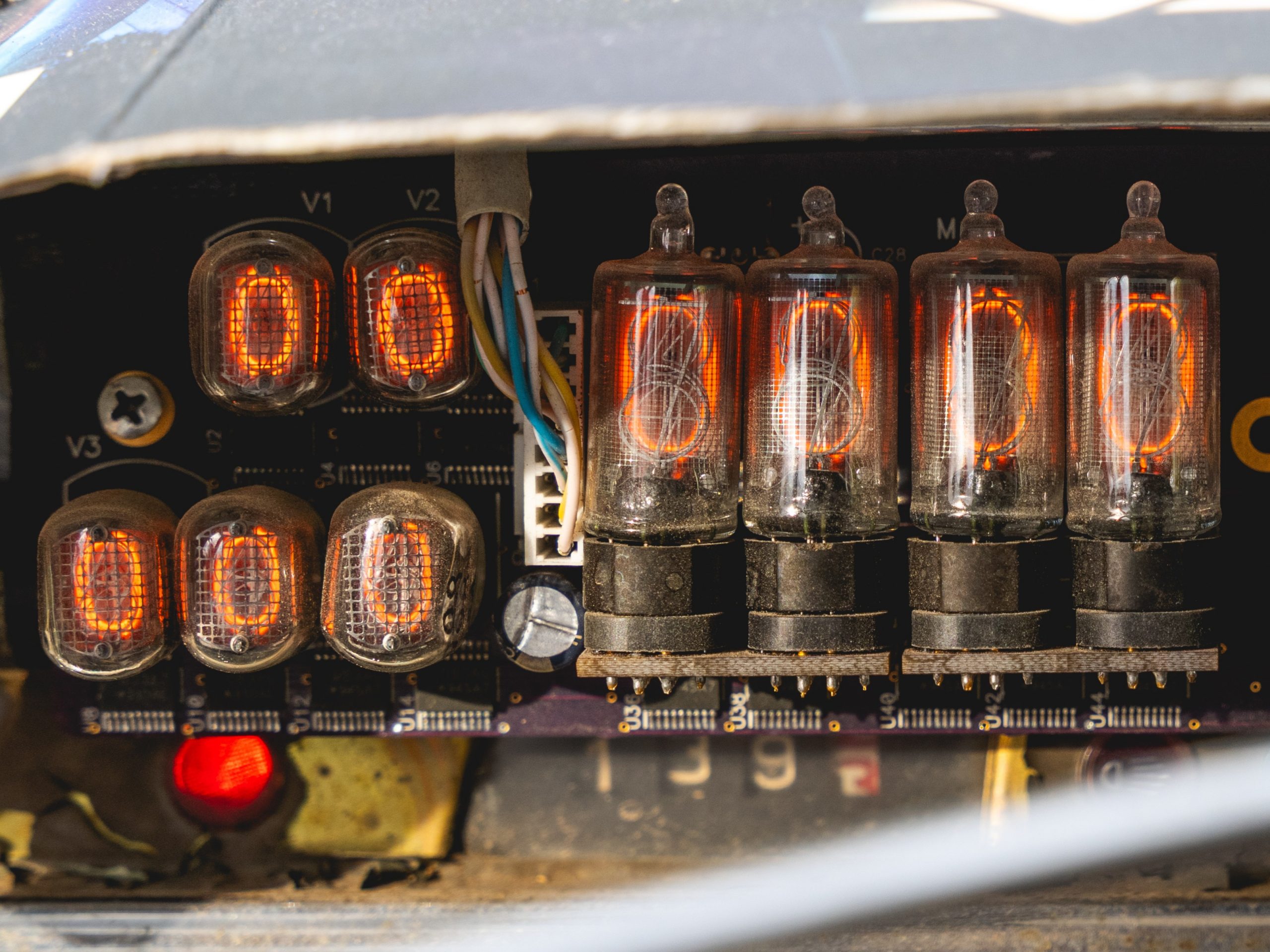
David says he made his Nixie speedometer a few years ago, and it is able to be transferred to different classic cars. Unfortunately, the Nixie instrument cluster is far more complex than the Nixie watch, and he says it would require an entire business and manufacturing facility to sell them. That said, if you want one of David’s watches, visit his website!
Technically, you could make your own Nixie speedometer, but it won’t be like David’s. In 2023, the website Nixies.us published an article on making a Nixie speedometer that doesn’t interface with the car at all and uses a built-in GPS to read speed. David made his instrument cluster before this one came around, and David’s is also more comprehensive, as it’s an entire instrument cluster. But if you have a 3D printer and some maker skills, you can make your own! A project like this is well beyond my skill set, sadly.
I stand by my claim that David’s Nixie instrument cluster is the coolest speedometer on the planet. The pictures just don’t do it justice. There was something about seeing the warm glow of the Nixies in person that just hit so right. Is it at all necessary or even practical? No, cars have had fine instrumentation since forever. But it is gorgeous, fun, and puts smiles on faces. I agree with David, every car should have the option for a Nixie instrument cluster.
Top graphic images: Mercedes Streeter; Griffin Riley




I’ve always wanted either a Nixie clock or watch, so seeing the whole gauge cluster is insane to see!
I’ve harbored an enormous fetish for Nixie tubes and old Volvos for ages, so this is right up my alley. Thanks Mercedes! 😀
Reproducing a Nixie dash for my old 240 wagon is beyond my abilities and patience level, but I’m glad someone did it. 🙂
I love the aesthetic for a vintage ride, but I suspect that car is 1 pothole away from having a ton of blown Nixie filaments.
I doth protest. The Coolest Speedometer of All Time is clearly the Gaz 21’s one. The transparent one.
Followed by the original Lexus IS’ dash (the TAG-like one), then everything else (MK4 Supra, C5 & C6 Corvette, and so on).
That link doesn’t work I think Gob.
Works for me.
Google Image search ГАЗ 21 СУПЕР САЛОН, look for the ones on a site called Drive2 something.
This is cool, but I’d love to see an IP that uses the little flippy displays that airport flight schedule signs used to have. But that would be really distracting.
1- 2 paragraphs in i say to myself- ‘this is mercedes writing.’ Correct again. Neat topic. 2- 1979 – the lab i worked in had these displays. The actual illuminated digit(s) was less obfuscated . 3- Didnt Genesis’ car radios have a similar display
I think in pre-production photos for a Hyundai/Kia/Genesis product there was a rendering using Nixie-style digits for the speedo on the LCD display. I remember that too, but can’t recall what model it was for. I don’t *think* it made it to production, but I could be wrong. In any case, it was just a *picture* of Nixie digits, not the tubes themselves.
I recognize the technology from the old days, but I never knew it had a cute name.
I have a Nixie clock I bought from David over 15 years ago. Keeps perfect time and it’s one of my favorite things. It runs all the time.
My wife gave me a nixie clock kit about 10 years ago, it still works fine, my favorite gift ever. https://pvelectronics.co.uk/
This is one of the cooler things I have seen in a long time.
The dashboard will also serve as a hand-warmer in winter!
I’ve had a passing interest in Nixie tubes – and vacuum tube tech in general – since I was old enough to know what they were. This, however, is a level far, far beyond me. I’m frankly impressed.
I can’t get over David Forbes and the illusion of weird bikini tan line showing through his lab coat. *shuddering like a Ford Focus with a PowerShift dual clutch transmission*
That dash is absoluteky fantastic, as is the Lincoln Mark VIII in the goup photo. Woof.
I bought a kit to make a nixie clock that’s a about 4 inches by 2 inches, and the only place I could get the tubes was from Russia, via Ebay. I think 4 of the were like $50-60 at the time.
My uncle had a rally computer in his car with a Nixie display; It would display the current time, the distance traveled on the current stage, the remaining distance, and the time remaining until arrival at the destination, and how fast you should be driving to arrive at your destination on time. The time remaining would, of course, be continuously running backwards.
Once he stopped for lunch near the Capitol in Sacramento and left the computer running, he noticed many local and state police, the FBI, and then the bomb squad gathering in the parking lot. It wasn’t until the police evacuated the restaurant so that they could blow up the Porsche in the parking lot that he realized that the computer had be mistaken for a bomb.
Anyway, it seems that the general public associates Nixi tubes with bombs for some reason, so take that into account if you Nixi-fy your dashboard
Eventually, he had one of these on his dashboard, which still got unwanted attention
https://web.archive.org/web/20160503081101/http://www.timewise.us/products/798a.html
Yeah, I do not fly with my Nixie watch for that reason. It does sort of look like a tiny bomb.
Fantastic story. I now know what I am getting my brother for his birthday!
Hot dang, that is rad af.
That dash is just awesome, as is your Nixie watch! Nixie tubes are one of those things I’ve been fascinated with for some time and love to see them show up in unexpected places. They fit that Volvo to a T. I could also see them fit well into some of the crazier Virgil Exner designed cars of the early 60’s.