

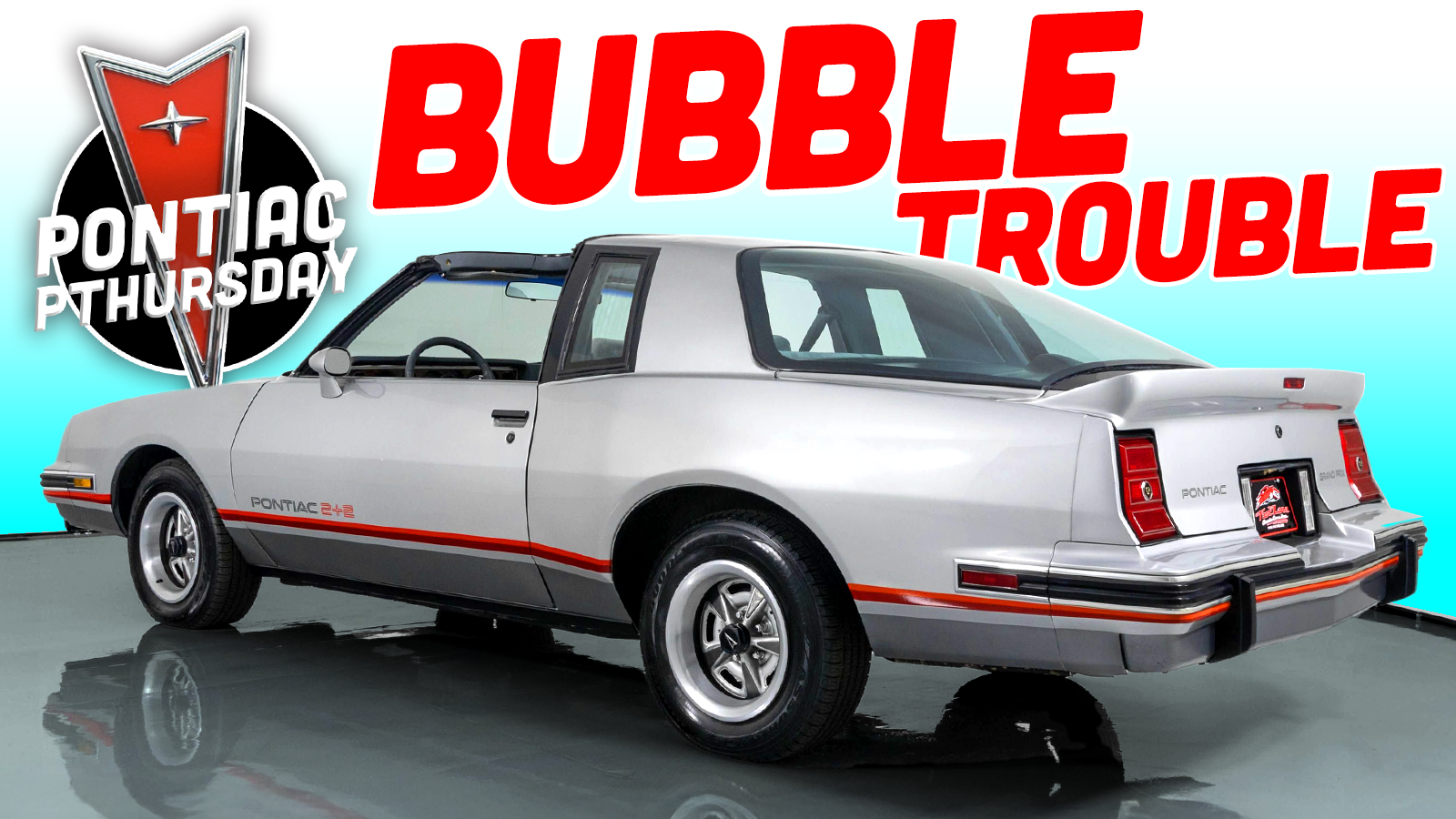
Nobody really wants one entity to dominate in any sport; even if it’s your favorite team or player, nothing but wins can get dull pretty quickly. In motorsports, it’s far worse when only one brand seems to succeed, leaving little incentive for other car makers to invest in racing.
That was basically the case with NASCAR in the mid-eighties, when Pontiac and the other General Motors nameplates were unable to compete with a radical new design from a rival Ford. The answer was an eleventh-hour homologation special that improved GM’s fortunes on the track but resulted in a highly compromised street version that only a hard-core Pontiac NASCAR fan could tolerate, much less love. Let’s look at the rare and unusual 1986 Pontiac Grand Prix 2+2 Aerocoupe.


Joe Dirt Never Could Have Afforded One
Homologation specials have always been a thing in racing; a short run of production cars with special go-faster modifications that could then be legally incorporated into competition vehicles. NASCAR let brands go all out with this idea in the late sixties; make just 500 or so examples of some spaceship to homologate it, and you could go racing. Thanks to this rule, Ford lapped superspeedways in 1969 at velocities approaching 200 miles an hour with the Torino Talladega.

Chrysler countered with the legendary and almost absurd Dodge Charger Daytona and Plymouth Superbird, employing ultra-pointed noses and giant rear wings.

When Ford tried to hit back with the drop-snoot Torino King Cobra, NASCAR had seen enough. With speeds reaching dangerously high levels even by racing standards, officials decided to heavily restrict such ultra-slick homologation specials to lower displacement motors, effectively banning them from the series.

After this, homologation specials pretty much disappeared from NASCAR. Chrysler went from ruling the track in 1970 to losing out when their 1980 model year coupes turned out to be aerodynamic duds. This change forced Richard Petty to switch over to Pontiac to run a more aerodynamic Grand Prix on the track. To be less aero than the blocky thing below is really saying something.

The GM G-body cars like this and the Monte Carlo raced successfully at the beginning of the decade, but in 1983 something came along that blew everything else off the table and made GM concerned. Very concerned.
This Bird Can Really Fly
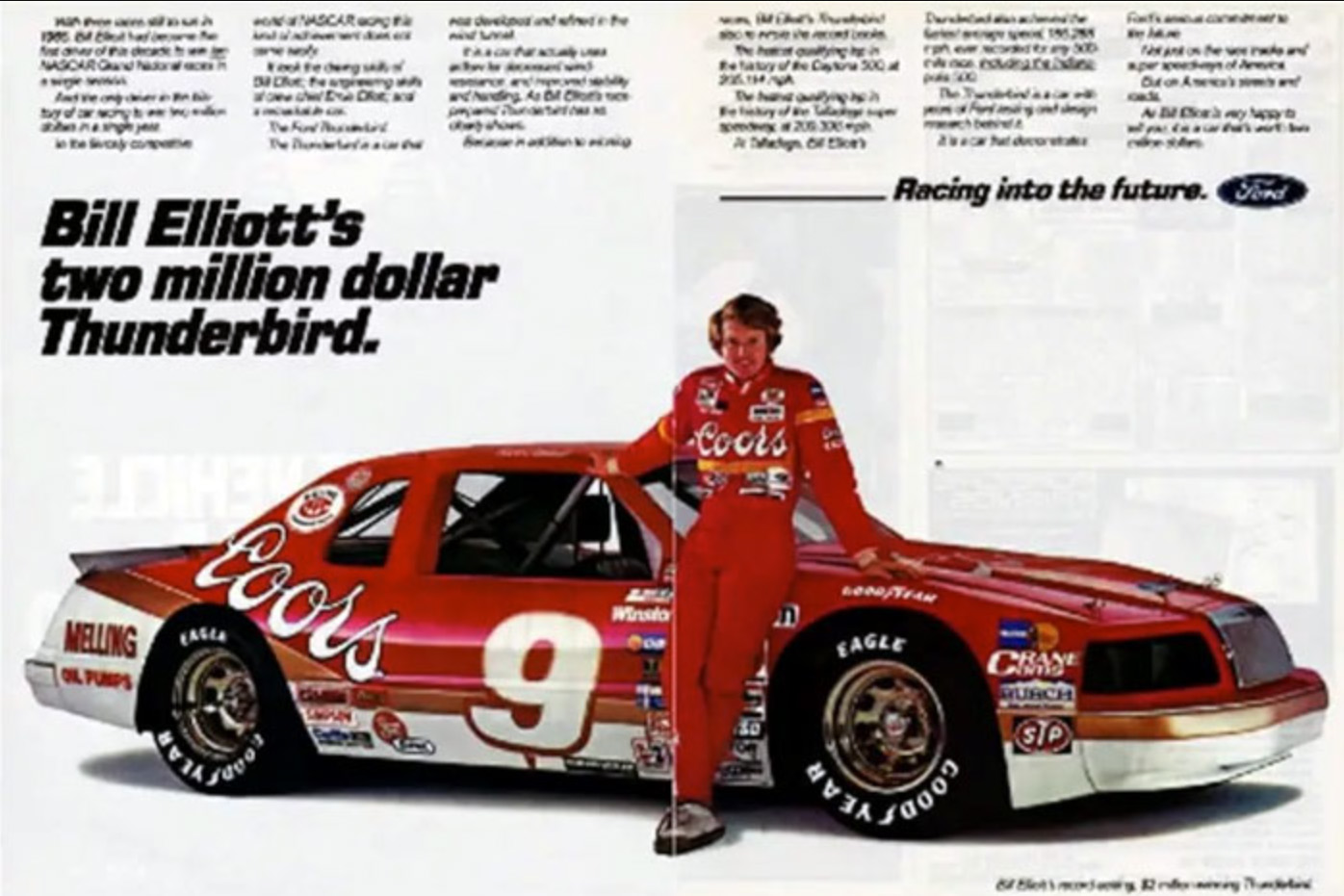
Mass market aero cars used to be a very tough sell in America, as proven by the failure of the Chrysler Airflow and the fact that you could almost count the number of Citroen DS models sold here with your fingers. This cautionary tale made it seem unlikely that a wind-cheating personal luxury car would ever succeed in middle America, so when Ford launched their jellybean-shaped, ninth-generation Thunderbird in 1983, many skeptics expected it to flop.
The aero ‘Bird did not flop. Sales improved tremendously over the boxy 1982 model, though people continued to purchase a whole bunch of G-body Monte Carlos, Cutlasses, Regals and Grand Prix as well. While the slick new T-Bird might not have killed the GM coupes in the sales race, it did entirely decimate them on the racetrack.

General Motors had massaged the shapes of their new-for-1978 coupes a bit for the 1981 model year, but the cars still couldn’t achieve the speeds of Ford’s “aero Bird” and, even at lesser velocities, the lack of rear downforce made the GM machines a handful to drive. NASCAR must have decided to loosen the reins a bit on their hard-nosed stance against homologation specials, probably because if not, they would risk having a single-make field of cars as teams had no choice but to jump ship.
The solution for aerodynamic improvements that General Motors employed was very similar to the one that Mopar employed a decade and a half before: smooth out the box. Unlike the nearly identical Dodge and Plymouth superspeedway champs, however, for some odd reason the two GM brands that decided to make homologation specials – Chevy and Pontiac – took almost entirely different approaches.
Put The Brick In A Rock Tumbler
Pontiac’s version of the would-be Bird fighter started as a standard Grand Prix and was sent to a place called Auto-Fab for its aero upgrades. Homologation specials are typically highly anticipated pieces that collectors quickly snap up to enjoy or put in a bubble to preserve for the ages, but the 2+2 turned out to be a rather polarizing if not straight-up disappointing product.

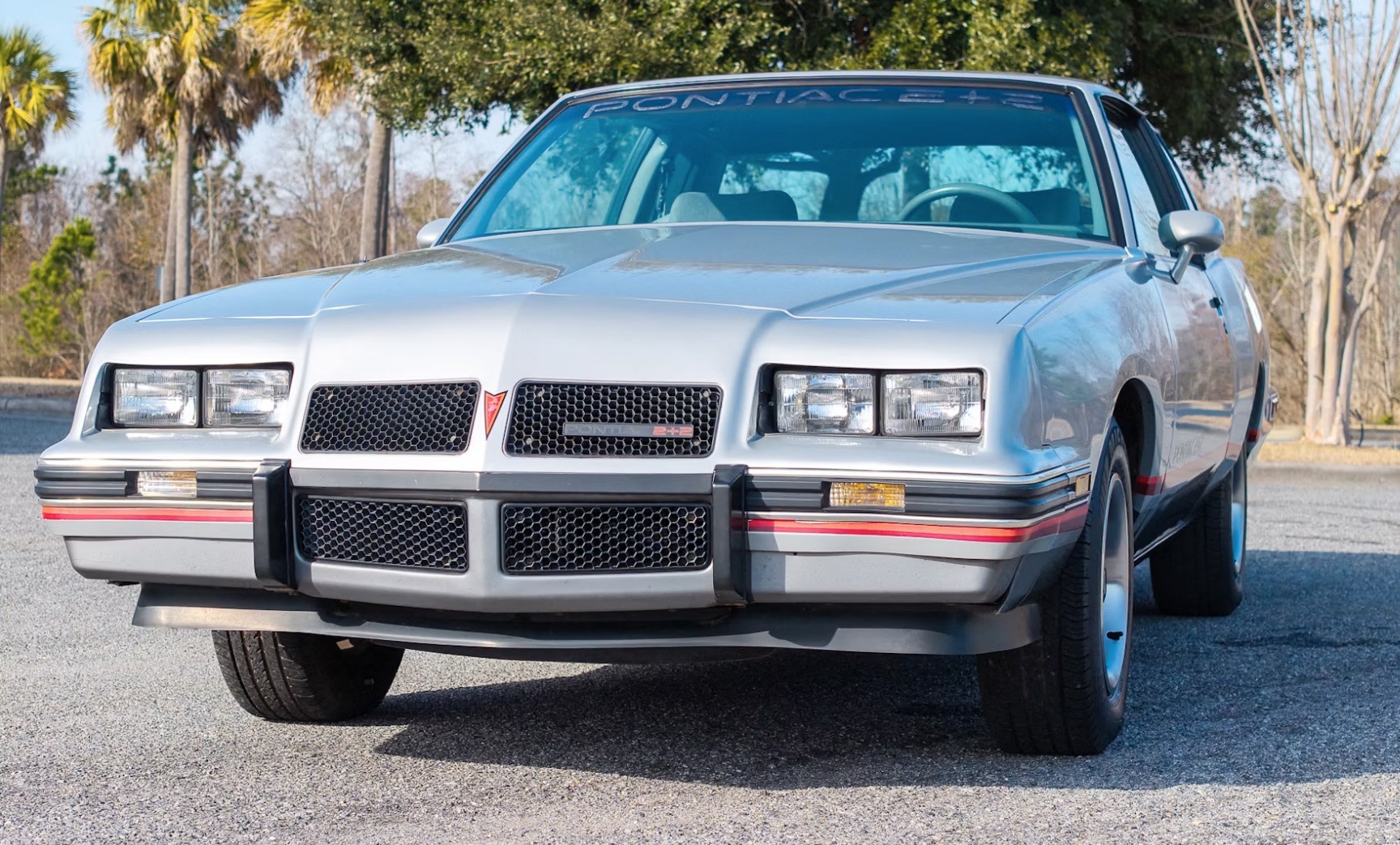
Up front, the blunt nose of the standard Grand Prix was replaced with a smoother panel that tried its best to make the nose appear more elongated than it really was. Obviously, Pontiac didn’t pop for composite headlights on this low-volume coupe. That poor nose of the example seen here is starting to warp after four decades.
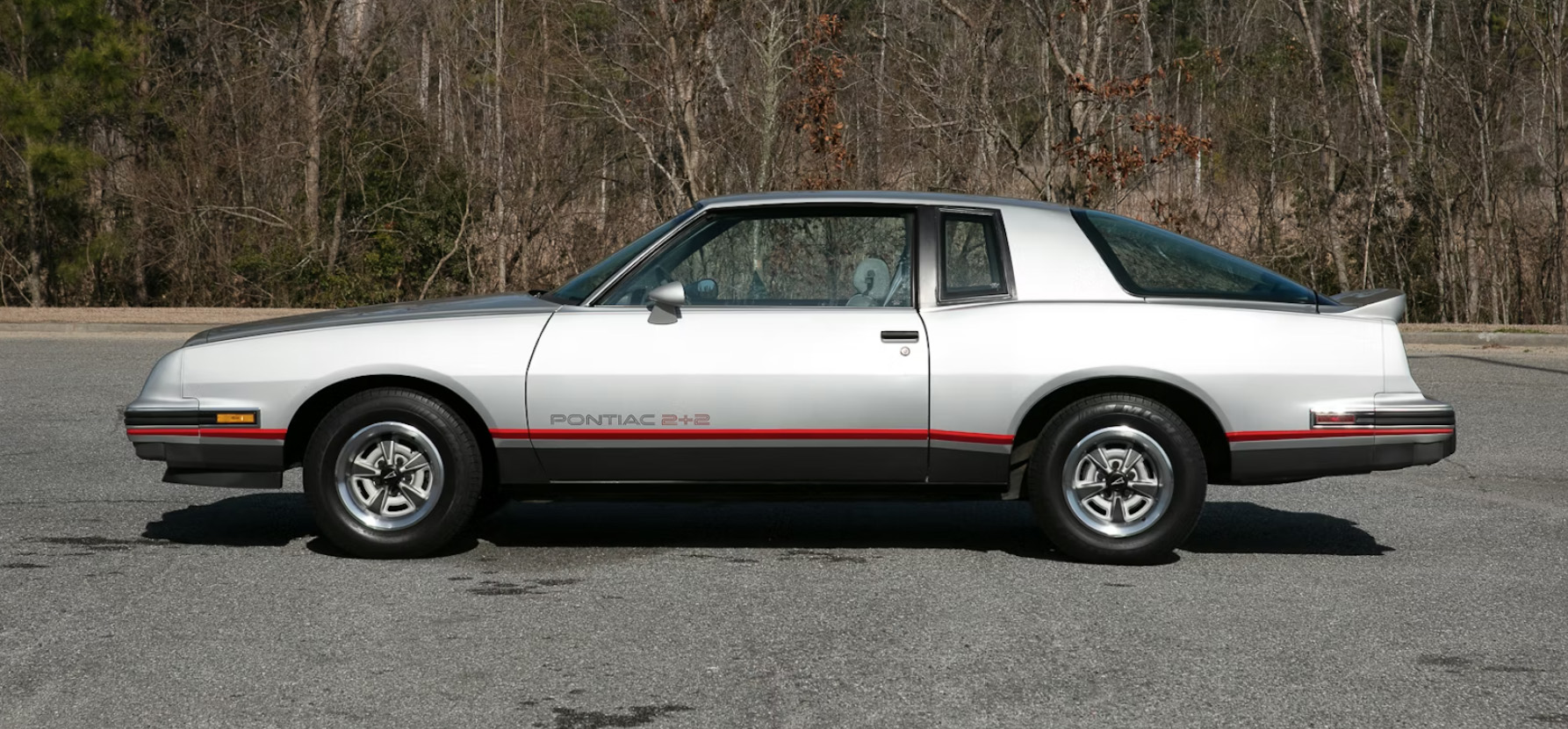
In back, the “formal” roofline and flat decklid that were apparently killing the GP on the high banks were replaced by an enormous glass backlite and new fiberglass trunk lid with spoiler.

All of the Auto-Fab 2+2s were painted in the same two-tone silver with red accent stripes. The aero modifications did the job intended, dropping the drag coefficient of 0.453 to 0.368. This made for a much, much better race car with higher top speed and far more controllable handling.
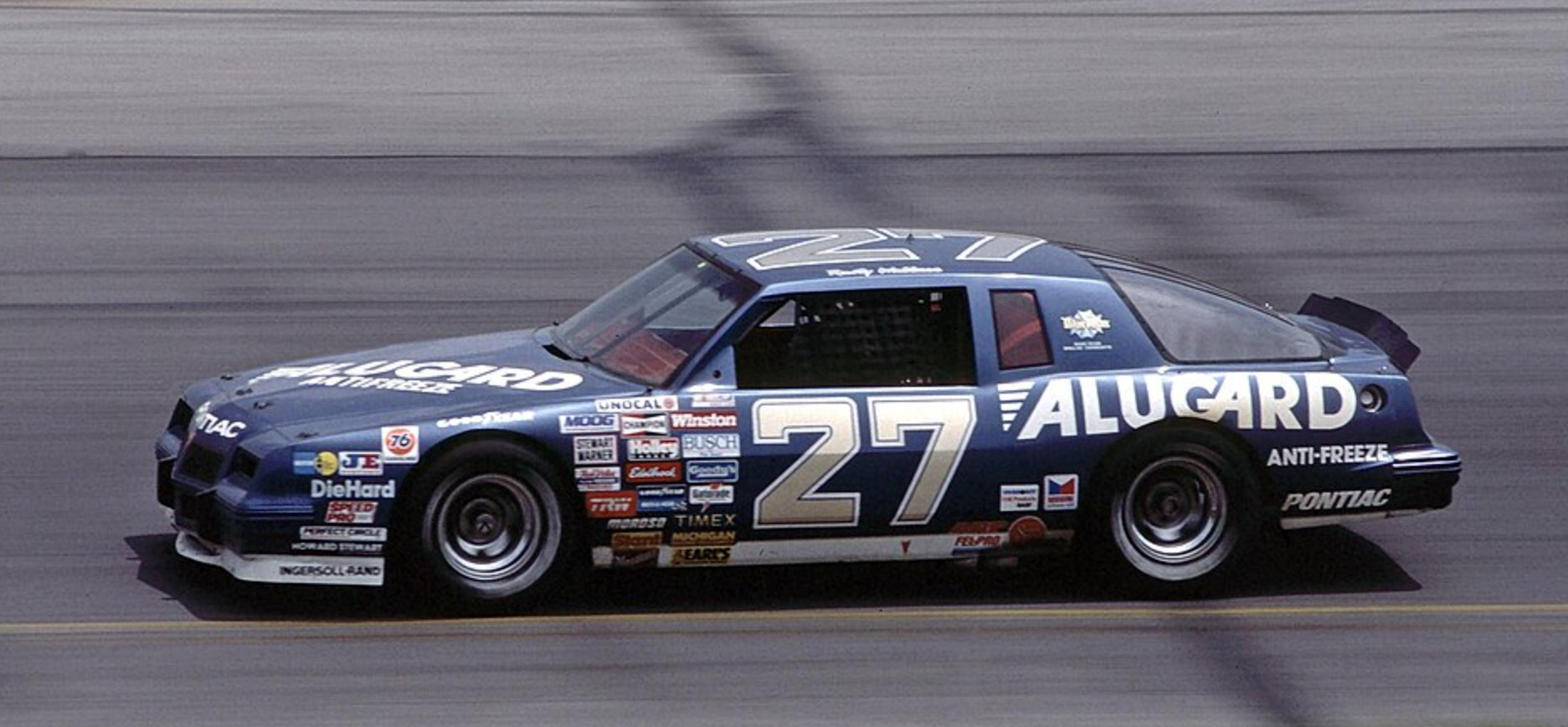
And yet, the car didn’t come close to dominance on the track. The 2+2 scored only two victories in NASCAR, results that might be attributed less to the car and more to the skills of the legendary Rusty Wallace driving in both wins. While the 2+2 was a middling success at the races, as a street car it was close to being an outright failure.
Wait, That’s The Only Part That Opens?
Off of the track, the first issue with the roadgoing 2+2 was the styling, especially to those who never really liked something akin to a boattail Buick Riviera (which was much better resolved). With the oversized rear glass and rounded nose, the 2+2 looked a bit too much like what it was: a boxy old personal luxury car with aero add-ons. Today, it’s kind of charming in its oddness, but back in the day it just seemed a bit silly for a car that ended up costing over $18,000, or about $7,500 more than a standard Grand Prix.
Another issue is the 2+2 offered no real performance increase over the stock Grand Prix. Now, the Charger Daytona had a motor you might get in a non-homologation model as well, but back then we were talking about high-horsepower Hemis. In the 2+2’s case, the stock motor was a 165 horsepower 5-liter V8, hooked up to a mandatory four-speed automatic. That’s it. You got a slightly tighter suspension, but it was the same one you got by checking that box on a standard GP.
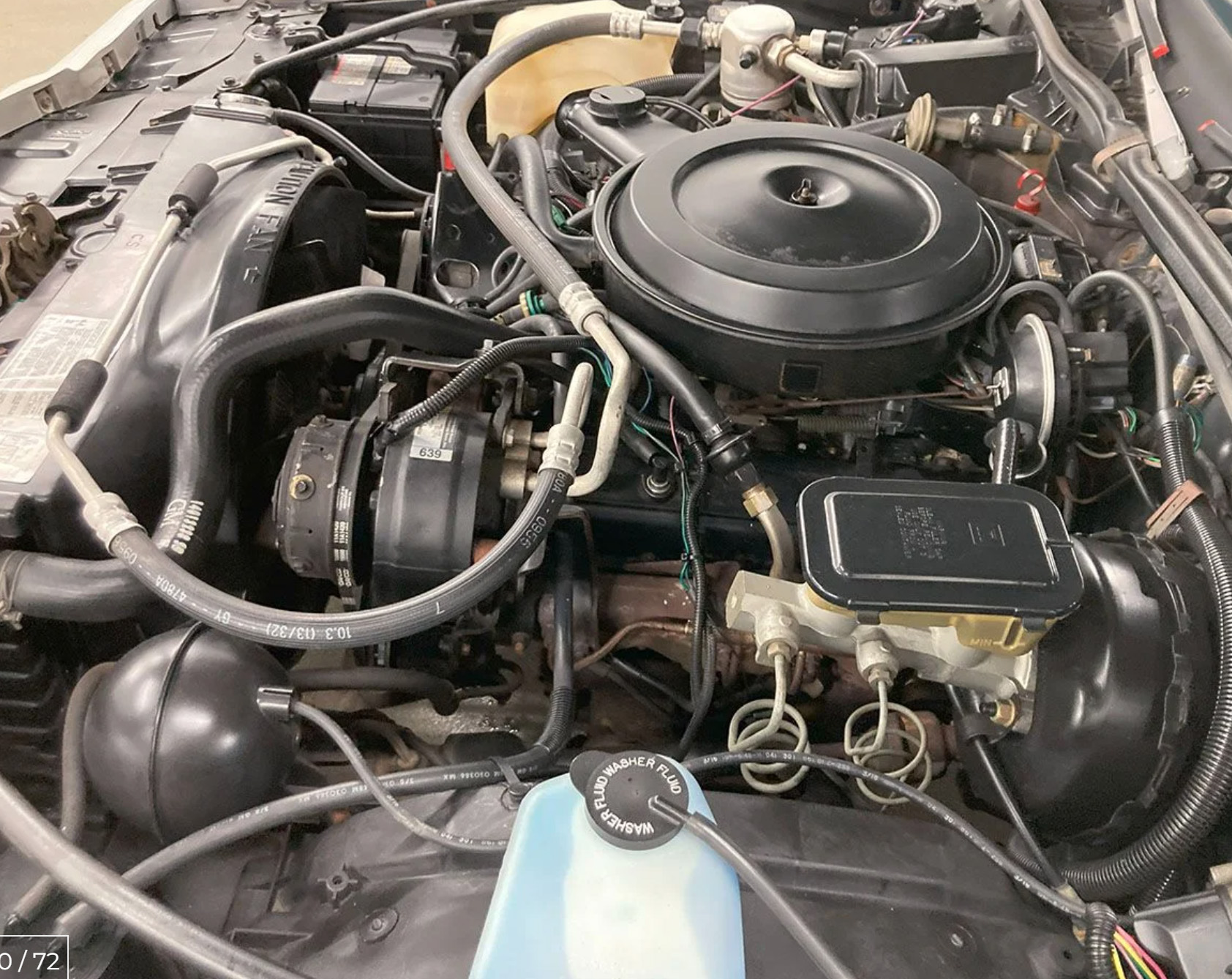
Now, don’t get me wrong: the G-body coupes like the Grand Prix were some of the most durable and reliable cars GM ever made. Rivaling the bulletproof B-body full-size cars, they were far more maneuverable than those Caprices and Parisiennes. They rode well and handled better than you’d think for a Malaise-era mid-sizer. My aunt had a ’79 model and claimed it was the favorite car of all the cars she’d owned over forty-plus years, but such praises speak to the qualities of a car for transportation to bingo and bible studies, not a high-performance coupe. Again, for the price you’d be better off getting a Trans Am or even a regular Grand Prix for less money.
The interior also came in for criticism, being essentially the same all-stock Grand Prix design that hadn’t changed in eight years, complete with chromed window switches and ultra-fake-looking woodgrain on the dash-of-many-circles.
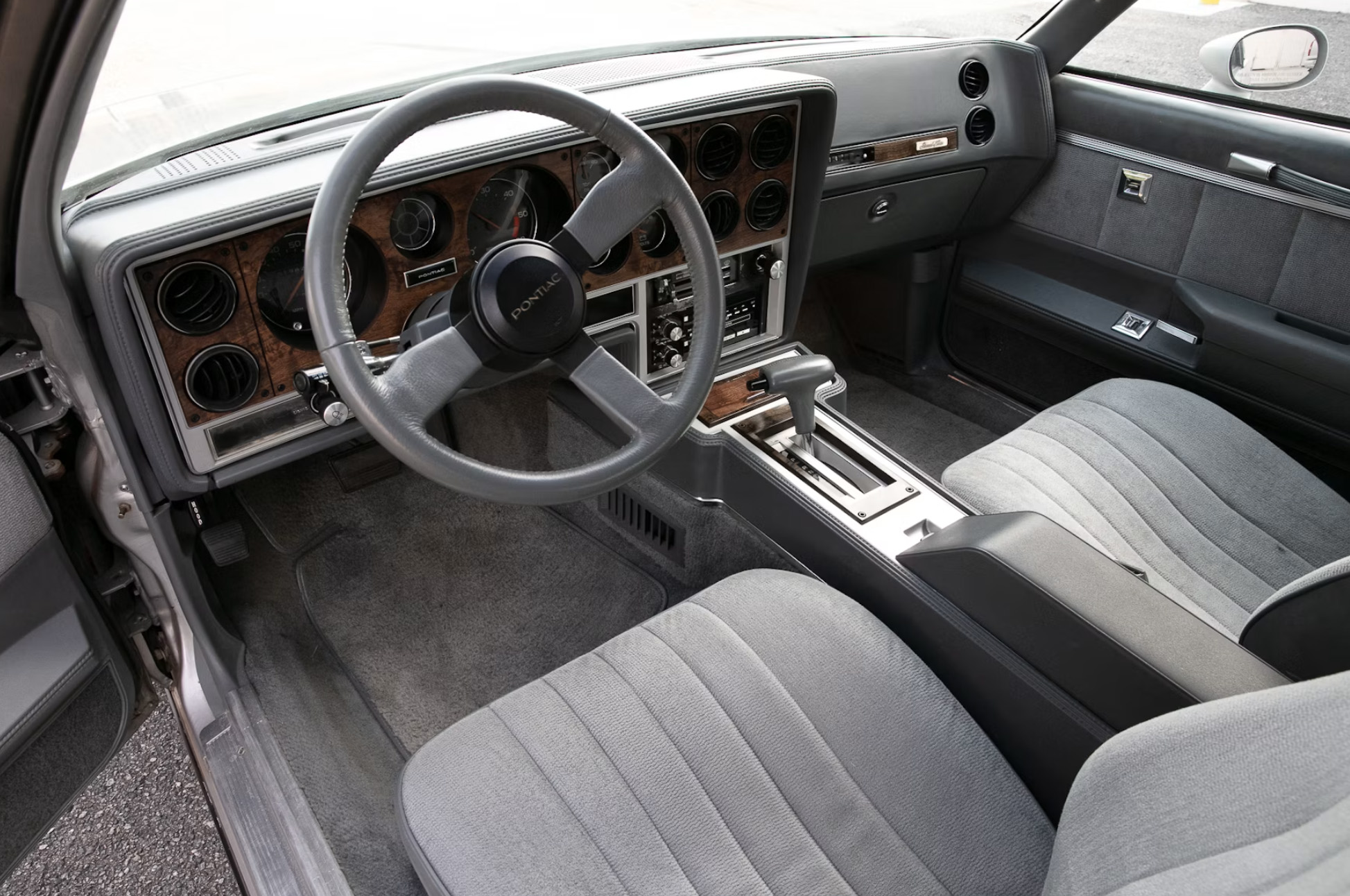
At least you got a tach and a floor shifter, hence the PONTIAC blocker plate where the column shift indicator usually is.

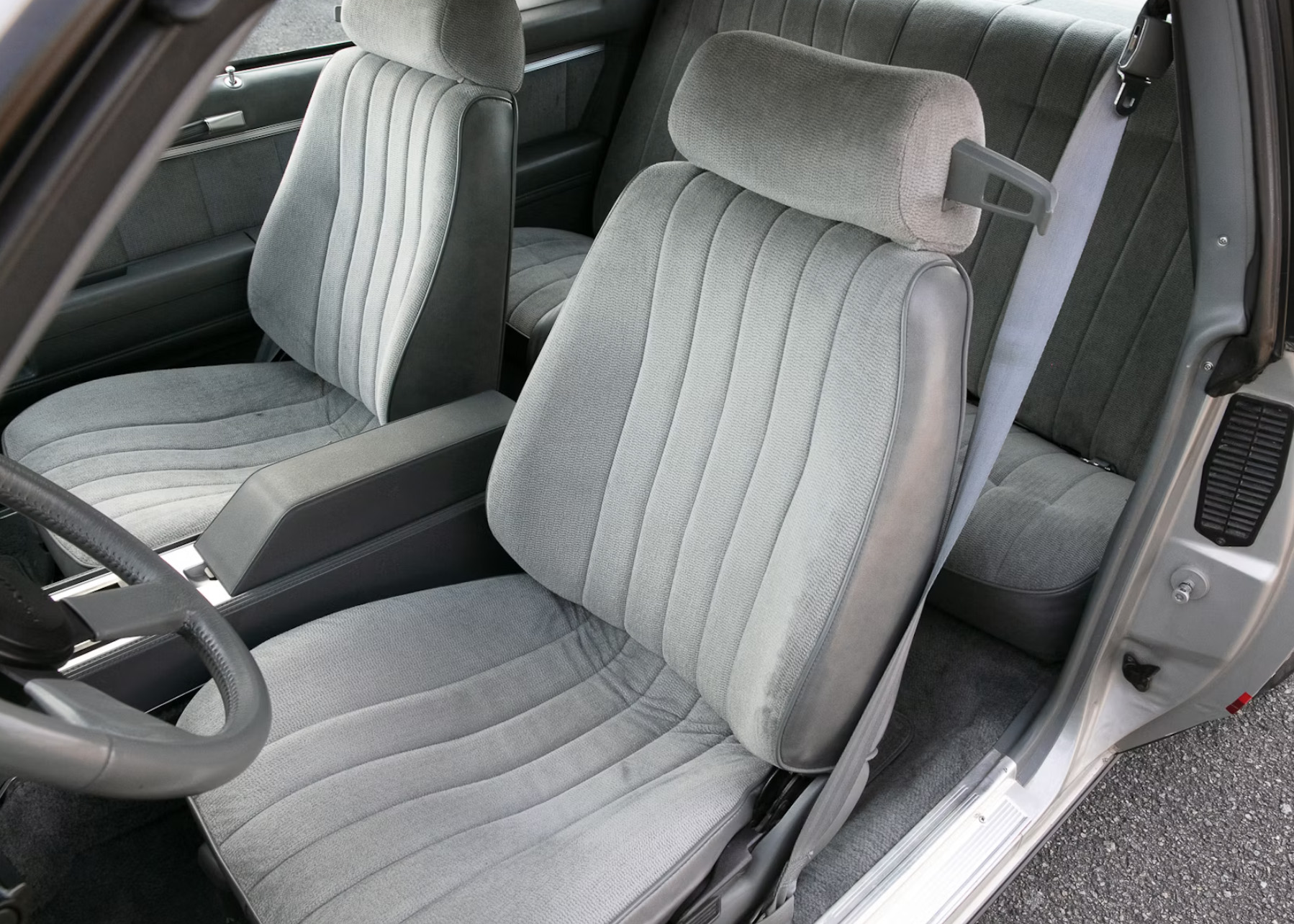
Bucket seats were the infamous ones seen in any number of Pontiac cars. They looked OK at first glance but would kill your back after half an hour or so.
But the biggest problem with the 2+2 modifications to the Grand Prix was that rear bubble. When I first saw a 2+2, I was excited with the possibility of a giant Saab-like American hatchback that could swallow cargo like nothing before, and wondered how they were able to engineer such a large hatch on such a small production run of cars.
I didn’t wonder for long. No, that big glass bubble was fixed in place for all time. The only access to the 2+2’s trunk was through a comically small opening behind what little remained of the Grand Prix’s trunk lid.

The trunk itself was just as spacious as the original car, but as one publication said, loading luggage was like putting an elephant through a mail slot. You couldn’t even get a full-sized spare in there.

Did Pontiac at least give you a fold-down rear seatback? Forget it.

All that big glass window did was distort rearward vision, allow the sun to bake the interior, and kill all of the practicality of the Grand Prix coupe. Reportedly, the 2+2 proved to be a tough sell for anyone other than the NASCAR faithful. A large percentage were sent down below the Mason-Dixon line in real rubbin’-is-racin’ territory, but that didn’t help the special Grand Prix’s predicament. A mere 1,225 2+2s found buyers, and Pontiac only kept it around for a single model year.
It didn’t have to be this way, as Chevy proved across town.
The Full Monte
Chevy’s approach to an aero special was far less involved and, ultimately, seemed to produce similar if not better results than the more complex and poorly received 2+2 – though arguably that was more by virtue of better NASCAR teams running the Chevy version.

The Monte Carlo Aerodeck was also created by an outside supplier (Cars & Concepts) and featured the rounded-off nose that was also used on higher-production SS models and was not as severe looking as the Pontiac’s “beak.” The bigger and better difference was that the Aerodeck’s rear glass still had a “fastback” profile to it but had the “hot wire” bend corners as on the 1977-79 Caprice and Impala coupes that seemed to fit the looks of the boxy car better than the rounded “whale back” of the Pontiac 2+2.
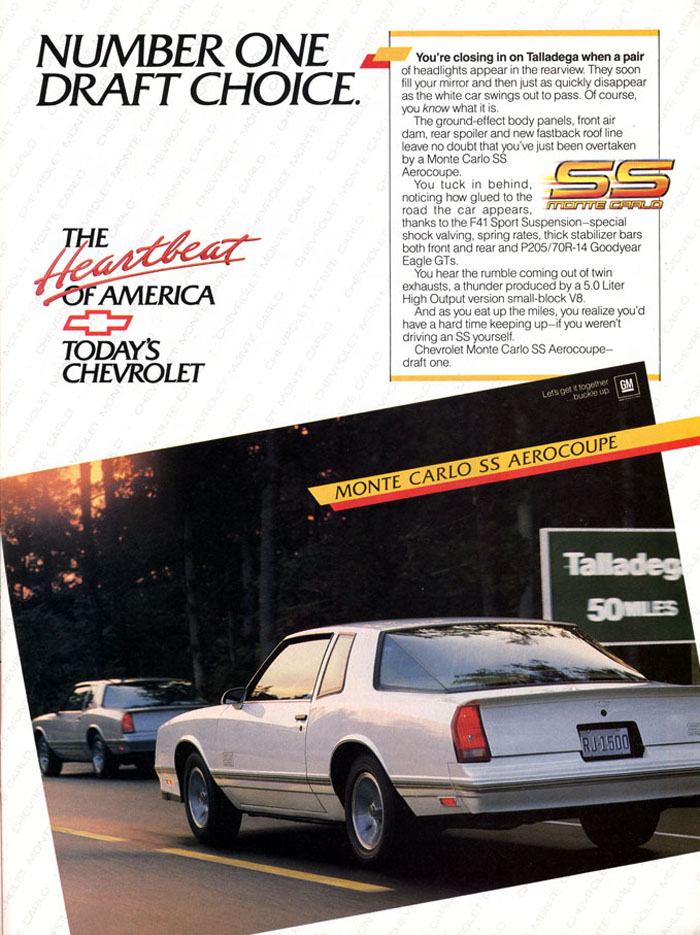
The best part about this glass window, however, was that it didn’t continue nearly as far back as the one on the 2+2. The trunk opening was smaller than the stock Monte, but at least it was larger than the Pontiac version and had less obtrusive hinges, allowing you to still use most of the trunk space.

The coup de grace for the Chevy over the Pontiac was the price; at under $15,000, it was more than $3,000 less than the 2+2 in 1986 dollars (back when $3,990 could have gotten you a whole Yugo). You could even choose from four different colors. Chevy had no problem meeting the homologation requirements, to say the least. Only the minimum 200 units were sold in 1986, but Chevy kept making them. A whopping 6,252 Aerodecks were sold over the two years that it was offered, and the track version scored 18 victories in NASCAR, including trips under the checkered flag by none other than the great Dale Earnhart.
2+2 Did Not Add Up To Success
In the end, GM’s homologation specials certainly saved the old G-bodies from embarrassment, but the aerodynamic Thunderbirds still proved hard to beat. This was, of course, the years of Bill Elliott’s dominance in the sport that got Ford fans all aflutter. It was only when GM released the more Taurus-like Lumina coupe and front-drive Grand Prix that they really had an even footing with Ford in NASCAR.
Today, the rarity and NASCAR pedigree of the 2+2 has not translated into strong appreciation. Exceptional low-mileage examples can sell for upwards of $30,000, but typically they change hands from between $9,500 and $20,000; not exactly an increase over the $18,200 sticker price in 1986.

The Pontiac 2+2 was not the success that Pontiac had hoped for on the track and certainly not in the showroom, but as one of the last truly unique NASCAR homologation specials, it holds a special place in Pontiac lore and racing history in general. For better or worse, you won’t find more legitimate NASCAR pedigree at this kind of money.
Pontiac Points: 81/100
Verdict: Say what you will about sticking aero crap on Aunt Katie’s personal luxury car, but Pontiac didn’t take the challenge of the Blue Oval lying down. A valiant if highly flawed effort.
Top graphic image: American Muscle Carz




“A valiant if highly flawed effort” describes a lot of GM products in general, haha.
The father of one of my classmates in high school had the Monte Carlo version, black with the red trim and SS logos. It seemed to spend most of its time sitting in their garage. I rarely saw him drive it
Hello dear Bisp;
Coup de grâce means “stroke of mercy”, as in a deathstroke. Coup de gras, however, means “stroke of fat” – which may have been an intentional jab at porky American cars, in which case you have my admiration.
They were doomed from the get go.The body changes made the car look all out of proportion and that 307 was a dog of an engine.The Monte Aero Coupe made the 2+2 look like an ugly duckling and the horrible drivetrain didn’t help.They are lucky they only had to make 500 of them.I couldn’t imagine how you would find the rear glass if you have one that breaks.
A friend had a Monte Aerocoupe around the turn of the century. Raced it in one of the drag classes that wanted you to hit an exact time, I think 13.00, with almost stock tire sizes. With a tuned 305, it wasn’t close.
But boy did it sound good. Sounded nice, but it was a slow 20 year old GM, 20 years ago!
i never understood the point of hit this “X ” time drag racing.
Would a car hitting 12.99 win over one hitting 13.02 because it was closer to the target or going faster than the target was not allowed?
I think it’s inverse-Price is Right rules; closest without going under.
That’s called breaking out, go below your dial in, you lose.
Nascar should return to being production car-based so we get silly things like this.
All motorsports except single seaters and sports prototypes should.
Yeah, I didn’t realize how much I missed the fact that NASCAR used to actually be based on real cars.
The comical caricatures of cars that they race now is kind of silly. Either make it a production car, or just drop the facade and call it the Chevy NASCAR, Toyota NASCAR, etc.
Oh really? That’s a Camry? Which one exactly, ’cause that ain’t no Camry I’ve ever seen!
Improve the breed.
Race real Camrys.
+1 Even Germany’s DTM lost the plot in the 20-teens.
I would really rather watch bone-stock cars race against each other than these caricatures. Sure, put some non-OEM tires on them, but leave everything else alone.
And the only time I’ve ever come close to extracting anything close to what my car (a 2017 Accord) is capable of is avoiding some idiot who has decided to cross my intended path.
Race the real things on Sunday and sell on Monday. Or some day that week. That way, the homologation is already built in.
They call it a 2+2 but I clearly see 3 seatbelts in that picture of the rear bench. I sure hope someone got fired for that blunder.
2+3 just doesn’t have much of a ring to it.
I’m not sure if anyone else sold a 5 at that time.
BMW.
So Pthursday is now Pffff?
The GP was the ugliest G body by a long shot. The Aero SS was much better looking, but it seemed most people preferred the standard SS.
I remember in the mid ’90s, my ex’s grandmother was selling a creampuff GP V8 in old lady trim chrome bumpers and white paint with white vinyl landau roof and it sat for months at $800. IIRC, she let it go for $300. Even back then that was nothing, but they were so ugly that kids would apparently rather pay a couple hundred more for f’n K cars than drive that thing. Otherwise, I’m a fan of the more sporting variants of the G bodies.
Gotta disagree – Regal tops the cake for the ugliest G-Body. I owned one and I would have gladly traded for any other G-body.
If this is a 2+2, why do I count three rear seatbelts??
Since aerodynamics isn’t particularly important for street cars, I’d prefer to find a really nice example of the standard GP or Monte. Save some dough and not lose sleep over the potential for breaking the unobtanium rear glass. I think 81/100 is awfully generous.
Agreed on this!
Pretty sure this was the original issue with the Daytona/Birds as well, they were not hot sellers when new. NOW they are highly sought after, in part because they didn’t sell well when new:
The Superbird’s styling proved to be too extreme for 1970s tastes (many customers preferred the regular Road Runner), and as a consequence, many of the 1,920 examples built[16] sat unsold on the back lots of dealerships as late as 1972. Some were converted into 1970 Road Runners to move them off the sales lot
I also prefer the Road Runner and probably the only reason that I still like the Superbird as much as I do is because of how legendary it is.
I’m sure that if it was just as common as the Road Runner today I would see it as the undesirable ugly duckling even with the racing credentials.
I discovered them as 1/24th scale Jo Han model cars; and loved them for their sheer ridiculousness. I was like 8, and they seemed like the future, even almost 20 years after they were built. Also one of my favorite slot car bodies, and I was pretty excited about The King in Cars.
I was kind of surprised they never made an Imperial decontented but maybe under a Dodge name, called the Daytona or something. the imperials were junk because of lean burn and overoptimistic fuel injection quality, but the cars were better aerodynamically and they probably would have been a hit with the spoiler and a funky decal package. https://www.web.imperialclub.info/Yr/1981/Buddy/67_hillsracing.jpg
In the late-90s/early-2000s I had a coworker whose adult son was a big G-body guy. My coworker’s car was pretty unreliable, so her son would bring her to work fairly often. Normally he would roll up in a black Monte SS with a built 305/T5, but sometimes he would roll up in either his stroker silver Monte SS or his silver Grand Prix. I have always found the Monte Carlo Aerocoupe fascinatingly attractive, and casually mentioned how I liked them, only for him to respond that he had two! He had one Aerocoupe that was in immaculate shape with a 383 stroker in it, but the back window had been broken while sitting at a shop and finding a replacement window was a nightmare. He ended up finding a replacement window at a junkyard, only to buy a second, incomplete Aerocoupe that was also at the junkyard. I tried to convince him to sell me his second one, even though it was in parts and didn’t run, but I couldn’t afford the price he was asking. Still, I do love G-bodies.
I was a Ford guy at the time, and the Monte Carlo was the only G-body that I liked. Okay, the Grand National was pretty neat, but whoever designed the 80’s Monte Carlos is my kind of designer.
I like all the G-bodies, with the Regal my favorite, but the Monte is a winner too. Every day I drive by a ’83 Hurst/Olds rotting at a mechanic shop down the street and consider stopping to see if they would sell it. One of these days, when I suddenly and miraculously have the money, space, and time for a project G-body, I’m going to make that happen.
All the G bodies are nice,especially the last gen with the composite headlights.I always thought the Cutlass was the nicest.
I always found it disappointing that they didn’t find some way to put the composite headlamps that the LS had on the SS, but I suppose the SS front end made it too great of a challenge.
I have weak spots in my heart for late ’60s 442s and Chevelle SSs.
I have been in love with the 1970 Olds 442 W-30 since I saw one as a kid. I would love a Chevelle SS as well, but the 442 W-30….(chef’s kiss)
Yeah. 442s and Chevelles. Really great-looking cars. They would probably both be disappointing/scary to drive these days. But they looked and sounded great!
I passed my driving test in a ’65 Olds Dynamic 88. “Dynamic” does a lot of work there. Best 0-60 time I could get out of it (and I tried many times, with many techniques) was ~10 seconds. A 1986 Accord LX-i I bought could do the same thing but get 3x the fuel economy and actually go around corners.
The 2017 Accord V6 I have now still goes around corners and can get to 60 in under six seconds. I imagine V6 Camrys from then did about as well. How many vintage Ferraris and muscle cars could we dust?
My childhood dream car was a Mercedes-Benz 300 SEL 6.3 and my Accord is nearly a second faster to 60. Probably corners better. With all the airbags, safer too. For a fraction of the price.
I’m not quite sure what color the metal of the period we are in is, but it’s certainly not dull lead.
That is true. There are a lot of kits to make those old cars handle better, but they will never come close to the comfort or safety of modern cars (though, neither will they approach the complexity).
I learned to drive in my dad’s grey-market ’78 Mercedes 300S, though wisely used my mom’s mid-80s Subaru for the actual test because it was much easier to parallel park. It is sort of odd to think that both were considered rather quick at the time, yet the boring, cheap used EV I just picked up for commuting can attractive absolutely zero interest from anyone and run mid-11s in the quarter bone stock. The automotive world is definitely far more interesting these days than I think it ever has been.
Oh, I’ve been waiting for this one!
These (and the more attractive Monte SS Aerocoupe) were squarely on my radar when I became of driving age in the late 90’s. I knew about the Monte first, as a good friend who owned a Monte SS clone clued me in on those, but I later found out that Pontiac had their own flavor of these, and set out to find one, because I am that kind of weirdo.
Coincidentally, my dad and I stumbled upon one on the side of the road for sale. We stopped to look at it, soaking all the weirdness in. It had been modified, with a detachable Grant steering wheel and a “built” Chevy 350. It was slightly scruffy inside and out, and they wanted $5500 in 1998 money for it (roughly $11k now), so we got back in the car and left. It sat there for a couple of years before someone bought it.
Later in the early 00’s, I was working as a parts slinger at a local auto parts store, and a coworker had an aunt that had one sitting in her backyard that she wanted to sell. I again offered to buy it, but she “knew what she had” and wanted some absurd price for it, so I passed yet again. And it needed a rear window, which were unobtanium, even back then. And no, it’s not the same rear window as the Aerocoupe.
Shortly after, I bought a 1979 Trans Am instead, which I still have. That also sorta has a bubble of a back window. Same vibes, especially since mine was silver-on-red, but a better car you can actually get parts for.
It’s wild to me that GM even let these things out the door, and even crazier that they basically did nothing performance-wise to them at all. Such a weird footnote in Pontiac’s storied history.
The “crazier” part has bothered me for forty years. The fact that neither the Monte Carlo, the Cutlass, nor the Grand Prix ever got a TPI motor out of a Z28/Trans Am, not even for limited production homologation special editions, is still an unforgivable sin in my eyes. Same thing for the T-Bird. Ford absolutely cannot look me in the eye and tell me with a straight face that an “Awesome Bill From Dawsonville” signature edition with a Mustang 5.0 under the hood would not sell out on day one of availability, while not cutting into Mustang or standard Thunderbird sales one bit.
“Win on Sunday, disappoint your customers and piss them completely off on Monday.” I don’t think that’s how that phrase originally went.
Yeah, the ’86 plus ‘Bird should have had the MkVII/Mustang motor, not TBI.
The Tbird 5.0s did gain SEFI in ’86, but they weren’t High Output.
They did offer a MPFI 5.0 in the Cougar/Thunderbird twins starting in ’86 and ending in ’88. I had two 1987 Cougar XR7’s (coincidentally, right around the time I saw that 2+2 on the side of the road) and they both had one. Also had a family member with a 1986 Cougar LS with that same engine. But to be clear, this was NOT the 5.0 HO that was in the GT or the LSC. It was more similar to the 5.0 found in the Crown Vic/Grand Marquis. 150HP, no roller cam, and very gutless.
Although, if you pair that engine with 14″ pizza cutter wheels and tires and a peg-leg open rear (like in a 1986 Cougar LS), they will do endless burnouts on command until you get bored and/or pop the tire. Ask me how I know.
Yeah, I meant to specify: the Thunderbird got *A* 5.0, but not *THE* 5.0. As in, basically the one from the F150 or Crown Vic, not the one from the Mustang immortalized by Vanilla Ice.
I always thought these were really cool looking and t-tops! I remember a few years ago seeing one for sale on facebook and decently priced and debated about going to look at it.
I always found it odd that the Monte and GP aeros used different rear glass considering they started with the same original roofline.
I don’t believe the Aerocoupe name was ever officially applied to the GP 2+2, whereas it was on the Monte Carlo, but it’s become unofficially commonplace to apply the name to both.
The Monte Carlo was definitely not called Aerodeck. That name belongs to ’80s Honda Accord shooting brakes. And the Monte Carlo SS already had the aero nose before the bubble, so the conversion on those wasn’t as jarring.
It’s kinda surprising just how much autonomy each division of GM had even this late in the game. You’d think the Pontiac and Chevrolet modifications would have been identical. And that Buick and Oldsmobile would get their own version. But, no, different aftermarket companies with different aero solutions. And the Regal and Cutlass get no help.
GM gonna GM.
I honestly never knew the aeroback Chevy and Pontiac were completely different. I have seen a few aero Monte’s but the Pontiacs are rarer than hen’s teeth.
My choice of the G-body coupes was the Cutlass, followed by the Pontiac, then the Monte. These were becoming affordable for a working high school student by the early ’90s.
Never saw a Pontiac version, but there were several of the Monte Carlo version around here in the NASCAR South.
I always thought they were rather goofy looking, but then again, I’m not a NASCAR fan.
Didn’t know this existed — I’m glad to learn about it.
My goodness, it is a hideous sight. It looks like a not very well considered kit car, which, with only 1,225 units sold it rivals some kit cars in sales figures.
Hard to live with? Compare that to a big turbo Escort Cossie…
Glad to see that they used the same trunk opening stampings on the 6th gen Camaros, which also race in NASCAR, so the lineage could continue
I love how weird it is now, but I can totally see people hating it when it was new. That tine trunk opening is bonkers.
I was 7 when this was new, and I never remember actually seeing one of these in person The Aerocoupe SS wasn’t exactly common, but I’ve always been aware of them, I even had a neighbor when I was a kid who had one as a daily driver. IIRC, he had something like 300K miles on it, he used to drive back and forth from MA to Maine quite often.
My aunt had a standard Monte SS; she had well over 200K on hers too when she finally replaced it in the late 90’s.
everyone’s aunt had one. And then your cousin got it after that and drove it another 50,000 miles
G-bodys were thick on the ground in my late Gen-X youth. Everyone’s mom seemed to drive an A-body sedan at that time. I rode in countless Celebrities and Cieras as a child.
I was the cousin that ended up with my aunt’s ‘86 Regal. Dang I hated that car. I sold it for $3300 around 2001, I can’t believe what they’re going for now (although there was no way I would have held on to mine).
Bishop is right – They were uncommon and rare to see IRL.
They were most commonly seen in the parking lots of Military Bases and thereabouts – purchased with re-enlistment bonuses after heavy manufacturer discounts.
I didn’t know how rare these were around 1988 when I was 13, so it’s surprising that there was one that was street-parked in my neighborhood-used to pass it often when I walked my dog.
Most surprising was the neighborhood: super dense and crowded West New York, NJ, just across the Hudson River from NYC!
I’ve seen a few of them, but usually at shows where they were mostly ignored or people snickered at the looks despite the title card leaning against it talking about how rare it was. I think it might look even more awkward in person.
“…when Ford launched their jellybean-shaped, ninth-generation Thunderbird in 1983, many skeptics expected it to flop.”
Who predicted it would flop?
When I read about the new ‘Bird in the car magazines and news articles of the day – everyone was quite excited about the end of the awful boxy-baroque styling and the breath of fresh air that the new Aero Bird promised – particularly the Turbo Coupe.
The car the reviewers didn’t like? The Mercury Cougar – with it’s dumb vertical backlight, and upswept rear windows (Just Thunderbird rear quarter windows flipped upside down)