

Nobody really wants one entity to dominate in any sport; even if it’s your favorite team or player, nothing but wins can get dull pretty quickly. In motorsports, it’s far worse when only one brand seems to succeed, leaving little incentive for other car makers to invest in racing.
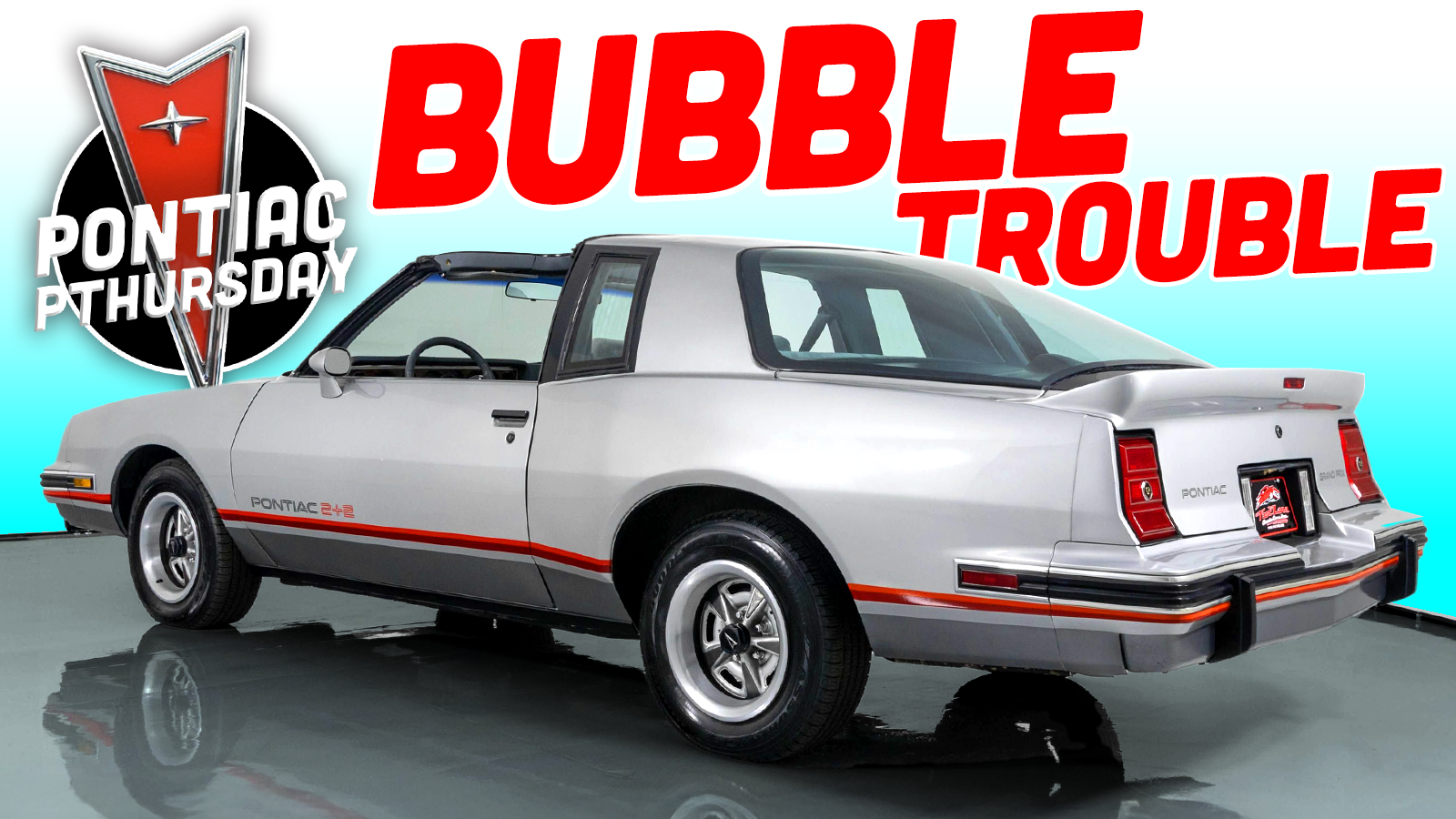
That was basically the case with NASCAR in the mid-eighties, when Pontiac and the other General Motors nameplates were unable to compete with a radical new design from a rival Ford. The answer was an eleventh-hour homologation special that improved GM’s fortunes on the track but resulted in a highly compromised street version that only a hard-core Pontiac NASCAR fan could tolerate, much less love. Let’s look at the rare and unusual 1986 Pontiac Grand Prix 2+2 Aerocoupe.


Joe Dirt Never Could Have Afforded One
Homologation specials have always been a thing in racing; a short run of production cars with special go-faster modifications that could then be legally incorporated into competition vehicles. NASCAR let brands go all out with this idea in the late sixties; make just 500 or so examples of some spaceship to homologate it, and you could go racing. Thanks to this rule, Ford lapped superspeedways in 1969 at velocities approaching 200 miles an hour with the Torino Talladega.

Chrysler countered with the legendary and almost absurd Dodge Charger Daytona and Plymouth Superbird, employing ultra-pointed noses and giant rear wings.

When Ford tried to hit back with the drop-snoot Torino King Cobra, NASCAR had seen enough. With speeds reaching dangerously high levels even by racing standards, officials decided to heavily restrict such ultra-slick homologation specials to lower displacement motors, effectively banning them from the series.

After this, homologation specials pretty much disappeared from NASCAR. Chrysler went from ruling the track in 1970 to losing out when their 1980 model year coupes turned out to be aerodynamic duds. This change forced Richard Petty to switch over to Pontiac to run a more aerodynamic Grand Prix on the track. To be less aero than the blocky thing below is really saying something.

The GM G-body cars like this and the Monte Carlo raced successfully at the beginning of the decade, but in 1983 something came along that blew everything else off the table and made GM concerned. Very concerned.
This Bird Can Really Fly
Mass market aero cars used to be a very tough sell in America, as proven by the failure of the Chrysler Airflow and the fact that you could almost count the number of Citroen DS models sold here with your fingers. This cautionary tale made it seem unlikely that a wind-cheating personal luxury car would ever succeed in middle America, so when Ford launched their jellybean-shaped, ninth-generation Thunderbird in 1983, many skeptics expected it to flop.
The aero ‘Bird did not flop. Sales improved tremendously over the boxy 1982 model, though people continued to purchase a whole bunch of G-body Monte Carlos, Cutlasses, Regals and Grand Prix as well. While the slick new T-Bird might not have killed the GM coupes in the sales race, it did entirely decimate them on the racetrack.

General Motors had massaged the shapes of their new-for-1978 coupes a bit for the 1981 model year, but the cars still couldn’t achieve the speeds of Ford’s “aero Bird” and, even at lesser velocities, the lack of rear downforce made the GM machines a handful to drive. NASCAR must have decided to loosen the reins a bit on their hard-nosed stance against homologation specials, probably because if not, they would risk having a single-make field of cars as teams had no choice but to jump ship.
The solution for aerodynamic improvements that General Motors employed was very similar to the one that Mopar employed a decade and a half before: smooth out the box. Unlike the nearly identical Dodge and Plymouth superspeedway champs, however, for some odd reason the two GM brands that decided to make homologation specials – Chevy and Pontiac – took almost entirely different approaches.
Put The Brick In A Rock Tumbler
Pontiac’s version of the would-be Bird fighter started as a standard Grand Prix and was sent to a place called Auto-Fab for its aero upgrades. Homologation specials are typically highly anticipated pieces that collectors quickly snap up to enjoy or put in a bubble to preserve for the ages, but the 2+2 turned out to be a rather polarizing if not straight-up disappointing product.

Up front, the blunt nose of the standard Grand Prix was replaced with a smoother panel that tried its best to make the nose appear more elongated than it really was. Obviously, Pontiac didn’t pop for composite headlights on this low-volume coupe. That poor nose of the example seen here is starting to warp after four decades.
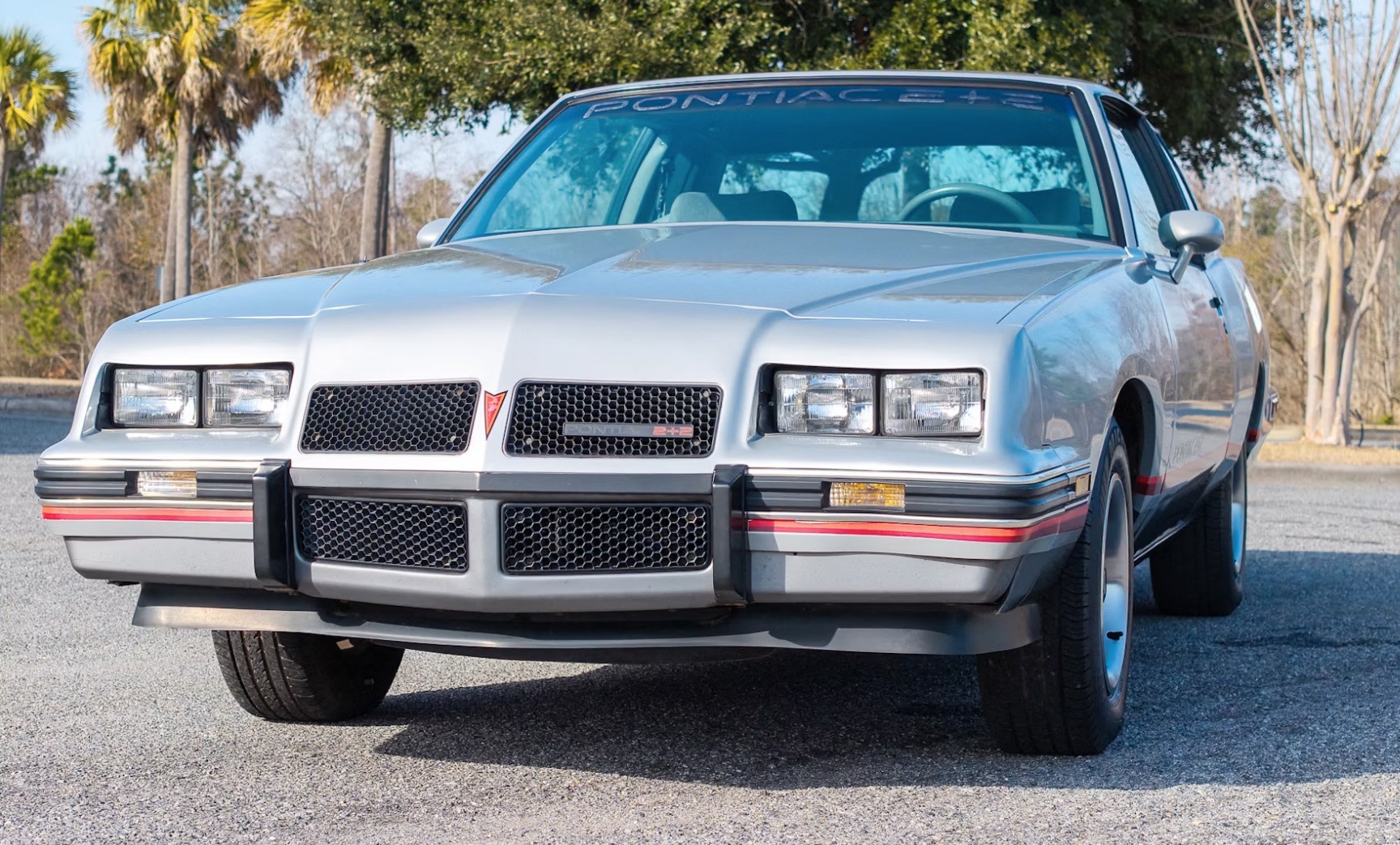
In back, the “formal” roofline and flat decklid that were apparently killing the GP on the high banks were replaced by an enormous glass backlite and new fiberglass trunk lid with spoiler.

All of the Auto-Fab 2+2s were painted in the same two-tone silver with red accent stripes. The aero modifications did the job intended, dropping the drag coefficient of 0.453 to 0.368. This made for a much, much better race car with higher top speed and far more controllable handling.
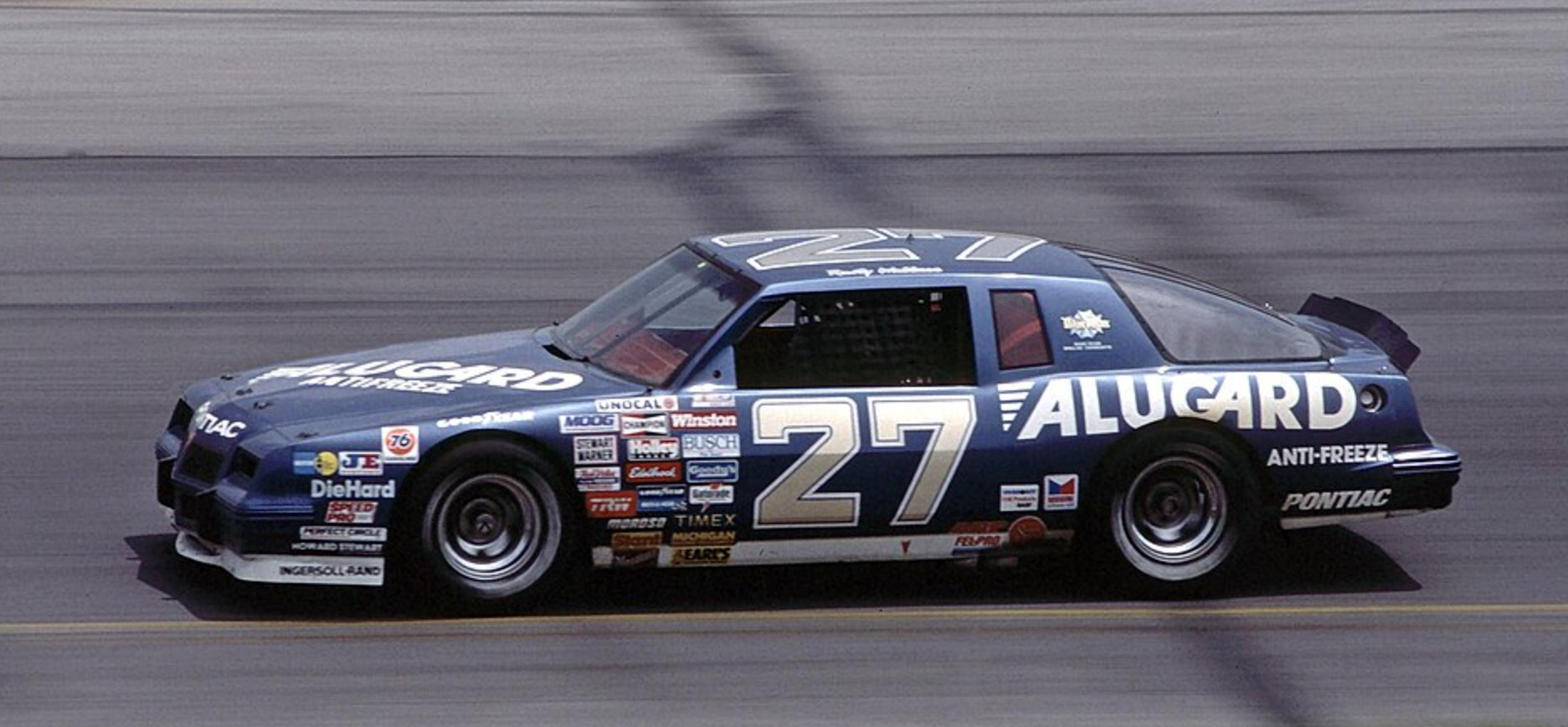
And yet, the car didn’t come close to dominance on the track. The 2+2 scored only two victories in NASCAR, results that might be attributed less to the car and more to the skills of the legendary Rusty Wallace driving in both wins. While the 2+2 was a middling success at the races, as a street car it was close to being an outright failure.
Wait, That’s The Only Part That Opens?
Off of the track, the first issue with the roadgoing 2+2 was the styling, especially to those who never really liked something akin to a boattail Buick Riviera (which was much better resolved). With the oversized rear glass and rounded nose, the 2+2 looked a bit too much like what it was: a boxy old personal luxury car with aero add-ons. Today, it’s kind of charming in its oddness, but back in the day it just seemed a bit silly for a car that ended up costing over $18,000, or about $7,500 more than a standard Grand Prix.
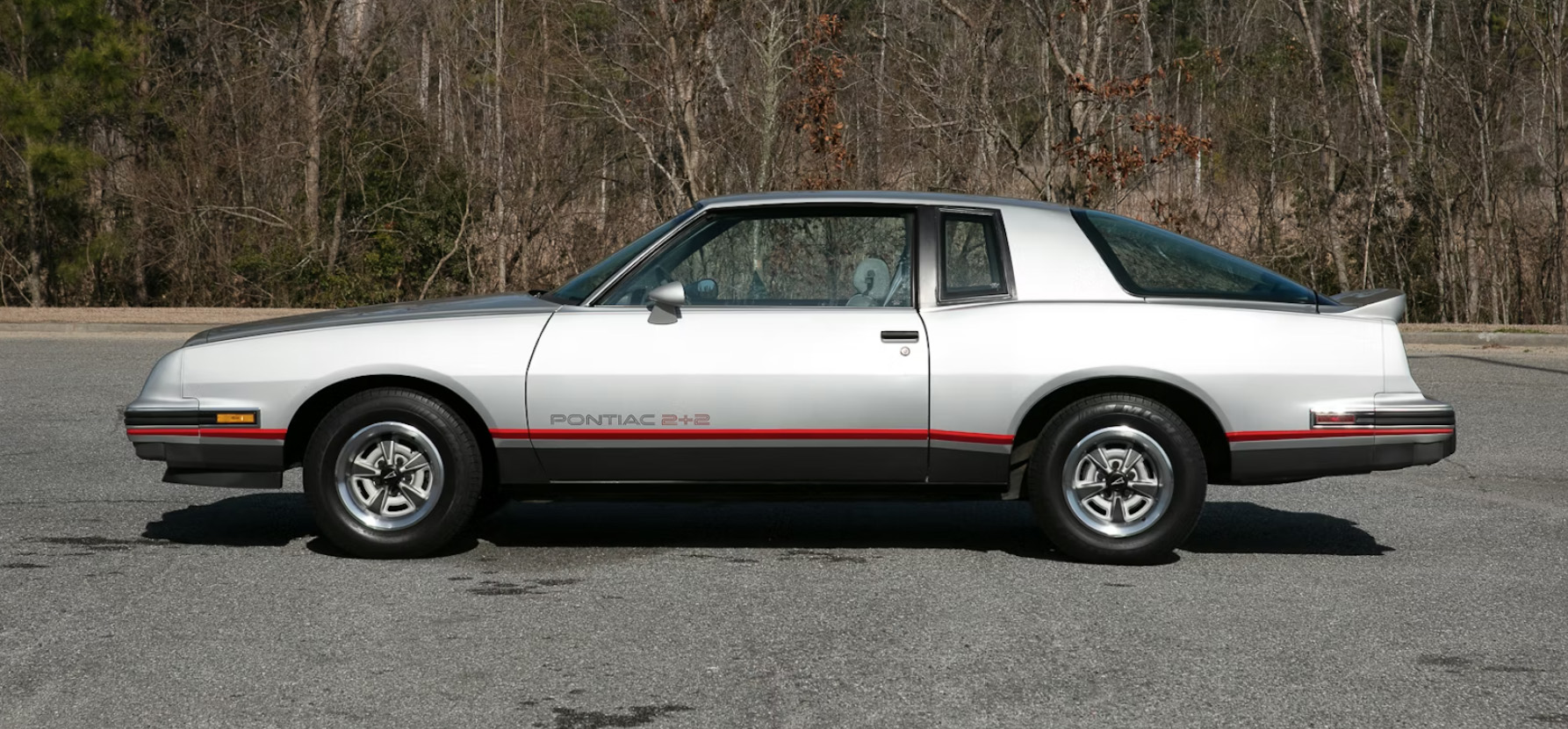
Another issue is the 2+2 offered no real performance increase over the stock Grand Prix. Now, the Charger Daytona had a motor you might get in a non-homologation model as well, but back then we were talking about high-horsepower Hemis. In the 2+2’s case, the stock motor was a 165 horsepower 5-liter V8, hooked up to a mandatory four-speed automatic. That’s it. You got a slightly tighter suspension, but it was the same one you got by checking that box on a standard GP.
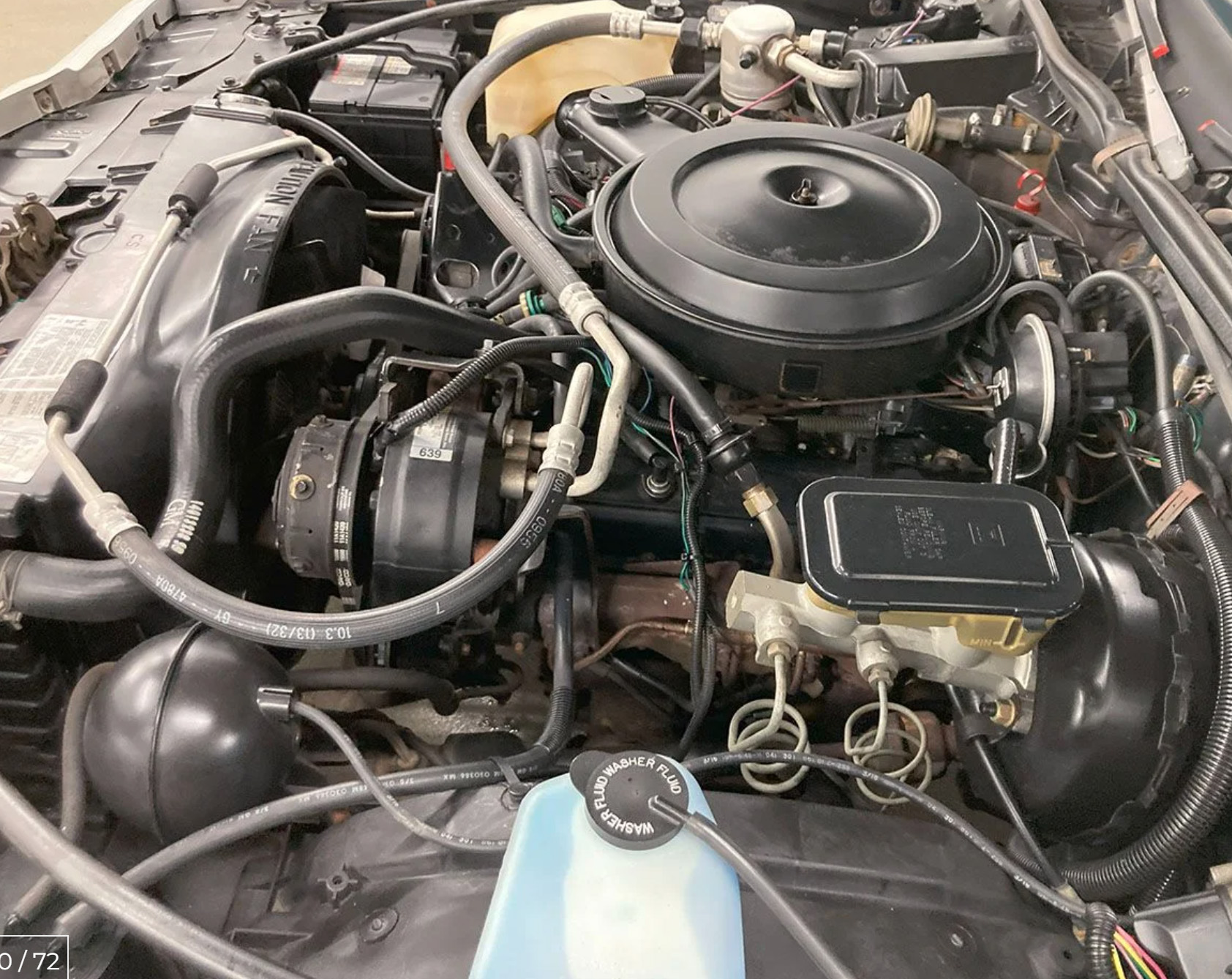
Now, don’t get me wrong: the G-body coupes like the Grand Prix were some of the most durable and reliable cars GM ever made. Rivaling the bulletproof B-body full-size cars, they were far more maneuverable than those Caprices and Parisiennes. They rode well and handled better than you’d think for a Malaise-era mid-sizer. My aunt had a ’79 model and claimed it was the favorite car of all the cars she’d owned over forty-plus years, but such praises speak to the qualities of a car for transportation to bingo and bible studies, not a high-performance coupe. Again, for the price you’d be better off getting a Trans Am or even a regular Grand Prix for less money.
The interior also came in for criticism, being essentially the same all-stock Grand Prix design that hadn’t changed in eight years, complete with chromed window switches and ultra-fake-looking woodgrain on the dash-of-many-circles.
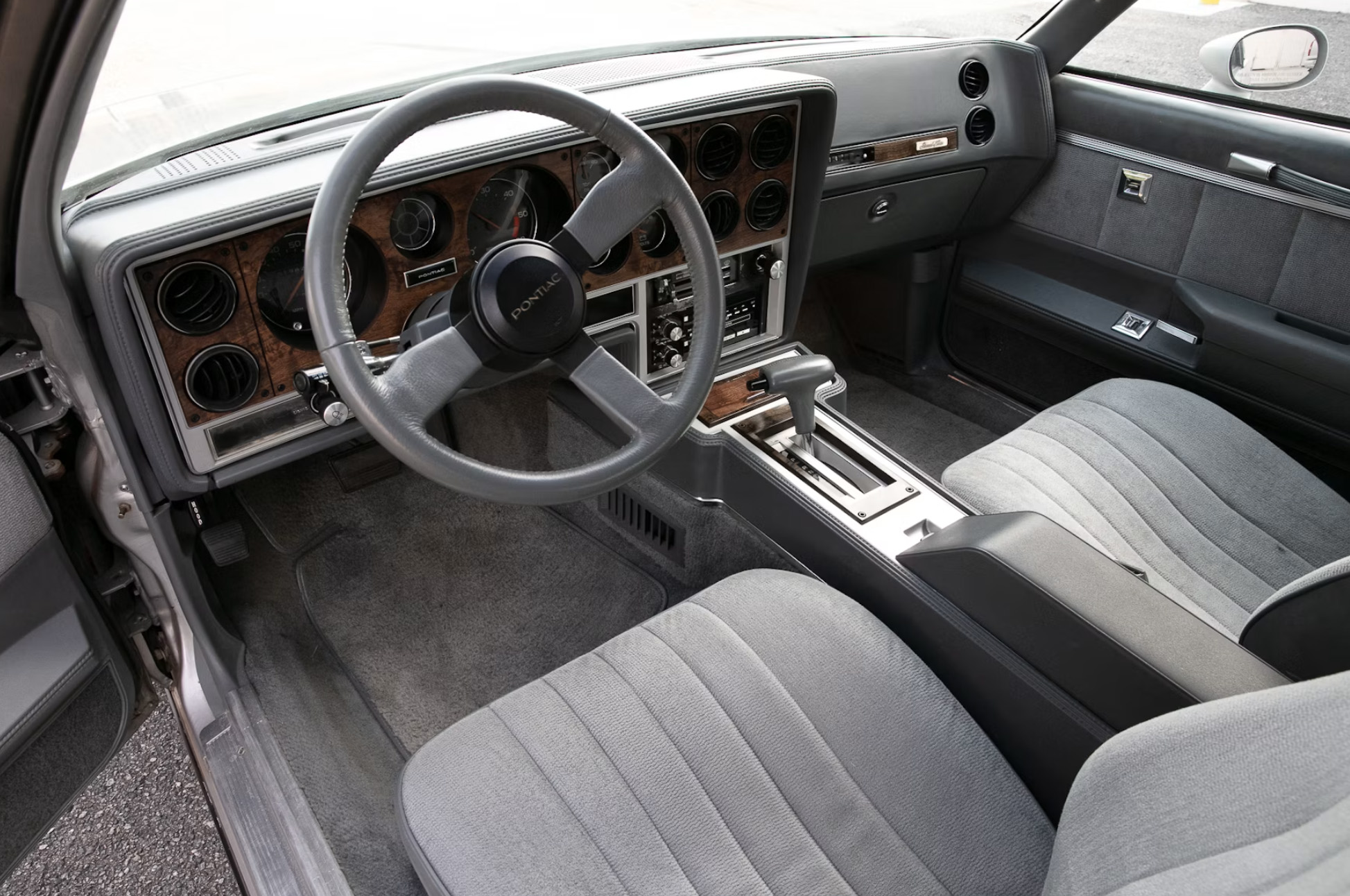
At least you got a tach and a floor shifter, hence the PONTIAC blocker plate where the column shift indicator usually is.

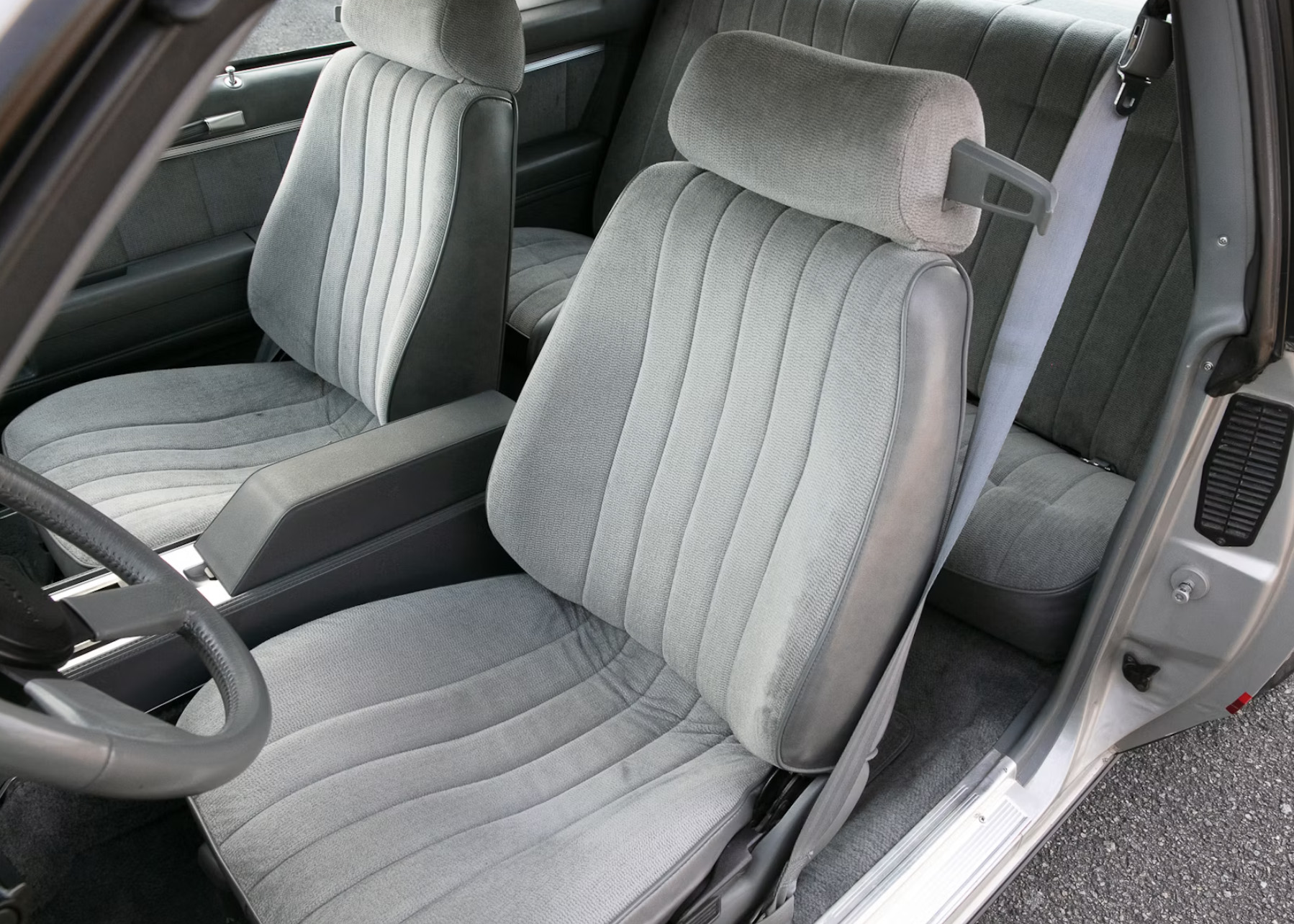
Bucket seats were the infamous ones seen in any number of Pontiac cars. They looked OK at first glance but would kill your back after half an hour or so.
But the biggest problem with the 2+2 modifications to the Grand Prix was that rear bubble. When I first saw a 2+2, I was excited with the possibility of a giant Saab-like American hatchback that could swallow cargo like nothing before, and wondered how they were able to engineer such a large hatch on such a small production run of cars.
I didn’t wonder for long. No, that big glass bubble was fixed in place for all time. The only access to the 2+2’s trunk was through a comically small opening behind what little remained of the Grand Prix’s trunk lid.

The trunk itself was just as spacious as the original car, but as one publication said, loading luggage was like putting an elephant through a mail slot. You couldn’t even get a full-sized spare in there.

Did Pontiac at least give you a fold-down rear seatback? Forget it.

All that big glass window did was distort rearward vision, allow the sun to bake the interior, and kill all of the practicality of the Grand Prix coupe. Reportedly, the 2+2 proved to be a tough sell for anyone other than the NASCAR faithful. A large percentage were sent down below the Mason-Dixon line in real rubbin’-is-racin’ territory, but that didn’t help the special Grand Prix’s predicament. A mere 1,225 2+2s found buyers, and Pontiac only kept it around for a single model year.
It didn’t have to be this way, as Chevy proved across town.
The Full Monte
Chevy’s approach to an aero special was far less involved and, ultimately, seemed to produce similar if not better results than the more complex and poorly received 2+2 – though arguably that was more by virtue of better NASCAR teams running the Chevy version.

The Monte Carlo Aerodeck was also created by an outside supplier (Cars & Concepts) and featured the rounded-off nose that was also used on higher-production SS models and was not as severe looking as the Pontiac’s “beak.” The bigger and better difference was that the Aerodeck’s rear glass still had a “fastback” profile to it but had the “hot wire” bend corners as on the 1977-79 Caprice and Impala coupes that seemed to fit the looks of the boxy car better than the rounded “whale back” of the Pontiac 2+2.
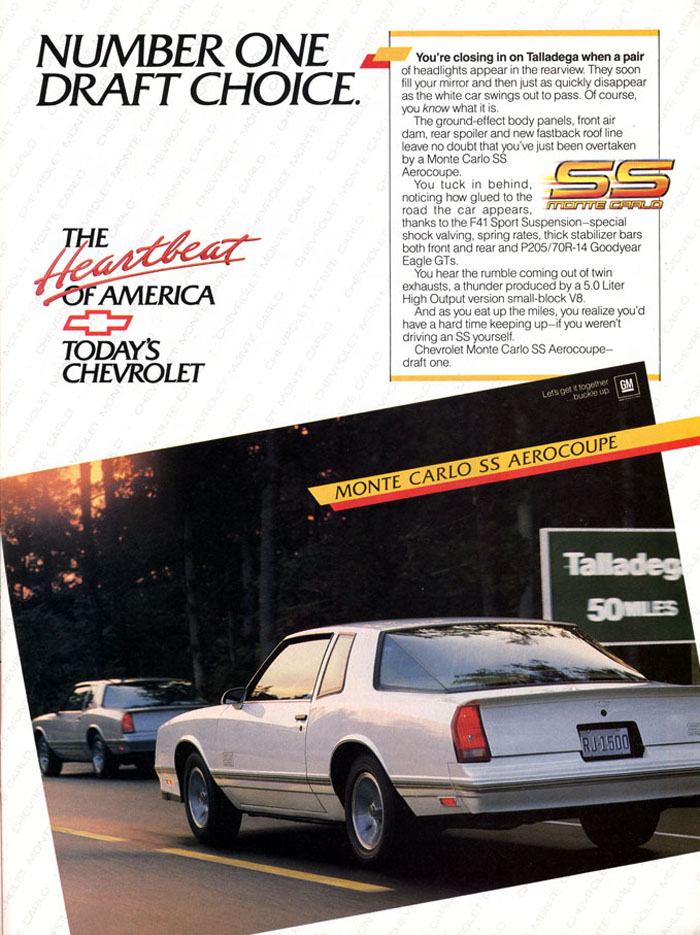
The best part about this glass window, however, was that it didn’t continue nearly as far back as the one on the 2+2. The trunk opening was smaller than the stock Monte, but at least it was larger than the Pontiac version and had less obtrusive hinges, allowing you to still use most of the trunk space.

The coup de grace for the Chevy over the Pontiac was the price; at under $15,000, it was more than $3,000 less than the 2+2 in 1986 dollars (back when $3,990 could have gotten you a whole Yugo). You could even choose from four different colors. Chevy had no problem meeting the homologation requirements, to say the least. Only the minimum 200 units were sold in 1986, but Chevy kept making them. A whopping 6,252 Aerodecks were sold over the two years that it was offered, and the track version scored 18 victories in NASCAR, including trips under the checkered flag by none other than the great Dale Earnhart.
2+2 Did Not Add Up To Success
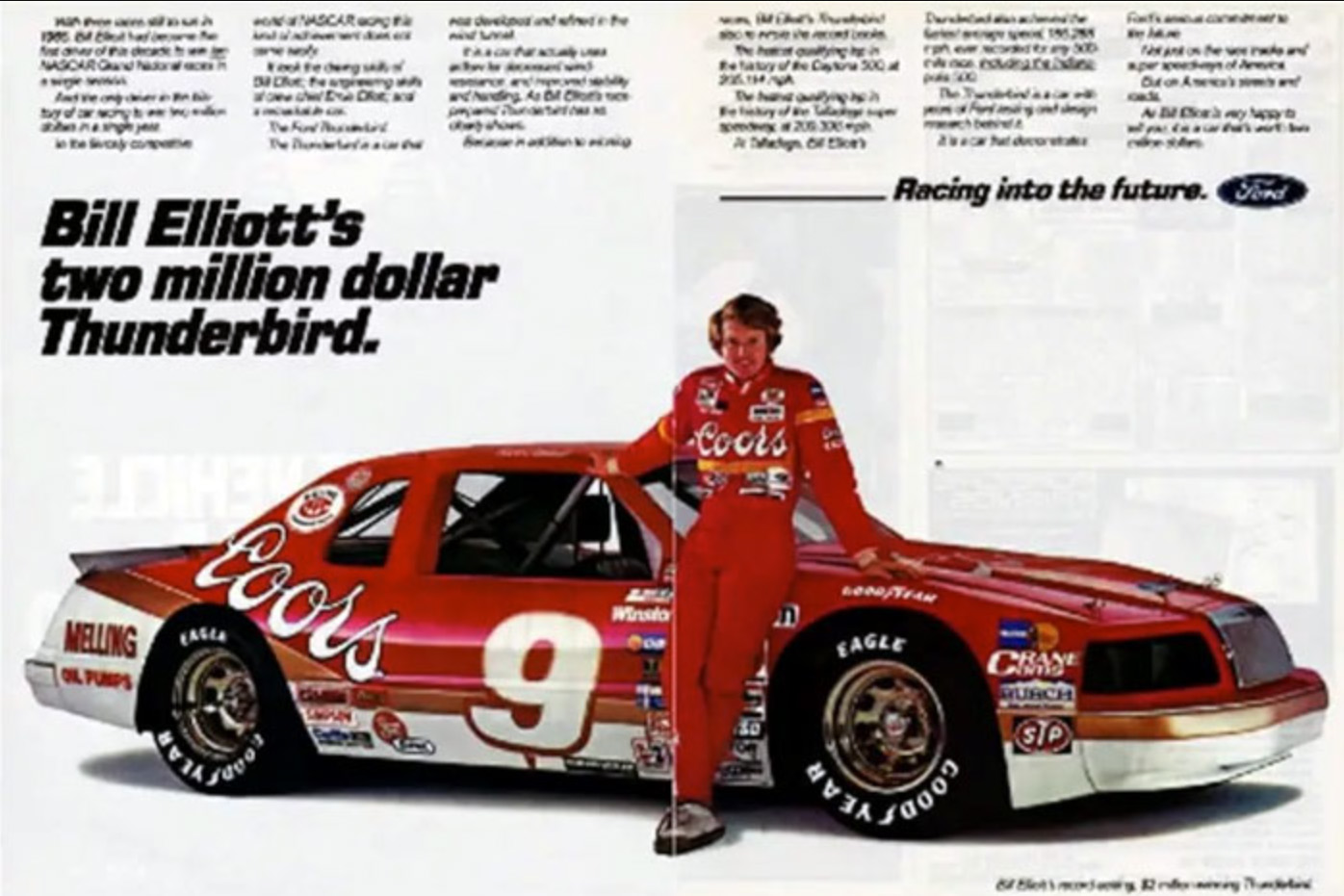
In the end, GM’s homologation specials certainly saved the old G-bodies from embarrassment, but the aerodynamic Thunderbirds still proved hard to beat. This was, of course, the years of Bill Elliott’s dominance in the sport that got Ford fans all aflutter. It was only when GM released the more Taurus-like Lumina coupe and front-drive Grand Prix that they really had an even footing with Ford in NASCAR.
Today, the rarity and NASCAR pedigree of the 2+2 has not translated into strong appreciation. Exceptional low-mileage examples can sell for upwards of $30,000, but typically they change hands from between $9,500 and $20,000; not exactly an increase over the $18,200 sticker price in 1986.

The Pontiac 2+2 was not the success that Pontiac had hoped for on the track and certainly not in the showroom, but as one of the last truly unique NASCAR homologation specials, it holds a special place in Pontiac lore and racing history in general. For better or worse, you won’t find more legitimate NASCAR pedigree at this kind of money.
Pontiac Points: 81/100
Verdict: Say what you will about sticking aero crap on Aunt Katie’s personal luxury car, but Pontiac didn’t take the challenge of the Blue Oval lying down. A valiant if highly flawed effort.
Top graphic image: American Muscle Carz




When those “hot wire” rear windows came out in the late ’70s, I thought they were stupid from an optical perspective. As a photographer, I thought they looked weird and would be horribly distorting to look through in the rear view mirror. And now replacements are probably unobtanium.
The front end of that Pontiac looks like it has the Downs.
“coup de gras”
You mean coup de grâce, didn’t you? Gras in French means fatty, greasy, or oily.
Kinda answered your own question there, didn’t ya?
I corrected it but somehow fatty and oily seems to sum up most malaise cars so maybe I shouldn’t have.
I couldnt even begin to fathom walking into a B-O-P dealership in 1986 and saying i want this over a t-type regal or grand national.
“Write that down write that down” the 5th and 6th generation Camaro designer exclaimed.
I believe the repair procedure for a broken bubble rear window is “find a ’78-83 A/G-body wagon and transfer all other GP2+2-specific parts to it to build a ‘one of none’ tribute car.”
That also solves the cargo access problems.
I wanna see this!
I always liked the non-aero MCSS. Sinister looking in a very 80s way, and the black, burgundy and purple colors were bad ass. They weren’t fast but they did look cool as hell. The aerocoupes just look bulky and ungainly in comparison, and good lord that GP up there looks so sad with its warping front end.
Win on Sunday sell on Monday doesn’t apply when your car looks like its dropping a log.
Yeah. In my opinion, those cars were the last of the true muscle cars.