


Time continues to be a flat circle, and what has happened before is happening again. Nearly two decades ago, dealers took to the courts and to legislatures to stop Tesla from selling its cars directly to consumers. The dealers lost, and badly, paving the way for various other independent automotive startups to try the same thing.
Independence. That’s a thinker. I’ve been knee-deep in Revolutionary War history lately, and the common theme is that while everyone cares about “liberty,” many disagree about who can apply for its graces. This is at the center of a lawsuit from dealers against EV truck startup Scout, which, if you ask the dealers, isn’t independent.


The Morning Dump has been a little heavy and political, as well as curiously Canadian, lately. Up next are a pair of stories that are both. First, not everyone in Canada loves the idea of accepting Chinese cars. The other one is a conspiracy theory about Jeep that’s pretty hilarious.
To cut some of the heaviness, I’ll share a pair of fantastic Alpines.
The Dealers Aren’t Backing Down This Time
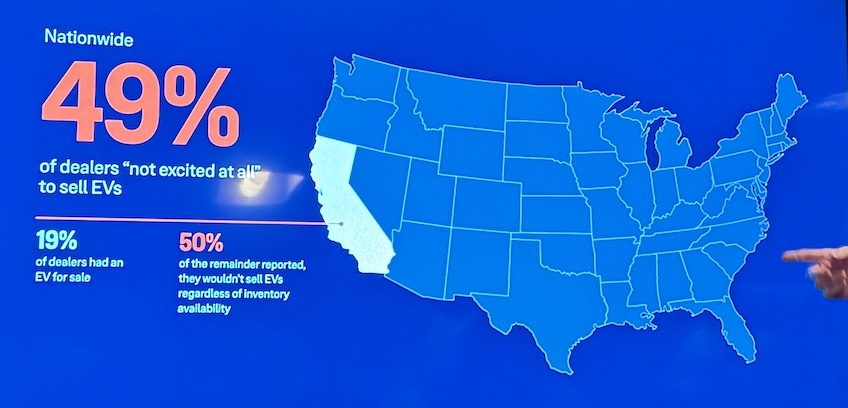
David went to the big Scout reveal way back in 2024, and this slide from a presentation amuses me for many reasons, but let me have David explain it:
Scout said that, when it comes to launching a new brand and network, you need full engagement and enthusiasm. Apparently, there’s not enough of that going around, because — per this slide below — 81 percent of dealers don’t have EVs for sale and 50 percent of those said “they wouldn’t sell EVs regardless of inventory availability.”
[…]
The next point Scout made was that dealerships have broken consumers’ trust. “Only 8 percent of consumers say they have high or very high trust in car dealers,” Thacker said, pointing to tens of thousands of FTC complaints.
Yeah, so, the funny thing about this is that Scout Motors is wholly owned by Volkswagen Group. And Volkswagen Group has a lot of dealers. I think I overuse this, but:
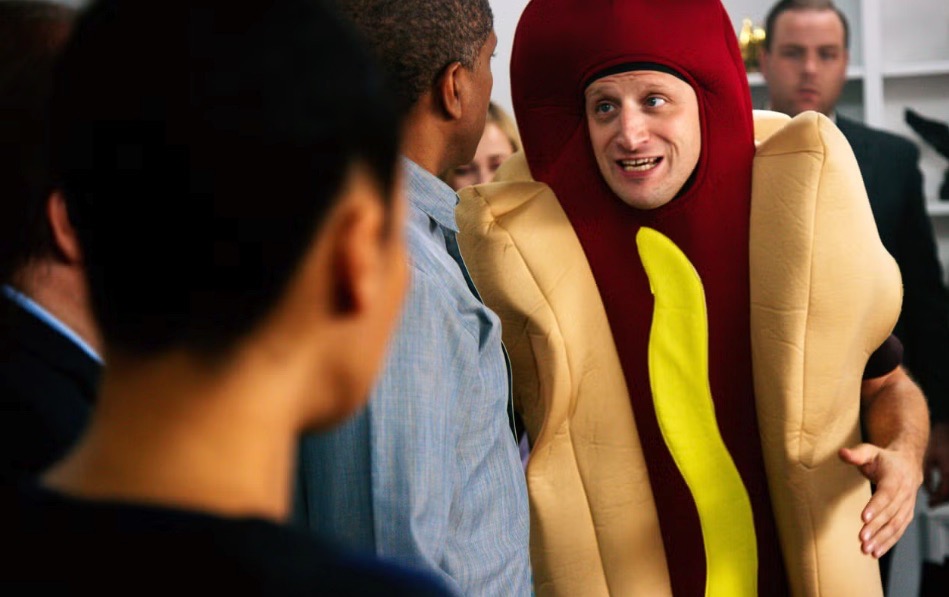
The difference? Volkswagen claims that Scout Motors is an entirely independent organization, run by an entirely independent CEO, Scott Keogh. If you forgot, Keogh was previously the CEO of Volkswagen of America. [Ed note: Pretty much everyone at the press event had a thick German accent. Scout feels to me like VW trying to rebrand what has been a rather pathetic decade in the U.S. -DT].
Normally, this wouldn’t matter, but this independence is kind of the whole argument VW is using for why it doesn’t have to abide by all the franchise agreements it’s made with its dealers. Dealers who were given a bunch of electric cars by Volkswagen Group to try to sell. Electric cars that have mostly failed to find an audience. I don’t know that the Scout duo of a truck and SUV that can be had as an EREV or pure EV is going to be a winner, either, but if any automaker can create a new brand and call it “independent,” the whole concept of a franchise agreement goes out the window.
A Colorado board recently approved Scout’s license to sell cars over the objection of dealers, and now those dealers are suing. As Automotive News points out, the principle here is important if you’re a dealer:
“Scout is so closely tied with Porsche, VWoA, and AoA, that it is their alter-ego, through Volkswagen AG’s control of each entity,” the lawsuit said. “The Department, in making its licensing determination, should have determined that Scout, Porsche, VWoA, and AoA were the same entity for purposes of determining whether Scout has no franchised dealers of the same line-make in Colorado.”
Scout’s dealer license will adversely impact Porsche, VW and Audi franchised dealerships in Colorado, the lawsuit alleges.
“If this type of arrangement is valid under Colorado law, there is no mechanism to prevent other manufactures such as General Motors or Ford from setting up alter-ego companies to sell directly to consumers and compete with their franchised dealers,” the lawsuit said.
If the dealers are successful, then this could present an existential challenge for Scout, which clearly doesn’t want dealers. If Scout is successful, the inverse is true. Either way, dealer groups aren’t going down without a fight.
The Canadians Are Looking For A Donnybrook, But Not With Chinese Carmakers
Canadian Prime Minister Mark Carney gave a defiant speech at the World Economic Forum in Davos, criticizing the state of modern geopolitics:
Today, I’ll talk about the rupture in the world order, the end of a nice story and the beginning of a brutal reality where geopolitics among the great powers is not subject to any constraints.
But I also submit to you that other countries, particularly middle powers like Canada, are not powerless. They have the capacity to build a new order that embodies our values, like respect for human rights, sustainable development, solidarity, sovereignty and territorial integrity of states.
The power of the less powerful begins with honesty.
What can middle powers do? Per Carney:
Middle powers must act together because if we’re not at the table, we’re on the menu.
But I’d also say that great powers can afford, for now, to go it alone. They have the market size, the military capacity and the leverage to dictate terms. Middle powers do not. But when we only negotiate bilaterally with a hegemon, we negotiate from weakness. We accept what’s offered. We compete with each other to be the most accommodating.
This is not sovereignty. It’s the performance of sovereignty while accepting subordination.
In a world of great power rivalry, the countries in between have a choice: compete with each other for favour or to combine to create a third path with impact.
This “principled pragmatism” is going to be difficult to pull off, but there are signs that middle powers can work together to achieve something. Tuesday, everyone was worried that the United States would create a new trade war in an effort to attain Greenland. After meeting with European Middle Powers, the United States reportedly changed its mind.
I doubt this will alter Canada’s view of the world, or lead it to reverse its decision to make a bilateral deal with China. It would be a mistake, though, to state that this is the view of everyone in Canada. Ontario Premier Doug Ford doesn’t want Chinese EVs, which makes sense since so much of Canada’s auto industry is in Ontario.
Here’s his view, according to Bloomberg:
Ford, flanked by representatives of automakers and factory workers, urged Canadians not to buy cars from China — even if they’re cheaper than domestically made ones — because they come at the cost of local jobs.
“Boycott the Chinese EV vehicles,” he said Wednesday. “Support companies that are building vehicles here. It’s as simple as that.”
It sounds like Canada is going to draft a plan to encourage domestic production of Chinese vehicles, but Ford isn’t here for that either:
“Even if they do start assembling, how about the supply chain? They come and they assemble, but they bring all Chinese parts in. That means nothing. We want to make sure we produce Canadian cars by Canadians,” Ford said.
Given that the United States is trying to discourage Canadian car production from its own automakers, that’s a more difficult prospect than it used to be.
Jeep Caught Up In Heated Debate

Canada’s Heated Rivalry is not a car show, per se, though its characters are young professional athletes, and young professional athletes often love cars.
As Alanis pointed out in her write-up on the cars, there was a Jeep in the book, but not in the show:
In the book, Hollander drives a Jeep Cherokee. In the show, he’s in a Land Rover LR2.
Rozanov often calls Hollander boring as a term of endearment, because Rozanov’s family life has been far from boring (in a bad way). Rozanov says Hollander “drives a terrible car,” and in the book, Hollander responds: “What’s wrong with a Cherokee? It’s good in the snow. It holds lots of stuff. It’s a good car.”
I didn’t think anything of this beyond what Alanis wrote. I still haven’t seen the show, even though Jacob Tierney is my favorite TV director (I’m getting to it!). I made no assumptions about the swap.
Other people did, according to Automotive News in its story about the “conspiracy theory” about it among show fans:
“Jeep didn’t want to be involved in the show or wouldn’t let them use the name,” podcast host Shawn DePaz said on an episode about the show. “Instead, they took a shot at Jeep.”
One poster on Reddit declared that writer and director Jacob Tierney “said Jeep did not want to be a part of the show.” Tierney created the show for Crave, a Canadian streaming service, while Americans can watch on HBO Max.
“Jeep didn’t want to be associated with a gay hockey show,” asserted another commenter.
Given the shape Jeep is in currently, that doesn’t sound right to me. Plus, Jeep itself has been a part of Pride events in the past, so it seems like an unfair critique without more information. The Bud Light of it all aside, the brand needs all the customers it can get at the moment. AN did a good job and actually asked Stellantis:
“We’ve gone back to review your question and it appears a product placement opportunity for ‘Heated Rivalry’ was never officially presented to our team,” said Diane Morgan, who leads the company’s branded entertainment team.
The other two shows Tierney directed and produced feature hockey players who drive Jeep Wranglers, so it’s weird that there wasn’t a Jeep this time. It’s bad luck for Stellantis to get caught in a culture war it wasn’t trying to fight.
Ohhhh… Alpines

My tastes in classics often tend European, which is why the Retromobile classic car show produces so many vehicles I’d like to buy. This year looks no different, giving the trio of cars from Alpine:
- Classic Alpine A110 1600 SX; this special and unique model was the last Alpine A110 from the first generation produced in the Dieppe plant in 1977.
- Rally version of the Berlinette: a car entered in the 1975 World Rally Championship with a livery from the 1975 Tour de Corse.
- The most exclusive and extreme A110 ever created, the A110R Ultime is joining the two classic Alpine A110s in its sold-out livery: La Bleue.
Which one would I want? Yes.
What I’m Listening To While Writing TMD
“I Won’t Back Down” by Tom Petty and The Heartbreakers may feel politically pointed today, but mostly I just miss Tom Petty. Also, check out the great cameo.
The Big Question
Is Scout an independent automaker?
Top photo: Scout; Emich Volkswagen


Dealers are going to continue to push the fight for legacy business model and bad practices one time too many. When that happens they will make themselves ripe for more regulation and oversight into their practices.
Buying a car should be as simple as buying anything else. No more shenanigans.
TBQ: I’m going to say a qualified “fully independent.”
The CEO’s former job is irrelevant.
The owner of the new independent corporation is irrelevant.
The qualifier is how they do business – do they get sweetheart/better than market rate deals on parts/loans/etc. from VW? Does VW get similar favorable treatment from Scout such that dealers assn’s can make a fact based argument that they are not in fact independent?
For those that live in USA which is supposedly the ‘land of the free’ where capitalism is king and ‘free markets reign supreme’ please explain how and why allowing ONLY legal entities identifying themselves as a “Dealer” that is supposedly 100 percent independent from the auto manufacturers be the ONLY ones thst legally sell a new auto to people in line with a free market system?
I can’t think of any other product that has this same mafia like set up.
As I’ve seen argued here and on Yee Old German Lighting site before… If the dealers are providing such a fantastic value to the consumers (which are the dealers direct customers), then let any legal manufacturer that wishes to sell directly to the consumer do so.
The fact that every dealer has joined a national “certified auto dealer association” And their “national auto dealer association” has a powerful lobbying group that files law suits every time any new auto manufacturer tries to sell directly to the buying public indicates the dealers know they can’t offer a differentiating compelling services that would sway enough people to chose them over the manufacturer selling directly.
Put shortly, in a free market in the land of the supposedly free, let any one that wants to sell their own products however they damn well please and let the people decide.
It is not the government making an unilateral decision it is a legal issue making both parties honor contracts they signed in the beginning. Manufacturers needed dealer money to finance them and to provide needed store fronts the auto manufacturers couldn’t. Now they want to dismiss dealerships with out honoring the commitment or compensation.
It is complex and I agree with you that it is heavily dependent on what the contracts oblige the parties to do.
I am not sure your conclusion is correct though because I’m not up on the facts of what the contracts actually say as opposed to what the parties maybe now want them to say.
Maybe they are silent about this situation (likely?) and it will come down to the courts to resolve the dispute, likely to the disappointment of someone.
The electric vehicles of it all really seems to be behind much of the current issues. I don’t know where the facts truly lie as to dealers trying or not trying to sell ev’s vs gas cars, vs people wanting or not wanting to buy evs.
Well you make a good point but we have had the information available on the site. But I am not an expert
I’m with you all the way, except for the “land of the free” bit. There’s plenty of those rights involved in all this. Dealers have constitutional rights to association, speech (lobbying and accessing the courts), and property interests, all subject to statutory/regulatory limits if consistent with those rights. I don’t know if the current disputes and pains with the manufacturers and dealers are new or just better known now. I’m here for watching it as it develops!!
Down with dealers.
I was impressed by Carney’s Davos speech.
Sorry, it’s late/I’m tired and confuzzled. Are you saying that VW wants Scouts to be sold directly to customers, rather than through dealerships? I thought that was generally illegal in the U.S. due to decades-old lobbying by dealer associations.
Personally, I think a lot of car buyers would love to buy directly from the manufacturer, mainly because it’d likely do away with the whole ‘dealer premium’ things (and all the mystery undercoats, etc… that they charge for whether you ask for them or not) but I honestly don’t expect dealers to be out of the car buying process during my lifetime. 🙁
Lost in the Scout conversation is the problem that other direct-to-consumer automakers have. Namely, where do you get them serviced and repaired?
It’s all fine and good to sell the cars but Tesla, Rivian, Lucid, etc have all been slower to scale the post-purchase experience. If Scout burns its bridges with VW-network dealers, they will need to build from scratch, too, which will create some friction with early adopters.
Every direct to consumer automaker still has physical locations, they’re just not called dealerships. You can test drive, take delivery, and service your vehicle.
The sales locations aren’t service locations, mostly they’re located in retail centers and definitely don’t have service bays. All three names I named all were slow at scaling service centers to provide customer repairs and warranty work which led to long lead times and other delays in getting customer cars back on the road.
all very true
and it is very hard to build all that after the sale infrastructure out on top of the other start up costs (manufacturing, selling, etc.) but a smart operatory is going to build in the service network alongside the rest or they are looking at very unhappy customers when things inevitably break on their new car
Any independent automotive repair shop on every goddamn corner with the help of robust and effective right to repair laws?
Even if you loop in independents for repairs, there’s a big learning curve with new vehicles and quite a lot of cost, including tooling and software. Most independents aren’t going to invest that time and capital for a make with 6 cars on the road within the nearest 1,000 miles. It wouldn’t make any business sense. You won’t get that sort of effort until the vehicles are widely available and disseminated.
Plus, automakers these days, including the ones I referred to, have tended to try to keep those services in-house as both a revenue stream and a customer service and quality control touchpoint and controlled the availability of tooling and software accordingly.
I’m 100% in favor of right-to-repair laws and enabling independent repair shops and I believe that’s the only realistic, best-for-the-consumer, long-term solution, but it’s not a solution today and likely won’t be a solution which neither Scout nor independent repair shops would seriously look at.
All that supports my point that without a dealership network, Scout is also going to need to figure out a way to scale the post-purchase side of the customer experience, just like Tesla, Rivian and Lucid needed to and it’s not being mentioned by anyone yet.
However will they be willing to accept lower income from manufacturers for warranty work, will they be willing to pay for and store inventory, will they provide loaners? Will they buy updated equipment for new year models?
I thought Scout promised to sell in dealers to get support from the American side. Maybe I am wrong. Either way, this fight makes me laugh.
“Stop hitting yourself!”
I have been burned by a Colorado VW dealership service department in the past, to the point that I swore off ever going to a dealership for service again. Can’t say I give a brace of shits for any Dealerships. The purchase experience and the repair experience are both horrible. It needs to change. We buy used cars from private parties and it’s worked out so much better. We also find local independent mechanics that have a good reputation and then treat them nicely.
A little thought of this whole deal is if you got rid of dealers, there’s a whole subset of males that will have to find a new line of work. And I don’t know that they can.
Hah, true. I can think of a few career paths for those that like to prey on people. But out of respect for this wonderful site, I will not list what comes to mind. I do enjoy the Autopian over other websites.
Look at the Reddit justrolledintheshop. Dealer mechanics are getting screwed by the dealer and the manufacturer.
Dealers killed MTs and colors. “What can I get you in today?” This site has plenty of stories about dealers and manufacturers that don’t care about the exact vehicle you want
I’m not sure they are fully independent but they aren’t the brand the dealers are representing. That would be a mess anyway to see who gets it and seeing the tantrums already i bet lots of frivolous lawsuits againt multiple parties. I would let the ih truck and tractor dealers have first dibs on servicing just because they threw a tantrum. Then maybe do some kind of merit based system if a dealer has good ratings. It’s a new brand they can’t be tarnished by bad behavior of already established dealers. All the manufacturers need to put the fear of God in their dealers. They are the face of the brand and the easiest way for someone to write off a brand and tell everyone they know it was a terrible experience and vehicle. People will stear clear. Good will is expensive to buy and cheap to loose.
Manufacturers already have the fear of God with flat rate repair books for repairs and warranties. The techs and customers lose
middle powers
bargaining
collectively?
When
Pigs
Fly
That’s kind of what the EU is.
I wonder if the International Harvester tractor and farm implement dealers have any skin in this game. Maybe the VW dealerships aren’t even first in line for calling dibs here.
No, that’s part of CNH (Case New Holland) Industrial, Volkswagen is only the successor to IH’s truck/bus/engine divisions, through their takeover of Navistar International
Fair point – maybe it’s Navistar dealers who’ve got the rights to call dibs. Or maybe it matters which division made the original Scouts?
Did the have their own dealerships back in the day, or were they sold through the same dealers that sold the semis?
IHC light trucks always had their own separate dealer franchises, but they were often held by the same people that represented their other product lines, either ag or medium trucks.
However, its been almost 50 years since the company stopped building light trucks, collapsed in bankruptcy, and broke itself into smaller pieces, I guarantee you there’s absolutely no way any Navistar dealer contract contains any language at all giving them any sort of rights to Scout products, Scout isnt even the same brand they would have had in the ’70s, its an old model name that VW has turned into a marque. There’s no old International franchises agreements still hanging around from 1979/1980 that would be enforceable today, the original light truck division was liquidated and everything was renegotiated upon the creation of Navistar International
Good to know. Thanks.
Buying an international harveste pickup back then was pretty interesting. The number of options was mind boggling. Solid front axle with leaf springs, independent with coils, or 4×4? Full floater rear or semi? The engine and transmission choices were diverse to say the least, and if you wanted PTO shafts to run a pump or mower, no problem.
I don’t think that is coming back.
It VW > Scout wanted to honor their IH heritage…
The new scout products coming out would at minimum have both front And rear mounted PTO at least as an option.
Sadly this won’t happen because they’d sell 12 of them total, since the small farm in USA is nearly dead with the percent of the USA population farming is about as high as the percent of cars in USA sold with a manual transmission, i.e. way less than 5 percent.
I remember there was some technicality about how automakers were structured being different between VW and someone like GM. This was when they were able to apply the tax credits but only to the first 200,000 EVs produced. VW was somehow able to get a seperate 200k cap for each of its brands but the cap applied to all of the GM brands and it was something to do with the corporate structure,but I don’t know enough to remember what the specifics were. I’d imagine the same concept is going to apply to Scout and their dealership argument.
The (modern) Alpine A110 is what I’d buy if I moved to Europe.
No, Scout is as independent as Saturn Corporation ever was, it is a huge reach for Volkswagen to claim otherwise. That said, I hope VW pulls off a win anyway, sometimes you don’t have to be right to be right, if you know what I mean
Let me stop you right there. It’s a cold, cold day in hell before you can overuse ITYSL clips/screenshots.
I was recently in a meeting and the customer asked us to go over time. Our VP on the call said, “I don’t think we should skip lunch.” So obviously I sent a gif of “You can’t skip lunch!” to the internal team. No one responded. 🙁
God I hope you didn’t choke on a hot dog or anything.
Gotta make sure you have your Carber Hot Dog Vac at the ready.
The whole dealership model exists because, 100+ years ago, Henry Ford and his cronies didn’t want to be in the business of operating 500 stores strewn across the country. I don’t think Mary Barry and Jim Farley want to be in that business today, either.
Independent dealership meant that automakers could expand their sales networks quickly and without spending their own money.
And nowadays, few automakers want the add the massive physical and payroll overhead of a nationwide sales network
I think the claim is that with modern online sales, you don’t really need a complex network of stores.
Yes you do. What percentage of people in this country will buy a car without driving it first? Without even seeing it in person?
Most automakers rely on their dealership networks to provide recall and warranty work. Who will do those?
Service centers attached to a restaurant or some form of entertainment. Would be much better experience for the customer, and if done right, plenty profitable.
Again, that’s a massive amount of overhead for automakers to pay for.
Yes
Restaurants close a lot. Profit margins are slimmer than a base sedan.
I understand this. Sounds like a business decision by the vehicle manufacturer.
But, why is it REQUIRED for all vehicles to be sold this way? That is more about dealers than mfrs, IMO.
FWIW The cars in Letterkenny have the branding covered to avoid the product placement stuff. My guess was the show runners only cared about needing an SUV and didn’t really care if it was a Cherokee or similar.
As I pointed out on Ye Olde German Lighting Site, unless CARB’s definition has changed, Scout’s series hybrid model’s gas-extended range is too large to qualify as an EREV.
Sounds like CARB should change their definition.
Not at all. CARB’s logic is quite sound. There’s a fundamental difference between a plug-in series hybrid and an electric vehicle with a range extender.
An EV with a range extender is meant to be driven with the battery only the vast majority of the time. The range extender is only meant to turn on the rare cases where you can’t charge. It’s meant to be a safety net. Literally, another part of CARB’s definition of an EREV is that the range extender should only turn on when the battery nears 0%.
The purpose of a gas motor on a plug-in series hybrid, however, is to allow the manufacturer to use a smaller battery than would be needed by a pure EV. Because less than half of a series hybrid’s range could be accomplished by battery power alone, it’s not meant to be an EV at all
I get where CARB is coming from basing it off of EV vs gas range they have to pick some way to measure it right.
But I still have issue where if the only modification were to make the gas tank smaller somehow this series hybrid suddenly becomes a EREV. It just seems so arbitrary that in this information age that we can’t figure out how much a car is actually used as an EV vs on gas that we need to make vehicles worse to comply.
Has CARB gone after private jets yet? Maybe they should look at stuff other than cars for a few years until we can get this all sorted out.
What I want is a car that can go 50 miles or so per day only on batteries, which would be 99% of the usage, paying for 200 miles range would be fine, but can make a cross country trip without any more planning than a gas car, and operate indefinitely on gas, even though I would not plan on that. I also don’t plan on using the airbags if I can help it.
Oh, and I’d like a small car, not a truck.
Anyway, the bifurcated market seems to have big long range EVs, PHEVs that are kind of big and seem to be geared towards mostly gas use, and extended range cars that are intentionally crippled. They remind me of those donut spare tires that are barely usable.
BTW those donuts may save space but where are you supposed to put the wheel with the full size tire when you’re using the donut?
I totally get the logic of encouraging battery only use, but I want an extended range range extender available, even if it gets taxed in the more expensive category.
How much would the category change cost anyway?
Am I missing something, or is this a net benefit for consumers? What exactly do dealers provide that even remotely benefits us? There’s a reason everyone hates dealers, and if they need to use strong political lobbies to simply exist, I think it’s high time to start asking questions. Furthermore, I have serious doubts that their arguments hold any water. Do BMW dealers have some sort of divine right to sell Rolls-Royces because BMW owns Rolls? Also, Scout is clearly a different brand from VW; this isn’t some Pontiac/Chevy/Buick badge engineering job.
It’s not so straight forward.
The difference between invoice and MSRP of a car is meant to cover operating expenses for the dealership. Property, employees, liability, utilities, et cetera. Nowadays, dealers don’t profit much on the sale price, they make most of their money from the service and financing departments.
Any auto manufacturer that wants to start selling its own cars would then need to:
Build and then maintain a network of showrooms so that people can see and test drive vehicles.Employ sales staff to take people on those test drives and go through the options, even if they are just using the automaker’s online configuratorEmploy financing departments. After all, why let banks and credit unions get all those sweet, sweet interest payments?Either build out service departments, or contract with a network of independent service providers to perform recall workWhere, in all of this, does the consumer get to see savings?
As long as the OEMs don’t play the same games as dealers, not forcing any of the nonsense add-ons would be savings. Also, I would imagine a significant saving of time, energy, and stress from transparent pricing and transactions.
You’re making a lot of assumptions that I don’t think are justified.
The OEMs will want to optimize profits, just as dealers do. The difference is if Ford Dealer A is being difficult, I can go buy from Ford Dealer B or C a few miles away, or leverage them against each other. Once my only point of negotiation is with Ford itself, those options are gone. The pricing is presumably take it or leave it.
Dealers don’t create competition; they consolidate it. In my city, two dealer groups control like 75% of the market. A dealer group has no incentive to let its North Ford location undercut its South location. Then add in that same group also owns the the North & South Chevy and Ram dealers, so it’s really only competing with itself or the odd ball dealer than hasn’t been bought up yet and can’t compete because they don’t do the volume of the big guy consolidating the market.
Real competitive pressure comes from the manufacturers who bear the cost of engineering, production, and warranties. Dealers, by contrast, focus on buying out the competition and building walls around their markets. They are essentially rent-seekers who add little value to the transaction
As long as there is more than one dealer in the country, I have more negotiating power than I do with a single OEM.
I guess I can kinda see that argument if you’ve chosen to eliminate other OEM as viable alternatives. Not considering other alternatives means you’ve opted to give up that negotiating power yourself. So yeah I guess when you shoot yourself in the foot, your foot certainly ends up shot, lol.
Generally I choose what vehicle I want before speaking to dealers, anyways, so sure. But the point is the same either way.
Ford vs Chevy, or 500 Ford dealers vs 500 Chevy dealers. Either way you have less leverage.
Direct sales and fixed pricing appeal to people who fear negotiating or who don’t trust themselves enough not to make a mistake. That mindset is foreign to me. If a deal is no good, walk away and try someone else.
But here’s the thing: aside from “customer satisfaction”, why would automakers NOT maximize profit by with “mandatory” add-ons?
Because you can always walk away and choose a competing product. People hate Tesla for all kinds of reasons but there aren’t bullshit games being played by a dealer when you decide you want one. You get exactly what you ordered and are not upsold on any TruKote or pinstriping (or even options or color you didn’t want). If they don’t have it in stock, they’ll build it for you and let you know how long it’ll take (usually not very). The finance guy literally gives the sale paperwork to the guy delivering the car to you and if your (personal) check matches the number you signed up for on day one of your order, he has you sign for the car and drive away. From what I understand Rivian works exactly the same way. It does not have to be the way it’s always been.
Transparent pricing? On the inter web? I want what you are smoking/dropping or otherwise ingesting
I think the direct sales model is trying to do what Amazon did to retail – consumers read reviews online until they find a product they think matches their needs and they order it. It shows up a few days later, and if there’s a problem or it doesn’t fit, they just send it back.
This is nonsense when talking about shipping cars, of course, but it doesn’t stop executives from pitching the future of car-buying as one where customers never even lay eyes on a car before buying it.
This isn’t to defend dealerships in any way, but I think this is the “future” certain auto execs and would-be buyers are envisioning, not the version where OEMs have to spin up their own sales, service, and financing departments.