


Time continues to be a flat circle, and what has happened before is happening again. Nearly two decades ago, dealers took to the courts and to legislatures to stop Tesla from selling its cars directly to consumers. The dealers lost, and badly, paving the way for various other independent automotive startups to try the same thing.
Independence. That’s a thinker. I’ve been knee-deep in Revolutionary War history lately, and the common theme is that while everyone cares about “liberty,” many disagree about who can apply for its graces. This is at the center of a lawsuit from dealers against EV truck startup Scout, which, if you ask the dealers, isn’t independent.


The Morning Dump has been a little heavy and political, as well as curiously Canadian, lately. Up next are a pair of stories that are both. First, not everyone in Canada loves the idea of accepting Chinese cars. The other one is a conspiracy theory about Jeep that’s pretty hilarious.
To cut some of the heaviness, I’ll share a pair of fantastic Alpines.
The Dealers Aren’t Backing Down This Time
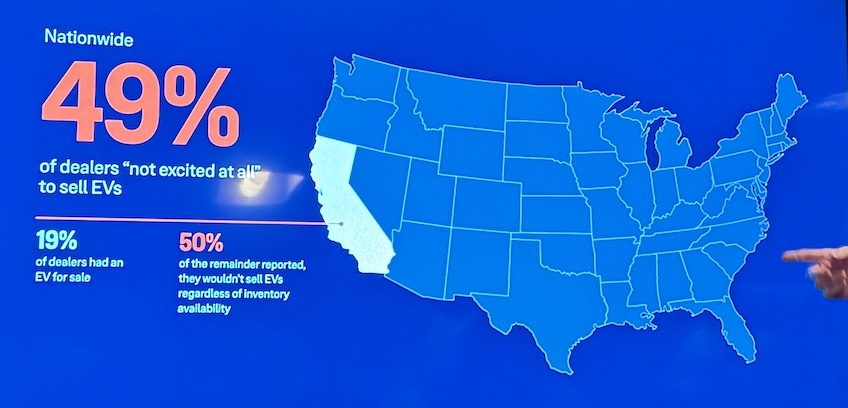
David went to the big Scout reveal way back in 2024, and this slide from a presentation amuses me for many reasons, but let me have David explain it:
Scout said that, when it comes to launching a new brand and network, you need full engagement and enthusiasm. Apparently, there’s not enough of that going around, because — per this slide below — 81 percent of dealers don’t have EVs for sale and 50 percent of those said “they wouldn’t sell EVs regardless of inventory availability.”
[…]
The next point Scout made was that dealerships have broken consumers’ trust. “Only 8 percent of consumers say they have high or very high trust in car dealers,” Thacker said, pointing to tens of thousands of FTC complaints.
Yeah, so, the funny thing about this is that Scout Motors is wholly owned by Volkswagen Group. And Volkswagen Group has a lot of dealers. I think I overuse this, but:
The difference? Volkswagen claims that Scout Motors is an entirely independent organization, run by an entirely independent CEO, Scott Keogh. If you forgot, Keogh was previously the CEO of Volkswagen of America. [Ed note: Pretty much everyone at the press event had a thick German accent. Scout feels to me like VW trying to rebrand what has been a rather pathetic decade in the U.S. -DT].
Normally, this wouldn’t matter, but this independence is kind of the whole argument VW is using for why it doesn’t have to abide by all the franchise agreements it’s made with its dealers. Dealers who were given a bunch of electric cars by Volkswagen Group to try to sell. Electric cars that have mostly failed to find an audience. I don’t know that the Scout duo of a truck and SUV that can be had as an EREV or pure EV is going to be a winner, either, but if any automaker can create a new brand and call it “independent,” the whole concept of a franchise agreement goes out the window.
A Colorado board recently approved Scout’s license to sell cars over the objection of dealers, and now those dealers are suing. As Automotive News points out, the principle here is important if you’re a dealer:
“Scout is so closely tied with Porsche, VWoA, and AoA, that it is their alter-ego, through Volkswagen AG’s control of each entity,” the lawsuit said. “The Department, in making its licensing determination, should have determined that Scout, Porsche, VWoA, and AoA were the same entity for purposes of determining whether Scout has no franchised dealers of the same line-make in Colorado.”
Scout’s dealer license will adversely impact Porsche, VW and Audi franchised dealerships in Colorado, the lawsuit alleges.
“If this type of arrangement is valid under Colorado law, there is no mechanism to prevent other manufactures such as General Motors or Ford from setting up alter-ego companies to sell directly to consumers and compete with their franchised dealers,” the lawsuit said.
If the dealers are successful, then this could present an existential challenge for Scout, which clearly doesn’t want dealers. If Scout is successful, the inverse is true. Either way, dealer groups aren’t going down without a fight.
The Canadians Are Looking For A Donnybrook, But Not With Chinese Carmakers
Canadian Prime Minister Mark Carney gave a defiant speech at the World Economic Forum in Davos, criticizing the state of modern geopolitics:
Today, I’ll talk about the rupture in the world order, the end of a nice story and the beginning of a brutal reality where geopolitics among the great powers is not subject to any constraints.
But I also submit to you that other countries, particularly middle powers like Canada, are not powerless. They have the capacity to build a new order that embodies our values, like respect for human rights, sustainable development, solidarity, sovereignty and territorial integrity of states.
The power of the less powerful begins with honesty.
What can middle powers do? Per Carney:
Middle powers must act together because if we’re not at the table, we’re on the menu.
But I’d also say that great powers can afford, for now, to go it alone. They have the market size, the military capacity and the leverage to dictate terms. Middle powers do not. But when we only negotiate bilaterally with a hegemon, we negotiate from weakness. We accept what’s offered. We compete with each other to be the most accommodating.
This is not sovereignty. It’s the performance of sovereignty while accepting subordination.
In a world of great power rivalry, the countries in between have a choice: compete with each other for favour or to combine to create a third path with impact.
This “principled pragmatism” is going to be difficult to pull off, but there are signs that middle powers can work together to achieve something. Tuesday, everyone was worried that the United States would create a new trade war in an effort to attain Greenland. After meeting with European Middle Powers, the United States reportedly changed its mind.
I doubt this will alter Canada’s view of the world, or lead it to reverse its decision to make a bilateral deal with China. It would be a mistake, though, to state that this is the view of everyone in Canada. Ontario Premier Doug Ford doesn’t want Chinese EVs, which makes sense since so much of Canada’s auto industry is in Ontario.
Here’s his view, according to Bloomberg:
Ford, flanked by representatives of automakers and factory workers, urged Canadians not to buy cars from China — even if they’re cheaper than domestically made ones — because they come at the cost of local jobs.
“Boycott the Chinese EV vehicles,” he said Wednesday. “Support companies that are building vehicles here. It’s as simple as that.”
It sounds like Canada is going to draft a plan to encourage domestic production of Chinese vehicles, but Ford isn’t here for that either:
“Even if they do start assembling, how about the supply chain? They come and they assemble, but they bring all Chinese parts in. That means nothing. We want to make sure we produce Canadian cars by Canadians,” Ford said.
Given that the United States is trying to discourage Canadian car production from its own automakers, that’s a more difficult prospect than it used to be.
Jeep Caught Up In Heated Debate

Canada’s Heated Rivalry is not a car show, per se, though its characters are young professional athletes, and young professional athletes often love cars.
As Alanis pointed out in her write-up on the cars, there was a Jeep in the book, but not in the show:
In the book, Hollander drives a Jeep Cherokee. In the show, he’s in a Land Rover LR2.
Rozanov often calls Hollander boring as a term of endearment, because Rozanov’s family life has been far from boring (in a bad way). Rozanov says Hollander “drives a terrible car,” and in the book, Hollander responds: “What’s wrong with a Cherokee? It’s good in the snow. It holds lots of stuff. It’s a good car.”
I didn’t think anything of this beyond what Alanis wrote. I still haven’t seen the show, even though Jacob Tierney is my favorite TV director (I’m getting to it!). I made no assumptions about the swap.
Other people did, according to Automotive News in its story about the “conspiracy theory” about it among show fans:
“Jeep didn’t want to be involved in the show or wouldn’t let them use the name,” podcast host Shawn DePaz said on an episode about the show. “Instead, they took a shot at Jeep.”
One poster on Reddit declared that writer and director Jacob Tierney “said Jeep did not want to be a part of the show.” Tierney created the show for Crave, a Canadian streaming service, while Americans can watch on HBO Max.
“Jeep didn’t want to be associated with a gay hockey show,” asserted another commenter.
Given the shape Jeep is in currently, that doesn’t sound right to me. Plus, Jeep itself has been a part of Pride events in the past, so it seems like an unfair critique without more information. The Bud Light of it all aside, the brand needs all the customers it can get at the moment. AN did a good job and actually asked Stellantis:
“We’ve gone back to review your question and it appears a product placement opportunity for ‘Heated Rivalry’ was never officially presented to our team,” said Diane Morgan, who leads the company’s branded entertainment team.
The other two shows Tierney directed and produced feature hockey players who drive Jeep Wranglers, so it’s weird that there wasn’t a Jeep this time. It’s bad luck for Stellantis to get caught in a culture war it wasn’t trying to fight.
Ohhhh… Alpines

My tastes in classics often tend European, which is why the Retromobile classic car show produces so many vehicles I’d like to buy. This year looks no different, giving the trio of cars from Alpine:
- Classic Alpine A110 1600 SX; this special and unique model was the last Alpine A110 from the first generation produced in the Dieppe plant in 1977.
- Rally version of the Berlinette: a car entered in the 1975 World Rally Championship with a livery from the 1975 Tour de Corse.
- The most exclusive and extreme A110 ever created, the A110R Ultime is joining the two classic Alpine A110s in its sold-out livery: La Bleue.
Which one would I want? Yes.
What I’m Listening To While Writing TMD
“I Won’t Back Down” by Tom Petty and The Heartbreakers may feel politically pointed today, but mostly I just miss Tom Petty. Also, check out the great cameo.
The Big Question
Is Scout an independent automaker?
Top photo: Scout; Emich Volkswagen



Doug Ford also claimed he’d single-handedly cut both the price of beer and fuel.
Ignoring market realities is what he’s done best.
And then make a real estate deal, and sell some signage (or stickers)
This all sounds somewhat familiar but I’d still happily trade your guy for the guy down here…
Who were the 8% who had a positive opinion of dealerships? Owners and employees?
Employees and the people who only buy cars every 20 years and have lucked out with their choice of dealership. My wife’s family is this way, they keep cars until they no longer function. Her first car was the hand me down 300k mile Toyota Avalon her grandparents bought new. Her mom only got a new to her car a couple of years ago because her car was totaled in an accident. My wife didn’t realize how bad it actually is until she met me and my car buying proclivities. The longest we’ve had a car while together for 10 years is 4 years, and it was traded last summer.
I would guess there is some small portion of people out there who have “their guy” at a dealership that they think “takes good care of them.”
Until that guy retires! Or when you go to service the car and the dealer asks to do $1,000 of un-needed maintenance.
That’s me. 10-15 years so far.
I have had my jeep to three dealerships and the dealership I bought it at has been the most reputable in repairs of the three and they also host an off road event every summer and I hang out with the owner at that event. So I hate dealership in general but this Jeep only dealership in the same family for over 60 years is ok.
I wouldn’t say I have a positive opinion of dealers but I also don’t despise them.
I’ve always had reasonably good success playing dealers off one another and tend to walk away with a decent to good deals. Really, I can only think of one really bad experience in my life.
I also recognize that I enjoy the negotiation process and that that’s not for everyone. Key, as most people on here know, is to always understand where you are from a leverage standpoint and to buy a car before you truly “need” one. It’s a lot easier to say pound sand and walk away when you car isn’t on it’s absolute last leg.
Edit: I also never use dealers for servicing. Once the deal is done I don’t show back up unless it’s for warranty work.
“We don’t want to sell or deal with these EVs but we also don’t want to not get to sell or deal with these EVs” Dealerships are well versed in doublespeak.
thats about how much sense it makes, yes.
To understand the “Scout Independent” question really relies almost completely on the agreements with the existing dealers. Does a VW dealer have rights regarding an Audi dealer built in those agreements? Can the VW dealer say anything regarding any choices made by VAG about a Porsche dealer going in near by?
If none of the existing franchise agreements grant any authority over other brands, it will be a very hard argument to state that in THIS CASE, they do. How? What is the legal framework that says for all of our history you have no authority, but a new brand somehow grants that authority? However, if there are first dibs terms for new VAG brand dealers within X distance of existing, etc, then that could pave the way for a dealer win.
The simple truth is this will turn on extremely fine details of contract analysis and contract law, with some leverage (possibly loads of leverage) trying to be exerted by the dealer lobby. None of us know anywhere near enough to have an educated opinion on this matter.
Meanwhile in Quebec, every dealer showroom has their EV parked in the prime location as you walk in.
QC’s EV approach has me very jealous as an Ontarian.
Another advantage of not having Doug Ford.
There is literally zero disadvantage to not having Doug Ford. Or Scott Moe, or Danielle Smith. But especially Doug Ford.
But alas, Ontario as a whole decided to slam it’s proverbial dick in the car door AGAIN, and then complain when it hurts.
Hear hear, although I generally lean into the HHGG theory on pols and selection there of.
Scout sounds like it would treated like a separate entity like Genesis is currently with Kia/Hyundai. Maybe with a bit more bespoke content underneath of course.
Porsche, VW, Bentley, and Audi dealers are separate. So why can’t Scout be?
Can a VW dealer demand a Bentayga or Flying Spur or a 911?
Fuck the dealers. We’re better off without them. They provide NO value.
Not having dealers is the biggest reason people still tolerate Elon’s antics and Tesla’s poor build quality.
Are the Chinese companies really worse than American ones? Detroit left the hole wide open for the Chinese to enter in the first place. They stopped making cheap new cars, the price point that China is known for the most.
Along with the supercharger network that just works.
The dealer thing is kind of complicated and I have lots of disparate thoughts.
Taking all of that together, I think I would eliminate franchise laws in their current form and force the dealers to compete. However, I would also pair this with strong legislation to force OEMs to allow 3rd party shops and dealers to complete repairs, perhaps requiring training/certification/etc. Level the playing field to the extent possible, and then let the market do the work. If the dealers are really better, they’ll win.
Isn’t the service center famously the money-making endeavor in the whole dealership model?
Also, the right-to-repair fight is key here. It is making some progress, but it needs more help (and likely a different administration).
It’s going state-by-state right now and got pretty close at the federal level this past year. I think there’s a shot in the next couple years. Just has to be marketed correctly.
Which is funny because, in theory, the right to repair is a fundamentally American value. Individualism, competition, and the free market, and yet it is fought on every level.
You think the administration after Carney will be better?
They don’t care about car repair problems, that’s peasant stuff.
After the Trump administration.
My bet is manufacturers selling some sort of licensing agreement with independent repair/service centers. Some of them may even start their own as separate entities so it doesn’t affect the margins of the manufacturer.
The licensing could give them technical support, repair and maintenance documentation, priority on parts orders etc.
It could be another way for them to drive profit on their own, at a lower margin than the manufacturing base. I don’t think they won’t protect their own ability to monetize this so I doubt it would be a consumer benefit but I doubt it would be any worse than the franchise model we currently deal with.
Actually,
https://www.hudasoft.com/blogs/profit-margins-in-car-dealerships/
Careful there – those are gross margins, not net and the costs are killer. Also meant to say “dealerships” but if I edit it blows away my formatting. Presumably the OEMs would colocate sales and service/parts just like dealers. Then your link has 1-3% overall net margins which is comparable to grocery stores and restaurants (not great). OEM profit margin on simply selling cars to dealers is higher (though not by much).
Perhaps the OEMs could make better margins with novel setups like splitting sales from service/parts. They’re in a better position capital-wise to try alternative setups like that.
I see your Tom Petty and raise you “Hasn’t Hit Me Yet” by Canadian group Blue Rodeo:
Also, Scout is selling ground-up new vehicles that don’t share a platform. If that isn’t enough to differentiate them, I dunno what is.
If they’re forced to use dealers, maybe a contract that they must sell at or below MSRP, for new OR used Scouts. Lest that dealer lose Scout dealer status.
Love me some TP and Blue Rodeo.
F VW and any of their spawn.
Two decades of Tesla have shown that while dealers aren’t ideal, the alternative isn’t perfect either. Horror stories of months long waits for Tesla repairs are a good reminder of why dealer laws exist in the first place.
Amazingly enough – That’s a non-issue in other countries where the manufacturer owns some or all sales outlets or is an investor in their dealers.
So maybe it’s not the service model – it’s the CEO.
He can do no wrong! He said I didn’t need to worry about retirement savings because robots and AI, so I am going to reinvest my 401k into stereo equipment, boats, and new Audis.
It’s also a product of how fast Tesla sales grew in certain markets. They couldn’t build out the service centers, train techs and fatten up the supply of parts for service fast enough to keep up with demand. But I would also argue that they aren’t trying very hard either. Something about not being a car company anymore…
I had issues with my local Subaru dealership (back when I owned one) with ridiculous long waits for an appointment then having it sit for weeks on work that was expected to be done in days. They were, and still are, the only Subaru dealer within two hours of where I live. It’s been like that for 10+ years and they still haven’t gotten any better.
QED Hyundai/KIA
“The Dealers Aren’t Backing Down This Time”
They didn’t back down last time either. So in reality, dealers are still the same old dealers. And they’ll lose in the same states that they lost in previously.
“Ford, flanked by representatives of automakers and factory workers, urged Canadians not to buy cars from China”
Fuck that. I’m in the same province as Doug Ford (Ontario). These days, I would rather give my money to the Chinese than to a US-based automaker.
And really, the Chinese are limited to just 49000 units… which is around 3% of the market. That amount will NOT tank the Canadian car industry… especially if Chinese companies start building in Canada as well.
The truth is that the incumbents (Ford, GM, Stellantis, Honda and Toyota) just don’t want the competition. Plus, aside from GM, those local incumbents are dragging their assess on electric cars. What I’d love to see is Hyundai/Kia set up a local plant here… and at one time they did have a plant in Quebec that built the Hyundai Sonata.
And recently, the government has been wooing Hyundai to build a plant in Canada… not just for cars, but also for a submarine contract.
“Is Scout an independent automaker?”
Not really. I’d say they would be truly independent if they had their own stock listing and VAG only owned 49% or less of the pool of shares.
As a fellow Ontarian, I look forward to purchasing a Chinese EV. The more it upsets DoFo, the sooner I’m willing to do it.
Meanwhile Ford imports the Lincoln Nautilus from….China and sells it in the U.S.. Same with GM and the Buick Envision. Either don’t support the Chinese or STFU.
Give it less than five years and some maker in China will buy the Brampton plant from Stellantis. Same with Oakville when Ford realizes Canada won’t buy all the SuperDutys they want to build there and the tariff cuts into any they bring down here.
Hold on, you’re saying VW is trying to skirt the rules? That’s crazy talk. Also no, Scout isn’t independent any more than Saturn, Scion, Saab, if the owning company stops funding, they go away.
I’m not a dealer fan, just putting that out there.
But I think if manufacturers want to sell direct, they need to change their business model arrangement with dealers and stop expecting them to pay for inventory.
If we want something that’s more like the Apple Store – Apple will take back the product that isn’t moving. The store doesn’t buy it from Apple to resell.
That is a good point. Part of the pressure for dealers to act scummy is they got payments to cover and their supplier is forcing them to pay for unsellable products in order to let them buy the ones that move.
Dealers already mostly don’t pay for inventory. They obtain floorplan financing (usually from the OEM’s finance arm) and pay interest-only once the vehicle sells, and if it’s OEM financing there’s usually something like a 60 day grace period. Yes, interest builds up the longer a car sits on the lot but it’s nowhere near the inventory and depreciation costs of say, an appliance store.
And there’s a cost for that, which the dealer pays for and passes along to us.
Which incentivizes the dealers to only order the most mundane/greyscale versions of what’s on offer – no special orders please! – so they can quickly and easily sell it twice. (lease now, CPO in 24-39 months)
Yes, but that cost is much, much less than if dealers had to buy inventory outright and bear the risk of it not moving. Like, car dealers can make fantastic money collecting 5% gross profit on a sale. Appliance dealers need to do 25% to see similar success, and they have similar margins on services and aftermarket support.
Yes. Boycott the “Chinese Electric Vehicle Vehicles”. Once again, let another country leapfrog domestic OEM’s, stifling competition and innovation. “Buy Canadian even if the cars are worse and cost more!”. This worked out great for the Big 3 last time. All of our purses/wallets are thin as it is. You can only compete on patriotism for so long, especially as many are losing faith in their country anyway. The Chinese cars are coming whether they’re built in China or North America, and if they’re better looking, better driving, and cheaper, consumers have only one thing left to decide: are you ok with plugging your various accounts into a Chinese infotainment unit with an always-on internet connection that you have zero control over?
Who’s looking forward to Malaise Era 2: The Malaisening?
I want one of the shitbox EVs with no cellular connectivity. It can read my phone all it wants if it can’t send that data anywhere.
You had me until “better looking” blegh Chinese suv/cars styling are not my cup of tea. also too many screens and tech.
Is Scout an independent automaker?
At the moment no since they haven’t made any autos yet.
If Scout fundamentally changes the way that cars are purchased in this country, it might be the single best contribution to the auto industry that VW has ever made.
Going by recent history that is a very low bar.
Why not both? Think of other consumer goods like Apple. You can buy direct from them, or through Amazon/BBY, etc.
Usually the Corp store can’t off the discounts and undercut the retailers, but both can exist and users can choose which outlet they want.
I think this is, to some degree, what VinFast wanted to do.
My jamming group had a.discussion about Tom Petty last week, and basically came to the conclusion that some albums are stronger than others, but there is no bad material.
I am not enough of a Tom Petty fan to know his stuff chapter and verse, but I couldn’t disagree.
Except for “Free Falling” (I have no more time for that song), the radio dial doesn’t move when Tom Petty comes on, even though the greatest hits are wildly overplayed. It’s an extra special treat when the deeeep cuts come out.
Take issue with the idea that Stellantis did not know the risk of culture wars when it bought Jeep.
Much of the comment and warnings at the time was how culturally different the US is from Europe, in car design, business — and politics.
Stellantis ignored this and effectively appointed an American as CEO — even if he says he is Italian.
Now it wonders where all the EU sales — the back bone of the company — have gone.
I’m not sure what you mean by back bone here. I would consider the backbone of a business to be its profitable products. Ram, followed by Jeep, have been Stellantis highest profit producers for years running. And that money has been from the US. If I had to choose where to focus to stay afloat, I would choose my highest profit brands in my highest profit markets
Yeah, that’s a very weird take. One of the big things that got Tavares canned was his mishandling of the profitable North American brands, which killed profitability for the entire company.
It also shows a pretty huge misunderstanding of how product development works if you think the new guy has had any major impact on sales in only six months. You won’t see a change in the product mix until he’s been there for at least a few years.
Any profits Jeep might have in the US are swallowed by the money pit in Europe where some quarters they cannot give them away. And Stellantis was only founded in 2021 — basically because Fiat Chrysler was going to shut down otherwise and the Italian govt put pressure on the French — who should have learnt from the Chrysler – Mercedes debacle and said non, non, et non encore…
Who, John Elkman? He’s been at the top of Fiat/Stellantis for years. He married into the Agnelli family fortune. I don’t think you can blame him for any cultural issues, he effectively is Italian.
Pick your poison: scum dealers or scum manufacturer. In this case Scout is part of VW so it is not an independent automaker. As much as automakers throw up their hands when confronted with dirty dealer practices, hiding behind the franchise agreement, I believe they prefer it as it allows the dealer and the manufacturer to blame each other when mutually screwing over the customers.
I was about to say it is a double edged shit sword either way. Direct from manufacture good like finding sales or deals because they would be the only one selling it. But the current dealer situation sucks with their BS markups and bs fees they tack on. No way in hell would any of this big manufactures selling directly to the customer not lead to even bigger inflated prices. At first they would probably be cheaper if dealers ceist to exist but you sure as hell know they would just keep incrementing the price up and the *sales* would just be what the MSRP was before they jacked up the prices before hand (like Amazon does)
They still have to pay attention to the overall market, though. RAV4s may be really popular, but Toyota would only be able to add so much to the price before people just start heading over to the corporate Honda and Mazda stores.
I hate car dealerships as much as the next guy, but a deal is a deal. VW is the owner, and they are trying to weasel out of an agreement.
Just because (most) dealerships are scummy, doesn’t mean that they should not get legal protection for an agreement.
This relies pretty heavily on very in depth knowledge of the actual terms of those agreements. The contract defines the actual agreement. Do you know that there is a term in there that say “new brands supported by VAG will fall under the terms of this agreement.”? If it doesn’t, then this is nowhere near as clearcut as you state.
Clearly the PR team never read this statement, because it’s so goddamn comically inept. This is the dealer association saying the quiet part out loud- they exist as middlemen and to discourage consumer competition. Dealers originally existed as a way to provide local sales, support, and services for a distant brand, in the automotive world they now exist to gatekeep the consumer and price gouge for every cent they can. Fuck that noise, if you can’t add value as a dealership over buying from the brand directly, you should go out of business, plain and simple.
One of the few benefits dealerships still have is that they’re not beholden to the manufacturer in the same way. Like you can’t buy a Tesla without agreeing to their terms, including forced arbitration. It’s why (to my knowledge) there haven’t been class-action lawsuits against Tesla, because they’re against the terms you agree to when you buy one.
The dealerships are not an improvement in that sense- there’s quite a few episodes of Leto’s Law talking about customers getting screwed by forced arbitration clauses in their purchase agreements from dealers. At least with Tesla it’s a known standard instead of a nasty surprise.
For the record, I can’t stand dealerships. That said, they do purchase their inventory from automakers and assume the risk of making a return on that investment in their region. They also take on the inventory risk, and bear the burden (with rare exception) if they can’t move that inventory.
Yes, they exist as middlemen, but if I owned a dealership, I’d be pissed if the company I paid a lot of money to for a product decided to backdoor my customers. That said, if I was a dealership in that position, I’d be focused on adding value elsewhere (i.e. adding additional services and revenue streams) rather than throwing a temper tantrum via attorneys.
Er, dealers do not purchase their inventory, they finance it with floorplan plans and pay only interest once the vehicles are purchased (and there is usually a grace period, 60 days is typical). So yes, there is some interest rate risk which is one reason why they are incentivized to move inventory quickly, but it’s nowhere close to what a wholesale dealer in another industry assumes. The new auto dealer in the US is in a uniquely privileged position compared to virtually anyone else who sells to the public for a living, and while I don’t blame them for getting a good thing for themselves, whining about consumer direct sales is some weak-ass hypocrisy.
Usual caveats- not all dealers, some are great, etc.
Look at the ownership. Volkswagen AG funds (so far) Scout. No mortal can buy stock in Scout Motors, but we can buy stock in Volkswagen. By that measure, Scout Motors is a part of Volkwagen AG.
I hate to agree with car dealers, but I think they have a good point here.
But there’s more to the argument. What is the franchise agreement the parties say? Does the agreement specify brands? Or is it more open ended with language like, “Any/all products produced by the franchisor.”
So according to dealers, I can walk into my local Bentley dealer and order a Golf?
Hows that work?
You could probably negotiate a free Golf if you pay full ask for a Bentayga.
Devil’s in the details of the franchise agreement and related Colorado law. I’ve never read such an agreement, so I am ignorant (yet again).
I can imagine the contracts might include language giving the franchisee the right of first refusal when the franchiser introduces a new product line. For example, were I a VW dealer I’d want language giving me the right to sell Škoda if VW ever introduced Škoda in the US. I’m speculating.
I would imagine the contract also carves out exceptions for ultra-premium products such as Bentley and requires separate showrooms. No one wants well-heeled owners of bespoke Baturs to rub elbows with mouth-breathing Passat buyers.
Dealers provide absolutely nothing of value at this point. Their only purpose is to obfuscate and upsell people by manipulating them into buying extras and add ons.Not everyone is as car saavy as the people who read this website, and its easy to get taken for a ride. All of the incentives and financing rates come down from corporate anyway.
Cant believe I’m rooting for VW in a lawsuit though. But here they’re definitely the lesser evil. Somehow.
Rooting for VW is just rooting for one evil instead of two. The dealers just pile dealer-shit on top of VW-shit, so the only question is how many times should the consumer get boned? Just once is a step forward from twice.
GOOD. Dealers have rightfully lost every ounce of trust the public had in them over the past decades. They are the epitome of bad-faith lobbying and profiteering, with some of the largest dealer groups in the nation acting as their own mega-corporations while gobbling up independents. The franchise model was supposed to help small, independent dealerships have a seat at the table, but as the share of those dealers continues to evaporate, all that is left is gigantic predatory mega-dealers that use and abuse the system. New AND existing brands should absolutely be allowed to sell vehicles directly to the consumer should they feel that is the best business practice.
I cannot think of any other industry save defense contractors that are so heavily restricted on how they can sell their products. Sure countless companies use dealers, channel partners, and sales organizations to sell their products, but there are seldom few laws that state that they MUST do it, or they can be sued, fined, or restricted. It’s an asinine, antiquated model of car sales. It’s truly insane that a third party like a dealer group can commit the greatest level of biting the hand that feeds them.
None of these dealer practices and laws benefit the consumer in any way. If a car can be priced more competitively and transparently, with smoother, more efficient sales processes for the consumer, that is an absolute objective win for the manufacturer, and the consumer. The dealer may lose out on their cut, but again, when dealers do nothing but attempt to artificially inflate vehicle prices and finance costs to insane levels, I feel zero empathy when that trend is reversed at their expense.
I sincerely hope that Scout is allowed to sell cars however they want, and that the trucks are as good as we all hope.
In the 1980’s, found out the the majority of New York State legislators were made up of: 1. car dealers, 2, attorneys, and 3. real estate brokers/agents. As the professor said, “this is why the citizens of NYS are always screwed over by the laws when dealing with these three groups.