

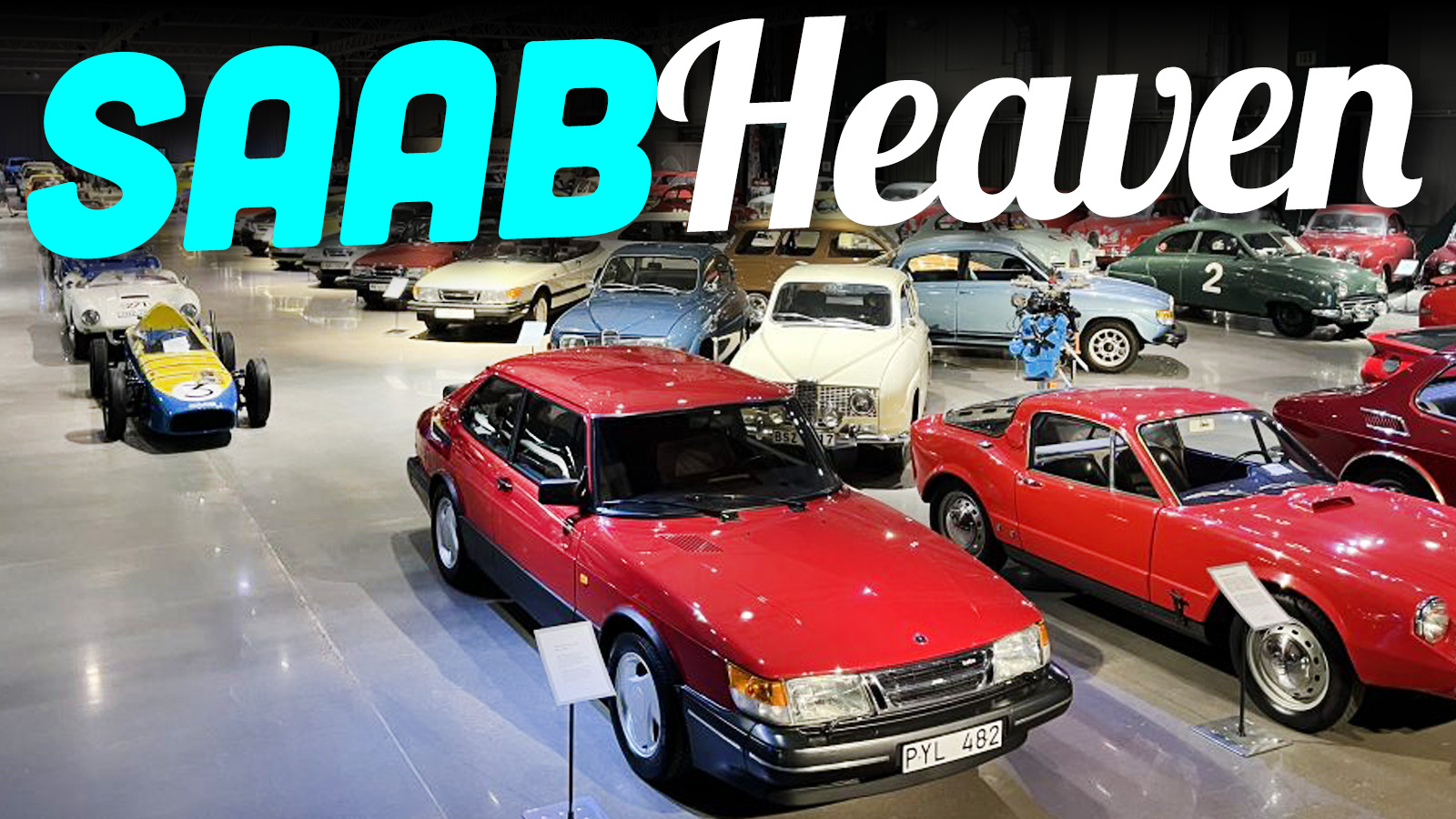
On December 19, 2011, after months of fruitless negotiation and three years of post-General Motors independence, Saab Automobiles, AB filed for bankruptcy in Swedish court. As a part of the bankruptcy dealing, the Saab Car Museum and all its contents were sold at auction.
However, unlike the longtime Saab factory in Trollhättan, Sweden, and the intellectual property rights to produce the second-generation 9-3 sedan—which were purchased by a group called New Electric Vehicle Sweden (NEVS) and have remained ever since in automotive development hell—the quirky, underdog automaker’s monument to its own history was purchased by a triumvirate of three institutions.


First: Saabgroup, the aerospace manufacturer, original parent company of Saab Automobiles, and inspiration for the famous “Born from Jets” advertising slogan. Second: the Marcus and Amalia Wallenberg Memorial Foundation, a philanthropic arm of the influential Wallenberg family involved in the founding and management of the above. And third: the municipal government of the city of Trollhättan.

This odd throuple of defense industry, philanthropy, and local government has provided the strong financial safety net lacked by many independent car museums, so that even now, fifteen years later, the Saab Car Museum is still going strong.
[Ed Note: America has lost more great museums than we can count. The National Motorcycle Museum, Billy Joel’s 20th Century Cycles, Chicago’s Klairmont Kollections, the Mullin Automotive Museum, the Rodz & Bodz Movie Cars & More Museum, and so many more closed their doors permanently in recent years. The Saab Car Museum is rather lucky! – MS]

Yes, the museum was closed between June and September of this year, but that was to allow the roof to be renovated, the first significant work to the facility since the launch of the 9-3 SportCombi in 2005. But during those four months of downtime, the Saab Car Museum transported its entire collection across town to create the largest-ever display of historic Saab automobiles.
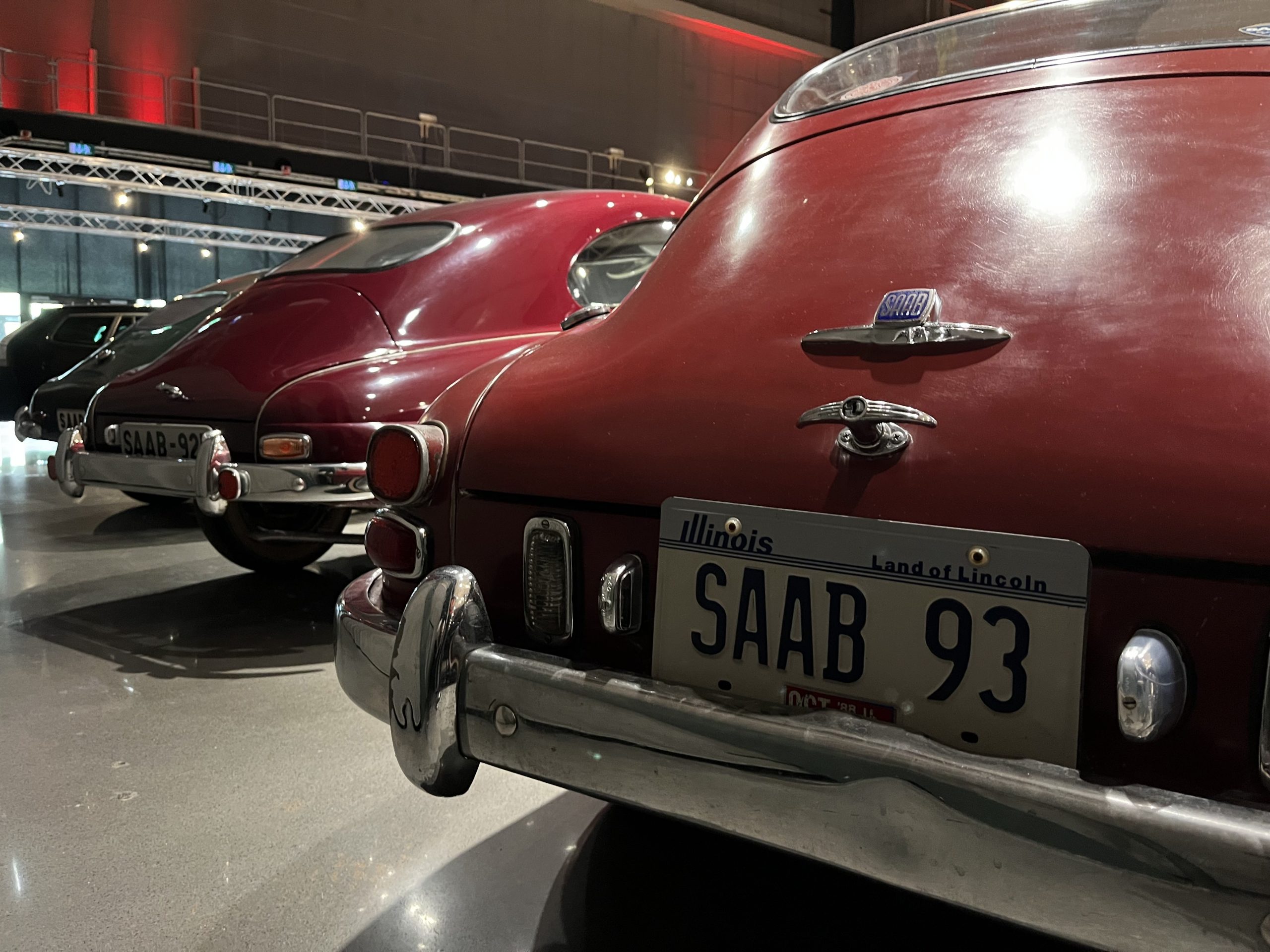
They called it “The Box” and it is, simply, the museum’s entire collection parked in a converted warehouse. I visited in June, dragging my family on a day-long excursion from our Swedish summer vacation to peruse the seventy-year history of Saab automobiles, from 92 to 9-3 (which, I promise, is more impressive than it sounds).
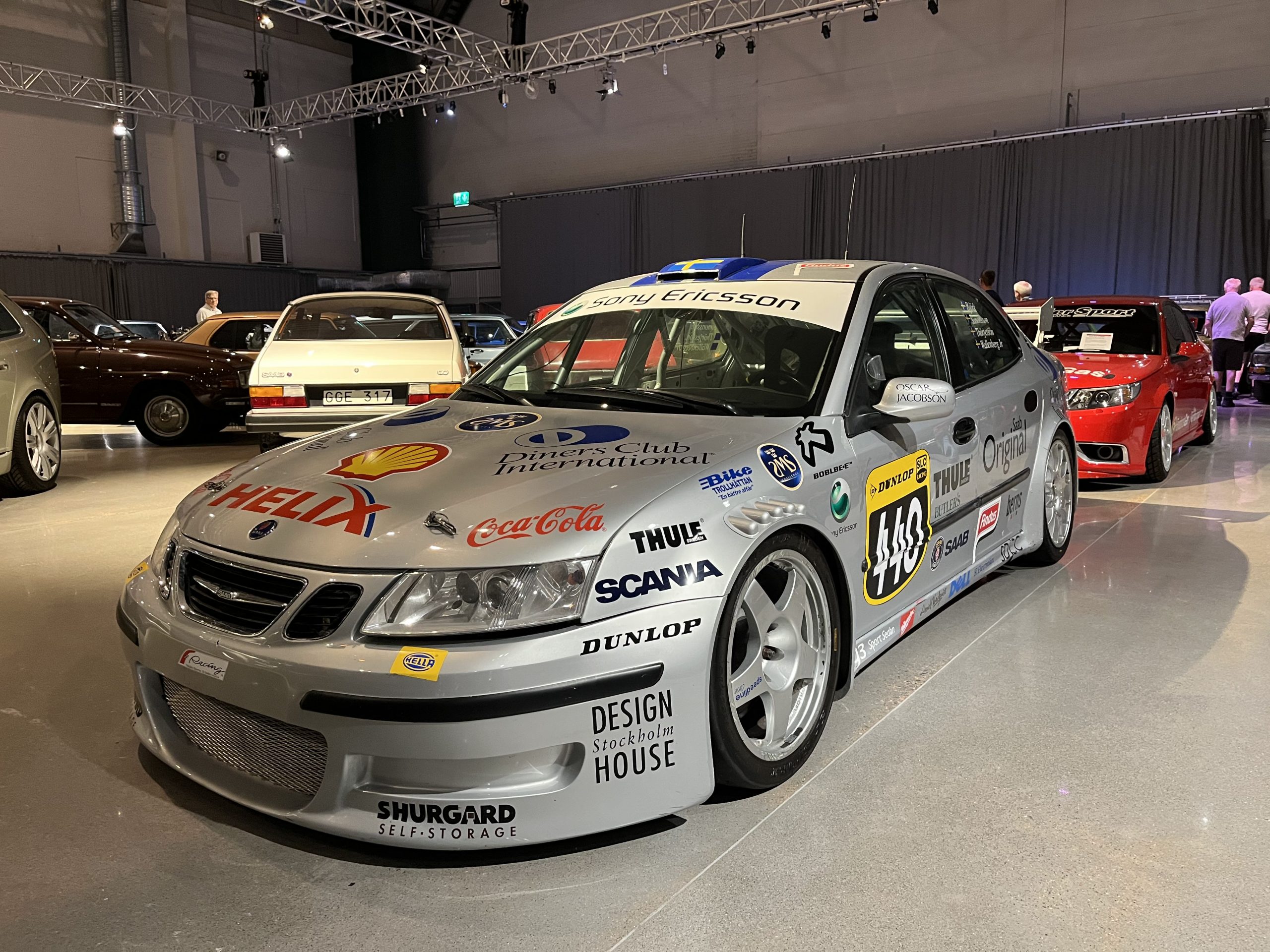
I’ve been to my fair share of brand-specific car museums—usually dragging my family with me—but what clearly stood out about this one is that the experience didn’t end with an advertising department ham-fistedly trying to convince us that some blobby new crossover has the “same DNA” as the decades worth of cool shit I just spent the last three hours drooling over. The Saab Car Museum is definitively not a marketing exercise. There are, after all, no more Saabs to market.
For the anti-consumerist fan of oddball cars, this is a damn near perfect opportunity. I doubt an automaker with an economic incentive to push visitors towards dealers and in-house financing could so proudly show off its failures.
Take this prototype for the classic Saab 900 convertible, below. Robert Sinclair, head of Saab-Scania of America, asked the executives back in Trollhättan for a soft-top variant to boost US sales. The company bigwigs targeted the 1983 Frankfurt Auto Show for the reveal.
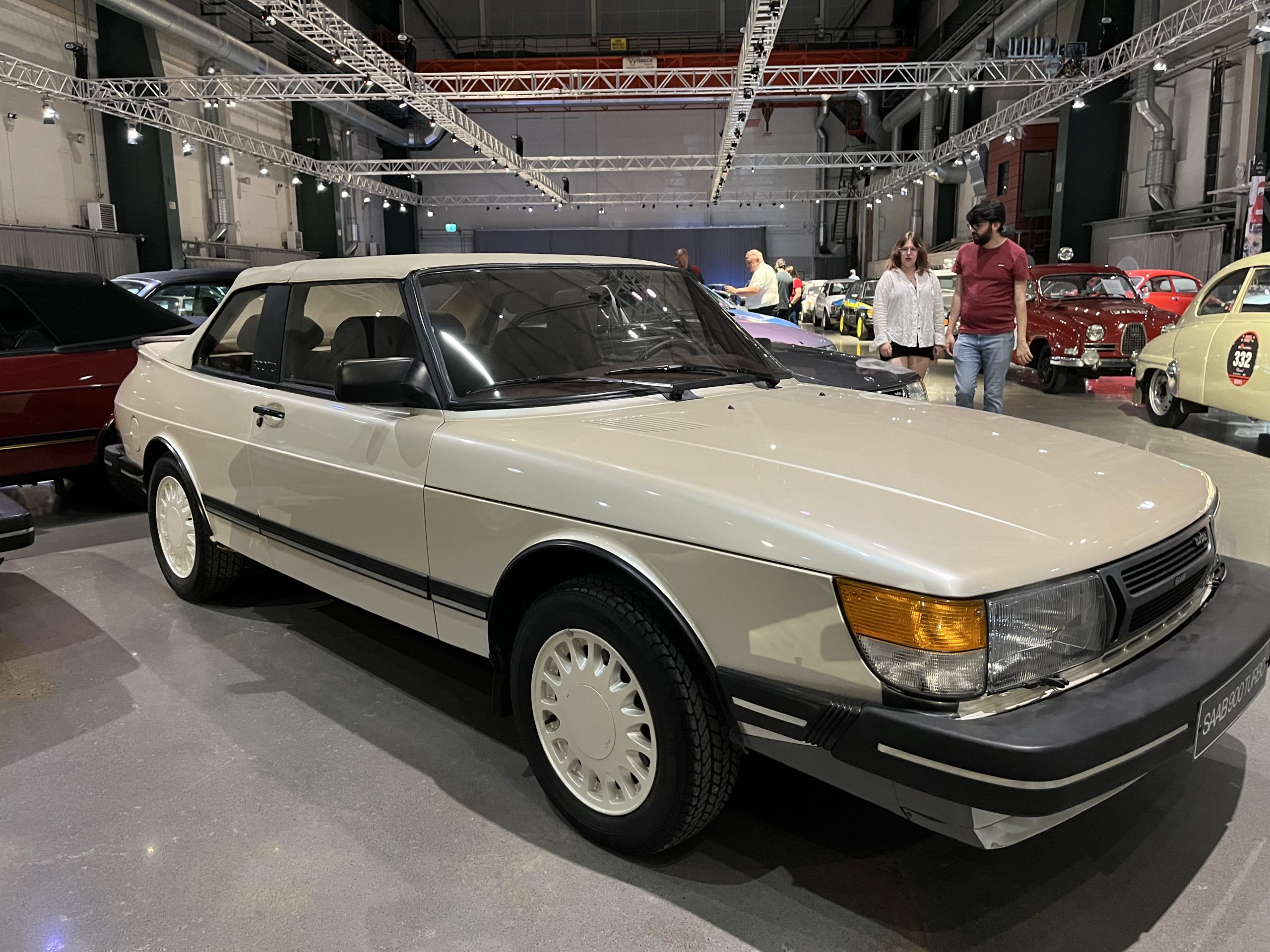
The in-house design team soon realized that a Saab 900 CombiCoupe has quite a lot of roof to replace, so they designed a folding soft top that would seal to a sturdy central roll bar, with a separate targa top to bridge the gap between the roll bar and the windshield.
Meanwhile, at Sinclair’s request, the American Sunroof Company was working on their own version, based on the sturdier sheet metal of a 900 two-door sedan, with Buick hardware supporting a single full-length folding canvas roof. When Saab execs brought the two prototypes together for a comparison (in Pasadena, CA, of all places), the decision was easy: only one of the concepts allowed a driver to lower the roof in 30 seconds without getting up from the driver’s seat—and it wasn’t the one designed by the crack team of Swedes. And so, the American Saab Convertible was shipped to Frankfurt and shown to the world, while the white car pictured above made its way back to Trollhättan.

There’s nobody standing over the shoulder of the Saab Car Museum’s curator, making sure the parent company looks like it always knew what it was doing. So, the Saab Car Museum proudly tells of how Saab was one-upped by a gaggle of LA weirdos wielding secondhand Buick parts—because it’s the story of how one of the company’s most iconic vehicles came to be. And the delightful, oddball evolutionary dead-ends don’t stop there.
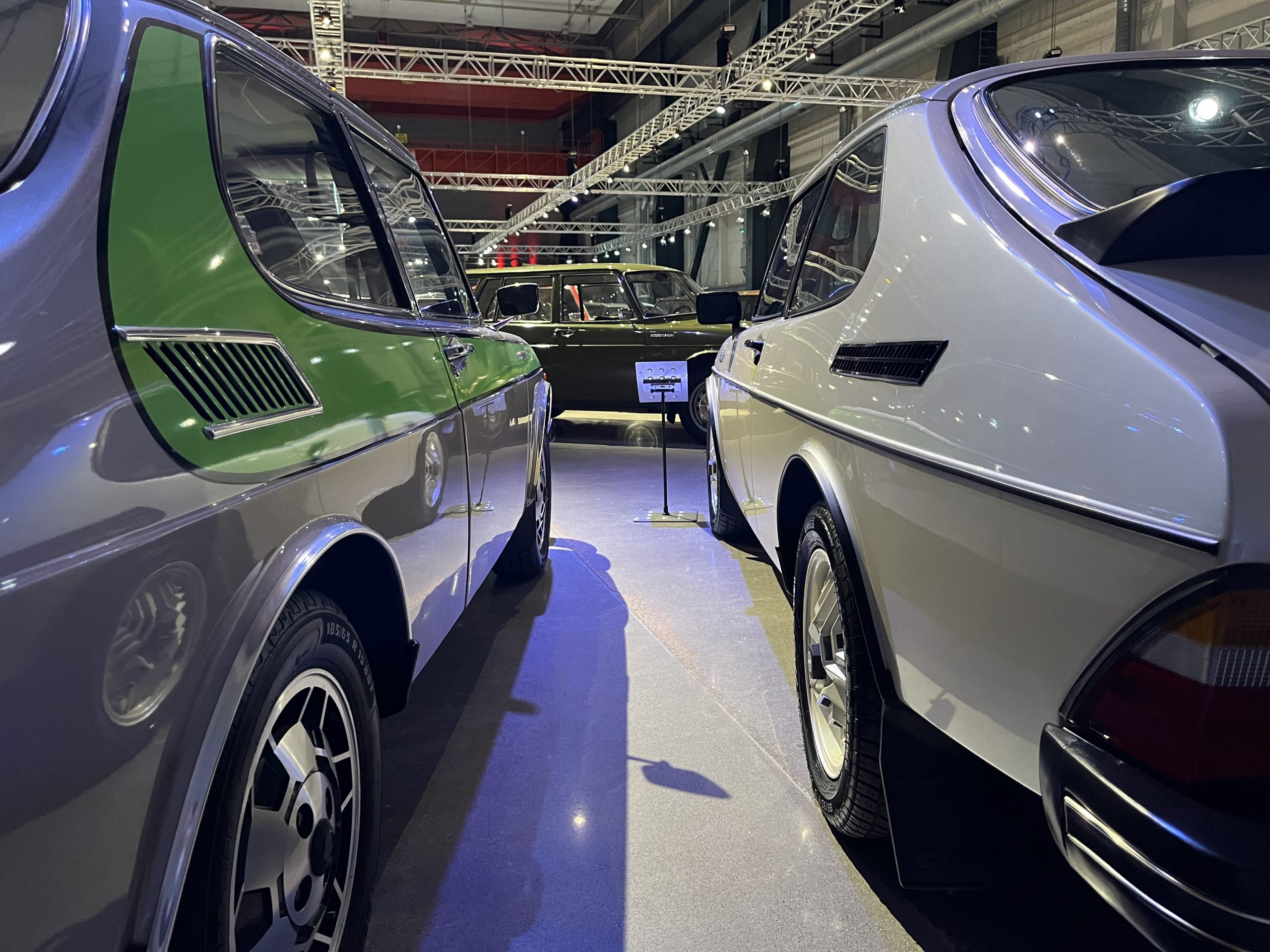
In the late ‘60s, the Saab Sport rally team wanted to enter a higher-displacement class than the existing 748cc motor in its rally-spec GT750 could accommodate. Could Saab afford to develop a new engine? Not really! But they could try putting two of them under the hood!
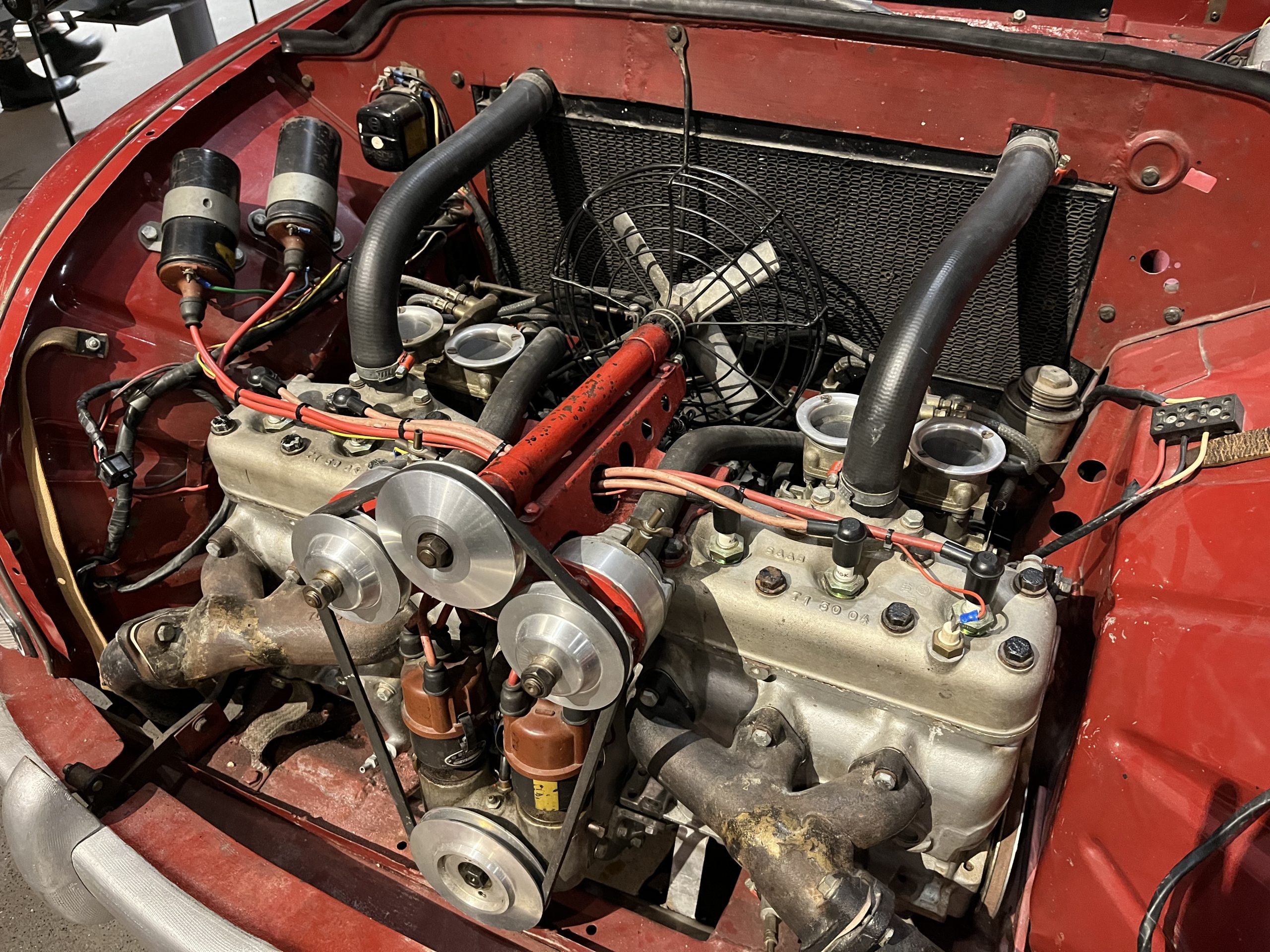
This experimental transverse, two-stroke, not-quite-inline-six had a displacement of 1.5 liters, two sets of headers, two distributors, one radiator (mounted on the firewall, naturally) and produced 138 horsepower, up from the standard car’s approximately 55. It sent this power through one three-speed manual gearbox, until it inevitably reduced itself to metal shavings.
But it worked long enough for some madcap test driver to clock 122 mph in the thing, a speed at which the 93’s teardrop body produced a massive amount of lift and the significant front weight bias rendered the car almost completely undriveable for understeer. They nicknamed it “Monstret”– Monster –and it never again saw the light of day. It didn’t work. It basically never made sense. But they tried it! And they kept the prototype for display.

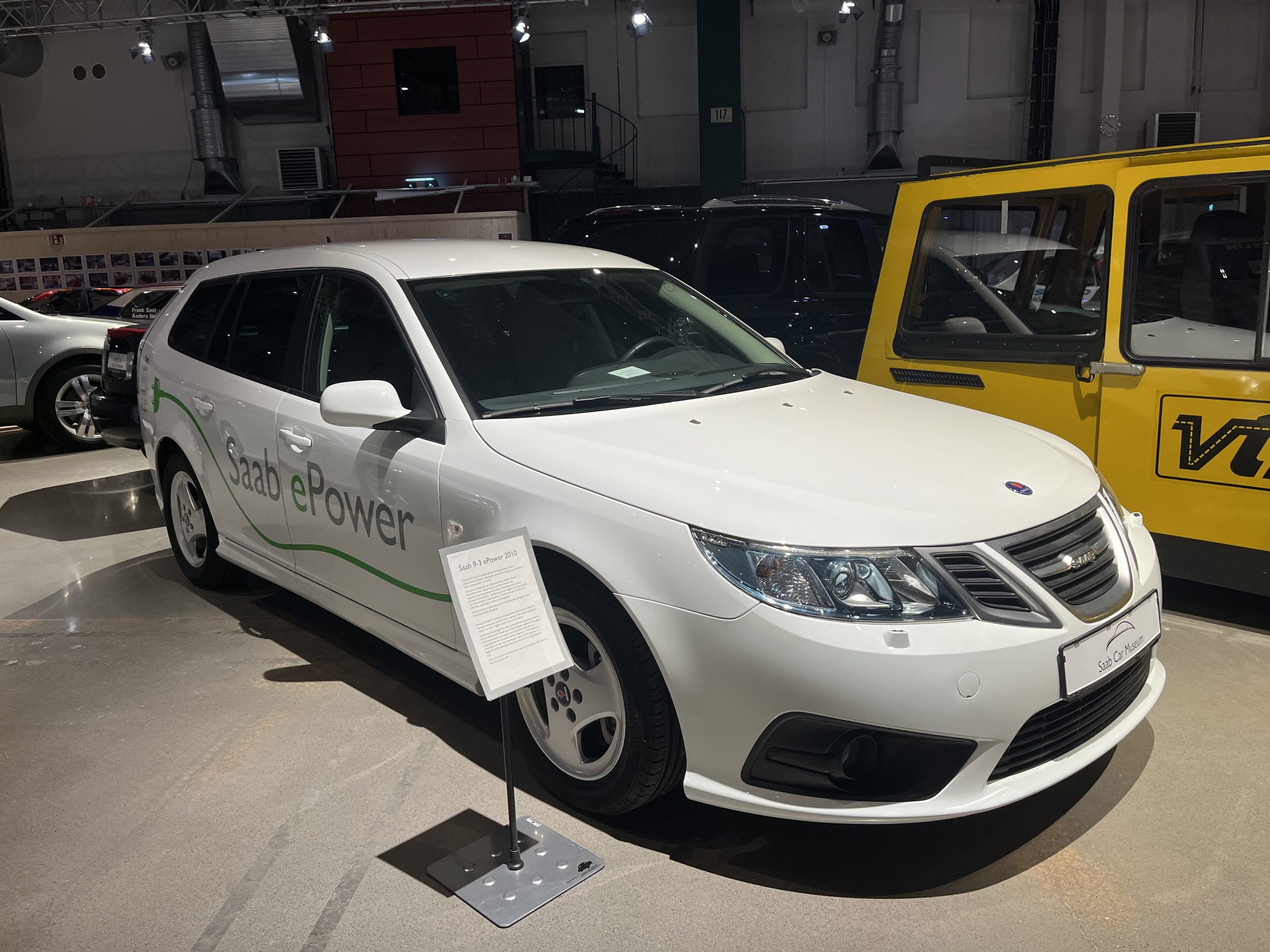
Monstret wasn’t even the only multi-motor Saab on the floor. At the very leading edge of the auto industry’s current push towards lower emissions, Saab’s engineers cooked up an experimental ethanol-BEV hybrid powertrain, upgrading the GM-derived B207 two-liter turbo four to push 260bhp, and pairing it with a 15kW integrated starter-generator. A 300-volt lithium-ion battery designed to fit under the floor of the second-generation 9-3 powered a 38kW motor on the rear axle, with no mechanical connection to the combustion-powered front drivetrain.
But for the BioPower Hybrid Concept’s big reveal at the 2006 Stockholm Auto Show, Saab chose to package the experimental drivetrain under the body of a 9-3 convertible—reportedly, without compromising luggage space.
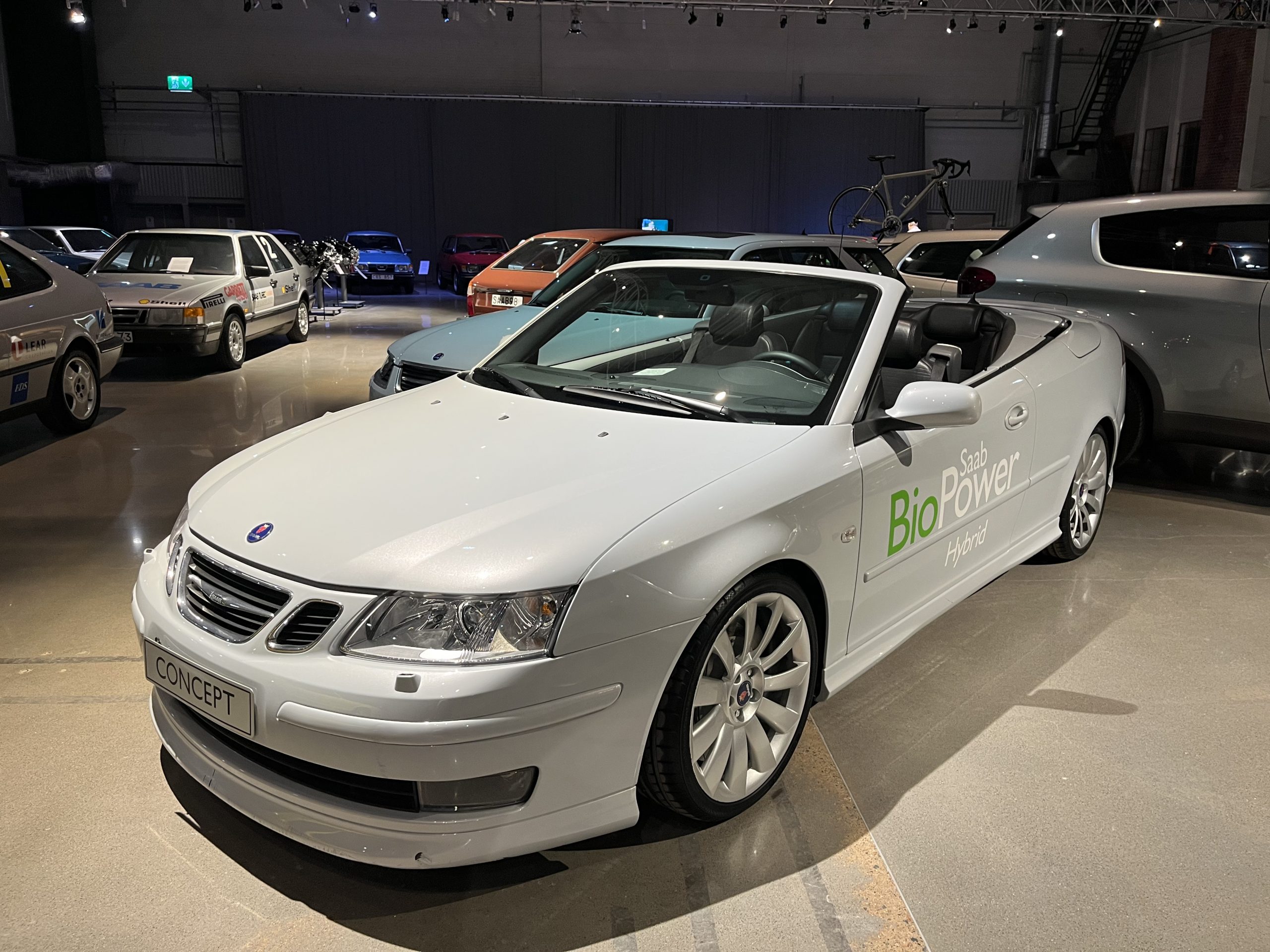
Wildly prescient in some ways (e-AWD! LI battery! 2.0L turbo-four with stop-start!) and charmingly antiquated in others (ethanol optimism! compact premium four-seat cabriolet!), the BioPower Hybrid represents the best of Saab’s wildly ambitious, frequently confusing, and occasionally genius approach to design, costs be damned. Unfortunately, it’s that last part that came back to bite it. GM’s bankruptcy and Saab’s sale to Spyker killed the BioPower Hybrid project.
Sure, even the most die-hard Saab fanatic wouldn’t think they’d have sold more than four or five hybrid biofuel compact convertibles in the midst of the Great Recession— but it’s worth pointing out that they arrived at a genuinely clever idea and packaged it in a way that’s as puzzling as possible. In many ways that’s the story of Saab: a little bit great, a little bit terrible. But nobody else was going to try it. And if it appealed to you, you wouldn’t drive anything else.
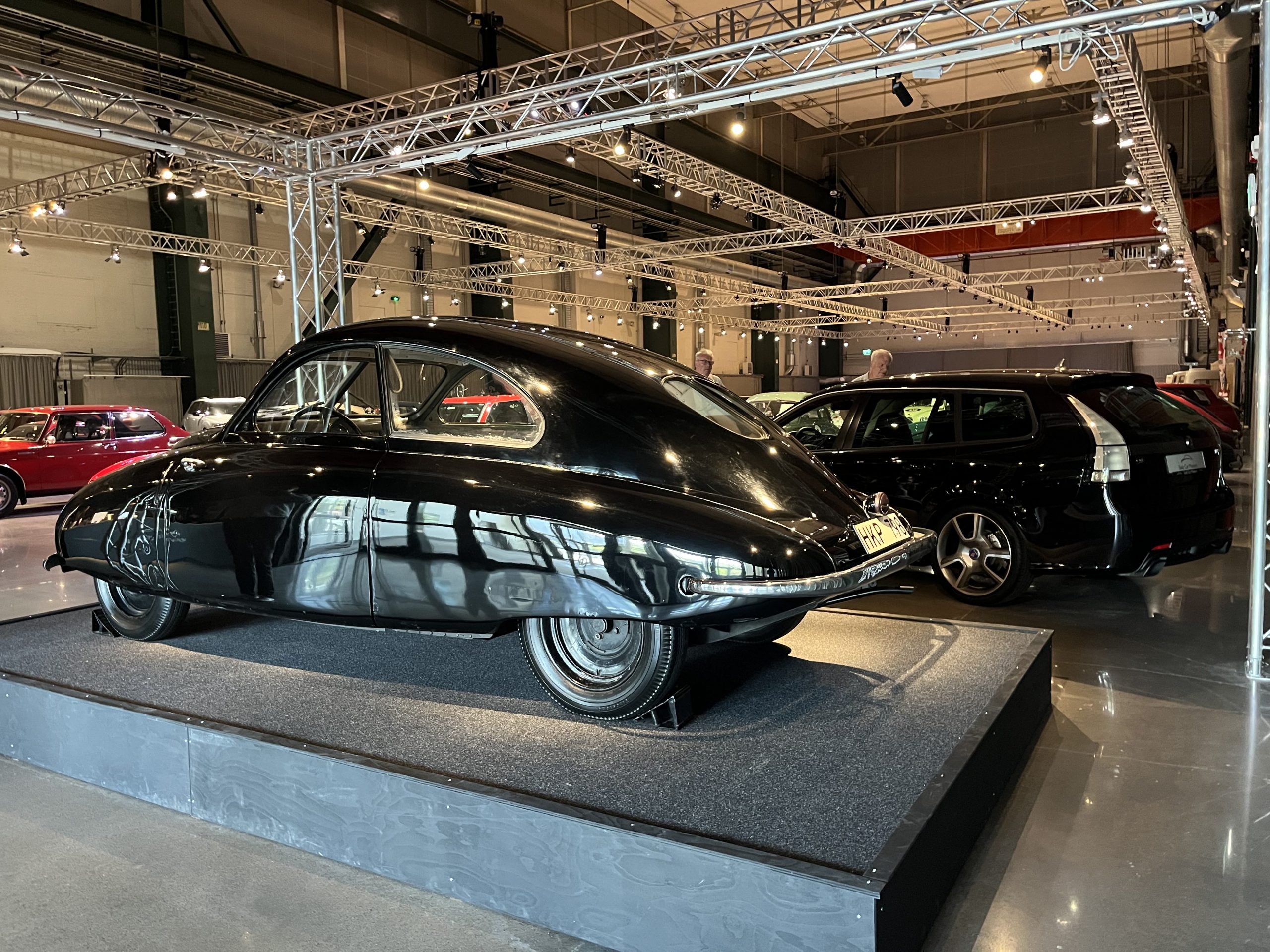
This is the story the Saab Car Museum tells through its collection. Clear-eyed and quirky, the museum can only go on like this because Saab the automaker doesn’t. The story it tells is special because it has an end—an end that makes satisfying narrative sense. Those trusty Swedes went down taking big swings, throwing at first GM’s (endless), then Spyker’s (very limited) money at unconventional engineering and design until the bitter end.
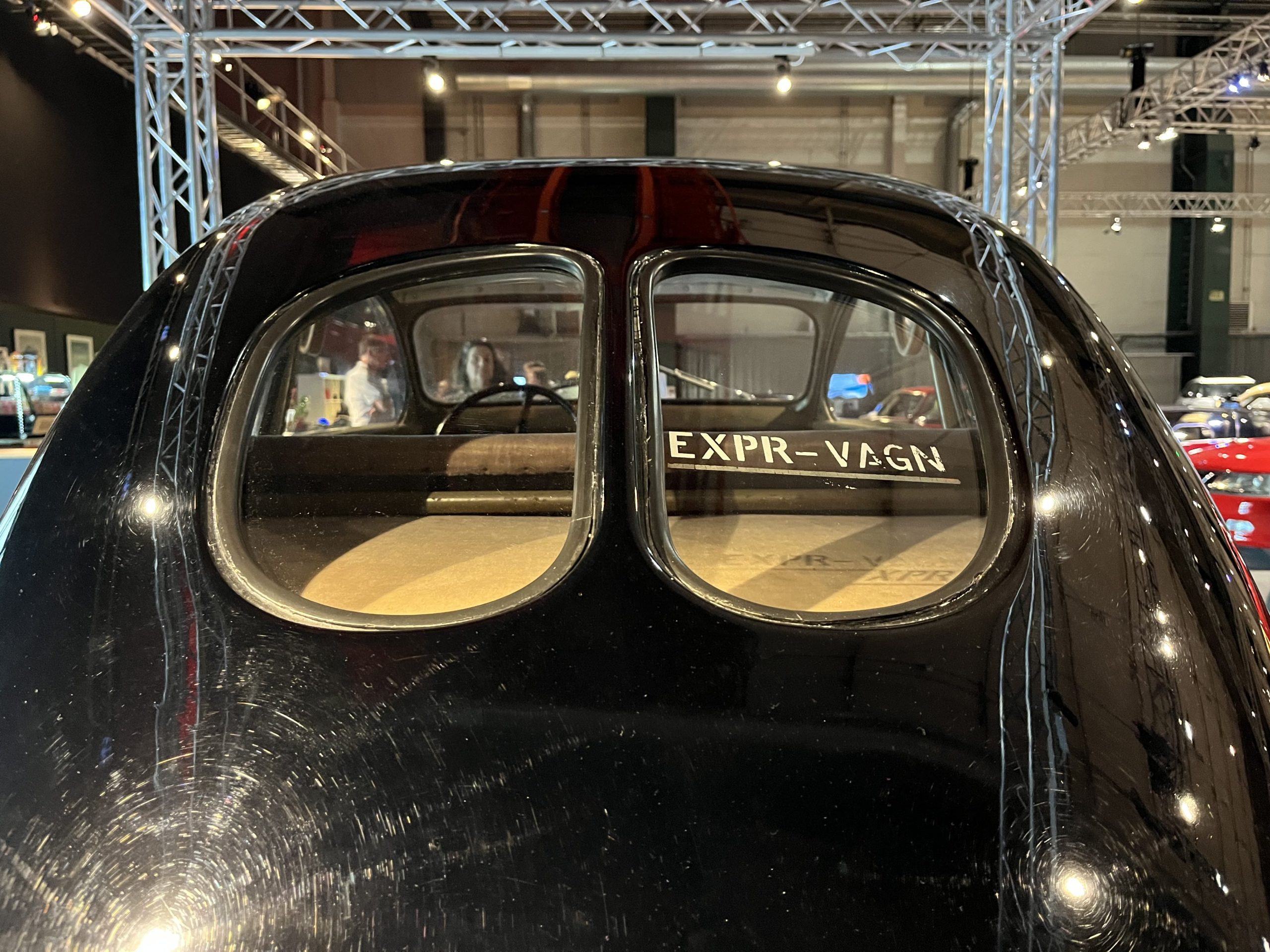
And while the newly renovated museum is sure to live on for years to come, drawing Saab fanatics from around the world to the little Swedish city that stepped in to save it, they will encounter, as I did, a bittersweet irony on the roads of Trollhättan.
As a Saab driver, I’m used to pointing out 9-3s and 9-5s in traffic to whoever has the misfortune of riding shotgun. In Trollhättan—even 15 years after the factory closed shop—I couldn’t turn my head fast enough.
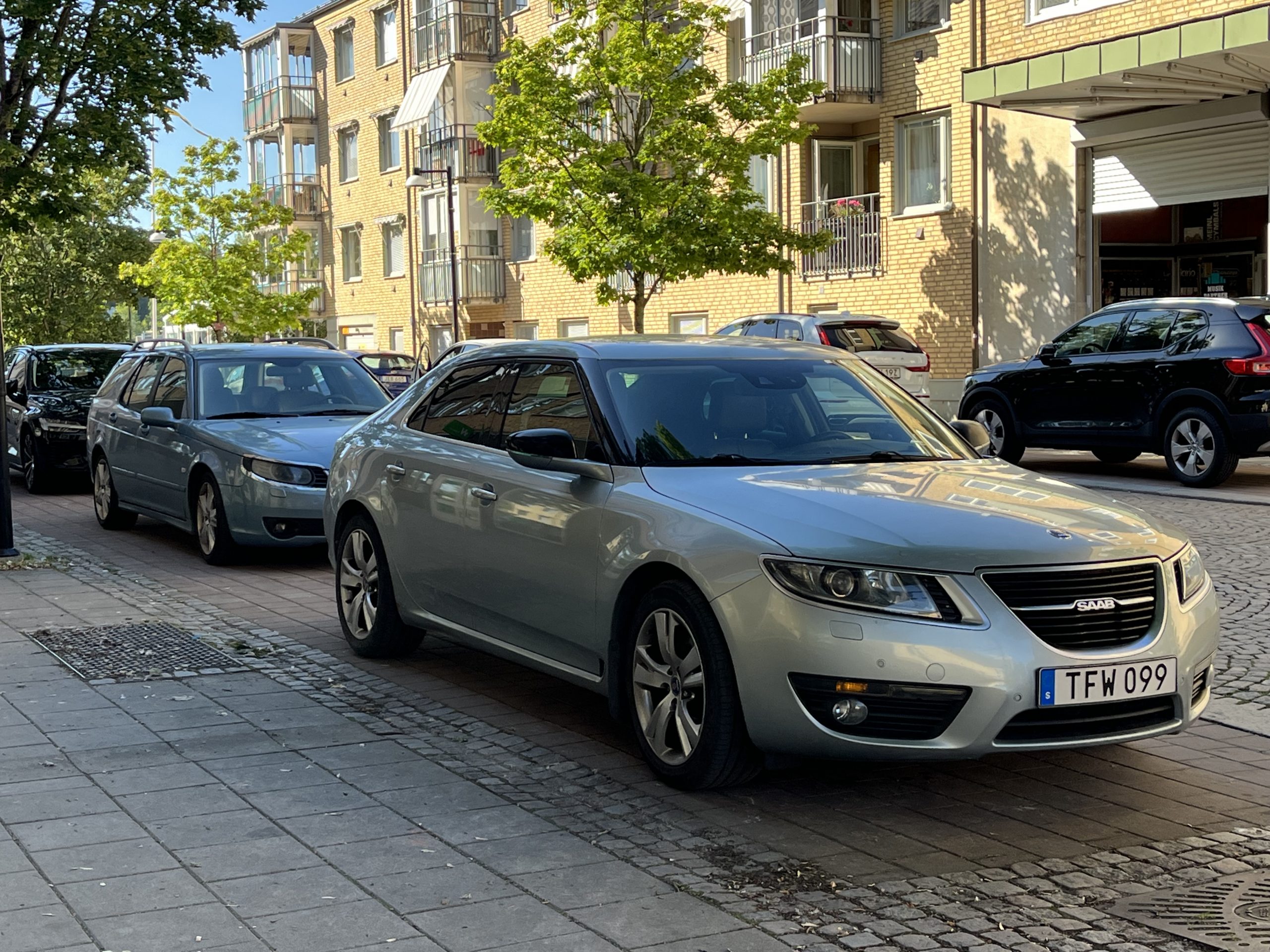
This industrial city of 50,000 is still indisputably the Saab capital of the world. It’s charming, wacky, and undeniably Saab that so many of these orphaned cars are still on the road, living regular lives as the regular cars of regular people. But the clock is ticking on this weird denouement to the Saab story.
As time rolls on, the Scandinavian winters will rust through rocker panels. Turbos will go bang and cylinder heads will crack. We might not be there yet, but eventually, the cost of repairs will outweigh municipal pride. One by one, Trollhättan’s wild Saabs will disappear. And there’s not a damn thing you or I can do about it—except go to Sweden and see them while we still can.

Scholars of Shakespeare would tell us that a satisfying tragic ending can be just as cathartic as a happy one. Visiting the Saab Car Museum and looking around the little city that brought these cars to life, it feels in some way that this was all inevitable—that the honest little automaker always doing more with less was too good for this cruel world.
Maybe it was. But that’s what makes this story worth telling—to me, to the Saab faithful the world over, to Sweden’s largest defense contractor, the wealthy family that founded it, and the municipal government of the city that it called home. And maybe that’s why, through decades of ownership changes, bankruptcy auctions, and the indifferent passage of time, the Saab Car Museum will continue to carry on.





I always wanted a Made by Trolls in Trollhattan sticker for my 83 900S. It was my first car, and I still miss it.
I visited the Saab Museum on my first BMW Euro Delivery tour in 2011. Very cool place, but Trollhattan was pretty sad as Saab production had just shut down.
There is also the “other” Saab museum in Finland, on the grounds of the company that did contract manufacturing for them and various other makers, including Porsche. The name is completely escaping me – but we got to see and hear the prototype V8 9000 that never made production while we were there. The Finish portion of my trip was with the 2011 Saab International Convention, as was the tour of that facility. I actually was already signed up to go to the convention when I decided to buy my BMW wagon, and glommed the delivery onto the beginning of the trip. Which resulted in a wild overnight dash from Germany to Sweden to meet up with some friends, then a trip on the overnight cruise ferry from Stockholm to Helsinki.
Shame Americans can’t do Euro Delivery any more for BMWs or Saabs, though I think Volvo still does it.
Autopian Contributor?
There was a farmer who sold various vegetables at the state fair one year, who brought a somewhat crusty Saab Sonnet III with him. Coolest thing we saw there, I think.
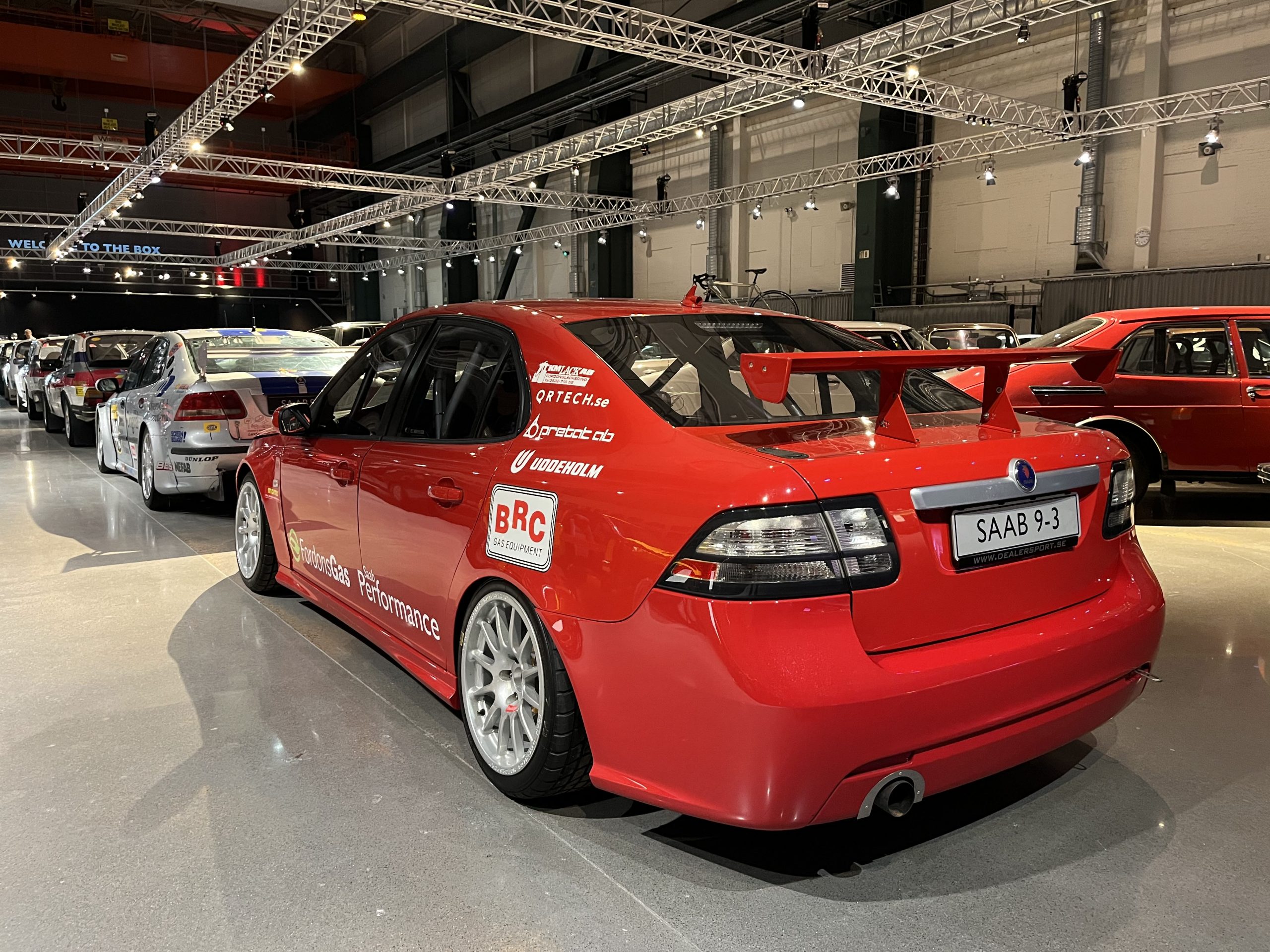
I would love to see this collection, especially the N24 9-3, and the red Supertouring-y thing behind it.
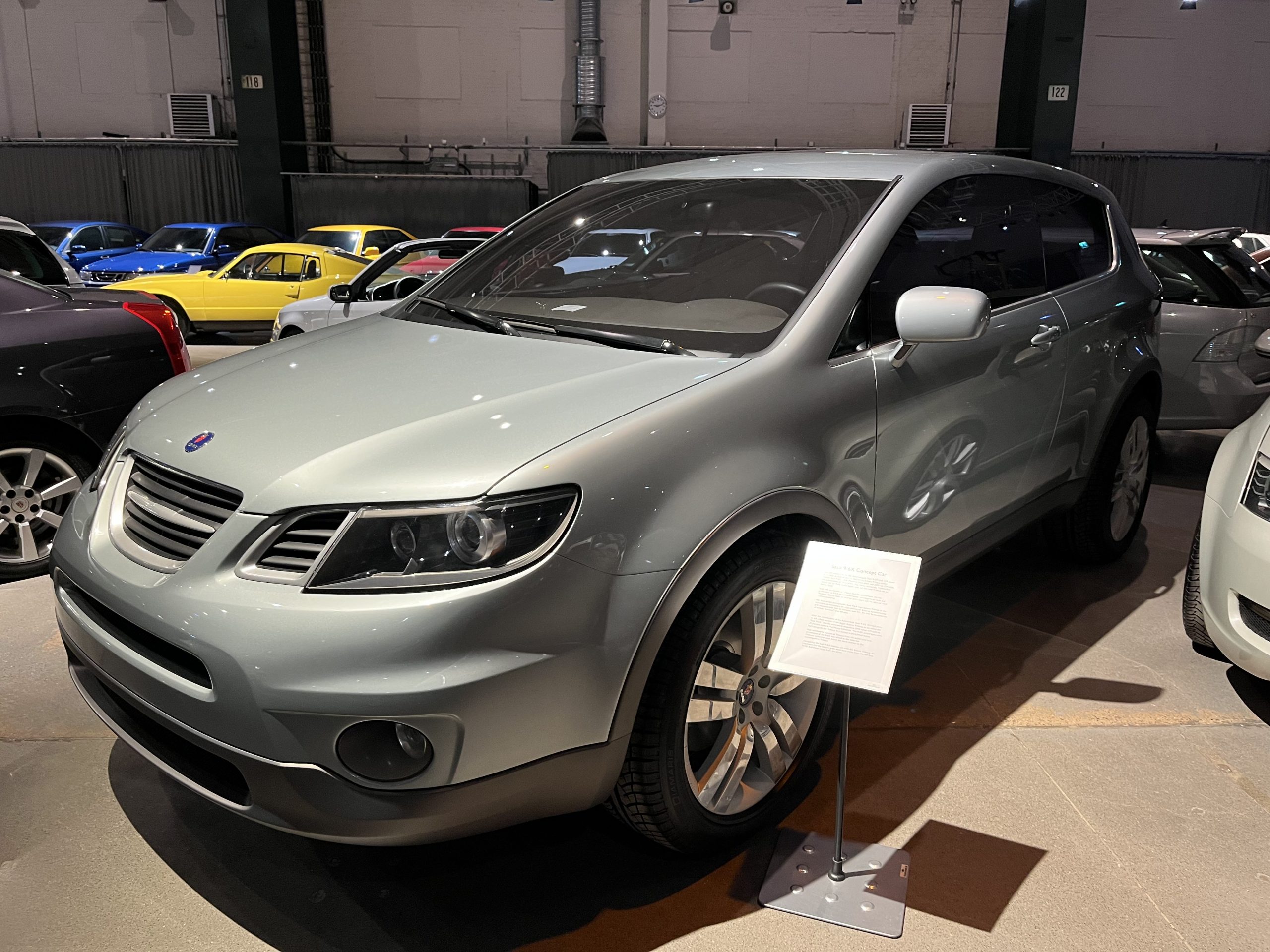
9-4X !
9-4X !!
9-4X !!!
Well written, Anon. I care more about Saab at this moment than I have my entire life up until six minutes ago.
Well done, (checks byline) Autopian Contributor. I always enjoy your work!