

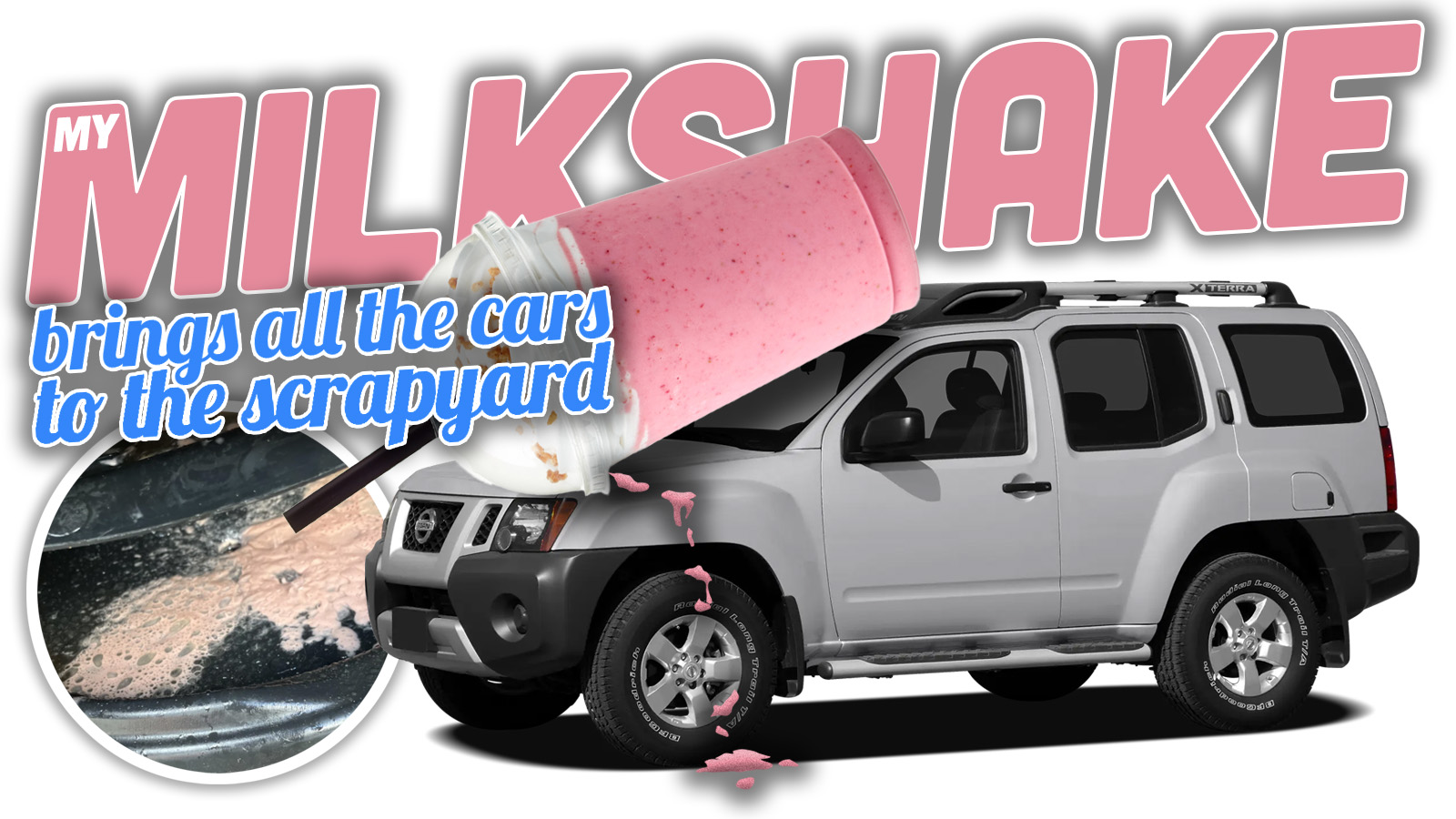
Cars are a little like humans, in that they both have liquids inside them and if certain liquids come out, something is wrong. Likewise, the health of these liquids is critical, and they’re generally meant to be isolated from one another (i.e. not mixed). To that point, there exists in the nightmares of many car owners something called the “strawberry milkshake of death.” It is an automotive ailment that is almost always realized too late, leading to the death of an automatic transmission.
When transmission fluid gets too hot, it loses its ability to lubricate and cool the internals of an automatic transmission, potentially resulting in catastrophic damage. This is why many cars feature transmission coolers — radiators for your transmission fluid. Often, this comes in the form of a combined heat exchanger where part of the radiator handles thermal exchange for the coolant and part of the radiator handles thermal exchange for the transmission fluid — the two sections physically sealed from each other.


[Ed Note: Here’s a close look at an “end-tank cooler” or combined heat exchanger as Thomas puts it:
You’ll notice how the automatic transmission fluid is pumped into the “cold” radiator end-tank (i.e. coolant is flowing from the other tank, across the radiator core, and into this tank), where the transmission fluid flows into a heat exchanger that expels transmission fluid heat into the “cold” coolant in that tank. -DT]
It’s a compact solution that helps with packaging, plus the reduction in the number of parts needed cuts costs. On top of that, having the fluids close together may aid transmission fluid warm-up time (since the coolant can actually warm up the transmission in addition to cool it), but things can go badly wrong if the fluids in the two sections find a way to meet.
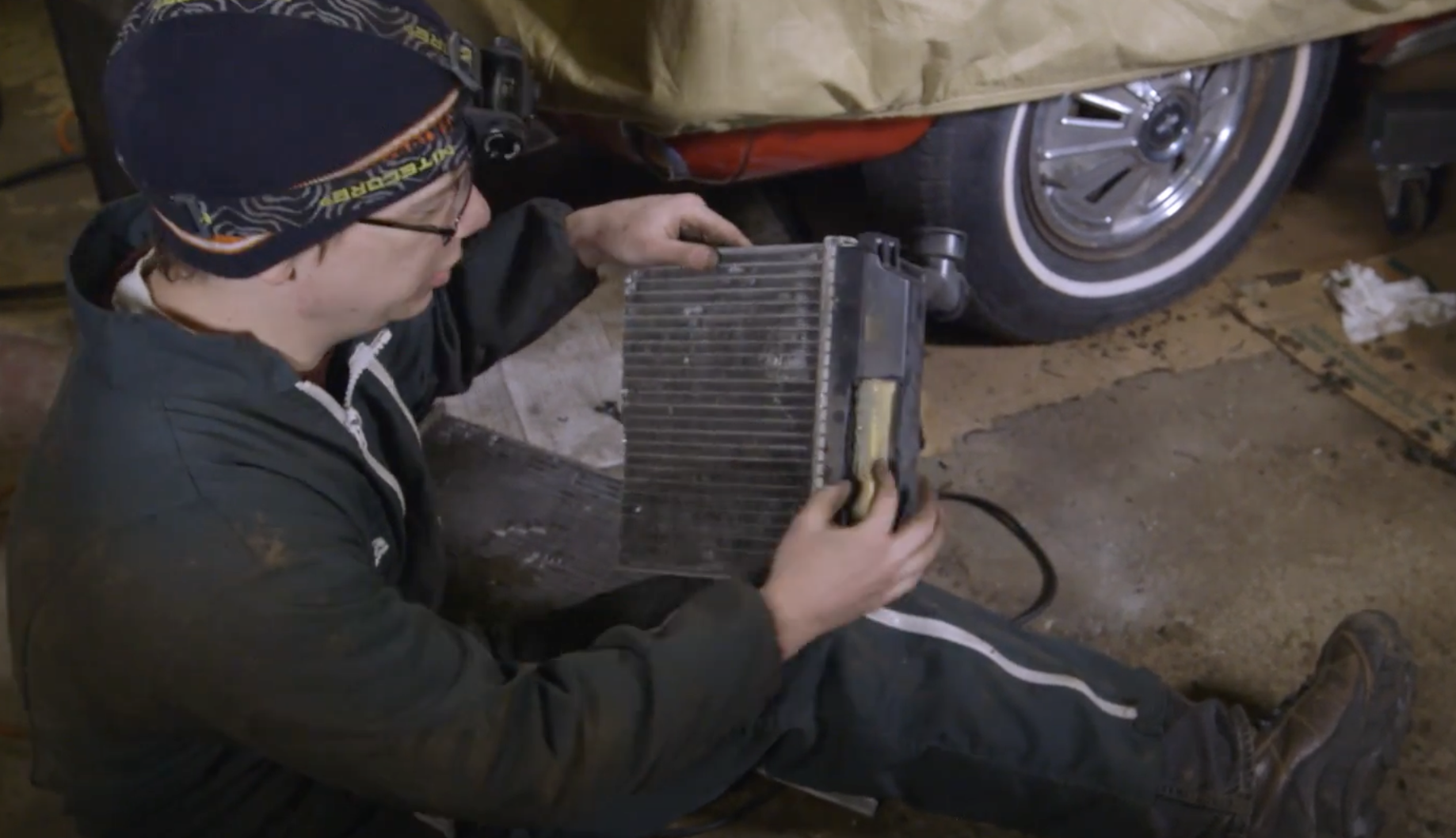
Unsurprisingly, as some of these combined heat exchangers age, they can suffer internal failure, allowing automatic transmission fluid to mix with coolant, seriously affecting the effectiveness of both fluids. Once this happens, most drivers simply won’t know about the intermixing until damage has occurred unless they look inside their coolant expansion tank and find that something isn’t right, as that’s the only visual indicator of this problem. While this isn’t a failure mode that happens to every car, it’s common enough to have earned a nickname: the Strawberry Milkshake of Death, or SMOD for short.
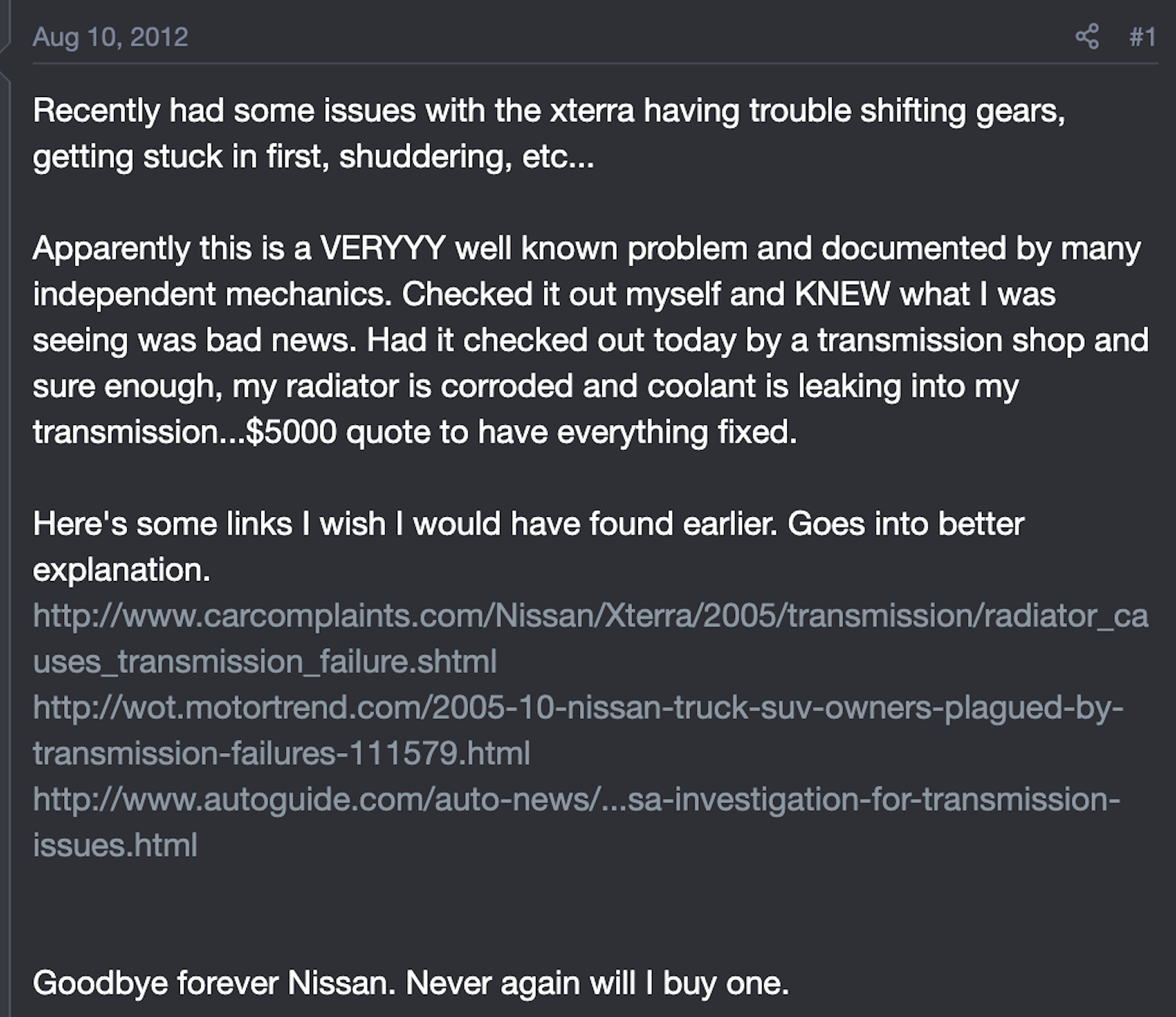
This nickname comes from the Nissan community, as 2005 to 2010 Nissan Frontier pickup trucks, XTerra SUVs, and Pathfinder SUVs with automatic transmissions were fitted with particularly problematic radiators. They failed internally early enough and often enough that owners were reporting problems more than a decade ago, such as this extremely upset XTerra owner venting their frustrations on the XTerra Nation forum, signing off with “Goodbye forever Nissan. Never again will I buy one.”
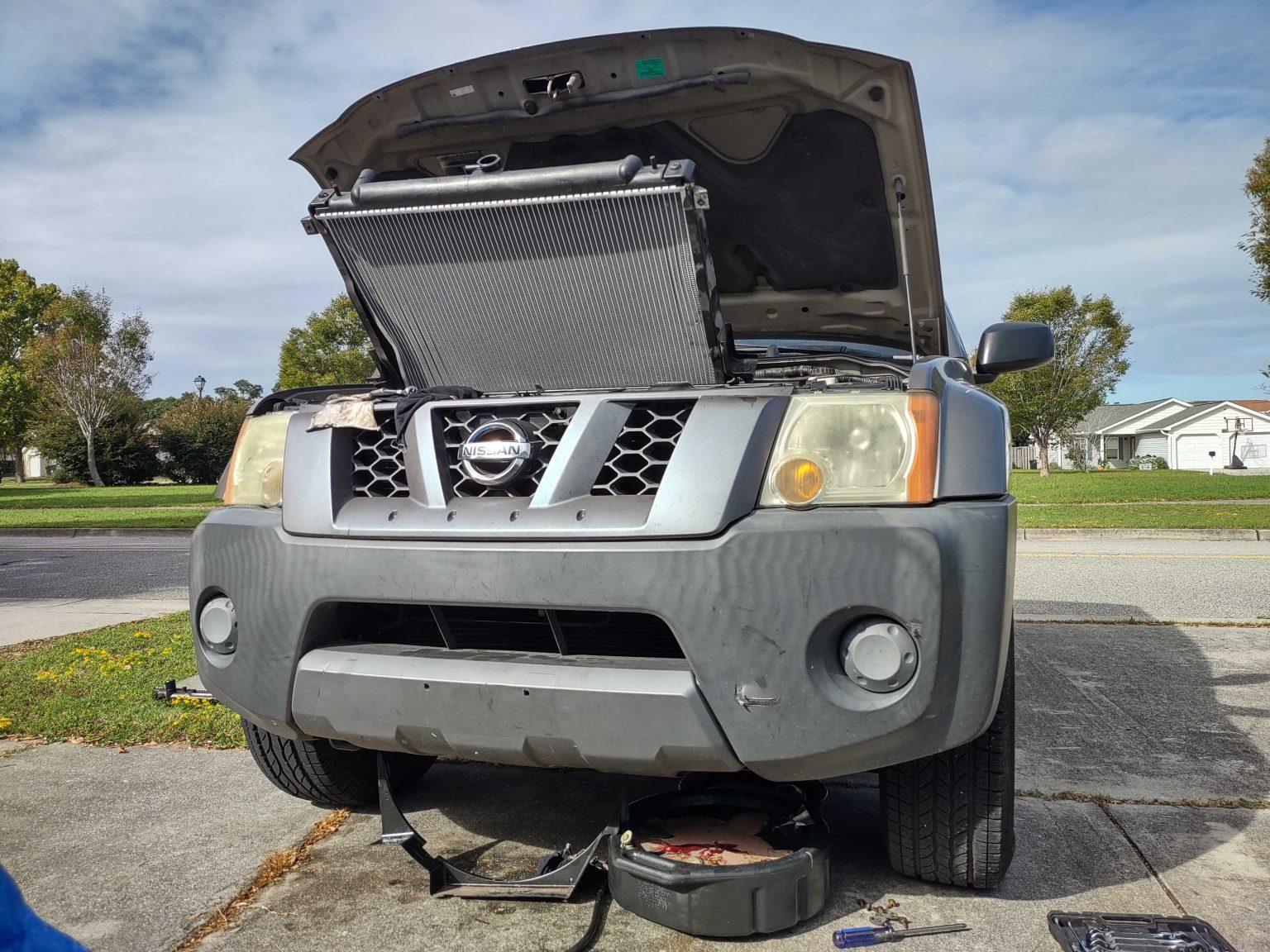
Even our own wrenching-contributor Stephen Walter Gossin once owned a nice Nissan XTerra with the Strawberry Milkshake of Death:
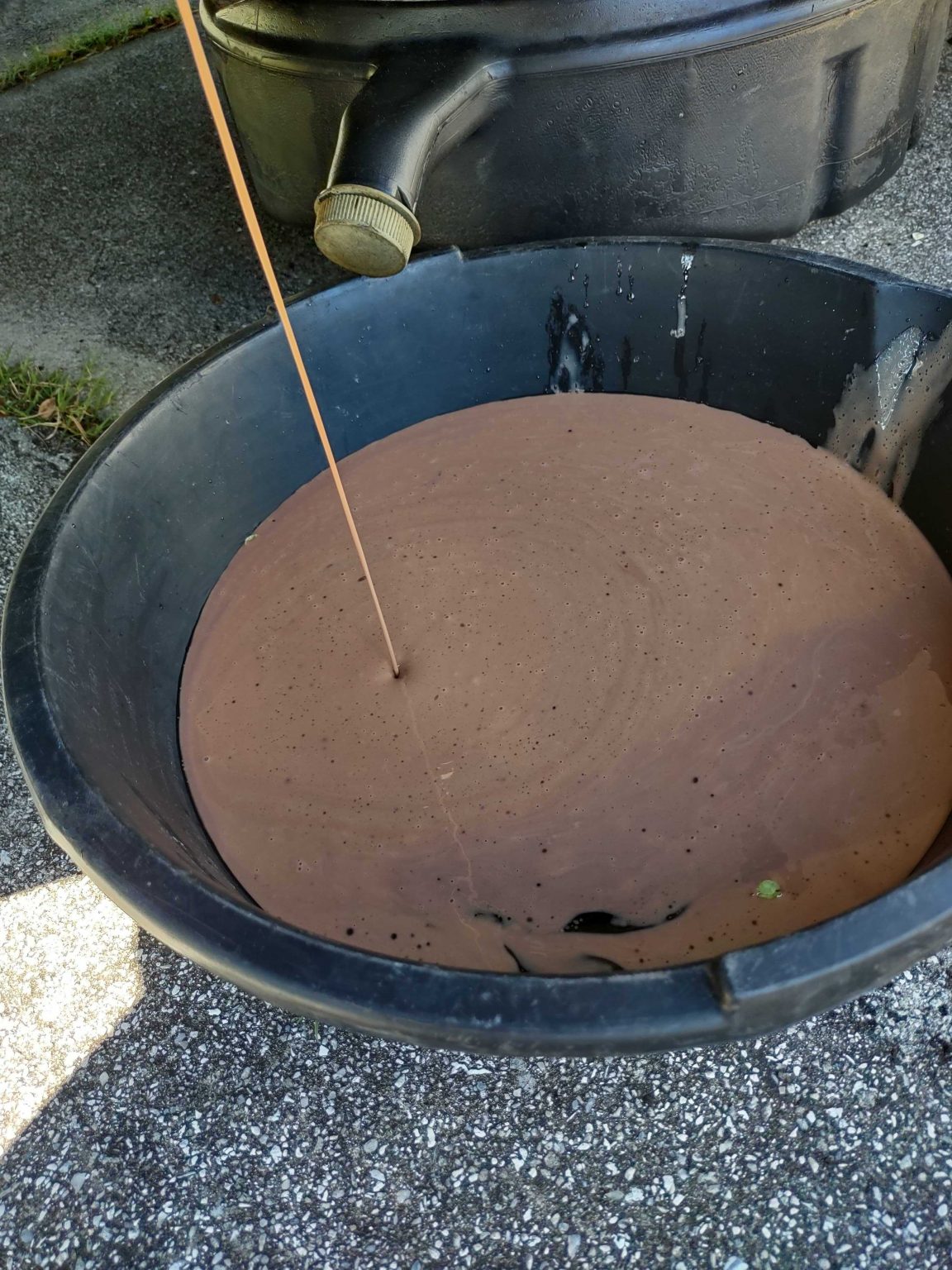
Failure rates were high enough that Nissan ultimately extended the warranty on these radiators from three years or 36,000 miles to ten years or 100,000 miles, with a catch. As the automaker wrote in the warranty extension announcement:
On a small percentage of vehicles, an internal crack on the oil cooler tube may occur leading to internal leakage of engine coolant. While the majority of vehicles will not experience this issue, for customer satisfaction purposes, Nissan has decided to further extend the coverage of the New Vehicle Limited Warranty on the radiator assembly, subject to certain customer co-pays that vary with age/mileage.
From what I’ve learned, beyond eight years or 80,000 miles up to nine years or 90,000 miles, the customer co-pay stood at $2,500. From beyond nine years or 90,000 miles up to 10 years or 100,000 miles, the customer co-pay stood at $3,000. That’s a huge co-pay, but if this failure took out the transmission, it did mean that a portion of the repairs would be covered by Nissan.
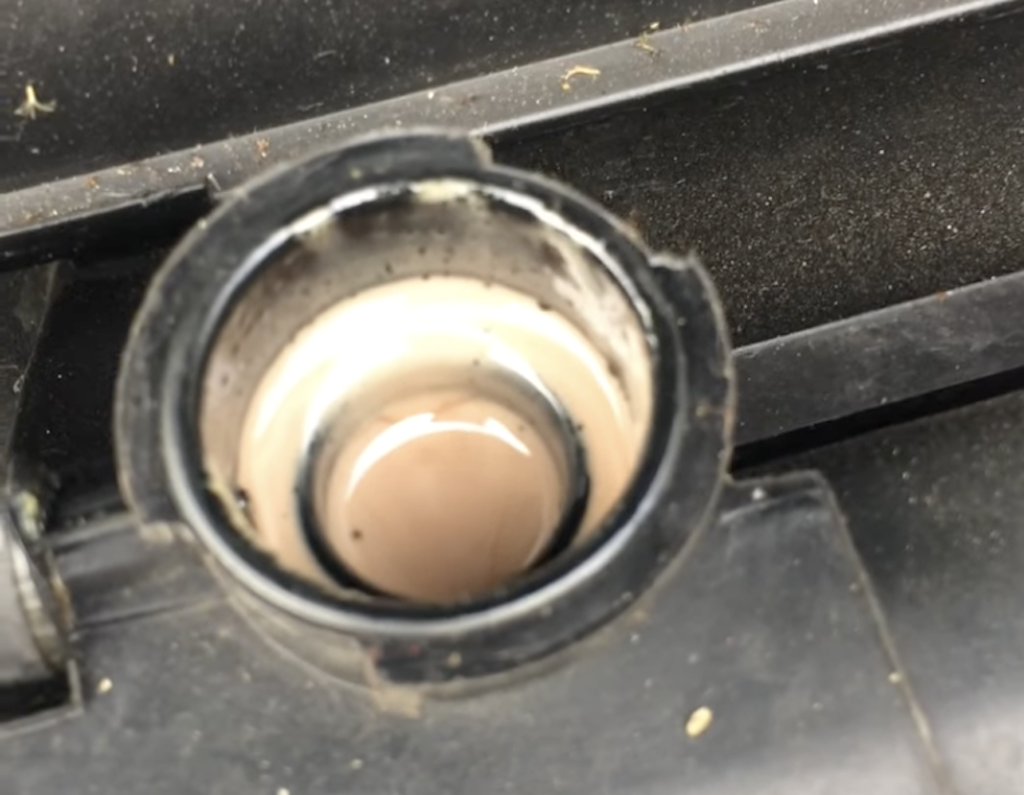
One of the best visuals out there of coolant and transmission fluid mixing happened on a Nissan Frontier.
Above is the video from YouTube user scenicriversfarmforestcons9616 that shows a better glimpse of what drivers may be looking at if their combination radiator and transmission cooler fails internally.
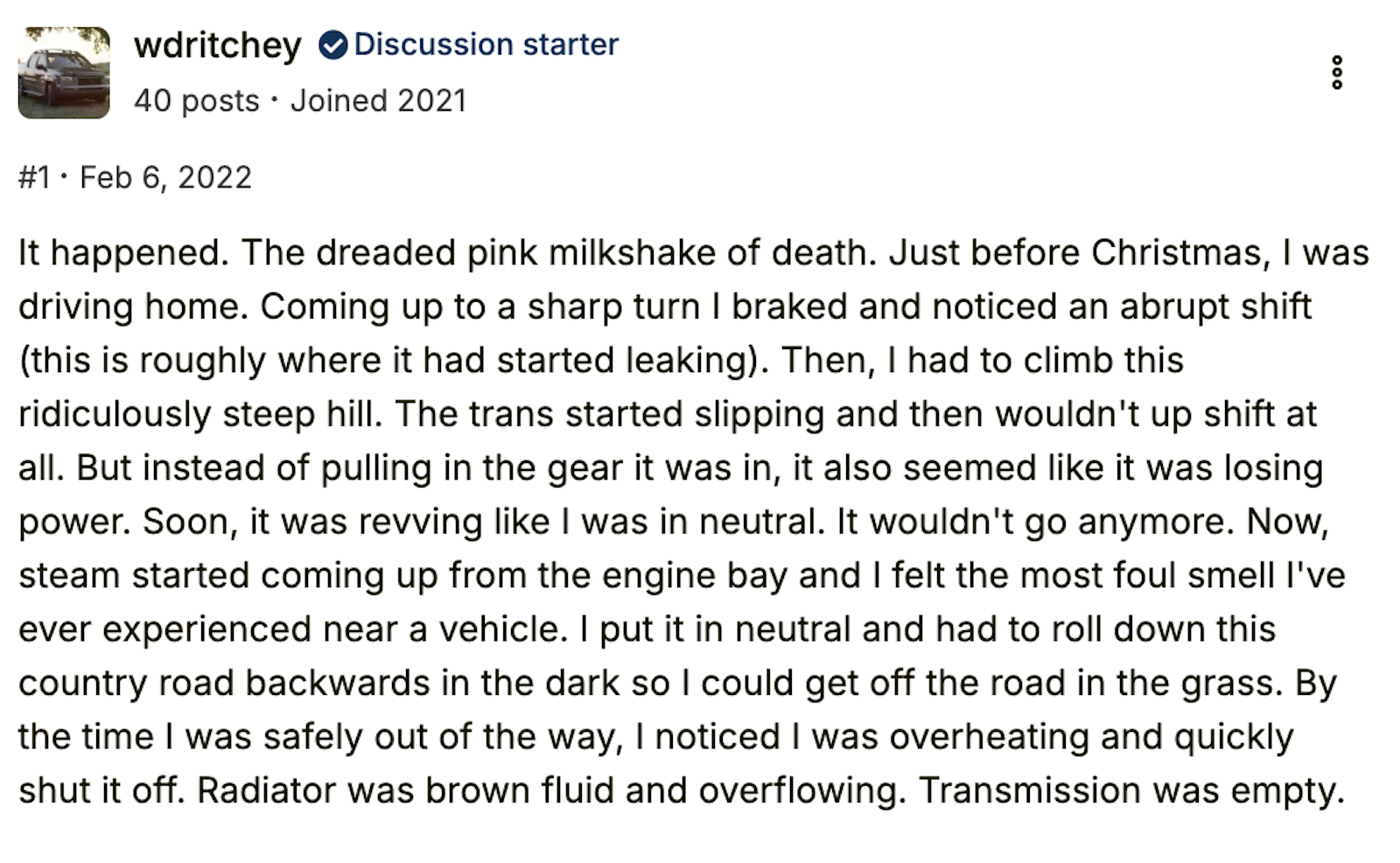
It’s worth noting that the mixture resulting from an internally failed radiator isn’t always pink, as fluid formulations vary across brands. This Honda Ridgeline owner on the Ridgeline Owners Club forum reports experiencing a mixing of coolant and transmission fluid, with the first obvious sign being strange transmission behavior.
Just before Christmas, I was driving home. Coming up to a sharp turn I braked and noticed an abrupt shift (this is roughly where it had started leaking). Then, I had to climb this ridiculously steep hill. The trans started slipping and then wouldn’t up shift at all. But instead of pulling in the gear it was in, it also seemed like it was losing power. Soon, it was revving like I was in neutral. It wouldn’t go anymore. Now, steam started coming up from the engine bay and I felt the most foul smell I’ve ever experienced near a vehicle. I put it in neutral and had to roll down this country road backwards in the dark so I could get off the road in the grass. By the time I was safely out of the way, I noticed I was overheating and quickly shut it off. Radiator was brown fluid and overflowing. Transmission was empty.
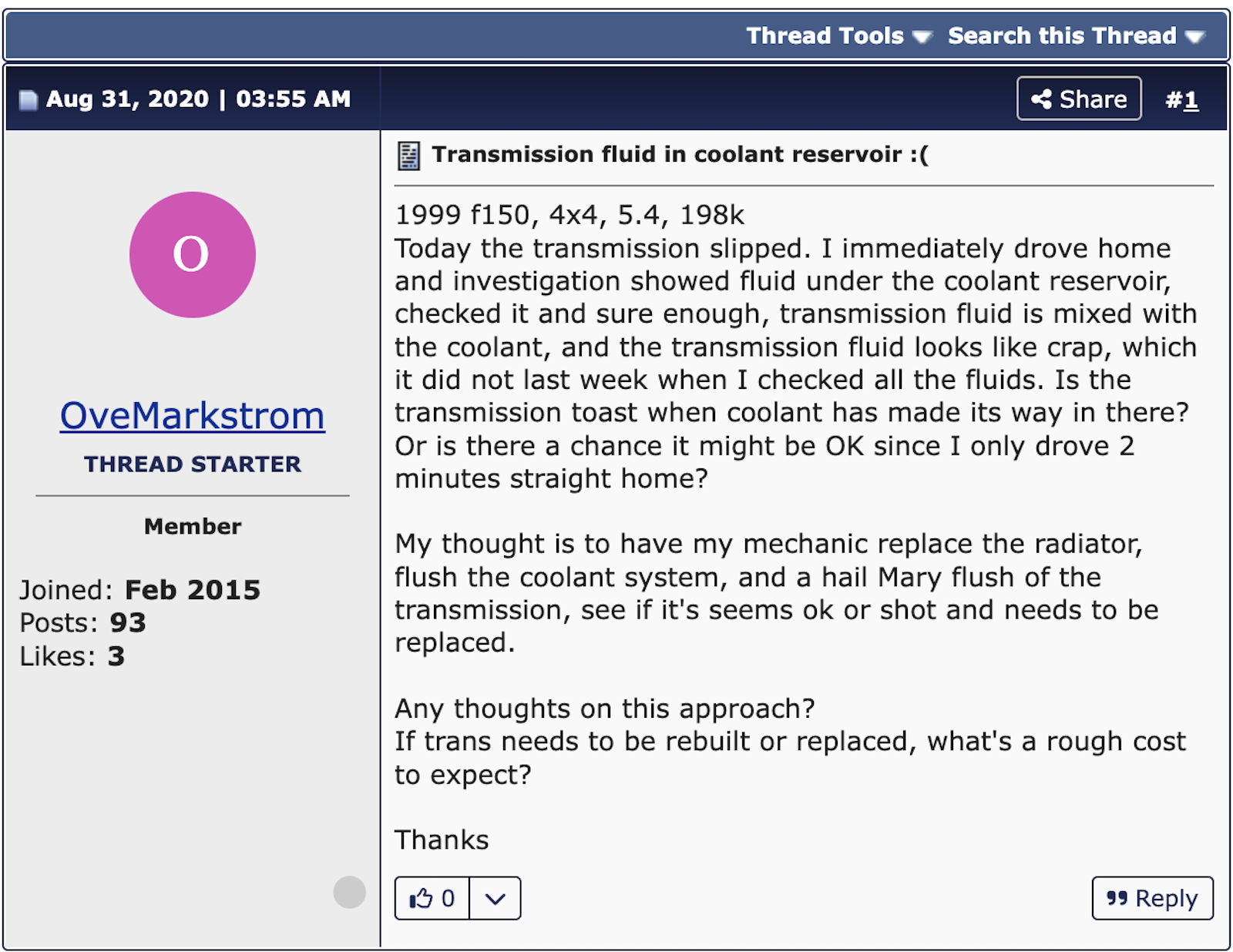
Indeed, the common thread with transmission fluid mixing with coolant due to internal radiator failure seems to be that owners often first notice it by feeling the transmission slip or shudder, and not always by noticing the engine overheat. This F-150 owner on F-150 Forum reports feeling the transmission slip, driving home and finding transmission fluid mixed with coolant in the coolant reservoir.
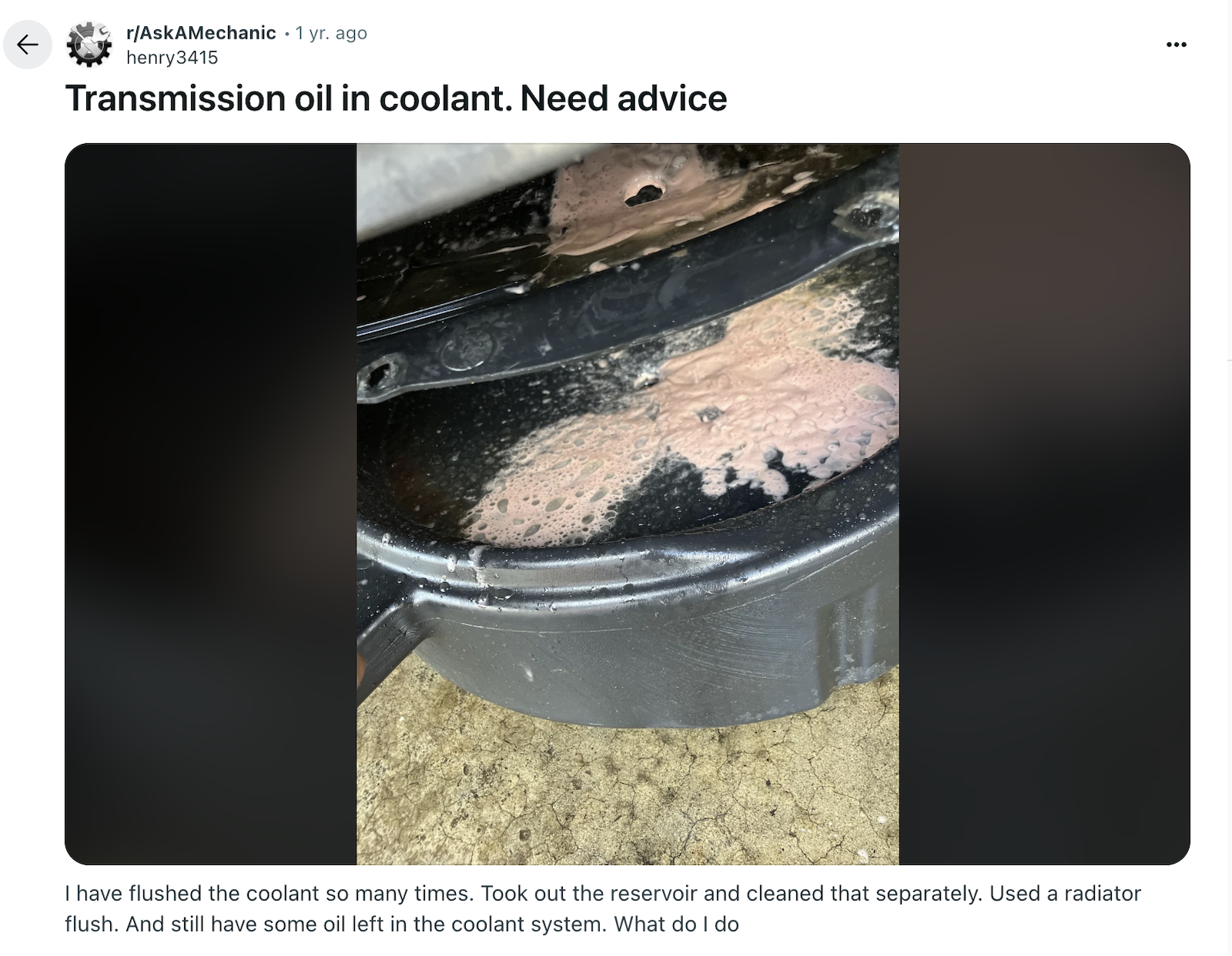
If the Strawberry Milkshake of Death happens to you (and it can happen on a variety of vehicles, including the beloved Jeep Cherokee XJ), and you catch it early enough, you may be able to get away with either replacing the internally failed radiator or routing the transmission cooler lines to a dedicated cooler and capping off the transmission line fittings on the radiator, performing a thorough coolant flush, doing a really good transmission flush and changing your transmission filter. Keep in mind, it can take some time to flush all the contaminated stuff out, as this Reddit user experienced. However, let it go on long enough, and you could be starting the prospect of transmission replacement right in the eyes. Considering this failure mode generally happens on older vehicles, and a transmission generally costs thousands of dollars, it could spell the end of a car.
So, if you own an older car with a combined radiator and transmission cooler, it’s not a bad idea to get in the habit of checking the coolant reservoir weekly. Don’t take the cap off unless the engine’s thoroughly cold, but a quick glimpse every now and then is either assurance that everything’s okay or an early warning if something’s wrong.
Top graphic image: Reddit
Support our mission of championing car culture by becoming an Official Autopian Member.


That milkshake looks delicious.
I had this happen on my 95 S10. The coolant always looked dirty, but never looked like a milkshake. Had to replace the 4L60E, radiator, and at that point moved to a separate cooler. DexCool from the 90s was notorious for rusting out the radiators, so I moved to a normal coolant as well.
I’m a firm believer radiators should not have two different fluids go through them.
Question: if you get the tow package option on a vehicle that adds a separate tranny radiator, does it eliminate this fluid/fluid heat exchanger in the engine coolant exit tank? Always/never/sometimes?
Usually not. Automakers want the transmission fluid to operate at a certain temperature, and the easiest way to do that is with the radiator end tank. Typically, if an auxilliary air-to-oil cooler is used, the fluid leaves the transmission, goes through the air-to-oil cooler, then through the radiator end-tank, then back to the transmission. That keeps the temperature as consistent as possible, with the extra cooler being put in to dump excess heat from hard use (towing, etc). Not always the case, but, that’s how most do it.
The new all-aluminum radiator cracked on our F250 after a year, and never was I happier that we’d already switched to a separate transmission oil cooler.
My milkshake strands all my cars in the yard
And they’re like, I need a new coolant hose
Damn right, and a new radiator core
I can fix it, but I have to charge
My son bought a 2010 XTerra just as he graduated high school, in 2020. About a year later, he started having weird shifting issues. I figured I’d drain the transmission pan and refill as best I could. SMOD. I was sick. After searching the forums and discussing it with a XTerra owning friend who is truly gifted with the wrench, I hit on a plan. I replaced the radiator and flushed the cooling system. I then did a “Poor Man’s Flush” on the transmission. This all helped, but it still had severe issues. Finally, my friend suggested I replace the transmission valve body. This really made a huge improvement. It’s been four-ish years now and my son drives the truck everywhere. It still throws a code for the transmission, but shifts and drives perfectly. He’ll be graduating college in the spring with a Mechanical Engineering degree. Just keeping my fingers crossed that the transmission keeps holding it together until he gets a job.
Happened to my 2006 Frontier under the prior owner. I brought it shortly after at 104k miles and it’s now at 235k miles. I don’t know if the new radiator is an improved design so it feels like I’m rolling the dice if I don’t change the radiator preemptively.
There’s an easy fix on the forums to reroute the lines so it’s no longer a problem.
I did that 10+ years ago on mine. It’s never been a problem even on long trips or towing around the Appalachians. If I was out West towing I’d probably add a cooler.
Another day, another “I think I’ll go make a Kelis joke in this thread,” only to look at the graphic and tip my hat to Autopian yet again.
3rd gen 4runners and first gen Tacomas suffer from a similar fate. I’ve been told it takes as little as a teaspoon of coolant to ruin a set of transmission clutch packs.
I don’t remember ever running tests to find out how much it took, but the glycol attacks the adhesive that holds the clutch friction material to the steel backing plates.
I had a mid 90’s Maxima for over 2 decades. It was a manual so no worries regarding transmission fluid but when an o-ring failed on the water pump it would weep directly into the oil pan. This happened to me while I was driving on the interstate and it wasn’t until the oil started to overflow onto the exhaust manifold and make a smell that I noticed. The resulting fluid mess looked much the same as these. I was able to fix it and drove it about 60k more miles before I had to retire it when it’s structural integrity was destroyed by rust.
I miss 1998 Nissan Maxima. If only Nissan made fun to drive, powerful, quality autos like they used to.
Been there, done that on 2009 Frontier. Luckily, its failure happened close enough to the failure of the upper radiator hose that I caught it in time to be able to just replace the radiator and flush the fluid. I wasn’t too concerned about longevity, since there were other issues that meant I wasn’t keeping it much longer, like two of the bed mounts rusted through.
I remember reading the forums on this issue when I was debating between an FJ or an Xterra so I only looked at 2014-2016 Xterra’s. Wound up going for the FJ and causing a chocolate milkshake in the transmission while offroading. (I was way to overconfident and learned the hard way with a long stretch of deep muddy water)
I had a V6 R51 Pathfinder, and it seems that for other markets this did because the design was different, with a segregated radiator for transmission.
Or mine was already milkshaked before and a previous owner had it fixed, but I was believed the design was different from NA version.
I have an R51 Pathfinder here in aus (Spain built) It has the combined radiator design, I ended up getting an external bypass cooler fitted after I had SMOD
Hmm, so probably mine was converted already when I bought it, because mine was also built in Spain.
Sounds like the solution is to get a aftermarket UN-combined radiators… and preemptively do it before it fails.
OR…
Just get a manual transmission, Toyota-style hybrid (which includes hybrid Fords and Hybrid Nissans) or a BEV.
Yup, these are the two correct answers. Separate cooler or manual transmission. Both will prevent this and things like Xterras will run nearly forever.
This is what you get when you decide not to use the Jatco Xtronic CVT. No “cooling” needed, and you’ll never even need to worry about the sealed-for-life transmission design!
PRAISE THE CVT, FOR IT IS SMOOTH AND SHIFTLESS!
(If ya can’t beat them, join them.)
Another manual owner here, who’ll probably go EV when there are no more manuals to be had, but thanks for the tip to buy strawberry ice cream.
Yup. manual GTI to (1 speed) EV. Shifts when I say it needs to shift to no shifting at all, and thus no risk of milkshake. Though I suppose the GTI could have a catastrophic leak in the water cooled turbo intercooler, but haven’t heard of that as a major issue (knocks on wood)…
Or the water cooled oil filter. I had 2 separate VWs with this design. Attached to the block was a 4″x4″x2.5″ oil cooler. The screw on oil filter screwed in to the bottom of the oil cooler.
Of course (unknown to me at the time), the top of the oil cooler has a rubber gasket that is basically the same(ish) as the gasket on the metal oil filter. if you don’t know this and replace it preemptively, it will fail catastrophically dumping out all the oil from your engine in a a handful of seconds. I was lucky enough to catch it before running my engine out of oil and I was able to do a field repair with a spare oil filter gasket.
Nope, the gearbox just seeps a bit, the transfer box only drips once a week and the diffs are almost tight, teeny ooze. Both vehicles are quite old, neither has a transmission cooler as far as I know.
For fun I worked out that between the two they have 38 gear ratios!
I worked with a guy who had this failure in his Aurora that he had previously bragged about getting the reasonably priced extended warranty on (it was not reasonably priced), but the warranty company denied him, claiming they didn’t consider the radiator to be part of the cooling system. What they considered it to be part of and what the cooling system consisted of in their eyes (I’m thinking the thermostat and nothing else), I don’t know, but he was thoroughly screwed. On top of that, a couple guys kept joking that it wasn’t the car, it was that he was so clueless that he filled the transmission with coolant. Since he showed it annoyed him, that joke persisted for a little while. Another reason why I only buy manuals.
A former elementary school classmate of mine was the state’s AG for some time. I’d bring “we didn’t consider the radiator to be part of the cooling system for the purposes of our extended warranty” to him
We told him to go to the AG and, this being MA, I would think he had decent chances to win. I forget what happened with that, but I know he laid out a solid chunk of change to fix the car (it might have been something like they ended up covering half, but this was over 20 years ago, so I don’t remember) and I don’t think he didn’t keep it much longer. This was a guy who also didn’t pay taxes for about 5 years. They caught up with him finally, but he ended up working out a deal that had him pay a lot less than what he initially owed. I remember wondering if he had invested that money if he would have made out. I’m sure he wouldn’t have gotten a deal and there would have been penalties, but maybe there would have been some profit. Then again, I’m sure the IRS would think of that and made sure the penalties exceeded any profit so as to not incentivize such a thing.
They probably only consider the water pump part of the cooling system. He should have read the contract before signing it.
That cost me a $3500 transmission for my 2006 Nissan Frontier, I only paid a $1000 for the truck, I got 500 miles out of the original transmission before it sh*t the bed though.
I just swapped over to an external transmission oil cooler on my 3rd gen 4Runner this past weekend in preparation for a road trip coming up. Just trying to eliminate any issue before they arise.
My brother did the same with his 1998 4Runner. It was one of the first modifications he made as soon as he bought his brand new 4Runner. He still drives it to this day, racking up 400,000 miles on the original engine and gearbox.
Yeah, an external trans cooler and Tundra front brakes are two things that every 3rd gen 4runner should have done.
Ford Flex has entered the chat.
(Source: My family had two, and this was the death of both of them. But at least they made it to 180-190k miles apiece first.)
This was a problem with 1st gen Armadas/QX56’s and 1st gen Titans as well.
Everything on the F-Alpha platform had obvious cost cutting. Which is a shame, because if this doesn’t happen, the 5 speed Nissan/JATCO autos are really durable.
Am I wrong in believing that this problem magically sprang up in the 90’s, affected virtually every brand though some more than others, and then silently went away in the late 2000’s? I’m wondering if there was some underlying cause such as a worldwide switch from lead based solder to silver based or whatever would be appropriate in this case yet wasn’t quite fully baked and durability tested.
GM’s DexCool coolant in the 90s caused radiators to rust out. I think a few other brands tried similar coolant formulas.
Al co-worker had two such failures: a Toyota Sienna and a Toyota Highlander. Yes, he drinks the koolaid. All my cars except one have been manuals. No cooler, no AT oil pump. The except one car had an external oil cooler I installed, although I left the radiator side tube one in place. Trailer.
That’s an issue with the first gen Ridgeline as well.