

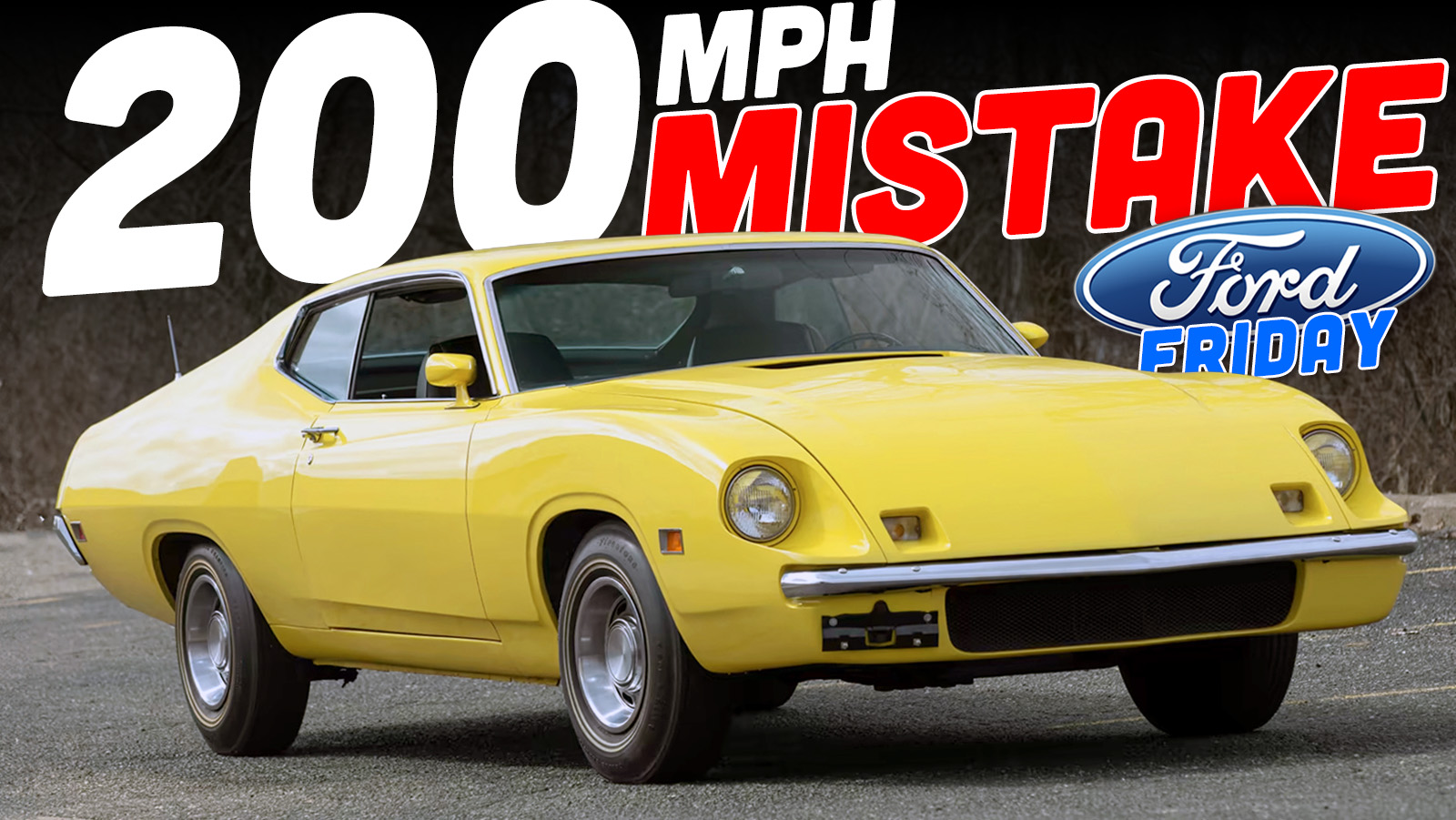
You know that kid back in seventh grade who ruined it for everyone? I mean, the teacher was cool if you flicked pencils up at the ceiling tiles and such, but somehow this buddy of yours went too far, ended up overturning the teacher’s desk or something, and brought on flat-out martial law by the staff.
That’s sort of what happened with NASCAR back in 1970. Chrysler had been pushing the envelope with absurd-looking aerodynamic homologation specials, and somehow the Ford guys just couldn’t let that be. No, they had to be better, they had to be faster, and in the process of doing chasing ever more MPH, they ultimately killed the “Aero Warrior” superspeedway supercar for good.


Wait, We’d Go Faster If It Didn’t Look Like A Brick?
Even though aerodynamics had been A Thing with cars like Tatras and Citroens, American cars and thus NASCAR didn’t get into it for a long time. Oh sure, being restricted to “stock” automobiles meant there was a limit to how much could be changed from the showroom car to the race car, but modifications at the time were allowed as long as there was a homologation run of at least 500 cars. In the late 1960s, Ford would take advantage of this loophole by modifying their rather slick “SportsRoof” fastback Torino to make it even more slippery.

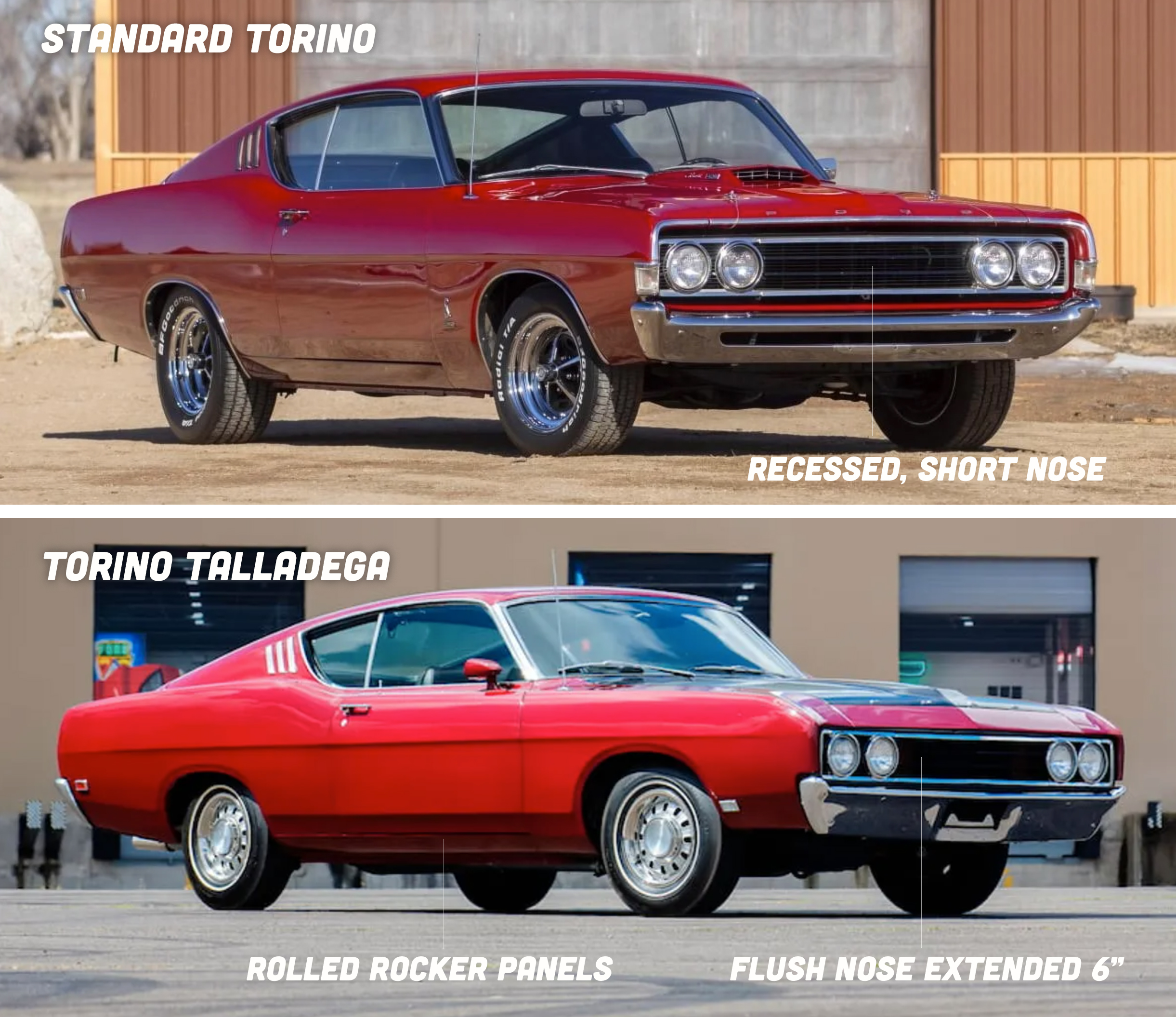
Named for the superspeedway it was designed to rule, the Torino Talladega filled the sunken-in grille of the factory car that played hell with the aerodynamics and also extended the nose about six inches (all done with the sheet metal, not an added-on fiberglass component).


An even more subtle and hardly noticeable trick was Ford’s rolling in of the rocker panels to allow the race version to sit lower to the ground, or at least legally do so.
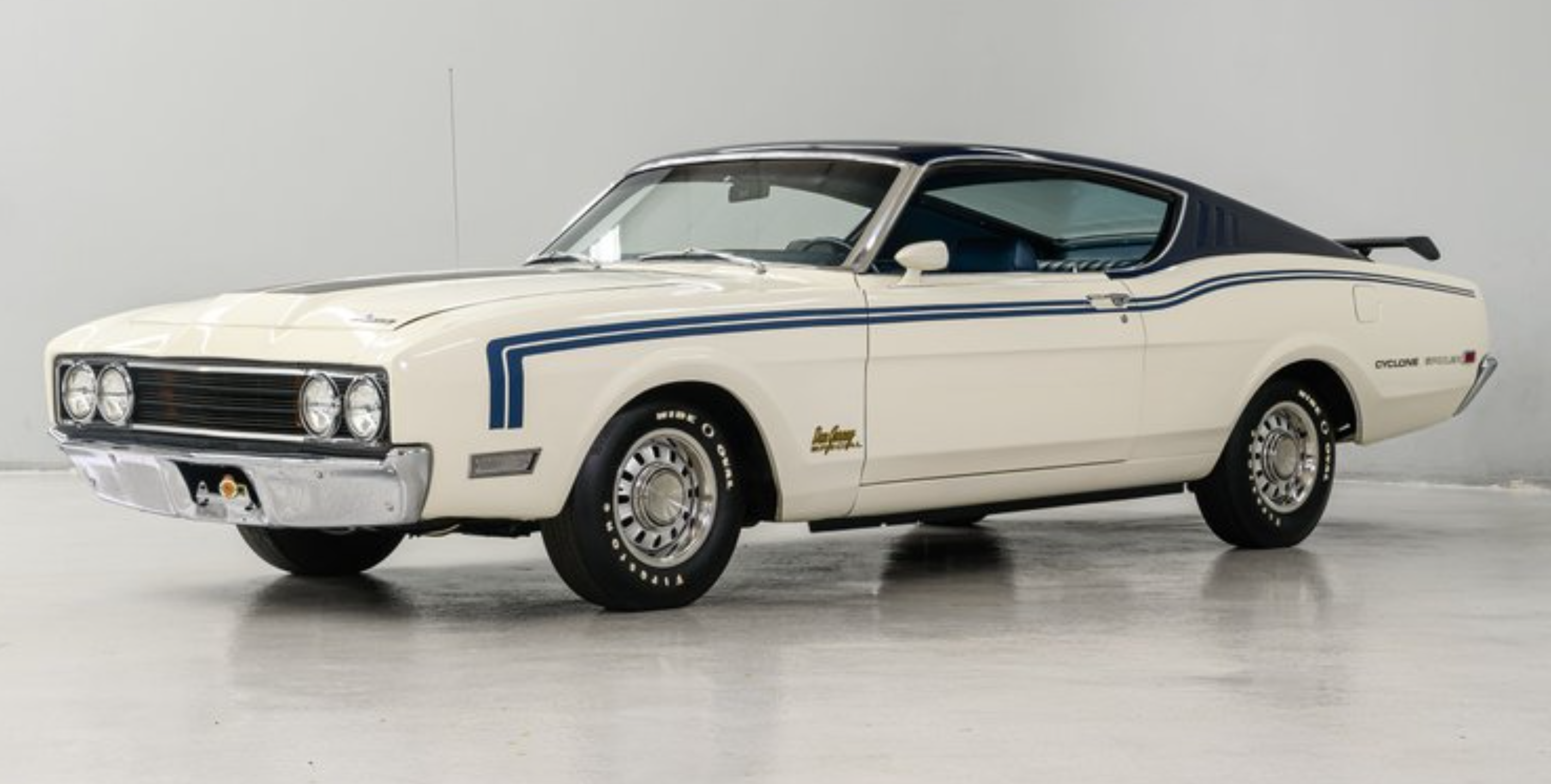
Likely owing to the rather clean, factory appearance of the Talladega, Ford was able to sell at least 750 units of this special, far more than the 500 needed for homologation. Mercury also made their own version of the Talladega, the Cyclone Spoiler II. It looks identical, but reportedly the nose is a few degrees lower in angle, which was good for a few more miles an hour at the top end on the track. True to the name, the “Spoiler” actually did feature a small rear deck wing as an option for the street models, though I see no evidence of it being used on the race versions.
When equipped with the 429 Boss V8, both the Ford and Mercury versions could exceed 190 in competition form, but they never officially broke the vaunted 200MPH barrier. Mopar was the other major NASCAR player at the time, and they couldn’t let these Ford products go unchallenged. The Torino’s modifications were relatively subtle, but Dodge decided to make something that looked a bit like an object Wile E. Coyote would build to chase the Road Runner. With a long, pointed, and painfully stuck-on nose cone combined with a two-foot-tall wing spoiler, the Charger Daytona (and later nearly identical Plymouth Superbird) showed Ford that the gloves were off – “unlimited” cars lapping speedways at over 200 miles an hour (officially 200.447MPH to be exact, posted by a Charger Daytona) would be the way.


Now it was back to Ford to up the ante. Unfortunately, the new-for-1970 Torino was not as aerodynamic as the earlier model, so some major changes would be needed to beat that fearsome Mopar. Thankfully, they had just the person to make it happen.
Shinoda Creates Shinola, Again
As luck would have it, Ford had just recruited legendary Corvette designer Larry Shinoda, a man who would also create the Boss Mustang, the Rectrans motorhome, and the first Jeep Grand Cherokee. Shinoda was tasked with modifying the stock Torino, but he took a different approach than Dodge. Instead of the Mopar solution of a pointed nose cone stuck onto the existing car, Shinoda replaced all of the sheet metal ahead of the firewall (well, the hood was fiberglass).

Turn signals were faired into the nose in a manner not unlike a Ferrari Dino 246GTS. Also like the Dino, the headlights were placed in recessed “buckets” at the leading edges of the fenders. Removable covers to flush out the recesses were supposedly going to be “accessories”. I would have hoped Ford was envisioning some kind of motorized mechanism to retract these in the production homologation cars, but I see no evidence of that.
To combat the issues the Dodge Charger Daytona and Plymouth Superbird were having with overheating, Shinoda added a prominent radiator grille below the bumper.

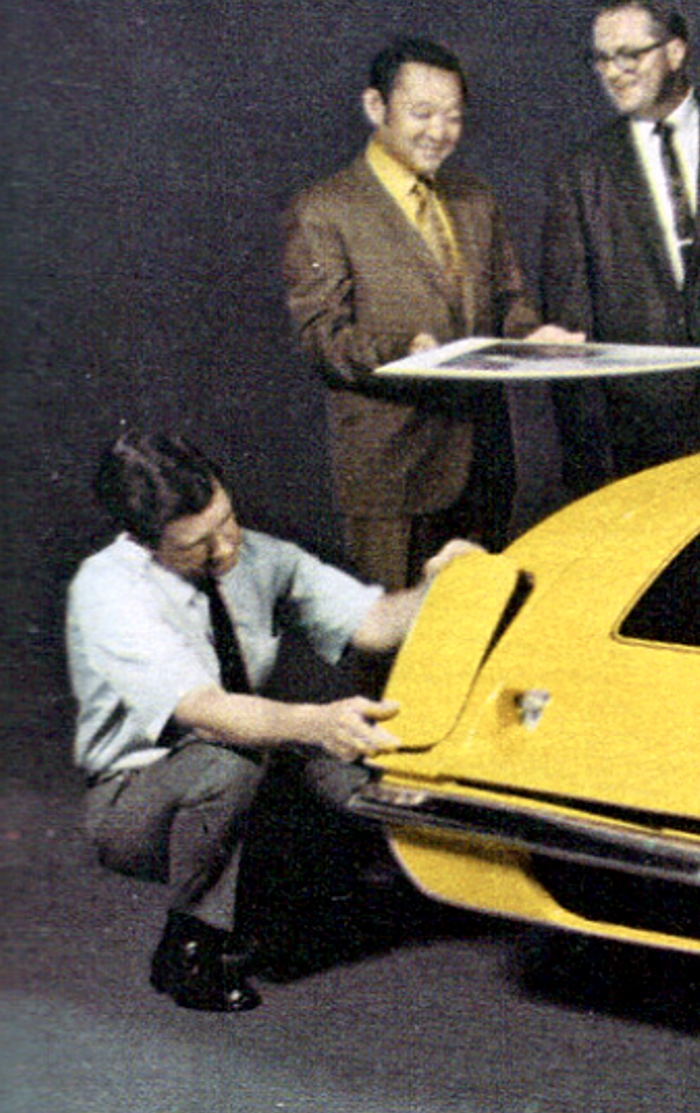
Regardless, the Kind Cobra looks pretty gawky with the open lamps, as if a Torino and a Datsun 240Z had somehow had a child. Were you supposed to get out of your King Cobra at dusk or in the rain to unbolt the covers by hand and throw them in the trunk? That’s a pretty poor design, Larry; I see you below just ignoring that dude installing those stupid things.
Another rather odd omission on Shinoda’s part was a wing of some kind to match the massive ironing boards of the Mopar race cars. The King Cobra didn’t even have a small lip spoiler, much less something as on the earlier street versions of the Mercury Cyclone Spoiler (which, you know, had the downforce appendage in its damn name). These devices weren’t there just for decoration, as Ford would soon find out.
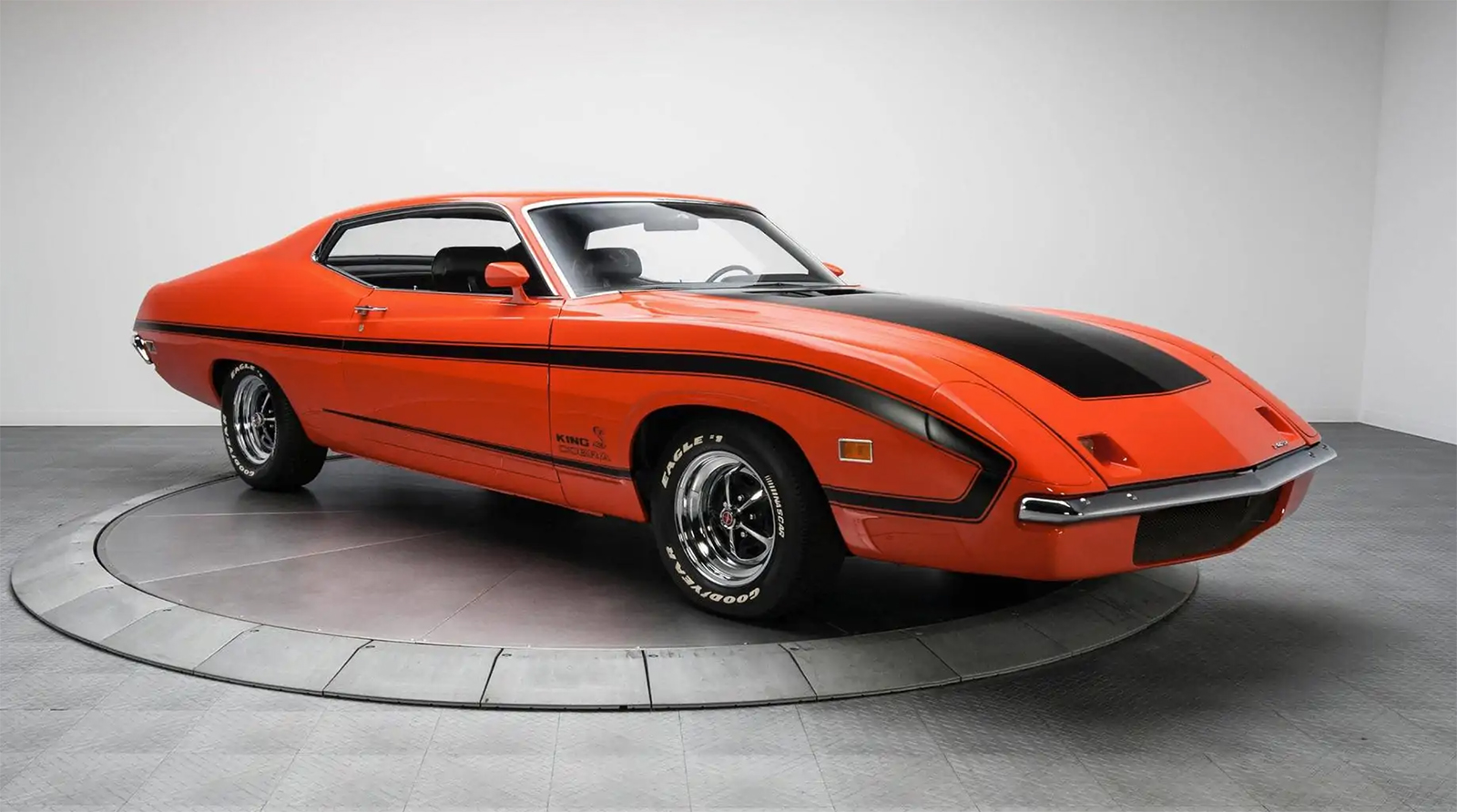
Out on the track, the aerodynamic nose did the job of getting the Torino up to speeds in excess of the magic 200-mile-an-hour mark; almost certainly, the Ford would have been able to go head-to-head with the insane Dodge and Plymouth twins at the super speedways. That sharply raked nose also created downforce, alright: maybe too much downforce. With the lack of any kind of rear wing and the air-sucking recessed rear window, those back wheels were struggling to make contact with the tarmac.

Cale Yarborough did the test runs and charitably called the King Cobra “a real handful.” Ford could have put some kind of wing on back and flattened out the sunken-in backlight to work out the handling, but other factors came into play that would deem such modifications moot. Stories are sketchy, but NASCAR manager Bill France reportedly saw what was going on with Cale testing this deathtrap and decided enough was enough. At 200+mph, any crash would be more like an aircraft accident than a car collision, and with none of the safety equipment presently in NASCAR machines. France wanted no such negative publicity for the sport.
Don’t believe the headlines of clickbait articles claiming that the aero warriors were “officially banned,” however. France’s way of dealing with the problem was remarkably passive-aggressive: instead of the typical 500 cars needed to homologate one of these crazy race machines, he changed the requirement to essentially one needing to be made for every dealer that the brand in question had in the country. For Ford, that meant three thousand or so cars; moving five hundred Torinos with the nose of a 240Z would be hard enough, but six times that? Forget it.

Now, my understanding is that winged cars could still participate in NASCAR events, but there was a big caveat: these 500-car-homologated machines were limited to a maximum displacement of 305 cubic inches. Such a car was not going to be competitive for the Big Prize. Bill France reportedly didn’t like how these spaceship-looking things bore little resemblance to cars on the showroom floor that were built in the tens of thousands, which to him was the heart of NASCAR. He was able to get “stock” cars back to being closer to “stock” by legislating them away without technically “banning” them.
At this point, Ford’s president was Lee Iacocca, who saw zero benefit from the racing program. Remember, at the time, General Motors wasn’t even involved in NASCAR, and Mopar was already a distant third member of the Big Three and no threat to Ford’s sales. Win on Sunday? Lose on Sunday? Lido would sell Torinos regardless. With that decision, the King Cobra project died along with the brief age of Aero Warriors.
Warriors Never Really Die
Despite all of the work, a total of only three King Cobras were completed, and it appears that all are accounted for today. All of the examples are powered by 429 V8s, but they’re all very different and interesting in their own right. Here’s the group:
The Yellow 429 Cobra Jet
This one looks remarkably like a street car with no graphic stripes, which, for some reason, makes it look even more bizarre. It’s also the only one pumping power through a three-speed automatic and sold back in 2016 for $525,000.


The 429 Boss
Rolling on Magnum 500 wheels and with Shinoda’s signature graphics, this four-speed equipped example is arguably the best looking. It is also reportedly the only one with a convex backlight. It was listed for sale a few years back for $459,000.


The 429 Super Cobra Jet
I’m assuming that this is the car shown in the Ford promotional shot with Shinoda and team. Also, it’s a four-on-the-floor example.

The owner of that Super Cobra Jet example also owns a very special version of this Aero Warrior. A Mercury Cyclone Spoiler version with an identical nose was thought to have never existed until it turned up in a barn a few years ago. Fully restored, you can see the different roofline from the Mercury version of Ford’s midsizer.
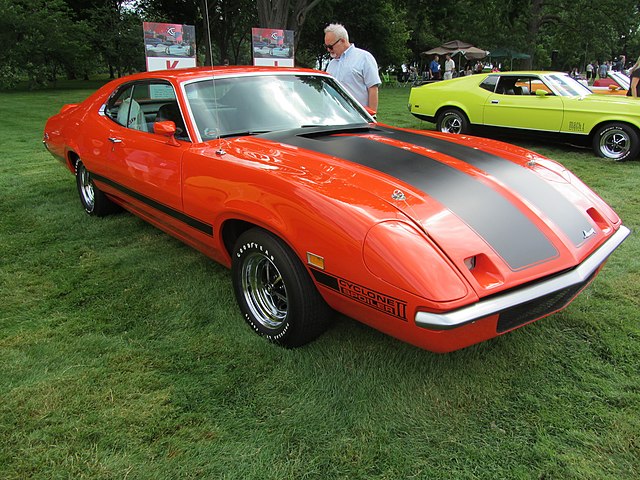
Oddly enough, at least two examples of Torino have appeared with nose cones from the King Cobra. It’s not surprising that Ford had extra parts on hand when the program was cancelled. Nobody appears to have ever built replicas of these front clips since, well, they’re not exactly an improvement over the stock Torino.
Ironically, with the death of the Aero Warrior, the playing field was leveled enough that GM did get back into the NASCAR game after all. The General did rather well for themselves until Ford came back years later with another aero weapon, this time in the form of a slick street-legal 1983 Thunderbird.
The King Without A Country
Considering that survivors of the 135 examples of 426 Hemi-powered Superbirds can sell for over a million dollars, you would think that a historic racer made in quantities you could count on one hand would go for even higher seven-figure sums. That’s not the case with the three Torino King Cobras, which struggle to break half that amount. Sure, they look a bit odd, and they never did turn a wheel in anger on the track, but that just adds to the mysterious appeal of this warrior that came to the party too late to be a spoiler (excuse the pun) for Mopar.
Top graphic image: Mecum




I keep seeing the vibe of Mad Max’s “Pursuit Special” when viewing from the side and three-quarter rear views.
I think if a vehicle is going to break the bank it needs decent recognition. On the Vehicle in question why didn’t they make those aerodynamic headlight covers clear, so they didn’t need to be removed? And finally since air to radiators reduced aerodynamics why not use a under bumper spoiler to create down force and cool the radiator? Really just asking I don’t know if it would work.
They didn’t make them clear so that they HAD to be removed. What you describe, a composite headlight, would only be allowed by law starting in the early 80s.
I mentioned the article to a friend on a bike forum and he said he knows a guy with one, who did work on his ’71 Ranchero. So I looked up Steve Honnell and ended up further down the rabbit hole. https://talladegaspoilerregistry.com/significant-cars/570-2/
A Torino with a Lotus Europa S2, front end package.
I’ve seen Chargers with flush grilles and back windows in the wild, but never one of these.
Thanks for bringing it to my attention, it fits in the Weird end of things.
It’s funny how that huge front end makes the headlights look smaller than normal. I always liked Torinos. They were Mustangs for those who wanted a larger Mustang. Torinos, Magnum 500 wheels, you’re killing me! Thanks.
I love these things too. But make mine with the covered headlights behind the grille, please
Well, certainly.
In black, with no graphics, lowered an inch or two, and with mag 500s, not those stupid 20 inch monstrosities everybody was slapping on muscle cars in the 2000s.