

It’s common in this line of work to stumble upon a story while researching for another story. Digging through archives and old spec sheets usually uncovers other weird, forgotten facts, some of which are interesting enough to be highlighted on their own.
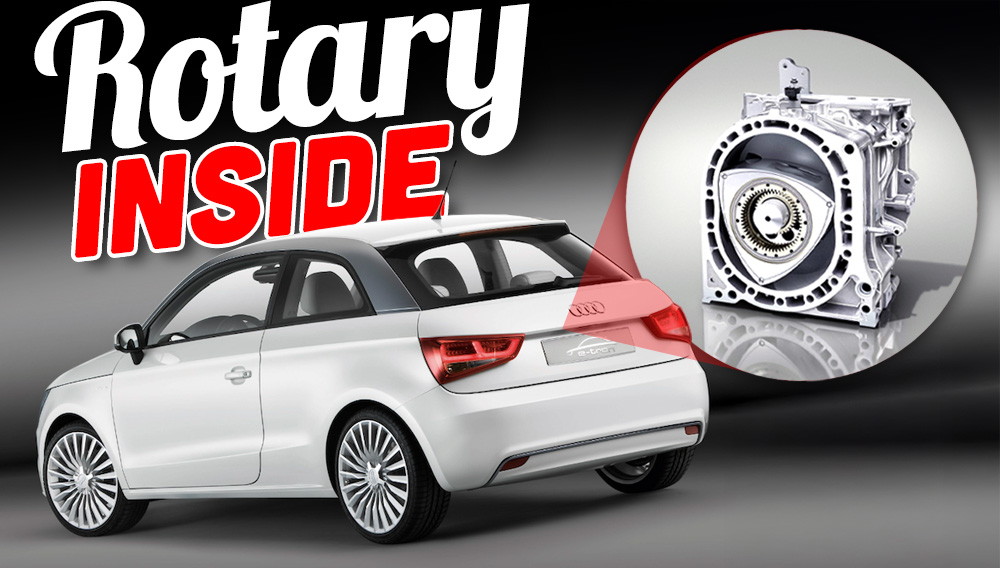
I was recently looking up which manufacturers produced vehicles with rotary engines for a story when I rediscovered a wonderful fact: Audi once built a range-extended EV with a rotary engine back in 2010.


It wasn’t a production car, obviously; just a concept: The original A1 e-tron. While the drivetrain never survived past that original hatchback, the company that helped Audi build the engine is still getting rotaries into EVs (except instead of German cars, they’re going into Chinese cars).
Audi’s History With The Wankel Engine
Before getting into the A1, it’s important to touch on how Audi got involved with NSU, the small West German car company that pioneered the rotary engine for production cars in the mid-1960s. NSU started out building knitting machines in the 1870s before moving to bicycles. It began building cars from 1906 to 1929 before pausing due to financial problems. Production wouldn’t resume until 1958, when it introduced the adorable Prinz compact car.
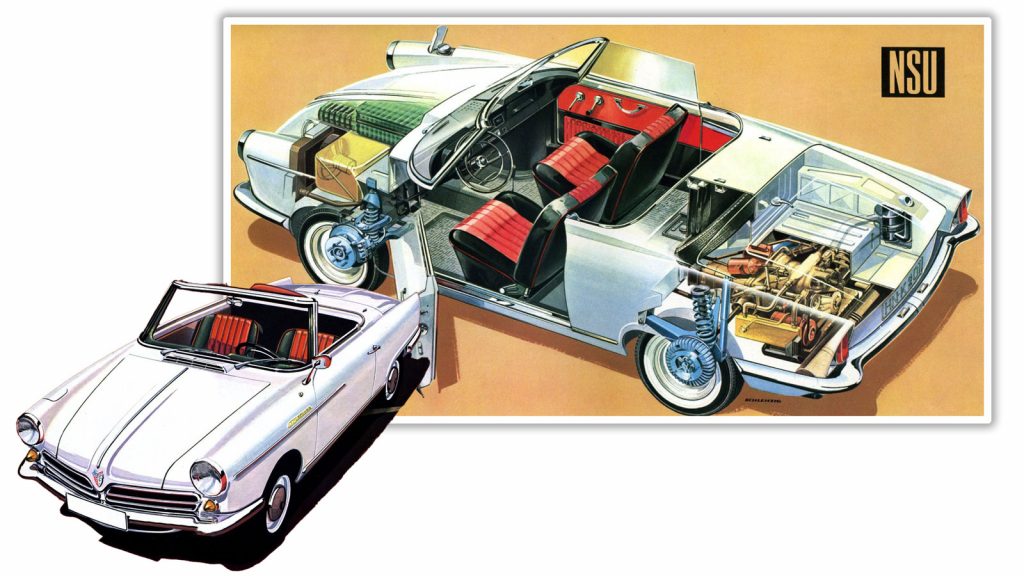
In 1963, NSU unveiled the world’s first series production rotary-powered car, the Spider. It used a single Wankel rotary engine mounted in the rear that displaced 497cc and made 50 horsepower. It was quickly followed up with the infamous Ro 80, a funky-looking sedan that used a front-mounted dual-rotary engine that made 115 horsepower.
The Ro 80 drove pretty well, according to reviews of the era. But its constant drivetrain failures led to NSU having to replace customer engines multiple times under warranty, souring the brand’s reputation and costing them huge sums of money. By 1969, the company was backed into a corner, but instead of going under, it merged with Audi—which had been purchased by the Volkswagen Group in 1964—and continued building Ro 80s until 1977. That means technically, Audi sold a rotary-powered production car for a few years (it just wasn’t badged as an Audi).
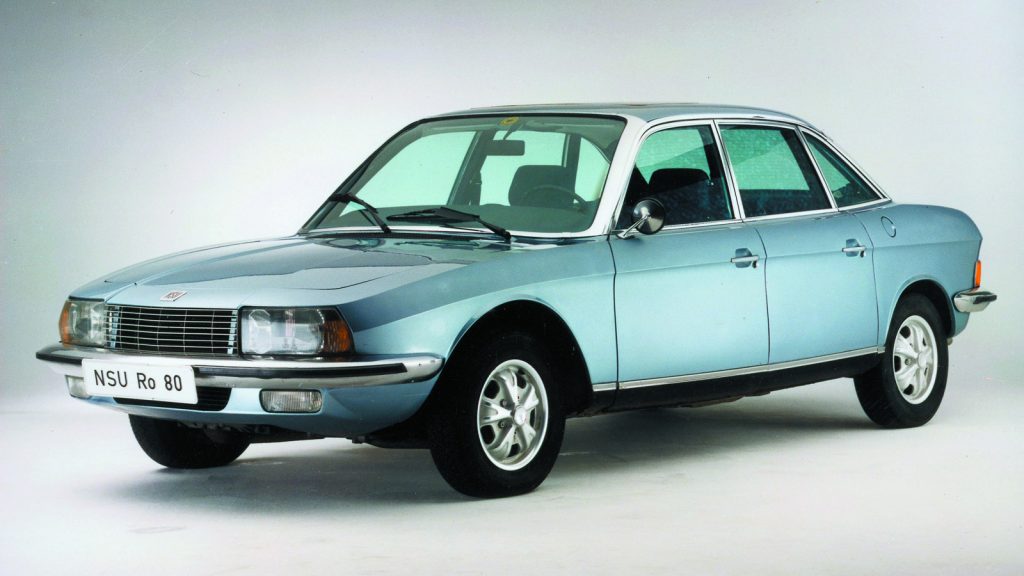
The Ro 80 would be NSU’s final model before the brand was retired, and the final Western-built production car to use a rotary engine. There were a couple of Citroëns that used rotary engines around that time—the M35 and the GS—but those cars were out of production by ’75.
Audi’s Brief Rotary Revival
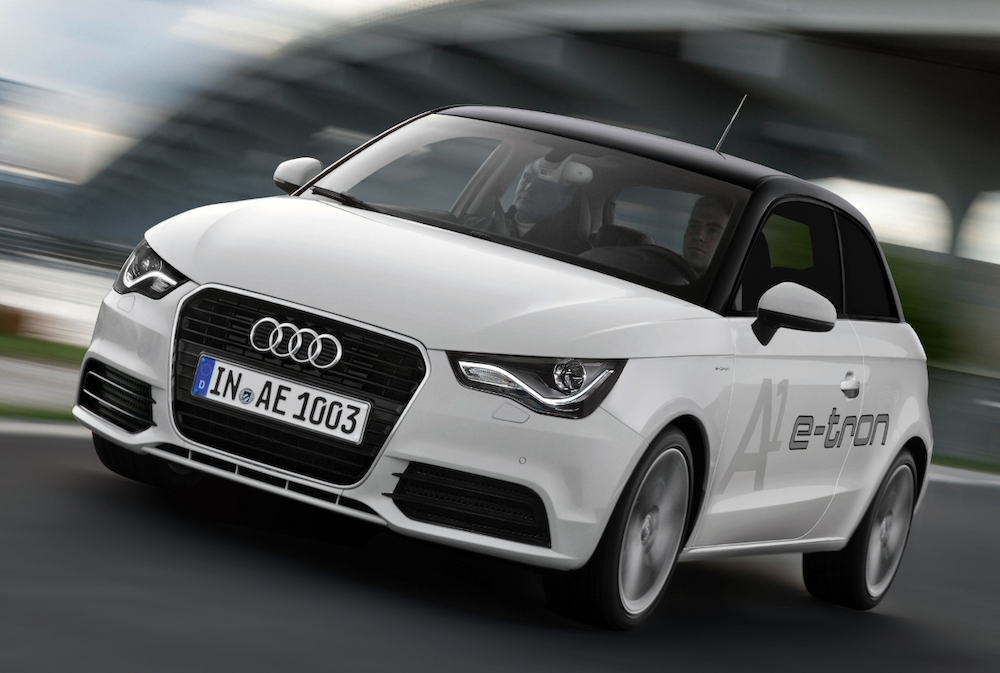
Revealed in March 2010 at the Geneva Motor Show, the A1 e-tron concept was Audi’s answer to the emerging popularity of range-extended electric propulsion, having debuted roughly three years after the original Chevy Volt. It was the third-ever e-tron-branded vehicle, following the R8-shaped e-tron concept revealed at Frankfurt in 2009 and the TT-shaped e-tron concept shown in Detroit earlier in 2010.
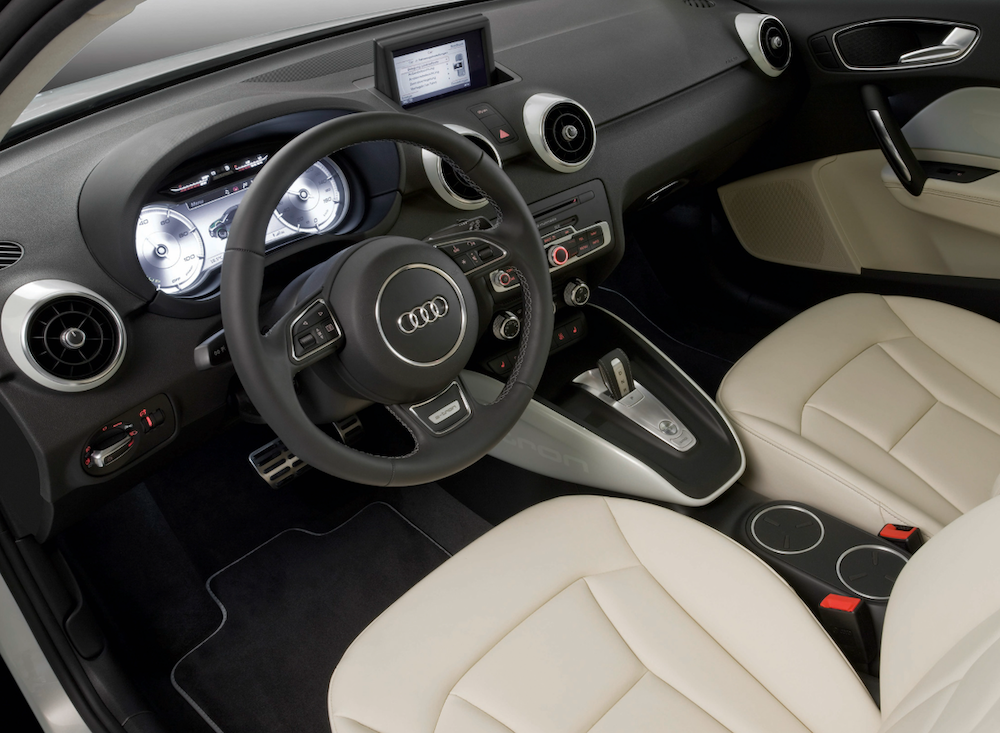
Instead of some far-out concept, the A1 e-tron was presented as a wholly developed production vehicle. Based on the standard A1, it carried minimal design changes, a full interior, and a working electric powertrain connected to a functioning single-rotor engine mounted in the rear, under the trunk area. The specs weren’t mindblowing, and lined up roughly with most other European city cars of the time. From Car and Driver:
This A1 is propelled by a transverse synchronous electric motor, mounted up front and low in the chassis. It draws power from a 12-kWh lithium-ion battery pack mounted beneath the floor and has a continuous power output of 61 hp and 111 lb-ft of torque. Just like the Porsche 911 Turbo—okay, maybe not just like it—it is capable of generating even more power in short bursts, up to 102 hp and 177 lb-ft. According to Audi, 0-to-62 mph plays out in 10.2 seconds and top speed is pegged at 80 mph.
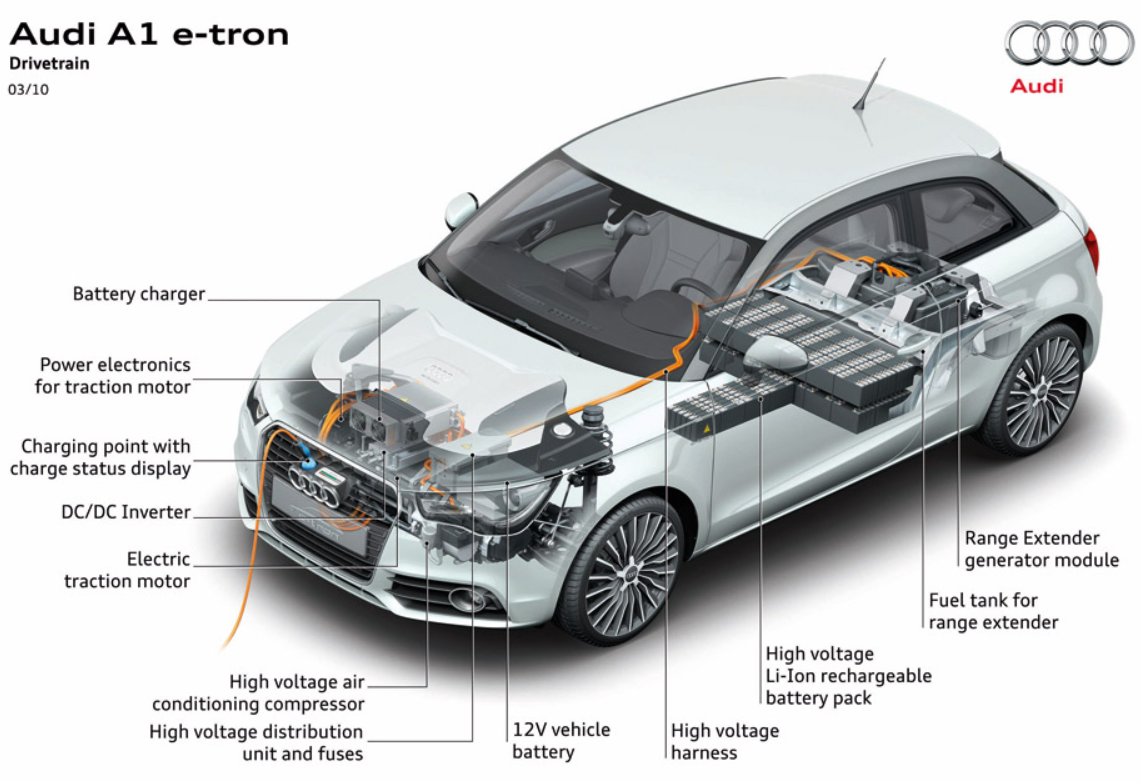
The rotary was a 254-cc unit that had no physical connection to the wheels. It was purely a generator, using a 3.2-liter tank of gasoline to deliver up to 15 kW (around 20 horsepower) to the batteries to keep them topped up. The gear selector had three positions: Drive, Reverse, Neutral, with a button at the bottom labeled “Range.” When selected, that button would fire up the rotary to get the batteries charging. If the battery got low enough, though, the Wankel would spin up automatically. Combined, the setup was good for roughly 155 miles of range.

Why did Audi pick a rotary engine? While I’d like to think it wanted to pay homage to NSU, the engine’s supplier provided C/D with a far more rational answer back in 2011, about a year after the car’s reveal:
AVL, an Austrian powertrain-engineering firm, collaborated with Audi on this project. According to AVL vice-president Dr. Günter Fraidl, various internal-combustion designs, turbines, and fuel cells were examined to find the ideal engine for the E-Tron’s range extender. The rotary landed the gig because of its classic merits: compactness, smoothness, and reliability.
So What Happened?
Upon its reveal, Audi seemed pretty serious about putting the A1 e-tron into production. The company released fuel economy figures (an estimated 149 mpg on the European cycle), promised a production start date of 2012, and built 20 prototypes that underwent testing in Munich.
Audi even let journalists get behind the wheel for brief test drives. Car and Driver found it just as pleasant as any other EV:
For something with so little power, it launches with great enthusiasm. The nearly total lack of powertrain noise as you shoot down the road is somewhat disconcerting, the loudest sounds coming from the wind and the asphalt itself. You get accustomed to the futuristic whoosh quickly, though, and stomping on the “gas” gets addictive.

We found the A1 e-tron surprisingly playful and a willing dance partner when the urge strikes to start throwing it around. The steering is direct, the brakes adequate and easily modulated. You would hardly know it’s electric if it weren’t for the lack of noise.
Despite all of these efforts, Audi decided the car was no longer worth the trouble by 2012. British publication Car Magazine, in speaking with inside sources, claimed that the car’s “complicated development process, combined with small profit margins on superminis and the sorry state of the European market,” killed any hopes of the A1 e-tron and its rotary engine making production. An Audi spokesperson confirmed to me via email that all of the prototypes were later crushed.
The Rotary Range Extender Lives On
Seeing a potential rotary revival die before it could even live is sad. It would’ve been extremely cool to see a straight-laced brand like Audi bring the rotary back to Germany. Just imagine how many weird engine swaps the car world would’ve gotten out of this? Alas, it wasn’t meant to be. But the idea of a rotary range extender is far from dead. In fact, it’s more alive than it’s ever been, thanks to Mazda and a Chinese company called Changan.
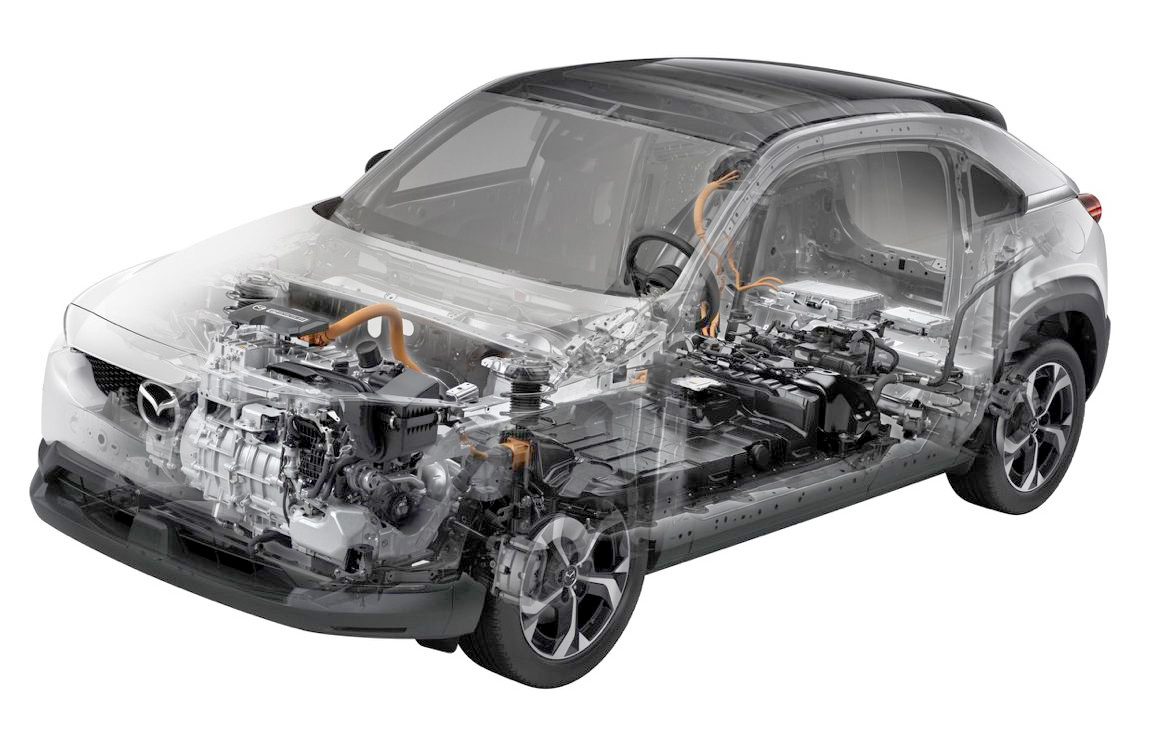
Mazda, which I’ve somehow avoided mentioning in this story until right now, revived the concept of a rotary range extender back in 2020 when it revealed plans to put a single-rotor engine into its MX-30 electric car. That EREV entered production in 2023, but didn’t make it to the U.S. before sales of the car were ended here (the car lives on in overseas markets with the available Wankel range extender).
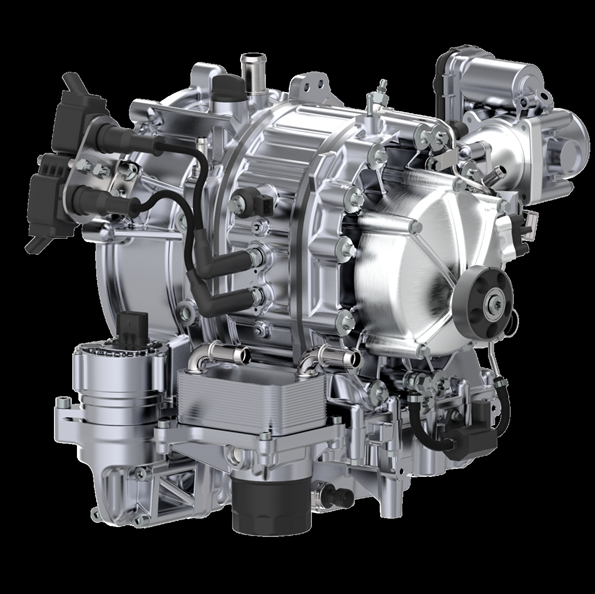
More recently, Harbin Dongan Auto Engine, a subsidiary of the Chinese firm Changan Automobile Group, announced plans to put a rotary range extender into production in 2027. According to Car News China, the naturally aspirated, single-rotor engine was developed in a collaboration with none other than AVL, the same Austrian brand that worked with Audi on the A1 e-tron’s rotary engine. It’s nice to see the company still believes in the concept, even 16 years later.
Harbin Dongan’s rotary isn’t designed for cars as much as it is for drones, helicopters, and other flying vehicles. From Car News China:
Dongan further claimed the engine is adaptable to various low-altitude applications and can be used in medium-to-large manned low-altitude vehicles due to its ultra-high power density, compact size, and NVH (noise, vibration, and harshness) performance.
Even if this engine were destined for a Chinese EREV or two, it’s very unlikely we’d see it in America, seeing as how Chinese cars are too expensive to import. Still, I think it would’ve been cool. For now, our best hope of seeing a rotary-powered vehicle Stateside is still Mazda, which launched an entire department in 2024 dedicated to making the engine viable. Let’s pray it pulls through.
Top graphic images: Audi; Mazda





Do you mean a single rotor Wankel engine? Curious if there are any vehicles with more than one Wankel engine in them.
When NSU was developing the RO80, they alsu developed a piston engine version, called the K70, K for Kolben (piston) and 70 designating an engine output of 70 PS
Then VW acquired Auto Union from Mercedes, renamed it Audi (again, long explanation of German puns goes here), and at the same time, NSU acquired Audi and was taken over by VW (much like how Porsche the company took over VW but the Porsche family used VW to take over Porsche)
Anyhow, the K70, which was the piston engine version of the RO80, ended up being the first water-cooled front engine VW.
My description of all that Germanic takeover stuff is vastly simplified.
I owned a K70 once and it was a nice car overall, only problem being it was surprisingly thirsty. Mine had the bigger engine option, 1.8 liters.
That has to be the first time I see reliability being pointed out as a classic merit of rotary engines. Have apex seals proved to be less prone to disintegrating at the constant, relatively low rpm needed for a range extender? Honestly asking. I’d love that to be the case, the Wankel is a really cool design and I believe wider adoption in the past could have made it progressively better in all aspects.
Apex seals aren’t necessarily a reliability thing, it’d just be categorized as regular maintenance unless they fail before the interval. Other than the apex seals, Wankels are inherently very reliable due to their lack of crankshaft, valvetrain, and balance shafts to lubricate and no valves to get DI carbon buildup on.
But it was quite expensive for what should be considered regular maintenance, wasn’t it? My idea was that yeah, people knew it had to be done, but after the 2nd owner no one really bothered/could afford to keep having the engines serviced for apex seals, so they quickly died from neglect.
Of course, most traditional piston engines also need some not-inexpensive scheduled maintenance, like timing belts, and many umpteenth car owners also skip timing belt maintenance and drive those cars until the belt gives in, but the idea that I had was that the cost was quite higher (maybe it was also down to not many shops servicing those engines, allowing the ones who did to inflate prices, I don’t know).
I really wish there had been more of a push for development of the Wankel engine back when it mattered most, but the oil crises throughout the 70s really doomed it I think. Everyone but Mazda basically gave up on what seemed like a very risky bet at a time when every drop of fuel saved was basically sacred for bean-counters in the auto industry. The Citroën program seemed especially promising but they were so strapped for cash by the mid 70s that they had to basically end the whole Wankel development program and offered to buy back and scrap all 800-something GS Birotors sold, when the plug was pulled by new owners Peugeot, literally just so they didn’t have to service them.
I chuckled a bit when I read this as well. I love a rotary but wouldn’t exactly say their reliability was a classic merit by any stretch
I remember reading about the Ro 80 while in junior high school. I loved the styling!
Some classmate’s older brother had an RX-3 (I think? Online documentation seems to be lacking). Anyway, it was a smallish car and he took off after dropping her off at school and about all you could hear was exhaust (and probably bits of apex seals) coming out the tail pipe. It seemed pretty spirited for the time.
The 157 cc engine in my Honda ADV 160 is light, compact and pretty smooth for a single cylinder engine, even up around 9500 rpm. I wonder if something like that would work for range extension purposes.
Part of me wants Chinese cars here just so I can say “my ride’s a Wankel Dongan.”
You wash your mouth out! We don’t abide that kind of language round here!
/s
I don’t love Audis much, but the selectable cylinder – or what ever is called – TFSi engine in the A1 was great: Sound and power like a modern 2CV at 2 cylinders, with ridiculously high MPG – and a fast turbo racer at 4 cylinders, with normal MPG.
Changan and Mazda have been partners for almost two decades too, the new 6e and CX-6e are heavily based on Changan EV platforms. Those two are already hybrid-ready too, my hybrid 6e uses a Changan-sourced 1.5L inline-4 (that likely shares DNA with the Suzuki K14 which Changan also assembled). Wouldn’t be too far fetched to swap a rotary in there no? Swap in the MX-30’s centre console while you’re at it too!
I remembered this. They kinda used a similar setup for the Volkswagen XL1 too.
Awesome article – not only was I not familiar with the details on this Audi, I’ve never even heard it mentioned! I still want Adrian to review an MX-30 with the rotary…
Anyway this Audi looks awesome and I’d love to drive one.
The world needs more high strung Danger Doritos.
….and fewer Wankers.
(OH, thats not what this was about?)
From what I’ve head, the MX-30 with the rotary-hybrid powertrain gets very UNimpressive fuel economy in hybrid mode compared to other hybrid powertrains from other companies like Toyota.
I’d certainly believe it.
You can’t forget something you never knew.
The Prinz was rear-engine and rear-wheel-drive, which had been NSUs thing for quite a while at that point, and it was just based on their existing cars. The Ro80 was both front-engine and front-wheel-drive. It set the blueprint for the Audis that followed of longitudinal engine slung out ahead of the front wheels with transaxle behind.
It’s a shame the rotary seems to still be a dead-end technology for myriad reasons. Even if you get the tip seals working, the combustion chamber shape is hellish for emissions control. How about gas turbine range extenders? Seems like a good fit given they can run flat out at all times, which is the only time a turbine is efficient, while being incredibly compact for the power output, and nothing runs more smoothly. Expensive to build though.
DKW had been using that packaging for a while at that point, they made up part of Audi as well and are credited with the layout.
Although I’ve always thought that the early 80s Audis bore a lot more resemblance to the Ro80 than any of the Audis that went before it.
That’s because the Ro80 looked like a car from the 1980s in the 1960s
The latest efficiency number I’ve found for such a micro turbine is 35% and that was for a research unit:
https://www.mdpi.com/2032-6653/12/2/54
“Micro turbine advantages: Compatible with a variety of fuels; Long service life; Low emissions; No issue with noise and vibration; Compact size.
Disadvantages: High cost; Low efficiency; Low power density; Slow start-up.”
Meanwhile the RAV4 Prime is a production unit that is 42% efficient at the same task while meeting all the emissions and safety regs.
So I dunno how much hope there is for turbines.
The expense kills it almost certainly. But sometimes other advantages outweigh sheer efficiency. There is a LOT to be said for packaging size and weight and smoothness of operation.
Perhaps. But pistons are still with us while turbines, rotaries and other such tech continues to languish as intriguing ideas.
Low emissions? Most gas turbines produce a lot of NOx for their power output since they run lean, and typically its much more difficult to use exhaust aftertreatment since they’re much more sensitive to backpressure than piston (or wankel) engines
Our current administration is not concerned of such things:
https://www.utilitydive.com/news/epa-nox-nitrogen-gas-power-plants-naqs/809444/
Of course not – their leadership of the EPA just literally put the cost of a human life at $0 for their impact calculations, so they’re just catching up with ICE it seems
I don’t know how well a turbine would do in this application. They don’t like start/stop cycles and are kind of delicate in that regard. They are not like a light switch. It took two minutes from start to where we could get airborne in a Bell 206 and then another 90 seconds to cool off after landing. Those numbers are from memories 30 years ago. Micro-turbines might be more accommodating, but also loud.
That’s the beauty of one in an EREV. It doesn’t need to start “right now”, and it runs full chat until the battery is charged and it isn’t needed anymore. Then you do another 200-300 miles on the battery. But I am sure cost is what has kept them from anything but concept cars and prototypes. The little buggers produced for R/C airplanes cost a fortune, though I imagine making them at scale would be bring the cost down considerably. Anything used in human scale aviation is massively bigger than what would be needed to charge the battery in a car, even with enough output to keep the car moving at highway speeds beside.
OK, now I need a rendering of what an NSU from 1096 would look like
(yes I know it’s a typo, but I need to see it)
uh oh
And as noted in another comment above, the NSU Ro 80 was longitudinal front engine, front wheel drive.
They were probably busy translating all their technical manuals into French, reluctantly. Also, even as a car guy, I can’t see NSU and NOT think of three bodypainted frat bros in the stands at a football game screaming “NSU BABY!” while fighting off hypothermia.
I was wondering the same thing. Only 30 years after the Norman conquest. I’m assuming the rotary power would involve hamsters in wheels or some such…
Perhaps something like this design by Giovanni Fontana, although it’s much newer at c. 1418:
https://citynews-padovaoggi.stgy.ovh/~media/original-hi/48501215097666/progetto-fontana-2.jpg
Yabba dabba do!
Like this:
https://i.pinimg.com/236x/1a/53/df/1a53df967de46339fd0a7ab42330428f.jpg
All assembly required. Animals not included.
As someone who was recently in the market for late-model German luxury cars, I was completely overwhelmed with the number of short-run hybrid and EV models that came and went without any major fanfare. This is another one I just learned of today. It was like any model I could think of, I’d research it and find out they made a PHEV version for 2 years or something like that.
It really begs the question whether these were doomed for reliability reasons, or if the Euro marques were just too prideful/traditional to go all-in on the electrification at the time.
I wouldn’t blame them either way, hindsight is 20/20. Actually, with Audi, maybe hindsight is 60 Minutes instead.
I think I believe the reports about development costs/low margins, but I would also not be surprised if Audi discovered the engine wasn’t reliable enough for their standards (not that they’d ever admit that)
Yeah, some companies have very low tolerance for losing money on products, even if it elevates their brand and proves to be a testbed for future, more profitable models. I could imagine this is even more true under the traditionally strict Teutonic cultures above all, if cultural stereotyping is still allowed…plus VAG-specific culture was shifting around a lot during that timeframe. One person’s pet project becomes the next boss’s albatross.
Spot on. Audi had hybrid (Duo) and electric prototypes in the 90s but couldn’t pull the trigger
Which, if true, is a major statement about just how bad rotaries are that it would be too unreliable for Audi of all companies and eras and that’s while being used as a range extender where it could run at a steady speed where it’s most efficient and reliable. I would also raise a round of bets that fuel consumption, emissions, and dealing with exhaust heat played a part.
From what little I understand about auto leases in Germany (and maybe the EU as a whole), the payment rates and taxes are (or at least were) massively incentivized toward plug-in hybrids and EVs for many years. The German marques loved the PHEVs. They still relied on IC engines, which of course is core to the Teutonic ethos, they were not too difficult to engineer into existing platforms, and they perform quite well on the WLTP emissions test. But it took them a long time to figure out which types to make, how to make them work (cough, ActiveHybrid, cough) and what markets to sell them in.
The kicker was that the tax incentive was not range dependent, so Porsche could go ahead and make a Panamera with a paltry 12-mile EV range and the customer would get an attractive lease rate and never bother to plug in the car.
Some of these weird beasts got shipped over to the U.S., but others like the very cool VW Arteon Shooting Brake PHEV never did.