

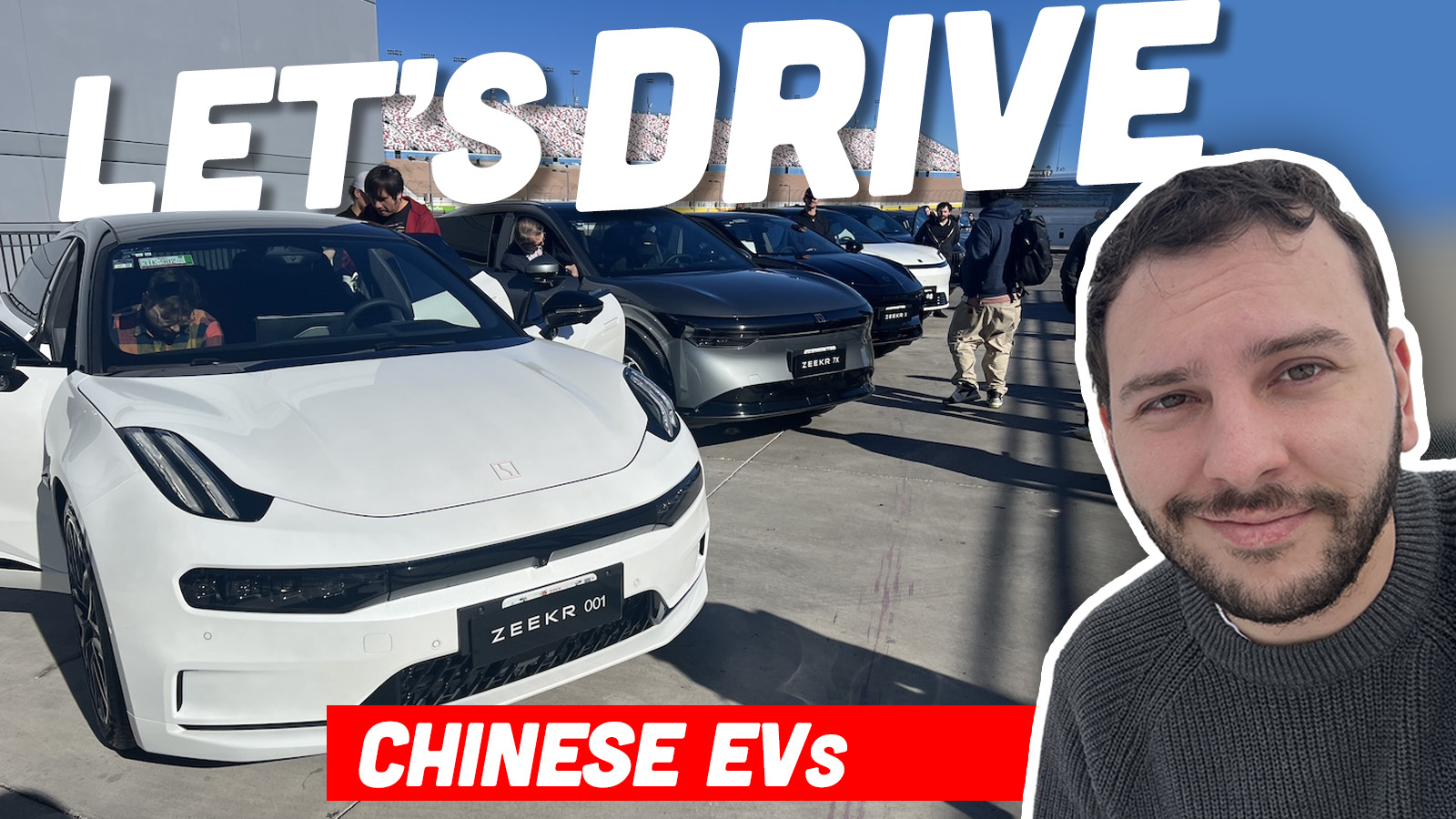
I’ve been working in automotive media for nearly 10 years. In that almost-decade, I’ve been invited on dozens of different press trips from a wide range of manufacturers, restoration firms, and tire makers. But I’ve never been to an event put on by a Chinese automaker. And I’ve never driven a car from a Chinese brand, though I have driven a Chinese-built car.
That all changed earlier this month when Geely, one of the biggest manufacturers in China, invited me to CES in Las Vegas to 1) learn about the company’s next generation of “Full Domain AI 2.0” in-vehicle tech, and 2) drive a handful of its cars across three of its brands. I suspect the AI stuff doesn’t interest you much, so I’m going to tell you about the second thing instead.


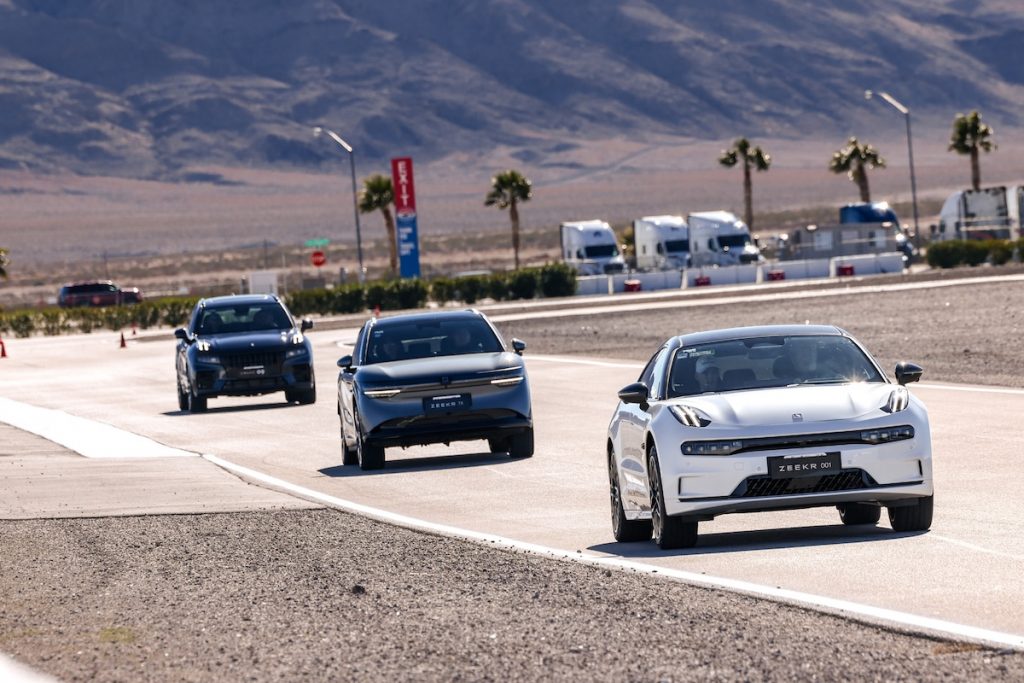
Instead of letting us loose on the streets of Vegas, Geely bused us out to Las Vegas Motor Speedway to drive its cars in a closed setting. While I admittedly didn’t get very much actual time behind the wheel, I can definitely report that Chinese cars are very real, and in most cases, extremely pleasant to drive.
The Part Where We Drove The Cars Was A Bit Dramatic
In total, Geely had, by my count, nine total vehicles for journalists to drive at the track. This was a bit of an issue, considering there were about 50 journalists present and only about two hours of total track time available. There wasn’t really any organization when it came to who got to drive what, or when. The result was a mad dash to get to the driver’s seat of each car, with makeshift lines forming in the pit lane, and a lot of crowding.
Rather than elbowing our way to the front to get the driving over with, The Autopian’s stalwart videographer Griffin and I decided it might be best to poke around the static display cars Geely had parked in the paddock while the lines died down. You can see what we found in the video above.
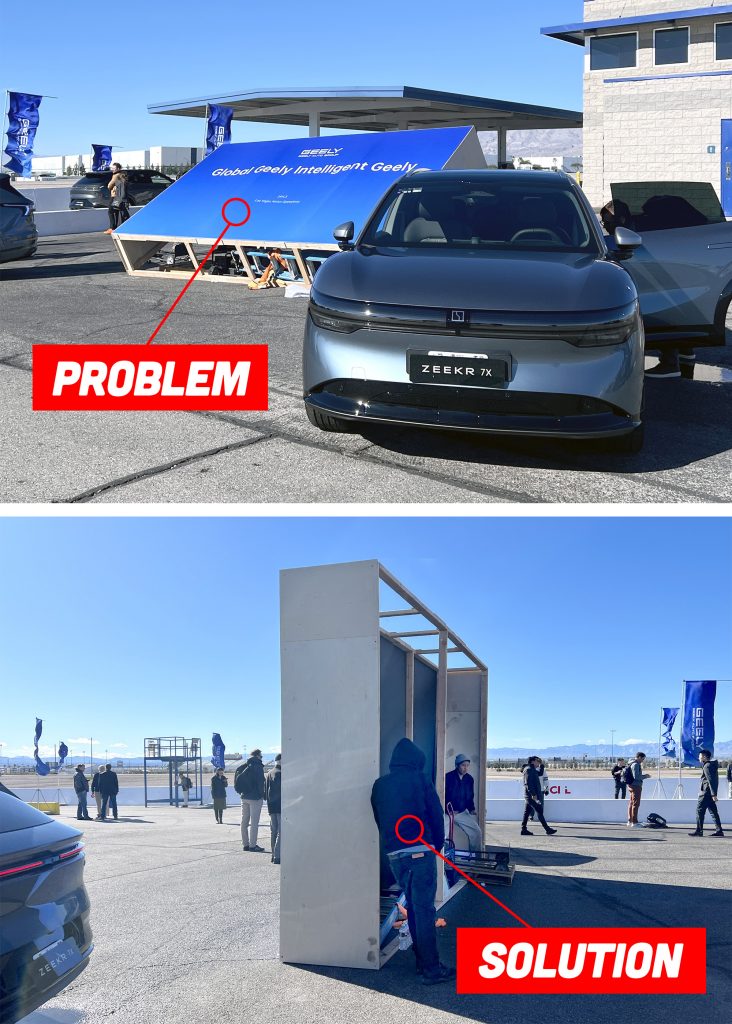
While we were doing this, Geely’s wooden billboard/sign thing it had in the paddock—which read “Global Geely Intelligent Geely”—was showing signs of collapsing due to wind. I caught the moment staffers pulled it down (it was later put back up, with big water jugs on its base to keep it from tipping over).
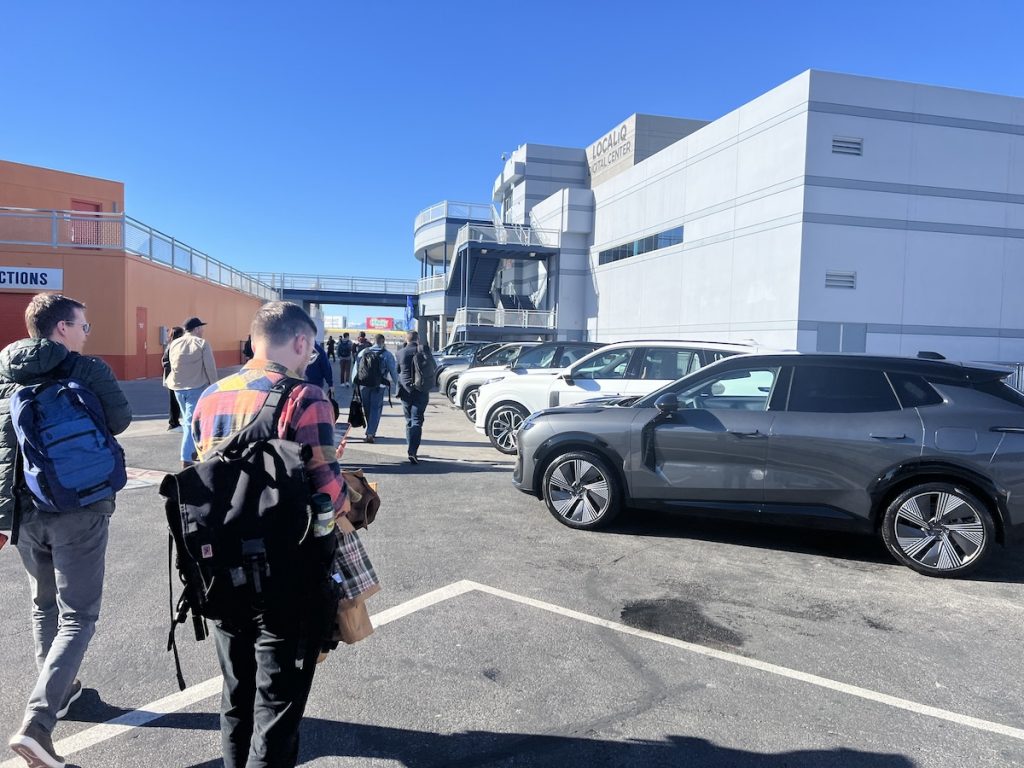
By the time Griffin and I got through checking out the display cars and began fighting for a chance at some seat time, event staff had cut each drive to just one lap, allegedly because people were frying the brakes (how a car can fry its brakes after just two laps, even at full tilt, is a mystery to me, unless the brakes are really bad at heat management. When I drove the cars, the brakes seemed to work just fine). Also, the one car I wanted to drive most, the Zeekr 9X, was not available to drive, despite Geely saying it would be in its invite letter.
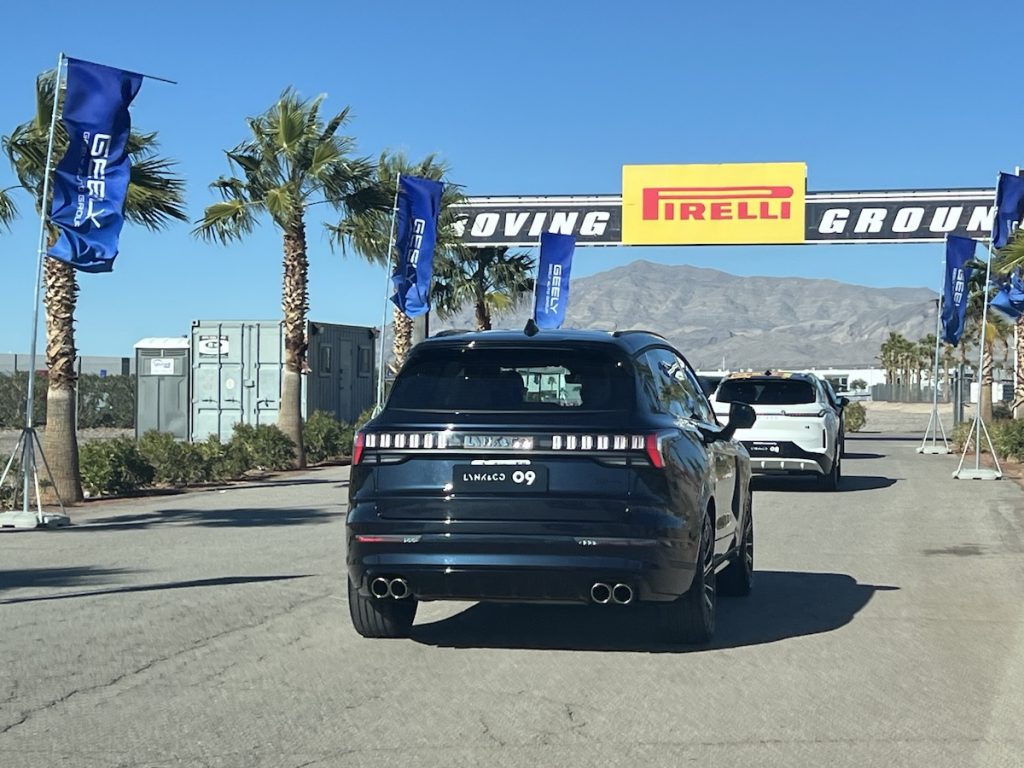
I want to make it clear I’m not complaining—this was an event put on relatively last-minute, and the Geely people were extremely accommodating with our video requests, which I’m grateful for. Press events are hugely complex things to put together, and I’m acutely aware. I’m extremely privileged to have been the person selected to go. It’s not very often you get the chance to drive cars that aren’t destined for the American market, and for that, I’m thankful. It was just a little chaotic, is all.
The Cars Themselves Were Actually Not Strange At All
For all the buzz around electric cars and their position in today’s geopolitical climate, I was sort of expecting to be blown away in some capacity, whether by the tech onboard, the design, or the driving experience. But from the brief hour and a half or so I had with these cars, I came to a fairly unexciting conclusion: These are just normal cars.
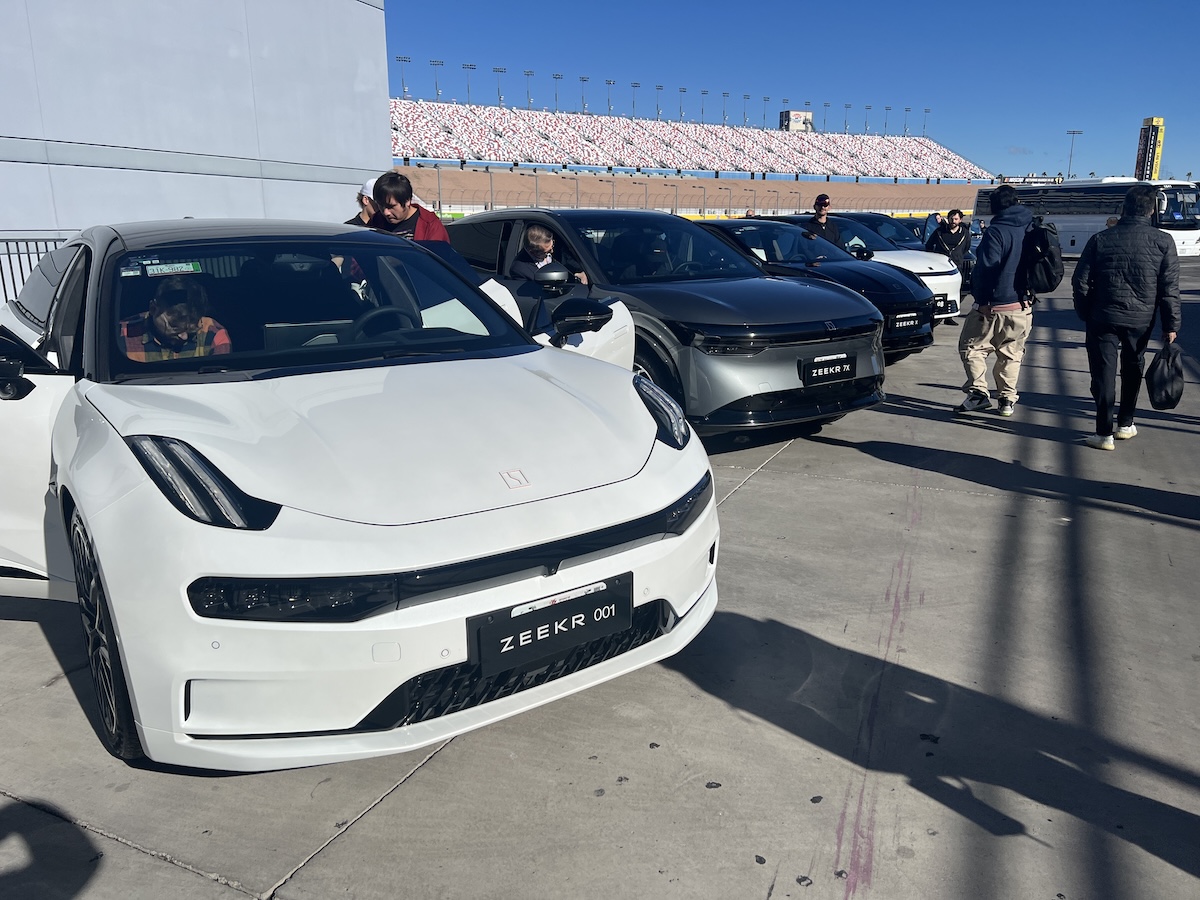
From behind the wheel, these Geely products are barely different from the Kias, Hyundais, BMWs, Hondas, Toyotas, Chevys, and Fords you see on the road every day in America. In most cases, the steering is light and unbothered, the suspension is cushy, and the powertrains are bland and washing machine-esque.
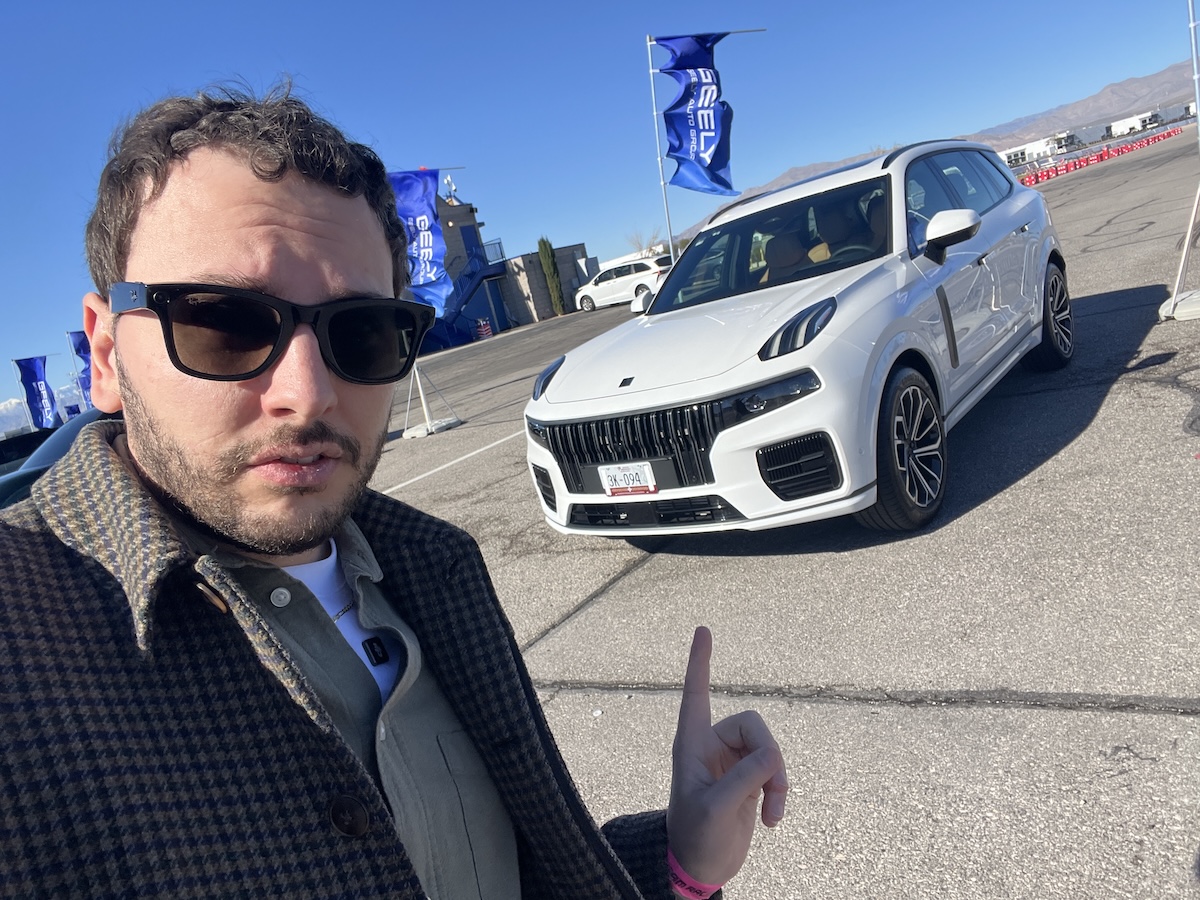
Take the Lynk & Co. 09, for example. It was the biggest car I got to wheel at this event. Despite having never even seen a Lynk & Co. vehicle in my life before Monday, it felt strangely familiar. That’s because the 09 shares its SPA architecture with the Volvo XC90, a car I’ve driven numerous times.

As such, the greenhouse is shaped pretty much the same, and the seating position is eerily similar. The interior layout is different, but not that much different. There’s a central screen for infotainment, a physical gear selector in the center console, and six seats (spread over three rows). I’m not sure if the seats themselves were the same, but they felt supremely comfortable, like the XC90’s. If anything, the materials used in the cabin were a tiny bit more plasticky than the premium stuff in the Volvo. There were also four screens: two on the dash, one for the gauge cluster, and a head-up display reflected onto the windshield.

On the outside, the 09 was the only car I drove that had actual exhaust pipes (four of them, if you were curious). Up front, there’s a big Land Cruiser Prado-like grille with vertical slats and embedded headlights, with DRLs up top next to the hood (a signature feature of most Lynk & Co. vehicles).

If I were blindfolded, I’d be hard-pressed to tell the difference in driving experience between the 09 and an XC90. The one Geely had for us used a pretty standard 2.0-liter turbocharged inline-four combined with a 48-volt mild-hybrid system, making 254 horsepower and 258 pound-feet of torque, getting power to the road via an eight-speed automatic. Was it fast? No, not really. But it was enough to comfortably achieve highway speeds. Was it memorable? No, certainly not. But it did the job just fine, which is really all that matters in a car like this.
Geely’s been selling cars in Mexico for about two years now, and the 09 starts at $949,900 MXN (around $54,000 USD). That undercuts the XC90, which uses a similar powertrain, by around $8,000.
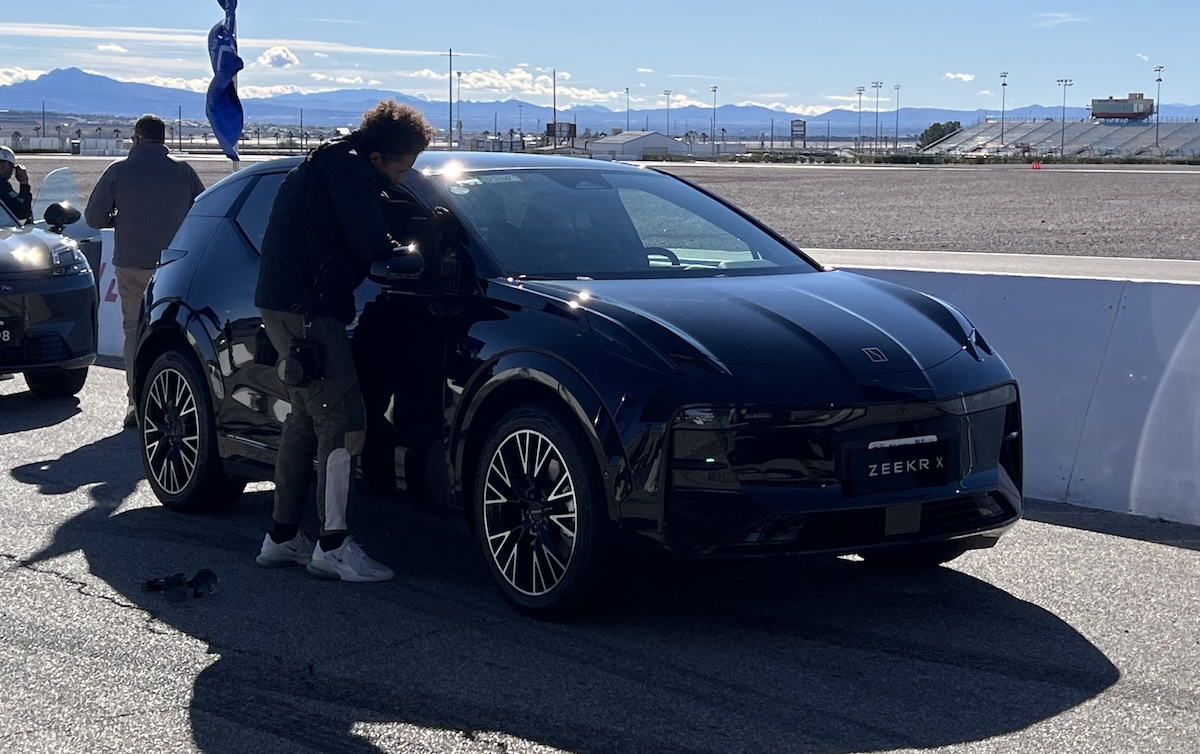
The Zeekr X, a fully electric car brought by Geely to the event, also shares its bones with a Volvo: the EX30. It felt not unlike that car, both in its funky design and its overall proportions. Introduced as a Tesla Model Y competitor a couple of years back, it delivers some damn impressive specs for the segment: The base version uses a 66-kWh battery pack attached to a single motor that makes 272 horsepower and delivers 273 miles of range on the European test cycle. And it does this all for 149,900 yuan (around $21,500 USD).
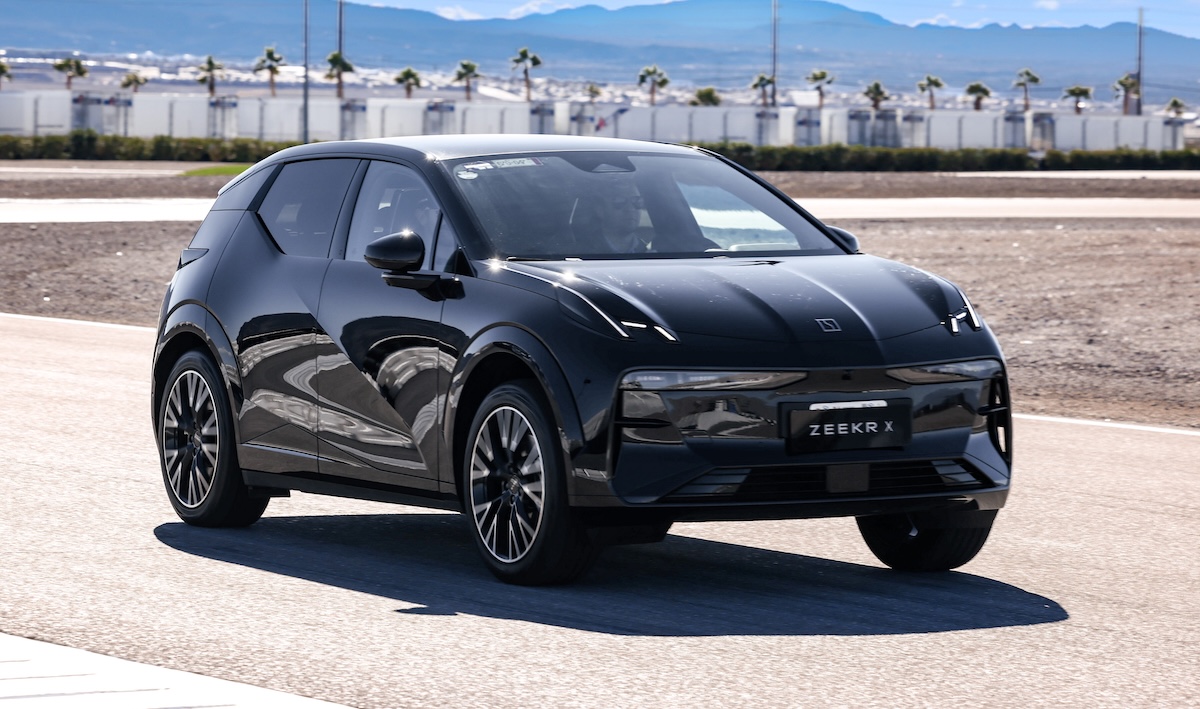
Being on the smaller side, the X was an enjoyable thing to toss around (for the one lap I was able to drive it, anyway). The rear-mounted motor delivered the type of peppy acceleration you’d expect of any EV, and while that pep began to die off above 70 mph, I think there’s only so much you can expect from a car that costs the equivalent of the cheapest new vehicle in America.
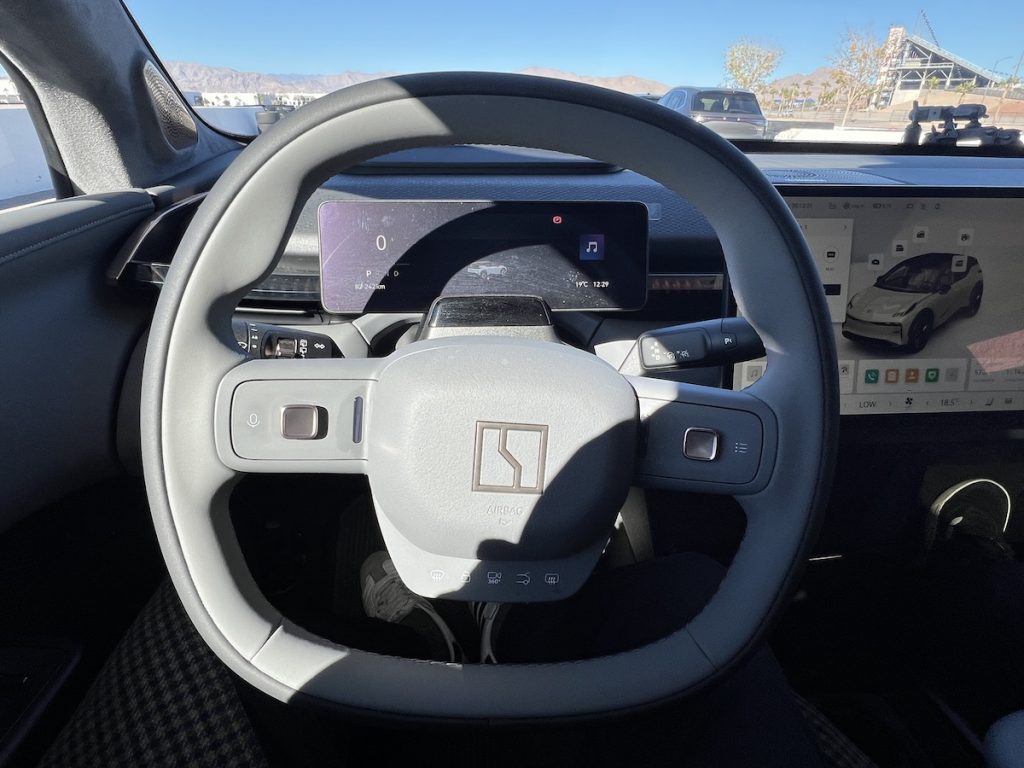
While I greatly enjoy the X’s interesting tall-hatchback shape, I liked its interior even more. It had a tiny screen in front of the steering wheel for vital data, and two unmarked D-pad-like controls on the wheel itself. I most enjoyed the five buttons under the airbag for quick functions like defrost, lock/unlock, 360-degree cameras, and the trunk release (even though I didn’t get to actually use any of them). It’s just smart placement.
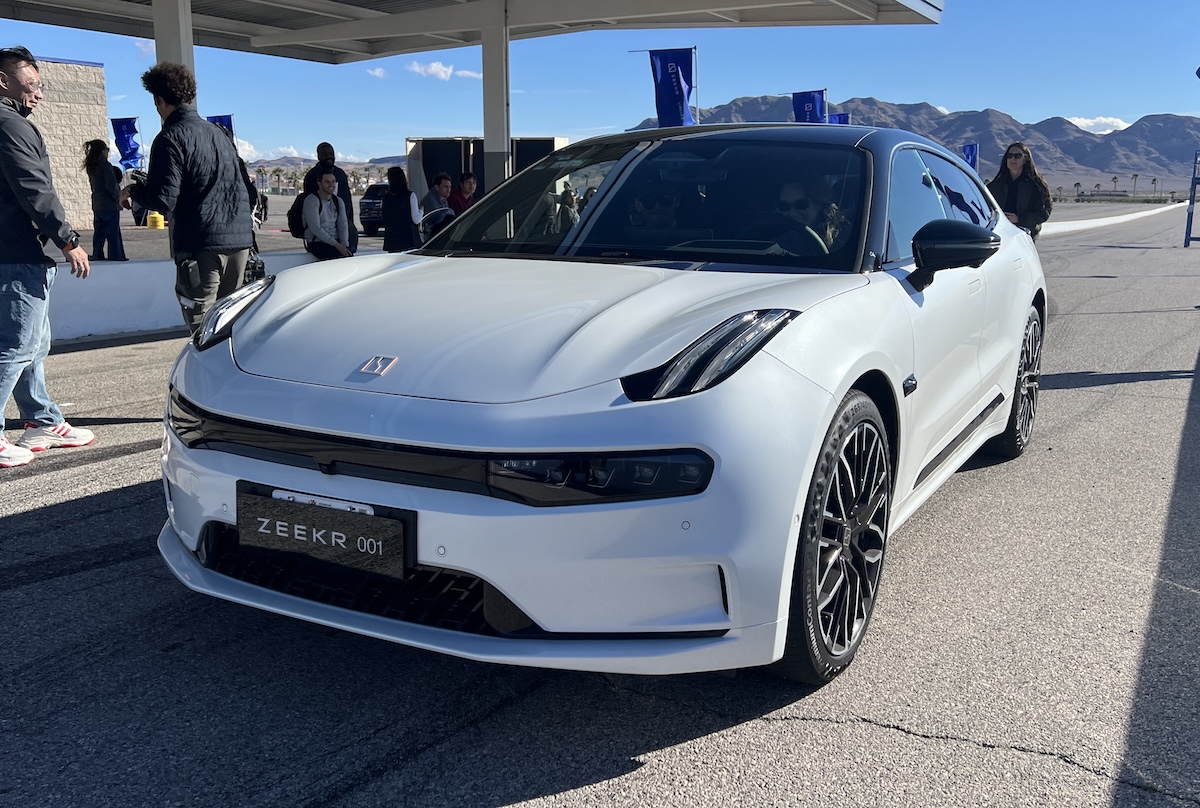
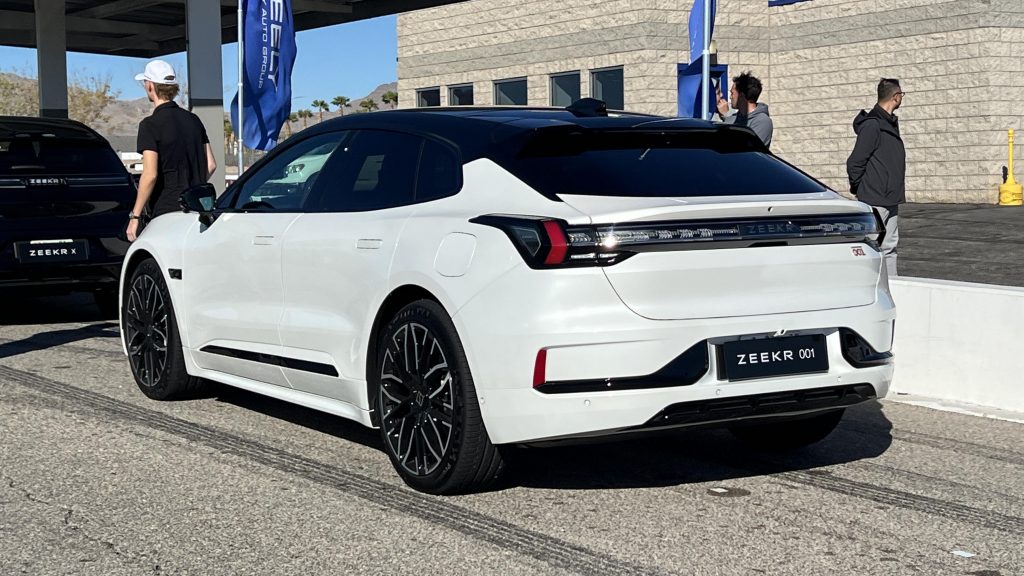
The company’s bigger, electric 001, meanwhile, was probably my favorite thing at the event. It’s a sort of hatchback-shaped wagon machine with two electric motors making a combined 536 horsepower, meant to be a budget competitor to the Porsche Taycan. With double-wishbone suspension up front and a multi-link rear, it felt great in the very few corners I took it through (though it also still felt like a heavy EV).
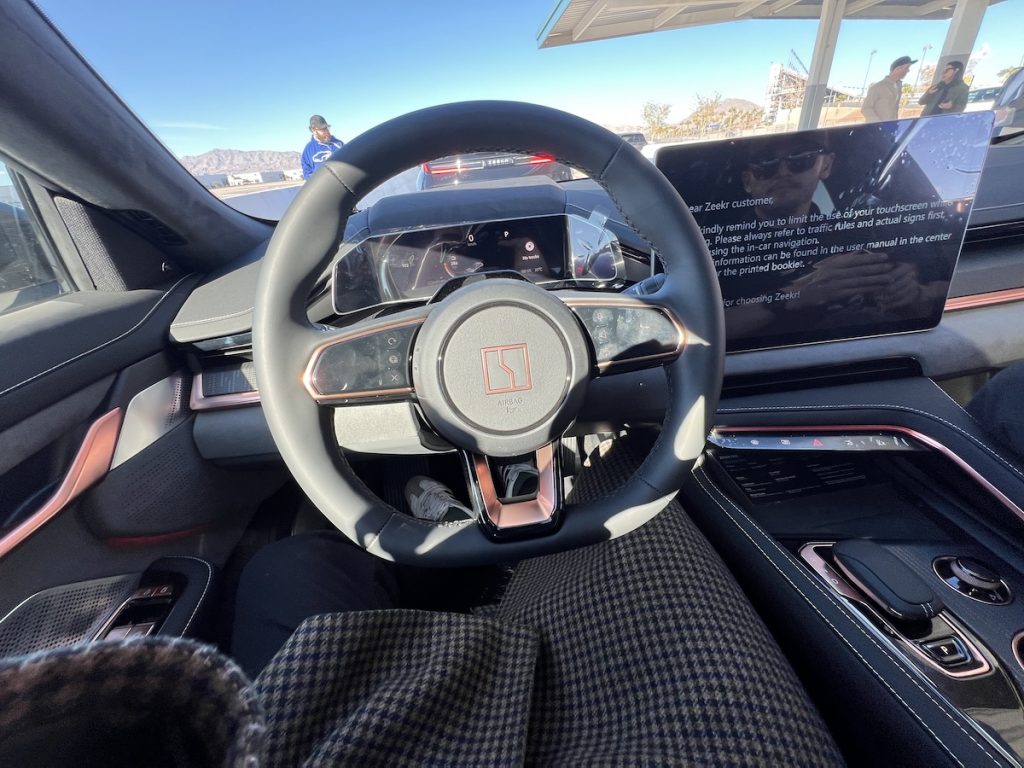
While the brakes left a bit to be desired, the interior made up for any shortcomings in the driving experience. Everything felt well put-together, and the materials were nice to touch (save for the piano black steering wheel buttons, that is). There were also splashes of copper trim everywhere, which I absolutely loved.
The biggest surprise of my truncated first drives was the Starray EX5, the only actual Geely-branded car available to drive at the event (Lynk & Co. and Zeekr are Geely subsidiaries). Like most other cars at the event, it was a crossover, but unlike every other car, it was purely gas-powered, with no batteries or electric motors to speak of. Under the hood is a 2.0-liter turbocharged four-cylinder making a respectable 214 horsepower, attached to a seven-speed dual-clutch automatic.
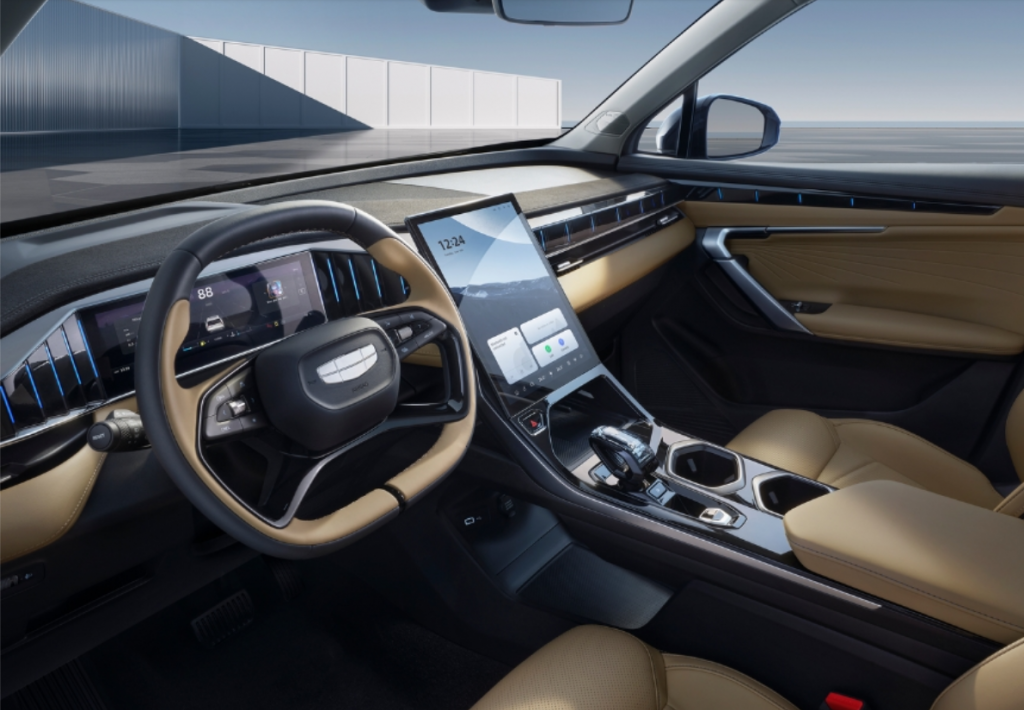
Despite its position as an entry-level vehicle, the Starray’s interior felt about as well-equipped as something one or two steps more expensive. There’s a huge screen in the center for the infotainment, and plenty of material that wasn’t hard, scratchy plastic.
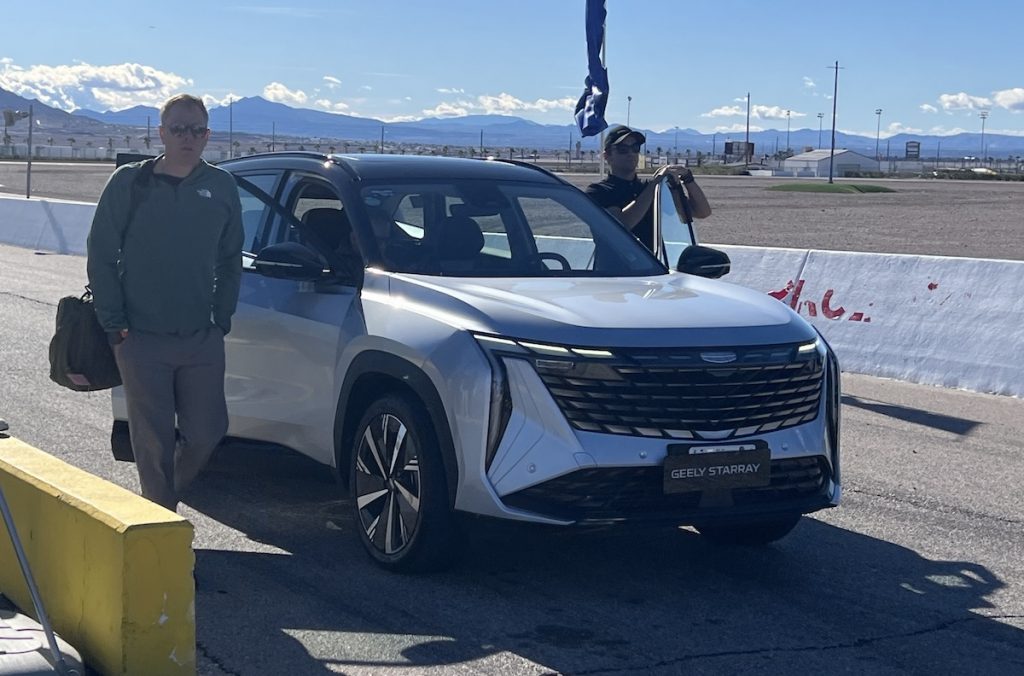
I think the reason I liked this car so much relative to cars like the electric 001 or hybridized Lynk & Co. 09 is thanks to its weight. The Starray was so much lighter than anything else I drove that day, which made it refreshingly eager around corners (for an entry-level crossover, anyway). As a budget-minded option, it definitely has potential.
Most of these opinions were formed over just one singular lap of a small, flat race track, and could (and probably would) change once I have more time with each car. But after this very brief experience, I can report there are no glaring features or drawbacks here that would scare off the average buyer.
The Big Question(s)
At this point, knowing how each of these cars drives is about the only thing I truly know right now. In terms of design, the cars left me impressed, whether we’re talking about the exterior or the cabins (especially in the Zeekrs). And to wheel, they’re all perfectly agreeable, and, in some cases, downright fun. Individually comparing them to anything sold in America is tough, though, since important figures such as range and efficiency could change drastically if and when any of these cars make it to the American market.
Price is the other obvious question mark. If we compare the price of these cars in their home market to the prices of competitors in America, the Chinese cars undercut others in the segment by thousands of dollars. Any attempt to import them to the U.S. would mean they’d be subject to huge tariffs (100% for EVs and at least 25% on other vehicles, according to Automotive News).
One way Geely can get around these tariffs and avoid shipping costs is to build vehicles in North America. Of course, it’s a bit more complicated than that. It’s not clear whether American buyers can even be convinced to buy anything from a Chinese brand, or if the government would even allow it. The cars themselves are as inoffensive as a modern car can be, but people who have been subject to years of anti-Chinese car rhetoric might still have some reservations. There’s no telling for sure until the cars actually start showing up here—if they ever show up here, that is.

There’s also the question of reliability. Many of these brands haven’t been around long enough to develop a reputation one way or the other, making long-term ownership essentially a big question mark. For what it’s worth, a Geely representative told me that in the two years it’s been selling cars in Mexico, it hasn’t had to deal with any huge, widespread mechanical problems (this is the manufacturer talking, though, so take that anecdote with a grain of salt).
In the meantime, I’m glad I got to drive them and tell you all about it. My hope is that Geely keeps a few of these cars around Stateside so we can get more quality time behind the wheel.
Top graphic image: Brian Silvestro



I don’t think $8000 is enough savings to go with a Chinese car over a $62,000 Volvo.
Geelys at least seem like they aren’t death traps with the Volvo DNA.
If the Chinese cars are only about 10% less than the cars we already have from storied and established brands, I’m not sure they’re the boogeyman everyone is making them out to be. Especially when you consider how heavily subsidized they are by the Chinese government, once that goes away they’re just competing on their merits alone: and if Chinese cars are good enough to stand on their own and not just on price, so be it.