

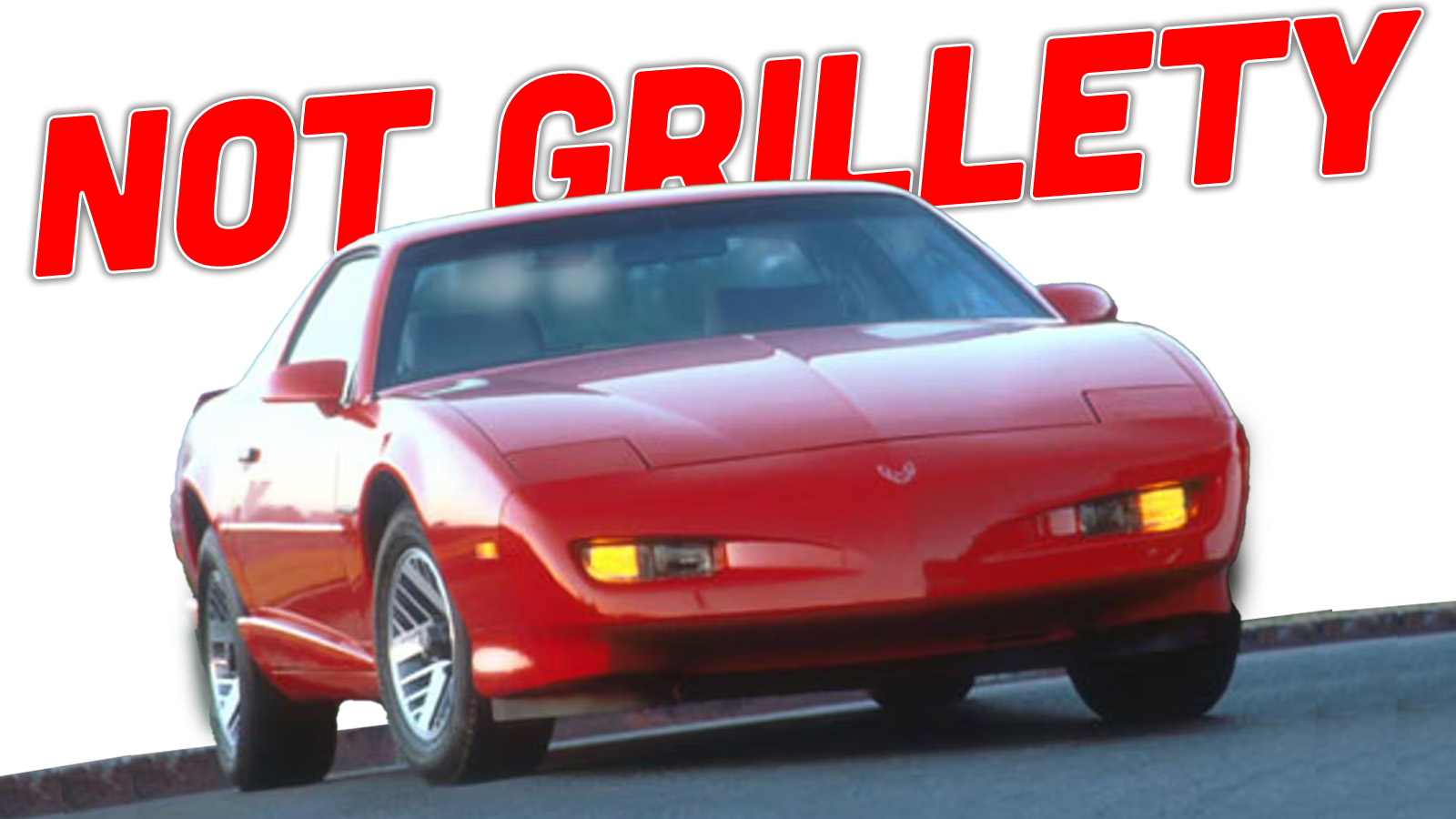
Sometimes I think I have so many automotive fetishes that maybe, legally, I should have to make my presence known, in person, to any automotive dealer, repair shop, or junkyard within a 10 mile radius of my home. I feel like every day I remember another one, and that’s what happened today, as my automotive fetish for front-engined liquid-cooled cars that, somehow, perhaps even defiantly, shun any sort of traditional radiator grille re-emerged into my mind. There’s something strange and wonderful about these strange, smooth-faced beasts, and I was thinking about one in particular: the Pontiac Firebird.
Well, more specifically, many of the variations of the third-generation Firebirds. Earlier Firebirds did have big, hungry grilles that greedily slurped in cooling air, and while those grilles were getting smaller and smaller by the later second-generation cars, when the third generation arrived in 1982, while it started with a pair of air intake grilles on its lower fascia, it didn’t take long for GM stylists to be bold and try some experiments in grille-free front end designs.


Really, it was pretty bold of them! For a muscle/performance car like the Firebird, a large grille traditionally hinted at the power of the engine enclosed within. By eliminating that visual tell, the car was making a pretty significant departure from the expected, stylistically. And that’s not even getting into the technical challenges of getting enough cooling air into the radiator all from below the car. Here, lets’s look at how the third-gen Firebirds started, grille-wise:
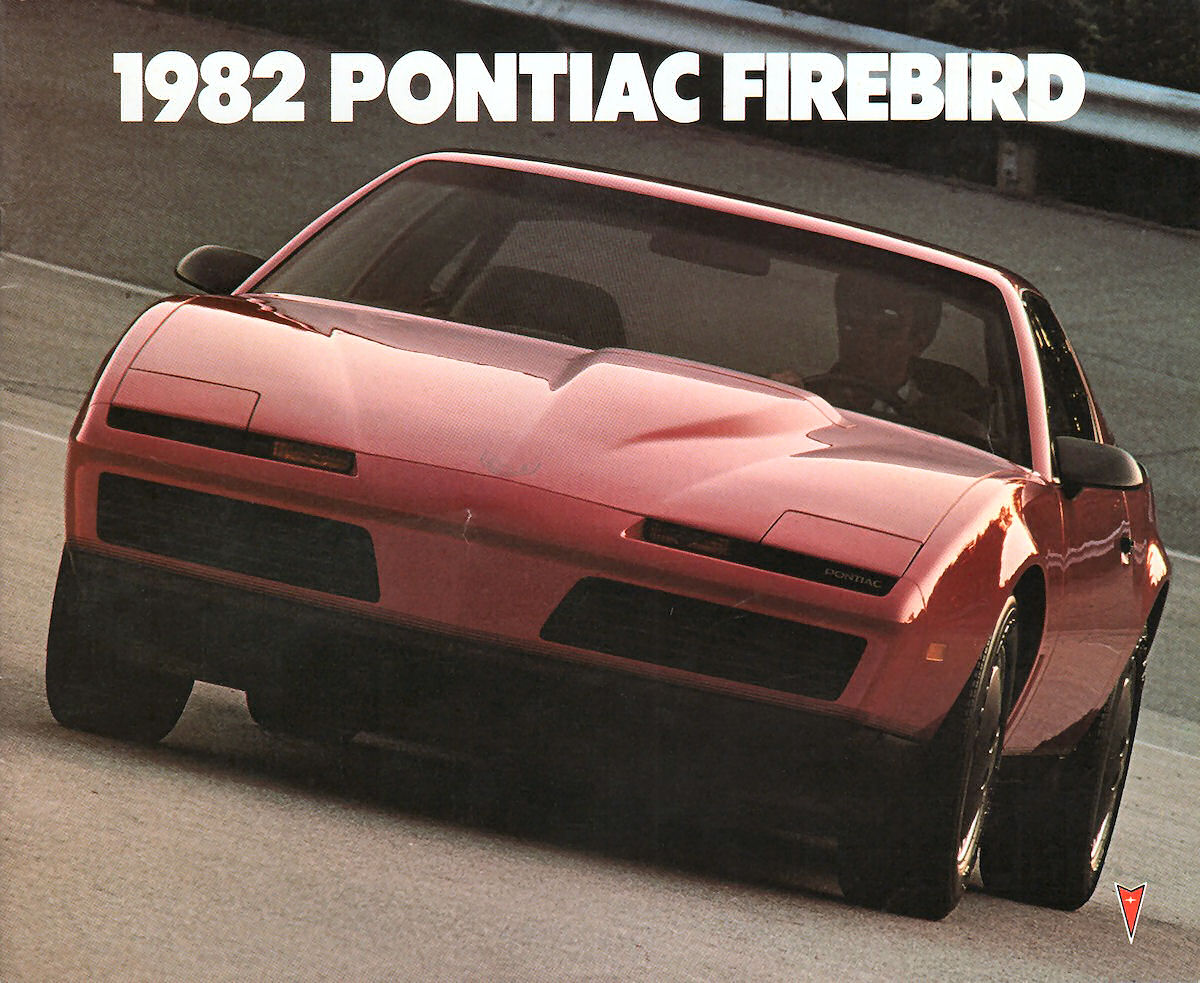
So, we have a mostly smooth nose, with a pair of roughly-rhomboid-shaped radiator grilles at either side of the bumper. The black slots under the covered headlamps are not intakes, just black plastic panels that house the turn indicators. So, we still have radiator grilles at this point. Let’s jump to 1984, with the 15th Anniversary Edition Firebird Trans Am (shown here in a Goodyear tire advertisement):

Look what’s happened here: Pontiac’s designers have confidently and brashly covered up the existing grilles with solid insert panels, a real vote of confidence for their cooling system engineers who now had to deal with substantially less airflow. Well, maybe not substantially less; looking up replacement grille panels shows that only a small portion of the grille area was actually open, so it seems likely the majority of airflow was coming in from underneath from the start.
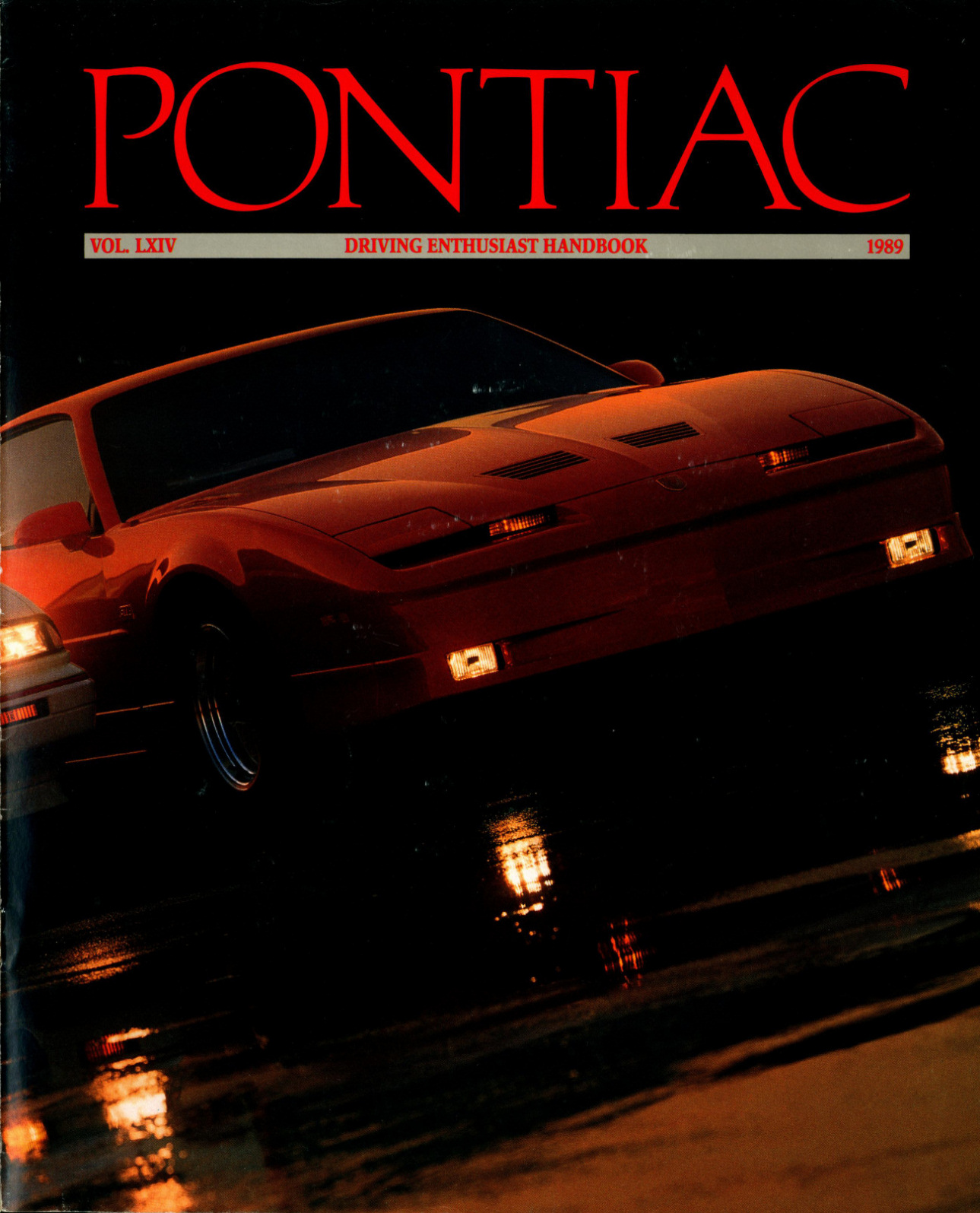
By 1989, a whole new lower bumper skin was designed, completely eliminating any vestige of radiator grilles at all. Sure, there were two small sets of air vents on the hood, but I’m not sure how much that even counts as a grille; and while there was some air intake there, I think that was feeding the intake manifold and not the radiator or cooling system, at least not in any significant way.
And look how far they went in 1992:
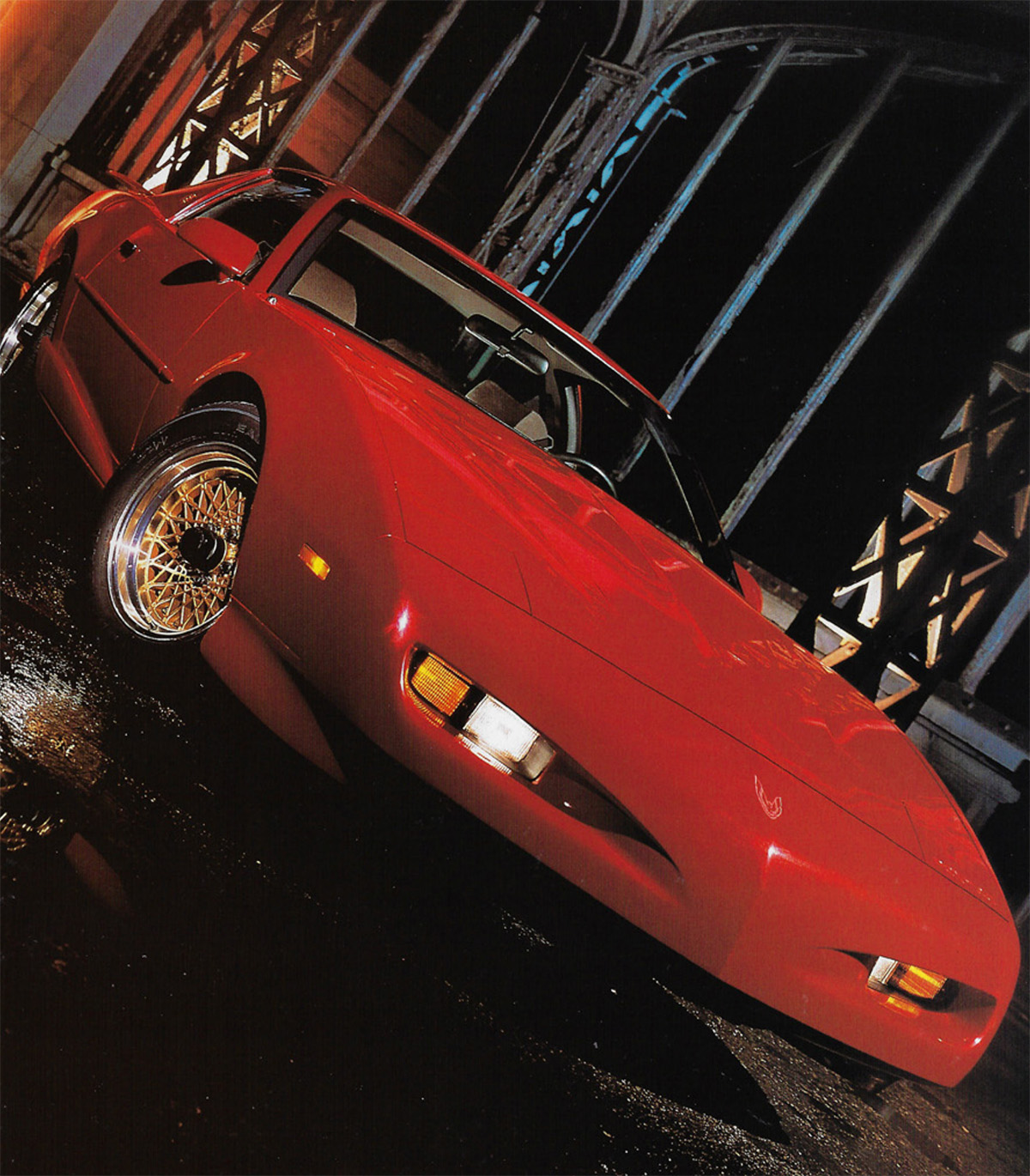
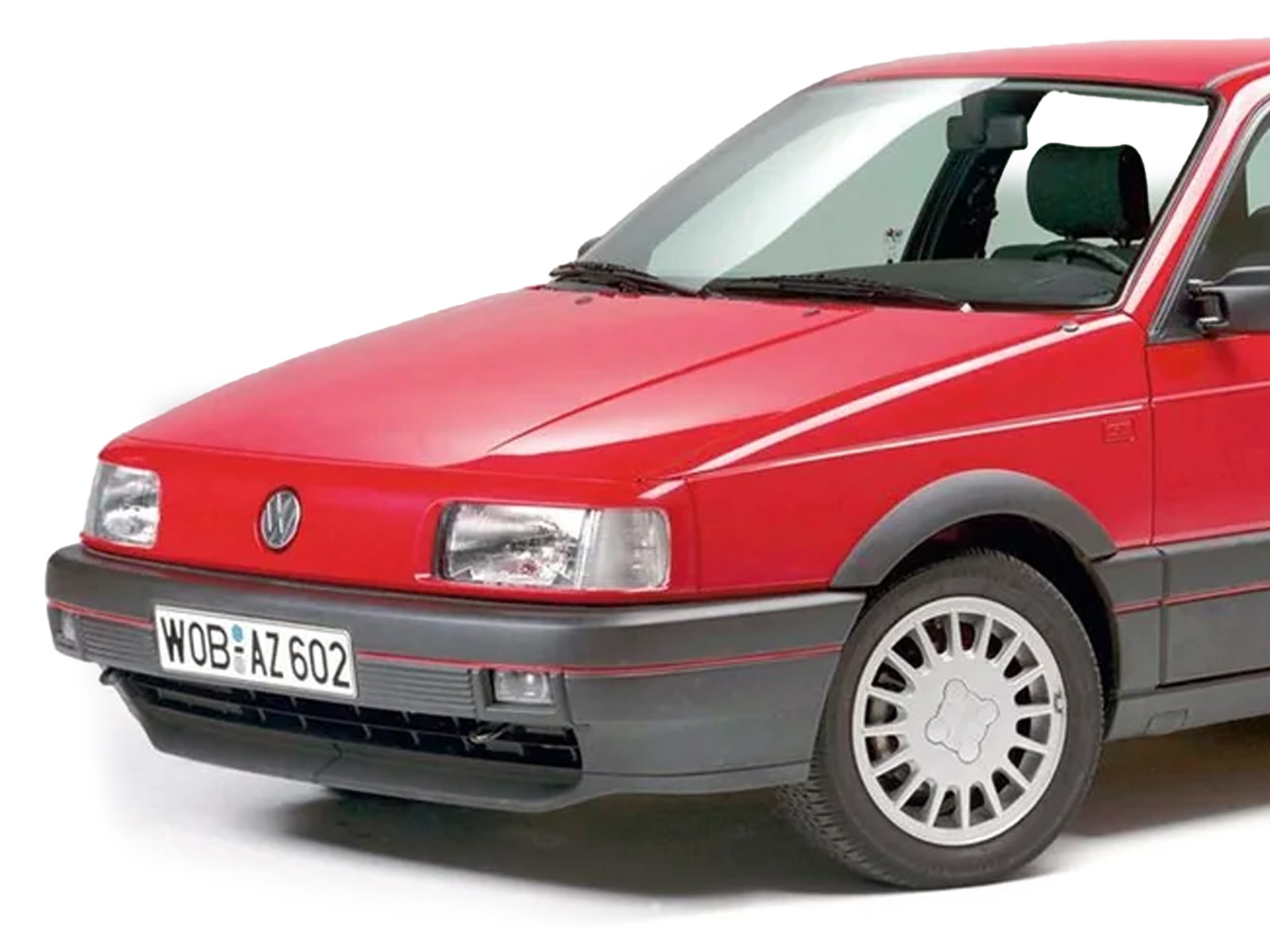
Look at that! Not a hint of grille on there! This could be a rear-engined car! It’s astounding, this brazen lack of air intakes! Just smooth, painted metal and plastic. No hood vents, no little intake slits, nothing! Not even an under-bumper grille area! And when you compare that to other grille-less designs of that era – because there were some others – you can see how committed to the bit Pontiac was. For example, the Volkswagen Passat hedged their bets with a logo that functioned as an air intake:
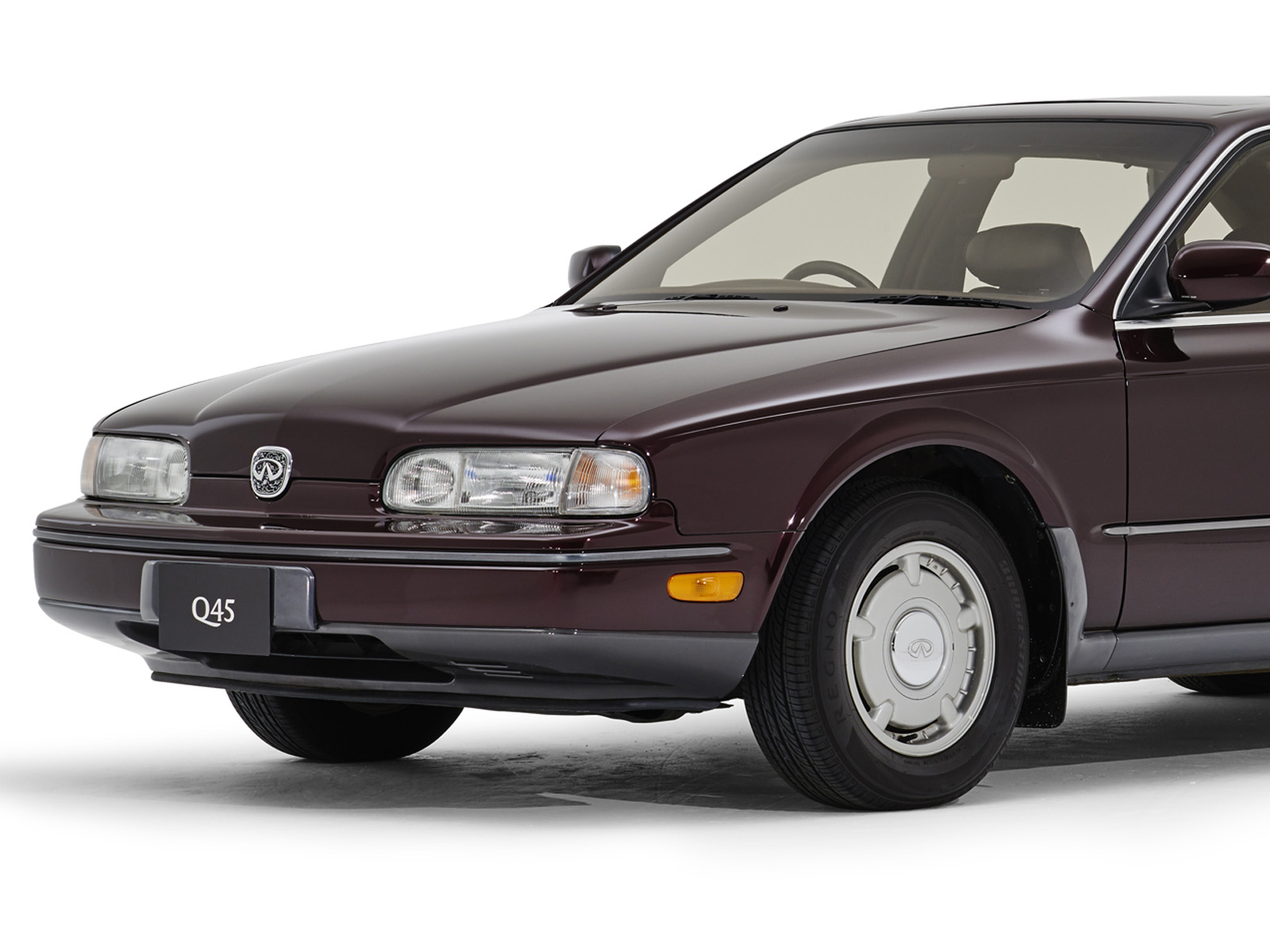
…and it had a pretty substantial under-bumper grille, as did the 1989 Infiniti Q45:
The Firebird didn’t need any of that. It was no grilles, none of the time for Pontiac and, dammit, I respect that. And they kept at it! Look at the 1993 Firebird:
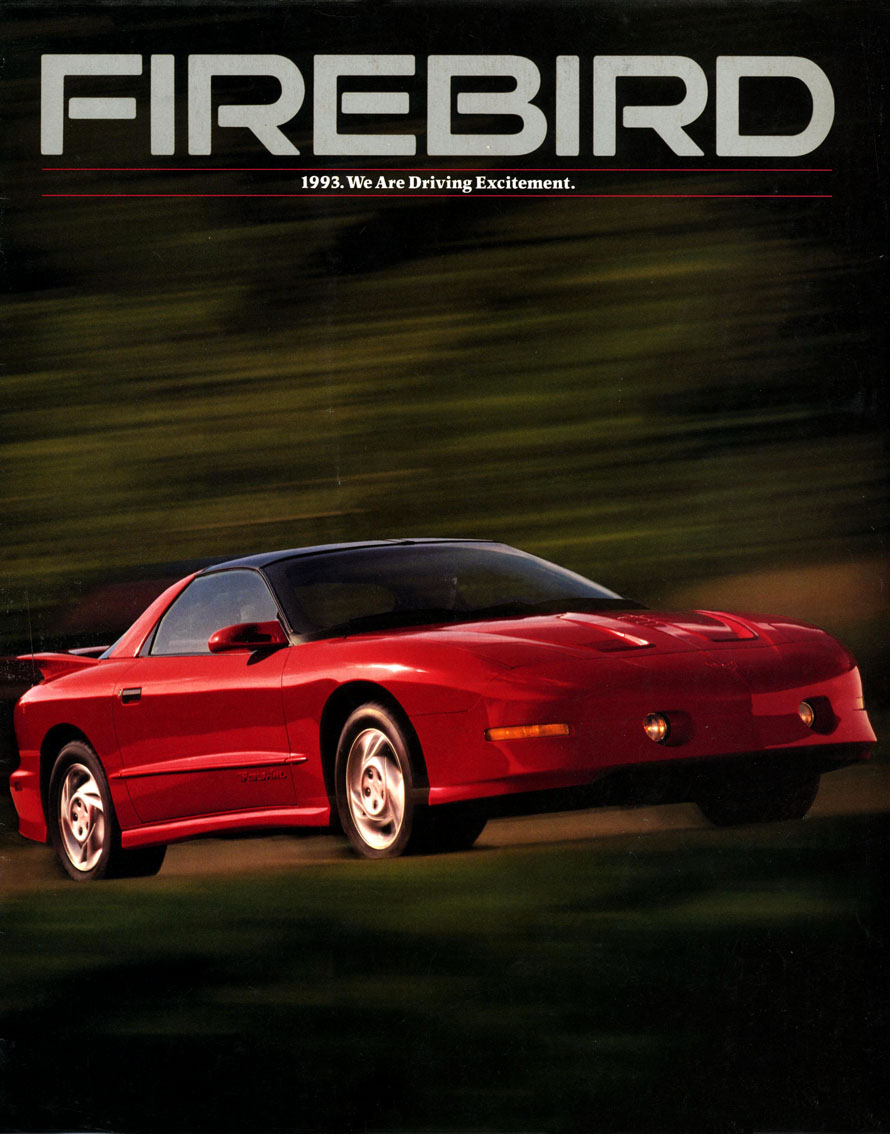
They inset some nice round driving lights in there, and have a couple of air-extraction vents on the hood, the opposite of intakes, and still no visible grille at all. It’s downright daring!
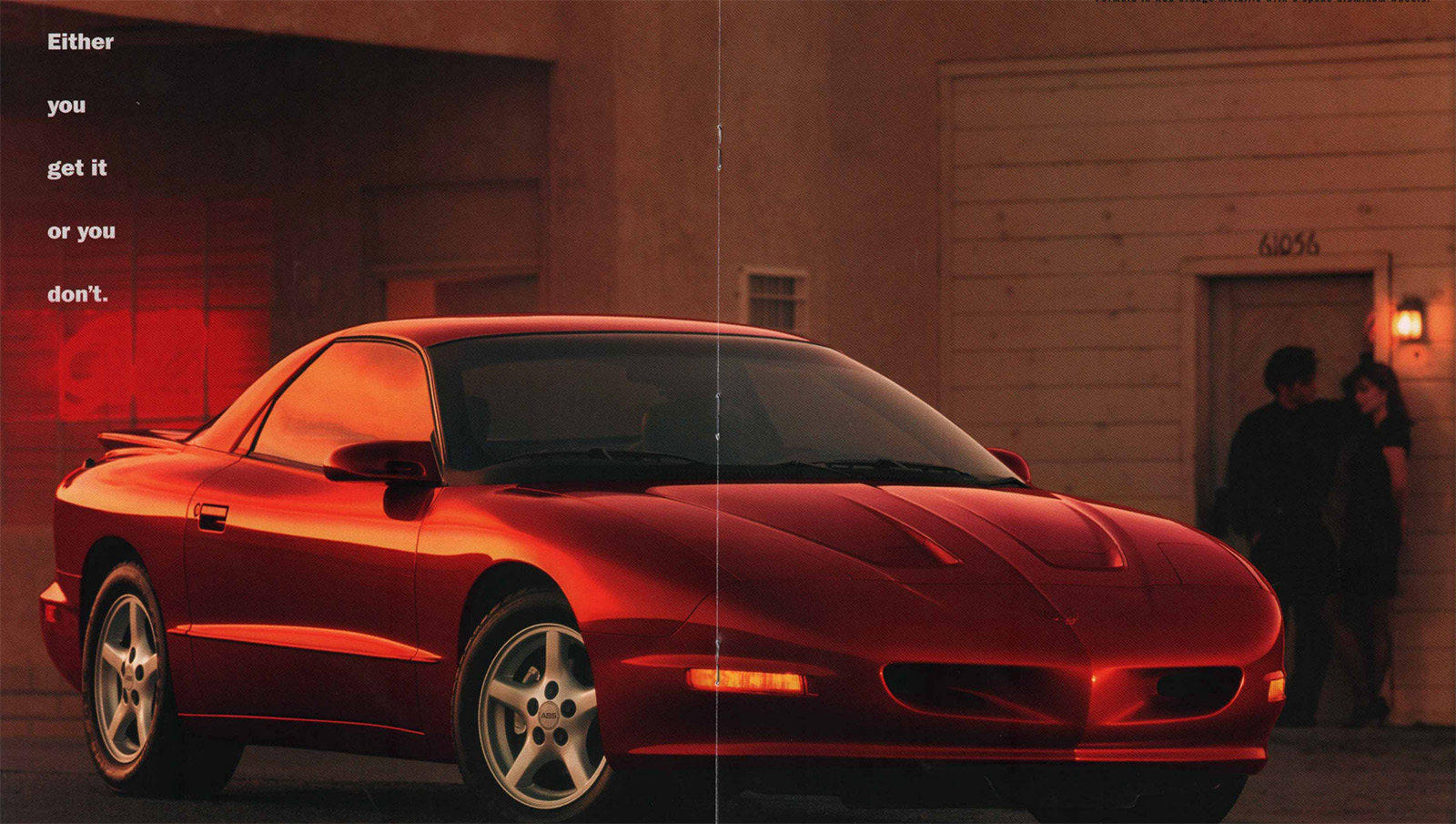
By the late 1990s front air intakes did start to make a comeback, signaling the end to Pontiac’s brave experiment in grillelessness. Even so, I think these mid-to-late 1980s and early-to-mid 1990s Firebirds retain a certain special charm, and it comes from the smoothness, sleekness, and confident simplicity of their grille-free front ends. It’s a testament to GM’s engineering that these cars are not known for having significant overheating issues as well.
Huge grilles can often become an overplayed styling crutch; Pontiac deserves credit for trying something completely different.


For Torch: I have always wanted to drive a Pontiac with a Parliament cigarette logo. Do you have thoughts on this?
Man with all the Firebird posts are really starting to grow on me.
My Sunbird doesn’t have a “grille” per se, either. Pontiac must’ve really had something against them in the late ‘80s/early ‘90s.
I’ve been told that I need to grow 1/2 a mullet since I have the Sunbird and not a Firebird.
Renault had it in 1903, Citroën DS had it in 1955: Just a duct from below to the radiator. Works just fine.
I think it’s only because the expensive conservative brands, like Rolls Royce and Mercedes-Benz, had the traditional upright grilles, it became a desireable thing to actually have one.
I love the clean grill-less look too. Would like a 1987 Pontiac Fiero GT to go with my views.
Still love the look of an 89 GTA Firebird…
I think they must have had some sort of concept car for the ’93 design in advance, because I remember vividly a Pontiac ad during the 1990 Super Bowl that showed, in the last second, a Firebird with that nose sliding across the screen. The next day we all chattered about it in school. I’m confident of the date because that was senior year of HS for me—there’s no later time when I would have been able to talk with those guys about it, and I can’t imagine another event where we all would’ve seen the same ad.
Anyway, we were all disappointed to learn later that it was just a facelift, not (as the ad suggested) some sort of all-new vehicle beyond the Firebird.
IIRC, that was the Pontiac “Banshee” concept car, which later made an appearance in “Knight Rider 2000”. The 91-92 nose and wing were adaptations from that.
That’s it! Thanks. I knew that at one time, or maybe even twice—I think somebody online wrote about it in the last decade, but it slipped through my memory banks.
I made a Revell plastic model of it when I was a kid, I loved that car.
This should be a regular feature! All the grilleless cars!
I’m a little surprised David didn’t have an [Ed Note: -DT] contribution here, given his past experience with cooling systems.
I’ve owned all iterations of Firebirds shown in these photos. The “grills” on the first 3rd gens are fake. There are no holes in it. All the air comes from underneath. There is a plastic air dam below the radiator core support that directs air up into the radiator, and if it gets damaged, the car will overheat.
The air extractors on the hood of the 4th gen are also fake.
My C4 Vette is the same way.
Same for the 93-96 LT1 Camaros
Lately I’ve had a perverse hankering for a fourth generation Firebird with t-tops and a Buick 3800. It has the styling outrageousness coupled with a economical and reliable engine that won’t win races but is perfectly suited to weekend cruising. It put a screaming chicken decal on the hood just for the effect.
I’ll take almost anything with a 3800 in it. Those things sleep on the highway, are surprisingly efficient for the size of the vehicles they’re normally in, and have so much torque available at usable RPMs that passing stuff isn’t a chore in the slightest.
Fix the intake and they’re essentially unkillable.
Look up a 99-02 V6 with the Y87 package and replace the intake and you’ll be very happy. Just be mindful of all the fourth-gen gotchas (window motors, headlight motors, leaky T-tops, dashboards, bolsters… etc)
My wife had a Regal with the 3800. Zero engine complaints, as its reputation would suggest. The brake disks, though… grrrrrr…..
As someone who daily drove an ’89 Firebird pretty recently, gotta add that to the mix here as the regular (non-Trans Am) firebird from ’85-’90 was also very grille-less. It just had black bumper strips up front that were kind of an acquired taste. Mine had the 305 V8 and it stayed pretty cool. Of course, all that crazy engineering they went through to give it a pointy nose and no grille made for the most annoying pop-up headlights I have ever tried to maintain. Constant problems with them were part of why I fell out of love with that car. I have scars.
I was wondering about those lights. My ’86 Accord had those and I never had a problem with them for over 100K miles. I did see a few in passing that did have problems. Usually, one popped up and the other retracted.
I had an ’87 Accord and the pop-ups worked until I did the car in around 245k miles and a ’90 Prelude that worked without fault until I sold the car around 150k miles.
I’m a bit of a pop-up headlight addict. I’ve had three NA Miatas – and the NA Miata pop-ups have NEVER failed me. I had a 1991 Corvette and the flip-over lights always worked. I had a 1994 Trans Am and one of them did fail, but it was actually an easy fix since they make aftermarket brass gears to replace the plastic. The ’89 Firebird was the absolute worst. So many plastic components that slowly turn to dust and fail, and all the parts are extremely hard to access, with one of the motors in an almost unreachable location. Just changing a headlight is a pain in the ass as the plastic nose gets in the way and makes it hard to pull the trim. Once mine started having problems, I was never able to permanently fix them.
I like the really low grilles of the Grand Prix SE
I think it looks like it is sticking out its tongue.
Taking into account that the NA engines in the 1989 Firebird produced between 34 and 48 hp per litre, I’d say they were pretty chill engines. My 1998 Fiat Punto diesel produced 44 hp per litre and did fine without a grille too.
BTW, saw a white one driving south of the Costa Brava in Catalonia this weekend, with Belgian plates. It must have originally belonged to an American stationed at the NATO base in Mons.
I was a GT guy, but always had an appreciation for F-bodies, particularly the early 3rd gen (’82/’83) – they looked cleaner and more athletic than the later ones with all the ground effects. The early ’90s facelift on the Firebird/TA really left me cold. The new nose and side skirts looked overplayed and tacked on, IMO.
Next do the Oldsmobile Aurora (1st gen).
The Dodge and Chrysler LH cars as well.
The reality is that most modern cars, even ones with a grill, are “bottom feeders” when it comes to cooling. They suck in most of the air they use to keep cool from the lower front bumper. Not only is this better for cooling, the styling of the front end (since now the grill opening is almost purely for aesthetics), but I would also assume keeping the car planted to the ground since a bottom feeder design should minimize lift at higher speeds.
It will reduce lift a small amount, but the bigger impact is adding a bunch more downforce with the front end sculpting. Not to mention reducing aero drag significantly.
I drove a first gen Aurora. Fantastic car plagued by either the end of the Malaise Era GM, and/or a bad first owner. Too much time and money at the shop meant I only kept the thing for 2 years, but I loved much of the time I had with it!
Had a boss that bought a champagne colored one the first year they were out. He loved that thing – and being that he drove a ton for work, it was perfect for him. It really was a gorgeous large cruiser. Was always nice to get a ride in it.
Imagine one of those with modern tech like Super Cruise – would be the ultimate highway car.
There is a massive air dam underneath the car that directs all the air upwards and through the radiator. Third gen Camaros do technically have a “lower grille”, but half the time, the openings are mostly blocked by fog lights, and thus they have the same air dam underneath.
Fourth gen F-Bodies were similar.
Same as the C4 and C5 as well.