

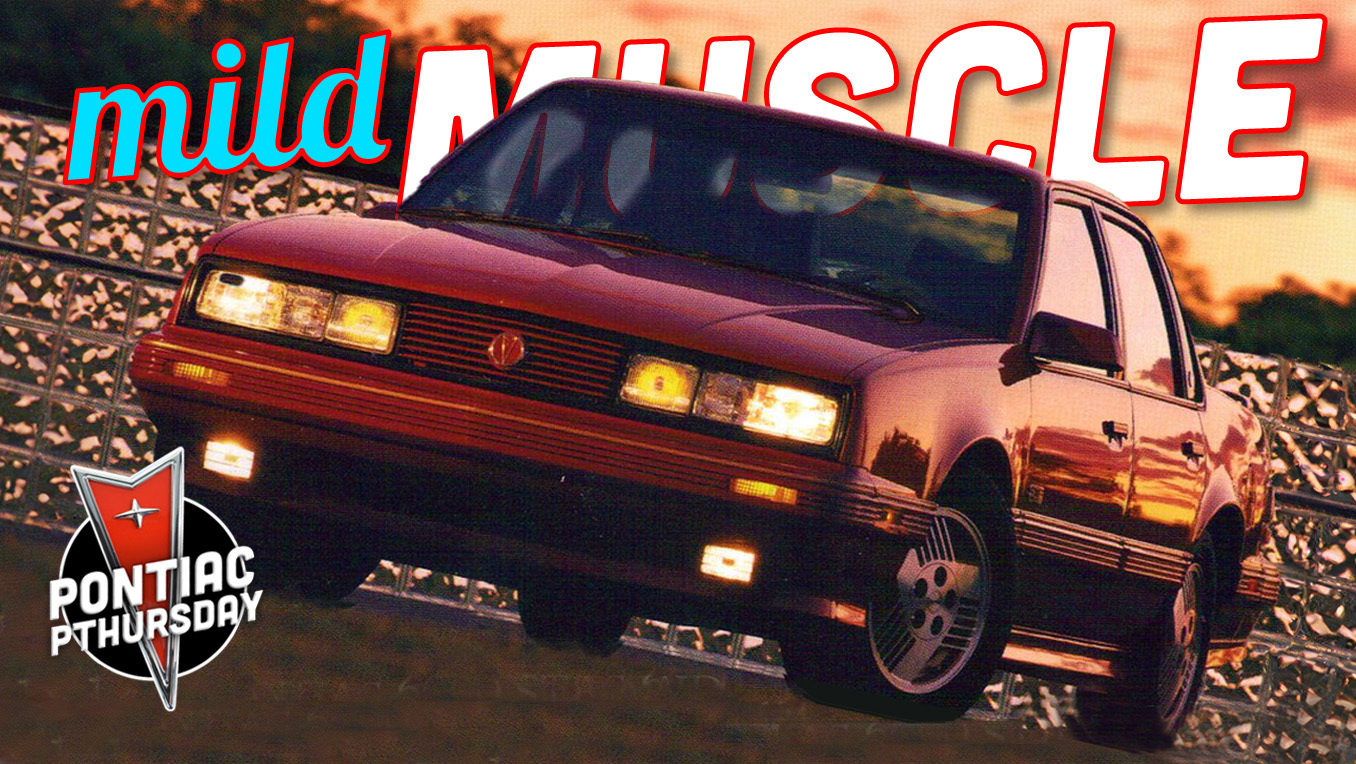
The 1980s were one of the darkest periods for the mighty General Motors. The General spent the early years of the decade losing an incredible amount of momentum, fighting a losing battle armed with derided diesels, unloved downsized cars, and massive V8s that made only morsels of power. Through all of the doom came a bright light. This is the Pontiac 6000 STE. In a period when many buyers couldn’t tell two GM cars apart, the 6000 raced ahead of the pack as not just a better car, but one that could somewhat keep up with the Germans.
Under Alfred P. Sloan’s control, General Motors famously said it made “A Car for Every Purse and Purpose.” That was back in the 1920s, and this strategy was vastly different than Henry Ford’s idea of a one-size-fits-all approach. GM would build its cars across tiers, from the cheap and affordable car to the elegant and expensive car. The rest of the automotive industry would adopt this standard.


For much of the history of General Motors, its brands shared some parts, platforms, and tooling, but each brand had its own identity, its own engineering, and its own designs. Sometimes, this resulted in quirky situations, at least by today’s standards. Chevrolet and Oldsmobile both made America’s first production turbocharged cars. Both cars even debuted weeks within each other in 1962. Yet, they were vastly different projects despite both falling under the GM umbrella. Another example of this is how GM’s divisions had their own distinct V8 engines. Chevrolet and Oldsmobile both had 350 cubic inch V8s, but they were not the same engines.
A Different General Motors

As the book ‘A Century of Automotive Style: 100 Years of Automotive Design,’ by Michael Lamm and Dave Holls notes, this changed in the late 1970s. It was now the peak of the era known today as the Malaise Era. Automakers were adapting to a rapidly changing environment. The horsepower wars of the 1960s became a battle to downsize, increase fuel economy, and reduce emissions. At the same time, people cared more about car safety than ever. The smaller yet bulky cars of the late 1970s reflected all of this.
Hemmings quotes the book more:
General Motors Assembly Division and its young and inexperienced engineers had started to eclipse Fisher Body and its veterans. GM started to centralize product development under platform teams rather than leave that up to the divisions; “divisional identities blurred when management mandated that differently badged cars on the same platform would use identical outer sheetmetal,” Lamm and Holls wrote. Lawsuits began to fly over the corporation’s use of one division’s V-8 engines in another division’s cars. And, perhaps most symbolic of all, in July 1977 Bill Mitchell retired.
Rather than pick Chuck Jordan, the man who Mitchell groomed to replace him, GM’s selection committee chose Irv Rybicki as Mitchell’s successor as vice president of design. In hindsight, as Lamm and Holls noted, it was a poor decision. General Motors, during Rybicki’s nine years in office, would lose not just identity but its dominance of the American industry. It would lose its half century of automotive design leadership.
Irv’s strength lay in administration. (GM Executive Vice President Howard) Kehrl wanted a good administrator, someone who could put GM Design Staff on a more businesslike footing. He got that. As a designer, Rybicki had done some nice things when he ran the Olds and Chevrolet studios, but he lacked emotion and forcefulness. He didn’t have the conviction to fight for design. He was too gentle a person to do battle at all. The corporate moneymen, the general managers, the engineering and manufacturing people too often got their way with Rybicki. While GM Design Staff was never shorted on funding, Irv could see and agree with the economic arguments for making design subservient to other disciplines, especially engineering and manufacturing and especially, too, because those staffs were working furiously on downsizing, CAFE, safety, emissions, quality, etc.
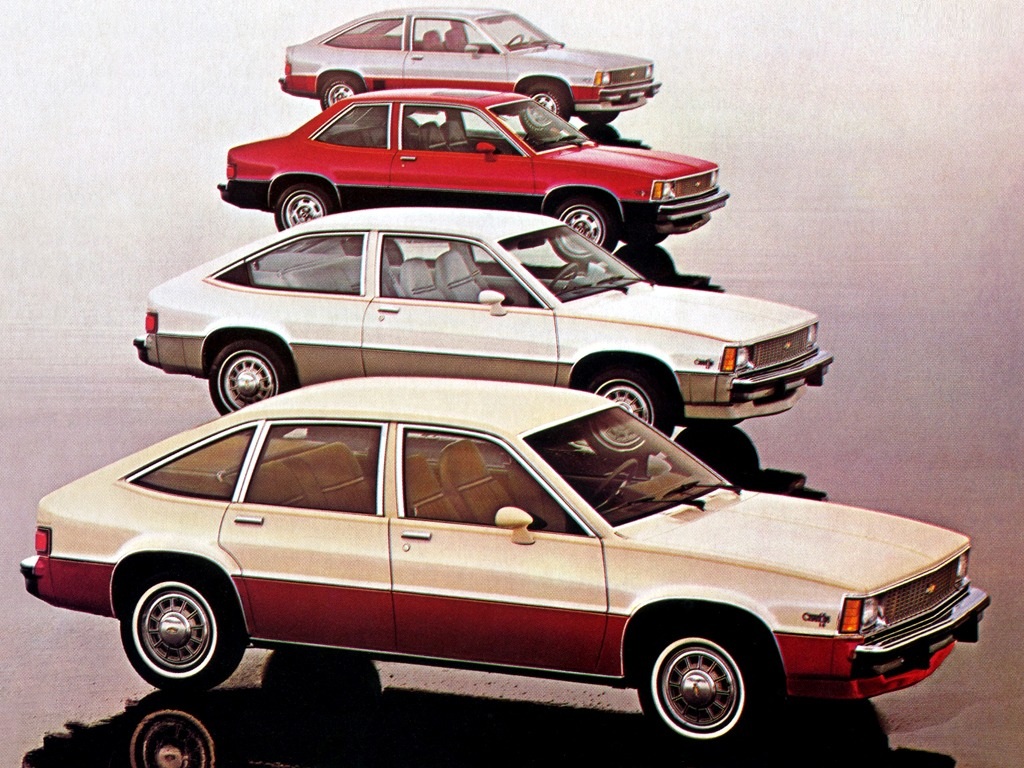
Those lawsuits that the book mentioned? There were more than 200 suits launched after customers were furious about finding Chevrolet engines in cars that were supposed to be on a higher tier. Ultimately, GM took a $30 million hit when it settled these suits.
All of these factors and more meant that, in 1982, General Motors would make a bet that the future of the American automobile was downsized, lightweight, front-wheel-drive, and fuel-efficient. This bet would not pay off, and led to one of GM’s darkest periods. Yet, there was still light, and it was at Pontiac.
One Car, Four Brands
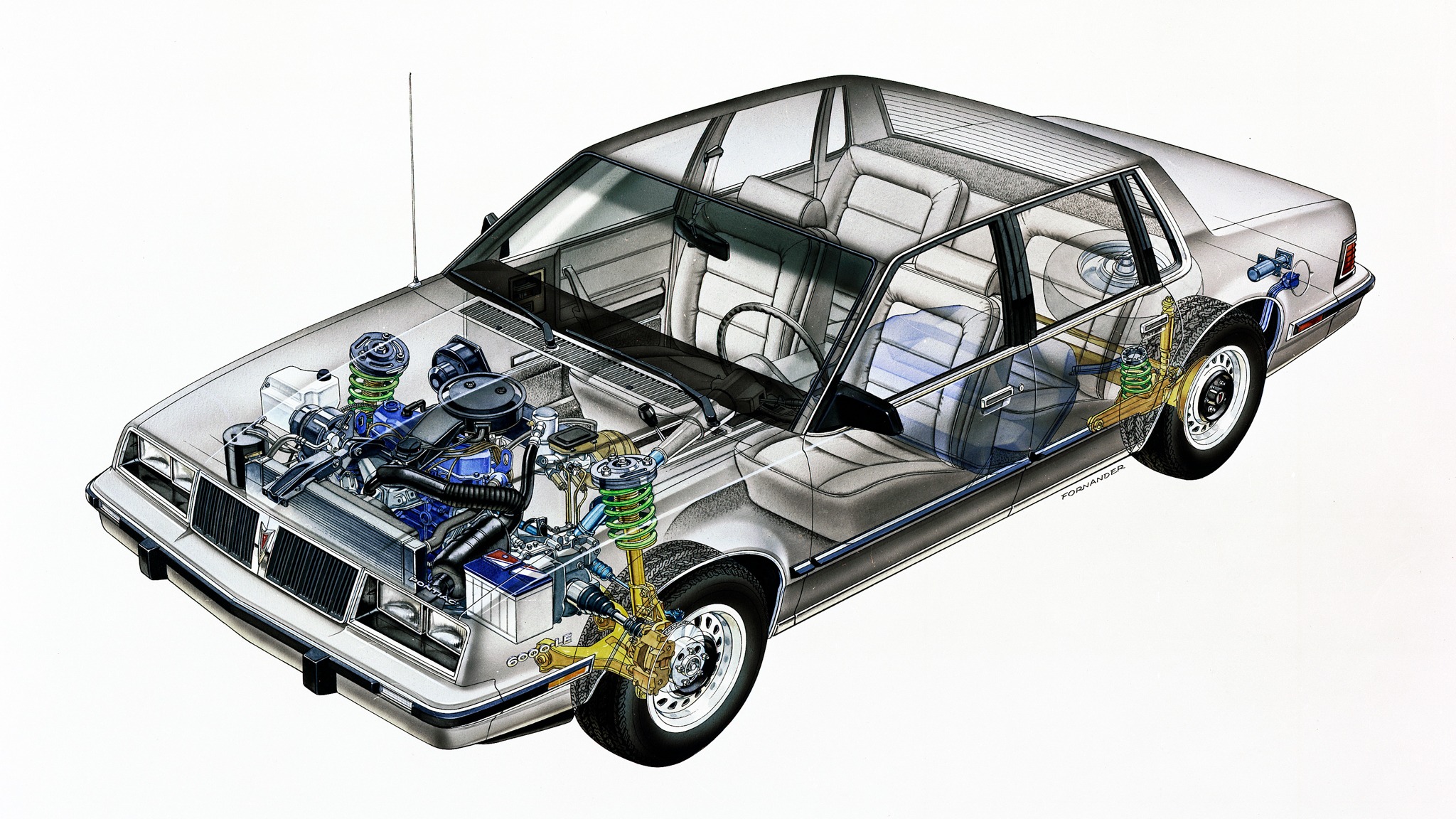
In 1982, General Motors launched the front-wheel-drive version of its A-body platform. These cars were based on GM’s maligned X-body, which made its debut in 1979 and underpinned the Chevrolet Citation, Buick Skylark, Pontiac Phoenix, and Oldsmobile Omega.
The A-body cars shared much of the X-body platform and systems. As Motor Trend wrote in December 1981, the A-body Chevrolet Celebrity had the same 104.9-inch wheelbase, 58.7-inch front track width, and 57-inch rear track width as the X-body Chevrolet Citation. The Celebrity even shared most of the same powertrains as the Citation. But GM didn’t just copy and paste the X-cars onto the A-cars. The Celebrity was 188.3 inches long, a whole foot longer than a Citation.
While based on the X-body, Motor Trend wrote, the A-body featured so many of its own parts that there was little X-body left. At launch, the A-bodies featured rack-and-pinion power steering that was relocated from the firewall to the front subframe. The steering geometry and alignment were changed for better handling and on-center feel, while the front subframe uses larger and better isolated mounts than the X-cars did. MacPherson struts handle the front end, and Motor Trend said that the A-body cars use softer mounts and more numerous insulator rings for lower noise and harshness. A trailing arm twist axle takes up the rear.

Motor Trend continued that General Motors had spent a lot of time adding extra insulation, hood seals, bushings, closed off fenders, and other tricks to make the A-body cars ride smoother and quieter. The 1970s left a poor taste in the mouths of car buyers because of abhorrent quality, and GM is said to have worked on that, too. The A-bodies were assembled by General Motors Assembly Division in California, Massachusetts, and Ontario. Computers, robots, and lasers were used in the production facilities to ensure weld accuracy and panel fitment.
GM went even further from there, using Lexan to create the front spoiler of the A-body cars, plus making the A-pillars out of a single piece rather than two pieces welded together. The rear end was also a single piece, and any metal part that wasn’t structural, like the hood or trunk lid, was made out of two layers of metal.
GM then took aero seriously, too, putting the A-cars through nine tests in three different wind tunnels. Out of the other end, the bodies got flush glass, integrated mirrors, and aero spoilers. When all was said and done, A-body sedans had a coefficient of drag of 0.42, an improvement over the Citation’s 0.43 and the Malibu’s 0.51.

At launch, an A-body came with a 90 HP 2.5-liter Iron Duke four-cylinder as its base engine. A little hotter than that was the 2.8-liter carbureted V6, which made 112 HP. Finally, there was the 4.3-liter Oldsmobile diesel V6, which made 85 HP. The diesel is notable here as this engine was made after the infamous 5.7-liter Oldsmobile diesel V8, and by this time was a reliable engine. A manual transaxle was not available at launch, and buyers had to be okay with a three-speed automatic.
Back under those days’ testing standards, all of the engines were frugal, with highway fuel economy numbers coming in at 40 mpg, 34 mpg, and 42 mpg, respectively. Yeah, GM’s diesel tech was running out of steam by this time as gas engines were becoming frugal enough that the extra cost of a diesel wasn’t worth it anymore.
The A-body cars were considered to be intermediates and were touted for having interiors of a similar size to their larger siblings. The A-bodies also looked different than the X-bodies, but their visuals would also cause a bit of an upset. When the A-body cars launched in 1982, they were sold as the Buick Century, Chevrolet Celebrity, Oldsmobile Cutlass Ciera, and the Pontiac 6000. There was only one small problem. Unlike in the past, when each brand would have its own version of a car, the A-body cars were hard to distinguish from each other.
The A-Body’s Image Problem
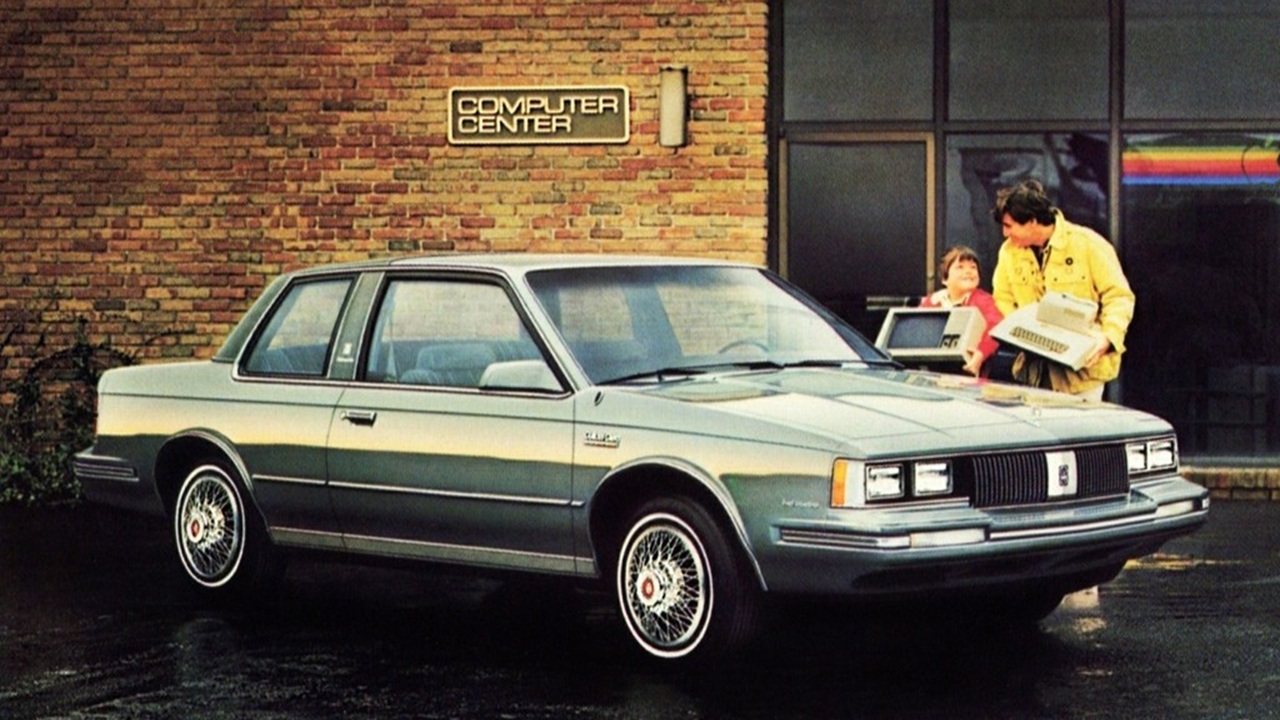
[Editor’s Note: I just want to point out that those two in the picture there are carrying an Apple II Plus with a Monitor /// and Disk ][. – JT]
While that might have been the case, buyers did not care. Chevrolet sold 92,330 Celebrities in 1982 alone, and by the time the Celebrity ended production in 1990, Chevy managed to move 2,153,098 units. Sales numbers were equally crazy over at Pontiac, where the 6000 became that brand’s best-seller in 1984 with more than 122,000 units sold that year alone.
Still, GM’s badge engineering and choices of 1982 would catch up to it. Car buyers did notice that the A-cars were basically the same, and so did the press. On August 22, 1983, Fortune magazine published an issue with this as its front cover:
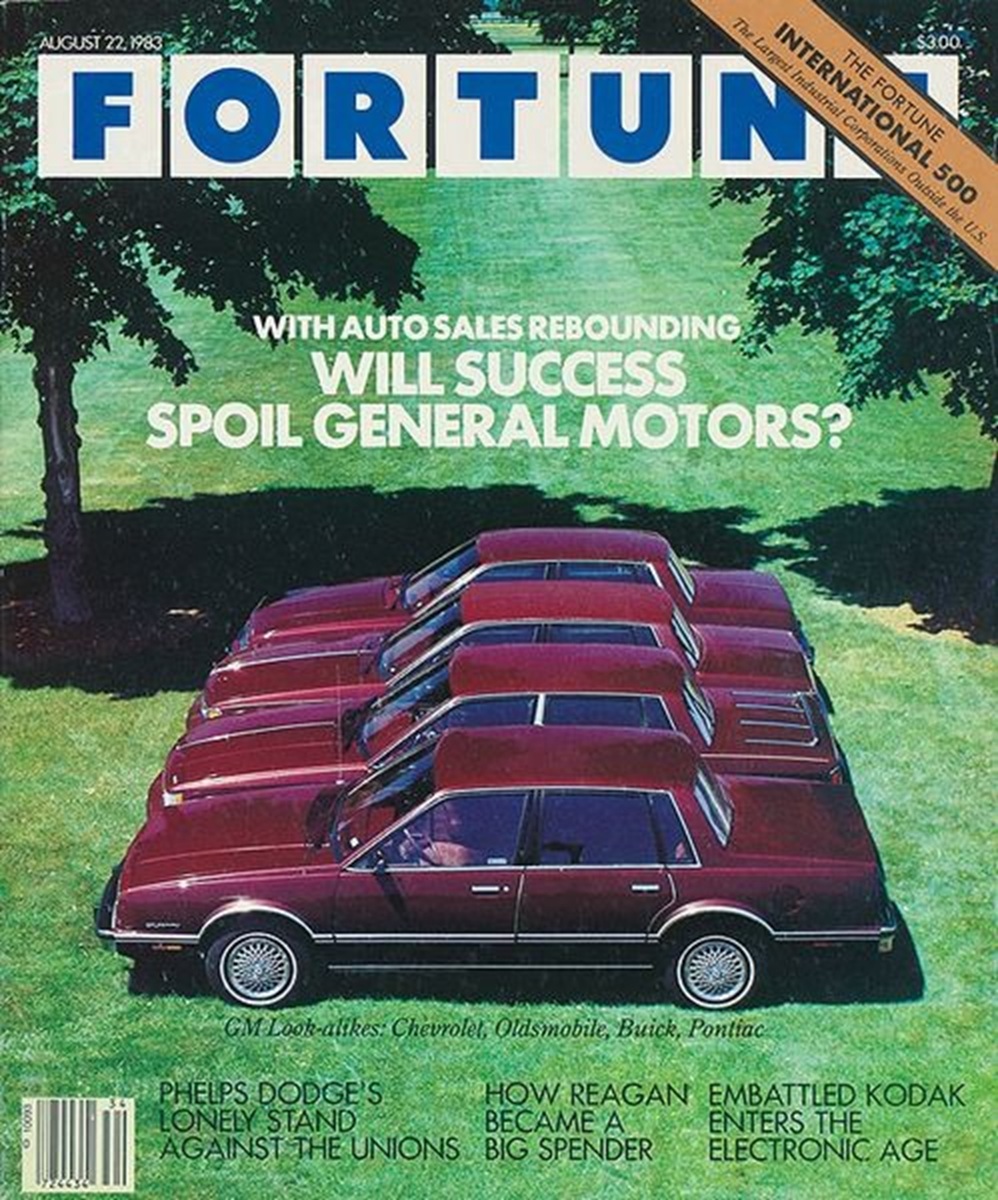
In just one photo and a few words, Forbes magazine pointed out the problem with the new era of General Motors, and it was that GM leaned so heavily into badge engineering that you couldn’t tell the four A-cars apart. Sure, this paid off in the short term, but at what cost? The Forbes cover was a slap in the face for GM execs. From Automotive News:
“That cover really stung,” says Chuck Jordan, GM’s chief designer from 1986 to 1992. “It was kind of unfair, but it made things really clear.”
Says Lloyd Reuss, GM’s president from 1990 to 1992, about the cover: “It was sort of a wake-up call.”
From Hemmings:
“The impact of that 1983 Fortune cover had a profound effect on GM Design Staff,” Lamm and Holls wrote. “Chuck Jordan said the Fortune cover marked a turning point. He vowed then and there: No more lookalike cars.”

Ultimately, the success of GM’s downsizing push was short-lived. As I have written a few times in the past, General Motors was reorganized in 1984, and the company got absolutely beaten in the 1980s:
The General Motors of the 1980s struggled to maintain forward momentum. In 1984, GM’s brands held onto a grasp of 44.6 percent of the car market. But as CNN reported, GM’s grip was loosening. By 1987, GM’s brands lost their footing and began reaching for a lifeline as market share sank to 36.6 percent. Oldsmobile took the greatest beating, seeing its sales slide from 1.1 million units to 714,394 units.
GM’s dramatic loss in popularity was its own doing. In 1992, CNN explained that, during the tail end of the period that we now know of as the Malaise Era, General Motors made a bet on the future. Unlike its competition at Ford and Chrysler, GM was flush with cash and thought it would get a leg ahead by launching new cars for the new era. GM figured that future buyers would want downsized, lightweight, front-wheel-drive, and fuel-efficient cars. After all, America had only just been pulling out of the tumultuous 1970s and its gas crunches.
Unfortunately, GM’s gamble didn’t pay off. As CNN noted, gas prices got cheap again, and American car buyers wanted big and fast cars again, which GM had just spent the early 1980s moving away from.
General Motors recognized its errors early on. In 1982, the same year the A-cars went to market, GM launched the GM-10 program. This program was a $7 billion bet to replace the Chevrolet Celebrity, Pontiac 6000, Oldsmobile Cutlass Supreme, and Buick Century.
The BMW Of General Motors

But before the next generation of GM front drivers could come out, something had to be done about the A-cars to make them distinctive. All four brands tried to add zest to their A-bodies by getting inspiration from Europe. Buick came out with the Century T-Type, Oldsmobile punched out the Cutlass Ciera ES, and Chevrolet would arrive late to the party with the Celebrity Eurosport. Pontiac was the most ambitious, and for good reason.
In January 1982, Motor Trend declared the Pontiac 6000 as the best of the A-bodies. This wasn’t because of the performance, because the original 6000 was the same under the hood as a Celebrity and its other siblings, but because Pontiac tried its hardest to make the 6000 look spicy. Apparently, Pontiac engineers also attempted to make the base suspension a little more sporty.
Weirdly, Motor Trend also reported that Pontiac saw itself as the sort of BMW of General Motors, which was ambitious, to say the least.
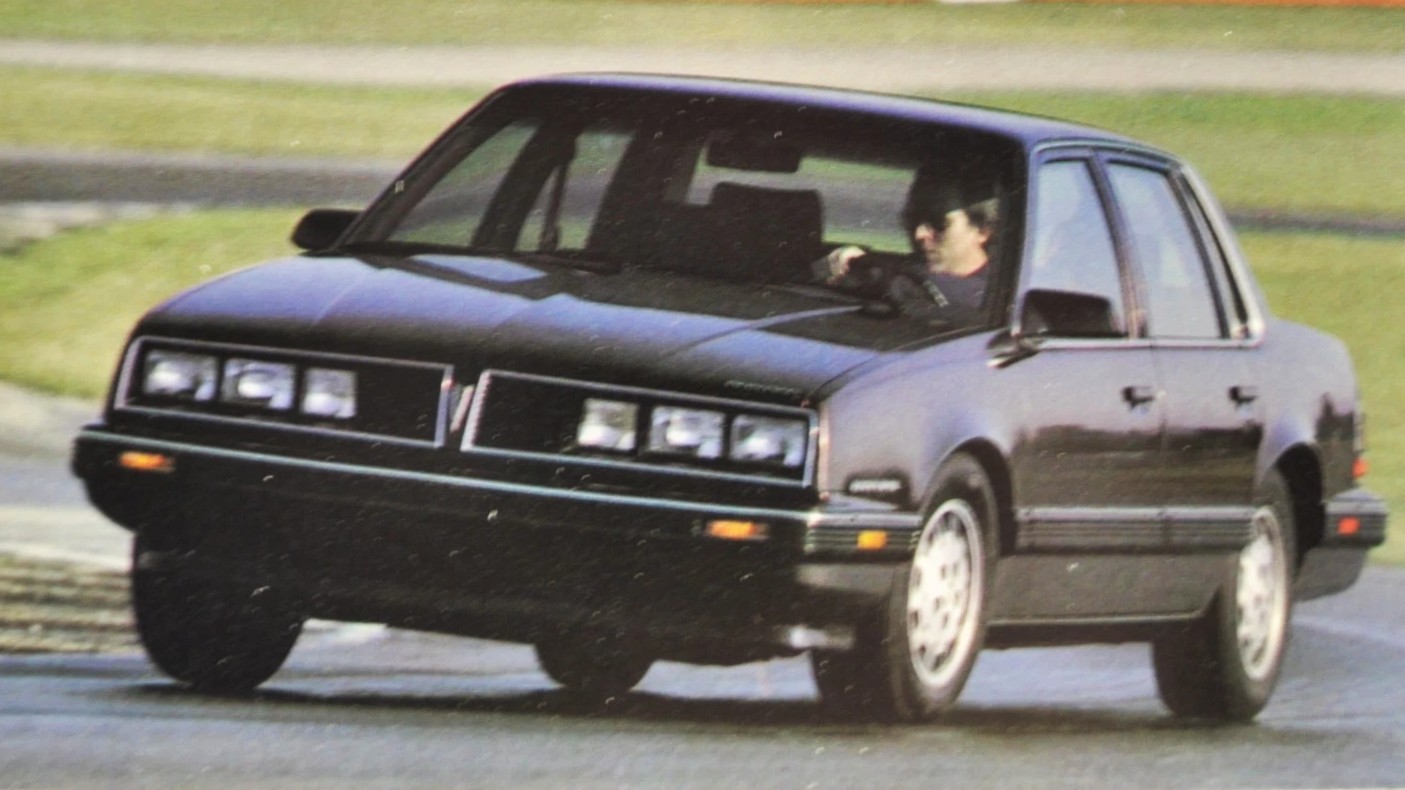
But this was embarrassing for Pontiac. This is a brand known for its iconic firepower, not putting ribbed taillights on a Chevy. Thus, Pontiac began a program to bring excitement back, and the 6000 was going to lead the way. Pontiac took the 6000 and turned it into the STE, which stood for Special Touring Edition. This car was meant to prove that Pontiac could still capture the heart of the enthusiast and that BMW wasn’t the only one that knew how to make a sport sedan.
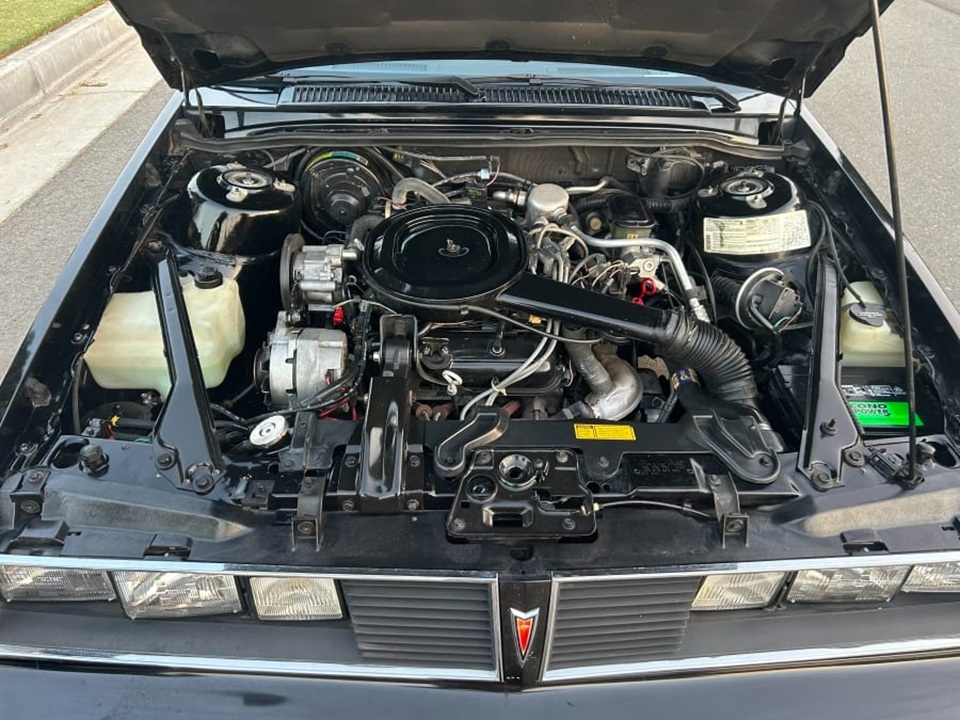
Pontiac started with the engine. The hottest A-body mill was the 2.8-liter carby V6, so that was taken and pumped up to 135 HP from 112 HP. Reportedly, Pontiac really wanted to put an entirely different, more high-tech engine in there, but found itself hamstrung by GM’s tight budgets of the early 1980s.
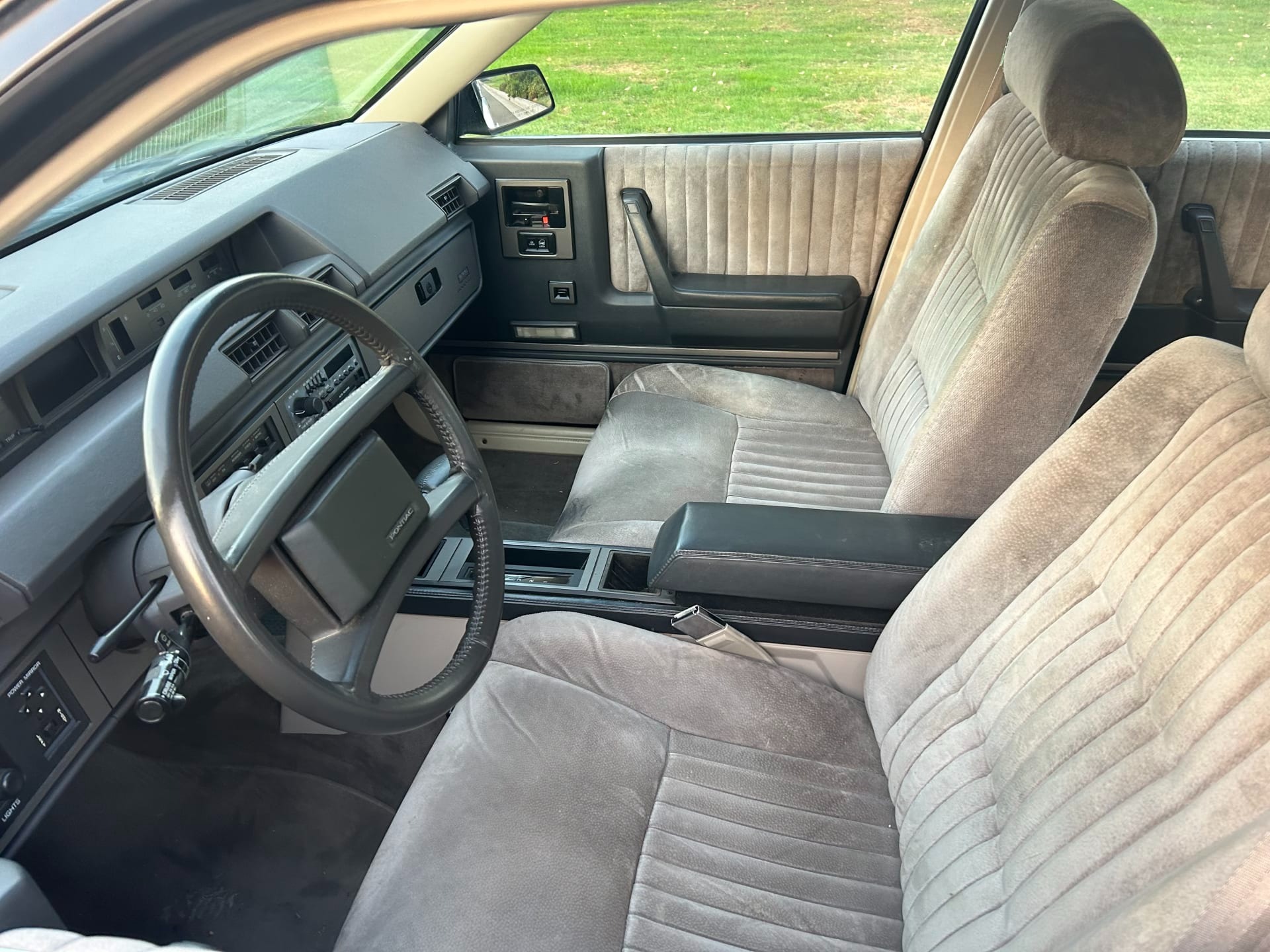
From here, Pontiac just piled on everything it could. Nearly every luxury was standard in the STE, from power windows and power locks to air-conditioning and power brakes. Everything was standard, even electronic ride control, a cassette deck, and cruise control. The only options were a manual transmission, leather, and a sunroof. Oh, and this was the 1980s, so this car was filled with as many buttons as the flight deck of a passenger jet. The STE even had a digital instrument cluster made by Denso in Japan.
Pontiac didn’t just stop at filling the STE up with every conceivable option, but it also made it handle better, too. The steering rack was stiffened up, a 24mm stabilizer bar was added up front, a stabilizer bar was added in the rear, and Pontiac wrapped the 6000 STE’s 14-inch wheels up in Eagle GT tires. Lower final-drive gearing added a bit more jazz.
Renewed Pontiac Enthusiasm

The buff mags went wild. Honestly, the legendary David E. Davis Jr. says it best in Car and Driver:
The Pontiac 6000STE stands head and shoulders above every other Detroit sedan, including its fellow General Motors front-drive A-cars. It is a sedan that can hold its head high in any automotive society. We expected Buick’s new Electra T Type to mount a serious challenge to the STE, but the Buick people couldn’t quite bring themselves to go all the way with their new Eurosedan. The Buick has roadability and performance to match the Pontiac’s, but it lacks the Pontiac’s sophisticated instrumentation and enthusiast-oriented interior appointments. The Pontiac emerges as winner and still champion for the third year in a row.
There is a rightness about the STE that sets it apart from all of its American brothers. It even looks better than the other GM cars that share the same sheetmetal. It was a startlingly good car in its first year, 1983, and it has only improved in each of the two years following. One thinks of the original GTO, the original Buick Riviera, the 1963-67 Corvette Sting Ray—all cars that sprang to life fully formed and ready to take on the best—and one knows that the 6000STE has taken its place in good company.

Motor Trend was so deeply in love with the STE that it called the sedan a “legitimate alternative to the European sport sedan,” and praised the 6000 STE’s flat cornering, 0.80 g of lateral acceleration, and 60 mph time of the mid-10 seconds.
The Pontiac was successful with enthusiasts, too, and Pontiac credits the 6000 STE with reinvigorating Pontiac and its enthusiasts. This was the car that pulled Pontiac out of GM’s dark ages. To many, this was the car to buy from General Motors from 1983 to 1989.
The 6000 STE Goes AWD

Oh, and it doesn’t even stop there, because the STE got better over time with four-wheel disc brakes in 1984 and then multi-port fuel injection in 1985. In 1988, the Pontiac 6000 STE became the first GM car to offer optional all-wheel-drive. By now, the 6000 STE had a 140-hp 3.1-liter V6, and the AWD system featured a transverse composite single-leaf spring from the Pontiac Grand Prix and a GMT400 truck rear differential. The AWD version utilized a three-speed automatic paired to an electro-mechanical center differential with a locking function.
What was amazing was that the Pontiac 6000 STE stayed awesome through its entire run.
Here’s what Motor Trend said:
In July of 1989, about the time the last 6000 STEs would have been rolling off the line, MotorTrend wrote, “The new [6000 STE AWD] is the most skillful sedan Pontiac’s ever built—indeed, the car is potentially the most important sedan of any stripe built by GM in the modern era. It offers great handling without sacrificing ride quality, most of the cues and equipment expected of a fine touring sedan from any manufacturer, Germans included, and a pleasantly conservative exterior appearance that supports its subtle mission.”
In 1987, a base Pontiac 6000 was $10,499 ($30,666 in 2025), while opting for the 6000 STE set you back at least $18,099 ($52,864 in 2025). The buff mags called the 6000 STE a bargain because a competitive Euro import like the BMW 325 sedan was $22,015 ($64,302 in 2025) that year. Enthusiasts bought them up, too, and the 6000 STE usually accounted for 10 percent to 15 percent of all 6000 sales. Not bad! In 1986, Pontiac moved 26,299 STE examples from dealer lots.

In other words, the 6000 STE was a sort of attainable import car from Detroit, and it worked. It got people all fired up about Pontiac again. The 6000 STE was perhaps the brightest light during one of GM’s darkest times. Yet, I would argue that most people have forgotten about the 6000 and the 6000 STE. There aren’t people paying $50,000 for these on Bring a Trailer, and you won’t always find one at a car show. I mean, contributor Mark Tucker somewhat recently showcased one for sale that was only $5,500.
The good thing about that is that a lot of enthusiasts are beginning to appreciate the forgotten cars of the 1980s. Find a nice Pontiac 6000 STE, park it at a car show, and I bet you’ll get plenty of people who will tell you about riding in one or driving one several decades ago. Today, a Pontiac 6000 STE might not be a fast car by any standard, but it could be a cool classic that you can own without breaking the bank.
Pontiac Points: 70/100
Verdict: The Pontiac 6000 STE was far from the best car Pontiac had ever built. At the end of the day, it was still an A-body car, even if it was a hot one. However, it was a car that brought happiness and smiles in a dark time, and that is always worth celebrating.




112 HP from a V6. Good lord.
That was the signs of times in the 80s
All were anemic and barely could turn many a tire in anger. Lest you find found a puddle to spring all the torque steer to your desire.
My very first car was a 1985 Olds Cutlass Ciera. And my wife, who I did not know yet, had a Celebrity Eurosport. Sure, they were shitboxes, but we really didn’t know any better. A mid-10 second 0-60, for example, sounds insane and yet it was just how things were.
I love this sort of content. Mercedes never disappoints as a writer.
My mother had a Celebrity, father a Cutless Ciera. Both with the Iron Puke. These cars were both good driving appliances, and the Celebrity in particular looked pretty good for the time. They were roomy, got good mileage and generally got you where you needed to be. For any type of performance driving, though, they sucked. I think I managed to bend the sidewall of the tire so far over the wheel scraped the ground. Plus there is the whole motor mount problem (they eat the top torque mount, no matter what the engine, and perhaps rip the metal bracket on the engine.)
I drove Audis of the same year models in the 90s, and let me tell you there is no comparison in driving the two vehicles for anyone who like cars and driving.
My parents had a 6000 STE that was bought new. Not a good car. My brother and I referred to it as the 6000 SUX (after the movie) because every time we drove it something broke or went wrong. A seminal moment happened as I was heading out our back door early one morning to go to my summer job. There was the 6000 SUX, sitting proudly in the driveway, completely surrounded by a puddle of its own transmission fluid. I hesitated but turned around to let my Dad know that he would need a ride to work.
What sad times those must have been for this pterrible Pontiac to be considered “good” by the press and car buying public.
I don’t think a lot of folks truly appreciate how awful the Malaise Era really was. I was a kid, so I never had to experience the “thrill” of driving one of these shit boxes, but my dad got a new company car every two years, and one of them was a 6000. Just terrible, hateful things, but better than the K cars he had, which is the faintest of praise.
By the time I started driving, a lot of those things had been sent to the crusher, but the ones that hadn’t became first cars for high school kids, so I had the misfortune of spending time in some of them, but to this day, I’ve managed to avoid ever having to drive one.
“It was now the
peaknadir of the era known today as the Malaise Era.“My grandmother needed a new car about 20 years ago to drive to the store and back, so she bought a 6000 from a neighbor. My dad drives it to this day. I swear it must have less than 60,000 original KMs on it. I’ll check next time I’m over there.
There are two pristine AWDs running around Woodward in the summer months, and I look forward to seeing them any time they might be out cruising!
One I believe is an ex-Rivian executive.
Whatever brings happiness and smiles in a dark time deserves to be celebrated. No matter what you are talking about.
Great piece, Mercedes, thank you!
When i was a little kid, my dad would take me to Valley Pontiac on Wick Ave in Youngstown every October to see the new Pontiacs. He was an immigrant from Czechslovakia, and owned nothing but. My first car at 16 was the ultimate hand me down – his ’73 Catalina he bought a month before I was born. I remember seeing an ’83 T/A, black and gold, on the dealer floor. But it was the 6-eyed sedan next to it that caught me, the STE. The earlier versions only had a partial digital dash, but the Driver info center was mind-blowing.
In 1985, when he started shopping for a new car, I begged him to buy a STE. But he was an on-again-off-again steel worker, and the STE was out of the family budget. He bought his first non-GM car, a Grand Marquis.
I inherited his Pontiac love. I loved my G6 GTP sedan and my G8 GT in PSM blue. And in 2017 I won on ebay an 89 STE AWD. While it only had 36k miles, the paint was faded, and there were minor issues. A wonderful $700 paint job later, some minor engine work, and Cooper Winter Tires, she became our local winter beater. I got as many compliments on her as I did my G8. I named her after my dad and a patriarch cousin in Slovakia that had recently passed. The car had plenty of mechanical issues – so it was time for stage 2 of her life.
I bought a salvaged title Chevy Spark EV that runs and drives despite missing a tailgate. My goal has been to convert the STE into an EV – as if this is what the car would have been for GM had GM kept Pontiac – and the STE badge. The cars have been sitting in the drive for a few years now. I really want to start the project. And the wifey is getting a bit impatient. Wish me luck! Here a YouTube page on the beginning of the project: https://www.youtube.com/@Erplane1
You, Sir, are our working class hero. Hvala!
Many thanks!
Learned to drive in an ‘88 6000LE v6. It might as well have been a rocket ship the way I drove that thing around the county. And when my Nana traveled and we had her next gen Regal with the 3800…. Boy oh boy. Grey velour never moved so fast.
That car was called a “Goolie” by us cool kids…
I don’t think many of these survived past the 90s
God, these were all just the worst.
What an awful time for cars!
Nice writeup though!!
“What an awful time for cars!”
Counterpoint: Those years were when VW, Volvo, BMW and MB put out some of their best cars ever. Toyota MR2, MkII Supra and AE86 are coveted to this day.
American cars though…yeah.
Touche. American cars, yes, 100%, that was all I was thinking of! The cars you list are pretty awesome.
“Chevrolet and Oldsmobile both had 350 cubic inch V8s, but they were not the same engines.”
Pontiac and Buick also had their own 350 cubic in V8s. All four of them were completely different engines. My ’74 Buick Apollo has the Buick 350.
I love old GM like that. 🙂
Yeah, it’s pretty wild. Tracking down the right accessory brakes can be really … fun.
Thankfully none of those were removed from my car.
My parents, when I was roughly 13, purchased a new ’83 Pontiac 6000…but not an STE, which I remember being on the dealership’s shop floor (not being worked on but being prepped) when we were back there talking to the salesman. He was showing my dad the STE but that was a bridge too far for the old man…but we went home that night and I soooooo badly wanted the STE (the sales guy had done his job on me) and tried to sell my dad on it.
Ultimately my dad, who since we farmed was completely comfortable with a diesel, purchased a 6000 (“LE” I think?) with the 4.3 litre diesel. While weak on HP it had a lot of low-end torque and could snap your head back pretty good and got crazy-good fuel mileage. Outside of an O-ring going bad on the fuel injector pump the engine was fine but the transmission failed and lost reverse one day. My dad wrote a letter to GM that was not subtle in its language. A couple years later he test drove a Honda Accord and that’s all it’s been since 1990.
Seeing the prices of the base ones, no wonder my parents jumped at the chance to buy a late model used Olds Cutlass Ciera wagon. Too bad that thing was such a pile of junk. It turned my folks away from domestic cars for a while, taking a cutlass to their wallets like it did. It even killed an Iron Duke. But I cut my teeth wrenching on that heap.
I remember our Chevy Celebrity wagon being the bane of my Dad’s existence for almost the entire ownership period. It got traded in on a 91 Cherokee 4.0