

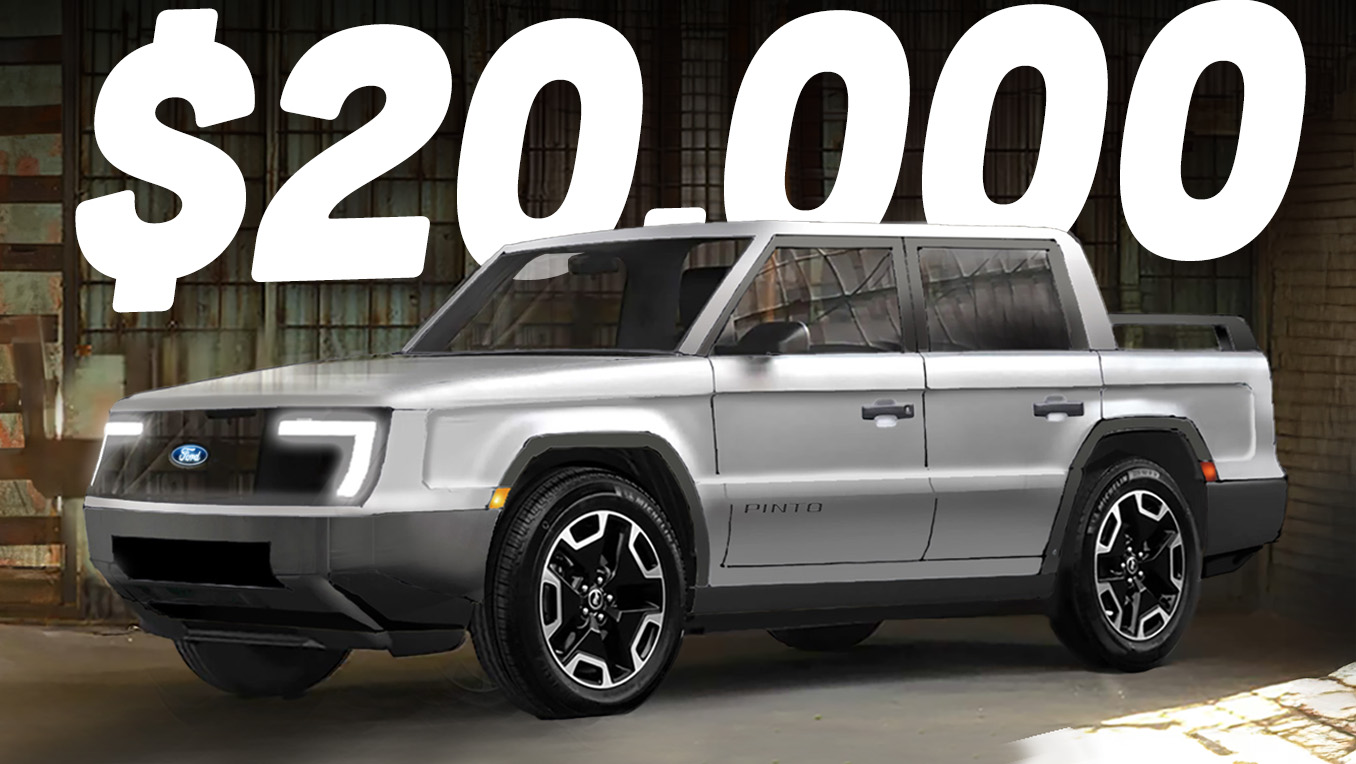
Ford’s upcoming “Universal Car Platform” promises to give customers far more budget-friendly autos, reportedly starting with a sub-$30,000 EV pickup truck. But when pushed, Ford spokespeople claim the pickup isn’t really going to be a “pickup truck” in the traditional sense at all.
If it’s not a pickup, what is it? Do people really want an electric pickup anyway? How is “under $30,000” really budget-friendly? After thinking about this for the last few weeks, I have ideas for what Ford’s “Universal Car Platform” entries could look like, and how Ford could deliver the fun and affordable new vehicle many are looking for.


We’ve gotten a taste of a few “affordable” new-style pickups that have resonated with buyers. Ford’s Maverick unibody pickup exploded on the market at the magic “sub $20,000” price point back in 2022, but has quickly risen in cost to the point that now it’s essentially a near-$30,000 proposition once you add a few options. It’s still a good value, but not the how-do-they-do-it deal that fired up car buyers initially.
So Cheap, You Could Buy Two!

Recently, the Jeff Bezos-backed Slate truck appeared to attract those same bargain pickup truck hunters with a bare-bones EV that was supposedly going to start at – you guessed it – around $20,000. Since the press launch, tax credit issues and such have started to push the price up to the point where the Slate is starting to look a lot like a too-good-to-be-true misfire.

Honestly, I’m not surprised that a startup would have a hard time creating the super-cheap vehicle that the public seems to be clamoring for. To make such a car will likely take a sea change, and it’s no wonder that Ford is talking about reinventing the assembly line to do it: the very thing that Henry Ford made over a hundred years ago to make cars affordable to the masses in the first place.
Ford is understandably vague about how this will work, showing an image of subassemblies coming together to form the finished car instead of the traditional Henry Ford straight line:
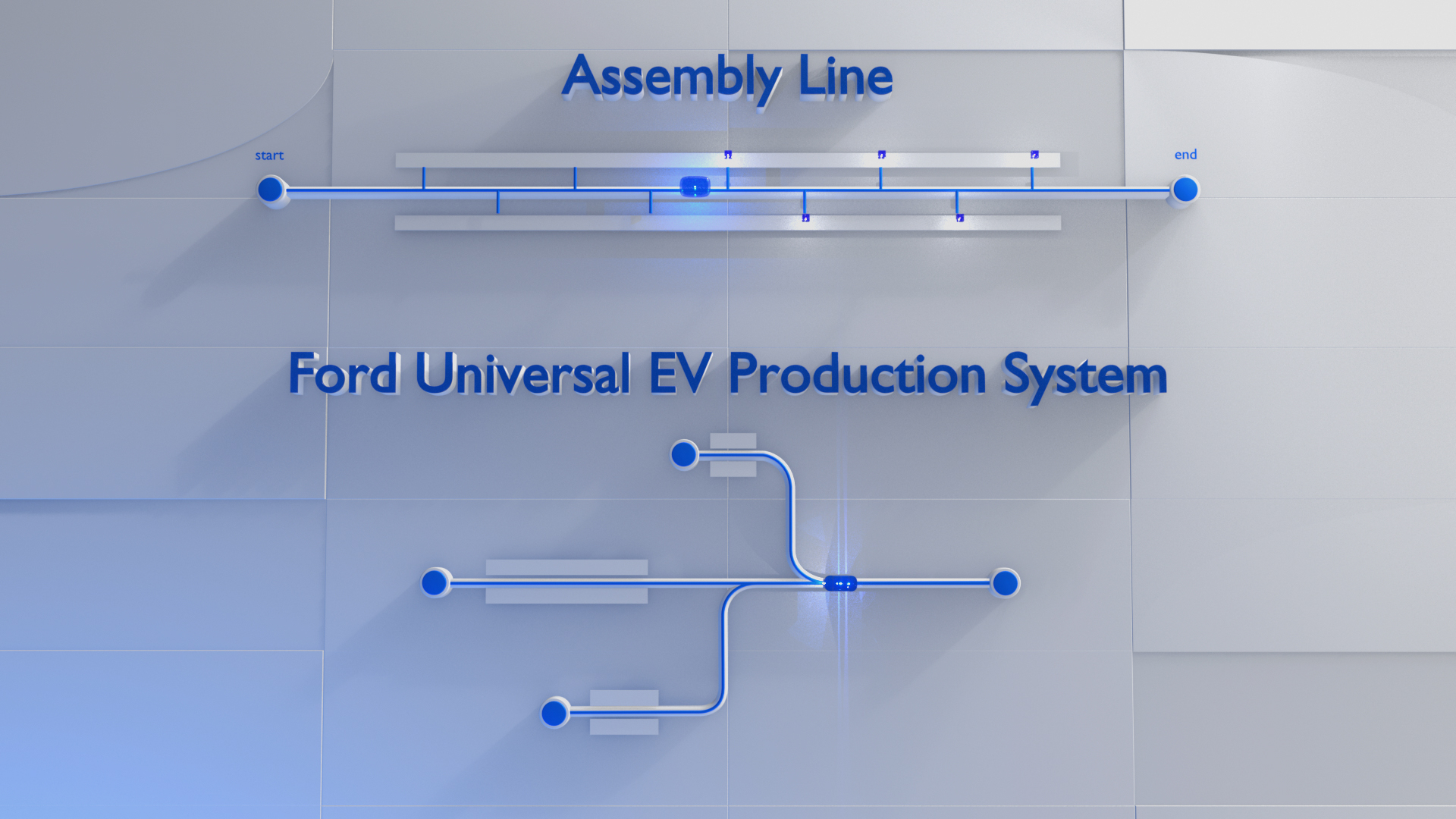
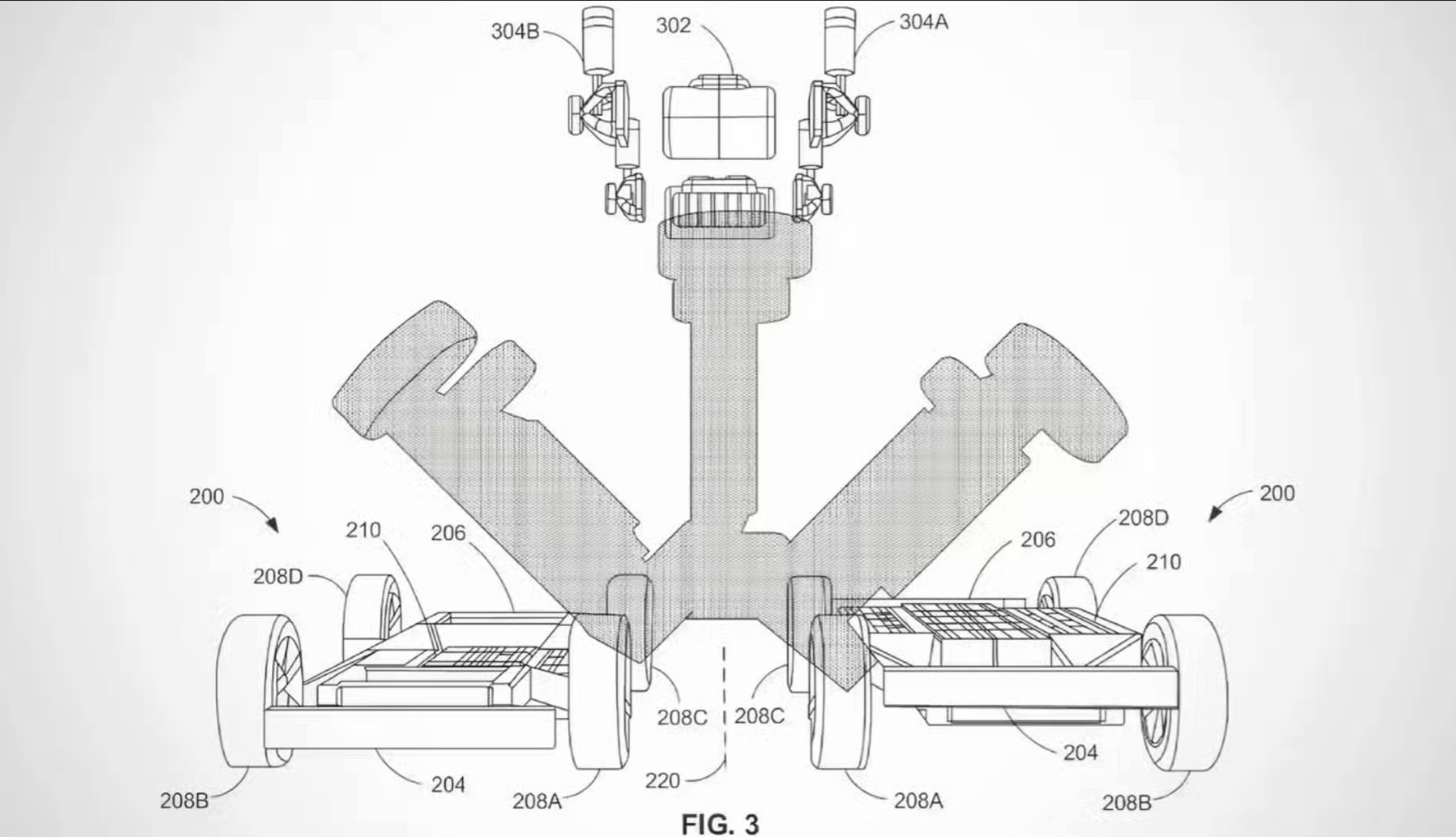
We’ve seen patent drawings from Ford that show front and rear units that bolt to a central module with batteries; it’s essentially a Lego system of making cars.
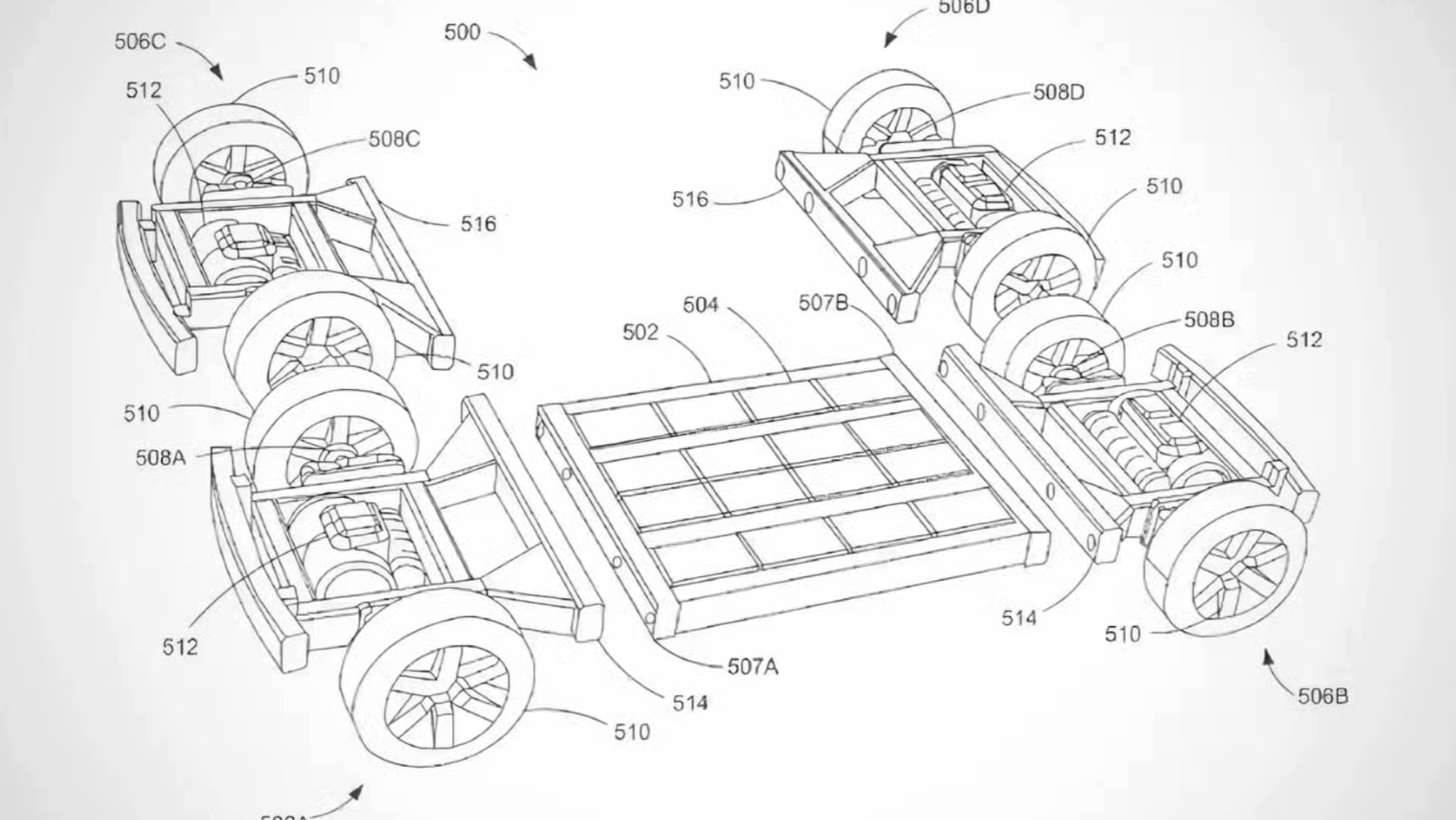
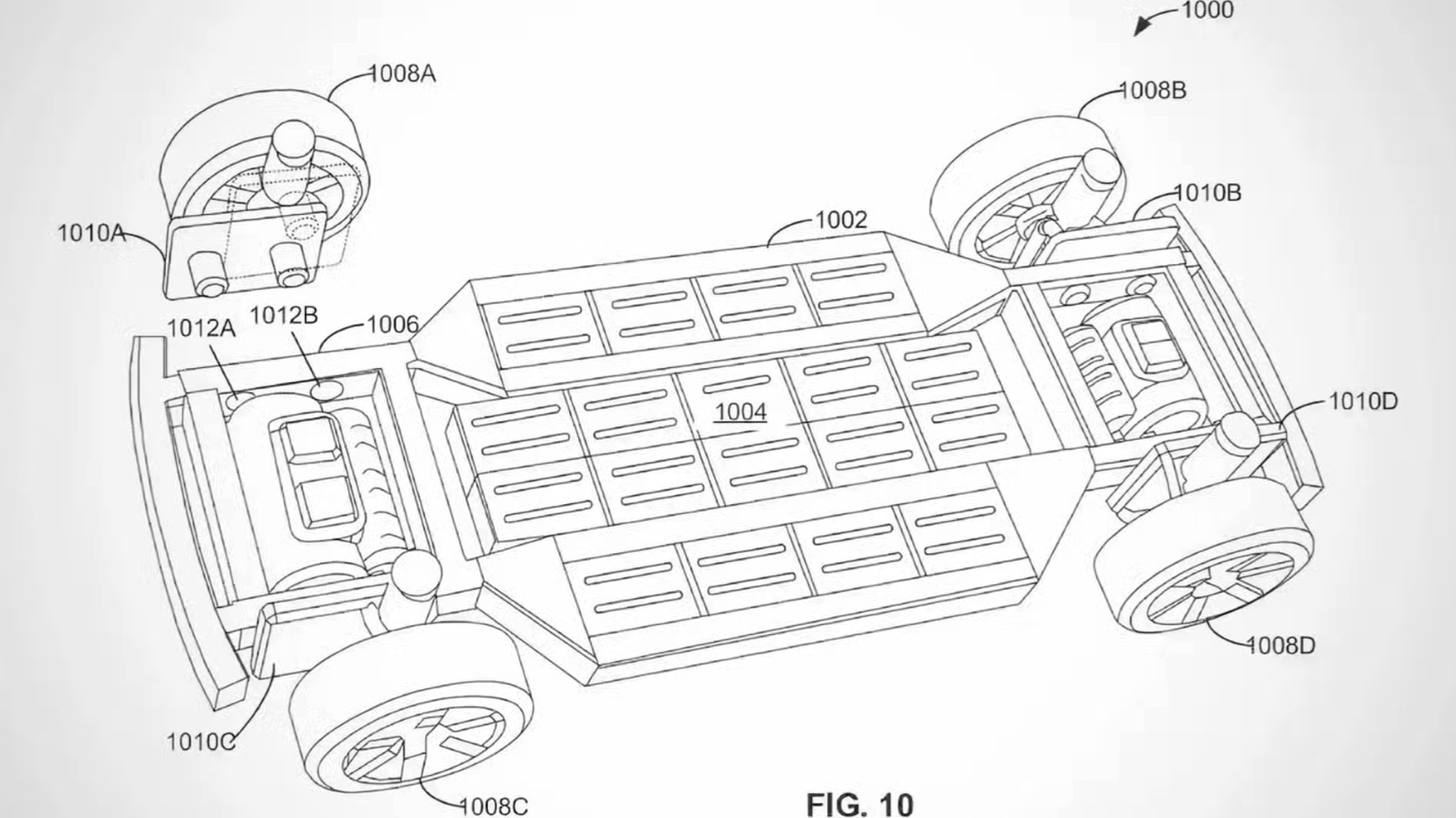
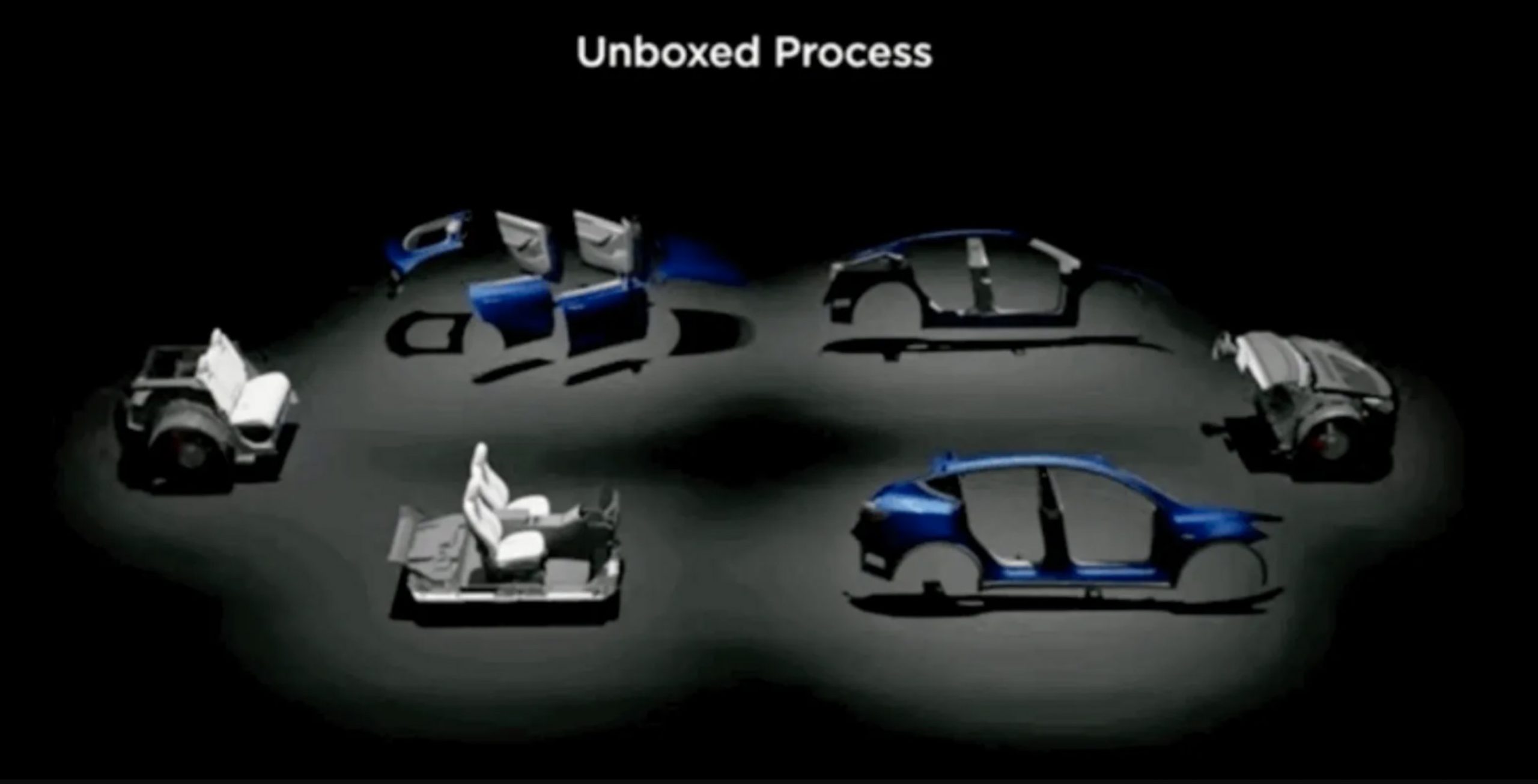
Tesla has shown what appears to be a very similar system with its “gigacast” parts – large, one-piece stampings that reduce labor costs. It seems that both Ford and Tesla are also using adjustable frame rails to connect these components like Lego pieces, which helps alleviate my fears of rusted bolts connecting the front motor module in place giving way and the entire nose of your ten-year-old car driving off across an intersection while you stay sitting at the light.
Such a system would take the whole modular thing to a new level, as we quoted from Ford a little while back:
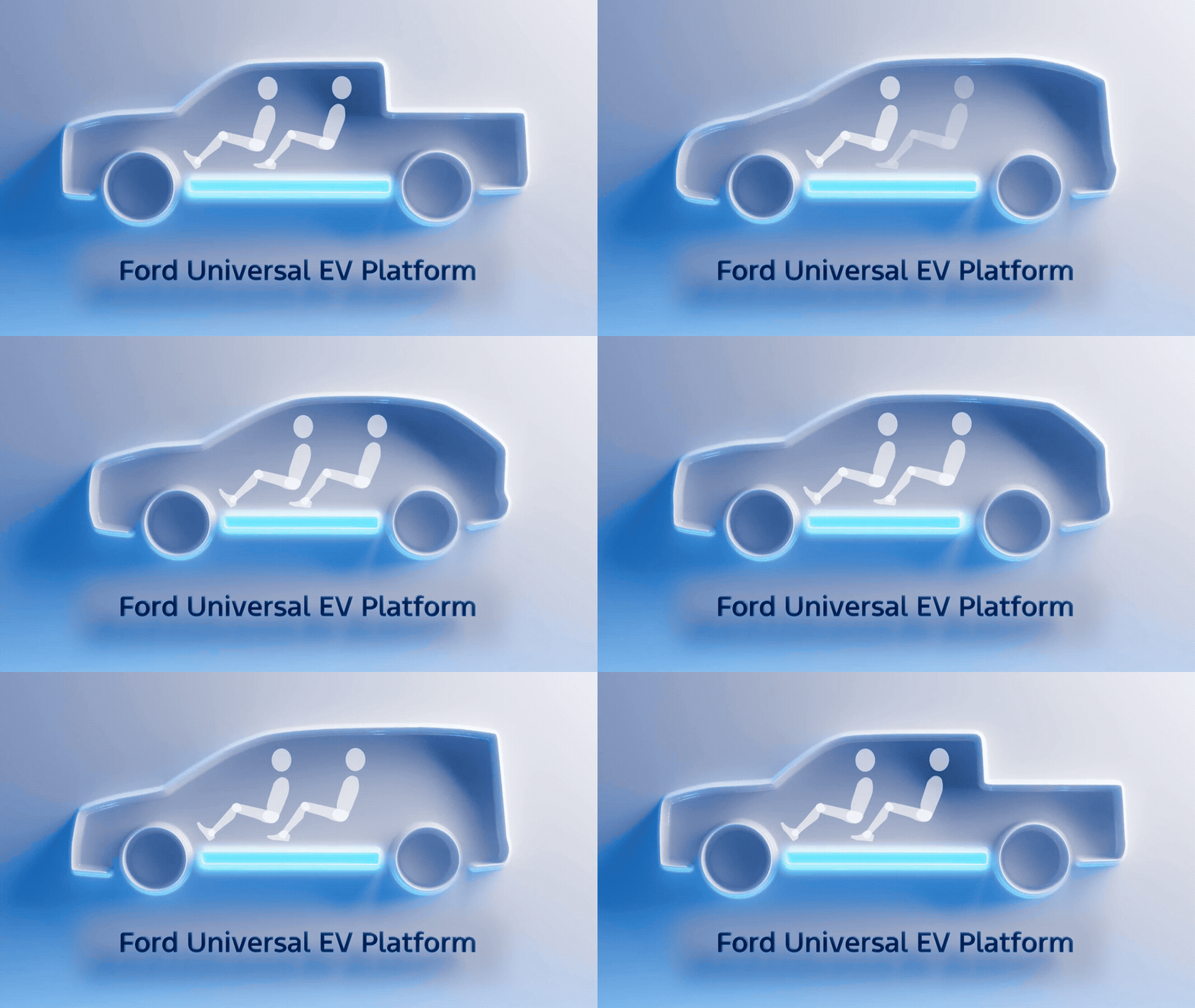
The platform reduces parts by 20% versus a typical vehicle, with 25% fewer fasteners, 40% fewer workstations dock-to-dock in the plant and 15% faster assembly time. Lower cost of ownership over five years than a three-year-old used Tesla Model Y.
Ford is also showing animations that indicate the mechanical components would be used to make a wide variety of different vehicles. Pickup trucks, SUVs and vans would all be possible with the same mechanical components.
This is a more advanced version of what is not even close to being a new idea, of course, as Lee Iacocca proved around four decades ago with a capital letter K:

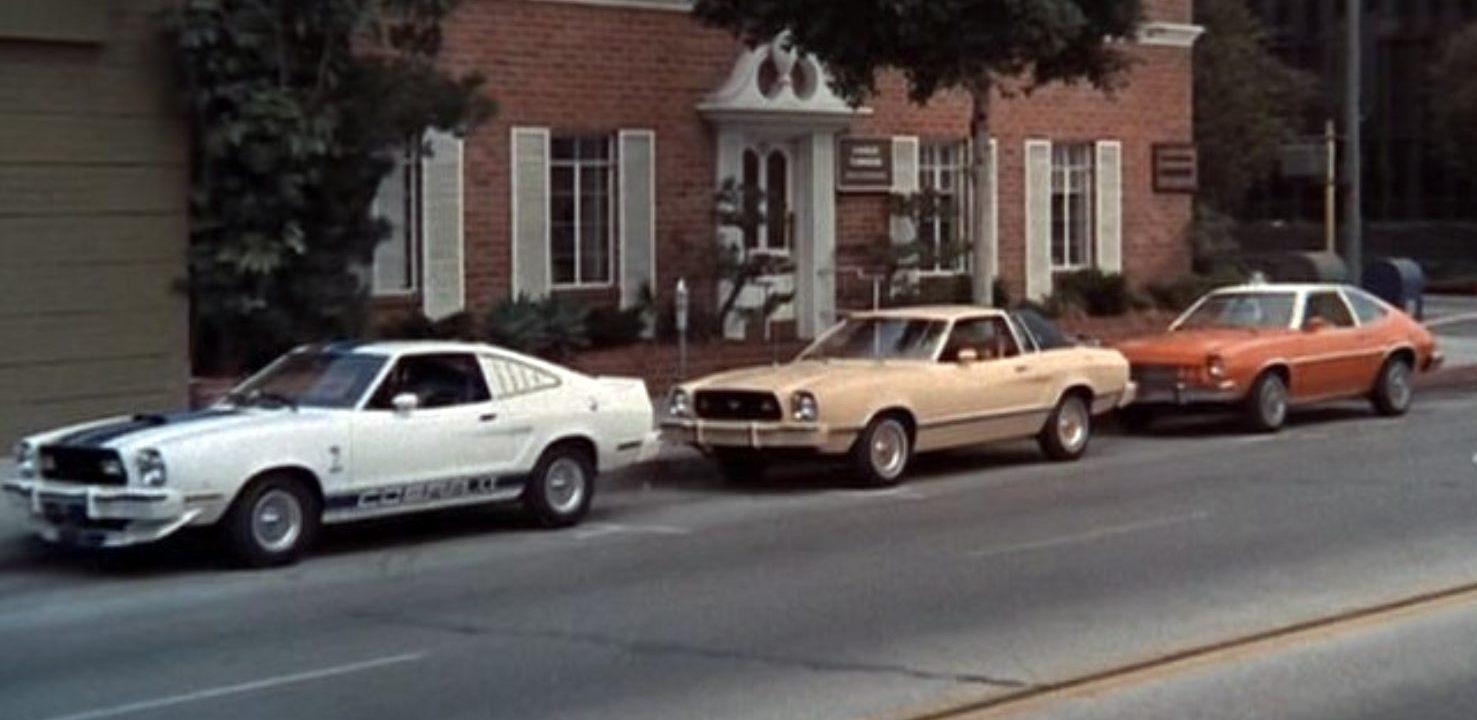
Indeed, Ford did the same things as well, such as these identical-under-the-skin cars being made to fit the very disparate personalities of Charlie’s lovely Angels.
There have been plenty of renderings shown on various websites of what this “compact EV pickup” might look like; our own Adrian Clarke did his own cool rendition of something that was a bit like a more aerodynamic and simplified Maverick. Still, to really save money, I think Ford should start with a collection of vehicles that share the vast majority of body parts, too.
Also, I believe that Ford needs to push this idea even further than the purely electric platform they’re proposing. This “$30,000 EV” isn’t something that’s in as great a demand today as we thought it might be five years ago, and the F-150 Lighting has shown the appetite for EV pickups is about the same as that for haggis outside of Scotland. If the first Maverick and the Slate have proved anything, it’s that people want a $20,000 new vehicle, full stop. Also, the impending death of Nissan’s last sub-$20,000 car in America indicates that even the cheapest buyers seem to want something other than a subcompact four-door sedan. With today’s fastback styling, the utility level of most modern sedans is pretty pathetic, and the near-vertical trunk lid opening of the Versa proves this.

I’m not sure how Ford could hit this very low price point, but I’ve got a few ideas. We’ll also have to explore what this “not really a pickup” body style even looks like. Let’s get started on Project Pinto. Yes, that’s the name.
Like A Real-Life LEGO Car
First of all, there’s a misconception that making a “stripped down” version of a car with crank windows and no radio will be the answer to the ultra-cheap car. That’s usually not the case today; you’ll certainly never chop thousands out of the price of a product by doing that. You see, a wind-up handle mechanism doesn’t really cost any less than an electric motor, and electronics likely cost the same whether they receive FM radio or not. In fact, it might cost the company more since they’ll need to make two separate window mechanisms and a special non-radio-receiving head unit to offer as options instead of just making them all the same. As Adrian has alluded to in earlier posts, the way to build an economical car is fewer parts, and parts that are shared with other vehicles in your lineup.
Here’s what I have in mind for Project Pinto. First, we’ll want the Pinto to be a smaller car than the Maverick; I’m thinking more like the length of that Slate and the similar-sized Bronco Sport like below:
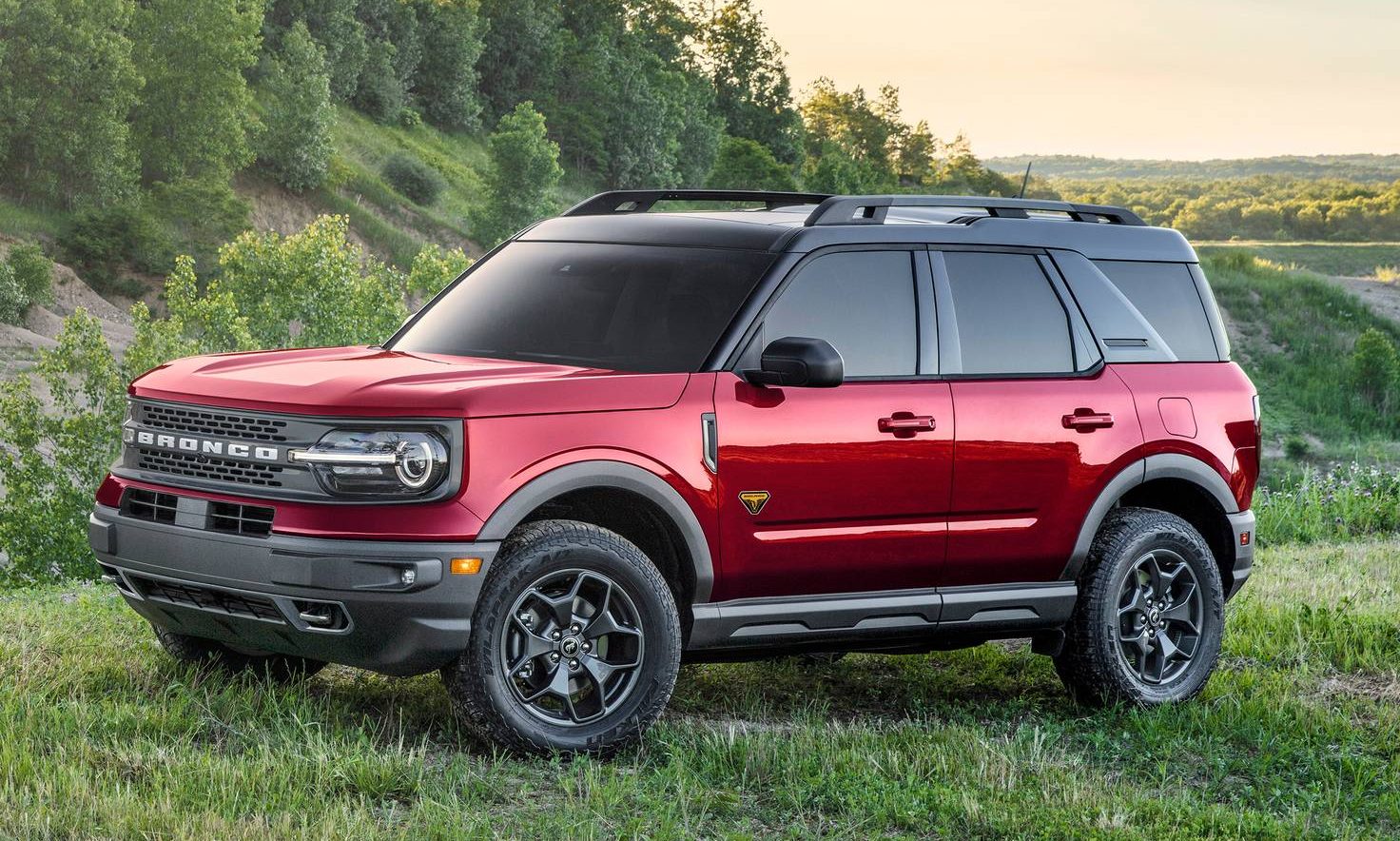
Ford has called this upcoming “EV pickup” a “midsize,” but that’s a rather big vehicle, especially if low overall cost is the main goal. I think a cheap car should be small for economy of materials; at the very least, it needs to be a size down from the Maverick for logical progression of price point. Ford claims a midsized EV can exist in the same space as the hybrid Maverick, but why muddy the waters?
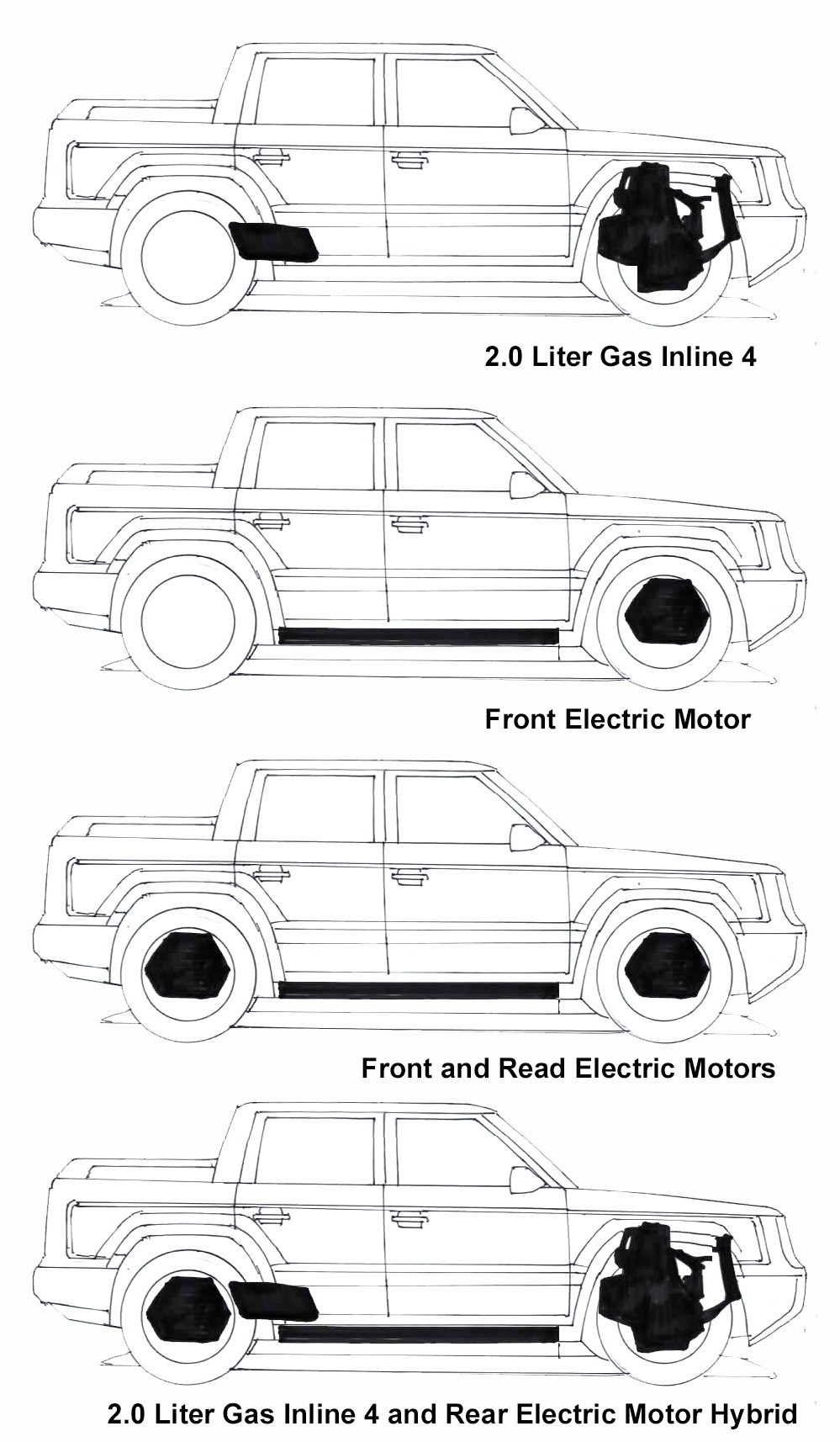
We could build the front, center, and back of the Pinto separately as Ford intends, but I’m not sure about the whole EV-only thing. Let’s let the buyer choose; the front and back modules could offer options. Maybe we’d start with a gasoline-powered 2.0-liter four up front with an automatic for the cheapest version; maybe 160 horsepower or so? Ford is claiming the new Universal Car will be as fast as an Ecoboost Mustang. My question is, why? A Mustang is supposed to be fast, but an economical car just needs to be “peppy” with “good pickup.” That two liter will be plenty quick for an entry-level pickup (as much as it pains me to say it, there’s no point in spending money we’re trying to save to develop a manual transmission version that a hundred people would buy).
Next up could be an EV version with batteries in the floor section and an electric motor either up front, front and back, or with the gas engine up front and the electric motor in back for a hybrid setup. Jason would probably want two liter fours front and back as an option, but we’ll just let that one go.
Also, I’d want cars to share as many parts as possible, not just under the skin. That means the front doors, entire front clip, and dash will be common, and only the overall framework would change to make the different body styles. Still, what body styles are we talking about?
Well, to start with, what is this “not necessarily pickup” thing that Ford says will kick off the program? For that, I figured this bargain basement thing would indeed have a cargo bed, but it would be so short that it would almost be the size of a sedan trunk. This isn’t a new concept; Jason wrote about examples of this from overseas over half a century ago:

That’s the inspiration for our car/truck, which we’ll call a “utility.” The bed would be covered and weatherproof, but you could take off the cover to accommodate tall items. You could fold down the tailgate and put a “fence” around it to get a larger cargo bed, or with an optional “midgate” open, you might carry items that are surprisingly long. This new kind of “sedan truck” we’d call a “utility” could look a bit odd, but Ford might provide rails along the cargo bed to “normalize” the look of the Pinto. These would, of course, be optional, but the salesperson would tell the customer that “they’d only add a few cents to your monthly payment.” What you’d have then is a “sedan” without the stigma of “small sedan,” and with far more utility.
Not your scene? There would be a Pinto SUV, of course, with the rear cargo bed enclosed. Need more room? No problem; a larger center floor and roof section would allow for a longer wheelbase compact pickup, not much smaller than the Maverick, but again with the same doors and front end. You’ve already guessed the next part: we can enclose the long wheelbase pickup to make a larger Pinto SUV that would be just long enough to allow for a little third row.

Now we have a full Lego kit of parts where you can build a series of products that could fit the shopping list of almost any sub-$30,000 car buyer. The last question is, what would it look like?
This Pinto Will Be Fire
It’s sort of odd that the Ford Maverick and the proposed Slate seem to be well received in today’s world of ultra-swoopy-looking cars with so many creases and cuts in the bodywork that I sometimes wonder if they’ve just been in a fender-bender (sorry, Hyundai). Simpler isn’t always better, but somehow this clean aesthetic cuts through the overly-trendy overstyled visual language on many cars today that will look hopelessly dated in five years (again, sorry Hyundai).
The only glimpse (and I really mean glimpse) of Ford’s upcoming Universal Car appears to show a painfully simple and featureless fascia, so it seems like the clean direction of the Maverick is the way this new product will go as well.
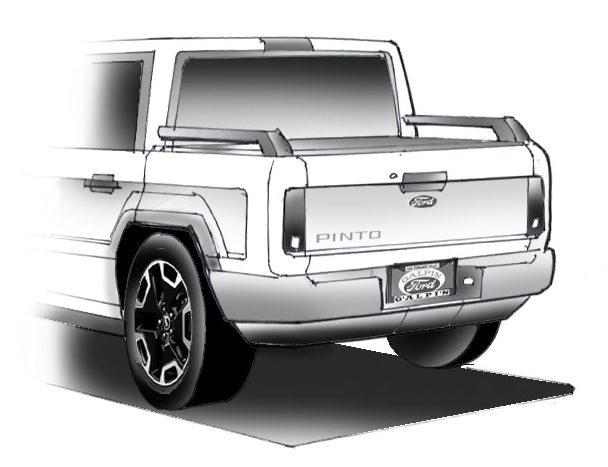
Extrapolating as best we can on that tinny snippet, I’ve come up with an extremely clean and functional-looking design for the new Pinto with single-piece stamped doors and as few body panels as possible. Here’s the animation:

This is the least-expensive version- the “utility” with the short covered “bed”. The optional rails at least make it look less like an oddly proportioned sedan and more like a poor man’s Lamborghini LM002:
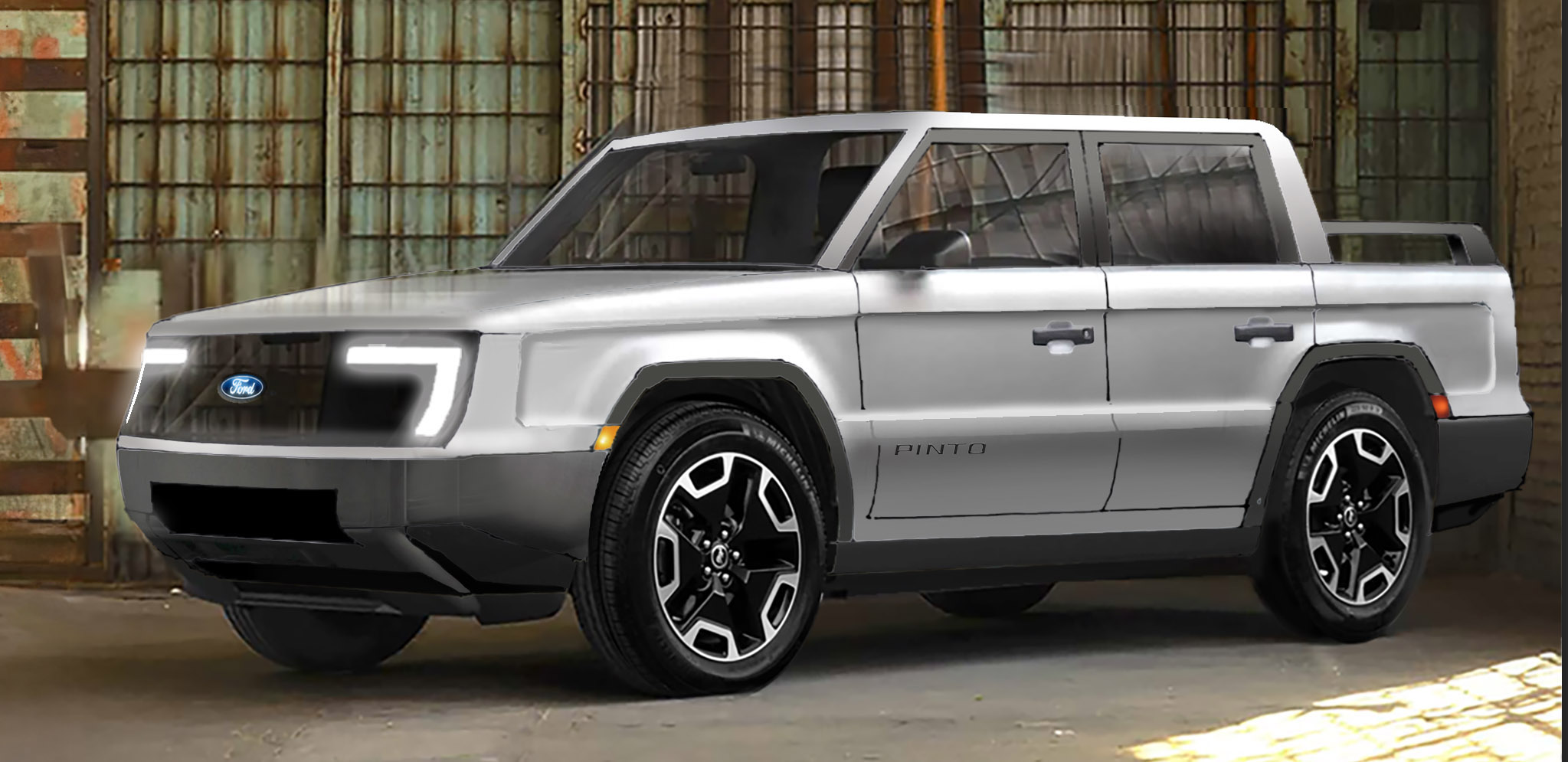
There’s a recessed area going down the side of the Pinto to break up the mass just a bit, but it will serve another function as well. In the comments of a recent post I did on the Mustang II Cobra, a reader named CivoLee had an interesting point:
You laugh, but I think the sea of grayscale that the modern automotive landscape has become would benefit from some appearance packages.
I’m not laughing. Well, I kind of am, but in a good way. That’s a great idea CivoLee has to bring some individuality and fun to your car. With different wheels and graphic inserts into that recessed area on the side, your Pinto could transform into whatever you want it to be. A rainbow stripe “Free Spirit” model would be a necessity, and I wouldn’t mind one with a contrasting color insert to mimic the old Bronco II. You can be damn sure that I’ll offer a woodgrain-side-paneled version. Honestly, you could get any celebrity or influencer to come up with a package or do a print-on-demand thing for your own graphics. The graphics would be vinyl, but that recessed area might also be a locator for magnetic graphics you could add, like seasonal “holiday” images of Christmas tree balls or dreidels and such.
Here’s the page from the proposed Ford Pinto website with personalities like Sydney Sweeney and Joanne Gaines:
 Sydney Sweeney via Ford; Joanna Gaines via Magnolia
Silly? Sure is, but you could spend a hundred grand on a grey SUV that just blends into the crowd. With the Pinto, you could stand out for very minimal cash, and the second owner could change it up just as easily for maximum, personalized fun. Not your thing? You could still get a grey one with steelies for your conservative tastes. Yes, before you say it, I will reluctantly agree that dealers might not make a mint in profit on a cheap car, but they sure as hell could make money on the customization.
In back, the Pinto would have another recessed area in the tailgate for graphics like on the sides. With the vertical taillights, the Pinto looks very similar to the Slate’s back end, but since the Slate’s rear seems to be a copy of old Ford Broncos, it doesn’t look like anyone is going to be doing a lawsuit standoff any time soon. I’m imagining a solid rear cabin wall and window as standard on the base model, with a drop-down midgate as an option. Also optional would be a rear backlight with a sliding opening or the ability to remove the rear glass entirely to give you a full midgate opening for larger cargo. Or, you could drive with the rear glass out, the side windows down, and the optional sunroof open for a near-convertible feel.
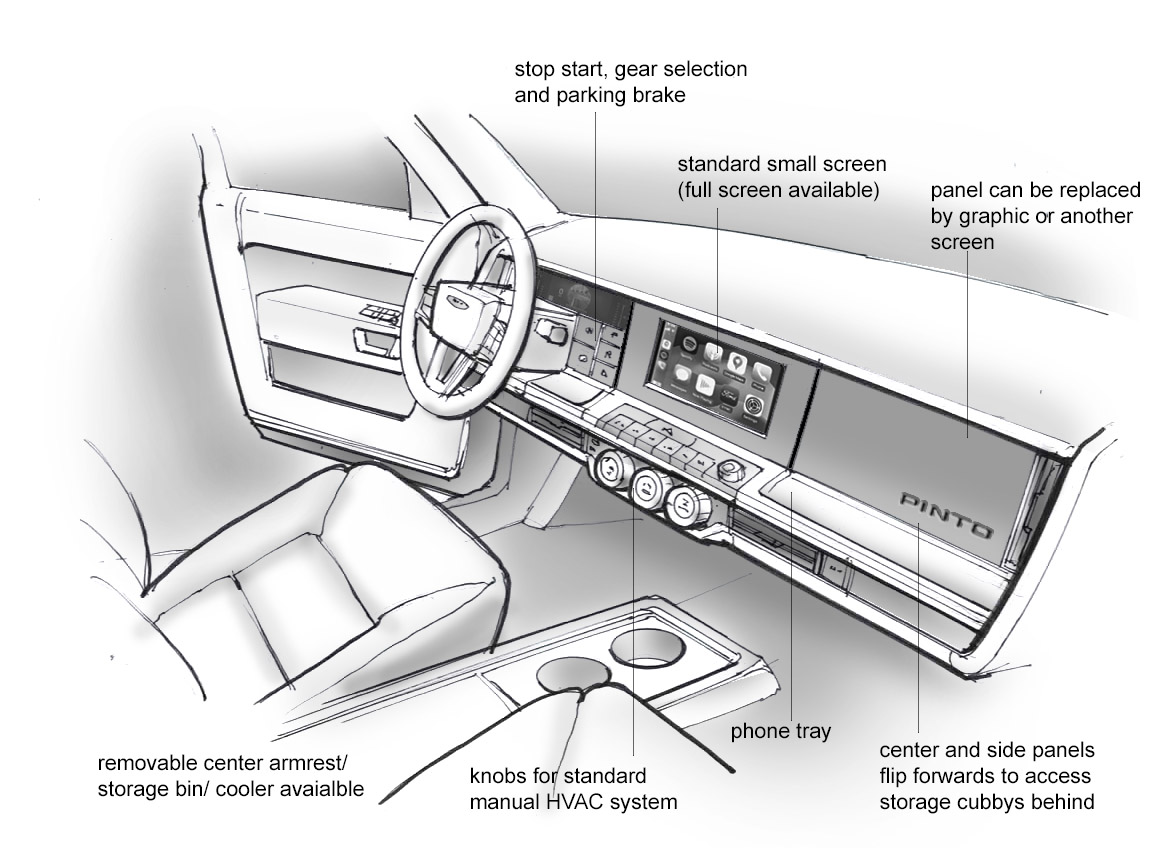
Inside, every Pinto would have power windows, locks, and air conditioning since it would be cheaper to just make them all the same instead of investing in multiple door mechanical systems. Besides, I don’t care what “the internet” says: nobody (other than maybe Jason) really wants a bare-bones hair-shirt penalty box of a car any more than they want a brown diesel “analog” manual station wagon that many car site wags canonize. Well, at least not enough people to make it worth tooling up for.
The standard Pinto model has knobs for the climate control and a very small center screen (legally, you need it for the backup camera anyway) you see below, but that could be upgraded to a screen filling the whole space with touch screen HVAC. The panel in front of the passenger is blank but could be replaced by a graphic (woodgrain, carbon fiber, a picture of your kids) or another video screen. Both center and passenger side rectangles flip down to access the hidden storage cubbies behind.
No center console or armrest is standard, but you could add one; even a storage bin or cooler or something that could be removed from the car (maybe electrically heated and cooler from the 12V power plug in the dash). You could probably double the cost of the base Pinto, but that’s possible with the likes of a Porsche Cayenne as well, and it’ll look like pretty much the same car inside. An entire industry of aftermarket parts would likely spring up if the new Pinto becomes as ubiquitous as the original Pinto.
Comfort, economy, decent performance, and handling all at a very reasonable price; not to mention the ability to personally trick it out as easily as adding a custom case to your cell phone. People are telling us what they want in an affordable car; why not give it to them instead of some mid-sized EV they don’t?
Pinto, Maverick- Is A Granada Revival Next?
If you were old enough to remember your parents’ awful rides from the malaise era, you’d agree that today there are no longer any truly “bad” cars. However, there are plenty of forgettable cars that lack both personality and utility, and you need to pay through the nose to buy them. Lee Iacocca’s almost-final words of advice to car companies in a nearly final interview were to “make small cars that people want to buy”. More importantly, we need to make them affordable. If his ghost is alive in Glass House at Dearborn, he’s probably still saying that, and we should listen.
What would be next for Pinto? Maybe a van body for the modular chassis? A two-door pickup? We could do this all day, as long as you don’t want a low-profile sports car or sedan, which would be a fool’s errand for Ford to go after anyway. You can’t be all things to all people, but the Pinto would certainly try.


Pinto as a model name is pure poison in the public zeitgeist. This really needs to be called the Ford New Festiva®.
With E-dsel power!
The Festivus for the rest of us!
I’m sorry, but there’s no way that would be the Joanna Gaines Pinto. The Joanna Gaines Pinto would be covered in shiplap
“Peppy with good pick up” is far, far more important to the average consumer than 0-60 times. I had a friend describe a new to her Versa as “quick” likely because her only frame of reference was her dying old 4cyl RAV4.
Not gonna ever happen at the numbers stated. This was all a really good plan before we became tariff land.
All I want is something that:
1) Gets at least 30 miles of all electric range;
2) Can haul me and my kids;
3) Can fit a full sheet of plywood without a bunch of hassle;
4) Is priced around $35k.
I’ve got a deposit in for a Telo Truck, but am keeping my eyes on this project by Ford. I’m guessing that Ford will abandon it though, now that the winds on EVs appear to be changing.
I also have a Telo deposit and am really hoping they go through with it. It’ll be more expensive than I’d like, but I like the idea of small and comfortable. The Slate just seems a bit more spartan than I would like and seems like it will have a lot of road noise. If Ford can put something together that feels more polished than the Slate and is more affordable than the Telo, that will be amazing.
Telo looks like a Canoo retread. How is it better?
Yeah, it’s definitely a similar concept. And I’m not sure that it’s any more likely to succeed than Canoo (speaking as someone who lost a not-insubstantial amount of money investing in Canoo). But there are a few things that distinguish it and the company in general.
One, Canoo was planning on producing a small van-like vehicle with an unconventional seating arrangement. It wasn’t impractical exactly, but wasn’t designed with a “practicality first” mentality. In contrast, the Telo seems to have been designed from the ground up to be as useful as possible in as little space as possible. It can haul full 4×8 sheets of plywood with the tailgate UP (MIDGATE!!), something that the Canoo definitely could not do.
Two, Canoo was intent on being an OEM, building pretty much everything themselves, which required an enormous initial investment prior to anything actually being made or sold. Telo is using contract manufacturing, which should help reduce the initial outlay and get vehicles into people’s hands more quickly (I recognize that this model didn’t exactly help Fisker, but that’s a different conversation).
Three, Canoo’s CEO was an asshat who essentially bought the CEO title and had little manufacturing experience. The team running TELO has a lot more manufacturing and development experience. And they generally seem like they are not asshats.
Oh neat, that’s good info.
I got so fatigued from various automotive startups coming and going that they don’t really blip my radar much anymore.
This is a really great read, but in general I think this whole idea is just taking Slate’s schtick and turning it to 11. And of course Slate was cribbing from others in the past, simple platform that can be minimally (cheaply) customized to become a bunch of different variants that are really only superficially different.
And I don’t know if you’re trying to say something with your influencer choices, but you’re saying something with your influencer choices.
I’m still holding out hope for Slate. My devastatingly risky $50 reserve is holding tight, but they’ve been pretty quiet.
You got a workplace LOL out of me for that Magnolia Edition.
Where’s the ship lap?
“are you ready to see your new Pinto?”
Inside the Pinto of course! Your new Pinto makes it so easy to transport ship lap thanks to the center pass through ship lap rack special to this Pinto edition.
The Pinto: Magnolia Edition makes it even easier to cover every single surface of your home’s interior with white painted ship lap, thanks to the patented Magnolia Ship Lap Rack system.
I think the best way to standardize is to go with an all single EV drive train offered as a pure ev and with an optional erev variant. Limit it to 2 options. Ev only with Frunk and larger battery for ~250 mile range ( min 400 volt dc and target 4miles/kwh) OR a plug in erev with purpose built ice range extender / generator in place of the fronk. Give it an all battery range of at least 80 miles with level 1 and level 2 charging only + a large enough gas tank to extend it out to 500 miles combined range.
My guess is the cost of the larger battery in the ev is about equal to the ice.range extender package. Probably sell either variant for about the same price.
I bet the erev would outsell the ev 5-to-1
So many good jokes in this article. Well done. As for the platform, yes, this is what they could and should do…but 90% more likely they will not.
Also you missed one joke option. A more rounded version called the Pinto Bean Edition
I think sticker packages and graphics need to make a comeback and I for one would happily drive that freewheeling edition.
The manager of a local McDonalds here has a Bronco Sport with the FreeWheeling package and it really pops in the parking lot.
I didn’t realize that was a package that is currently available!
Yeah! It’s the only one I’ve ever seen on a sport but from what I’ve read it’s an OEM package.
Everyone is missing how the rim of the car being polished seems to go up steeply in a short distance. Look at the rags. It’s either nearly a FC or that’s actually the rear of the vehicle
Good catch – I doubt it’s the rear since that would be a really high lift height for a rear cargo area. It looks pretty frunky to me.
If this turns out to be a Mazda5 size minivan for less than 30k count me in lol.
Around here Mazda 5 are still thick on the ground and seem to have enthusiastic owners. My Mom has one and it really is well sized, decent understated looks by today’s standards, and sliding doors are the best. So maybe there could be a market? But then why discontinue the 5? I blame anti-minivan sentiment. Long live the MPV!
I absolutely love mine, even more so as I look out for a potential replacement and realize there’s just nothing else out there (in the US, at least) that matches it.
I’ve always really wanted one. They even came with a stick, right? My Honda Fit does about 75% of what I’d get it for though, and I think the Honda drives better. Long live the sliding door!
Yes in fact my friend’s sister has one. I told her to let me know before she decides to sell it…
In the last 2 years I have bought three early 2000s 3.0L MPVs. All of them were fully loaded with leather seats etc., and in excellent condition with 100-150k miles. The most expensive one was only $3,800.
Why three? I sold the first two at cost to friends, who found themselves in need of a cheap reliable & comfortable vehicle to transport elderly relatives. That seemed more important than my use of them as backup cars or loaners for visiting friends and family.
I meant MPV as a vehicle category rather than the Mazda product I assume you are referring to. That said, the Mazda MPV was an MPV (though perhaps rather large for one, maybe better described as a minivan if only it had sliding doors). I have many miles of driving minivans, and the Mazda was the nicest to drive; though not quite as useful as the several Aerostars my family had. I just wish I had a chance to experience the Previa first hand while they were still new.
Is that the actual truck? It’s unbelievably ugly. And no thanks for Fords Sync system or whatever it’s called these days. The slate is still (future) king for me.
Ford will not sell many of these because they are so off-putting and then they will say “well we tried, back to 100k king ranches”. I’d be disappointed but I expected something like this from them.
What? No, this was a complete guess from Bishop about what it would look like from a single tiny shot of the front of it.
Good to know, I like Bishop, but please Ford do not make that truck!
Every full size PU on the market is unbelievably ugly. Prove me wrong.
I don’t think most are horrid, but I do agree that non float my boat right now. Even if they did, every single current model is a grenade that might blow at any second. None are reliable. Lots of guys moving to 3/4 tons because they are holding up better and no start/stop etc…
I am sure thats what the regulators were going for.
The Fords look good, especially the ones with orange running lights in the front.
The gms and Toyotas are unforgivable hideous.
The Rams have just gotten too busy in the front, but otherwise looks (too) similar to prior year models.
Pintos were the bomb!
I’m not convinced that there’s much of a demand for haggis IN Scotland. When I was there a couple of years ago, it was on a lot of menus, but I didn’t see anybody order it, and when I asked, the staff looked at me like I was crazy (and it probably wasn’t just my accent). The prevailing attitude seemed to be “Well, you COULD get that, but why would you?”
Why indeed?
The times I went to the Highland games, it was sold out. I’m sure it’s absolutely foul, but a few of us wanted to split one just to try it.
I’ve had haggis at least two times that I know of (maybe three). It’s sausage, but sheep-style.
I had imagined it tasted “organy”, but sausage sounds good.
What’s the phrase? “Don’t ask how the sausage is made”, regardless of the source animal(s). It’s ground parts in the (cleaned) stomach, not much removed from typical sausages that use “natural casing” (cleaned intestines). It goes down to the preparation and presentation, I suppose.
I always thought the inside of sausage was more ground muscle, though, not lungs and such.
Depends on the sausage. Some are more organ-heavy than others. Liverwurst, braunshweiger, head cheese, blood pudding, boudin, some andouille varieties, and so on commonly include organ bits.
I was introduced to haggis in Scotland decades ago, with the whole piper ceremony and everything. I enjoyed it, it seemed like a large sausage, in essence. In the interest of transparency, I’m a fairly picky eater, especially with textures.
Also had some at a Scottish restaurant here in the States years later and it was disappointing. So it’s probably best to go to Scotland to get some.
I anxiously wait to see what a Granada revival would look like.
Hello Mudda
Hello Fadda
Here I am in
Camp Granada
Hopefully a Euro Granada.
The irony of the simpler to manufacture approach with EVs is that designers then increase the complexity of the basic user functions.
‘Want to open the glovebox? Tap through these menus to get to the electronic release.’
Love the Rambo Lambo-esque look! i may be showing my age, but the Pinto name is pretty tarnished by the whole spontaneity catching on fire in an accident thing. I mean it even made one of the naked gun movies!
Most cars will give up tragically when hit at 60mph while standing still.
no doubt, but the Pinto was a flawed design. The tank was pinned between the bumper and rear diff. It had no where to go in a crash. Instead it tended to split and spew gas into the cabin. It was the first cheaper to pay the lawsuit then fix the problem story I remember as a kid. I had a buddy that built a drag car out of one, I always liked the lines of it.
There was a big deal made out of Fords $5.00 fix of a metal guard shield. Virtually every car was designed and built with that fuel tank placement at that time… while all pickups had the fuel tank behind the passenger seat. Just a bit less safe, right?
If they include a double-DIN slot with a dummy cover that I can fill with an aftermarket radio/infotainment system of my choice, just lmk where I can send my deposit.
That whole center rectangle comes out. It’s hollow behind. Throw in your Jensen cassette player
Jensen? When I can finally afford an Alpine, green back-lit physical buttons and all?
No established automaker is going to abandon half of their business model, every plan and investment they’ve made in technology, for the sake of a slightly lower production cost and giving consumers choice/repairability/upgradability.
Came here only to say, had I been able to purchase a Maverick XLT Hybrid with a few modest options for MSRP at release time, I’d be driving one now. It’s still a clever contraption, and I’m ok with the hard plastic, unibody, and FWD.
For a car named Pinto it’s not very bean shaped…
But is it horse shaped? We’ll, no
I guess that answer depends on the shape of the horse compactor at the glue factory
Pretty sure you can make cat meat* take any shape you want.
*https://londonopia.co.uk/the-cat-meat-men-of-london/
Just be glad you’re not refried.
A truck variant should be offered with an option for a single cab, longer box or a double cab, shorter box. If it’s a modular design, this should be attainable.
It’s the circle of life…
Nash switched to a unibody design in the 1940s and it dang near put the company out of business; they were forced to merge with Hudson. The unibody was bad because it didn’t allow much in the way of styling changes without major retooling.
But 20 years later, most manufacturers had switched to unibody designs because they were cheaper to build.
This Ford proposal is suggesting that body-on-frame vehicles were the better idea all along.
Which will lead to the second coming of the Crown Vic. Circle of life, indeed.
Third coming.
The first Crown Victoria was in 1954 as variant of the new Fairlane trimline.
Will people buy a $20K vehicle or does it have to be more expensive so the dealers stock them on the lot and people don’t think it is cheap junk?
There will have to be some scheme so that ordering the cheap cars makes the dealership a priority to receive cars with higher profit margins.
The 20K vehicles are gone because the people that need something at that price point cannot get financing, forcing them into the buy here, pay here world. That predatory situation makes everything so much worse and sets them into a downward credit spiral.
That’s a shame, before the pandemic you could walk into a Honda dealer with $23K and drive out with a Civic Sport hatch with a 1.5l turbocharged engine and a 6 speed Manual Transmission. Now if you want the same engine/transmission combo you have to shell out $40K for an Integra A-Spec.
I’ve often wondered why automakers haven’t felt that a large casting and/or module casting approach couldn’t be applied to traditional ICE vehicles.
FWD drivetrains, as they exist now, could easily be the leading 1/3 of a vehicle and be rather agnostic to what it’s bolted-to. Set your half-shaft for track, and a set of pre-determined positions of offset from the axle to the bolting points allow it to suit a variety of use cases.
Adding AWD, with an e-motor rear drive, won’t need much connection to the rest of the vehicle at all.
And it becomes pretty much a pick-to-light, and the skin over it doesn’t matter.
I think it’s been a combination of the expense of tooling for the large modular parts, the durability and longevity of a modular design versus an all-in-one traditional one, and the fact that, after all is set up and said and done, someone figures out that it really doesn’t save much on development costs at the end of the day. I agree that it’s a good approach in principle, but then, I’ve never tried to manufacture a line of different automobiles, so I’m sure there’s additional disadvantages, too, I just don’t know what they are.
Could be, too, that it’s a “jack of all trades, master of none” situation — if you’re selling a cheap, modular car with different configurations, but each configuration ends up being only slightly less expensive than a purpose-built competitor that is also better in a lot of ways because it didn’t have to make as many compromises… well, that’d be a hard sell. It’s a tough engineering proposition to come up with a platform that can be a comfortable commuter, a utility vehicle, or a people-hauler, and that can also do any of those things as well as a vehicle designed from the ground up to do just one thing.
I see your point, though the counterpoint is that this “skateboard” or “modular” approach is already happening with EVs, so expanding to ICE isn’t breaking any new grounds
Purpose-building competitive cars that closely fit the needs of particular customers isn’t a current market condition. Everything has trended to the lukewarm medium crossover SUV, because it can be sold to the most people.
A modular car with configurations could easily be more specialized than most of its competitors.
Maybe a little more involved than what you’re describing, but Toyota’s TNGA architecture seems like the closest thing. Basically every non-truck vehicle they sell is on the same platform.
I would imagine the same thing is true for Subaru too.
I thought that all of the VW and Audi cars were the same from the firewall forward, or used to be.
In a way, it is
Each VW platform has one dimension that’s shared with all cars on that platform. In the case of the MQB platform (front engine, transverse), it’s the distance from the front axle center line to the pedal box. MLB cars (front engine, longitudinal) it’s the distance from the bellhousing to the firewall
Toyota’s strategy is similar, where they have 5 variations of the TNGA platform depending on the car type and size. TNGA-C for compact, TNGA-F for body-on-frame, etc.
They’re essentially shared firewall/pedal box, because Toyota figured out that 80% of the R&D cost of a chassis is in that area
Both strategies mean they can build more models on the same common set of components easily, so if they suddenly need to build more RAV4s instead of camrys, they can switch everything over on the production line quickly
With the Exception of possibly changing Wheelbase (in the early drawings), Looks like you’re thinking like Dick Teague, who had the AMC Hornet and Gremlin basically have the same body from the B Pillar forward, except you want more of the vehicl to be the same. It’s been done before, can probably be done again.
I’m not worthy of being mentioned in the same breath as Dick Teague, but you’re right on target with my thinking. They didn’t have the money to do it any other way; Ford does but why not save it?