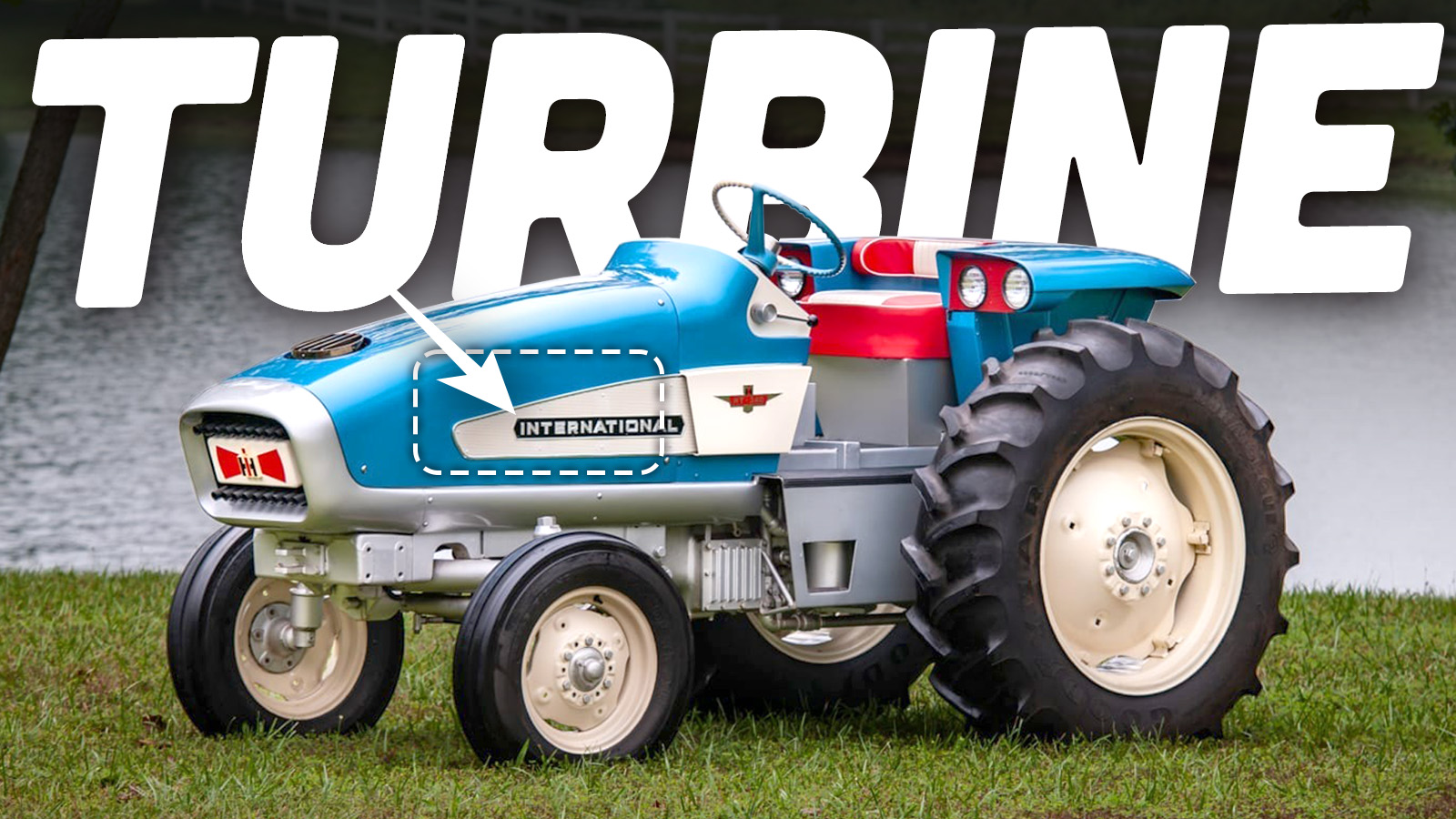
There was once a time when the gas turbine engine was seen as the future. Turbines had proven themselves in aviation, and it wasn’t long before engineers and inventors started wondering what else turbine power could excel at. In 1961, International Harvester explored the potential future of turbines in tractors and built the HT-340. This tractor looked like a drag racer and sounded like a jet, but consumed a hilarious amount of fuel and proved to be hugely impractical.
The gas turbine engine has many theoretical advantages, from a high power-to-weight ratio and fewer moving parts than piston engines, to a potential high efficiency and the ability to run on practically anything that could be burned. I’ve now covered the use of gas turbines in several different vehicles, including locomotives, semi-trucks, cars, helicopters, and motorcycles. Gas turbines also found use in marine applications and as stationary power generators. Basically, the gas turbine once touched every facet of transportation.
Mecum Auctions
When International Harvester implemented a gas turbine into a tractor in 1961, the company knew that the turbine wasn’t practical. The turbine was loud and consumed fuel at an alarming rate. But an important part of the experimental HT-340 would go on to become something people use in the real world.
Hydrostatic Drive
International Harvester’s experiment with gas turbine power originally started with a different goal. As the book ‘International Harvester Tractors 1955-1985‘ by Ken Updike writes, in 1959, engineers at International Harvester were looking for new ways to transfer the power from a tractor’s engine to its drivetrain and implements. IH had previously experimented with torque converters and hydro-mechanical transmissions, but hydrostatic drive also appeared to be promising. Like the gas turbine, hydraulic control systems had proven themselves in aviation during World War II, and the technology was only improving.
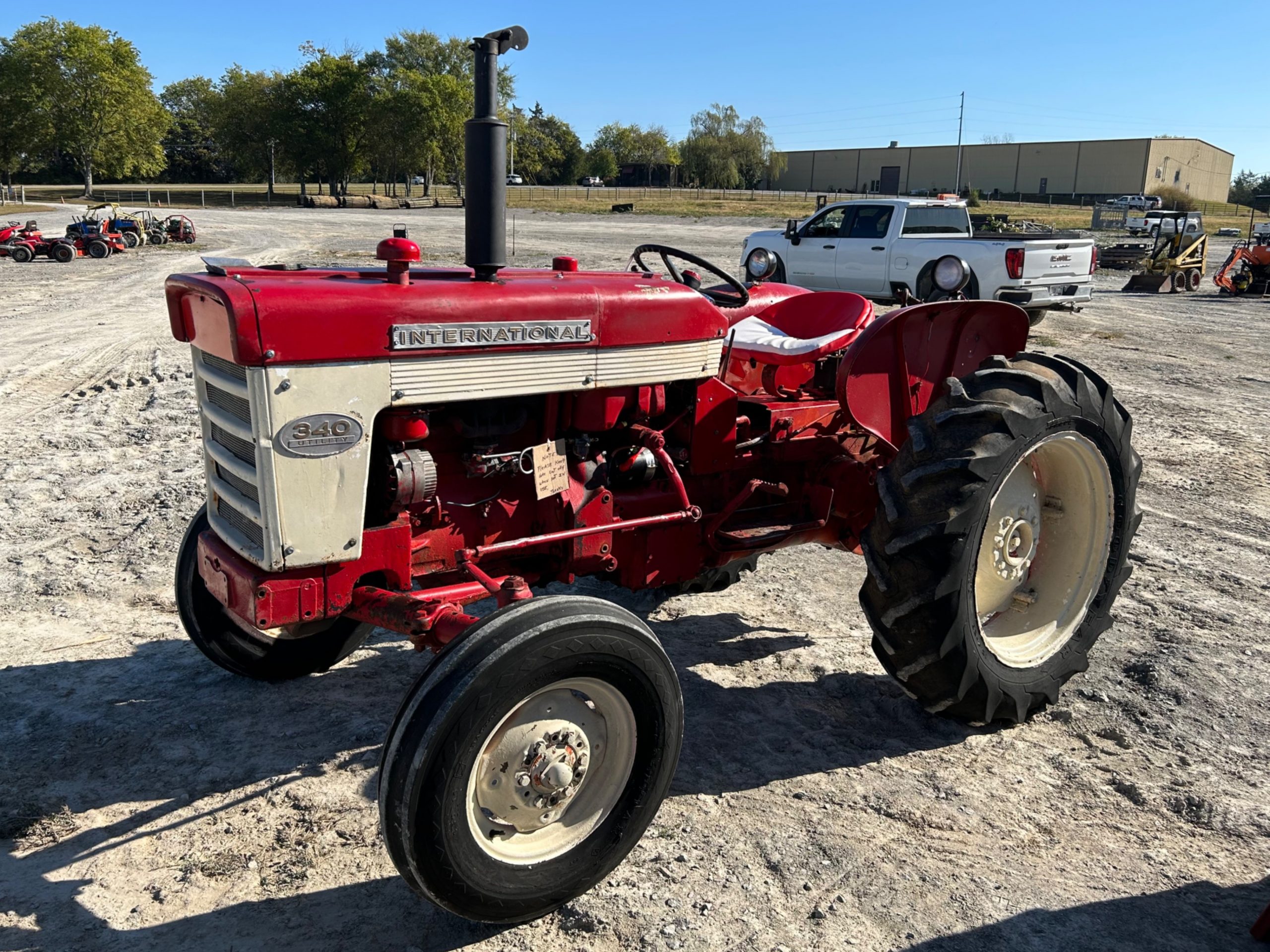
To test the power of a hydrostatic transmission system, IH engineers started with an I-340 utility tractor. Normally, this was a tractor that had a 166 cubic-inch four-cylinder diesel engine or a 133 cubic-inch four-cylinder gasoline engine. Both engines made 47 horsepower. This was a row-crop tractor that was a part of the Farmall line and launched in 1957.
The difficult part, the book notes, was replacing everything that would normally be driven by the geared transmission with hydraulic equivalents. Thankfully, IH was able to rob the parts bins of companies that already had hydrostatic applications. A Lucas hydraulic pump moved the fluid while a pair of Staffa motors provided propulsion.
International Harvester
A hydrostatic transmission works by using the pump to build pressure. This pressure is directed to the wheel motors, where actuators convert fluid energy into rotary mechanical power. The result, in this case, is either forward or reverse motion at the wheels. The hydrostatic transmission can also be used to slow down a rig, functioning like a brake. Here’s a better explanation from a 1961 issue of Gas Turbine:
The hydrostatic system devised by IH researchers has three major parts — a variable-displacement pump that furnishes oil pressure energy to a pair of radial hydraulic motors, one in each driving wheel. This system eliminates need of gearing since torque produced at the wheels is primarily a function of hydraulic pressure produced. Vehicle speeds are controlled in infinitely-variable steps by change of plunger stroke (displacement) in the pump.
A single lever effects control. Tilting the swashplate controls vehicle speed; the greater the pistons’ stroke the higher the speed. In neutral there is a hydraulic braking action and tilting the swashplate beyond the neutral position has the effect of reversing the fluid flow in the system and hence reversing the vehicle.
IH finished the tractor in 1960, calling it the HD-340, with the ‘HD’ standing for Hydrostatic Drive. The benefits of the hydrostatic drive, as advertised by IH, were that the transmission didn’t have any gears, shafts, splines, or clutches. Instead, the tractor could easily change direction with the use of a pedal. The hydrostatic drive was also smooth, allowing for the smooth directional changes or speed changes that you couldn’t get with a manual mechanical transmission. Ease of use is often touted as a major benefit of hydrostatic transmission in a tractor.
This transmission was intended to go into production, and thus, it was designed to be paired with a 40-horsepower piston engine.
Turbine Power
International Harvester
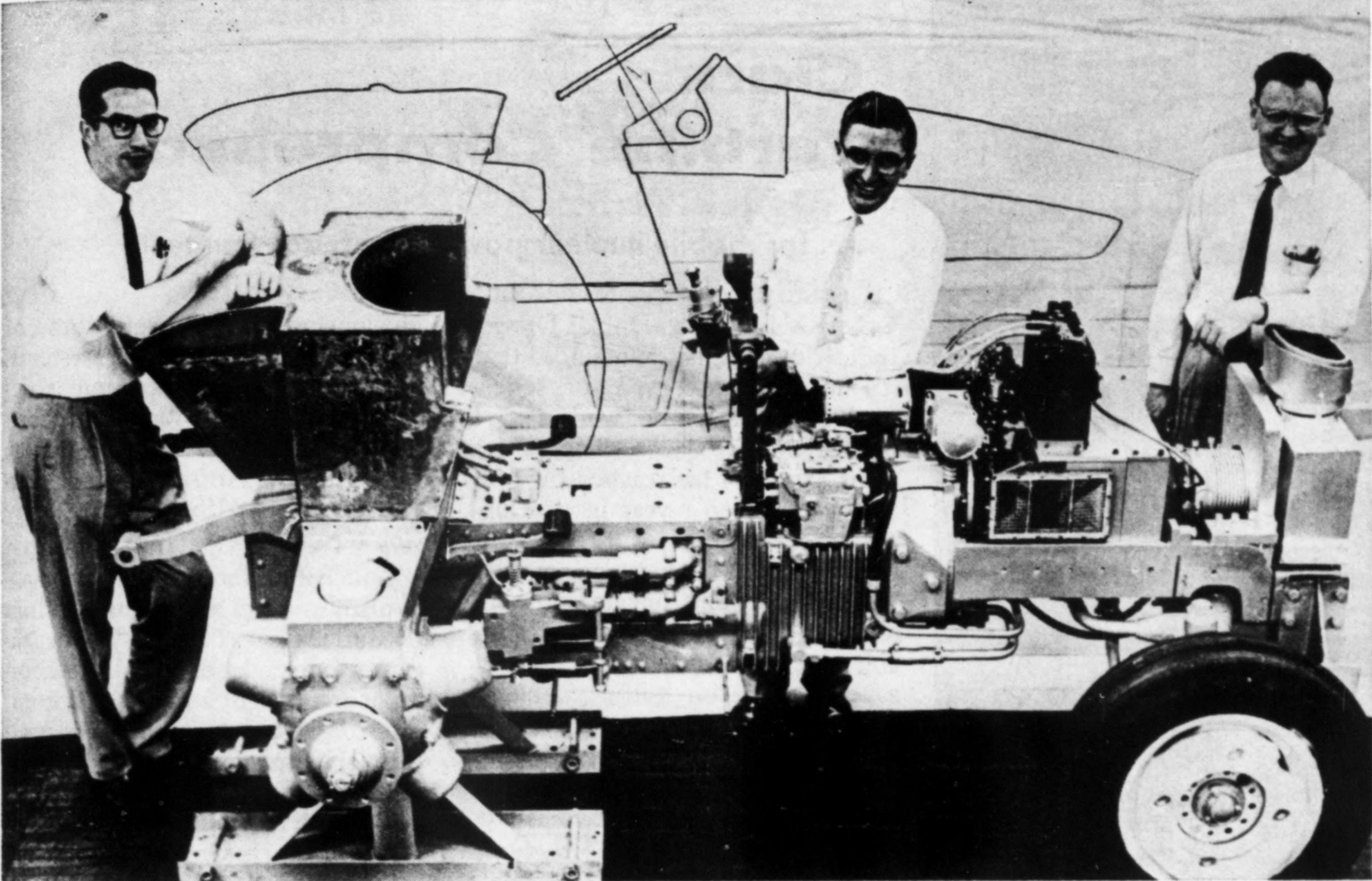
With the hydrostatic tractor concept nailed down, the engineering team at IH then turned to the engine. At the time, several companies on multiple continents had been experimenting with gas turbines in aircraft, cars, locomotives, and other vehicles. IH’s research team, which included IH Vice President of Engineering A.E.W. Johnson, Chief Research Engineer Carl H. Meile, and researchers J.R. Cromack and Ralph E. Wallace, decided to conduct an experiment of their own with a gas turbine engine.
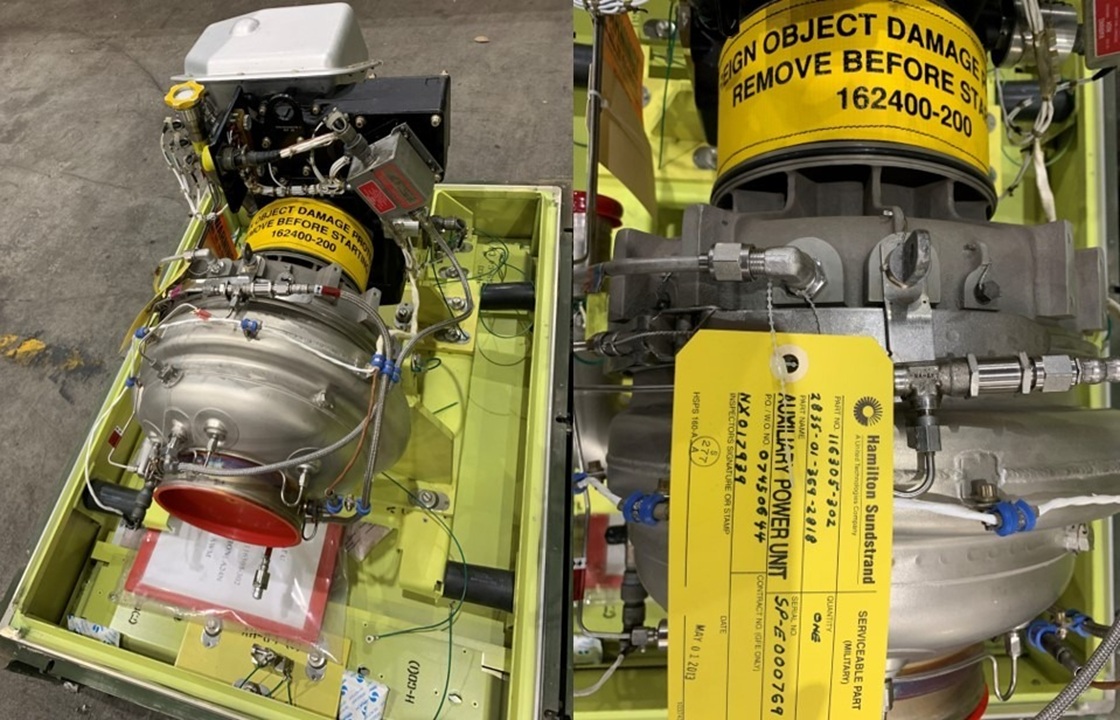
The turbine would come from within the International Harvester umbrella, as the company had a subsidiary called Solar Aircraft Co. in San Diego, California. Solar Aircraft donated a Titan T-62T turboshaft engine to the project. According to the Contract Journal in 1961, this engine, which measured 21 inches long and 13 inches in diameter, was originally designed for aircraft propulsion as well as an auxiliary power unit. In case you missed my previous coverage, here’s how a turbine works:
A modern turbine works by drawing air in through an inlet, where it goes into a compressor, which pressurizes the air using airfoil-shaped spinning blades. That pressurized air is joined by fuel and is ignited in the combustion chamber/burner. Then, the ignited, high-pressure, fast-flowing mixture enters the turbine, which has its own airfoil-shaped spinning blades. The mechanical work of the rotating turbine can be used to spin a propeller shaft, driveshaft or generator. The turbine is also connected to the shaft that drives the compressor. A turbofan engine is a type of turbine, and the long shaft containing the turbine and the compressor is capped off with a gigantic fan featuring titanium blades.
Siemens Westinghouse via U.S. Department of Energy
This is a very simplified explanation of how a gas turbine works, but what you need to know is that gas turbines have proven themselves to work really well for specific use cases. Of course, the turbofan is the king of commercial aviation, but gas turbines are also found in power generation and military vehicles.
IH’s turbine, as it was found on the tractor, weighed only 90 pounds with reduction gearing installed. This engine was tiny in comparison to the 450-pound lump of metal that was the 40 HP piston engine that was originally mated with the hydrostatic transmission. The turbine was also more powerful, making a healthy 80 HP for its small size. However, since the transmission was designed for 40 HP, the turbine had to be detuned.
Solar Aircraft
The power unit had some fascinating stats to go with it. The turbine’s maximum speed was 57,000 RPM, and when it spooled up to a constant speed, the output shaft spun at 6,000 RPM. This went through a 3-to-1 reduction to get it down to a constant 2,000 RPM. Reportedly, if the transmission input spun any faster than 2,000 RPM, then the hydraulic pump would overspeed and burn itself out.
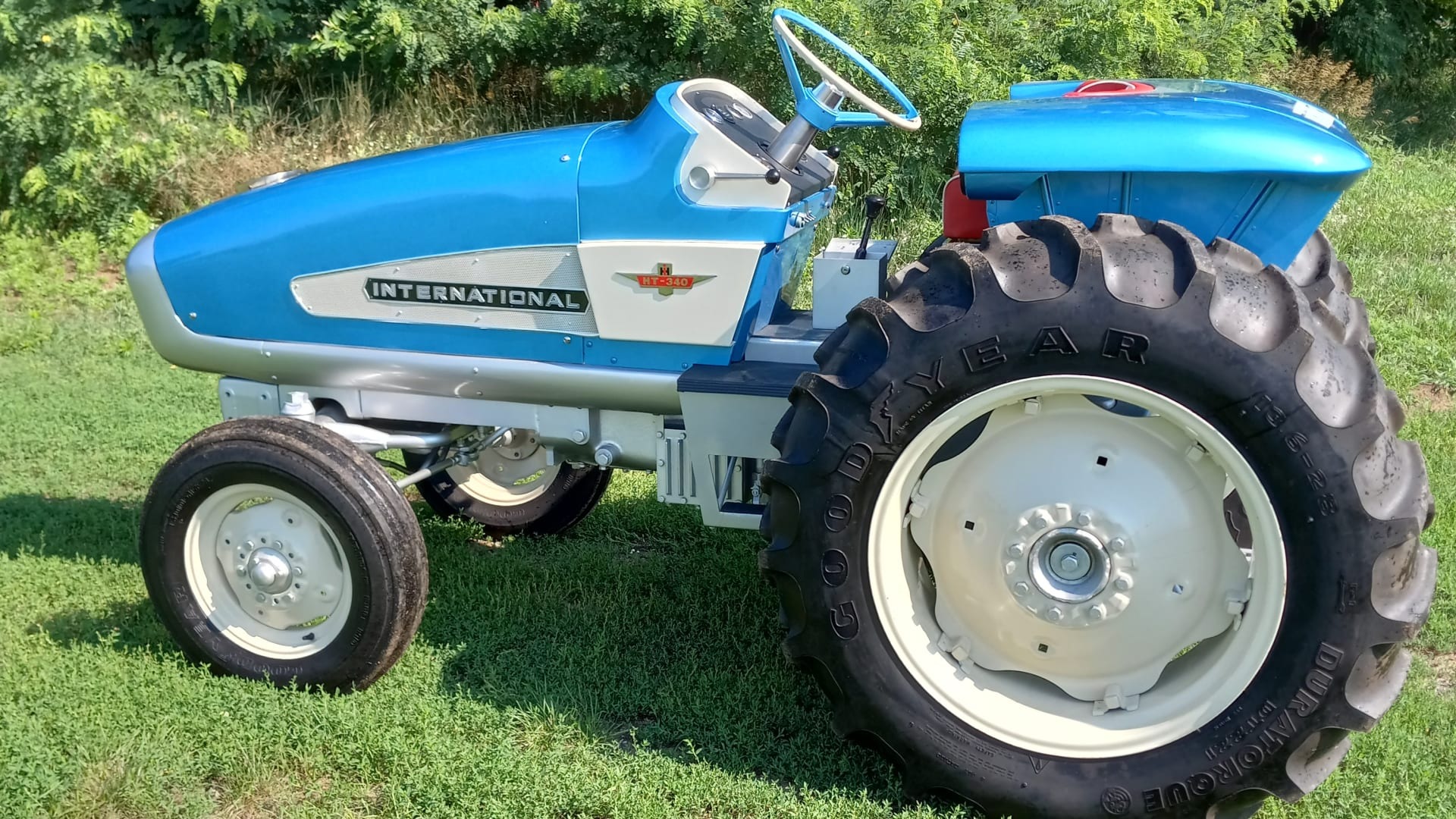
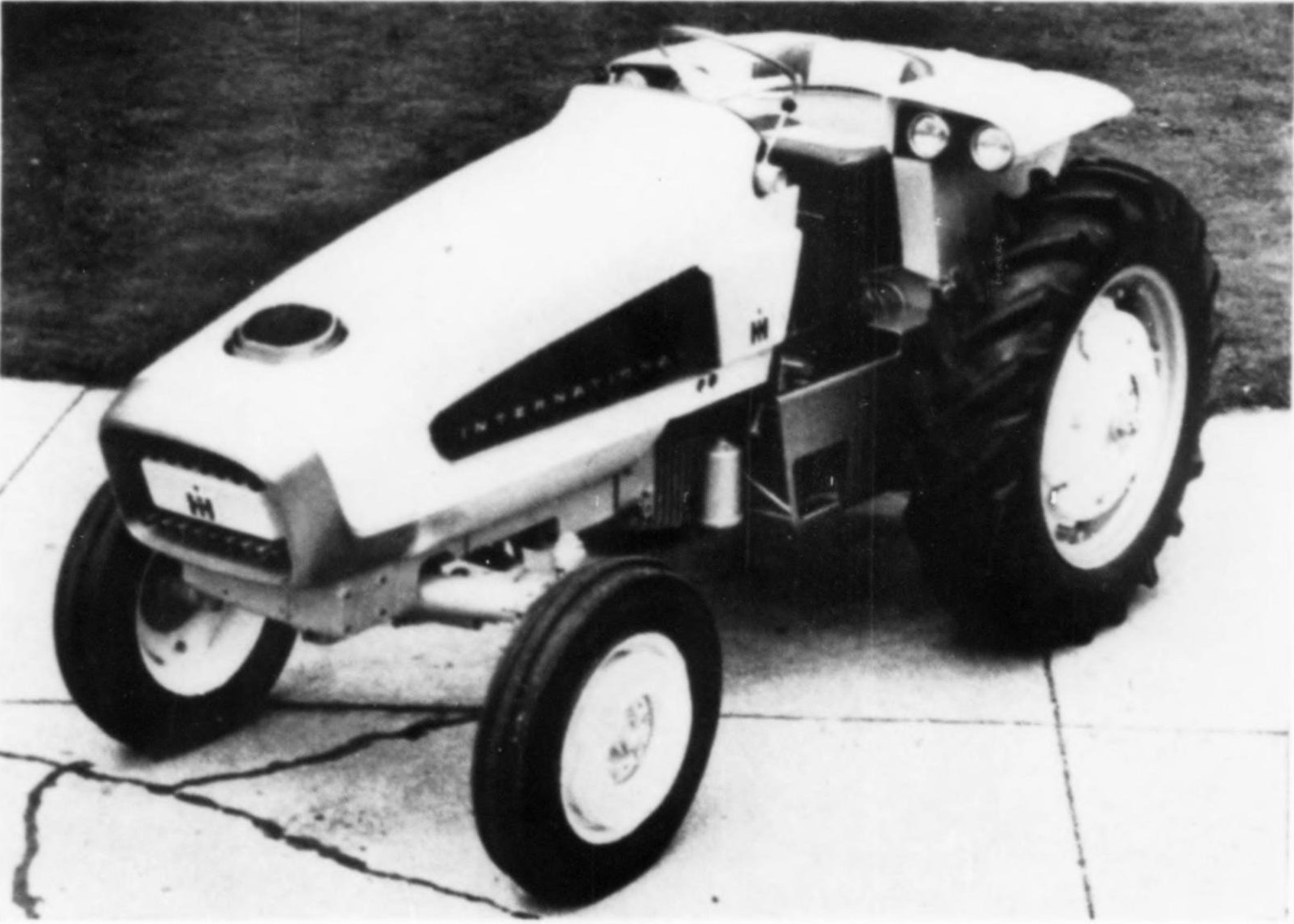
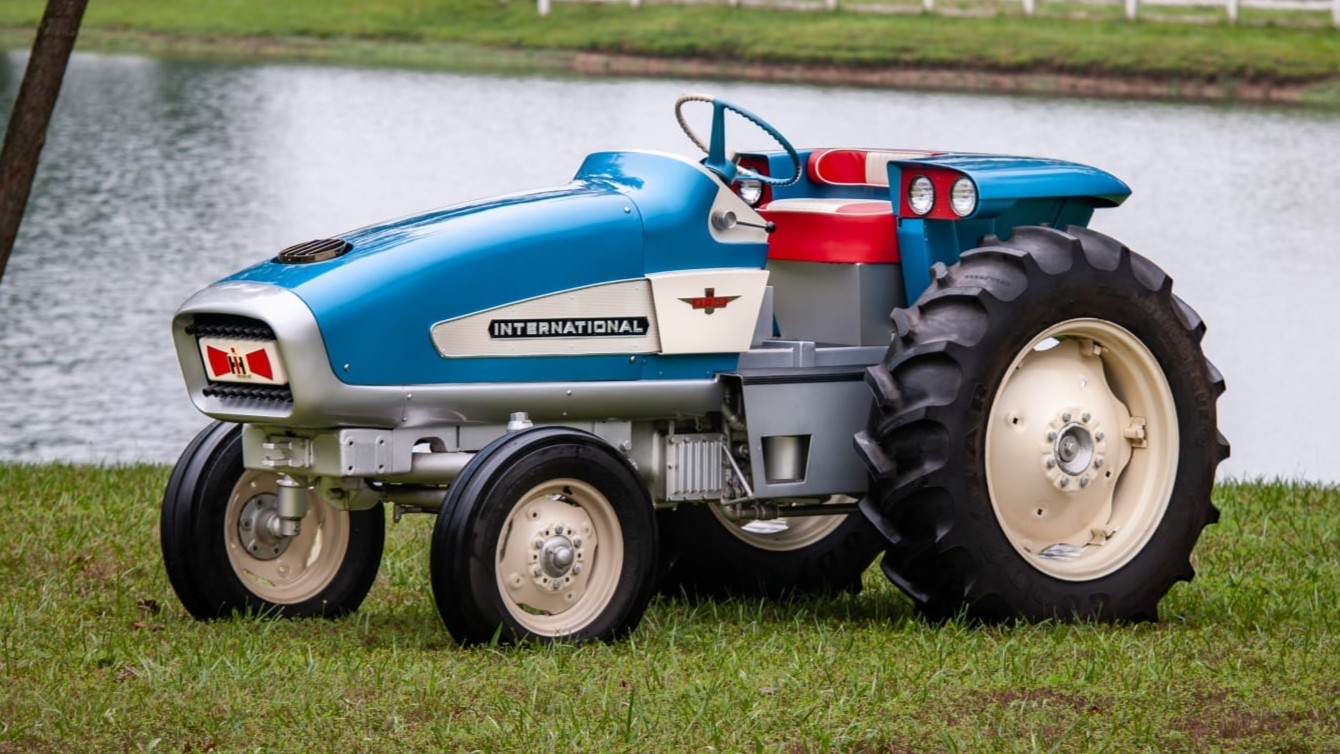
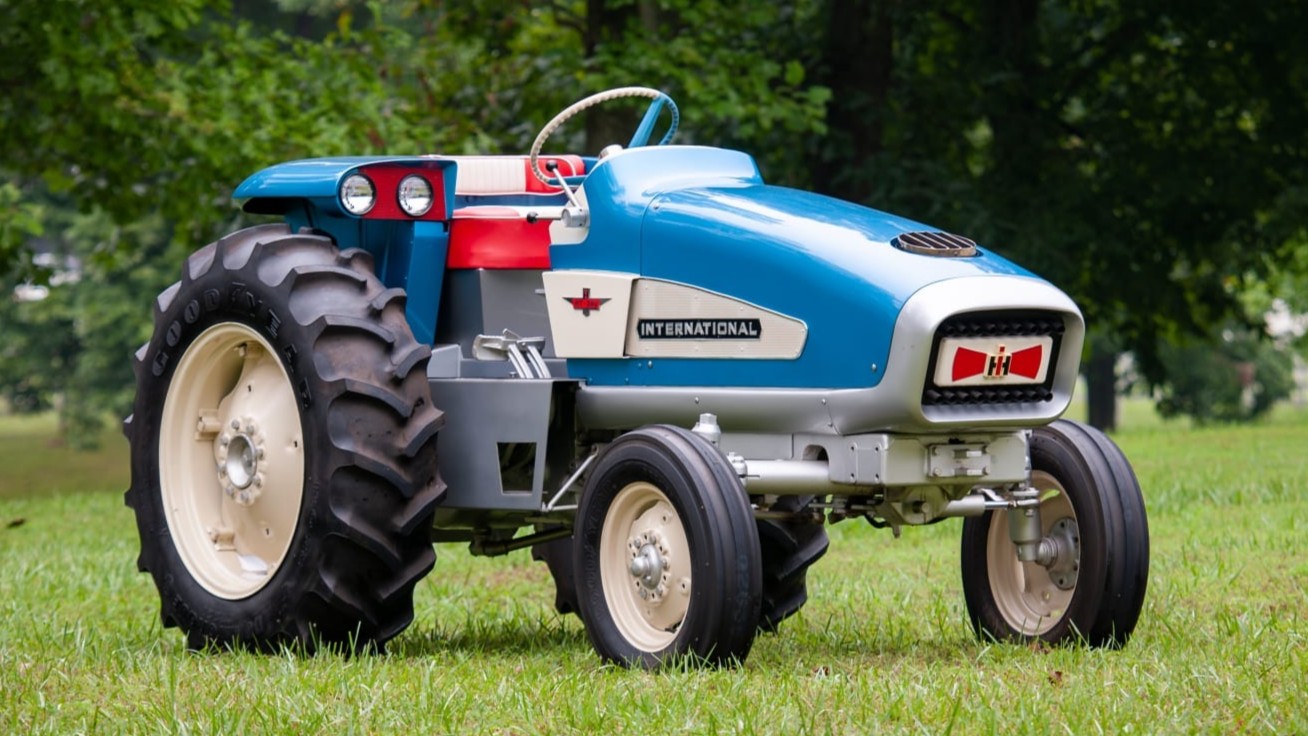
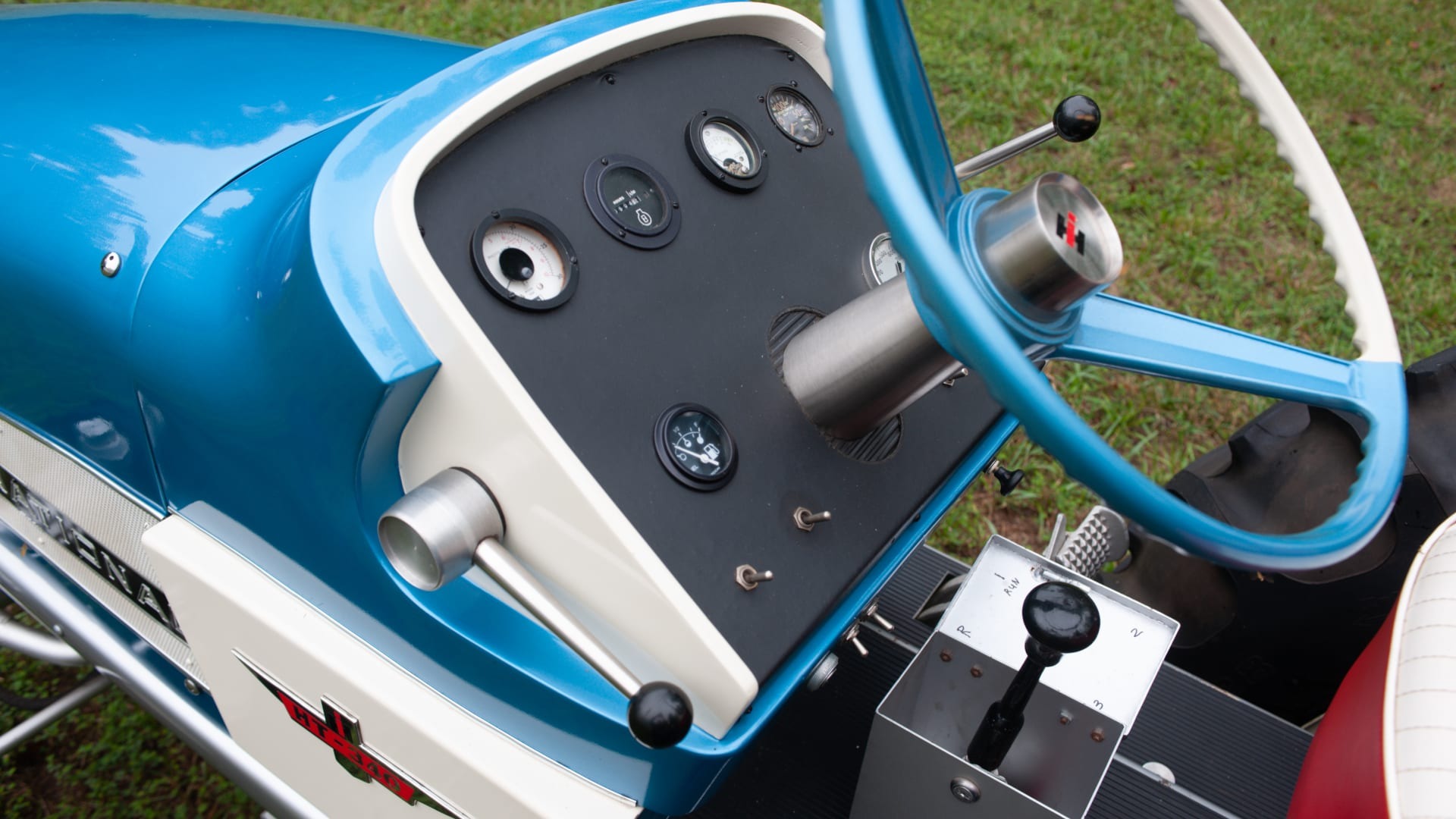
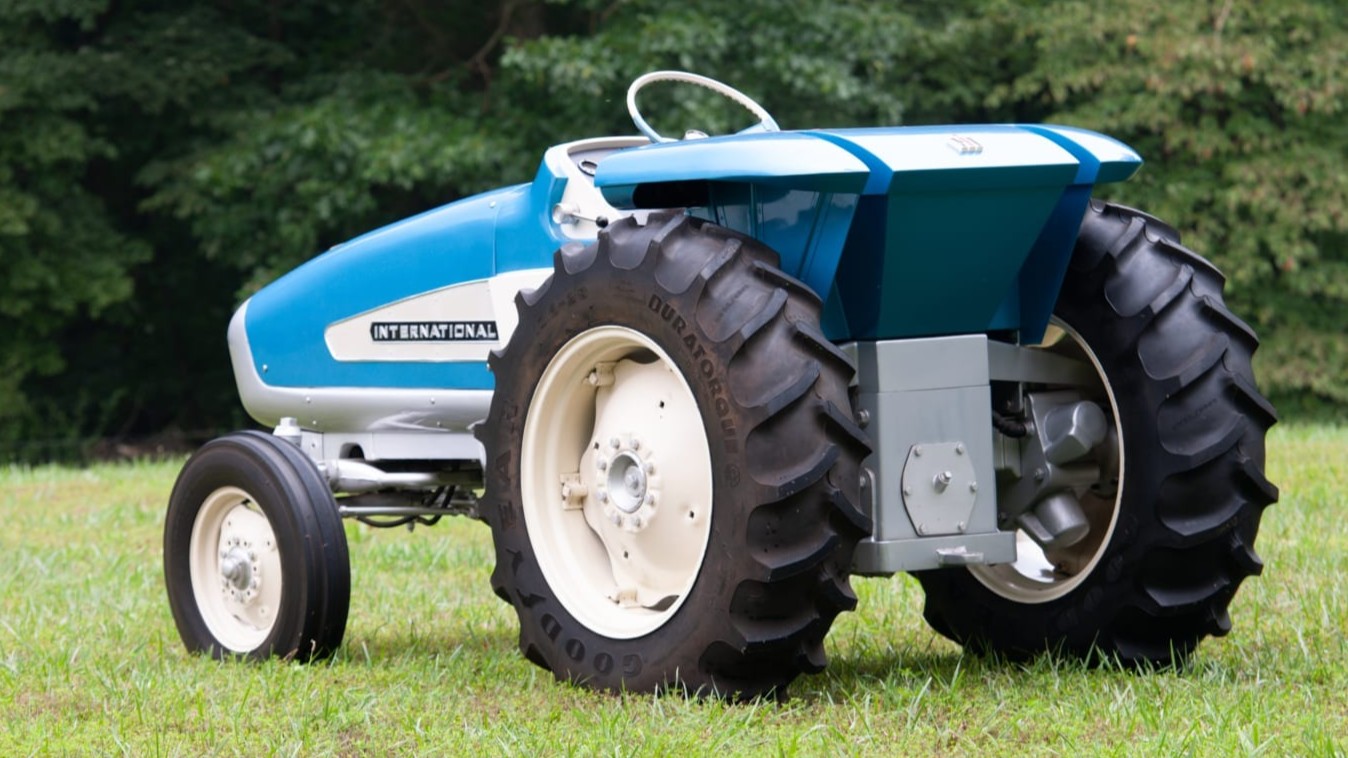
Adding the turbine resulted in another name change for the tractor to HT-340, which meant Hydrostatic Turbine 340 tractor. To illustrate just how weird and different turbine power was, IH covered the tractor with a fiberglass hood that was molded in color. The fuel tank was moved behind the driver, resulting in a tractor that looked a bit like a racecar of the era, something a few industry publications noted at the time. The sloping hood was pitched as being superior for visibility while also being easy to repair and never needing a new paint job, as its color was molded in.
Mecum Auctions
According to Classic Farm Tractors by Michael Williams, something that was particularly neat about this project is that, unlike some of the tractor companies that teased weird tractors of the future, IH kept expectations realistic. Researchers admitted from the start that the turbine tractor was not intended for production. The limitations of turbine power, like insane fuel consumption and uncomfortably loud noise, were already well-established by that point. However, IH engineers still wanted to take a crack at it. Besides, building this tractor was also a fantastic PR exercise.
At the same time, in theory, IH thought that a turbine would complement the hydrostatic drive by making the tractor even easier to use. The turbine engine required no air filter, no radiator, and no water pump. It also ran on basically any liquid that burned, had almost no oil consumption, and was smoother than any piston engine.
International Harvester
International Harvester tractors 1955-1985 even explained the starting process as being easier for the farmer than a piston-engine tractor:
When the operator turned a key and pushed a simple start button, the engine starting was handled automatically by a control box. The control box activated the starter, opened the fuel valve at the proper engine speed, energized the turbine’s spark igniter, and finally switched the starter Over to a generator (much like that on a Cub Cadet) once self-sustaining engine speed was reached. Sensors protected the turbine from overspeed and high temperature meltdown.
Mecum Auctions
Once running, the turbine had the same quirks as other gas turbines of the era, including a jet engine-like roar and superheated exhaust that could burn birds or decimate crops. In this case, IH knew that the exhaust stream was so fast that it could fire the exhaust straight up in front of the tractor’s driver, and the exhaust was so strong that, even in high winds, it wouldn’t blow into the driver. According to Automotive Industries in 1961, the tractor’s top speed was only 11 mph, which is hilarious against the racecar visuals.
The HT-340 made its public debut in 1961 at the University of Nebraska’s 10th annual Tractor Day in Lincoln, on July 20. The tractor was a sensation and captured the hearts of tractor fans around America. The HT-340 would get damaged in a traffic crash during transportation. While repairing the HT-341, IH’s team added bigger tires, a three-point hitch, stabilized steering, more lights, and new paint. The HT-340 was blue; this upgraded tractor was painted red and named the HT-341. The tractor would be shown around in public until 1962. Then, later that year, the tractor’s hydraulic fluids were drained out and its battery removed. The tractor would be retired for good in 1967, and IH would send it to the Smithsonian Institution in Washington, D.C., on a permanent loan.
IH’s research team admitted that the tractor was part PR stunt, part fun skunkworks project from the start. It was successful, too. Other tractor companies experimented with turbines, but IH’s was by far the most popular project. Ultimately, the team reached the same dead end that so many others did in trying to make turbines work in cars and trucks, in that the turbine was far too loud, far too chaotic, and far too thirsty to be of practical use in a tractor. But it was a ton of fun.
Amazingly, the HT-340 story doesn’t end with IH. While IH eventually gave up on turbines, moved on, and then eventually stopped existing as we knew it, the love for the HT-340 never really died.
The Replica
Mecum Auctions
Brian Harris, a former machine repairman at General Motors and operator of the largest working steam traction engine collection in New York, did something impressive. He took a stock I-340 tractor, and then, following in the footsteps of IH’s engineers, he spent over three years building a surprisingly accurate replica of the HT-340 turbine tractor. From Farm Collector:
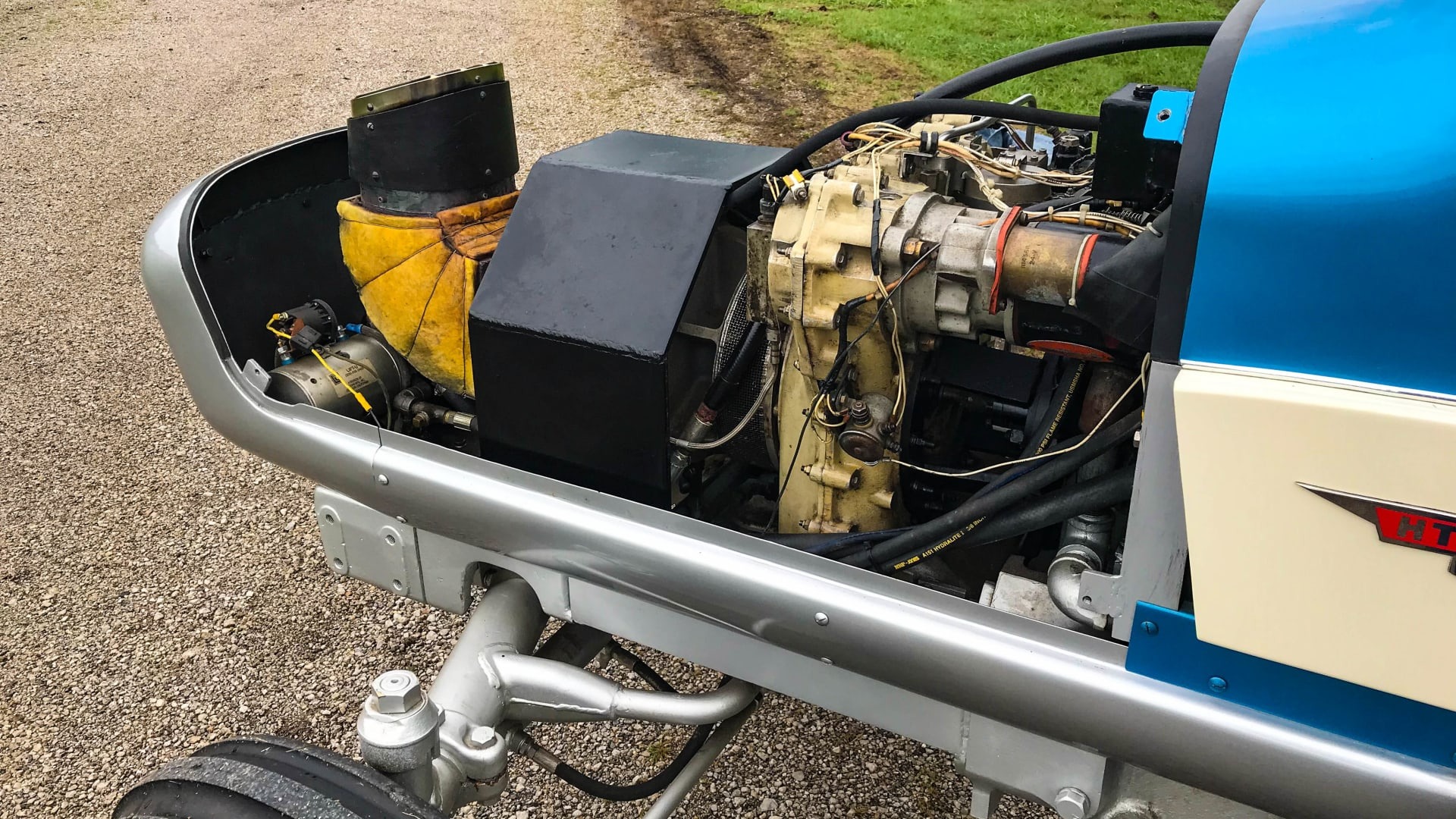
His long-standing passion for steam traction engines notwithstanding, Brian had been interested in gas turbines for more than 30 years. “I always wanted to put one in something,” he says. “Since I’ve also always been interested in farm equipment I thought a tractor would be ideal. I considered others but this – the IH HT-340 – seemed to make the most sense.” Just as International engineers did years before, Brian started with a stock IH 340 tractor. “I used a lot of its components, like the steering, frame, wheels and other parts,” he says. Earlier, he’d acquired an auxiliary power unit (APU) powered by a turbine. “It’s the same thing International used,” he says, “but with 150 hp and 60,000 rpm, mine has more power and is slightly larger.” His turbine was designed as a lightweight power source for jet aircraft. “It was used as a generator to start the plane,” he says. “It’s lightweight, but not very fuel efficient.”
Mecum Auctions
Considerable gear reduction was required before the APU could be connected to the transmission. “That was one of the biggest problems,” Brian says. “The generator is 6,000 rpm but that’s still too fast to run anything with hydraulics. So I had to make a special gearbox to get it down to 2,000 rpm in order to use the hydraulic pump. If it had been over 2,000, the hydraulics would cavitate, causing vapor bubbles to form in the pump.” Hydraulic motors connected to each rear wheel completed the driveline, eliminating the traditional differential and gear arrangements. On the International prototype, hydraulics were used for the brakes as well. “It didn’t work very well,” Brian notes. “If the engine wasn’t running, you had no brakes.” On his 340, he used more traditional brakes, as did International on the 341. The reproduction is faithful to the original as a whole, but Brian made concessions to modern technology. “I took a modern approach with hydraulics, but the outside appearance looks the same as the original,” he says. “You just couldn’t use the same things they did. For example, International used nautical anchor chain winch motors for the wheel motors. I had to use parts that were available now.” Even with that compromise, the project moved slowly. “I couldn’t have done it without the computer and eBay,” he says. “I lost track of the hours I spent looking for parts on eBay.”
Brian made this tractor, which was finished in 2010, after poring over photos and sketches. Reportedly, when the IH-341 was donated to the Smithsonian, documentation didn’t come with it. So, Brian had to take a ton of his own photos, mold his own fiberglass, and custom fabricate much of the tractor himself. The result is incredible, as it looks like a near-perfect replica of the real deal. There’s even video of it running.
In case you’re curious, Brian’s tractor had the same problems that the real HT-340 had. IH never specified fuel consumption for its tractor, but Brian says that his replica consumes a gallon of jet fuel every 5 minutes. Obviously, the replica HT-340 is more of a passion project than a practical tractor. The HT-340 replica made a splash on the Internet in 2019 when it sold for $75,600 at Mecum, and again in 2022 when it sold a second time at Mecum for $154,350.
Mecum Auctions
As for IH’s turbine tractor, it also wasn’t a waste. In 1967, International Harvester launched the 656 Hydro, a production tractor with a hydrostatic drive. IH took the tractor around to farm shows to demonstrate how effective hydrostatic drives were, even when paired with regular piston engines. Today, there’s a good chance you use a hydrostatic drive every time you mow your property.
The International Harvester HT-340 is barely a footnote in gas turbine history. IH went into it knowing that it wasn’t going to make a production tractor, and IH didn’t really advance turbine technology, either. But I’m not sure that really matters. IH could have just made another non-functional concept tractor like its competition, but instead, it went through the work to make a functional gas turbine tractor. Then, they made it look like nothing else on Earth. I love projects like this, because they show what could be possible. I hope the engineers had as much fun making the HT-340 as it looks.
Mercedes is a lifelong fan of all things powered by an engine. When she isn't driving one of her five Smart Fortwos or her 14 other vehicles she could be found in the cockpit of a Cessna 172 or perhaps swimming in any body of water that she could find. She also has a deep love for buses of all kinds. Please send her buses.
mercedes@theautopian.com
Instagram: @mistymotors
Twitter: @Miss_Mercedes30
Facebook.com/neonspinnazz
The first time I saw this in the Smithsonian, years ago, I was standing next to a middle-aged guy from the Midwest who said he saw this at his state fair and it was loud as hell.
That was not the case with the Chrysler Turbine cars, as my Dad learned for himself when one of the 50 Ghia-built cars swung by our family’s Chrysler-Plymouth dealership in 1965, part of a nationwide dealer tour between their year long consumer tests and the crusher for all but a handful.
Member
JJ
1 month ago
I like that in the video he doesn’t appear to be wearing any hearing protection.
M SV
1 month ago
I had a crazy uncle who was a big ih guy then later became obsessed with wheel horse lawn tractors because they were possibly the first commercially available lawn tractor with a hydrostatic drive. At least he was always yelling that. He was always talking about the ih turbine tractor too. When the small trubines used for rc planes started being a thing known to people about 20 years ago or so he was constantly wanting to use one as the power plant in a wheel horse. I have little doubt someone else has crazy as him will take that up especially as they get more powerful and cheaper and hydrostat law tractors become more common and cheap on the secondary market.
Member
Sklooner
1 month ago
could use the heat from the exhaust to kill weeds and sterilize soil
Member
Cerberus
1 month ago
Really cool. I’ve never used a real tractor or had use for one, but the more I see old tractors, the more I appreciate them. Didn’t know there were concept tractors like this.
Hangover Grenade
1 month ago
They should have gone crazy and built a Turbine Combine.
Today, there’s a good chance you use a hydrostatic drive every time you mow your property.
Wish I could get a hydrostatic drive to replace my knees, that would make moving my yard much easier.
Member
Dan G.
1 month ago
It seems that the 1960’s were a golden time to be an engineer, when companies were managed by people who had at least some interest or passion in what they were manufacturing.
Member
Paul B
1 month ago
Mercedes, you should research the turbine powered Corvette. Powered by a PT-6 (technically a ST-6, as it’s not a flight engine).
Anonymous Person
1 month ago
“Today, there’s a good chance you use a hydrostatic drive every time you mow your property.”
Don’t tell my wife but this mower almost makes cutting grass fun. Due to our new security cameras the places I can do donuts have been reduced to obscured view areas in the way back of our property.
I don’t know this guy, but it could be the texture. I like tomatoes when they’re ground up, but large chunks or slices trigger a gag reflex. Same goes for stuff like zucchini and eggplant, though I also don’t like their flavors. Weird thing is, I can eat oysters out of the shell no problem.
Elhigh
1 month ago
The original tractor (if it is indeed the original) is on display at the Smithsonian in DC, in the cream and red livery.
IH wasn’t the only company to throw their ag equipment into the experiment mix. When they were researching other/better/cheaper ways to power heavy equipment where weight and bulk might not be such a problem to cope with, Allis-Chalmers made one of their D-series tractors into a fuel-cell powered electric rig fueled by propane.
Member
James McHenry
1 month ago
1: Thanks to the tractor of a certain former land speed record holder, turbines are still relatively common in Unlimited-Class tractor pulling against ancient aircraft piston engines, industrial diesels, and piles of blown V8s.
Would be interesting to see the replica hitched to a sled like some kind of vintage super stock, though…
2: I can only imagine the consternation International fans had when they initially painted this tractor Blue. “That’s there’s Ford colors!”
At least they corrected that later. White with red was often used by IH for demonstration tractors.
I was going to mention tractor pulls myself. I use muscle power to mow,the lawn but I’m very familiar with hydrostatic drive from skid steer loaders, excavators and the occasional small tractor
Spikedlemon
1 month ago
The environmentalists dilemma: Do you want to scorch the fields with hot exhaust or chemicals?










The first time I saw this in the Smithsonian, years ago, I was standing next to a middle-aged guy from the Midwest who said he saw this at his state fair and it was loud as hell.
That was not the case with the Chrysler Turbine cars, as my Dad learned for himself when one of the 50 Ghia-built cars swung by our family’s Chrysler-Plymouth dealership in 1965, part of a nationwide dealer tour between their year long consumer tests and the crusher for all but a handful.
I like that in the video he doesn’t appear to be wearing any hearing protection.
I had a crazy uncle who was a big ih guy then later became obsessed with wheel horse lawn tractors because they were possibly the first commercially available lawn tractor with a hydrostatic drive. At least he was always yelling that. He was always talking about the ih turbine tractor too. When the small trubines used for rc planes started being a thing known to people about 20 years ago or so he was constantly wanting to use one as the power plant in a wheel horse. I have little doubt someone else has crazy as him will take that up especially as they get more powerful and cheaper and hydrostat law tractors become more common and cheap on the secondary market.
could use the heat from the exhaust to kill weeds and sterilize soil
Really cool. I’ve never used a real tractor or had use for one, but the more I see old tractors, the more I appreciate them. Didn’t know there were concept tractors like this.
They should have gone crazy and built a Turbine Combine.
You’d need 4 turbines. Like a 747.
Wish I could get a hydrostatic drive to replace my knees, that would make moving my yard much easier.
It seems that the 1960’s were a golden time to be an engineer, when companies were managed by people who had at least some interest or passion in what they were manufacturing.
Mercedes, you should research the turbine powered Corvette. Powered by a PT-6 (technically a ST-6, as it’s not a flight engine).
“Today, there’s a good chance you use a hydrostatic drive every time you mow your property.”
Nope.
https://crdms.images.consumerreports.org/prod/products/cr/models/256903-pushmowers-mtd-1000023290.png
Don’t tell my wife but this mower almost makes cutting grass fun. Due to our new security cameras the places I can do donuts have been reduced to obscured view areas in the way back of our property.
https://www.tractordata.com/ltphotos/F004/4198/4198-photo-001.jpg
Staffa hydraulic motors are still being made, by Kawasaki Precision Machinery:
https://www.kpm-usa.com/products/hydraulic-motors/downloads-brochures-datasheets-and-drawings/
The big ones can put out 18,000 ft/lbs of torque. I’ve rebuilt a few of the smaller ones, really cool hunks of iron and steel.
That thing is Gerry Anderson AF. It looks like the tractor Captain Scarlet’s gramps would have back on the farm. Man, 60s design was wild.
Don’t think it would work too well on Moonbase Alpha, though.
What’s really wild is that there is a burgeoning contingent of YouTube’s mad scientists fitting jets and turbines into all manner of applications.
While not typically a fitter, Integza has some really wild jet engines he’s built on his channel.
The algorithm recommended him to me some time ago now. His work is slightly unhinged, and I’m okay with that.
Also, Tomatoes are disgusting.
Yeah… I never understood his anti-affinity towards tomatoes. Every time he says that it hurts my soul a bit.
I don’t know this guy, but it could be the texture. I like tomatoes when they’re ground up, but large chunks or slices trigger a gag reflex. Same goes for stuff like zucchini and eggplant, though I also don’t like their flavors. Weird thing is, I can eat oysters out of the shell no problem.
The original tractor (if it is indeed the original) is on display at the Smithsonian in DC, in the cream and red livery.
IH wasn’t the only company to throw their ag equipment into the experiment mix. When they were researching other/better/cheaper ways to power heavy equipment where weight and bulk might not be such a problem to cope with, Allis-Chalmers made one of their D-series tractors into a fuel-cell powered electric rig fueled by propane.
1: Thanks to the tractor of a certain former land speed record holder, turbines are still relatively common in Unlimited-Class tractor pulling against ancient aircraft piston engines, industrial diesels, and piles of blown V8s.
Would be interesting to see the replica hitched to a sled like some kind of vintage super stock, though…
2: I can only imagine the consternation International fans had when they initially painted this tractor Blue. “That’s there’s Ford colors!”
At least they corrected that later. White with red was often used by IH for demonstration tractors.
I was going to mention tractor pulls myself. I use muscle power to mow,the lawn but I’m very familiar with hydrostatic drive from skid steer loaders, excavators and the occasional small tractor
The environmentalists dilemma: Do you want to scorch the fields with hot exhaust or chemicals?
both!