

The manual transmission is sometimes regarded as godlike in car culture. Enthusiasts who worship at the altar of the manual often believe that all vehicles are made better with a third pedal. Most of the time, I’m inclined to agree. There has yet to be a car that I’ve driven that was made worse with a shift-your-own-adventure transmission. But this cannot be the case for every car that has ever existed. Is there a car that was somehow made worse with a manual transmission?
Admittedly, this question was pretty hard for me to answer because I am a huge fan of manuals. My insane car-buying habits have meant that there were times in which I owned the automatic version and the manual version of the same car at the same time. Being able to compare both transmission options within minutes of each other is shocking.


In one of these cases, I owned a 2012 Volkswagen Jetta SportWagen TDI DSG and a 2010 Volkswagen Jetta SportWagen TDI six-speed manual at the same time. Both cars had the same options, the same engine, and the same interiors. The only difference was in color and gearbox. The 2012 was fine! VW’s DSG is lightning quick, and when it works right, it’s something that works smoothly in the background that you never have to think about.
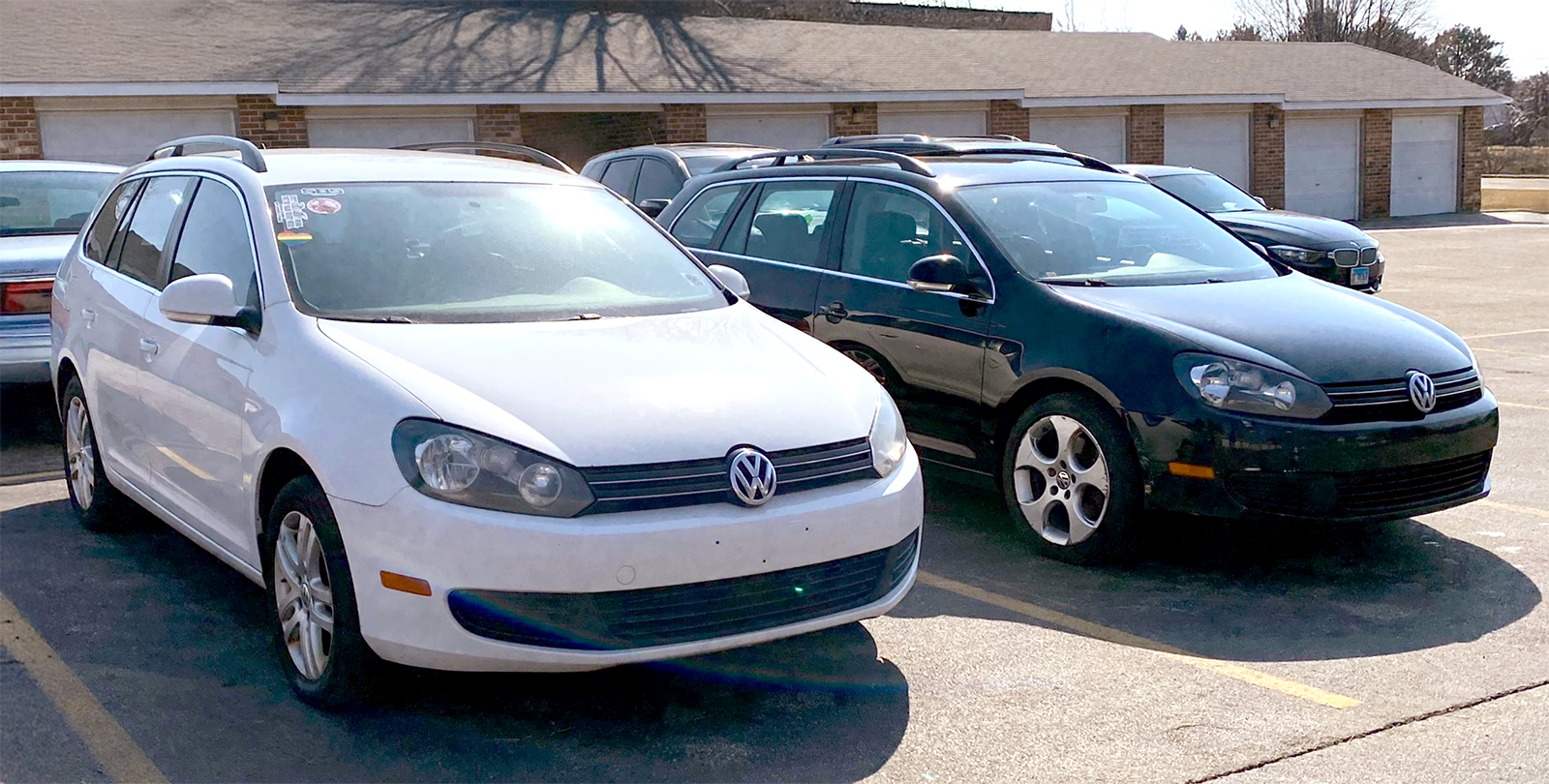
On the other hand, the 2010, despite being pretty much the same car, felt far more engaging to drive just because of the change in transmission. It was awesome. I’ve even once gotten the chance to drive a Smart Fortwo with a real five-speed manual, and it was so good that I bet Smart haters would be complimenting the little city car.
But is that going to be the case with every vehicle?
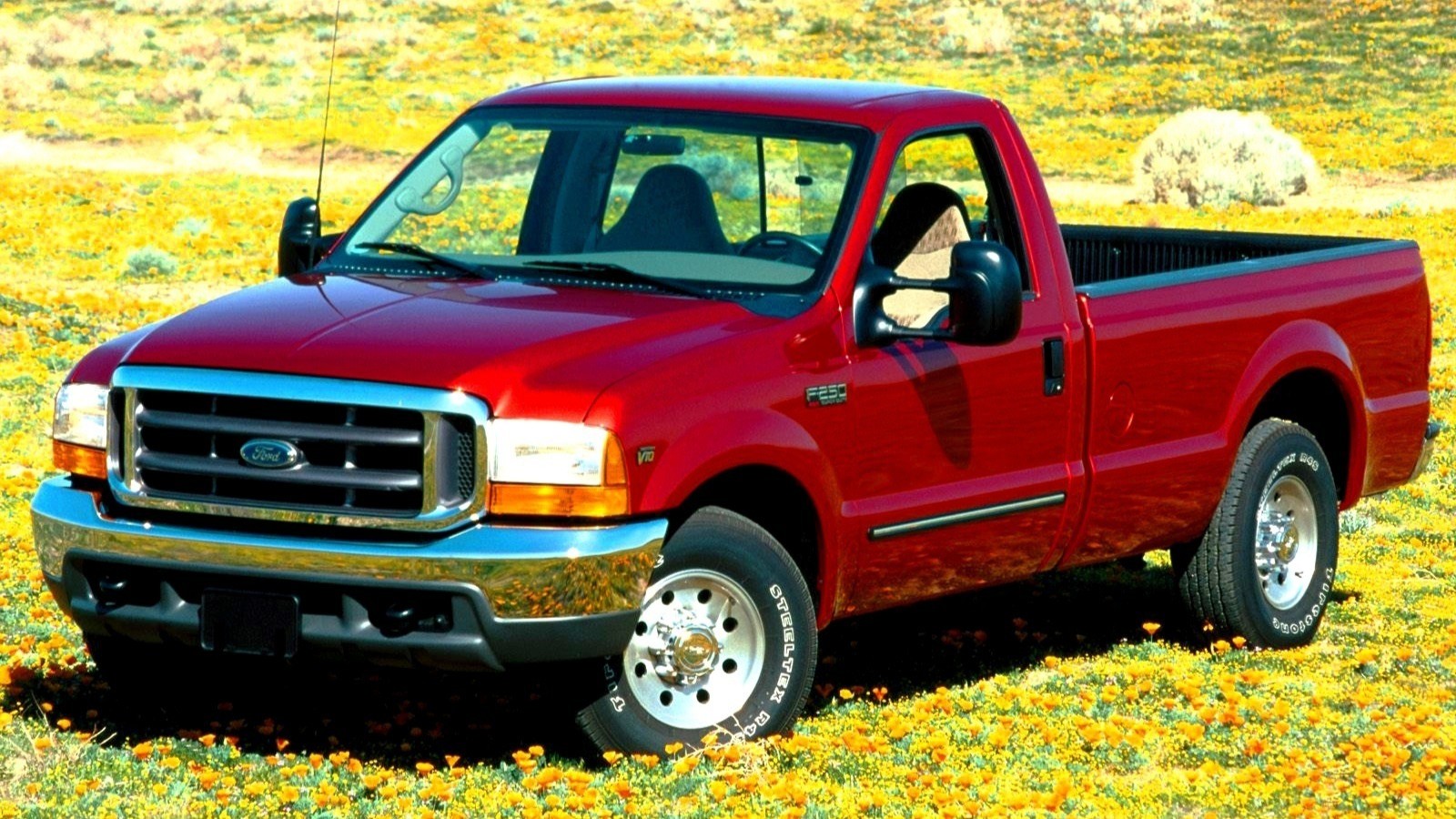
I think if there’s a vehicle that maybe had been made worse with a manual transmission, it could be a heavy-duty pickup truck built in the past two decades or so. I’ve once driven an older manual Super Duty, and while it was so cool to row my own in a heavy work vehicle, the clutch was a heavy unit. I could imagine my left foot getting really tired rowing gears while towing a trailer, or inching the truck along in dense city traffic.
But I also get why old manual diesel trucks are legendary. Automatic truck transmissions often sucked back then, no matter which brand they came from, so a manual was pretty much the best shot at stellar longevity. Also, manuals are still really cool! But were these trucks actually better to drive? The last manual-equipped heavy-duty pickup in America was the Ram, and that hasn’t had a manual since 2018.
If I had to give a wild answer to this question, it would be a diesel-mechanical locomotive with a manual transmission, which is a thing!
Pete piping in real quick. I can’t recall if it was the vanilla-spec Ford Focus or Fiesta that I’m thinking of, but I test-drove both circa 2013, each with a stick as well as the automatics. One if not both of them (definitely the Focus, I think) was done no favors by its manual gearbox. The throws were long and imprecise, and it just didn’t feel good. On top of that, the ratios were wack. I recall a very low (numerically high) first gear, and then a huge jump to second, a minor tooth-change for third, and then a too-tall fourth gear and another short hop to the fuel-economy-optimized fifth gear. Or something like that – but for sure, it was a lot of extra work for no extra fun. The autos, on the other hand, seemed to have reasonable ratios and responded with crisp-enough shifts and hesitation-free downshifts when I matted the pedal. Not thrilling, but not frustrating.
How about you? Is there a car, truck, SUV, or other vehicle that was made worse with a manual transmission?
Top graphic image: Ford


I know this is going to be unpopular, but the Muncie SM465. Growing up, my family had several of these in late 70’s and 80’s GM trucks. Granny Low was not synchronized, so you had to be at a near stop to use it. The only time that you needed to use it when you are pulling something (…or yourself out of a ditch) and needed that initial burst of torque. Second gear was perfectly fine as far as use of range. The falloff between second and third under a full load meant that you had to rev the hell of out of the truck in second, only to have it fall on it’s face in third. I had never heard of a the term that a truck was “long-geared” until my dad explained the term to me when we had a 1-ton, dually, Crew Cab, 230 hp 454 with the SM465. Fourth gear was low geared as well, so if you didn’t have need the go anywhere in a hurry, you’d be fine. But if you needed to go, you’d be cranking out the hits with the 454 at 3500 rpm at 65 mph (presumably at 4 miles per gallon).
Was it the perfect transmission to learn how to drive a manual? Absolutely, they were indestructible.
I know, I know…. look at the options back in the day for an automatic: You had the 3-speed Turbo 400 through the late 80’s, or the completely worthless 700R4 that would grenade itself after 30,000 miles back in the early 1990’s.
I get it. I owned a square body with the 4 spd Muncie and I understood it was going to be agricultural feeling but it was also far from an enjoyable experience. It always felt like a workout, LOL
I toyed with using a SM465 in my 78 C10. Then I remembered what driving one was like.
So I used a T-10 instead.. Which isn’t bad but I can’t really hammer on it. (Just a placeholder for a TKX swap next winter.)
Granny gear 1st was not super useful for pulling unless you were staying in 1st, as getting it in or out of 1st was near impossible unless stopped. But it was excellent for off-roading. You could turn in the hubs but leave the transfer case in 2HI on moderate roads and then shift into 1st if you hit a rough spot. Then if it got worse you could just shift into 4HI or 4LO. Granny 1st with the transfer case in 4LO had mountain goat capability in extra rough spots. Before I was old enough to reach the pedals, my father would also put the truck in granny gear and get rolling, jump out and have me steer while he loaded hay bales. The sound of my childhood was gear whine from 4 speed manual 4X4 GM trucks..
When you are in Granny Low in 4LO Lock, you know that “you’ve done messed up!” (Can confirm!)
My dad would do the same thing, but with a tractor. He would put it in low gear and have one of us kids steer it.
We’re survivors! Many farm kids have died in similar circumstances.
Having owned a Genesis Coupe for 8 years, their manual box is dogshit. I loved that car, but the box was a notchy, syncro eating mess. The 6spd and 8spd autos were objectively better.
That being said, if I got another I’d still get a stick.
I concur, Genesis’ manuals are underwhelming. Drove one in a G70 a few weeks ago and it was deeply disappointing, especially for a wannabe sports sedan.
Pete chimes in to complain about the 2013-ish Focus manuals being awful but if you chose it instead of the Powershit auto, it’s probably still working just fine.
Came here for this comment. Was not disappointed.
both the Fiesta and Focus manuals had odd gear ratios but were still enjoyable. I owned both transmissions and the powershift was way worse because you never knew how it would behave from a stop light or stop and go driving.
“A GM engine will run lousy longer than most engines will run at all” :: “A 2013 Focus with a manual will shift lousy longer than a 2013 Focus with an automatic will shift at all.”
Chevy Cruze (at least the 2nd gen, never drove a first) Had the only manual I’ve ever driven that made me wish it was an automatic. Wet noodle of a shifter, clutch pedal with no feel, anemic gearing… just awful.
I’ve heard that the first gens are no better from a few different people as well, my 2014 has the 6 speed auto and it’s meh at best but I’ll take it for daily commuting over some clunky no feel manual any day.
Probably the worst I’ve ever gotten to play with was a Suzuki alto, it was the most rubbery thing that you had no idea what gear you were in with a clutch that was helplessly light and vague. Otherwise the car was kind of fun to zip about in
Brother had a 1974 Chevy truck with a column shifted manual. It was beyond it’s prime when he bought it in high school and the linkage was worn out. Periodically, coming up to a stoplight, you would try to shift from third to first and the linkage would hang up. SOP was shut down truck, jump out, open hood, reach in the engine bay and free the linkage, close hood, restart truck, hopefully before the light turned green.
My FIL still has his ’67 F100 and he had no problem driving it but the worn out collar on the column got me every time and I had much the same issue as your brother. Eventually someone started reproducing them and I bought him one for Christmas and we installed it. I could drive it fine afterwards but it screwed him up for a while while he relearned how it was supposed to be
Postwar Chryslers, because why deal with a 3 speed column shift manual and clutching, when you can step up to the 4 speed M6 semiautomatic and have the best of both worlds? Manual operation when/if you want it, but an automatic-style driving experience in heavy stop and go city driving, and vastly more reliable than an early Hydramatic
One example I can think of is 1990s F-150s, when I was shopping around I found they could be had with automatic or a Mazda 5-speed manual. I thought the manual would be cool, except the tow rating is MUCH less than the automatic. A 1995 F-150 4×4 with 5.0 V8, 3.35 rear, and the automatic is rated to tow 6,800 pounds. The same truck with manual is rated for only 3,200 pounds!
Detailed chart on this page: https://www.f150forum.com/f10/1995-f150-tow-rating-306986/#&gid=1&pid=1
I honestly don’t know what’s worse: losing half the tow rating from the automatic to row your own gears or buying a newer 4th generation Ram 1500 with the 3.6/8 speed with 3.21 rear gears and being rated at 4,000-4,500 pounds only.
I discovered that one day and I was blown away. A 3.21 5.7 easily tows 7,000-ish pounds, and the 3.55 3.6 can do like 6,700. Losing 2,000 over a not-that-drastic higher rear end to me is just wild.
I owned that spec and never towed with it but it hauled up to 1500 lbs just fine. 8th gear was only for flat roads and unloaded. If you ever dare to drive over the slightest of inclines it would start downshifting, then going back and forth between 5th and 8th.
What was even funnier is my truck had the towing package with the HD mirrors, extra transmission cooler and in-dash trailer brake. I didn’t spec it this way (used truck) but why bother offering these on a truck that could barely tow anything?
Can’t be too safe, I guess!
I wonder how many were built like that though. Most 3.6’s I’ve seen built were 3.55’s, and those were pretty decent.
The Mazda 5-speed was a mistake in those 90’s F150s, but they built plenty of them… And the 300 I-6 would throw its torque into them and happily destroy them.
Fortunately, you could still get Borg-Warner transmissions in them, and they were a little easier to find in farm county. The best was also a “5-speed” — which was really a 3-speed plus overdrive and a granny low on the bottom. You drove them as a 3-speed in 2-3-4 most of the time.
This is an example of why I think slavish devotion to “tow ratings” is largely stupid. Those ratings are based on a worst-case scenario that simply will NEVER apply to anything I do with a truck. Here in flatter than a pancake SW FL (and my own exceptionally laid back driving style while towing), the manual would do just fine. Maybe the clutch and transmission wouldn’t last as long if I towed with it ALL the time, but cooling and brakes (and some mechanical sympathy from the driver) are far more important.
Have to agree that pretty much every truck is worse with a manual.
I get the reliability argument vs old autos, only speaking of the driving experience here. And most if not all automatics made this century are decent if not good.
When I’m towing a trailer, that is my focus. The less other stuff I need to do, the better. Any automatic made in the last 20 years will give you at least some control over gears for towing/hauling/engine braking; there’s no need for a heavy clutch pedal.
To me, the purpose of a manual is driving engagement and enjoyment. I’ll spec one in fun cars for as long as I can. But a truck isn’t built for that kind of fun driving, and while I do enjoy being behind the wheel, it’s a different kind of fun, one that isn’t enhanced by a 3rd pedal.
My #1 thing I miss from working on big rigs is driving stick. Buses pay well, but autos are boring.
Then again, I learned to drive stick on an ’01 Volvo daycab with a 10spd, so I may be biased.
LOL – you just need to find some older busses to drive. The single most challenging thing to drive I ever have was an old Eagle bus with a 10spd manual with a reversed shift pattern. I learned on an early 70s 4spd MCI. Also got to drive a late 40s GM Silversides with a column shifter once!
We have silversides and beetlebacks in storage, but they haven’t been on the road in 20 years.
I didn’t like my full size truck with a manual but midsized and compact trucks were IMO better than the autos, specially if being base spec with a puny 4 cyl.
My dad’s manual 4cyl ranger is certainly more fun to drive than our auto 6cyl. But it’s probably “fun” because I just drive it a couple times a year to the store and don’t need to commute in it. The auto would probably be slower but maybe feel less laborious.
But if we didn’t get ours so my wife could drive it sometimes, I’d probably have bought my dad’s….so I’m not sure what my point was.
The 2004 and older Toyota Tacoma 5 speed manuals were shifting perfection, like a well oiled bolt action rifle. The ratios were perfectly matched on both the 4 cylinder and the 6. However, the 2005-2015 Tacoma 6 speed manuals were horrible. 1st was too tall, 6th was too short and changing gears felt squishy. The wet noodle leaf springs also caused a lot of axle wrap, making the whole affair difficult to drive smoothly. But the 2005-2015 Nissan Frontier and Xterra were even worse. Their shifters felt like a flexible wooden stick in a coffee can full of rubber bands.
I drove a 1990 Toyota Pickup 2WD 5 speed for 34 years. The appeal of the manual was they were cheaper to buy new. Until the automatics became more fuel efficient the manual was the fuel mileage leader. Most importantly, you could get a manual to scoot in way an automatic wouldn’t. This was true till not that long ago. My first manual was a 1974 with Civic 50 something horsepower. You couldn’t pull onto the highway without a manual.
Any underpowered 4 cylinder vehicle is torturous with an auto but fun with a manual.
Ha, I’d flippantly answer the headline question with “none” but there’s indeed something to be said for back-to-back comparisons like Mercedes’s experiences with her fleet. So I’ll just sit this one out.
However, it’s interesting to note that at this time of posting this comment the majority of the answers in the comments seems to be Fords. (Caveat, the stats may change over time as more comments are posted with different answers.)
Which then suggests that it’s perhaps best to just default to automatic when considering purchasing a Ford…
(FWIW, *all* of the worst vehicles I’ve ever had the misfortune to drive, with just two exceptions, were Fords, some of which were manual. The only Ford I’ve ever come close to liking driving was a 1972 F350 dually which had a manual transmission and was surprisingly decent to drive. Anyway, ha, yeah, no love lost here for FoMoCo products…)
I had the opportunity to drive a 2014 Mustang GT500 Cobra GT whatever…
Cable operated 6 speed. Crisp, but it was also new. The issue? The clutch. Dual plate dry clutch behind the 653HP torque monster. In town, it was the worst manual I’ve ever driven. Flat out, pedal to the plastic, it was a f ing hoot! Just don’t shift it!
SO why was it worse?
I know I will get shunned for suggesting this, but the Manual ZJ David often totes as being awesome, I recall as being miserable. I loved rowing it when I drove it for the summer I had availability to it. But, I recall it not being the greatest experience. Maybe it was because it was SLOW, and I expected more from the manual? I drove it in the sand on the beach, and the manual didn’t really add to the experience. So, my vote is:
ZJ Jeep.
Sorry, David.
THe only advantage of manual in a Jeep is an extra gear for efficiency or getting full power from anemic engine into heavy jeep that is not aerodynamic at all (not anymore on both counts since they started using 8 speed automatics)
The gears are in different counties and if you keep your hand near the shifter, it will smack your fingers on knuckles so hard over bumps
I am a staunch defender of the manual transmission. I’ve done multiple manual swaps and even prefer driving manual when towing a trailer with a big truck. I can’t say I have ever wished I had the auto version of vehicle over the manual.
One large caveat. I despise column shifted manuals. Those I would probably prefer an auto trans, but really, I would most prefer to just swap them to a floor shift manual and make body and trim accommodations for that.
The only Focus I ever drove with the Powershift auto would buck at low speeds like somebody bad at driving stick. It was terrible.
1998 – 2004 BMW E39 540i. Car and Driver magazine said the clutch action was so bad that they recommended buying the automatic instead, and they wore the clutch out before the end of their long term test.
I bought one without a test drive, and I could NOT shift it smoothly, and I’m pretty good with a manual transmission. Turns out, there is a “Clutch Delay Valve” inline with the hydraulic line that prevents quick actions of the release arm. It’s just a fitting with a tiny hole in it. This is to prevent the driver from popping the clutch and damaging driveline components, but the result is that the clutch is never exactly where you think it is.
When I found out about this, I immediately put the car on jacks and removed the thing. Just a wrench and a little bend on the line, and it was like a totally different car.
I hear that all manual BMWs have this.
NO WAY.
I had a 2001 E46 5-speed and I felt like it never shifted as smoothly as it should. I’d been driving manual cars continuously for 30 years at this point. Yup, it has that valve.
GTI’s do the same. I hated the manual in mine compared to my previous Mustangs. Taking it out really helped clutch response.
It’s a stupid idea as well. All it does to “protect” the transmission is significantly increase wear on the clutch.
I have an manual 92 D250 cummins and the clutch on that is much lighter compared to the clutch in my t56 magnum swapped 89 firebird and a whole hell of a lot lighter then my dad’s 77 firebird. So it is weird to me to hear older super duty’s have a heavier clutch never driven one so it would be cool to see the difference from them vs my truck.
It all depends on the design of the hydraulic assist versus the size of the clutch and how stiff the springs are. Better boost makes them lighter, but it can also make them more vague-feeling. And sometimes there are just practical limits due to packaging, depending on how the clutch master and slave cylinders have to be stuffed in and under the truck. Then if the clutch is ever upgraded from stock, it will probably seem stiffer to operate.
This will make some people upset, but in the case of the JL Wranglers, the manual has enough reliability issues that I’d argue its the worse transmission over the auto, at least for ownership and longevity.
I chose to have a automatic JKU over and I would not go back both daily daily driving in traffic and off roading is so much easier now I am far north of 50 years old. I would still want a little manual sports car or hot hatch.
Even ignoring longevity and pretending the manual was bulletproof, the JL is the worst manual I’ve driven since the early 90s. I found it really sloppy and awkward, and the ring for reverse is way too light easy to grab when sitting in traffic trying to go into first.
If you’re coming from a 1972 pickup, it probably seems pretty nice, though!
My sister bought her first Wrangler in 2020 and went ducking crazy for it. The rest of the family and I have/had manuals and love them. We each drove it and came back disgusted. Oh, and she went through 2 clutches in 20K miles. (no it wasn’t because she was a newbie, she’d had several other manuals)
Aside from the durability issues, the JL Wrangler has a cable shifter that feels as flimsy and imprecise as a child’s toy. And there’s no excuse for it, Honda uses cable shifters extensively and made some of the best shifting manuals in the world.
I owned a ’12 Focus (factory ordered just like I wanted!) with a five-speed. Generally speaking I really liked the car, but the comments about the gearing being out of whack is spot on – I felt like accelerating on an on-ramp was difficult because of that spacing.
I also rented an early Fiesta with the automatic (or whatever Ford was calling their autoboxes at the time) and had one of the most enjoyable drives I’ve ever had on CA 168 between Big Pine California and US 95 in Nevada. That ‘box was always in the right gear at just the right moment, swooping up and down in arroyos in the twilight of a beautiful day.
I mean, I’d argue used for commuting. I love our 5-spd Vibe*, but the fact is: trudging through heavy traffic and minding the clutch/stick is just annoying. Plus, the ratios are a bit absurd. 1st is basically unnecessary, as you can go off the line in 2nd no problem.
*mostly because it succeeded wildly at our goal of “get good car for under $5k” back in 2019
25 year old Parsko didn’t mind bumper-to-bumper traffic with a manual, but 47 year old Parsko is well over it in that application. SOOOO over it.
Any car you’re driving on the 405 is better with an automatic.
Sadly this. Tried commuting in LA traffic with my m6 GTI and absolutely hated life 🙁
Delivery vans and work trucks. Every 70s and 80s full sized van with manual column shifter sucked compared to an automatic.
All I can think of is when they do an EV conversion on an old car like a VW Beetle or Thing and plug the electric motor right into the transaxle. There’s still a clutch and you can shift gears, but why would you?
For conversions like this, it’s entirely due to simplicity, adapting a motor output to a transmission input is trivial, compared to swapping it in as a drive unit like in production EVs which has a gear reduction built in. To do a swap like that requires much more engineering to figure out mounting and packaging, custom half-shafts, and so much more. Slapping a comparatively small motor where a big engine used to be is easy, if not efficient.
Its also quite common to simply leave the transmission in the best gear for the motor. I’ve seen people leave the transmission shiftable just in case, but I’ve also seen people actually cut off the shift lever and leave it hidden under the vehicle because it was unnecessary. But yes, overall, you do this because its far easier than any other option to make one fit.
According to The Roman of Regular Car Reviews, the Chevy Cruz. 19 minutes and 22 seconds of hate.
https://youtu.be/nmAPAuPR3Fo?si=fkIGLSDGJSR4duZO
I decided to look into a new Crosstrek in early 2019. I needed something for my 66# dog and assorted costume bins (Husky 50gal totes).
I had 2-3 manual fun cars at that point, the Crosstrek was going to be an appliance. I didn’t care if it was manual or auto, if it fit my other needs (white for Empire decorations, heated seats, very few options to save $).
I test drove an auto that had 9 miles and fit every one of my needs. Figured if I didn’t hate it I’m in. 68K miles later it’s still fine. I’ve been told by others with a manual you spend too much time downshifting on inclines and freeways.
I am sorry but if the option besides a manual is a cvt then no it’s not better.
Two really stand out to me, an early 90’s Ranger and an 86 Tercel. Both cars had a shifter that was a foot long, and you had no idea when you push up if you’re getting into 1st, 3rd, or 5th gear as the play in each one was about 6″. About 5 years ago I drove a Ranger for a week of the same generation that was meticulously maintained, had some aftermarket short shifter and was as good as it can get, and I’d give it a 3/10 as opposed to the 0.2 / 10 like the ranger work truck I had to drive 20 years earlier.
I have a 90 Celica GTS right now & the shifter reminds me of my ex’s old 90s Ranger. Especially compared to the short shifters I’ve had recently.
Why aren’t you at your post?
I understood that reference. 😛
I’m obviously goofing off on the internet. Duh.
“Shooting the breeze, but I keep missing.”
I drove a friend’s 4th-gen GT-S once and came away severely underwhelmed by both the shifter and throttle feel. Far better performance than the 2nd-gen Celica GT that had been in my family, but the shifter and the throttle linkage felt like they were out of a much cheaper car, compared to the pleasant and accurate feel on the 2nd-gen I was familiar with.
I had a 1980 F-150 with a 3-speed (plus a useless OD gear). The clutch weighed just shy of a ton and had such long throws I needed gorilla arms to shift. It was pure misery.
Dang, and here I was about to make the same comment. The 80s “bullnose” F-series with the 3-speed, and maybe even the 4-speed with the granny 1st gear (effectively making it a 3-speed) were not great to drive. I’ve driven several (my dad had a few in a row) and not only was the clutch insanely heavy, but feeling for the engagement point was like darts in the dark. I always loved going for 4th with a passenger because they always flinched thinking I was about to hit them. Granted, the F-series was no revelation with the automatics, but unless you got one of the normal 4-speeds, the C6 or AOD (but maybe not the C4) was the better choice.
They got a little nicer when Ford finally put a hydraulic clutch in them. The fully manual clutch was plagued by frame flex throwing the linkage into a different state as the torque came on — which was pretty early on if you had the I-6 under the hood. The “bite” point absolutely would move around depending on flex, because the pedal was anchored in the cab, and the other end was anchored on the transmission — but the angle between the two changed as the frame flexed every time the engine torque was applied.