

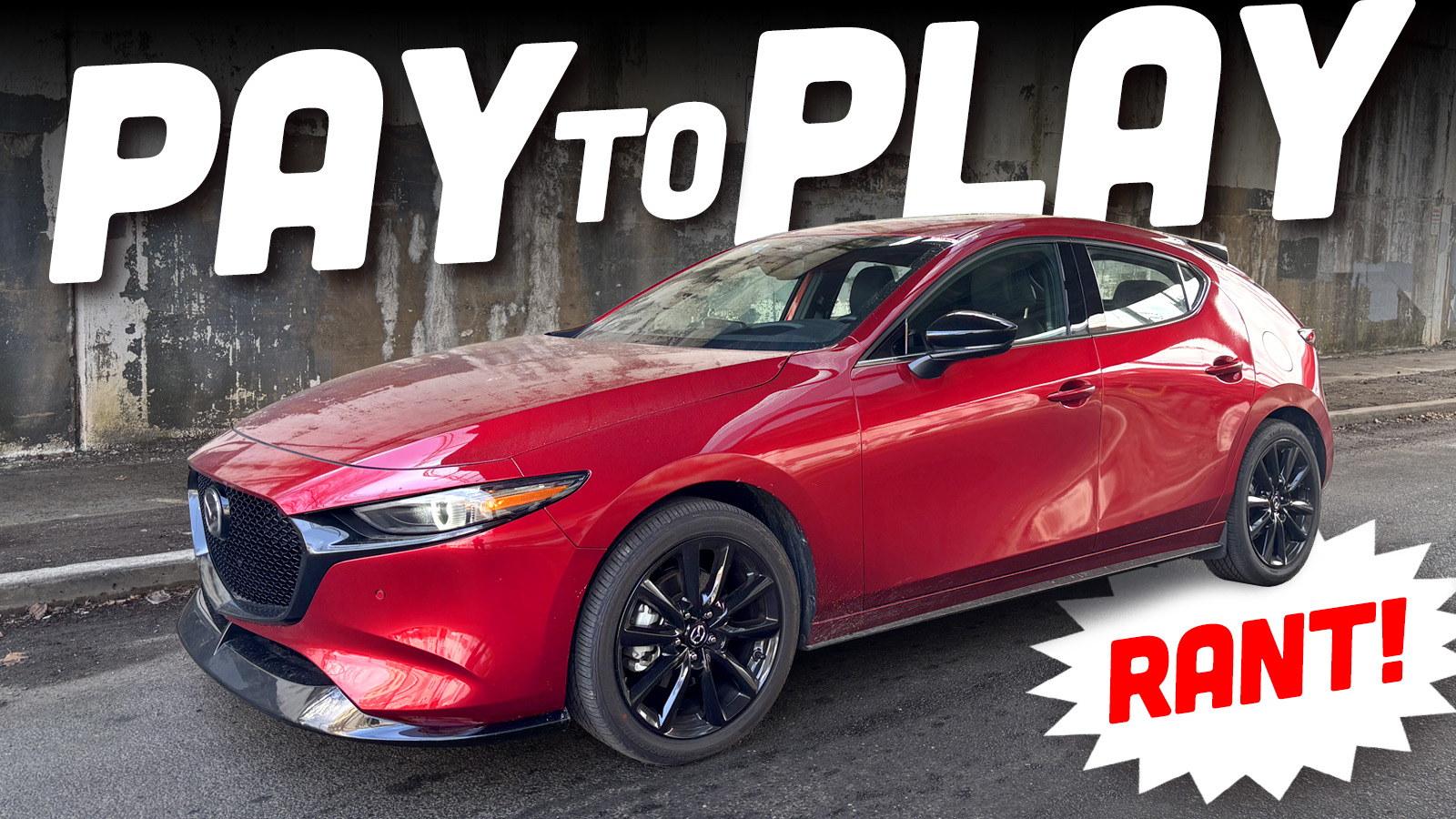
The cars I love are not for everyone. I don’t just mean obscure French wagons or micro Japanese off-roaders that fill my stray thoughts. I mean the kinds of sports cars and hatchbacks that were once common on America’s roads. It’s awkward to admit, but even the sportiest hatchbacks of yore were economy cars underneath and were therefore built on affordable bones. That doesn’t work anymore.
I’ve been putting off writing up a review of the 2025 Mazda3 2.5T Premium Plus AWD because I liked the car. It would be much easier if I didn’t. The problem is the price. Six months ago, when I tested it, the Mazda was $38,865. While that’s lower than the $50,000 average transaction price, it’s still a lot for a compact hatchback.


It being built in Japan creates more problems, which I’ll get into.
My first instinct was to complain. To point out that in 2005, a nice Mazda3 hatch cost around $20,130 on the high end, which is roughly $34,000 with inflation. This car is nicer, sure, and more advanced in many ways. Perhaps a closer analog would be the Mazdaspeed3, which cost around $23,000 in 2007 when it debuted.

This site is known for vigorously complaining about the lack of affordability in new cars, and I’ve written at length about it. That’s all still valid. New cars are too expensive, and while some of it can be attributed to things people want (safety, connectivity, performance, reliability), the pursuit of higher margins and over-featuring plays a role as well.
I’m of a different mind with this car. If you buy this specific vehicle, you are not just paying for the car. Your dollars are not solely going to the engineering, the marketing, the building, and the shipping. You are paying for this car to exist. You are paying for there to be a sufficient margin to offset the loss in volume.
Rather than review the car, I’m going to try and justify its existence.
Let’s Do A Little Math

The math can get complex, so I’ll simplify it using some very general numbers. In 2005, Mazda sold 97,388 Mazda3s in total (according to GoodCarBadCar.net). In 2024, Mazda sold 38,877. For the sake of math, I’ll assume a 5% margin; if the average price between all models was $17,500, those cars yielded a profit of about $85 million. Not bad.
Let’s look at today. If Mazda wanted to make $85 million in profit (and not the inflation-adjusted amount), it would need to make $2,200 a car, basically. The new car is between $25k-38k, so if we skew towards a lower average of $30k, that’s a 7.3% margin.
Other than the sales volume, these numbers are just rough estimates to demonstrate a point. I don’t know the specific margin Mazda made on these cars or how much discounting occurred, et cetera. But for the sake of hypothetical math, if Mazda wanted to make the same inflation-adjusted amount of money (so, roughly $163 million), then the company would need to make $4,193 per car, or a 14% margin on average.
In reality, Mazda is historically a much lower margin automaker, meaning that 14% is a stretch. Back in 2005, that number was maybe closer to 3%. My point is that as these cars sell in lower numbers, either they have to get cheaper to build or, to some degree, nicer and more expensive.
A good example is the Nissan Sentra. This is a cheap sedan meant to sell in volume. While there are nicer trims, Nissan has no real issue with positioning the Sentra as a good enough car at a good enough price. Yes, Mazda has a lower trim option (a FWD S sedan is about $26,000), but that’s not the one you want.
The hatch is the car to have, either in FWD spec with the manual (starting around $33,000) or loaded to the hilt in turbo premium trim.
What You Get For Your $38,000

Above is the window sticker for this car, just to give you a sense of all the stuff that’s in it. It’s a lot!
When spec’d above, the starting price is $36,950, because that comes with almost everything. The good power seats, the 227-horsepower turbo engine with 310 lb-ft of torque, the 18-inch black wheels, AWD, the nice leather-trimmed bits, and the adaptive lighting.
The only true option here is the $595 for the Soul Red Crystal paint. As discussed, there’s almost no better red on the planet, so it’s probably worthwhile. This is one of the best-looking cars being sold today. It feels great to drive, and it doesn’t have a lot of specific cars to compare to, as it exists in an interesting space in the market.

I would take one of these over a BMW X1 or Mercedes GLA, if you want something on the smaller end that’s luxurious and AWD. Those cars are both $43,000+ cars. If you don’t care about spinning all four wheels, a Golf GTI is $33,000 and has some advantages. A fairer comparison to that vehicle is the similarly-priced manual Mazda3.
There’s clearly still a market for these cars, as tens of thousands of people are lining up for one every year. The car isn’t the default choice, though, as that’s probably the Mazda CX-50 or Mazda CX-5. The Mazda3 in hatchback bodystyle is something you have to want, and if you want it, you’ll have to pay for it. If you want value, the value car for Mazda is now a crossover.
An interesting alternative will come in the form of the Kia K4 Hatch, which won’t be as nice or as powerful, but has the aesthetic down. I’d also entertain an argument that the Prius Prime XSE is in the conversation.
You Can Play This Game With All Sorts Of Cars
To some extent, the fun cars have always come with a bit of a price premium. Even in the late 1970s, when Camaro sales were at their peak, the muscle car was being outsold by the mediocre Malibu (which could be had as a coupe, wagon, or sedan). The volumes used to be much higher, though, and with smaller volumes must come a higher price.
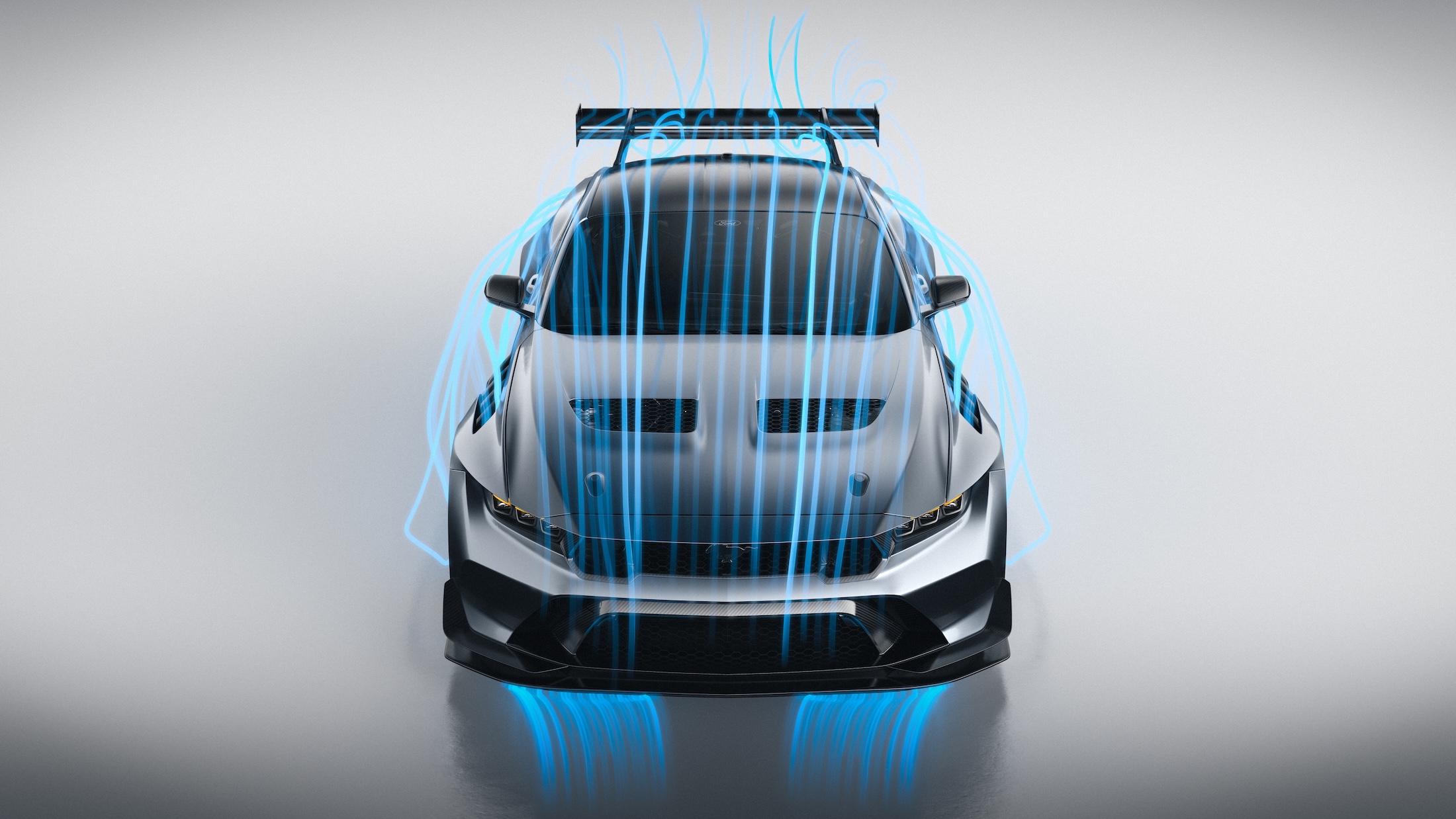
It’s easier to justify this price, perhaps, when it’s a car like the Mustang GTD, where you can see all the work that went into making one specific car. It gets a little harder with something like a Volkswagen Golf R, which costs almost $50,000, or the price of a nicely-equipped Ford Mustang GT. When you compare it to regular cars, the number is even harder to comprehend. For the price of a Golf R, you can have a Woodland Edition Sienna and haul all of your friends.
The same goes for the Corolla GR or Subaru WRX, or just about any car you think is fun. Now that the base version of these cars is no longer the most popular vehicle in any specific lineup, the costs are going to have to go up to keep bringing them to market.
It’s not great. It’s not my preferred outcome. I wish more people were buying hatchbacks than crossovers because that’s what I like.
So, Is It Worth It?

Rather than complain about the high prices of enthusiast cars, I think the better question is: Is it worth the money? Do I get, as Matt Farah might ask, a $38,000 driving experience out of this car?
I’d say the answer is “yes” on this specific car. On aesthetics alone, there are few cars in any price range that can touch it. The rear seat is usable. Dynamically, it’s a modern Mazda, so it is incredibly composed even if you try to drive it like a wang. With the turbo motor and AWD, it leaps to 60 mph in under 6 seconds and keeps pulling until you’re already above the speed limit.
There’s a caveat, though. I drove this car, and then I drove my friend’s Mazda3. He’s a professional car designer and loves the look of the hatchback. Like any decent fellow, he wanted a stick, so he had to opt for the FWD non-turbo. This is a shortcoming in the lineup. If you’re already making me pay a high price for a car, I’d hope to be able to get it in the best spec.
At around $33,000, the non-turbo manual hatch is probably the best enthusiast version of this car, though even that feels like a lot of money to me. I guess this is me talking myself out of the premise of this whole post. I want these cars to exist, and I’m willing to pay for them. At the same time, I struggle with the notion of actually doing so.
This is the challenge of modern car enthusiasm, and I think it explains why, for instance, this 20-year-old Volvo wagon is already being bid up to $19,000 on Cars & Bids. Fewer and fewer of these cars will exist, so the options are to get the nice new version with a warranty now or pay out-the-nose for something older and, probably, less reliable.


Last rented a Mazda6 in 2018 or so? I still had my Acura TSX at that time, the Maxda was more than comparable to the Acura in the few days I had it.
I am a big fan of the Mazda3 hatchback and convinced a few people to buy them, I had a protoge5 manual for years that was a GREAT car, but I wish that Mazda would realize the only people buying manuals are enthusiasts and we generally want the big engine. I also wish they would bring back the 6 wagon (esp if the new 6 is rwd!!), but that will never happen.
My only other gripe with Mazda is that their interiors look way better than they are, they are pretty comfortable too as long as you don’t mind something cocoon-like but they really lack sound deadening. I had a 3 as a rental last year, with the red “leather” interior, and it was INCREDIBLE… until I got on the freeway. On concrete I think it was almost as loud as my Boxster with the top up.
2017 Mazda 6 GT, can confirm. Prior to purchase, this was one of the notable short comings on the Mazda forums, but everyone swore that replacing the Dunlop OEM tires would quiet it down considerably. It did not.
My 1st gen 3 was like that. When I replaced it with a ’12 Focus (same platform), the Ford felt like a low end luxury car in comparison. Not just noise, but build quality(!) and feeling of solidity—I swear Mazda attached the front subframe with bushings made of used hospital gloves. It also didn’t rust like the Mazda, but they’ve supposedly fixed that since then.
I had a base model ’04 Mazda3 (the Mazda3i).
It was actually a pretty fun little car, even without the sport trim. Never really had any mechanical issues with it, and maintenance was a snap.
The best performance mods I did on it were light wheels and sticky tires. I upgraded the stereo headunit to the 6 disc changer that someone had pulled from their Mazda3 upmarket version (and that I picked up for like $50 and swapped in 10 minutes).
I didn’t notice major shaking/rattling issues, but it did have a LOT of road noise.
It didn’t really rattle, it was the way it felt like the whole front subframe would move when hitting a bump. I’ve never experienced that in any other car, but the dealer claimed that was normal, I couldn’t find anything wrong myself, and nothing ever became a problem. It was pretty reliable, though it ate 3 rear brakes for 1 set of fronts (I think they were ceramic front/organic rear, plus the rear wheels would collect brake dust, but not the front) and replacing the O2 was an ordeal because Mazda only officially thought had 2 different setups (CA and federal) when they actually had 3*, with me having the odd one. I ended up having to pull the sensor and order from the manufacturer by the stamped part number after both the dealer and Mazda NA were useless. The major issue was rust. After 5 years, I had to trade it in while the rot was still largely hidden under the paint.
*IIRC, CA had 3 O2s with the primary being a wide band. Fed had 2 O2s, both narrow. I had 2 O2s, but the primary—the bad one—was a wide band. I think it was because MA adopted CA standards, though I don’t know why it only had 2 sensors.
That sensor conundrum sounds frustrating.
I never really experienced rust (on any car, not just this one). One of the perks of living in central TX (Hell, maybe the only perk at this point).
The car was drivable and the job was easy, so it wasn’t a huge pain, but the confusion was not what I expected from a relatively large modern company.
Rust was really common for Mazdas anywhere that rust enjoys living. They seemed to be about 20 years behind On protection. The 6s were also terrible and the Proteges before them were even worse (which sucks because I really liked the wagons and the Mazdaspeed Protege would have been a great used car otherwise). Supposedly, they fixed that, but I see suspiciously few 3rd gen 3s, hardly any gen 2s, and gen 1s have been fairly rare for a while. That’s just an anecdote and it’s not like I particularly look for them, so it might not mean anything, but I’m still a bit wary as I’ve lost/was denied too many cars before that I really liked to rust. I’ll rebuild engines all day, but dealing with rust sucks and it feels like you’re just kicking the can down the road rather than accomplishing something satisfying.
That seems to be a long standing problem with Mazdas. They really drone on the freeways. I remember renting a Mazda6 and a Protege at different times, sometime in the mid -late 2000’s and both those cars droned something fierce on the freeway.
It’s been quite a few years since I’ve driven any modern Mazda, which is something I hope to rectify soon. I still watch tons of reviews, and despite the consensus here (noisy) I don’t recall hearing too much about that. Their newest crossovers don’t really interest me that much, but I bet there are still a few CX-9s on used lots and I think I might want one, so I better get testing while there are some left (and the 2017-2024 CX-5 too, but there are lots of those).
I’m on my second Miata and I expect it to be loud on the freeway (it is) of course. The older I get, the more I appreciate some comfort, and getting in and out of the Miata is a bit of an effort for the effed-up discs in my spine. 🙁 I hate to admit it, but I haven’t had it out of the garage in three months. 🙁 As a daily, I’ve opted to drive my Volvo 240 wagon, which would be more comfortable (for me) if it sat two inches higher than it does, but it’s still much easier to enter/exit than a NA Miata.
In terms of cons, modern Mazdas:
Are a bit cramped on the inside.
Are a bit loud on the freeway.
Old ones (from a decade or two ago) had a tendency to rust where the roads are salted.
But (again, gross generalizations):
They’re usually among the best looking in their class (subjectively).
The interiors are a notch above the competition generally.
They steer/shift/brake more like a good BMW than a Toyota or Honda.
There was a huge(not Toyota huge, but like Mazda huge) backlash when the CX-90 came out and was way too loud, and I think they changed a lot as far a sound deadening. We tested a 2021 CX-5 and it was loud-ish, like you describe. But the 2025 CX-5 we actually bought is quiet as hell. Coming out of a Fiat 500 and Ford Fusion(the most recent cars in our driveway), the quiet is eerie. I took a trip on some garbage roads from Richmond, VA to Philly last month and there was very little road noise. Wind noise was somewhat higher, but better than my MIL’s 2016 Highlander.
I’m reminded of a very fast drive as a passenger in a Lexus LS-400 on a dirt road: I could not BELEIVE how smooth and quiet it was.
we had a guy who would join the call from his Mazda 6 while driving on highway to work regularly. he sounded terrible on the call and he could not hear us as well. half of the time even though he said the speakers are almost on max LMAO.
I have owned Cx-9 since 2015 and never had this issue though.
I had a 2005 Mazda 6, and somehow the later years were louder inside when I test drove one in 2013. Did not buy one, as you could imagine.
yes, he said though that 2023 were better after he traded-in his 2018 or 2017
The single greatest upgrade to my ’22 CX-30 turbo was extensively covering the car with Kilmat, all four door cards, back seats, and cargo area under the spare tire. Sure it was ~$100 and a few afternoons, but it got rid of my only real gripe with the car. I’ve yet to swap tires but I’ve also heard the Mazda OEM tires are way noisier than most other options available too.
Swap the tires, it’ll really wake it up.
Sure do. A set of 235/50R18 Continental DWS06+ are exactly what street drivers want on the turbo CX-30s.
I haven’t tried that tire model yet… do you enjoy them?
When I had my Mazda3, I put some sticky Falkens ZE-912’s (I think they have been replaced in the line) and some superlite wheels on it. It was transformed.
Now I mostly use Michelin Defenders on the bigger SUV and Firestone Firehawk AS on my (slightly) sportier Subaru.
A lot of people on the forums have been using them with good results. I used the ExtremeContact DWS06 non-plus on my Mazda 3 hatch and so when it came time to replace my CX-30’s OEM Turanzas I stuck with Continental. The 235/50R18 Contis fit the stock wheels just fine, have plenty of clearance, and are the same diameter as the 215/50R18 stock tires so no speedometer shenanigans. They’re so much better in every respect. The alternative is the Pilot Sport AWS but they’re not worth the price difference IMO. Just be sure to lower your tire pressure to 36/34 on the fatter rubber.
The downside is they’re not cheap tires ($1K-ish out the door installed in my area with balancing/stems/alignment) and your treadlife will probably be in the 45K range for street driving. I live in the northeast so something like the Firehawks aren’t an option unless you’re vigilant about when you switch over to snow tires.
I do know a lot of folks who opt for off-road or all-terrain tires in 235/55R18 but depending on the tire model you are at risk of rubbing.
Thanks for the details! I appreciate real-world data from people who bought/used an item, and are willing to talk upsides and downsides.
I’m sure I’ve said so, but IMO the CX-30 is an awesome car even though it’s just a tiny bit bigger inside than a Mazda 3. Every single time I see one in person I can’t help but think that is nice. I gather it’s about to get a new generation, and TBH I’m not super-wild about what I’ve seen online of the new one (though maybe some of it is AI and not actual production stuff).
If I wanted to spend money on my car, I’d lower it, paint the black trim to gloss black, and put some ground effects on like the Mazda signature bodykit (which isn’t sold in the US). The CX-30 has real potential for a marauder look but it would not be a prudent financial decision for me.
Yes, everyone complains about the thickness and unpaintedness of the trim around the wheels, etc… but I’ve sort of gotten used to it visually, and it’s less annoying on some body colors than others.
Not that I buy cars new often, so I never really get to choose the color they come in.
I made peace with the cladding when I bought it; IMO it looks better in person than in photos. I just think it being gloss black would look really sharp against Soul Red. If you’ve seen a red Rav4 Prime or CX-5 Turbo with the gloss black lower trim that’s the kind of look I want on my 30.
The much-maligned (but still sort of loved by me, maybe because it’s a bit odd) Mazda MX-30 has similar wheel trims, but slightly squared off. Dunno why I feel the need to mention this… probably because I think the MX-30 got a bum rap (Mazda only sold 600 of them in the states, but they sold better elsewhere, where they were available as hybrids). Like the CX-30, the MX-30 is based on the Mazda 3 hatchback.
This week, I’ve been vaguely contemplating buying a five-year-old Toyota Yaris in the $5-10K range as a more efficient/modern daily driver, but if a MX-30 crossed my path at about $10K, I probably would get that instead. The cheapest ones I’ve seen are about $13K right now.
I wasn’t here for a review anyway, so this sounds like a great plan.
When I bought a new Mazda 3 (hatchback, 2.5L, 6MT, grand touring trim, FWD) back in 2017, MSRP was $24.8k, and I paid $21.3k after rebates, incentives, and discounts. Adjusting for inflation that becomes $33k and $28.3k in 2025.
Looks like a manual 3 FWD hatchback is now only available in the 2.5 S Premium with a MSRP of $32.7k, so I guess that meshes (Wait, that package is only available in 4 colors, and 3 of those have an upcharge?) Looks like those are being advertised at $32.6k in my area, so it’s an effective ~$4k price increase over 8 years.
My 3 just passed 100k miles, and I plan to put lots more on it.
I wanted basically this exact car last year, but there were none in stock and a 0% financing deal on the matching-spec CX-30; I bought one of those instead, basically a taller version of this car. I don’t feel like it’s much of a compromise.
I’ve got a ’22 CX-30 Base Turbo, and likewise I feel perfectly content, partly because the extra clearance helps a ton with the outdoorsy stuff I do, and local roads are garbage. For ’22 it also lined up weird where the base turbo for the 30 was about 2.2k less than the 3-turbo-hatch-base, which made the choice easier.
Though the ride height and interior room differences aren’t exactly huge with the CX-30 vs the 3 on which it’s based, I too would probably opt for the CX-30 if forced to choose. 🙂 Shame we can’t have it with a manual as they do in Europe.
I wanted a Mazda3 until I drove one. I love me some hatchback, but the massive C-pillar has an atrociously negative effect on outward visibility. I felt like I was in a cave.
Wound up with a FWD CX-5 which is mechanically mostly the same. It’s heavier and taller, so you give up some acceleration and handling, but the tradeoff is lots more interior room and much better outward visibility.
Agreed here. I leased a 2014 Mazda3 and chose the sedan over the hatch because of the massive c pillar- couldn’t fit kids car seats in the back and couldn’t see out the back. Stuck with the sedan, which lasted 93,000 trouble free miles.
We had a CX-5 rental this year and I was very impressed with, and fully understand why people buy them. We have no need for a CUV but if I did, for sure it’d be high on the list.
I have no real need for a CUV either. I just need something to get around in. But of all the available choices, I found the CX-5 to be best for me. With FWD, I just think of it as a tallish wagon.
Does it not have cameras or adequate mirror visibility? I haven’t been inside the newer models.
This car is WAY cheaper in Canada.
Your fully loaded model is $38,865 USD, while the Canadian equivalent is $42,590 CDN ($30,337 USD), and that’s already padding the dealer’s profit with an assumed $740 CDN PDI and $795 CDN document fee. That’s over $8500 more expensive in America for the same vehicle.
Some of the upcharge may be due to Trump’s tariffs. It could also be that Mazda accepts a slimmer margin in Canada due to our decreased buying power, or that they priced it based on their nearest competitors prices.
They were overpriced before tariffs, too.
Are you comparing the right models? Are you comparing with the 2.5 turbo AWD model?
Yep, 2.5L turbo, AWD, loaded GT trim level. The only trim level that’s higher in Canada is the Asuna, which is just a GT with a special paint/interior combo.
Exactly this. I have a 2025 Mazda3 GT 6 speed. I did a “build and price” on both the US and Canadian sites. The Canadian car comes out to about $US28K with the Soul Crystal Red paint. We also get a couple of standard features lacking on the US model — the heated steering wheel and the 360 camera.
It’s a similar story for the Civic SI. It’s $32190 USD in America or $39576 CDN in Canada, which is $28167 USD. Only a $4023 USD discount on that model, but still a substantial discount and the Canadian SI usually offers more content.
Out of curiosity – do Canadian prices include tax the way European prices do, or is that added on after as in the US?
But I have no doubt the tariff stupidity is a huge factor in the price difference. IIRC, the tariff on Japanese imports is now 15% – it was 2.5%.
Tax is added on afterwards, and in Ontario where I live we pay 13%
Thanks – wondered that for a while. It’s been a minute since I was north of the border, and by minute I mean 32 years. I really should fix that.
Also – ouch. Makes up a good chunk of the difference considering in some states it’s 0%.
Also out of curiosity, what sort of annual tax and reg fees do you pay up there? That varies wildly here – from utterly extortionate in Maine (on nice cars anyway) to might as well be free in Florida, for the two states I register cars in. My 11yo Mercedes is <$100 for TWO years in Florida, but would be $500+/yr in Maine. $1800+ when it was new.
I live in Ontario and our provincial government got rid of license plate fees in 2022. It had been $120/year before that.
Interesting – so it’s FREE to register a car annually? Wild!
Oh, that’s interesting (and sobering). Thanks JMJR! 🙂
My understanding is that the AWD turbo edition wouldn’t even exist if it weren’t for the CX-5 existing. They use many of the same parts from the CX-5 to provide the drivetrain for the 3Turbo, down to the rear differential being located slightly behind the rear wheels.
The struggle with price on it is something I dealt with when buying mine. It Is a lot of money, especially when my previous cars were 12,000$, 800$, 1,100$, and 1200$. The way I justified it was that I wanted to signal that I, as a consumer, wanted certain things from automakers.
I wanted a good infotainment system. The command knob is brilliant work, tactile, and I do not have to reach for a touchscreen covered in finger prints.
I wanted heated seats. Special seats are a luxury I had never experienced.
I wanted a car that looked good, and respected a commitment to usable sightlines.
I wanted sporty enough performance, without compromising comfort. The automatic is as fun to me as a manual. All of my previous cars were manuals, I know what I am missing. It’s fine.
I’m lucky enough to have a particularly good dealer network near me, where mechanics are paid relatively well, have a deep knowledge, and everyone there still has the light in their eyes. I once went in for windshield washer nozzles on an old MX-3 and they said, “Yeah I can get those for you, absolutely. 10$”
I didn’t like the lack of a manual, nor do I particularly like the only leather seats, but I accepted them as compromises to get features that are pretty rare in cars now. This will probably be the last “nice” car I get to own, but I’m glad I was able to get one that didn’t also have to trade on its brand to provide value.
Mazda completely misunderstands who buys a manual these days.
I can’t figure out why they only offer a manual on their lower trims. NO ONE buys a manual to ‘save money’ these days. They are only an enthusiast option. Enthusiast who also want the higher power turbo!!
It might be worth it to me to pay $38k for a manual AWD turbo.
For an auto? Eh, I don’t know. Once I go auto and leave aside driving fun, I might as well cross-shop other options.
And would I pay $33k for a lower power manual? Eh, I’ve already got one of those. (for far less than $33k)
*weeps in frustrated solidarity*
At one time the cost of the manual vs an automatic trans was what dictated the base models getting one. and certainly the base model manuals were often far more terrible than hte version put into the sporty models. Go back to Nissan I suppose, but a base 91 Sentra would come with a 4 speed manual, but the SR model got a much better 5 speed manual if the auto was not ticked off the option list.
Yes. A Manual used to be the budget option.
I bought a 2000 Saturn SL1 with a manual because it was about $400 less than the auto in 1999.
But that hasn’t been the case for 20 years. Now, there is only one manual trans, if any, per maker. And yet Mazda, and most other companies, still act like it’s bought for the budget buyer. I bet installing a manual actually costs more these days due to the very low volume. This is why most companies don’t even offer one anymore.
Put it on the higher engine trim!!
Eh, no. technically the Mirage had a manual trans option until 2023, it was about a grand cheaper over the much unloved CVT. though that has not been the case for 2, not 20 years and kind of a moot point. I get what you are hinting at though. the last years of the Sentra for example, that had a 5 speed manual in base form and a 6 speed manual in sport version was in fact 20 years ago. after that the manual was pretty much just for non-US North American markets, or in the Sport models.
I know Autopians will probably agree, but IMO it’d be ideal to be able to choose a manual on ANY trim… there’s no reason to tie it to just the low or high-end versions. Of course, that’s not how the world works, and of course (again) we should be happy that Mazda still offers a manual in a few of its cars (the 3 and Miata in the US, but the CX-30 and other models in Europe, etc…).
indeed, I would agree.
There absolutely is a reason not to offer a manual in every trim. Every variation costs the manufacturer money and manuals simply don’t sell enough to justify the cost. It is just down to dollars and cents.
I understand that of course, given the very low take rate. Doesn’t mean I like it.
I work for an automaker. Yes, a manual cost more than an auto today. If we were buying just one of each the auto would cost more but due to the massive difference in economy of scale the simpler manual cost more than a many geared auto.
Yeah, I can get a boring auto literally anywhere else. Being a less-considered company, they could use to stand out more.
Mazda doesn’t misunderstand at all who buys the manuals. They just can’t afford to spend the money engineering and federalizing a low volume Mazda 3 with a turbo and manual transmission anymore……even VW is dropping the manual option from the GTI.
The Mazda 3 they do offer the manual in is only a few line items shy of what Matt drove. The Manual Mazda 3 is a very nice car.
There’s a very stark difference between a base Mazda 3 with the Auto and the Mazda Mazda3.
Exactly. When I was young I drove manuals because they were cheaper. Now that I’m middle aged and have some money, I drive manuals because they are more fun! But also because I am middle aged and have some money, I want the car to give me some performance and a bit of luxury!
You are aware that the manual option is only available on the top spec version 2.5 Premium, yes? It was the highest trim for quite a while until the Turbo came out in the last year or two. The base model trims are automatic only.
Is that so for both the sedan and hatchback versions of the Mazda 3? I thought the manual was tied to a cheaper trim in one or both of those a few years back.
Just the hatchback. The manual hasn’t been offered on the sedan for a while. I want to say the manual has been exclusive to the Premium trim hatchback since the 2019 facelift?
Even someone as partial to ridiculously costly cars as Doug DeMuro manages to find charm in the Mazda 3 sedan (IIRC, he doesn’t like the way the hatchback looks).
The lower (non-turbo) trims of both the current-gen Mazda 3 sedan and hatch strike me as being very appealing cars.
I was not. The manual was the low end option until recently then. So, when the article here said it wasn’t available on this highest trim I assumed.
I actually tried to go to the Mazda configuration page, but it wouldn’t properly load.
Well, you know what they say about”ass”umptions…
Thanks for the info.
The previous Mazda3 only offered the manual on the highest trim, and I remember many people on here complaining that they shouldn’t be forced into that expense for the privilege of a manual trans.
So which is it?
At the end of the day, it sucks that you have to pay for a car just to exist as a person in society.
We have been forced into automotive dependency. Even if they can justify it, raising the price only twists this knife.
Commuting, not pricing, is the biggest killer of automotive enthusiasts.
“Commuting, not pricing, is the biggest killer of the automotive enthusiasts”
Preach. Doesn’t matter how cool the car – grinding along in bumper to bumper grid lock is no fun. My personal performance drug of choice was motorcycles. Used to ride 20K or more miles per year and commute all year back when I lived in rural Tennessee. Then I moved to a city of more than 1 million and the gridlock sucked all the fun out of riding. Today I do more miles on fly and ride rentals than my personal bikes.
Almost $40K for this? Are they smoking crack? Who do they believe will be able to afford one of their vehicles (looking at all car manufacturers) in a few short years, looking at the out of control price spikes. Wages simply have not kept pace.
It’s the K-shaped economy. You’re not meant to be able to afford this (or anything, really) if you make “wages”.
True, but sad nonetheless.
There are PLENTY of people who’s wages have more than kept pace. If yours haven’t, I find that a bit of a “you” problem. What are you doing to make yourself more valuable in the workforce, and/or what are you doing to find a better paying job? The whining about “wage stagnation” gets very, very old.
One of the reasons (among many) that prices of things have gone up is that wages actually ARE going up, especially at the entry level.
“There are PLENTY of people who’s wages have more than kept pace”
Perhaps true for the people who decide how much they themselves get paid. So aside from CEOs and sychophant MBAs whose wages have outpaced inflation? And how does someone like RC get in on that?
Get a job with a company that isn’t beholden to Wall Street and isn’t run by sociopaths.
So… you mean Ben & Jerry’s? 😉
I keed, I keed! 😀
B&J’s sold out to Wall Street ages ago. Sadly.
Of this I was unaware, perhaps because I don’t frequent any ice cream websites. 😉
What would be the point? It doesn’t taste good to lick a monitor. ROFL
But they sold out to Unilever 25 years ago for $325M. I am pretty sure I would sell out my principles for that much money too.
Bill Burr and David Chapelle both apparently came to similar rationalizations too sadly.
I can be bought, and I am not nearly that expensive. 🙂
So find a unicorn. Got it.
Now tell us where to find that most mythical of beasts the company that isn’t beholden to Wall Street and isn’t run by sociopaths where wages for even average employees are outpacing inflation. Not just a unicorn but a purple unicorn with GRAY spots.
Beware though the imperceptibly different purple unicorns with SILVER spots. Those damn things will work you to death and eat your soul!
No shortage of them out there if you put in the time to look. And the time to make yourself appealing to hire. <shrug>
I’m just not that special. If I can do it, anyone with a brain can.
Riiiiiigghhhttt….
Median wages are up adjusted for inflation over the last 45 years. It isn’t just CEOs and MBAs.
How do you get a better job? I’ll tell you how my wife did it. We were the generation that was told if we got a college degree in basically anything we would be on easy street. Turns out her first degree was useless. When we first got married she was working as a vet assistant in vet clinics making about a buck over minimum wage – just like she had done before college. So she sat down and looked at jobs data. What degrees pay well and are growing. Of those what looks vaguely interesting even if it isn’t one’s dream job. Then as an adult she went back to school at got a biomedical engineering degree. Took her 5 years. She graduated, got a job and her wages have kept well ahead of inflation. She makes more than me with 10 years less experience.
I personally know a half dozen people that have gone to school as adults including a single mother with 2 kids at home to better their earning potential and they have all done that.
Today there are STEM shortages, health care shortages, trade shortages if you don’t want to go to college. You can make $$$ if you can program a CNC or wire a factory.
Another big one is go to where the jobs are and where the cost of living is low. Preferably both. Too many people won’t move to opportunity.
Good for your wife. Too bad she had to get a second degree and in doing so lost out on at least 5 years of wages thanks to the bad information that lead her to that first degree. Her wages may be keeping up…for now. It’s very much a YMMV situation and engineering is subject to huge booms and busts. My father was an engineer, go ahead, ask me about aerospace and nuclear engineering. Biotech too. I was in biotech myself and my experience was quite different from your wife’s.
It took me over a year to land my first biotech job out of graduate school. Most applications went completely unanswered. Out of hundreds of positions I applied for only 3% even got a callback. At my first job I was told by several other employees the field had been in a decades long bust with only a brief 6 month boom in 1999.
I found the salaries for Ph.Ds. was about the same as someone with a bachelors and a few years of industry experience. To add insult to injury an advanced degree is seen by many in industry as of no benefit, even as a detriment. On top of that most of those high paying STEM jobs are in even higher cost of living areas.
Very discouraging.
The problem I have with what you’re saying is there is still a LOT of bad information out there, peddled by people who profit from those acting on that bad information. Universities need indentured students who pay to work, employers need to suppress wages with an excessive labor surplus, headhunters want to have a huge portfolio of available skilled workers to show off, companies post fake job listings with high compensation to show growth to investors. All of those voices scream SHORTAGE! when the reality is surplus. So how do you know where the real jobs are?
Your degree doesn’t really matter. Neither of my degrees has any relation at all to what I do for a living.
Gatekeepers disagree.
They are entitled to. <shrug>
The key is flexibility – both industry and geographically.
I don’t need to talk to your father about aerospace. My first job out of college was at an aerospace company. Then 9/11 and the following bust. 60% of the people my location were fired within 18 months of 9/11. After the 3rd round of layoffs I got jumpy enough to jump ship to a company making transmissions for tractors. My wife graduated with her biomedical engineer degree straight into the great recession. What did we do? She took a job in not her first choice of fields in state we never thought of living in. When my job as a product manager for a line of UTVs / ATVs disappeared after the company went bust I jumped over to a company making hardware for electrical transmission lines for a bit. I’ve had 6 jobs in 25 years. My wife 3 in 17.
You are correct that advanced degrees don’t get much of a premium in industry and sometime can be a liability. Industrial track and academic track are two different things and most of what is learned in school doesn’t apply to the core functions of industry.
Yes, most resumes won’t get a response – especially if you are straight out of school. Most hiring managers want experience of some kind – any kind. How do you know if a job is real? When you have an offer.
I can say it is MUCH easier to get a job when you have a job. Both my wife and I routinely get calls from headhunters. However, when we moved to Oregon and I was very selective about where I was going to work I found the calls and responses to my applications stopped after 6 months. Many companies use software that screens out anyone that has been unemployed for 6 months.
All true, especially the 6 month unemployability cliff. Fall off that cliff and you’re done. Which makes the cries of “STEM” shortage especially egregious.
FWIW I would not put much faith into those headhunter calls. I used to get those calls too. A lot of them seemed to me to be for high turnover positions where people left because of shitty management, poor compensation, unrealistic expectations, etc. Something like Theranos where you as an engineer are expected to make the CEO’s insane fever dream a reality exactly as promised to the board.
BTW I worked with an early ex Theranos employee. He told me Theranos HR had a deal with many headhunter agencies to rat out Theranos employees looking to leave. Those employees were kicked to the curb ASAP. Somehow The ranks figured out how to do that in a way that avoided unlawful termination suits.
Some of those headhunter calls were for positions where I wondered WTF they were calling ME for? There was absolutely nothing on my resume that matched the job description. Usually it was looking for an experienced programmer in a language I was barely aware of.
Very few unsolicited calls went anywhere. Most headhunters have no technical training. A lot aren’t even in this country. They only make the calls their terrible matching software tells them to make.
A lot are a poor fit but not all of them.
2 of the 6 jobs I mentioned started from a blind call from a headhunter.
It also turns the tables in the power dynamic in the hiring process. Basically: “Hey, you called me. I have a job, I like my job, you need to make it worth my time to leave and come work for your company. It also takes all the stress out of the interview process because the stakes are low. Worse case you waste a bit of time, eat a free lunch and go back to work tomorrow.
Exactly! You need to DO something – it’s not just going to magically happen for you.
It seriously irritates me when people complain that they can’t afford to buy a house/rent an apartment where they live. MOVE! Wages simply do NOT vary to anything like the same degree that COL does in this country. In theory I get that you want to live somewhere “cool” with lots of things to do and lovely weather or whatever, but if you can’t afford to enjoy those things, what’s the point? Yes, it’s hard to do – but life sucks and then you die.
Wages are going up a tiny bit for the last few years, they were flat or dropping for the last 45 years. Most of the recent bump in wages “at the entry level” in recent years can be attributed to New York and California increasing the minimum wage.
Entry level people aren’t buying new cars. But a rising tide does lift all boats.
When I look at the data I agree, but when I look at trying to buy a new car it’s hard to be convinced. I make over 2X the median income, own my own house in a reasonable COL area and with a manageable mortgage, but can’t bring myself to take on a $700-$1000 car payment.
And that’s even with my income having increased by ~80% over the past four years due to job hopping and a promotion.
Then again, my parents never bought a new car either so I’m not sure much has changed.
Thinking that the median wage earner is (or even should be) a new car buyer is a fallacy, and has been for about 50 years now. And cheap new cars back then were utter crap – do you really want to buy the equivalent of a Pinto? I didn’t buy my first new car until I was 32, which was LONG before most of my friends, and only because I was doing a ton of paid driving for work that paid the payments most months. When the job went away, so did the new car, and I didn’t buy another one until I was 41.
Ultimately, there are still sub-$25K new cars. They just aren’t the cars you, me, or very many other people, want. Which is why they don’t sell for poop.
Point: We have to charge more because fewer people are buying it.
Counterpoint: Fewer people are buying it because we’re charging more.
I believe that’s referred to as a death spiral.
The attempted remedy only makes the condition worse, until ultimately everything is unsustainable, and the entire dynamic comes to a halt. (In this case, no more price increases but also no more hatchbacks.)
It’s very hard to break out of these types of positive feedback loops. Just ask the fast food restaurants that have raised prices to compensate for lower sales, and are now scrambling to reset their pricing (and stockholder expectations) to try to lure customers back because the price increases decreased sales to the point where the total income has fallen. Oops.
The part nobody is speaking about is the secondary market and the increased planned obsolescence that seems to be pervading across the auto industry. If I buy something newish but used these days I have to wade through te good and bad option lists and hope to find the right knowledge on line to bridge the gaps I have. Up until a few moths ago, I was thinking the 6.2 GM motors were bad MMkay, but now the 5.3 is having similar troubles. Even the wones with DFM disabled or not installed due to shortages during the pandemic. The GM 6.6 is the base motor in the 2500 HD, and it has none of the issues with the other two, but by design it has somehow gotten the reputation of a bit of an oil drinker. The 3.6 V6 had this same issue and a redesigned valve cover gasket was the fix, but how does this not get caught during product development testing?
There is no planned obsolescence in the auto industry.
Very much this. It’s the same for wagons, which I prefer to hatchbacks. While we have the top end of the market getting infused with heavy (literally) hitters like the RS6 and M5 Touring, Volvo just ended production of the V90, the V60 is essentially special-order only (but if you do, you should do Volvo Overseas Delivery!), the XF, sportwagen, tourx, etc. we’re short-lived, and other wagon shapes have gotten so bloated they’re better classed as SUVs now (which can be wagons, but not in the sense of being solely a roof-height cargo area attached to the nearly-identical sedan cabin) like the outback and the new Crown Insignia.
The Mazda3 is a gem. I’ve seen so much dissatisfaction with recent Civic owners, I’m surprised more folks don’t go to Mazda to stay with an enthusiastic Japanese brand. Yes, the Corolla is ubiquitous, and the GR is a hoot, but not necessarily an overlapping market for someone looking for a practical daily driver, exactly. Looking around the market there’s not much there that wasn’t already mentioned, and of course the ongoing saga of Hyundai/Kia vehicles having challenging ownership experiences for whatever reason is a bit of a tough sell.
I’d argue that the 3 is a great value, from the bottom of it’s range to the top. They’re roughly the same price, sometimes even lower than the equivalent Civic. And the top of the range gets you a major power upgrade and a genuinely nice interior.
The real issue is everyone sucks. Including us. You drive a CR-V. That sucks. I drive a van. That sort of sucks (despite my madness). Everyone else on the planet drives a crossover, nearly all of which cost more than this Mazda.
We all could drive the Mazda3. But we all suck. So we don’t.
I don’t suck. I drive a Mazda 3 hatch. With a stick.
Then again, I didn’t buy it new. So…
I drive a Mazda 3 manual. Sedan. Do I suck?
We can assign a suck score based on a number of factors.
Though I’d argue that even enthusiasm for, and keeping a 3 on the road absolves you of all suck. Great used 3s help promote the purchase of new 3s.
Your admirable self-esteem is justified 4more. 🙂
I did drive a Mazda 3 hatch with a stick, replaced it with a Civic Hatch, also in stick
That doesn’t suck at all. You’re well above the automotive Mendoza line.
I drove a proto3 until the headlight was smashed all the way in to the strut tower by a teenage girl who didn’t know how to back up her car. I had a Protege5 wagon, bright yellow, manual trans, for quite a while. I quite enjoyed that car.
I loved the Protege5, unfortunately they all turned to dust long ago up here. And the yellow was excellent.
Unfortunately, even down south, they also all turned to dust.
My friend in high school had a Protege with a stick that I quite liked. I always wished I could get my hands on one of the wagons – and the yellow was fantastic.
I bought a GR86 for a lot less and it’s a lot better to drive with surprisingly little compromise for utility (I don’t have kids or any other VD). The Mazda is in a bad zone of compromise—it lacks utility for a practical-type car and isn’t good enough of a driver to make up for it, but priced as if it is. And AWD turbo is auto only. Might as well give up the AWD and go for a Civic Hybrid and get exceptional mileage on cheap fuel or (I assume) give up some driving enjoyment, but keep AWD (well, sort of) and go for an AWD Prius with even better mileage. Or do as many do and go for utility and get a CX3/5 depending on which end of the 3 price spectrum you’re on.
I think the Mazda is a great option for those looking for a nicer than average commuter with a decent amount of fun injected into it. I love the GR86, but it’s definitely lacking in the interior refinement department. It’s more fun, but probably not the most comfortable place to be stuck in traffic. As for the Mazda, it’s not super practical but the rear seat can handle front-facing children just fine.
The Civic Hybrid Hatchback is a good choice, as is the new Prius. We don’t have a lot of options like these left, but I’m glad the ones that are left are at a minimum, pretty good products, even if they aren’t perfect.
I had to mod the seat a little (added a blood pressure cuff for adjustable lumbar and cut half the seat bottom side bolster foam out), but it’s a lot more comfortable than my last three cars, a Mazda3, Focus SE, and ST. It actually has more room for my knees. It’s also better riding than a lot of bigger nicer cars on patchy pavement—stiff, but doesn’t bang and into holes. It is loud, though, which helps hide how bad the stereo is. I drive with my windows down most of the time, so noise doesn’t bother me. For me, I like quiet in appropriate cars, but they don’t make those anymore, or at least not that I could afford.
I bought my ’06 Mazda3 because the options sucked back then and it was a huge downgrade from my ’90 Legacy wagon that I had planned to restomod. Then, about 5 years later, we got some decent choices in that class and now we’re back to very few.
“VD?” Why would a venereal disease affect getting in/out of a car? Or is it a swelling thing? 😉
On a more serious note: I actually test drove a new CX-3 w/my sister when she was car shopping. Even being a Mazda fan as I am, it somehow felt less ‘Mazda’ than a Mazda 3 or CX-5. Plus it seemed tiny inside… I think it was based on the Mazda 2 platform, though I could be mistaken about that. Oddly, I genuinely like the third-gen Mazda 2 but then, it’s not trying to be a lifted hatchback/CUV thingy. That third-gen Mazda 2 was sold here as the Scion iA sedan and later, as the Toyota Yaris iA (sedan, and also as a hatchback in 2020 apparently).
We don’t suck. We need more car for less money than the Mazda. We need space for kids and dogs and groceries. We need to be able to SEE over every other goddamn SUV and truck on the road.
I drive a manual GTI, but I’m getting rid of it because it’s a blast to drive and a million compromises in every other way. In 15 years my kids will be moved out and I’ll get a fun car again. Eh.
I mean, we sort of suck?
I guess the frustration around here (which I dabble in) is that we need cars like this available, but simultaneously have no intention of buying them. I’m guilty of this as much as the next person, as my vehicle is not a compact hatch, but rather a used van.
It’s an unfortunate feedback loop that will lead to the death of basically every segment other than crossovers and trucks. And it sucks but someone needs to go out and buy one, because if the Autopians aren’t buying the compact hatches, then who will? Clearly there’s a ton of people buying 35k-40k vehicles out there, as every third car I see seems to be a new RAV4.
But if you’ve resigned yourself to the death of this segment (I have, though it pains me) then that’s fine and I don’t blame you.
I had one of these (sedan non-hatch) as a rental recently and the ONLY way the rear seat is usable is if you DON’T HAVE LEGS.
I’m 6’4″ with longish legs and love my 14 Mazda3 hatch. I previously had a 2006 Mazda 3 sedan and I consider both to be excellent tall-guy small cars.
Did you by chance lower the seat all the way? I remember my dad driving my Mazda5 and having his head against the headliner because he didn’t realize you could lower the seat dramatically.
I had to get rid of my Mazda 3 hatch because I couldn’t fit 2 rear facing car seats in it. That’s not a problem in my Civic Type R.
It’s the design language Mazda uses that gives it a RWD-like dash-to-axle ratio. But that horizontal space has to come from somewhere, and it’s the back seat and trunk that suffer.
My ’24 sedan has a cavernous trunk compared to my old ’10 which had more typical FWD looks…
True, by 1.4 c.f., but 13.2 is nothing to crow about.
I’m just leaving a comment to upvote this post. I agree with MH’s take here. Small, fast, fun production cars are getting too expensive. I wonder if an enthusiast focused car that ditched as much tech as possible would have a market?
Is that not just the base trims of the GR86 and Miata? About as barebones as you can expect. A touchscreen is guarantee for any maintstream car in 2025, but the base trims of both are fairly basic otherwise. ND3 Sport (base) has no auto climate, no heated seats, foregoes rain sensing wipers and Adaptive cruise control and automatic headlights, and is basically the lightest car on sale in the US. You can’t get away with any new car without DSC/ABS/Traction Control and the like for safety reasons. Grand Touring exists for the nice stuff, and Club gets go-fast bits but almost zero tech other than heated seats. All that and the no-options ND3 is about bang-on 30k MSRP.
I don’t know if it was your intention Alex, but all that stuff lacking in the Miata ND3 Sport (base) I can live without, and at $30K, what you do get (a new Miata) seems almost like a bargain! 🙂
Not a huge one. The GR86/BRZ sells in the lower 5-figures and the Miata is in the 4-figures, I believe. The former is a lot more practical than it looks, though, and is pretty bare bone, especially on the base version. Unfortunately, you can no longer buy them without the obnoxious safety BS, even in a manual. You could argue that neither of those are fast, but they’re also not slow and they’re fun to drive at normal speeds. Oddly, I found I get a lot less road rage than I do driving commuter vehicles. I think the biggest issue with the GR/Z is that the handling capabilities are much higher than the engine can push it, so it stands out as slower than it is, though the torque delivery of the engine certainly doesn’t help.
There are multiple facets to the affordable enthusiast car problem. First is the simple reality that we don’t make as much money as people used to. Then, there are problems with infrastructure, our roads are worse than ever, and people want vehicles that can smooth out the potholes. Then, there’s the problem with how the definition of “fast” keeps changing.
An early Ferrari 250 California, a Porsche 930 Turbo and an SN95 SVT Cobra have one thing in common: 240-260 horsepower. The “underpowered” GR86 makes 228 and weighs about the same as an unoptioned 930.
That GR86 also comes equipped with two catalytic converters, a wideband O2 sensor, direct fuel injection, four camshaft phasers, eight high-pressure fuel injectors, at least six airbags, enough structure to pass a small-overlap crash test and all of the required active safety systems. All of this adds both weight and cost.
As for the “ditch as much tech as possible” thing, the touch screen, along with all of its gimmicks, adds about $100 do the cost of production. The processing is loaded onto the same computers that run all of the necessary stuff (mandatory emissions and safety systems) anyway, and the software costs nothing to replicate and weighs nothing. That won’t bridge the gap between car costs and people’s income.
Because suppliers only make electric steering racks, a hydraulic or manual one would require the launch of an all-new engineering project, and would result in a much more expensive piece, and the electric rack is a crucial component in lane-keep assist. Brakes are already as simple as they can be, and ABS is mandatory, as are stability and traction control. Suspension is also about as simple as it can be, and active dampers are still absent in most “affordable” cars. Engines have remained complex to maximize thermal efficiency, a crucial metric in meeting emissions targets.
There are 3 real ways to make a car cheaper: Make it smaller, make it less powerful or make more of them. The problem is that while the first two go together well, they clash with the third one in this age.
Making a car smaller enables it to achieve decent performance without requiring as much power, so that seems like a simple enough solution, until you hit point 3.
It is simply not possible to make lightweight components at scale. The cheapest component is one shared between models, and the more sales a given model gets, the more it lowers that component’s cost. That means most components are shared with some kind of crossover, and as a result your subcompact gets a transmission designed for twice the torque, suspension designed for twice the weight and all the same control interfaces designed to isolate the driver from the car. It’s downright cheaper to give a hatchback the existing engine from a bigger crossover than it is to actually design a decent steering rack for it.
Small cars used to be fun because they were on small car platforms, a Golf was a Golf and a Scirocco was a stretched Golf. Now, a Golf is a shrunk Taos, which is a shrunk Tiguan, which is a shrunk Atlas.
To put this another way – any idiot can make a million dollar supercar, but it takes a genius to make an affordable GOOD, fun-to-drive, small car.
Shatteringly true and always worth repeating.
“When spec’d above, the starting price is $36,950, because that comes with almost everything. The good power seats, the 227-horsepower turbo engine with 310 lb-ft of torque, the 18-inch black wheels, AWD, the nice leather-trimmed bits, and the adaptive lighting.
But that’s not the smartest version to buy.
The sedan has better outward visibility, a secure trunk, and from the back a block away looks like it could be an Alfa Romeo.
Most people don’t need AWD – much less the additional cost or maintenance needs.
The standard 2.5L 186hp/186 torques engine is more than powerful enough for a car of this size.
The greige vinyl interior will probably hold up better than white leather with less care – and its still not as depressingly-dark as an all-black interior.
The 2.3 S Preferred is the sweet spot in the range – as it comes with 8 way power driver’s seat with memory, heated seats, sunroof, heated folding power mirrors, CarPlay, LED Lighting, etc – the wheels aren’t black, the trim is chrome – and with the red paint and just a few accessories it can be had for under $30K MSRP
That’s the one I’d order.
As much as I generally prefer the look and practicality of hatchbacks to sedans, and lust for the too-smooth-and-stylish-for-U.S.-buyers shape of the Mazda 3 hatchback, I agree. The 2.3 S Preferred Mazda 3 sedan is a standout.
Since they’re roughly the same price as that car, I’d have to at least cross-shop a Ford Maverick XL hybrid and base Toyota Camry (my needs are flexible and my automotive interests varied) to see what else $30K buys.
The AWD is what helps these turbo cars put the power to the ground, otherwise, roast them front tires if the traction control doesn’t dampen the throttle.
My Focus ST wasn’t far off for power (more hp, less torque) and only an idiot would have issues with traction, even in the snow (snow tires, though), and I only drove with TC and stability off.
Modern cars come with traction control.
It’s a non-issue.
I love “greige” and unless you correct me I’ll assume you coined it.
It’s the official Mazda name for that interior color on the spec sheet.
So the perfect word for “boring, neutral, interchangeable, benign” is a feature, not a bug?! Wow.
I wish I could take credit – but Alas…
I don’t do sedans. Trunks are useless compared to a hatchback, and a hatchback is useless compared to a proper long-roof. But we live in North America, we evidently no longer deserve nice things like that.
But THIS hatchback is rather useless compared to just about everything. Far too much style over utility. If I am going to go full on fun over practicality, I am buying a coupe or preferably a convertible.
If only Mazda offered an MX-6….
I did buy a new Fiata. Loved it, didn’t fit in it, so it got sold in favor of the 128i convertible. Which isn’t actually much less fun.
Would be nice if they sold a one-size larger coupe (and convertible) again. Though it also baffles me that there is no proper coupe Miata. I feel like that would more than double sales. Even on here look how many people profess to HATE convertibles. And a hatch coupe Miata would be so much more practical.
Of course, if they do come out with an MX-6, it will be some naff “coupe crossover” version of the CX-5. Because we live in the worst timeline.
The red is a gorgeous color, but there is nothing else about that car I think is good looking. I’ve seen them in pictures, I’ve seen them in person, and I find the proportions awkward and overall look unappealing.
I think it looks like it desperately wants to be a two door hatchback coupe, but even fixing that wouldn’t be enough.
It looks like a domestic Italian car to me, and IMO, that’s pretty. I CAN understand why some folks don’t like it though.
That’s a perfect description for the “unique” styling of this car, I’ve been trying to put my finger on it for a while. It kind of reminds me of the way the slightly odd proportioning of the BMW clown shoe Z3’s were fairly divisive. People either loved it or hated it, much like the styling of the Mazda3 hatch.
I think the Italian car most often cited as similar to the current-gen Mazda 3 hatchback is the Alfa Romero Brera: https://duckduckgo.com/?q=alfa+romero+brera&t=opera&ia=images&iax=images
…like the 3, it’s very pretty (to my eyes, anyway) but the swoopy roofline compromises cargo room in the hatch. A suave fictional Italian detective drove a petite semi-contemporary Alfa hatch (not sure it was a Brera, there are probably others, I think his was silver) but for the life of me, I can’t recall his name or the name of the show (it might have been part of PBS’ Masterpiece Mystery series several years ago in the U.S.). Other (for sure) Breras have appeared in lots of film and tv: https://www.imcdb.org/vehicles.php?make=Alfa+Romeo&model=Brera&modelMatch=1&modelInclModel=on
I’m in agreement in liking the appearance of both the 3 and the Alpha. Ironically, the things others cite for not liking them are what I like about them (this was kind of where I was going with the Clown Shoe comparison; people either loved or hated them, often for the same reasons).
I’ve been on record over my un-ironic love for the “box” cars that are now all but gone, mainly for their utility in a very space efficient package. I’ve all but conceded that I’ll have to deal with the loss of cargo space from a raked roofline when I am forced to move-on from my second gen Xb.
I’m a fan of ALL the ‘box’ cars we got 20 years ago too (xB both gens, Element, Cube, and to a lesser extent, the Soul) and of course (I’m so predictible) I also loved the BMW ‘clown shoe’ coupes, even with the lesser engines.
You sound familiar, did we talk in the Death of the Kia Soul article?
On the Z3 Clown Shoes, give me one in Topaz Blue and it’s just <chef’s kiss>. They’re funny looking in all the right ways…
The death of the Kia Soul saddens me, even though I never owned one, so I probably did comment there.
Love me a clown shoe. 🙂
The $33,000 manual 3 hatch feels like a lot of money until you realize the desirable Honda Civics are also over $30,000. And in terms of transaction costs, the Mazda will offer a lot more discounts than the Honda.
They have to charge more as the cost of developing a new car has increased significantly while at the same time the volumes for sedans and hatchback have dropped rapidly. You are looking at $500million to $1billion to develop a new car from the ground up. Reusing components like engines can decrease that, but it is still a LOT of money.
Each car sold has to slowly pay back the up front investment of developing the car. With sedans and hatchbacks selling well below 100,000 units annual nowadays that causes prices to go up way past inflation. When you used to sell 250,000 sedans and now sell less that 100,000, you gotta make up for the lost volume with higher prices.
This is also why a lot of manufacturers are abandoning sedans and hatchbacks as they see no way to sell enough to recoup the investment required.
This. So much this even if people don’t want to hear it.
People have absolutely no idea how much it cost to design and built a car today. (Your numbers are low BTW). They get mad when Nissan kills off a car like the Versa and say it was selling well. Sorry but you can’t sell a basic economy car at a profit selling only 50K a year. You also can’t keep an assembly line running and you need at least 70% utilization to break even and most assembly lines are built to make 250K vehicles per year. That is Toyota Corolla sales numbers (232K)
Four years ago this same spec (Turbo Premium Plus) was around $36K MSRP with freight and you could get a regular turbo for around $33K. Premium manuals were in the $29K range. Dealers weren’t (generally) marking them up in my region either. The tariffs haven’t helped it at all.
The CX-30 had a better spread of trims but it too’s been reduced to the “Aire Turbo Edition” for $34K and you’re stuck with Aero Gray paint. TPPs are now up to $38K, which is $3K more than four years ago.
The Aire comes in other colors (well, no red but you can get blue and the other shades of gray) but they did make it sound like the Aero Gray is the only one.
There’s a lot of shuffles that Mazda has done that makes me think they’re adjusting for both the CX-5 redesign since that was the value buy for so long, and tariffs. The CX-30 nonturbo Premium added previously turbo-only features; the old Carbon Turbo wasn’t that much less than the Aire Turbo.
But it’s that much closer to the CX-50 too, which is of course American-built. It added a ‘base’ Turbo back to the lineup at the same (pre-destination) $38k it was at launch but equivalent to a nonturbo Premium.
(i, s, Sport/Touring/Grand Touring were much easier to make sense of…)
The question of “Is it worth it” and “Should this car exist” are always tough ones. Yes, 38k is a lot of money, but it is also a lot of car. It’s partly why I’ve always appreciated the Old vs. New series that runs here, and think this vs the MazdaSpeed3 would be a great comparison. My only minor quibble is that the 2.5T Mazda engine makes 227hp on 87, but a full 250hp on 93, and torque bumps slightly from 310 to 320.
I think the 3 hatch turbo and CX-30 turbo are actually decent value for what you get, despite seeming very pricey on their faces, and the entry-turbo trims are a much better value than the fully loaded trims. For example, the CX-30 Turbo Aire is about 36k, compare that to something like a crosstrek Hybrid which starts at 34k, but for similar options is similar money. The Mazda gets you a far more attractive car, a much nicer interior, much more powerful and responsive powertrain, and only a negligible MPG hit (crosstrek hybrid EPA rating is only mid-30s highway) Similar argument to the X1 which starts at 43k before any options, has slightly less power and much less torque, and will likely cost much more in maintenance and repairs over the first 10 years.
In the case of the 3 Turbo (hatch or sedan), it’s in a weird middle ground between the GR Corolla, Civic Type R and Golf R, where it has similar torque, less power, no manual, but a lower MSRP, while it sits well above more economy-focused offerings. GRC starts at over 40k, similar equipment pushes it to almost 50k, CTR starts at 46k, etc. Similarly it undercuts the 2-series AWD sedan which starts at 42k, and that’s based on a similar FWD transverse architecture (ie Mini).
All of this is to say, I think Mazda’s jump upmarket has been slightly sudden, causing MSRPs to jump a touch, but in a world of far more expensive cars and 5 years of high inflation, their cars offer a lot for the money. Think of it like 30+% more experience than a Honda/Toyota/Subaru for 15% more money, and it starts to make a lot of sense. Granted, I’m biased and voted with my wallet, buying a 2022 CX-30 Turbo base new.
Arguably this applies to cheap cars as well. Noone gave a shit about the Mitsubishi Mirage till COVID hit and people suddenly needed cheap transportation, but not long after they phased out the manual options (while at the same time releasing a “Rally” version for some reason).
The <$15K car market died, because people didn’t buy them until it was too late.
The only reason I didn’t buy one is I couldn’t get snow tires in any of the factory tire sizes
Just before the pandemic, brand new 2020 Yaris(es) often sold below MSRP, meaning in the $15-16K range and I’m so deeply irked that I didn’t know the hatchback version existed in the U.S. for a single year (until yesterday, when fellow Autopians kindly edumacted me).
So irked at this, and at the fact that everything seems to cost about 30% more than it did five years ago, even if that figure is exaggerated slightly by my cantankerous nature.
You aren’t that far off. The CPI is up 26% from January 2020 to August 2025. However, as V10amonus pointed out below median wages are up by more than that.
However, the median is everyone and that still leaves a lot of people that have not seen their wages keep up and are not happy about it.
Even people that have seen their wages keep up can feel that they are getting the shaft. That comes down to human psychology where we believe price increases are external things that happen to us but pay raises are things that happen because of us. I got I raise because I earned it. I earned a raise so my life should get better but then these prices went up and ate most of my extra money. I’m make more but not getting ahead.
People don’t realize that a lot of pay increases is simply a cost of living raise not a merit raise. The boss pays us more to keep us from jumping ship to the guy across the street that is paying more not because suddenly we are earning him more money per hour.
The real problem here (fun cars at modest prices) is a lot more clear when you look at inflation adjusted wages over the last 50 years.
Their consistent and significant rise over that time?
https://fred.stlouisfed.org/series/LES1252881600Q
https://fred.stlouisfed.org/series/MEHOINUSA672N
https://www.pewresearch.org/short-reads/2018/08/07/for-most-us-workers-real-wages-have-barely-budged-for-decades/
I mean, lies damn lies, and statistics (on my part too). There is real difficulty in choosing the “right” index to use. I’ll still maintain that the root cause of trimflation, which is killing the “basic” model volumes, is that very few people earn in that bracket anymore. It’s either used, or leverage something fancy.
I would at a minimum try to find data newer than 2018; there really were some periods of stagnation in the 90s/early 00s, but since 2015 there has been a pretty clear rise in wages (it’s already visible in your charts but minimized because of the scales chosen)
If I’m reading this chart correctly, its only a 20% increase since the low point of the 80s (310 to 376), and only a 12% increase since 1979 (335-376). I would hardly call that significant increase when we look at the price of goods and necessities which have increased 5-50x over that same span.
The chart is adjusted for inflation, which captures the “price of goods and necessities”.
The median person is earning more compared to the cost of living than they did in any other decade.
But as others note, not all elements of the CPI move in harmony, and some of the biggest increases have been in housing and food costs. Since not all elements of the measure affect different groups symmetrically, different models will say different things. The challenge is to pick the useful model, since they are all wrong. And I think the ones that weight essentials more, and deemphasize salary earners, paints a more useful picture when talking about the affordability of cars towards the lower end of the market.
The chart oversimplifies “median household income” with wage growth. I would argue that a generation ago a household’s income could come from a single earner working a 40 hour workweek, Today median household income may have increased, but that does not account for households now needing to have dual earners potentially working 50 hrs/wk. So that total income may have gone up but that doesn’t say anything about wages. The charts are also broadly based on CPI. Certain sectors have costs that have risen faster than wages. Top ones are healthcare, housing and higher education. Incomes have risen, but then gets gobbled up by these expenses.
That’s why I posted two charts, one of median wages, one of median household income. Both are up significantly.
Both may be up, but non discretionary expenses are outpacing it. The OP mentioned wages but household consumption would probably be a better measure. If both wages and household incomes are up significantly but consumption rises just as much if not more, effectively you get a net negative.
The idea that most people in the past got by on one income is nostalgic revisionism. If we look at prime age workforce participation rates (25-54) even way back in 1950 65% of people were working. It has steadily risen since then and peaked in 1999 at 84%. Hours worked are also declining as we move to more part time workers. Back in 1970 it was 1912 hours per year. That dropped to 1758 hours in 2011 when they stopped collecting that data.
One thing that has really changed since the 1970’s is how people marry or cohabitate. Back then it was common to have mixed education households. It was common for a college educated person to marry or partner with someone without a college education. That is no longer the case. Marriage rates have stayed high for college educated adults but they increasingly only marry other college educated adults.
I’m an engineer – married to another engineer. Pretty much everyone my wife or I worked with under the age of 40 who is married or partnered is with another person with a college degree. This helps explain the bifurcation of income in the USA where the number of people in the middle class is steadily declining while the ranks of both low income and high income households grow.
I’d argue the even bigger issue is the cost of housing increasing by 100% (roughly, YMMV) over the past 5 years.
You mean house prices doubling in my area since 2021 isn’t sustainable?
The business world, particularly the US MBA-educated sect, doesn’t know the word ‘sustainable’. They have these crazy ideas that infinite growth is possible.
Wonder why automakers are attempting to go upmarket? That’s where the money is.
https://youtu.be/QPKKQnijnsM?si=sqvCrzLoz3wpkUXi
Rich people only need so many cars, and appliances, and other things. The masses…being greater in number, need proportionally larger numbers of all of the above.
Well, that lovely Volvo wagon at Cars & Bids is the very desirable metallic teal over orange leather, so that helps it fetch a high bid. 🙂
The Mazda 3 remains one of my favorite new cars, and I’d glad they still make it (seems like it’s due for a new gen soon… I hope it’s as least as good as the current one) even if it’s a bit pricey. Or more than a bit maybe, if you’re in a curmudgeonly mood as I am. 😉
Super pretty though inside and out. I want one of course, but am not in the mood to pay the high-teens to low-twenties that a decent used current gen Mazda 3 would cost, and only just learned that we did get the Yaris hatchback in 2020 (which is a Mazda 2 with Toyota badges and an uglier nose) even though there are very few around. It’s not nearly as nice/refined/strong as even a base new Mazda 3, but I find it kind of charming, and like it better than the Scion/Yaris iA sedan in terms of looks.
Fun fact: you can legally and easily import a Mazda2 from Puerto Rico. It’s sold there, and because it’s PR it has to comply with NHTSA rules, so it’s fully legal in the US AFAIK. It’s just not sold through the US sales CHANNELS. It’s even in the US Mazda service channels for parts and such.
Alternately you can get the front bumper cover and headlights from the Mazda2 and convert it back from its awkward screaming Toyota face to the pleasant and handsome Mazda face fairly easily. Even easier if you get a used bumper cover in the matching color.
Thanks for this info about importing from PR. I doubt that I’d go to that much effort, but it’s nice to know about. 🙂
Also, the nose on the Yaris doesn’t freak me out (though the original Mazda face is much nicer) so I doubt I’d spend $ on the conversion. I’m waiting to hear back from a used car dealer today about a 2020 hatch w/high miles on it.
I was seriously shopping V70R’s about 10 years ago and even then that color combo, AND a stick, AND in that condition would have been pretty close to 1 of 1 level of scarcity. Heck, just being a manual in any exterior color with Atacama interior that wasn’t starting to split at at least one seam was quite rare.