


On paper, General Motors’ full-size, body-on-frame SUVs are some of the best practical haulers in the business. Whether we’re talking about the Chevrolet Tahoe, the Suburban, the GMC Yukon, or the Cadillac Escalade, all promise lots of space, truck-like towing capacity, and plenty of grunt from their range of engines.
Going by the spec sheets, you’d be remiss not to prefer the top-of-the-line 6.2-liter naturally aspirated V8, internally known as the L87 and externally as the EcoTec3. It makes a healthy 420 horsepower and 460 pound-feet of torque, enough to haul an eight-person family and their 30-foot boat with ease. And despite its more traditional pushrod design, the engine is relatively efficient thanks to tech like automatic stop-start, variable valve timing, a variable oil pump, and “Dynamic Fuel Management,” which is just a fancy term for cylinder deactivation.


The only problem is, this engine has been a bit of a problem spot for General Motors in the near seven years since its launch. The National Highway Traffic Safety Administration began receiving numerous reports of sudden failure, ranging from engines seizing to ejecting connecting rods through the block. The reports eventually led to the launch of an investigation in early 2025 involving over 877,000 vehicles, including the aforementioned SUVs as well as Silverado and Sierra 1500 models, which use the same engine.
That investigation resulted in a recall of nearly 600,000 vehicles “due to crankshaft, connecting rod, or engine bearing failure,” according to the April 2025 recall document. The fix? Dealers were to inspect engines and repair or replace them as necessary. Engines that passed the inspection were to be given higher viscosity oil, a new oil cap, a new filter, and sent on their way.
Theoretically, this was supposed to be the end of it. Except engines are still failing, even after they’ve been repaired or replaced. Now, the NHTSA is investigating. Again.
Let Me Catch You Up
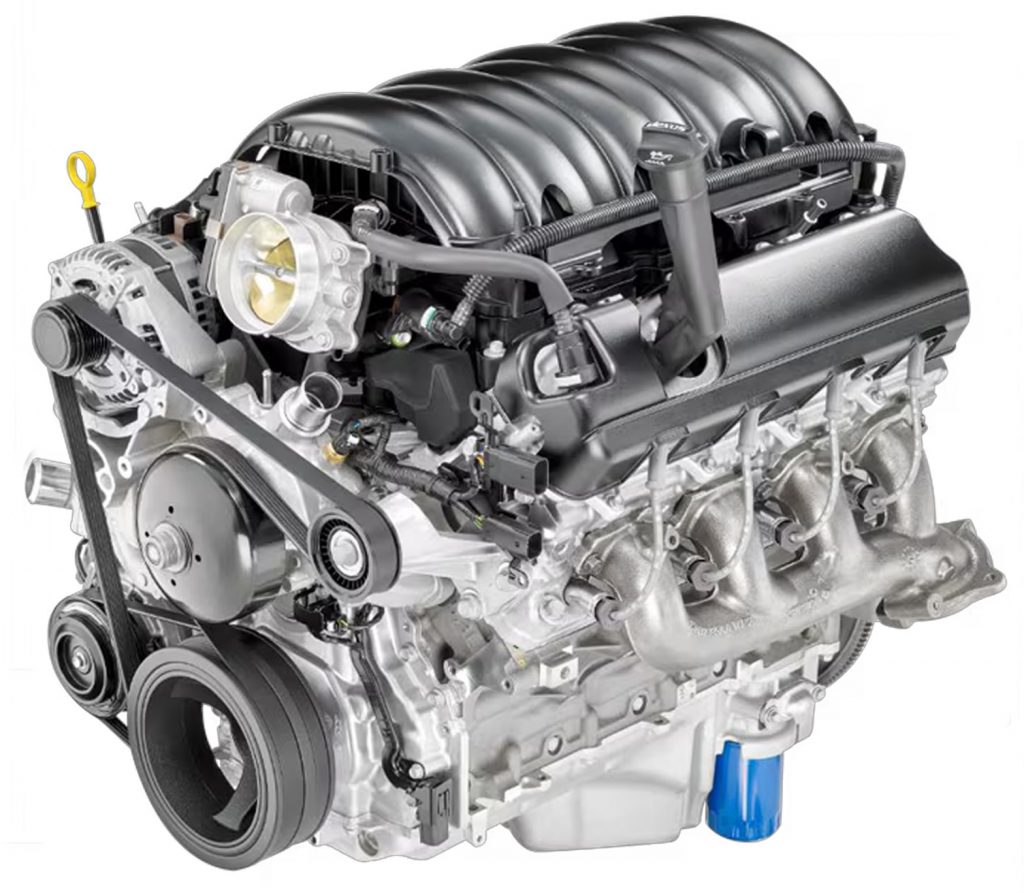
Lewin Day wrote about GM’s 6.2-liter V8 woes a year ago, back when the NHTSA first launched its investigation. I highly recommend reading it if you want to see the type of suffering owners have had to go through with the L87. In short, the NHTSA began receiving complaints of engines built from 2019 experiencing major failure while on the road, usually without warning.
GM’s subsequent investigation, completed in April, discovered a staggering 28,102 complaints or incidents potentially involving failure of the L87 engine in the United States alone. Of those, 14,332 complaints alleged a “loss of propulsion,” according to the NHTSA.

GM issued a recall that same month, targeting 597,630 potentially affected vehicles built from 2021 to 2024. In that recall, the company identified manufacturing issues of engine internals as the root cause. From the recall document:
GM’s updated field data analysis identified a build period from March 1, 2021, to May 31, 2024, with an increased rate of potentially related engine failure claims. GM’s investigator reviewed findings from teardowns of field engines and data from a study of new, unused crankshafts. Supplier manufacturing and quality issues were identified at intermittent periods within the suspect build period, including (1) rod-bearing damage from sediment on connecting rods and crankshaft-oil galleries; and (2) out of specification crankshaft dimensions and surface finish. These issues an cause or contribute to bearing damage that can lead to loss of propulsion and engine failure.

Obviously, it’s pretty unsafe for an engine to catastrophically fail while the vehicle is moving. Specifically, the NHTSA explained that “Failure or malfunction of the engine results in loss of motive power of the vehicle, which may lead to an increased risk of a crash resulting in injury and/or property damage.” In this case, GM found that the engine failure may have been the cause of 12 crashes, 12 injuries, and 42 instances of fire. Not great!
For a remedy, dealers were instructed to inspect the 6.2’s internals to look for early signs of failure. If the dealer determined any signs of a potential failure, they were to repair the engine or replace it entirely, as necessary. Repaired engines would get connecting rods and crankshafts “produced after the suppliers’ suspect manufacturing window,” according to GM (via the recall doc). GM doesn’t say exactly what was changed, only that a “series of crankshaft and connecting rod manufacturing improvements implemented on or before June 1, 2024, addressed contamination and quality issues.”
If there were no signs of failure, the dealer would replace the oil with a higher-viscosity oil and replace the oil filter. Vehicles were also given a new oil cap with the updated oil weight printed on the top.
Engines That Received The Recall Work Are Still Reportedly Failing
It turns out that those fixes may not have been enough. On Friday, the NHTSA opened a new investigation into General Motors following reports of engine failure from owners who had the recall completed.

Specifically, the NHTSA has, as of the investigation’s opening, received 36 reports of engine failure from owners of vehicles powered by the L87 after they had the recall completed. Importantly, the investigation document notes that the complaints allege engine failures on both remedies. That means even owners who had their engines repaired or replaced with newer rods and crankshafts had subsequent failures. Yikes.
I reached out to GM to see what it had to say, and a representative gave me a fairly standard corporate response:
“The safety and satisfaction of our customers are the highest priorities for the entire GM team, and we continue to cooperate with NHTSA’s evaluation of this matter.”
In its response, GM also pointed out that engines that have received the recall work—whether that’s the new oil or engine work/replacement—also get a “special coverage program” warranty that covers the engine for 10 years or 150,000 miles from when the engine was first placed in service (whichever comes first).
Either way, if these complaints are accurate, it would create an entirely new headache for the brand. If the new rods and crankshafts are also defective, it would essentially render any repairs done under this recall null and void, and open up 6.2-liter engines built after May 2024 to an investigation.
The initial L87 recall was already the second-biggest drivetrain-related recall of last year, beaten only by a Ford fuel pump recall potentially affecting 850,000 cars. If GM’s fix turns out to be faulty, then it could get a whole lot bigger.
Top image: Chevrolet



“If there were no signs of failure, the dealer would replace the oil with a higher-viscosity oil and replace the oil filter. Vehicles were also given a new oil cap with the updated oil weight printed on the top.”
Because of the very fact that General Motors Service Bulletins state exactly this is the reason that anyone who takes their hard-earned money to buy a General Motors product should have their head examined.
Or he/she is a fool.
I genuinely cannot comprehend who willingly buys gm products anymore. There are so many better choices in every segment they’re in, and with so much less risk, better value, better ergonomics, better styling (which isn’t hard at this point, they’re roughly tied with Subaru for making the fugliest vehicles on sale in the US right now), etc.
The same people who vote against their best interests time and time again, because they buy into propaganda and because “that’s what we’re supposed to do.”
“Buy American.” When the Toyota Camry they vilify their neighbor for buying was built in Kentucky and their Chevrolet was built in Mexico. Etc.
Indeed, folks would rather be told what to do than think for themselves. It’s why we have two horrible political parties that only help themselves while pitching the populace into an “us versus them” mentality – and not just political parties, even down to things like phone and computer options, vehicular choice, internet providers, retail store availability, etc. – useless and even corrupt politicians – both local and national – with absurdly long careers, a lack of entry-level and production jobs, and so on.
It’s sad that in 1999 we were told through a movie to “free your mind”, but we continue to plug more and more of ourselves into “the matrix”, even alarmingly so with the advent of widespread AI.
I’m considering an Equinox EV. I would challenge someone to come up with a better entry at the price point.
They’re piling up with lemon law cases at this point, though, too. Lots and lots of them are bricking themselves mysteriously from a software standpoint.
Better in terms of…? Everyone has a different use-case scenario.
At least with the EV version you don’t have to worry about oil consumption or rod knocks anymore – the source of the “knocks” in Equi-knocks. A pity the EV version looks like a Kia/Hyundai, it doesn’t really belong in the chevy design language. That said, if I had to get a gm EV, I’d get the Honda Prologue, but I wouldn’t be happy about it.
If I were buying/leasing a 2-row mid-size-ish reasonably-priced EV crossover thing, I’d probably lean towards a Mach-E, Volvo EX40 (admittedly a size down but it uses its space well), wait for the Rivian R2 and Volvo EX60, or one of the Kia/Hyundai ones.