


On paper, General Motors’ full-size, body-on-frame SUVs are some of the best practical haulers in the business. Whether we’re talking about the Chevrolet Tahoe, the Suburban, the GMC Yukon, or the Cadillac Escalade, all promise lots of space, truck-like towing capacity, and plenty of grunt from their range of engines.
Going by the spec sheets, you’d be remiss not to prefer the top-of-the-line 6.2-liter naturally aspirated V8, internally known as the L87 and externally as the EcoTec3. It makes a healthy 420 horsepower and 460 pound-feet of torque, enough to haul an eight-person family and their 30-foot boat with ease. And despite its more traditional pushrod design, the engine is relatively efficient thanks to tech like automatic stop-start, variable valve timing, a variable oil pump, and “Dynamic Fuel Management,” which is just a fancy term for cylinder deactivation.


The only problem is, this engine has been a bit of a problem spot for General Motors in the near seven years since its launch. The National Highway Traffic Safety Administration began receiving numerous reports of sudden failure, ranging from engines seizing to ejecting connecting rods through the block. The reports eventually led to the launch of an investigation in early 2025 involving over 877,000 vehicles, including the aforementioned SUVs as well as Silverado and Sierra 1500 models, which use the same engine.
That investigation resulted in a recall of nearly 600,000 vehicles “due to crankshaft, connecting rod, or engine bearing failure,” according to the April 2025 recall document. The fix? Dealers were to inspect engines and repair or replace them as necessary. Engines that passed the inspection were to be given higher viscosity oil, a new oil cap, a new filter, and sent on their way.
Theoretically, this was supposed to be the end of it. Except engines are still failing, even after they’ve been repaired or replaced. Now, the NHTSA is investigating. Again.
Let Me Catch You Up
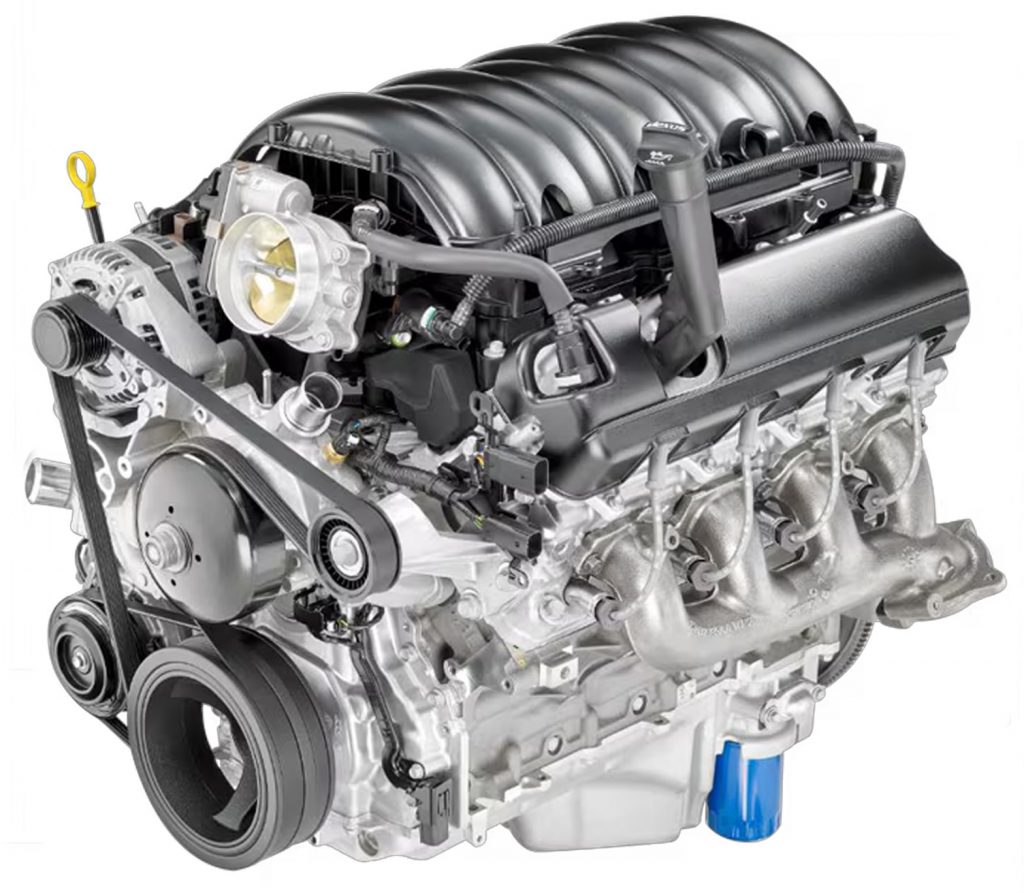
Zoe Skyforest wrote about GM’s 6.2-liter V8 woes a year ago, back when the NHTSA first launched its investigation. I highly recommend reading it if you want to see the type of suffering owners have had to go through with the L87. In short, the NHTSA began receiving complaints of engines built from 2019 experiencing major failure while on the road, usually without warning.
GM’s subsequent investigation, completed in April, discovered a staggering 28,102 complaints or incidents potentially involving failure of the L87 engine in the United States alone. Of those, 14,332 complaints alleged a “loss of propulsion,” according to the NHTSA.

GM issued a recall that same month, targeting 597,630 potentially affected vehicles built from 2021 to 2024. In that recall, the company identified manufacturing issues of engine internals as the root cause. From the recall document:
GM’s updated field data analysis identified a build period from March 1, 2021, to May 31, 2024, with an increased rate of potentially related engine failure claims. GM’s investigator reviewed findings from teardowns of field engines and data from a study of new, unused crankshafts. Supplier manufacturing and quality issues were identified at intermittent periods within the suspect build period, including (1) rod-bearing damage from sediment on connecting rods and crankshaft-oil galleries; and (2) out of specification crankshaft dimensions and surface finish. These issues an cause or contribute to bearing damage that can lead to loss of propulsion and engine failure.

Obviously, it’s pretty unsafe for an engine to catastrophically fail while the vehicle is moving. Specifically, the NHTSA explained that “Failure or malfunction of the engine results in loss of motive power of the vehicle, which may lead to an increased risk of a crash resulting in injury and/or property damage.” In this case, GM found that the engine failure may have been the cause of 12 crashes, 12 injuries, and 42 instances of fire. Not great!
For a remedy, dealers were instructed to inspect the 6.2’s internals to look for early signs of failure. If the dealer determined any signs of a potential failure, they were to repair the engine or replace it entirely, as necessary. Repaired engines would get connecting rods and crankshafts “produced after the suppliers’ suspect manufacturing window,” according to GM (via the recall doc). GM doesn’t say exactly what was changed, only that a “series of crankshaft and connecting rod manufacturing improvements implemented on or before June 1, 2024, addressed contamination and quality issues.”
If there were no signs of failure, the dealer would replace the oil with a higher-viscosity oil and replace the oil filter. Vehicles were also given a new oil cap with the updated oil weight printed on the top.
Engines That Received The Recall Work Are Still Reportedly Failing
It turns out that those fixes may not have been enough. On Friday, the NHTSA opened a new investigation into General Motors following reports of engine failure from owners who had the recall completed.

Specifically, the NHTSA has, as of the investigation’s opening, received 36 reports of engine failure from owners of vehicles powered by the L87 after they had the recall completed. Importantly, the investigation document notes that the complaints allege engine failures on both remedies. That means even owners who had their engines repaired or replaced with newer rods and crankshafts had subsequent failures. Yikes.
I reached out to GM to see what it had to say, and a representative gave me a fairly standard corporate response:
“The safety and satisfaction of our customers are the highest priorities for the entire GM team, and we continue to cooperate with NHTSA’s evaluation of this matter.”
In its response, GM also pointed out that engines that have received the recall work—whether that’s the new oil or engine work/replacement—also get a “special coverage program” warranty that covers the engine for 10 years or 150,000 miles from when the engine was first placed in service (whichever comes first).
Either way, if these complaints are accurate, it would create an entirely new headache for the brand. If the new rods and crankshafts are also defective, it would essentially render any repairs done under this recall null and void, and open up 6.2-liter engines built after May 2024 to an investigation.
The initial L87 recall was already the second-biggest drivetrain-related recall of last year, beaten only by a Ford fuel pump recall potentially affecting 850,000 cars. If GM’s fix turns out to be faulty, then it could get a whole lot bigger.
Correction (Aug 24, 2026 1:20 AM ET): We added “complaints of” to the headline since the figures for engine failures are base not only on field “incidents” reported by GM to NHTSA but also on field “complaints.” We can’t be 100% sure that all engine failure complaints are valid, so the number could be lower, though it could also be higher; best to hedge.
Top image: Chevrolet




The fix should be to stop doing cylinder deactivation. Granted, this is a personal anecdote, but 100% (1 of 1) of the GM trucks I’ve owned with this feature have had massive engine failure. Maybe there’s a way to do it well, but it sure seems like a way to add uneven stress and heat that are not good ingredients for engine longevity.
Agreed. When Honda, gm, Nissan, and Stellantis are all having issues with cylinder deactivation (admittedly not saying a whole lot there) maybe the problem is the concept, not necessarily the execution.
The #1 thing anyone I know that owns a GM V8 with the cylinder deactivation does upon buying the truck/SUV is tune the thing to deactivate the feature. People even do it with the Honda Odyssey V6s. It seems to be just a problematic feature all around – even back to the Cadillac V8-6-4 days.
Besides the 6.2 supercharged LT4 and the 6.6 V8, as of now the 5.3 and really the 6.2 are engines to avoid. The fix is the next gen V8, hopefully…
Just avoid gm, easier to remember.
On Legit Street Cars, he’s rebuilding a Corvette V8. The brand new bearings he bought from GM looked horrid — they looked like they would fail right out of the box. He ended up using Mahle bearings.
If the Chevy bearings look that awful out of the box, that could be the larger, clankier issue.
Rod bearing issues leading to changing oil viscosity requirement…Heh…amateurs.
Signed,
BMW
I’ll stick with the 3.0L diesel.
That has some really fun built-in dilemmas too. Best sell it before that oil pump belt is due to be changed (if it makes it that long without grenading the thing).
Based on my sundry friends and family who own them, I can’t help but think that all three ‘Murican pickups pretty much just suck these days no matter what’s under the hood. My favorite neighbors got a new 6.2L from the General, blew up with 15K gentle miles on it.
Your probably OK with the current Ford V8? Other than that I would be worried especially if Stellantis is the third “American”
The Fords are generally pretty solid right now. Yes, a couple of the engine options use wet lower belts, but haven’t heard of actual failures with proper oil change intervals (5K miles versus the factory setup), and they can be changed if they start to exhibit failure. They also generally do actual truck stuff better than their competitors.
The Ford V8 is fine, what it is bolted too is fine, the electronics surrounding it are awful. Ram just can’t seem to get any of it right.
Those have throw out bearing failures now as well, albeit lesser rate than the 6.2. I had that engine for a bit in a Sierra AT4X, besides EGR harness failure and a few random emissions lights it was a great engine…
I believe I said changing the oil viscosity wouldn’t fix the problem back when this was first announced, and people argued with me about it.
Although in the interest of full disclosure, I did not predict that both Toyota and Chevy would fail to actually fix the defect that triggered the recall and then install a bunch more engines with problems.
Then again, given what I hear from my family members in the manufacturing sector, nothing surprises me anymore. Most companies (even the ones with a major reputation to protect) are married to cost-reduction and aren’t on speaking terms with quality anymore.
“Like a rock”*
*Heavy and with a lack of propulsion.
Well there’s your problem. It’s probably mad about being labelled an ‘EcoTec’. Whatever happened to the ‘Vortec’ branding anyway?
It’s not “Eco” enough.
Proposed fix: Vorteco branding. With the eco in green, please.
Would that be “vor-tech-o”, or “vor-teak-o”? Asking in the realm of the Ford EcoSport’s ill-advised pronunciation and naming scheme.
You didn’t like the naming of the Echos-Port?
Not particularly, lol. Especially when it counters the established “EcoBoost” convention.
I got the recall and took mine in cause I thought, hey free oil change.
Nope, 3 weeks and a rental later I had new engine.
Approaching 13k miles on the new one with about a 3rd of that towing. So far so good. Fingers Crossed.
They did change the oil, it just came in a very complex container.
In completely unrelated news, GM will be announcing its first ever GM Peace Prize winner tomorrow.
And all GM recalls closed, amirite?
They will never top FIFA in terms of sleaze. Even DeLorean was all Mr. Untouchable compared to Sepp Blatter & Co.
I’m picturing a certain Mr. Ecclestone beginning to raise a hand, then letting it drop.
Wait, changing oil viscosity doesn’t fix underlying design/manufacturing errors? Who’d have thought!?!
I had a 2017 Sierra with 6.2 in it. 2 or 3 times I had issues with the trans slipping. When I’d take it back in, they’d change the weight and viscosity of the trans fluid.
I think they changed it three times before they found one that worked. I sold it before the trans failed, but that “solution” convinced me not to buy another of their products.
Yeah seems like the “right” trans fluid should have been sorted out in like, idk, the R&D process…
Well, it very much seems like these companies have shifted a lot of R&D onto the consumer.
The gm dealership next to my work has found that using Motorcraft fluid seems to be the best fix for the RWD transmission issues. Not sure if it’s just their friction modifier (probably) or the fluid as well (less likely but plausible if it’s the co-developed transmissions?), but it seems to do the trick to their satosfaction.
…Wouldn’t surprise me if their senior techs had a collective heart attack when they first started sticking FoMoCo products.
For real, they originally filled the 8L transmissions with DEXRON VI from the factory, but after the complaints started piling up they ended up replacing it with with Mobil 1 Synthetic LV ATF .
That is why I stopped buying General Motors products years ago.They really don’t care once it’s sold.Toyota may have certain issues but at least they address them and you won’t see it again.My guess is that most of the owners will just trade them in on a new Chevy or GMC truck or SUV.
Yeah, Toyota has never had frame rusting issues last for years and years… and they certainly performed full long-block replacements when their engines are suspect… and they don’t currently have a schlew of minivans where they are telling owners to not sit in the back seat…
All companies have issues. I really question if Toyota is actually any better.
Also, it’s not like Toyota engines after they supposedly fixed their manufacturing problems have also been failing. Oh, wait…
How many rusted frames did Chevy replace?
Yeah, let’s start with the Vega.
The first one is a bad example as Toyota replaced entire frames on trucks that were sometimes over 10 years old, exceeding any warranty and what would have been fairly normal industry lifespan expectations not all that much earlier. Must have cost them a fortune. Of course, they were raking in profits on outdated Tacomas forever that people lined up to pay top dollar for, so they could afford it and it turned a failure into a positive. Toyota also replaced a bunch of engines in Camrys that had issues in hot climates largely because people neglected oil changes. That said, that’s past Toyota, which means little to the current owners having unresolved issues now, but the loyalty at least used to come from something. We’ll see how that holds in the future if they don’t get themselves together. GM’s major engine issue is with their highest margin and volume products, an engine that the first generation of came out 70 years ago and they’ve made over 100M of! Plenty of GM buyers are loyal, but why?
They did the frame recall after a lawsuit, correct?
Yeah, just like GM and pretty much any company that wasn’t NSU (and where did they go?). End result, they replaced a bunch of rusty frames, which was odd as I don’t recall seeing any ’80s Toyota pickup before the ’90s were over and it was a damn rare sight to spot one from the ’90s in the late ’00s. Ten years was well beyond the half-life of Toyota trucks from rust for decades, so I don’t know why it was all of a sudden a big issue for owners, but good on them for the success. I never thought to sue Mazda when the 3 I bought had the rust resiliency of something built 20 years earlier even though I wrongfully assumed they’d have fixed that for an all new vehicle they intended to help them become more premium instead of it being garbage like the generations before, I just took them off the list of future cars to buy. A replaced rusty frame was also an actual fix. This talk about Toyota is irrelevant whataboutism as this is about GM’s catastrophic failures in their most important product involving an engine they’ve largely been building for 70 years and that they seem to not have a fix for.
Toyota had to be sued into replacing them, it’s not like Toyota fixed it out of the goodness of their heart. And then after all of that, Toyota still ended up making early 3rd Gen Tacomas with frame rusting issues too where the “fix” was only a shitty undercoating spray and only for trucks in rust prone areas. My 2017 Tacoma’s frame, despite spending 4 of it’s first 6 years in Houston, looked like absolute ASS and was a big reason I ditched it before it became an issue.
Also, you might want to look up exactly how helpful Toyota has been to owners with the cable-gate issue. If you aren’t aware, the power supply cable from the battery to the rear electric motor rot out at the connector and you get stuck with a few thousand dollar bill.
They all cut corners where they think they can.
Every company needs to be sued to do the right thing as doing the right thing when it costs money is anathema to business. This isn’t about Toyota, this is about GM’s abject failure at their most important product, but sticking with the former for a moment, as bad as it is, rust is still a lot safer and easier to monitor than dealing with sudden death engine failures sometimes right off the lot, an engine one should reasonably be able to expect GM knew how to make at this point. The half-life of Toyota trucks from rust up here was probably 5 years until the mid ’00s as trucks even a decade old were very rare, so I count it as pretty extraordinary that owners were so shocked that they still rust, but good on them for getting restitution!
When I bought a Mazda 3 thinking they surely stopped building rusty trash with their all-new car that used a shared Ford platform and that they intended to use to push the marque more upmarket only to find that they persisted with rust protection standards the industry had largely advanced beyond sometime in the ’80s, I merely took them off my list of future purchases rather than thinking of fighting for some kind of compensation.
All this deflection to Toyota in an article about a massive GM failure is testament to the inexplicable loyalty people have to GM and compulsion to defend them, a company that has largely put out cynical garbage for decades and tried at nearly every turn to screw their customers over. Funny thing about me ending up defending Toyota to some extent and dumping on GM is that there are far more GM vehicles I’d rather own than Toyotas (very few of the latter, with one a multi-million dollar rarity, another really a Subaru, and the last being a Lexus they just killed). Maybe that’s why it bothers me that GM has screwed up so egregiously (again) and doesn’t seem to have a fix.
Your last sentence is alarmingly accurate. I don’t know why folks think that – especially with a high five-figure purchase or more – buying from the same brand that burned you is a rational idea. Heck, I even see it with phones (especially apple ones) and computers.
Of course the purchasers also bought a gm in the first place, so their reasoning may be suspect in the first place. Or there’s no other dealership nearby.
Sadly Toyota is not what it once was. Between truck frame rust issues and the unintended acceleration debacle (which a surprising amount of people have already forgotten about or dismissed) their culture definitely seems to have shifted. The new head boss seems to have a grasp on it though, given the GR models and widespread hybrid availability across the lineup.
This could negatively impact GM’s reputation for running badly longer than most cars run.
In fairness, that reputation is also about 25-30 years out of date. But that’s true of many auto manufacturers, not just gm. You’d think in the age of the internet folks would be more open to facts and new ideas rather than being entrenched in old and factually-wrong ideas, especially about the ever-changing realm of consumer goods.
Spending that much in the bread and butter from GM to get a failed vehicle that the engine has to be replaced, not such a small job with all the crap that new cars have nowadays, I cannot imagine the resale value hit these cars will get.
https://youtu.be/ohGx0xIanNY?si=0IoL2joK1PLmOdN4
Every powertrain recall that needs to go through “dealer inspection” is going to be a load of BS. My previous girlfriend had an Outback that would drink oil. Obviously, it was the piston ring issue. Did she qualify for the recall? Of course not. I bet she’s still dumping quarts into that thing ever 1500 miles
Ford should start selling these engines as you will have to Fix or Replace Daily.
It’s also possible that some shops skipped the inspection part of the recall and just changed the oil, sending out an engine that was already damaged. The only way to make a living as a mechanic is to cheat.
There have been a number of youtube videos that point out certain engines that have 0w20 oil specified in the U.S. but 5W30 specified in other markets. They’re thinning the oil to meet CAFE standards. Maybe that’s what happened here.
I mean, I don’t think the assertion about mechanics is correct.
Even if that does happen, the investigation claims that even engines that were repaired/replaced also failed, which means poor inspection practices wouldn’t be the only issue.
In my experience, it’s not a perfect 1:1 cheat:mechanic relationship, but it’s at least 0.80:1. Source: I didn’t cheat and didn’t make money, I watched others cheat and still not make money (including losing me money for unfucking their mistakes on their tickets), I saw still others cheat more and make a little money, and then our Master Tech who nearly broke the curve with being capable, competent, and honest.
And after 35 years he still has a side hustle to keep things afloat.
Everyone has a side hustle, my man. I have two. I don’t indict
That’s the case with my car. I run 5W-30 because, while bureaucracy varies, physics doesn’t change and that’s the recommended oil in other markets (and I still beat the rated mileage, anyway).
Given the massive bloat these vehicles have seen over the past decades is it any surprise they’re now suffering from catastrophic heart attacks?
They’re just making it more American any way they can.
I’m still hanging my hat on the oil pump being the problem.
The big change from the L86 to the L87? Variable displacement oil pump.
What’s that? all the crank and rod bearings are failing in the L87 but not he L86? What’s that? The oil pump is variable displacement to increase engine efficiency?
That sounds plausible, I also saw a video from The Motor Oil Geek and he said it was most likely a surface finish defect on the crankshaft. Doesn’t the Ford Godzilla have a similar issue with the oil pump as well? I think I remember hearing about that being an issue but I don’t know a whole lot about HD/Fleet engines other than what I hear anecdotally from my friend who works for a moving company.
My question is, would the surface finish defect even matter if it had consistent oil pressure and volume?
You can overcome a lot of imperfect fits with enough lubrication.
Exactly, which is why they told owners to up the oil grade to 0W-40 to provide extra protection on the defective crank, in hopes of getting them through the warranty period for as cheap as possible. Oil can only cover a problem so much though.
I get the feeling GM may have missed some edge case situations where higher pressure really was necessary despite everything they think they knew. I think about this often when my stupid TourX gets into 8th gear at 45 mph/1200 RPM while I’m going uphill and it feels like the engine is going to open up the hood and walk off the job. It’s making the kind of torque that NA S2000’s can only dream about while at the same time.. jack squat for oil pressure. No idea how they survive so much lugging, but they seem to.
I wonder if anyone messed with pulling the plug on the solenoid to the L87 oil pump. It should fail safe to the highest pressure geometry configuration and work like a normal oil pump at that point.
Office-chair rabble-grumbler: Do you think so, on the crankshaft? I haven’t seen pictures but I’m thinking anything less than machined near-mirror is Not Good Enough for crankshaft duty. If the finish was bad enough, that’s thousands of extra semi-random, off-axis, unexpected vibrations every minute of engine time, in just about the worst possible place in a modern engine.
Office-chair reasonable guy: open to being educated, of course
My argument: GM has been making V8s with FAR worse tolerances for decades, and none of them were eating the bearings in this short of mileage.
Some of the replacement engines never made their first oil change ffs.
I’m not an engineer (dropped out), just a tech who now teaches. So my word only holds so much weight.
they sure as shit failed to make a variable hydraulic steering pump for a number of years back in the day. I wouldn’t be surprised
I have too small of a sample size to really mean anything other than a personal opinion but I know four people with the 6.2. Two of them ran 0w-20 like they were told too (can’t blame them there) and they experienced failure. The other two have run 5w-30 since the first oil change and they have not had a problem. Idk, take that for what you will.
Also I know MANY people with the 5.3 and have not heard of one issue. My dad has always used the recommended 0w-20 in his 2022 5.3. He now has 70,000 miles and not one problem so far.
Personally I would use 5w-30 (or maybe even 40) in either engine. Just like I use 5w-30 in my wife’s Honda Pilot instead of the recommended 0w-20.
Toyota recalled the 3.5TT engine after 800 engine failures, and folks act like it’ll blow up if you look at it wrong.
GM makes it to nearly 30k engine failures and folks are like “weeeeellll, I haven’t had an issue, I think I can just change oil thickness and it’ll be rock solid.”
Truck brand loyalty is a hell of a thing.
There are some people who just cannot get over Honda’s and Toyota’s well-earned marketshare gain 30 years ago and they are looking for any reason to delegitimize it now.
I don’t think anyone is arguing that they weren’t incredibly reliable 20 or 30 years ago, just that they aren’t at that level anymore. 800 failures in, what, two years? That’s nothing to just write off. It’s also not cool that they didn’t bother to recall the hybrid models because there would be no loss of propulsion if the engine did grenade. “We are aware of a problem that might cause your engine to blow up, but we’re not being forced to do anything about it so tough noogies” is no different than any other automaker.
I’m not gonna go digging for numbers, but I would guess that GM moved at least 4 L87’s for every i force max pro ultra Toyota moved. Comparing GM’s 30k engines to Toyota’s 800 isn’t exactly fair, but how unfair I’m not sure.
Toyota also recalled a much smaller production period. The scale of engines isn’t remotely comparable between the I force max and the L87.
Toyota recalled 100k engines after 800 failures. GM recalled 600k engines after 28k failures.
I still see Toyota being far more proactive, regardless of sample size.
I’m definitely not saying that GM was more proactive. Toyota was absolutely more proactive. But to say the Toyota engine wasn’t problematic because it only had 800 failures isn’t really apples to apples.
Toyota’s recall is also voluntary, they’re trying to get ahead of it (to an extent), whereas GM is known to shut its eyes and hope the problem goes away (which typically ends in the expected manner). I know I’m repeating myself here, but there are a bunch of affected engines Toyota is not recalling. So how “proactive” they’re being comes down to your overall opinion of Toyota and your own definition of the word.
From what I see on the Tundra forums and Subreddit, so take this with a giant grain of salt the V35A failure rates seem to be estimated at around 0.5-3%. The latest NHTSA recall notice that expanded it to ’24 model years has it at 1%, and supposedly from ’26 they upgraded the main bearings. I’ll just keep driving my 1st gen with the 5VZ in the meantime.
Sure, the 5VZ might be okay, but you still have to contend with…rotten frames, LBJ antics, rotting windshield headers, beds that react to salt like a snail…at least mine is a 5-speed, so I don’t have to worry about the transmission.
That being said, I still really like my Tundra…even though when I’m all said and done, the only thing that will be original will probably be the front axle, transfer case and maybe…driveshaft? So far I’ve replaced all the doors, front fenders, both rockers, new bed, entire new front end, and Toyota replaced the frame a few years ago and a bunch of associated parts. Up next is the rear axle, and soon a rebuilt 5VZ…
Thankfully I live in a state that doesn’t have much if any road salt in the winter, and I thoroughly checked the frame and cab for any signs of rust before I bought it. Planning on changing the LBJ’s before the summer starts along with the timing belt for peace of mind, mines a 5-speed as well.
Haha. Good for you. I was thinking today that my Tundra had has just about everything wrong with it that a first gen could have wrong with it…
“I’m not gonna go digging for numbers”
And that’s the problem with most of these flag waving contests that happen on the forums.
Whether it’s the import fans trying to minimize a problem that undermines their historic reliability reputation or the domestic fan that wants to distract from their brand’s continued failings, no one has the real numbers, so the two camps cherry pick and project.
This was happening long before Toyota’s problematic new generation of gee-whiz engines put some fuel in the fire.
I don’t have a horse in this race. Everything with an L87 or a V35A is a big ugly BOF vehicle and that’s a breed I don’t care for. I drive German cars.
I know, I’m not claiming you do. The statement on digging for numbers just reminded me of how little information we really have to go on if we want even a pseudo-quantitative guide to reliability.
I couldn’t agree more. The chasm between both companies’ response are a good reason to never buy gm.
(Note I don’t own a toyota either, so just commenting some the sidelines)
My gf doesn’t have one, but I’m already fighting against the Cult of Subaru because she wants one next. She actually told me “I think you’re biased against them because everyone that you know that has had one has had problems.”
I’m more than happy to speak against Subaru. If they didn’t have their cult they’d be doing worse than Mitsubishi. (I have a dream scenario where Subaru left the US instead of Suzuki when they did, and we have a scrappy automaker that sells folks Jimnys, Swifts, XBees, Kizashis, and SX4s, etc., keeping the lower side of the market healthy and the overall average purchase price down better than Nissan and Mitsubishi do).
I’ll also happily speak against any company with a positive reputation they don’t deserve. Most companies have problems, but it’s how they handle them that sets them apart.
It’s a dark day when even GM has forgotten how to make a pushrod V8.
They haven’t – it was a supplier issue that was not identified at the time of build – not until the issues started occurring, so the only thing they know is the period of when an engine might have a bad crankshaft. By no means was this a design flaw.
what’s that you just typed, here? After a second round of failuires?
Well, *according to GM*. Since the supposed “new” components are failing, right now I’m not sure we know anything yet about the “why.”
I spoke to a retired Honda engineer who told me they do 100% inspection of supplier parts on arrival at the factory prior to build / installation (if you buy replacement parts through the service department, those parts are inspected by the supplier and NOT Honda, so they have had occasional issues of failure of replacement parts that lead to process change).
Based on the above conversation, I can see why Honda charges more for a vehicle than GM. Inspections cost money
Granted my time at GM was in the flagship vehicle plant, but all supplier parts at least for the engines went through an incoming inspection process.
Fuel economy regulations coupled with Americans’ insatiable demand for this type of vehicle was always going to end in sadness. The compromises made to eke a couple mpg out of large, heavy, box-shaped SUVs have seemingly ruined reliability across the board.
GM – sticks to V8s, fuel economy related tricks are the likely cause of failures.
Jeep – goes away from the reliable 6.4 to the questionable Hurricane.
Toyota – goes away from the reliable 5.7 to the questionable 3.4TT
Nissan/Infiniti – goes away from the decently reliable 5.6 to a questionable V6TT.
Ford seems to have sorted the 3.5 Ecoboost enough that it is probably the reliability choice in the segment by default. Certainly, it’s the one I’d feel most comfortable with; an insane statement when GM pushrod V8s and Toyota are competitors.
The real answer is to sell these vehicles with a GVWR over 8600 lb (again) and remove fuel economy pressures by allowing the HD truck engines to power them. No one in their right mind wouldn’t prefer the GM 6.6, the Ford 6.8 or 7.3, or the Ram/Jeep 6.4 iron block V8s in these SUVs, but for as long as they need to meet standards, they will never off those engines. Bring back the 2500 SUVs!
Maybe the 1500HD will return.
Also I think the 5.0 F-150 is still available right? We have two at work and they’ve been great.
It is, but I’m talking specifically about the SUVs. Should have clarified that better.
Ah gotcha. Wouldn’t mind a 2500 Suburban!
You’re right from a purely mechanical perspective, but from an environmental one I’m not sure what the solution is. Everyone driving these big hulking things and getting 12 MPG or whatever is a net negative for society no matter how you slice it. I wouldn’t care as much (I don’t give a shit about sports cars chugging gas, for instance) if they weren’t the default vehicle for most people but at this stage a half ton truck or SUV is the default for the average American.
When they’re selling tens of millions of these things every year and huge swaths of the population are sucking up such a disproportionate amount of resources/emitting exponentially more it becomes a problem for all of us, so I understand why they gubment has tried to regulate better gas mileage out of them….but the initial efforts haven’t been very good.
There has to be some sort of compromise, we can’t keep oscillating between FUCK THE ENVIRONMENT and FUCK YOU YOU CAN’T DRIVE THAT…but I’m not sure what that compromise is, and in the current climate an alarming amount of the population just cannot be bothered to consider the needs of other people under any circumstances, so I’m not sure how to address that without regulations. If the average customer had enough self-awareness to go “hey I’d be served way better with this hybrid crossover than a 2500 truck that gets 9 MPG” this wouldn’t even be an issue, but alas….
I’m not coming at you specifically here, in fact I enjoy discussing this sort of stuff with you quite a bit because you’re reasonable. I’m just not sure what the answer is….
The actual solution is probably a Ram Charger-style EREV powertrain, with an equally reliable NA V6 or similar providing the oomph.
Sell the 12 mpg 2500s to the few who need the capability; and sell the one that gets 70 mpgE to everyone else. I dispute the common argument that most truck owners don’t tow, at least occasionally, but I’d have no trouble believing the majority of truck-based SUV owners don’t.
It probably depends on how you define “occasionally”. Is it once or twice per month? Once or twice per year? Or once or twice per length of ownership?
I am excited to see how the EREV versions sell and I think they’re a good idea. I also think that most buyers would do perfectly fine with a fully electric truck or truck based SUV but between the actual issues (real world towing) and the perceived issues (if it can’t tow 10,000 pounds up a 45 degree grade in 4 feet of snow then this truck is useless to me) I understand why they’ve failed so far.
….although the GM EV trucks seem pretty damn good and are gaining some traction.
https://www.thedrive.com/news/26907/you-dont-need-a-full-size-pickup-truck-you-need-a-cowboy-costume
Wish I could upvote you 1000x. This ‘freedom’ is making life bad for other people.
OIL! We got to have a reason to go to poor countries and kill people who look and talk differently than US. It is not like we are going to kill them for water….Oh wait.
Could not agree more with your point here. My girlfriend coaches basketball at a local private school and I am continually astounded by the raw mass of SUV in the parking lot. The Escalades, Suburbans, Expeditions, Navigators, etc. make her XC90 (an admittedly oversized vehicle for her needs) feel tiny.
I truly don’t understand the decision making that results in someone picking a fully loaded Yukon AT4 for pickup line duty, even ignoring the reliability issues that have surfaced in recent years.
A few months back I was in the market for a ~10 year old pickup for motorcycle/mountain bike hauling duty, and gave up as I couldn’t find anything that didn’t have some critical engineering failure or was commanding 30k +. I settled on a ’08 Cayenne, which is it’s own bag of worms, but the for me the driving experience and utility justifies the extra maintenance and parts cost. Huge plus that the thing has a 2″ hitch from the factory.
I do think the most environmentalist thing I do is always buy used and maintain properly. Raw MPG certainly makes a difference – but keeping something on the road for years on end helps me make peace with the 18 MPG I get on road trips.
My completely unsupported observation is that sports parents usually opt for a Yukon/Suburban instead of a Traverse. No idea why.
I mean vans have existed and continue to exist, and for most usage cases they are far better than a large SUV. The only one in which vans fall behind is towing, but then again, if you are buying an SUV for a primary job of towing, then you have a more narrow usage case.
I’m trying to get my wife into a Sienna but it’s an uphill battle. She’s not a car person in the slightest but she’s still convinced that an SUV=cooler. She could not care less about 99% of the stuff she sees me freak out over but the second a brightly colored Bronco rolls by she’s like “oh that’s really neat”.
I think we’ve basically been culturally brainwashed by these manufacturers and the stooges they fund in the government to think this way because bigger=more profit. And I’m not even immune to it! Every now and then I’ll go “hmmmm I could do a lot worse than a half ton for dad duty” and if I were to suddenly need my next car tomorrow I’d be test driving a Passport and a 4Runner…
This. Years of very effective advertising have painted the full size/body on frame SUV as the choice of the rugged individual. You need to be driving something that could take the whole family off-roading, otherwise you are just a washed up soccer mom/dad who’s glory days of cool cars are behind you.
I suspect that vehicles that are more efficient at the job of hauling kids and stuff around (minivans, vans) are significantly less profitable to build and sell than the big truck based SUVs – hence reduced marketing budgets and the resulting lack of demand that goes with it.
All of this but also…demands for more horsepower, too. 400+ to haul two kids and one parent around? Gone are the days when you needed to “accelerate” out of a dangerous situation.
Truth. Sooooo many soccer moms around here have 1.5 kids but drive Yukon XLs and Suburbans. I know of one family personally where the mom and both daughters all drive Suburbans. And mom’s kids are both grown/out of the house.
The biggest irony from GM is that their 2.7 turbo 4 is currently their most reliable truck engine.
Kudos to the design team on that one.
I remember driving a 1500 with this engine when it was new and I actually loved it. Considering it can tow nearly 10k pounds, it’s probably the one I’d actually buy
It’s the only powerplant I’ll consider in GM’s current half ton offerings. I’m friends with a fleet manager who does highway maintenance.
He told me that they haven’t had a single engine failure and a bunch of their trucks are over 700k km on the original 2.7 engine. All crew/double cab Silverados/Sierras.
That is shocking! But good to know.
This is 100% news to me and absolutely hilarious. I guarantee that a large portion of the people who are currently dealing with issues on their 6.2 chose it over the 4 cylinder due to its ‘decreased complexity’.
I do think that people are overly critical of turbocharged motors – by 2026 they are a relatively mature technology. Especially the turbo 4s that are a powerplant option in nearly every new car at this point.
We have been replacing Ecobooms with the 2.7 Chevy when they lock up and have had great luck so far. I think our highest mile 2.7 is at 180,000 and we NEVER had an Ecoboom last more than 80,000.
I’ve seen a few 2.7L failures, and my acquaintances at the gm dealership next door don’t have the nicest things to say about them. I will say that actually driving them they don’t feel too down on power, but you can tell they seem to be working harder and doing more to just get along.
What is it with these 2.7 truck engines? The Ford one is arguably their most reliable too.
Well I know the GM one was designed to be a truck engine from Day 1, that helps.
I agree the balancing act between capability and efficiency are leading to riskier solutions, but falling back on exceeding the regulation boundaries seems like a bad solution for general consumption.
Joe Blow with an oversized trailer and lawn tractor doesn’t really need a behemoth daily driver to get around his reliability issues. I don’t really feel excited about sharing the roads with even more F450s piloted by some guy that eeked by on his driver’s test 35 years ago.
Why would a 2500 Suburban need to be any physically larger than the current one?
It doesn’t, but that doesn’t mean it won’t be. All body on frame vehicles just keep getting bigger and bigger. The current 1500s are as big or bigger than the HD trucks of a decade ago….and the current HDs are so big it’s just silly. There’s a contractor with a long bed Silverado HD that does work at my neighbors’ house and the thing legitimately takes up 2.5 parking spaces.
I don’t know if it’s what the customers insist on or if manufacturers are doing it so they can charge more. Probably a bit of both. But I don’t think there’s anyway they’d release a heavy duty Suburban without making it even more of a land yacht because that’s the expectation at this point. I’ve said it and I’ll keep saying it-the current “midsized” trucks should be the default truck size and HDs should be the size of current half tons.
It worked perfectly fine for like…75 years so I’m not sure why it couldn’t work again.
Other than crew cabs and 4×4 becoming more popular, trucks have been the same size within a few inches for decades.
They are styled to look bigger than they are. My F350 is no taller or wider than a 70s model, and is longer only because of the crew cab.
On the SUV side, a 2026 Suburban is 226″ long, 81″ wide, and 76″ tall, on a 134″ wheelbase. A 1973 Suburban is 219″ long, 79″ wide, and 76″ tall, on a 129″ wheelbase. The “EVERYTHING IS MUCH BIGGER NOW” narrative is not accurate.
Eh, not entirely true. An ’88 Silverado 1500 is 76″ wide; a 2026 is 81.4″ wide(according to Chevrolet’s specs, the dumbfuck Google AI response says 79.6), that’s quite a bit, really.
It’s the height that’s completely insane, new half-ton 2wd trucks are as tall as my ’88 GMD 3500 4×4 and they just keep getting taller from there. It’s pretty much impossible to load anything over the sides of a new pickup, and I’m 6’2″ with long arms like a gorilla.
My friends with a new 3/4 ton truck are now saving for a new 5th wheel horse trailer as the old ones do not fit over the bed sides particularly well.
The 2026 is also about 1400 pounds heavier.
I thought that GM corporate had a 2500 Suburban for some time that was the same size as the 1500, just with beefier parts?
It looks like the “new” HD one is on the HD frame and stuff, but within this gen of Suburbans, I thought there were some around on the 1500 frame? Some pop up from time to time on Surplus websites.
Yes, 1500s and 2500 Suburbans had the same body for at least 4 generations. It’s the underpinnings and engine choices that were different.
The 12th gen was not engineered with an HDV variant in mind. It started from the T1XX, but I’m not familiar with what’s changed under the metal that reduces the GVWR by a thousand pounds.
Do they not sell uprated versions to the government anymore?
A truck that last longer can be more environmentaly friendly than a truck that is 1% more efficient but is mechanically totaled way under 100k.
I drove the 5.7 Hemi and Hurricane back-to-back. Other than the sound, I’ll take the Hurricane all day, every day.
GM is all in on the Turbomax though. I have one in my Silverado and it’s quite an impressive little unit. 310 HP and 430lbs of torque but it sounds like a Honda Accord when you start it up. I drove mine 400 miles up to and all over the Sierras over the weekend and it will happily tackle steep grades at 2000RPMs with that turbo whirring away.
The fact that GM can’t manage to make a reliable small block in 2026 is absolutely mind boggling to me. The 6.2 has been around in one way or another forever, and the LT1 variant in the Camaros has no issues at all. Obviously the LS that’s in the lineage speaks for itself and is one of the most widely loved and respected engines of all time.
GM also puts an inordinate amount of their resources into trucks. At this stage the big 2.5 are essentially truck companies that begrudgingly make a couple crossovers and EVs because of regulations and market forces. All of them would happily sell nothing but body on frame trucks if they could get away with it, and they’re trying their best to do just that.
With all that in mind I just don’t understand how they managed to fuck up this badly. I know quality is never, ever the number 1 priority (that is line going UP of course) and that capitalism is a race to the bottom…but holy shit GM, you are THE small block V8 company. This is the one thing you’ve always been amazing at….for a long time I’d probably default to recommending the GM variants of all these trucks specifically because of the engines but those days seem long gone.
While it is certainly a big miss having issues on these engines to begin, it seems like the other issue is GM doing GM things when it comes to handling the issue. How long it took them to address the issue, how they addressed the issue, and how the problem seems to be persistent.
The issues seemed to start with 2019 built vehicles, but they issued the recall for 2021 and newer – cool, so screw you if you were out of warranty?
And then there’s an inspection process – how thorough and how well trained were the technicians on this? I’d think dealers would be happy to push for repair/replacement to make some money, but that’s dependent on them having a chance at finding the issues.
And then they change your oil and send you back home? Like anyone really believed this wasn’t just kicking the can down the road to future failures?
This will culminate in a few class-action lawsuits. They’ll find that GM knew about the issue for years and declined to do anything about it. They’ll have to fix a bunch more trucks more thoroughly. They’ll have to compensate for excess depreciation on these vehicles. Etc, etc.
It sounds like the immediate solution is to get your GM truck with the 2.7 turbo 4 or the 5.3 LS that that doesn’t have connecting rods made of explodium, assuming you specifically want a GM.
Fortunately I am not in the market for a GM truck and won’t be unless they do what god intended and built a 4Runner/Bronco competitor on their mid sized truck platform
The thing that people seem to be forgetting is that GM (and all the other Detroit brands, as far as I know) FIRED EVERY R&D ENGINEER THEY HAD when they decided to try to leapfrog to EV’s. All the institutional knowledge walked out the doors and never looked back. All of it. Now they have interns and newly minted computer geeks trying to figure out how to deal with a tolerance issue in a system that took over 100 years to perfect.
Who knows, maybe if they ask ChatGPT enough times it’ll spit out the right answer for them. Otherwise they are going to have to (re)learn everything the hard (and long) way.
This is not the case. GM has had a next gen small block in development since before they made the big Ultium platform announcement years ago. The small block team at GM is alive and well and the planning for the T1xx platform has always had a V8 as the intended engine.
https://www.hagerty.com/media/news/report-gms-new-small-block-v-8-due-in-dual-displacements/
FWIW The Camaro 6.2 LT1 isn’t bulletproof either. Anecdotal, but of the 4 friends I have with 2019+ 1LEs, all have had at least 1 engine replacement under warranty for a crankshaft failure. The one friend with a ’18 1LE has not had any issues. Granted these are all cars that see lots of track use, but it seems to be somewhat common reading in the FB groups and forums. I’d be willing to wager their issues are shared with the L87 6.2 that also came out in 2019. OEMs tend to use the same supplier for a lot of parts across vehicle ranges.
It’s crazy how GM got these engines right the first time 25 years ago but has been fucking it up since like 2008. I think the 6.6 out of the vans and HD trucks is probably the only good variant left.
Ever since they added the Displacement on demand.
It’s never worked for them. I think it started with the V8-6-4 Cadi.