


News came out yesterday that the parent company of Chrysler, Jeep, Dodge, Ram, and roughly 9 million other brands was killing its plug-in hybrid technology in the United States. A technology that, at least by sales, Stellantis had long been the North American leader in.
That Stellantis is killing all PHEVs is just another sign of how sad the post-Sergio Marchionne company has been at times. This story has a little bit of everything, including a successful attempt at compliance, but the ending is a sad one. Readers of The Morning Dump will not be surprised who deserves a chunk of the blame.


Not like everyone or anyone has it figured out right now. General Motors is in a way better position than Stellantis, but even it’s choosing to write down the costs of development of both EVs and some capacity in China. You know what brand is slightly ascendant in the EV space? Polestar, actually, but that’s in Europe, which is a place that’s seeing more EV growth.
You know what’s a cool EV? The Kia EV2. We ain’t getting it anytime soon.
It’s Terrible And Also The Right Thing To Do

For years, nearly every sales press release from Stellantis included a brag from the company that it had the best-selling PHEV, or three out of the four best-selling PHEVs, or whatever. Since its debut, the Jeep Wrangler 4xe has been America’s most popular plug-in, and now it’s dead.
This is a lot to unpack. As someone who generally likes PHEVs, I wonder if Stellantis’ PHEVs being both so popular and so troublesome has killed the idea outright? What was supposed to be a gateway drug to full-on EVs, maybe, just maybe, will become a stepping stone to EREVs.
First, credit to The Drive for breaking this story, which seems to stem from someone noticing that PHEVs are starting to get pulled from configurators and then asking Stellantis what’s up:
“Stellantis continually evaluates its product strategy to meet evolving customer needs and regulatory requirements,” a Stellantis spokesperson told The Drive via email. “With customer demand shifting, Stellantis will phase out plug‑in hybrid (PHEV) programs in North America beginning with the 2026 model year, and focus on more competitive electrified solutions, including hybrid and range‑extended vehicles where they best meet customer needs.”
“This approach reinforces the company’s commitment to offering advanced propulsion systems that maximize efficiency and provide options from internal combustion to hybrid range‑extended, and fully electric solutions,” the spokesperson continued.
I don’t think this means all PHEVs from Stellantis are immediately DOA. This sounds to me like perhaps the Pacifca PHEV, Hornet PHEV, and other vehicles using the technology might lumber on for a little bit longer.
How we got here is important. Stellantis is, ultimately, a Suicide Squad of brands that weren’t quite good enough to make it on their own, and the constant struggles have weighed down on what the company can produce. This isn’t to say there aren’t some great cars, but it’s a tough environment for engineers.
When then-FCA started launching 4Xe models, we were in a different world than the one we are in today from a regulatory standpoint. Between Corporate Average Fuel Economy (CAFE) requirements and the California Air Resources Board (CARB), the company was facing the prospect of huge fines (often paid to Tesla) if it didn’t have some sort of electric car or way to offer a vehicle with a battery. At one point, Jeep wasn’t even allowed to sell cars in certain states that weren’t plug-in models.
At the same time, Jeep and Chrysler were able to take advantage of tax rebates. A lot of tax rebates. While there were other people doing compliance PHEVs (anyone remember the Subaru Crosstrek PHEV?), and some legit attempts at consumer models (Volvo, BMW, Porsche, Toyota), no one put as much effort into selling them as Stellantis because, up until recently, Stellantis didn’t have a non-compliance electric car for sale in the United States.
Also, the bones of FCA may not have been in a great position from an investment or engineering standpoint to create an electric car. The PHEV system it created worked, sometimes. When it didn’t work, it caught on fire. There were recalls for recalls of recalls. Then came the merit badges for recalls because there were so many of them. Recently, the new CEO of Jeep offered owners cash as an apology for how it’s all gone.
It’s bad, y’all. A real car company would have had engineers to iterate on the new technology so that it could have kept its remarkable lead, but booted ex-Stellantis CEO Carlos Tavares, not pictured, decided to spend that money on EVs that Americans didn’t want and sent engineering to cheaper markets. Who could have seen this disaster coming? Literally anyone.
So the PHEV is dead, a bunch of consumers who liked these vehicles are going to have an orphaned technology, and Stellantis is going to move on. It’s the right decision for the company, which is going to instead focus on a mix of regular hybrids, EREVs, and a few EVs. The faster the company can start pretending that 4Xe never happened, the better for them.
GM Is Going To Write Down $7.1 Billion On EVs, China

The fun thing about accounting is that you can take a loss on money you’ve already spent to offset money that you’ve made, assuming you can justify that the money was essentially wasted. To that end, GM had this to say in a recent filing about the money it’s spent on EVs:
With the termination of certain consumer tax incentives and the reduction in the stringency of emissions regulations, industry-wide consumer demand for EVs in North America began to slow in 2025. As a result, GM proactively reduced EV capacity, including by pivoting the Company’s assembly plant in Orion, MI from EV production to the production of full-size SUVs and full-size pickups powered by internal combustion engines, where we believe we have unmet demand, and we proactively reduced battery cell capacity, including by selling our interest in Ultium Cells LLC’s Lansing, MI facility to LG Energy Solution.
Wait, there’s more:
We also expect to record additional non-EV related charges of approximately $1.1 billion for the three months ended December 31, 2025 that will have an approximately $0.5 billion cash impact when paid. These charges mainly relate to (i) the previously announced restructuring of our China joint venture, SAIC General Motors Corporate Limited (SGM), primarily related to our proportionate share of supplier claims, and (ii) an additional legal accrual. The EV-related charges, the China restructuring charges, the legal accrual and certain other insignificant charges expected to be recognized in the three months ended December 31, 2025 will be reflected as adjustments in our non-GAAP financial measures.
None of this is a surprise, and it’s not as bad as the nearly $20 billion hit that Ford took. While some of this is money already spent, agreements with contractors and suppliers may be as much as $4.2 billion, which will obviously have an impact on the bottom line.
GM remains one of the better-positioned EV automakers in the country, and this doesn’t mean the automaker will stop making electric cars, merely that it thinks it has all the capacity it’s going to need for the foreseeable future.
Polestar Sales Up 34 Y-O-Y Globally
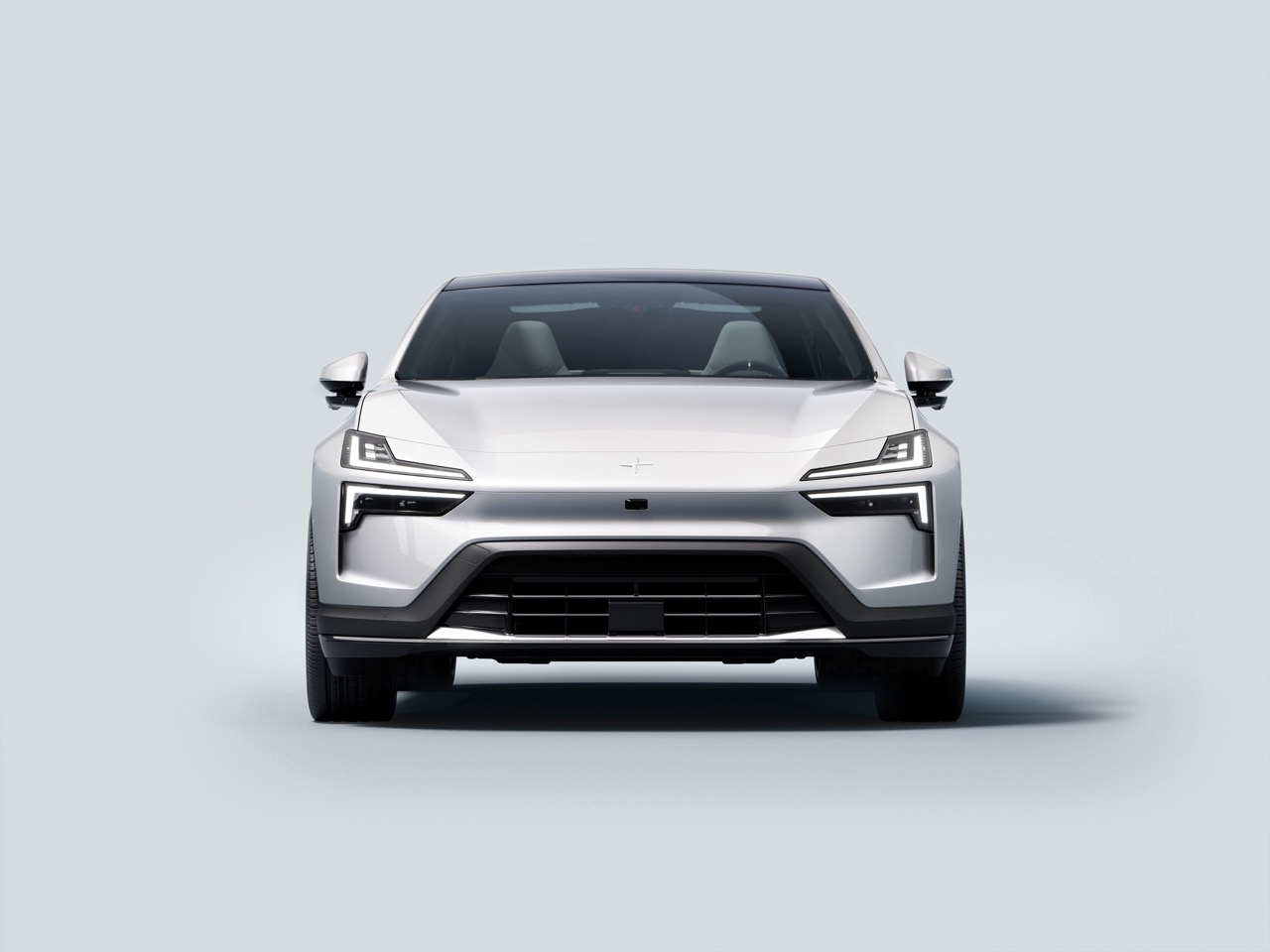
I mentioned earlier this week that Polestar’s ex-CEO was going back to Volvo as head of car design, and I was maybe a little dismissive of the company. By focusing more on Europe than the United States, the company has seen a rise in sales globally, up 34% year-over-year to 60,119 vehicles, which isn’t nothing.
As Bloomberg reports, this doesn’t mean that everything is all sunshine and rainbows over there:
Liquidity has remained an issue and the company last month received financing lifelines, including a term loan of up to $600 million arranged through a Geely unit. Despite its “asset-light” business model, Polestar has racked up roughly $8 billion in cumulative losses since inception, remaining largely controlled by Chinese billionaire Li Shufu through Zhejiang Geely Holding Group Co. and his private investment vehicles.
Sales in the US last year fell 32%, hit by tariffs that forced the company to balance volume against profitability, Lohscheller said.
Making cars is hard.
Kia EV2 Looks Cool, Probably Isn’t Coming Here

There’s one commenter who refuses to become a member until we do things in metric (or at least add metric to measures), so because I don’t think the Kia EV2 is coming to America, please enjoy some data from the company on this cute little EV:
A 2,565 millimetre wheelbase allows for various seating arrangements. Customers can choose either a five-seat configuration or a four-seat layout with independent sliding and reclining rear seats, making the EV2 flexible enough to function as the main car of the household.
The EV2 is available with two battery options: a 42.2kWh standard-range battery and a 61.0kWh long-range battery. Anticipated all-electric driving ranges reach up to 317 kilometres for the standard-range version and up to 448 kilometres for the long-range version (WLTP pending).
Both versions feature a 400V architecture and deliver rapid DC fast charging. The standard-range model completes the process in 29 minutes, while the long-range versions take around 30 minutes – ensuring quick and convenient charging for every journey.
I’ll maybe write more about this when we have a price.
What I’m Listening To While Writing TMD
I just rewatched The Third Man, and it’s one of my all-time favorite movies. It’s also free on Tubi. Jack White is also a fan, so in honor of that guy, here’s “I Think I Smell A Rat” from The White Stripes.
The Big Question
Was Stellantis right to kill the PHEV?
Top photo: Stellantis





> Hornet PHEV
Say what now? The hornet is still a thing?