


News came out yesterday that the parent company of Chrysler, Jeep, Dodge, Ram, and roughly 9 million other brands was killing its plug-in hybrid technology in the United States. A technology that, at least by sales, Stellantis had long been the North American leader in.
That Stellantis is killing all PHEVs is just another sign of how sad the post-Sergio Marchionne company has been at times. This story has a little bit of everything, including a successful attempt at compliance, but the ending is a sad one. Readers of The Morning Dump will not be surprised who deserves a chunk of the blame.


Not like everyone or anyone has it figured out right now. General Motors is in a way better position than Stellantis, but even it’s choosing to write down the costs of development of both EVs and some capacity in China. You know what brand is slightly ascendant in the EV space? Polestar, actually, but that’s in Europe, which is a place that’s seeing more EV growth.
You know what’s a cool EV? The Kia EV2. We ain’t getting it anytime soon.
It’s Terrible And Also The Right Thing To Do

For years, nearly every sales press release from Stellantis included a brag from the company that it had the best-selling PHEV, or three out of the four best-selling PHEVs, or whatever. Since its debut, the Jeep Wrangler 4xe has been America’s most popular plug-in, and now it’s dead.
This is a lot to unpack. As someone who generally likes PHEVs, I wonder if Stellantis’ PHEVs being both so popular and so troublesome has killed the idea outright? What was supposed to be a gateway drug to full-on EVs, maybe, just maybe, will become a stepping stone to EREVs.
First, credit to The Drive for breaking this story, which seems to stem from someone noticing that PHEVs are starting to get pulled from configurators and then asking Stellantis what’s up:
“Stellantis continually evaluates its product strategy to meet evolving customer needs and regulatory requirements,” a Stellantis spokesperson told The Drive via email. “With customer demand shifting, Stellantis will phase out plug‑in hybrid (PHEV) programs in North America beginning with the 2026 model year, and focus on more competitive electrified solutions, including hybrid and range‑extended vehicles where they best meet customer needs.”
“This approach reinforces the company’s commitment to offering advanced propulsion systems that maximize efficiency and provide options from internal combustion to hybrid range‑extended, and fully electric solutions,” the spokesperson continued.
I don’t think this means all PHEVs from Stellantis are immediately DOA. This sounds to me like perhaps the Pacifca PHEV, Hornet PHEV, and other vehicles using the technology might lumber on for a little bit longer.
How we got here is important. Stellantis is, ultimately, a Suicide Squad of brands that weren’t quite good enough to make it on their own, and the constant struggles have weighed down on what the company can produce. This isn’t to say there aren’t some great cars, but it’s a tough environment for engineers.
When then-FCA started launching 4Xe models, we were in a different world than the one we are in today from a regulatory standpoint. Between Corporate Average Fuel Economy (CAFE) requirements and the California Air Resources Board (CARB), the company was facing the prospect of huge fines (often paid to Tesla) if it didn’t have some sort of electric car or way to offer a vehicle with a battery. At one point, Jeep wasn’t even allowed to sell cars in certain states that weren’t plug-in models.
At the same time, Jeep and Chrysler were able to take advantage of tax rebates. A lot of tax rebates. While there were other people doing compliance PHEVs (anyone remember the Subaru Crosstrek PHEV?), and some legit attempts at consumer models (Volvo, BMW, Porsche, Toyota), no one put as much effort into selling them as Stellantis because, up until recently, Stellantis didn’t have a non-compliance electric car for sale in the United States.
Also, the bones of FCA may not have been in a great position from an investment or engineering standpoint to create an electric car. The PHEV system it created worked, sometimes. When it didn’t work, it caught on fire. There were recalls for recalls of recalls. Then came the merit badges for recalls because there were so many of them. Recently, the new CEO of Jeep offered owners cash as an apology for how it’s all gone.
It’s bad, y’all. A real car company would have had engineers to iterate on the new technology so that it could have kept its remarkable lead, but booted ex-Stellantis CEO Carlos Tavares, not pictured, decided to spend that money on EVs that Americans didn’t want and sent engineering to cheaper markets. Who could have seen this disaster coming? Literally anyone.
So the PHEV is dead, a bunch of consumers who liked these vehicles are going to have an orphaned technology, and Stellantis is going to move on. It’s the right decision for the company, which is going to instead focus on a mix of regular hybrids, EREVs, and a few EVs. The faster the company can start pretending that 4Xe never happened, the better for them.
GM Is Going To Write Down $7.1 Billion On EVs, China

The fun thing about accounting is that you can take a loss on money you’ve already spent to offset money that you’ve made, assuming you can justify that the money was essentially wasted. To that end, GM had this to say in a recent filing about the money it’s spent on EVs:
With the termination of certain consumer tax incentives and the reduction in the stringency of emissions regulations, industry-wide consumer demand for EVs in North America began to slow in 2025. As a result, GM proactively reduced EV capacity, including by pivoting the Company’s assembly plant in Orion, MI from EV production to the production of full-size SUVs and full-size pickups powered by internal combustion engines, where we believe we have unmet demand, and we proactively reduced battery cell capacity, including by selling our interest in Ultium Cells LLC’s Lansing, MI facility to LG Energy Solution.
Wait, there’s more:
We also expect to record additional non-EV related charges of approximately $1.1 billion for the three months ended December 31, 2025 that will have an approximately $0.5 billion cash impact when paid. These charges mainly relate to (i) the previously announced restructuring of our China joint venture, SAIC General Motors Corporate Limited (SGM), primarily related to our proportionate share of supplier claims, and (ii) an additional legal accrual. The EV-related charges, the China restructuring charges, the legal accrual and certain other insignificant charges expected to be recognized in the three months ended December 31, 2025 will be reflected as adjustments in our non-GAAP financial measures.
None of this is a surprise, and it’s not as bad as the nearly $20 billion hit that Ford took. While some of this is money already spent, agreements with contractors and suppliers may be as much as $4.2 billion, which will obviously have an impact on the bottom line.
GM remains one of the better-positioned EV automakers in the country, and this doesn’t mean the automaker will stop making electric cars, merely that it thinks it has all the capacity it’s going to need for the foreseeable future.
Polestar Sales Up 34 Y-O-Y Globally
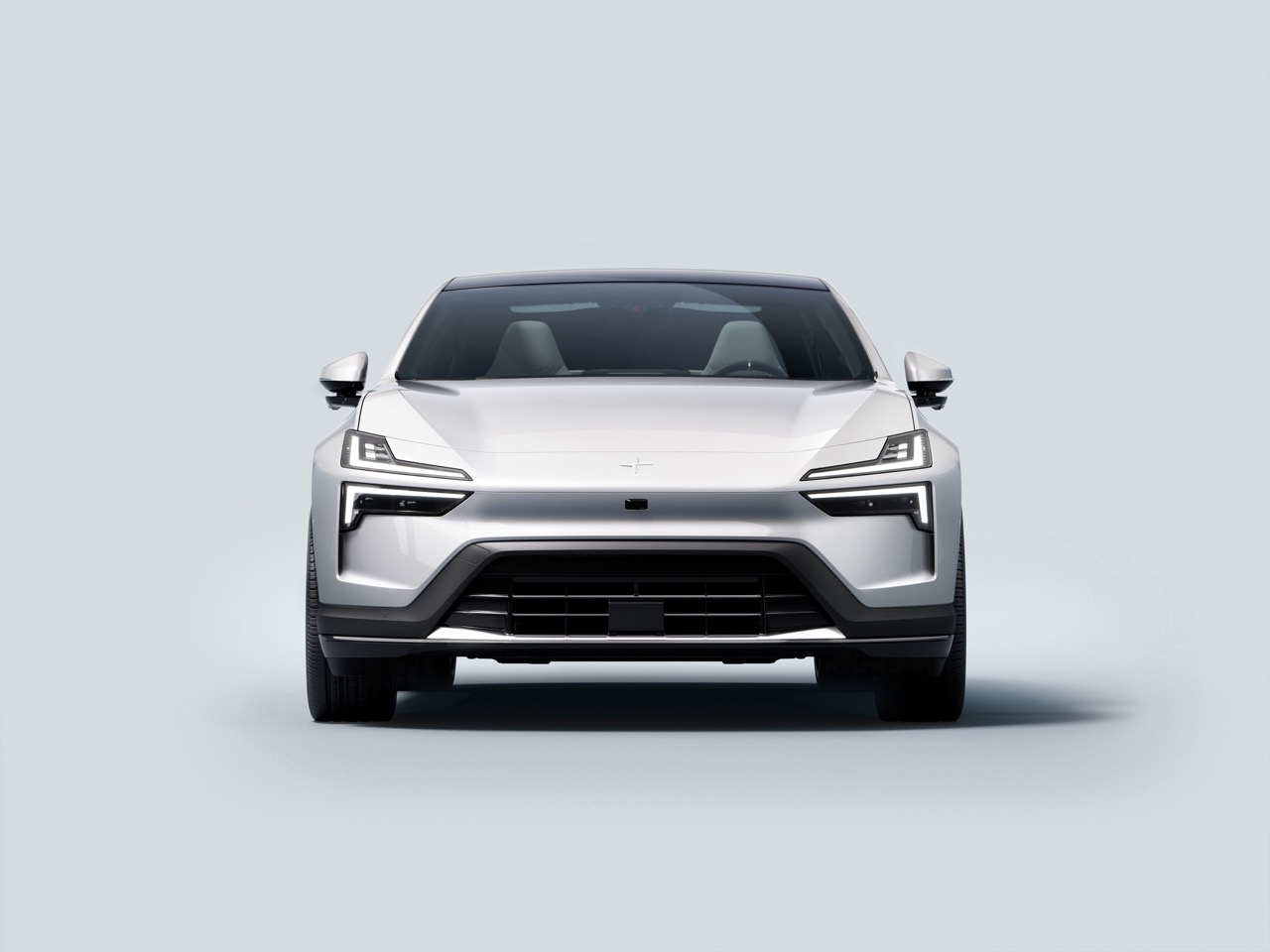
I mentioned earlier this week that Polestar’s ex-CEO was going back to Volvo as head of car design, and I was maybe a little dismissive of the company. By focusing more on Europe than the United States, the company has seen a rise in sales globally, up 34% year-over-year to 60,119 vehicles, which isn’t nothing.
As Bloomberg reports, this doesn’t mean that everything is all sunshine and rainbows over there:
Liquidity has remained an issue and the company last month received financing lifelines, including a term loan of up to $600 million arranged through a Geely unit. Despite its “asset-light” business model, Polestar has racked up roughly $8 billion in cumulative losses since inception, remaining largely controlled by Chinese billionaire Li Shufu through Zhejiang Geely Holding Group Co. and his private investment vehicles.
Sales in the US last year fell 32%, hit by tariffs that forced the company to balance volume against profitability, Lohscheller said.
Making cars is hard.
Kia EV2 Looks Cool, Probably Isn’t Coming Here

There’s one commenter who refuses to become a member until we do things in metric (or at least add metric to measures), so because I don’t think the Kia EV2 is coming to America, please enjoy some data from the company on this cute little EV:
A 2,565 millimetre wheelbase allows for various seating arrangements. Customers can choose either a five-seat configuration or a four-seat layout with independent sliding and reclining rear seats, making the EV2 flexible enough to function as the main car of the household.
The EV2 is available with two battery options: a 42.2kWh standard-range battery and a 61.0kWh long-range battery. Anticipated all-electric driving ranges reach up to 317 kilometres for the standard-range version and up to 448 kilometres for the long-range version (WLTP pending).
Both versions feature a 400V architecture and deliver rapid DC fast charging. The standard-range model completes the process in 29 minutes, while the long-range versions take around 30 minutes – ensuring quick and convenient charging for every journey.
I’ll maybe write more about this when we have a price.
What I’m Listening To While Writing TMD
I just rewatched The Third Man, and it’s one of my all-time favorite movies. It’s also free on Tubi. Jack White is also a fan, so in honor of that guy, here’s “I Think I Smell A Rat” from The White Stripes.
The Big Question
Was Stellantis right to kill the PHEV?
Top photo: Stellantis





I thought that Kia EV2 was a Volvo EX30 for a minute.
They do look similar. I’m curious to see how differently priced they are.
It looks like an overseas Kia Sonet with an EV powertrain
I was going to say the same. The EX30 is the big battery EV2, slightly smoothed over, with a nicer interior.
You would think that low-end torque would be a benefit.
Normal though from a company that refuses to fix the suspension unless it gets sued.
They refuse to touch my ticking GC until it actually collapses and blows the engine. I assume they’re waiting out the next 10k for the powertrain warranty to be up. They don’t want to fix anything, neither the service depts or the engineering from the factory. Look at the EXTREMELY well documented Pentastar oil housings. Dorman engineered the recommended fix. DORMAN. After 20 years of the Pentastar. Let the brand die…they clearly just don’t care.
And sadly there are scads of Chinese Amazon options for the all metal Oil cooler/filter kits. But there are scads of Euro motors running similar oil filter systems on top of the engine with plastic caps that fail alarmingly often.
Pentastar just turned 15. The HEMI never got the tick fixed and it’s 23 yrs old! Typical Stellantis M.O.
Agreed about the oil cooler/filter housing. I never had to replace that in my Ram (owned for 5 years), but my friend needs one for her 2016 Wrangler @ 80K miles. I recommended her the Dorman but she’s wary of non-OEM parts and has owned the Jeep since new, so in her book 10 yrs was a good run. 80K mile part is still ridiculous, though…
“Pentastar just turned 15. The HEMI never got the tick fixed and it’s 23 yrs old! Typical Stellantis M.O.”
It’s more of an ‘American Automaker’ thing.
Ford had issues with various engines and transmissions and taking years or decades to properly fix the root causes wasn’t unusual
Remember the old Ford 3.8L V6? Went into production in 1981… didn’t have the regular headgasket issues properly resolved until they switched to MLS head gaskets in 1998.
Or the original AXOD transmission in the original Taurus. Took them 8 years to implement improvements to make them less terrible.
And GM isn’t much different.
The Dorman is great, I did it a while back, it’s engineered exactly how you’d do it if you had years of the original plastic part failing. If you look at the issue it’s due to whoever changes the oil filter cranking on the housing when tightening the cap. It’s am angled plastic tube leading down to an elongated plastic base, no wonder it cracks/unseals when torqued. Chrysler could have engineered a simple bracket to hold the top end in place side to side when force is applied which would solve it as well. At the end of the day I believe the reason it never got fixed from the factory is that it’s a way of guaranteeing service dollars to their dealers when it fails outside of warranty. And it WILL fail, especially if those same dealers are the ones doing the oil changes and cranking on the knob. With the volume of these engines that are produced, changing the design of this part is something that would be amortized almost immediately, instead the average owner is on the hook for over $1000 to replace it with the same exact failure-prone item at the same dealer. Madness.
The plastic thermostat housing is the other major failure point on the Pentastar. Although it just fails by itself without any external input.
Not to include all the recalls and problems they had, but for at least for Dodge and Jeep, the hybrids were the performance option. Judging the Ram 1500 REV EREV when it comes out, that would’ve been the smarter option to even further boost MPG while getting good, if not great, performance out of it. Half-assing all those systems in the 4XE/Hornet R/T should’ve never been done. They are right to let them go.
The Pacifica PHEV just needed to bake more. After 9 years, it should be by now. Should.
Oh well.
I mean, I blame the italians for the Hornet. I also wonder how those cheap heavily subsidized French EVs are doing these days?
Probably terrible. Just like the rest of the European products, despite that being the focus of the conglomerate, and not the high-return US market.
PHEVs are not a bad idea. Stellantis PHEVs are. I am actually considering a PHEV replacement for my increasingly-concerning ticking grand cherokee. Aside from the overall quality of the GC (which is not very good), a company that can’t even fix known issues with lifter failures and Pentastar oil filter housing failures after 20 years…probably not gonna make a good complex PHEV system on top if it. I could probably flat trade my 2021 5.7 GC for one of the loaded 2023 4xes that are still on the lot, but it’s not worth the hassle, and dealing with the dealer over warranty claims has already been a PITA.
Then they also decided to astronomically increase their pricing while their reliability was in a nosedive. Screw ’em, let it burn. Plenty of better vehicles on the market. Volvo, BMW, Mercedes, Toyota, all make way better vehicles in pretty much every segment.
I kind of wonder if the Plastic Housing and Leaky Seals were not remnants of the Daimler Connection. the W204 Merc Housing has plenty of known issues as well.
I’ve seen new and nearly-new 25 Escape PHEVs with full factory warranties selling in the upper 20s! Hell of a deal. We like ours.
Escape Hybrids are super reliable and get great MPGs
*checks watch* You may need more fiber.
I’m not sure how anyone would think if Stellantis can’t safely do a PHEV they’ll have anymore luck with the EREV. All the electrical bits are there for both. It’s just the mechanical blending in the driveline that goes away for EREV. They’ll still have to fix the same fire issues.
Grammar nerd alert! “Jeep’s Killing…” because gerunds are always possessive.
You’ll sound like a jerk when spoken aloud, but you’ll be correct.
Then you’d also want to add “of.” “Jeep’s Killing of…”
But I stopped being a prescriptivist long ago. This flows well and is easily understood. Those are the important things.
The Wrangler 4xe was a big seller because of big discounts. When you could routinely get it cheaper than the equivalent gasser, it was an easy sale. It didn’t get better gas mileage than the gasser in hybrid mode and the battery range wasn’t great, but most buyers didn’t mind. But the big sales really hurt them with big recalls.
The Grand Cherokee had similar issues, but not priced as well. It started out with a high trim on an already expensive vehicle. I think a Cherokee or a Compass might have been better received. A 4xe Renegade would have been cool.
The Pacifica PHEV could have been the ideal vehicle for a lot of people, but reliability is pretty high on the list for a family hauler.
And the Hornet was just bad. Worse interior space than many in its class, too expensive, and not efficient enough to compete with similar vehicles.
I think they could have done really well if not for the recalls. A second gen Wrangler 4xe with improved battery range and/or hybrid efficiency could have really drawn in some customers. A more reliable Pacifica would be an easy sell.
I hope the Ramcharger is better engineered and sells really well. EREV versions of the Pacifica and Wrangler could be great.
In theory it sounded like a too good to be true scenario. I could commute on Electric most of the way, and even though I was stuck with an auto Trans and the little Turbo motor for the rest, it still seemed nice since Jeeps rarely get above 20 ish MPG. Used to be much worse. like 15 regularly.
I know I would have pretty regularly failed to plug it in though,
I have had two PHEVs, and that part is nice, but getting at least a little better efficiency while in hybrid mode seems like a solved problem. Getting 20 combined when the non-hybrid 4-cylinder gets 21 combined almost felt like they actively avoided efficiency. The 6-cylinder is rated for 20 combined with the auto, 19 with the manual.
I have always said I have no idea how Stellantis fucked that part up. I don’t think I’ve ever seen another PHEV that doesn’t improve regular efficiency when the car operates as a normal hybrid outside of performance cars that are PHEVs for compliance purposes. Most PHEVs don’t get the same MPG as regular hybrids when operating as such, but they tend to offer a significant improvement.
My dad’s X5 50e just flat out refuses to get less than 30 MPG. It’s goddamn impressive for a nearly 3 ton luxury boat.
TBQ: Yes, but…I don’t think it’s actually dead. I predict a definitely-not-named-4xE PHEV* system to come back in a couple of years, with the marketing proclaiming how robust this one is, while carefully not mentioning 4xE in any way, shape, or form.
Despite what their PR flack claims, this is not market-driven, this is engineering failure-driven. 4xE is a great idea and the market clearly wanted it, but what they delivered did not work and it’s obvious at this point that they can’t fix it in its current iteration. Their only option was to kill it and quietly try again somewhere down the road.
*: Maybe they’ll call it EREV, since as I’ve complained before, that is a distinction without a meaningful difference, and abusing the terminology to avoid comparisons to 4xE would be pretty smart.
Can a take a write down on health and car insurance payments where claims were never made? That’s essentially me spending money that was “wasted”, right?
Well, technically, you would have capitalized those costs when you paid them in advance and expensed (wrote them down) as the policy period elapsed.
Rushed technology to appease regulations will always be worse than something that has had time and effort to be properly tested (AKA compliance cars). Ones that come to mind as of late: 4XE Stellantis products, Toyota BZ4X, Mazda MX-30…
Ehhhhh the BZ has had a glow up. It’s pretty competitive now. My buddy’s fiancé just got one with a fat discount and they love it. I will say I was ubered to the airport in one recently and was surprised at how choppy the ride was.
It had a glow up, but that’s because the refresh wasn’t necessarily rushed.
That might be its RAV4 roots. The RAV4 has a bouncy, truck-like ride unless you get one of the sport trims. The firmer ride of the SE and XSE trims is not just sportier, it’s genuinely more comfortable than other trims.
The Stellantis PHEV disaster is, IMO, the worst of all electrification f*ckups, taking over the reigns from Chevy’s completely botched marketing of the Volt (which still made it well into a second generation, despite what feels like GM’s active efforts to keep it under wraps, even though it could have revolutionized things over a decade ago).
I have to imagine the loss of tax credits combined with the complexity of reworking the engineering, plus the sunk cost of warranty claims, all made it a foregone conclusion — at least to the bean counters.
I would have loved to see it fixed and maybe even become THE only drivetrain for those vehicles. Wishful thinking, but they completely gave up on any chance of becoming the brand synonymous with PHEVs (like Toyota once was for hybrids)
The difference is that both gens of the Volt were actually great cars, and well ahead of their time. The marketing was poor, but the product was great. These 4xEs seem to be hot garbage all around. Overpriced even with the tax incentives (Even the non-E wranglers are crazy expensive these days), then abysmal reliability, and apathetic dealers. Even older models (I have a 2021 5.7 GC, supposedly one of the most reliable vehicles theyve made) are not great…doubt I’ll buy another CDJR at this point.
Yes, Wranglers are overpriced by a factor of 2, or pretty close to that. I think the one thing that attracted me to the 4xe was that, after rebate, they were almost identical to a comparable trim on a gasser, so it sounded like a no-brainer….until the problems arose.
I came pretty close to buying a WK2 GC a couple times (with 5.7, both a Summit and an Overland, but ended up passing since the sheer amount of short, local drives would kill my economy). So a little later I checked out the WL 4xe GC and was thoroughly disappointed with the drivetrain — rough, unfinished, and it made way too many strange sounds. I so badly wanted it to work! I’ve also driven a regular gas WL and I still think the WK was the better car. You got in there just in time!
Yea our WK2 was supposed to be the well-proven dinosaur that would take us for 200k without a whole lot of thought or effort. We’ve had it for 3-4 years and 50k, and already have suspension rattles, lifter tick, the infotainment screen delaminating (very common), defrost not working, plus lots of stuff here and there (OTA updates seem to default Uconnect settings every time, the charging outlets seem to have a mind of their own, Lots of rattles and squeaking from the sunroof, etc).
I’d be able to live with some of the rattles and interior stuff, but the lifter tick is pretty concerning, and realistically the suspension rattle is likely the air strut which isn’t cheap either. So at 50k miles looking at easily $10k in repairs on a $65k vehicle (fully loaded trailhawk). Brought it to the dealer last week, and all they could find was that my tires (half worn K02s) make a lot of road noise.
To be honest, its a super comfortable and capable vehicle otherwise but just really poorly built. It’s a shame.
That’s really sad to hear, but not unusual for Stellantis (statistically, if not always anecdotally). I always figured after nearly 15 years with few changes, they would have at least nailed the reliability on the GC a little better than that. They’re absolutely everywhere on the roads and that definitely makes the reliability concerns hard to swallow.
Since we didn’t need towing anymore, I donwsized my expectations and went with a BMW X3 (also 3-4 years old, like the GCs I was looking at, and at a comparable price to a mid-range GC Limited). Pretty happy so far, but there’s a decent laundry list of failures that have $5k+ price tags attached to them. Just praying I don’t get hit with any…
Sorry to hear about the air suspension, too. I love the Trailhawks and have heard that some people just retrofit them with regular suspensions ($1k vs $4k+) when they have a failure.
I thought the Volt was a great car. As they’ve aged and I started considering buying one to replace my beater, I learned they didn’t age well. There are a couple components – including the charge controller IIRC – that tend to fail early. To be fair that wouldn’t be the end of the world, except GM stopped making the parts.
Now I think the Volt was a really good car that was almost great. And I think the story is even sadder. Not only did GM fail to market the car, and not only did GM fail to expand the platform, but GM also made parts hard to come by – slowly bricking the surviving Volt’s that are out on the road.
Cars.com says there are 8,756 new Pacificas for sale nationwide. 72 are hybrids. And some of those hybrid listings are for 2022 and 2023 cars, so who knows if they really exist.
Seems like the Pacifica PHEV might be dead already.
Am I going crazy, or have there been a few instances of articles that were recently posted getting pulled fairly quickly? Like, the one about Chinese car buyers not paying for the bigger batteries already seems to be gone. I swear it happened with another article too not that long ago.
Seemed like some of the comments in the comment section were getting out of hand in the Chinese Car buyer article.
We can’t just ban those people?
Many of the nice folks in the comments who were wishing brutal deaths on people that they disagree with are also contributing members of this website. Banning them would impact revenue. It’s an incredibly awkward thing to navigate, and it appears that it’s easier to make an article disappear instead of policing the comments.
One of them was a Morning Dump that got pulled because Matt accidentally violated an embargo. He wrote up a post explaining that one.
I haven’t noticed any others, and didn’t happen to catch the Chinese battery one, so I don’t know what was going on with that.
Glad you said something; I just saw your reply to me in that article in my email, went to check it, and it was gone.
I assumed that my “practice what you preach” shtick had ruffled some feathers and it was taken down, but perhaps I am giving myself too much credit. I certainly didn’t threaten anyone.
If I spend too much time on this, I’m going to need to submit the activity “making fun of Stellantis” on my timesheet.
The PHEV disaster is what it is. But boy, this might be the (I won’t say beginning) middle of the end for Stellantis, at least in the US. I don’t know the exact numbers, but A LOT of the people willing to dip their toes into the piranha infested waters of Stellantis ownership have this powertrain. It’s one of the very, very few things that has lured new customers to brands that… let’s just say have a limited appeal to a number of Americans. The whole “we’ll just pivot to hybrids and EREVs!” thing is hilarious. Stellantis doesn’t have any of this shit ready to go! They can’t even seem to pull off releasing the damn Charger sedan fast enough for their dealers to be able to sell… well anything. Dodge dealers currently only have Durangos, a gazillion year old product. The Hornet is conspicuously missing from all the dealers around here. Chrysler is an entire brand, that only sells a minivan, oh and the only thing modern about that van is the PHEV powertrain that they’re moving on from.
Stellantis really can’t afford to cut more products, they already hardly sell anything here right now. And based on their now Tesla-like tendency to promise new products and then bring us absolutely nothing, I don’t trust them to follow through on that shit at all. Stick a fork in them.
I wonder if the fix to the reliability issues is so big, they are just throwing in the towel and it’ll come back under a new name (with a new design and components) in the future.
I think it’s so fascinating that Stellantis was one of the first to try and corner a market with PHEVs (how many people *specifically* went into Chrysler dealerships who would never be caught dead in any domestic just because they beat Toyota to the punch by several years with the Pacifica) and have fumbled things so badly in the interim decade that they are basically about 6 months away from throwing their hands up and wedging a Hemi in the FWD Hornet so they can finally make commercials that are nothing but Tim Allen noises.
I don’t think people really understand that when the Pacifica came out just how much better than the competition it was. Then, add in the PHEV and boy was that thing slick. Minivans have got to be the single best segment to PHEV-ize and of all places Chrysler did it first. Ignoring the PHEV and just looking at the Pacifica, it’s been out for almost 10 years and it still holds its own (in theory at least). And then…. it’s equally hard to understand just how little FCA/Stellantis did with it. Yeah, the PHEV was light years ahead of everyone else, but 10 years of hilariously high failure rates, with no substantial improvement is insane. I love them every time I get one as a rental, they drive better than my Sienna. On paper, it’s a better fit for my use case. But boy oh boy was I NOT buying the plug in version. The Chrysler dealer at least straight up told me the same too when I was actively trying to make self harming choices, so kudos to them for not trapping people in reliability turds.
Maybe we get lucky at get a EREV Pacifica soon, that is reliable? Should I buy a powerball too?
I’m this person. Bought two consecutive Pacifica PHEV’s because its efficiency kicks the ass of the Sienna & Odyssey, but can’t think of a single other Stellantis product that I’d even remotely consider.
I know the Wrangler/Grand Cherokee were problematic. My wife and I considered a GC PHEV but decided to wait until they were proven, which turned out to be a good choice. That said, I am not sure why the Pacifica hybrid has to die. They had some issues, but overall much more reliable than the Wrangler/GC, and were pretty nice to drive overall. The engine turning on an off wasn’t always the smoothest, but really not any worse than my mom’s Rav4 hybrid. Even if you never plugged them in, which is dumb, they still got solid mileage.
My anecdotal story from the last trip I took in a Pacifica PHEV was 820 miles round trip, 650 was highway, and the rest was mixed driving below 55mph. Even without plugging in at all on the trip we still got 32.6mpg. Not bad for a vehicle hauling 2 adults, children, a dog, all of our luggage, and no one was cramped or on top of each other.
A Hemi hornet sounds pretty good if the lifters don’t collapse in 50k
I know this is just a throwaway line, but it inspired a rare idea for a practical use of AI. You can probably feed an entire article in with a prompt saying “add metric conversions alongside any measurements” and get a converted version in a matter of seconds.
In reality, though, it would probably just get the conversions wrong, add some random AI hallucination junk, then steal all the content until it can make a “super human” Matt Hardigree AI (i.e., an AI that tries to sound like you while completely missing all the cultural references and actual economic insights).
You don’t even need AI. You can write it into the website code to automatically fill-in alternative text (such as unit conversions) whenever a certain string of text is shown. Heck, I think there might be some browser plugins that do that as well.
My favorite example of such a thing was on the old Airliners.net website. Their web forum would automatically enable a descriptive text popover whenever anyone typed in an airport code. Most people know what LAX and JFK are, but they may not know what SXM is, so all you had to do was hover your cursor over the airport code to see a text box with the full airport name & location.
When the site owner/developer sold to another company, they had to replace the entire backend, and the airport code popover feature went bye-bye. (The former owner acknowledged in a post that the entire website had been run on spaghetti code and emergency patches that had become impossible to maintain, so he understood why the new owner had to start over completely from scratch.)
With the way the economy is doing, Kia might do well to build the EV2 stateside and sell it there too.
Jeep needs to give 4XE owners a full buyback offer. It’s junk and will have no resale value. or maybe “we’ll give you an equivalent new gas Wrangler and $5k cash if you trade in”.
Huh. Guess I never really thought of where the name Third Man Records came from.
Raconteurs is my favorite Jack White project.
There’s one commenter who refuses to become a member until we do things in metric (or at least add metric to measures)
I’ll put Autopian lawn signs in my front yard if you measure weight by stones and dimensions by cubits.
Area by virgates and volume by gills and pottles, please.
All mass measurements in slugs, we must be technically correct (the best kind of correct!).
And do away with quarter-mile times. Tell me how quickly a car can cover two furlongs.
…TBQ is a toughie today. Should they have given up on such a troubled vehicle that may as well be the 2020s version of a Vega? Probably. But it’s not a good look either, given what it was supposed to be.
It’s also kind of surprising that a specialty vehicle like a Wrangler is the best selling PHEV.
“…pivoting the Company’s assembly plant in Orion, MI from EV production to the production of full-size SUVs and full-size pickups powered by internal combustion engines, where we believe we have unmet demand”
I used the same logic when I gave up on dieting.
So, fire sale on the remaining 4xe?
Too soon?
They have a lot of overstock, if I recall 😉
OH MY GOD WE’RE HAVING A FIRE… sale.
South Coast Boutique is having a fire sale?!?
Bring it on. I’ll take a Wrangler if they’ll offer it under $25k. Maybe it could be like all those Chevy Bolt buybacks that are selling for peanuts now…
According to the recall, every 4xe has technically been a fire sale.
COTD
While PHEVs as a concept are great ways to reduce emissions, increase efficiency, and be cost effective to owners, the 4Xe cars are such unequivocal reliability disasters I expect them to be a net loss across the board. Constant repairs and recalls means batteries are getting trashed after minimal use, Do Not Charge warnings means the PHEV part has minimal use, and the depreciation and reputation of these things means they cost a disgusting amount to actually own. Good riddance, and I hope Stellantis learns some serious lessons.
I fear that we are, world wide, in a place and time where the old men that run everything will continue to not learn a damn thing from the daily torrent of dumbass they now firehose.
This statement succinctly describes my career in publishing during the rise of the internet.