


News came out yesterday that the parent company of Chrysler, Jeep, Dodge, Ram, and roughly 9 million other brands was killing its plug-in hybrid technology in the United States. A technology that, at least by sales, Stellantis had long been the North American leader in.
That Stellantis is killing all PHEVs is just another sign of how sad the post-Sergio Marchionne company has been at times. This story has a little bit of everything, including a successful attempt at compliance, but the ending is a sad one. Readers of The Morning Dump will not be surprised who deserves a chunk of the blame.


Not like everyone or anyone has it figured out right now. General Motors is in a way better position than Stellantis, but even it’s choosing to write down the costs of development of both EVs and some capacity in China. You know what brand is slightly ascendant in the EV space? Polestar, actually, but that’s in Europe, which is a place that’s seeing more EV growth.
You know what’s a cool EV? The Kia EV2. We ain’t getting it anytime soon.
It’s Terrible And Also The Right Thing To Do

For years, nearly every sales press release from Stellantis included a brag from the company that it had the best-selling PHEV, or three out of the four best-selling PHEVs, or whatever. Since its debut, the Jeep Wrangler 4xe has been America’s most popular plug-in, and now it’s dead.
This is a lot to unpack. As someone who generally likes PHEVs, I wonder if Stellantis’ PHEVs being both so popular and so troublesome has killed the idea outright? What was supposed to be a gateway drug to full-on EVs, maybe, just maybe, will become a stepping stone to EREVs.
First, credit to The Drive for breaking this story, which seems to stem from someone noticing that PHEVs are starting to get pulled from configurators and then asking Stellantis what’s up:
“Stellantis continually evaluates its product strategy to meet evolving customer needs and regulatory requirements,” a Stellantis spokesperson told The Drive via email. “With customer demand shifting, Stellantis will phase out plug‑in hybrid (PHEV) programs in North America beginning with the 2026 model year, and focus on more competitive electrified solutions, including hybrid and range‑extended vehicles where they best meet customer needs.”
“This approach reinforces the company’s commitment to offering advanced propulsion systems that maximize efficiency and provide options from internal combustion to hybrid range‑extended, and fully electric solutions,” the spokesperson continued.
I don’t think this means all PHEVs from Stellantis are immediately DOA. This sounds to me like perhaps the Pacifca PHEV, Hornet PHEV, and other vehicles using the technology might lumber on for a little bit longer.
How we got here is important. Stellantis is, ultimately, a Suicide Squad of brands that weren’t quite good enough to make it on their own, and the constant struggles have weighed down on what the company can produce. This isn’t to say there aren’t some great cars, but it’s a tough environment for engineers.
When then-FCA started launching 4Xe models, we were in a different world than the one we are in today from a regulatory standpoint. Between Corporate Average Fuel Economy (CAFE) requirements and the California Air Resources Board (CARB), the company was facing the prospect of huge fines (often paid to Tesla) if it didn’t have some sort of electric car or way to offer a vehicle with a battery. At one point, Jeep wasn’t even allowed to sell cars in certain states that weren’t plug-in models.
At the same time, Jeep and Chrysler were able to take advantage of tax rebates. A lot of tax rebates. While there were other people doing compliance PHEVs (anyone remember the Subaru Crosstrek PHEV?), and some legit attempts at consumer models (Volvo, BMW, Porsche, Toyota), no one put as much effort into selling them as Stellantis because, up until recently, Stellantis didn’t have a non-compliance electric car for sale in the United States.
Also, the bones of FCA may not have been in a great position from an investment or engineering standpoint to create an electric car. The PHEV system it created worked, sometimes. When it didn’t work, it caught on fire. There were recalls for recalls of recalls. Then came the merit badges for recalls because there were so many of them. Recently, the new CEO of Jeep offered owners cash as an apology for how it’s all gone.
It’s bad, y’all. A real car company would have had engineers to iterate on the new technology so that it could have kept its remarkable lead, but booted ex-Stellantis CEO Carlos Tavares, not pictured, decided to spend that money on EVs that Americans didn’t want and sent engineering to cheaper markets. Who could have seen this disaster coming? Literally anyone.
So the PHEV is dead, a bunch of consumers who liked these vehicles are going to have an orphaned technology, and Stellantis is going to move on. It’s the right decision for the company, which is going to instead focus on a mix of regular hybrids, EREVs, and a few EVs. The faster the company can start pretending that 4Xe never happened, the better for them.
GM Is Going To Write Down $7.1 Billion On EVs, China

The fun thing about accounting is that you can take a loss on money you’ve already spent to offset money that you’ve made, assuming you can justify that the money was essentially wasted. To that end, GM had this to say in a recent filing about the money it’s spent on EVs:
With the termination of certain consumer tax incentives and the reduction in the stringency of emissions regulations, industry-wide consumer demand for EVs in North America began to slow in 2025. As a result, GM proactively reduced EV capacity, including by pivoting the Company’s assembly plant in Orion, MI from EV production to the production of full-size SUVs and full-size pickups powered by internal combustion engines, where we believe we have unmet demand, and we proactively reduced battery cell capacity, including by selling our interest in Ultium Cells LLC’s Lansing, MI facility to LG Energy Solution.
Wait, there’s more:
We also expect to record additional non-EV related charges of approximately $1.1 billion for the three months ended December 31, 2025 that will have an approximately $0.5 billion cash impact when paid. These charges mainly relate to (i) the previously announced restructuring of our China joint venture, SAIC General Motors Corporate Limited (SGM), primarily related to our proportionate share of supplier claims, and (ii) an additional legal accrual. The EV-related charges, the China restructuring charges, the legal accrual and certain other insignificant charges expected to be recognized in the three months ended December 31, 2025 will be reflected as adjustments in our non-GAAP financial measures.
None of this is a surprise, and it’s not as bad as the nearly $20 billion hit that Ford took. While some of this is money already spent, agreements with contractors and suppliers may be as much as $4.2 billion, which will obviously have an impact on the bottom line.
GM remains one of the better-positioned EV automakers in the country, and this doesn’t mean the automaker will stop making electric cars, merely that it thinks it has all the capacity it’s going to need for the foreseeable future.
Polestar Sales Up 34 Y-O-Y Globally
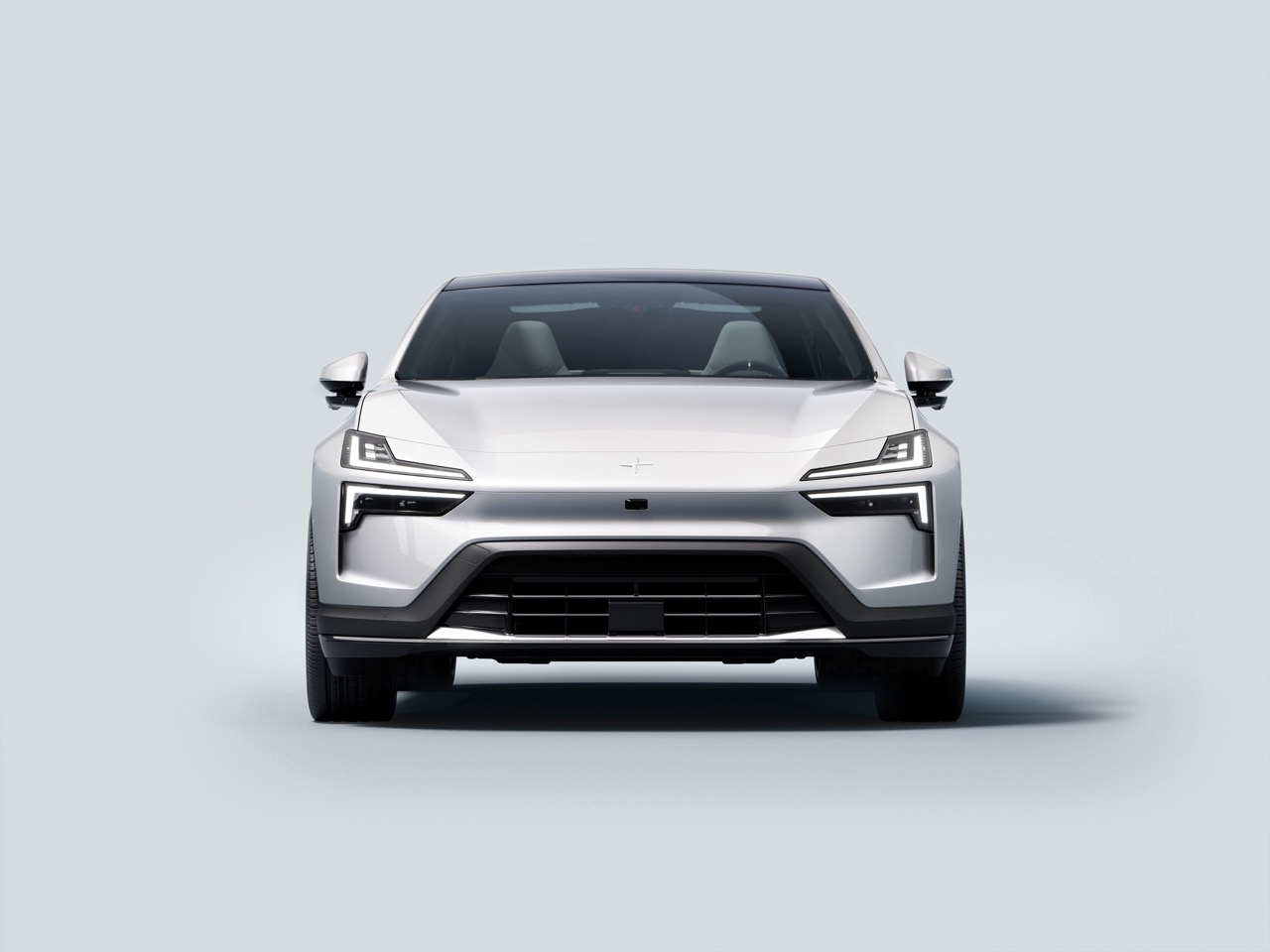
I mentioned earlier this week that Polestar’s ex-CEO was going back to Volvo as head of car design, and I was maybe a little dismissive of the company. By focusing more on Europe than the United States, the company has seen a rise in sales globally, up 34% year-over-year to 60,119 vehicles, which isn’t nothing.
As Bloomberg reports, this doesn’t mean that everything is all sunshine and rainbows over there:
Liquidity has remained an issue and the company last month received financing lifelines, including a term loan of up to $600 million arranged through a Geely unit. Despite its “asset-light” business model, Polestar has racked up roughly $8 billion in cumulative losses since inception, remaining largely controlled by Chinese billionaire Li Shufu through Zhejiang Geely Holding Group Co. and his private investment vehicles.
Sales in the US last year fell 32%, hit by tariffs that forced the company to balance volume against profitability, Lohscheller said.
Making cars is hard.
Kia EV2 Looks Cool, Probably Isn’t Coming Here

There’s one commenter who refuses to become a member until we do things in metric (or at least add metric to measures), so because I don’t think the Kia EV2 is coming to America, please enjoy some data from the company on this cute little EV:
A 2,565 millimetre wheelbase allows for various seating arrangements. Customers can choose either a five-seat configuration or a four-seat layout with independent sliding and reclining rear seats, making the EV2 flexible enough to function as the main car of the household.
The EV2 is available with two battery options: a 42.2kWh standard-range battery and a 61.0kWh long-range battery. Anticipated all-electric driving ranges reach up to 317 kilometres for the standard-range version and up to 448 kilometres for the long-range version (WLTP pending).
Both versions feature a 400V architecture and deliver rapid DC fast charging. The standard-range model completes the process in 29 minutes, while the long-range versions take around 30 minutes – ensuring quick and convenient charging for every journey.
I’ll maybe write more about this when we have a price.
What I’m Listening To While Writing TMD
I just rewatched The Third Man, and it’s one of my all-time favorite movies. It’s also free on Tubi. Jack White is also a fan, so in honor of that guy, here’s “I Think I Smell A Rat” from The White Stripes.
The Big Question
Was Stellantis right to kill the PHEV?
Top photo: Stellantis





On the one hand, yes, Stellantis should have killed that whole power train when it became clear it was a lemon.
On the other, if Stellantis cancelled every initiative that’s an engineering failure, we’d be left with the Sprinter van.
So it’s not the easiest decision to make.
They should have killed it 2 years ago. They should have to buy every single one back, and reimburse everyone who bought one for every dime they spent dealing with the garbage. That might get me to consider a product from them again in my lifetime.
Personally I’d say that it is an embarrassment that they kept it in production as long as they have without ever getting it to really work right.
Certainly a big part of the problem was they rushed it to production w/o proper testing because they had been simultaneously topping the lists of credit purchases and fines paid. That meant the hope for profit on them was in the regulatory relief hoping to loose less per vehicle than offsetting credits would cost for the ICE version. With that pressure gone, if only temporarily, it just makes sense to stop the blood flow. Hopefully they actually learned something and are going to be ready to put that to use when the regulatory climate changes in the other direction.
What was supposed to be a gateway drug to full-on EVs, maybe, just maybe, will become a stepping stone to EREVs.
Maybe? That’s exactly what you quoted them saying is the plan:
“With customer demand shifting, Stellantis will phase out plug‑in hybrid (PHEV) programs in North America beginning with the 2026 model year, and focus on more competitive electrified solutions, including hybrid and range‑extended vehicles where they best meet customer needs.”
Yes the question is will it work?
Why wouldn’t it? I’d certainly give a highly efficient, roomy, practical EREV Caravan or.Pacifica a look. Especially if its given the magic.trick of doubling as a mobile generator.
TBQ answer:
They didn’t know how to make them well enough to last, so yes, especially if they were not going to even try to make them well enough to last. And people want their cars to last, not to go back to the shop over and over again.
They made them well enough to sell, though.
Is the Kia EV2 the Hyundai Inster in different clothes?
LMAOOO I’m gonna keep saying it, we can chirp China all we want for ‘junk quality’ but when NA is cranking out Jeep and Ford quality you’ve got no leg to stand on. How are these legacy automakers in NA making such trash? (this includes Toyota and their TT6)
Domestic manufacturers have had no quality leg to stand on against any of the east Asian manufacturers since, what, the 1950s?
Was Stellantis right to kill the PHEV? Boy, I have mixed feelings about this. On one hand I really wanted one. It was just about perfect for my 12 mile city traffic commute, which is the good use case for a fun vehicle that gets terrible mileage…but Stellantis…eh…you know its going to have problems. A good idea poorly executed is still terrible. Maybe instead of killing it, they could just let Toyota take care of the whole powertrain up to axles…oh and all the electrical stuff….closures and fit too…probably should do the HVAC and infotainment while they are in there…maybe the lighting, just to make it easier for everyone…and windshields and steering system. Otherwise I think Stellantis did a good job with it.
I’ve always said I wanted a Jeep just made by Toyota. Maybe not now though all things considered with Toyota…
The 4 cylinder turbo and ZF 8 speed are quite reliable units. Stellantis has its problems, mostly jack wagon CEOs of the past, but they also have had some pretty solid powertrains from time to time.
Swear there was an article some years back in The Drive (or maybe even on these august pages) about how for all the PHEVs Jeep sold, market research showed hardly anyone bothered to plug them in, arguably making them less efficient than if they’d just made a standard hybrid…
It wasn’t just Jeep, it was all PHEV. IIRC there was a marked difference between charging behavior of PHEVs in Europe and the US. Could that be because of the relative costs of electricity vs fuel in each area?
The electrons are all different over there! They take a mid-day nap and eat dinner at 10PM. They sit and smoke inside in cafés. Some of them are even antisemites! To some of them “charge” means “retreat.”
Geez, how many more poor-taste stereotypical nationalist jokes can I fit in here?
Are they baguettery-powered?
Polestar never should have been made a stand alone brand from Volvo.
100%
It is how it will be able to claim bankruptcy without ruining Volvo, though.
Here are some ideas, Jeep. The PHEV goes away, but the half-door option comes back on the Wrangler. Huh? Let’s trade one thing that repeatedly catches fire for one thing that repeatedly brings joy. Another idea, and this is going to sound crazy, what if you offered more than one seat color, maybe adding one to what you currently offer, which would make a total of…two? Tan is fine, don’t overthink it. The above are things in our relationship you used to do, but you stopped doing, much like a resentful spouse in a failing marriage. What happened to us, Jeep?
The PHEV was implemented horribly. So it deserved to die. I feel bad for the owners suckered into one of these lemons. Being unable to charge and needing to run on gas all the time is sure a budget and time hit.
I love how everyone is citing “customer demand shift” when it’s clearly the regulatory changes. Dramatically cut back CAFE and CO2 targets and it’s funny how manufacturers don’t want to voluntarily lose money. Customer demand for PHEVs and EVs has never, for the industry as a whole (outside of some specific models), caught up with the true cost of the vehicles to where manufacturers could be profitable on them, especially when everyone had to enter the market and thus flooded it.
I’m curious to see how our CX-90 PHEV shakes out reliability-wise, since it’s all Mazda-developed. At least the warranty is good. It uses the same longitudinally-mounted engine layout as the Jeep where the electric motor sits between the ICE and conventional automatic where the torque-converter goes, and torque is rear-biased via a standard driveshaft. Maybe Stellantis should give Mazda a call?
The CX-50 hybrid (not plug-in) is licensed from Toyota and I think it’s just a Prius AWD drivetrain.
It seems like an EREV would be easier to integrate than a PHEV, but given the Volt, Karma, and i3 came and went, maybe not.
I asked a neighbor who had one in his driveway and he said after some initial hiccups, updates sorted out his PHEV CX-90 early issues.
Our 2025 PHEV CX-90 hasn’t had any issues. It’s not the smoothest transition between full EV and hybrid, but it’s got good power, and it’s kind of fun feeling the gears shift in full EV mode. Bury the accelerator, and it’s got plenty of grunt for a 7-seat SUV.
Fully trimmed out, they feel quite luxurious inside.
I’d never use the 3rd row so if I were shopping Mazdas, it’d the the CX-70 or smaller.
The CX-50 drivetrain is technically from the AWD RAV4, which has a larger engine, beefier motors, and larger battery than the Prius. But I’m being pedantic; you’re right that it’s from the same family as the Prius AWD drivetrain.
As many problems as the 4XE has had, I’d still buy a 2 door one the moment it came out.
“When then-FCA started launching 4Xe models, we were in a different world than the one we are in today from a regulatory standpoint.”
Nah… that’s no excuse for releasing a half-baked product that wasn’t properly de-bugged and as a result, has all sorts of issues and a bunch of recalls.
I’m guessing they’re gonna halt it, rework it to fix the issues and start selling it again.
Or maybe they’re dump it and replace it with the new hybrid system used in the upcoming Ram 1500 REV… which essentially is an all new plug in hybrid system that uses an Atkinson cycle Pentastar V6.
I’m hoping when that goes on sale, it’s a fully baked and reliable/durable powertrain.
But having said that, I don’t understand why they are dumping the Pacifica hybrid. And I find it hard to believe they are dumping the hybrids that they sell in the EU.
“Was Stellantis right to kill the PHEV?”
They’re not ‘killing the PHEV’ as they are coming out with a new one in 2026. It looks to me that they are only killing an earlier PHEV design that was half baked and is probably costing them a ton on warranty claims.
In regard to the Pacifica hybrid, I recall reading somewhere that a lot of that design was outsourced. So maybe that makes it less cost effective?
Anyway… hopefully all that’s really going on is them dumping legacy hybrid powertrains, some of which where problematic and has plans to replace them with better designs.
The Kia is just begging to be imported/built stateside as the new Soul.
These products sucked ass so the decision makes sense, but Stellantis has got to rip the band aid off and figure out how to make a decent electrified car sooner or later. They can V8 GO BRRRR FUCK YOU until the cows come home here in our fascist corner of hell but there isn’t much of a desire for most of that in the rest of the world.
I think you’re nailing the strategy they’ve fully commited themselves to for America.
Fiat, and the PSA empire are going to get dragged down kicking and screaming.
The lack of any semblance of creativity or motivation is just galling to me for some reason. Like, to an extent I get it. V8s sound amazing and are powerful. They’re incredibly wasteful, but I don’t mind that they still exist. You hit the go pedal and return to monke.
But like…how is this STILL all that you’ve got in 2026? People were saying back in the friggin 20 teens that they were going to have to find something else eventually. They’ve had more than a decade to come up with literally anything else. They made a miserable, embarrassing attempt at a PHEV and gave us a pair of BEVs that were DOA because of how borked they are.
I guess that the Hurricane exists but the internet is not kind to that engine. Anyway…the WE’RE GIVING EVERYONE A V8 AND IF YOU DON’T LIKE IT YOU’RE A SISSY GAY BETA shit is going to keep working for approximately 20 more minutes. The Truck Industrial Complex is on borrowed time.
It was cringy and embarrassing 5 years ago. Now it’s just living parody. I think Stellantis will be dead in 5 years to be honest.
I fully agree here. The leanings of the NA side of Stellantis are pretty easy to read. Of course any EV or hybrids will go away, they are banking on the lack of EPA involvement. They do, however, have customers on the hook as their trucks rust out while you watch. Planned obsolescence worked well in the 50s and 60s. Have a laugh over at Garage Journal or such and no one will buy a “foreign” anything, meanwhile, over at the reddit Justrolledin the shop has a lot more 2.5 vehicles giving up the ghost. Regardless of smaller turbo motors or mighty NA v8s.
Matt called them the “Suicide squad” and yeah, that’s why they’ll be dead.
I’m also a big fan of PHEVs, We have an ICE (miata), a Hybrid (Maverick) a PHEV (Escape) and an EV (Bolt) all in the stable (daughter’s is the Escape PHEV). The Escape can handle errands into town and back all on battery, and anything longer the ICE just kicks in seamlessly. Even when in ICE hybrid mode, the Escape seems to be a more capable Hybrid than its Maverick cousin (same powertrain).
As much as I like PHEVs though, I think going forward EREVs are the better play (unlike PHEVs, EREVs have full power all the time, where PHEVs only have partial power and torque (electric motor only) until the ICE kicks in). PHEVs also seem to have minimal battery capacity that’s good for only 30-40 miles EV mode in most cases. EREVs should have more.
Ideally they’ll work on a compact purpose-built ICE / generator combination tweaked for maximum efficiency/single RPM coupled with a large-enough battery pack to allow a minimum of 80 miles all-electric range (100+ is even better) in their next EREVs
Not sure if it’s a good idea to abandon the tech they are working on now though. I think a better play would be to continue to fix/update the PHEVs they have and only discontinue them when they have functional EREVs in production.
If the RAM EREV system works well I think they would adapt it for Jeeps too. Hopefully!
“With customer demand shifting,” is a funny way of saying “Because for the life of us we can’t get them to stop LIGHTING THEMSELVES ON FIRE,” but hey, I’m no PR guy.
Funny, though, I don’t hear the same about the Pacifica burning itself to the ground like the Jeeps do.
Customers demand cars that dont catch on fire. They cannot make those.
“Every Stellantis product has a little bit of Ferrari DNA in it”
It’s not often that you compare a Chrysler to a Jeep and say the Chrysler is going to be the more reliable, but that’s how things go these days.
I’ve been in a few PIH Pacificas and they’re pretty nice places to find yourself and, according to the people that live with them, not terrible. Not fabulous, but not terrible.
Meanwhile Stellantis themselves are pretty much agreed that the Wrangler PIH is terrible. So this comes as no surprise. A disappointment, but no surprise.
I had a Pacifica PHEV for a couple of years and about 40K miles, and it was a trouble-free, comfortable experience. No real complaints to be had from that.
“I’ve been in a few PIH Pacificas and they’re pretty nice places to find yourself and, according to the people that live with them, not terrible. Not fabulous, but not terrible.”
I recall reading somewhere that the Pacifica’s hybrid system was largely outsourced. So maybe that makes it relatively expensive compared to a full in-house developed powertrain. Maybe?
Hopefully the new hybrid system coming out in the Ram 1500 REV will be fully baked and they use variations of that system in a lot of their vehicles.
If you’re going to be anything, be consistent. Stellantis is so consistent it’s crazy.
Seems like a weird flex. But as noted, I imagine the 4Xe reputation and recalls/stop sale has much to do with it. If they can scale up or down the Ramcharger system and also get it to work with the extender or just a big battery without and extender, then selling the Erev versions without a plug in seems fine. Especially if it reduces sale price like say a hybrid Maverick. I would be curious how many PHEV drivers actually use the Plug anyway since it only nets maybe 30 miles on Electric only.
One day we’ll have that data.
I can’t speak for anyone else, but when I had the PHEV Pacifica, I definitely charged it every night, and during my ownership (40K miles), about 55% of my miles were all-electric.
Just, do try to express that data in metric won’t you? (Seriously, who is that?? I love it! What a great hill to die on.)
I once wrote out a recipe calculator that called for metric eggs, which delighted the people that saw it.
I hate the measure “cup”. It needs to die.
It’s such a transient measurement that changes based on context, time, & place.
“I hate the measure “cup”. It needs to die.”
We should replace ‘cup’ with ‘goblet’!!!
A cup is not transient, it is a standard measurement. It is the equivalent to 8 ounces, 1/2 pint, 1/4 quart, 1/16 gallon, etc.
Liquids, sure
Unless it’s a dry cup then it’s 8.3 oz, but if it’s a coffee cup then it’s 4 oz, or a UK cup that’s 5.7 oz, or a metric cup that’s 8.45 oz and is also known as a legal cup and used on all our nutritional labels.
Oh dear. You’re assuming everyone’s using the US-liquid cup derived from US customary liquid measures.
But even the US legal labelling definition doesn’t use that measure.
It’s legally defined in the US as exactly 240ml (rather than 236.6ml defined above).
Oddly, despite changing it, they chose not to match any other existing cup such as: the Metric cup’s 250ml, the (obsolete) Canadian cup of 227ml, the UK Imperial cup of 170ml, etc…
But the size of a cup has changed so much over time, and every country has their own version (or multiple versions). If you find an old recipie in Pennsylvania from the 1800s: it may just use an old German or Dutch measure.
240 ml was arbitrarily decided as the metric equivalent for…”reasons”. Or maybe it was not arbitrary, maybe it was to make it a round number for metric users? I guess you’d have to ask whatever standards body made that nonsensical decision. 8 oz is 236.6 ml, so just use the latter if you truly want the metric equivalent of a US liquid cup.
I see, now, you just want to be done with this discussion and claim all cups are close enough.
It’s not consistent, concise, or clear.
At least a metric cup is always 250ml.
In professional baking, ingredients are measured in weight, but Fanny Farmer and Betty Crocker are really resistant to alternative measuring
In all baking using the metric system, not just professional baking.
I grew up learning to bake with real units, and even after decades dealing with cups of flour or sugar, I still have no idea wtf they work out to and why anyone would use them. And don’t get me started on tsp vs tbsp. Heaping? Not heaping? What size teaspoon? I have like 4 different ones. Smh.
Give me grams and centilitres or give me death.
Are you asking about PHEV drivers in general or 4xe drivers. I haven’t seen any data that includes 4xe broken out separately but I suspect a higher rate of those owners don’t plug them in vs owners of other PHEVs. That is because for a period of time in some states the only thing the dealers were allowed for floor stock and to floor plan were the 4xe. So if you wanted to drive home today in any of those states the 4xe was your only choice. Then you had federal, local and sometimes Jeep incentives that meant it was cheaper to roll off the lot in the 4xe. You can be certain that sales managers made sure the sales people were ready to counter the “I don’t have a place to plug” with “don’t worry you never have to plug it in, it will still work like a Hybrid and save you money on gas” Then in CA you had the clean air access program. That also gave people a reason to purchase a PHEV with no intention to ever plug it in, and those people are likely to skew to those with long commutes where HOV access can save significant time.
Now if you are talking about PHEV users in general there is this highly detailed but older data from a CARB paper. It uses MFG data and when the data provided allows them to determine if a vehicle was primarily operated in CA that broken out separately.
https://ww2.arb.ca.gov/sites/default/files/2020-01/appendix_g_pev_in_use_and_charging_data_analysis_ac.pdf
Table 12 on page 14 gives a good indication of how often vehicles were plugged in. For example on the Ford Fusion there were 15.5 million individual trip records and 14.5 million charge records. To me that indicates a lot of owners plugging in their cars on a regular basis.
The data gets juicy starting at page 24 showing that the ~40 mi range is a sweet spot before the law of diminishing returns pops up quickly.
Toyota ~11 mi range ~20% e-miles
Ford ~20 mi range ~40% e-miles
Chevy ~38 mi range ~80% e-miles
BMW ~72 mi range ~90% e-miles
“There’s one commenter who refuses to become a member until we do things in metric (or at least add metric to measures)”
I’d just be happy if width were included when quoting vehicle dimensions. Sure length helps, but adding width (the measurement, not making cars wider) is very relevant to us urban dwellers. Height, not so much. Except, perhaps hood height when discussing pickups and BOF SUVs.
Anyway, the entire issue may be moot as Trump plans to ban the use of Metric in the western hemisphere. Too ‘sciencey’…
Yes, width is super important for fitting two cars in my small garage. I also think beltline height and load floor height could be good measurements to have.
Ooooh, ending the week strong with The White Stripes! I’m about it.
Also, yes. Stellantis needs to kill their PHEVs until it figures out how to make PHEVs and/or EREVs properly.