


Maserati needs publicity, badly. The brand recently held a swanky media drive for journalists, guiding us through beautiful Malibu canyon roads in refreshed Maserati GranTurismos, Grecales, and GranCabrios, and telling everyone at the end: “Just write about us. We need the U.S. to be pushing…Maserati on any side…If we need to do more, that’s OK. Just write.” Why is the brand so desperate, and are the cars really that bad? Here’s what I learned.
“Don’t think I’ve ever seen a press release that simply says a media drive happened,” wrote a prominent car journalist in the auto media Facebook group about last month’s press drive. Between that media release, the “Just write about us” quote I mentioned above, and the email reminders I keep getting from Maserati’s contracted PR rep wondering where my story is, it’s clear: Maserati just wants publicity — good, bad, or ugly.


But why? Let’s start with what’s going on with the brand today.
Maserati Is Struggling

“Why Is Maserati?” read my colleague Matt Hardigree’s too-short headline back in June, not long after the brand had showed off a revised Grecale, GranTurismo, and GranCabrio in the wake of a terrible sub-8000-car sales year. Matt’s is a question many have been asking as the Italian sports-luxury brand struggles with its identity. From Matt:
The brand is in a tough position. It basically exists to sell a mix of hand-me-down platforms (the Grecale is related to both the Jeep Grand Cherokee and Alfa Giulia) and one low volume sports car (MCPura) that people theoretically buy. When Maserati got its motors handed down from Ferrari you could sort of see it as the sedan/SUV partner to that brand. With Ferrari being excised from the rest of the company like Beyoncé from Destiny’s Child, Maserati had a larger role to fill and fewer resources to do it with.

As for the revised cars, Thomas Hundal described why he doesn’t think they’re enough:
It’s a routine mid-cycle update for the Grecale, GranTurismo, and GranCabrio, but the trouble will be making people care. Maserati’s slide back into relative obscurity is something worth studying because in the mid-2000s, the marque was actually cool. With bits of Ferrari DNA under the skin of models like the Quattroporte V and sonorous V8 soundtracks, the Maserati range dripped with desire. Then, a few things happened. The Ghibli and Quattroporte VI sharing switchgear with a Dodge Dart probably didn’t help, and the current range is simply eye-wateringly expensive. The pre-facelift GranTurismo was discounted pretty much as soon as it hit the market, and that’s not a good sign for a luxury brand. The marque still has a long climb ahead of it, but hey, maybe Nude Alcantara can help.

OK, so the brand is lost. But why is Maserati pushing so hard for journalists to pump out stories right now? Well, there’s something big happening in December — something that Reuters refers to as a “strategic reset.” Modena, Italy-based TV channel tvqui.it breaks it down:
The plan will specifically focus on the Modena and Cassino plants and will be officially presented on December 10th, in Modena, during Maserati Day. The strategy focuses on the arrival of new products, with design that will retain a strong Italian heritage, from engineering, developed in collaboration with industrial partners, to product design…Also on the table is the return of two historic models, the Quattroporte and the Levante, anticipated by two concept cars. This option is part of the range renewal project. The stakes are high. Maserati has emerged from difficult years, marked by declining sales and uncertainty about its future production and employment. December 10th will therefore be a crucial date: not only to unveil the new models, but above all to understand the role Stellantis intends to assign to Maserati and to what extent the Trident’s relaunch will translate into production, investment, and jobs for the city.
December 10th is the day, and for Maserati, getting the world thinking about its brand before then is critical. I spoke with Cristiano Fiorio, Chief Marketing Officer of Maserati, to understand how the brand go into this position.
‘We Betrayed Part Of The Soul’

I began by asking Fiorio about the challenges the brand has faced recently. “[The] word is inconsistency,” he replied. “We have been not consistent in the past for several wrong reasons. We decided — maybe we were not alone — but maybe we went electric, then we went back from electric, and again, I’m not saying that this justification; we were not alone in this, but the most important thing, if you are a luxury brand, is consistency, because you have a strong and rooted brand, like ours, 112 years of history.”

He went on.
“And people…expect clarity. And clarity comes if you are consistent to, say, the same things over and over. If you change your mind, if you don’t have a clear positioning that you style in people’s head, if you tell things that are different — one manager coming after the other — and it changes the perspective, this is what we should not do as Maserati.”
Did Egos Crush The Maserati Brand?

Fiorio talked about how a brand can derail if it relies on management instead of a clear constitution.
“The brand lives besides managers,” he told me. “This should be the right paradigm. And if you change this paradigm, because there is an ego, because there is whatever, then the brand derails. And people get confused.”
He mentioned consistency a lot, and an identity centered around the concept of Gran Turismo, which is a blend of speed and comfort. “Consistent means consistent with what we say, consistent in what we do, consistent in what we design, consistent in what we engineer, consistent in what we market. If we are able to deliver this to our stakeholders, dealers, and to our customers…then, we have such a strong brand that people will be more than happy to come back, because on the other hand…the cars we make are quite beautiful.”
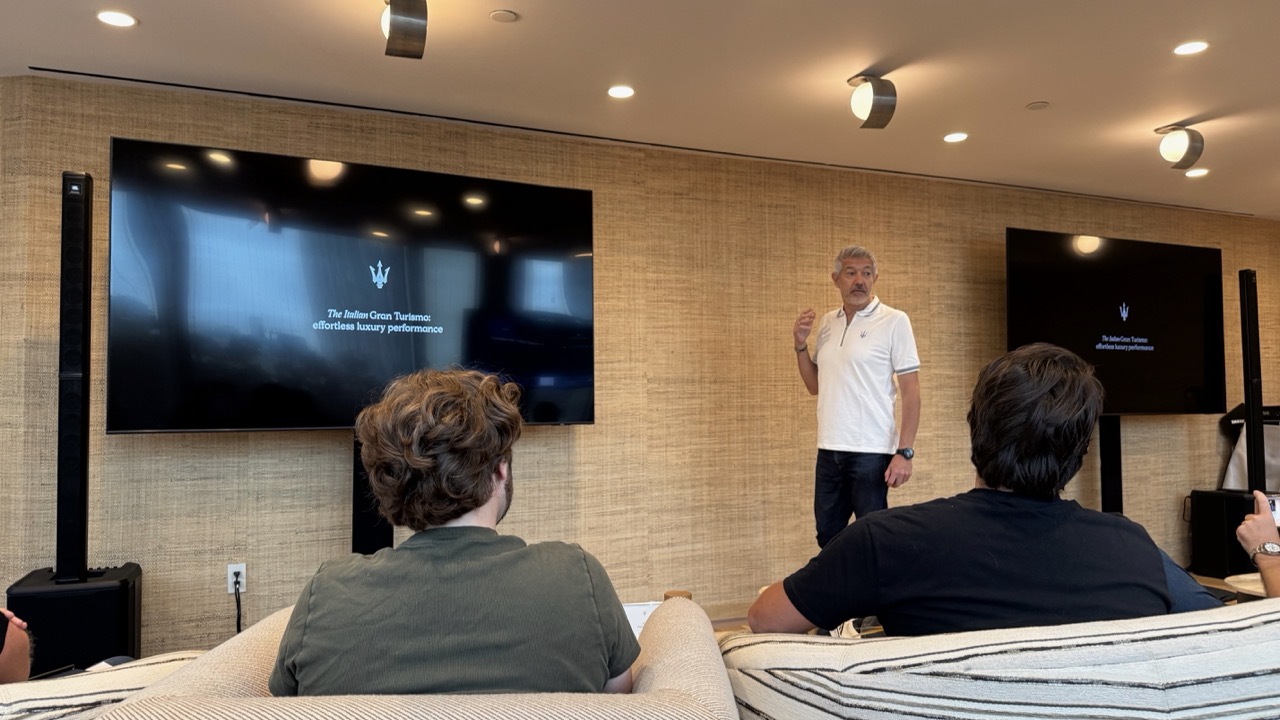
“What I really feel, which is the most simple thing that we can do, is reinforce our Gran Turismo positioning, because it is so strong and so unique in the market, that if we’re able to continue to preserve this as our unique selling proposition, because we are the only Italian Gran Turismo brand, and we were the first, among everybody else. So if we are able to continue in this path, then I believe that there should be an easier path forward.”
He talked about the importance of a constitution irrespective of management. “If you’re on U.S., you still have the Constitution, right? You cannot change that. Yeah. So you can do whatever you want, but you have to respect that. So we have a constitution as a brand. And people who come should feel that that…the Constitution, the brand architecture, is what defines a brand.
I asked if everyone, in the last few years, abided by that constitution. “That’s what I’m saying. It was not [abided by], because it was not clear enough. So if I come to a very structured and clear brand, the guy who was before me, or whomever is heading this brand, or the owner, whatever, he should give me the Constitution and say ‘Do whatever you want, but follow the Constitution,’ right?”
Three Things The Maserati Brand Needs To Succeed, According To Maserati
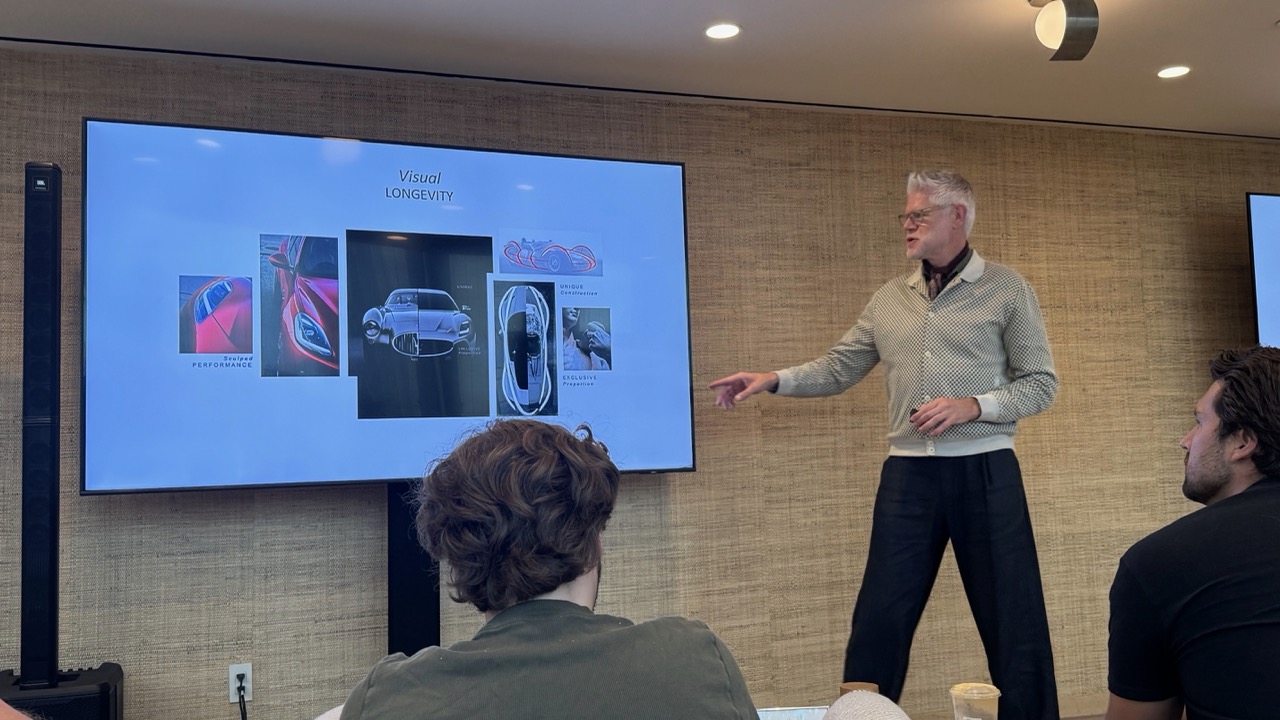
I asked how Maserati needs to improve moving forward. The Trident brand’s head of marketing listed three main things.
“Number one is the position. The Italian GranTurismo,” Fiorio replied. “This is us, this is what we were, this is what we are, this is what we have to continue to be.” He explained what that means. “So it needs two things. On one side, Gran Turismo means having…performance, but feeling comfort. Not pure and only adrenaline, but it’s matching adrenaline with the style part. This is the most important.”
“The second most important thing are the values. Okay, because those are the ones that are brought through time and that are able to shape, not only marketing, but design and engineering.” Those values, Fiorio told me, are 1. Italian lifestyle 2. Timeless Italian design 3. multi-sensory emotion. and 4. Pure elegance. “We don’t have to betray these values, ever,” he told me.
Fiorio went on to describe the last important ingredient for Maserati to be successful in the future — quiet luxury. “There are a number of cars that you might feel a little bit uncomfortable in driving, because they are too much, too visible, too much of a statement. And Maserati is nice. You cannot argue it’s an invisible car, but should be a little bit more subtle. A bit more quiet. It should reinforce the concept of quiet luxury…you don’t need to shout to be seen. You just can be sort of trying to be invisible, and then you are visible…[Showing off is] the opposite of what Maserati is. What we want to do is, we want to unlock the concept of using a Maserati every day. Because everyday usability is important.”
How Do You Stand Out In 2026? Avoid Becoming Too Computerized

This all sounds good, but how exactly can Maserati stand out? I see this as Maserati’s biggest challenge, and it’s not entirely the brand’s fault. Here’s how I posed the question:
Power is now easier to have in less expensive cars; interior qualities have jumped up immensely (you can look in a Nissan or a Hyundai and see really nice interiors)..and beyond that, you have infotainment systems that are the same in every car. Is it harder to stand out as a brand, as Maserati, compared to in the past? Especially with a lot of developments in ADAS and ride. There are a lot of cars out there that are really good at handling and comfort. Because you have different ride settings and all that. Are all these technological innovations making it hard, harder to stand out as a brand?
“It’s the best question,” he replied. “So as long as we do not do a computer on a wheel, we can stand out…I say that the day we will do a computer on four wheels, we will die.”
“But that doesn’t mean that we have to forget about technology, because we will have to serve two customers at a certain point of time. Those [fans] who are sick about Maserati, I think, which is a small part, and to them, you have to deliver the essence of Maserati. But…you also need something more. So, if I were to shape the Maserati of the future, we still have to have our soul, but we should do something to preserve the soul and enhance also the technological path in the best possible way. That means having a very good architecture, but still with an analogic visibility, touch, and feel. Because that’s a difference. I don’t want to be driven with a Maserati, I want to drive.”
‘If We Were To Go Only Electric, I Feel It Would Be The Death Of The Brand’

I then asked this question:
When I got in these cars today, I loved driving both. But a big part of that was that sound, and that engine, and those shifts. And I think when people think Maserati, the sound is everything.I mean, you listen to an old Grand Turismo of going down the street, and it’s the greatest sounding car on the road. And it’s been like that for a very long time. How does the soul remain in the world of electrification? Can you fully electrify as Maserati without potentially compromising that soul?
“So, arguably, yes, and arguably not…It depends to you, you speak,” Fiorio said. “If you speak with me, I’m 54. I will tell you, it’s very difficult, because I prefer to drive an engine as ICE. But there are new generations that do appreciate the performance, because when we speak about performance, we are not speaking only about sound.”
“Yes, sensory, but we can claim that sensory emotion is given also by the sound of music, the nice touch, the good smell of the leather, the sides. If it was only performance, and only sound, I agree with you. But we are not only performance on the sound. We are a number of other things. So, if we were to go only electric, I feel it would be the death of the brand.”
But that doesn’t mean avoiding electric entirely.

“I feel that [electrification is] an evolution of the brand into the future, because otherwise, we will never evolve. I also believe that we owe to this world an answer. So, is it only ICE? Is it…e-fuels, or is it EV, or is it REEV? There are a number of things which are yet uncertain in the next 10 years. So, at a certain point, the world said, ‘Oh, we have to go all electric.’ But that formula didn’t work for a number of reasons; the world was not prepared, the customer was not prepared, and, more importantly, the cost was high…And the infrastructure wasn’t ready. So, is this changing a bit? If we force people to change, because you have to, people will not go there? If we let the people choose what you like best, then the soul of the brand can be protected while offering to the traditional Maserati customers, the engine, the sound, and to the newcomers, and those who want also EV, the EV performance without the sound. So, I believe that there is space for both. As long as all the parameters are in line, because, again, sensory emotion doesn’t mean only the sound of the engine. It is also the sound of the engine.”
“[Going electric] would be the biggest mistake…that was the plan. That is why I feel we betrayed part of the soul, because…there are other brands, like the Serpent point….some Germans…who said, ‘Oh, let’s go, all EV.’ But then, you realize that, first of all, you lose a big part of the market, because they still want [ICE]. And we are still selling tons of cars, actually more ICE. So that market, you cannot forget. You have to keep. But then, if you want to evolve also in a part of the world, you need to have other solutions, which is a number of derivatives of these.”
I asked Fiorio what he thinks about EREVs, and he said he was intrigued by them, but said that because they drive like EVs the sound won’t be there, and he doesn’t like synthetic sound. “If you fake the sound, you are betraying to me.”
How Do You Recover From The Damage Done? The Answer Comes In December

As mentioned before, Maserati’s December announcement is expected to include a new E-segment SUV and potentially a new four-door sedan. These two were a key part of Fiorio’s answer to my continued pressing about what Maserati needs to recover from the damage to its brand.
Specifically, Fiorio mentioned that leaving your existing customer base is foolish; Maserati was selling to people who wanted internal combustion engines and they were selling large SUVs — to leave those customers without choice is a bad idea.
“The inconsistency means, if you have customers in the E-segment, happy, and…you go out of the E-egment. Why? You are gonna lose this, because they are not gonna step down [to the D-segment]. The D-segment, which is lower…[means you] are conquering some new markets, but you are losing the ones you have. [The Grecale] is a smaller car compared to Levante. …. They already stepped down — err, changed their mind on the eight cylinder. And they thought, ‘Oh, why isn’t Maserati doing the an 8 cylinder any longer?'”
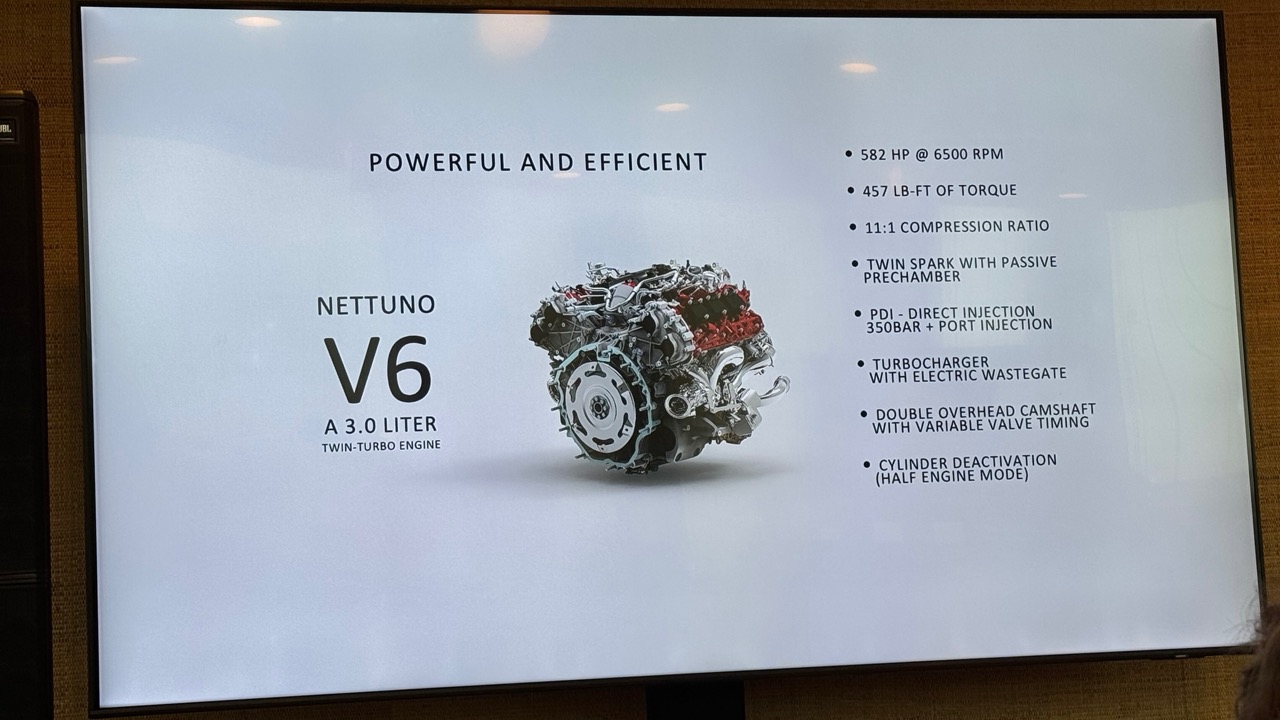
He went on to talk about the many benefits of the six cylinder, acknowledging that, while it may not sound quite like. a V8, it’s lighter, more efficient, and on and on. “The choice was the choice. I personally believe that, again, it’s not about choice, it’s about consistency. If you step into a segment, and you have clients in the segment, it will be wrong to step out of it. So I don’t want to argue of who did what. I just argue that the consistency is the key word. If you do something, then you have to take it always. Otherwise, you will lose the clients or you will lose the perception of who you are.”
“It’s easier to make damage, and it’s much harder to fix it.”
I tried to learn more about this upcoming December bombshell, and though I didn’t get much, Fiorio did talk a bit about software and comfort zones:
Can we go forward in the software architecture in where there is more need to satisfy customers, which are new, to the world? I’m not saying that we need to build a computer for wheels, but we need to have enough technology also to satisfy that. So, that is what I believe it’s intelligent to look around.
…Because we have the customer to buy us, and we know very well what do they want. So it’s easy. Then we have those who are not buying us. And we need also to conquer some, if we want to go back in segments, where we were not for three years, we need to reconquer people or conquer new people.
So I believe that we have to push even farther the exploration of what we have already done out of our comfort zone.
“…I cannot go more in that. Because if I go more in depth, I will tell you what I cannot tell you.”
I let that linger a bit to see if Fiorio could tell me more:
“There is a part where the brand is comfortable. There is a parts where we could have done more. That is the part where we have to leverage… And this is, I believe, it will be a part of what we will say, in December, because there’s a part that, to come back to your question, if we put all what we are already able to do, and we leverage the part that we could have, let’s say, improved, then we have a perfect brand. And to have a perfect brand today, you should look… It’s a huge world. You should look in this huge world and try to look the best-of. So if we argue that in Motor Valley [in Italy], we have a lot of best-of, then there are things where you can still go outside, look, and see if there is a best-of to blend together with Masarati and make the best of the best. This is a little bit the recipe.”
Someone from PR then chimed in: “December will come faster than you can believe now. We’re almost there. ”
“We have to go back in these E-segment. And if we go back in the E-segment, we have to do it in a very, very strong way. Strong way, strong way…And the strong way is what we will say we are revealing in December.”
This led me to think about another struggling European luxury brand that recently showed a very polarizing new car.
Maserati On Jaguar’s Reset: ‘If I come naked to my dinner, everybody’s going to speak about it, right?’

Here’s what I asked:
“I will ask you about Jaguar, because it’s a brand that…I won’t say it was in the same position, but it made some similar missteps. And I think some of it was nobody’s fault other than the world, the climate the world was in. But Jaguar did a full on reset. I mean, a full on, we’re gonna stop selling cars, and we’re gonna show you a car that looks outlandish, and we’re gonna come out with a commercial that’s crazy, and the world is gonna talk about us, but it’s not a Jaguar, as you know it.
Before I could ask, Fioro responded: “If I come naked to my dinner, everybody’s going to speak about it, right?”

I then asked if Maserati would ever do such a reset. “No. No, for two reasons…First, because we don’t need it, because we have a lot of good things that we continue to do. These cars that we have are good cars. You can argue that they can be better, yes, but they do not betray at all the Maserati brand. And so I don’t think that we need at all a full reset. We need to complete the brand. And the completion is a different thing than a total change of paradigm, which is what they did. I will not comment if they did well or not. It’s up to them or to you to say. I will comment that we do not need to join the same direction.”
Maserati’s Cars Are Actually Awesome To Drive
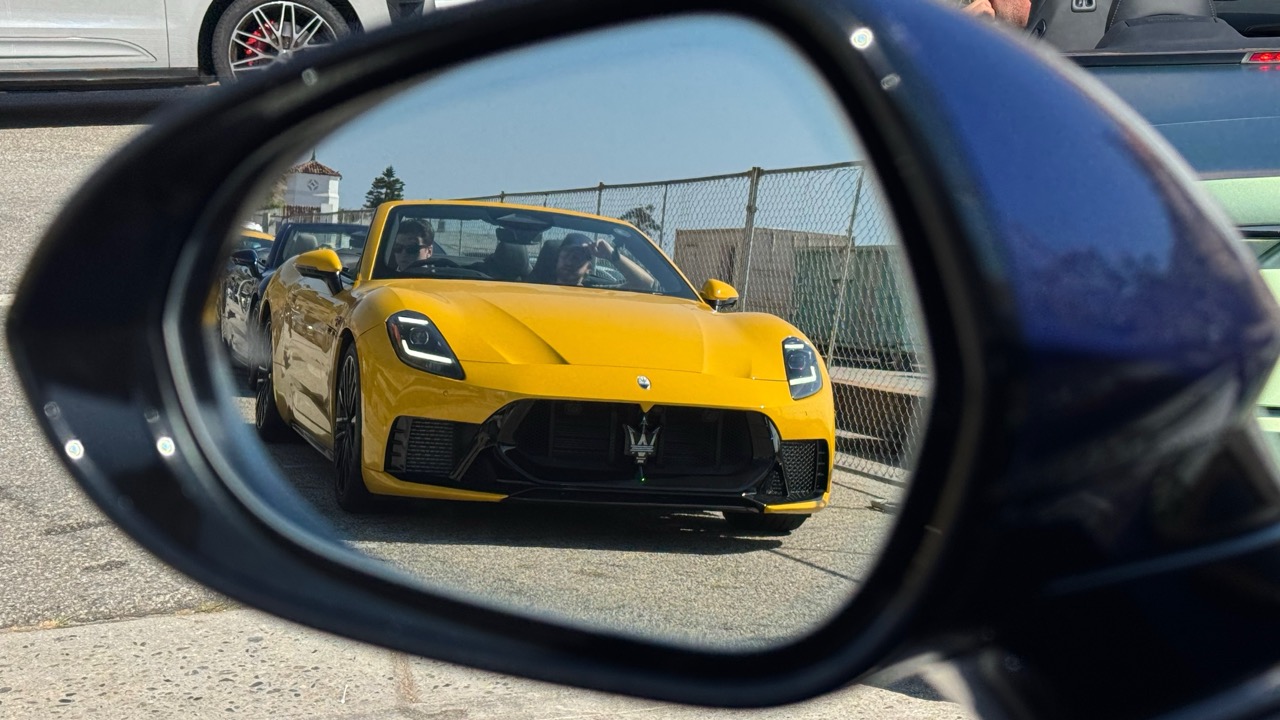
After all this talk about doom and gloom, it turns out today’s Maseratis are actually awesome to drive. Was that a surprise to you? It was to me. My drive started with a bright blue Gran Turismo equipped with the 483 horsepower version of the Nettuno twin-turbo V6. And let me just say right away: The engine is epic.
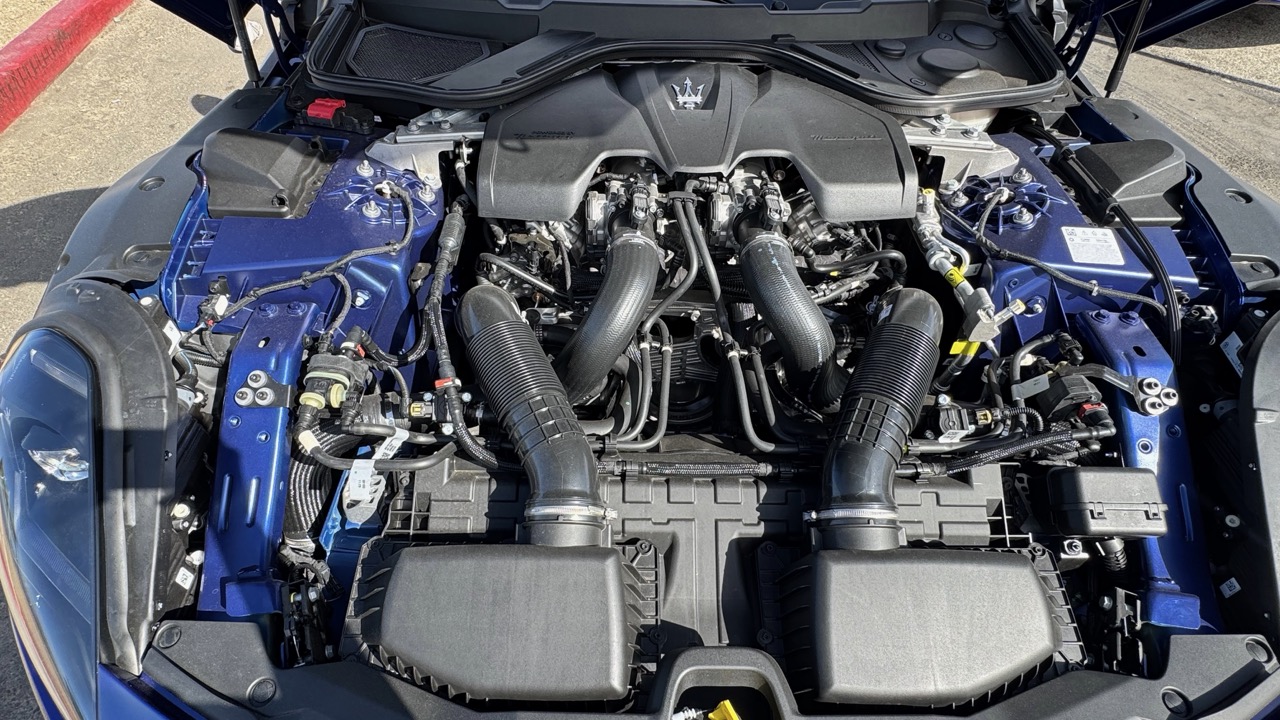
It’s hard to come to terms with the loss of the V8 in the Maserati lineup, but it’s a lot easier when the replacement growls at idle, growls under load, and hums at steady-state freeway driving. The sound is simply fantastic, and the behavior in the canyons is downright violent, but in the best way. The eight-speed auto pops off shifts so quickly, and the change in exhaust noise as those shifts happen just sends excitement through your bones.

The handling felt tight through the Malibu canyons, and the ride felt nice (if a little on the firmer side for a GT car), and overall, the driving experience was excellent. The chassis felt really well done, with good braking and steering feel, and a nose willing and able to change directions at your command.

The Grecale I got to pilot through those twisties was a Folgore, meaning it had a 523 horsepower version of that Nettuno twin-turbo V6. With the same 8-speed/all-wheel drive drivetrain as the Gran Tursimo, it blasted through gears beautifully, and though its chassis wasn’t quite as engaging as the Gran Turismo’s (mostly due to a difference in steering feel, as my co-driver Peter Nelson pointed out), the Grecale was also an absolute joy to pilot around the canyons.

It’s a surprisingly large SUV with a firebreather under the hood and true athletic capabilities. I was honestly blown away.


My biggest complaint about both car was the infotainment system. The interior quality seems really nice; the materials are high-end, fitment for the most part seemed decent (though some exterior panels had some gap issues), and styling was good, too. But the problem with slapping screens all over your vehicle’s interior is that that interior begins to quickly look like the competition, and when your biggest issue as a brand is standing out, you can’t have a screen that looks like it comes out of a Kia or Hyundai:

And that smudges like a Kia or Hyundai:
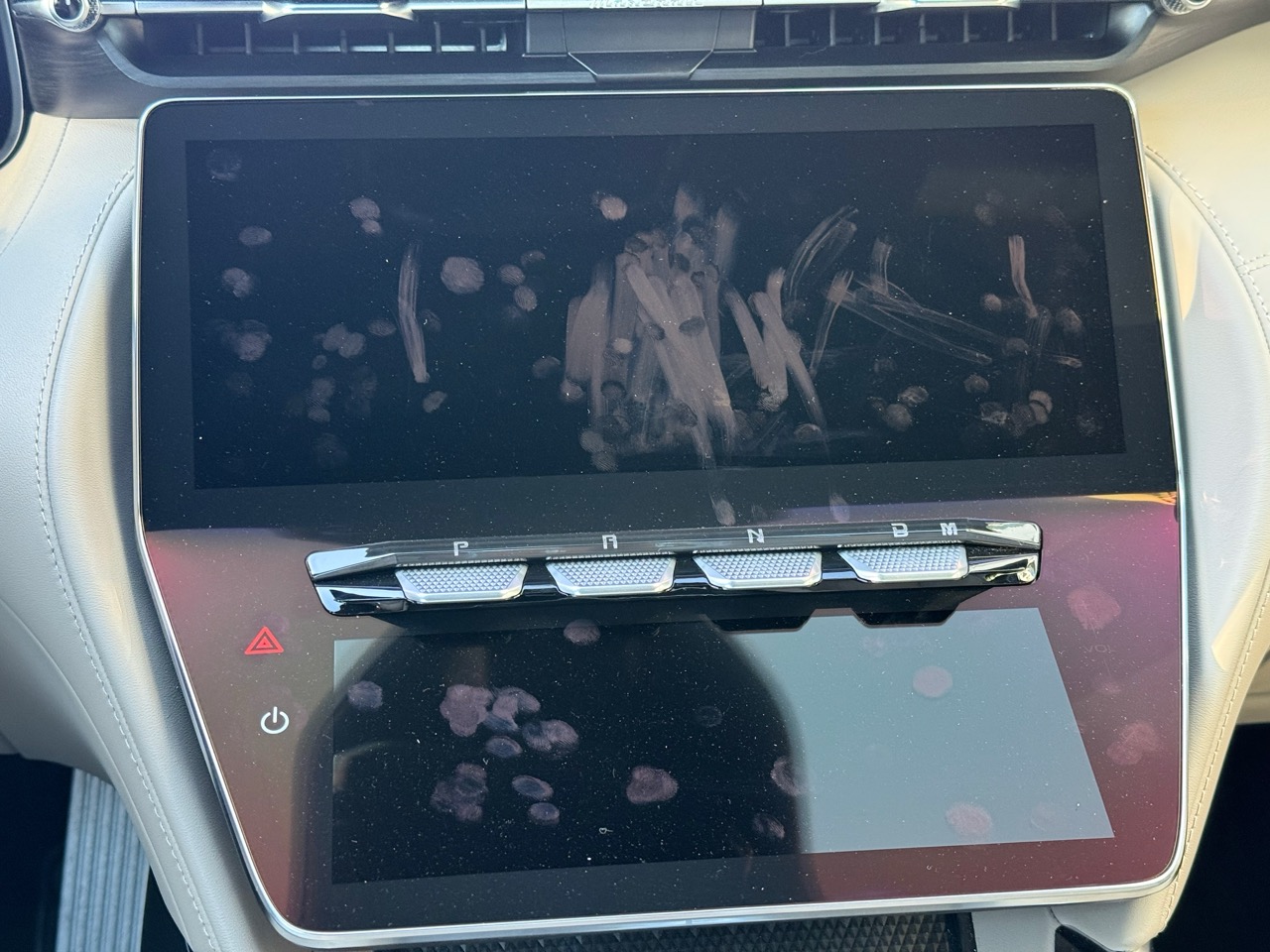
Also, those PRND buttons take the place of push-buttons, which Maserati said it adopted because they were in style a few years ago (You could argue Maserati should not be following trends, it should be setting them). Frankly, the new silver paddle-y buttons feel cheap and unsatisfying.

The interior is where the Maserati needs the most help. With all of the brand’s discussion about how a Maserati should look, sound, feel, and smell, you’d think there’d be more thought put into the physical-touch side of the interior. Instead, it’s screens with black bezels like everyone else.
View this post on Instagram
The reality is that Maserati isn’t struggling because its cars suck; it’s struggling because its cars don’t stand out. As Thomas wrote when he heard about Maserati allegedly bringing in McKinsey consultants to help out: “[I]nstead of getting Ferrari DNA for nearly Mercedes-Benz money, you’re getting Alfa Romeo DNA for Porsche money. No wonder global sales aren’t living up to expectations.”
There’s nothing wrong with Alfa Romeo DNA. Alfas are a joy to drive, and that was the case with the two Maseratis I got to whip around Malibu canyon roads. But just because they’re good doesn’t mean they’re going to sell. Competition is stiff, and many of those competitors do better in the areas of reliability and resale.
Those are obstacles for Maserati to overcome. Success in the luxury segment right now seems harder than ever with the democratization of high horsepower, phone-mirroring available on every car, and great design and material quality permeating the entire industry. Could a focus on reliability, a commitment to a true sensory experience on the interior, an entry into new segments, and continued excellence from the powertrain, chassis, and styling departments bring Maserati out of the funk?
I don’t know. But I, for one, would absolutely adore a beautiful, loud Maserati with satisfying stainless steel switchgear similar to that of a Spyker. That kind of “Digital Detox” would definitely stand out.
Top photo: David Tracy


What did they feed you for dinner at that mansion? Was it weird rich people food?
I don’t usually think this is a solution, but for them, I think they should lean back to old school appeal because that will make them stand out and they already have the curvy classic looks. They can’t ditch screens, but they can make them hideable, they can bring back switch gear—nice switch gear even if the guts remain Stellantis (FFS, TVR made all their own back in the Wheeler days)—focus on premium touch and interesting interior design not ruined by screens or trends, and manual transmissions as an option on the sporting cars as luxury performance car buyers are wanting manuals again and there aren’t many being made. If it’s about standing out in a positive way, then actually be different by being more like the Maserati that people think about positively (even if the thoughts are rather vague). Not retro cars, retro luxury-sporting values. People can get the rest everywhere else. Finally, make the damn things so they don’t have so many issues and end up in BHPH lots and driven by lower end drug dealers and gym bros with overextended lines of credit in short order. Besides the obvious depreciation issue, nobody looking to buy a high end brand for good money wants to be commonly associated with what happens to their typical used models, especially with their long product runs that see the earlier versions that look very much like the current ones hitting those BHPH lots.
Ah yes, the very historic SUV that was discontinued *checks notes* two years ago.
For that kind of money, it should NEVER be in the shop except for maintenance. And that is what keeps me out of Italian cars. That and the money, for both purchase and for shit that happens.
“My Maserati does 185..” – your core audience is Boomers and GenX. But those that have not already bought one can no longer afford one. Maserati was like Porsche – expensive, exclusive but still – attainable. They were owned by doctors, lawyers, bankers, engineers.
I’m a high level engineer and I cannot fathom spending that much money on a car.
All my old bosses had Miatas or Porche Caymans in the garage upon retire. I’m grateful for a fleet of paid off Toyotas. I’m late Gen-X.
I guess it’s time to put my PR hat on again…
I don’t love this. The strategy worked as presented and the result is an article titled “Just Write About Us, A Maserati Exec Begged Journalists”.
Matt – tell me from your analytics how many people read 100% of the article. The nuances of this PR tactic will be lost on the casual reader. A reader who scans will pick up the following: Maserati begged for publicity. Maserati is struggling. Maserati made bad decisions. Maserati plans to fix their problems.
I know honesty is best in PR, and I have spoken out in plenty of places (including The Autopian comment section) about the need for transparency, but a company can own up to its faults without making them the headline.
Here are my questions, Maserati: Do you have great cars? Do you have a solid plan to make your great cars stand out?
Yes?
Good. Task your PR firm with making that plan the story. Task your firm with putting the substance behind your efforts into words.
Do not… I repeat, DO NOT… give me the “Any publicity is good publicity” line. I’ve been in PR for three decades. That’s not PR. That’s publicity, AKA Press Agentry.
I’ve done that before. For one client. A boxing promoter. And yes, any publicity is good publicity in that world (most of the time).
For a car brand? Nope. Take some time to be creative by showing us how you’re different, better, engaging and relatable.
So, um, good luck with this one, Maserati. The cars look cool. I can’t afford one. Possibly because I’m too honest.
Oh gosh that text in the group chat. I feel that in my bones. Was once on a zoom call with about 20 team members, and one coworker had her mic off mute and was typing away madly. This was early pandemic so I don’t think Zoom let you mute others.
Anyway, someone else on the call was ALSO not on mute, and mutters “J____ C____ Sue, go on mute so we can’t hear you type”. This was one person with ~20 years with the company commenting on someone else with ~20 years with the company. Those of you who know the dynamics there will know how that adds to… everything.
Many people were on camera. Many eyes popped open. Many cameras shut down.
Awwwwkkkward.
I am the kind of guy who has like 5 times …almost bought one. I have the cash to get it I have the cash to fix it… mostly, but every single time the reliability stuff makes me pull away.