

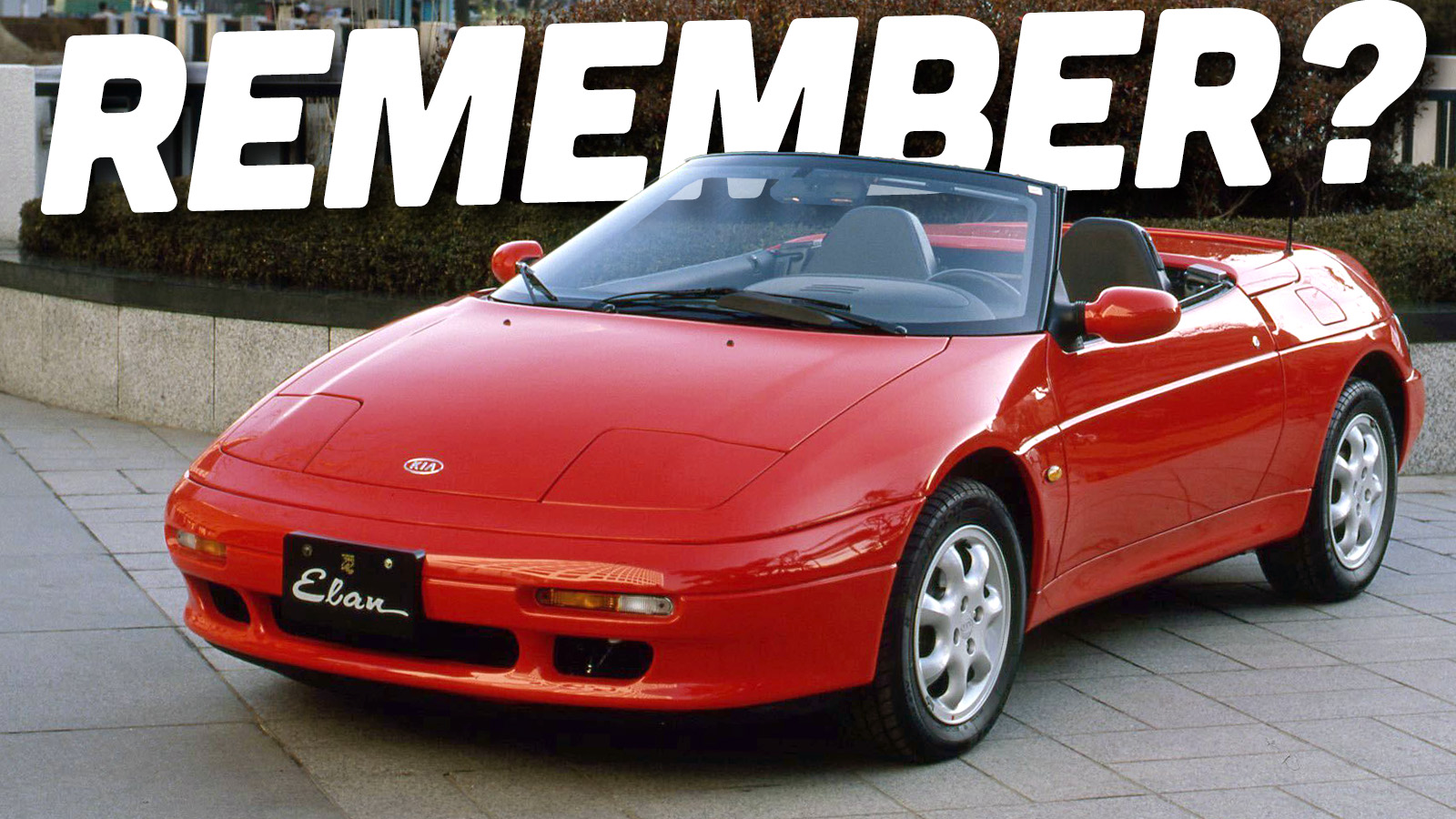
Kia’s built hatchbacks, sedans, and SUVs for decades, and it isn’t really a brand known for building sports cars or roadsters. Yet in the historic Kia model portfolio is a true oddity and a real rarity: the Kia Elan, which was also sold as the Kia Vigato in some markets. It is a badge-engineered, but also South Korean-built version of the M100 generation Lotus Elan, itself a rare front-wheel-drive Lotus.
While the Kia Elan is outwardly much the same as the British car, the biggest and most easily noticed changes are the taillights, which were originally Renault units from the rear-engined Alpine GTA coupe. Kia engineered its own taillights, which consist of round lights in housings the same shape and size as the Renault originals. And that wasn’t the only thing Kia had to substitute with a solution of its own.


The Story Begins And Ends With The Lotus Elan M100
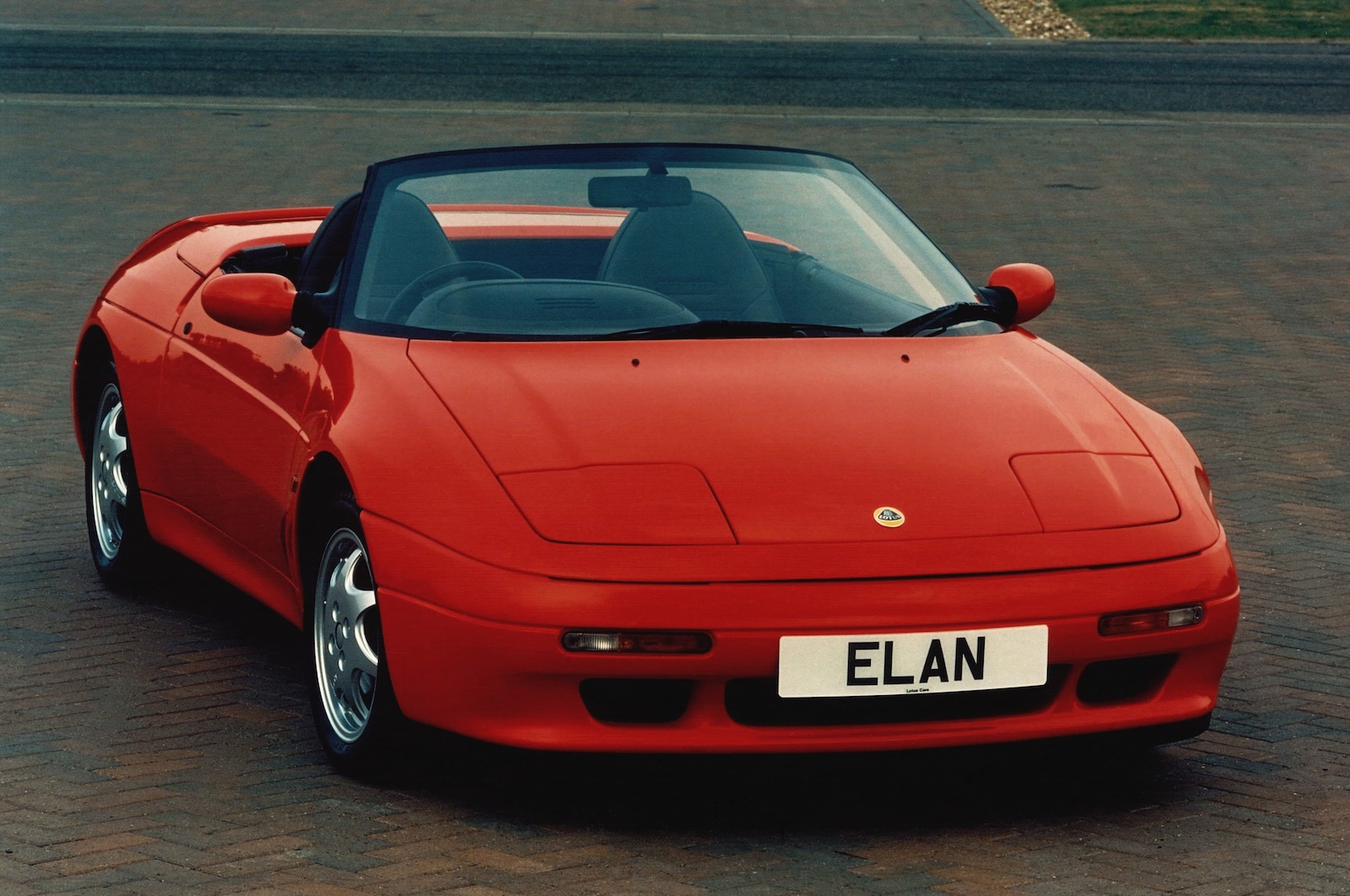
Lotus ended Elan M100 production twice. The early-1990s economic downturn and depression is a theme I keep constantly referencing, and it’s what threw the spanner in the works at Hethel, UK. In Lotus’s case, the Elan which had been pitched and engineered to capture hot hatch buyers with a roadster that used hot hatch technology, turned out to be too expensive to produce compared to the cars it was up against.
It was still a hand-built, fiberglass specialty car, using expensive technology including computer controlled water jet cutters for the body panels; all in all, at $58 million, the Elan was the biggest investment Lotus had made up until that point. Over half of that sum was spent on new buildings, new tooling and new facilities. In turn, Lotus had also never built 3000 cars per year, but in 1991 it achieved that.
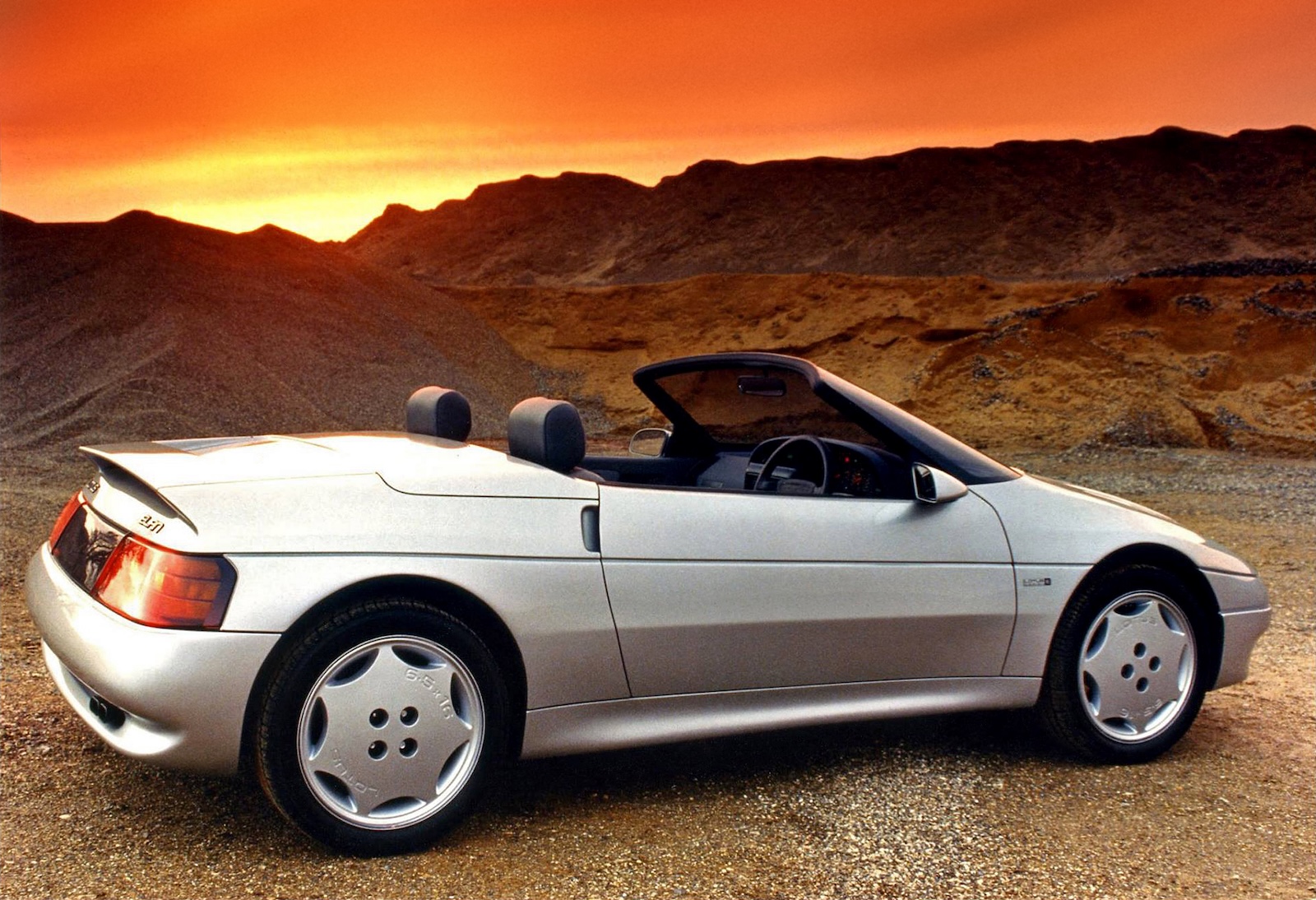
In June 1992, Lotus stopped Elan production after 3855 cars had been made, and the company was bought by Romano Artioli the following year. Artioli also owned Bugatti at the time, and the decision to acquire Lotus likely stressed finances so heavily that Bugatti itself ended up ceasing car production. Artioli also sold Lotus on to Proton just a couple of years later.
However, at Artioli’s visit to the Lotus factory, he is said to have noticed hundreds of engines and gearboxes in crates at the facility. Artioli was told that those were meant for the Elan, but that the car wasn’t going to be built anymore, despite all the investment. As the company was now in Artioli’s hands, he reversed the decision – especially as the drivetrains were all paid for – and relaunched the Elan as the Series 2 in the summer of 1994. Prices were also slightly raised.
All Series 2 cars were turbocharged, unlike around a hundred of the Series 1 cars, but S2:s were also fitted with catalytic converters, which reduced the power output a little. All in all, Artioli’s Lotus built 800 Elans during 1994-1995.
Who Sold Kia The Car, Joe Isuzu?

When Lotus ended production of the Elan in 1995 for the second time, Kia subsequently bought the rights to the car and the tooling to build it, as the company likely needed a halo model above all the bread-and-butter stuff.
When the Elan had been developed, it was done with money and technology from General Motors, as GM also received access to Lotus’ know-how in various areas, including handling development. GM had been fine with Artioli finishing Elan production at the Lotus factory in Hethel, but when Kia came calling about the rights to the car and the tooling, it declined to let them build it with GM drivetrains. This meant Kia got the body, chassis, and the means to make them, but was left without the Isuzu-based engines that the Elan had used.
Not to worry! Since the Isuzu engine certainly wasn’t a thoroughbred Lotus unit with decades of Formula 1 engineering behind it, but something Isuzu also put in the Impulse (handling by Lotus, remember), it was the easiest piece in the puzzle to replace. Kia’s engine department soon produced a completely fine unit, the T8D engine, which isn’t a turbo, an eight, or a diesel despite its name.
Kia also used a gearbox of its own and raised the suspension to better suit local Korean roads, as the Elan was mostly directed at domestic buyers. Interestingly, US-market Elans had also had suspension changes made to suit American roads: the anti-lift engineered into the rear suspension was modified to reduce pitching on American freeway slabs.

Kia’s cars had up until that point relied on Mazda engine technology, as the cars had more or less been re-dressed Mazdas to begin with. That meant the Sephia used a Mazda B-series engine, the engine family which we know from the Miata. The BP engine, as used in the 1.8-liter Miata, produced a touch over 120 horsepower in the Kia Sephia RS; in the Miata, it made 131. A flagship roadster as the Elan needed to be, required more power than that to get even close to the turbocharged Isuzu unit’s 167-hp figure. The 151-horsepower T8D, quickly unveiled in July 1995, initially went into the Kia Credos, which was another redesigned Mazda, corresponding to the 626 and Capella. The Elan soon followed in 1996.
The T8D, according to the internet, is largely based on the BP with some key differences. The head flows better, which goes some way into explaining the better horsepower figures, and the connecting rods are forged. The head gasket is also multilayer steel.
In any case, it’s said to bolt onto a Miata directly, thanks to the mounting points and bell housing patterns being the same, but as it’s originally a transverse engine, you would need to swap things such as the oil pan and manifolds to re-orientate it: using a Kia-produced Mazda BP engine would entail the same effort. While Miata power mods include bolting a turbo onto the original engines pretty much as-is, as the 1.6-liter engine famously started out as a 323 GTX turbo engine with the turbo left out, I can see why a junkyard Kia Spectra engine with a 20-hp advantage over a stock 1.8 Miata engine would make a sensible swap. And you can probably turbo that one too without too much grief, as there are also aftermarket turbo kits available for the T8D as well. From the other perspective, it can be that a Kia T8D engine and its spare parts could be more easily available for a Lotus Elan M100 project car than bona-fide Isuzu parts.
From One Crisis To Another
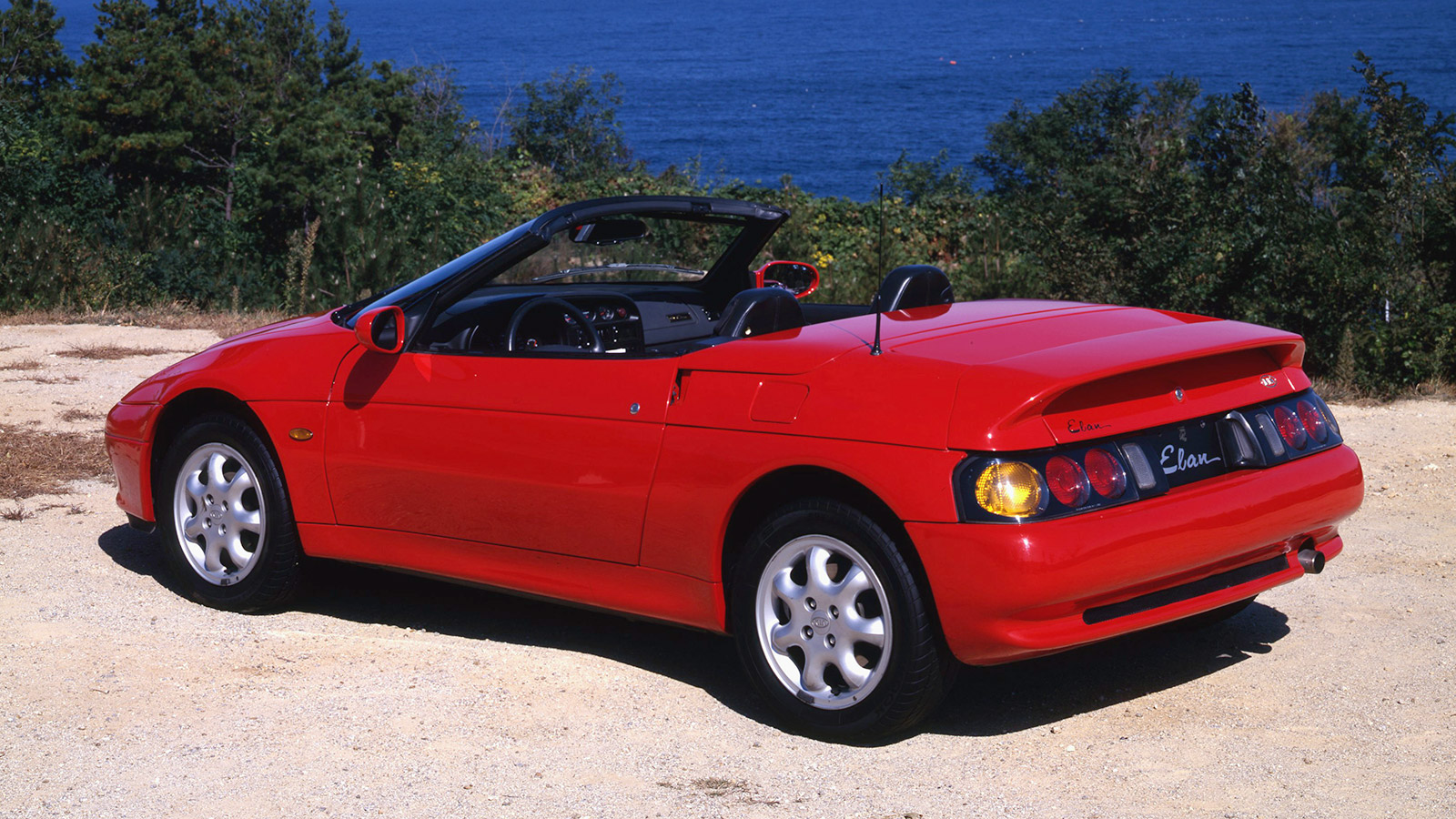
The Kia isn’t the only Korean-built roadster, nor was it the first: SsangYong built a version of the retro Panther Kallista in the early ‘90s, but it only sold 78 cars. The Kia Elan was produced in far greater numbers: 1056 cars, which is a significant chunk and over a fifth of all M100-shaped cars, as Lotus itself couldn’t quite build 5000. The only year for Lotus Elan M100 sales in the US was 1991, with 559 cars sold.
Like the Lotuses/Loti, the Kia Elan was also hand-built, but all Kias were left-hand drive. Production ended around the time Hyundai took over Kia in the late 1990s, thanks to the Asian financial crisis of 1997, which meant the Elan genuinely lived several lives during an economically turbulent time, fighting for its viability.
While the M100 Elan has been criticized for understeer, some outlets have also called it finest-handling front-wheel car in the world, but this is also the same world where the Integra Type-R, the Peugeot 205 GTI, and the original Ford Puma exist. I haven’t driven the Elan, but I can vouch for the Peugeot.
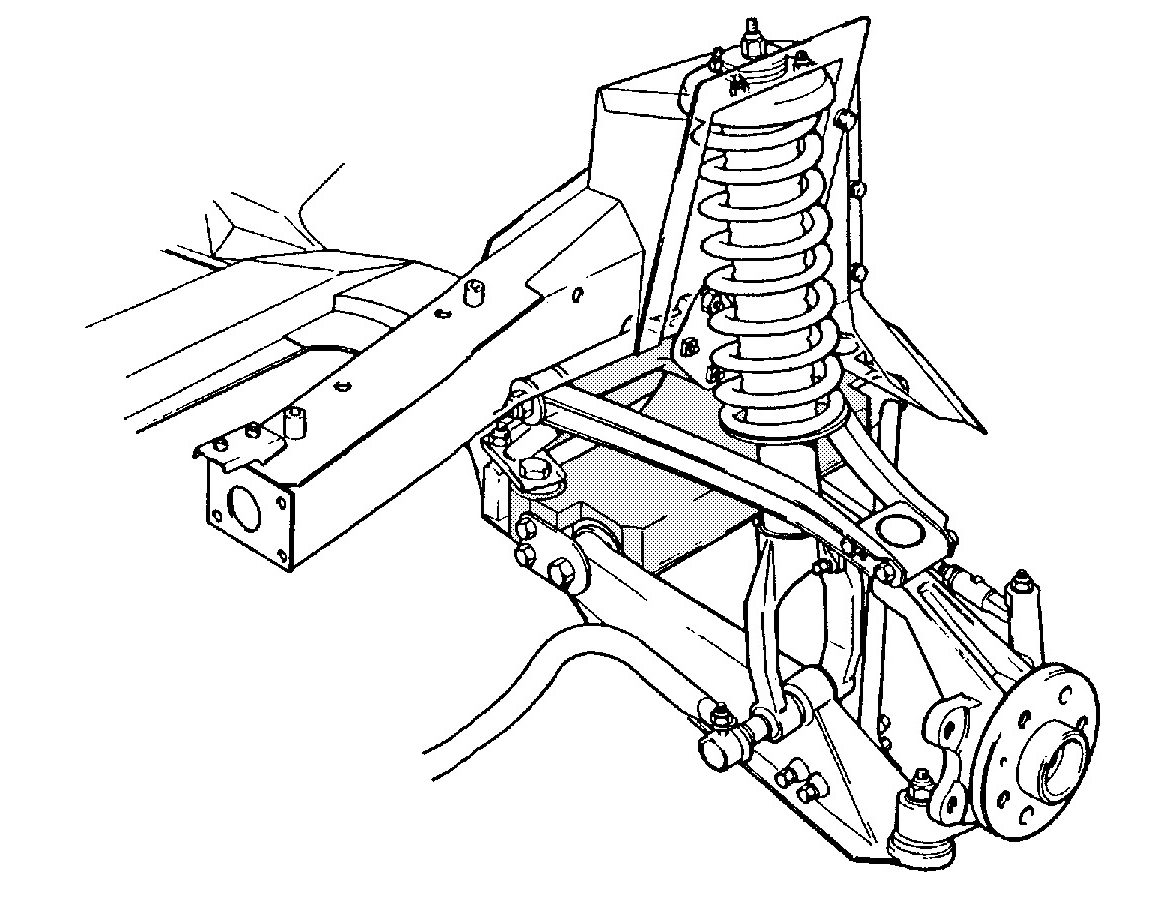
To address inherent FWD handling characteristics, especially since the car would have a relatively powerful turbo engine, Lotus’ chassis boffins came up with the idea of “compliance rafts” to counter torquesteer. The double wishbones are bolted onto these rafts using stiff bushings, with the rafts connected to the underbody using softer bushings. This is to ensure the caster angle is unaffected, but it also isolates harshness. As a result, the Elan has a relaxed feel to it instead of artificial stiffness. Leaving the turbo out in favour of a 150-hp naturally aspirated engine could have improved things further.
The late-80s, early-90s roadster revival is justifiably centered on the Mazda Miata and its roaring success, and a large part of that is its simple, bona-fide roadster design with rear-wheel drive. In the UK, when it was launched, the Lotus Elan M100 cost a third more than the MX-5, even in naturally aspirated form.
In trying to challenge the Miata, and despite all the creative engineering, Lotus ended up building its own version of the Mercury Capri XR2, which in some grim penny-pinching, cynical, alternative reality, would have been the only roadster that Mazda had ended up producing. As it was based on the 323, the Capri also used B-series engines, offered a turbo option, but it also only lasted for one generation, and the only advantage – if you can call it that – over the Miata is that the Capri has a rear seat. In five years, Ford Australia built some 66,000 Capris.
Up until the recently introduced VW MEB platform-based EV sedan, those were the Capris that weighed down the original model name compared to the “Europe’s Mustang”.
You Can Buy One, But Probably Just This One

Kia never exported the Elan to the US or Canada. That makes this particular car on Bring A Trailer a true rarity and a real globetrotter.
The Kia Elan was sold in some export markets, in addition to domestic South Korean sales. It was sold in Japan as the Kia Vigato, and 200 examples were exported to Germany. It remained a curiosity and worked as a halo vehicle, enticing prospective Kia buyers into German Kia showrooms, but customers were likely to buy something else, such as the Sportage.
Kia was also a pioneer in the sense that it had local German car production, as the Sportage was built at Karmann in Osnabrück from 1995 to 1998. Yes, that made the Sportage a Karmann-Kia.

Originally a Japanese-registered Vigato, the white car here was imported to Canada in late 2022, at which point it was immediately put up on BAT in January of 2023 and sold for $10k. As often happens, it is badged as a Lotus and lost its original airbag steering wheel, but it still retains its original Kia tail light units, revealing its true identity to the informed onlooker. The 16-inch OZ Racing wheels are a great fit to the M100’s swoopy and wide design.

The car appears to be in very good shape, and with just 53,000 km or 33k miles, it should be. The dashboard is slightly sun-warped but doesn’t show cracks, and the seats are intact.
The BAT ads include photos of the underbody, and they offer an interesting look of the underbody, with the fiberglass bodyshell and the Lotus steel backbone chassis, as well as the compliance rafts in the front suspension.

With a little over a day left to bid, the white Kia is at $7100 at the time of writing, which, for a rarity such as this, seems low. The original Lotus Elan M100 is a fascinating car, and a weird rebrand makes it doubly so. Just reinstate the correct Kia badges!
Top graphic image: Kia


“Lotuses/Loti“
The correct plural of Lotus is “Lotus”, I used to have a copy of the official memo hanging next to my desk.
However I always used Lotuses, because it sounds right.
That’s probably why they made me redundant..
It’s a shame Kia didn’t keep selling the Elan and/or didn’t produce it in greater numbers. It’s a very nice looking car.
This is the best researched article I have seen on these cars. I own one of these in Korea and it’s pretty rare that I learn something new–only recently learned that these were sold in Germany, definitely didn’t know how many. Likewise, I know a bit about the T8D, but Antti did a deep dive to uncover the details, such as forged connecting rods and mls gaskets. I wish I could have provided better engine bay pictures for the article, as the BaT example was missing bits and in fairly poor condition under the hood. Apparently owning an Elan in Korea can make you “famous” in Germany (lol) scroll down for the photo of me and my car if you are interested https://www.autobild.de/artikel/genesis-kia-co.-so-wild-ist-koreas-geheime-auto-szene-28453513.html
I have forgotten that this car ever existed multiple times. AFAIK, I’ve never seen one in person, unless some actual Lotus Elan reboot I saw was a Kia and I didn’t know it.
Here is a lovely yellow one for sale.
https://www.beforward.jp/kia/elan/cc330552/id/14349069/
I was perusing Citroens in Japan and stumbled on it, googled Kia elan and this post popped up
Weird
Which would be the worse life decision — buy that or this Lancia Thema wagon?
https://www.beforward.jp/lancia/thema/cb939753/id/14004341/
I’d love to drive one of these
Fun fact: because it *was* part-GM, the Lotus Elan M100 with an airbag used the same steering wheel as the early Saturn airbag cars. I’m not sure if the airbag was limited solely to LHD/US models on the Lotus version or not.
And, yes, the NA MX-5 Miata kind of blew everything else out of the water, to the point that it has had and continues to have name continuity no one else has had…not to mention a well-deserved cult following. And because it *was* a Bubble-era car, I doubt any company that wasn’t Japanese could have created it and had it be anywhere near as good.
Damn, I thought this was going to be about the Stinger.
/s
One of my Mom’s friends, who was from the UK, bought one of these in California in the early 90s. I remember her taking me for a ride in it and I thought it was a cool car. At the time I had no idea these were closer to a Miata or a hot hatch than a high end European sports car.
My dad worked at Kia HQ in Irvine, CA at the time the factory was purchased. They got two of these in, a red one and a yellow one. Both preproduction units that basically just had the badges changed, and the engine swapped to a Kia spec unit. I remember even then asking my dad why they made them, and he said “because they could”. Got to drive it in our neighborhood and frankly, it was fine. We had been a Mazda family so always had Miatas and RX-7s around. This was definitely not those. It was “sport-ish” but the engine was so dull. Both cars had to be crushed since they were preproduction units. Always sad to see cars get destroyed.
Whoever buys that should put a retro Kia “flag” logo on it.
For those unfamiliar, you can see that old logo here: https://upload.wikimedia.org/wikipedia/commons/thumb/5/57/Kia_Motors_Logo_%281986-1994%29.svg/1280px-Kia_Motors_Logo_%281986-1994%29.svg.png?_=20240507054421
There was a Lotus Elan running around Houston in the early 2000s, and the owner had told me about the Kia version at a weekend car meetup. I don’t remember his exact words, but he joked about rebadging his Elan to a Kia but wasn’t sure if it would increase or decrease the value. In hindsight, I wish I’d have paid more attention to the car, as I think it is the only Elan (Lotus or Kia) that I’ve ever seen in the wild.
“SsangYong built a version of the retro Panther Kallista in the early ‘90s, but it only sold 78 cars.”
Sstay weird, SsangYong.
When I lived in South Korea, many moons ago,I saw one of these outside a wedding boutique in Gwangju, thinking what the hell? It all makes sense now!
I’m still looking for the ultra rare Kia Pet with its seed mixture that you spread on the body so that it will sprout little Kias.
ka ka ka kia!
Or you could buy it and put Mercury badges on it…
This has nothing in common with the Capri, unless for the lulz?
Yes, it was a joke. But I put 100,000 miles on a Capri, and if you wanted to take your wife and two dogs for a ride with the top down it was the right tool for the job in 1992.
I still have an irrational soft spot for those, if a cheap and not clapped XR2 came up, I’d gladly wheel one for a summer or 2. I have met a surprising number of people who swear the Elan and Capri were mechanically related.
It’s like convergent evolution, and the Australian one grew a back seat.
I knew that the Sportage was built in Osnabrück, but I tip my hat to Karmann-Kia. Never occurred to me.
Removing the kia badges on the Elan ruins the only reason to buy this particular Elan instead of a Lotus Elan imo.
Disagree. I’d trust Kia far more than a bunch of british farmers bashing together a Lotus branded one.
If you’d ever owned a Kia Pride/Ford Festiva/Mazad121 from that era, you’d recognize that it was a remarkably well built car despite its pricetag.
The sheer amount of money GM and Lotus threw at this car (probably more money than Lotus ever had to work with that wasn’t stolen money from the UK government) only to catastrophically from day one make such a fatal mistake. It’s truly fascinating, and definitely a Roger Smith-coded move.
It’s more money than Lotus had to work with up to that point.
I was there during the Bahar years, and the Geely take over.
I’d say Lotus does it’s best work when it has almost no money. The last thing I designed there was forced in to innovation because we only had half as much of the right grade of aluminium in stock as we needed, and couldn’t find the budget for any more.