

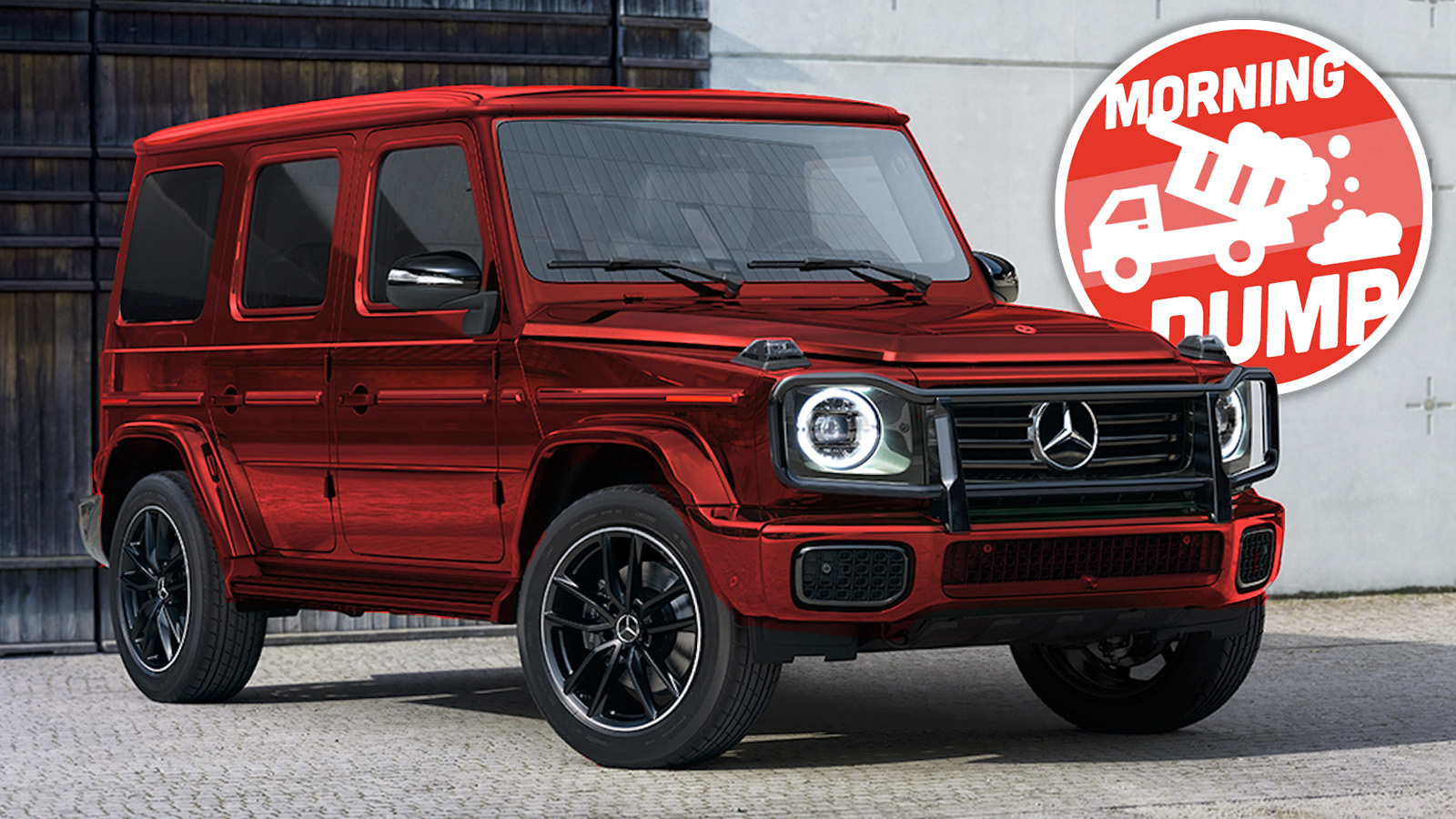
Welcome back to the working week. If you’re a fan of the complicated interplay between industrial policy, economic nationalism, and global car production it might thrill you to read about it. If you’re a German automaker that relies on the United States it might kill you.
The Morning Dump is going to be about politics this morning, because politics seems to be impacting every aspect of the car market. A new bill in the US House of Representatives is likely not aimed directly at Mercedes-Benz, but that’s definitely the automaker most likely to be impacted. At least Mercedes doesn’t produce a lot of cars in Canada. It’s looking like the USMCA could be replaced with two bilateral agreements, and Canada might be the loser there. American Axle is a major supplier to GM, who might not be getting key products for truck production since the UAW has called a strike after years of what it claims are stagnating wages.


That’s a heavy TMD, so I’m going to end on a special car I can’t stop thinking about that was just announced this week.
Congress Seems To Have It Out For Mercedes

CNBC has the direct headline “Mercedes-Benz may be shut out of U.S. market under bill aimed at Chinese automaker ownership.” Yikes! What’s going on here?
Mercedes the automaker (not the person) makes a lot of cars in the United States and has former football coach Nick Saban as both a dealer and champion. I do not think, realistically, Mercedes cars will end up being banned for sale anytime soon. However, there’s a new bill, the Motor Vehicle Modernization Act of 2026, which was voted out of committee last month and could have that impact as written. As CNBC reports:
Mercedes-Benz’s largest individual shareholder is the state-owned Chinese automaker BAIC, formerly the Beijing Automotive Industrial Corp., with a 9.98% share. The potential implications of the legislation on the automaker are previously unreported.
Several people familiar with the legislation who spoke to CNBC cited gray areas in the bill that, depending on how they’re interpreted, could ban Mercedes-Benz from operating in the U.S.
Two sources who agreed to speak on the condition of anonymity for fear of repercussions or because they weren’t authorized to speak publicly said they believe the bill, as it’s currently written, would ban the company.
“The language is unambiguous,” said a former automotive policy advisor and lobbyist who was consulted about the bill.
If you take BAIC’s ownership and add in Li Shufu, who also founded Geely, you end up with nearly 20% of the company in the hands of Chinese companies or individuals. So what language are we talking about here? CNBC says the bill “would prohibit automakers that have “any direct or indirect equity interest by a foreign-adversary government.” There was reportedly an amendment on May 21st, but I haven’t been able to find it. Similar language does appear in the Connected Vehicle Security Act of 2026, which says this:
On and after January 1, 2027, the importation, manufacture, sale, resale, or introduction into interstate commerce in the United States of a connected vehicle is prohibited if—
(A) the country of origin of the connected vehicle is a covered country or the connected vehicle is designed within a covered country, without regard to whether—
(i) at the time of importation, sale, resale, or introduction, the vehicle is equipped with any covered software or connected vehicle hardware subject to a prohibition under paragraph (2) or (3); or
(ii) any such covered software or connected vehicle hardware—
(I) is removed from the vehicle before importation, sale, resale, or introduction; or
(II) will be installed after importation, sale, resale, or introduction; or
(B) the manufacturer of the connected vehicle is a joint venture, subsidiary, or other entity in which more than 15 percent of the equity interest, voting interest, board representation, or other indicia of control, whether directly or indirectly, is owned or controlled by an entity, or combination of entities, organized under the laws of, or with its principal place of business in, a covered country.
That’s China, for sure, since Russian car manufacturing is on its back foot and not exporting anything soon. This doesn’t apply to most countries that sell cars here, because they are not adversarial. The Trump Administration has already given a waiver under existing laws to Volvo so it can sell cars here, in spite of being owned by Geely, seemingly because Volvo goes through a lot of effort to wall off its connected cars.
Protecting American consumers from surveillance by a foreign government–at least one we’re adversarial with–makes sense, and these efforts go back to the Biden Administration and are seen as being mostly bipartisan. Would Alabama Republicans be happy to see Mercedes-Benz harmed? Absolutely not. These bills haven’t been passed yet, so there’s still time to clarify this, though it’s part of a larger move by both parties to secure American production.
Canada Seems The Odd Man Out In Trade Talks So Far
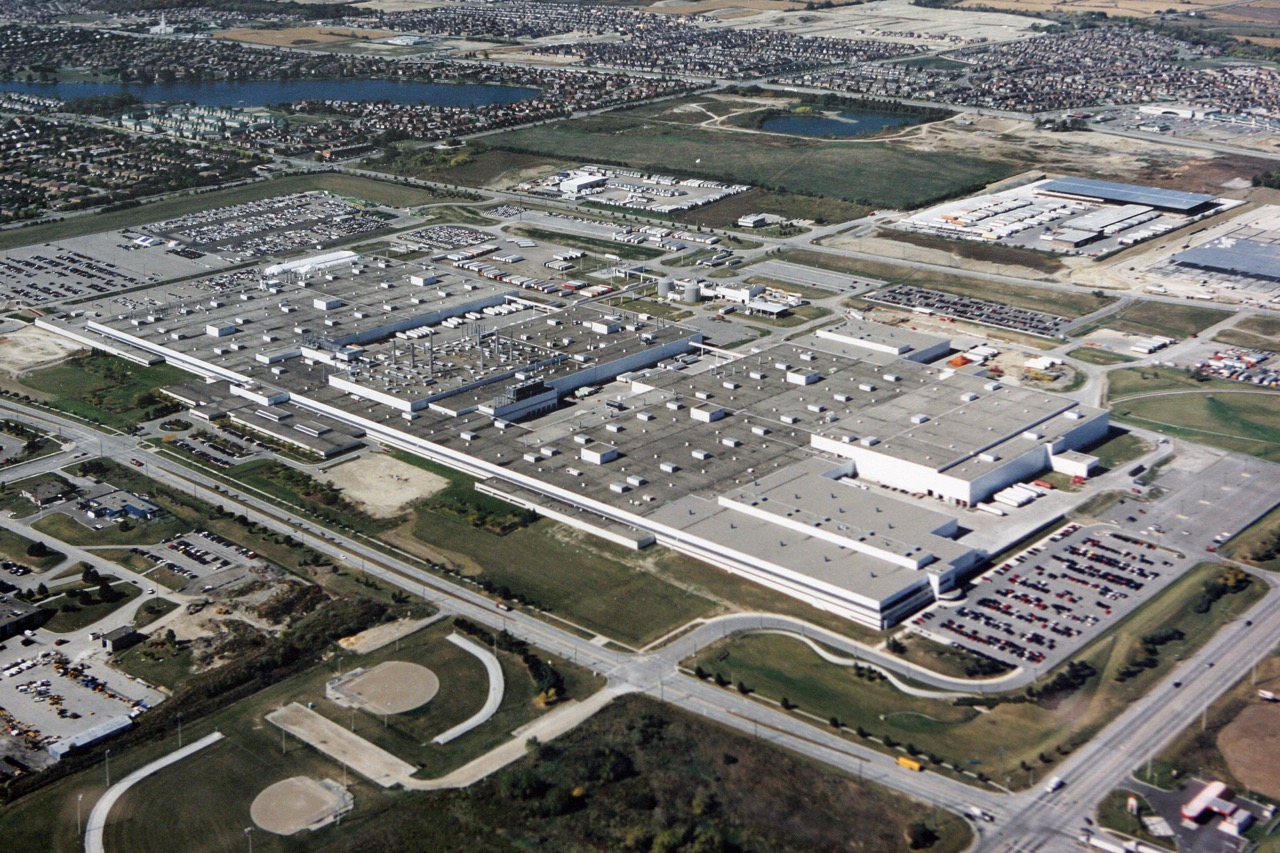
The Trump Administration has already dropped more shoes on the car industry than a drunk kangaroo at a DSW, yet more remain. A Doc Marten-sized boot still exists in the form of whatever’s going to happen to the United States-Mexico-Agreement, which was a key piece of legislation from President Trump’s first term but is no longer acceptable to him.
US trade representatives are in Mexico City negotiating a deal and the latest report, via The Detroit News, doesn’t sound great for Canada:
As initial talks between the United States and Mexico begin this week over how to restructure the USMCA trade deal, U.S. negotiators are seeking 82% North American content in vehicles made regionally, with 50% of that value produced in the United States, four people familiar with the matter told Reuters.
In the past, content from Canada was so undistinguished from content from the United States that it’s not even labeled as being from anywhere else. This seems to be changing, as the article mentions:
The shift, if accepted, would be a major break from the current USMCA. It requires that 40% of the “core parts” value of North American passenger vehicle passenger cars be produced in high-wage jurisdictions, effectively the U.S. or Canada. That threshold is 45% for pickup trucks. Overall, vehicles must have 75% North American content to qualify for preferential treatment under USMCA.
U.S. Trade Representative Jamieson Greer said earlier this week he wanted to strengthen North American rules of origin “in a way that enhances U.S. content in these goods” to boost manufacturing in the United States.
The UAW will be happy to hear this, although the UAW is a little busy right now.
UAW: No Contract, No Axles
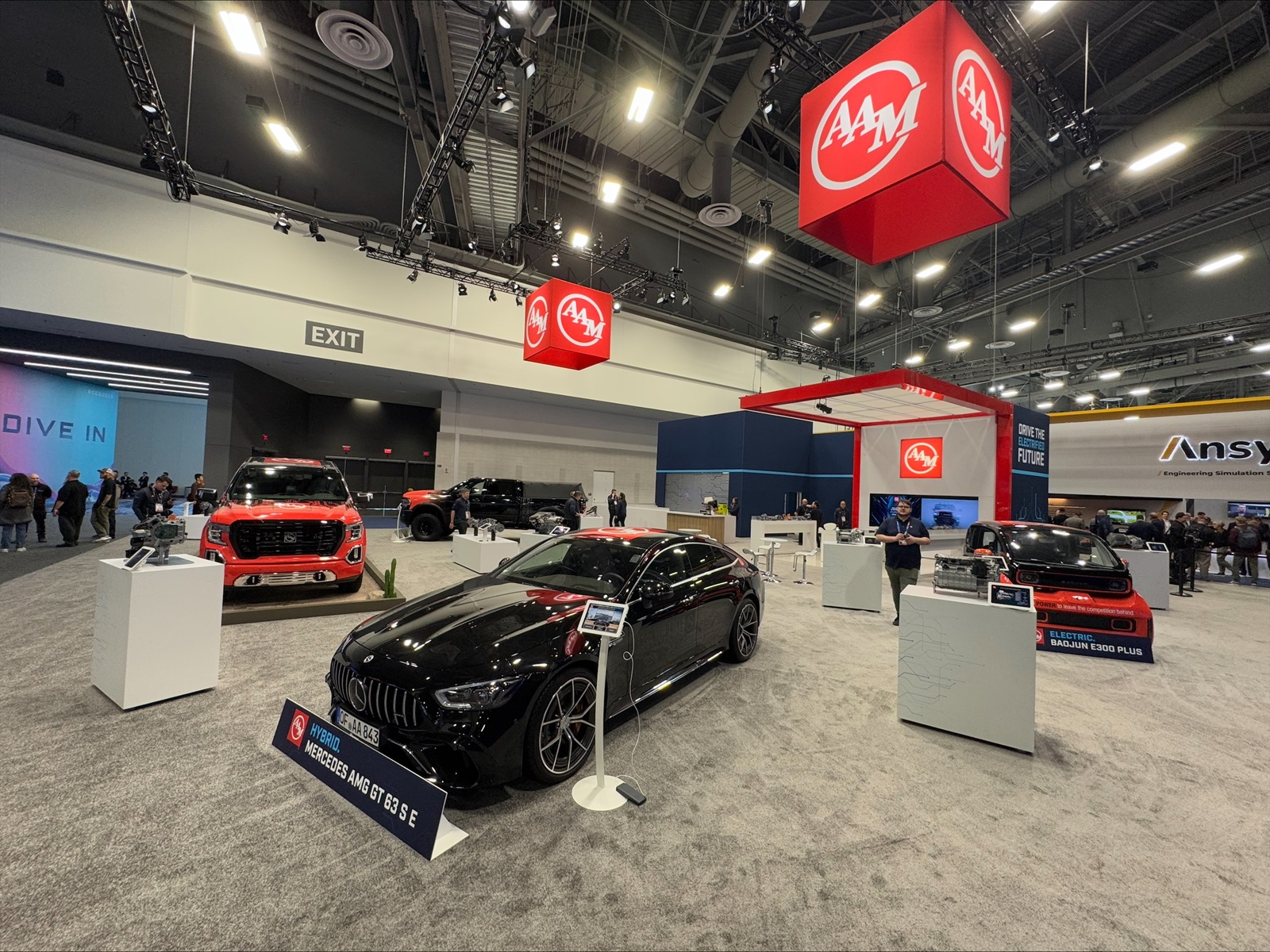
Both GM and Stellantis are going after Ford, which is dealing with an aluminum shortage and therefore is behind on building its super popular F-150s. GM might be in trouble itself, as the UAW is striking the American Axle plant responsible for making key parts for both the Silverado and Sierra.
Why is the UAW striking? The Detroit Free Press explains:
During 2008’s Great Recession, with American Axle on the brink of closing, workers took the massive pay cuts to keep the facility open, the UAW said.
Josh Jager, Local 2093 bargaining chair, said that he was among the workers who, in 2008, went from making $29 an hour to $14.50.
“We did it to save the company, we did more than save them — we made them billions of dollars,” Jager said of the pay cuts. “So tonight, it’s about getting our fair share.”
Workers seem to have a point here, stating that the highest wage is $22 an hour, which is less than the $29 an hour they used to make (or $44 an hour adjusted for inflation). The UAW also says that the company has generated over $8 billion in profits over the last decade.
I Am In Love With Tolman Edition Escort XR3i

Part of me thinks I’m going to have to live in England for a year just to get all of the European Fast Fords I want to drive out of my system, and UK-based car exports Tolman Engineering are making any delays even harder with its latest creation, which is a Ford Escort XR3i that’s been completely gone over to make it kinda perfect.
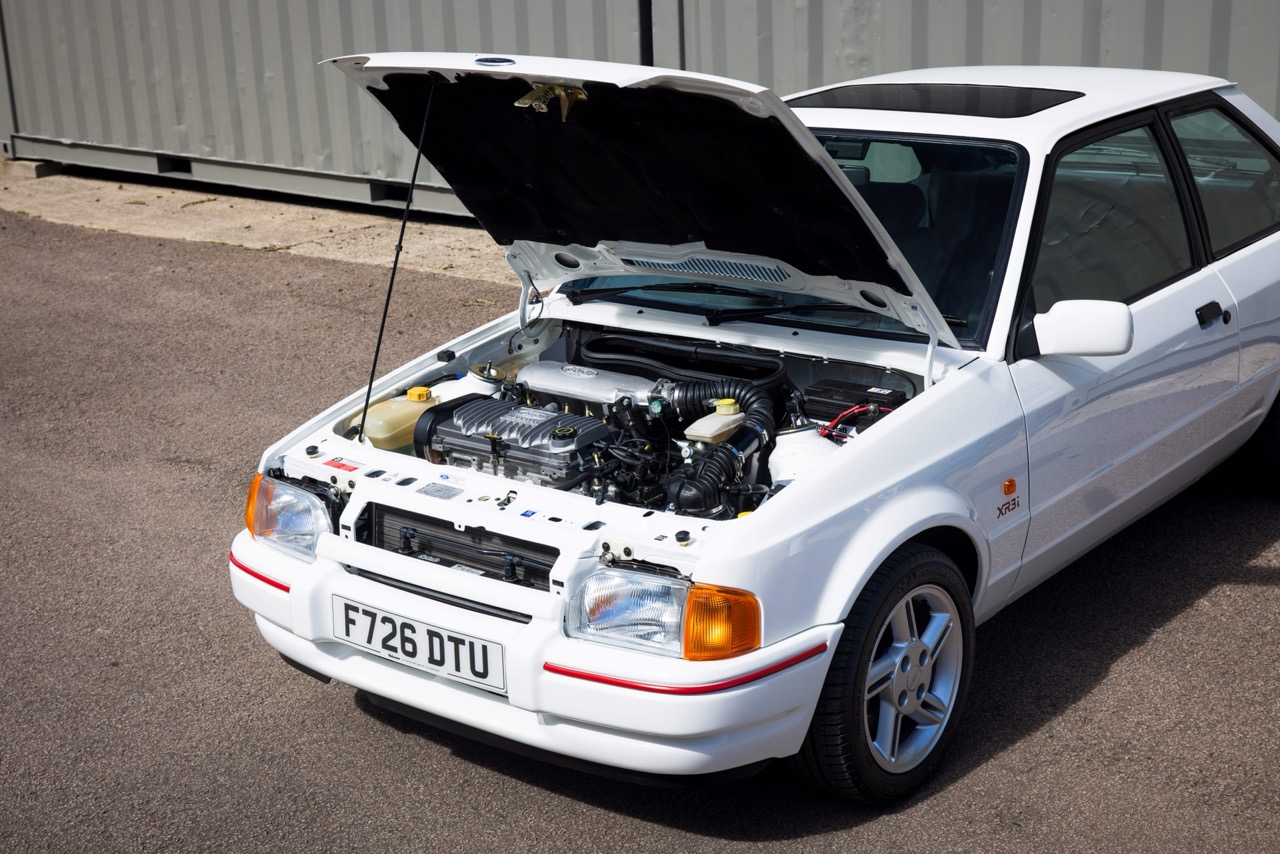
Specifically, Tolman’s goal isn’t to make an entirely new car via massive engine swaps and the like, but rather to keep the original character and merely enhance it. It’s very Pygmalion (or My Fair Lady if you’re a philistine).
Despite being far easier to opt for a later unit from Ford’s range and in line with Tolman’s ethos that it should still feel like an XR3i, the original 105PS 1597cc CVH unit was retained – though substantially revised to solve the performance, noise and harshness issues that contemporary road testers rued. Now it features a 16V Zetec head, new pistons and rods, a revised and stronger bottom end with a modified RS1600i cam cover.
Often criticised in period as underwhelming, Tolman turned to today’s damping technology to transform the Escort’s handling. Up front, its solution is to draw on experience and parts from Ford’s RS1600i homologation special and mate these with Bilstein dampers and a bespoke front anti roll bar. The changes offer more castor options to improve steering feel and turn in within the limits of Ford’s original set up. A key but subtle difference is the bespoke 15” alloy wheel designed by Tolman. Honouring the 14” ‘Dog Leg’ design fitted to thousands of Escorts, Tolman has created the larger diameter variant, retaining the original’s centre section, machined down to create a cap that retains the original factory casting marks. As well as filling the Escort’s arches – it runs at standard ride height, the non-invasive upgrade enables greater tyre choice to further improve handling and package upgraded AP discs on the front and to swap the rear brake drums for discs.
I love it so much it kind of hurts.
What I’m Listening To While Writing TMD
Boards of Canada has new album out, and it’s kinda weird! “Father and Son” is the track that stood out to me most at first listen.
The Big Question
Which car would you give the full Tolman treatment if money was no object?
Top photo: Mercedes



For The Big Question, I’d overhaul Chevy Corvairs. Refine the suspension so it handles like the American Porsche it was born to be. Install a more modern turbocharger setup for improved performance. Basically, things people already do to Corvairs, but which there aren’t actually aftermarket parts for.
While they are absurdly beyond my price range, I like seeing these old cars turned new again. Way cooler than some random, exotic whatever.
Seems like most Commenters missed that the bill that could potentially stop MB from selling (it won’t) came from congress.
People can criticize the administration but people should remember congress makes the laws, they are just too lazy or afraid to do it most of the time.
700 hours is what they’re quoting for their 205 refresh. What do we think those hours are charged at? $50 puts labor at $35k. $100/hr puts it at $70k. Before providing a donor or buying a single bolt. And where are they getting their parts? making them from scratch?
Is there really that big of a market for these restomods of humble hot hatches at over $100k a pop?
That G-Wagen shot is really poor Photoshop work…
TBQ: US-spec 1991-96 Escort GT (or Mercury Tracer LTS). It was, for the first time in a long time for anything, a better car than its’ Euro counterpart at least judging by how disappointed the press was in the latter.
Heck, kitbash them to make the Mazda DOHC engined wagon Ford didn’t have the guts to build.
Pretty much every phone in use in America, including the ones with Trump’s name on them, is made in China. That’s as big a data goldmine as cars.
Bigger.
So the phones should be next?
Looks like most Sony phones are made in Thailand if anyone was interested.
How does Hardibro not already own a Focus RS? Or at least a Merkur XR4Ti?
The law regarding foreign ownership as written is known as “spray tan.” It only fools fools.
TBQ: a Super Beetle. You could bump up power to probably 80-100hp without too much work. You could even upgrade to a five speed transmission to keep RPMs lower at higher speeds. Supers have McPherson strut front suspension, from what I’ve heard you can get one to handle pretty well if you set it up right. Finish it off with disc brakes and some wider wheels (but they must look stock). Drop in some nice bucket seats and add some soundproofing so it doesn’t feel like a tin can. I can feel the potential even in my creaky, rusty Super Beetle.
I’ve seen a Super done up like that in Germany – well the car was in Germany, I just saw some pictures. It definitely had some racy bits on the exterior but they were clearly functional and done with taste. I feel like I remember it having a carbon fiber ducktail spoiler that looked like the Carrera RS 2.7.
I always figured Hardibro to be a fan of BoC. Inferno did not disappoint.
Hey, we got words back on TMD logo! Hooray for me and the dozens of us that missed them!
Had to read the article to ensure the headline didn’t refer to Autopian Mercedes. Not that I wouldn’t have read it anyway …
First gear: Problem is 100% solvable.
I work for a European company. Sort of. I work for the North American subsidiary of an international company that is based in Europe. We are one big happy family.
Except.. we sort of aren’t. If I get something to do and I need someone from Europe to help, I have to jump through a bunch of special hoops because it’s almost like it’s a different company than my North American company because the accounting rules and the like are so different.
I’ll bet money that this is the same thing for Mercedes Benz. Their North American operations do work with the Europeans ones, but there is a lot of weird hand offs and funkiness in the accounting side to do so.
If this bill passes, all Mercedes Benz has to do is spin off the North American Branch. Instead of jumping through weird accounting rules to work between Europe and America, they have each side issue purchase orders to the other company to buy the services. It sounds complex, but it’s no more complex than the way things currently work (at least at my company, it’s easier to just send a purchase order to Europe than to fart around with finding a way around the rules).
The one thing that changes, other than business cards and e-mail addresses is the Central Board in Germany doesn’t get direct say on what North America does. Currently, if the President of North American Operations annoys the board, they will fire him. If this happens, they cannot. Then just have to make targets for the company that they own that are impossible for the CEO of MB-NA to meet and the board of directors of MB-NA caves and fires their CEO.
It’s not optimal, but I’ve seen it a ton of times in the nuclear industry. There are a ton of companies that are owned by foreign companies, but do not have the foreign company controlling them.
A MazdaSpeed3. If that’s too spicy for a starting point, a Protege5.
TBQ: AMC Eagle SX/4, or the Chevette.
The easy (unless you’re a corpo goon who wants to monetize data instead of sell cars) solution is to disconnect the cars and quit data harvesting. Make the car stand-alone and leave the data-harvesting to the inevitable cell phone that the driver is carrying. Sure OTA updates are convenient, but maybe if you sold a car that was fully feature-complete when it left the factory, that would be less of an issue.