

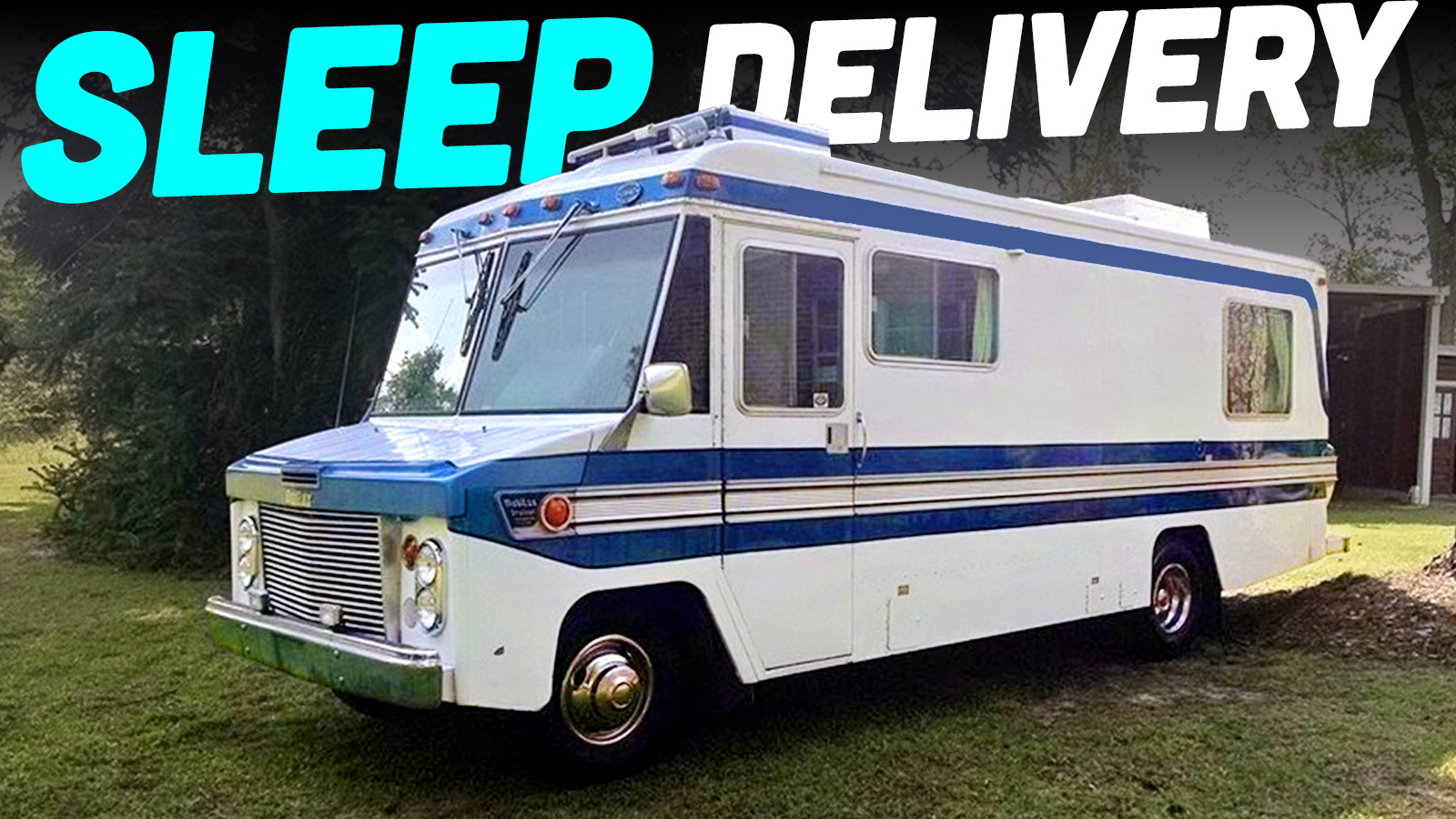
The modern motorhome is an incredible creation. Today’s coaches can drive for days on end, and their occupants can be comfortable as if they are sitting at home. But this wasn’t always the case. Several decades ago, motorhomes were known for being slow, loud, and hard to work on. In the late 1960s, Flxible, America’s second-largest bus manufacturer at the time, thought it had the solution. This is the Flxible Cruiser, and it was meant to fix the pain points of motorhomes by being built out of a durable bread delivery truck.
The 1960s and 1070s were a watershed moment in RV history. Americans with cash to spend and time to burn discovered the vast outdoors and the many activities they could do in it. People began engaging in activities like hunting, fishing, and hiking, while capable vehicles like off-road motorcycles, SUVs, and snowmobiles added some high-octane thrills to the wilderness.


These people also discovered a fun way to stay close to the wilderness. Instead of staying in hotels and other fixed lodging, they could just park up to their destinations in an RV and be only steps away from the action. This period was so explosive for the RV industry that some iconic names like Winnebago and Scamp cut their teeth in it. There were new campers that slid into truck beds, campers that bolted to the roofs of wagons, and tents that turned everyday family cars into campers. There was an RV solution for Americans of nearly every budget and with almost any tow vehicle.

The RV boom was so tantalizing that companies operating outside of the market tried their hand at it, including the likes of Grumman and the Clark Forklift Company. Flxible, which was once America’s second-largest producer of buses, also dipped its tires into the RV market. However, there was a twist. Instead of making its motorhome out of a bus, it was built out of a delivery truck. But there was a practical reason for the Flxible Cruiser, and later, the Mobilux Cruiser, to be a prettied-up milk truck.
From Buses To Motorhomes
The mastermind of the Flxible Cruiser was Dr. Emmett Dale, and he’s left his mark all over the weird RVs of the 1960s.
Flxible, pronounced “flexible,” was known for its innovation. The company got its start making a flexible motorcycle sidecar coupler in the 1910s. When more affordable cars made sidecars obsolete as primary transportation, Flxible got into the business of making buses, ambulances, and hearses. The company would go on to make some of America’s most beautiful highway buses with the Clipper, as well as buses that found themselves shuttling people to airports and around national parks. While General Motors would dominate the bus industry with more than 80 percent of the market, Flxible would land in second place, scooping up around seven percent of the market, depending on the year. Other major players included Mack, Twin Coach, and White.

Flxible would expand by absorbing smaller companies. Twin Coach would join the Flxible fray in 1953, and in 1964, Flxible also picked up regional bus maker Southern Coach Manufacturing. The Evergreen, Alabama-based company started in 1941 by refurbishing old prewar trucks and buses, but then got into the business of making its own buses after World War II. Southern Coach never grew to be a large national player, but it was established in the South with loyal customers.
Flxible utilized South Coach’s technical knowledge to build small transit buses as well as some commercial delivery trucks on Chevrolet, Dodge, GMC, and Ford chassis.

Meanwhile, Dr. Emmett Dale was snaking his way through the RV industry. He spent 1959 through 1965 with Airstream, rising through the ranks as an engineer and then a plant manager. Then, in 1965, Dale would find himself at the Clark Forklift Company as an engineer of the beastly Clark Cortez all-metal motorhome (above). In 1967, Dale switched up his resume again and joined the engineering ranks of the Southern Coach Division of Flxible. He would also become the manager of the Recreational Vehicle Division of Flxible.
Dale is credited with the creation of the Flxible Cruiser. Now, you’d think that, given Flxible’s history as a bus maker, the company’s entry into the motorhome market would be based on a bus. However, when the Flxible Cruiser made its debut in 1967, it was really a bread truck riding on a domestic truck chassis and with an RV stuffed inside.
The Cruiser

As I could find based on period advertising, the choice to make a motorhome out of a Flxible bread truck was intentional. The motorhomes of the late 1960s weren’t always comfortable rides. It was common for a Class A motorhome to have a large engine located right up front and between the seats. Mass-production rear-engine motorhomes were still years out at this point. The front-engine motorhome filled the driving cabin with noise, and they also weren’t the easiest vehicles to service, as access was largely hindered by the coach body.
That wasn’t all, as some motorhomes were considered flimsy back then, thanks to their heavy use of wood and the array of body seals that would eventually permit destructive water leaks. Apparently, there was also a bit of a safety concern, too, as a typical Class A motorhome placed the front seats either on top of or ahead of the front axle, and directly behind the front bumper.

The Flxible Cruiser was to fix all of these issues and more. Being based on a bread truck, this meant the Cruiser was made out of steel from top to bottom with metal walls, a metal roof, and a metal floor. The position of the engine and front axle ahead of the cab was marketed as offering reduced interior noise, increased crash safety, and easier access to the engine. Another proposed benefit is that, since the engine is ahead of the cab, there’s no need for a doghouse engine cover in the cab.
The Flxible Cruiser also rode on common Chevrolet, Ford, GMC, and Dodge delivery truck platforms, making them easy to get parts for and easier to service. Having the delivery truck roots gave the Cruiser one more upper hand against the typical motorhome, and it was that the Cruiser had both an RV-style entry door and a commercial truck-style driver’s door.

Flxible offered its motorhomes in a few different flavors. If you got a small motorhome, your Flxible was based on the Chevrolet P20 delivery truck (above). Larger than that was the 21-foot Chevrolet PE 31042-based Flxible Cutter motorhome (below), which came equipped with a Chevrolet 350 cubic inch V8. At the longer end of the spectrum was the 25-foot Flxible Cruiser, and these were usually found powered by a 454 cubic inch Chevrolet big block V8.

All of these motorhomes were rather substantial lumps of steel where the idea of reducing weight took a backseat to longevity. Since these were based on delivery trucks, they were built for the kind of abuse no typical motorhome would go through. This actually made sense when you consider that Dr. Emmett Dale was also involved in the all-steel Clark Cortez. Dale clearly believed that steel, not wood or aluminum, was the way to go.
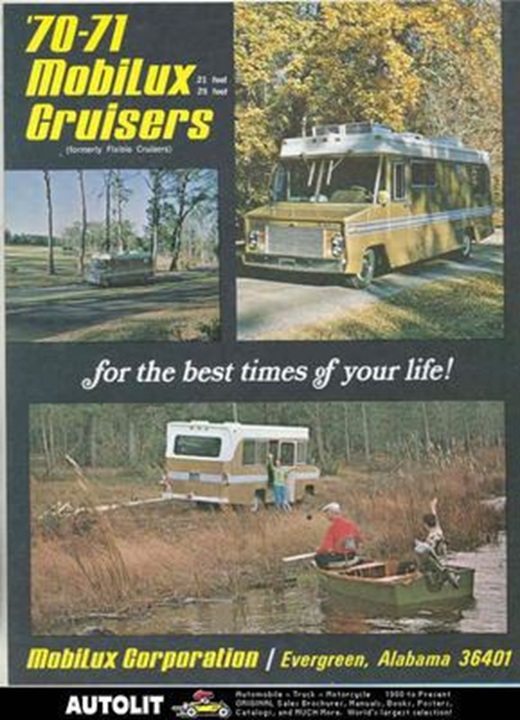
I could not find much more data about the Flxible Cruiser. But what I did find was that, in 1969, Flxible discontinued motorhome production. Instead, the motorhomes would be built by the newly-formed Mobilux Corporation of Evergreen, Alabama. In January 1970, Alabama newspaper the Elba Clipper reported that the entire Flxible Cruiser line had been sold to Mobilux, and that Dr. Emmett Dale was at the helm of the new company. Mobilux took over Flxible’s Evergreen plant and dealer network while hoping to expand.
As for the Cruiser, aside from getting a name change to the Mobilux Cruiser, it remained pretty much the same motorhome. Mobilux did advertise its prices, and $10,494 got you the Mobilux Cutter, while the Cruiser was priced between $16,555 and $18,555, depending on options.

In 1973, Mobilux made a huge marketing push, getting its motorhomes advertised in magazines like Popular Science. Mobilux also partnered up with House Beautiful magazine, and that summer, editors of the publication decorated the interior of a Mobilux Cruiser to create a “mansion on wheels.”
Sadly, data on these rigs is hard to come by. Allegedly, the Mobilux Cruiser weighs 12,000 pounds, and the 454 V8 under the hood gets about 9 mpg on the highway. I was not able to find much information about features, equipment, or tank sizes. That said, I was able to find out that these motorhomes had optional air-conditioners and a Thetford Thermasan, the bizarre system that disposed of a black tank’s contents by burning it in the RV’s exhaust stream.
It’s estimated that Flxible and Mobilux built 250 to 300 motorhomes until 1974, and the majority of examples were built by Flxible. It’s not known what caused the Mobilux venture to fail. However, the multiple oil crises and economic strain of the mid-1970s took several smaller RV firms out of existence as people stopped buying large and thirsty motorhomes.
There’s One For Sale!

Amazingly, there is one of these for sale right now. Betsy Dale Adams, the daughter of Dr. Emmett Dale, is selling what used to be her father’s personal Mobilux Cruiser coach.
The motorhome appears to be in remarkable shape for a rig from 1972. The exterior looks just as presentable as any motorhome from today. I can’t get over how it looks like someone slapped some RV windows on a bread truck, but it actually came from the factory this way.

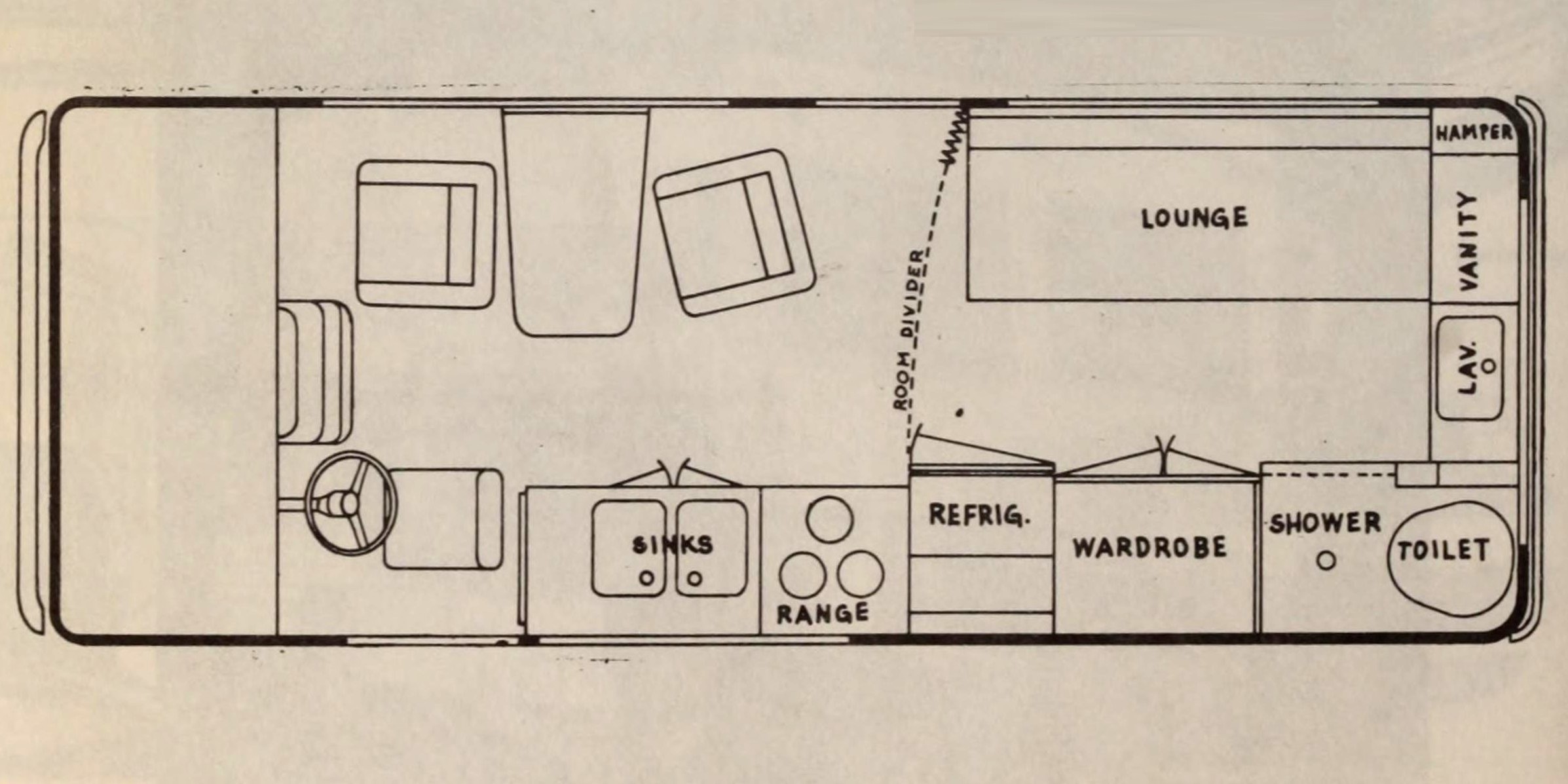
The interior is very ’70s with wood paneling from bow to stern. My eyes spot a dual-basin kitchen sink, a newer refrigerator, a sizable wet bathroom, and a pair of beds in the rear like an Airstream. It’s a dated design, sure, but one that I think is still plenty classy.
I love how we get a view of the driver’s seat, and it’s clearly the instrument panel from a delivery truck, but with a splash of fake wood thrown in. It’s a shame that we cannot see the floor. I’d love to see if it’s flat from front to back.
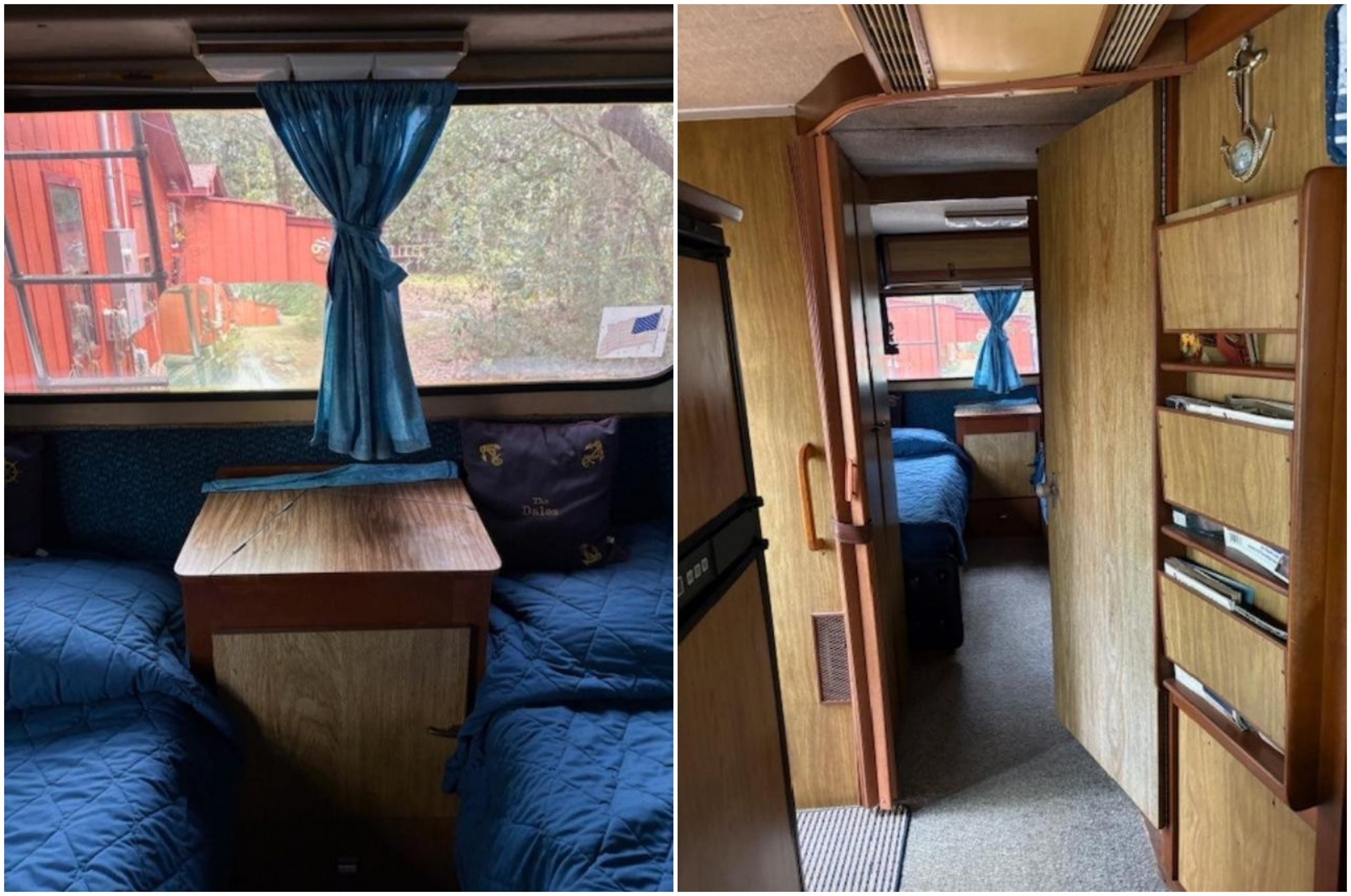
Betsy has been trying to sell the coach since at least June 2025, and currently wants $14,000 for it. The motorhome is located near Pensacola, Florida. This steel motorhome has been surrounded by salt water for at least a portion of its life, yet it still looks so good!

Sadly, due to the lack of period testing, it’s hard to say if the marketing promise of a motorhome that was easier to work on and quieter on the road actually rang true. But I suppose it was a sort of stopgap measure in the end, regardless. Today, we have rear-engine motorhomes and front-engine motorhomes that don’t drown you out with noise. Of course, some designs are more wrenching-friendly than others, too.
I’d love to be able to find out more about Mobilux and Dr. Emmett Dale. Clearly, he was an eccentric engineer, and it showed in his work. Nobody builds motorhomes like the projects he thought up or was otherwise involved in. The fact that quite a few of his motorhome designs have survived more than 50 years into the modern day is at least a decent suggestion that metal lasts. It’s also just amazing that, at some point, two companies thought that the solution to old-timey motorhome problems was to make an RV out of a bread truck.
Top graphic image: Betsy Dale Adams






Modern RVs still have all the problems that this one was trying to fix. They are still made of aluminum or fiberglass over the cheapest wood with a bunch of seams that WILL leak and rot everything.
I recall reading a few articles here about how modern RVs are steaming piles.
Sounds more to me like it’s misting all the cars behind you with black water rather than burning it. I hope they don’t still do that.
Incinerating toilets are pretty neat. AND using exhaust heat to do the work is efficient. BUT yeah I don’t have a lot of faith in the thoroughness of this system.
Since 14 grand doesn’t buy much of anything these days, I’d say it’s a sweet value. Throw on a TBI injection system and a 4L80 overdrive trans and you’re pretty much up to date. If it’s got the Thetford Thermasan, even better!
USED to? Have I not for the past several years read story after story from you on this very site just how bad motorhomes suck NOW?
Not all of them suck to drive today! But yeah, the level of suck can still be pretty high today.
I wonder how compliant the suspensions were on those milk trucks. When I was a kid, they delivered milk to our house in 1/2 gallon milk bottles, and put them in an insulated metal box on our porch. You’d think the suspensions would be toned down to keep from breaking the bottles.
Maybe a little… But they were still riding on truck springs.
I’ve had two motorhome on Chevy P-chassis and they were all right. Not fabulous, but all right. And a bread truck body still puts the engine up front, with all the noise and heat that accompanies it. I’m not going back; the next motorhome will be a diesel pusher with air suspension.
I can clearly remember the clinking sound of early morning milk trucks on our street in 60’s Detroit. We even had an insulated “milk chute”. It could be locked from the inside but never was. Walking to school one morning, an unknown neighbor lady asked if I’d climb through her milk chute because she locked herself out; she gave me a quarter…
A Citroen H-van as a camper would look quite classy.
Probably a little too classy for a typical KOA.
Commercial van makes a lot of sense like so many early attempts it looks a little home built. I’ve seen some modern stealth builds using a step van seems practical enough. I’m still waiting for the van people that buy the 300k mi former FedEx or Amazon vans to turn into their living quarters to get ahold of the rivian commercial van.
My 1989 Toyota Sunrader motor home is extremely comfortable to drive, though the V6 isn’t the most powerful engine, considering the weight that can be put into them. The gas milage is decent, and it can be worked on at any shop, as it’s just a Toyota pickup cab, minus the bed. It’s a 1 ton chassis and has a really comfortable bed in it.
Those old Toyota campers might be one of the ultimate vintage RVs to own for that reason! Fiberglass body, bulletproof drivetrain, easy to keep going, etc.
I’ve heard its relatively easy to swap them to the more modern Toyota 3.4 V6, which also means you COULD bolt on the TRD supercharger…
That would be a fun project!