

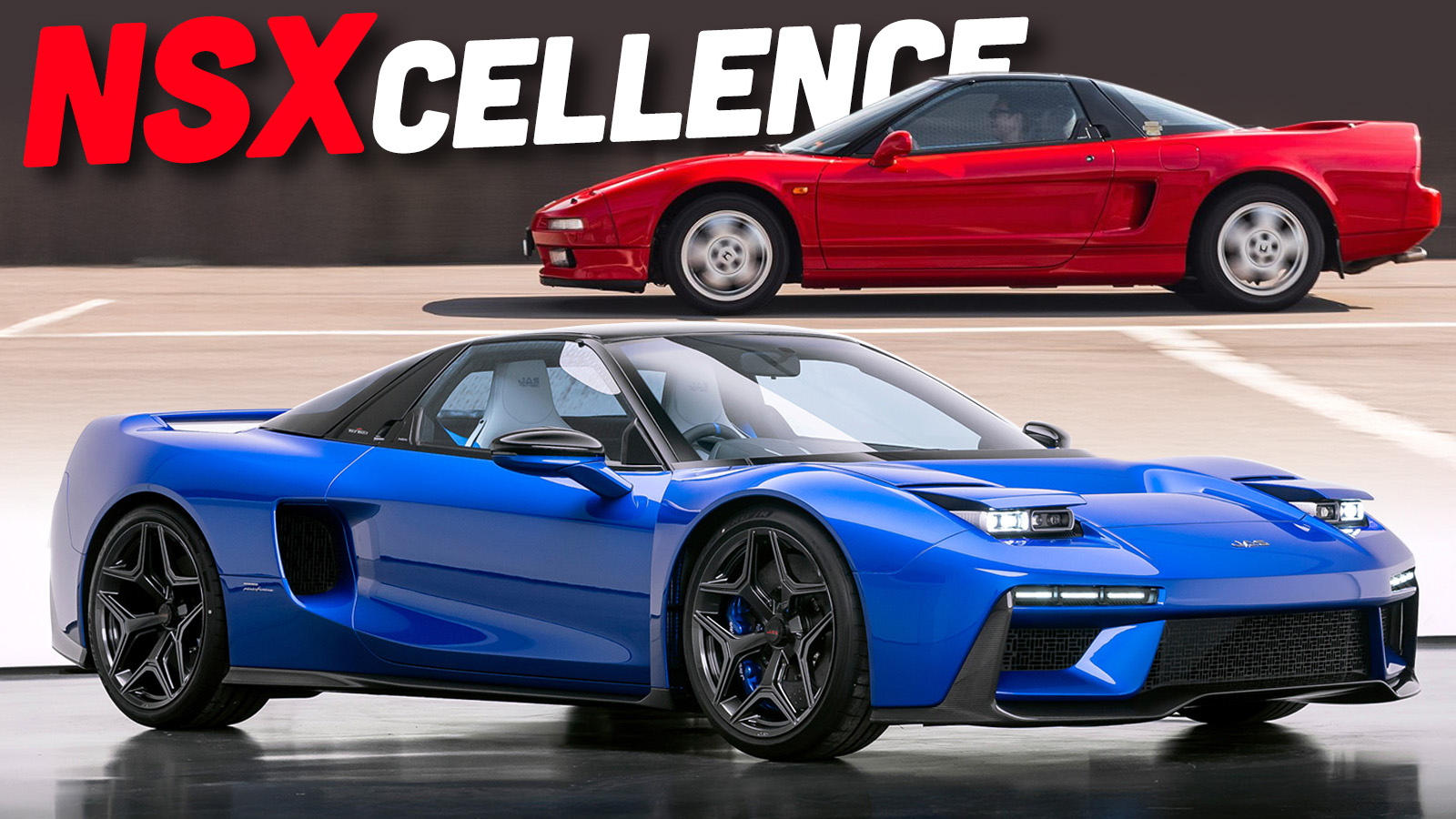
I’ve always held the Honda NSX in high regard. Doesn’t it just look like the perfect 1990s mid-engined sports car from every angle? Conceptually, it’s so much more than the Honda Accord of sports cars; it’s Honda getting close to creating its ideal version of a Ferrari. It even looks great in red. The full name? New Sports Experimental. How cool is that?
This fall, two especially special Honda NSXs have popped up in the automotive media. One is perhaps one of the most important NSX examples ever – it was the car Ayrton Senna, the Brazilian Formula One legend and NSX development driver, drove in the early 1990s as his personal car. The other is the Pininfarina-designed, Judd-powered JAS Tensei NSX restomod that strives to be the ultimate development of the first-generation NSX.


The Italian design house, Pininfarina, didn’t design the production NSX. Since a number of Ferraris were drawn at Pininfarina, it would have been sweet, but the company’s input in shaping mid-engined Hondas amounted to the ur-NSX concept called the HP-X (Honda Pininfarina Experimental) and the tiny kei-car roadster, the Beat. Instead, the 1991 NSX would be designed in-house at Honda.

The HP-X looks wonderful and futuristic. It is open like a shoe, with a short, low nose and an opening purple-tinted Perspex canopy, which means it doesn’t have to have any doors. The top portion of the two-tone pearl white/graphite grey bodywork is heavily straked, creating a sort of Viennetta-ice-cream-cake look. The interior is surrounded by red suede, with purple fabric on the seats and the dash, from which a flat steering column spouts.
As wedge-shaped concept cars come, it’s absolutely beautiful, but it was far removed from the real-world, everyday sports car the NSX would come to embody. Still, it too had a mid-mounted DOHC V6 cribbed from the Honda Legend, from the same C engine family as the eventual NSX’s powerplant.

The engine in the HP-X and the base Legend produced 145 horsepower, which for a two-liter engine was very good, especially in 1985. The Legend even had other, more powerful engines in its palette, including a rare, turbocharged variant of the two-liter V6, which Honda interestingly called “Wing Turbo.” The “Wing” part of the name referred to the variable geometry turbocharger’s moving vanes.

Despite having nearly 190 horsepower, the Legend’s turbo engine wasn’t chosen for the NSX. Traditionally, and especially back then, Honda relied on non-turbo engines, and the Wing Turbo Legend and the Honda City Turbo existed as weird blips on the radar.
A Honda halo car such as the NSX needed to have a naturally aspirated engine – even if turbos were the theme of the time in Formula 1 racing – with enough power to beat a V8 Ferrari. Honda benchmarked the Ferrari 328, which had 270 horsepower. Through use of experimental components such as titanium connecting rods, together with VTEC variable valve timing that was added late in the development, Honda was able to match that figure, with a 8,000-rpm redline. At that point, Honda had gone through a lot of different C-series engines and even engineered the engine bay for a non-VTEC powerplant, which meant the final engine needed to be tilted back very slightly to fit the car.
The NSX was built in near-laboratory conditions at Honda’s Tochigi R&D center, by 200 technicians with a minimum of ten years’ experience at Honda. The first prototypes were shown in 1989 and tested by Best Motoring, the Japanese motoring program.
The F1 Legend Who Evaluated The NSX Prototypes

After a single 1984 season at Toleman, the young Ayrton Senna drove for Lotus-Renault, whose engines reportedly produced over 1,000 horsepower in qualifying trim in 1985 and 1,300 in 1986 – but 850hp in ’86 race spec. Renault, unlike Honda, embraced turbos in its marketing, memorably in its “Turbo Zone” adverts for the Fuego. Despite the unreliability of 1985 Renault F1 engines, Senna scored his first win in Portugal and the second one in Belgium. He was on track for success and soon became one of the big names in Formula One.
In 1986, he won the Spanish and Italian Grands Prix, and in 1985 and 1986 he took eight pole positions. His driving was so strong that it helped Lotus to change engine providers from Renault to Honda for 1987, together with Honda test driver Satoru Nakajima joining Lotus as its second driver, replacing Johnny Dumfries. In 1988, Senna joined McLaren, which also ran Honda V6 turbo engines that year, before turbos were banned in F1 for years. It was only natural that the development of Honda’s new mid-engined sports car would benefit from Senna’s input.
Shigeru Uehara, the head of the NSX project, received feedback from Senna based on several testing sessions at Suzuka, Honda’s home circuit.
Senna wished for the chassis to be stronger and stiffer, remarking that the first prototypes felt “fragile.” This resulted in torsional stiffness being improved by 50 percent by the time the chassis was finished. It was an all-aluminum semi-monocoque chassis, with the use of extruded aluminum saving some 441lb compared to using steel. The suspension arms were also aluminum, again saving 44 lb in weight.

In the name of weight saving, Honda also developed an electric power steering rack, and while it wasn’t the first one in the world (the one in the 1988 Suzuki Cervo kei car was, and the 1993 Fiat Punto hatchback also used an electric rack), it was one of the first consumer applications of such a system.
For those drivers who preferred a more direct feel, Honda also offered the NSX without power steering for the first years, before a further lightened iteration of the system was made standard equipment for 1995. Automatic NSXs had an electrically assisted rack from the get-go.
One Of The Most Famous NSX:s In The World
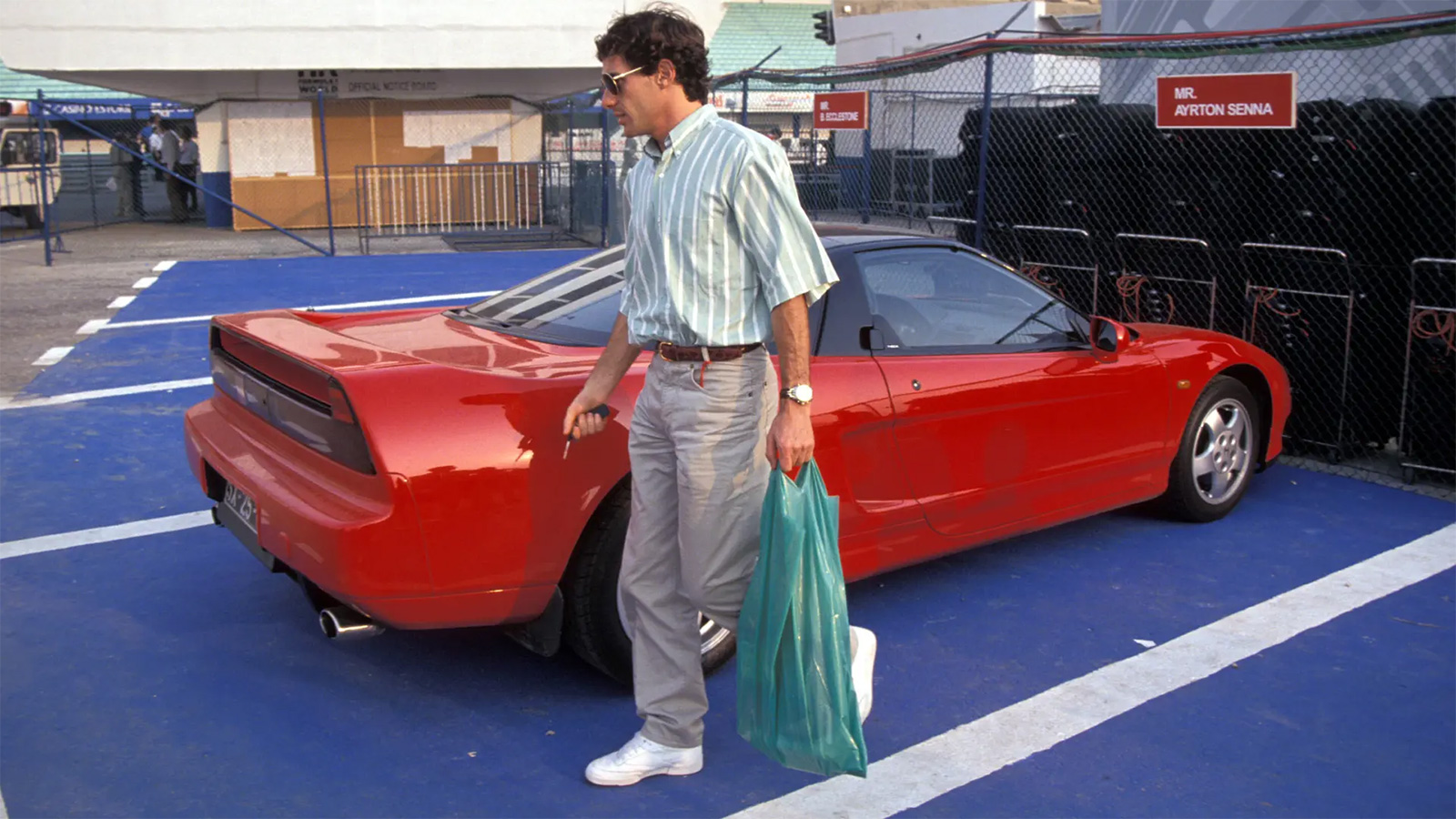
Senna had two NSXs and access to a third one owned by a friend. Honda gifted him a black one, which he kept in Brazil. The “launch spec” car seen here was the first NSX imported to Portugal by Honda, with red paint and a black roof. It belonged to the Portuguese importer, but it was Senna’s car when he was in the country, at his villa in Algarve, or at the Estoril F1 track nearby.

One of the most famous photos of Senna together with his red NSX shows him washing it with a hose, like anybody. As well as the NSX, Senna’s public image was used to market the new, fourth generation Prelude.

In 1991, Senna secured his third F1 world championship and considered moving to Williams already for 1992, but Honda’s CEO convinced him to stay for another year. It wasn’t a great year for Senna, who won three races and finished fourth in the championship standings, below Mansell, Patrese and Schumacher, who had only debuted in F1 that year.
1993 was Senna’s last year at McLaren-Honda, and he returned the red NSX as he moved to Williams for 1994. He would not see the season through, as he sadly crashed fatally at the San Marino Grand Prix in May. Senna’s F1 career and his rivalry with Alain Prost has been documented vividly in the 2010 documentary by Asif Kapadia.

Senna’s red NSX was always kept in tip-top condition, as its importance was immediately recognized after his passing. It has 63,000 km (39k miles) on the clock, and it hasn’t needed restoration. A year ago, Senna’s personal Mercedes-Benz 190E 2.3-16 Cosworth was auctioned in London for around $300,000; at its lowest, the Senna NSX has been estimated to command over double that, possibly beating a million. We will know after it goes under the hammer in two weeks.
The NSX Reborn In 2026
There are other, perfect-condition first-generation NSXs in the world, some of them painted yellow, some of them wearing Acura badges. Honda built them for 15 model years, 1991 to 2005, and over 18,000 were built, half of those sold in the U.S. and badged Acura NSX. Now, 35 first-generation NSX chassis will be used for an Italian-built restomod that again links Honda with Pininfarina.
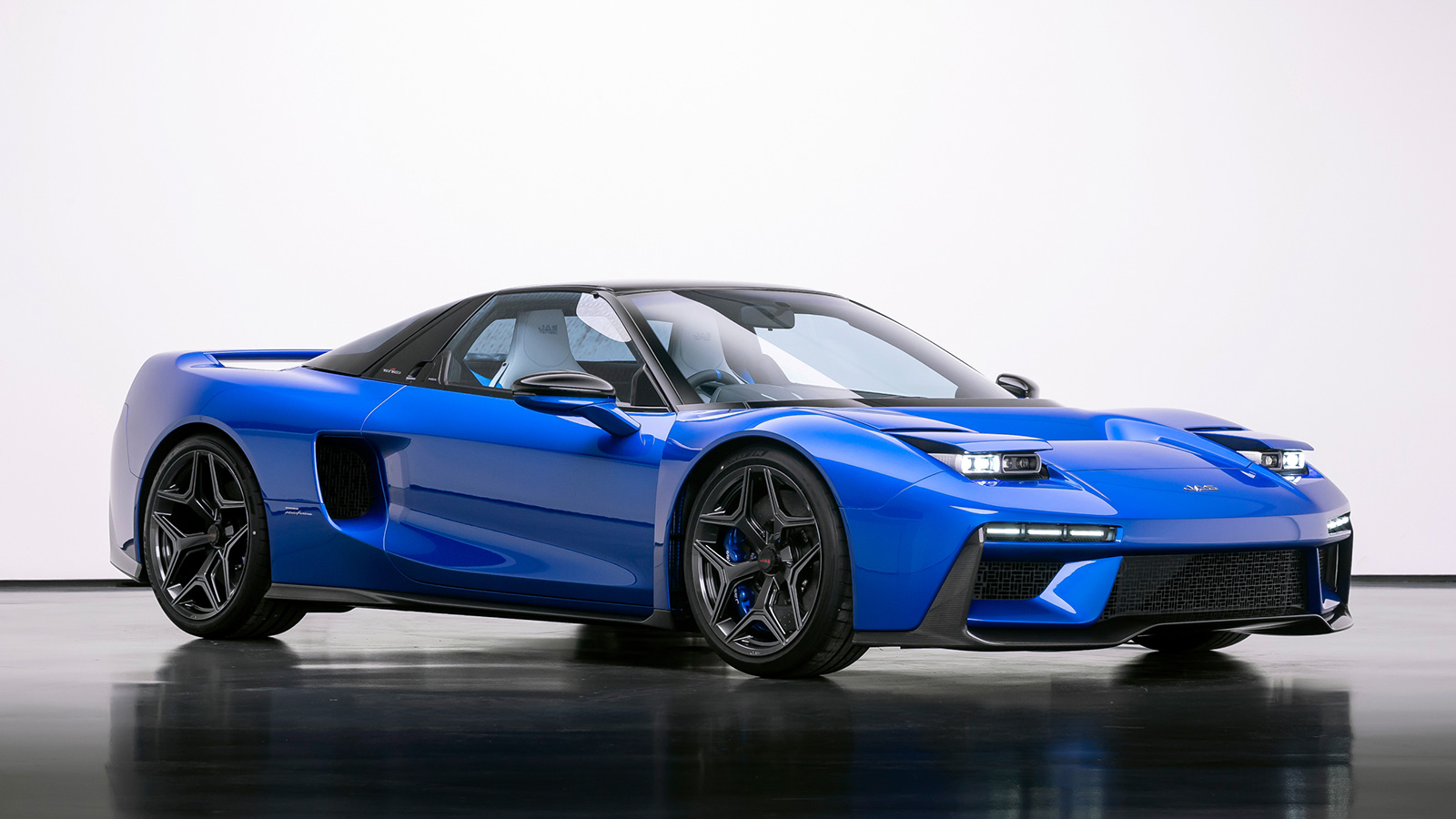
The Italian company JAS Motorsport takes the original aluminum monocoque chassis of the original car as its starting point. JAS has been building competition Hondas such as the second-gen NSX GT3 racing car, so it knows Hondas and the mentality behind the NSX, and daringly it has chosen to improve on the 1991-2005 original. The resulting car was shown this week at the 2026 Paris Motor Show, alongside other cool retro stuff.
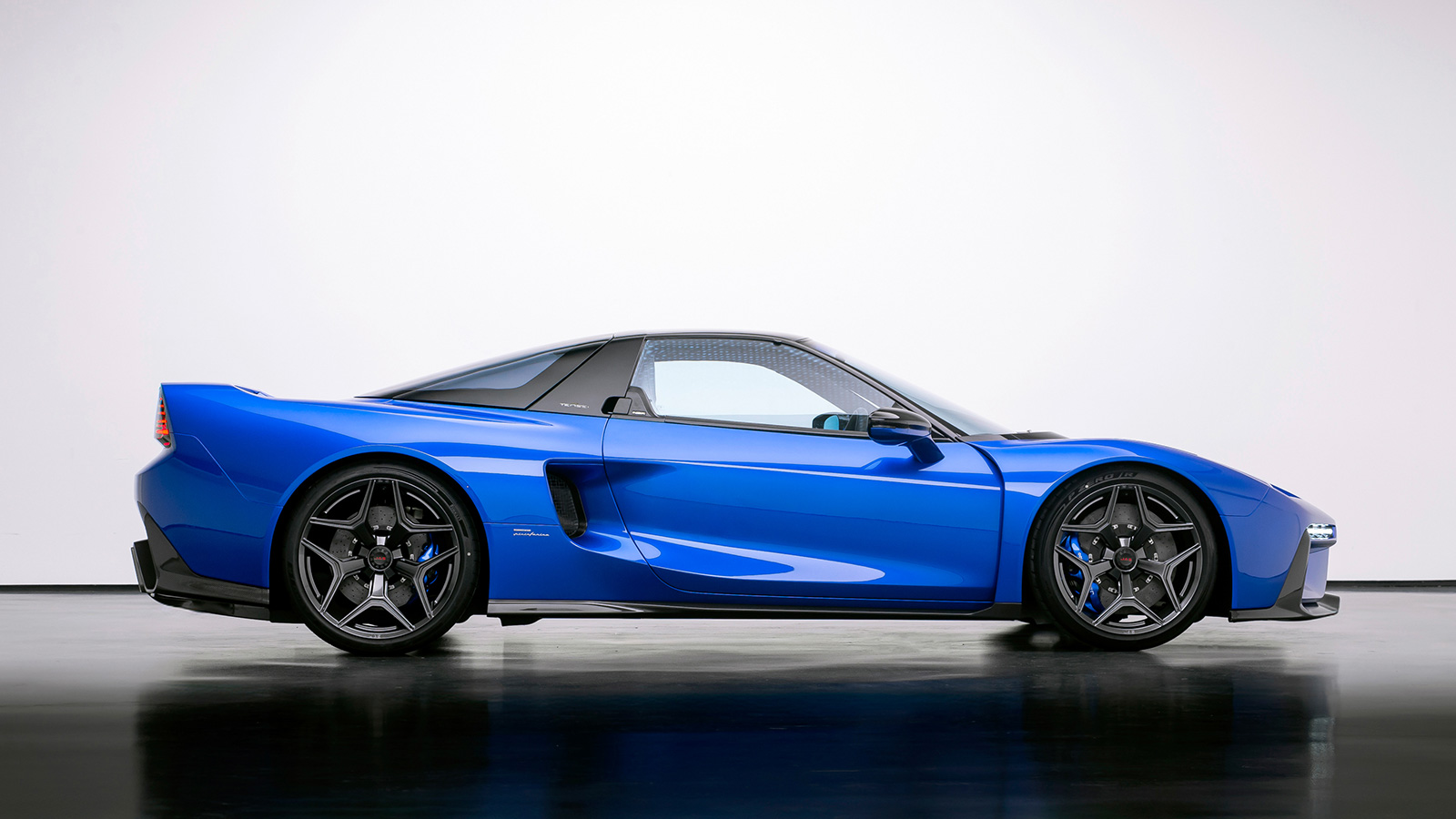
The car, named Tensei for “rebirth” in Japanese, has been created to show what the first-gen NSX would have developed into, were it made today. This means body panels crafted completely from carbon fiber, with the A and B pillars and the central tunnel of the original chassis strengthened with carbon Kevlar.
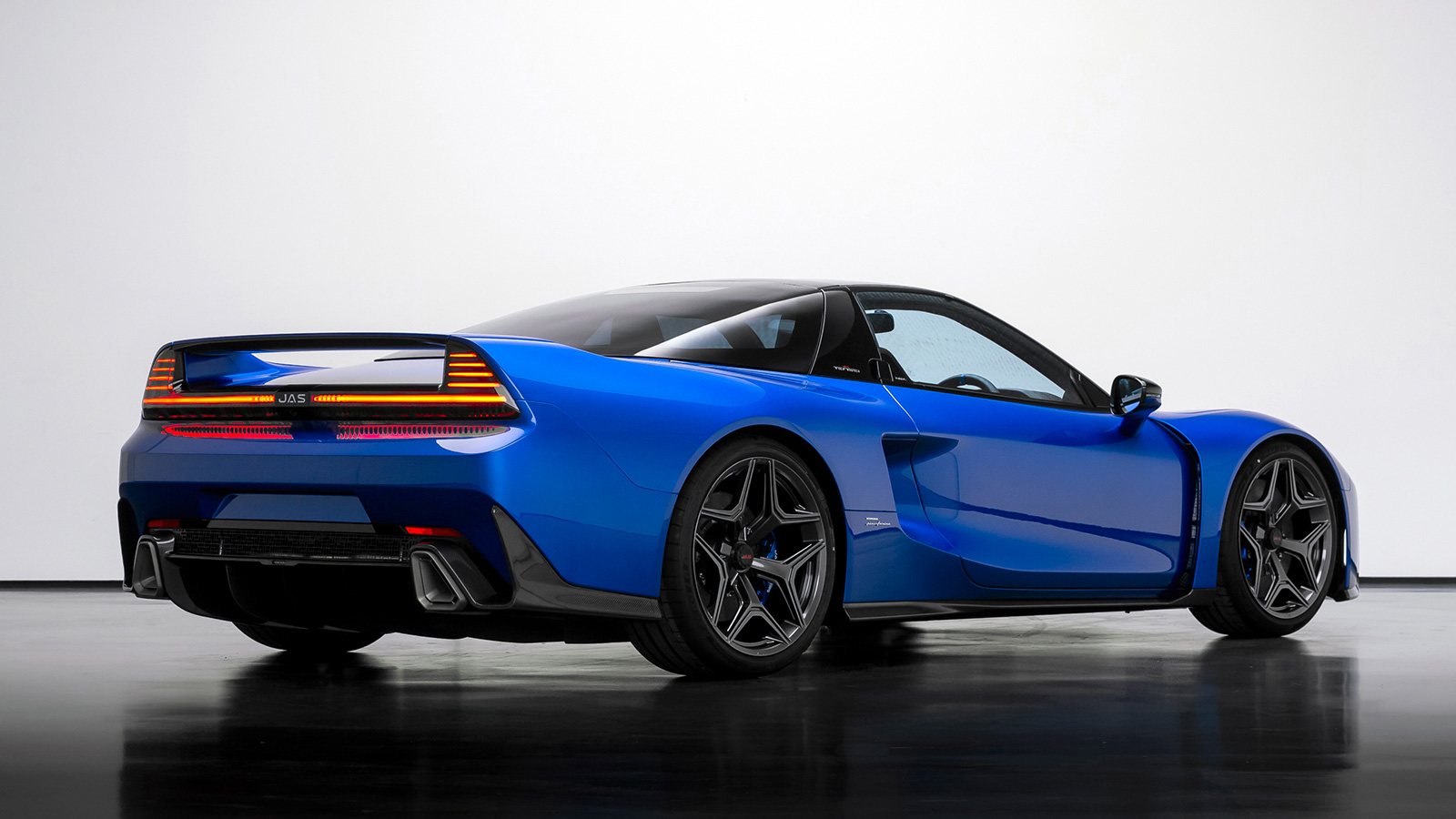
With Pininfarina let loose on the exterior design, the Tensei still looks like an NSX, with the glasshouse identical, just with a more muscular cyberpunk body.
The wheelbase is now a couple of inches longer, and the front and rear tracks are wider by nearly seven inches up front and 7.5 inches in the rear. At 2,755 lbs, the car is still lighter than the original, 3,000-pound NSX, except for the ’92-’95 NSX-R that weighed closer to 2,700 lbs.
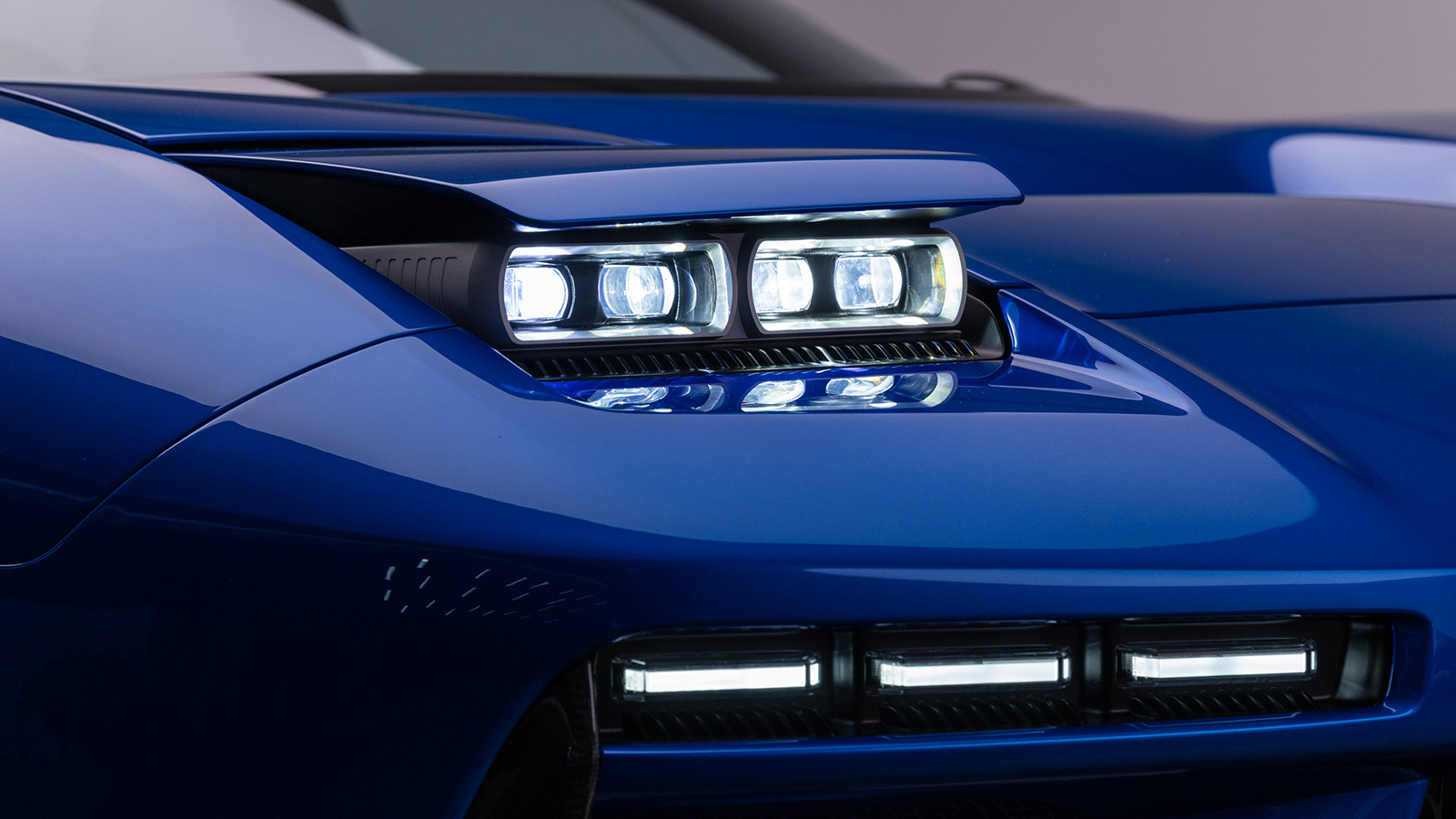
Interestingly, the Tensei still retains pop-up headlights, which the first-gen NSX itself lost at facelift time in 2002. This time the light units are LED Matrix.
Engine modifications by Judd Power have stripped the original V6 down to the block, which now displaces 3.5 liters instead of three. The alloy heads are new, as are camshafts, valves, and throttle bodies. Interestingly, Judd Power has thrown VTEC out the window, instead utilizing a racing valvetrain without variable valve timing. The center of gravity has been improved by fitting the engine lower, using a dry-sump system to make it possible.
All that development has upped engine power from 270 to 414 hp, bridging the gap between sports car and supercar. The original NSX never broke 300hp stock, even with the later 3.2-liter engine, and early automatic cars had 250hp.
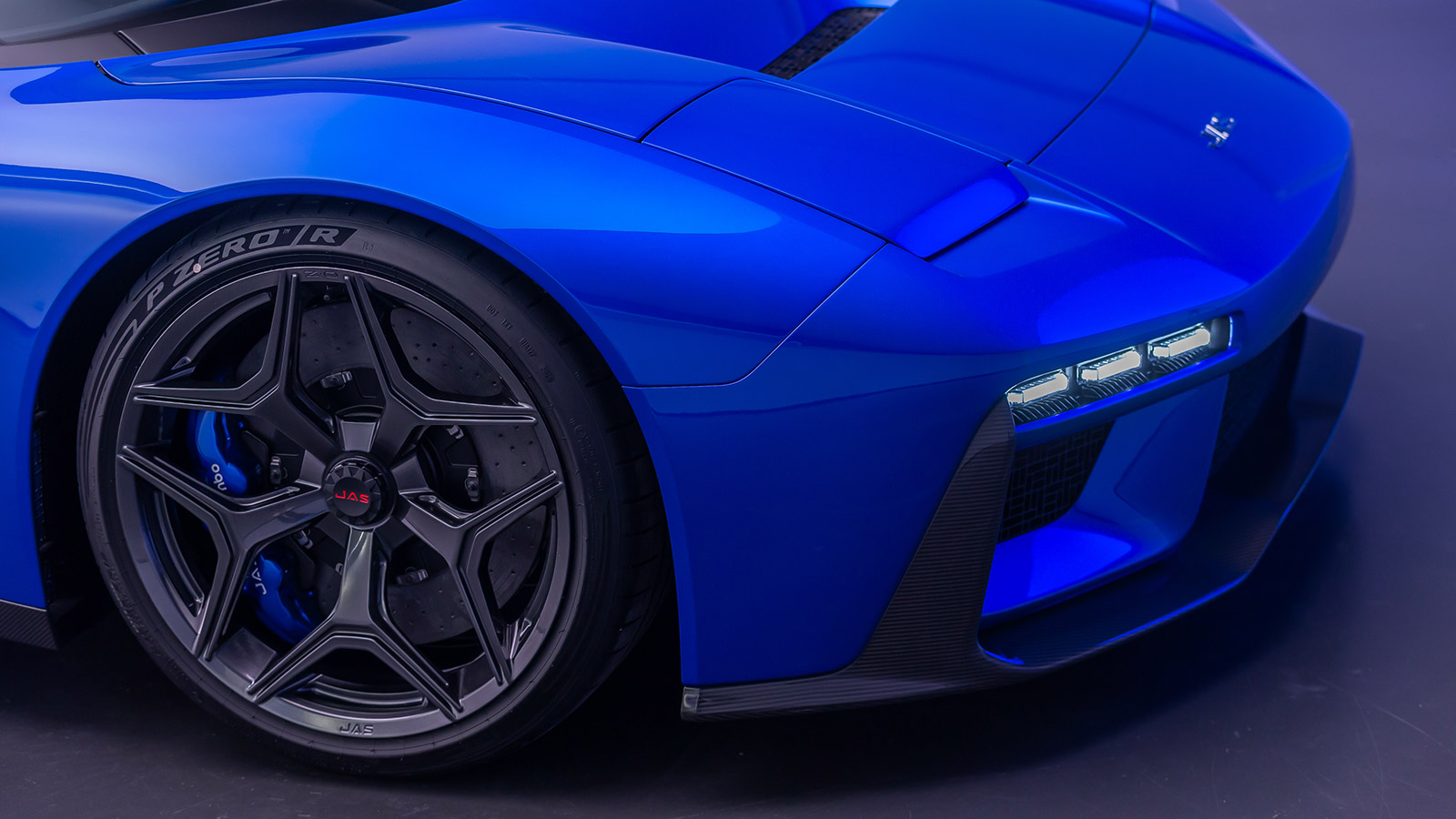
The suspension is also all-new, with billet aluminum wishbones up front and a multi-link setup in the rear, together with shocks from KW. Brakes are Brembo and the wheels are 19-inch in the front and 20-inch in the rear.
Consider the 1991 car had 15-inch wheels in the front and 16-inch in the rear, and then note that the JAS Tensei’s brake discs are 15-inch in the front (and 14-inch in the rear).
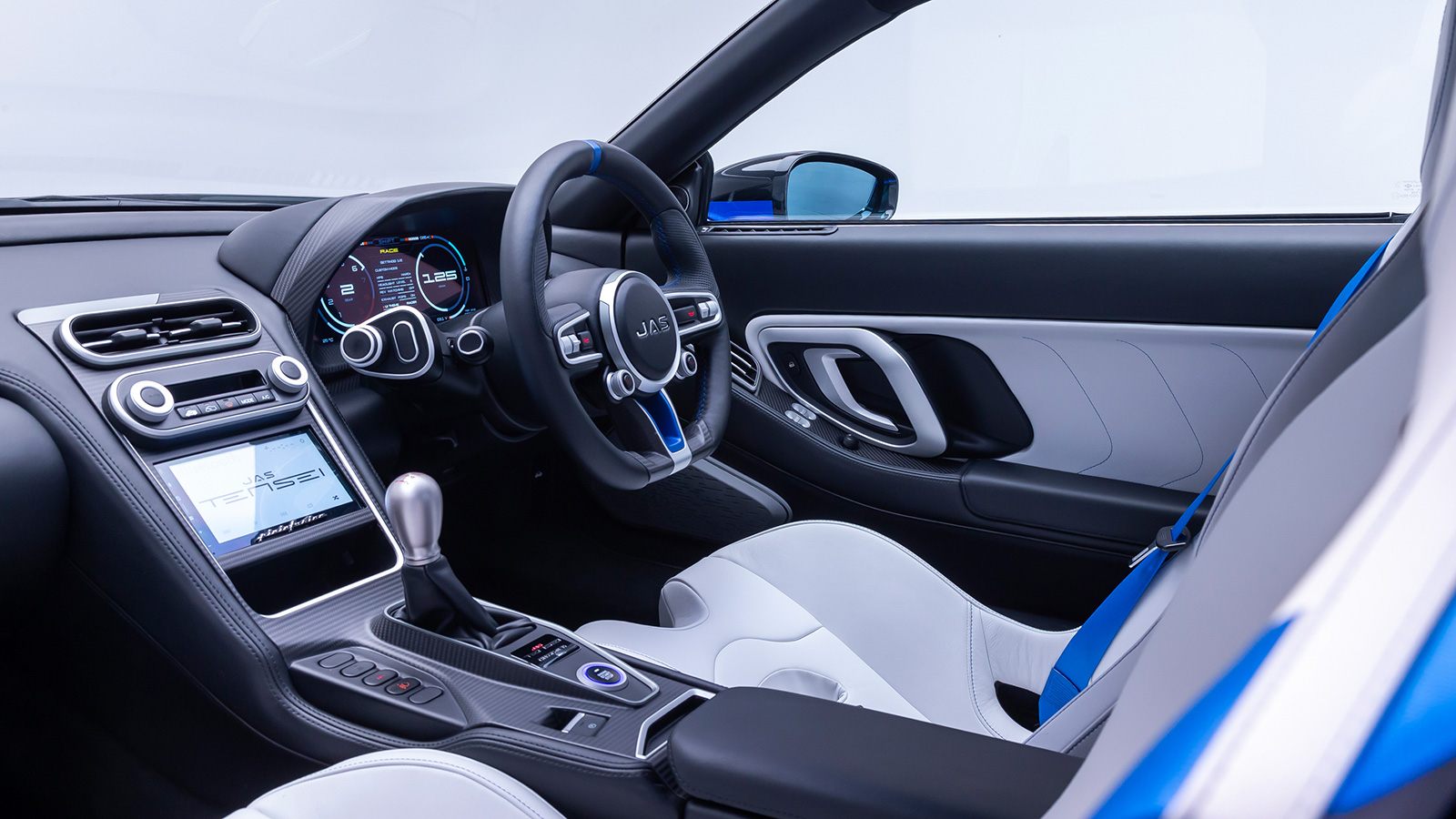
The cabin retains the fighter-jet-inspired dashboard of the original, just refinished for 2026 eyes. The gauge cluster is now all-digital, but you still find 1990s Honda switchgear here and there, and the only large touchscreen is the double-DIN stereo. It kind of looks like the cabin of a movie superhero’s car, with grey Sabelt bucket seats in place of Honda’s leather seats.
Inside and out, the JAS Tensei looks far more flashy than the 1991 car, which was still a bright red Ferrari competitor even if it wore Honda/Acura badges and you could drive it to work every day.
Now, the important thing: the price. The JAS Tensei will be a limited-run, hand-built restomod, meaning it’ll cost a cool million dollars. That can feasibly get you Ayrton Senna’s personal NSX with all the rich F1 driver history you can imagine. It simply depends on what’s more important to the buyer. And if you don’t need either of these cars, you can get a NSX for ten percent of what they cost. Sure, NSXs were markedly cheaper some years ago, but they have never been cheap-cheap.
And for those wishing for a practically new, perfect-condition NSX, Honda also offers a “Heritage Works” program that is starting out with an NSX Refresh Plan for the company’s most famous sports car. The original Tochigi R&D Center that built the cars will also be responsible for restoring them.
Top graphic images: JAS Motorsport/RM Sotheby’s




Yeah, thats a no from me on that restomod. The changes to the body detract from the original design, they don’t enhance it. And dropping vtec from an essentially classic Honda engine isn’t really a win to me either. I’d take a 180K used NSX over that restomod.
No, no it hasn’t improved anything.
Neither. I do like the orange one Kyle from boosted boys built with the 1000 HP k swap.
I’d pay JAS to restore the 35 original chassis to their original look, and deal with the engine and everything hidden.
They tampered with the taillights, the interior, the gauges, all of which are what made the NSX iconic in the first place.
The NA1 NSX is probably my all-time dream car, this restomod does absolutely nothing for me. The exterior design is too busy and swoopy. They added rake to all the character lines to make it look fast, but it doesn’t work, it’s trying too hard to look modern. The NA1 design was perfect, simple, clean, balanced, unpretentious, and JAS throws it out the window to be flashy.
Thanks, I hate it. I’d rather have a driver quality original so I could, you know, actually drive it around.
It’s like Hollywood lazily rebooting and sequalizing everything. I can’t wait for MCU Movie #40 with no real story except to set up plot points for MCU Movie #41. Nothing new anymore.
That’s the thing, isn’t it? The original NS-X was shorter than a current Civic, and only a centimetre wider, making it a perfect fit for today’s traffic. It’ll start on a winter day and you know the A/C will work properly in the summer, the all-round visibility is fantastic, and with all that the handling is utterly sublime. I’d want one I could really wring the neck of too, but if I had to choose one to store in a climate controlled garage it would be the one that had been graced by Senna’s godlike loafers.
Are we collectively sick of restomods yet or it is just me
JAS can design a cool looking car but can’t figure out how to make a good logo? Looks terrible on the car and steering wheel. Worse than the KIA logo and makes this look like a Chinese knockoff.
Do I have to pay for the car or can I just choose?
It would be so cool to drive Senna’s NSX, but there’s no way I could own it. It’s the restomod for me, by virtue of having almost no provenance to worry about. It’s already been ruined!
Those pop-up headlights and shade of blue really kick ass!
If I were given a choice to grab the keys to either, I’d choose the Tensei and in this particular dream scenario, I would drive it everywhere, everyday.
Disgusting. Not as bad as the Esprit from last year but I hope these were at least the shitty automatic ones they are hacking up.