

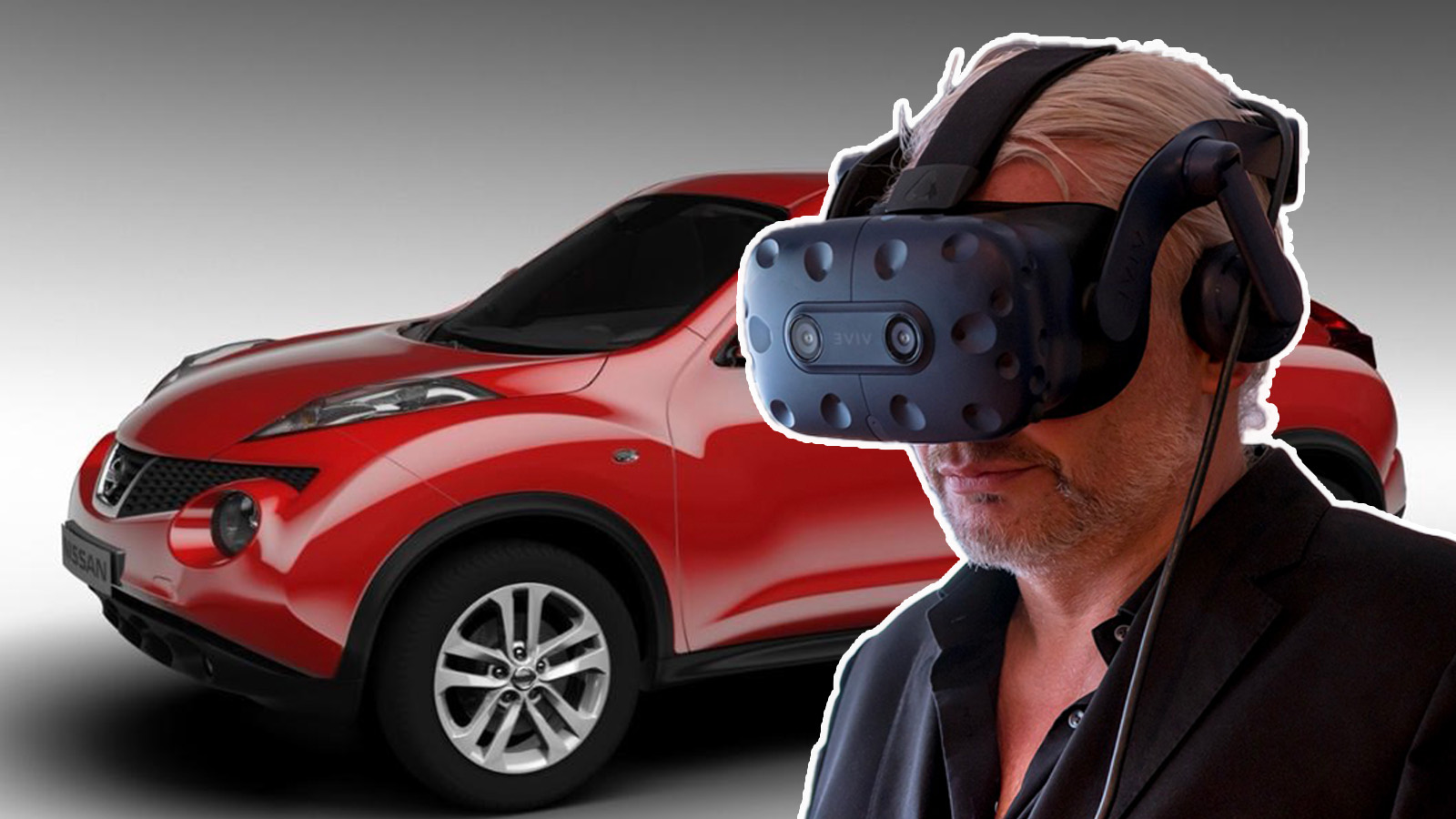
Nissan Motor Company’s global press office in Yokohama put out a very short press release to announce that its longtime head of design, Alfonso Albaisa, was retiring, and in his place was Matthew Weaver, a designer who had been with the company for nearly a quarter century.
This press release made a passing reference to Weaver having contributed to “the development of the Qashqai, Juke and other key models” and pretty much left it at that. Excuse me?


While the Qashqai (typically, the Nissan Rogue here) is a popular vehicle, it’s not a car that should even be mentioned in the same breath as the bulbous, shocking, and extremely influential Nissan Juke. For all the strange looks it got at the time, the Juke is one of the most important designs of the last two decades.
Where The Juke Came From
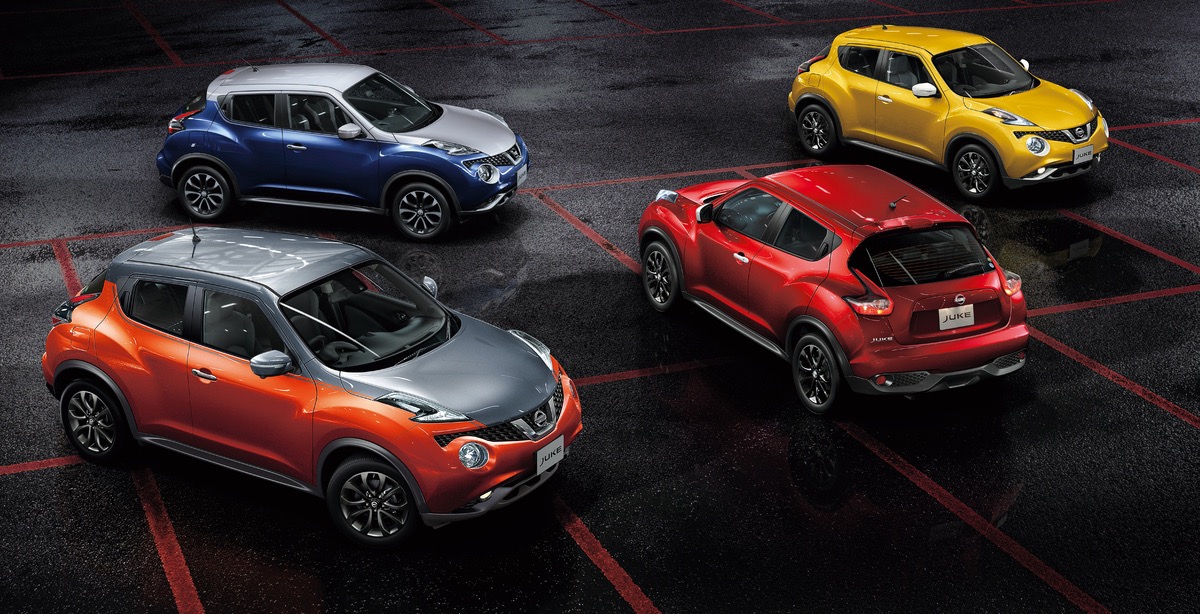
Nissan design in the late 2000s had grown rather stale. The Pathfinder and Frontier looked older than their platforms. The 350Z, though an exciting reinterpretation of the original Datsun, had gone too long without a serious upgrade. The Maxima and Altima were redesigned into softer, beiger facsimiles of their more popular predecessors.
The company needed a shot in the arm. Something that would say to the world that it meant to create cars truly unique and different. In this, the company succeeded, though it wasn’t obvious at first. The original concept, the Qazana, was shown to journalists at the 2009 Geneva Motor Show and when they were told it was a glimpse into the future, Weaver said “they didn’t believe us.”
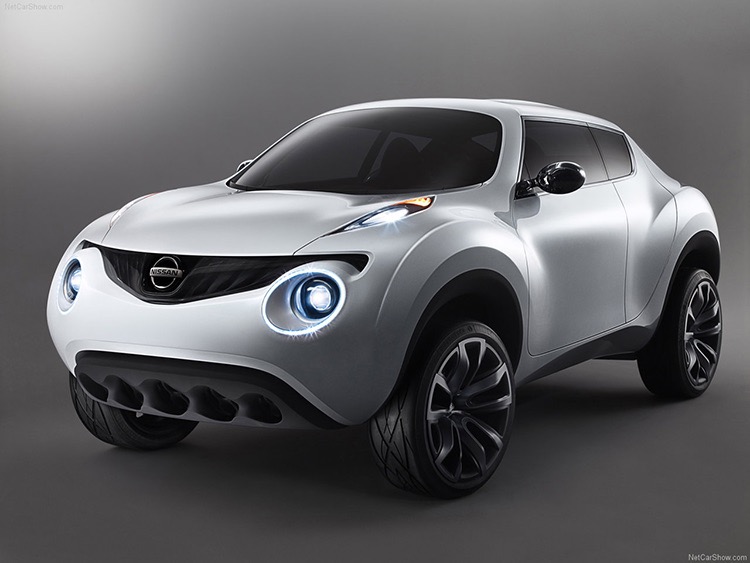
A lot of what would become the Juke was there, including the Coke bottle-on-acid curves, massive fenders, helmet visor windscreen, and split headlights.
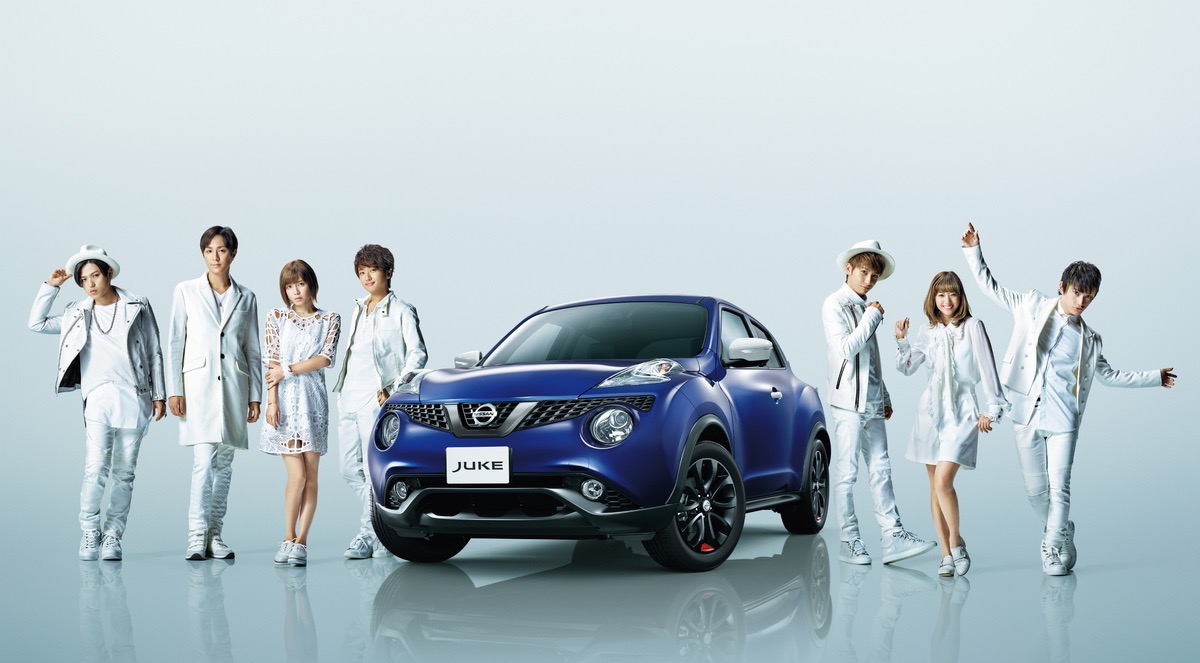
While many concessions were made to create a car people could actually buy, the general design is there.
“There were jaws all over the floor,” said Weaver, recalling the moment it debuted. “The [Juke] had arrived, and it had made quite a statement.”
That’s maybe an understatement. I’m fairly certain I was at the 2010 New York Auto Show when this debuted, and the general vibe was “are they serious?” I have a sense that I didn’t initially get it. The small subcompact crossover space was new and I didn’t quite know what to make of it.
Over time, I’d be more and more impressed by the little car that started at around $22,000. All the little details were strange and also inviting.
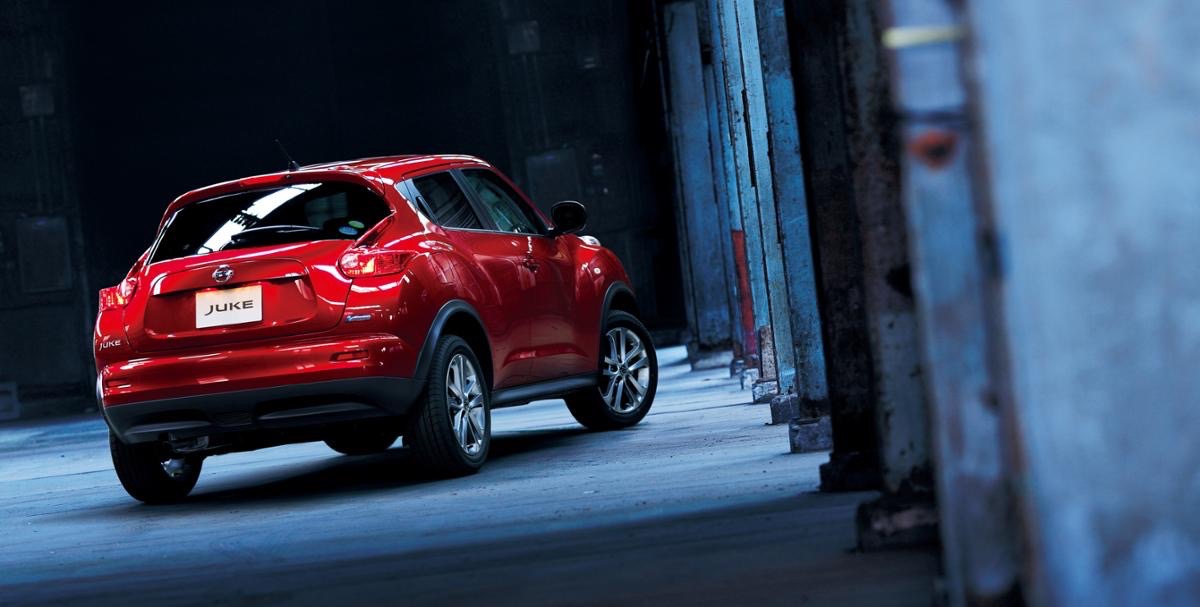
Explaining the original thought, Weaver said he was inspired by London street fashion:
“I was on the train one day and remembered seeing a young man in a flat cap with a diamond skull on it, a bright t-shirt, a pinstripe jacket and trainers. It was an eclectic mix, but I thought: if people don’t have to conform, why should cars? Different is good, it stands out. That is exactly what we wanted to achieve with JUKE.”
It definitely didn’t conform. There are a lot of standout features that would later become more common, including the use of the door handles in the c-pillar to give a more coupe-like appearance.
It’s All About Those Headlights
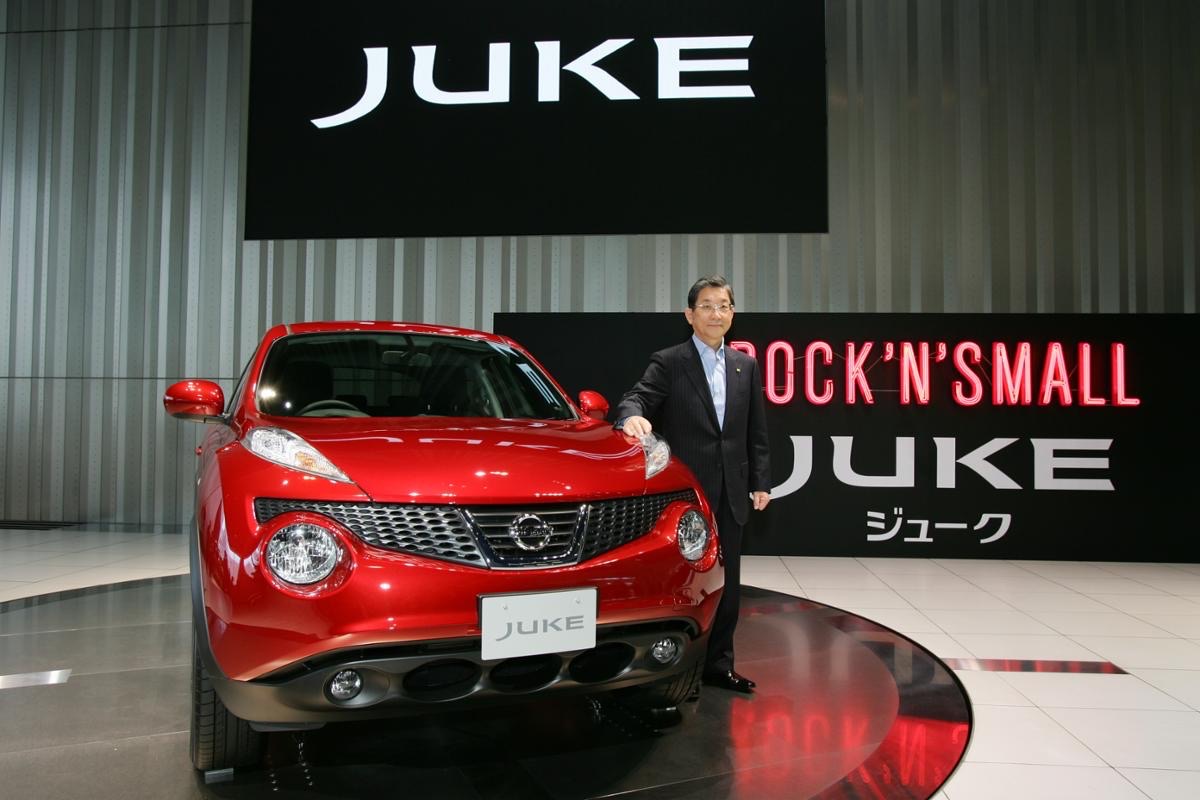
While this is common these days, the Juke is one of the earliest cars I remember that did the trick of separating out the turn signals and running lights from the main headlights. If we see a car like a face, the turn signals are now the eyes.

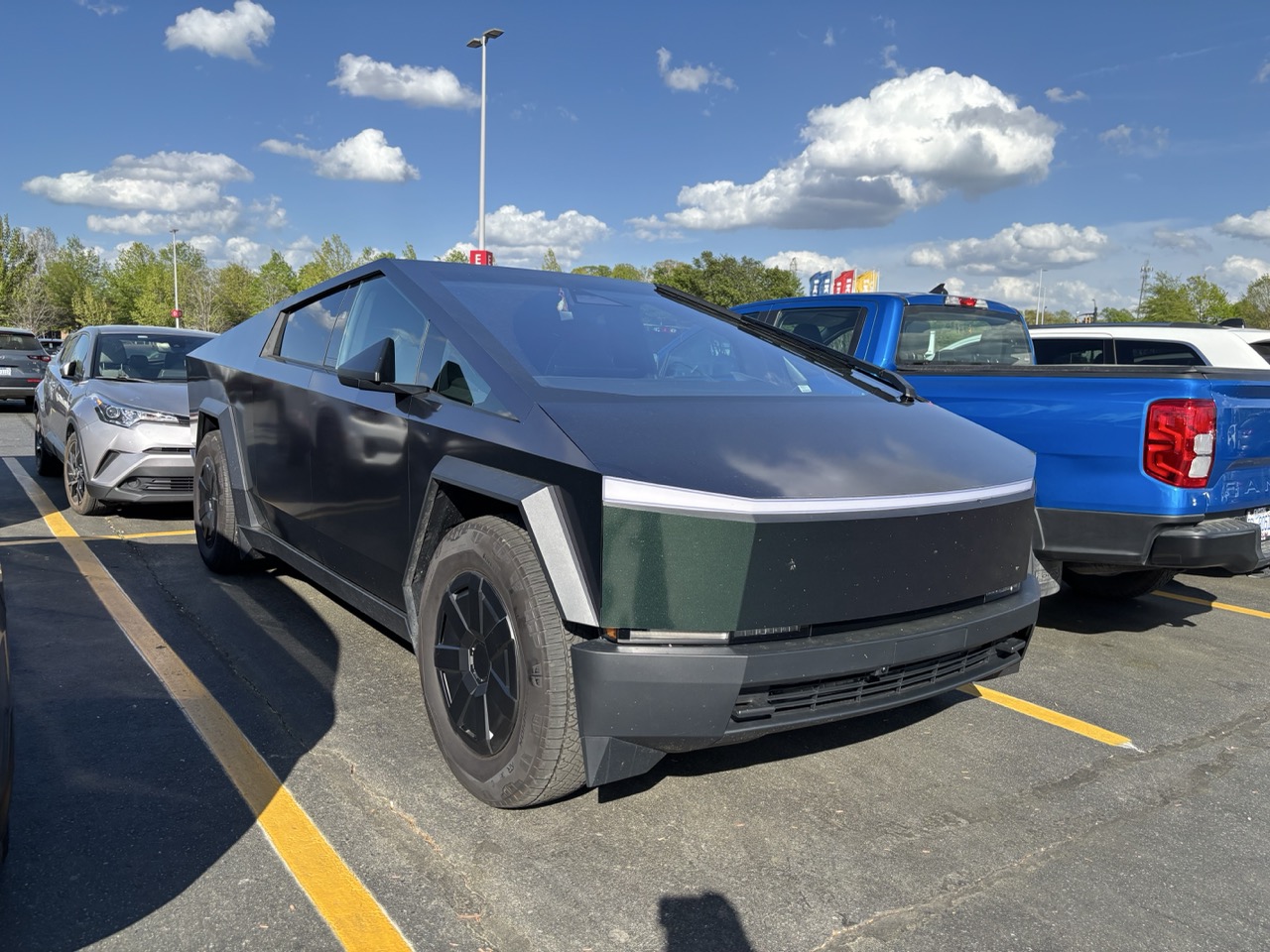
A good example is the Kona, which has a thin strip of DRLs where you’d expect the headlights to be, and then the actual headlights built into the bumper. With the Cybertruck you can barely tell that the headlights are actually integrated into the front bumper.
In the United States, we only got one generation of Nissan Juke, as we were too stubborn to realize when we had it good. America even got a NISMO version with a stick and over 200 horsepower. In Europe and other markets there was a second generation car that sharpened some of the Juke’s features.
The Guy Who Did This Is Now In Charge Of All Of Nissan’s Designs
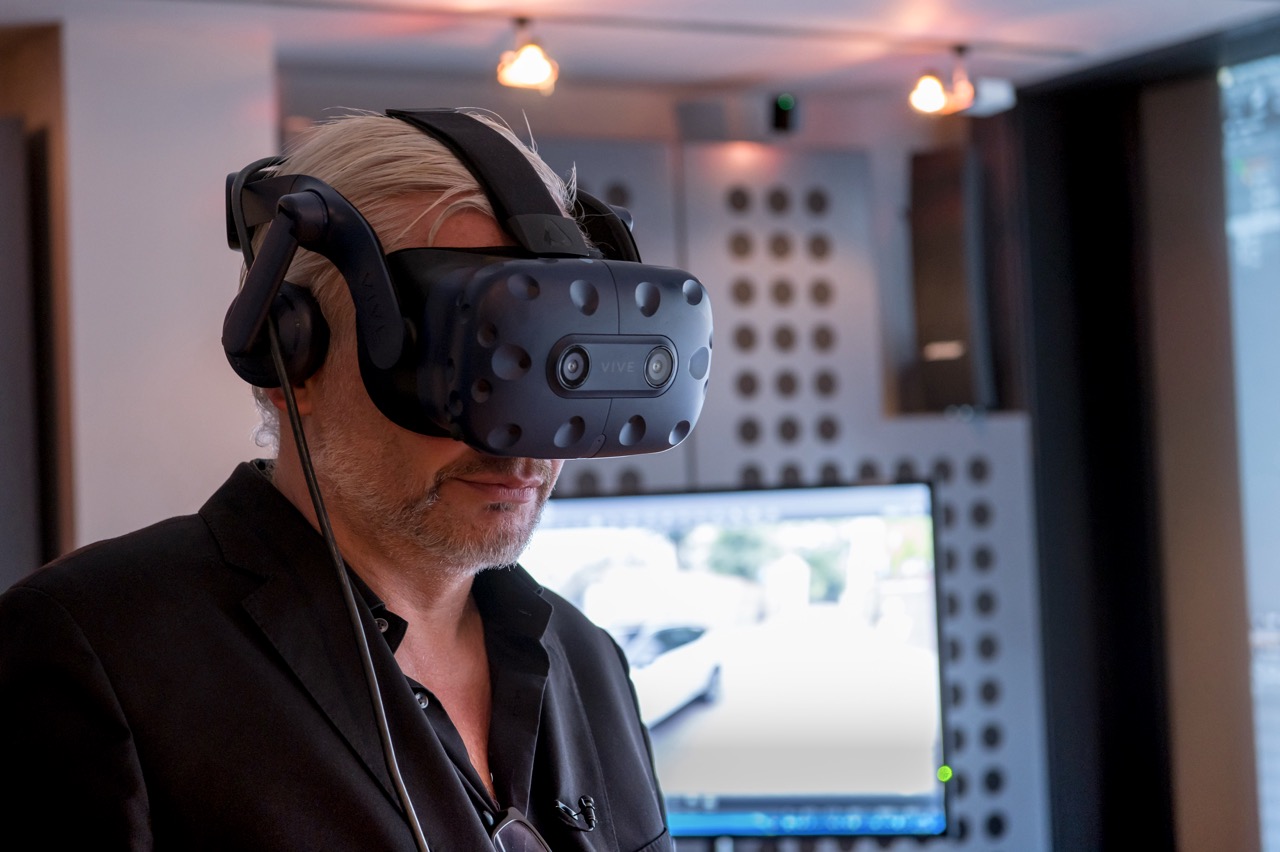
I’m being a little funny by picking this photo, but here’s Matthew Weaver, who is the incoming Corporate Executive, Global Design, succeeding Albaisa. Per the press release, Albaisa and Weaver will be working together through the end of the year.
Nissan has a lot to do in terms of design. The vehicles don’t look bad, though I do think that, other than large grilles, there’s not a lot that’s coherent across the lineup. What the company needs is more big swings, and the biggest swing of all is a new Xterra.
Here’s hoping that Weaver keeps that commitment to non-conformity and brings us something as dramatic as the original Juke.
Top photo: Nissan


The Juke makes me want to PUKE!!! So damn ugly; one of the worst cars ever made. WOW, that Quazana concept is one of the ugliest I’ve ever seen…downright horrible…so awful!
I loved the Juke and was interested in buying one around 2019-ish. Ultimately ruled it out for interior space reasons, but I always loved the looks and wished I could reward them for doing something bold and distinctive.
A few years later my wife got a Nissan Sentra (2022 I think) and it’s been a great little car so far.
I hope things go well for Nissan. I’m rooting for them!
I also hope they’re willing to keep trying bold designs.
Had a Juke rental in the UK, hands down the worst car I’ve ever driven.
The funky design means there is zero interior space, the engine was super laggy with huge dead spots in the torque curve. Couldn’t believe anyone would actually pay for one
I to was a bit shocked by the Juke when it came out but quickly came to actually appreciate it. I test drove a stick NISMO RS and it was a properly fun little pocket rocket. And even the base models had the spicy turbo engine, had a stick option, and were fun to drive. It was the modern day affordable hot hatch (just in crossover clothes) and rather then embracing this next evolution enthusiasts panned it and the general public avoided it for being different. Ultimately it suffered from the same reliability woes as all Nissans from this period, so it’s not like it was a great buy (cvt **shudders**, and also the turbos tend to blow due to varnish clogged oil lines and take out motors). One of those what could have been stories. I would still own a Nismo RS manual though. But there already barely any of these left in the US it seems.
Wacky design seems to be working for Hyundai/Kia (new Tellurides everywhere), and it worked for BMW under Bangle. I see potential.
I really enjoyed the “Nissan Juke Award for the Worst Car of the Year” segment of The Grand Tour: https://youtu.be/LTHXmtNVLWs?t=22
Spoiler alert: the Juke won!
I thought the Juke was ugly as sin when it first debuted, and my revulsion has not abated a bit since then. But I wish them well, bless their hearts.