

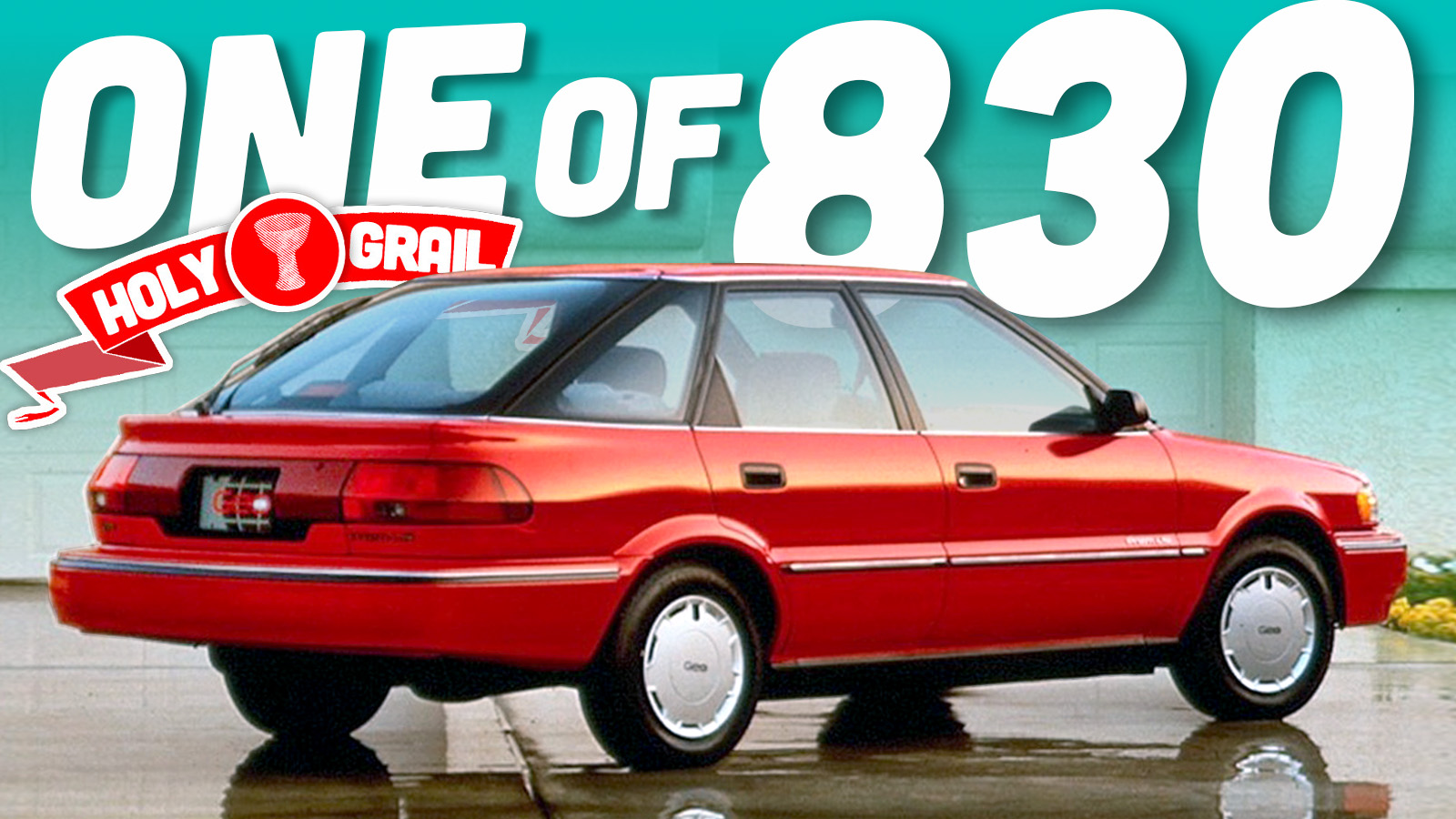
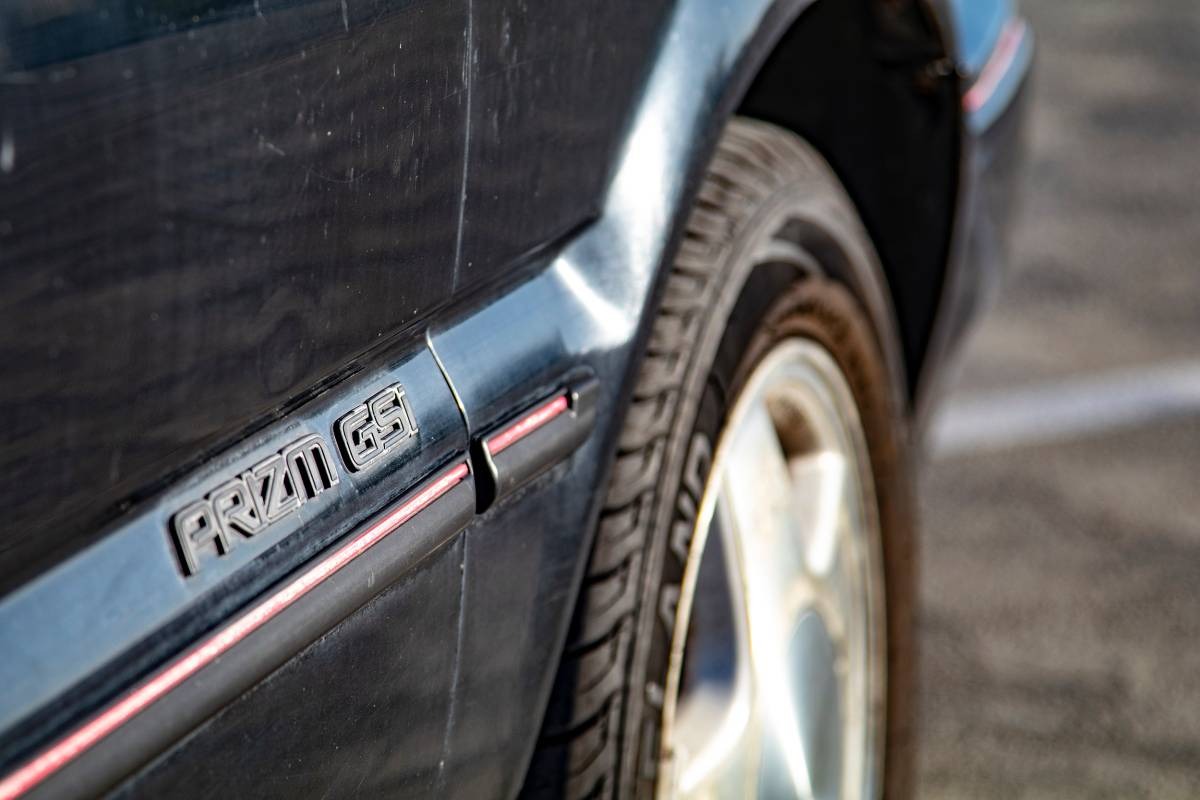
Back in the 1980s, General Motors launched a brand to be the home of its captive imports. If you wanted to buy a Japanese car with an American brand name, Geo was likely your pick. Despite this premise, Geo had surprisingly awesome cars in its lineup, from the go-anywhere Tracker to the slick Storm. Geo was a weirdo, being a GM brand that didn’t sell GM cars, and much of its history is fading into obscurity. One of the coolest cars Geo sold was this, the Prizm GSi. This rare hatchback is deeply underrated, and the twist was that it wasn’t even a GM car underneath, but a Toyota. How rare is this car? Just 830 were ever sold over just two years.
This suggestion came in hot into my inbox from reader Ray L, who misses my classic Holy Grails series. Well, Ray, you found a car so cool that I have to revive Holy Grails to tell all of you about it! Car enthusiasts usually know what a Geo Prizm is. The final Prizms, which were initially badged as Geos before having Chevrolet badges slapped on them, were little more than rebadged Corollas. If you’re picturing a Prizm right now, you’re almost certainly picturing a sedan. That’s not surprising since the latter two generations of the Prizm were available only as sedans. However, the Prizm’s short-lived first-generation had a hatchback, and it was so rare that I could forgive you for not even knowing that it existed.


The General Motors of the 1980s struggled to maintain forward momentum. In 1984, GM’s brands held onto a grasp of 44.6 percent of the car market. But as CNN reported, GM’s grip was loosening. By 1987, GM’s brands lost their footing and began reaching for a lifeline as market share sank to 36.6 percent. Oldsmobile took the greatest beating, seeing its sales slide from 1.1 million units to 714,394 units.

GM’s dramatic loss in popularity was its own doing. In 1992, CNN explained that, during the tail end of the period that we now know of as the Malaise Era, General Motors made a bet on the future. Unlike its competition at Ford and Chrysler, GM was flush with cash and thought it would get a leg ahead by launching new cars for the new era. GM figured that future buyers would want downsized, lightweight, front-wheel-drive, and fuel-efficient cars. After all, America had only just been pulling out of the tumultuous 1970s and its gas crunches.
Unfortunately, GM’s gamble didn’t pay off. As CNN noted, gas prices got cheap again, and American car buyers wanted big and fast cars again, which GM had just spent the early 1980s moving away from.
Then came the GM-10 program, CNN reported, which started development in 1982. GM-10 was intended to replace the Chevrolet Celebrity, Pontiac 6000, Oldsmobile Cutlass Supreme, and Buick Century with a coupe, a sedan, and a wagon for each brand. Each of those cars would be similar underneath. GM’s plan for domination included seven plants to produce 250,000 cars a year each. Together, GM was setting itself up to produce a full 21 percent of America’s total car production. If GM pulled it off, it would build more cars per year than all of Ford’s brands combined. While the GM-10 cars were awesome and have even been the subject of Holy Grails, the problem was reportedly seen as too ambitious and didn’t fully meet GM’s expectations.

But this wasn’t GM’s only trick in its hat. It would later come out with Geo, the spunky brand with weird GM-branded cars that didn’t come from GM. One of those cars was the Prizm GSi, a sort of forgotten spicy hatch.
The Birth Of Geo
My retrospective on GM’s wild ride in the 1980s also noted the company’s fondness for slapping its badges on captive imports:
During the 1980s, General Motors also had a knack for rebadging imported vehicles. The Chevy Chevette-based Pontiac T-1000 died and made way for the 1988 Pontiac LeMans. This was a car designed by Opel in Europe, sold as the Kadett, and built in South Korea by Daewoo, where it was badged as the LeMans. The Chevy Sprint was another weird captive import. Chevy abandoned the development of the M-body, selling it to Suzuki in exchange for a five percent stake. Over in Japan, the car would be known as the Suzuki Cultus and in 1984, it came back to America as the Chevrolet Sprint. And don’t forget about the 1986 Chevrolet Nova, a vehicle built under the famous New United Motor Manufacturing Inc (NUMMI) partnership with Toyota. The Nova, despite the historic name, was really a Toyota Sprinter at heart.

However, GM ran into a rather amusing issue when it tried to sell Japanese cars as American cars. In 1988, the New York Times reported that the Toyota-based Nova was not selling well. The whole idea behind selling a Toyota badged as a Chevy Nova was to draw young buyers away from imports to Chevy.
However, this plan backfired. As the New York Times writes, not only did Chevrolet’s marketers feel that the Nova was outdated when it went on sale, but it being branded as a Chevy had an unintended consequence. Those target buyers who were looking for an import saw the Nova as an American car even though it was actually a Toyota, so they didn’t buy it.
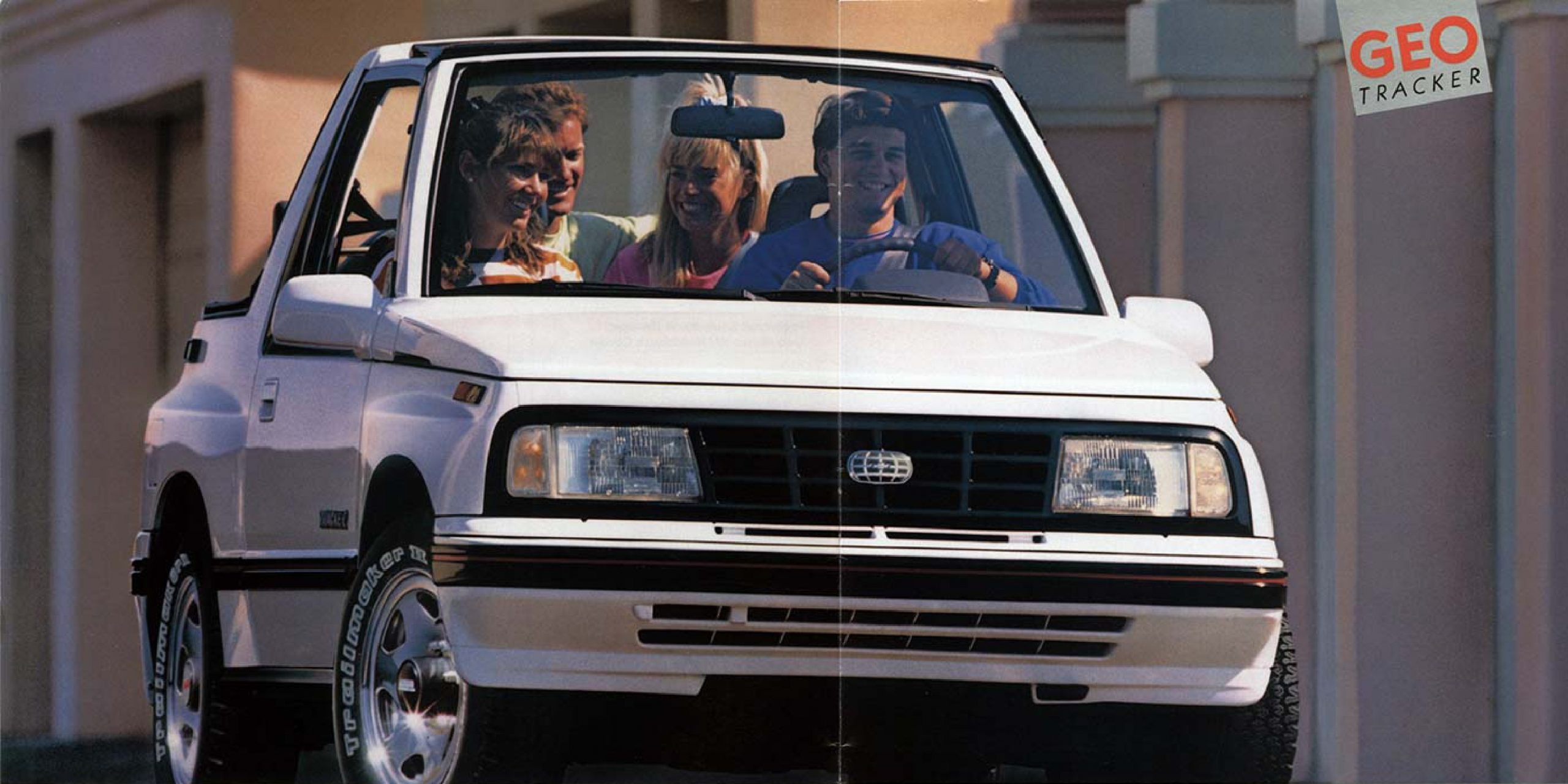
GM’s solution was clever. The Chevy Nova was slated to die in 1988, and its replacement was to be called the Geo Prizm. Geo was created as a subsidiary of Chevrolet to house GM’s captive imports. Now, someone wanting to buy an import would see this neat global brand called Geo and hopefully not associate it with Chevrolet. On the surface, this was a hilarious plan. General Motors wanted to stop you from buying a Toyota by selling you a Toyota.
When Geo launched in 1989, the fresh and hip lineup consisted of the Metro, the Prizm, the Spectrum, and the Tracker. The Spectrum was an Isuzu I-Mark, the Metro was a variation of the Suzuki Cultus, and the Tracker was developed in a joint venture between General Motors of Canada and Suzuki.9
Then, we arrive at the 1989 Prizm, the successor of the weirdo Nova.
A Different Kind Of E90
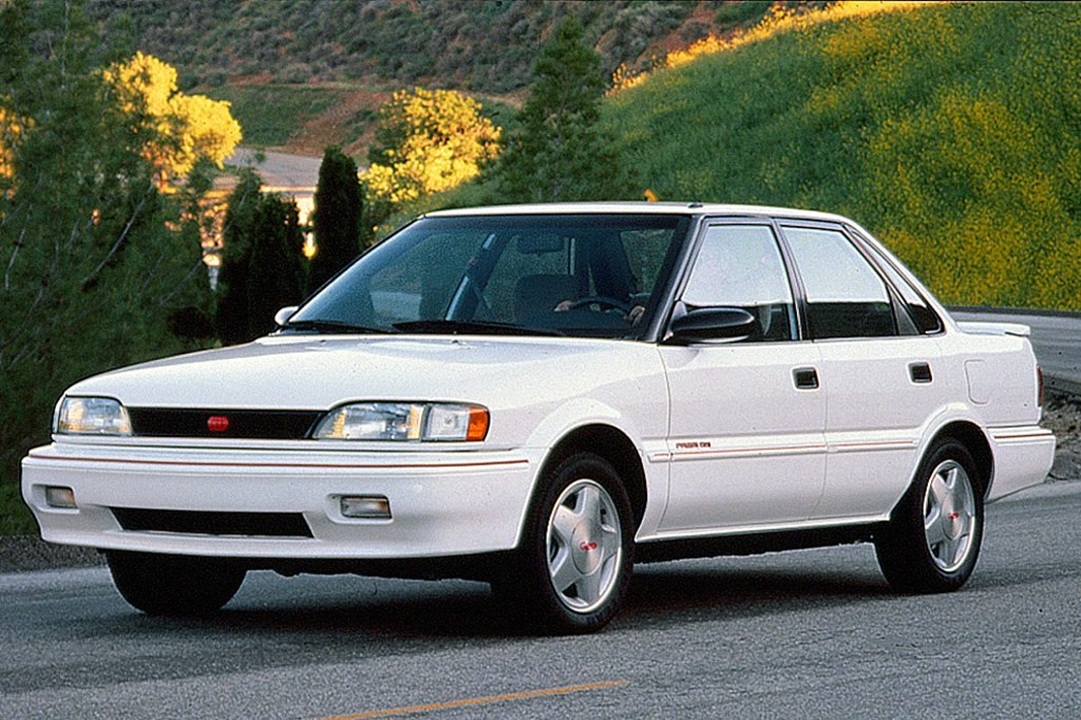
The Prizm sits in an interesting spot in Toyota history. It’s based on the Toyota Sprinter, which itself is based on the sixth-generation of the Toyota Corolla, known as the E90. Here’s what Toyota says about the Corolla E90:
The sixth-generation Corolla released in May 1987 was designed under the theme, “a global high-quality sedan beyond its class,” raising the perceived status of the car. In Japan, the 5-door liftback model was discontinued. The van and wagon (which had skipped the changeover to the fifth generation) were renovated based on the sixth-generation Corolla sedan, and were released three months after the sedan. The van only came in a 4-door body.
The available engines included 1.3-liter 75 PS (2E), 1.5-liter 83 PS (5A-F), and 1.6-liter DOHC (4A-GEU) gasoline engines, and a 1.8-liter diesel unit. The top-end G Touring wagon featured the same MacPherson strut and coil spring rear suspension system employed in the sedan. In May 1989, the main 1.5-liter engine was upgraded to an EFI version.

In October 1989, the first 4-wheel-drive (4WD) model was added to the Corolla sedan. It reflected the fact that 4WD was becoming essential for snowy regions and not a feature for those who enjoyed off-road driving as a hobby. From that time on, many other versions of the Corolla began to offer a 4WD option. In 1990, the Corolla series sold 308,000 units in Japan, establishing record annual new car sales by brand. The record stood for many years, until it was broken by the Prius in 2010.
What Toyota doesn’t note up there is that Corolla E90 was available in a variety of fun styles, including a three-door hatch, a two-door coupe, and the Sprinter Carib wagon, which had a solid rear axle and four-wheel-drive. The hottest Corolla of the bunch was the GT-Z, which sported a 1.6-liter 4A-GZE 16-valve supercharged four-cylinder punching 170 HP through the front wheels.

There was also the Corolla FX16 GT-S hatchback, which sported a 1.6-liter 4A-GE four that made a peppy 108 HP. Sadly, you couldn’t get the coolest Corollas in America, but you can import them from Japan today.
Historically, the Sprinter had been the sporty variant of the Corolla, with Toyota noting similar dimensions as a Corolla, but with lower, sleeker body types. Originally, when Sprinter sales launched in 1968, the Sprinter wasn’t sold in Corolla showrooms, but in Toyota Auto sales. At launch, Toyota saw its greatest target being the Datsun Sunny Coupé.

The Sprinter entered its sixth generation in 1987, and Toyota notes that these cars were mechanically similar to the Corolla. The Geo Prizm is just the Sprinter wearing a Geo badge. It launched in 1989 for the 1990 model year, and Geo kept it simple with three trim levels. The base Prizm featured a 1.6-liter 4A-FE good for 102 HP and 101 lb-ft of torque, had black bumpers, and was available with color-coordinated carpet. That’s not me talking, but the brochure!
Other standard features included a headlight on chime, a remote-operated driver mirror, and a low fuel level warning light. The standard features didn’t even include a tach for the manual transmission. Options were vast and even included an AM/FM radio.
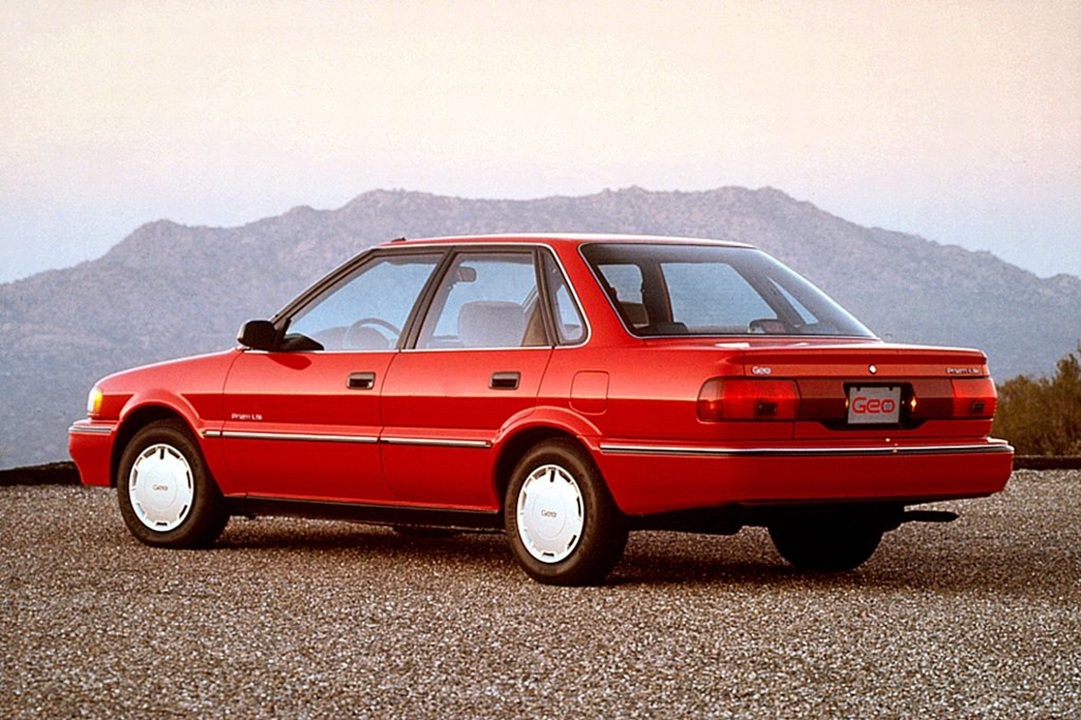

If you wanted a bit more luxury in your Prizm, you moved up to the LSi, where you got body color bumpers, aero wheel covers, a “soft feel” steering wheel, a split-folding rear seat, upgraded interior fabrics, and a rear wiper on the hatchback. This model’s engine was the same as the base Prizm.
The Prizm itself wasn’t all that impressive. It was, after all, pretty much just a Corolla. Shoot, the base model even had a three-speed auto as its lowest automatic option. However, the Geo got something the Toyota version didn’t in America, and that was a five-door hatchback. If you wanted a Corolla with a wraparound greenhouse, your only choice was to go to your Geo dealer, not your Toyota dealer.
It’s A Car
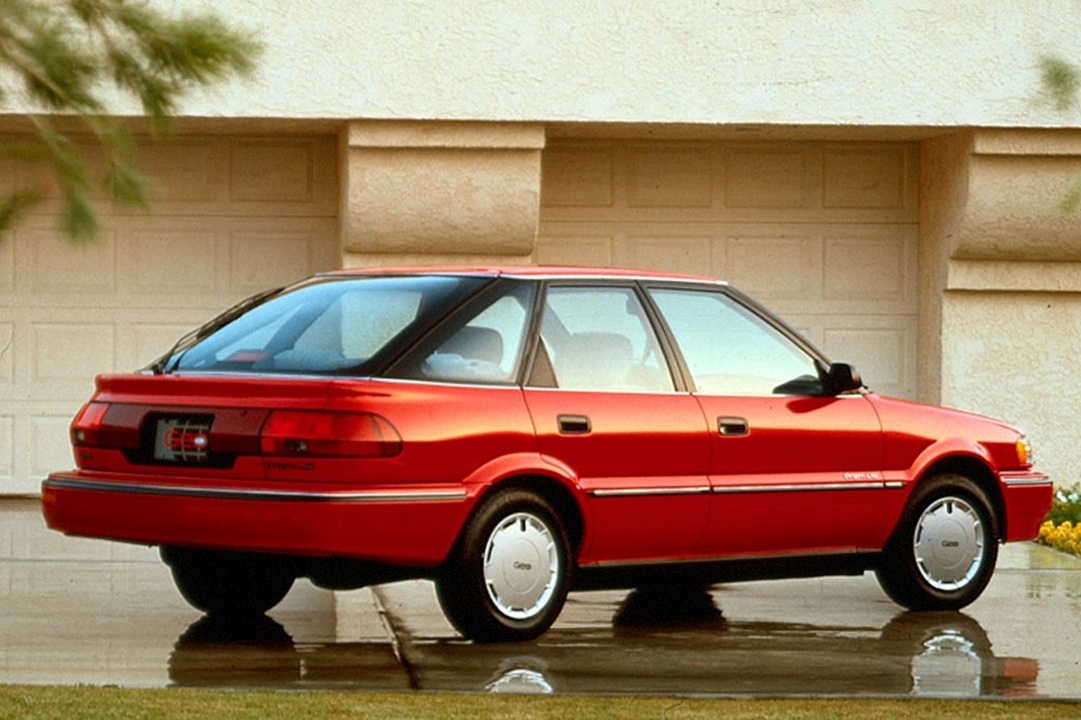
Still, the Prizm itself isn’t very special. Period reviewers weren’t exactly singing the Prizm’s praises. The legendary John Davis of MotorWeek got to drive a Prizm LSi hatch and had plenty to complain about.
The hits started immediately when Davis complimented the hatchback’s unconventional greenhouse, but knocked it for its conservative front end, which gave the car an “unbalanced” look. This was because the Geo Prizm version of the Sprinter Cielo had the same front end as the sedan. But Davis did say that the great visibility from the expanse of windows was a welcome sight. Check out the video:
Unfortunately, Davis noted, while the hatchback looks like it has a bigger roof, the taper of the roof into the hatch cuts headroom, so the hatchback has less rear seat headroom than the regular sedan. At the very least, Davis said, the hatchback has a lot of cargo room.
The 102 HP engine proved to be peppy in MotorWeek‘s hands, hitting 60 mph in 9.4 seconds and dispatching the quarter mile in 17 seconds at 81 mph. That’s not bad at all for a car from the late 1980s with a base model engine! Sadly, the negatives started coming back immediately with Davis noting a “mushy” clutch and a “vague” five-speed manual shift feel. Worse, Davis said, is that the transmission’s ratios didn’t match the engine’s willingness to rev, so you had to constantly shift gears to keep moving with alacrity.

On the track, MotorWeek said that the Prizm was “quite a handful” with a lot of front plow and with a rear end that breaks loose, forcing you to saw at the wheel. MotorWeek noted that having more steering feel would improve the drive. Brakes didn’t sound much better, as the car averaged 146 feet to stop from 60 feet, with the driver experiencing a soft pedal and lock-ups along the way. But to its credit, the Prizm stopped consistently with good stability.
MotorWeek began talking about pluses again with the Prizm’s quiet, comfortable, well-equipped interior, and mostly cushy seats. Despite the negatives, Davis finished his review declaring that the Prizm LSi is “the best and most versatile economy model that Chevrolet dealers have ever offered.”
The Grail
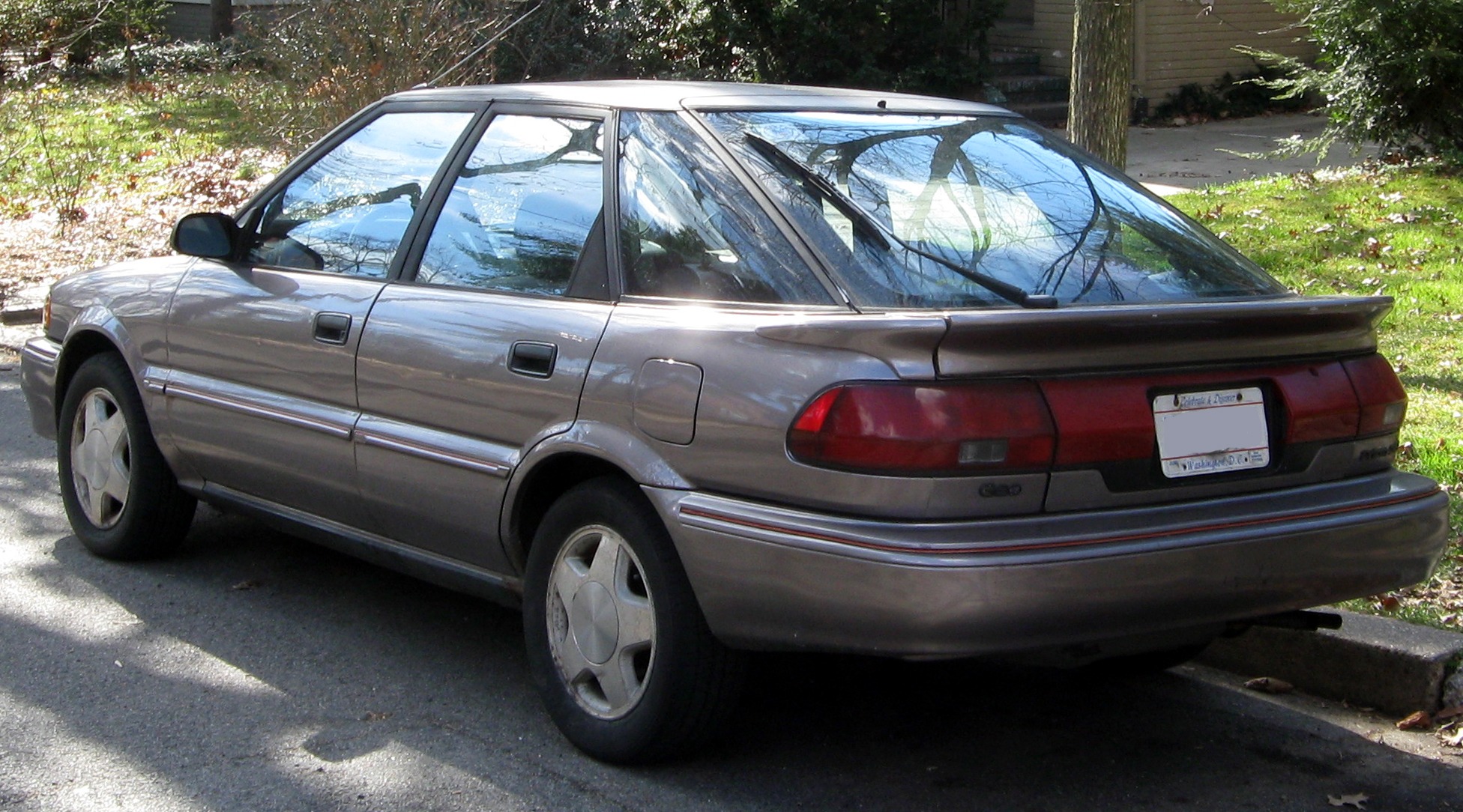
Alright, so what’s so “Holy Grail” about this car, then? The hatchback was available in every trim level, so that part wasn’t particularly special. What is worthy of being called a Grail was the Prizm’s short-lived hot hatch, the 1990 to 1991 Geo Prizm GSi hatch.
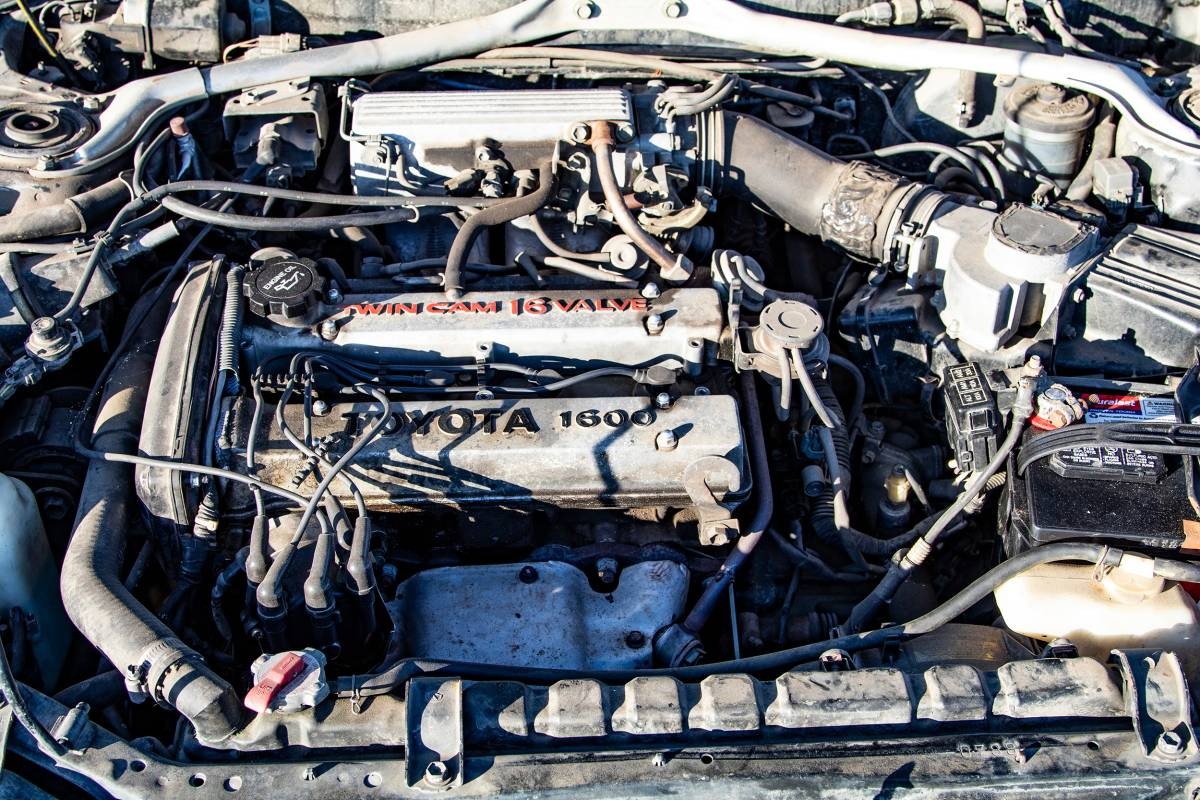
The GSi pumped up the tempo with a 4A-GE 16-valve “Red Top” twin-cam 1.6-liter four-cylinder engine with 130 HP on deck. Other goodies included a tach and a sport version of the Prizm’s independent suspension with front and rear stabilizer bars. This is backed up with P185/60HR-14 Eagle GT tires and four-wheel disc brakes. Buyers had a choice of a five-speed manual or a four-speed auto with a “power” setting for more spicy shift behavior.
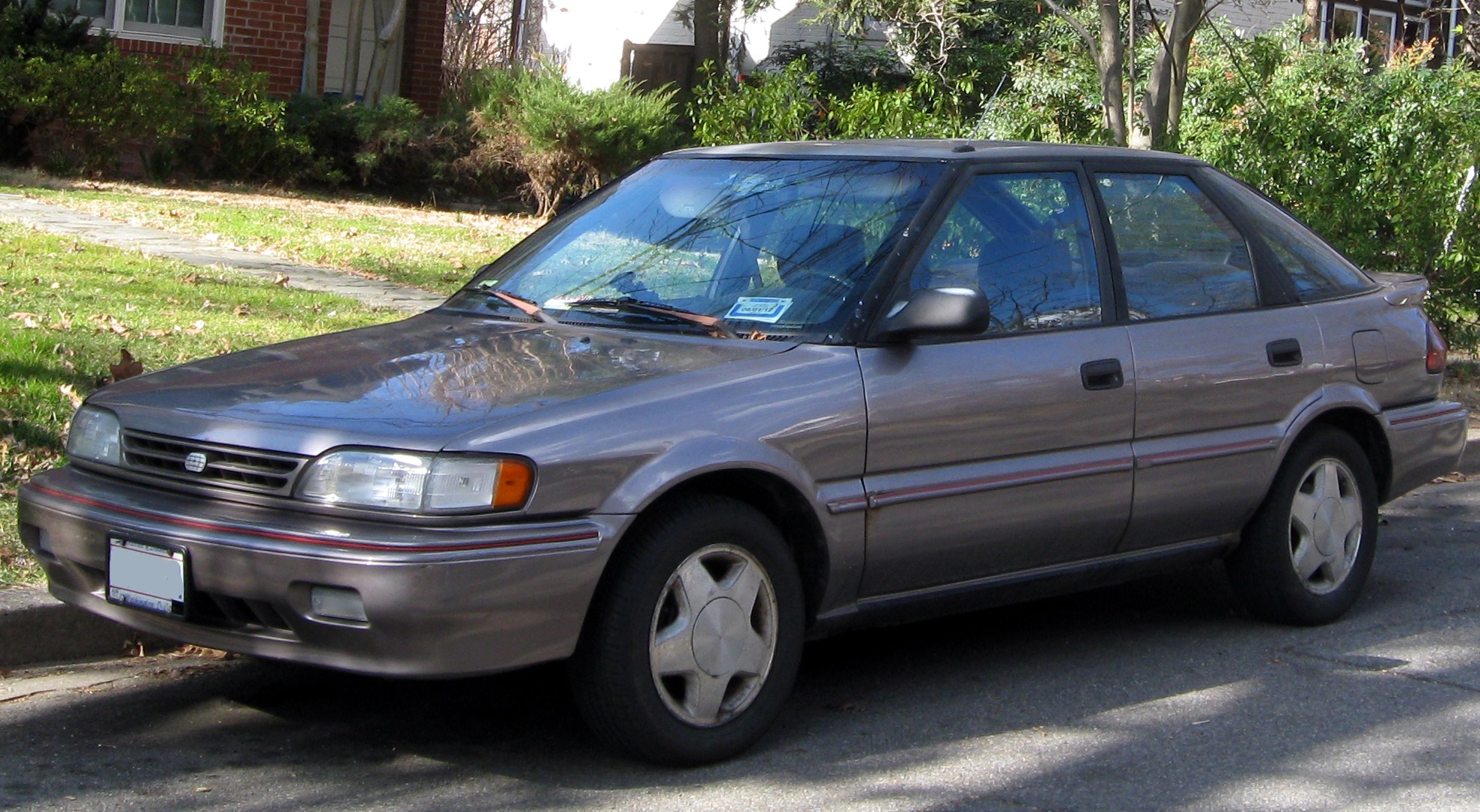
Buying the hot GSi also gave you mild body upgrades, including alloy wheels and trim-specific bumpers and fascia with red trim. Options included an air-conditioner, a Delco cassette deck, and a sunroof.
I could not easily find a period review, but here’s Ethan Tufts of Hello Road, who used to own one:
Annoyingly, I could also not find any published performance figures, but I would expect the Prizm GSi to be a touch hotter and tighter than the standard model. Heck, not even the GSi in Geo’s brochure depicts a hatchback! This car is so rare that the example in our topshot is an LSi, not the GSi.
The hot version of the Prizm hatch was a rare beast. PrizmGSi.com, which claims to have gotten its information from the General Motors Heritage Center, says that in 1990, 3,565 Prizm GSi were built, of which only 593 hatchbacks. The numbers got smaller in 1991, when 2,250 GSis left the line, but only 237 GSis were hatchbacks. That means only 830 of these cars were ever built. That’s a tiny figure when you realize that the NUMMI plant cranked out as many regular Geo Prizms and E90 Toyota Corollas as it could. These are a drop in the bucket for a platform that sold 4.5 million copies over its entire run.

However, this is one of those Holy Grails where rarity doesn’t really mean value. The GSi hatchback wasn’t exactly a limited-edition model, it just found few buyers. In 1990, a base model Geo Prizm was $9,660, and you had to add $300 to that if you wanted it in hatch flavor. Another $440 on top of that got you into the LSi and if you checked every single option box, you’d be coughing up $13,561 for a Prizm LSi hatchback.
A 1990 Geo Prizm GSi hatch set you back $12,620 before you added any features. In other words, these were economy cars when they were new. As such, so many of them were driven hard and got tons of miles on them as they executed their duties as economy cars. I found zero examples currently for sale and the one Ethan sold above? It went for a whopping $1,925.
If you find one of these, don’t be surprised to see it on a sorry state. Also don’t be surprised to pay basically nothing for it. Cars like the Prizm GSi hatchback are fading into history, and that’s sad. Sure, it was never a legend like the JDM cars Americans love to import nowadays, but it was seriously cool. The Prizm GSi might have been one of GM’s most underrated cars of the early 1990s.





This may be a little off topic, but does anyone happen to know what that road is in the Geo ad right after the Motorweek video? The one with the white Geo with alloys and the brown/amber grass beside the road. I swear I have seen this same stretch of road in every other ad of the time.
Hello Road is one of the best YouTube channels and is CRIMINALLY UNDERWATCHED given the quality content Ethan creates! Check it out if you haven’t, and he still owns his 1988 Chevy Nova Twin Cam (like one pictured in article). He also reviews electric bikes, if you’re into that sorta thing…
nummi. gm -toyota JV . gm had the book and the functioning plant employing the Toyota Production System. They didnt take a single note. They make rubbish as shown in CR report.
I remember the Prizm hatchbacks from when I was a kid. I thought it looked great,especially in blue or red. It wasn’t the fastest car around (nor was it meant to be) but it was reliable & very fuel efficient. I actually liked the hatchback’s “greenhouse” look.????
In a sense it’s spirit still lives on,in the current Toyota Corolla sedan and hatchback. While the current Toyota Corolla isn’t built in California anymore,to keep up with demand some are built alongside the Prius at Toyota’s Blue Springs,Mississippi plant.
My grandma had a blue hatchback that my aunt and uncle bought from her.It was absolutely gutless,handled terribly,and was a rust bucket but that car would not die.That was one ugly car.
A cockroach by any other name. 😉
We had a few of these when I was a kid (and of driving age) that my Dad got as company cars. They were quite nice. Being that we always had GM vehicles, this one was unusual in that the switches, turn signals, radio, were all non standard GM stuff because of the Toyota connection. But they were really good cars. A bit “90s Japanese car buzzy engine” but quick enough, quiet, comfortable, easy to drive.
When I lived in the Caribbeans I had a Corolla Sprinter Cielo with the 4A-GE red top aka a Prizm GSi. Man what a gem that run down little hatch was, it was so fun to whip around mountain roads.
I always kind of thought the ugly but good Tercel AWD hatches were underrated. though I am aware they currently seem to have a cult following, so maybe they qualify for the getting better with age vehicle thing from the other day.
I had an ’84 one of those in the mid-90s and it was a lot of fun, and unstoppable in the snow. If I had a multi-car garage, I would still wish I had it.
My wife got a blue sedan with a 5 speed right before we got married. I suggested the hatch but she didn’t bite. It looked funny to her. Anyway, it was a great little car and pretty fun to drive. I miss manual transmission 4 doors.
For those that have seen my posts about my 4AGE-20V Nova, you know I have to pipe in here.
Scrolling through the pictures on this article was literally like a yearbook of the cars that have given parts to my Nova20v.
Nova, Prizm GSI, FX-16, standard Corolla, later Corollas. I even have MR2 and AE92 Corolla GT-S parts in there.
I saw a Prizm (not GSI) AE92 hatch the other day and was just amazed because it’s been years since I’ve seen a mobile one in the midwest. Rust is not kind to these.
In Australia these were made here in Melbourne as a liftback called ‘Seca’ alongside a sedan and shorter regular hatch with the 4WD Wagon imported.
The Hatch and Seca could be had with the (Ford Cosworth derived) 4age as the SX model and sold by the bucketloads and still have a large following here today.
Confusingly the Seca and 4wd Wagon being sprinter derived having totally different panels to the sedan and hatch.
I’ll say no more but if you have 7mins free than I can recommend watching Aussie Ned Flanders hoon an SX hatch in this action packed, ZZtop soundtracked slice of life from 1989!
Toyota Australia SX hatch Advert.
Well, that was seven minutes of fun.