

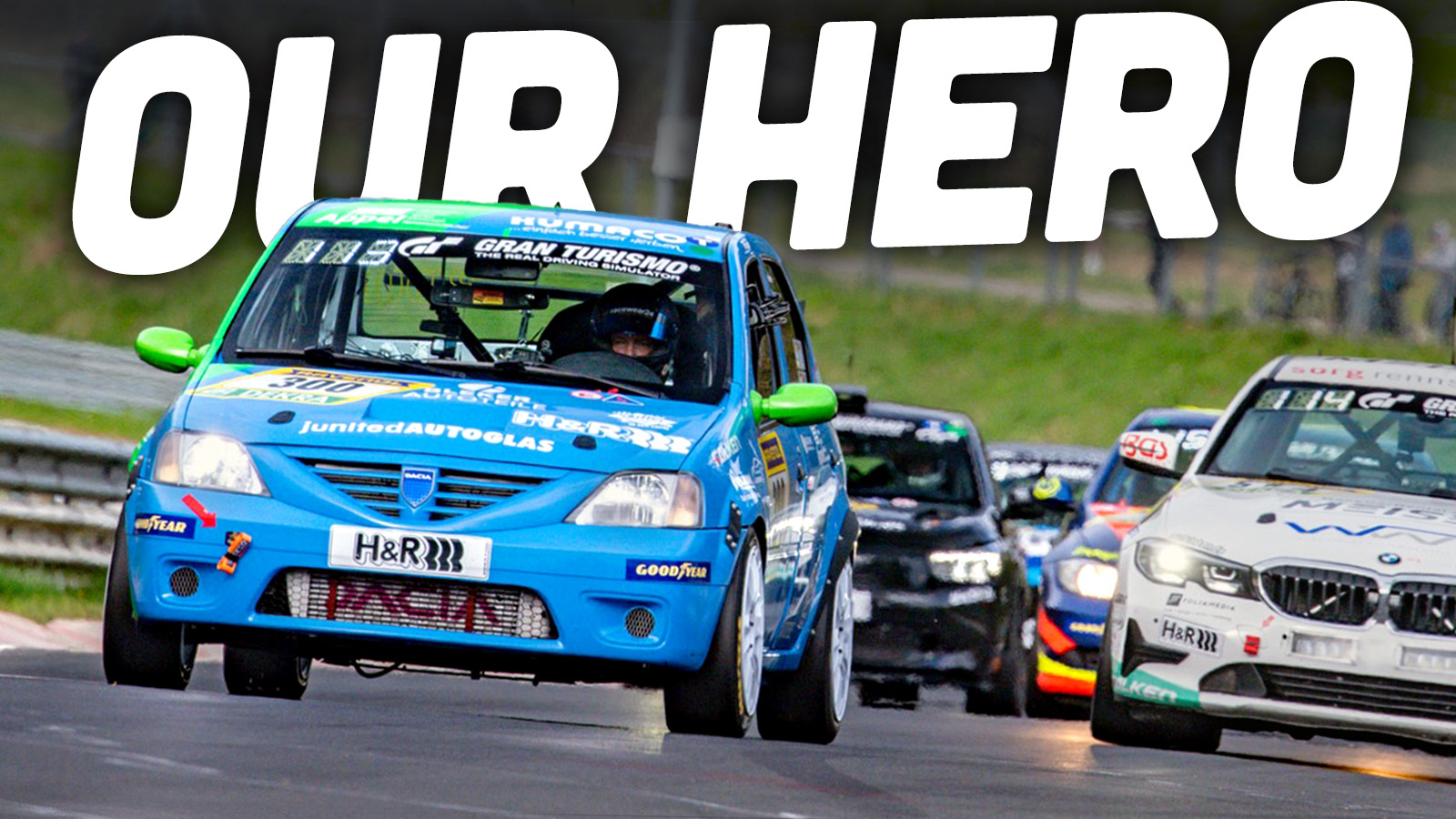
I love a good underdog. I want to root for the little guy. Especially in Nürburgring circuit racing, where you have endless Porsches – which are cool, don’t get me wrong – and one Romanian econocar. That’s right, the Dacia Logan has all my thumbs up and all my love. It’s the Herbie of today’s Nürburgring.
The car itself is a four-door sedan designed to cost as little as possible. The race car isn’t even the newest version of the Logan, as the model is now in its third generation; no, it’s the first-generation car, launched in 2004. It’s a fan favorite, and every time it races the Nürburging 24H, you’re bound to see posts and footage from the track with the Logan battling cars twice as fast.


What even is a Dacia Logan?

The base idea of the Logan was that the Romanian carmaker, with backing from the French Renault, needed to be able to launch a car that cost 6000 euros new in 2004 (ten grand in today’s money). Regular Renaults easily cost double that, while (especially in Russia) the old rear-wheel-drive Ladas were still in production and cost very little. While Logans were initially designed to be sold in Eastern Europe, the car was soon exported to Western countries to be offered as the cheapest available new car, and production has taken place in Iran, India, South Africa, and South America, among other locations. It has also been sold as the Nissan Aprio in Mexico.
Dacia itself had been an Eastern European car brand making older badge-engineered Renaults in Romania for decades, finally launching its own Dacia Nova sedan in the mid-1990s and gradually improving it through the SupeRNova and Solenza upgrades. When the Logan was launched in mid-2004, these cars were phased out, as was the age-old Dacia 1310, which was still based on the late 1960s Renault 12. Renault Group had probably been following Volkswagen’s resurrection of the Skoda brand, which produced cheap cars that sold well in Europe, often using Volkswagen engines.
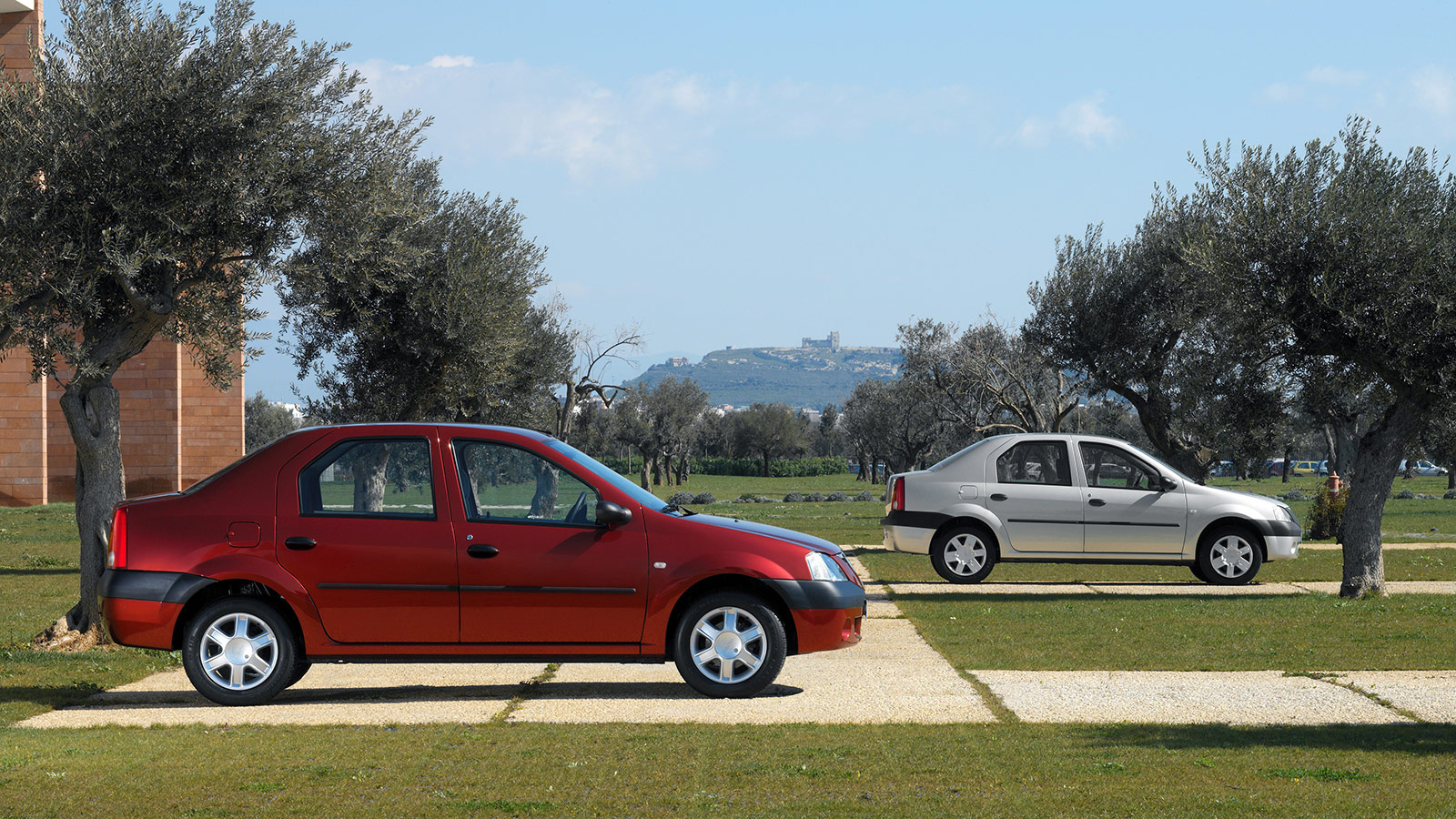
The philosophy of the Logan isn’t that far from the Chrysler K-car, for instance, even if the car’s sort of a Renault Alliance with a tiny engine. The company just needed a basic four-door car it could produce cheaply and scale up into different versions: while extremely minimalist cheap cars aren’t guaranteed to be profitable, the Logan was the right product at the right time.
Dacia also sold it as a long-wheelbase wagon, a two-seater coupe utility, and the first Duster crossover, itself a real global success, is also based on the same platform but offering chunky looks and 4WD, which are the two things that sell cars. These days, the Dacia Sandero – a five-door hatchback version of today’s Logan – is the best-selling car in Europe, largely because it’s also one of the cheapest.
What does this have to do with circuit racing, then? Well, because the Logan is heavily based on old Renault architecture and components, it also accepts other engines from Renault’s portfolio. That means that with a big enough shoehorn, a RenaultSport Clio’s two-liter, naturally aspirated, 182-horsepower engine fits in the Logan, and with a little tickling, can produce 200 horsepower. Even a stock 182 engine would be over a 100-horsepower bump from the stock Logan’s 1.2-liter, 75-horsepower engine, but imagine 200 horsepower in a four-door box that makes the Plymouth Sundance look sumptuous.
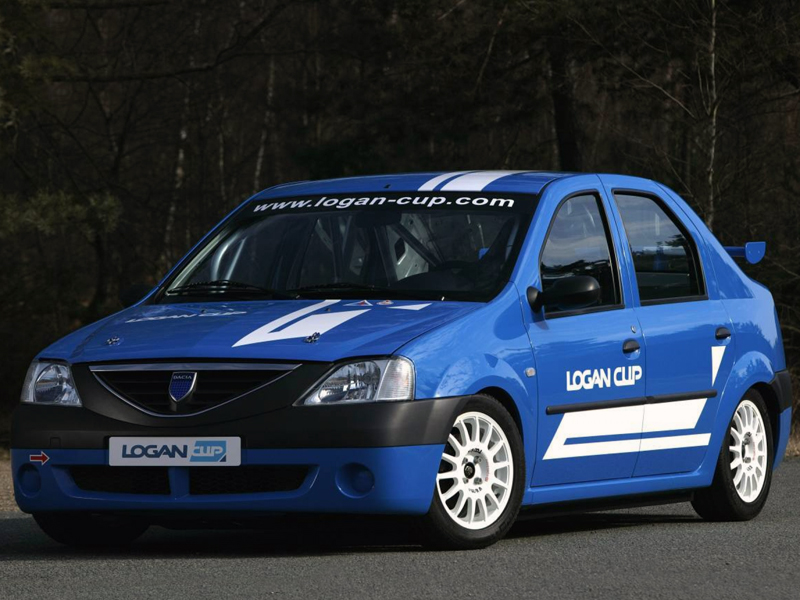
In 2007, the Dacia Logan Cup racing series was set up, with events in Germany, France, Romania, and Russia. Instead of the base 1.2-liter engine, the Cup cars used a 90-hp 1.6-liter Renault engine, with RenaultSport tuning, roll cages, and other requirements for one-make racing.
Too Slow For The Nürburgring?
The Ollis Garage Racing team, from Münster, Germany, ran a RenaultSport Clio- engined, Cup-spec Logan for a few years at Nürburgring. With 200hp, it could lap the roughly 16-mile “Green Hell” in less than twelve minutes, which in itself isn’t bad at all but four minutes slower than what GT3 cars usually manage in endurance races.
This also means a significant speed difference between the Logan and the GT3 cars. Even at full tilt, a 200-hp Logan will be lapped numerous times by faster cars, making it essentially a moving chicane on the track. The race organizers rightly consider this a risk, and earlier this year, they moved to rule out a Renault Twingo. As the Twingo team, Rauh Racing stated in January:
Over the past months, the framework that originally made this project possible has changed. In direct communication, the organiser made it clear that cars like ours are no longer wanted at the 24h Nürburgring. We were further informed that our participation is now subject to “unpredictable factors” and additional, non‑transparent considerations. Taken together, those messages leave very little room for interpretation.
Preparing properly for the 24h Nürburgring 2026 would require committing a high five‑figure budget in the coming months, with no external financial backing, on top of the time constraints and mental load that come with running this project alongside regular employment. Committing that level of money, time, and health to an outcome that is no longer clearly tied to preparation, or regulatory compliance would be a gamble we cannot justify.
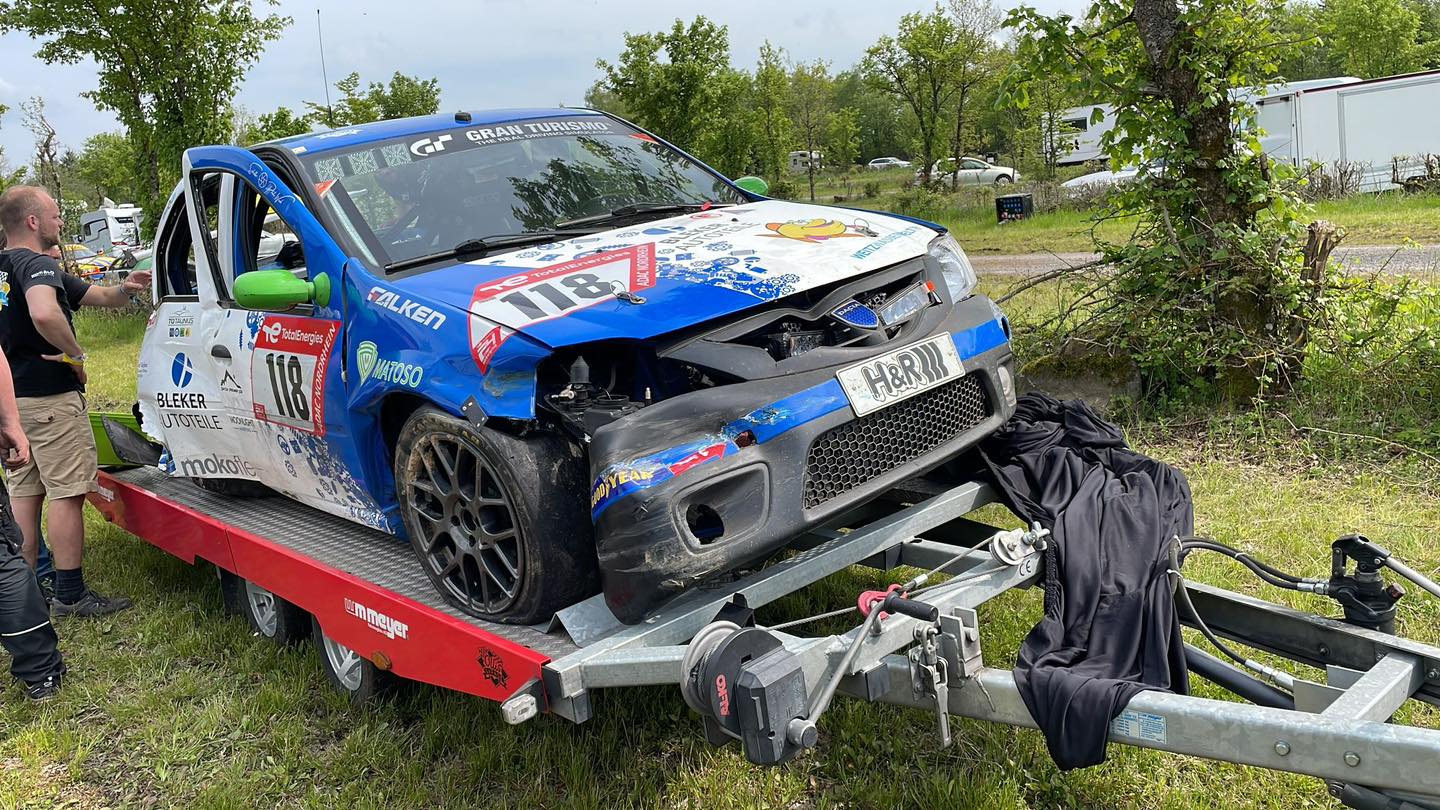
And the Logan team has had its share of crashes. Their earlier Logans were completely wrecked in the 2023 and 2025 Nürburgring 24h races due to hits from other cars, putting future partaking at stake – especially since the team couldn’t get new Renault Clio engine blocks, as the 2025 night-time crash also damaged the engine. The team did have a supply of Logan bodyshells, but no Clio engine.
280 Horsepower Should Be Enough For A Dacia
Luckily, Ollis Garage was able to crowdsource funds to resurrect the Logan project with a new, turbocharged, and more powerful Renault Megane RS engine with a whole 280 horsepower, meaning the dinky car would now have as much power as a stock Skyline GT-R had in Gran Turismo days. The gearbox was also replaced with a six-speed sequential unit during its 2025 build. The car, nicknamed “Bock Norris” (it’s apparently a Chuck Norris joke), was absolutely festooned with sponsor stickers and also names of the people who contributed towards the car.
Fitting the Megane motor also demanded a lot more from the rest of the car, meaning the RenaultSport Clio suspension the team had used up til that point couldn’t handle the power and torque increase. After breaking “a lot of hard stuff” in testing, the Logan received the front suspension and brakes from the engine donor Megane, which also affected the camber angles due to space restrictions. The car had to do without ABS, but it was fitted with a custom traction control setup. At this point, the Logan was effectively a Logan shell running a bunch of quick Renault parts: not exactly a 6000 Euro car anymore, but at least it used to be one. The team got the engine wiring finished three weeks before the race season started.
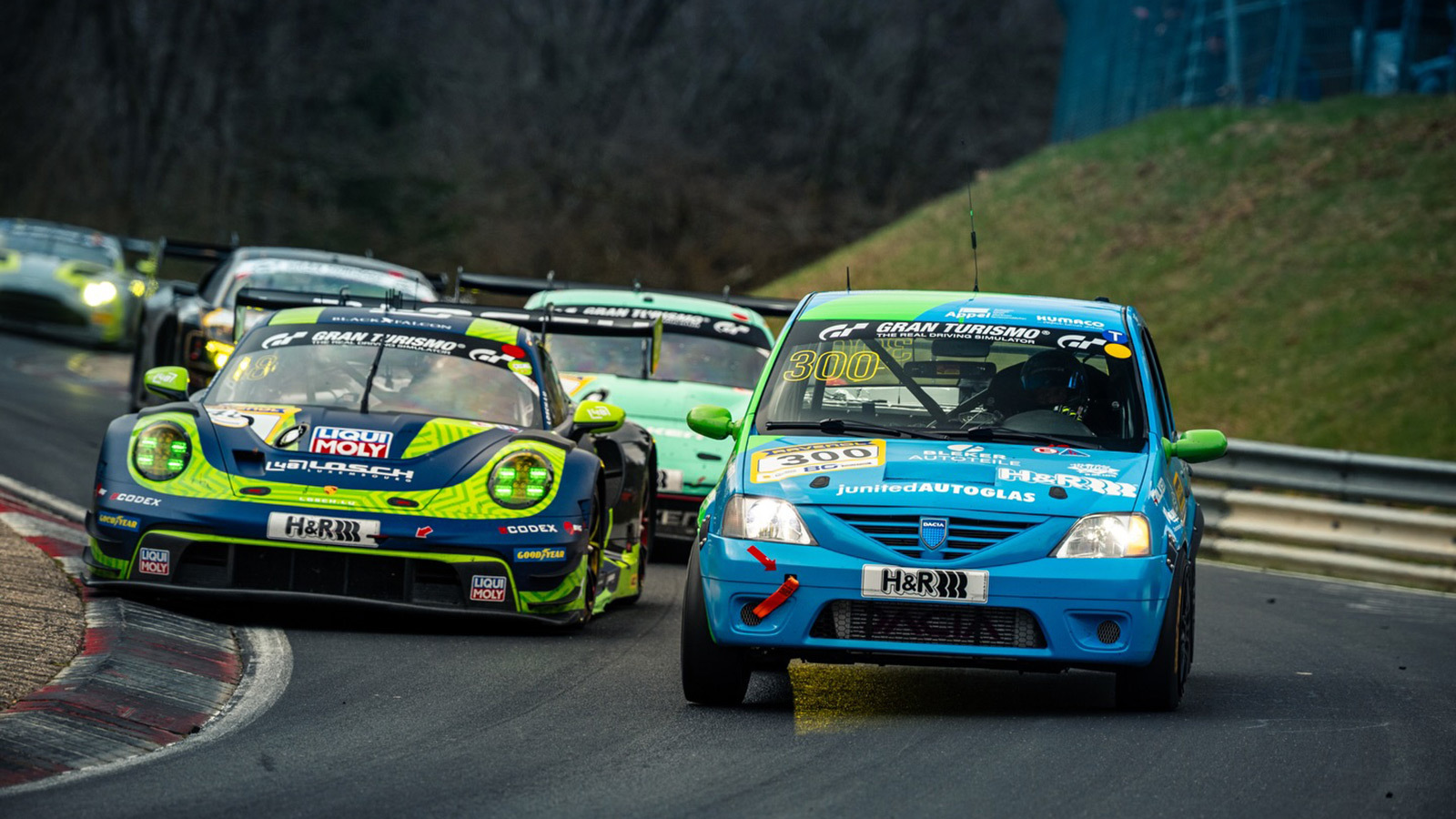
Running the Megane RS engine wasn’t even cut-and-dry from the race organizers’ perspective, especially as Germans are very strict about modifying cars and even changing the wheels you want to run in your road car. The team convinced the organizers that Dacia Logans had been available with turbocharged engines in some markets; after the organizers had shown the Twingo the door, I would also believe they wanted the Logan to be fast enough on the track from the viewpoint of the other drivers.
The 24 Hours Of Dacia Logan
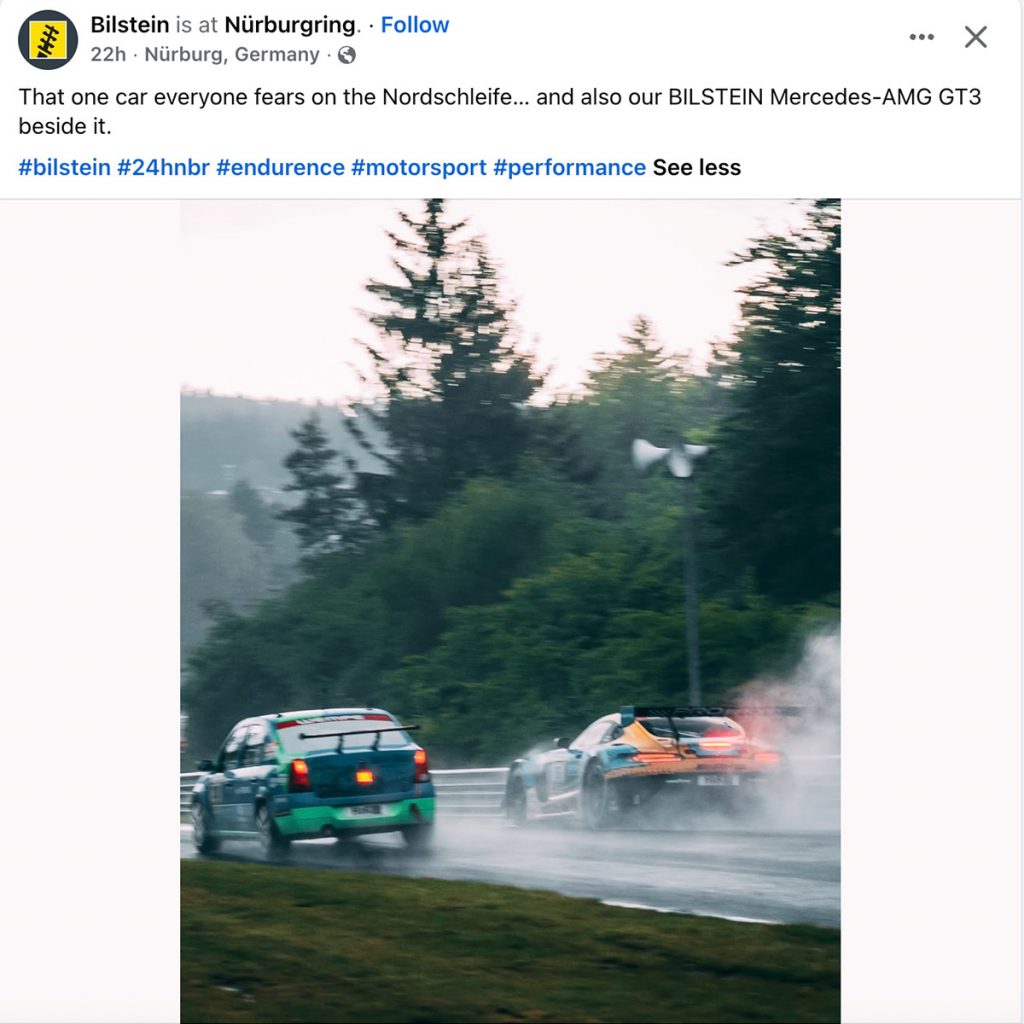
The turbo engine did also make the Logan genuinely fast at times, enabling it to reach 11-minute laps that were faster than some BMWs and Audis. Its top speed on the long Döttinger Höhe straight (the longest straight on the track at 1.33 miles) was 178km/h or over 110mph.
@24hnbr The Dacia doesn’t care ???? #24hNBR #nürburgring #nordschleife #racing #motorsport ♬ Originalton – 24h Nürburgring
Yes, the Megane RS, the engine’s donor, can hit 158 mph, but it’s a little different when that engine is in a tiny Dacia trying to make it 24 hours, and the gearbox ratios restricted the car to around 130mph max. Above 4500rpm, the Logan’s engine also tended to misfire, and the team prepared to swap in a new cam sensor at every pit stop.
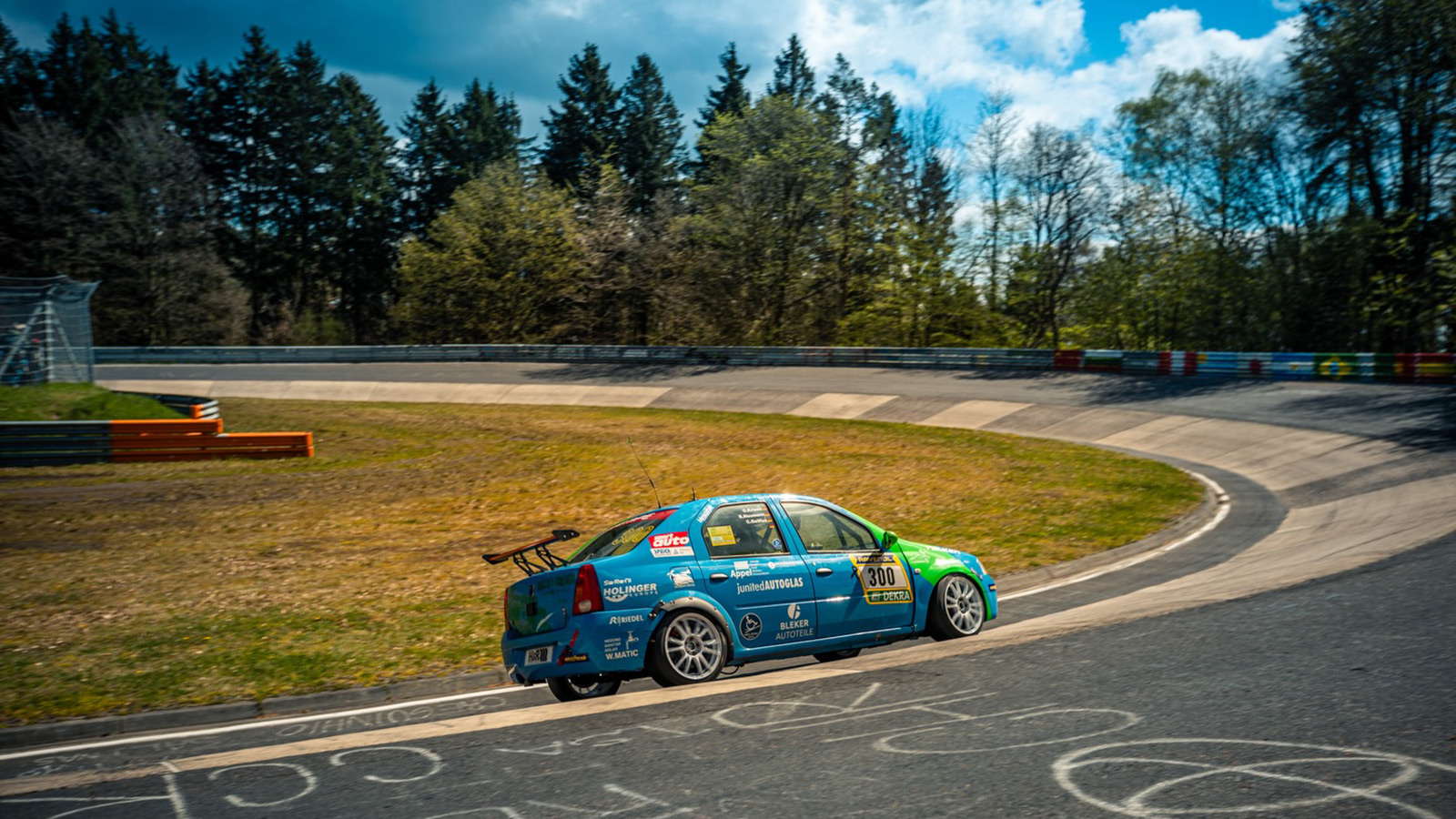
There were a couple of penalties for the Logan, too. If there’s one place on the track you surely don’t want to be facing the wrong direction, it’s the famous Karussell banked corner. The Logan spun and ended up making a U-turn in there, causing a traffic jam in the Karussell. The corner is just ahead of Klostertal, where a 7-car pileup caused a fatality in April, at a qualifying race for the 24H event.
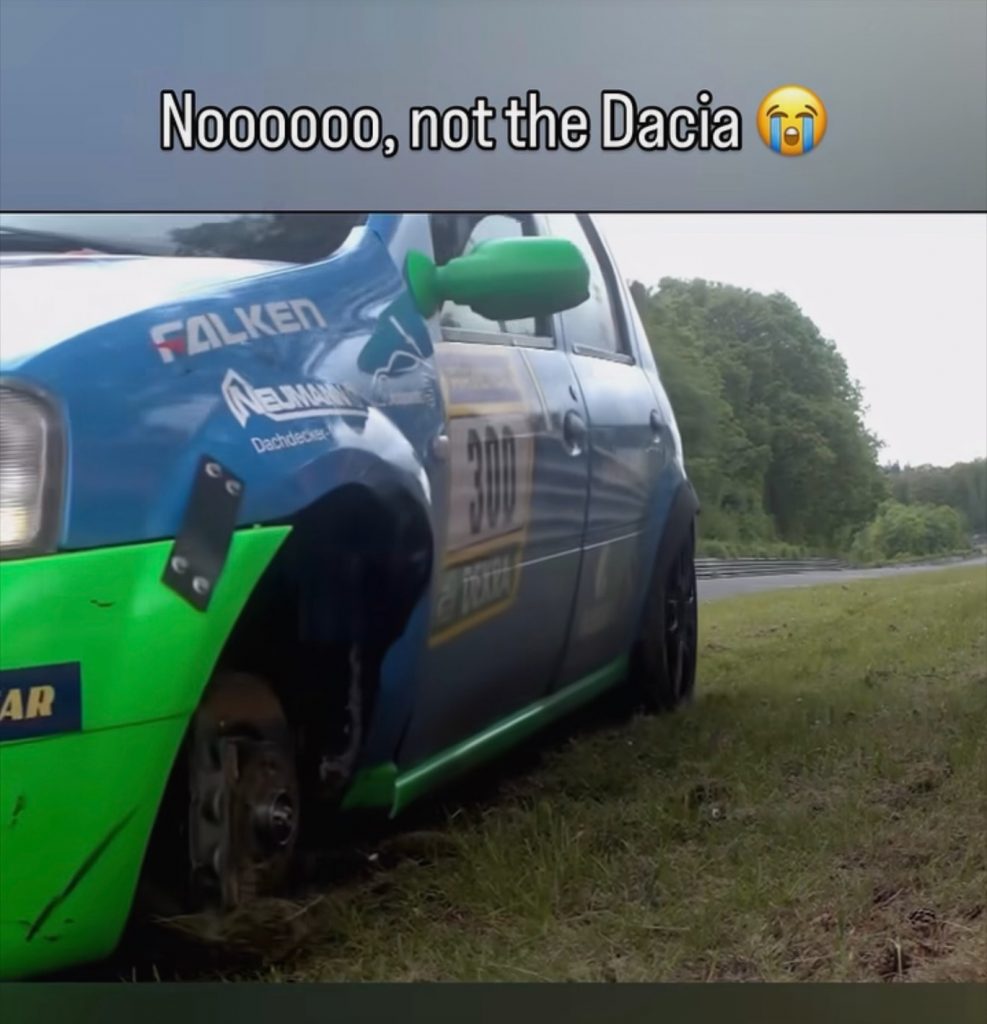
Later on in the race, the Logan team also received a stop-and-go penalty after speeding in a 60 km/h zone, and with three hours left in the race, a crash into the barriers ripped off the front left wheel, and a careless tow damaged the car even further. Fans were distraught, especially as the Dacia had made it out there for so long.
But battling against the clock, the team managed to rebuild the front left suspension just in time to finish the race with all four wheels on. They could have retired the race and everyone would have still supported them for trying to make it; instead, they fixed it up. That’s actually the stuff of legends.
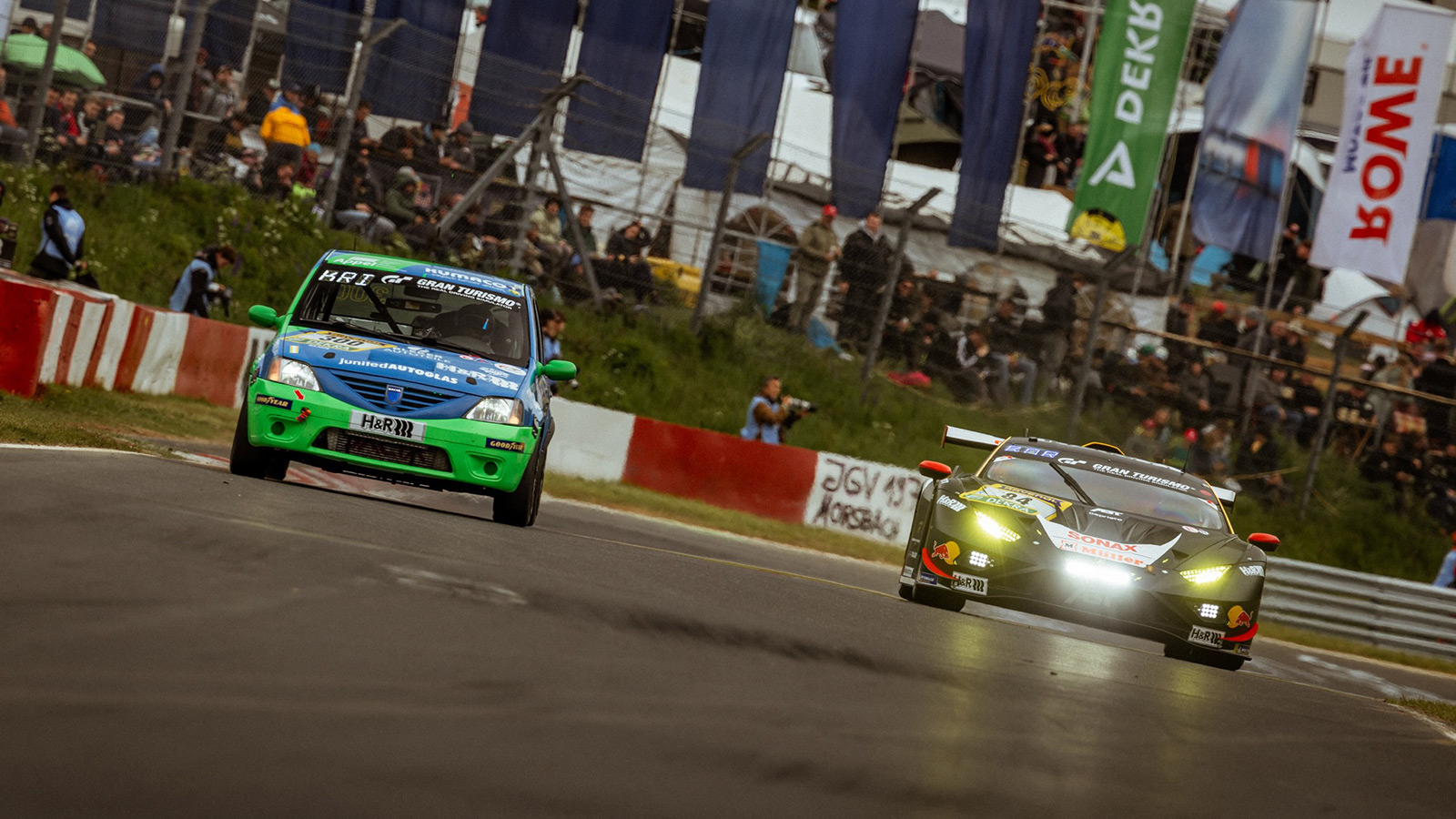
And the Logan wasn’t the last one to finish the race. Making it to the finish and not being last were surely the two goals for any underdog team. Out of 111 cars that made it to the 24-hour finish, the Dacia team was 107th. It beat two Hyundai Elantra N1 RPs, a Porsche 718 Cayman GT4 Clubsport, and curiously a McLaren Artura Trophy Evo that’s in last place in the standings. Lots and lots of cars didn’t finish, including Max Verstappen’s Mercedes-AMG, due to mechanical issues. Another Mercedes-AMG won the race, with Engel, Stolz, Schiller and Martin driving.
The Logan is one of the things I love about Nürburgring. While it’s far from the pace of the cars that usually race, it’s a social media phenomenon generating immense amounts of publicity for the track, and it goes hard. The team didn’t go there to play games or cruise around for clicks. Tourist days are for casually enjoying the track at a relaxed pace – some people take those as opportunities to race at 11/10, which puts everyone else at even higher risk than the track itself – but not the Nürburgring 24H. It’s a real race, and any car that finishes it is a real racing car. Even a Dacia.
Photos: Ollis Garage; Facebook


THESE are the cars I want to watch. This, the Manta, and the Twingoes, too. I know high-horsepower GT3 efforts probably keep the lights on, but the fact that a Manta or a Dacia can also hop onto the grid make it so much more interesting to me.
Clearly they need to think about splitting the race into two weekends. Let the rich kids have their fun, then have all the interesting cars have their own race.
Twenty four hours of hardcore Twingo vs Dacia racing, would be far more entertaining than Porsche/Mercedes/Porsche/BMW/Porsche/etc.
They do already have a N24 classic that’s a 3 hour supporting race before. Plus they have a separate weekend where they do a lot of events with the older cars.
That being said, I do not want to see them get rid of the slow cars in this race. Dealing with lower class traffic is a big part of the race and if you remove that it removes a lot of the soul of the race.
Spoken as someone who has been watching this race for about a decade.
Love it!
This reminds me of when I raced the 24 Hours of Lemons in an ’86 Hyundai Excel. I most certainly was a rolling chicane and spent most of my time on the right side of the track watching my mirrors. But I’m guessing the Dacia didn’t have the coolant overflow hose held under the wipers so it would puke muddy coolant at the windshield as an indicator to back off because the engine is overheating like the Excel did. Good times.
Now that I think about it, the captain of the Hyundai team also ran a Renault 10 dressed up as a Dacia 1100 with a Romanian farmer team during another race, which is where I got to witness a hand crank start race between the Renault and a Humber Super Snipe. I bet they didn’t have that at the ‘Ring.
https://www.youtube.com/watch?v=-VYieR_3AJ8
Sorry a car recommended and desired by Captain Slow should not be permitted in a race
Except that was the Sandero, not the Logan.
True but a difference of zero right?
Technically, Max Verstappen’s car finished just as much as the Dacia finished. AND it didn’t get towed back to the garage, so it didn’t need to be rescued even.
You’ll find it crossed the finish line, on track, just behind the #80 car. Exhibit A: https://i.imgur.com/8207hRu.png
So a Mercedes AMG, driven by a top F1 driver, is no more competitive than a Dacia. Got it 😉
Awesome!
No one is surprized when a GT3 car is fast.
When a Renault famous for absolutely nothing becomes a proper racecar, that’s interesting!
Finishing is not the same as a proper race car. NASCAR, Indy, F1 proves that every time they have the pretend 30 car plus start
I thoroughly enjoyed that!
Definitely the I.O.E. winner.
(24 hours of Lemons reference)
For Verstappen: I Got Screwed
Or “Dad I need more bribe money”
Snacks are the best bribe (in Lemons anyway) what are snacks in the Netherlands? Gouda cheese?
Good news!
A new Dacia Sandero?!?
James?
Stuff of legends.
To steal a Top Gear trope: This is brilliant.
LEGEND
I know Dacia exists because of an old TV show.