

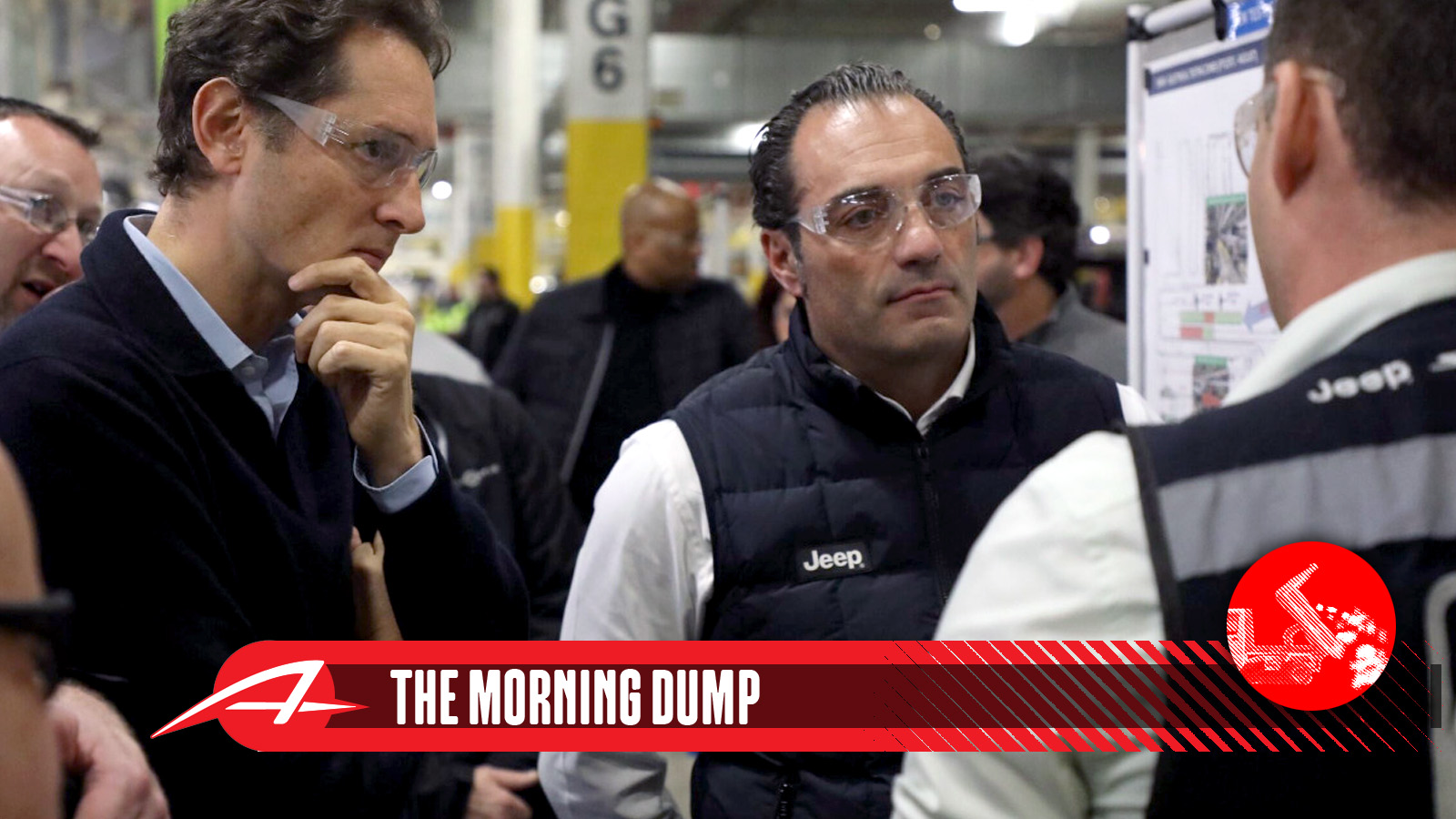
Building cars is hard. Building cars that last is even harder. There is no automaker that is immune to quality issues, although a few are standouts. One of them is the company currently known as Stellantis and, in particular, its North American brands have suffered from repeated quality challenges. The reason? There are many, but Stellantis Chairman John Elkann has a pretty good idea of at least one big reason why they weren’t getting fixed.
I’d like to thank Brian for filling in for me at the helm of The Morning Dump while I took a long weekend with the family. I feel recharged and ready to go. Perhaps that’s also how the heads of Audi and Porsche are feeling, now that their fates seem inextricably tied together. Toyota seems to think its future is tied to America, so the company is making yet another investment here to strengthen its position.


One of the adventures I went on during my long weekend was a trip to Clover Park in Port St. Lucie to see the Astros and Mets play their last spring training games. It was an incredible experience and timed out well to Ford announcing it would be replacing Chevy as the brand that represents baseball.
‘We Are Finally Able To Speak Up Openly’ Says Stellantis Employee
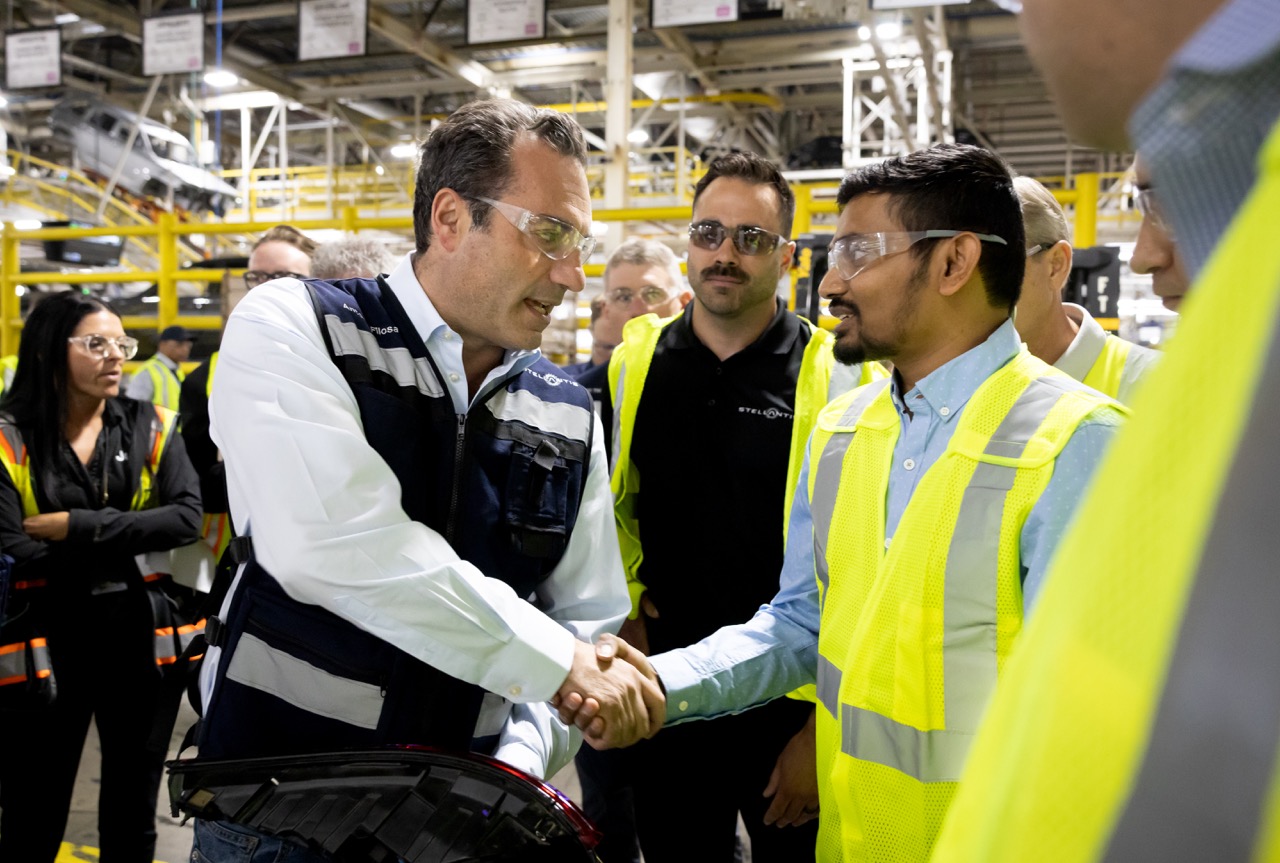
The photo at the top of the post gets used around here a lot because it’s one of the few showing both new Stellantis CEO Antonio Filosa and overall big boss daddy John Elkann together. It’s also possible that this is the exact moment that the following story, told in a shareholder letter from Elkann to investors in main Ferrari/Stellantis owner Exor, happened:
[As Interim Chairman I] placed particular emphasis on strengthening rigor around quality and on fostering an environment in which issues could be raised directly and addressed constructively. At one plant visit in Detroit, we were holding a discussion focused on persistent quality challenges on the shop floor. As the conversation unfolded, one member of the quality team said something that stayed with me: “We are finally able to speak up openly about what isn’t working and how to fix it.”
What mattered most was not the specific issue being discussed, but what that moment represented: a shift toward engagement and problem-solving. Creating the conditions for that change was an essential first step in reinforcing operational discipline across the company.
Because it happened at a plant in Detroit, the assumption is that it’s either Sterling Heights or Jefferson North, which means a Dodge, Jeep, or Ram plant. The specifics of where are less important than the unnamed “who” that is responsible for the “year of reckoning” that Elkann sees at his own company. As always, it’s former CEO Carlos Tavares, not pictured above.
The new guy. Filosa, stepped into a company that was full of challenges and he, too, jumped on Tavares over quality issues. Where Elkann’s quote here is focused on a culture of executives apparently ignoring their own employees, Filosa seemed more concerned with the bad habit Tavares had of cutting engineers in North America and sending work to markets with cheaper engineers. That isn’t to say engineers in places like Brazil aren’t talented, but keeping certain employees far away from the actual factories and production seems to have caused problems.
There is no one further up in the organization than Elkann, the Fiat heir in charge of his grandfather’s business, so it’s nice to hear him acknowledge not just that there are issues to be fixed, but to ennumerate where they fell short. That being said, what doesn’t get acknowledged here is that Elkann and the Stellantis board hired Tavares and seemed content to let him continue on while profits were high, even though the problems were obvious to some of us.
[Ed Note: I just want to note that, when I worked at Fiat Chrysler under CEO Sergio Marchionne, the company took pride in a concept called World Class Manufacturing, or WCM. I’m going to quote The Detroit News‘ piece on WCM, published in 2015:
World Class Manufacturing …is meant to empower workers to provide and implement suggestions on how to improve their jobs and factories, and act in real time to resolve problems.
“This is standard,” said Gianfranco Cinquefiori, Melfi Plant press shop manager, during a tour of the plant on Monday. “We have to respect the organization. With WCM, we focus on standardization … they must respect the methodology.”
In 2014, plant employees submitted about 2 million suggestions worldwide, helping the company save roughly $4.4 million, enabled by a training cost of $1.7 million. Since the program was implemented in North America in 2009, more than 2.4 million suggestions have submitted and approved. The company’s target is to save about $400 million in North America in 2015.
WCM’s goals are simple: reduce waste and improve quality, efficiency and safety by focusing on 20 areas, known as pillars. Pillars range from plant safety and quality control to worker motivation.
When I was at Chrysler, I truly felt that this WCM process — first implemented in Japan and adopted by many manufacturing industries — was being upheld. Italian Chrysler felt like a place where people could just say what they thought; was French Chrysler really that different? Whisperings among my old friends say that yes, a lot changed after the PSA merger.
I’ll also note that I think a big problem with Chrysler’s quality is its engineering and its purchasing; the former has too much turnover and job-hopping within the company (among other issues like the strength of the simulation tools), and the latter pinches pennies in sometimes absurd ways. -DT]
Porsche And Audi Are Going To Figure It Out Together
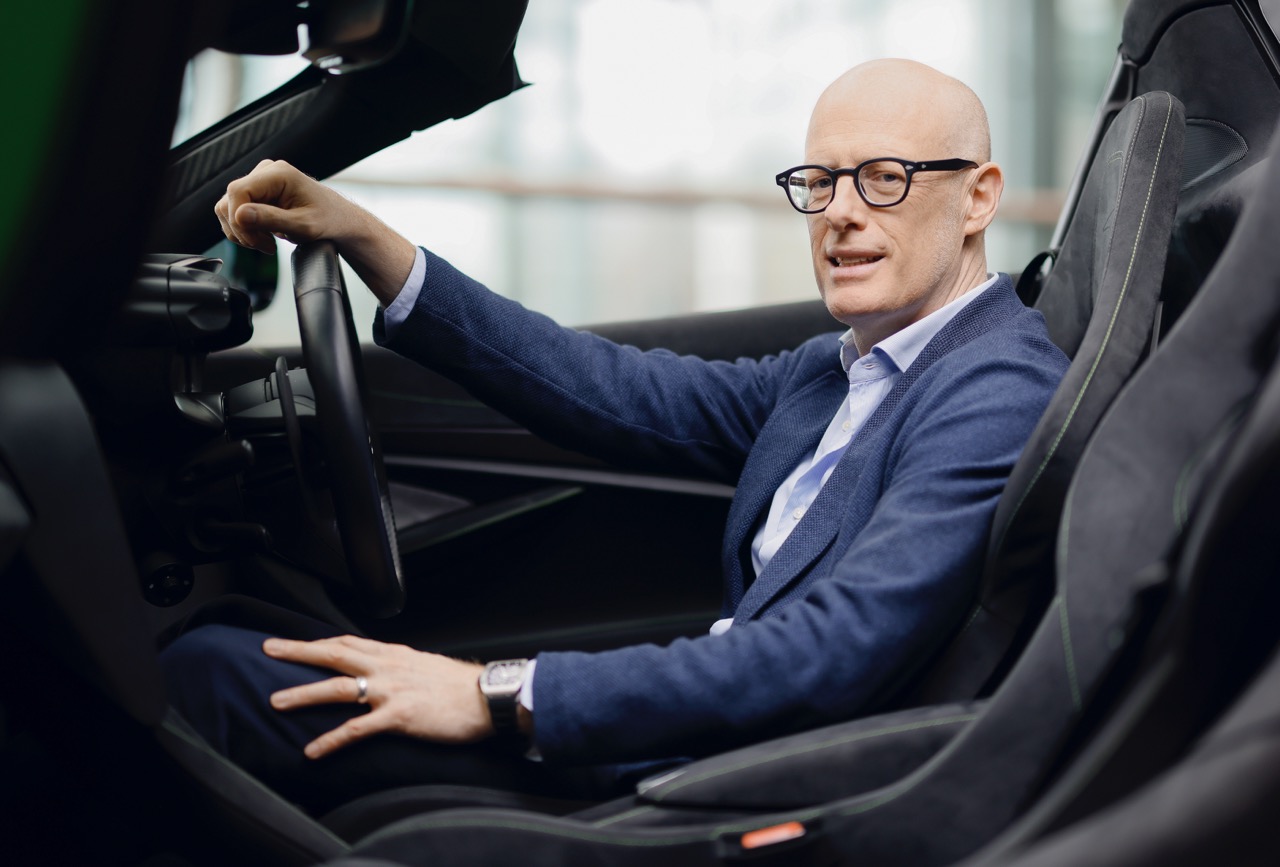
Were you aware that, while there has only been one Herb in the duo Peaches & Herb, there have been seven different Peaches? TMYK. Porsche has a new CEO Michael Leiters and a slightly more tenured Audi CEO in Gernot Döllner.
Volkswagen tried to separate Porsche and Audi out into their own orbits, but both rotate around the same star and both brands need one another as Automotive News reports:
With growth unlikely to rebound quickly and spending still elevated, pressure is building to deepen collaboration. “They have no choice — costs must come down significantly,” a person familiar with the matter said.
Historically, cooperation between the brands has been fraught with internal rivalry, including disputes over development leadership, cost sharing and engineering locations. Development of the joint Premium Platform Electric (PPE) architecture used by the A6 E-tron, Audi Q6 E-tron and Porsche Macan Electric required repeated intervention from Blume to resolve conflicts.
Now, tighter finances and a shared sense of urgency are fostering a more pragmatic approach. Porsche is looking to restore margins to as much as 10 percent while accelerating its return to combustion models, relying more heavily on Audi for platforms and components.
A little internal rivalry can be a good thing, but everyone has to recognize they have the same goal. It sounds like the two brands are about to be reunited, and it feels so good.
It’s A Grand Time To Make Grand Highlanders

I once half-seriously joked that I couldn’t stop people from buying Toyota Grand Highlanders. I recently drove the Lexus version, and I get it. If you want something nice and seemingly reliable with a true third row that isn’t a minivan, it’s hard to top a Grand Highlander.
Toyota agrees, and is investing in making more of them, as well as more RAV4s and Camrys.
The new investments include $800 million at a plant in Georgetown, Kentucky, to increase production capacity of the automaker’s Camry sedan and RAV4 crossover. The remaining $200 million is to increase capacity for the Toyota Grand Highlander SUV at a plant in Princeton, Indiana.
“Toyota’s investment in the U.S. is for the long-term, tied to our philosophy of building where we sell and buying where we build,” Toyota Motor North America Chief Operating Officer Mark Templin said in a statement.
This is all part of a planned $10 billion in North America.
Ford Takes Over As Baseball’s Official Vehicle
I love baseball. It’s by far my favorite sport. While I’ve never been better than a sub-mediocre player, I am a better-than-mediocre enjoyer. The last spring training game of the year doesn’t usually have great importance as most roster decisions have been made, but that didn’t matter to me. A day spent at the ballpark watching the sport as it was meant to be played is hard to beat.
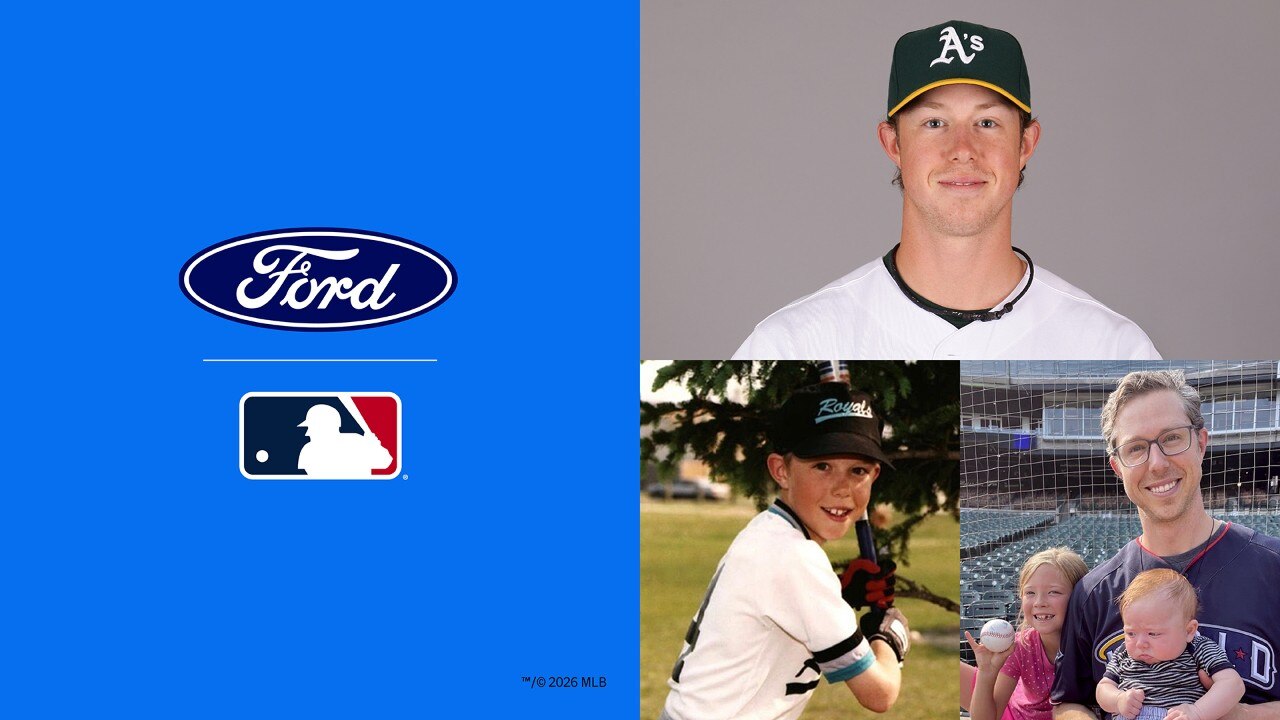
For the last few years, baseball’s most closely associated brand has been Chevy. The World Series MVP gets a Camaro or a Corvette or a Silverado. No more. Ford has stepped in and taken the job.
“For generations, baseball has brought families and communities together and so has Ford,” said Lisa Materazzo, Ford’s global chief marketing officer. “This partnership is about honoring tradition while putting real capability behind the moments that matter for fans, players, and for the communities that keep the game, and the country, moving forward.”
Also, I learned via another Ford story on its blog, that Trystan Magnuson, the current Vehicle Integration Supervisor on the Ford Explorer & Lincoln Aviator, was formerly a pitcher for the Athletics. That’s almost like playing for a real team!
What I’m Listening To While Writing TMD
I had to do it. It’s one of the Peaches (the incredible Linda Green) and Herb doing “Reunited.”
The Big Question
What is the best example of two companies sharing one platform?
Top photo: Stellantis


I think using the past tense for Stellantis’ quality control issues may be a little bit premature, haha, but glad some improvements are happening.
I think claiming that under Marchionne that they were “wold class” was a bit of a stretch.
But I’m glad there are improvements.
Sick A’s burn, way to kick them while they’re down LOL.
The most bestest openest lines of communication will not help quality if the issues in purchasing and engineering management aren’t addressed. See a problem, discover that there is no engineering support to solve the problem and/or no willingness to cover the costs associated with the solution, so go back and chuckle with your cohort about how everything is fucked is not a policy that yields the highest quality product…
Best platform share might be the honda passport/ Isuzu Rodeo. Or whatever Honda called the Discovery they slapped an H badge on…
FCA and now Stellantis are kind of legendary for squeezing suppliers to the point of suffocation. Supplier relations are the unsung hero (or villain, as the case may be) of quality. And I say this as a multiple FCA product owner who had overall good experiences.
See also: the ongoing downfall of Macy’s
Best shared platform? Does the Beetle and Meyers Manx count? Or better yet the Beetle and Lord knows how many kit car companies.
“a pitcher for the Athletics. That’s almost like playing for a real team!”
Don’t alienate the A’s fan.
I think moving to West Sacramento already did that…
Bumper sticker back in the day: “I’m an Oakland Athletics Supporter”
Stylistic choices aside, GM’s alpha platform unpinning both Chevrolet’s Camaro and Cadillac’s ATS/CT4 and CTS/CT5 was quite an accomplishment.
Um, that kind of a lot to set aside… 🙂
Not for me. I share some of the disdain but think the ATS had a solidly attractive design and would love an SS 1LE despite how most of their many iterations look, which yes, isn’t great. Camaro/Caddy is my pick too.
The 2 door ATS looks great.
Were? As in its been fixed now? I’ll reserve judgement when I start seeing higher quality stuff, not when they can throw some kum ba ya, sounds great sob story, sound bites out. I so so so want to like Stellantis’ stuff here in the US as I think for the most part it’s some of the more interesting stuff as well as (ignoring quality/reliability) some of the best as well, but boy oh boy does their lack of quality keep me away.
I have just over 4K miles on my ’26 Ram purchased in November, and so far, I’m very happy with it. Build quality seems good, and no squeaks or rattles, even over that absolutely terrible roads around here.
Long term is a big question mark, but so far so good.
Dealing with my Ram dealer has also been a nice experience.
Report back after six years, because they have something of a reputation for falling apart around five. Not that I speak from experience or anything…
Current plan is to pay it off and sell/trade it around the year 4 mark.
I wouldn’t even trust a new Tundra past 6 years now. IMO it seems like all new vehicles are throways.
Good plan, I’m of a similar mind. I considered a Tundra when I bought my last truck, but they were smack dab in the middle of their exploding engines saga and although they claimed to have fixed the problem, I was dubious.
I really wanted to like the Tundra, but even if I were willing to roll the dice on the motor, they’re just so fugly I had no interest.
I don’t know what the deal is with Toyota’s current 4×4 design language, the designers must be getting paid per body line. The 4Runner, Tacoma, Tundra are all styling disasters.
Every time I walk away from my Ram, I look back at it; every time I see a Tundra I recoil in disgust.
I was at a gas station the other day in my Tundra (’01) and in pulled a ~’97 F150 in the same color, and was like “damn, it is copy of the Ford”.
I think the first gen Tundra is a pretty good looking truck. I especially like the extended cab/6′ bed model, I think it’s a great size for a truck. Funny enough, my buddy in NY has a ’01 Tundra too.
That’s exactly what I have, Access Cab, 4×4 with a five-speed. I also got it from Upstate NY…and literally everything that could go wrong with a Tundra has gone wrong with mine…I’m so far deep into it now I can’t sell it. But it’s also been a good truck.
My buddy’s came from down south somewhere right before he got it. It’s very clean and had something like 80K miles on it when he got it a few years ago. He’s gone through the suspension and did the t-belt service, it’s his daily and “overland” / offroad vehicle. A year or two back I followed him on some class 6 roads in VT in my 4Runner and was impressed at what it could do. He’s been after me to get an XJ or something I can really beat on since I got rid of the 4R. The Ram is probably quite capable, but it’s a little big for those trails.
I’m building mine to go out west and do some off-grid camping…nothing wild, just off the beaten path. And I also just swapped out the alternator on my ZJ and got that back on the road…
Awesome! I so want to take a trip out west. I’ve been to Moab twice, I flew out with buddies to mountainbike, but haven’t done much offroading or exploring other than renting a JK Rubicon on my first trip out. None of the other guys were into it so I ran Fins n Things by myself. I thought I’d run into other people, but I didn’t see a soul out on the trail. Do you have an IG or place where you post pics? I want to check out your ZJ.
Sure thing! @crapcanmotors
I was really going to try to get out to Easter Jeep Safari this year with my buddy from VT, but I just don’t have the time. I wanted to take my ZJ out, if was going to go…ah well, next year.
I feel like GM, historically, is the platform sharing champion.
The quality issue with Stellantis is just unbelievable. I learned about the Toyota way in business school back in the 80’s. When Toyota took over Fremont assemble to make NUMMI, they instilled the see a problem, fix a problem mind set and it revolutionized the US auto industry. The fact that Stellantis still is resistant to this makes one wonder how they are still in business. They sure don’t sell anything compelling enough to override their terrible quality.
As far as I know, Saturn in Spring Hill was the first US automotive plant to adapt such a scheme, which went as far as to have a first-ever standalone UAW contract that allowed for such manufacturing.
Years later, Spring Hill workers voted to do away with the unique Saturn contract and adapt the standard GM/UAW contract. I don’t know whether or how much that affected quality, but by that point some Saturn models were being made in other plants, and the brand was on its way to oblivion anyway.
The ford small platform cars were interesting large scope of Ford owned and partnerships.
Maybe the Dodge journey and the Mitsubishi lancer is one of the stranger.
The fiat 124 and Miata might be stretching the shared in a way in that it’s just a facelifted badge engineered car.
The funnest example has to be the
Mercedes X class based on the Nissan Navara.
All the Toyota shared platforms seem to take the worst part from someone else. That’s interesting in a way. Why do you want a Subaru or bmw time bomb in your Toyota.
All the g and f body gms or any other letter bodies. Prolific but not sure interesting or good.
Maybe the best is Daihatsu making all just about all the kei trucks and vans for everyone.
Actually, from all accounts, the B58 engine is rock solid (some even dare say it’s a modern 2JZ). And as far as I know, BMW didn’t do anything to screw up the ZF 8-speed automatic. And the cars are actually built by Magna-Steyr (the same people who made/make Geländewagons and Pinzgauers).
As for Subaru, well, no comment.
Magna built the fisker ocean too. I find the people who claim Vortex 4200 is the modern 2jz more reliable then wild bmw claim people. But yeah for bmw the thing is rock solid just the vanos and probably lots of brittle plastics getting ready to cause issues at this point. While anything that came with a 2jz will just run even it its 30 years old .The zf is star of the show as just about everything that mounts the a 4200 is basically made of glass.
TBQ? I mean, I don’t know about “best” in terms of quality, but the Fiat 124 (The original, not the Fiata) seemed to end up all over the world under different names. Lada especially. Somewhat similar story with the 126p. Basically, any platform that ended up being shared with the Soviet Union. Or Spain for that matter. And a lot of those were Fiats.
The other big one is Mitsubishi across East Asia. Proton and Hyundai/Kia both owe a lot to them. Chrysler does too come to think of it. Everyone loves a ’90s DSM.
Those weren’t shared platforms – those Fiats were literally the same car built in different factories, either under license or because another country literally bought the factory.
FWIU the Lada was significantly beefed up compared to the original Italian 124, to the detriment of the driving experience.
Sure, the Russians evolved it over time (they quickly found the frailities in Russian conditions). But in the beginning, they literally bought the factory and moved it. The Italians would certainly evolved them as well had they kept making them.
Having driven both, not THAT much in it really between them, though the Russians managed to make the build quality even worse – quite an accomplishment.
Mitsubishi and Chrysler made some fun stuff in the 1990s. The Dodge Stealth/Mitsubishi 3000GT and the Eagle Talon/Plymouth Laser/Mitsubishi Eclipse are some of my favorites from that era. Chrysler was great at naming models back then.
Starion/Conquest is the winner for me if we are going down that road.
This is the way!
I think you mean Mitsubishi made some fun stuff in the 1990s and Chrysler provided a box of their badges to stick on the back of half of them.
Loose definition of platform sharing, but I’d argue a lot of what Mazda and Ford did in the 90’s and 2000’s. 3 was related to the Focus, 6 to the Fusion, the Escape twins, L-series and early Ecoboost…
Both companies made honestly good cars and benefitted from each other while it lasted.
This is definitely where my mind went too. If there was a downside to their platform sharing I am not aware of it, and it provided good affordable cars in multiple sizes.
“There are many, but Stellantis Chairman John Elkann has a pretty good idea of at least one big reason why they weren’t getting fixed.”
In my view, Elkann is part of the problem. He along with Exor were the driving force behind the stupid PSA/FCA merger. And now this stupid merger hasn’t gone the way he planned because it was stupid. And let’s not overlook the fact that the previous CEO that fucked things up had Elkann’s support.
And employees being able to speak up is nothing new. My question is… why did listening to employees ever stop???
John Elkann is part of the reason why it stopped… among other problems.
“What is the best example of two companies sharing one platform?”
Ford and Mazda and the C1 platform
https://en.wikipedia.org/wiki/Ford_Global_C-car_Platform
And when Ford sold off its stake in Mazda in 2008, I think it was a huge mistake. Ford’s product quality took a downturn after that. And it hurt Mazda too… but not in terms of product quality. Mazda’s quality actually went UP in the subsequent years.
Some of the best Fords from the 1980s, 1990s and 2000s were the ones that were joint Ford-Mazda efforts.
damn, beat me by seconds 🙂
I too see Elkann as part of the problem. But he won’t see consequences from it, it’s always the guy-positioned-slightly-below-him’s fault. Kind of like how Zuckerberg has been wrong about VR worlds, NFTs, crypto, and now he’s peddling AI and AI wearables. But despite wasting billions of dollars being wrong, he won’t be removed from the company. It’s good to be the king I guess.
Two distinct companies or just two marques under one bigger brand (as in badge engineering)? I’d say GM’s Ultium platform with the EVs is doing okay for Honda as far as the Prologue goes, since Honda can’t or won’t make its own EVs. Even though the Prologue itself appears not long for this world.
My personal favorite as far as badge engineering is the venerable J-Body, but I’m biased.
Yes, first of all the word Chrysler was never used…..
Anthrax was right alongside Public Enemy on powertrains.
Bring the noise!!!
Dammit I meant “mufflers.” Too late to edit; swing and a miss.
Do F-bodies count? If so that (I have no bias or anything)
Very hard Big Question today because of the word “best” there are lots of memorable and horrible examples.
My first thoughts
AC Ace and Shelby Cobra (I know that is a stretch)
MB G-wagon and Steyr-Puch Military trucks (also a stretch)
I’d hesitate to say Graham Hollywood/Hupmobile Skylark, because it gave the beautiful Cord 810/812 body a final chance at life and allowed two storied automakers to go out with a nice swan song, plus, available supercharger. Except, that clearly wasn’t a successful venture by any stretch and sort of brought down both companies. I mean, they were doomed anyway, but it probably hurt more than helped
Well, Graham-Paige sort of survived, their former automotive assets wound up going to what is now Stellantis, and the rest of the company is now Sphere Entertainment, Madison Square Garden Entertainment, and Madison Square Garden Sports. But, still, dead as an auto brand
What is the best example of two companies sharing one platform?
The Lancia Thema/Fiat Croma/Alfa Romeo 164/Saab 9000, there are probably 2 good ones in there
As someone in Purchasing I don’t give a shit how much something costs as long as it’s in line with market pricing since quality and on-time delivery are the soft benefits that I prioritize. Squeezing suppliers for every nano cent is only because of pressure from morons in Sales and Finance.
And if Purchasing is able to order things in a way that compromises the quality of the vehicle, then the Engineering specs were too loose.
This is one of the most important lessons I have to drill into my trainee engineers. Suppliers will do everything possible to pinch pennies, and if you give them an inch they will take a mile and sue you for the change order.
Sure, eventually you can get the sort of relationship where you can make vague gestures and a supplier will deliver exactly what you wanted, but that takes decades and generations.
And it only takes a few months for a bad leader to irreparably damage those relationships to shave a few cents. Funny how that works.
My materials science professor instilled us with this lesson: “when a sales engineer gives you specs, double the price and halve the performance, now you’ve got a good starting point”
I’m an engineer and agree completely. In the end it comes down to where any given outfit wants to spend time/money. In order for the specs to be locked time has got to be burned up front during development. If the development timeline is compressed the resources saved will (probably) be burned later chasing down on market failures.
“That’s almost like playing for a real team!” …that one athletics fan is really upset.
But I thought Brad Pitt saved the team?
Moneyball got us some pretty good teams, but not any that won it all.
Jaguar XJ V12 / Daimler Double Six. Calling a V12 a double six, is such a Britishism, and it was glorious.
…the prior Packard Twin Six would like to have a word…
Are you sure that you want the owner of a Triumph Acclaim to answer that question?
That’s a sterling retort.
You might even say that retort is Legendary
Mind the cyclist, Richard!
I’ve always loved that they have a Rover 216. Maximum snob appeal Civic.