

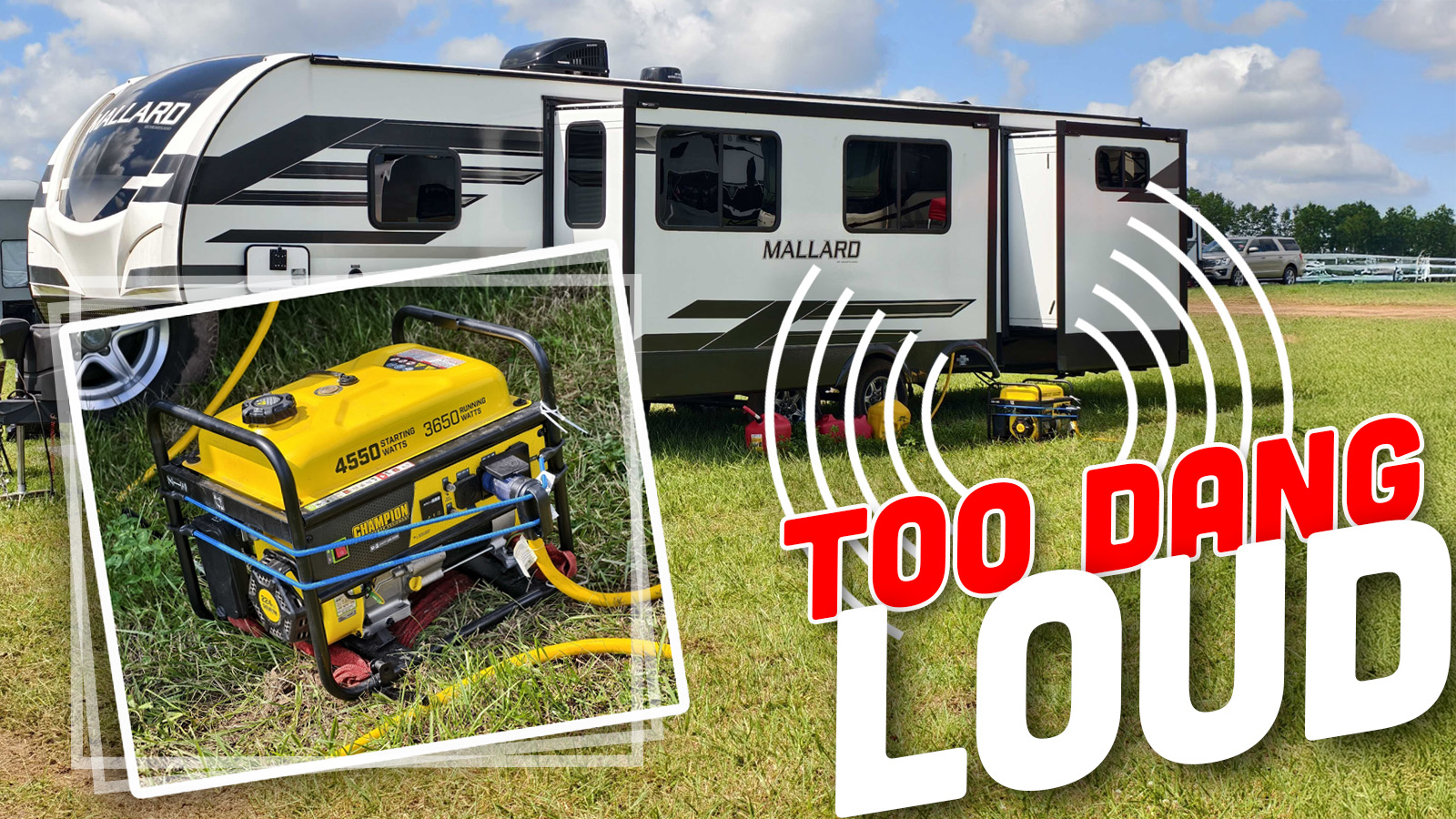
I just spent a week among aviation greatness at EAA AirVenture Oshkosh 2025. My time at the show was the best I’ve ever experienced to date, and even the camping was great, minus a couple of deeply entertaining hiccups. But one thing really bugged me, and it was how stupidly loud my generator was. I had realized that I had become the jerk with a loud generator, and it’s time to do something about it. Here’s how you can prevent yourself from making my mistake.
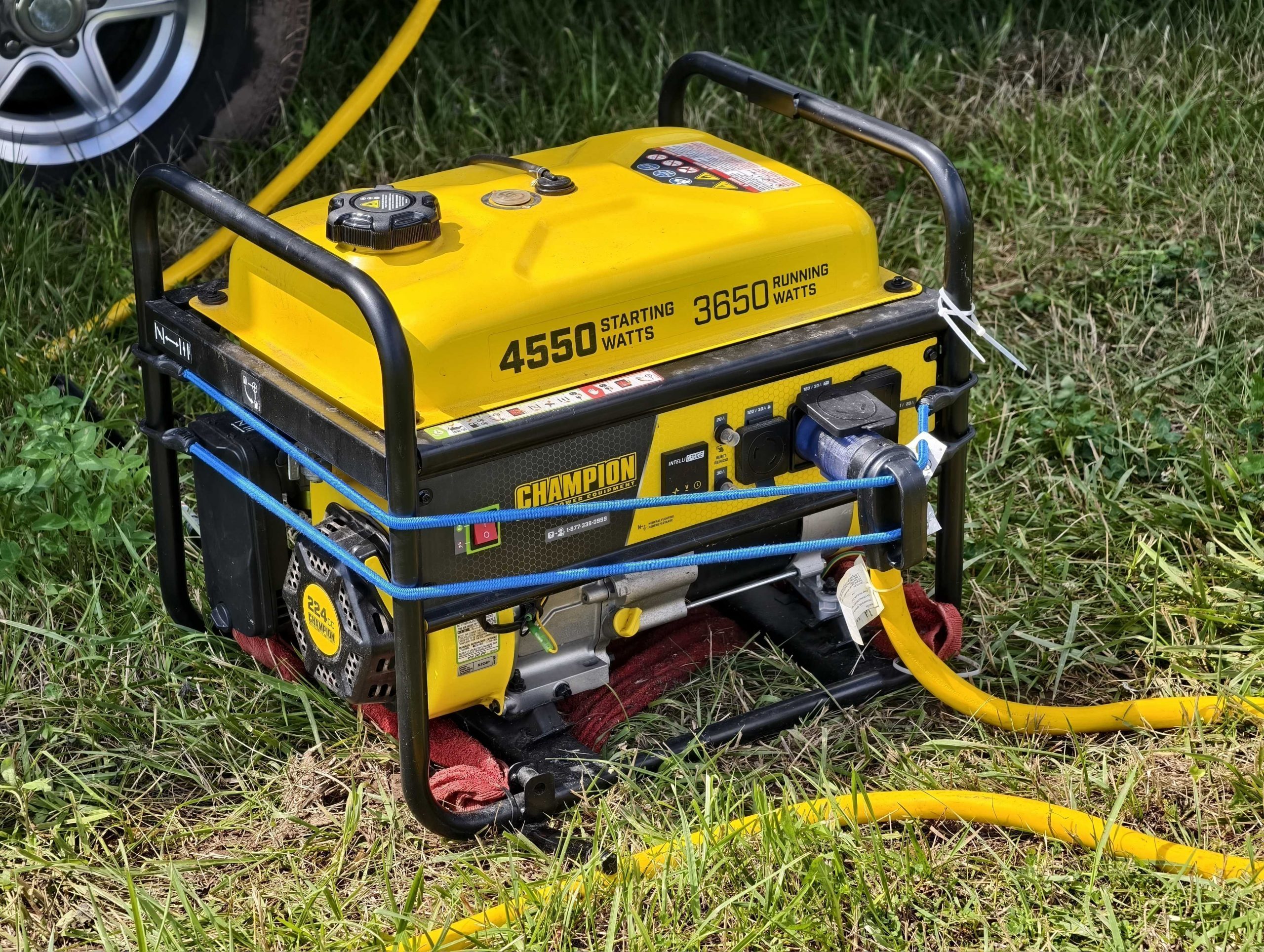
I bought my first-ever generator back in 2023. This unit is a Champion 4550 starting watt, 3650 running watt generator with a 30-Amp RV plug. I got it on sale for $350, and it has been my rock through three camping seasons. It has never failed me, even when I failed it by letting corn gas varnish in its carburetor. Seriously, this generator still runs even with a gummed-up carb!


I even love its longevity. This generator will easily run the electrical system of a large travel trailer for about 14 hours on five gallons of gas. That’s 14 hours of running an air-conditioner, too. This year, I forced the generator to run a 50-Amp camper, and again, it did it without even skipping a beat. If you look my generator up at stores like the Home Depot, you’ll see consistently high ratings of 4.5 to 5 stars, and I think the generator deserves it.
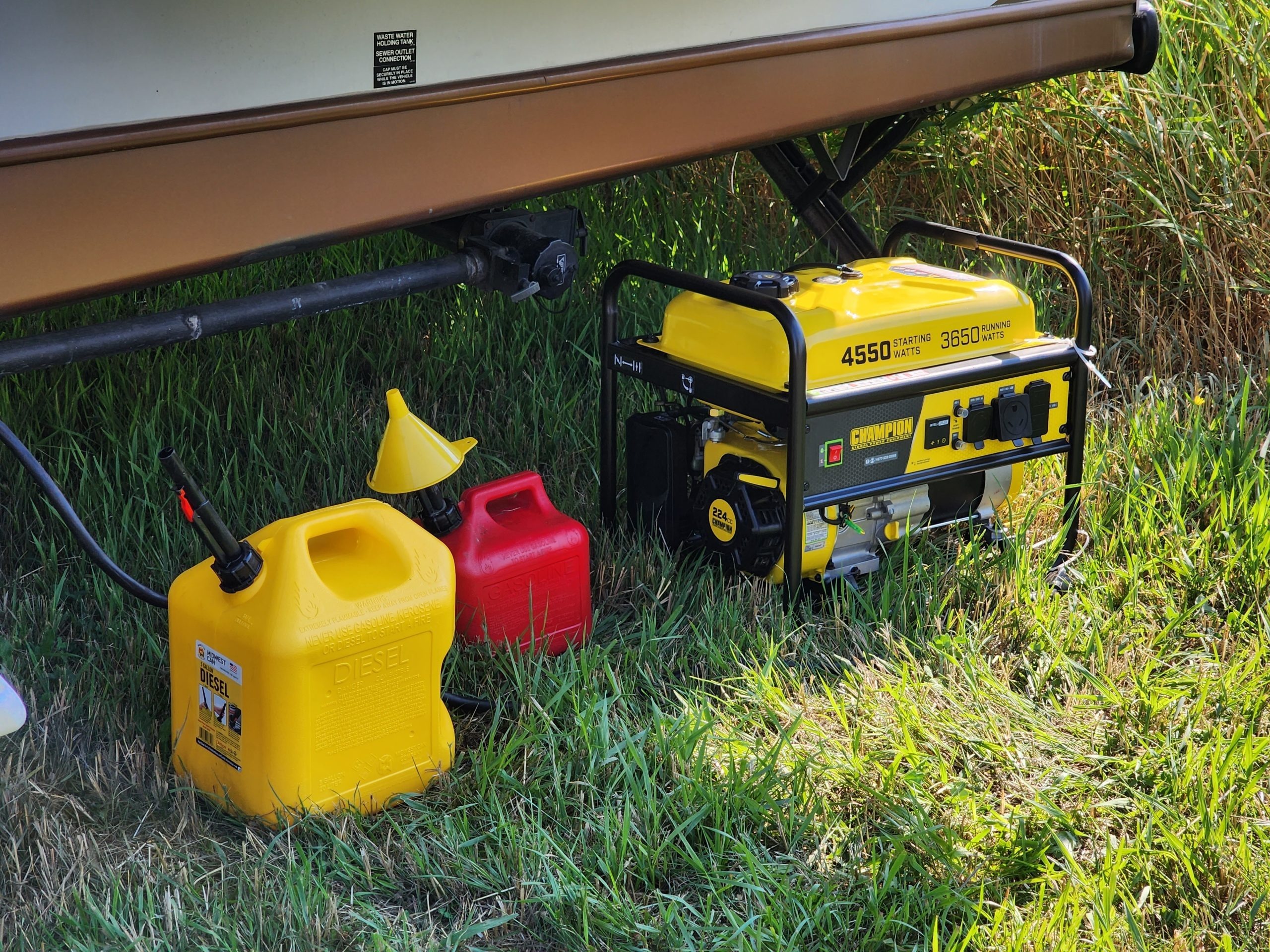
If I have any complaint with my generator, it’s with how loud the thing is. The Champion generator sounds like something that belongs in a construction site. It makes an extraordinary amount of mechanical noise in all directions. Understandably, my fellow campers have asked me to figure out a way to quiet the thing down, and I usually just block it with a truck or shut it off. After three seasons of using the thing, I finally have it figured out. At least to my ears, there are three realistic methods to quiet down a generator.
Before I continue, I’ll explain the very basic way that a generator works. These machines feature gasoline, propane, or diesel engines that turn a shaft, which powers an alternator. Power from the alternator is then fed to a control panel and outlets.
The Free Way
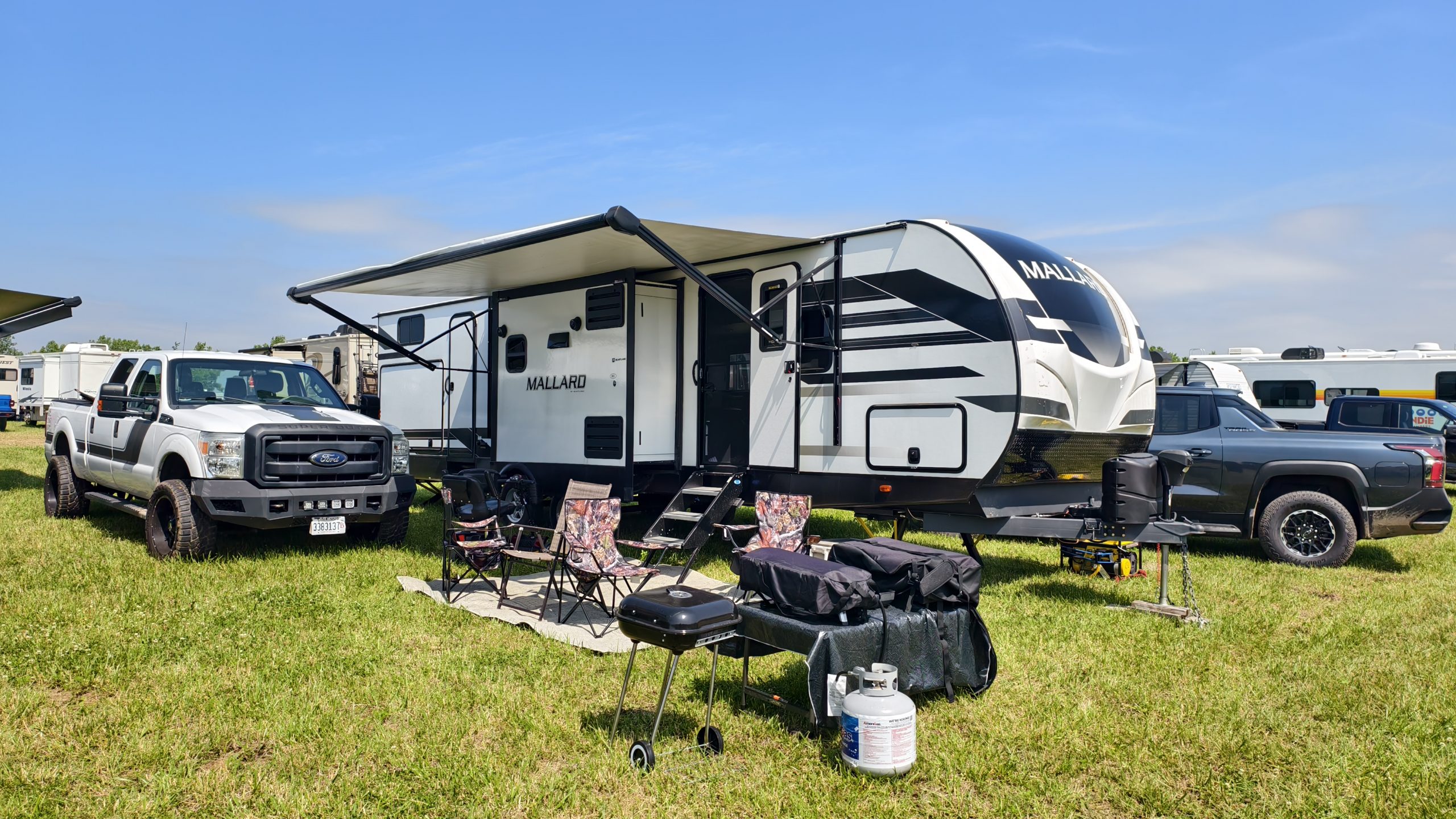
Usually, my AirVenture crew consists of Sheryl and me. In the past, I put the generator at the very back of the camper and we slept at the very front. This left us completely unbothered, as the distance was great enough to reduce the sound of the generator to a distant hum. However, our campsite neighbors hated the sound of the generator, so we usually killed it at night, even if we slept in the coveted 24-hour generator area. This worked out pretty well because our trailer had a very effective ceiling vent and fan that kept us relatively cool.
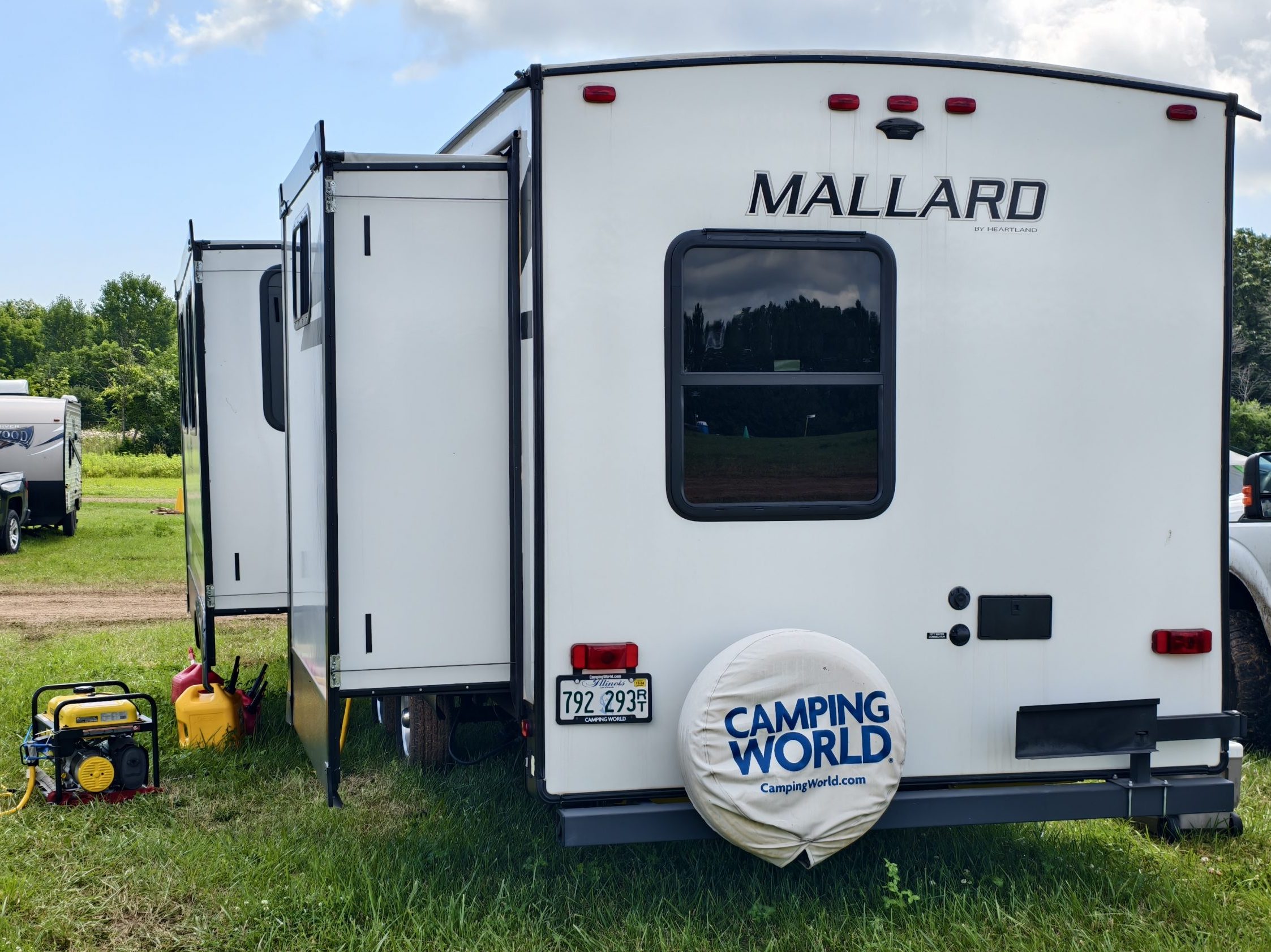
Not this year. I had my parents with me and we were traveling in their 2022 Heartland Mallard M33, which thanks to its poor design has almost no ventilation in the bedroom. If the air-conditioner is not running, you will cook like a chicken in a broiler. It gets so hot in there that I’ve awoken soaked in perspiration with my hair ruined from sweat.
If that wasn’t bad enough, my elderly mom gets really cold at night, so she likes to run the camper’s electric fireplace to keep warm. Yes, this trailer has a propane furnace, but she loves running the inefficient electric heater. My dad is like me, and likes things colder. The twist is that my dad took the rear of the camper as his room, and my mom took the living room in the middle of the camper as her room. This presented problem: Where do I put the generator?
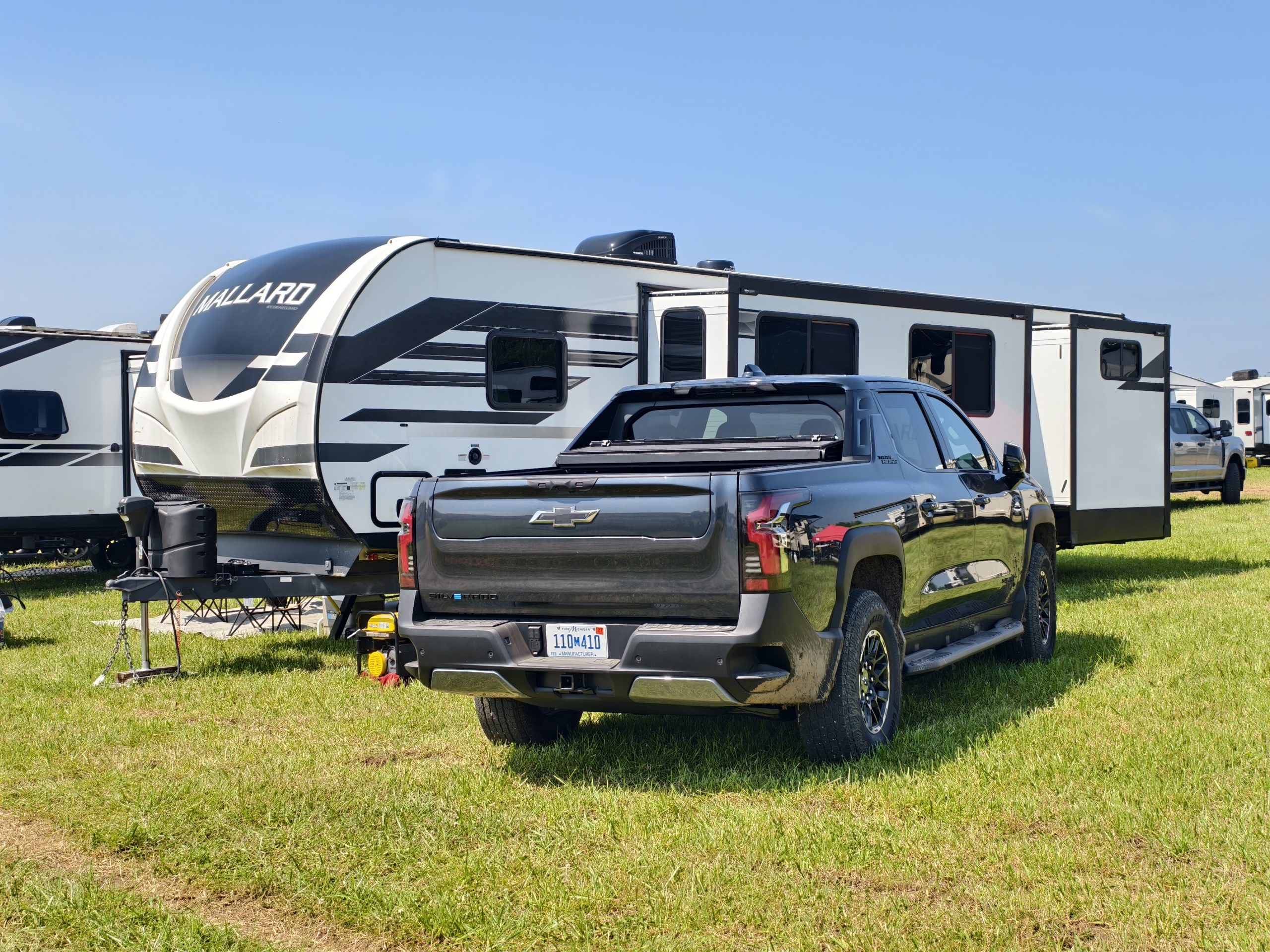
For the first half of the week, I put the generator in front of the camper and under the bedroom. Then, I parked the Chevy Silverado EV next to the generator. The truck blocked a lot of the noise on one side, while the camper blocked the noise above. Sound headed backward or to the right had to travel past the camper first. It wasn’t perfect, but nobody complained. It was shocking how much just blocking the generator with the truck worked to stifle its sound.
Sleeping over this setup, however, was terrible. The generator was basically only a few feet under my bed, and the poor insulation of a travel trailer meant that I heard the noise loud and clear. I woke up every time the generator’s RPM changed due to a changing electrical load from the RV. By Wednesday, I was ready to dump my generator into Lake Winnebago. Still am, really.
Generator Enclosures
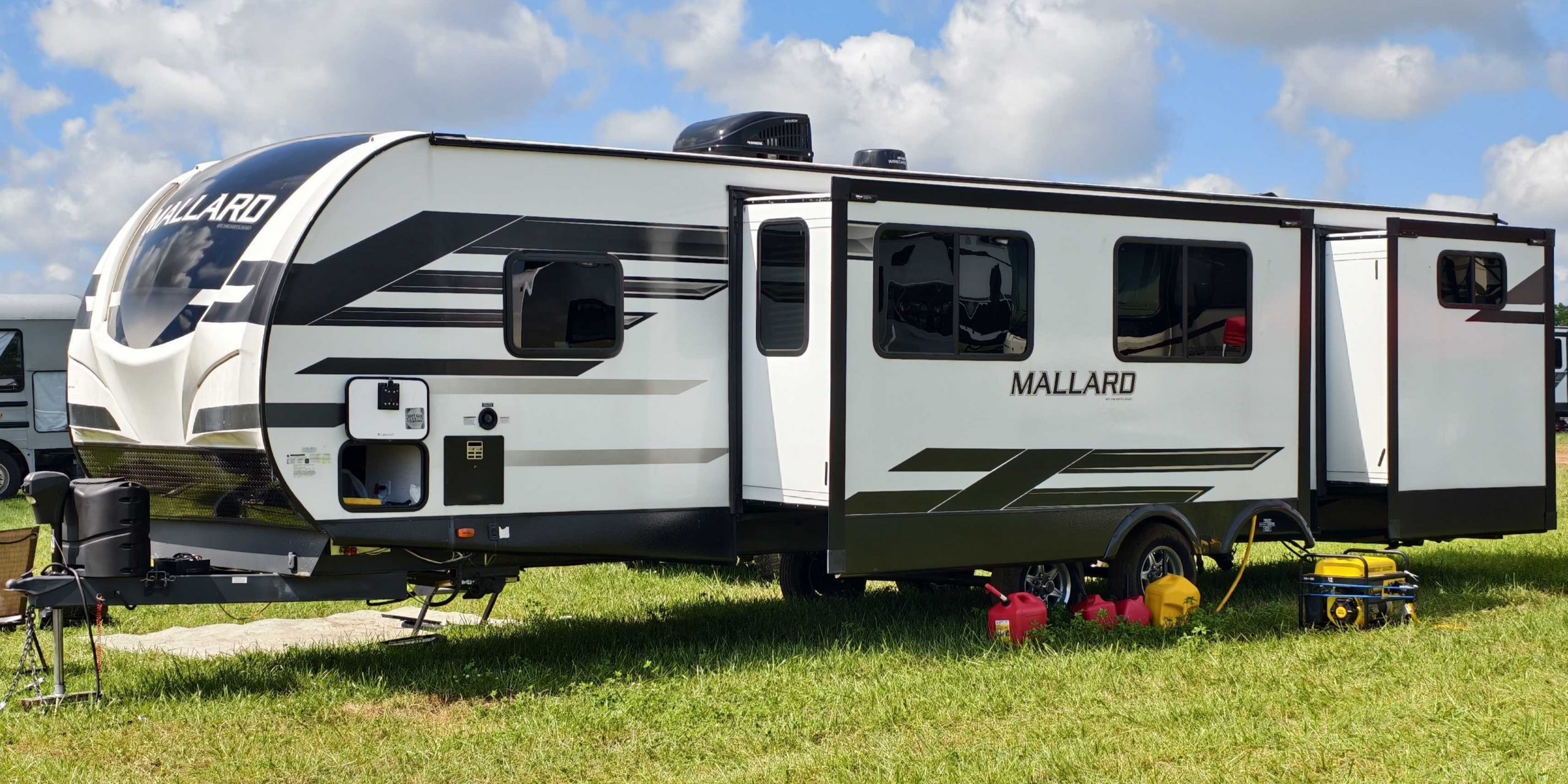
Alright, so what are my options, I wondered. I tried moving the generator to the middle of the camper on the left side, but this kept my Mom awake. Moving the generator to the back kept my Dad awake, with the added bonus of pissing off my campsite neighbors. Putting the generator on the right side pleased everyone, but meant that I couldn’t stargaze with any serenity because there was a loud generator right behind my chair.
I was standing outside, sweating and scratching my head, when I witnessed something fascinating. Across the street was a guy with a generator even louder than mine. I watched as he leaned a bunch of boards against the generator, and in an instant, it became quieter. I was shocked and asked him about it, and he directed me to a video:
The fella said he’s been using this method for years, and it hasn’t failed him. As it turns out, this is a thing. People have built enclosures for their generators out of plywood or out of insulation material. There are even commercially available generator noise barriers.
Here’s a fantastic video testing DIY generator enclosures:
What’s neat is that, if you make the enclosure correctly, it seems like the generator should be able to keep itself cool. The only real downside is that now you have to lug both a generator and an enclosure with you.
The logic being used here is that sound travels in waves, and if you give those sound waves something to bump into, many or most of the sound waves will bounce off. So, you build an enclosure and face the opening in the direction least likely to piss someone off. Or you buy one of those generator bunker things.
I ended up covering my generator with folding tables and then blocking it with the truck, which made a tremendous difference, but that can’t be my solution in the long term.
Quieter Generators
Another method is to buy a quiet generator in the first place. Several brands sell what are called inverter generators. Earlier, I said that basic generators work by turning mechanical power into AC power. The problem, aside from the noise, is that the electrical output isn’t cleaned up (more on what exactly needs cleaning in a moment). This doesn’t matter that much for something like a camper, but sensitive electronics will care.

Wen Products, a producer of power tools, explains what makes an inverter generator different:
The alternating current (AC) power produced by the alternator is sent to a rectifier, which is a device that converts the AC power to direct current (DC). This DC power is then inverted back to AC power by the computer inside the generator before it is sent to the control panel. This is where the name “inverter” comes from. Because the power to the control panel is controlled by the computer, inverter generators offer much lower total harmonic distortion (THD) than standard generators. THD is an important consideration when powering sensitive devices, like smartphones, tablets, computers, and televisions. These devices expect “clean” power (power that has low THD, like the wall power in your home), and can be damaged if they receive high-THD power. All WEN inverter generators use pure-sine-wave inverters, and as such, limit THD to under 1% in most cases. Traditional generators can produce THD as high as 25% in some cases.
Inverter generators are generally more compact than traditional generators, and are much quieter, but have lower maximum power outputs and are more expensive. There are two main sub-types of inverter generators: closed-frame and open-frame. Closed-frames are the most compact type of inverter generator, as well as the quietest. Their protective shell contains noise-absorbing insulation, significantly reducing their acoustic impact. They are usually portable and suitable for powering small loads. Open-frame inverter generators have no such insulation, and therefore are louder than closed-frames, but are still quieter than standard generators – usually about 50% quieter. Open-frame inverter generators produce power that is just as clean as closed-frame inverters, and may be capable of handling larger loads.
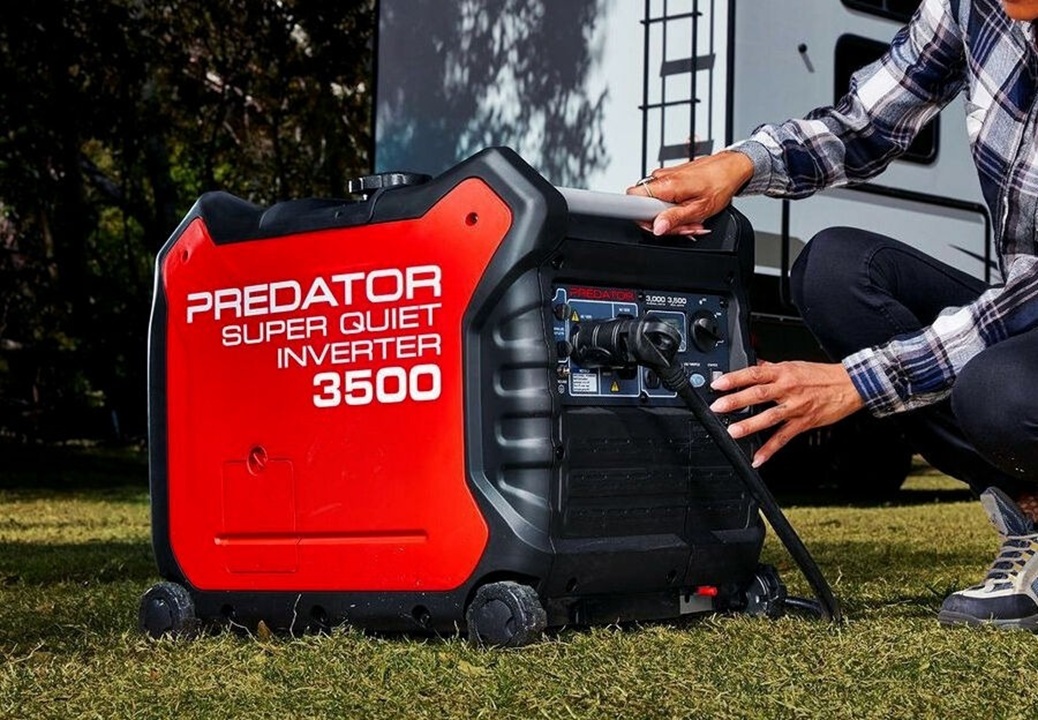
The rub is what Wen noted above: Inverter generators tend to put out less juice (albeit clean juice) for way more money. Some of the quietest generators that I know come from Honda. The camper parked next to ours ran a Honda EU2200i that was so quiet, I had to focus to hear it over the background noise of an air show. Yet, the EU2200i produces only 2200 watts for $1,099. That’s a lot more money and a lot less power compared to my $350, 3,650 watt generator.
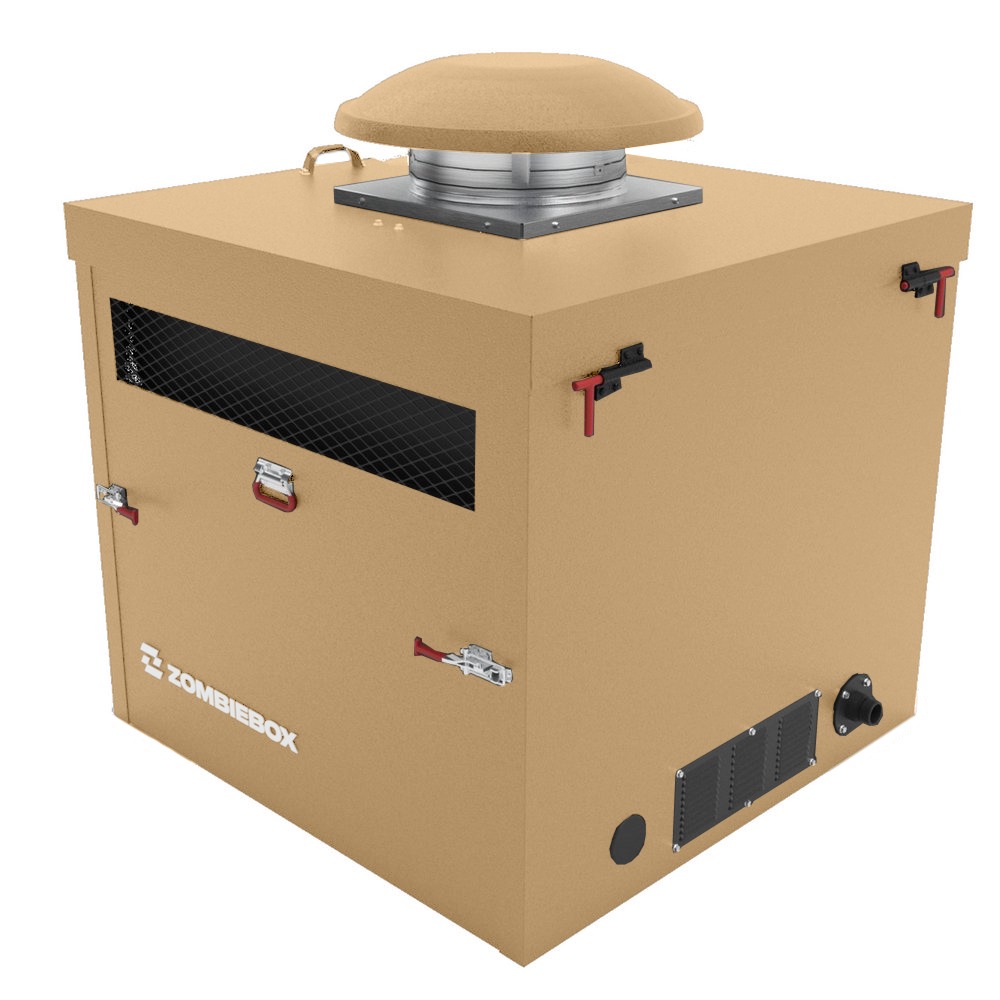
So, for some, quieting down a cheap open frame generator is the way to go. However, some of the generator enclosures out there are crazy expensive. Unless you build your own enclosure, buying an inverter generator might be the better choice. To give you an example, a ZombieBox full enclosure will cost you at least $1,399, and even the company’s three-sided box will hit you to the tune of $259.
All-Electric
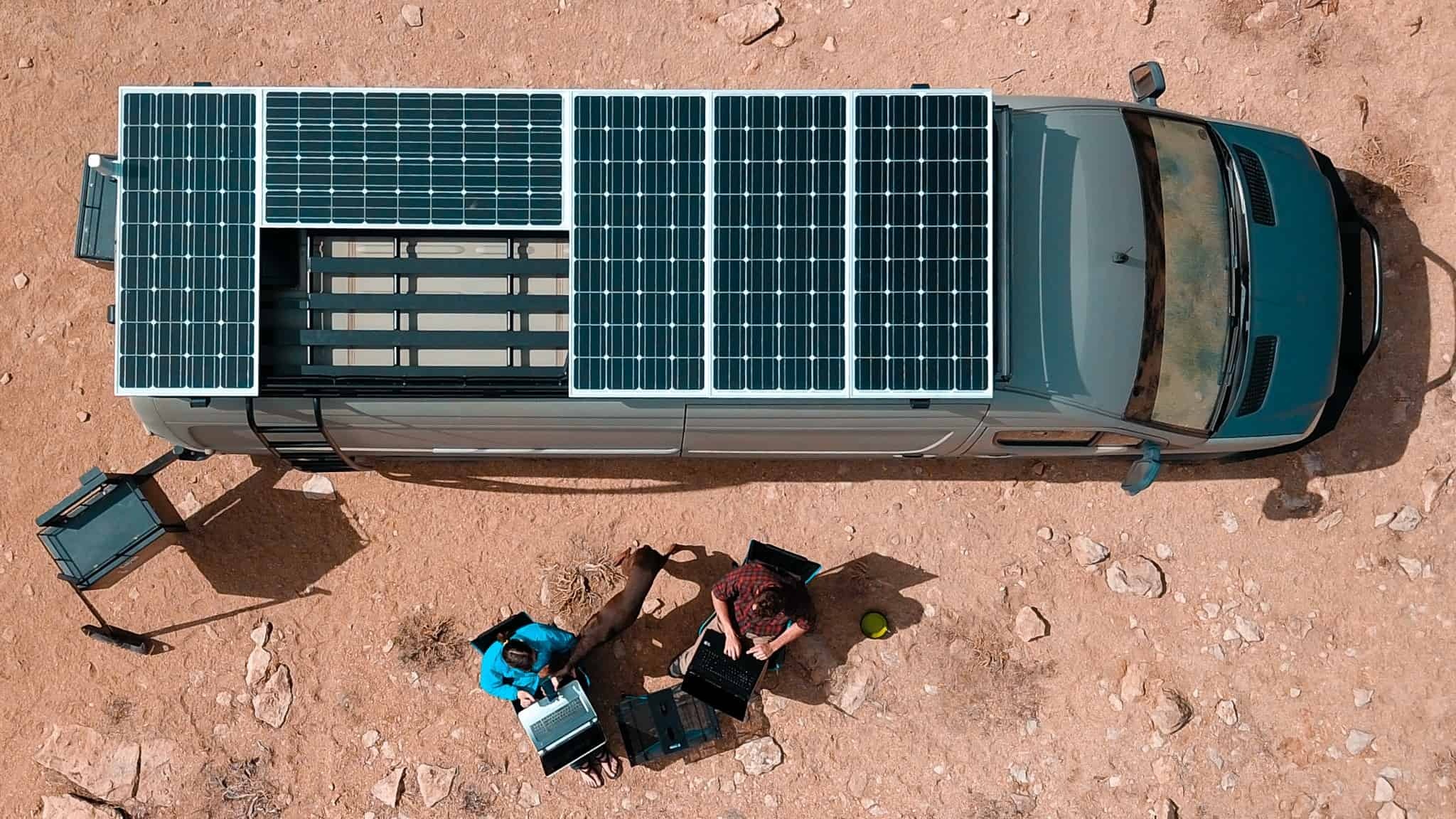
Alternatively, you could ditch the generator entirely in favor of battery power and solar panels. If you’re not interested in building out your own setup, you can buy RV solar panel kits for under $1 per watt. Of course, you’ll want batteries to store this energy, too. To give you one example, Renogy sells a 12V 300Ah deep cycle lithium battery for $900. This is also an expensive option.
Also, you’re not going to run a standard RV air-conditioner on 12-volt lithium batteries. There are 12-volt air-conditioners out there, but you will need a lot of batteries to be able to run the air-conditioner around the clock like you can with a generator. Depending on who you ask, a typical 13,500 BTU RV air-conditioner runs at 1,250 watts to 1,800 watts, but may require as much as 3,000 watts to start, so you would need a huge battery system to run one for a long time. There are 12-volt air-conditioners on the market, but high-powered ones might run you more than $2,000 and still require lots of power.
Another thing to consider is that, in the real world, your solar panels won’t produce the exact advertised number. Factors determining energy capture include clouds, pollution, temperature, sunlight angle, dirt, shade, or other roadblocks. Because of this, solar panel company LensunSolar claims your panels actual output might be 60 to 75 percent of their rated power.
That means buying more solar panels than you think you might need. Say you want to run a 75-watt device for 12 hours. 75 x 12 = 900 watts. You’ll need a battery with at least 900 Wh and around 1,200 watts to 1,500 watts in solar if you intend to recharge the battery. That’s only matching your expected output for running the bulb for 12 hours. You’ll need to go even bigger if you intend to run more.
But if you can afford it, going all-electric is the ultimate way to kill noise. I think I’m just going to get an inverter generator and split the difference. Maybe move the Champion on to a new owner with the caveat that it should not be used for camping despite having an RV plug.
Update: I forgot to mention that, while I did have an EV with me, I did not have an adapter to interface between the truck and the trailer, nor was I able to find one locally. So I used the truck to charge mobility scooters, my power station, and other appliances.
No matter what you choose, don’t make the mistakes I have. Try not to be the person in a campground running a loud jobsite generator without any sort of care. If you don’t want to build or buy an enclosure, just block the generator with your truck, some plywood, or even a couple of tables. You’ll be amazed how much a small change makes a difference! But it’s best not to get into the situation in the first place, so maybe don’t be a cheapskate like I was.





I am a huge fan of the honda 2000’s. We run them at work to power equipment in salt marshes, and i’ve literally dropped one into the ocean while it was running with zero issues. The only thing that has happened to them is that the feet eventually rusted off, after half a decade of hard use.
While pricey, IMO they are 100% worth it.
The portability, the quiet, and fuel economy is just top notch.
From what I’ve read, the general sentiment is that all the inverter generators are pretty good (generally build to a higher standard than cheap regular generators) but the Hondas are the ones to get if you want the best reliability. Basically the consensus is for camping or running your fridge in a power outage, just go get a Predator or Champion. If you’re a professional or you need to run medical equipment, get the Honda.
I was this guy this past weekend at Calabogie Motorsports Park.
I was on a budget, so we used my dad’s ancient Coleman 6800W unit. We set it up behind the crash barrier with the exhaust facing the bushes, in an attempt to make the noise reasonable.
Walking around the paddock seeing Predator 3500s and Honda units just quietly purring made me very self conscious.
We just ran the A/C full tilt until the trailer temp was uncomfortably cold, then shut it off for the night to sleep.
Next time I do something similar, I’ll rent a unit if I have to. This was my first and last time being “that guy”.
I helped keep the peace by running movies on the side of our trailer with my projector for the neighbours to all come and watch.
Foam board held together with a few nails
https://www.homedepot.com/p/Owens-Corning-FOAMULAR-NGX-F-150-1-in-x-4-ft-x-8-ft-SSE-R-5-XPS-Rigid-Foam-Board-Insulation-20WENGX/315197840
You should get your mom an electric blanket. We love ours during the cold winter months.
About twenty years ago, my partner and I did a three-week road trip around the eastern half of the U.S. We did a mix of camping and hotels so we could do some outdoor stuff and visit some towns/cities.
We had a campsite booked on the coast in South Carolina for three nights because we wanted some beach time and to explore the Gullah-related stuff in the area. As soon as we got to the state campground, we knew we had made a mistake. Lifted golf carts, TVs outside, air conditioners, and cheap generators everywhere. We spent a couple of hours at the beach and had lunch at our campground before heading back to the car and finding a hotel.
The idea that people need to bring all the comforts from home to a campground makes enjoying camping impossible for everyone else. It has gotten so bad that the only places I go camping are those that don’t allow RVs. Far too many people want to say they are camping but can’t imagine not having every comfort of home, and don’t care about ruining it for everyone else. Luckily, my state’s state parks have rules on generators that include “they cannot be operated at any time if the noise would disturb other visitors.” So, if I am there and I can hear it, it gets shut off.
That being said, RV parks, airshows, and motorsport events are all places where there are zero expectations of peace and quiet.
Its not cheap, but I can vouch for the Honda 3200 ultra quiet generator. You can barely hear it 10 feet away.
My generator is built into my 5th wheel, but the exhaust is just in front of the drivers side tire, which was less than ideal for my neighbors at NASCAR in tents. A venturi chimney killed a big chunk of the sound and all the exhaust smell, i was pretty impressed for a PVC pipe strapped to the side of the trailer
Mercedes, as an experienced RVer, you of all people should know you should never run a construction site generator at an RV camp.
But if you have to do it, you need an enclosure. The Zombiebox is a total ripoff. There are plenty of DIY versions and tips on the internet.
My first tip is to put the generator in the bed of your truck. That alone reduces the noise more than you might expect, as long as it’s on a well padded surface.
The second tip is that your quiet box doesn’t need a top as long as it’s about double the height of the generator itself or more. Especially if it’s in the bed of your truck.
When I was young, our family had a concession wagon selling cotton candy, snow cones, popcorn, caramel corn and similar fair treats. We had a huge generator in the bed of the truck used to tow the wagon. I’m pretty sure it was military surplus. The generator sat on a mount made of old tires, and it had a big, open top, fiberglass lined box for sound insulation.
Even though that giant generator could easily power a small house, we also used it for camping, and it made less noise than most other gennies.
Just know that if you put your generator in your truck bed it may screw with the grounding, which could kill you. Most consumer generators have a self-grounding feature that requires it to be on the actual ground. Check your owners manual.
Sometimes people say this in online forums, but I’ve never seen a sourced comment. This is done all the time on construction sites and in campgrounds. It’s not in the owner’s manuals of any of my generators.
I’ve run smaller generators mounted in the frame of an RV, on the tongue of a pop-up trailer, sitting on a wood deck flatbed trailer, and sitting in the bed of a pickup many dozens of times.
I’ve run generators on concrete driveways and pads that certainly don’t provide much, if any, electrical grounding. Wal-mart doesn’t let you drive a ground spike into their parking lot, and people run generators there all the time when they overnight at the back of the lot.
It seems like sound logic, but I’d like to read your source, if you can provide it.
That beast we used to power the popcorn wagon was certainly not a consumer model, and it did require a strap to a ground rod.
https://www.osha.gov/sites/default/files/publications/grounding_port_generator.pdf
https://www.washingtonpost.com/food/2021/06/30/hardys-bbq-founder-dies/ They need to be grounded in certain situations depending on what they’re powering. This guy had one on his food truck running when he was trying to make some repairs. It had recently rained and the ground was wet. He became the the grounding connection.
I think it took this long to realize my error because I “got away with it” in the past. In 2023, I had only 1 campsite neighbor, and he was never there in the day hours when I ran the generator. In 2024, I had a lot of neighbors, and all of them had loud generators. One of my campsite neighbors had one that surged every few seconds. I still shut mine off every night, anyway. I suppose it was also easier to ignore the sound of a loud generator when the environment was often full of fighter jets tearing up the sky with afterburners.
If I needed to camp without shore power before 2023, I just used a combination of the onboard battery and a power station/additional batteries. So a couple of decades of camping, but only a few years of messing with generators.
This time was different, as my parents had huge power demands around the clock and all of my neighbors had inverter generators. We were the odd ones out and that’s when I had that realization.
But I’m not really married to this thing. I plan to get an inverter generator because I do not desire to carry an enclosure around with me.
I mean you could also buy a muffler kit off ebay. But why are you so committed to this generator? It kind of sucks for the purpose of powering an RV. Does the RV not have a place for propane tanks?
Costco has a $900 tri-fuel generator that is pretty cool for house backup, but the $850 dual-fuel Firman 3200W/4000W max might be the best bet for RVing. I have a multi-fuel camping stove that can actually use gasoline, but if you already have propane for cooking there is no reason to bring a gas can as well.
It looks like my conclusion got lost in the edit process. I’m getting rid of this one and buying an inverter generator!
Now that makes a lot of sense. I hope you will update us in a future article whether you go with a big inverter generator or a small one with a battery.
Also do not sleep on propane and propane accessories.
Owens Corning 703 rigid fiberglass. Class A fire rating. Wrap it in your water proof/resistant fabric of choice, affix it to a plywood back panel and make some latches to arrange it as a box. Breaks down flat for transport and wouldn’t run more than a couple hundred bucks for the size needed for a smaller putt-putt.
Couple of sound guys I’ve worked with kept a “kit” of these in their car for location work where they new the gennie would be right on top us while filming.
Yes, this. Studio baffles are usually 703, ply, and fabric.
For this kind of noise control, two main things will help – physically blocking the sound, such as the sheets of material, and the mass of those sheets.
I suspect ply plus MLV (mass loaded vinyl) would be better than 703, but also pretty expensive.
And because sound is slow light, the inverse square law still prevails – get the generator as far away from anyone it might bother – the intensity falls off with the square of the distance.
And the inverter generator might still be louder than you anticipated. 50% quieter, in audio terms, is 1.5 dB. Discernable, but not as mich as you’d expect from the numbers. The character of the sound may be very different, however, with a lot of the spiky high and upper middle frequencies attenuated more significantly
Slow light?
It’s all part of the electromagnetic spectrum
It’s energy, of course.
I’ve never thought of it as electromagnetic.
Is this a reference to slow glass?
No – just a fun way to frame it. They’re all frequencies, from DC to light
What kind of fabric is recommended?
In studios, it’s usually burlap. If it’s something outside, you might even think about using some thin indoor/outdoor carpeting for weather resistance, additional mass, and the slight diffusion/absorbtion benefit.
Thanks for being aware of the noise. My wife and I love camping and road tripping in my first gen Z4, but that means we only take a small tent and blowup mattress to the camp.
A few summers ago we went down the east coast and found a campsite right next to the ocean in the Carolina’s outer banks by Cape Hatteras. I was dreaming of falling asleep with the sound of the waves and cool ocean breeze through the grass and rest in the stillness of the landscape.
When we got there it was a different story. In the entire campground we were the only people with a tent. It was more like a RV parking lot and everyone had their generators running at all hours.
While it was nice to have the ocean on the other side of a sand embankment, I never heard the sea until the next morning when we went for a walk on the beach, away from the RVers.
I read all the articles about RVs but I still don’t see the appeal for myself, when I am camping I want to be as close and connected to nature otherwise if it’s too hot or rainy we’ll just stay in a motel. I also love driving the Z4 and don’t think I’d enjoy the trip as much in a big rig like that.
I hope that more RV owners start to be more conscientious of the noise and heat they produce, or camp grounds can be better at separating the tents area.
I’m going all solar for my 26′ GMC Motorhome, 2200w of panels, 10kwh of batteries were only $1200 (pre tariff, got them in time), and 6kw of inverters (11kw surge). But I don’t know that I want to go into humidity land where you might want real AC all night! Out in the West, you don’t need much at night. This will run a modest AC all day and into the night a bit.
We bought a Westinghouse 11kW (peak) inverter generator this year, primarily for home backup but also with the intent of powering two 30 amp RVs, if needed.
We ended up using it 24/7 at Oshkosh because our rented camper’s 12V battery was completely shot and we needed to keep the refrigerator running. Fortunately the generator has a low-idle “Eco” mode that we utilized during the day while at the show and overnight after the A/C cooled things down enough to coast through to morning. Its noise level was low enough that it just blended in with all the coaches around us.
If I am not mistaken, inverter generators are quieter not because of sound insulation in the enclosure, but because they don’t have to run at a constant 3600 rpm to produce 60 Hz. The inverter sets the line frequency so the engine can run at a lower speed according to how much current is being drawn.
As Mercedes is probably aware, passenger locomotives that use synchronous AC generators, aka alternators, for HEP are loud for the same reason. The engine has to turn at a constant speed to maintain the line frequency.
And it looks like you beat me too it. I posted this only 15 hours after you. 🙁
I blame the strange order of comments.
Yes. Who decided to put new comments at the top like it is 1990 and we are loading a page pixel by pixel?
The comments threading is really the only big miss on this site now.
Just go ahead and buy a Predator 3500 or 5000 and be done with it.
I have one to boost my solar day charge if required, and avoids me running the 12.5kw on board diesel genny. Cheap on sale $600.
Oh man. This is why I don’t RV. I’d walk over and rip the plug wire right out of that POS open frame if someone tried to run a generator like that near where I was sleeping.
It’s 2025, absolutely no excuse to run an open frame generator in a residential or leisure setting. Even Champion sells some very affordable inverter units. We bought one of their 2800w suitcase units 5 years ago, and it has been entirely satisfactory. It doesn’t like -15°c, but starts fine if you store it inside on the coldest days.
For home backup, I bought a Honda EU7000 because we respect our neighbours. Fuel injection, baby.
RV campers running loud generators in state / national parks are a plague! I camped at the southern tip of the Outer Banks last weekend and there were TWO who set up camp beside each other, each louder than the last. To top it off they not only ran them while in the camper but while away as well. The only time they didn’t run them full-bore was quiet hours 10pm to 6am… the second the clock hit 6 VROOOOM they were running again. There’s a special place in hell for the things and the people who use them.
Or you could use that EV you brought.
In the Bolt EV community, it’s pretty common for folks to build a little setup that mounts an sine-wave inverter that connects up to the 12V battery. It’s kinda janky in my case, but it provides 1500W of juice, perfectly quiet. Too small for your camper, but perfect for when we camp up at Lime Rock and they require generators to be off at 11pm.
One example of a kit you can buy. There are folks who get the Harbor Freight ones and build their own.
https://www.evextend.com/Chevrolet-Bolt-Inverter-Kit.php
The Silverado supports V2L, so you can draw AC power directly from the charging port.
Came here for this. Why not just use the power export off the electric truck?
I did not bring the correct adapter to interface the RV plug with the truck, and sadly, didn’t find one locally available, either.
The other problem was that the local charging situation wasn’t great. The best charger was a 180kW unit about 10 miles from camp. So I decided to limit draining the truck as much as possible, instead using it to charge mobility scooters and such.
I figured that if you were towing the camper with the EV you didn’t have the battery power to spare.
I was down to 24 percent when we arrived at camp. Charging the scooters and my lithium power station put barely a dent in the battery, but running my mom’s electric heater every night, plus the air-conditioner, would have been a huge drag. I’m ok with a more primitive setup with no A/C at all, but my parents are not. But that’s fine, they’ve earned the right to be comfortable! So I made it work.
I’ve had a Yamaha EF3000i SEB for almost 20 years. It always starts, runs at about 55dB, and uses its starting battery to provide 3500 watts for transient loads (like motors starting). You can find them used for about the price of that ZombieBox (or new for about $2200).
If you prefer to go to paralleled smaller generators, stick with the Honda that you mentioned. Yamaha and all the others use a smaller engine that has to rev higher. Even though the noise is the same on a sound meter, in actual use the Honda will be more invisible.
It’s not cool to be that person with the screaming Harbor Freight lawnmower/generator
This is basically why I try to avoid bigger state park / national park campgrounds when camping anymore – they’re more or less trailer parks with these oversized campers (and giant trucks pulling them) putting out a ton of noise.
Walked around one last year and like 90% of the people were sitting inside watching tv.
The campgrounds in Denali National Park have a window when generators are allowed to run. If you are hanging around inside your tent or camper in middle of the day when generators are running, you are doing it wrong anyway.
Someone made a three sided enclosure from two inch thick XPS insulation board. They dovetailed joints into the board so it all went together fairly securely. If I recall they vented the exhaust out the open side. That side was loud but the other sides were much quieter.
Most plastic insulations will burn. XPS is limited to 165 deg F. Rockwool would be a much better option and absorb the noise better
Particle board is good for blocking sound too.
200 deg F for particle board. Better, but gas engine exhaust starts at 400 deg F.
Rockwool Comfortboard 80 would 100% be the move here, plus it has the mass to resist vibration. Batts would be even better, but not as durable in a mobile setting.
Foam isn’t that great of a sound insulator, it reverberates when you knock on it.
I think I’ve figured it out. Buy some solar panels, then lean them against the generator to tame the noise. If anyone complains, just tell them you couldn’t afford the silent solar panels, so had to make do with these noisy ones.
COTD material, right there!
I run a Predator, quiet and worth the extra upfront cost
Shame that the Silverado doesn’t have a high enough V2L to run the genset all day to charge it, then run the campers off it all night.
I’ve used duct tape and scavenged cardboard many times, just make a ring around it spaced out by a foot or two. It doesn’t sound like it makes a big difference when you’re next to it, but it’s night and day from 50′ away.