

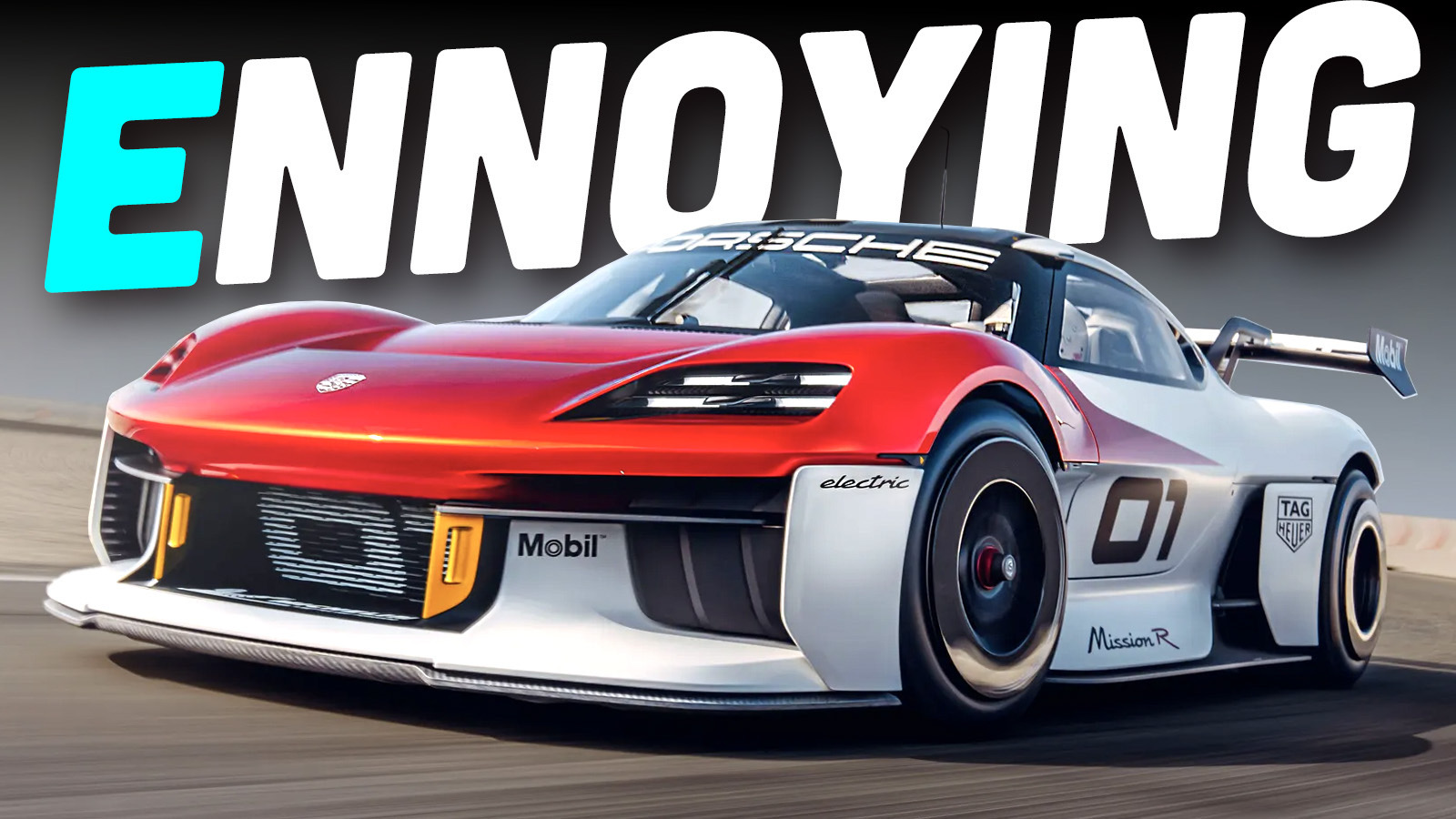
The saga of Porsche’s next-generation 718 Cayman and Boxster has been … confusing. Back in 2022, Porsche confirmed the car would go from a mid-engine, gas-powered car to a full EV to satisfy upcoming emissions regulations in the EU, despite no one asking for such a car.
As demand for electric cars has steadily leveled out, Porsche stuck to its guns until this past September, when it revealed during an investor presentation that “top” versions of the gas-powered 718, like the GT4 RS and Spyder RS, would remain in production, with the new EV-platformed cars occupying the rest of the range.


Now, there’s a new report from Autocar claiming Porsche has decided to reverse-engineer the electric 718 to accept a mid-mounted gas engine in what feels like one of the biggest switch-ups I’ve ever seen this far into a car’s development.
I Feel So Bad For Porsche Engineers
As with most electric platforms, the PPE Sport architecture used in the electric 718 was never meant to accept an engine of any kind. This means Porsche engineers have to, essentially, go back to the drawing board to figure out how to make the car work. It feels reminiscent of Fiat’s recent move with the all-electric 500, which was re-engineered to take a hybrid powertrain. From Autocar:
Achieving that will be no small task. The PPE Sport platform uses a stressed, load-bearing battery pack and a flat floor, so removing the battery would significantly weaken the entire bodyshell.
As a result, the proposal from Porsche engineers centres on developing a new structural floor section that bolts into the platform’s existing hard points, effectively adding the rigidity back in. A redesigned rear bulkhead and subframe will then support the engine and transmission, Autocar has been told.
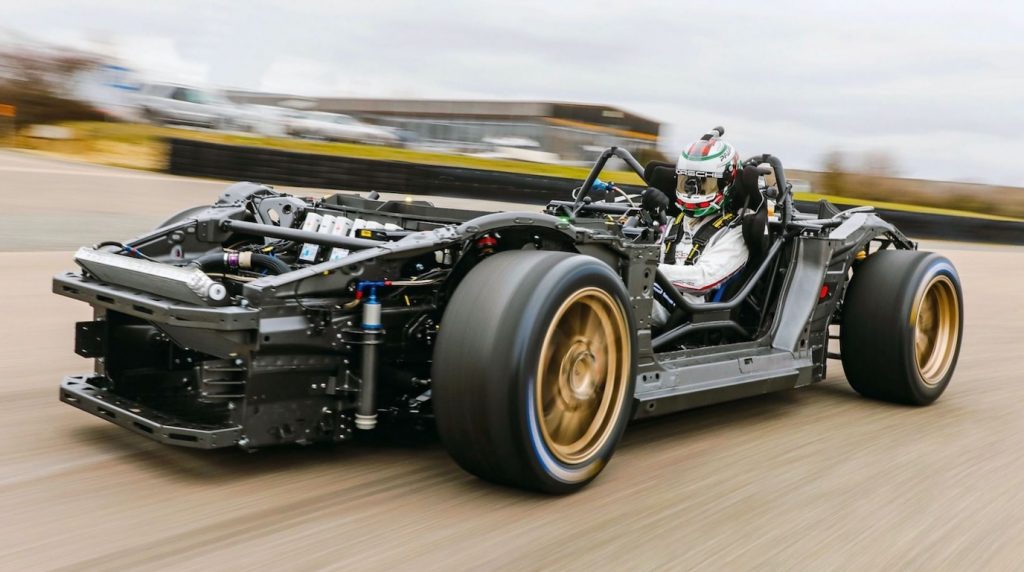
It’s not just the engine and the chassis engineers have to rejigger. There’s also the rest of the stuff ICE-powered cars need to function. Things you don’t really think about until you have to fit the stuff into a car that was never meant to have any of it:
Major packaging constraints remain, not least because the electric structure provides no central tunnel, nor provision for a fuel tank, fuel lines or exhaust system. Engineers suggest these measures require the development of a completely new rear section because the architecture was never designed for a petrol engine.
As for which engine the newly gas-powered 718 will receive, Porsche hasn’t decided, according to Autocar. The publication suggests a new version of the 4.0-liter naturally aspirated flat-six, first introduced in 2020, is a “leading candidate.” Personally, I think that’s a good idea. The turbo flat-fours in the base models were fine, but pretty forgettable compared to the much better-sounding flat-six. Not that Porsche is taking my advice, or anything.
So Why Now?
The market hasn’t been shy about showing automakers it’s not very interested in electric sports cars. Maserati canceled the electric version of its MC20 over a lack of demand. Rimac said last year its Nevera was such a sales flop that it might not make another electric hypercar.
Despite those signals, Porsche stuck to its guns with the electric 718 up until now. If I had to guess why, it’s because that car was already so far along in the development cycle. The company had running prototypes on the road as far back as 2019. Engineers have spent a lot of time trying to get this thing right, and now, it sounds like their work is about to be shelved so some version of the car can survive.
If I had to guess, this move is probably part of Porsche’s “strategic realignment,” which it announced in September. The “significant adjustments” to the company’s product portfolio in the medium- and long-term include a new gas-powered Macan and making its upcoming three-row SUV, which was supposed to be an EV, into a hybrid. There was also a line in there about its upcoming electric cars being “rescheduled.”
In that announcement, Porsche reaffirmed plans to nevertheless offer an all-electric version of the 718. But since then, the company revealed CEO Oliver Blume will be stepping down at the end of December, with former McLaren CEO and Ferrari CTO Michael Leiters set to replace him. So who knows just how much has changed in these few months.
While I feel bad for Porsche engineers, I think this is probably the only viable way forward for the 718, at least in the near term. I’m sure an electric version would’ve been quicker, but no one would’ve bought it. Meanwhile, the gas-powered version is one of the greatest modern sports cars of all time. To hear that it’s possibly getting a new model is good news.
Top graphic image: Porsche


It’s not that I don’t want an EV….. I do think they are getting close to what I need one to do, it’s that I can’t afford one…… After I get done paying off my current car in 13 months I will still have other debt I need to get out from under. So, any car, let alone an EV is not in my future…..
Used EVs are cheap.
One man’s cheap is another man’s meal budget for an entire year.
And one small accident from being totaled. Make sure you have gap or declared value insurance.
Liability only insurance on used EVs is going to wreck a lot of people.
Insurance affordability hardly seems an EV-specific issue.
They could always fit all the extra stuff in the space for the passenger seat. Nobody wants to ride with or talk to a Porsche enthusiast.
I still respect porsche, but eventually stopped getting interested after seeing 4 cyl engines in their entry sports cars at a price of mid $70K, and introduction of turbo H6 on Carreras. On top of that, the artificial scarcity of special variants like GT3 and GT4, Porsche trying hard to become an exotic carmaker since last decade really left bitter taste.
Here’s a thought – why not just keep building the perfectly delightful current one? Nobody was asking for an electric 718, government were mandating it. And those mandates are going the way of the dodo bird.
They couldn’t sell it in the EU. The electronics don’t support the latest security mandates from the EU (I’m talking about ECU, etc., not an electric drivetrain). So they need to re-engineer all those systems to see even a gas version.
They could sell it in the US but I don’t know if that’s enough sales to keep the line running.
Bound to be cheaper to fix that than this nonsense.
Not if they have to run two different assembly lines. They may not be able to build both easily.
Boxster sales were already down. At some point, the cost of supplying components is going up and the fix cost of assembly can’t be shared across enough vehicles anymore
Porsche is ultimately pricing themselves out of the base 718’s market, plus the unfortunate reality of the public’s very much changed taste in cars meaning there is just not much market for expensive entry-level sports cars, IMHO. Making it electric is not going to help that at all, and Porsche is NEVER going to make a Miata competitor that is “affordable”. It’s not in their DNA or brand strategy. So I agree, they are somewhat stuck.
I came very close to ordering a lightly optioned 718 Cayman for European Delivery back in 2019 as a 50th birthday present to myself. Had the deal all negotiated, just needed to sign on the dotted line. But even back then when they were a good bit cheaper I couldn’t quite bring myself to do it, it was just too damned much money for what it was. I ended up buying a Fiata for literally 1/3rd the price instead. And that’s a big problem – if you just want something small and fun, a Miata is a HELL of a lot cheaper, and for the same money you can buy a Corvette that is far more exotic and doesn’t sound like a Subaru…
You know how EV’s that are just “retrofitted” into an existing ICE platform aren’t typically very good EV’s? This is the the same thing in reverse.
I fully expect the ICE version built on the EV platform to have significant compromises, which will be a disaster since you have the excellent previous gen to compare it to.
This. Car journalists will be asking “why does this thing exist, why not just keep building the perfect last gen one” and claiming that “get your last gen 718 now because used prices are about to soar, with the replacement being such a turd comparatively”.
Poor Porsche engineers, this must hurt to the core.
See also, Dodge Charger. I’ve seen comments asking why that car is still so heavy even without all the batteries, part of it is because that car is massive, the other part is the structure isn’t really optimized for an ICE powertrain. This may not be quite as bad because it’s Porsche, not Dodge, but it will have many of the same issues I predict.
First thing I thought of as well. Will this end up being a significantly compromised 718? That could really screw the company, but they’ve Boxster’d themselves into a corner. If their engineers manage to put out a car that’s a reasonably improved version of the current 718 while dealing with all of the re-engineering, then they’ll all deserve immediate retirement on the Riviera for the rest of their lives on Porsche’s dime.
As a fan of EVs even I was like “huh?” when Porsche said their rear engined sports cars would be EVs, like I saw those at the type of cars gas aficionados would have to look forward to as their weekend cars. Like how horses are now kept for recreation.
Electify the commuter offerings but the lower volume sports cars just keep on keeping on, with manuals!
100%
How do they know no one will buy it when they have not even made it?
Renault faced similar with the Zoe, and ended up selling lots.
Price of petrol / gas in Europe is still €1.50 a litre, where as before Russian invasion of Ukraine it was €1 a litre.
Not likely to go down either.
Not much good having a Porsche if it is too expensive to run.
If you can afford a Porsche in the first place, you can afford to feed it. And have some electric commuter crapcan on the side too.
No one is buying the Taycan already. And as mentioned above, the price of gas is not an issue with these cars owners.
An Electric / PHEV Cayenne is the right answer here.
Owners are happy to burn dinosaurs for their toys, but would more than accept a luxo-SUV as a token “green” vehicle that gets them into the HOV/Green lanes, doesn’t subject them to traffic charges (which are more inconvenient than anything else), and helps them project an image.
I’m genuinely confused as to how reverse engineering the electric 718 platform is more effective than doing an emergency update on the current ICE 718 platform. Obviously there are manufuacturing considerations, like the capacity for both may not be feasible, but if they’re going to be continuing to make the GT4 718s, why not do a good update to the existing platform? Surely the weight and packaging penalties caused by overhauling the EV-Only platform will be worse than a half-baked update to the ICE only platform.
Editing to add: It’s not like VW group is completely allergic to writing off engineering work either. They wrote off something like 8 Billion on the CARiAD software disaster before spending an additional 2B on Rivian equity to gain access to their software, and I can guarantee the EV 718 cost far less than 10B to develop. Sure an overhaul of the current ICE 718 wouldn’t be cheap, but there’s also certainly a large number of people who would willingly buy a 718 with slightly updated styling and a 20hp bump up and down the range without much else in the way of chassis changes. It’s still a great car, why build a compromised successor on a new platform when the old bones are still valid?
Yeah, I think this is the correct take. It’s like what they are having to do with both the Macan EV/ICE and the Cayenne EV/ICE. They are two separate platforms sharing the same size and nameplate. I’m guessing they’ve committed to production such that using the current 718 platform isn’t possible to also produce the new EV version.
That’s likely the key that I was forgetting, supply chain commitments with established OEMs are pretty wide ranging. The German brands especially use a lot of third party OEs like Bosch and Continental for a large portion of their smaller parts, belts, tires, electronics modules, brake and steering boosters/motors.
This is why so many German car manufacturers are throwing rear wheel steer on so many cars, the OEs developed it and basically said “hey you want certain parts developed, you need to buy some rear-steer systems too.” The EV 718 platform probably has a ton of these components that don’t fit in the ICE 718 platform that already have contracts signed and volumes agreed to.
This is the biggest advantage the upstart brands like Lucid, Rivian and Tesla have, as well as Hyundai/Kia. They’re all almost entirely vertically integrated and control their own supply chain destiny, so any and all parts changes can be implemented much more quickly and allows faster responses to market conditions. It’s why Hyundai and Kia have so much tech for the money too, they can make it all in house and not pad the pockets of 3rd party suppliers for all the modules.
Margins at many suppliers are razor thin. And a lot of rear axle steering is due to narrow lanes and parking spaces in Europe, plus high speed stability. Both less relevant for the US
Auto engineer here:
There’s new regulations being implemented every year now. Crash testing, pedestrian protection, ADAS, list goes on. Updating a 6 year old platform to meet 4 year in the future regulations is not trivial. Only explanation that makes sense to me is part sunk cost fallacy, part total time required to update the old car.
Going all in on EV’s was a gamble. It was an educated guess and a hope that it would be the logical next step. It didn’t pan out. That’s gambling for you.
It really wasn’t a gamble. European governments were damned serious about banning ICE sooner than later – until they weren’t.
Many a gambler has lost on a sure thing.
It’s not a gamble when there’s a gun to your head.
The gamble is in taking those government desires seriously. Like, the full EV mandates being pushed around (No more ICE vehicles after 2035! 2030! 200% carbon tax!) were so obviously unaligned with reality that taking them at face value is simply financial malfeasance.
I don’t think they were as unaligned with reality in the EU as over here. VERY different environment both regulatorily and culturally, and people who are much more willing to do “what’s good for them”. But ultimately, economic reality interfered.
Very much a fantasy in the US, but I fully expected the EU to do it, and it would have been stupid for the local automakers to not take that as serious as a heart attack.
Really? I find the EU to be a far more delusional place than the US. That’s not to say US regulators are pinnacles of competency, but they are at least aware of when a bad idea is bad, and why it is bad (ie we are making this stupid rule because a corrupt politico got bribed to make it this way) whereas EUreaucrats exist in a fantasy realm where speaking the magic incantation of government regulation can speak facts into existence, math, physics, and economics need not apply.
The motivation doesn’t matter – that they are much more willing to follow through does.
Yes
Were they though? I called the 2035 EV mandates BS when they were first announced. Are you telling me I’m smarter than a Porsche exec? 😉
Gov incentives, gun to head, and public sentiment aside; the simple truth is battery tech has not improved fast enough for people to actually cross shop on a level playing field.
With incentives, EVs still had higher prices, their own set of problematic use cases, and not enough advantages for mass adoption. Are some of the problems not rational/real? Sure, but you aren’t going to change a buyers mind about them with brute force.
The only way to convince the masses to adopt a new technology is by being better wholesale, in cost, range, and versatility. The massive depreciation needs to be fixed as well.
Most agree the original iPhone was revolutionary. Generic smartphones became common in the 5 years after it’s launch, but it’s taken 15 years for all smartphones to reach 90% market share in the US. That’s at an average replacement rate of 3 years. For cars it’s 8 years. By that metric, using the 2012 Model S as the start point, EVs won’t hit 90% marketshare until 2042.
I want an EV sports or roadster in the future would be nice to replace the Polestar 2 with one but at this point that will most likely get replaced by an R3X or Scout if those ever materialize and are affordable when slightly used haha
I am desperately hopeful that the R3X comes to market. I need to own that car.
My only concern is Rivian is leaning way to much into tech bro culture BS and I want my cars to be simple less crap.
The next gen Rivian need to be way more reliable. The current adopters are willing to put up with the worst in reliability – for the moment. Once you open yourself up to the next tier down consumer, the demands get higher.
Same, I have been eagerly awaiting the 718 EV for a while.
Built an inexpensive, lightweight, Miata-sized or smaller, driver-engaging car with minimal bells and whistles, that takes advantage of drag reduction to maximize the efficiency of the vehicle so that acceptable range can be attained with a small, lightweight battery(you’re going to need a CdA of under 0.4 m^2), keep the entire package under 2,500 lbs with 250+ peak horsepower on board, get 200+ miles range at 70 mph on a 40 kWh or smaller battery, gear it for a top speed of at least 160 mph, and come in with a price tag of say under $50k, and you won’t be able to beat away the rush of enthusiasts.
The Chinese are already doing something slightly similar for $30k right now. What I described above was borderline possible with 1990s tech when regulations weren’t as strict, and the batteries are 5x more energy dense by mass today.
Stop building oversized, feature-laden, lardass cars that pretend to be sporty, whether EV or ICE, and marketing them as “sports cars”. Make them SMALL and NIMBLE again. If it is wider or taller than a Miata ND, start over, because it should be lower and more narrow than a Miata ND.
I get the Chinese have something like that over there but would that pass US safety standards?
Also with EVs lots of people are looking at range. Look at the mini EV that is a smaller lighter EV but it only got a range of 114 miles which isnt even the real world range. I am driving my EV currently in the cold spell we got in Chicagoland currently and my economy went from about 30kwh/100 miles in the summer to as low at 48kwh/100 miles in the winter.
Consider that the Mini’s CdA value is almost double that of the VW XL1 or GM EV1. That is going to have a massive impact on its highway range, for the worse.
The EPA rates the EV1 at 105 miles range. The GM EV1’s EPA range was worse than its real-world range because the testing procedure has a lot of stop and go(which is atypical when driving long distance on US interstates, where long range is most important), but at 70 mph, it could get roughly a 150 mile range on a 26.4 kWh battery thanks to its aerodynamically slippery shape and 0.19 Cd value. This was in 1999, and the car came in at 2,900 lbs.
Compare the EV1 to the Mini E, the Mini having a comparatively massive 40 kWh pack. It has a 50% bigger pack than the EV1, for roughly the same EPA range, and much worse real-world interstate range than the EV1 at 70 mph. It also weighs 3,500 lbs and has almost twice the EV1’s aero drag.
The EV1 is far from the best we can do aerodynamically for a small sports car. The best possible aero was ultimately cast aside for styling according to “The Car that Could: The Inside Story of GM’s Revolutionary Electric Vehicle” by Michael Shnayerson. The Aptera 2e has about 40% less aero drag than the EV1 with a Cd of 0.13 and similar frontal area. Cars such as the Panhard CD Peugeot 66C(0.13 Cd) and Fiat Turbina(0.14 Cd) had similar Cd values to the Aptera more than a half century prior. And today’s batteries are 5x as energy dense by mass versus what the EV1 had.
I don’t think safety regulations are the issue when the Miata can pass them today. A 40 kWh battery will be about the same mass as the Miata’s engine, and a 250 peak horsepower electric motor and control system will weigh less than a Miata’s transmission+driveshaft+differential. I can’t speak for the SC01 from China on safety because as far as I’m aware, it has never been tested in the USA.
There isn’t much getting around winter range reduction. There are battery heating systems that can help, and in the best of circumstances, you might only lose 20%.
If the Chinese vehicle is over 4 meters in length, it’s subject to the normal C-NCAP which is roughly equivalent to Euro NCAP (some tests are stricter, some or more lax). Compared to Euro NCAP, NHTSA tests actually seem pretty easy to pass other than potentially the rollover roof strength requirement that’s unique to the US. IIHS tests (which are not a legal requirement) are the only testing body structer than Euro/C-NCAP.
There’s a few issues with this proposal, for one, narrower and lower than an ND Miata is really not realistic for Porsche. For one, it simple will not sell to Porsche buyers, the current 718 is 18 inches longer and 1.8 inches taller than a Miata, and about 3.5 inches wider. To expect Porsche to downsize the car that much is simply ever going to happen. Not to mention the current 718 is about 3100 pounds minimum, to expect a 20%+ reduction in mass going to an EV platform is simply never going to happen. not to mention shorter length vehicles are a challenge to get the Cd value low on, more aerodynamic profiles demand a gentle taper in all axes to minimize drag.
Second, I’ve brought this up in other articles, but pricing on Chinese EVs to USD off a direct conversion is simply not a realistic metric of value and pricing. For example the MG Cyberster starts at about 44k USD in China, but an equivalent of around 74k USD in the UK. Pricing in China is heavily subsidized domestically and nearly all small and cheap Chinese EVs do not meet US regulations. That’s not just a cherrypicked example either. Also this is Porsche, even if there was no price premium for the EV over the outgoing ICE 718 Boxster, there is no chance that they would introduce an EV 718 south of the roughly 75k current base price, much less 50k. Sure costs have a long way to come down on high volume cars, but bespoke low volume sports cars do not sell anywhere near well enough to expect that level or price reduction.
Porsche used to offer svelte, nimble vehicles like the 550 Spyder and 914. The former is highly cherished because nothing like it is sold today. The latter was a relatively inexpensive offering designed to be affordable to younger buyers, a demographic which Porsche has outright ignored for 40+ years now. Porsche needs something like this again(the oversized, overweight, feature-laden Boxster and Cayman are not it). This younger demographic is much more receptive to EVs than the older ones, and I think such a car would appeal to them.
The problem is that if Porsche does this, they run into the problem of having less expensive cars out-perform more expensive cars. For EVs, performance is cheap. They should embrace this, instead of fighting it. Every automaker fights it and practices price discrimination, to the detriment of available offerings to buyers.
Consider all of the luxury features the 718 is laden with. Heated seats? Heated steering wheel? Power locks/windows? Leather interiors? Power-heated mirrors? Power spoiler? EIGHT speakers? Cupholders? Dual-zone climate control? What the hell is this, a Chrysler 300? GUT ALL THAT SHIT, THIS IS SUPPOSED TO BE A SPORTS CAR!
Then there’s going to smaller wheels, normal-sized tires with meaty sidewalls, simpler suspension designs with less crap, leading to less mass and the ability to get away with smaller/lighter brakes.
Save weight. Save possibly tens of thousands of dollars to the consumer.
China’s EVs aren’t cheap just because of subsidy. They’re cheap because of vertically-integrated production methods coupled with high production volume. China is currently where the Big-3 could have been 20 years ago had they seriously tried to get EVs to market during the 1990s when the technology became viable, instead of dragging their feet for over a decade until Tesla lit a fire under their collective asses.
Porsches have never, ever, ever been cheap or even particularly “affordable” cars.
The 914 was bloody expensive when new. At least 50% more than an MGB at the time, double actually cheap sportscars like Midgets and Spitfires. The 550 Spyder cost an absolute fortune being a road-going racing car. The Carrera GT of it’s age.
You can get a 718 with nearly nothing in the way of creature comforts – that’s the base car. Damned near everything is optional. And they still start at $75K. And all of that tinsel actually costs nearly nothing to add to a car anyway. There is very little market for cars like the Lotus Elise – which is what you are proposing.
In 1972, the average MSRP for a new car in the USA was $3,879. The 4-cylinder Porsche 914 started at $3,755 MSRP for that same model year.
An electric Lotus Elise with better aerodynamics, performance comparable to cars costing 5x that of the Elise, for Elise-like or even possibly Miata-like price points, is something that hasn’t been tested, but should be well within the scope of today’s engineering possibilities.
The unaerodynamic 3,000 lb SC01 with a massive battery pack at $30k MSRP shows us a starting point. It does 0-60 mph in 3 seconds. That’s a real-world car that exists today.
Average price is meaningless. $3755 would get you a comfortable mid-size sedan, or a tiny, uncomfortable, very slow sports car. Guess which sold in tiny numbers? You had to really, really want one to spend that much cash on such a thing. A Miata today is “only” $30K to start – but how many Miatas sell vs. $30K CX-5s/CX-50s? The answer is “it’s a miracle Mazda still makes them”. And the ND only got made because Fiat was willing to chip in on the cost of it.
I love tiny, slow sports cars, I have owned a Spitfire for 30 years. But that is NOT what the typical buyer wants today, and today’s actual sports car buyer wants the same creature comforts he or she enjoys in their daily driver, while also being fast.
The old (2008 to early 2012) Tesla Roadster WAS a Lotus Elise with a Tesla designed electric power train. And they sold like??? The number I have found is around 2500.
They basically sold all the ones they made. It was also over $100,000, had terrible aerodynamics(wasn’t an improvement over the Elise), and a massive battery pack that made it heavier than it needed to be.
I really don’t agree at all. Porsche is a Luxury Sporting brand. They have been for decades too. There is not a market for a stripped out base model no-option 718. Period. That’s not what Porsche has been for the last 3 decades, and it is not what the Boxster/Cayman has literally ever been. They have been sporty, luxurious cars that cost a good amount of money, but less than the 911, with all the common and at-the-time modern luxury features.
If there is ever going to be a low to no feature simple car, it’s going to fall under VW, not Porsche and not Audi, it simply makes no sense otherwise. There is no reality in which Porsche throws away almost 3 decades of brand identity and equity by entirely changing the formula of what makes a Boxster a Boxster. There is nothing wrong with saying “this is what I want to be built” but to completely ignore what a particular Marque actually builds and who it’s customer base actually is is foolish. Porsche’s are a luxury product built up in large part by high degrees of customization and a premium experience, and that will not be changing anytime soon.
And yes, Chinese market EVs are absolutely artificially cheapened by provincial and national subsidies/grants, as well as having near-zero or negative profit margins. Even the raw material and mineral extraction has been funded in part by the CCP and their policies. The Zero-Mile used EV export business in China does not happen if there are zero local subsidies for production. China and it’s provinces have continuously given R&D grants, loosed labor and manufacturing laws, allowed and encouraged IP theft, and mandated foreign investment and participation with Chinese OEMs. It continues to be shown that as soon as Chinese EVs leave their home country, the pricing is far less competitive than they are within China.
So… an electric 914-6? I want that car, too, but it will 100% never happen. Not from Porsche anyway.
Ideally, an electric 550 Coupe.
So, real question, is it possible this means the Taycan variants might get cheaper? Or nah, bc Porch.
If anything they’ll jack those up to recoup some of their development costs on the Cayman.
No but second hand are good deals
In related news, the US Air Force has decided against retiring the venerable A-10 Warthog and is instead planning to retrofit its 22-foot-long GAU-8 machine gun to be used as a Candy Distribution Device for war-torn areas.
Brrrrrrrrt
Mmmm. Depleted uranium lollipops.
It has funny angry cartoon shark face painted on the front so obviously it is bringing happiness and rainbows! /S (also I love the A-10 such a cool ass plane love a lot of military aircraft the knowledge that has gone into them is ridiculous)
Don’t forget the gummy cluster bombs.
Those are against the Geneva Convention!
That was the meeting that Nestle set up last year to ensure their products get top billing in all humanitarian work. Wonka and Brachs were LIVID.
I’m having visions of Call of Duty 4: Modern Warfare. For Christmas they replaced the downed helicopter at the center of the map with a toppled Christmas tree. The air strike kill streak reward dropped explosive presents with an evil HO HO HO and jingle bells from Santa. Good times.
https://callofduty.fandom.com/wiki/Winter_Crash
Major packaging constraints remain, not least because the electric structure provides no central tunnel, nor provision for a fuel tank, fuel lines or exhaust system. Engineers suggest these measures require the development of a completely new rear section because the architecture was never designed for a petrol engine.
Interesting. Porsche usually doesn’t paint itself into a corner, and always tries to give itself an out. Probably due to the comparative lack of volume, they didn’t this time.
Ouch.
I believe the statement. You can’t just rip a platform apart… mostly because you ALREADY DESIGNED EVERYTHING ELSE AROUND IT. Only needing a rear makes sense as there’s probably some cleverness possible for everything else, but even then, you still have cooling lines to route to the front, etc. Heck, a lot of existing mid-engine cars have three radiators up front, more if you include other heat exchangers in the rear section. You need room to run that stuff.
They’re still going to have challenges though. As it stands, the 981/982 platform. which has its roots going back to technically the late 2000s (development likely started) — still has 90% of the torsional rigidity of a McLaren with a carbon tub. You can’t half ass that, especially when you try to do better next gen.
Curious to what engineers have possibly been thrown onto this in the past year. As it won’t be just any of them, but the ones that really know their stuff.
I’m just interested enough that I would watch a couple hour long show on how these guys confronted, and hopefully overcame, the issues presented by this change so late in the game.
The Mission R on Iracing is one of the least popular and most annoying cars on the sim
I mean an EV Boxster/Cayman is a cool engineering exercise and I actually do think there will be some level of a market for a small, as light as possible, BEV roadster, since when you think of the classic British drop tops and the Miata/even Toyobaru the powertrain has never been the main draw…or really much of any draw, the majority of small, light, tossable roadsters and coupes are 4 cylinder anyway. I know a manual transmission is a big part of the appeal (that even me and my notorious indifference towards manuals agrees with)…but you’d be shocked and disappointed at how many Toyobarus and Miatas are automatic.
I don’t see how an EV would serve the folks who buy those any worse. But with that out of the way, there is no market for a likely six figure EV sports car. The people that can afford them almost certainly already have an EV if they’re interested in one and I’m sure the average 718 that’s sold is someone’s 3rd or 4th car anyway. I’m more pro electrification than a lot of folks here but I don’t really see the point in electrifying niche sports cars that get driven maybe 5,000 miles a year at most.
We should electrify every single commuter, family hauler, etc. But sports cars? I don’t really see the point. Their emissions are such infinitesimal drops in the Olympic swimming pool that I think the battery resources can go way further elsewhere.
Maybe for the general population, but I think an electric Miata would be boring.
What I love the most about my NB Miata is the NVH, revving the shit out it, and shifting those short ratios.
My other cars are EVs, and they’re awesome. But when I want to feel something, I drive the Miata.
I was specifically talking about the people that buy those sorts of cars with automatics, which is a surprising quantity.
Keep making the old Boxster/Cayman, throw some limited edition colors on it, call it the “Porsche Heritage Edition”, and charge $20K more.
Crisis averted in the most Porsche way possible.
Can’t. Doesn’t meet multiple EU regs, and not on emissions, either. I believe they were “Cybersecurity” regulations. The mid-engine platform was the last one they could have evade it for a while, but even the door closed on that as well.
It locked out at least the EU, UK and I think China. Which means you’re basically selling a US-only car, and still have customer demands for safety, global emissions regulations, etc.. Not going to happen.
Is it easier to replace some electronics with compliant ones or re-engineer an EV platform into an ICE one? I know which one I’d prefer to do, especially since you need the new electronics either way.
Does it matter…now or later…it’s going to have to get done. Contrary to all of these doom and gloom articles on the state of global EV affairs, it would be suicide to cease all progress, because many of the manufacturers are still moving forward at full speed. Adapt, or become extinct. It happened to the dinosaurs you know.
One of the bigger heads of VW Group — Mate Rimac — would disagree. The man who built the Nevera, and wanted to build 250 of them, has gone on record multiple times they’ll be lucky to ever sell 75 of them. They hit a wall right around 50.
No one wants them. Those were “the best of the best’ at the time as well.
He’s part of why the Bugatti Tourbillion has an N.A. V16. He already learned the hard way, and made sure Bugatti didn’t learn it as well.
I’ve talked to enough people on the Porsche sales side. How many Mission X hypercars could they have sold? Very, very few. Probably fewer than 50.
Porsche’s not looking to set billions more on fire producing cars that will rot, or for R&D that will partially pay off at best, since the goalposts of “greatness” will keep moving on BEVs for decades and decades into the future.
This is exactly what some of us have been saying would happen since it was first announced.
I will be a bigger person and not respond in kind to the many angry and rude comments I’ve received for mocking this prediction (and EV uptake in general) over the years.
While I’ve been bearish on EVs forever, I would have argued that retrofitting an EV for an ICE powertrain would be so prohibitively expensive that nobody would even bother.
I stand corrected, and it’s the brand I would have guessed if you’d held a gun to my head.
What exactly do you think happened here? A maker of fairly low volume sports cars applied the brakes slightly. Mass consumer automotive manufacturing has not, except if you received the blessing from the Orange One in the US.
Maybe you weren’t around in 2018-22 online, when predictions of anything other than 100% EV dominance by now was mercilessly mocked by correct-thinkers such as yourself.
It was crazy then, it is crazy now, and it isn’t just sports cars.
I think Akio Toyoda’s way-too-obvious explanation earlier this year sealed the deal for the masses. Basically “Why build a full EV when I can build 60-90 hybrids with the same battery volume?”
Porsche is obviously a much different user base, but even there, people clearly aren’t sold on the idea of full EVs. My best guess is a lot of them do want some longevity, resale, and more “feel” from the car than most EVs can offer. I just can’t imagine the 2080-era listings on Bring a Flying Trailer evoking that much nostalgia for early 2020s Porsche EVs.
I am not a new Porsche buyer and never have been, but I have to believe people start wondering what makes a Porsche so special without a unique powertrain.
The sounds and sensations from an EV Cayman aren’t going to be appreciably different than those from an EV Hyundai. No shade to Hyundai, but that kind of thing isn’t going to help sell Porsches.
I call bullshit. They’ll just continue to use the MMB platform (same as the 911) for the new gasoline powered versions and the electric platform will still remain only for electric versions.
I did not realize really expensive Porsches got driven enough that EV or ICE made a difference. (snark?)
I see Caymans and Boxsters all the time – I would argue they’re probably the Porsche sports car that actually gets driven the most.
I browse used 718s all the time and it’s not uncommon at all to see six figure mileage. I think 911s are much more likely to be garage queens, especially with the endless MY 911 BEST 911 variants. The Boxster/Cayman will always have a reputation for being “the lesser Porsche sports car” and as a result they often get driven. Hell my buddy has a 718 GT4 RS and he’s both thrown me the keys to before and tracked it.
1 of 1 no lowballers I know what I got etc etc
> Hell my buddy has a 718 GT4 RS and he’s both thrown me the keys to before and tracked it.
Which scenario had the higher Vmax? 😀
Sadly tracking it. He let me rip it a few times in a residential area but was, understandably, hesitant about letting me really open it up. I’m hoping to join him for a track day eventually but I uh…don’t think offering him seat time in the Kona N is going to make for a particularly fair exchange.
Yes those are not the really expensive ones.
I dunno. If the EV version cost the same, i bet it would sell just fine, especially if it still felt like a porsche.
The Boxter/Cayman are the aspirational “I finally did it. I finally bought a Porsche.” vehicles for the people who buy them.
What i bet was going to happen was they were going to jack the price up of the EV and then all their market research told them their target market was going to disappear so they backpedaled. Bolting on a subframe member or 2 and using an existing engine and drivetrain is likely quite a bit cheaper than outfitting a battery. Now they can jack the price up even more on the EV version in the name of segment differentiation.
It sucks for the engineers, but this really is the only way to go with this platform. Although they’ll have sunk so much money into the development of this thing I’m guessing it starts at close to $100k by the time all is said and done.
There’s a reason cars take years to develop. Is there any way to do something like this that doesn’t result in a compromised final product? Instead of making a square peg fit in a round hole, it almost seems like they should just evolve the current 718 platform. Kinda like they’ve been doing with the 911 platform since the dawn of time. I’m also not an engineer, so I know next to nothing.
I am an engineer and have some background in working with auto OEMs, and I also have no idea why they are not doing this. Granted I have never been employed by an automotive OEM, so I can’t speak to the full suite of reasons, but as I understand it, updating an existing ICE architecture should be leaps and bounds easier and cheaper than trying to retrofit an EV architecture for an ICE powertrain.
This is wild. I always loosely understood the idea of shoving an EV or hybrid powertrain into something designed as an ICE vehicle. While not ideal, it was usually doable because you’re essentially replacing a motor and a fuel source with different ones.
But if you look at cars like Tesla and Rivian, bespoke EVs aren’t really made to go the other way around. I just don’t see this ending well for a car not designed or packaged to do this.
I mean if Rich Rebuilds can do it, Porsche should be able to pull it off in three YouTube videos!
Ultrarich Rebuilds!