

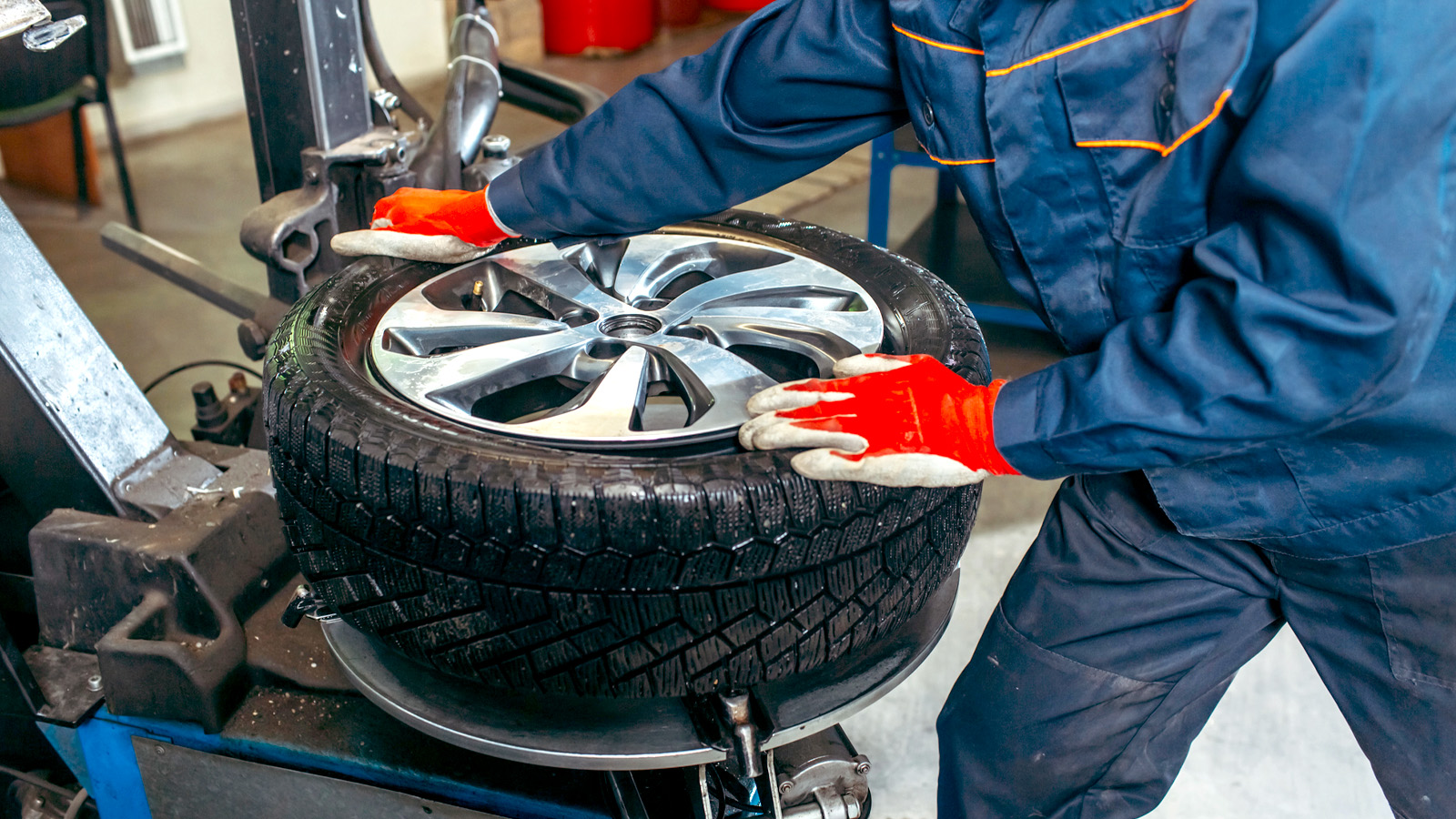
Regardless of whether your car runs on gasoline, diesel, batteries, or even hydrogen, it’s probably going to need tires at some point. After all, they’re the only four things meant to touch the ground, providing the grip to keep you on the road. However, before you pop down to that local tire shop, just know that it might not be around in the same form forever. Like with many things in automotive, private equity is coming for local tire shops, and what comes next might get weird.
Tire shops are one of the hottest businesses for private equity to break into right now. In July, Percheron Capital-owned Big Brand Tire & Service Co. reached an agreement to acquire Belle Tire Distributors, a century-old chain of tire shops across the Midwest. Once this acquisition closes, Big Brand will own an additional 185 storefronts. On a similar note, Sun Auto Tire And Service, majority-owned by Leonard Green & Partners, has acquired enough small chains and independent tire shops to now boast more than 600 storefronts. As Automotive News put it, “It seems every week one of the handful of large private-equity-backed dealerships is buying an independent tire shop or a regional chain.” and there’s good reason for that.


Even in a recession, tires sell. More buyers might switch from something like a General to something like a Goodride, but in a labor-heavy industry, margin on physical products is almost tangential to margin on service. Tire shops also don’t require nearly as much equipment as full-service repair shops, they offer fast customer turnaround, and they’re relatively futureproof. Sure, new machines may eventually be needed to mount tires to some of the ridiculously large wheels certain modern SUVs roll on, but that’s a lot cheaper than upskilling technicians with EV training. What’s more, the tire business is extremely fragmented, featuring a heavy mix of independent owners, some of whom are looking for an exit. If the owner’s kids don’t want to take up the family business and none of their technicians are looking to make the investment to take over, they have a reason to want to sell to someone.

So what does that mean for drivers? Sometimes it’s just easier to buy tires at a shop, sometimes you need an emergency replacement tire, and even if you generally buy tires online and have them delivered, you probably don’t have mounting and balancing equipment in your home garage. Well, this rush of acquisitions comes with a whole load of potential pros and cons. Let’s start with possible upsides.
Lots of independent tire shops only have agreements with a small handful of distributors, effectively middlemen for tire companies. It’s often not cost-effective to carry huge inventory, so many sets end up being ordered in. Many smaller independent service centers that do tires in addition to other mechanical work may only have a supply agreement with one tire distributor, and as a result, pricing and availability aren’t particularly competitive. Think margin as little as 10 percent on a quote that may be more expensive than if a customer were to simply order from a big chain. Conglomeration can help here due to scale.

If a small shop sells 20 sets of tires a week, it’s often not big enough to warrant the expense of warehousing or the logistics of direct accounts with tire companies. However, if said shop suddenly joins another 20 shops each averaging 20 sets of tires a week, that’s 400 sets of tires per week across the group. That’s much better buying power, and it can translate into having the resources to make direct deals with tire companies, have a truck running tires around the region, and getting both better margins and better pricing for customers. At the same time, buying tires from a large group opens up opportunities for greater independent road hazard warranty support, better booking and scheduling tools, and cheaper storage options for seasonal tires, and other convenience perks for customers.
On the flipside, the whole model for private equity is to juice short-term profits or, if that fails, strip companies of their assets and parcel them out. Efficiencies might mean cutting staffing, or raising prices, or changing the selection of tires on offer. Speaking of selection, conglomeration makes it harder for consumers to accurately cross-shop because the name on the sign might not accurately reflect the corporate management. Two seemingly different tire shops might be owned by the same investors, have the same suppliers, the same sort of pricing, and similar overall standards.
Let’s look at quick-lube places as an example. Nowadays, there are only really a few major chains of fast-service oil change places. You have Jiffy Lube, Valvoline, and Take 5 all, with huge slices of the industry’s pie. Local options are comparatively few and far between, and the exact same thing is happening in the tire industry. Just look at Mavis Tires’ acquisitions of Pep Boys and Midas. The number of chain names in the telephone book remains the same, but that’s what private equity firms pay for. Meanwhile, the amount of actual consumer choice has dwindled.
Another big issue, albeit less to do with drivers and more to do with people looking to make a living in the trade, is the concept of pulling the ladder up. Historically, independent tire shops have been run by someone local in the community. You might’ve gone to school with them or met them while pursuing a shared hobby, and selling tires is a way to keep the lights on, pay the mortgage, and keep a little something for retirement. Someone with tire know-how, decent business sense, and good enough credit could get a bank loan and start a tire shop, and so long as they stayed in the black and took care of customers, it was a way for people like you and me to make a living. That’s getting harder to do in the face of rising commercial rents, and it gets even harder when you compare marketing budgets of a private-equity-owned chain versus an independent operator.
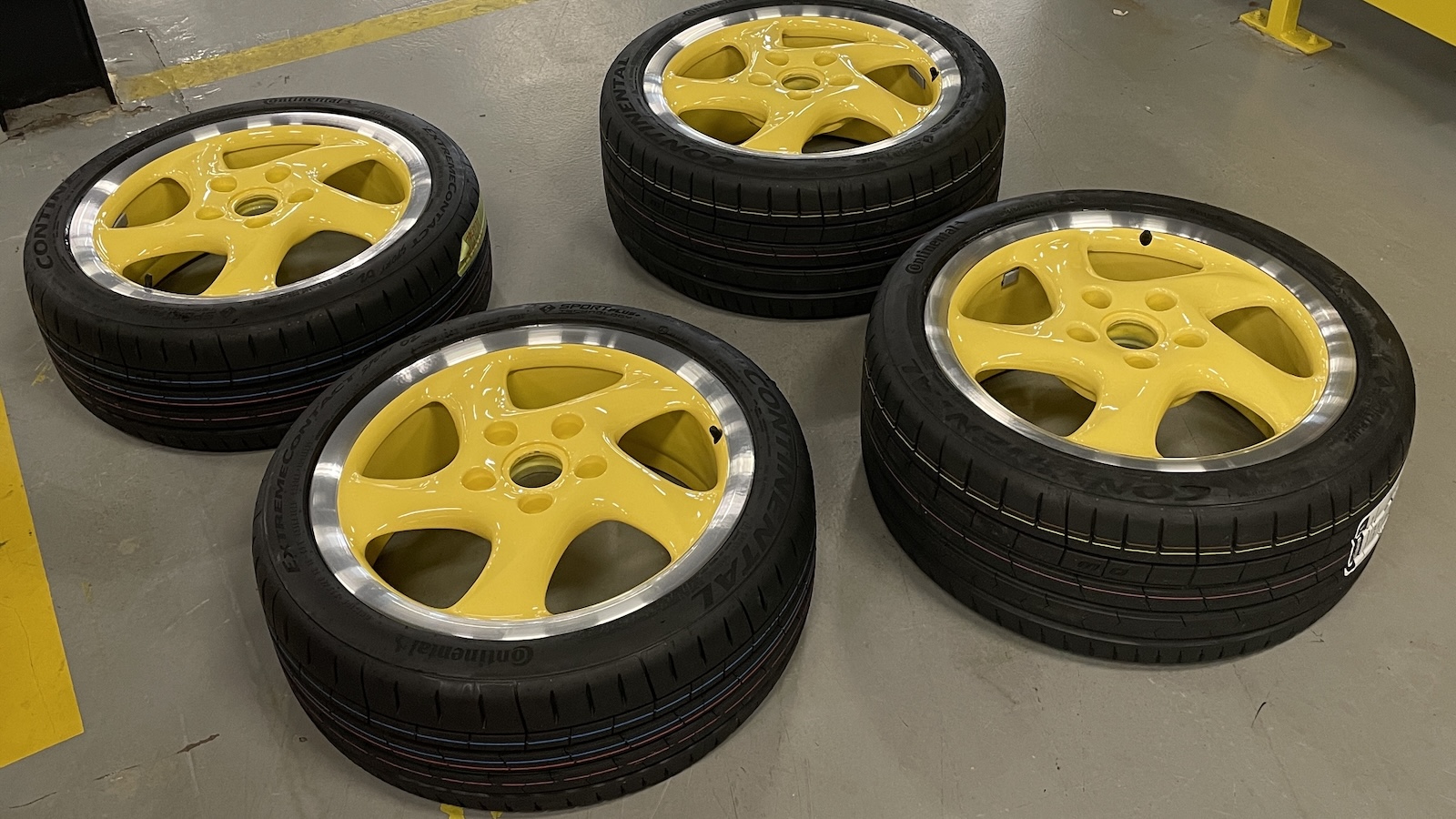
So, if you like to actually shop local or are thinking about opening up a tire shop, what’s the actual path forward? In some cases, it’s going mobile. Storefronts typically need to be in convenient locations, branded, permitted for automotive, and staffed both front-counter and back-end, no matter how busy or quiet things are. On the other hand, a commercial storage unit typically doesn’t require leasehold improvements, and it’s often cheaper to put a tire machine and a balancer in a van and have a tire technician show up at a customer’s home or office. It’s a more cost-effective way of getting into the industry, and it comes with a level of convenience the big brick-and-mortar chains can’t match.
I switched over to a local mobile tire shop years ago, and I don’t think I’ll ever go back. Cost is very competitive when viewed against the brick-and-mortar chains, service is excellent, and the guys there really know their tires. More than that, they’re good dudes making an honest living, and it’s nice to support a company that takes care of its people. Even though private equity acquisitions of tire shops are on the rise, it’s probably not worth panicking yet. Independent shops that are truly independently owned will still be around for a while yet, and that now includes an increasing number of mobile tire fitters. However, if you want to shop local, it’s worth doing a little research to find out if that seemingly independent tire shop is truly independent.
Top graphic image: Deposit Photos


FUCK private equity!
I have a local tire guy that rocks. Tiny 3 hoist shop, 2 employees other than the owner, and very fair across the board. Most of his used tires come from the local dealers, who also send business his way when a buyer wants aftermarket wheels on their new purchase. Got a set of 275/75-R16 LT’s for my Tahoe installed for $400 cash ($1400 for tires alone new). If you order what you want online and show up, install is $15/tire. No warranty, but for the cost delta you shouldn’t need one.
Growing up, my family were longtime customers of a local tire and repair shop. Jim was good to us, and his business was valuable to the community!
However, when it came time for me to buy my own tires on something nicer than my teenaged shitbox, I needed a better selection than his half dozen Mastercraft and Chinese brands. I also wanted to know what my tires would cost before I arrived at Jim’s garage.
For what other major purchase is a consumer expected to walk into a storefront with:
1) no idea what options are available
2) no idea what those options might cost
3) no way to objectively compare
Now, I shop for tires the way I shop for every other significant purchase. I do extensive research online, seeking out objective comparisons to identify what is most important to me. Then, I find the cheapest way to get those tires installed on my vehicle. I’ve ordered tires to my door then booked install appointments at a major chain. I’ve tried the TireRack model of delivery to a partnered local shop. But for my next set of tires, the first place I will look will be Discount Tire. Research, order and pay online, and book an appointment at a shop. I know exactly what I’m getting, and exactly what it will cost.
Sorry Jim, maybe the old way of doing things is dying for a reason?
I bought tires from Tire Rack once and had them shipped to an independent store they recommend near me for mounting etc. Going in for the installation, I immediately got the vibe that the owner wasn’t happy that I hadn’t bought the tires from him, even though that specific model of tire was not one he carried in inventory or could even source. They did an adequate job, I guess, but closed down a few months later.
Since then, I’ve bought through Discount Tire, which now has a network covering 39 states. Their prices are fair, the post-sales care is exemplary and I’ve never seen an unhappy employee. It’s pretty cool that they will rotate and air up the tires I bought five years ago in Texas now in Washington state. I picked up a nail the day after I bought the most recent set and while I wanted a new tire to replace it, they said it was patchable and 40,000 miles later, the patch has held just fine.
I have friends who buy tires through Costco and Walmart and seem happy too.
Let’s call it what it is, a slick form of racketeering.
Profits come by cutting pay, so smarter employees quit, profiteering off customers and illegal tactics.
I went to Discount Tire after they said they’d repair my tire for free.
Drove some distance, then the gangster tire technician told me Oh, I’m sorry sir your tire is too old to repair. It would be unsafe/illegal to repair it. But he can sell me a crap set of tires for $1500. Walmart had simultaneously adopted the same con.
In a half hour, I had found a Mexican shop willing to do tire work.
A relative ran into the old tire con yesterday.
I told him what is going on and he bailed on the crooked shop.
Sources for tires suddenly went way up awhile back, all out of proportion to any costs.
More price rigging/ racketeering.
The serious independents will still be the place to go. I have a source for commercial tires a hundred miles away.
This criminal activity has been targeting one business after another for years.
The strategists destroy things and have never created anything useful.
Many of the businesses they destroy collapse as people realize they no longer offer anything of value.
This basically creates two systems. if they all want to act and operate like a walmart .. might as well just buy the tires from walmart. if they all want to charge car dealership prices .. might as well get tires from the dealership. These tire shops have to thread the needle of “were not cheap walmart who only hire inexperienced techs” and “our techs are just as good as a dealership but we charge less money” Personally .. ive got 3 sets of tires from walmart and never had a single issue. Ive also bought tires from costco and the price is good , the balencing left a lot to be desired (they had sets of stick weights on top of each other!) but costco’s warranty system is absolute garbage: bought the tire on sale for $138 a tire and have a flat we will refund you your $138 and now you pay me $189. I worked in a tire shop and I never did pro ration based off of the initial purchase price it was always tread wear = percent discount of the NEW tire price. If tire stores are a big money maker then expect to see walmart stand alone tire centers eventually. walmart already has stand alone gas stations, dollar stores, grocery stores .. so it COULD happen.
The last time I remember getting tires at a tire shop was whatever year Kubica had that big crash in the Canada GP. I’ve almost exclusively bought used tires as well. Used to do my own mounting at a friend’s auto repair shop, but my time vs. money math changed. There’s a local place that does a lot of race stuff that will mount and align for a reasonable price, and even better, a car guy about a mile away from me who will mount for $100 a set.
Private Equity ruins everything
Even if the businesses don’t get sucked dry and closed like many PE investments, the fact that all the profits are going to some finance bro in NYC instead of staying local is a good enough reason to avoid these places.
I order from Tire Rack, throw them in the trunk (or bed), and drive down to my local used tire shop. Mount and balance for $20 per tire, no wait.
Same. Except I brought mine to a national tire place using the Tire Rack site to set up the mounting/balancing for a reasonable fee, I think around $25 per tire. When I met the guy at the shop, he said he couldn’t do it. I insisted since I had already cleared it with them on the phone. After a lot of back and forth, he comes out and just flat out asks if I will be okay with them doing it for $80 cash. I took the gamble, left the wheels and tires, and came back an hour later to a perfectly mounted and balanced set of tires. No receipt, I did take pictures of my items at the shop just in case before and after. No issues after almost a year. Score one for me as a consumer, score one for the employee who pocketed $80. But, if that guy worked for me, he would be fired.
What’s the tech getting paid now?
I had a buddy buy a set of ebay special tire machines like 7 years ago. Those machines are still going strong and I’ve mounted many a set of tires at his place. Sounds like I just need to keep doing that.
i dislike my local tire options so much, i’ve been driving on a slow leak for…two years? it’s four miles to the train and back and doesn’t bother me nearly enough to get motivated. maybe i’ll get around to fixing it. (spoiler: i won’t)
As consumers, we need to start checking lists of who has PE ownership, and then shopping elsewhere. Private Equity is the death of just about anything that it touches, the obvious goal is cash and value extraction, not sustainable business operations.
Fuck private equity.
I wish AI would just hurry up and kill us all. Just make it quick and painless.
LOL, I was thinking the same thing yesterday while listening to a report of a whistleblower in the industry warning that it will likely kill us all within the decade.
Just get it over with already so I can stop working.
This is not good for the customers at all. Yes they can buy better but no savings will be passed along to the customer, it’ll be taken as extra profit. PE is the absolute worst thing to happen to the car repair business. Whether it’s from the parts manufacturers or the repair shops, PE destroys everything they touch.
I’ve worked on the Labor and Technician side of business for 26 years. It is very upsetting to see PE and large corporations swoop in and make drastic changes that ruin lives of both the workers and local consumers.
Imagine if those greedy douches in boardrooms were mandated to put stakeholders needs first before shareholders. Or perhaps just get rid of them and divest the “equity” that they bleed out of their companies back into the companies.
Vampires in suits.
It all started with Dodge v Ford.