

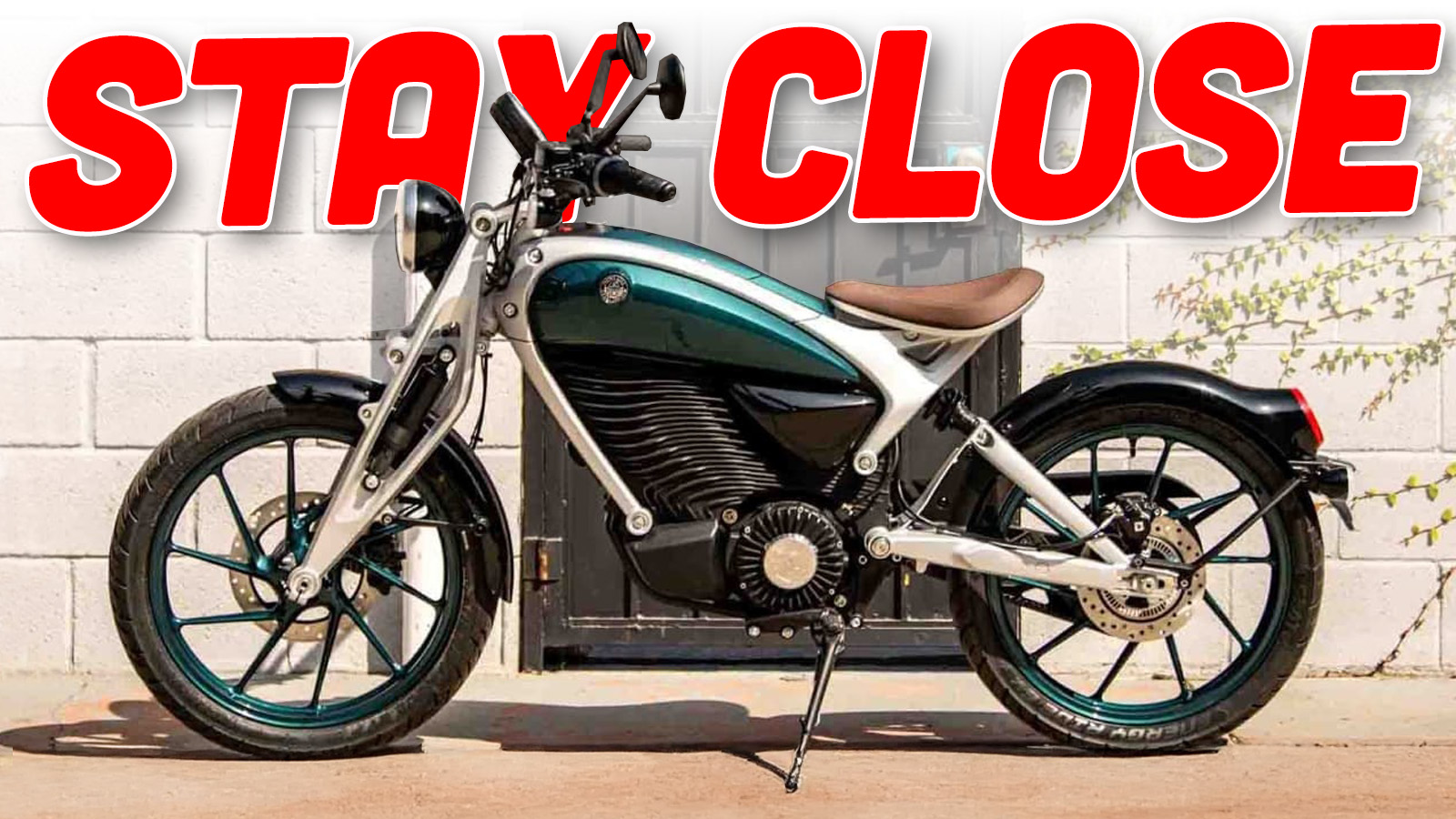
Back in late 2024, Royal Enfield finally confirmed a long string of rumors by revealing that it was working on its first electric motorcycle. The Flying Flea C6 promised to put the trademark Royal Enfield affordable and retro spin on a zero-emission motorcycle. Sadly, RE kept quiet about how the bike would actually perform – but now we know. The Flying Flea C6 is going to be one of the best-looking motorcycles that can’t venture very far from your home.
The C6, which is the first of two electric motorcycles from Royal Enfield’s Flying Flea spinoff, is set to launch in India on April 10. Later, Royal Enfield wants to set it loose on the global market, including right here in North America. The C6 doesn’t have to take on the world alone, either. The bike that will eventually accompany the C6 will be the scrambler-style S6.


Royal Enfield has kept the spec sheet under wraps throughout this project, but now, thanks to local publications like Evo India, we know what Royal Enfield put under the false tank. Royal Enfield said that the new motorcycle was going to be an affordable urban ride, and it seems like the company is delivering what it promised, sort of. The Flying Flea sounds like it will be a great urban commuter right until you read about the range.

Royal Enfield Goes High-Tech
The brand that makes its bikes like guns has stayed out of the electric motorcycle segment. Electric motorcycles are huge in places like India, where motorcycles are often used as daily drivers and commutes are well within the range of small battery packs. EVs are affordable out there, too. So, it makes sense that Royal Enfield would eventually stop leaving money on the table.
Finally, after teasing the world about the Flying Flea C6, riders in India have finally gotten to ride the bike. The rest of us get to know what it’s made of.
Royal Enfield says that making an electric motorcycle has been a huge endeavor spanning “many years” and involving more than 200 engineers. The company says it developed mostly everything in-house. That’s to say that the company isn’t just slapping some electric gear on a motorcycle. It’s taking a big swing. Again, that makes sense. Between China and India, millions of electric motorcycles are sold each and every year.
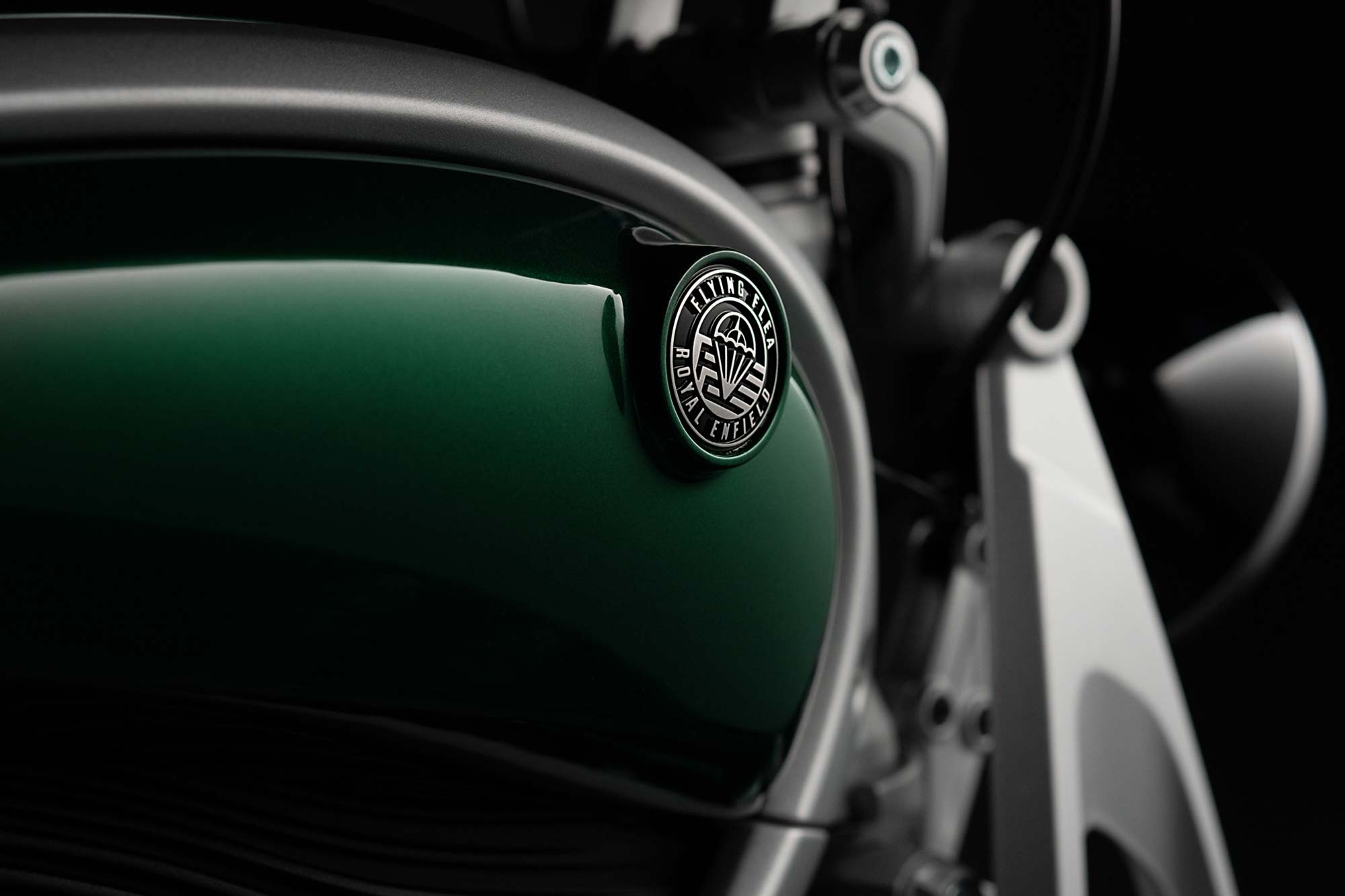
Royal Enfield is bringing back a classic name for its electric motorcycle brand. Here’s what I wrote in 2024:
Simple, tough and resilient, the Royal Enfield Flying Flea, or WD/RE to give it its official title, was deployed as a front line combat machine during the latter stages of the Second World War. An invaluable asset to the elite soldiers of the newly-formed Parachute Regiment, it was parachuted behind enemy lines, carried in assault gliders or ferried to the beaches of Normandy in amphibious landing craft.
Ironically, the Flea was originally a German design. Launched in 1934, the DKW RT100 was one of the most reliable and best selling motorcycles of the 1930s. In 1938, the Nazis pressured DKW’s Dutch distributor, R S Stokvis & Zonen, to fire its Jewish directors or lose its DKW franchise. Rather than bow to this anti-Semitic coercion, the company promptly despatched an RT100 to Royal Enfield in England with a request to reverse-engineer the motorcycle and supply them directly.
Enfield’s chief designer, Ted Pardoe, set to work, replicating the frame and forks but enlarging the engine capacity from 98 to 126cc. The result weighed just 56 kg and its one-and-a-half gallon fuel tank gave a range of around 150 miles while travelling between 35 and 40mph.

One of the most distinctive parts of the Flying Flea was its forks. To cut down on construction costs, the forks were built from pressed steel blades with three rubber bands providing spring force, but no damping. Soldiers bounced around on their Flying Fleas, but the suspension was simple to repair in the field.
Applying the Flying Flea name to this electric motorcycle is sort of genius. This is a small bike that doesn’t make a lot of power and isn’t going to go very far on a charge. It’s not a name that has you expecting something huge and powerful.
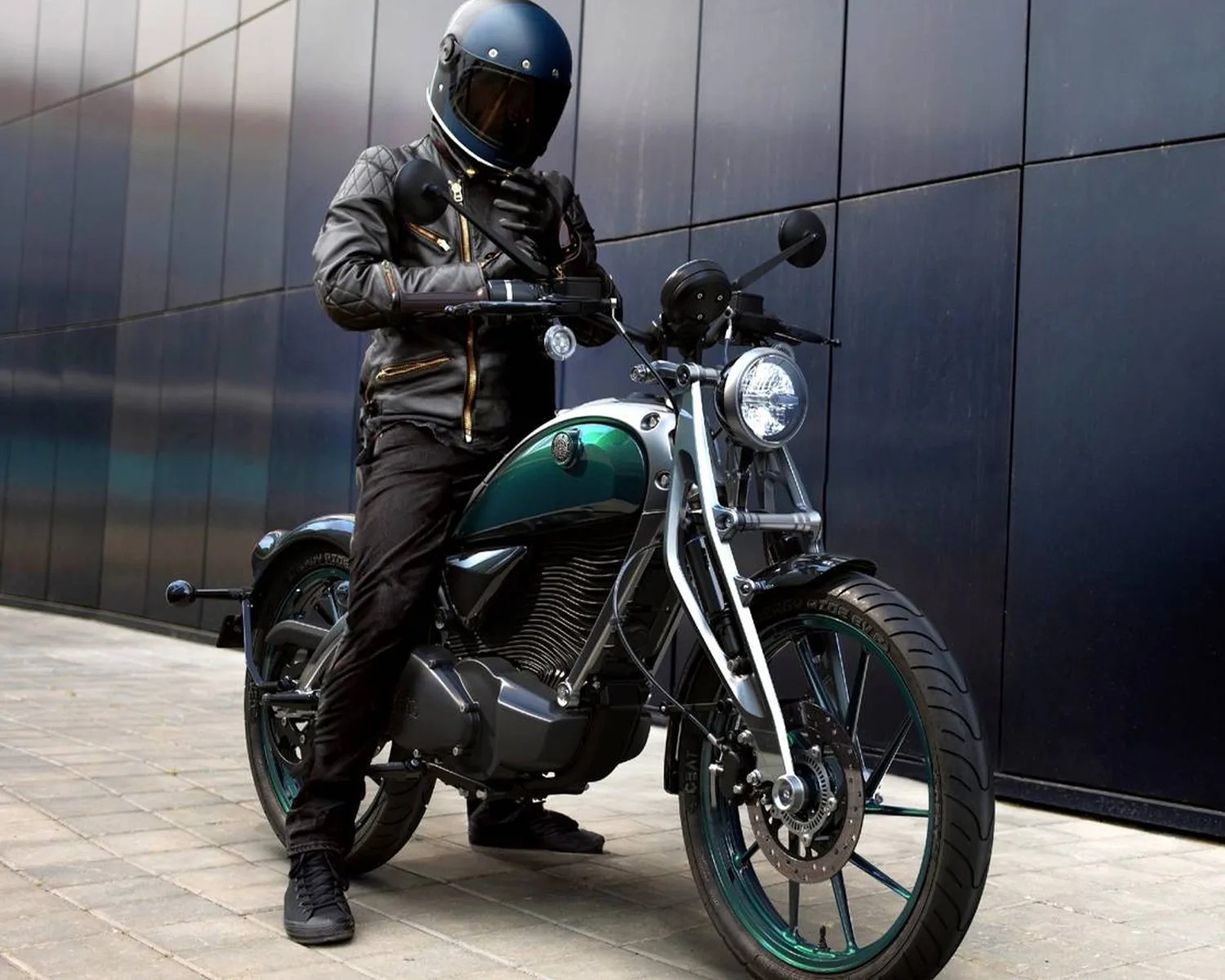
Royal Enfield went through the work to make the new Flying Flea C6 more than just a nod to the past. There’s a real girder fork attached to the face of the C6, but the idea has been modernized with forged aluminum and a mudguard that articulates with the twin-shock suspension as it moves through its travel. Forged aluminum also makes up the C6’s overall structure, and hanging from it is a magnesium battery case with fins that look ripped from an air-cooled engine.
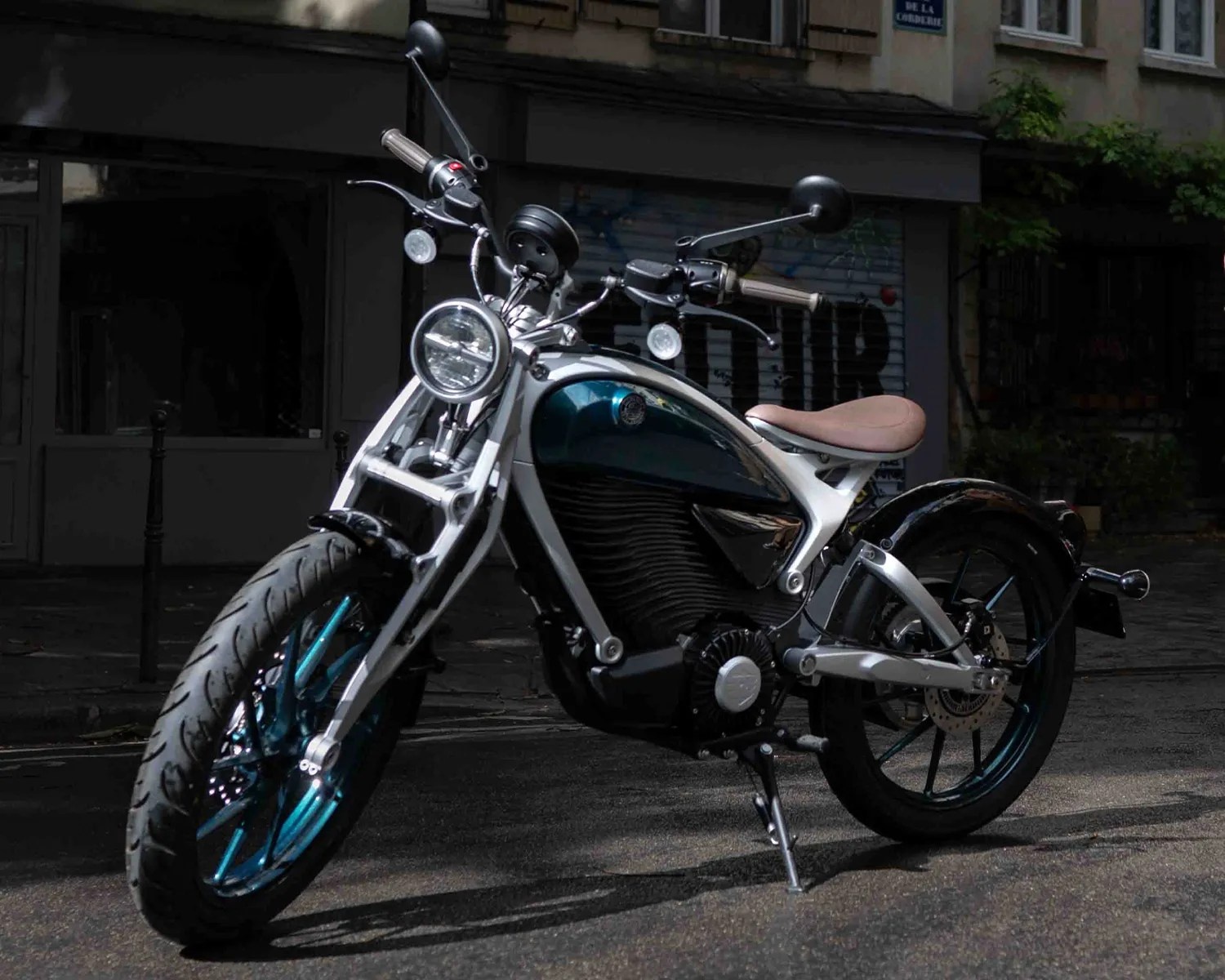
As Evo India seems to suggest, the pictures don’t quite illustrate how small the C6 is. From Evo India:
Think three bicycles smushed together to make one motorcycle. The tank or phone charging spot as I now call it, is not much wider than the width of my hand and the seat is reminiscent of a bicycle seat too.
Royal Enfield’s Lightest Motorcycle
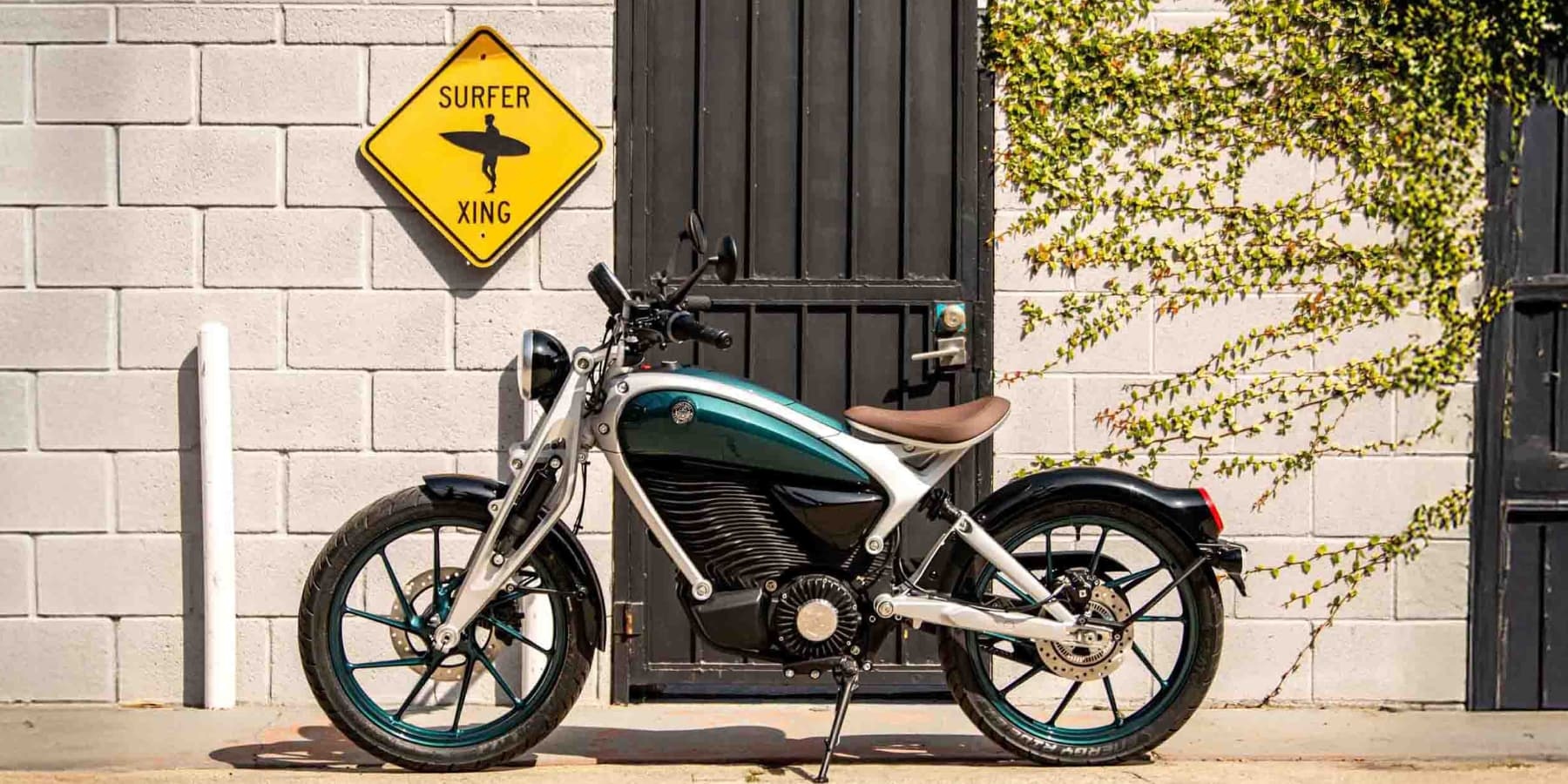
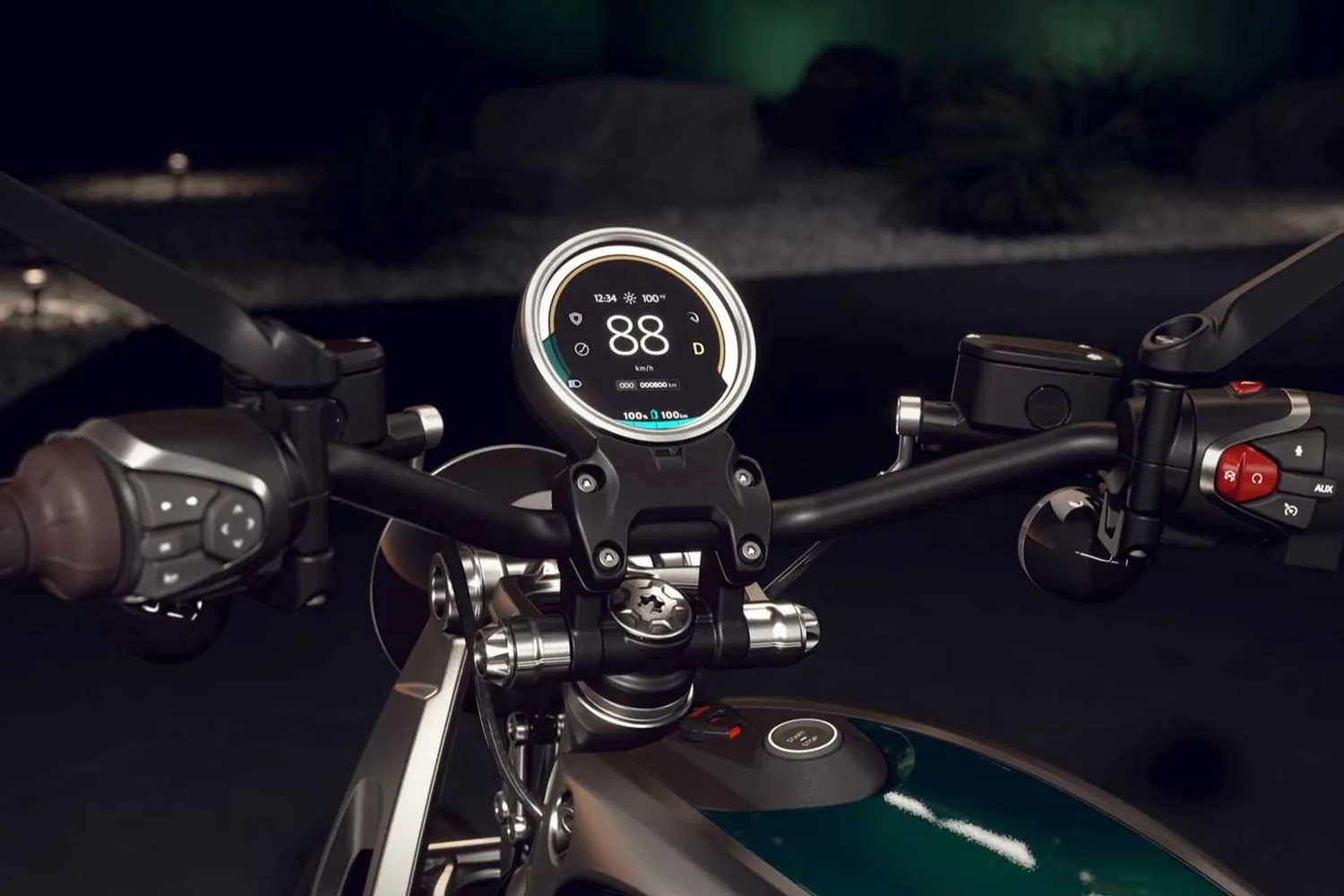
The bike is also thoroughly modern – far out for a Royal Enfield – with all LED lighting, five riding modes, a 3.5-inch TFT digital instrument cluster, cornering ABS, and traction control. It even has full-screen Google navigation and a wireless phone charger built into the false tank. Whoa, good for RE.
Back in 2024, Royal Enfield made some weird claims, saying that the onboard OS uses a sort of central nervous system to sense what’s going on in your ride and automatically create some 200,000 ride modes based on it.
Royal Enfield has toned all of that weirdness down, and more or less just says that the OS has a sort of dynamic ride mode function where it can automatically adjust between permutations of more economical, comfort, or power modes.
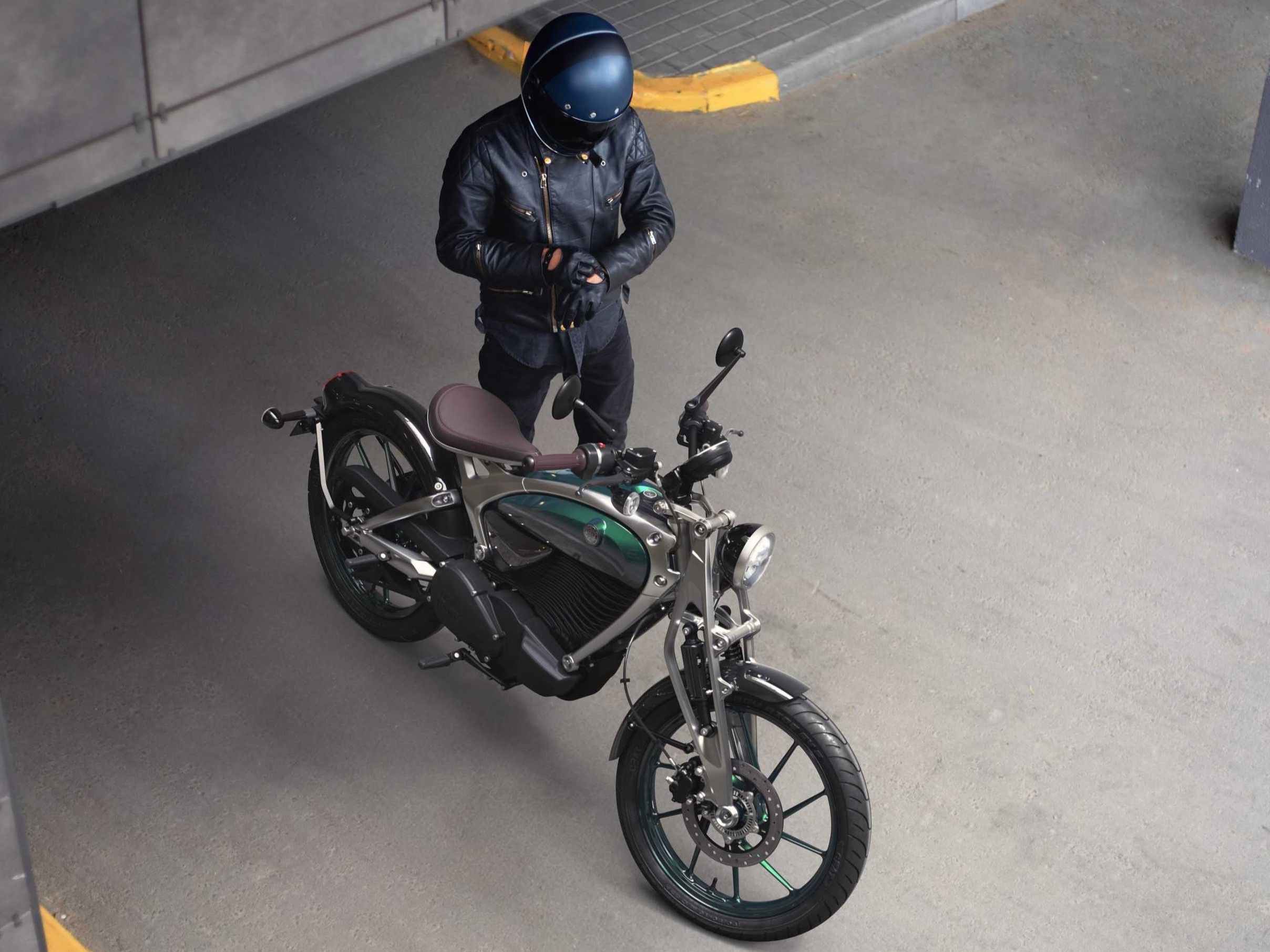
Oh, and even cooler is the weight. At 273 pounds, the Flying Flea C6 weighs less than any gas motorcycle Royal Enfield has on sale right now. For comparison, the lightest bike RE sells in America is the 399-pound Hunter 350. Honestly, in a world where EVs usually weigh more than gas cars, that news is phenomenal.
Now let’s get to the meat and potatoes. The C6 scoots down the city streets with a 20.6 HP (15.4 kW) and 44.2 lb-ft torque permanent magnet synchronous motor. That’s good for a sprint to 37 mph in 3.7 seconds and for a top speed of 71 mph. Braking is handled by a 260mm dinner plate up front and 220mm disc in the rear. The front is munched on by a two-pot ByBre caliper while a single-piston unit brings up the rear. The fancy girder fork twin-shock suspension up front is complemented with a monoshock in the rear.
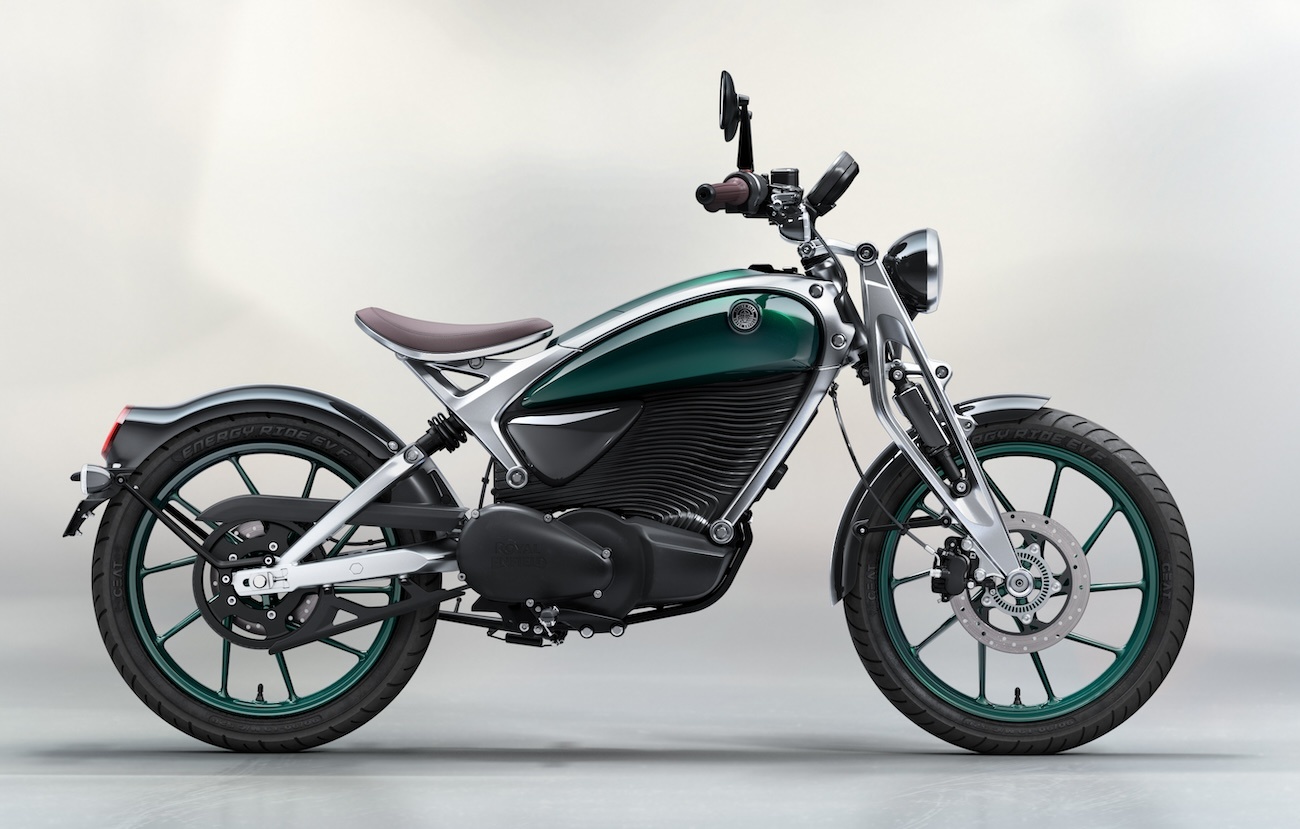
The seat also sits 32 inches off the ground. However, since the bike is so narrow, early reviews suggest that it’s like the seat is lower since it’s easier for your legs to reach the ground.
Powering all of this is a little 3.91 kWh lithium battery that’s capable of charging from 20 percent to 80 percent in 65 minutes. Now, it’s time for things to get crazy. Royal Enfield quotes 96 miles of city range, which sounds way too good to be true, even when you factor in the extremely optimistic Indian standardized test cycle.
That Range Figure Is Goofy
As it turns out, Micah Toll of Electrek has done the math on the 3.91 kWh battery, and the range claim is even nuttier than you’d think. From Electrek:
To put that into perspective, that’s roughly 25 Wh per kilometer, or about 41 Wh per mile. Those numbers would place the Flying Flea among the most efficient electric two-wheelers ever made – not just in its class, but across the entire industry. That efficiency would make the 273-lb Flying Flea more efficient than a lot of Class 2 electric bicycles on the road these days.
Now, efficiency is great. Lightweight bikes with skinny tires can absolutely stretch their range. The Flying Flea’s narrow tires, modest power output, and relatively low weight all help here. But even then, this claim sits on the extreme outer edge of what’s physically plausible.
[…]
But ride it the way most people actually will – mixing in acceleration, higher speeds, stop-and-go traffic, maybe even using that 115 km/h or 71 mph top speed – and that number is going to drop fast. Realistically, something closer to 70–100 km (45–60 miles) for CITY range would be far more believable, and even that depends heavily on how it’s ridden. If you’re getting anywhere close to that top speed, your range could literally be in the teens. At that point, the number is so small that it doesn’t really matter whether I’m talking in kilometers or miles anymore.
For a little fun math, if you assume you’re pushing close to the bike’s 15 kW power limit (i.e. riding top speed or up a hill), you’d literally drain the 3.9 kWh battery in less than 15 minutes.
Micah comes to the conclusion that the only way you’re riding this thing 96 miles on a charge is if you go at a speed that’s slower than an e-bike. That’s patently ridiculous, Royal Enfield. So, even in the city, don’t be surprised if you get around half of the advertised range.
The Flying Flea Has Potential
That said, even 60 miles of range isn’t that bad if you never leave the city. Sadly, even though the C6 looks like it would be a riot on a back road, there just wouldn’t be enough range to get there, let alone make it back home.
If reports in India are correct, the Flying Flea C6 is estimated to land for around the equivalent of $2,600 to $3,200 on the local market. That could make the Flying Flea C6 a bit more of a premium option out there. Even if the American market had to pay double the price, it would be pretty reasonable. The low range can make sense if Royal Enfield can nail the price, and the company has been pretty good about hitting great prices lately.
For now, we just have to wait and see. Ignoring the absurd range figure, the Flying Flea C6 seems like it’s a winner if you’re a pure urban rider. It looks stunning, it’s lighter than any other Royal Enfield, and it’ll hopefully land at a tantalizing price. It seems that, like Aaron Judge, Royal Enfield keeps hitting home runs, though we’ll have to see if this one gets over the fences. I can’t wait to see what the C6 looks like on our soil.
Top graphic image: Royal Enfield


That’s correct. I worked for an EV company making electric scooters (the motorcycle kind), and the 3 kWh battery we put in was only able to achieve 80 km of city range on average.
By our estimates, an increase to a 5 kWh pack would only yield a range of upto 120 km at best.
The only reliable testing is WMTC. If a manufacturer doesn’t quote the WMTC range, then it’s not believable.
I’d get one to replace my stolen ONYX if it ends up being around the same $5k price.
Flying Flea? Awesome!
Jerry: [with glee] What is that, a Pez dispenser?!
Kramer: Want one? Yeah, I just bought it at the Flea Market.
George: Hey, what goes on there, exactly?
Jerry: You don’t know?
George: No, I-I-I know… [retreats back to his Chinese take out] I know…
Jerry: You think they have fleas there, don’t you?
George: *No*…
Jerry: Yes you do, Biff. You’ve never been to a Flea Market, and you
think they have fleas there.
George: All right, I think they have fleas there. So what…
I don’t know if they’ve accounted for the average weight of American riders in their mileage estimates. I see a set of saddlebags with batteries in the bottoms in their future.
If it will run 30+ miles at ~50mph it would be perfect for my daily commute, a little farther and for the right dollars it could push me to get my m1… Would have to be really cheap though, like sub 5k, which seems improbable.
It’s low on the priority list but I do want an electric motorcycle at some point, as a 3rd bike. If I avoid the highway my commute is only 24 miles round trip, so this covers that easily.
As mentioned, price is the real sticking point. I’m keeping my eye on used Livewires and they’re not hard to find under $10k. So if the Flying Flea was $6xxx or so, you get a lot more performance if you just up a couple grand. Different bikes for different purposes yes, but I imagine the Livewires being much more fun.
It’s pretty. I like how it looks. Seriously doubt many folks would buy it with those specs at double the India domestic price though.
It’ll be the cheapest EV motorcycle on the market. That’s gotta count for something, right?
Maybe… because I’m old and have a bad back, it being unusually small/thin is appealing, but I think some ‘motorcycle buyers’ will think it’s too slim. I dunno… maybe it will sell well. I’m unqualified to hazard a guess really. 😉
I rented a moto guzzi and was unnerved by how thin it was. It wasn’t bad per se, just odd compared to what I’m used to. I wonder how this compares.
I have a Suzuki Vanvan 200 which DDG’s AI says weighs 282 pounds, which feels about right. It’s low to the ground, has an extremely comfortable seat and ride, and 16hp, so just a few less than this. It’s the only bike I’ve owned, so I don’t have a lot to compare it to. Also, I don’t ride it anymore because my back is about 30 years older than the rest of me.
TBH, I’d really like to test ride this in some empty parking lot at low speeds, and I’d like to see how it is to pick it up (using a moving blanket on the ground to avoid scratching it of course). I assume the battery is mounted sort of low to keep the center of gravity down, so it might be easier to pick up than my Suzuki.
It’s by far the most beautiful Power Wheels I’ve ever seen.
Perfect. My old Zero XU was about that weight and ergos but with less battery and power and only 1kW charging, and it was an utter delight for suburban/city commutes and errands.
The slimness and lower weight make it feel a lot easier to hop on and ride, and the lack of heat, noise and shifting take a lot of stress out of city traffic. You have to experience it to understand how much of a difference that makes.
If it lands here in the US, I wonder how it will do in comparison to the “e-bikes” (huge quotation marks since they are essentially motorcycles). Since many of those ebikes seem to occupy this similar space with their big chunky tires and very modifiable speed.
Yeah, the Sur-Ron and brethren raise an interesting question: how much extra will folks spend to follow the law? I guess it depends on how enforcement goes after the national Police Sulk that started in 2020.
I’d guess a decent bit in areas where enforcement is done. Around me this RE bike would be a wonderful idea. It’s fast enough to slice up traffic on stroads while having just enough range to be a local commuter. Being able to be plated and insured along with the rider having a legitimate license means the cops will ignore it. Well, after they pull the rider over once to make sure it’s not a forged plate on a light kitted Surron.
Hah, yeah. I loved my little Zero XU bit I’m too far out in the country now.
I’m more inclined to say e-bikes are the legitimate category and this is the imposter, dressed up pretending it’s something else. (To be clear, there are legitimate EV motorcycles and many more to come, it’s just this isn’t one of them bc of the range).
This makes sense for the Indian market.
For the buyers of a premiumish motorbike in India, even 50km of range is adequate for their use case. This buyer is likely a wealthier person who lives in a (very congested) larger city and is going to use the bike to nimbly weave through traffic to run their errands/commute relatively quickly conveniently since it’s easy to park. They will have access to a car if they need to make longer trips, but this bike will still be able to make a round trip from the city center to the outskirts and back in a pinch.
The city my family is from, which is the second largest in its successful and medium-populous state, is only about 10 miles across in diameter from outskirt to outskirt.
Now that you mention it, also a big benefit that it’s super skinny for all that weaving.
There probably is a market for these things if they actually sell for $3k. It is basically an ebike that can be legally ridden at higher speeds.
It is easy to argue that an ebike is a better deal than this motorcycle, but most of those don’t come with brake lights, turn signals, etc. that make them safer to use in traffic. Also, I presume a lot of today’s faster ebikes will be illegal or will require a license to ride at some point since they are basically small motorcycles (very little separates the performance of a Grom/Monkey and a fast ebike). While this motorcycle clearly has its limitations, I think small electric moped-like vehicles like this could be very common in the near future when legislation catches up with technology. Right now, the ebike/e-moped/small electric motorcycle space is basically the Wild West – it won’t stay that way.
I’m skeptical of the vast majority of electric motorcycles Mercedes writes about (though I do love reading about them), but I actually think this one is a great idea.
The range is given 96 miles city, in the 18th paragraph.
Did they not build in any regeneration in this? That would help with range for a battery that small, in the city anyway.
When “Flying Flea” is mentioned I think of this;
https://en.wikipedia.org/wiki/Mignet_Pou-du-Ciel
For fun and giggleses, if anyone who likes aircraft and a bit of a challenge there is this;
https://www.nestofdragons.net/flying-flea/english-mignet-plans-for-free/
The main article photo is atrocious.
Whoever parked the black bike in front of the black door on the building behind it was either intentionally trying to make it look bad, or hasn’t composed a lot of photos.
It looks like it has a literal box of batteries on board when it is actually a lithe-looking little thing.
With that low weight, I’d have to call it the Flea Flicker! I’d like one!
OTOH, ride it for the week around town. Brooklyn to Bear Mtn. is about 60 miles. Charge while you have a coffee and breakfast. Rip around for a couple of hours. Take a hike. Recharge over a late lunch and back to the City. That range could work because . . . just look at it!
But look at that charging time! An hour to get 2.3kWh, 20% – 80%. And a battery that small won’t have DCFC charging, so this must be L2. How long on L1? And what’s the charging curve – how long to get that last 20% to full for the ride home?
Assuming a mostly flat charging curve, 3 hours on L1 should fill it completely.
1 hour to get ~2.3kWh (so 2.3kW) actually sounds like standard wall power limits in India (and many other countries), so this is actually L1 charging. The US is fairly unique in how slow its 1.5kW L1 is. I’m not sure how much extra wiring L2 capability would need, but due to the charging curve of the likely highly density-focused cells, L2 likely wouldn’t reduce charge time by more than ~15 minutes.
Hope you like coffee! (Or hanging out in Walmart parking lots)
Absolutely crushed it on the design! If I had a short commute (and they decide to sell it here), I’d be tempted…
Considering how few calories I used to burn when riding 15-18 MPH, I could see that battery lasting for 98 miles of dense urban stop and go traffic. The Flying Flea is really just a step up from an ebike. As others have mentioned, if this comes to the US, the price needs to reflect the limitations. Given how well the Honda Grom sold, I could see a potential market for these. I doubt we will see packs of them roaming city streets at night like the Grom.
beautiful design – seems more like a substitute for a moped than a full motorcycle. Compare this vs. a little 50cc scooter and it makes a whole lot more sense.
If they can sell me that for say $4,000, and give me a stylish rack to strap my lunchbox to, I’d seriously consider buying that for my short suburban commute. It’s so pretty!
For the price and real world range, you may as well buy an e-bike and not bother getting the M endorsement.
I have the M endorsement and would rather have an ebike so I can at least peddle when the battery runs out.
E-Bikes are speed limited where I am to 32km/h. The roads that lead to my work are largely 80km/h zones.
My commute is about 25 miles (40km) round trip. This would actually be a perfect use case for me.
Agreed – I would love to use an e-bike for my 3 mile commute, but most of those 3 miles are 45 mph zones with a lot of traffic, multiple lanes, and no alternate routes (including a freeway underpass that I’d never ride on a bike).
This would at least allow me to keep up with traffic, especially coming back up the hill at the end of the day during rush hour chaos.
I still probably won’t do it since being able to get out of my own way doesn’t solve the issue of all the distracted drivers around me, but it’s a closer fit than a speed-limited E-bike.
It would be cool if they just put in some bikeable infrastructure, though. It seems silly to drive my 3 mile commute and then go home to ride 15 miles on a spin bike.
No, cars must reign supreme.
Not around me. I can’t legally ride an ebike on roads signed faster than 30 mph. Funny how a regular bike can, though. This being a motorcycle means it legally can. And on the 40-45 mph roads that dominate around here. That classification difference is a big one in the eyes of Johnny Law here.
It definitely looks bicycle-esque, and I’m certain it’s targetting urban environments. Keeping in mind that India-urban is not the same as you might expect elsewhere.
It may not ever pass a single charging station, but….just look at it.