

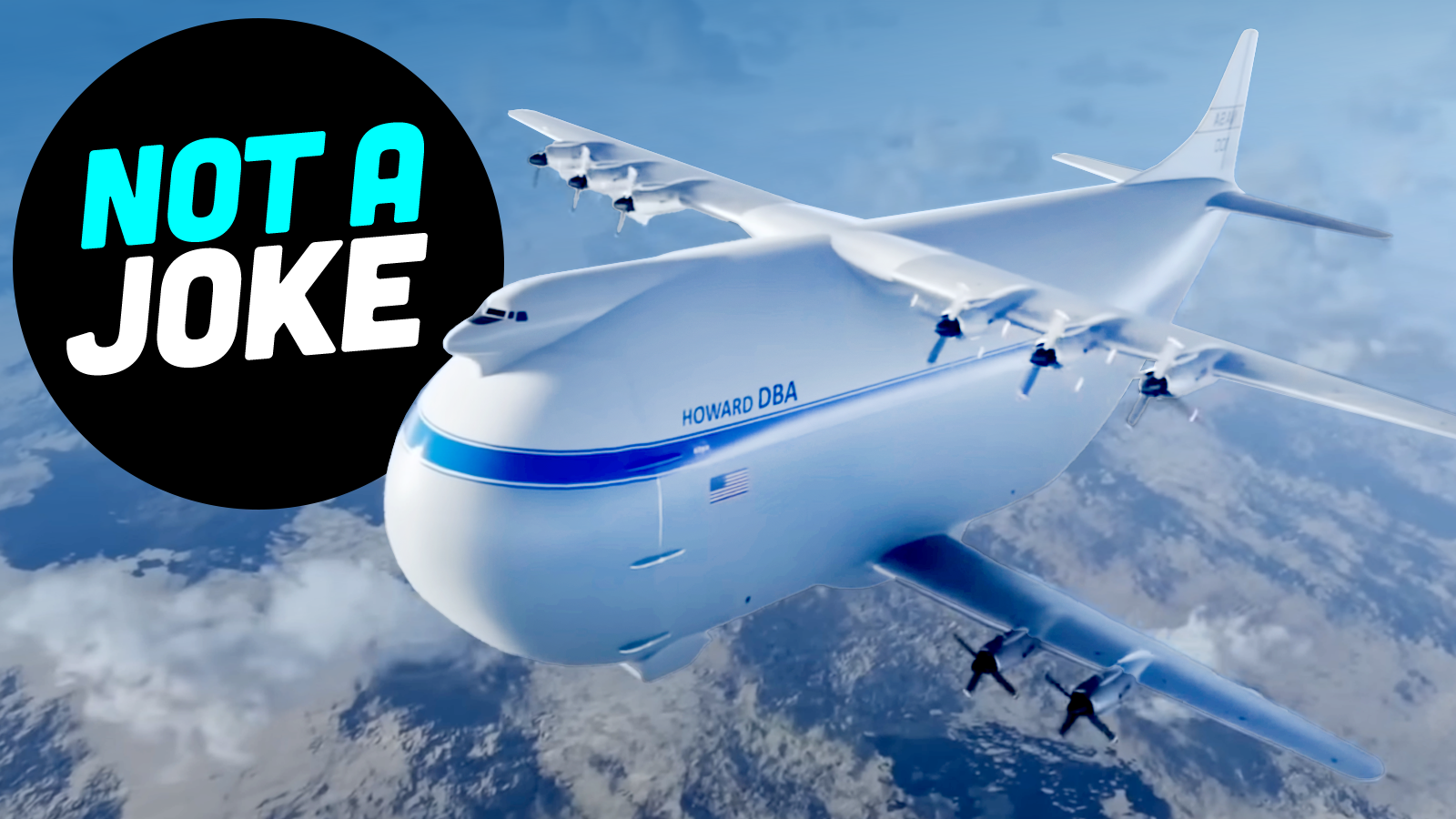
One of the challenges of space exploration is simply transporting the space vehicles, rockets, and the supporting gear they require to the location where they are to be assembled and eventually launched. Today, space vehicle logistics involve the use of everything from specialized semi-trucks and barges to ships and, most recently, airplanes. Aircraft weren’t always a viable option, especially in the early days of the space race. Back in the 1960s, an aircraft visionary, Dee Howard, had a crazy idea to beat the slow speeds of ships. He proposed a plane, the DH-100 “DBA,” so large that it could swallow an entire 166-foot Saturn rocket and fly it where it needed to go with the power of 10 prop-turning engines mounted on two sets of wings. The concept looked like something that could never fly, but it was actually a valid design – though never built in full scale.
This story takes us back to the historic Space Race between the Cold War superpowers of the United States and the Soviet Union. As the Smithsonian Air and Space Museum writes, the Space Race wasn’t originally about science. The remarkable developments of World War II had shown that future combat would involve jet engines, powerful rockets, and potentially world-changing bombs.


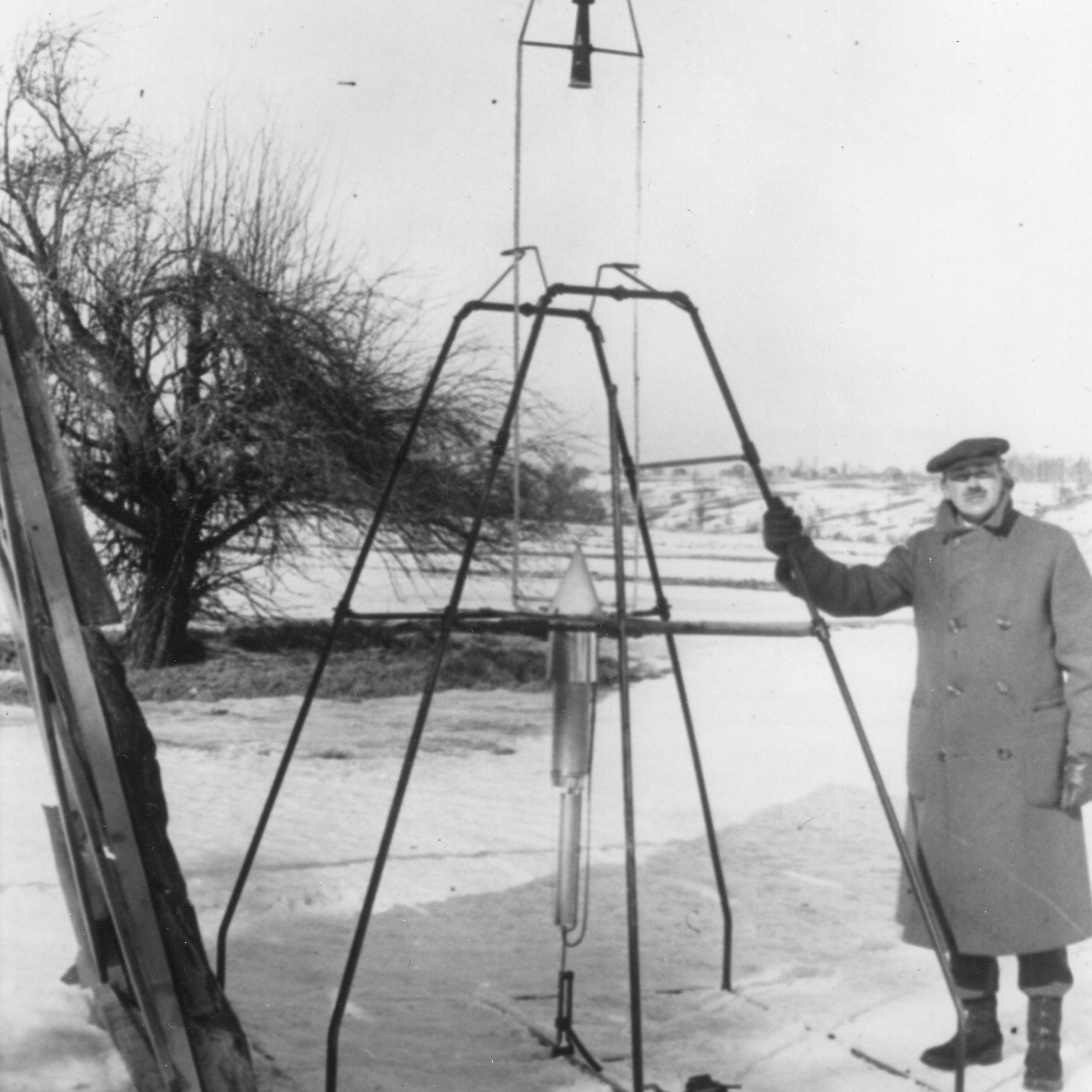
Before the war, Americans, Germans, and Soviets experimented with small liquid-fueled rockets. To many historians, the father of liquid rocket propulsion was physicist and engineer Robert H. Goddard, who successfully launched the first practical liquid-fueled rocket in March 1926. Germany would eventually become a leader in advancing rocket technology, with a watershed moment being the launch of the Aggregat-4, the world’s first practical long-range ballistic missile. A product of the infamous Wernher von Braun, the rocket, also known as the V-2 (Vengeance Weapon Two), made its first successful flight in 1942. Later, Germany would fire more than 3,000 V-2s at Allied targets, and more than 10,000 people perished in concentration camps as part of the forced labor to build the V-2s.
After the war, the Americans and the Soviets captured as much of the German missile program as they could. The Americans seized three hundred railcar loads of V-2s and missile parts. More than 1,600 German engineers, scientists, and other specialists moved to America as part of Operation Paperclip. Among those in that wave of German immigrants were now former assets like Wernher von Braun. These specialists didn’t just work on rockets, but also aeronautics, medicine, and other branches of science and engineering.
Nearly as important as those rockets were the vehicles that carried them. In the days of the Space Race, America utilized an armada of boats, trucks, and ships. Then the airplane made transportation a lot quicker. But not all ideas took off, like the Dee Howard DH-100.
The Space Race
As the U.S. and the USSR developed their own powerful rockets, a new interest was brewing to use this new technology to explore beyond the bounds of Earth. Newspapers, television broadcasts, and periodicals published fantasy stories of space travelers. But these stories also offered the promise that, one day, we’d travel the stars for real. The Smithsonian Air and Space Museum summarizes what happened next:
The Space Race became a symbol of the broad ideological and political contest between two rival world powers. In the Soviet Union, all space programs were integrated into a secretive military-industrial bureaucracy. Launches were not announced in advance, and only the successes were publicized. Comparatively, in the United States there were separate civilian and military agencies. Only military space programs were secret. Civilian space activities—especially the race to the Moon—were openly publicized for the world to see, failures and all. For years, the Soviets officially denied being in a race to the Moon. However, we now know there is ample evidence that they indeed competed to reach the Moon first.
Before Kennedy’s call to send a man to the Moon, the early years of the Space Race marked successes through headline-making “firsts”: the first satellite, the first man in space, the first woman in space, the first spacewalk. To the dismay of the United States, each of these early feats was achieved first by the Soviet Union. These events triggered a drive to catch up with—and surpass—the Soviets. Despite the United States’s hopes that it would beat the Soviet Union in launching the first artificial satellite into space, initial launch attempts using the Navy’s Vanguard rocket ended in disaster. Public response to the Vanguard failures prompted national soul-searching in the United States. The media questioned why “Ivan” could accomplish things that “Johnny” could not.
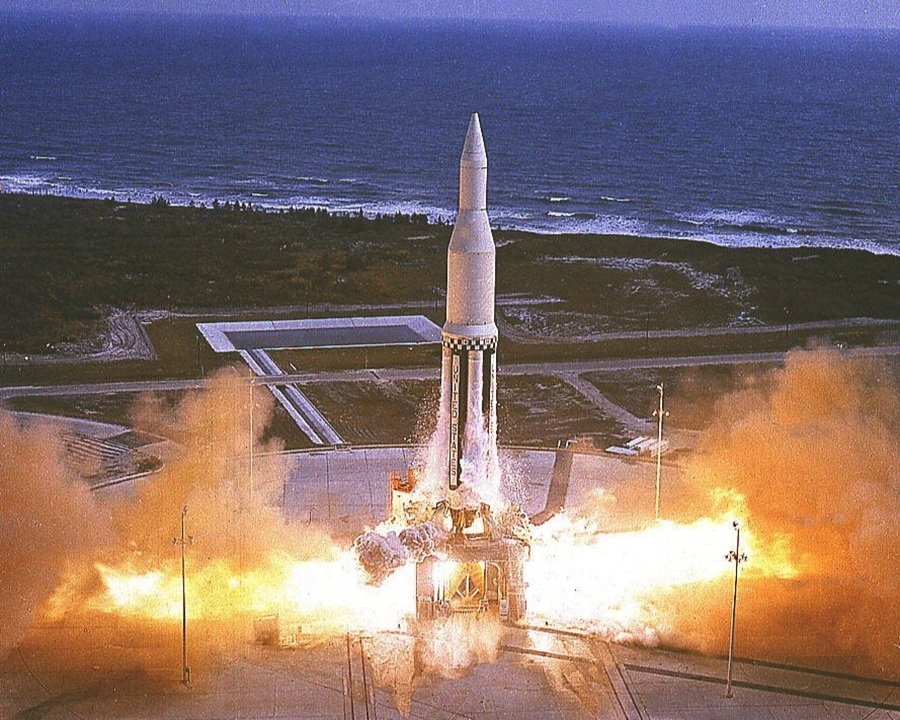
In order to reach space, America needed rocket technology that just didn’t exist at the time. In 1957, Wernher von Braun and a team of engineers began development on a rocket with a then unheard of rocket with 1.5 million pounds of thrust. A year later, the Department of Defense’s Advanced Research Projects Agency officially greenlit the project, giving it the name of Saturn. The first rocket would be called the Saturn C-I, later, the Saturn I. NASA gets to the good part:
The Saturn SA-1 vehicle, 162 feet high and weighing 460 tons, lifted off from Launch Complex 34 on Oct. 27, 1961. The booster stage produced the intended 1.3 million pounds of thrust — later versions of the rocket increased the thrust to 1.5 million pounds — lifting the rocket to an altitude of 85 miles. The four inboard engines shut down after 109 seconds of burning; the four outboard engines cut off six seconds later. At a maximum speed of approximately 3,600 miles per hour the Saturn followed a precalculated flight path to land within 13 miles of the predicted impact, over 214 miles from its launch site. The flight was considered essentially flawless. The Saturn SA-1 flight was the first of 32 successful Saturn rocket launches —10 Saturn Is, 9 Saturn IBs, and 13 Saturn Vs — between 1961 and 1973. To this day, the Saturn remains the only family of rockets to achieve a 100 percent success rate.
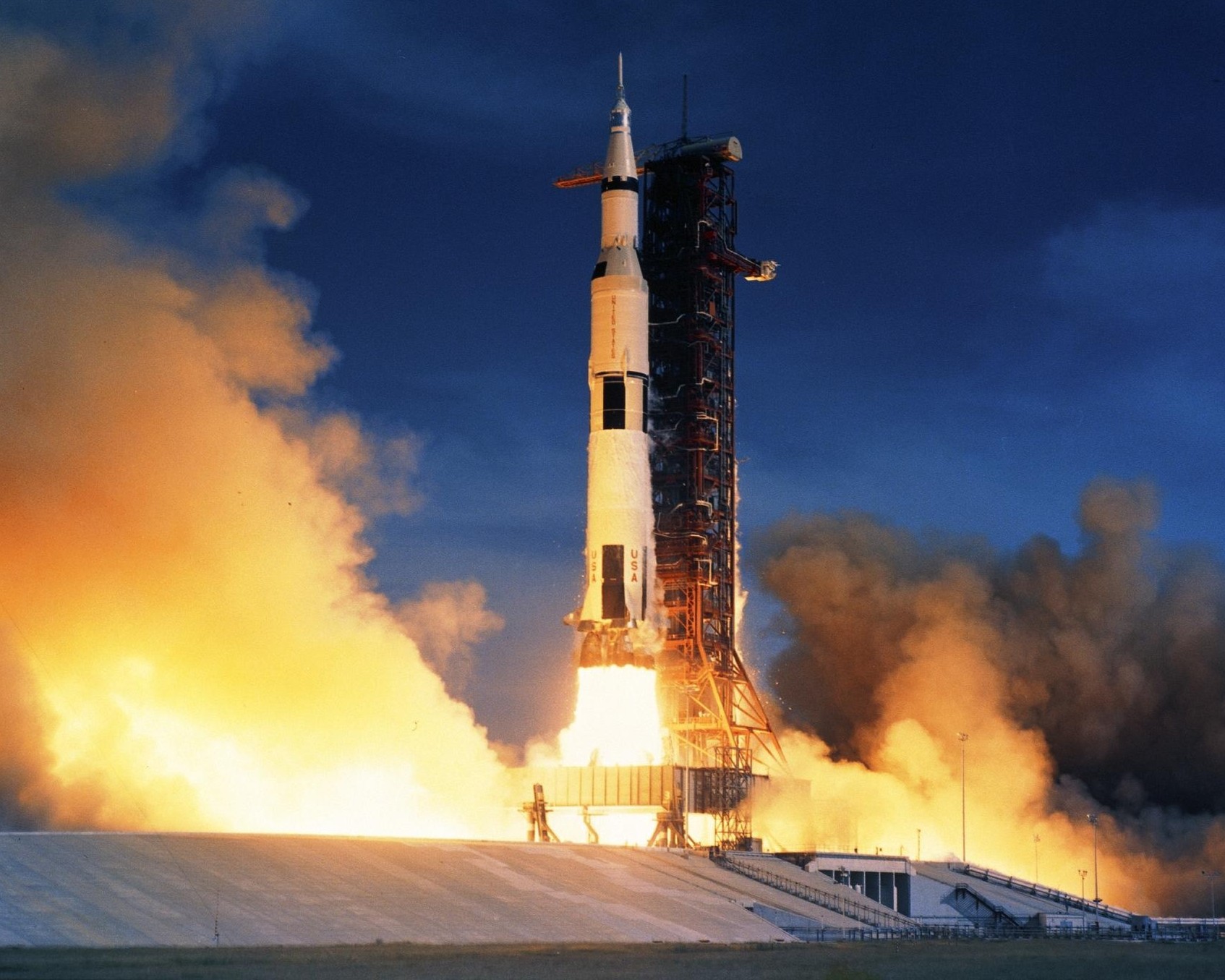
While the Saturn family of rockets was an incredible human achievement, there were parts of the program that were decidedly un-sexy. The first stage of the Saturn I was the S-1, which was built by Chrysler at the Michoud Assembly Facility in New Orleans. The second stage was the S-IV, which was built by Douglas Aircraft in Huntington Beach, California, and tested in Sacramento. The third Saturn V stage was S-V, which was built by Convair. However, only four S-Vs were built, and each was in an inert state during four test flights. Test vehicles would also be built at the George C. Marshall Space Flight Center in Huntsville, Alabama.
The mighty Saturn V, one of the most complex vehicles ever conceived and built, was not all built in one place. The Saturn V had three stages that the Apollo spacecraft sat on top of. The first stage was S-1C, the second stage was S-11, and the third stage was S-IVB. Boeing constructed the S-1C at the Michoud Assembly Facility in New Orleans. The S-II was assembled by North American Aviation at Seal Beach, California. Meanwhile, S-IVB was built by Douglas Aircraft at Huntington Beach, California.
Transporting Rocket Parts Took Forever
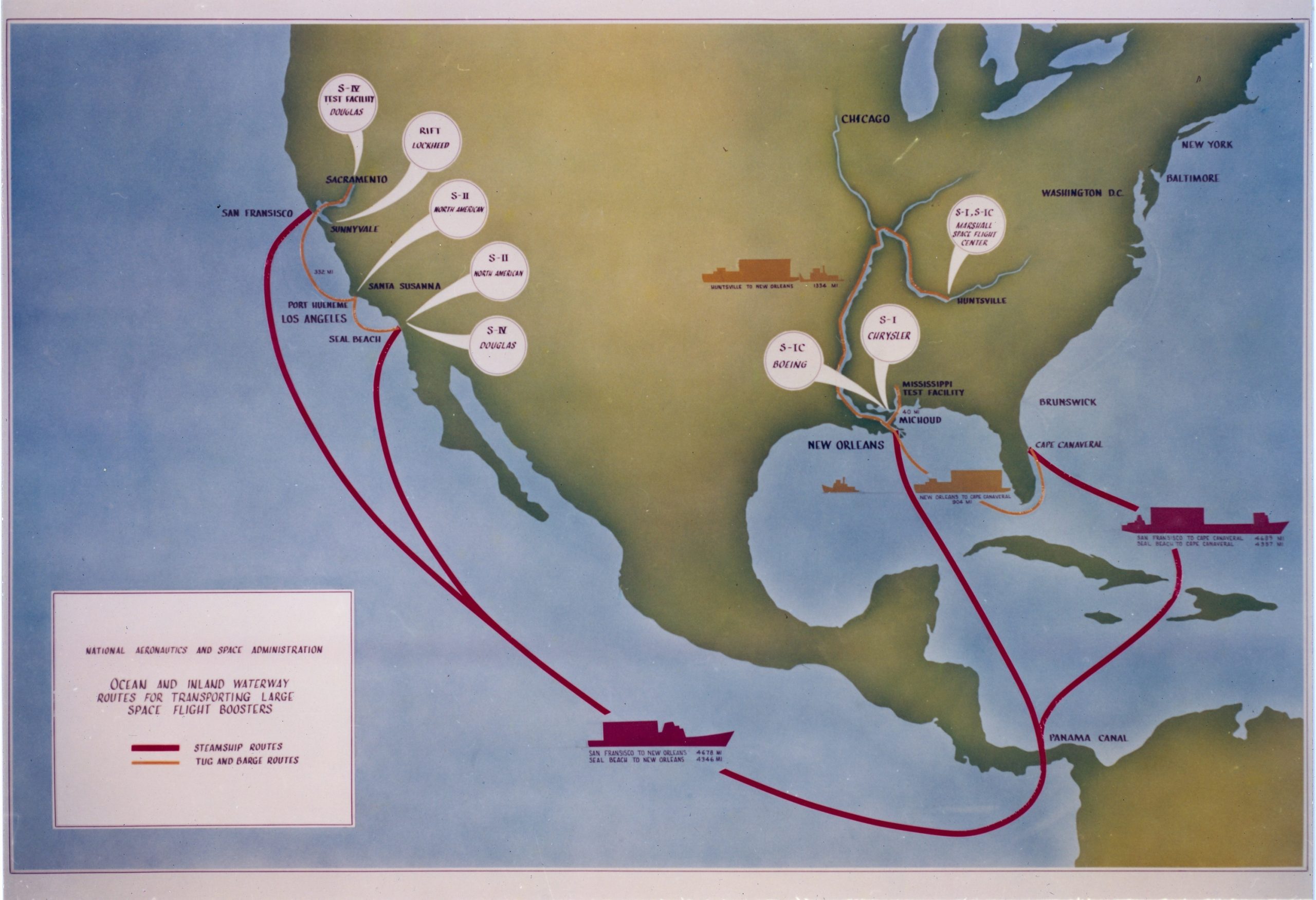
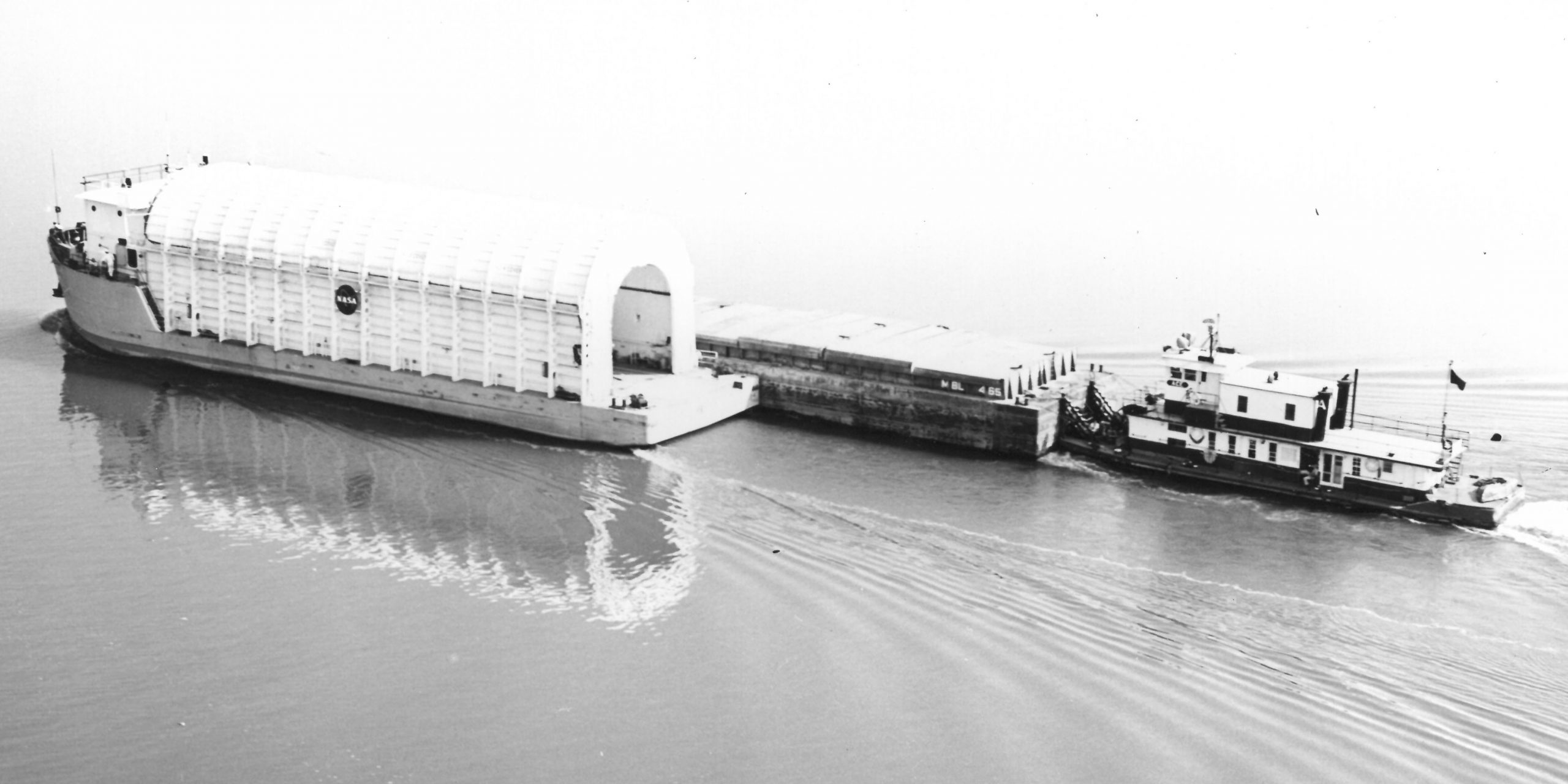
Building and testing these parts in locations all over America, but launching them in Cape Canaveral, Florida, meant that NASA had to get creative in shipping them. NASA would end up employing tugs and barges for shorter ocean routes and river journeys in addition to steamships for long runs. The journey of rocket parts from Huntsville to New Orleans involved a 1,334-mile river run. Then, from New Orleans to Cape Canaveral was another 904 miles by barge.
All of the parts on the West Coast depended on the Panama Canal. As NASA readily admits, Apollo wouldn’t have been possible without the existence of the Panama Canal. Ships traveling from San Francisco to New Orleans faced a 4,678-mile trek, while ships departing Seal Beach had a slightly shorter 4,346-mile journey. If those ships did not stop in New Orleans, they would instead take 4,639 miles or 4,337 miles to reach Florida, respectively. NASA explains that putting these stages on slow ships made sense because they were just too girthy to fit into any known truck, train, or aircraft at the time:
Stages S-II and S-IVB together weighed 128,600 pounds dry and more than a million pounds fully fueled. S-II stood 81 feet, or about the height of two school buses placed end-to-end. S-IVB was a little shorter at 58 feet, or about the length of the average freight car on a train. These stages, built in California, were too large to transport by airplane, train, or truck to the launch site at NASA’s Kennedy Space Center in Cape Canaveral, Florida.
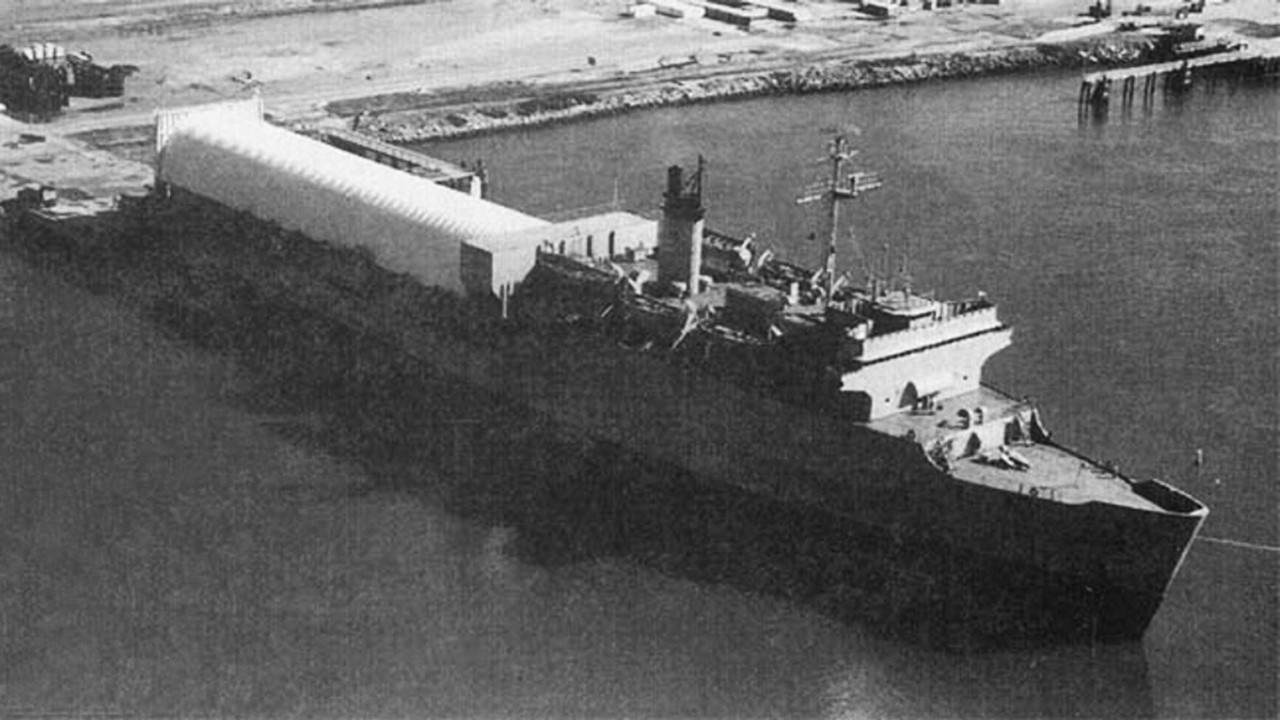
NASA engineers specially converted the USNS Point Barrow, a military transport ship measuring 70 feet wide by 460 feet long, to carry Saturn V rocket stages. Starting in California, it carried the stages through the Panama Canal, across the Gulf of Mexico and into New Orleans.
The S-II stage was off-loaded at the Michoud Assembly Facility in New Orleans. From there, it made its way to the Mississippi Test Facility via another barge on the Mississippi River. The S-IVB stage, which had already been tested in California, continued on to the Cape. The trip took 16 days in total. The S-II was later transported via another barge to Kennedy Space Center.
As the Historical Society of Long Beach writes, transporting the S-II stage was a challenge in particular because North American Aviation’s factory wasn’t exactly on the port. S-II stages would leave the Vehicle Assembly Building on Westminster Avenue and then were slowly trucked two miles to the U.S. Naval Weapons Station docks. Since the stage was 81 feet long, 33 feet in diameter, and 83,800 pounds, it rode on a specialized truck. The stage took up a whole four lanes of traffic, and special hinged traffic lights were installed on the route to clear the path for the vehicle.
Flying Rockets In Planes

Several aviation companies saw this as an opportunity. What if rocket stages didn’t have to slowly float more than 4,000 miles around the bottom of Mexico and then back to the United States? What if those stages could just be flown across America in only a fraction of the time? Ex-USAF pilot John M. Conroy would pitch a heavy-lift transport aircraft to NASA with only a lukewarm response from the space agency. Conroy bet the farm on his idea anyway and founded Aero Spacelines International, which would build the Aero Spacelines Pregnant Guppy in 1962 and the iconic Super Guppy in 1965.
NASA and the U.S. government found the Super Guppy and the Super Guppy Turbine proficient at carrying everything from rocket parts and capsules to entire aircraft and anything else the government wants to shove into a big tube in the sky. The Super Guppy swallowed large loads thanks to its 25-foot diameter and 111-foot-long cargo area. When it came to Saturn V parts, the Super Guppy was the only plane capable of hauling the S-IVB stage. The Super Guppy cut a sea journey that took up to 25 days down to just 18 hours.
An Aviation Visionary
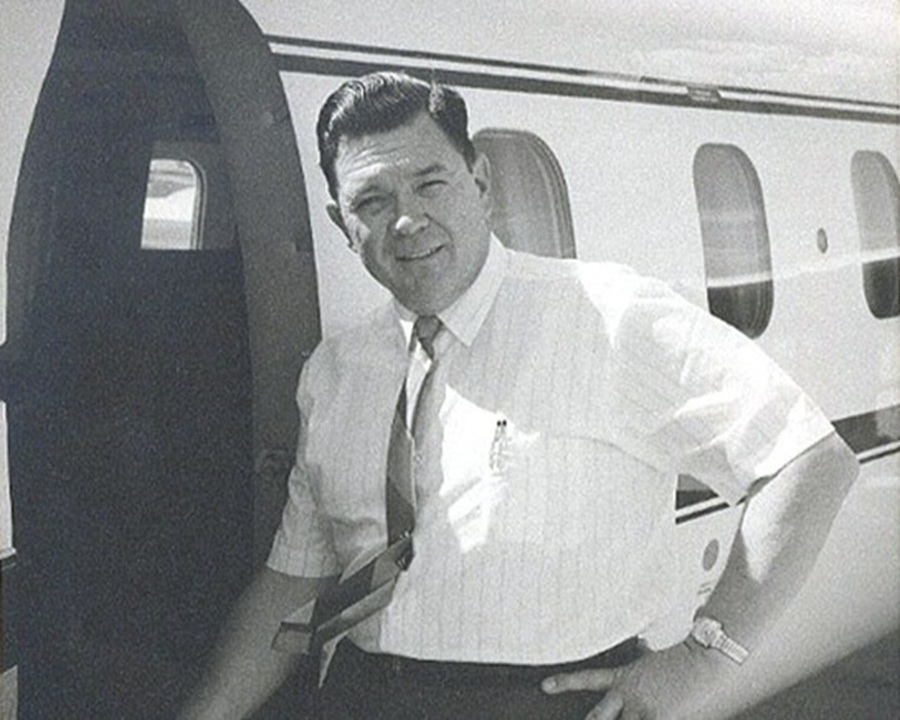
Durrell U. “Dee” Howard wanted to provide NASA with a heavy-lift aircraft, too, but one that would make a Super Guppy look tiny and downright normal in comparison. Howard was the man behind the Dee Howard Co., and he was known as a bit of a visionary. From the Dee Howard Foundation:
Dee Howard was a respected inventor and legendary in the aviation industry for his many creative accomplishments. Dee had over forty US and foreign patents issued in his name for both aviation and automotive products and the aviation companies which he founded and which bore his name held more than one hundred FAA Supplemental Types Certificates (STCs) and Type Certificate (TC). Dee’s aviation career spanned the birth and development of business aircraft in the post-World War II era. He is internationally recognized and honored for advancing the state of the art in business aircraft with numerous performance improvements, such as jet engine thrust reversers and refinements in aircraft flight characteristics.
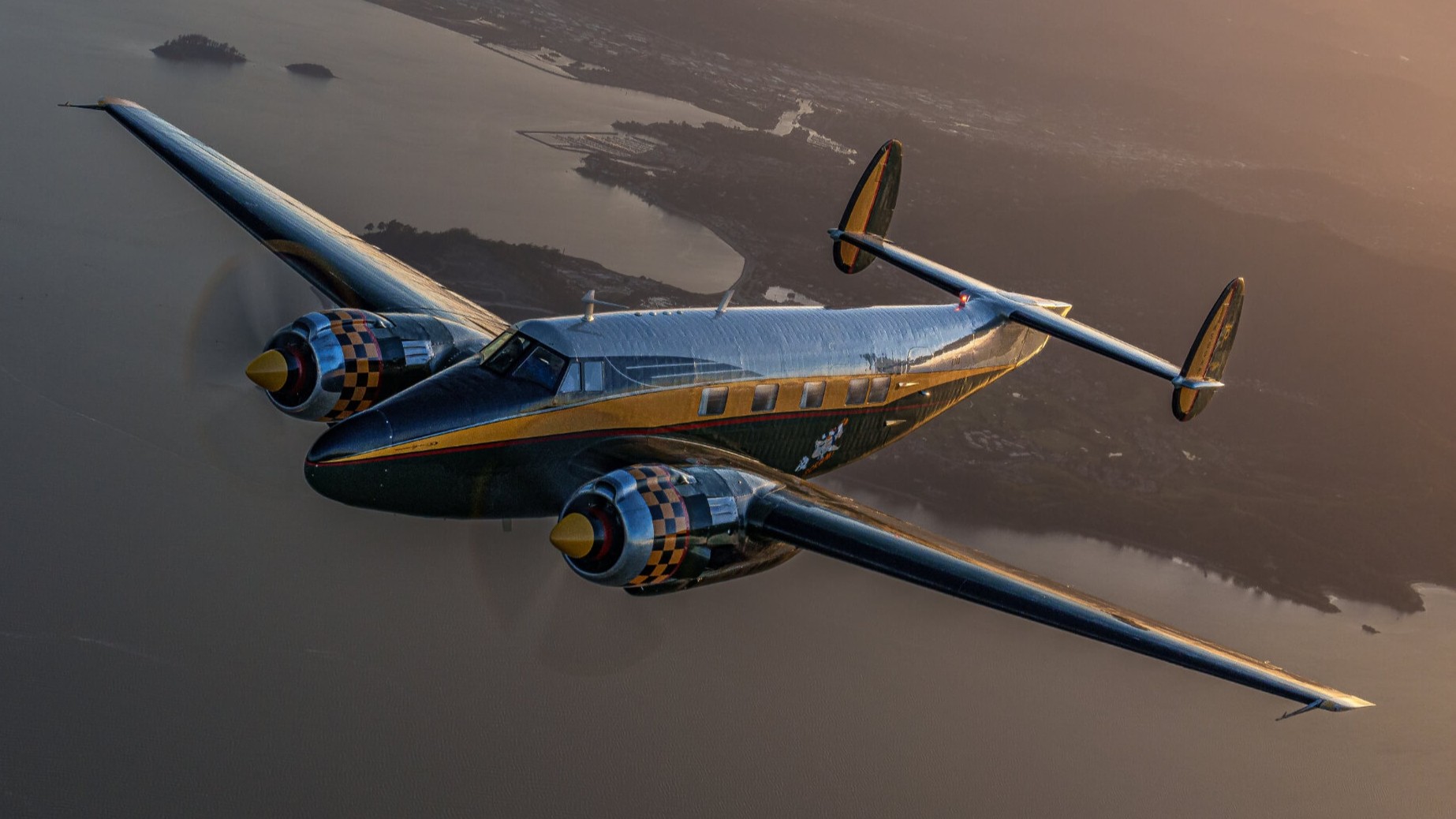
Howard Aero’s first major program was to extensively modify and remanufacture the Lockheed Ventura medium bomber into a high performance long range business aircraft that became the Howard Super Ventura. The highly successful Super Ventura was followed by the Howard 250, the Howard 350, and the Howard 500 models. The Howard 500 received an FAA Type Certificate (TC) as an all new pressurized aircraft. The Super Ventura and the Howard 500 were produced on an assembly line in the same manner that new aircraft are manufactured. An impressive number of various other Howard Modified Lockheed Aircraft were produced and flew with an enviable safety record. Not any of the Dee Howard Aircraft was involved in a passenger fatality. Bill Lear was a contemporary of Dee and although Bill and Dee were competitors, they had great respect for each other and became close friends. In the early 1960s Dee worked with Bill during the development of the first business jet aircraft which became the Learjet and Dee produced the first full-scale mockup of the Learjet in his hangar in San Antonio. Years later when Bill passed away, as a tribute to Bill, Dee’s personal Learjet was the lead aircraft in a flyover at Bill’s funeral in Reno, Nevada.
When the new business jets were first introduced they were equipped with drag-chutes for emergency stopping. It wasn’t long before business jet thrust reversers went to the top of Dee’s list of important things that needed to be done. The rest is history. The first Dee Howard designed and produced thrust reverser for the GE CJ-610 jet engine was highly successful and advanced the state of the art in thrust reverser function and reliability. With the introduction of the fan-jet engines for business aviation, The Dee Howard Co. entered into a joint venture with a French engineer, Etienne Fage, to develop cold flow thrust reversers for high bypass fan jet engines. Etienne was one of the original development engineers for the supersonic Concorde. The Dee Howard/Fage thrust reversers were manufactured by The Dee Howard Co. and soon became standard equipment on several new business jets that were manufactured in the USA, Great Britain (Hawker) and France (Dassault).The Dee Howard Co. thrust reverser business was eventually spun off from The Dee Howard Co. and sold to Nordam of Tulsa, Oklahoma whose Nacelle/Thrust Reverser Systems Division still produces them to this day.

In 1964, Dee would launch the Dee Howard Co., and he would become known for being a bit of an aviation hot-rodder who improved performance in business jets and commercial jets. Among Dee Howard’s projects were modifying commercial widebody aircraft for heads of state, Rolls-Royce Tay 650 engine retrofits for BAC 1-11s and Boeing 727s, and a 54-acre facility at the San Antonio International Airport that was capable of servicing the largest planes, including Boeing 747s and McDonnell Douglas DC-10s. The Dee Howard Co. even maintained the iconic Boeing 747 Shuttle Carrier Aircraft.
When Dee wasn’t toiling away with aircraft, he was a car nut with a knack for collecting and restoring cars from the 1920s and the 1930s. He had a soft spot for opulent vehicles like Pierce-Arrows and Auburns.
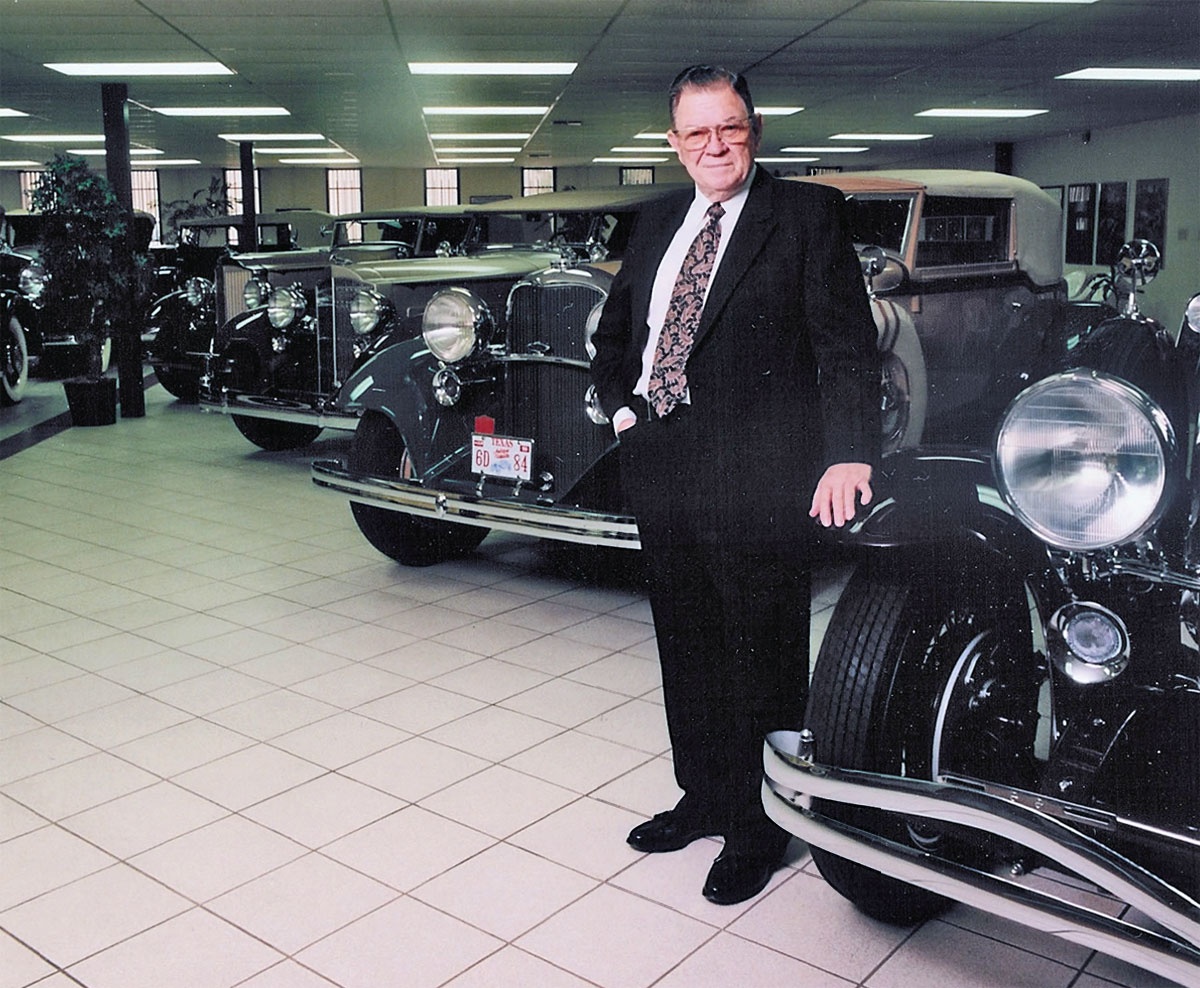
In 1996, Dee also developed the Howard Precision Steer Wheel Control System that sought to make heavy trucks and buses more stable and less fatiguing to operate. The Dee Howard Foundation says the system was installed in thousands of trucks, motorhomes, and buses in the 2000s.
The Dee Howard Foundation’s website goes so deep you can lose an entire day reading about Dee’s inventions. He was probably one of the coolest car enthusiasts that perhaps many enthusiasts don’t even know. Yet, even the foundation’s website has only a footnote about how he tried to revolutionize rocket transportation.
The DH-100 DBA
According to the Model Airplane News Magazine, NASA began shopping around in 1965 for a heavy-lift aircraft in that would be even larger than a Guppy. This aircraft was to be capable of carrying a Saturn II rocket, and the project was to be researched by North American Aviation. The Saturn II was to be derived from the Saturn V and offer a rocket with a payload greater than a Saturn IB’s 46,000-pound low Earth orbit capacity and less than a Saturn V’s 310,000-pound capacity.
The proposed Saturn II called for the deletion of the S-1C stage, which would have made the S-II stage the first stage, and the S-IVB-200 from the Saturn IB as the second stage. The Saturn II was expected to be about 167 feet tall and 33 feet in diameter.
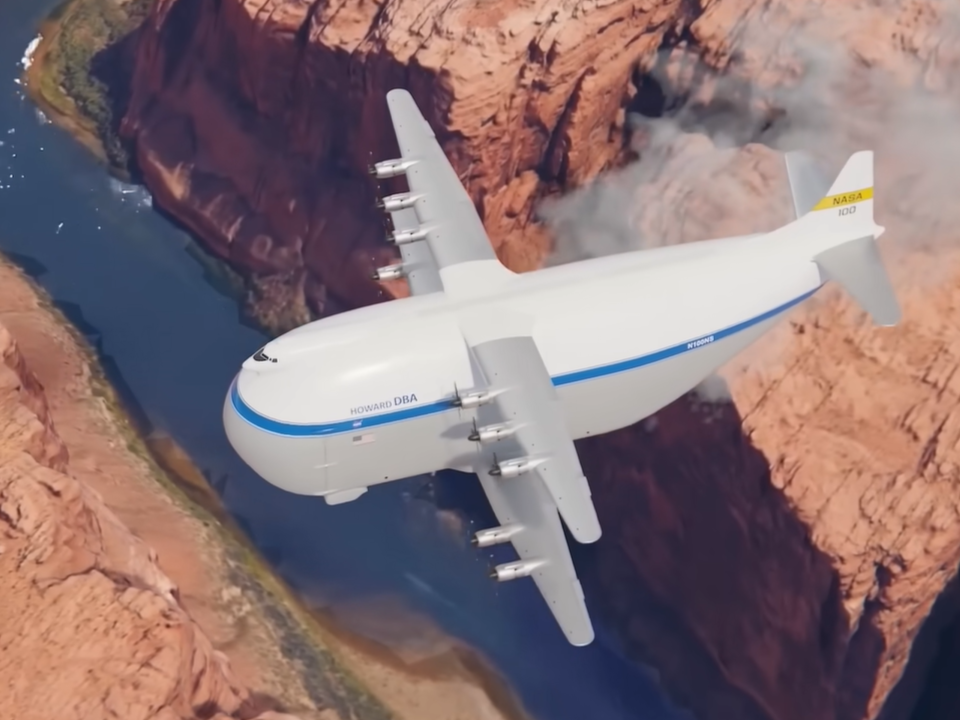
Now, this reporting is a bit confusing. The Dee Howard Foundation confirms that Dee designed an aircraft to ferry rockets to Cape Canaveral, but the reporting around this plane and the Saturn II doesn’t make any sense. Pretty much all reports that are viewable online say that NASA loaded Saturn IIs onto ships, sailed them through the Panama Canal, and got them to Florida. The reports also say that the Saturn II is 166 feet tall and 40 feet in diameter. This is bewildering because the Saturn II was never put into production, and the proposed diameter was 33 feet, not 40 feet.
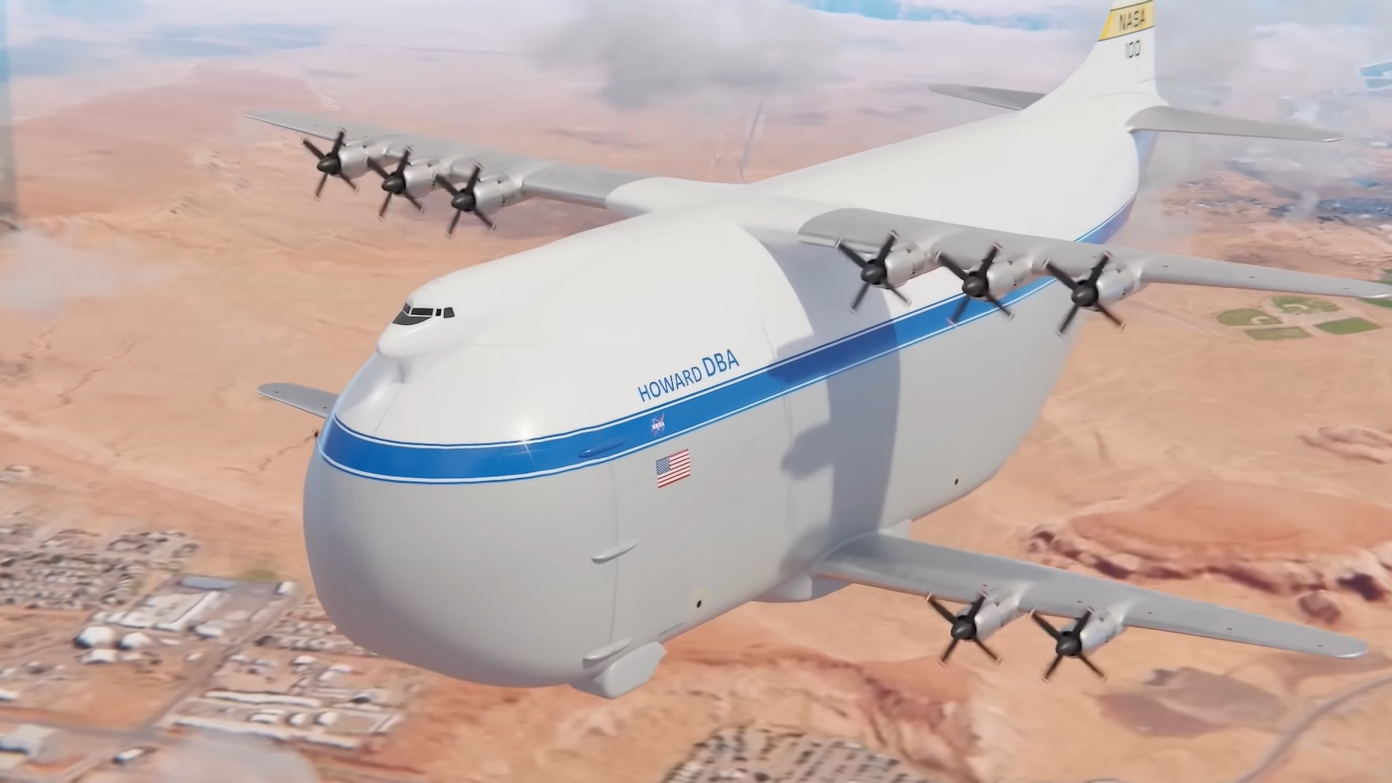
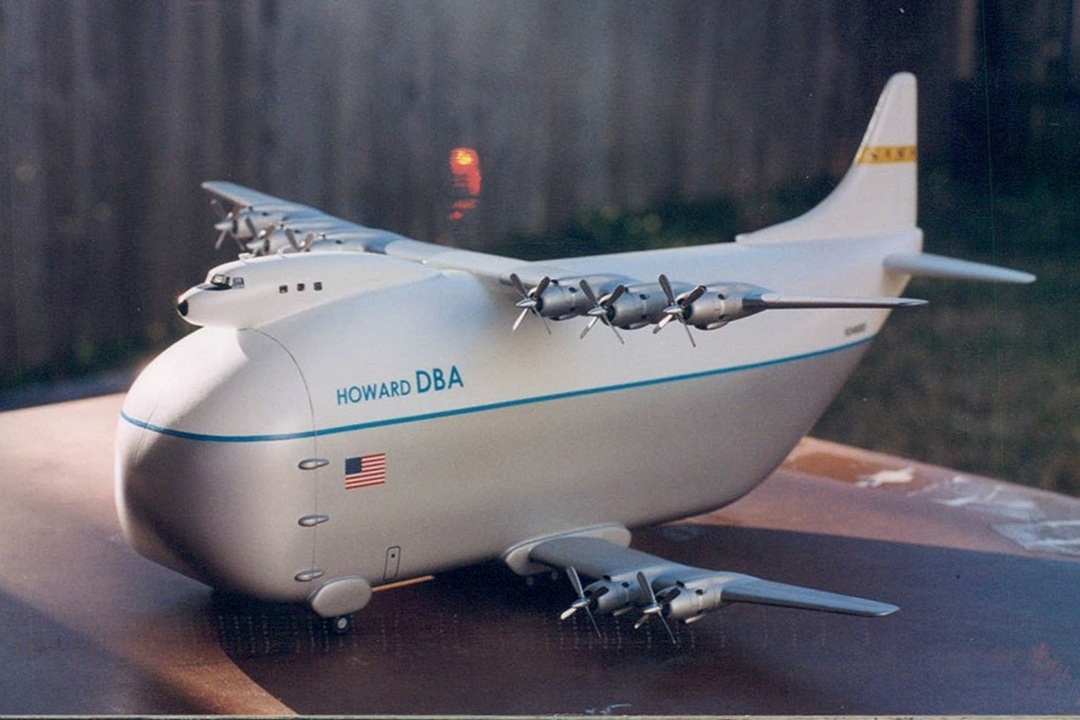
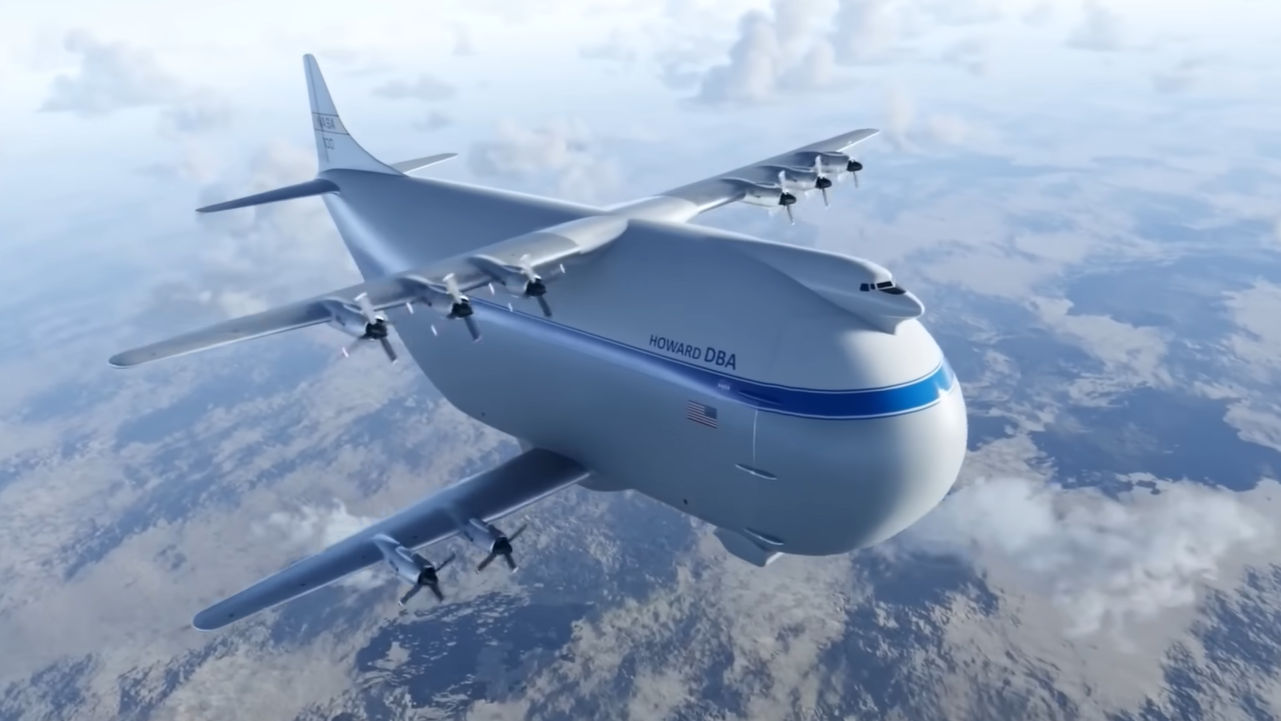
Either way, what Dee Howard designed was frankly crazy. The aircraft, officially named the DH-100 DBA, or more affectionately, the “Damn Big Airplane,” was utterly insane in scale. Reportedly, it would have had a cargo hold diameter of 40 feet and a length of around 200 feet. The aircraft would have been in a sort of biplane configuration with four 40-foot wings. Attached to the top wings would be a total of six radial engines; four more would live on the lower wings.
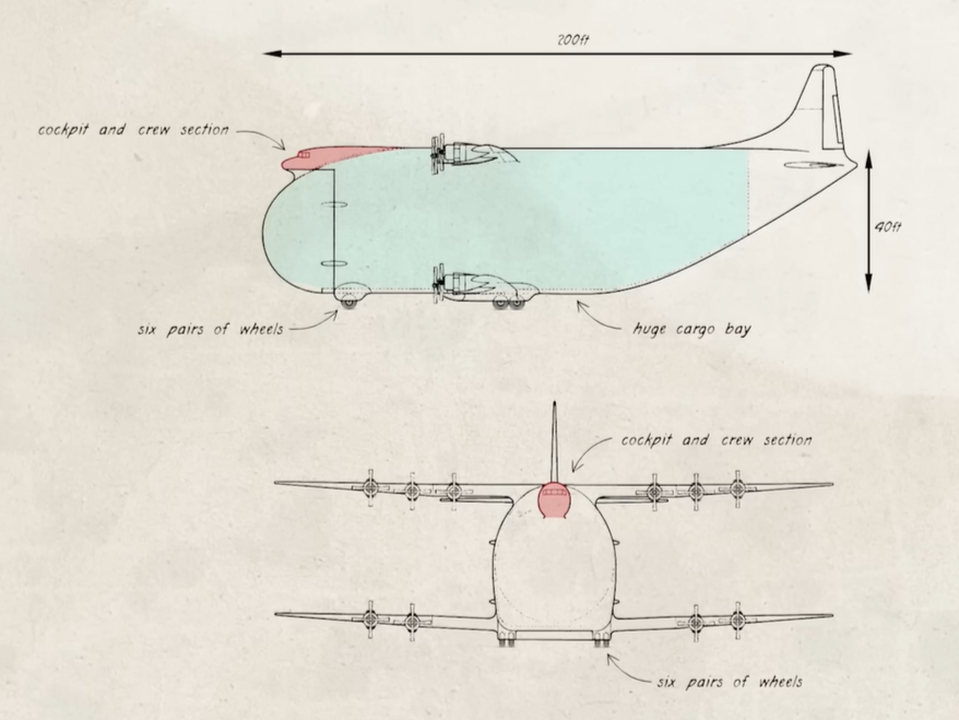
These engines were to be spare 18-cylinder Wright R-3350 Duplex-Cyclone turbo-compound radials from a Douglas DC-7. These engines were good for up to 3,400 HP each. For those of you counting, that’s 34,000 HP, 360 spark plugs, 180 cylinders. The landing gear would have consisted of a total of 20 wheels.
The aircraft was said to be a bit of a parts-bin special, with the wings coming from a Convair B-36 and the crew cabin bubble at the top being a Douglas DC-7 fuselage section. Nabbing parts from as many other planes as possible would have reduced construction costs.
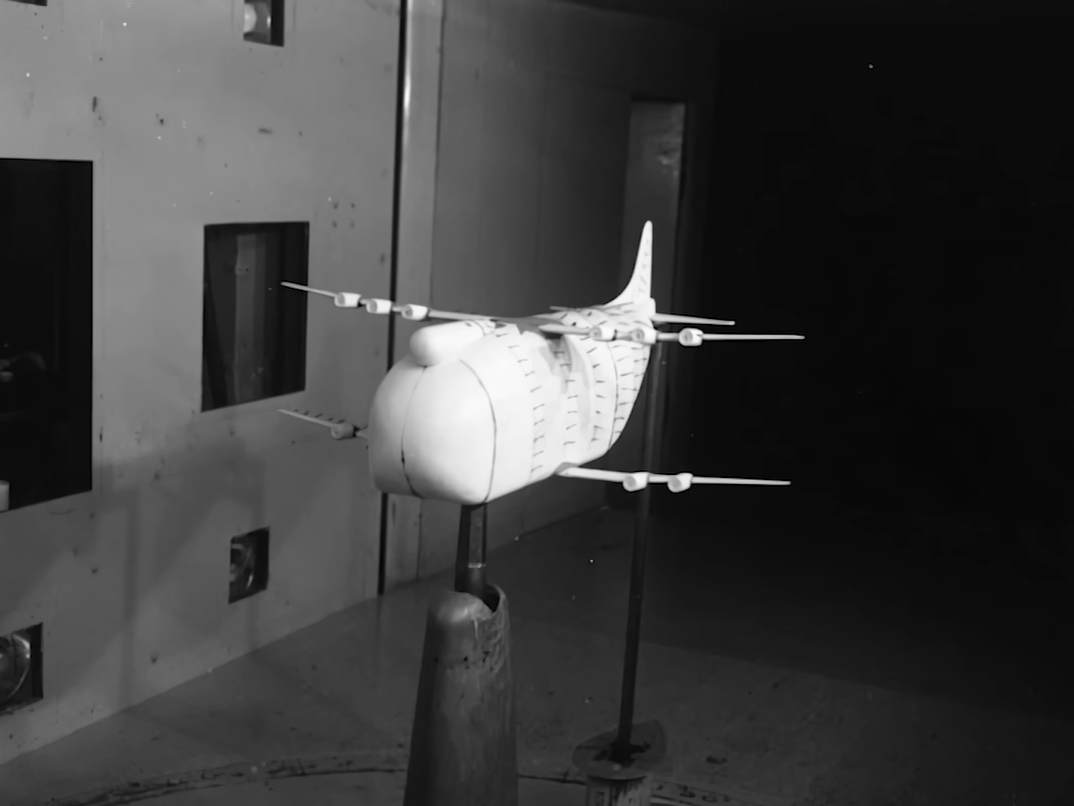
Reportedly, DH-100 DBA development progressed enough that a scale mockup was built and subjected to testing at the LTV Aerospace Low Speed Wind Tunnel. Allegedly, the wind tunnel testing suggested that a full-scale version of the Dee Howard HD-100 DBA could fly. That’s not very difficult to believe, given that aircraft like the Super Guppy, the Boeing 747-400 Large Cargo Freighter “Dreamlifter,” and Airbus A300-600ST “Beluga” get around just fine.
The DH-100 Was A Dead End
However, it’s reported that NASA was no longer interested in the aircraft, and development did not proceed beyond the wind tunnel model. It’s not said why NASA wasn’t interested in the aircraft. For the record, I saw no reports from NASA’s side about this aircraft. This video from Found And Explained shows a decent 3D render of DH-100, but warned, as the author of the video also advertises a terrible AI slop app for some reason:
What is known is that the Aero Spacelines Super Guppy took its first flight in 1965 and started hauling Saturn V components in 1966. Assuming the reports that NASA was interested in the DH-100 were true, it seems to me that Dee was beaten to the punch by the company that had already produced the Pregnant Guppy.
The Saturn II was also not produced, so if the DH-100 was built to carry it, that role would not come to fruition. It’s also unclear how this beast of an aircraft would have fared during the multiple oil crises of the 1970s.
Ultimately, Dee stopped pursuing the DH-100 and sold his company in 1990. But he never really gave up the dream. Dee would reach out to Tom Prescott of Prescott Products in Boerne, Texas, to at least make a scale version of the DH-100 that would fly. At the time, Tom was known as a skilled model aircraft designer and pilot.
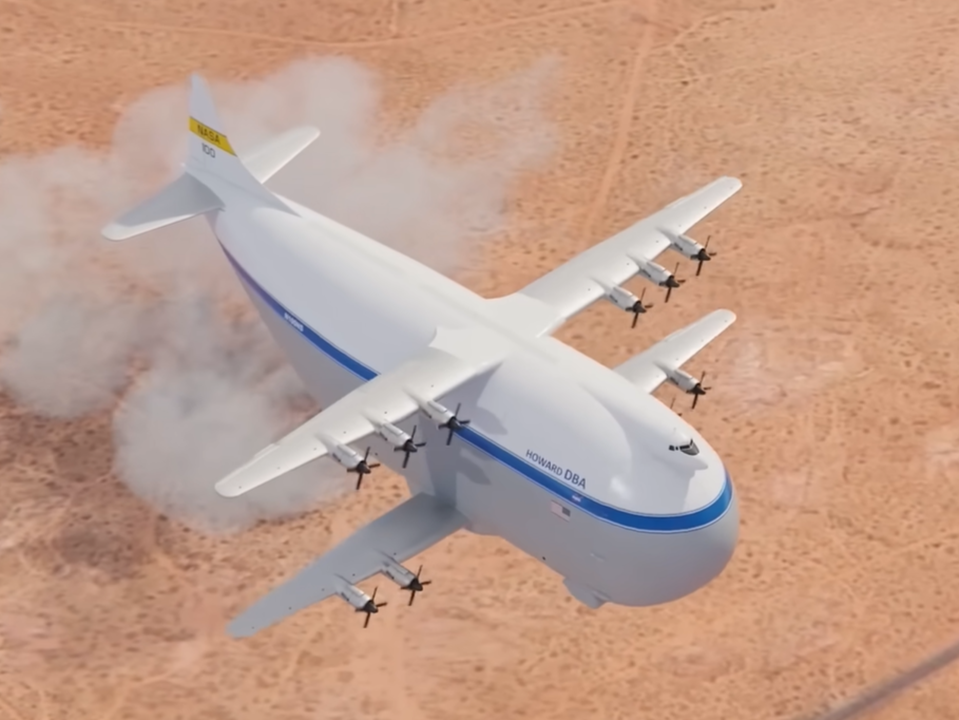
Tom’s first model of the DH-100 DBA was 1:16 scale and was built out of balsa, fiberglass, foam, and plywood. The test mule’s wingspan was 12.5 feet. Attached to those wings were 10 YS FZ53 four-stroke glow engines, each with its own 12-ounce fuel tank. The mule was fully functional, featuring ailerons and flaps on all four wings, an elevator on the horizontal stabilizer, a rudder, and 20-wheel landing gear. The model had a total of 24 servos, enough fuel for 20-minute flights, and a maximum takeoff weight of 100 pounds.
Tom flew the scale DH-100 DBA for the first time on August 21, 2001, proving for a second time that Dee’s design actually made some sense. Apparently, Tom put a desktop model of the DH-100 into production and planned to refine the panels of the RC plane version to accurately match the look of the DH-100 DBA design.
Sadly, no other photos of the DH-100 exist outside of two pictures of the desktop model and two pictures of the wind tunnel model. The other images you’ve seen here are 3D renders. Durrell U. “Dee” Howard would pass in 2009, taking the dream of the Damn Big Airplane with him.
Almost Unbelievable
I didn’t believe the DH-100 was real at first. I thought it had to be some April Fools’ joke or maybe some hallucination of AI. Yet, this really was an aircraft that Dee tried to build and was partially validated at least twice. However, it seems like Dee might have been trying to build an aircraft for a future that never came. Even if you ignored the Super Guppy, the iconic Antonov An-225 Mriya served the role as a colossal cargo transporter for decades before it was destroyed in 2022. Then there are the other heavy-lift aircraft out there, too.
But maybe the DH-100 could have had a place. Radia is still trying to convince everyone that there needs to be a plane with 12 times the cargo volume of a Boeing 747-800F.
I suppose it’s all theoretical in the end, because this plane never went further than a flying scale model. Still, it’s wild that Dee even thought this thing up, anyway, and that something that looks like this is theoretically capable of flight. It’s fun to think that, in another reality, there’s a chance that there could have been a plane in the world that looked ripped right out of a Despicable Me film.
Top graphic image: Found and Explained/YouTube




Aeroscopia in Toulouse has a Super Guppy on display, and will soon have a Beluga (along with a Concorde and an A380).
I have been to Toulouse 3 times and been to this museum twice. 🙂
https://www.aeroscopia.fr/
Are we not doing phrasing anymore?
The fact that the Super Guppy was built in 1965 just reminds me how OLD so many planes in the sky really are. Over 60 years?!
This plane would have been a logistical nightmare!
Those engines would have required a LOT of routine maintenance. How did they expect that to safely happen? You would need custom cranes and an aerodrome that would cost as much as the aircraft!
I feel like at least with a staggered wing arrangement, you could put a scissor lift underneath the upper wing to get at the engines. It would also keep the oil from the upper engines from messing up the lower wing. I’m not sure if it would improve your center of balance or not. I am not an aerospace engineer.
“The Super Guppy swallowed large loads”
If only there were more like it….