


There is always something magical about a great concept car. Engineers and designers come together to make a vision of what could be. Concepts capture the hearts and minds of enthusiasts, and sometimes, automakers are brave enough to put them into production. Many concept cars disappear shortly after their time in the spotlight, and they rarely fall into the hands of the Average Joe. That was the case for this Ford Probe IV concept car. Once an optimistic idea for the future, the car disappeared. Now, it’s back, and amazingly, it’s for sale on Facebook, of all places.
You might think that most concept cars get to live a cushy life. Talented people put tons of work into making a concept car real. Then, their hard work gets to be seen by potentially millions of people. It would be a fair assumption to think that concepts get to retire to some great hall where automakers preserve history.


Sadly, the reality is that a lot of concepts are sometimes left outside to rot or are sent to the crusher. It was only last year when car enthusiasts spotted some of General Motors’ famous concepts headed to the crusher. A few years before that, there were some Nissan concepts that were in a sorry state and headed for the great auto show in the sky.
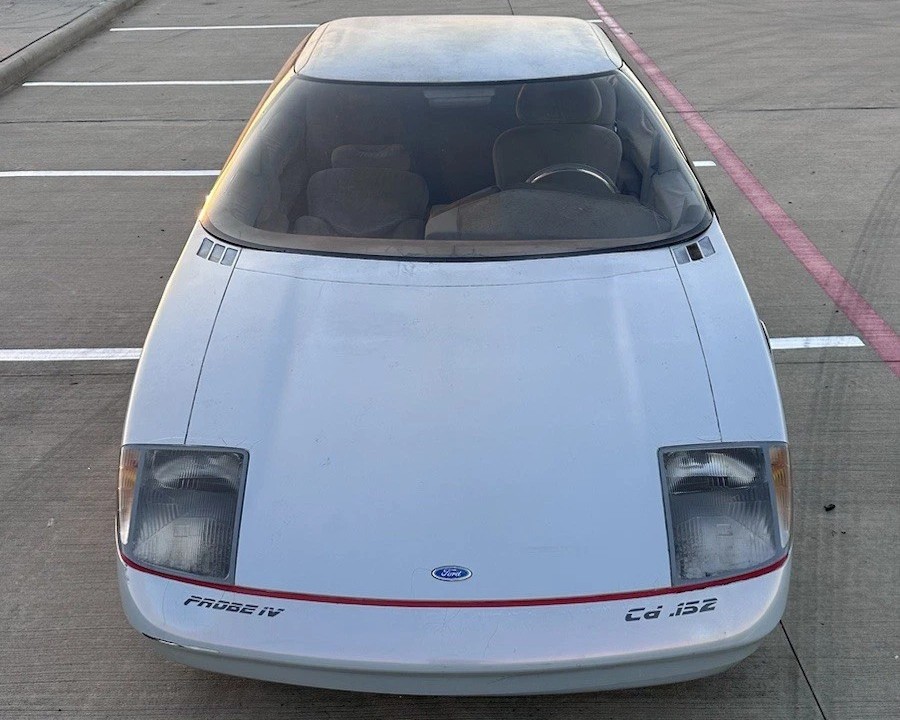
Some concept cars manage to leave the houses of their automakers, but also don’t get crushed. These cars fall into the hands of private collectors and museums. One of those concepts is this Ford Probe IV, which was originally found by the folks at Ford Authority. This is a concept car that you can buy right now! But there’s a catch.
Going All-In On Aero
Ford built a series of five Probe-branded concepts, and they were originally born in the influential period that changed the trajectory of car history. Yep, we’re going back to the 1970s, the time when the auto industry was effectively turned upside down. The decade was pockmarked with multiple oil crises, skyrocketing oil prices, and economic unease on top of a greater effort to protect vehicle passengers and also reduce emissions. Cars downsized, horsepower figures plummeted, and car design got funky. The horsepower wars of the 1960s turned into a race to build vehicles that sipped the least amount of fuel. Automakers also had to be concerned with the Corporate Average Fuel Economy standards that were introduced by the Gerald Ford administration.
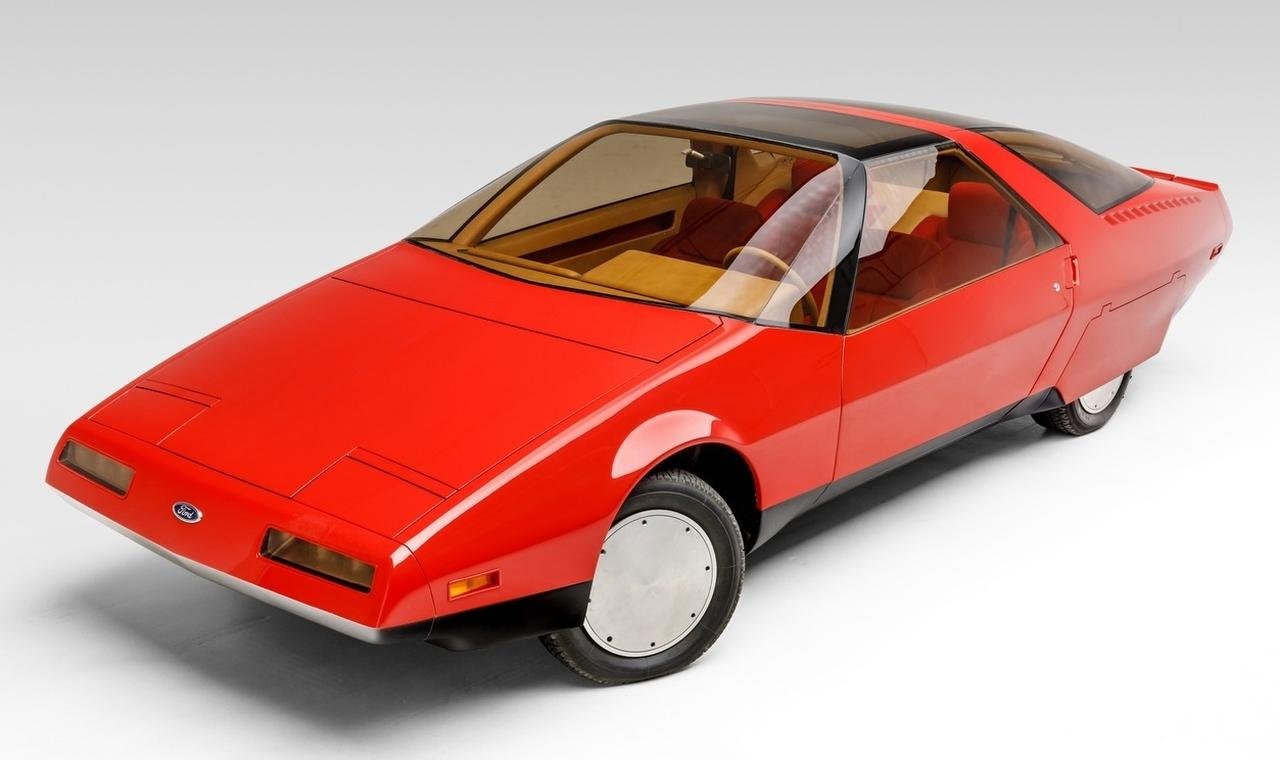
The problem was that Ford, like other automakers, discovered that transitioning from the gas guzzlers of the early 1970s to more efficient vehicles was not going to be easy. Automakers had entire lineups of boxy, inefficient cars. Instead of reinventing the car, the automakers decided to make them slick.
As Ford Authority writes, Ford became obsessed with the idea that the cars of the future would be super slippery and thus need only a small four-cylinder engine to move with gusto. Ford would team up with Carrozzeria Ghia to create the Probe I, which made its debut at the Frankfurt Motor Show in September 1979. This car was based on a Fox Body Mustang and, at the time, MotorWeek said it was the slickest car to ever wear a Blue Oval. This was thanks to extensive aerodynamics research and wind tunnel testing done by Ford and researchers at the University of Maryland.
The result was that the car, which was functional, had a drag coefficient of 0.25. That was incredible, given that, at the time, the Mustang the Probe I was based on had a drag coefficient of 0.39. To put this into perspective, a 2010 Toyota Prius is just as clean through the air as this concept car from 1979.
Of course, the future wasn’t just slippery, as Ford also baked in some typical concept car accoutrements. The Probe I had a retractable instrument panel and even a credit card “key” that could be used to start the car and to pay for gas and tolls. Sadly, the Probe I was lost in a fire last year. You can read our coverage of that by clicking here.

Our secret designer, the Bishop, details the next couple of Probe concepts:
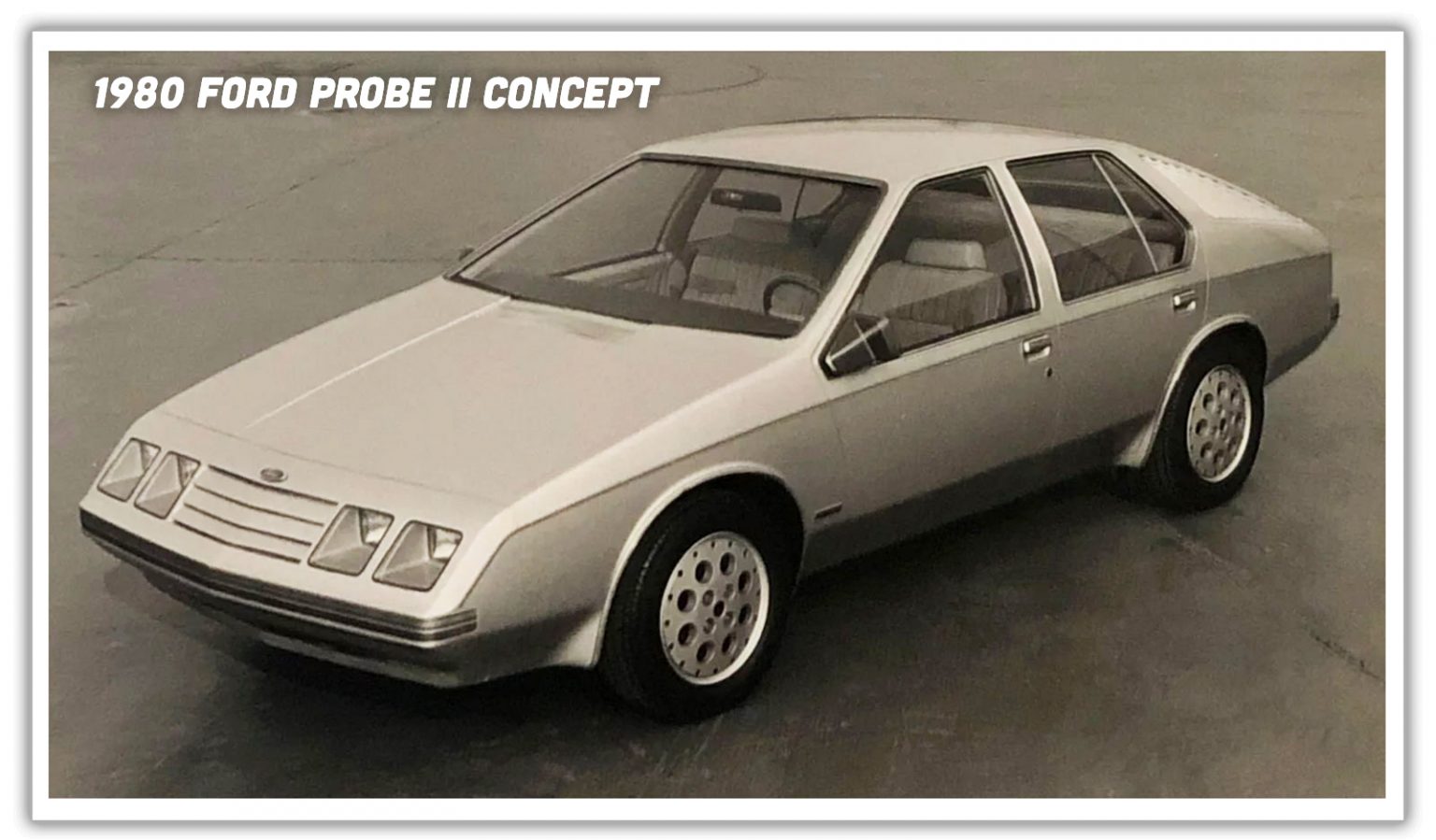
In the real history of Ford, the Probe I went into mothballs while they continued to pump out new versions of low-drag Ghia-built concepts. The Probe II came next, and it was a rather disappointing semi-productionized version of the Probe I.
Next up was the Probe III, the only Probe to ultimately be transformed into a production car, namely the European market Ford Sierra (sold here briefly as the Merkur XR4Ti).
Slicing Through The Air Like A Jet
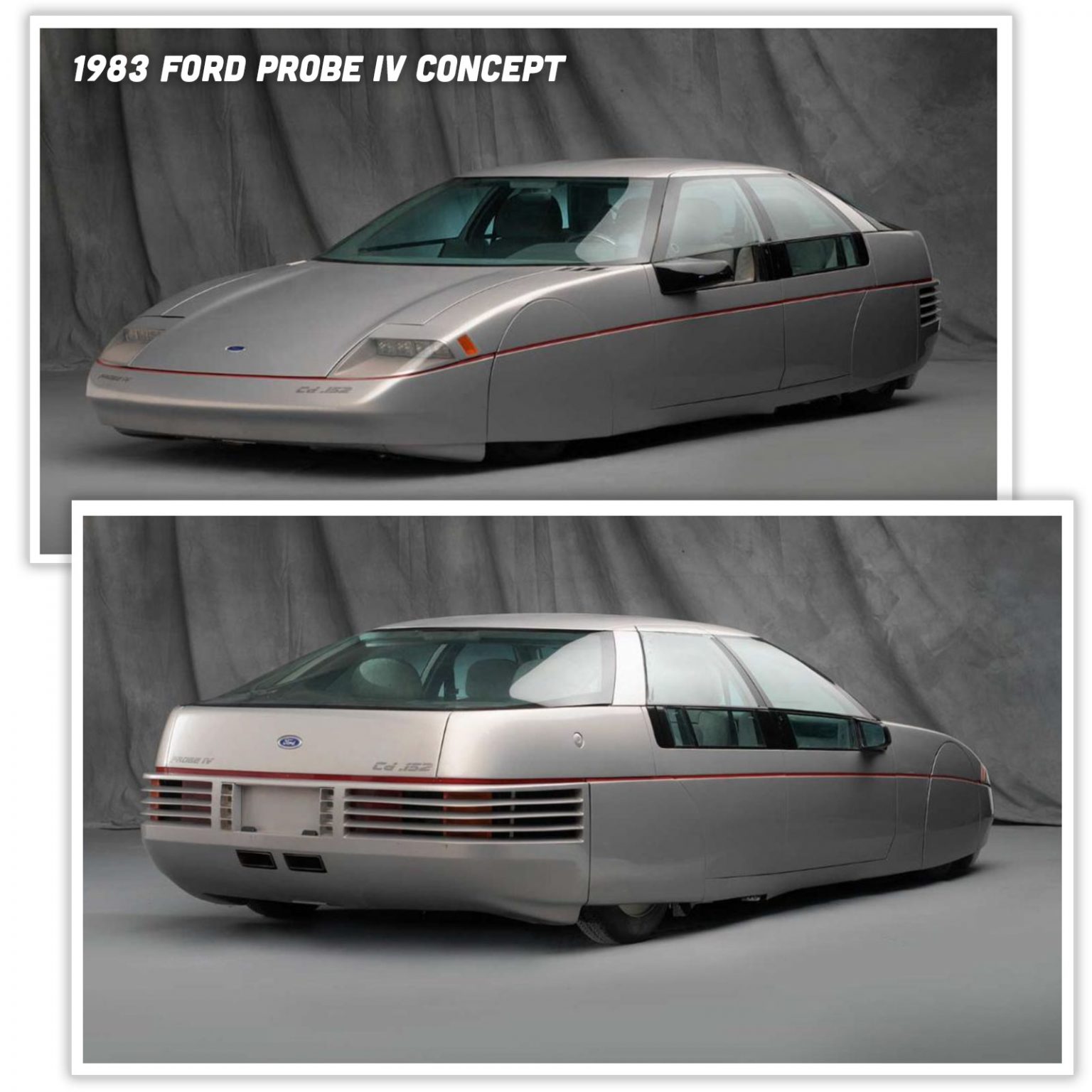
The Probe concepts returned to madness in 1983 when Ford built a pair of concept cars that it dubbed the Probe IV. Ghia was around to help build this one, too, and by this time, research in aerodynamics had allowed Ford to achieve something incredible. Here is what Christie’s says about the Probe IV:
Probe IV advanced the state of aerodynamic art at Ford to a new level, going to great lengths to make its surfaces as smooth as possible and present the minimum frontal area. A low ride height minimized undercar airflow and the Probe IV went to the extent of creating a speed sensitive ride height and attitude system. Probe IV could assume a pronounced nose-down attitude at speed. In fact, the back of Probe IV could rise six inches while at the same time the nose dropped four inches at high speed, improving its stability and air penetration. The front air dam was also electrically controlled, compensating for attitude changes and driver controllable to compensate for rough surfaces.

Headlights were under plastic covers. Side windows were flush in their frames with small power operated panels at the bottom for ventilation and paying tolls. The radiator and air conditioning compressor were located at the rear in order to eliminate a high drag radiator opening in the front (or nose). A full belly pan smoothed the limited undercar airflow that the air dam and attitude control let through and the tires were specially-developed for Probe IV, skinny P155/75R-16 LDC Goodyear tires that even had a low drag tread pattern. Even the identification and emblems were flush with the Probe IV surface. The only interruption to exterior air flow were the outside mirrors, which were in faired-in and sharply swept back enclosures. Mechanical innovations were required to meet Probe IV requirements including a highly sophisticated short MacPherson strut front suspension. Its front engine, rear drive chassis was powered by a 1.6 liter 4-cylinder turbocharged engine which was canted 70 degrees to the side to lower the hood.
One of Probe IV’s most distinctive features are its fully-skirted wheels and tires which utilize membranes between the outer covers and the body. The membranes flex when the front wheels are turned and allow Probe IV to be driven normally, but drastically reduce wheel well turbulence and resulting aero drag. The occupants of Probe IV sit in specially designed grey velour “sling” style seats designed to provide lumbar and thigh support in a semi-reclining position which saves 1½ inches in roof height. Instruments are placed directly in front of the driver with other controls in elaborate black panels with white legends on each side of the wheel. The top of the single-spoke steering wheel is transparent. The transmission shifter and additional controls are placed on the center console.

Perhaps the wildest part about the Probe IV was its drag coefficient of just 0.152. This is often reported to be the same as an F-16 fighter jet. Probe IV chassis 002 is currently owned by Scott Grundfor and Kathleen Redmond, the pair who also owned the poor Probe I that burned to the ground. Chassis 002 is functional, sporting a turbocharged 1.6-liter inline four rated at 122 horsepower. Given the ridiculous aero, that would theoretically be enough ponies for both some speed and for great fuel economy. If you want to see that car, it’s currently on loan with the Petersen.
The Probe IV is a properly funky car, with a single-spoke steering wheel, buttons all over the place, and velour seats. Sharp observers might note that there’s more detail in chassis 002 than in the typical concept car. It has a physical parking brake, seat belts, and what appears to be a real HVAC control panel.
This Probe IV
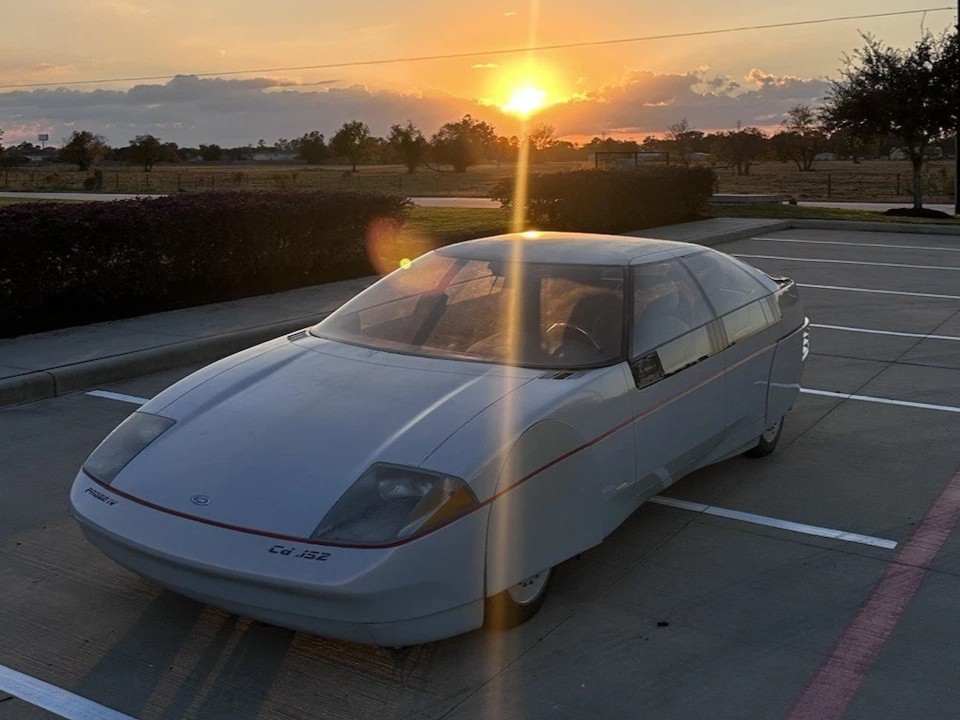
You have also likely noticed by now that I’ve been talking about chassis 002. Yes, there is a chassis 001, and you’re looking right at it. Chassis 001 was sold with chassis 002 in 2002 in an auction by Christie’s. Probe IV chassis 001 sold for $11,750 in that auction, while chassis 002 sold for $48,175. Chassis 002 would sell again in 2022 for $125,000.
Allegedly, it wasn’t exactly known what happened with chassis 001 in the years since the auction. According to the seller today, Alejandro, this concept car was acquired by Houston-based car dealer magnate and former Houston Auto Show chairman, Tony Gullo. Tony passed in 2024, and his family liquidated his over 300-example car collection. That’s how Alejandro got the concept. He told me that he found it while buying a different car. Who doesn’t want to own a concept car? Of course, he had to pick it up.
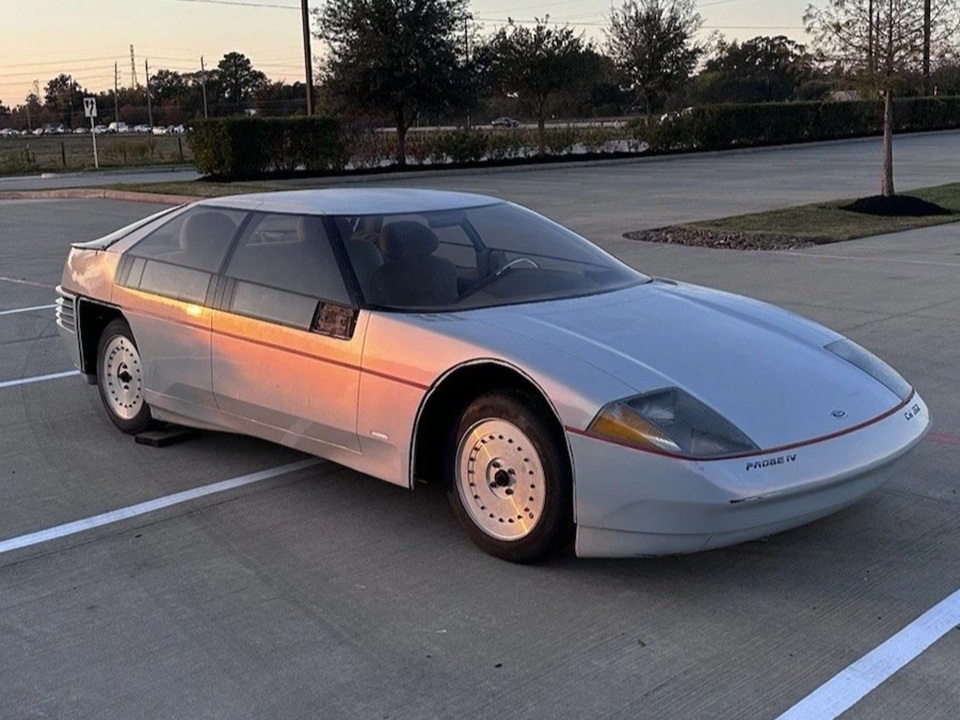
Probe IV chassis 001 is a very different car from chassis 002, in that it’s not really a car at all. The vehicle is built on a wooden frame that supports steel subframes front and rear. Those subframes don’t support any running gear at all. Instead, they just hold the rolling and steerable wheels.
Check out the chassis:

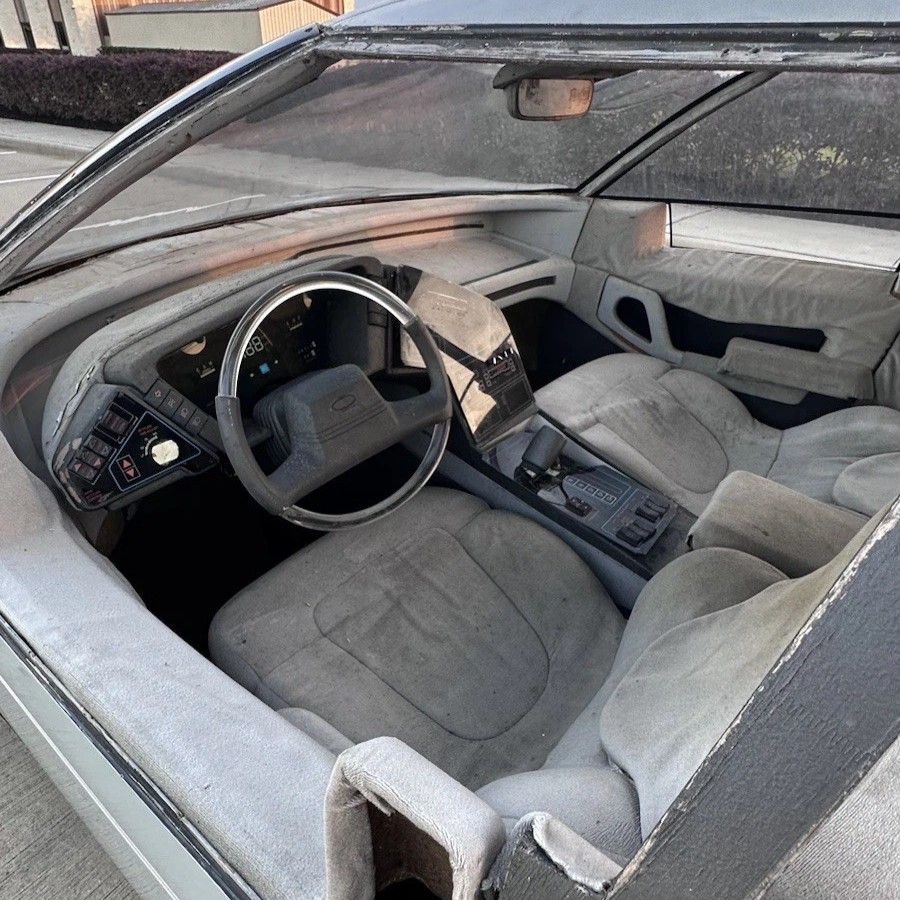
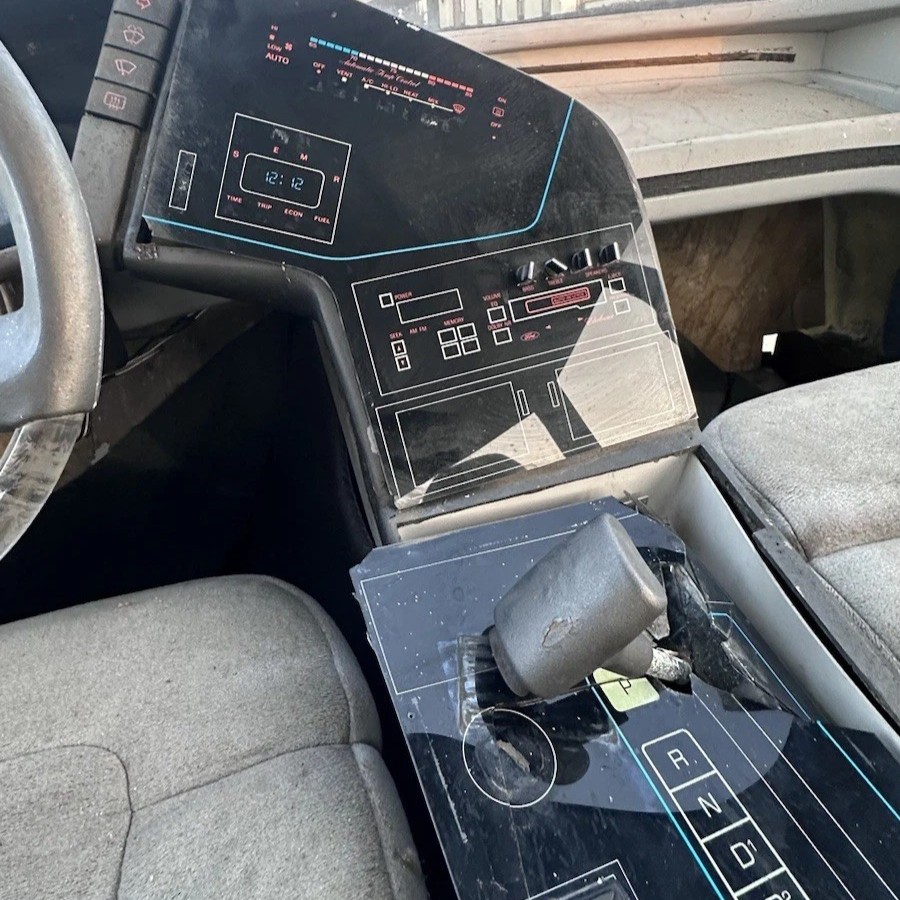
The body of chassis 001 is fiberglass, and it’s one big slab of composite. The doors and trunk do not open. But if you were to peer inside, you’ll see that the concept car has a full interior, sort of. The seats are real, but you’ll quickly notice huge differences between the functional concept car and the non-functional version. There are no seatbelts, all of the buttons on the dashboard are fake, and the gear shifter is fake, too. It’s a pretty shocking contrast compared to the functional Probe IV concept.
The interior of chassis 001 looks like a low-poly rendering of the functional chassis.
Alejandro notes some additional quirks:
Construction & Features
– Composite fiber body mounted on a wood structural chassis with steel subframes for wheel assemblies.
– Manual-adjustable front and rear suspension for testing purposes.
– Active front splitter, electrically actuated.
– Front and rear lighting assemblies wired, including center console lighting (non-tested).
– Unique two-piece wheels with custom tires made specifically for the Probe IV.
– Tires hold air but have leaking valve stems.
– Fully realized interior, closely matching Chassis 002.
– Display-only vehicle (no engine or functional steering).
– Wheels can be manually positioned for loading or display.
Apparently, this chassis was used for aero development and wind tunnel testing.
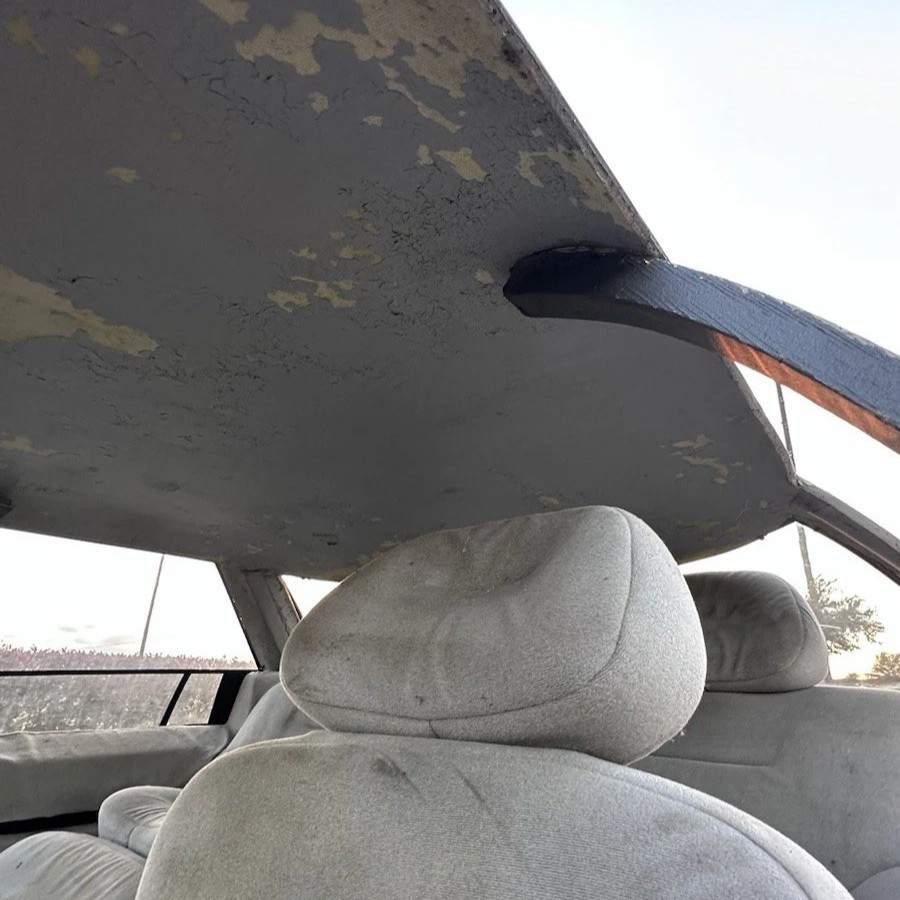
It’s noted that the concept has deteriorated a bit. In the 2002 auction, the listing said “condition is poor” and that the paint was failing. Today, Alejandro says that the rear portion of the vehicle’s roof has somewhat collapsed, the fake center console is broken, the side mirrors are gone, the right front wheel cover is gone, the left front wheel cover doesn’t stay on, and everything looks pretty dingy. In other words, it sounds like the concept has aged terribly.
That Belongs In A Museum
It’s also hard to figure out what one would even do with this concept. In theory, you could make it a real car, but that would require cutting the doors to make them functional, giving the vehicle a real frame and powertrain, giving it a real interior, and then convincing a regulatory body to slap license plates on it.
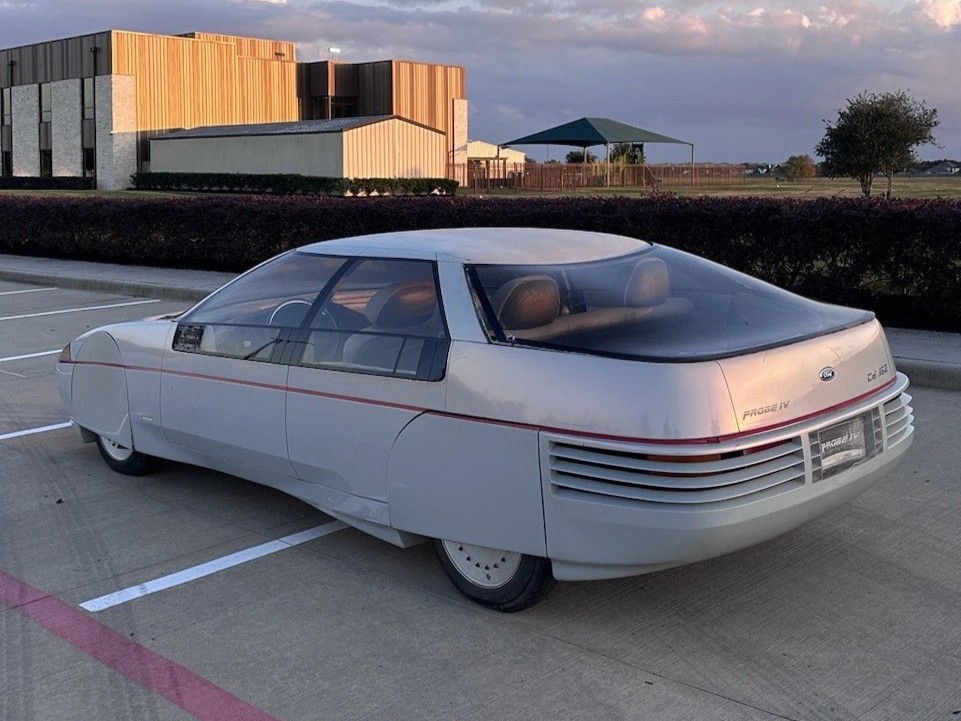
Realistically, this is more or less a rolling sculpture that some enthusiast or museum will probably put on display somewhere. It’s a shame that you can’t even sit in it. If you’re still interested, Alejandro, who is based in Spring, Texas, is taking offers. He recently tried selling it on eBay, where nobody bought it for the asking price of $30,000.
While this isn’t really a real car and its practicality is zilch, I still find it exciting. This Probe IV is a concept car that’s for sale on Facebook! That alone is such a weird statement that has me with a stupid smile. I love how people can just find weird things like this and then one day sell it like you would a $3,000 beater. What will you do with this? Maybe hop onto Facebook, shoot an offer, and find out. At the very least, maybe you’ll get to save a concept car from the crusher.
(Topshot image graphics: Ford, Alejandro)


“Perhaps the wildest part about the Probe IV was its drag coefficient of just 0.152. This is often reported to be the same as an F-16 fighter jet.”
This is just nonsensical. First, drag coefficients are not constant; they vary with speed, and change drastically as bodies approach supersonic speed because of a dependency on Reynolds number and Mach number (which is why these are called “similarity parameters”; if you want airflow over a model to behave the same as over the full-size vehicle, these must match). Second, aircraft aerodynamic coefficients are referenced to theoretical wing area, not frontal area like cars. Even a high-drag (relative to things like commercial passenger jets) aircraft like a fighter has a zero-lift subsonic drag coefficient an order of magnitude smaller than a car, on the order of 0.020-0.025.