

One of the coolest ways to get a neat motorhome without blowing a million dollars or rolling the dice on an old rig procured via Facebook Marketplace is to buy one that was built out of a bus. Countless builders have turned school buses into wonderful motorhomes, but the transit bus shouldn’t be ignored, either. A transit bus motorhome has several benefits over a school bus, and as you’re about to see, you can still get a cozy rig for not a lot of money.
A school bus is an easy pick for a custom motorhome builder. School buses are designed to be safe enough and durable enough to carry schoolchildren for potentially a couple of decades of service. These buses feature metal bodies, common and reliable diesel engines, and they’re often easier to work on than, say, a fancy Prevost coach.


School buses do have their limitations, however. Many models have roofs that are too low for tall adults, and nearly all of them sit pretty high off the ground, requiring you to climb steps to get inside. School buses also often have somewhat rough rides and little in the way of luxuries. The most common school buses that you’ll find in a surplus auction might not even have an air conditioner.

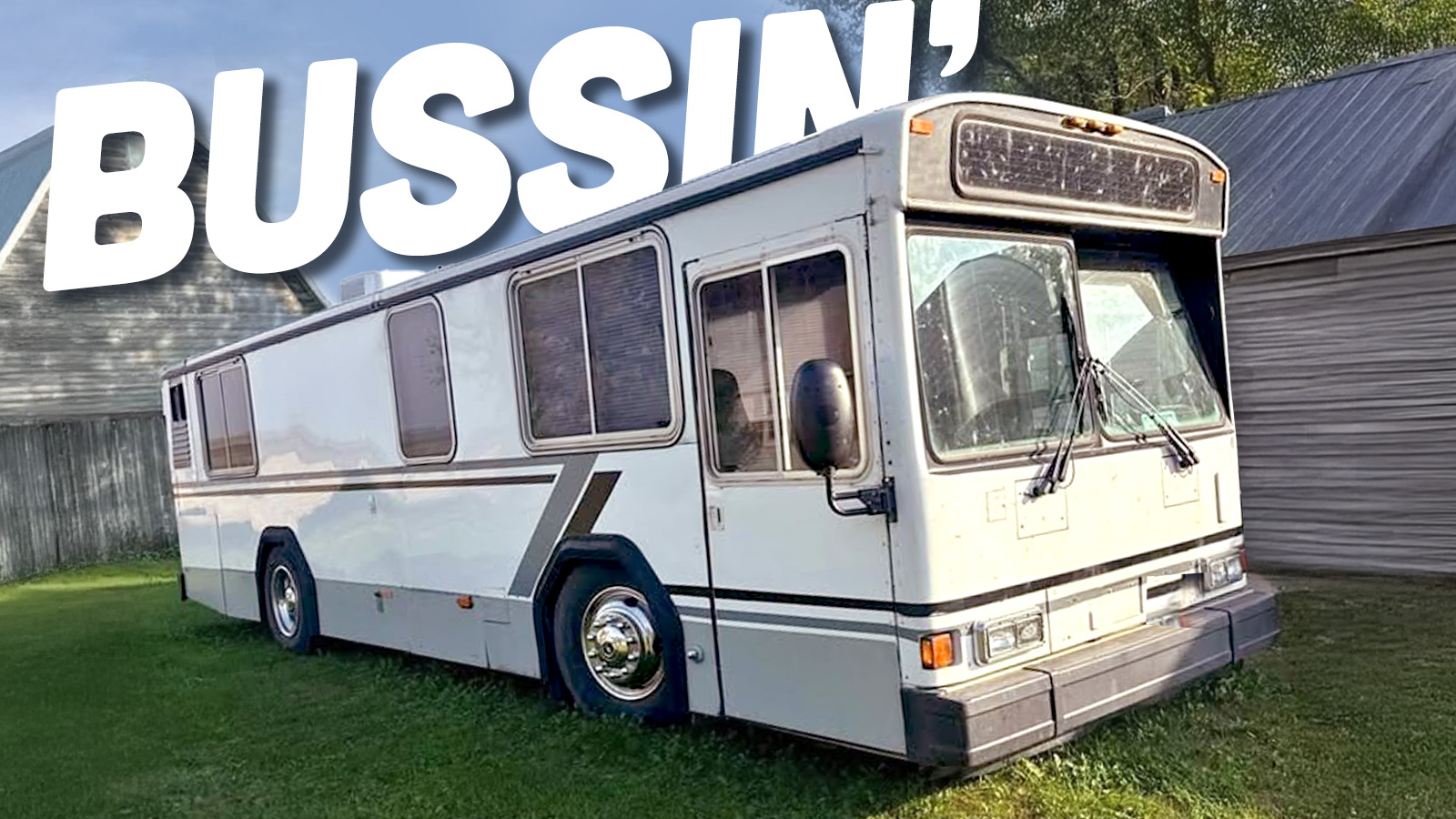
An alternative to this can be the transit bus. These buses are still dirt cheap in government auctions, but they have low floors, high ceilings, air ride suspensions, and ice cold air-conditioning. Play your cards right, and you can even get a city bus that is geared to go highway speed. This 2001 Gillig Phantom started life as a city bus, and now it’s a very affordable $10,000 home on wheels.
A Transit Evolution
Gillig is one of the first names in transit buses. If you live in or near one of America’s great cities, you have almost certainly ridden in a Gillig at least once in your life.
The brand dates back to 1890 when the Gillig brothers built carriages out of a shop in San Francisco. The company would expand into car bodies and commercial vehicles in the 1910s before building its first school bus in 1932. Like many bus constructors, Gillig found so much success in building buses that buses became the business’s main product.
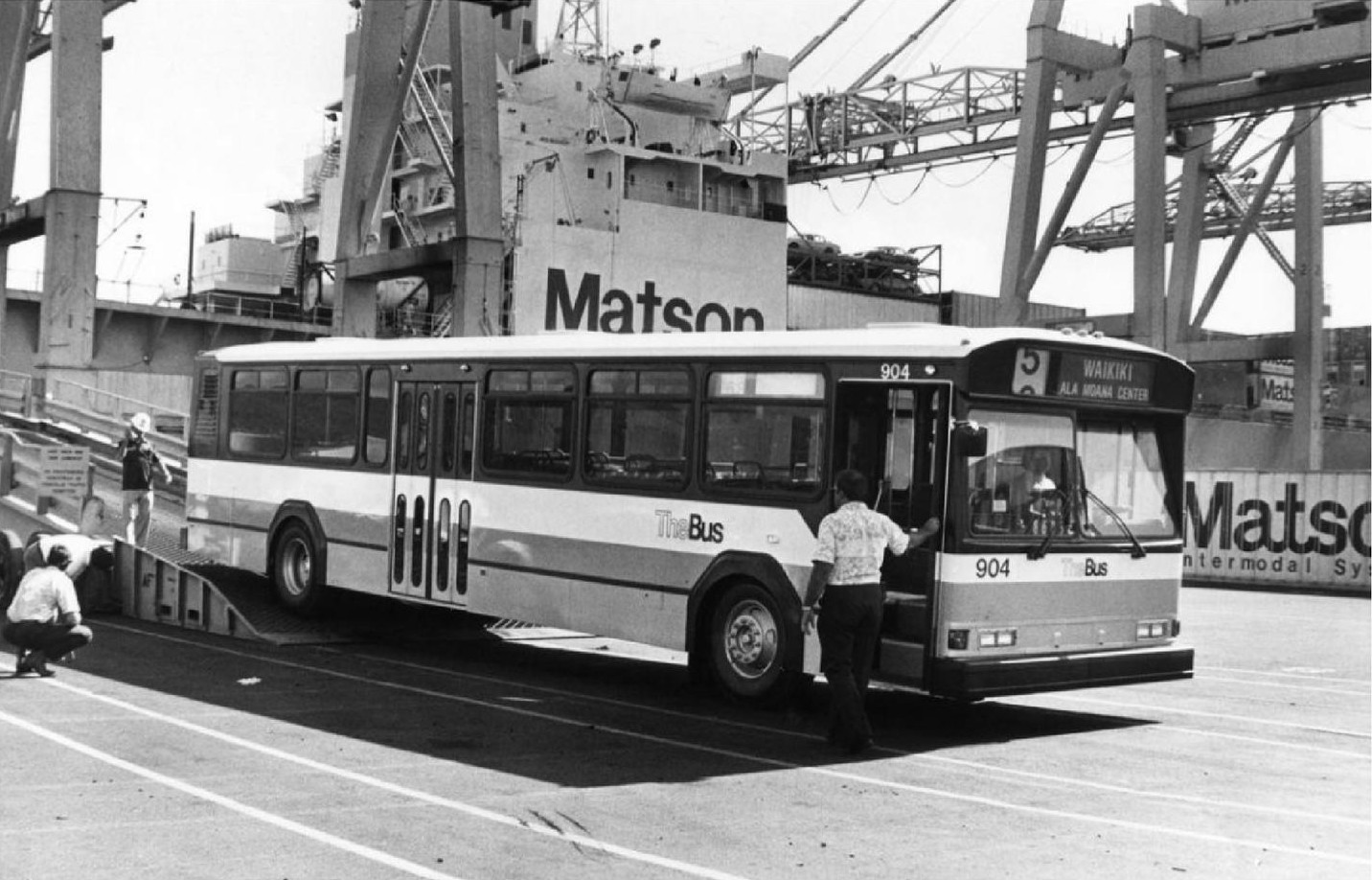
In 1937, Gillig made its first transit bus. Throughout much of its early history, however, Gillig would find the most success in selling school buses. The Pacific Bus Museum notes that Gillig did not become a serious player in transit buses until 1976. That year, Gillig inked a deal with German bus producer Neoplan to build the latter’s bus in America under license. The Gillig-Neoplan was born, and while it was a short-lived bus that was discontinued in 1979, it proved to Gillig that there was potential in transit buses. This was important to Gillig, as its share of the school bus market was shrinking and it needed to bridge the gap.
In 1981, Gillig launched an original heavy-duty transit bus design, which was named the Phantom. Gillig designed the Phantom as a high-floor solution for smaller transit operations and private companies. However, the Phantom’s popularity would see it competing with titans like the General Motors RTS-II. Here’s what Gillig says about the Phantom:
A heavy duty, high floor transit bus that set the standard for reliability, durability and value when it was introduced in the early 1980’s. Designed for simple and easy maintenance, the Phantom introduced the T-drive to transit (now most buses are T-drive), and it proved that efficiency, performance, reliability, and economy could be built into the same vehicle.
The Phantom soon gained the reputation of being a fleet workhorse, and as demand for it grew, so did the available models and options. 35′ and 30′ models were added to the already proven 40′ bus, and they were all available in both 96″ and 102″ widths (however, emission regulations and ADA requirements have now rendered the 96” wide models obsolete).

A bus in a T-drive configuration mounts the engine and transmission inline with the chassis. Prior to the popularization of the T-drive in transit buses, it was common for city buses to use a V-drive, wherein the engine and transmission were transversely mounted. Gillig was not the first to do a T-drive, but the Phantom helped make the practice popular in transit bus applications.
T-drive has a great advantage in that it’s a pretty standardized, relatively simple layout. V-drives tend to be more compact than equivalent T-drives, but T-drives often have greater choices for gearing. In the four-stroke diesel era, the T-drive’s flexibility has won out over the space savings of the V-drive.
Anyway, the Phantom was produced from 1980 to 2008, and was sold in three major versions. The Phantom was sold as a standard city bus, a suburban bus with a more friendly layout for a longer route, and as a funky school bus.
That brings us to the Phantom that is for sale today.
This Cozy Phantom

This 2001 Gillig Phantom starts off as a pretty decent platform. It sports a rear-mounted 10.8-liter Cummins ISM straight-six diesel rated for 330 HP. This is paired with an automatic transmission, but the seller doesn’t say which one. The seller also doesn’t mention the gearing, either. This part is important. If this coach were configured as strictly a city bus, its top speed might be 57 mph. It can go real highway speed if it has the correct gearing.
Assuming this has good legs for the highway, the rest of the bus has some major positives for an RV buyer. The Phantom has an air suspension, a somewhat lower floor than a school bus, air conditioning, and a ceiling more than high enough for tall people. Of course, the engine setup, air brakes, and air suspension do add a lot of complexity that is not found in common school buses, but for some people, it’s worth it.

Something that I like about transit bus conversions is that they look a lot closer to a typical motorhome. If it weren’t for the destination sign and the goofy windshield, this could almost pass as a factory-built motorhome. Of course, transit buses are not known for their ground clearance, and they also have huge overhangs, so this bus probably shouldn’t be taken anywhere harsher than a smooth dirt road.
Moving inside, this coach has a pretty nice layout. Here’s what the listing says, punctuation added by me:

480 watts solar on roof, all new pex waterlines, propane heat, and diesel heat. 2 roof airs, granite table with leaf, put tires on last year, $3000 worth. New air ride valves & bags, also brakes, like new rear end 2 years ago, 2 air ride seats in front, shore power, 42” flat screen in front, 32” in bed area, new queen mattress in August. 120v and remote propane hookup pass side of bus. New radiator and air to air 2 years ago, was looking bad didn’t want problems. $6000 in parts alone, re-skinned bus sides when I shortened it 3 years ago. Speedometer was changed because odometer did not work. Put 3000 miles on since then. Any questions feel free to ask, I done all the work. Have owned truck repair shop for over 20 years. It’s a good bus.
The interior is a little bit of a mixed bag to me. It looks like it was professionally done, but I think it needs more windows. That’s really just a personal preference on my part because I love natural light.
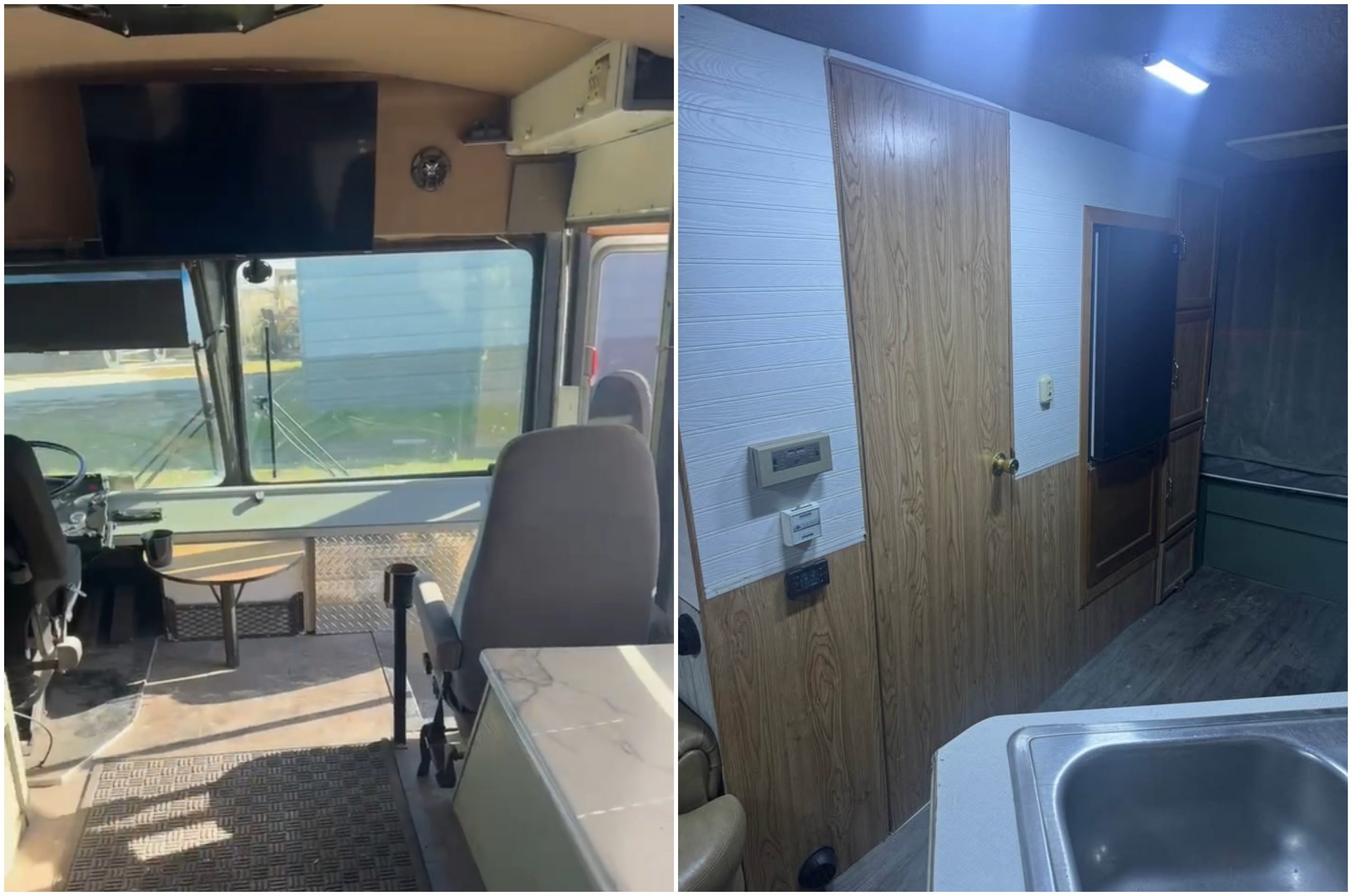
I love how the interior hides the wheel wells. Transit buses tend to have huge wheel wells intruding into the cabin, and in this case, the builder hid them under a countertop and cabinetry. If you think the refrigerator appears to be a little small, it’s because it’s sitting on top of one of the wheel wells.
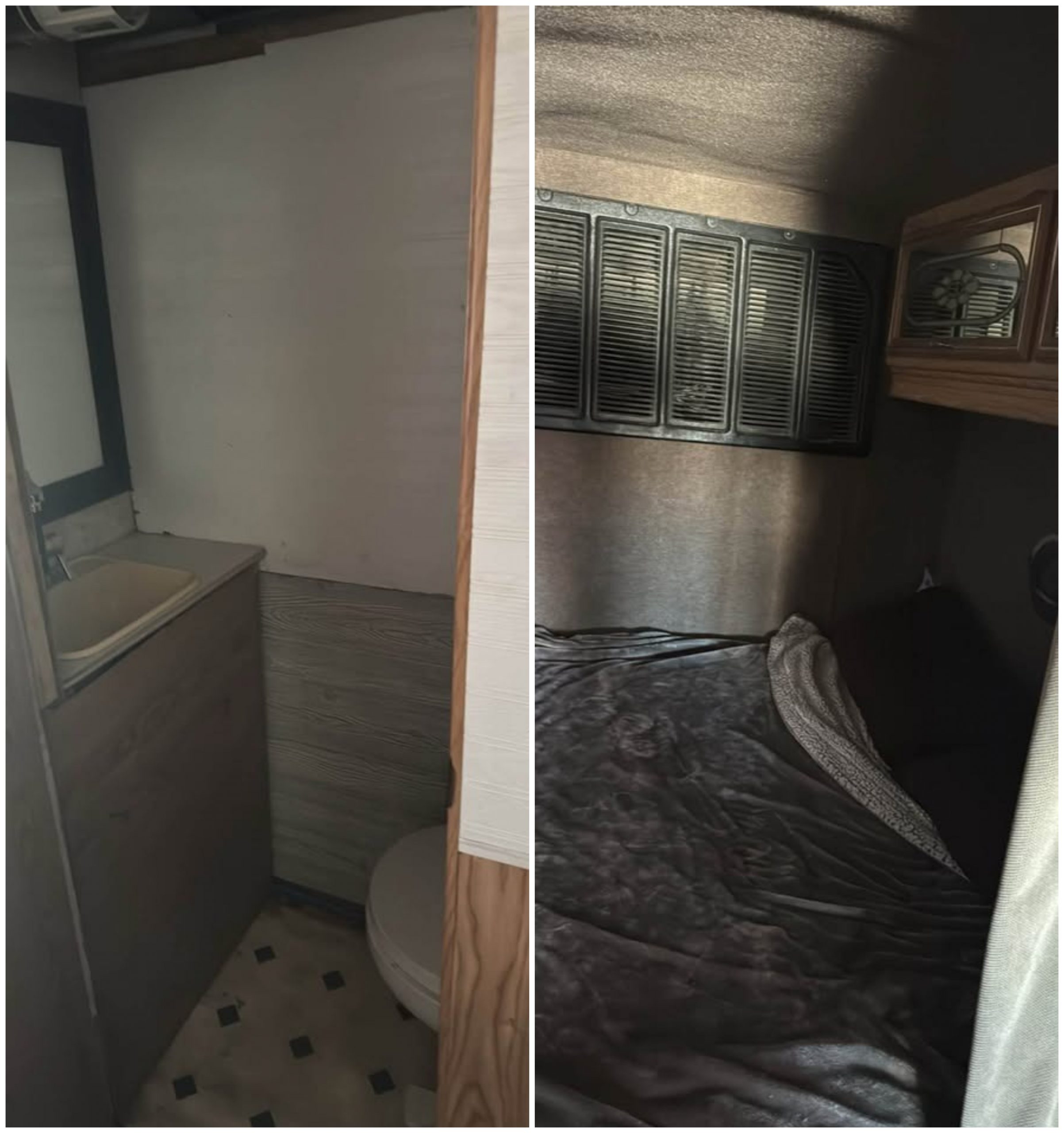
I also like the ample countertop space, the big kitchen sink, and the dry bath. Really, this motorhome doesn’t look any different than a factory-built one, only it was built out of a transit bus. I noticed that the interior’s HVAC system even has proper residential-style vents to evenly distribute the air around the coach, which is a nice touch for a custom build.
Pretty Cheap
What I also dig about this build is the price. The seller, who is based in Rockwell City, Iowa, wants only $10,000 for the rig. Again, there are some decent upshots to a build like this. Transit buses are built like tanks, utilize reliable powertrains, and have tall ceilings.

On the other hand, there are always quirks with custom builds. You have no idea how well the interior was built, and a transit bus isn’t very do-it-yourself-friendly when it comes to powertrain repairs. Of course, air brakes and an air suspension system have their own odds and ends that you’ll need to take care of. Owning an old bus isn’t for the faint of heart.
Honestly, owning an old Class A motorhome isn’t for the faint of heart, either. I think what I’m just trying to say is, just be prepared that you’re buying what’s more or less a commercial vehicle with a toilet and bed in it.
But if all of that sounds good to you, the price of entry of $10,000 is not bad. I’ve written about school buses that cost ten times this! As always, I adore the creativity of custom RV builders. All of these people could just buy any old RV, but instead, they built their own. The RV world wouldn’t be as fun without builds like this.
Top graphic image: Facebook Marketplace Listing




One photo reminds me that electric trolley buses need to make a comeback.
I’ll never get the ultra bright cold white lighting! Makes it feel very, well, like a bus.
I would think transit bus miles are the hardest miles you can put on a vehicle. Stop, start, drive a block or two. Lower the suspension. Raise the suspension. Repeat, all day long, every day.
I agree with Mr. Sarcastic below, it’s probably fine if you just drive it to the RV park and stay there all season. Still seems like an expensive gamble to me.
I think it’s very honest that they made the interior and lighting about as cozy as a city bus!
Had me until “I shortened it 3 years ago”. Not sure whom I trust with shortening a bus, but a rando bus mechanic/shop owner on FB (even with 20 years experience) is not it.
I’ll just do this because neither camping nor RV’ing appeals to me in the slightest. But if I get this right, it would cost 200 dollars per night in fuel and RV park fees (or more, of course) to actually go somewhere. I think I can have more fun for that kind of money.
most national parks and campgrounds have cabins. Buy a Audi S 6 and stay there. It ll be cheaper.
I do think it would be fun to design and build one of these. The challenge of making a stylish, functional interior appeals to me. Oh right, I’m an architect. That makes sense.
But then again, I have zero desire to drive around the country, doing 55mph getting 6mpg, and sleeping in crappy campgrounds or Walmart parking lots.
Camping versus driving your suburban home to a concrete pad 4’ from another meh RV. Ok I’m older but wtf is the point here? It’s ugly, you have to deal with some diy-ers idea of design. It WiLL break and cost more than a used Miata to fix, if you can find someone to fix it. Probably 6 mpg. So the driving cost is, well completely insane, nevermind the ecological costs. And that front end collision will most likely kill you. Bon chance mon ami
One thing not mentioned here:
Unless you plan to farm out all work on the underpinnings of this rig, you’ll need yourself a set of wheel column lifts to get under this monster.
Transit buses, especially the low floor ones, are unibody in construction and should only be lifted by the wheels/axles, or specific jacking points that are fairly far under the bus.
Source: I work for a transit agency with over 700 low floor buses.
Mercedes, with the bus and RV content you are doing you should reach out to the Bus Grease Monkey YouTube channel and see if you can feature them in an article. They work on coaches, specifically vintage 2 stroke Detroit coaches. He has a restored 1947 GM bus they used to live in/work from full time and it would be awesome to see you guys collaborate!
Shuttle busses are also good candidates. The Car Wizard started doing an ex airport shuttle motorhome , and then realized how big the job was and bought a Bluebird motorhome instead. While they are school bus based Bluebird built these as motorhomes so you have the convenience of a standard layout and the durability of a bus
If the seller shortened this bus on his/her own, the first piece of paperwork I want to see is their welding certification. Without that, I’m running away as fast as I can.
Gillig makes shorter models, so this looks pretty stock.
From the owner: “reskinned bus sides when I shortened it 3 years ago”
Don’t worry… it’s fiiiine… what could possibly go wrong?
The whole reskinned when I shortened it tells me run away as fast as possible. With the T-drive that had to come out of the middle which concerns me.
I assumed the T-drive was behind the rear axle, so no real issues because of the shortening. BUT, I have major concerns with the cutting/re-welding of the frame.
Yeah from the looks of it the engine is still behind the axle as normal in a T-drive, with the door still in front of the front axle that only leaves one option to shorten, cut a chunk out of the middle. Which of course means sticking the two remaining pieces back together. Sure it could be done in such a manner that it maintained full structural integrity but it could also be done very poorly.
Now if it was a front engine that was bobbed behind the rear axle then I wouldn’t immediately run away.
I’ve driven plenty of school busses and always questioned the sanity of those who voluntarily drove them across the country. However, I have ridden on plenty of Gilligs and New Flyers, and they are so much smoother and so much better built. The only downside to an ex-transit bus camper in my mind would be a more expensive drivetrain to maintain, and a much lower clearance. School busses are really tall, whereas transit busses are much lower. I bet there’s lots of situations where an ex-transit bus scrapes on culverts and gutters.
Another big issue with transit buses is the low floor means no “basement” for storage, water tanks, generators, etc. They seem like the WORST start for an RV conversion to me, and most of them are just as bad for going on the highway as a school bus is, other than the smoother ride. But definitely a cheaper option than a proper coach bus.
In an earlier life, I drove Gillig transits similar in length to this one. It takes practice to handle something this big, particularly when making sharp turns. Depending on which state one lives in, the driver would likely need a Class B CDL to operate it legally.
The conversion people seemed to address common issues with old transits:
Rattles and noise from windowsRattles, noise and maintenance issues with stock entry doorsRoad noise from the wheel wellsSetting aside maintenance issues inherent in older transits, which may have racked up a million miles of stop-and-go service, there’s zero space outside for storage. That low, low entry floor comes at a cost of no basement.
This is a heck of a deal if the Gillig includes the trailer shown in one of the pictures. Even if it doesn’t, $10K is a reasonable price if the buyer understands there’s no exterior storage space.
In most states, once you get it registered as an RV (requirements vary), you don’t need a CDL, or in many of them, not even an air brake endorsement. Which as a former coach driver back in the day myself, scares the ever-living-crap out of me. Especially when I see all the Cryptkeepers driving 45′ Prevosts down here in God’s Waiting Room, FL. You know that bus hasn’t had a proper inspection since they bought the thing too.
“…Play your cards right, and you can even get a city bus that is geared to go highway speed…”
This ^^^
In another life I briefly worked for a bus-flipping business, and I still remember the two Kazakh drivers I had to escort diagonally across France, in their city-geared Neoplans flying at a stellar 45mph at full tilt.
We took the small roads wherever possible, two-lanes – never seen so many middle fingers per mile.
Could be worse – that’s faster than the “no speed” GM fishbowls I got to drive occasionally 35 years ago (and they were ancient then). Literally no actual transmission, just a loose torque converter with lockup and a Detroit 6v71 screaming it’s lungs out. Less than 40mph flat out. All you needed in a bus that never got on the highway in the ’60s. The fleet had those, as well as newer ones with 2spd and 3spd automatics. The 3spds with Detroit 8v71s could do about 65.
“We took the small roads wherever possible, two-lanes – never seen so many middle fingers per mile.”
Now you have me thinking about what someone would do if they wanted to get THE MOST middle fingers per mile.
Maybe drive a cybertruck at 45mph on roads meant for much higher speeds…
No $10,000 bus is cheap.
Even small maintenance items will run thousands and major ones tens of thousands.
True, but the previous owner claims to have replaced quite a few spendy items. If one plans to put 10,000 miles per year on their motorhome, something more mainstream is a better choice.
What gives me pause is the owners statement “re-skinned bus sides when I shortened it 3 years ago“. Whoa. The owner cut the bus in half and removed a chunk? How much engineering went into that modification? If memory serves, these things are semi-unibody, and I would want to put this on a lift and inspect the work before buying.
Yeah that “when I shortened it” says run away to me.
Missed that. That is just extra reason to run away
Now this is a way to do an RV. ID skip the air ride because you are driving from a to b and then parking when you worried about comfort, the air ride is not helping. I’d install a new air ride semi tractor seat or two which is cheaper than maintaining the whole bus. I waver between an old GMC with upper windows on the bend or a double decker British bus with a patio and grill on the roof. Just concerned about the clearance and the friggin cost.
For anyone who would do something like this conversion, I say more power to them. However, turning any vehicle into an RV just feels like a how to guide for how to spend a load of time and/or money to turn a $20k vehicle into a $10k vehicle.
As opposed to a regular RV and changing a $200,000 vehicle into a $20,000 vehicle?
How, in this modern world, can someone be so oblivious to how aerodynamic this thing isn’t?
Not very but if you stay at the campground by the season it works out. Certainly not if you make a daily driver out of it. That is why you tow a car.
An old transit bus should be good for roughly 8 mpg or so at highway speed. Yes, I darn near faint every time I’ve filled the 120-gallon tank of my RTS.
You’re not wrong, but transits are designed for a different kind of efficiency.
Transit buses are designed to haul the maximum number of humans in a 40-foot long vehicle (or longer for an articulated bus) on city streets at low speeds. Toecutter can correct me, but aerodynamic drag at 25 MPH is not nearly as significant as it is at 65 MPH.
The ratio of the velocities squared minus 1 will give you the percent change in drag (approximating drag coefficient as constant, which it isn’t in reality but the change can be considered negligible). Here, that would give (65/25)^2 – 1 = 576% increase or 6.76x drag at 25 mph.
Not bad for $10k. I’d definitely take an all-steel bus over the typical leaky/rotty corrugated fiberglass RV.
You are just about as likely to end up with a leaky/rotty steel bus. TANSTAAFL.