


The most extreme prognostications about the increase in car prices due to tariffs–tarifs that the U.S. Supreme Court recently deemed at least partially unconstitutional–haven’t yet materialized. This is partially because there were numerous carveouts given to automakers, though a larger component might be that corporations decided to eat the cost themselves. A new study shows that some automakers swallowed harder than others.
It’s a blizzard in New York, and I’m enjoying the fact that I don’t have anywhere to go other than sledding when the wind calms down. I’m also happy that, unlike Friday, I doubt the Supreme Court is going to decide to drop a huge decision right as I finish this story. The news doesn’t work on The Morning Dump’s schedule; The Morning Dump works with whatever wacky timing the news wants to provide.


Are automakers paying tariffs? Or are they not? Or are they? It’s complicated.
Equally complicated are the reasons why Toyota ditched its current CEO even as the automaker has been performing well. Is this another tariff impact? Maybe? Something that isn’t a tariff impact, but also costly, is the possibility that Tesla may end up having to pay nearly a quarter of a billion dollars in an Autopilot lawsuit.
South Korea Will Eat The Fees

I keep getting this weird GrubHub ad when I watch Hulu, and so in the back of my head is George Clooney saying “GrubHub will eat the fees” over and over again. It’s kind of annoying, though I’m glad not to pay fees.
If you bought a car built in South Korea by Hyundai or Kia, you, too, probably didn’t eat the fees. At least according to a new study by CatalystIQ out of Ada, Michigan (shoutout Zeytin Turkish Food!), which looked at VINs from cars listed for sale and determined how much movement there was based on country of origin.
Automotive News looked at the study, and there are some interesting conclusions:
Canadian-Built Cars: $3,991 more
Japanese-Built Cars: $3,298 more
German-Built Cars: $2,819 more
Mexican-Built Cars: $1,504 more
U.S.-Built Cars: $91 more
South Korean-Built Cars: $123 less
There are some caveats, of course:
In the measurement of Canadian-built vehicles, it is worth noting that a contributing factor was the conversion of the industry’s top-selling nameplate, the Toyota RAV4, from a gasoline to an all-hybrid powertrain with the start of the 2026 model year. A majority of RAV4s sold in the U.S. are built in Canada, and the conversion meant that the starting price for the industry’s most popular compact crossover rose to $33,350 for 2026 from $31,250 for 2025 models, including destination.
While automakers routinely increase prices during model-year changeovers, especially as they introduce new features and technologies or perform redesigns, there was a noteworthy difference this year. CatalystIQ compared the current model-year changeover with the previous one across all of its VIN data and found that, on a weighted average, “there was a $1,200 more aggressive increase that took place this year rather than last year,” Wainschel said.
That $1,200 average is for all cars sold in the United States last year, which isn’t as bad as initial estimates. A lot of that makes sense and fits within what you’d expect. You’d also expect American-built cars not to see much of an increase, which happened. But there’s a weird standout here in the form of Hyundai and Kia:
Automakers have attempted over the last year to come up with strategies to mitigate the added costs of tariffs without passing too much onto consumers already struggling with affordability.
Volkswagen tried early on to include the added impact of tariffs on each vehicle’s Monroney window sticker as a separate line item, but pulled back on the effort. Hyundai-Kia has touted its decision to hold pricing in the face of tariffs — a large driver of why South Korean-built vehicles saw their marketed price fall from last October in the CatalystIQ study — but that decision weighed on its most recent earnings.
So why did Hyundai and Kia customers not see as much of an impact? It’s not because South Korea had any sort of special deal. In fact, the deal recently got worse. This was a choice. Hyundai and Kia decided to opt for market growth in exchange for profitability. And it worked! Both Hyundai and Kia grew last year, while many other automakers shrank. It also worked as planned in the sense that Hyundai and Kia lost billions of dollars. Because Hyundai, Kia, and Genesis represent a large chunk of the South Korean-built cars sold here, the impact of that choice is huge. While there are, notably, cars like the Chevy Trax and Buick Envista built in South Korea by GM and sold here, those are lower-priced cars, and there’s only so much they can move upwards in price.
While Volkswagen does make some cars in the United States, the group as a whole doesn’t have that large a footprint, opting instead to build more cars in Mexico. Neither Porsche nor Audi produces any cars in the United States.
Looking at how many cars were sold in the United States by Hyundai and Kia, then comparing that to the tariff loss those brands are claiming, it seems like Hyundai and Kia paid about $2,900 per car in 2025 to keep their sales growth up, which is a lot.
Obviously, automakers are utilizing their plants within the borders as much as possible, and can spread prices across various models so as to reduce the impact of the tariff on any specific car. Automakers can also simply decide to get out of a market, as Mazda is quietly doing with the CX-30, which has margins that are too small and isn’t built here.
In that way, arguably, the tariffs have worked as the government intended, and there have been plenty of announcements by automakers to move production to the United States or, at least, to utilize more of their plants in the lower 48. The tariffs have also generated billions of dollars in revenue for the government.
Will the new tariff ruling by the Supreme Court change the math on any of the above? Yes. No. Maybe?
The Tariff Picture Isn’t Going To Change That Much For Automakers

I owe everyone an update from Friday’s quick pots about the Supreme Court decision to declare the President’s tariffs unconstitutional. My basic premise was that no one knows much and that the outcomes are not clear. I watched President Trump’s emergency press conference after the announcement, and it made nothing clearer, other than the President believes he can use a lot of other tools to get the same result. As he said:
I am allowed to cut off any and all trade or business with that same country. In other words, I can destroy the trade, I can destroy the country. I’m even allowed to impose a foreign country-destroying embargo. I can embargo, I can do anything I want, but I can’t charge one dollar because that’s not what it says, and that’s not the way it even reads.
The whole press conference felt like the dril tweet about not being owned, with the usual swipes at various people who disagree with him, and the implication that the Supreme Court’s conservative justices (appointed by him) somehow work for foreign governments.
Initially, the President said he was just imposing a 10% blanket tariff under various authorities, and then a 15% tariff was announced later. At the same time, Reuters reports that Customs has quietly stopped collecting any of the tariffs that were ruled unconstitutional, though it’s anyone’s guess if companies or consumers are going to get a refund.
Will this impact car prices? Maybe, but less than you’d think, because most of the tariffs on cars being sold here either have offsets or come from a completely different set of laws. Because of the USMCA trade agreement, Bloomberg reports that the 15% additional tariff doesn’t apply to vehicles from those countries:
The USMCA carve-out exemption allows the US to continue to import oil and other resources from Canada and Mexico tariff-free, and avoids greater disruption in the trade of key manufacturing inputs such as automotive parts. US Trade Representative Jamieson Greer, when asked about existing exemptions, said the White House was seeking “continuity” with the new tariff order, which will take effect on Feb. 24, the day Trump delivers his State of the Union speech to Congress.
This isn’t to say that those cars are free from any tariffs, but through various mechanisms, carmakers who also build cars in the United States or follow USMCA guidelines haven’t seen as much tariff stacking. Non-USMCA-compliant vehicles, like the Audi Q5, might be, though.
Did Akio Toyoda Do In His Own Successor?

Koji Sato was only made CEO of Toyota back in 2023, and he’s already been pushed aside. But why? And did Toyota Chairman Akio Toyoda have anything to do with it?
Reuters via Automotive News has a deep analysis that includes this funny bit:
[T[he shake-up reflected Toyoda’s thinking that his hand-picked successor was no longer the best fit for the job given mounting cost pressures, three people said. The grandson of Toyota’s founder, Toyoda was CEO for almost 14 years prior to Sato.
This account contrasts with Sato’s explanation at a press conference announcing the change and includes previously unreported details. In an on-stage interview with Toyota’s own media outlet, Sato said Toyoda was not involved in the decision.
“Toyota keeps emphasizing, over and over, that Akio Toyoda was not involved in the personnel decision,” said Seiji Sugiura, a senior analyst at Tokai Tokyo Intelligence Laboratory. “Mr. Sato also says the same thing very carefully — which means he probably was involved.”
Again, Toyota says that Toyoda wasn’t directly involved in a very “protesth too much” sort of way.
Tesla Couldn’t Shake $243 Million Autopilot Judgment
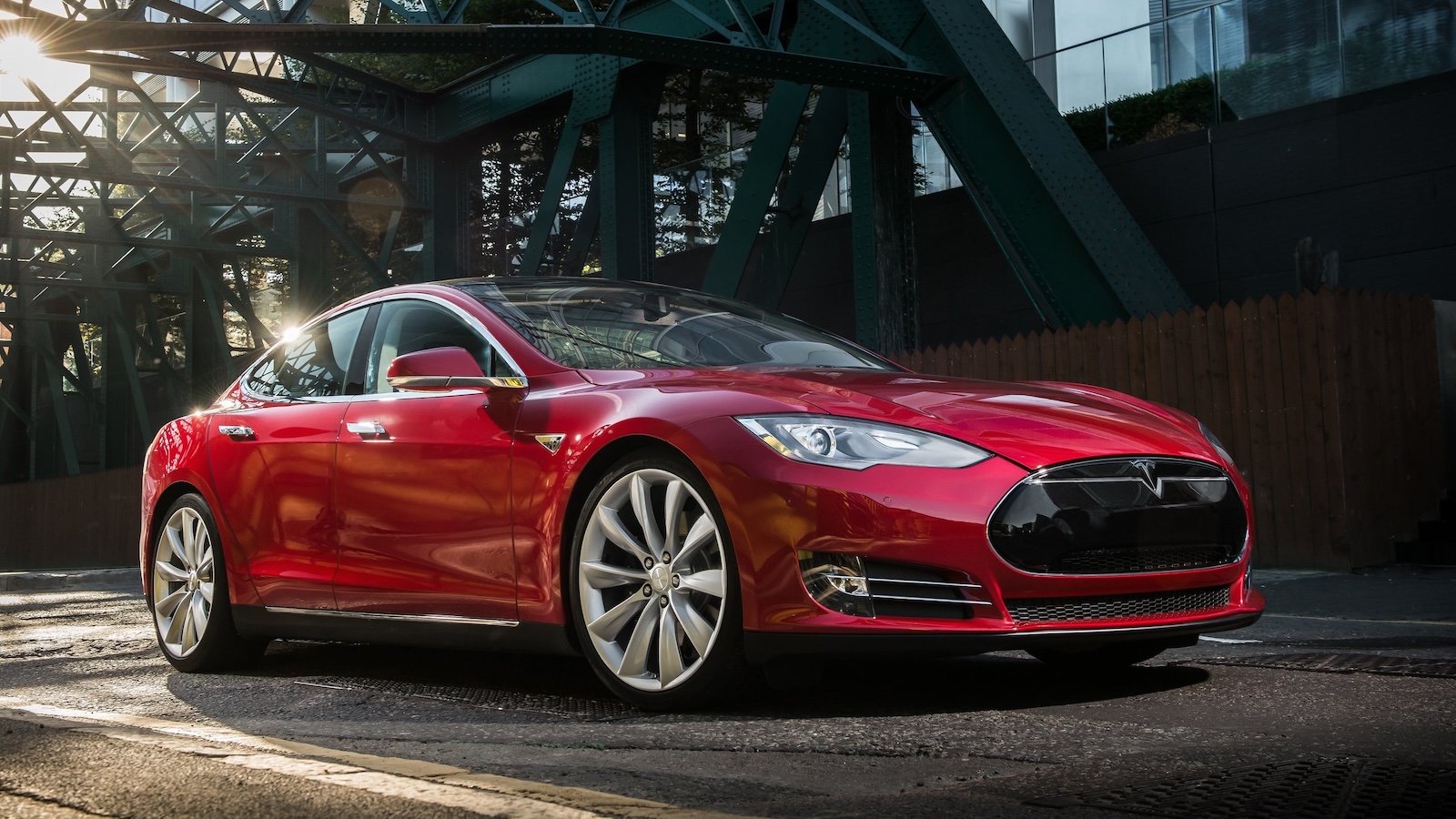
Last year, a jury said that Tesla was liable for a Model S driver who killed one person and seriously injured another person, with a total judgment of $243 million. It might be years before this gets resolved, though Tesla did try to get the whole case dropped.
Per CNBC, that didn’t work:
In her order out Friday, U.S. District Court Judge Beth Bloom wrote that “evidence admitted at trial more than supports the jury verdict,” and there was no error previously, or additional argument introduced justifying a new trial or change to the earlier verdict.
“We are of course pleased, but also completely unsurprised that the honorable Judge Bloom upheld the jury’s verdict finding Tesla liable for the integral role Autopilot and the company’s misrepresentations of its capabilities played in the crash that killed Naibel and permanently injured Dillon,” Brett Schreiber, lead trial counsel for the plaintiffs in the case, said in a statement.
Again, we’re a long way from complete resolution of this. This isn’t going to discourage attorneys from pursuing Tesla in any crash related to one from here on out, though.
What I’m Listening To While Writing TMD
I’ve got the president, Tesla, and AI all in one TMD. While the vibes are weird, I’m going to bring in the most controversial and unlikable person I can think of: Billy Corgan. I wasn’t a huge fan of The Smashing Pumpkins. I didn’t need to be. For much of my youth, they were everywhere. I’m not going to get into the “Siamese Dream” of it all, but I do think “Eye” from the Lost Highway soundtrack is maybe my favorite song they do?
The Big Question
If you could get Toyota’s CEO to resurrect a single car, what would it be?
Top graphic image: Hyundai


If they made a smaller cheaper honest truck that would be great. Maybe the same for the 4runner. Mr2 was a great thing as would a an actual Toyota supra. But really the original xb bring back some weird little cheep kei cars or kei cars with bigger engines.
V8 truck or SUV. Like, I don’t fully get why you would get a Tundra or Sequoia these days, at least when they had a V8 they were reliable. Now you you get sub-par power, capability, efficiency, comfort, refinement, pricing, all with average reliability.
An MR2 would probably be even cooler, but I can’t imagine it would sell in huge numbers or be at the price my cheap ass would tolerate.
I want a new, proper version of the ISF. The IS500 was close, but I want a new platform and that glorious N/A V8. Unfortunately, not gonna happen.
“If you could get Toyota’s CEO to resurrect a single car, what would it be?”
The Toyota Matrix… And make it in two versions… one with a manual transmission and the other being a hybrid.
The Corolla Hatchback used to come with a manual and essentially was the Matrix 2.0. Shame they got rid of the manual.
Matrix was simply a Corolla hatchback, so yeah same thing. It seems like maybe a little smaller trunk relative to the Matrix, but I haven’t looked at one in person. If I was in the market for a small manual car, I definately would have went to look at one, but for most people it’s a shame they haven’t offered it in a hybrid (which I think is why we see more Corolla sedans around.
The Corolla wagon coming here would be sweet with the hybrid drivetrain, but probably still not sell enough to be worth the effort. So probably no GR Corolla wagon in our future….
There are literally dozens of us clamoring for a manual Matrix/Corolla Hatch!
That whole soundtrack was great.
2000GT.
I’m again sad to see the effect on Canadian plants. Canada is a crucial partner of US automakers, and has been for a long time. (351 Windsor anybody?) Two of my American cars were built up north, and both were assembled with a lot of care and precision that you don’t always see in American cars. (2001 Tracker at CAMI, 1997 Grand Marquis at St. Thomas). No rattles in either, despite both living long hard lives over the past 25+ years
There will be a long memory held by (former) allies of this behaviour that’ll last well beyond the next few elections.
I feel like big 2.5 market share in Canada is lost forever and we’ve left a giant hole and some empty factories to fill it’s place with eager global partners…Talk about shooting ourselves in the foot…just amazing.
We have a Canadian facility I visit at times. It’s in BC but still, I’m embarrassed.
The 2000GT is my vote.
Tercel AWD Wagon
Yes!!!
Bring back the Paseo with a stick please.